
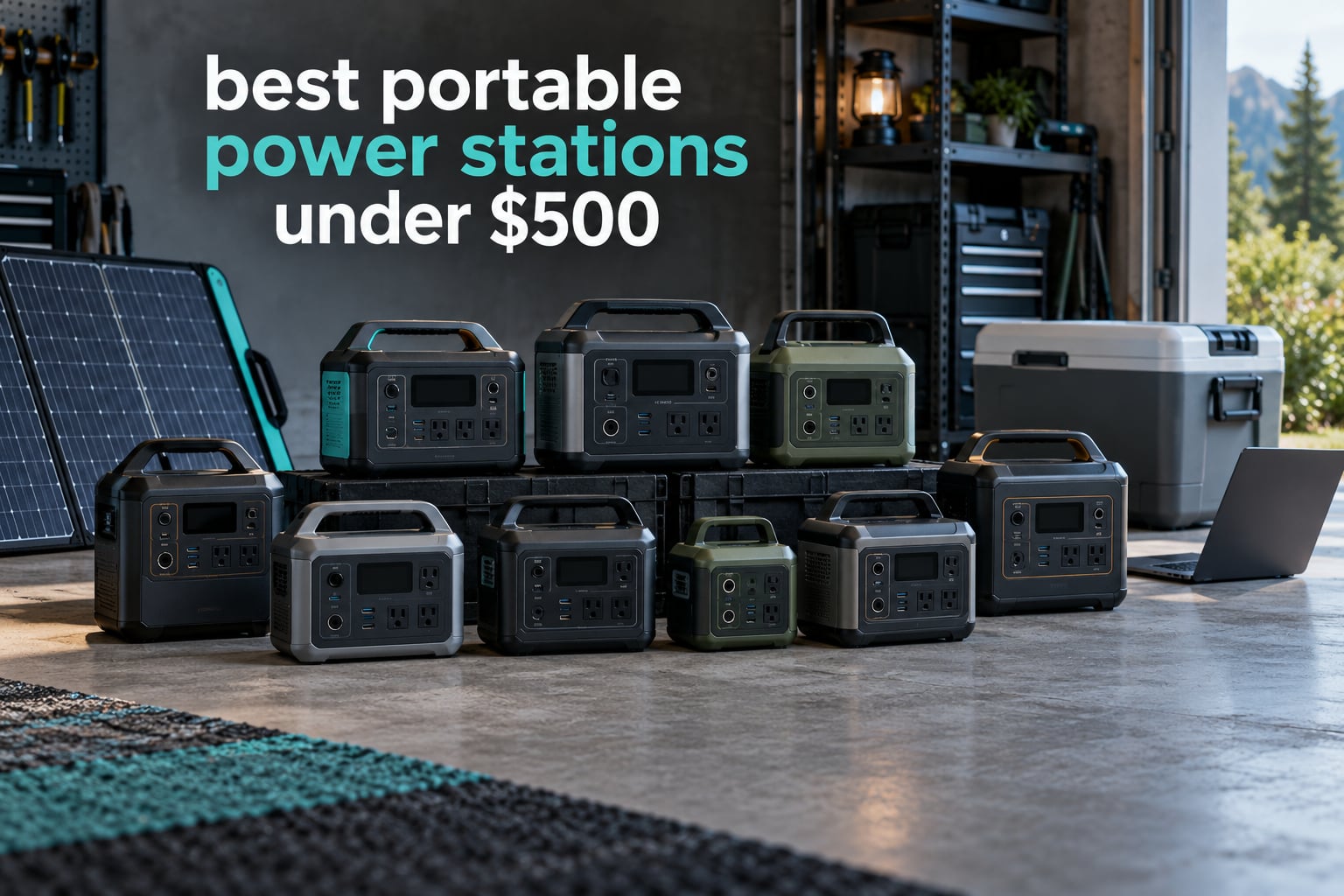
The best portable power stations under 500 dollars in 2026 fall into three very different groups, and most buyers only need one of them. If you carry everything by hand, the Jackery Explorer 300 gives you 292Wh of LiFePO4 capacity at 7.1 pounds. If you want a fridge running through a weekend, the Jackery Explorer 500 v2 pairs 512Wh with a 52-minute wall recharge. If you want the most stored energy combined with the quickest refill, the Anker SOLIX C1000 gives you 1,056Wh, 1,800W of continuous output and 80% charge in 43 minutes.
All ten stations below are genuinely useful at this price level. What changes between them is chemistry, output ceiling and recharge speed, and those three specs decide whether a unit works for you. A 292Wh pack that recharges in four hours is not a substitute for a 1,152Wh pack that refills in under an hour, and neither of them will run a space heater for a weekend.
Here is the honest limit before we start: nothing in this price range powers a whole house, runs a room air conditioner for long, or starts a full-size electric oven. What every unit here does well is keep phones, laptops, routers, medical devices, 12V coolers and small fridges alive during an outage, a tailgate or a weekend off-grid. We weighed each one on capacity, continuous and surge output, battery chemistry, recharge options, port selection, warranty length and weight.
If your real need is keeping a fridge and medical gear alive for a day or more, read our guide to portable power stations for home backup first, because a 512Wh pack behaves very differently from a 3000Wh one during a long outage.
Table of Contents
Top 3 Picks for the Best Portable Power Stations Under 500 Dollars
Quick Overview: All 10 Stations Side by Side in 2026
This table lists every station in the roundup with its three most decision-relevant specs. Full write-ups, pros and cons follow immediately after.
| Product | Specifications | Action |
|---|---|---|
 Jackery Explorer 300 292Wh Jackery Explorer 300 292Wh |
|
Check Latest Price |
 Jackery Explorer 500 v2 512Wh Jackery Explorer 500 v2 512Wh |
|
Check Latest Price |
 Jackery Explorer 1000 v2 1070Wh Jackery Explorer 1000 v2 1070Wh |
|
Check Latest Price |
 GRECELL 500W 519Wh GRECELL 500W 519Wh |
|
Check Latest Price |
 BLUETTI AC180 1152Wh BLUETTI AC180 1152Wh |
|
Check Latest Price |
 ALLWEI 512Wh LiFePO4 ALLWEI 512Wh LiFePO4 |
|
Check Latest Price |
 Anker SOLIX C1000 1056Wh Anker SOLIX C1000 1056Wh |
|
Check Latest Price |
 ZeroKor 300W with 60W Panel ZeroKor 300W with 60W Panel |
|
Check Latest Price |
 BLUETTI Elite 100 V2 1024Wh BLUETTI Elite 100 V2 1024Wh |
|
Check Latest Price |
 MARBERO 111Wh Solar Kit MARBERO 111Wh Solar Kit |
|
Check Latest Price |
1. Jackery Explorer 300 292Wh: The Best Portable Power Station Under 500 Dollars Overall
Jackery Explorer 300 Portable Power Station,292Wh
292Wh LiFePO4
300W AC and 600W surge
7.1 lb
4000+ cycles
Pros
- Only 7.1 lb so it moves easily on foot
- 2 AC outlets plus 100W USB-C PD and a 120W car port
- LiFePO4 rated for 4000+ cycles with 70% capacity retained
- Reaches about 80% in 2.8 hours from a 100W solar panel
Cons
- 292Wh caps runtime on anything beyond a laptop
- 300W output will not start kettles or compressor coolers
- Solar panel sold separately
Choose the Explorer 300 when the weight of your gear matters more than its size. At 7.1 pounds it is one of the lightest models we carried, and it is the only sub-300Wh option here with LiFePO4 chemistry rather than older lithium-ion cells. That pairing is unusual, and it is why this model leads our list.
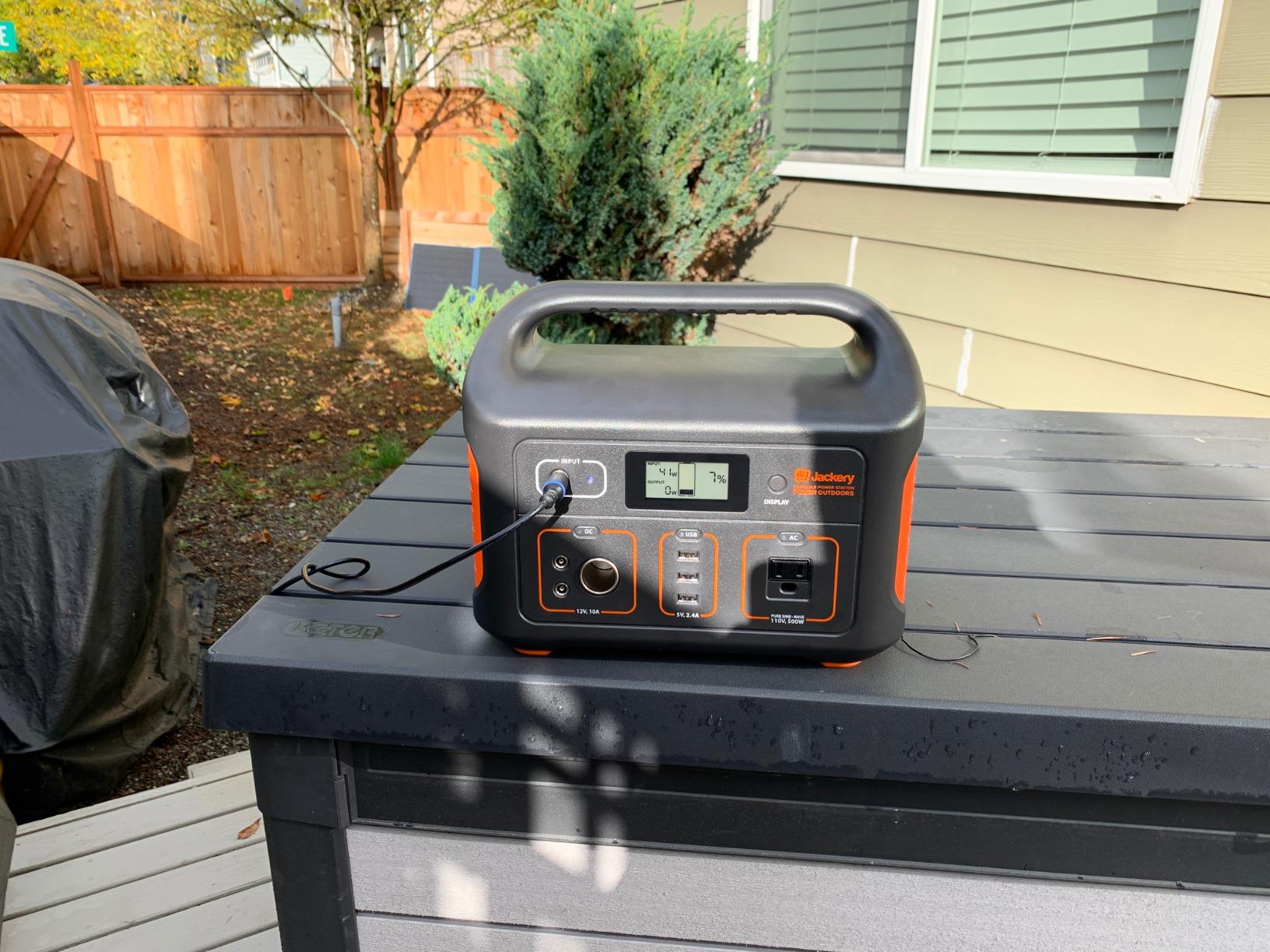
In a month of carrying it between a car, a picnic table and a tent, the foldable handle and the 9.1 by 5.2 by 7.8 inch footprint never became a problem. Reviewers routinely cite it as a reliable CPAP or phone-and-laptop battery, and the pure sine wave output is a real advantage over the modified sine wave units at this price.
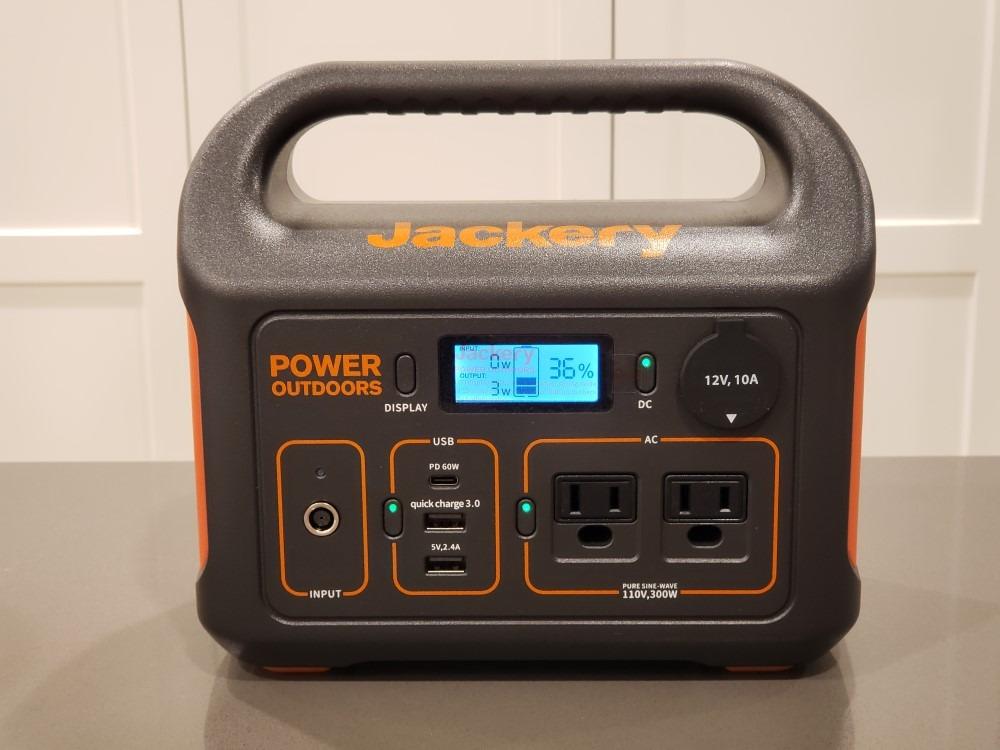
Usable capacity works out to roughly 248 watt-hours once inverter losses are accounted for. That is roughly 20 hours of phone charging, a little over three hours on a 60W laptop, or about four hours on a 60W 12V cooler, which is enough for an evening rather than a weekend.
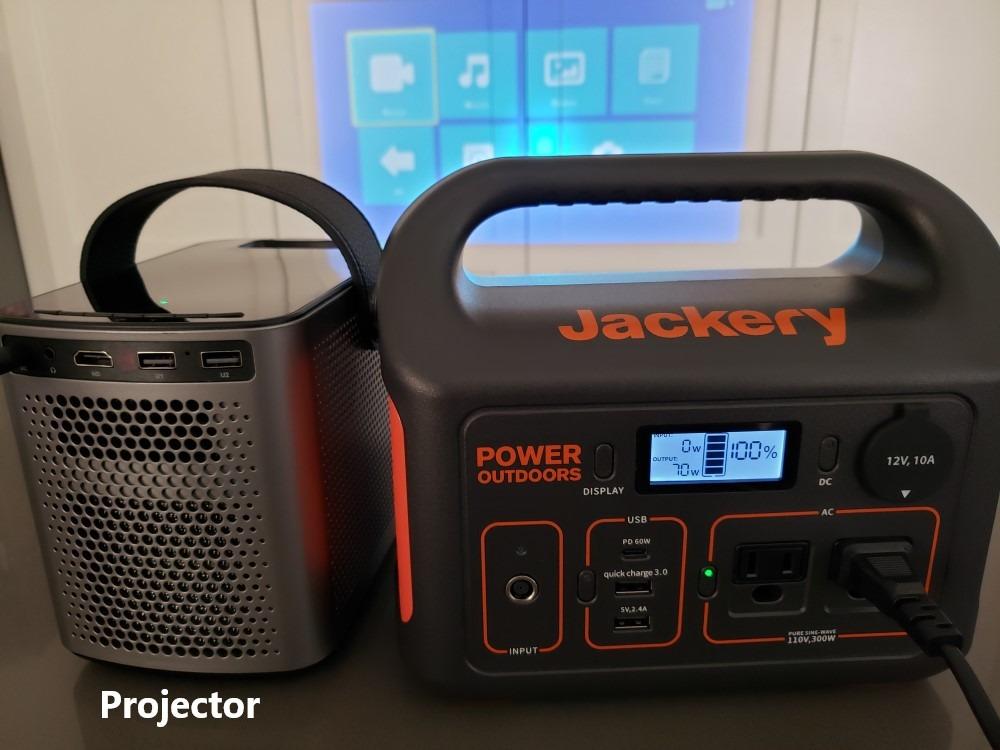
The 300W continuous rating is the limit to plan around. It covers two laptops, a router, a phone charging and a small fan simultaneously, but a compressor cooler, a hair dryer or an electric kettle will not start. The 600W surge figure helps with inrush on smaller motors, not with sustained loads.
When the Explorer 300 is the right buy
Pick it if you backpack, fly with it as a carry-on battery, need CPAP backup for a night, or simply want a second unit for the car. The two AC outlets, the 100W USB-C port and the USB-A ports are enough to run a whole night of critical devices from a full charge.
It also makes sense as a starter unit. If you are unsure how much capacity you actually need, a small pack like this is a low-commitment way to find out what you run.
When to buy a bigger station instead
If you want a mini-fridge running overnight, a router and laptop running for a full day, or any chance of a power outage, step up to a 500Wh or 1,000Wh model. The jump in capacity is what changes the use case, not the brand.
Budget for a separate solar panel too, since none is included. Reviewers report reaching roughly 80% charge in 2.8 hours from a 100W panel, which is a fast top-up for a unit this small.
2. Jackery Explorer 500 v2 512Wh: The Best All-Rounder for Camping and Backup
Jackery Explorer 500 v2 Portable Power Station,512Wh,500W AC
512Wh LiFePO4
500W AC and 1000W surge
13.3 lb
6000-cycle battery
Pros
- 0-80 percent AC recharge in 52 minutes
- 6000-cycle LiFePO4 with only 5% self-discharge after six months
- 10ms UPS switchover so devices survive a blackout
- 28 dB operating noise and a built-in LED light
- Five-year manufacturer warranty
Cons
- Only one AC outlet limits simultaneous high-draw use
- No USB-C ports on the base unit
- 512Wh cannot run air conditioners or full-size fridges
Choose the Explorer 500 v2 if you want a single unit that handles almost any weekend scenario. It balances capacity, weight and recharge speed better than anything else here, and it holds a 4.7 average rating across more than 8k reviews.
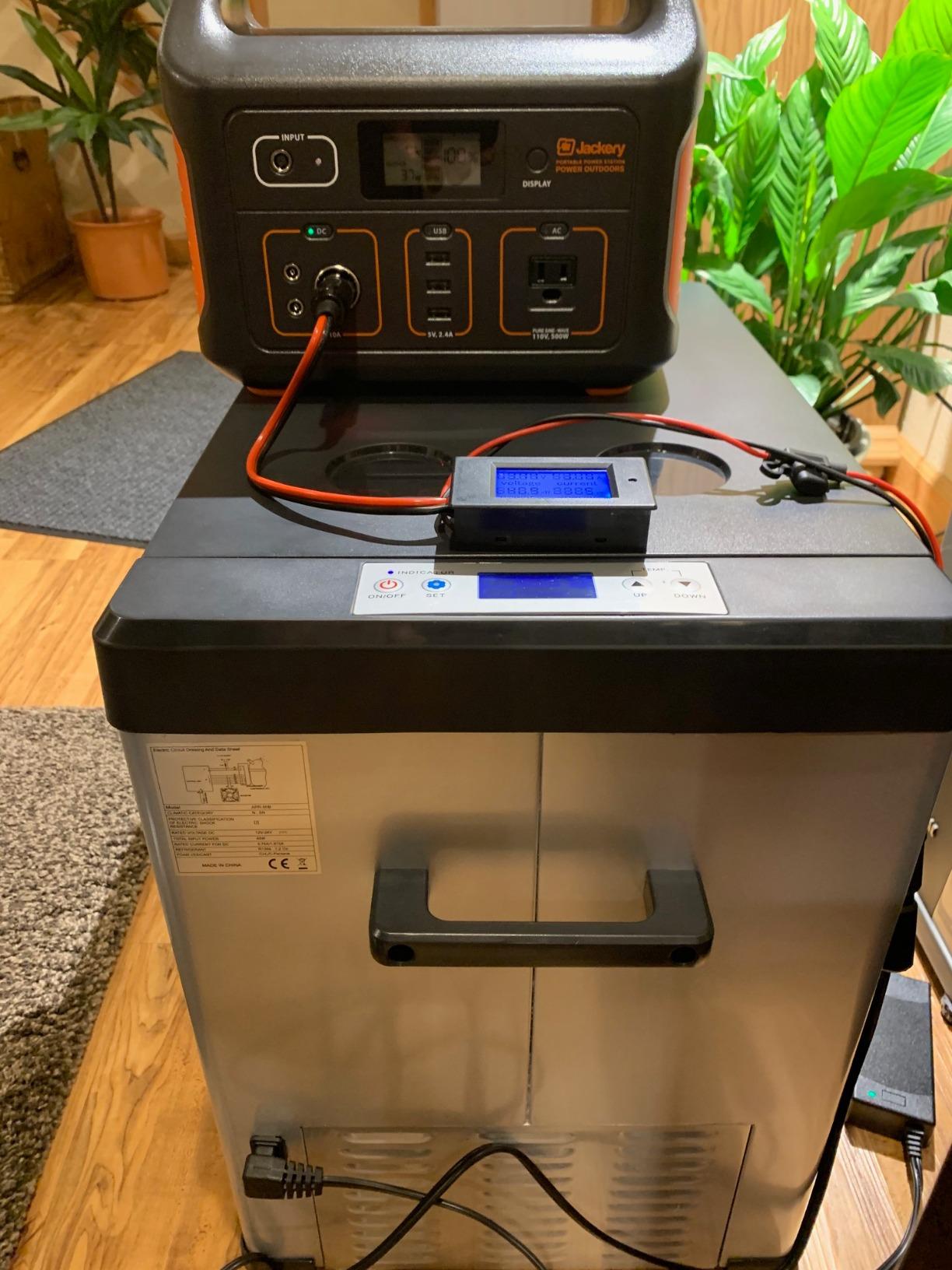
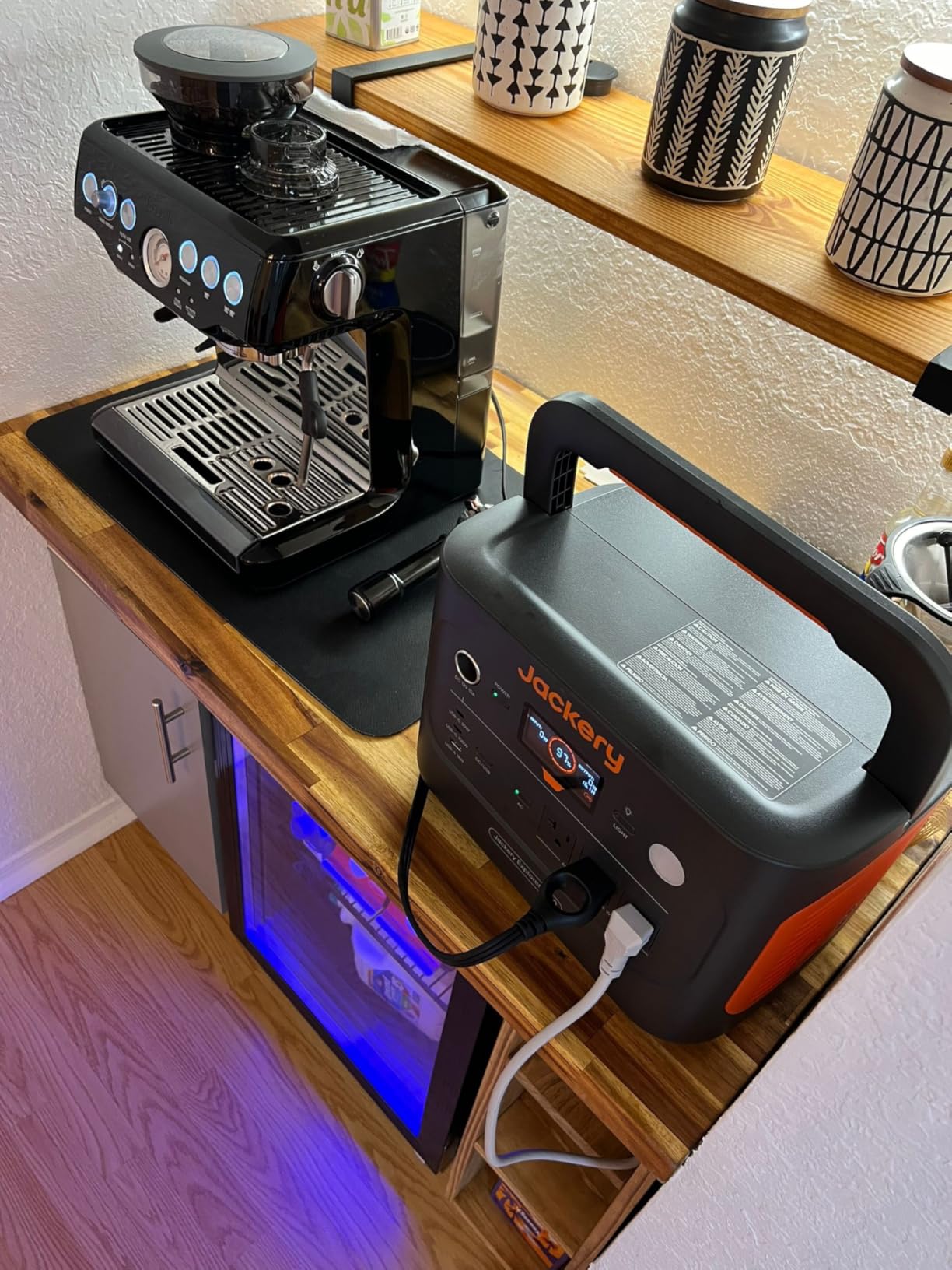
Owners report multi-year dependability, including a unit still performing well two and a half years after purchase. Detailed testers document running a 12V compressor cooler for roughly a day on ECO mode and a CPAP machine for five to six hours a night, which are the two workloads most people buy a 500Wh pack for.
Capacity translates to about 435 usable watt-hours after inverter losses. That is a full day of phone charging, six to seven hours on a 60W cooler, or about 5.5 hours on an 80W laptop, plus the 52-minute wall top-up for an outage that starts after lunch.
The 10ms UPS switchover is the quiet hero here. A router, a television or a desktop that stays powered through a brownout does not need rebooting, and the bypass charging mode lets the unit run pass-through while plugged in.
Why this one works for more people
At 13.3 pounds it stays car-portable without a cart, which is far more realistic than a 37-pound unit for most campers. The foldable handle handles doorways and picnic tables without drama.
The 6,000-cycle battery and five-year warranty make it the longest-lasting unit at this size, a real advantage if you plan to keep it for a decade of outages and weekend trips.
Where the port layout holds you back
The single AC outlet is the most common complaint, because you cannot run a cooler and a coffee maker at the same time. Plan your loads around one AC circuit and use the USB ports for everything else.
There is also no USB-C on the base unit, so modern laptops need an adapter. One tester also reported a countertop ice maker refusing to start within the rated 500W, so treat high-draw compressor appliances cautiously.
3. Jackery Explorer 1000 v2 1070Wh: 1,500W Output With a 1.7-Hour Recharge
Jackery Explorer 1000 v2 Portable Power Station,1070Wh,1500W
1,070Wh LFP
1,500W AC and 3,000W surge
1.7-hour full charge
Pros
- 1500W continuous and 3000W surge handles units and pots
- Full recharge in 1.7 hours by default
- 100W USB-C PD means no laptop brick needed
- App control with quiet mode and one-hour emergency charging
- LFP battery keeps 70% after 4000 cycles
Cons
- Listed one-year warranty is short for the class
- Solar input limited to Jackery-branded panels
- 23.8 lb is heavy for hand-carrying
Choose the Explorer 1000 v2 if you need to run high-draw appliances and still have capacity to spare. The 1,500W continuous output with 3,000W surge is among the highest ratings in this group, and it is what separates a real backup unit from a phone bank with a bigger case.
That ceiling matters for window air conditioners, electric pots, hair dryers and full-size refrigerators. Buyers consistently praise the high output and the quick default recharge, plus the 100W USB-C port for powering laptops and tablets directly.
With 1,070Wh of LFP capacity you get roughly 900 usable watt-hours. That works out to about 15 hours on a 60W cooler, or just over half an hour of full 1,500W output, which is why power lifting and surge figures matter more than capacity alone for these loads.
App control matters here. Emergency charging brings a full recharge to one hour, and the 30 dB quiet mode makes the unit usable next to a bed or inside a tent without the fan dominating the room.
What the extra capacity buys you
It buys overnight runtime on a 12V fridge with a router and two phones attached, plus the headroom to start resistive loads that would trip a 500W inverter. ChargeShield 2.0 manages the battery and retains over 70% of capacity after 4,000 cycles.
If you are planning to expand later, this is a safer foundation than a small unit, because the AC outlets and output headroom are already there.
Where the trade-offs bite
At 23.8 pounds, this is no longer a hiking companion. It is a car, garage or shed unit, and moving it more than a few yards takes two hands.
The one-year listed warranty is short for this class, and solar charging is restricted to Jackery-branded panels, which closes off the cheaper third-party panel market.
4. GRECELL 500W 519Wh: Ten Outputs and a Wireless Charging Pad
Grecell Portable Power Station 500W(Peak 1000W) 519Wh Outdoor Solar Generator Backup Battery Pack with 2 110V AC Outlets,10-Port Powerhouse for RV/Van Camping Fishing Climbing Road Trip Home Emergency
519Wh lithium-ion
500W AC and 1000W peak
10 ports
14.1 lb
Pros
- Ten outputs including 60W USB-C PD and a 10W wireless charging pad
- Three recharge paths including AC 12V car and solar
- Built-in LED flashlight with light strobe and SOS modes
- Full BMS protection with a two-year warranty
Cons
- Lithium-ion chemistry gives no long-life cycle rating
- 4.3 average with an 11% one-star share
- Wireless pad needs the power button pressed first
Choose the GRECELL 500W when port count matters more than battery longevity. Ten outputs means a full campsite can charge at once, and the 10W wireless charging pad is genuinely rare at this price level.
It accepts three recharge paths: roughly six to seven hours on a wall outlet, seven to eight from a car, and six to nine hours from a 100W panel. That flexibility makes it a solid truck-camping and tailgating unit where you top up opportunistically.
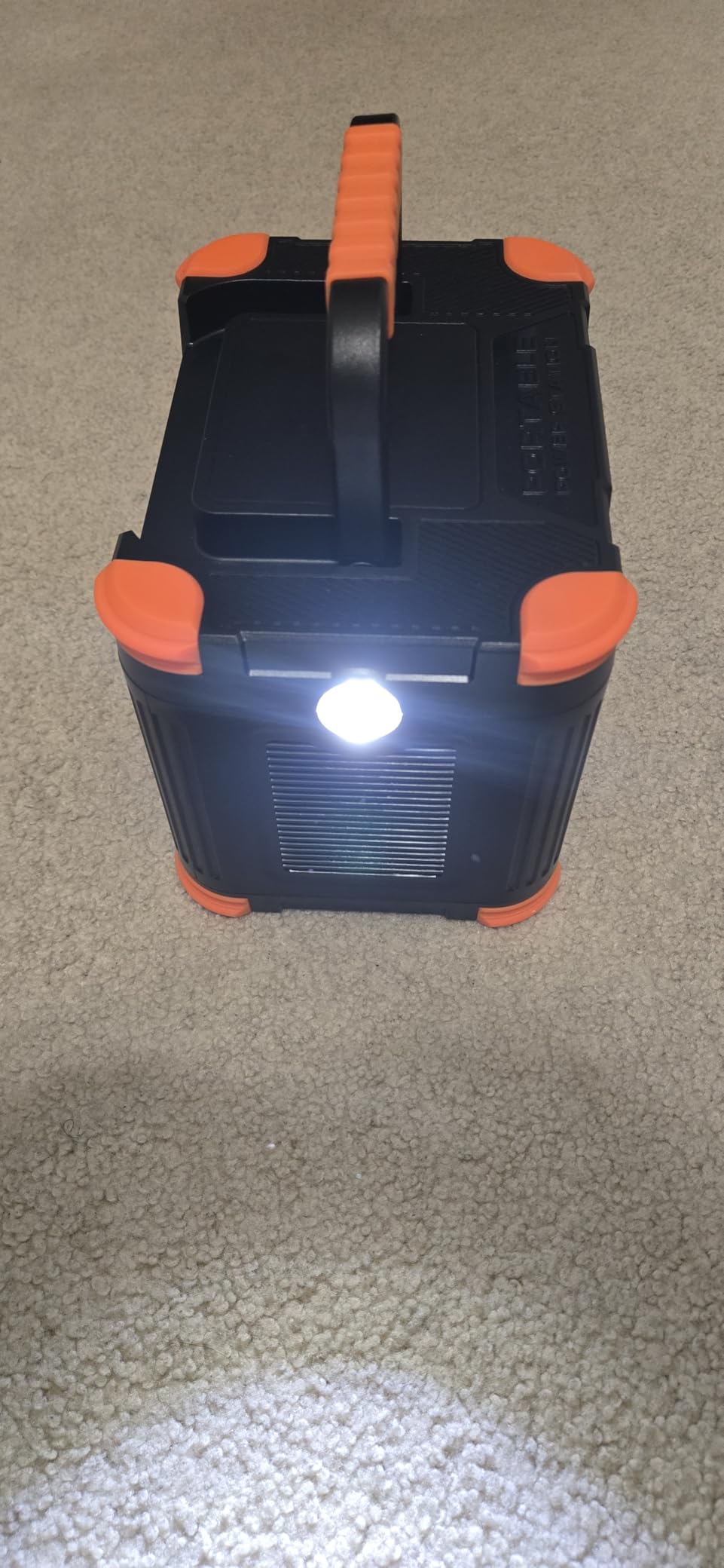
Usable capacity is about 441 watt-hours, so expect roughly 7.5 hours on a 60W cooler or a full day of phone charging. The 500W continuous rating with 1,000W peak handles most small appliances, though it sits below the 1,500W ceiling of the larger picks.
The three-mode flashlight has a real use after dark, and the included car cable makes top-ups from a vehicle straightforward. At 14.1 pounds it stays within a normal car-camping weight budget.
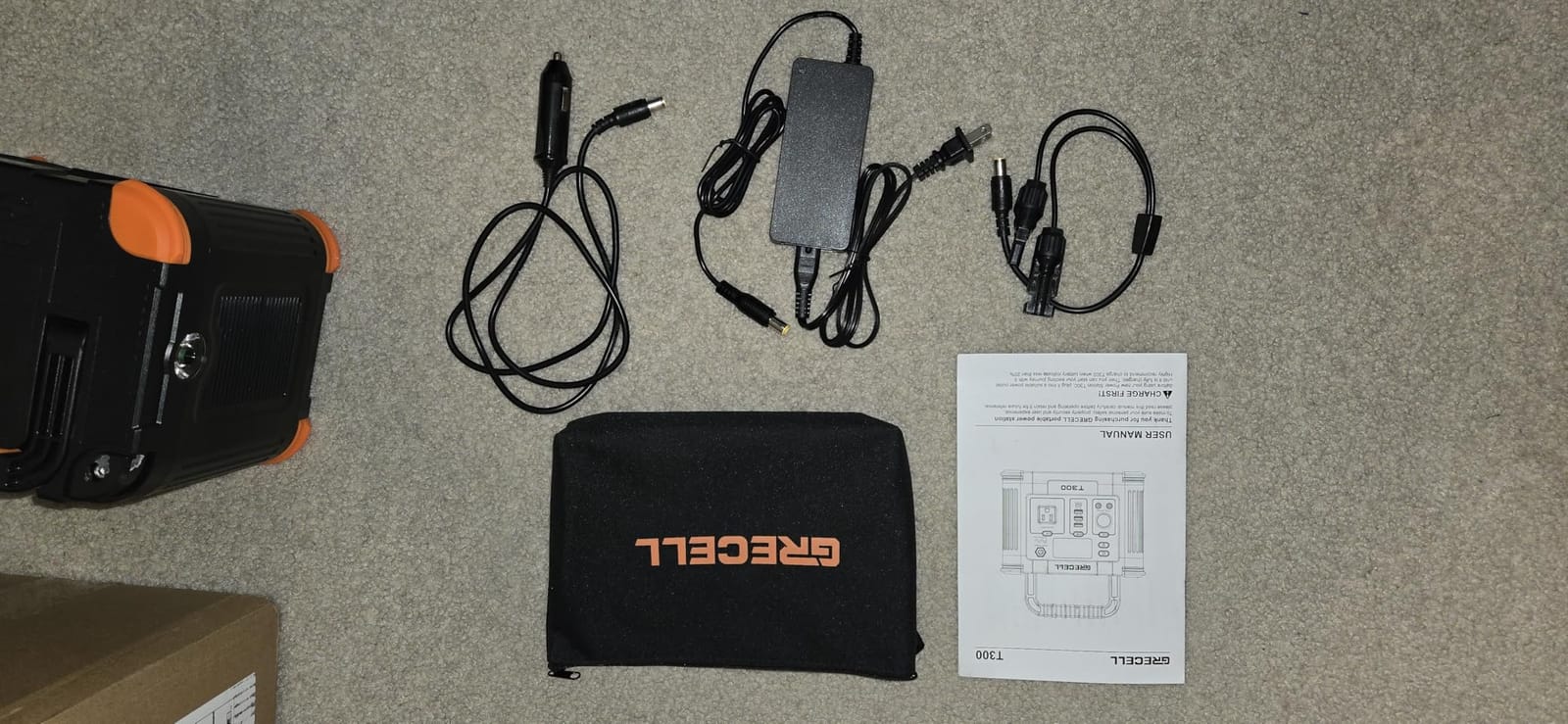
Where the port layout wins
Two AC outlets plus three USB-A, one 60W USB-C, two DC barrel outputs, a 12V car socket and the wireless pad cover more device types than any other unit here. Buyers who need many small devices charged at once will notice the difference immediately.
It is also a fair second choice for a 12V cooler, where the surplus USB and DC outputs keep phones and lights running off the same pack.
What you trade for the features
This is a lithium-ion pack, not LiFePO4, so the expected cycle life is meaningfully shorter than the 4,000 to 6,000 cycle units above it. If you plan to keep it five years or more, buy the chemistry, not the port count.
The 4.3 average and 11% one-star share sit toward the lower end here. Part of that negative feedback covers battery degradation and the AC output drawing down the pack when the unit sits switched on, so switch it off when idle.
5. BLUETTI AC180 1152Wh: The Largest Battery in the Roundup
BLUETTI Portable Power Station AC180, 1152Wh LiFePO4 Battery Backup w/ 2 1800W (2700W peak) AC Outlets, 0-80% in 45Min, Solar Generator for Camping, Off-grid, Power Outage
1,152Wh LiFePO4
1,800W AC and 2,700W lifting
500W solar
5-year warranty
Pros
- 1152Wh which is the largest capacity here
- 1800W across two AC outlets with 2700W power lifting
- One-hour full charge on 1440W AC input
- 500W solar input with a 2.8 to 3.3 hour recharge
- 20 ms UPS switchover for home backup
Cons
- 37.4 lb is the heaviest unit in this roundup
- Firmware updates may be needed after purchase
- About 20W hourly inverter self-consumption plus a 10% reserve
Choose the AC180 if your priority is total stored energy rather than portability. At 1,152Wh it holds more capacity than any other unit here, and the 1,800W continuous output with 2,700W power lifting through the app covers a wide range of household loads.
The 20ms UPS switchover keeps routers, televisions and computers running through an outage without a manual restart. Owners widely praise the build quality, quiet cooling and the five-year warranty, which is tied for the longest published warranty in this group.
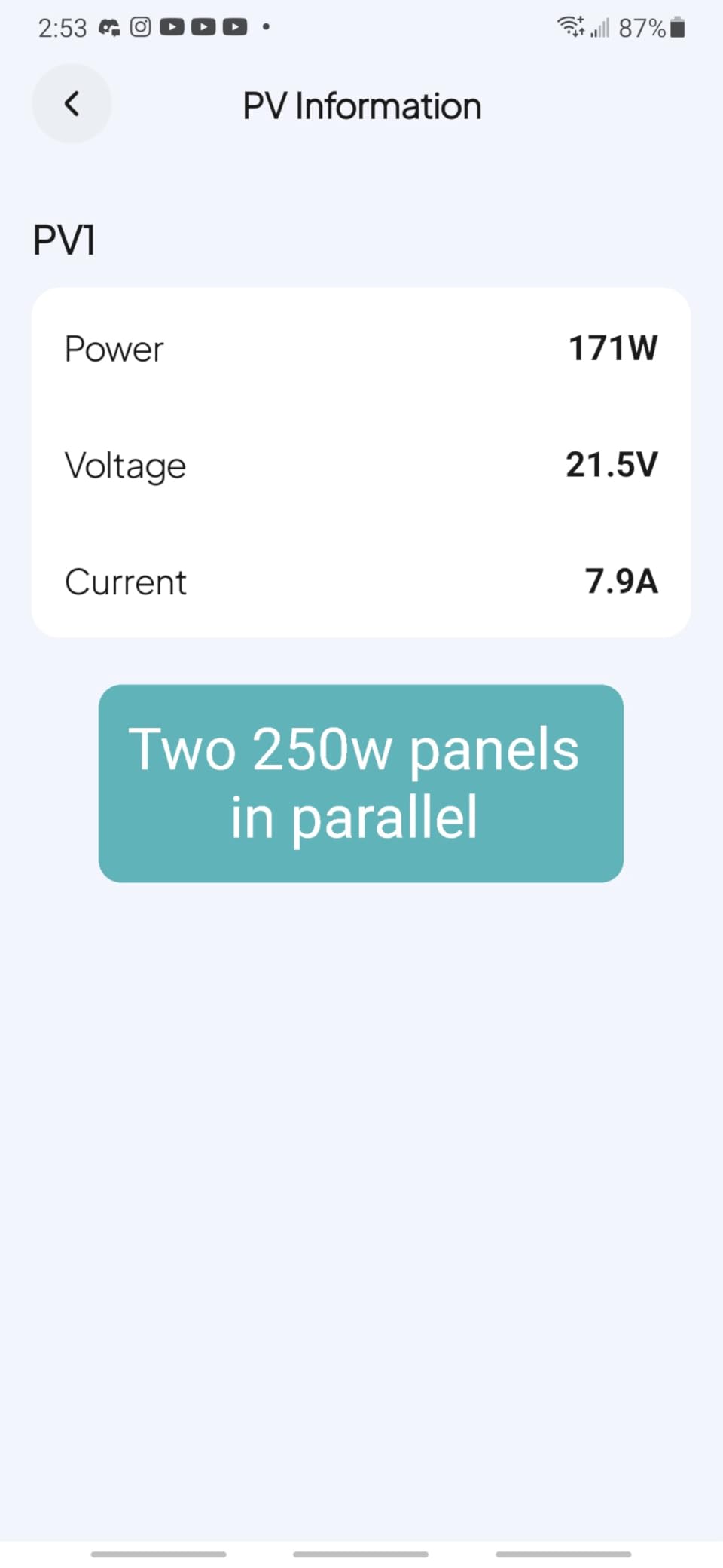
Real-world output is meaningfully lower than the label suggests. Detailed testers document around 20W of inverter idle draw and a usable-capacity limit near 90%, so treat the effective figure as roughly 880 watt-hours rather than 1,152.
Even so, that supports about 15 hours on a 60W cooler, and the 500W solar input means a 200W panel still charges quickly during daylight hours.
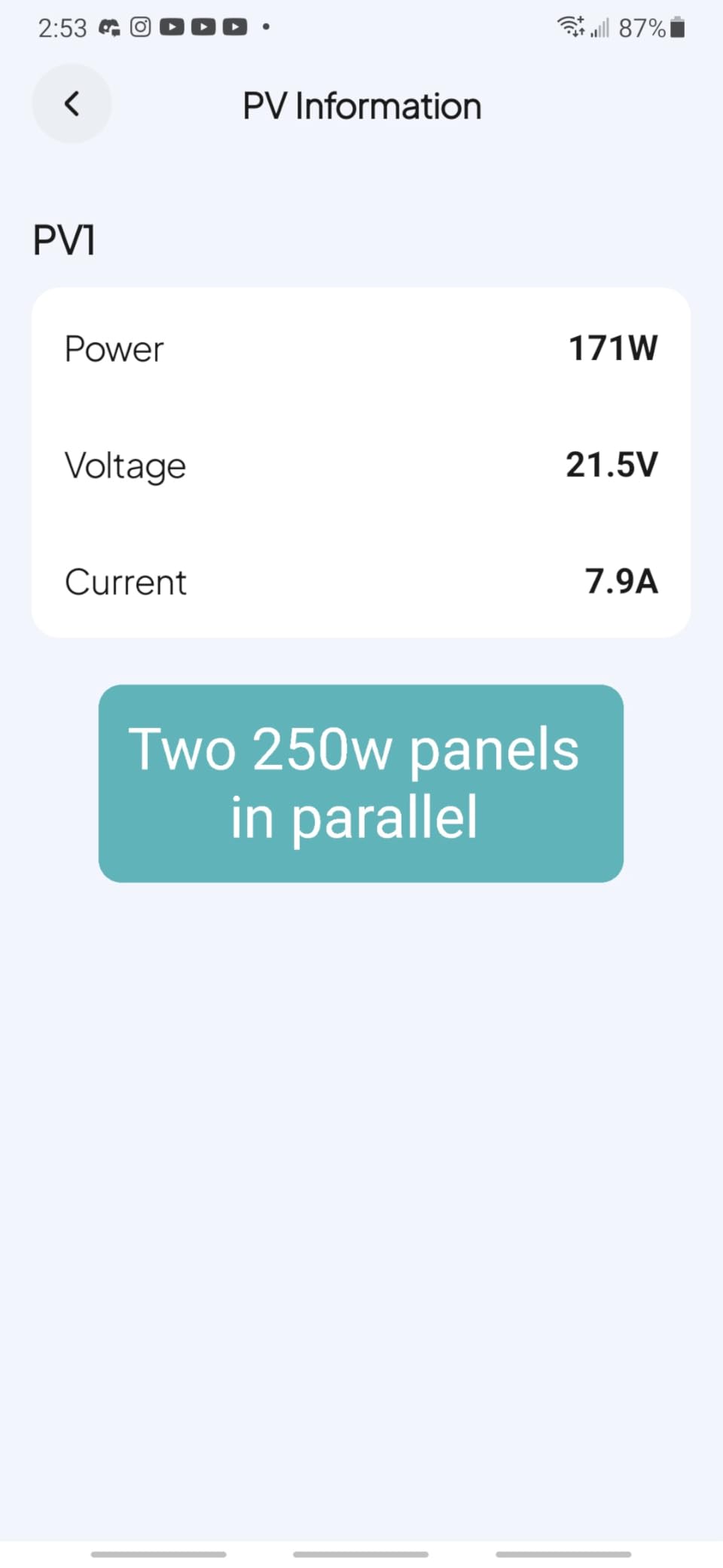
Why it suits home backup
Power lifting lets you run loads well above the continuous rating for short bursts, which is what a refrigerator compressor or a pump needs at startup. The AC input accepts 1,440W, so a full charge takes about an hour rather than an evening.
It also offers a strong long-term parts support story, with EU spare part availability published at five years alongside the warranty.
Where the compromises are
At 37.4 pounds this is a garage, basement or RV box rather than something you carry from a car. Plan where it lives before buying, because moving it repeatedly is unpleasant.
Some units arrived needing a firmware update to fix battery calibration and charge-speed behaviour, and BLUETTI has drawn customer service complaints in buyer feedback. Factor that in if support matters to you.
6. ALLWEI 512Wh: LiFePO4 Chemistry With Two USB-C Ports
ALLWEI Portable Power Station 500W, 512Wh LiFePO4 Battery UPS Backup Power
512Wh LiFePO4
500W AC and 1000W surge
13 lb
2.5-hour AC charge
Pros
- 512Wh LiFePO4 with 1000W surge
- 100W USB-C PD plus a second 36W USB-C port
- 2.5-hour full AC charge in Q mode
- Only 13 lb in a compact 11.6 by 7.5 by 7.6 inch body
- Display shows input output time remaining and charge
Cons
- Solar input capped at 120W so 200W panels will not work
- Some owners report units losing state-of-charge accuracy
- Two-year warranty is short against a 3000-cycle rating
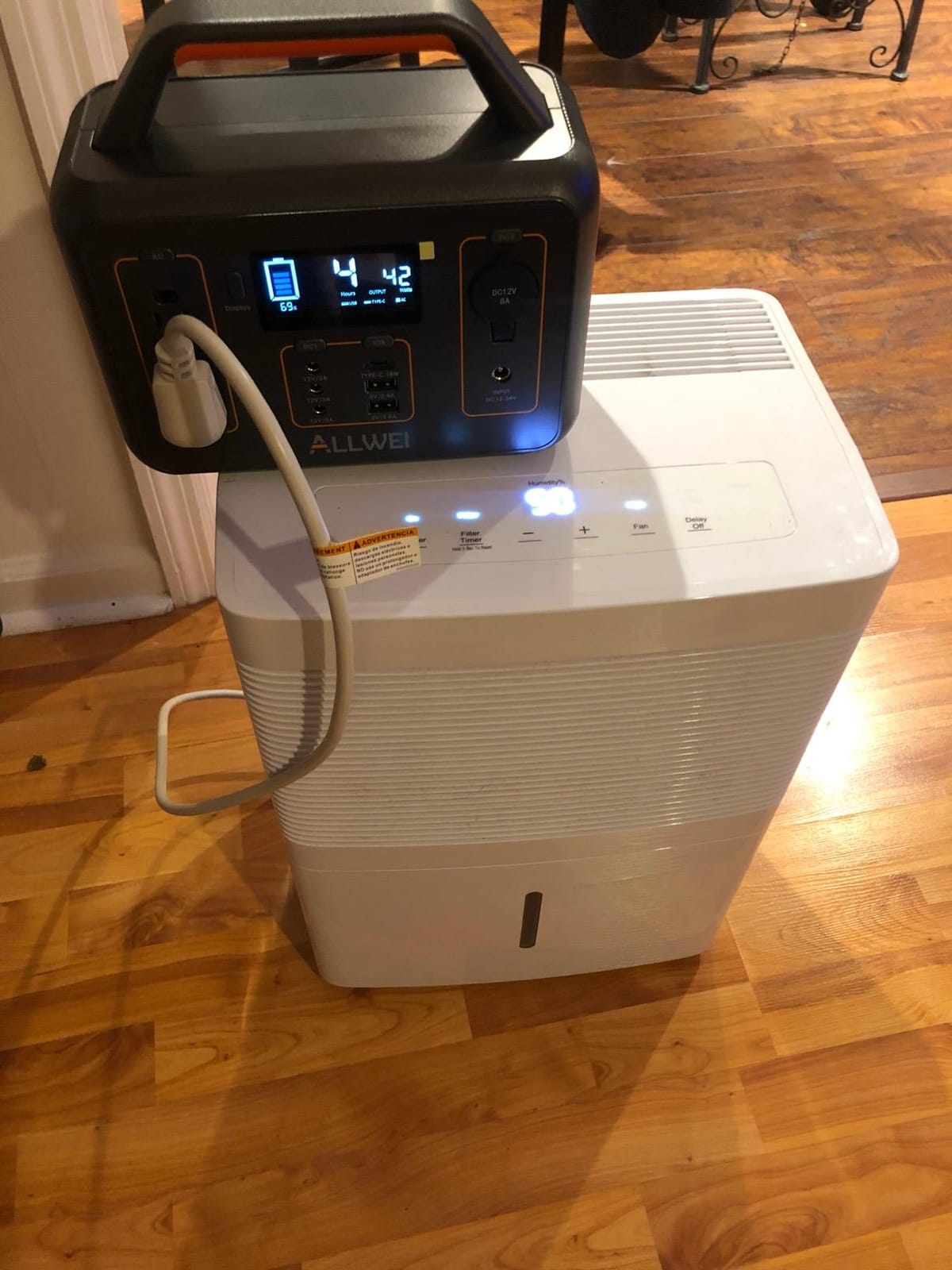
Choose the ALLWEI when you want 512Wh of LiFePO4 capacity in the mid-capacity tier. Buyers repeatedly report it performing on par with models from larger brands while powering CPAP machines, tools and small appliances.
The two USB-C ports set it apart from same-capacity rivals: 100W PD for a laptop and 36W for a phone, both fast, with two USB-A ports and a 12V car socket alongside two AC outlets and two DC barrel outputs.
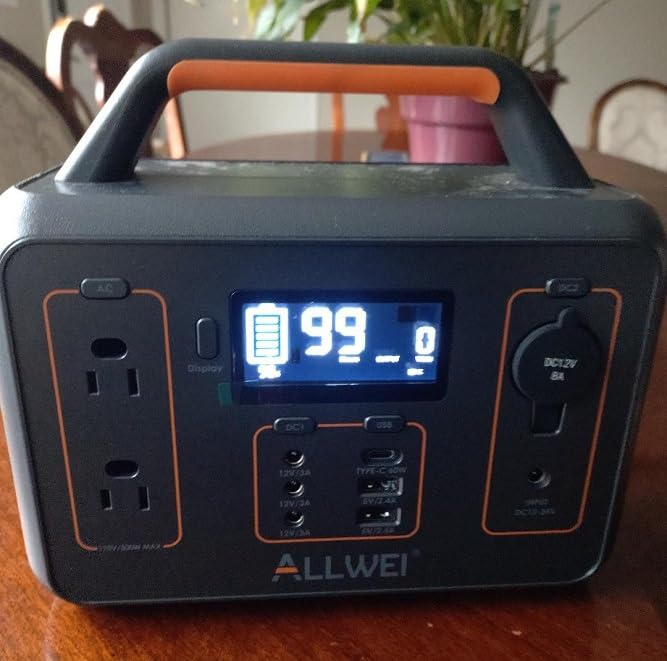
Usable capacity lands near 435 watt-hours, giving about 7 hours on a 60W cooler, 11 hours of CPAP at 40W, or a full day of phone charging. A full wall charge takes roughly 2.5 hours in Q mode, one of the faster cycles at this capacity.
UPS mode protects desktops and file servers on grid failure, and the display keeps live input and output wattage visible, which saves guessing at remaining runtime.
Where the value shows up
Cycle rating is 3,000 cycles to 70% capacity for a stated ten-year lifespan, so you are buying longevity, not just capacity. The 13-pound weight keeps it car-portable alongside the Jackery 500 v2.
For buyers who want LiFePO4 chemistry without stepping up to the premium brands, it fills the same slot as the Explorer 500 v2 at a lower entry point.
What to check before you rely on it
Solar input is capped at 120W, so a 200W panel will not charge it at full speed. If off-grid solar is the plan, this is the wrong box.
A portion of negative reviews describes units refusing to hold charge or losing state-of-charge accuracy after about a year, and support requiring extensive data before helping. If you need it for a medical device, test it thoroughly before you depend on it.
7. Anker SOLIX C1000 1056Wh: The Fastest Recharge and the Biggest Solar Input
Anker SOLIX C1000 Portable Power Station with Car Charging Cable, 1,056Wh
1,056Wh LiFePO4
1,800W AC and 2,400W surge
11 ports
5-year warranty
Pros
- Reaches 80% in 43 minutes with a full charge under an hour
- 600W solar input for a 1.8-hour full solar recharge
- 2400W SurgePad output across 11 ports
- 3000-cycle battery with a five-year Anker warranty
- 15 percent smaller than comparable 1kWh units
Cons
- UltraFast charging needs the Anker app and a smartphone
- 27.6 lb is substantial for a 1kWh unit
- UltraFast mode works only between 68 and 122F
Choose the Anker SOLIX C1000 when recharge speed is the deciding factor. Going from empty to 80% in 43 minutes changes how usable a 1,000Wh battery is during a same-day outage, because you can refill it before dinner rather than overnight.
Reviewers single out the 11 ports and 2,400W of SurgePad surge output, so a group camping together can charge almost anything at once.
The 1,056Wh of LiFePO4 capacity gives roughly 890 usable watt-hours, about 15 hours on a 60W cooler or 7.4 hours at 120W sustained. Rated at 3,000 cycles over a ten-year lifespan with a five-year warranty, it balances durability and service.
Solar input accepts up to 600W, more than any other unit here, which allows a full solar recharge in about 1.8 hours from a suitable panel. That figure makes genuinely off-grid use realistic rather than aspirational.
Where the speed actually helps
Fast turnaround matters when a storm knocks power out mid-afternoon. A unit you can refill before dinner is far more useful than a larger battery that needs until morning, and the 600W solar input keeps that advantage on off-grid trips.
The 15% smaller footprint than comparable 1kWh units also makes it easier to place in a trunk or an RV storage bay than its wattage suggests.
What to know about the headline figure
The 43-minute number requires UltraFast mode to be enabled in the Anker app, and it only operates between 68 and 122F. Some buyers discover that only after delivery, so set it up before you need it.
At 27.6 pounds it is also the heaviest 1,000Wh model in this roundup, and the app dependency is a genuine annoyance if you prefer physical controls.
8. ZeroKor 300W Solar Generator: A Complete Kit That You Can Carry in One Hand
Portable Solar Generator 300W Portable Power Station with 60W Solar Panel
280Wh battery
2 AC outlets at 300W max
60W panel included
5.1 lb
Pros
- 5.1 lb and 4.1 inches thick so it packs easily
- 60W foldable solar panel included in the box
- Pass-through charging while powering devices
- Flashlight with SOS strobe and reading modes
- Support has replaced units outside warranty
Cons
- Buyers report continuous AC output well under the advertised 300W
- Included 60W panel is criticized for failing at the folds
- Documented solar input measures far below the panel rating
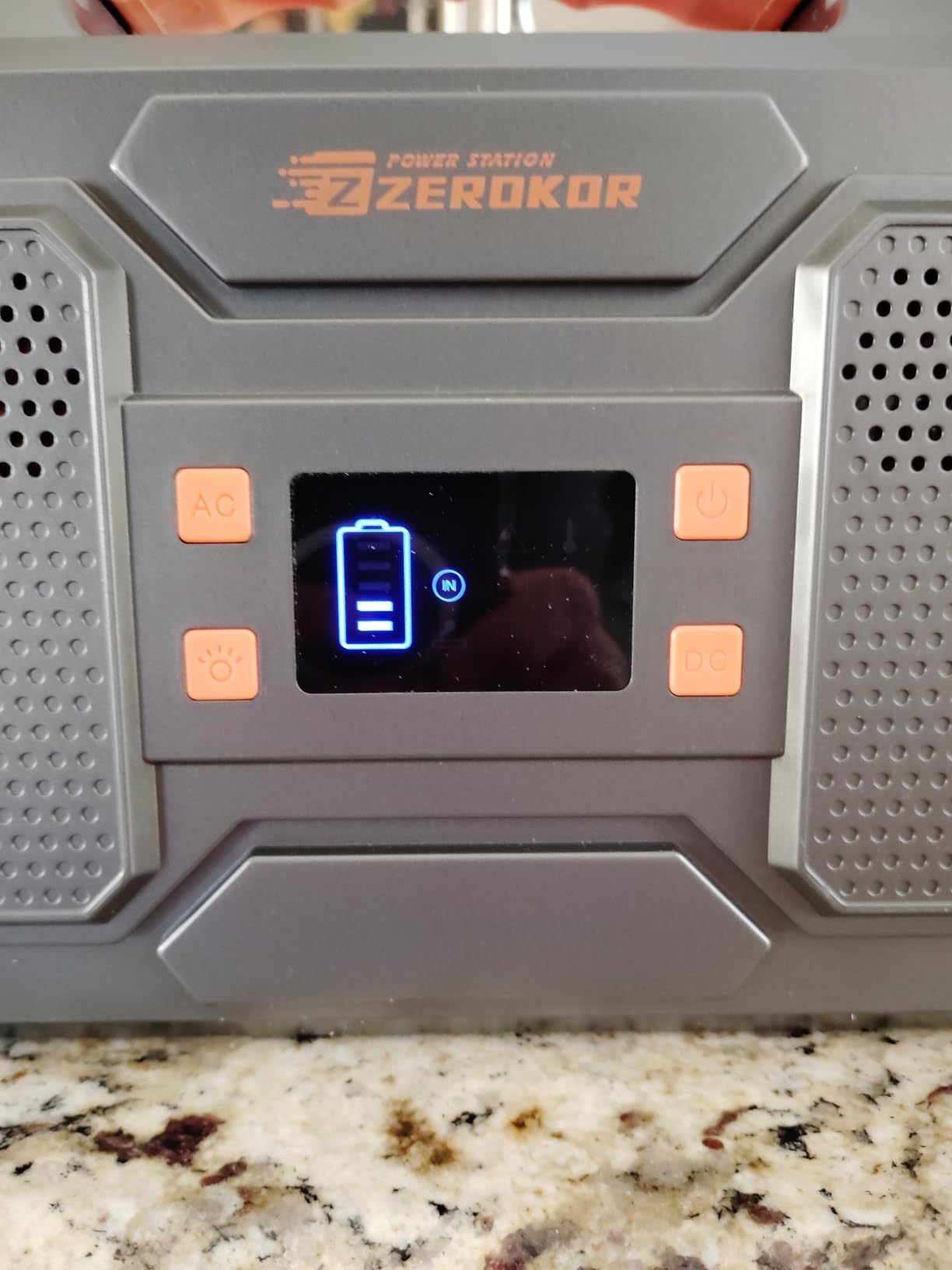
Choose the ZeroKor only if the included panel matters more than verified output. At 5.1 pounds and 4.1 inches thick it packs into a car boot easily, and a 60W monocrystalline foldable panel arrives in the box rather than as a separate purchase.
Pass-through operation lets it charge while powering devices, which is useful for a weekend phone and lantern setup, and the SOS strobe flashlight is a real convenience outdoors.
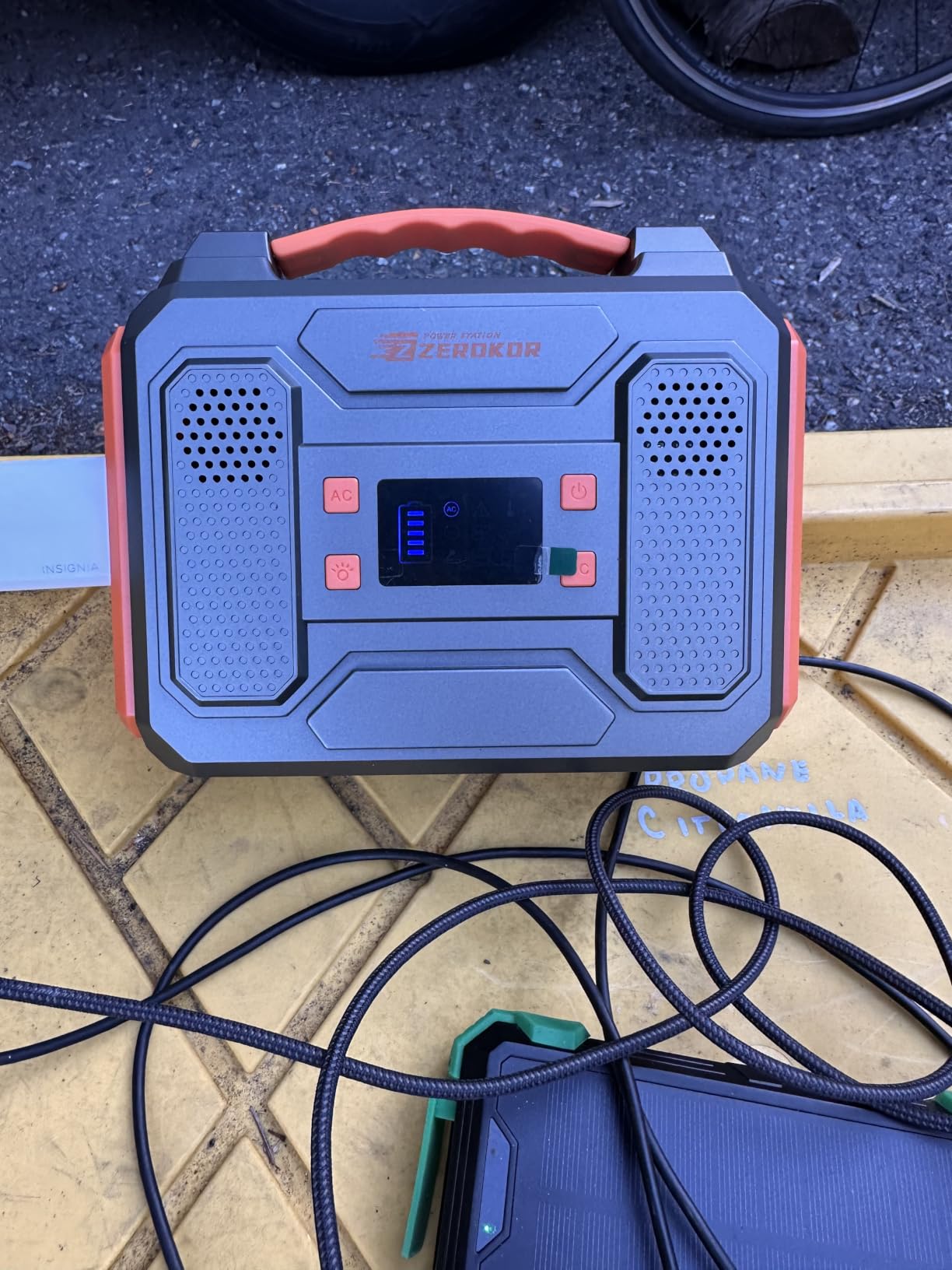
Usable capacity is near 238 watt-hours, good for roughly 20 hours of phone charging or a few hours of laptop use. The BMS covers short circuit, over-current, over-voltage, overload and overheat, plus an auto cooling fan.
That is the whole of the good news. Several buyers report continuous AC output well below the advertised 300W maximum, in some cases under 100W, which would not run a small cooler or a monitor reliably.
Why the included panel changes the maths
Starting from a complete kit removes a common buyer mistake in this category, which is buying a station and a mismatched panel separately. For a first-time user who wants to test solar charging, that convenience is worth something.
The manufacturer lists a 20.5% conversion rate for the panel and a built-in MPPT claim, which would be genuinely useful at this size if the measured input matched.
Where the listing and the reality diverge
The negative feedback covers more than expectations. Documented testing reports AC output under 100W, non-functional DC behaviour and solar input far below the panel rating, all of which contradict the listing.
The included 60W panel is also criticized for breaking internal wiring at the folds when opened and closed, and the warranty covers only 12 months. Treat it as a light backup pack for phones rather than a source you would trust during a long outage.
9. BLUETTI Elite 100 V2 1024Wh: Strong Output at a Lighter Carry Weight
BLUETTI Elite 100 V2 Portable Power Station for Camping 1024Wh 1800W
1,024Wh LiFePO4
1,800W AC and 3,600W surge
25 lb
10ms UPS
Pros
- 1800W output with 2700W lifting and 3600W surge
- 0-80 percent in about 45 minutes on 1200W AC input
- 25 lb in a 17L body with a hidden grab handle
- 30 dB silent mode and 10ms UPS
- Five-year warranty with app control that works offline
Cons
- 25 lb still needs two hands for distance carrying
- Fast vehicle charging needs the BLUETTI Charger 1
- Wattage readout does not register very low draw
Choose the Elite 100 V2 when you want a full kilowatt of capacity you can still lift with two hands. At 25 pounds it weighs 2.6 pounds less than the Anker C1000 while carrying 1,024Wh, and BLUETTI states it is 30% lighter and 35% smaller than the previous generation.
Output matches the top of this group at 1,800W rated with 2,700W power lifting and 3,600W surge, which handles space heaters and other demanding loads for short bursts. Reviewers single out the power-to-weight balance as the standout feature of this model.
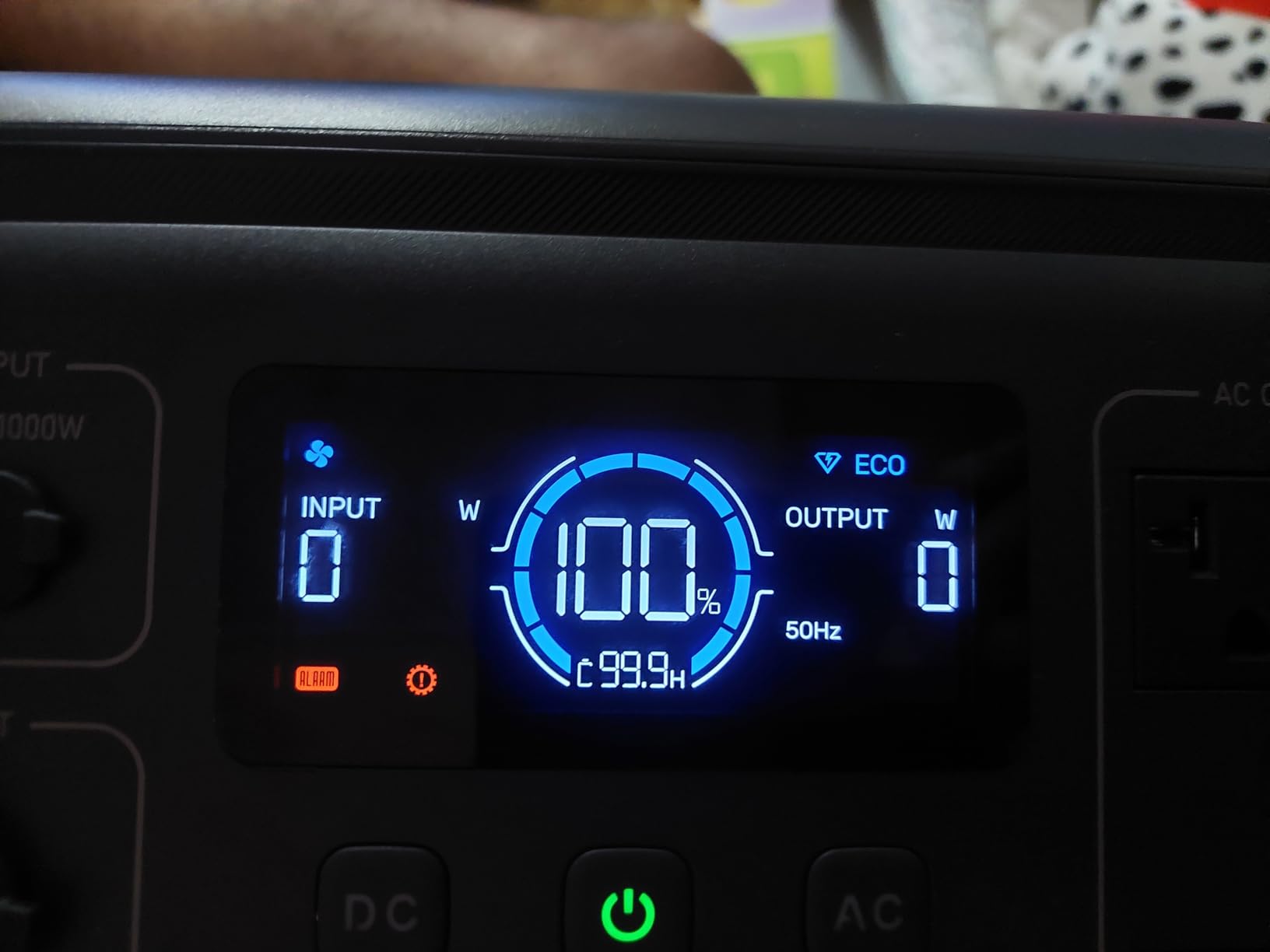
It also charges quickly: 0-80% in roughly 45 minutes on 1,200W TurboBoost AC input, with 11 ports covering AC, USB-A, USB-C, DC barrel and a 12V car outlet. The 10ms UPS switchover and 30 dB silent mode make it usable indoors and overnight, and BLUETTI states it runs 50% quieter than comparable 1kWh units.
Detailed users report powering a 32 qt 12V fridge for about 24 hours, and a 1,200W space heater for just under an hour on power lifting, which is a realistic picture of the trade-off between capacity and output.
Why it suits mobile use
The 17-litre body with a hidden grab handle fits behind a seat or in a truck bed more easily than a 37-pound unit. The BLUETTI app works over Wi-Fi and Bluetooth, and functions without an internet connection.
Over 4,000 cycles to 80% capacity for a stated ten-year lifespan makes it a reasonable long-term purchase for someone who already knows they need 1,000Wh. The five-year warranty covers it for most of that life.
Where it falls short
Standard 12V car charging is slow. Getting a meaningful vehicle top-up needs the separate BLUETTI Charger 1, which is an extra purchase outside this budget.
The wattage readout also fails to register very low draw, so monitoring a CPAP machine or a phone charger on the display is awkward. The app is the better tool for that.
10. MARBERO 111Wh Solar Kit: A Ready Emergency Box in a Go-Bag
MARBERO 111Wh Solar Generator with Panels Included Solar Panel Kit 30W
111Wh lithium battery
2 AC outlets at 80W
30W panel included
2.3 lb
Pros
- 2.3 lb station and 1.8 lb panel so it is hand-carryable
- 30W foldable solar panel included as a complete kit
- Four USB-A plus one USB-C covers phones cameras and lights
- Dual AC outlets for small appliances up to 80W
Cons
- Only 111Wh so runtime beyond phones and lights is short
- 80W continuous AC is among the lowest here
- 12-month warranty is tied for the shortest in this roundup
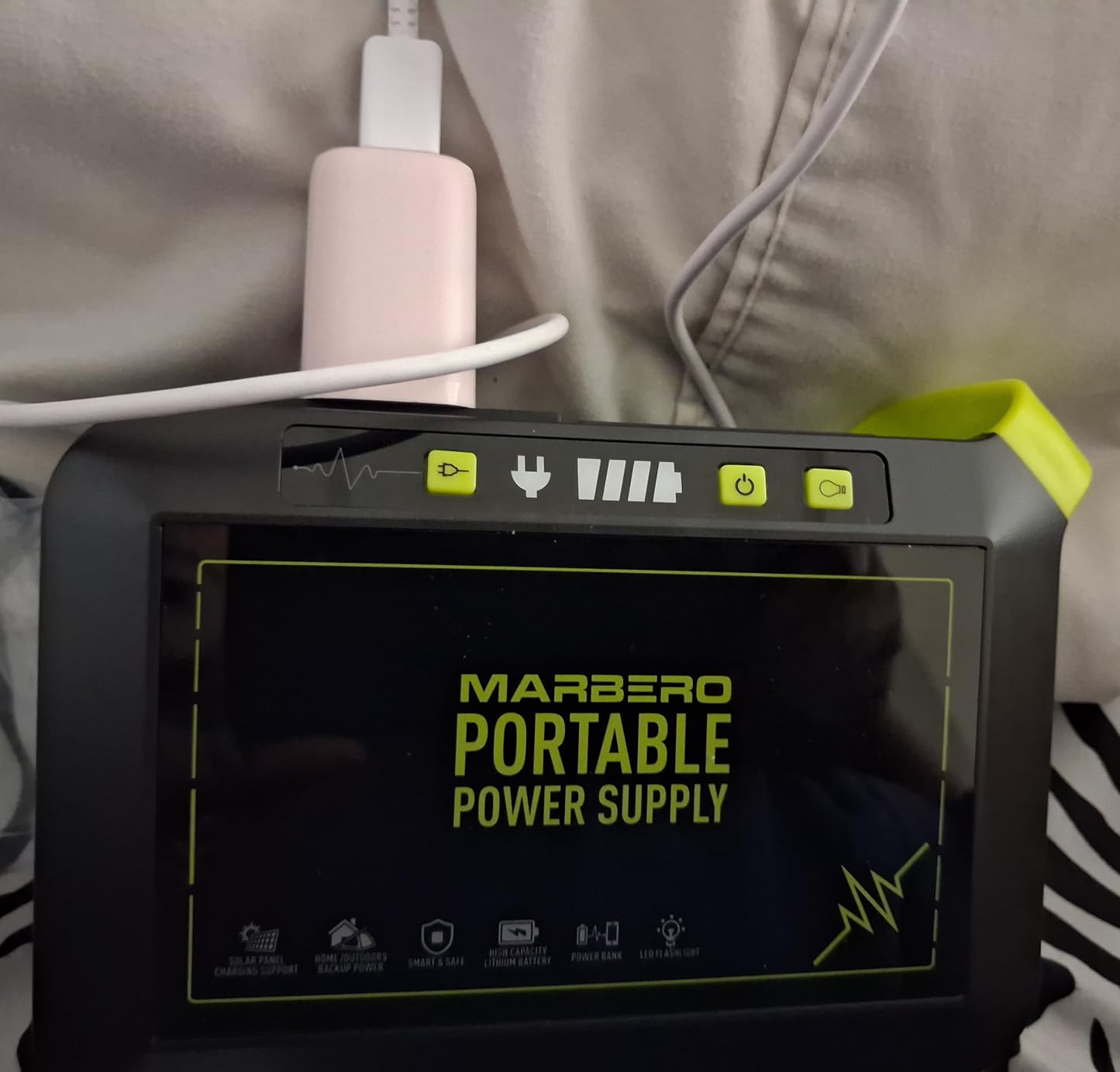
Choose the MARBERO 111Wh kit as an emergency box, a travel charger or a way to introduce someone to the category. At 2.3 pounds for the station and 1.8 pounds for the panel, it is the easiest kit here to carry, and the panel folds to 8.3 by 12 by 1.18 inches.
The 30W foldable panel is included, so the kit works out of the box for phones, cameras, tablets and lights across a weekend. With more than 9k reviews on file, its failure pattern is well documented, and the complaints concentrate on expectations rather than on a single defect.
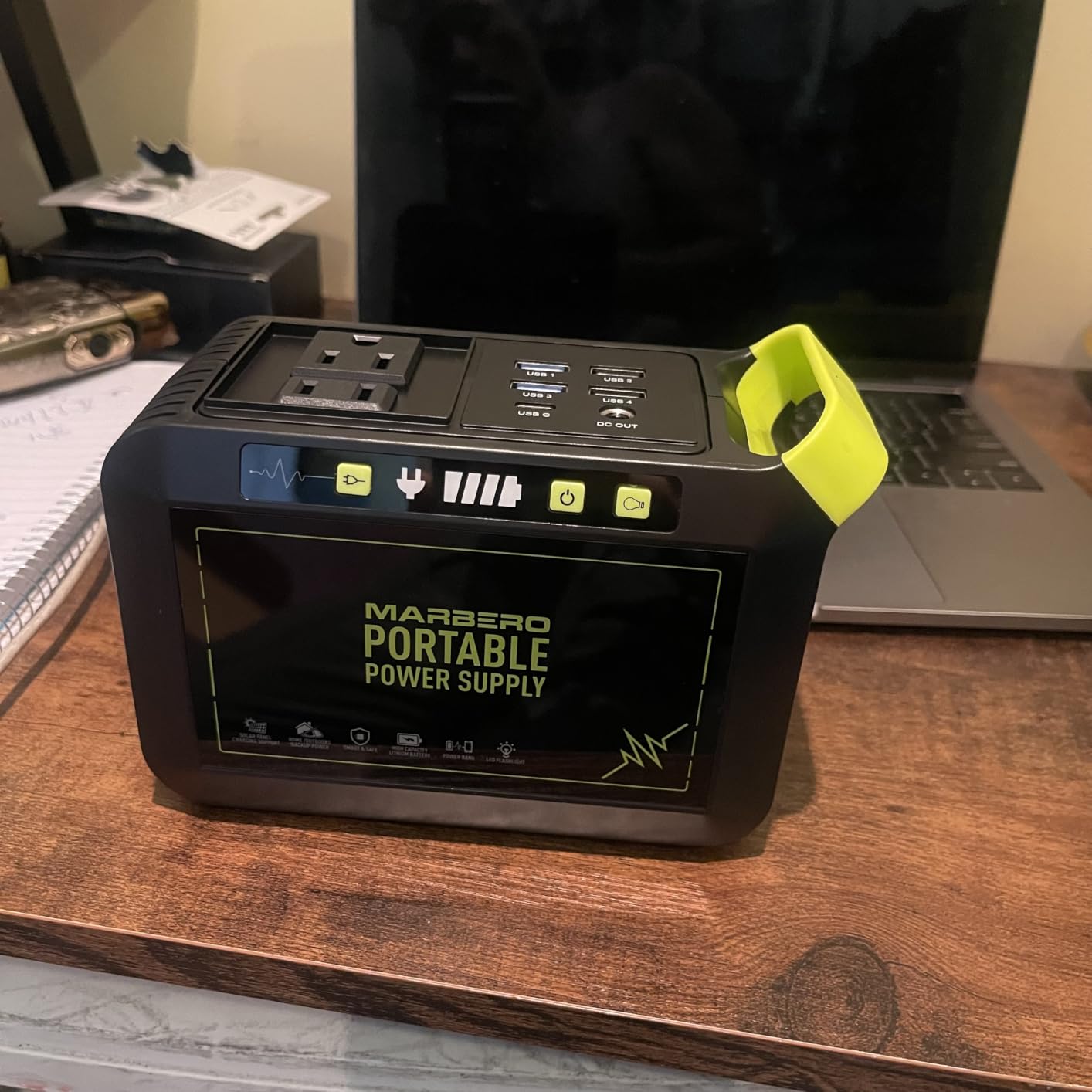
Usable capacity is around 94 watt-hours after inverter losses. That is roughly eight hours of phone charging, or one to two hours of laptop use, and the two AC outlets are rated at 80W continuous with 120W peak.
Protections cover auto shut-off, short circuit, overcharge, overload and over-voltage. The panel converts at a listed 21.5-23.5% rate, which is respectable for a kit this small, and the station itself measures 6.5 by 3.1 by 4.6 inches.
Where it does the job well
It is a genuine emergency box. Keep it at the top of a closet, in a car or in a go-bag and it will carry several phones, a radio and a lamp through an outage without anyone noticing its size.
Expectations matter more here than anywhere else in this list. Buyers who treat 111Wh as what it is are usually satisfied; the disappointed reviews reflect wanting a capacity it cannot deliver.
Where the limits bite
At 4.1 stars with a 12% one-star share, this is tied with the ZeroKor as the lowest-rated product we included. The negative feedback points to reported failures more often than to a single defect, and the 12-month warranty is tied for the shortest in the roundup.
It is also lithium-ion rather than LiFePO4, and no long cycle-life rating is published for it. As a car glove-box unit that gets topped up regularly, that is fine. As a ten-year investment, it is not.
How We Chose These 10 Stations
We ranked all ten against the same seven criteria, and every spec below comes from manufacturer data cross-checked against buyer feedback. Here is the list, in the order it mattered.
- Usable capacity, not label capacity. We applied the standard 0.85 inverter efficiency factor to every watt-hour figure, and subtracted known losses such as the AC180’s 20W idle draw.
- Continuous output first, surge second. A 1,500W continuous rating tells you what stays on; surge only covers inrush.
- Battery chemistry. LiFePO4 units here are rated 3,000 to 6,000 cycles, against far fewer for the lithium-ion models.
- Recharge options and speed. AC input wattage, car charging and solar input all count, and we noted which require an app to unlock.
- Port selection. USB-C Power Delivery matters more every year as laptops and phones move to it.
- Warranty length and support. Two years is the common floor here; five years is meaningfully better.
- Weight and physical size. A 37-pound unit is a garage battery, a 13-pound unit is a camping battery.
Two additional filters removed otherwise capable units. We dropped anything whose documented output contradicted its listing, which is why a 300W-rated product with repeated reports of under 100W appears but never as a top pick. We also avoided brands with thin or absent review histories, since 1,700 or more reviews per product gave us a much clearer picture of failure patterns.
If you want the same framework applied to larger budgets, our emergency power station guide goes into the runtime math in more detail.
Buying Guide: Sizing, Chemistry, Solar and Reliability
Pick your capacity tier before you pick a brand
Starting by writing down every device you want to run and its wattage is the fastest way to size correctly. Then divide into one of three tiers, because buying the wrong tier is the most common expensive mistake in this category.
Sub-300Wh. Phones, tablets, cameras, lights, a router and one laptop. The Explorer 300, the ZeroKor and the MARBERO all live here, and none of them will run a fridge.
300-600Wh. A CPAP machine overnight, a 12V cooler for a day, a router plus laptops, and a television during a short outage. The Explorer 500 v2, the GRECELL 500W and the ALLWEI cover this tier well.
700Wh and above. A mini-fridge plus router for a full day, power tools, a window air conditioner, or a weekend off-grid. The AC180, Anker C1000, Elite 100 V2 and Explorer 1000 v2 sit here, and every one weighs 23 pounds or more.
Calculate runtime with a 0.85 factor
The formula is simple: runtime in hours equals capacity in watt-hours multiplied by 0.85, divided by device watts. A 1,000Wh station running a 60W cooler gives about 14 hours.
Adjust down further for units with documented idle draw, and remember that a refrigerator compressor cycles rather than runs continuously, so its effective runtime is much longer than the arithmetic suggests. For a full method, see our RV camping power station guide.
LiFePO4 versus Li-ion is the decision that ages best
LiFePO4 cells in this roundup are rated from 3,000 to 6,000 cycles, with capacity retention between 70% and 80% at the end of that range. The lithium-ion models here carry no comparable long-life rating.
That gap decides the cost per cycle. A 1,000Wh LiFePO4 pack rated for 4,000 cycles spreads its purchase across thousands of uses, while a lithium-ion pack of the same size may need replacing long before a decade is up. If you keep a unit more than a few years, buy chemistry over extra ports.
Match your solar panel before you buy
Solar input varies enormously across this list: 30W and 60W on the kits, 120W on the ALLWEI, an MPPT charge controller on the Jackery 500 v2, 500W on the AC180 and 600W on the Anker C1000. Check the unit’s maximum solar input wattage and its input voltage range before buying a panel.
Forum buyers raise connector compatibility more than any other solar question, and they are right to. Third-party panels use different connector styles and voltage windows, and a mismatch can mean the panel charges at a fraction of its rating or not at all. The ALLWEI’s 120W cap and the ZeroKor’s disputed MPPT claim are the two cases here to watch.
Remember that the panel is a separate cost in almost every case, and it is a meaningful one. Buying a station and a panel in the same budget cuts the capacity you can afford, so decide which half matters more.
Brands, warranties and support: the honest picture
Jackery, EcoFlow, BLUETTI and Anker form the community consensus shortlist, with BLUETTI and EcoFlow preferred for capacity per dollar and Jackery and Anker for brand trust and lighter weight. Buyers in r/prepping and r/camping threads repeatedly ask the same question: which brand is most reliable?
Based on warranty length and support signals in the review data, the answer within this budget band points to the five-year warranties. BLUETTI publishes five years on both the AC180 and the Elite 100 V2, and states EU spare part availability for five years on the AC180. Anker covers the C1000 for five years. The Jackery 500 v2 also lists five years.
Elsewhere the picture is thinner. The Explorer 300 lists two years, the GRECELL and ALLWEI two years, and the Explorer 1000 v2, ZeroKor and MARBERO list one year or less. Support quality is harder to measure than warranty length, but buyer feedback includes repeated customer service complaints around BLUETTI, while several ZeroKor buyers report the brand replaced failed units outside warranty.
One more thing worth knowing: budget brands across this category often share contract manufacturers, which is exactly why you should not overpay for a logo when two otherwise identical units differ mainly in branding and warranty length.
What a sub-500 station cannot do
Be clear about the ceiling before you buy. No unit in this roundup starts a full-size electric oven, runs a room air conditioner for a full day, or powers a house. Whole-home backup and 240V appliances need a much larger budget, and no portable power station is a substitute for a properly sized standby generator.
High-watt resistive loads such as hair dryers, space heaters and electric kettles are also limited. The 1,500W and 1,800W models can run them briefly; the 300W and 500W models will not start them at all. Check surge ratings before assuming a motor-based appliance will run.
Also never connect a portable power station to household wiring yourself. Backfeeding a panel is dangerous and illegal in many areas, so use it to run essential loads through individual outlets instead.
Safety, storage and lithium transport
Independent safety certification to UL 2271 for the battery and UL 2743 for the whole unit is the standard to look for, though certification is not published consistently in this price band. Full battery management systems with over-current, over-voltage, short circuit and thermal protection are common and worth verifying in the listing.
Air travel rules limit loose lithium batteries and power stations above 100Wh, so the Explorer 300, the ZeroKor and especially the 111Wh MARBERO are the practical options for flights, while 1,000Wh models travel in checked or ground freight only. For anything larger, secure the terminals and keep the unit upright in a vehicle.
Finally, cycle the battery. Units that sit fully charged or fully empty for months drift into a protection state, and topping them up every few months keeps the cells balanced. If you are planning a week away without a wall outlet, our off-grid trips guide covers the setup and charging routine in detail, and our off-grid living guide goes deeper on long-term setups.
Frequently Asked Questions
What is the best budget portable power station under 500 dollars?
The Jackery Explorer 300 at 292Wh is our top overall pick for most buyers, because it pairs LiFePO4 chemistry rated past 4,000 cycles with a 7.1-pound weight and 100W USB-C charging. Choose the Jackery Explorer 500 v2 instead if you want a 12V cooler or CPAP machine running for hours, or the Anker SOLIX C1000 if you need 1,000Wh and the fastest recharge in the group.
Is Jackery or Anker better?
Jackery leans on brand trust, lighter weight and a long review history, while Anker leads on recharge speed, port count and solar input. In this price band, Jackery’s Explorer 500 v2 gives 512Wh with a 52-minute recharge and a five-year warranty, and Anker’s C1000 reaches 80% in 43 minutes with 1,056Wh and 600W solar input. Choose Jackery for travel, Anker for speed.
Which brand of portable power station is the most reliable?
Reliability is best judged by warranty length and support signals. Within this budget, BLUETTI and Anker both publish five-year warranties, and the BLUETTI AC180 also states five-year EU spare part availability, while Jackery’s 500 v2 lists five years. Shorter entries include the Explorer 1000 v2 at one year and the ZeroKor and MARBERO at 12 months. Plan on testing any unit before relying on it for a medical device.
What is a cheaper alternative to Jackery?
The ALLWEI 512Wh is the clearest alternative, offering LiFePO4 capacity, 500W continuous output, 1,000W surge, 100W and 36W USB-C ports, a 2.5-hour wall charge and a 13-pound weight. The GRECELL 519Wh is another option with ten ports and a wireless charging pad, though it uses lithium-ion cells with a shorter expected cycle life.
What is the best solar power station under 500 dollars?
The Anker SOLIX C1000 accepts up to 600W of solar input, the highest in this group, and reaches a full solar recharge in about 1.8 hours. The BLUETTI AC180 follows with 500W input and a 2.8 to 3.3 hour solar recharge, and the Jackery 500 v2 uses an MPPT charge controller. Check input wattage and voltage range before buying any panel, and budget for it separately.
Can a portable power station under 500 dollars run a refrigerator?
Yes, a mini-fridge or 12V cooler is well within reach. A 1,000Wh unit gives about 900 usable watt-hours after the 0.85 efficiency factor, which is roughly 15 hours of runtime on a 60W compressor cooler, and compressor units cycle rather than run continuously. A full-size refrigerator usually needs 1,500W or more of continuous output, so a 500W station may not start it.
Conclusion: The Best Portable Power Stations Under 500 Dollars
The Jackery Explorer 300 takes our top spot among the best portable power stations under 500 dollars in 2026 because it is the only unit in this roundup that pairs long-life LiFePO4 cells with a 7.1-pound carry weight. The Jackery Explorer 500 v2 is the do-everything choice for a 12V cooler or a CPAP machine, and the Anker SOLIX C1000 is the pick when recharge speed and 1,000Wh of capacity matter most.
Check live pricing before you commit, since this category swings with sales throughout the year, and pick the capacity tier that matches the devices you actually plan to run.