
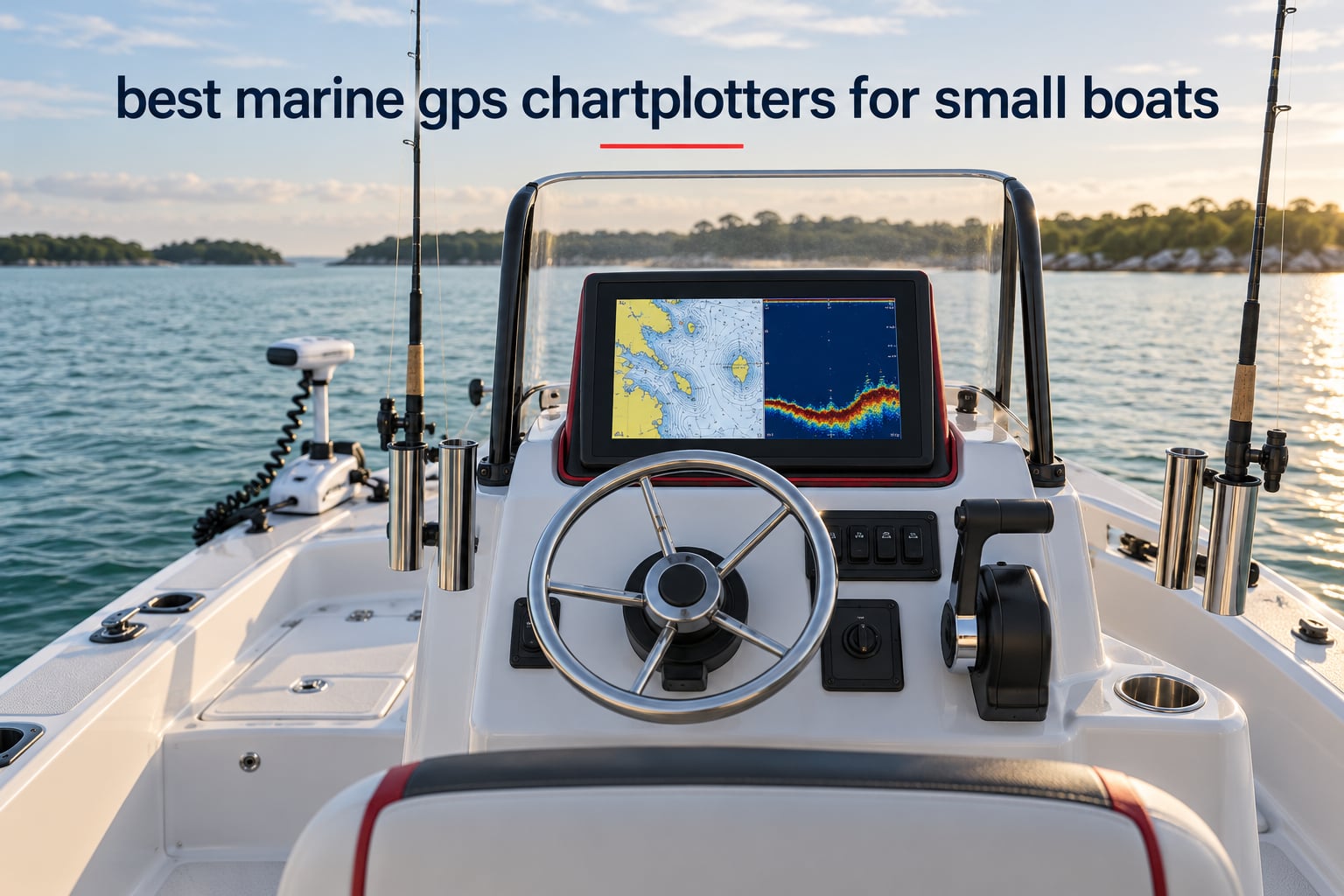
The trouble with most marine electronics roundups is that they are written for boats with dashboards. They recommend 12-inch glass-helm displays to owners of a 16-foot jon boat with a flat cap rail and twelve square inches of usable mounting surface. If you own a small center console, a bay boat, a skiff, a RIB or a 20-something-foot sailboat, the constraints that actually decide your purchase are console space, sunlight readability, battery budget and whether your hull can even hold a transducer. Those four things decide everything else.
We pulled ten of the most established marine GPS displays in their classes and sorted them by what matters on a boat under 24 feet. Some are full chartplotters with preloaded charts. Some are chartplotters and fish finders in one box. A couple are close to what a small-boat owner actually needs from a navigation display. One of them is not a chartplotter at all, and we will say so plainly rather than pretend otherwise.
Last updated for 2026. We use the primary keyword in full because that is exactly how most owners search, and because the honest answer depends on boat length more than any other single factor. If you want the wider picture on standalone receivers and handheld units first, our guide to marine GPS units for navigation covers the older, simpler category in depth.
Table of Contents
What Is a Marine GPS Chartplotter?
A marine GPS chartplotter is a boat-mounted display with a built-in GPS receiver and preloaded nautical charts. It draws your position, heading and planned route on a map, and it merges data from networked sensors such as sonar transducers, radar, AIS receivers and engine monitors over NMEA 2000 so navigation, depth and engine data land on a single screen.
Almost every modern unit in this roundup has the GPS receiver built in, which means no mushroom antenna on the rail and no separate GPS puck to wire. What separates a chartplotter from a fish finder is the chart layer and the networking: can it draw a real nautical chart, and can it talk to other equipment? Our guide to chartplotters built for offshore fishing goes deeper on the larger-screen end of the market, where networking and radar matter more.
Top 3 Picks for Small Boats
Three of these ten stand out for a typical 16-to-20-foot boat with a small console and one battery bank. The Striker 4 wins on proof: it carries the largest review base in the group and a draw low enough to run all day. The Striker Vivid 7cv is the balanced pick if you want a real screen and a real transducer in the box. The Lowrance Elite FS 10 is the one to buy if you plan to grow the system later.

Garmin Striker 4
- 3.5 inch keyed display
- CHIRP and ClearVu sonar
- Transducer and mounts included
- 0.23 amp draw at 12V

Garmin Striker Vivid 7cv
- 7 inch color display
- GT20 transducer included
- Quickdraw Contours
- Wi-Fi with ActiveCaptain
Lowrance Elite FS 10
- 10 inch multi-touch display
- C-MAP charts preloaded
- Wireless NMEA 2000 and Ethernet
- Active Imaging 3-in-1 transducer
All 10 Marine GPS Chartplotters at a Glance in 2026
Sorted by boat-fit rather than by price. The screen size column is the one to read first, because it constrains everything else on a small console.
| Product | Specifications | Action |
|---|---|---|
| Garmin Striker 4 |
|
Check Latest Price |
| Garmin Striker Vivid 7cv |
|
Check Latest Price |
 Humminbird Helix 5 G3 CHIRP Humminbird Helix 5 G3 CHIRP |
|
Check Latest Price |
 Lowrance Eagle Eye 9 Lowrance Eagle Eye 9 |
|
Check Latest Price |
| Lowrance Elite FS 10 |
|
Check Latest Price |
 Simrad NSS Evo3S 12 Simrad NSS Evo3S 12 |
|
Check Latest Price |
 Humminbird Helix 7 G4 Humminbird Helix 7 G4 |
|
Check Latest Price |
 Lowrance Eagle 5 SplitShot HD Lowrance Eagle 5 SplitShot HD |
|
Check Latest Price |
 Simrad GO7 XSR Simrad GO7 XSR |
|
Check Latest Price |
 Garmin ECHOMAP UHD2 94sv Garmin ECHOMAP UHD2 94sv |
|
Check Latest Price |
1. Garmin Striker 4 – Best Overall for Small Boats
Garmin 010-01550-00 Striker 4 with Transducer, 3.5″ GPS Fishfinder with Chirp
3.5 inch LCD
Panel mount, 8 oz
1,600 ft fresh / 750 ft salt
0.23 amp at 12V
IPX7
Pros
- Largest proven review base in the group
- Transducer and transom and motor mounts in the box
- Keyed buttons usable with wet or gloved hands
- 0.23 amp draw at 12V
Cons
- No preloaded charts so it plots waypoints rather than real charts
- Sonar can cut out at speed
- Fragile thin battery leads need securing
This is the unit we keep coming back to for small boats, and the reason is boring rather than exciting. It carries 9k+ reviews, it is the top-ranked item in its category, and it draws 0.23 ampere at 12 volts. On a boat with a single battery bank, that number is what makes the difference between a display you run all day and one you switch off to save the bank.
It is also not, strictly speaking, a chartplotter. The Striker 4 has a built-in GPS and a waypoint map, but no preloaded nautical charts. Owners regularly expect otherwise, and that mismatch is the single most common complaint in the reviews. On a familiar lake with marked channels and a few saved waypoints, that is a perfectly workable setup. On unfamiliar coastal water, it is not a substitute for a chart.
Installing it takes minutes. The tilt and swivel mount, transom mount and trolling motor mount all come in the box, and the keyed interface has dedicated buttons rather than a touchscreen. That matters more than it sounds on a wet boat in the rain, when a capacitive screen needs a dry finger and a steady one.
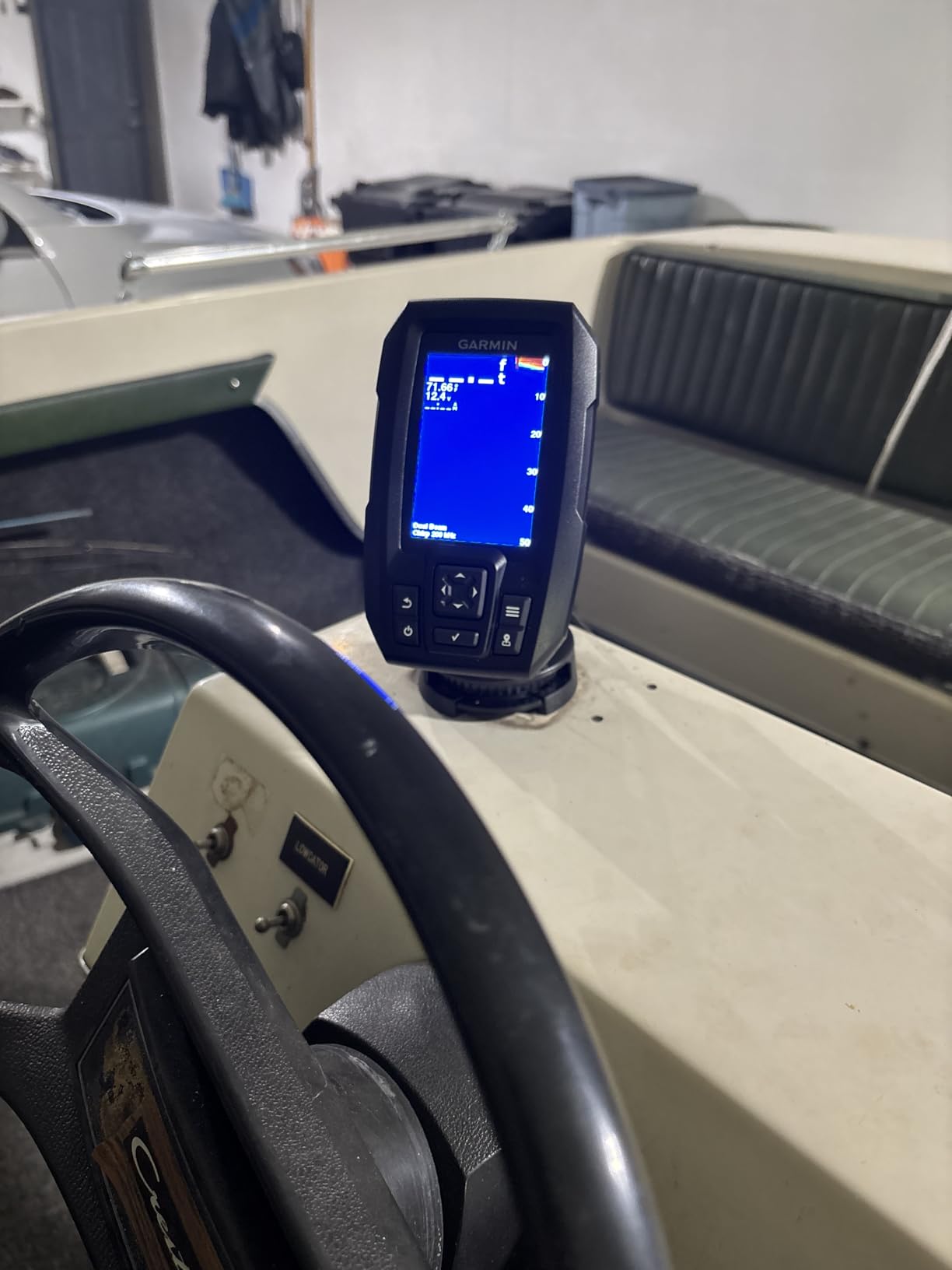
The ClearVu scanning sonar and CHIRP traditional sonar give you near-photographic structure detail up close and a maximum measuring depth of 1600 feet in freshwater or 750 feet in salt. The built-in flasher mode also makes it useful for ice fishing and vertical jigging. Reviewers report accurate depth, water temperature, battery voltage and GPS speed data, and consistent praise for readability in full sunlight with sunglasses on.
The two real weaknesses are speed and wires. Sonar readability drops as you get on plane, which is expected but worth knowing before you plan to run this on a fast bay boat. And the included battery hookup leads are thin, frail wire that reviewers repeatedly tell people to secure properly on the first try.
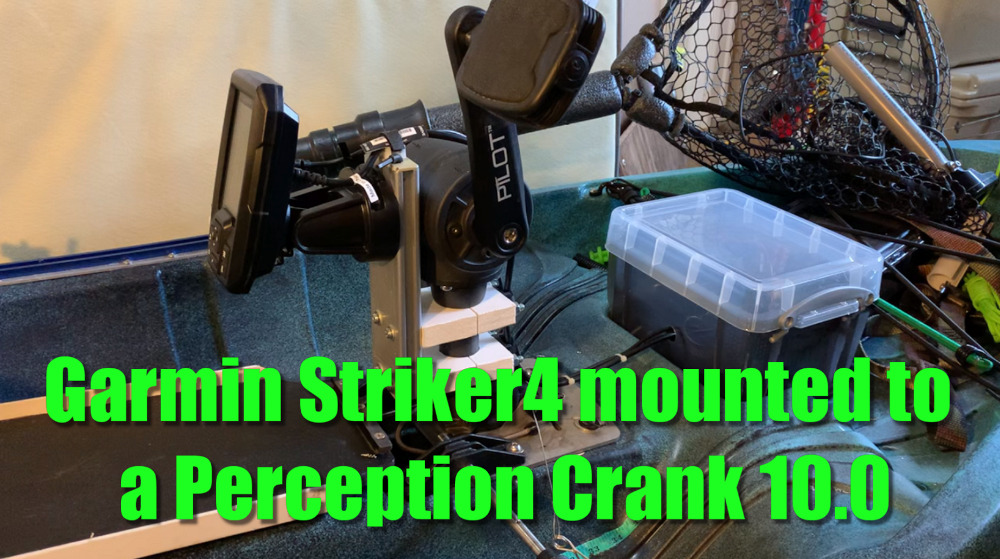
Best suited to a 14-to-18-foot jon boat, kayak or skiff
At 8 ounces and 3.6 by 1.6 by 5.9 inches, it takes up almost no space at all. If your console is a flat plate, a rail, or a trolling motor head, this is the realistic answer. The same low draw makes it the easy pick for a boat with a single small group battery and no room for a second bank.
Skip it if you navigate unfamiliar coastal water
Waypoint navigation is not coastal chart navigation. If you cross a bar you have never run, run a channel you do not know, or need to see hazards that only exist on a real chart, add a chartplotter to your list instead. The Garmin Striker Vivid 7cv below is the step up that keeps a larger screen, and the ECHOMAP UHD2 94sv is the step up that adds built-in Navionics+ coastal charts.
2. Garmin Striker Vivid 7cv – Best Value 7-Inch Display
Garmin Striker Vivid 7cv, U.S. with GT20-TM Transducer – Easy-to-Use 7-inch Color Fishfinder and Sonar Transducer, Vivid Scanning Sonar Color Palettes (010-02552-00)
7 inch color LCD
Surface mount, 4.4 lb
GT20-TM transducer included
2 year warranty
Pros
- Bright 7 inch screen readable in direct sunlight
- GT20-TM transducer in the box
- Quickdraw Contours mapping built in
- Clear menu system that is quick to learn
Cons
- No preloaded charts despite what some buyers expect
- Wi-Fi app setup adds a step for chart downloads
- Menus take study time for first-time users
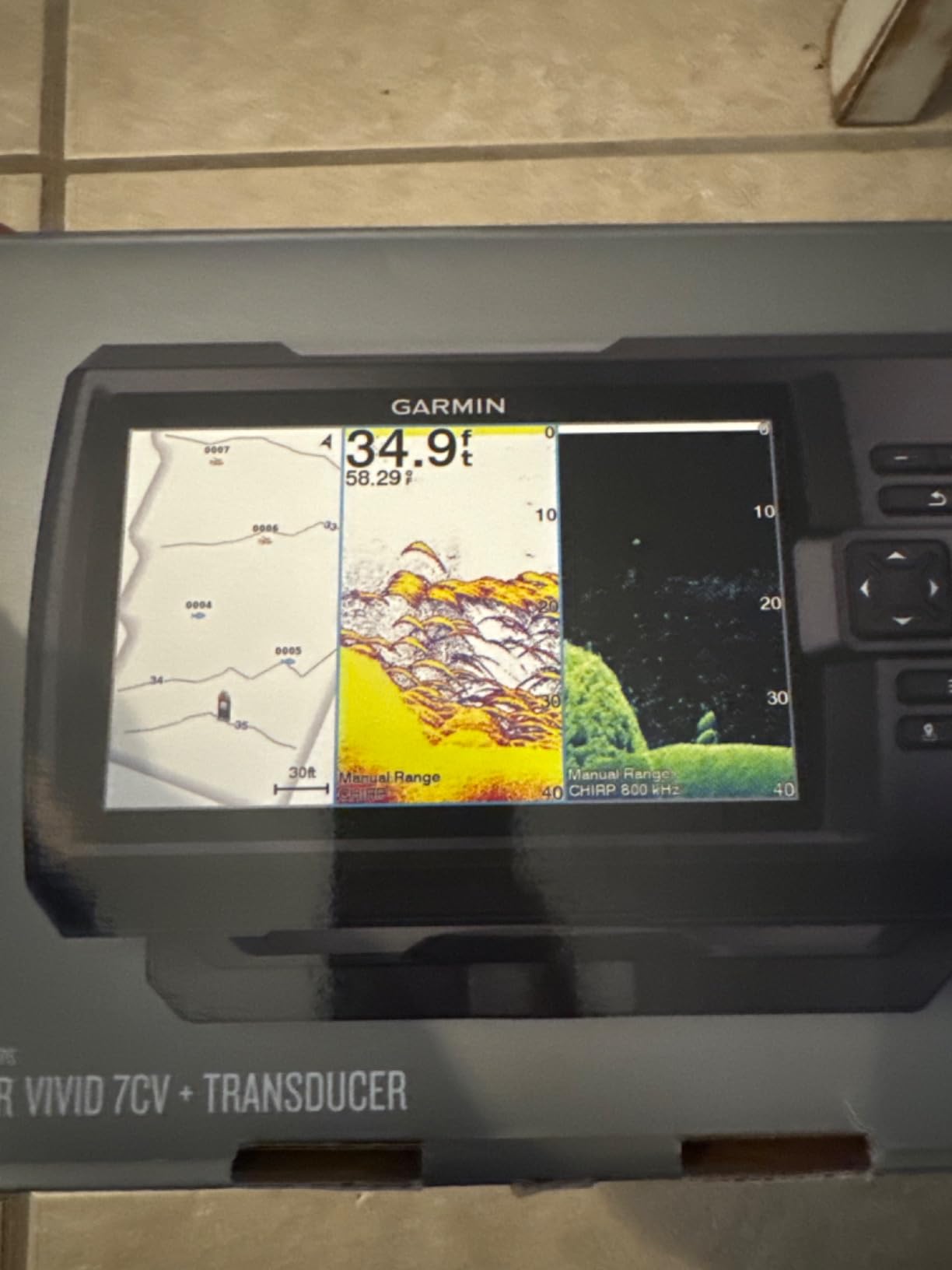
A 7-inch color display with a transducer in the box, and nothing else to buy to get it running. That completeness is the reason this is our value pick. The GT20-TM transducer provides CHIRP traditional sonar plus CHIRP ClearVu scanning sonar, the tilt and swivel bailmount bracket is included, and Quickdraw Contours is built in rather than sold as an upgrade.
The 7-inch size is a good fit for a small boat. It is wide enough to read structure and narrow enough to sit on a console without swallowing the whole dash. Measuring all ten of these heads side by side, 7 inches is the point where readability improves enough to matter while the footprint stays manageable on a 16-to-20-foot hull.
Owners use it from kayaks, small boats and on ice, and the recurring theme is that the menu is clear once you accept it. The vivid scanning sonar color palettes are what buyers mention first, because they make fish and structure easy to separate at a glance instead of reading a monochrome blob.
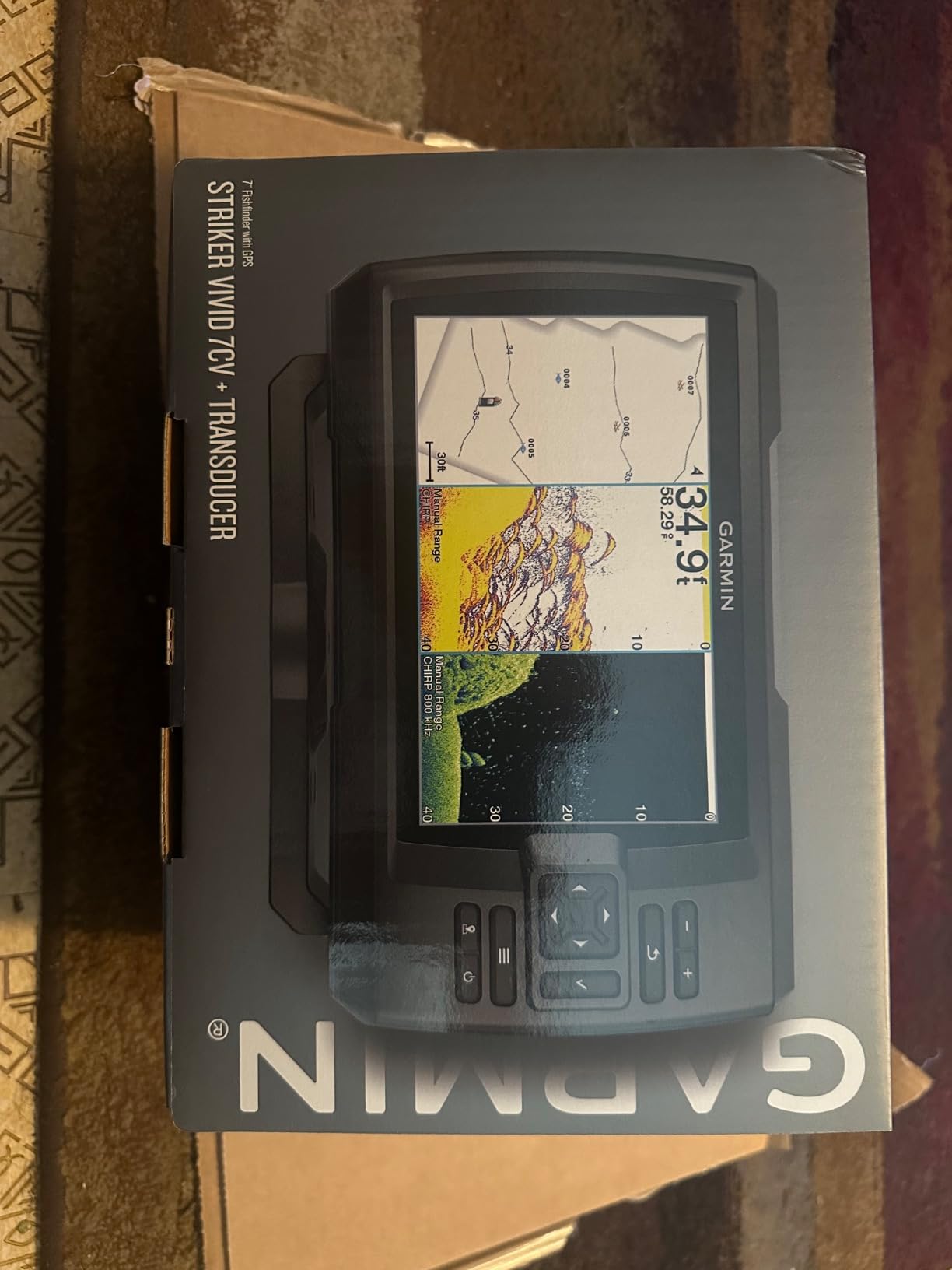
Wi-Fi is present, which means the ActiveCaptain app handles waypoint transfer, smart notifications and Quickdraw Community. That is a genuinely useful feature on a boat, because you can build routes on shore rather than tapping a touchscreen with a wet thumb. The catch is that Wi-Fi is a bridge to your phone, not built-in charting.
This is the mistake buyers make most often. Some people buy this expecting a chartplotter and only discover at the dock that no maps are loaded. Think of it as a fish finder with excellent GPS, not a chartplotter. If you need actual charts, the Lowrance Eagle Eye 9 or the Simrad GO7 XSR both ship with C-MAP coverage in the box.
Best fit for a 7-inch opening on an 18-to-22-foot console
Measure before you order. The head measures 11.4 by 8.9 by 8.2 inches with the bailmount bracket attached, and the bail mount needs depth behind the glass as well as width across the top. On a curved console, the tilt bracket usually adapts better than a flush cut.
Pair it with a chart card only if you leave familiar water
If your boating stays on lakes and rivers you know, leave it as a fish finder with GPS and put the money into a spare transducer or a better mount. If you plan coastal runs, budget for charting as a separate line item, and read the total cost section below before you commit.
3. Humminbird Helix 5 G3 CHIRP – Best Keypad Control
Humminbird Helix 5 G3 GPS Fish Finder with Transducer & Dual Spectrum Chirp Sonar
5 inch color TFT
Transom mount, 2.1 lb
XNT 9 HW T transducer included
Basemap with 10000+ lakes
Pros
- Dual Spectrum CHIRP in Wide and Narrow modes
- Basemap covers 10000+ lakes and US coastlines
- AutoChart Live records contours with no extra hardware
- Softkey keypad stays usable in rough weather
Cons
- 5 inch screen is modest for side imaging or chart work
- Basemap is far less detailed than Navionics or C-MAP
- Older G3 generation rather than the newer G4 models
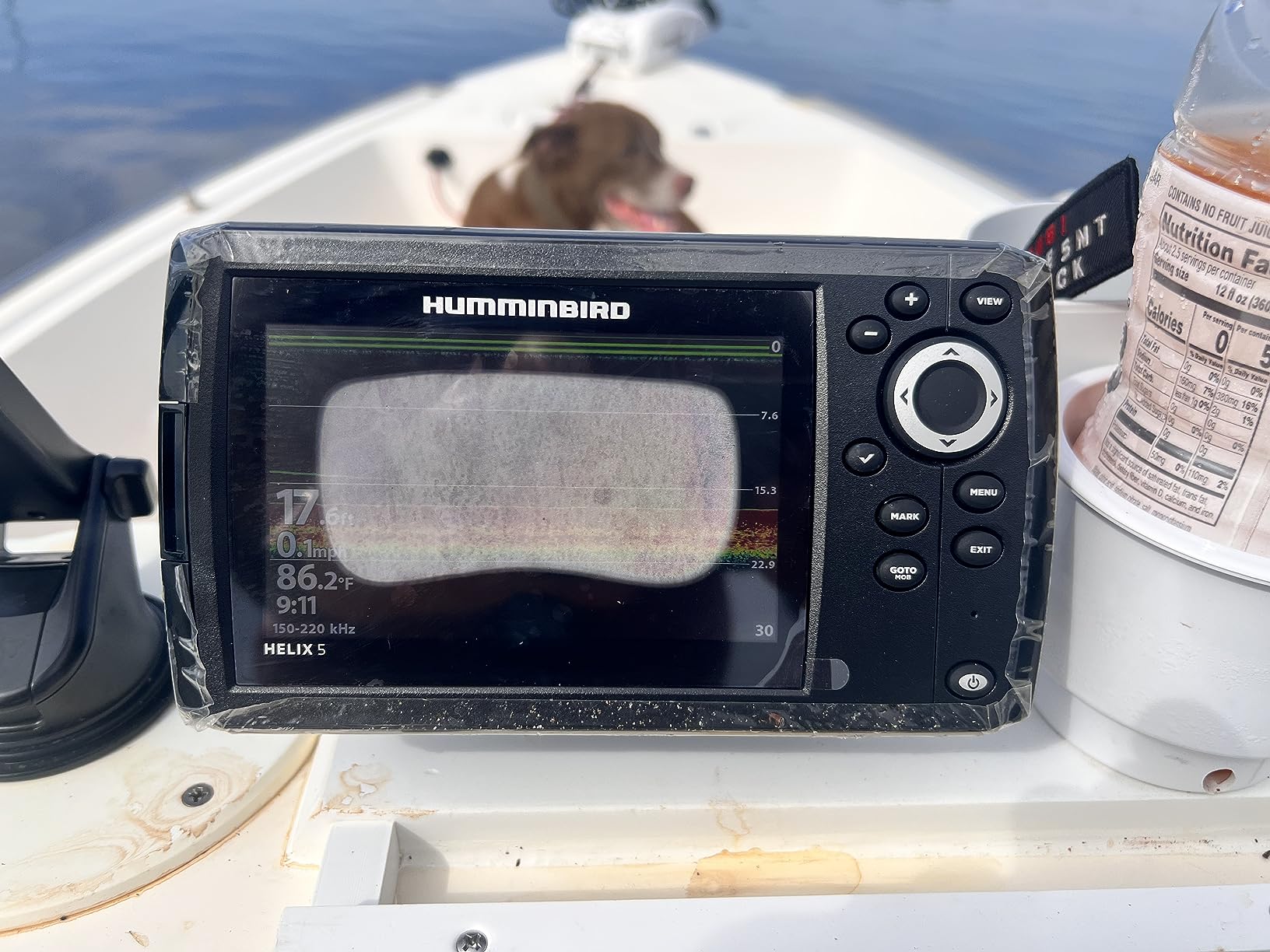
The Helix 5 G3 is the small-console compromise that works. Dual Spectrum CHIRP gives you Wide mode for coverage and Narrow mode for target detail in the same unit, and the Low-Q transducer delivers precise 2D separation. At 2.1 pounds and 4.64 by 3.3 by 7.55 inches, it disappears into a console the way a 7-inch head cannot.
Unlike most of its competitors in this class, it has something usable already on screen when it leaves the box. The Humminbird Basemap covers more than 10,000 lakes and the continental U.S. coastlines, and it accepts LakeMaster, CoastMaster and Navionics cards when you outgrow that. That is a smaller map set than a premium C-MAP card, but it is far more than a blank waypoint plotter.
AutoChart Live is the sleeper feature. It records depth contours as you fish with eight hours of built-in recording time and no additional hardware, and it will read AutoChart Zero Line SD cards. Owners building their own lake map over a season rate this as the main reason to buy.
Control is entirely by softkey keypad, operable in any weather, and the transom-mount XNT 9 HW T transducer plus gimbal bracket are in the box. For an older angler, a fishing partner or anyone who does not want to fight a touchscreen with a wet thumb, that is a real advantage over the capacitive units in this list.
The 5-inch screen is the honest limit. Reading a chart or interpreting side-scan detail on 5 inches is cramped, and this unit has no side imaging anyway. The G3 generation also sits behind the newer G4 models, which matters if you intend to upgrade transducers later.
Best when your console is genuinely too small for anything larger
On a 14-foot boat with a small dash, a 5-inch head is the difference between a clean install and a head that overhangs the console edge. The transom mount also means you can move the whole unit to the trolling motor when you switch from cruising to trolling.
Not the pick for coastal or deep water work
The basemap gives you orientation, not navigation-grade detail. If you run offshore, cross bars or navigate a river system with shifting structure, spend on a proper chart card and a larger screen instead. Save this one for inland fishing where AutoChart does the heavy lifting.
4. Lowrance Eagle Eye 9 – Best for Inland Lakes
Lowrance Eagle Eye 9 Live Sonar Fish Finder with C-MAP US Inland Charts
9 inch IPS display
Panel or bracket mount, 2 lb
C-MAP inland charts included
500 ft max depth
Pros
- Live Forward and Live Down show fish reacting to lures
- Preloaded C-MAP charts cover 17000+ US lakes
- One transducer covers live and CHIRP and DownScan modes
- Direct connection means no separate sonar module
Cons
- Bundled charting is inland-focused rather than coastal
- 500 foot depth ceiling suits shallow water
- Newer platform with a smaller proven review base
Its one standout feature is that it shows you fish reacting to your lure in real time. Live Forward and Live Down sonar put the screen side by side with the down view, so you watch a fish move toward the bait instead of guessing where it went.
It is also a real chartplotter out of the box. The preloaded C-MAP charts cover more than 17,000 U.S. lakes, which means a buyer on inland water gets real cartography without a separate card purchase. Genesis Live mapping is supported for building your own contours as you go.
The 9-inch IPS display is large, yet the head weighs only 2 pounds, which matters on a small console where every pound on the wiring run is felt. At 11.3 by 3.54 by 6.39 inches it is a tight head for its screen size, and the gimbal bracket and mounting hardware are included.
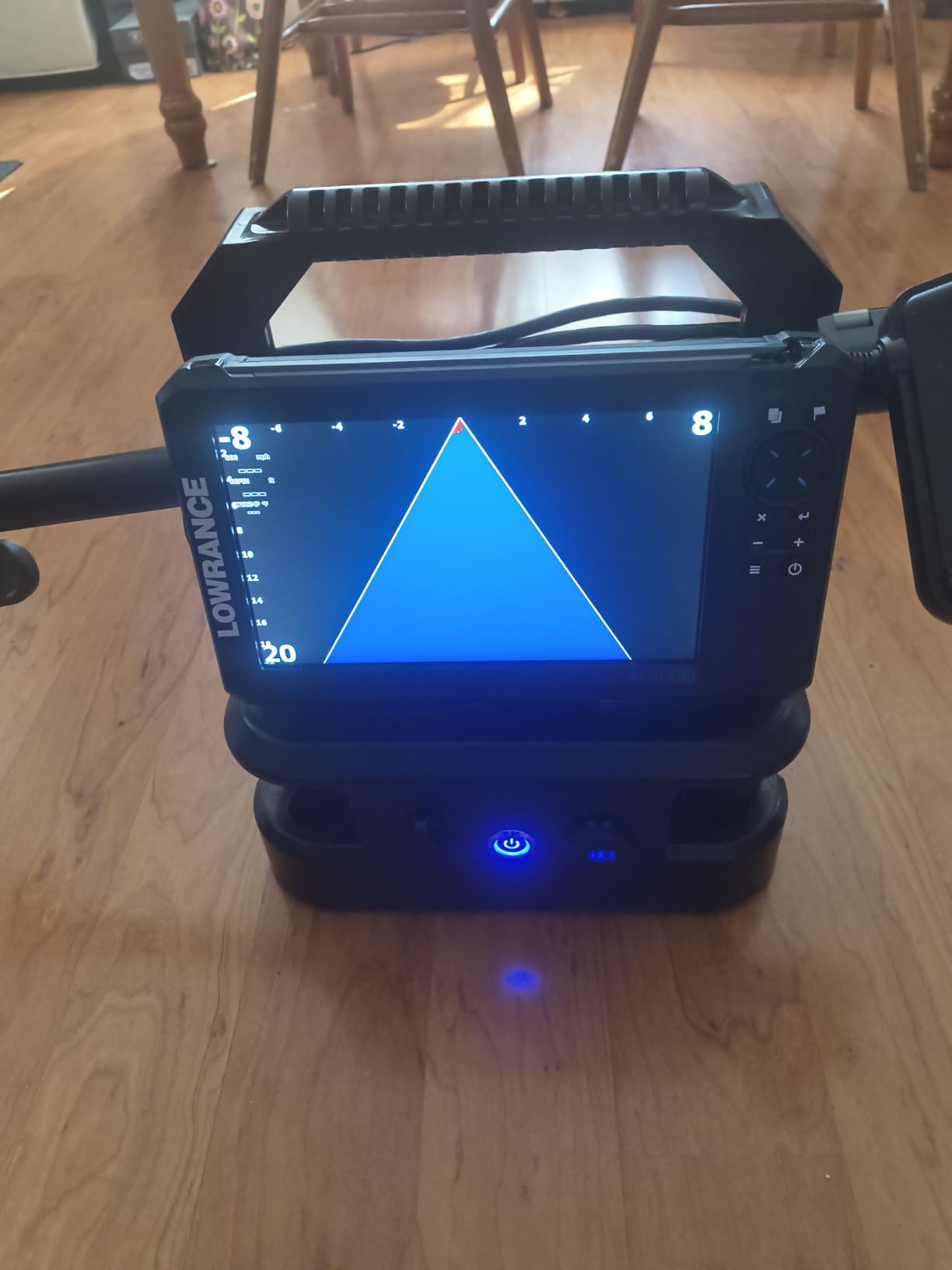
The transducer plugs straight into the display, so there is no separate black box or sounder module to mount and no extra cable run. The bundled transducer handles Live Forward, Live Down, CHIRP sonar and DownScan Imaging with FishReveal. For a small boat, eliminating a second box is worth more than it sounds.
The constraints are geographic and numeric. The bundled charting is inland-focused, so a saltwater buyer will want a coastal card. And the maximum measuring depth of 500 feet rules it out for deep offshore work, which is an unusual ceiling for a unit this size.
Reviewers consistently single out the live sonar views and the included charts as the deciding factors. The smaller caveat, at 225 reviews averaging 4.5 stars, is that this is a newer platform with a shorter proven history than the established Garmin and Humminbird lines.
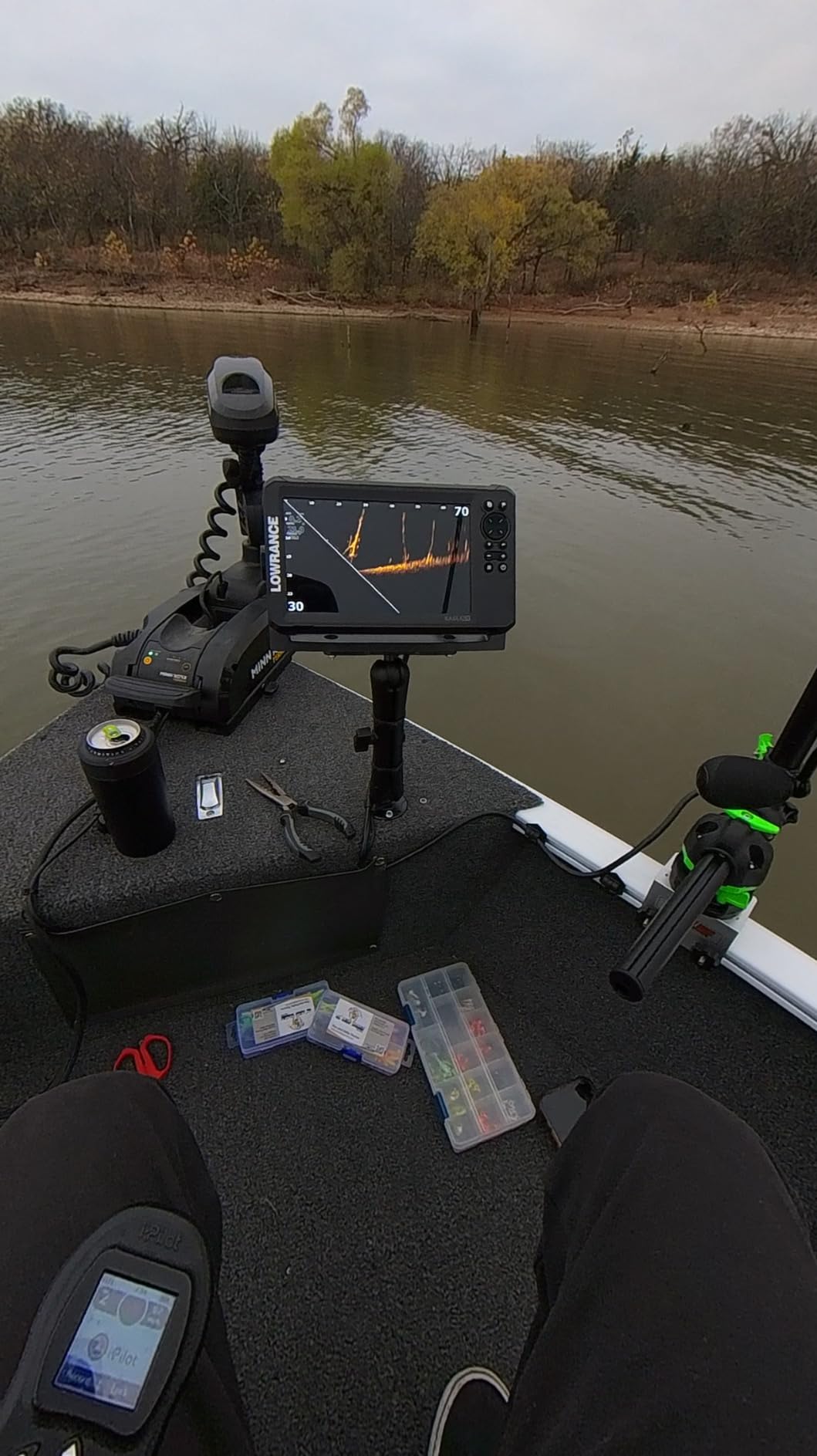
Best fit when your boating is lakes and reservoirs
If you fish freshwater and want fish-finding and charting in a single head with no extra purchases, this is the cleanest version of that idea in the roundup. IPS brightness holds up in open sun, and the light weight keeps it simple on a single battery bank.
Upgrade path through Genesis Live and a second display
Genesis Live mapping support means your own recorded contours carry over, so effort spent mapping a lake this season pays off in the next. Check the accessory ecosystem before you commit, because transducers and mapping options are brand-specific and the platform is still maturing.
5. Lowrance Elite FS 10 – Best for Networking
Lowrance Elite FS 7 Fish Finder (No Transducer) with Preloaded C-MAP Contour+ Charts
10 inch multi-touch display
Bracket, surface or flush mount
1,000 ft max depth
C-MAP DISCOVER preloaded
Pros
- Wireless
- NMEA 2000 and Ethernet networking in one head
- Preloaded C-MAP DISCOVER covers inland
- coastal and Canadian waters
- Active Imaging 3-in-1 gives CHIRP
- SideScan and DownScan
- ActiveTarget 2 live sonar upgrade path
Cons
- 10 inch head needs real console space
- Higher power draw and more complex install than a standalone finder
- SideScan and live sonar need extra compatible modules for full potential
This head carries wireless, NMEA 2000 and Ethernet in one box, and that changes how you should think about it. A second display later, a radar, an autopilot, engine data from multiple outboards, an AIS receiver, a forward-looking sonar transducer. The Elite FS 10 has the back end to accept them.
The box also includes real charting. C-MAP DISCOVER OnBoard covers inland, coastal and Canadian waters, which removes the single most common complaint in this category: buying a plotter and then discovering that maps cost extra. Active Imaging 3-in-1 sonar, combining CHIRP, SideScan and DownScan with FishReveal, is included as well.
The 10-inch multi-touch display gives you the room to split screen between a chart and sonar, which is the thing a small screen simply cannot do. A suncover, fuse and fuse holder, corner clip kit, mounting bracket and knobs are all in the box, and it supports bracket, surface and flush mounting.
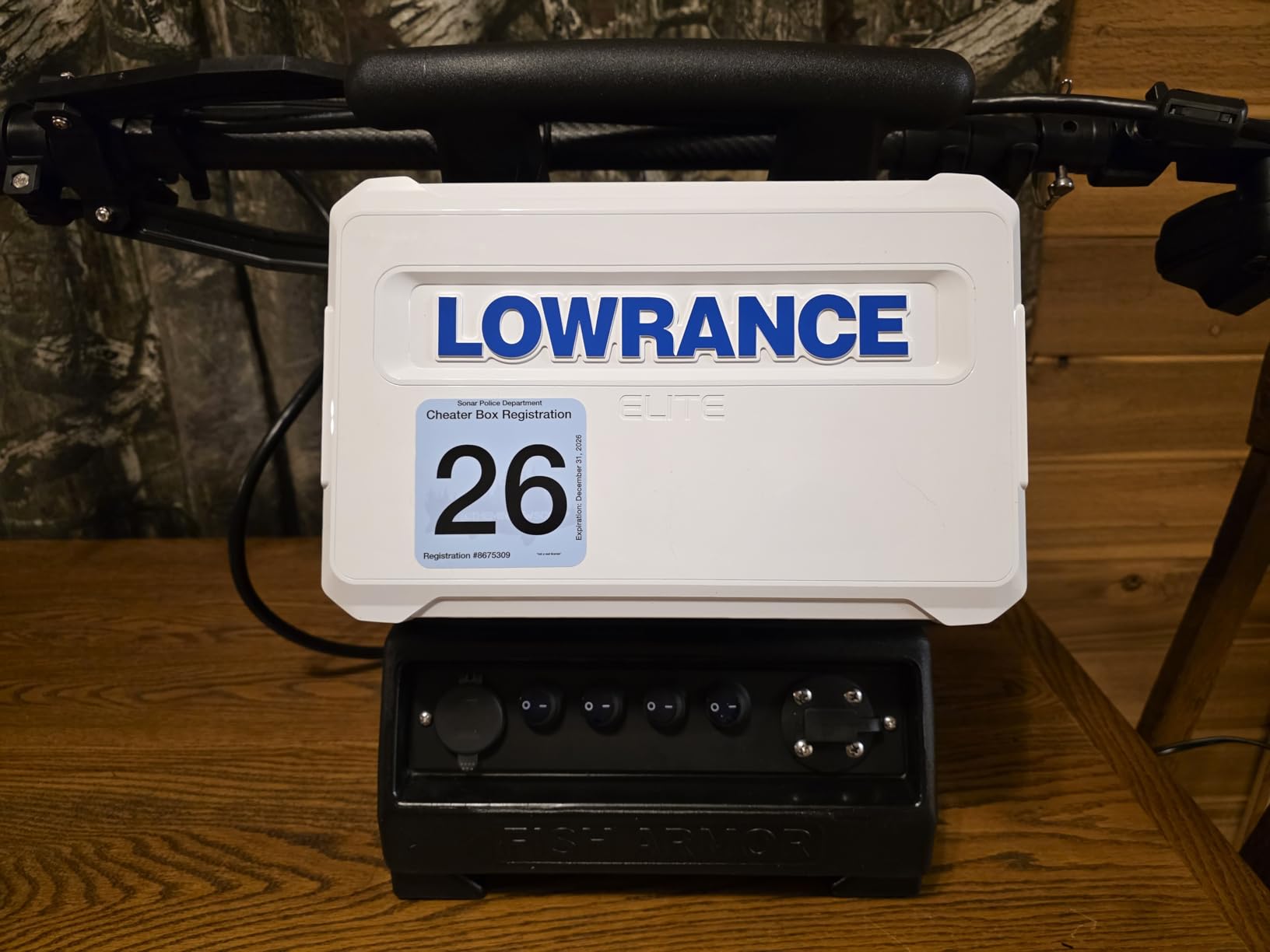
Maximum measuring depth is 1000 feet, and the unit is live sonar ready for ActiveTarget 2 or ActiveTarget 2 XL. Reviewers treat it as a genuine chartplotter rather than a basic finder, which is the distinction that matters for anyone planning to stay in this category for a few seasons.
The trade-offs are physical and electrical. A 10-inch head measuring 12.81 by 4.47 by 8.26 inches needs a console with genuine area, and reviewers point out that power draw and installation complexity are both higher than a standalone fish finder. SideScan and live sonar also need additional compatible modules before you see their full potential.
Best fit for a 20-to-24-foot console with room to grow
If your boat will eventually carry radar, a second screen or live sonar, buying the networking backbone now costs less than replacing a head later. The preloaded coastal and inland charting also makes it the safest single-box choice for mixed fresh and salt use.
Too much machine for a 16-foot hull
On a boat under about 18 feet, a 10-inch head on a small console overhangs the usable area and creates a wind and vibration problem. Below that length, the 7-inch options in this roundup give you the same networking philosophy in a footprint your dash can actually carry.
6. Simrad NSS Evo3S 12 – Best for Bright IPS Screens
Simrad NSS12 Evo3S Chartplotter and Fishfinder with Preloaded C-MAP US Enhanced Charts, 12 Inch Display, Black, 000-15403-002
12 inch SolarMax IPS display
iMX 8 processor
Flush or bracket mount
3,000 ft max depth
Pros
- SolarMax IPS panel with high brightness and wide viewing angles
- Switchable multi-touch screen or full keypad with rotary dial
- Preloaded C-MAP US Enhanced charts
- Deep integration for engine and audio control
Cons
- 17.5 pounds needs careful mounting and wiring
- Display only so sonar or radar hardware is extra
- Premium cost for the larger configuration
The NSS Evo3S handles glare better than most units in this roundup, and glare is the most under-discussed issue on an open small boat. A SolarMax IPS panel with wide viewing angles stays readable when the sun is high and slightly off-axis, which is exactly the condition on a flat boat or an open RIB at midday.
The iMX 8 processor delivers fast response and smooth transitions, which you feel most when panning a chart or flipping between pages. Built-in GPS and preloaded C-MAP US Enhanced inland and coastal charts mean it navigates out of the box. Maximum measuring depth is listed at 3000 feet.
Control is the interesting part. It switches between an all-weather multi-touch screen and a full keypad with a rotary control dial. For a boat that gets used in rough conditions or by multiple people of different technical ability, having a real keypad is a meaningful safety margin.
The integration story is vessel-wide: engine and fuel monitoring and on-board sound system control, plus support for Active Imaging sonar, StructureScan 3D and HALO radar. A power cable, sun cover, dash mount kit and edge bezels are included.
Best fit for a boat with a real helm and a sun problem
Wide viewing angles matter when the driver is not sitting square to the screen, which is common on a center console with an offset helm or on a boat with a companion seat to the side. The sun cover in the box is a good sign that glare is a known issue on this class of boat.
Display only, and heavy for a small console
At 17.5 pounds, this is a heavy head that needs careful mounting and wiring, and reviewers single out the power requirements. You are also buying a display rather than a package, so a transducer or radar is a separate purchase. Buyers on forum threads report making exactly that mistake with a plotter and forgetting the transducer, so budget for it.
7. Humminbird Helix 7 G4 – Best 7-Inch Imaging Display
Humminbird Helix 7 G4 GPS Fish Finder with Transducer, MEGA Side Imaging
7 inch color TFT
Gimbal and in-dash kit
125 ft max depth
MEGA Side Imaging
Pros
- MEGA Side and Down Imaging out to 125 feet each side
- 7 inch screen is a good size for reading side-scan returns
- XNT 9 HW MSI 150 T transducer and gimbal bracket included
- Dual Spectrum CHIRP with Wide and Narrow modes
Cons
- 125 feet of side-scan reach is short against higher-tier units
- Imaging types beyond side and down are limited on this model
- Basemap detail is basic without a LakeMaster or Navionics card
Side imaging is the feature that changes how you fish, and the Helix 7 G4 delivers it with a transducer in the box. MEGA Side and Down Imaging covers 125 feet to each side and 125 feet below, with side-imaging detail stated at three times what standard imaging sonar produces. On a small boat working structure within about 100 yards, that is genuinely useful.
The 7-inch color TFT head is well matched to the job. A 5-inch screen makes side-scan returns hard to read, and a 9-inch head is a lot of console on a small hull. Seven inches is the right compromise, and the gimbal and in-dash mounting kit means you can drop it into a panel later.
You also get Dual Spectrum CHIRP with Wide and Narrow modes, a Low-Q transducer for precise 2D target separation, the Humminbird Basemap covering 10,000+ lakes and the continental U.S. coastlines, and AutoChart Live with eight hours of built-in recording. Softkeys handle the menus in any weather.
Best fit for an inshore or freshwater angler on a 7-inch opening
The 2.1-pound head and included gimbal bracket make it easy to mount on a console, and moving it to a trolling motor head is straightforward. The 125-foot side range is a real constraint on deep offshore structure, so know your water before you fall for the side-imaging picture.
Charting depth is still the gap
The basemap gets you around familiar water but it is basic, and premium LakeMaster, CoastMaster and Navionics cards are a separate purchase. If your boat doubles as a coastal cruiser, factor a chart card into the total cost. Reviewers at 81 reviews averaging 4.5 stars praise the imaging quality and the included transducer most.
8. Lowrance Eagle 5 SplitShot HD – Best for Kayaks and Tenders
Lowrance Eagle 5 SplitShot HD Fish Finder with C-MAP US Inland Charts
5 inch IPS display
Surface, panel or flush mount
500 ft max depth
16 oz head
Pros
- 16 ounce head easy to power from a small battery
- IPS screen readable in sunlight and through polarized sunglasses
- C-MAP inland charts preloaded covering 17000+ lakes
- SplitShot HD with FishReveal picks fish off structure
Cons
- Menus are not the most intuitive for first-time users
- Setup takes patience especially when enabling sonar
- No side-scan imaging and a 500 foot depth ceiling
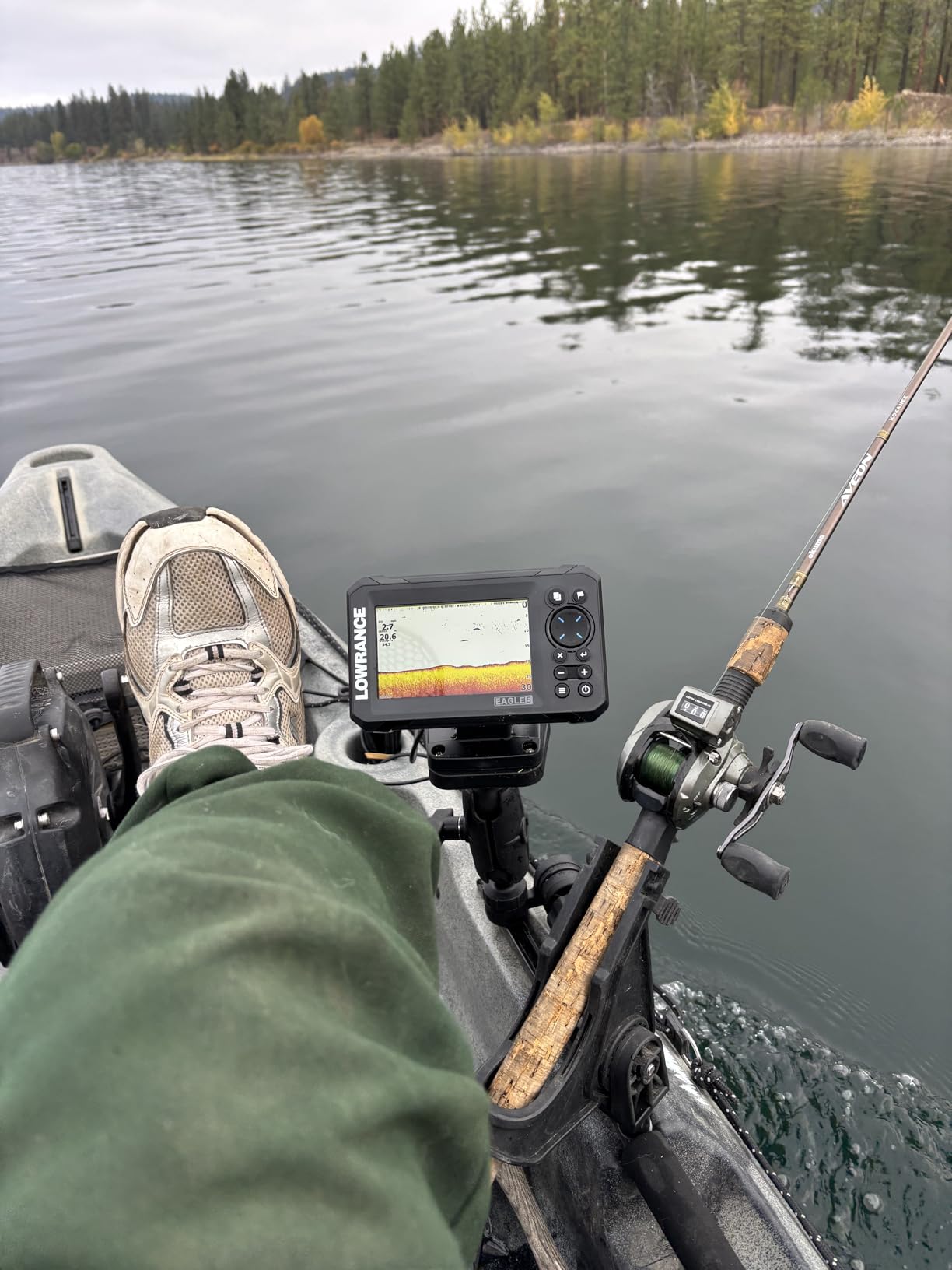
Sixteen ounces makes this easy to power and easy to carry. A kayak, a jon boat tender, a small RIB or a boat with one small group battery is exactly where a 5-inch IPS display with CHIRP and DownScan earns its place.
SplitShot HD combines CHIRP fish targets with DownScan Imaging detail, and FishReveal overlays the fish targets on the DownScan image so you can see the bait and the fish holding on it in one picture. Auto-Tuning Sonar reduces manual setup, which matters when the person operating the unit is also paddling.
C-MAP inland charts are preloaded, covering more than 17,000 U.S. lakes. For a boat that stays on freshwater and wants charts without a separate card, that is a real advantage over the pure fish finders in this list. Maximum measuring depth is 500 feet, and the head supports surface, panel and flush mounting.
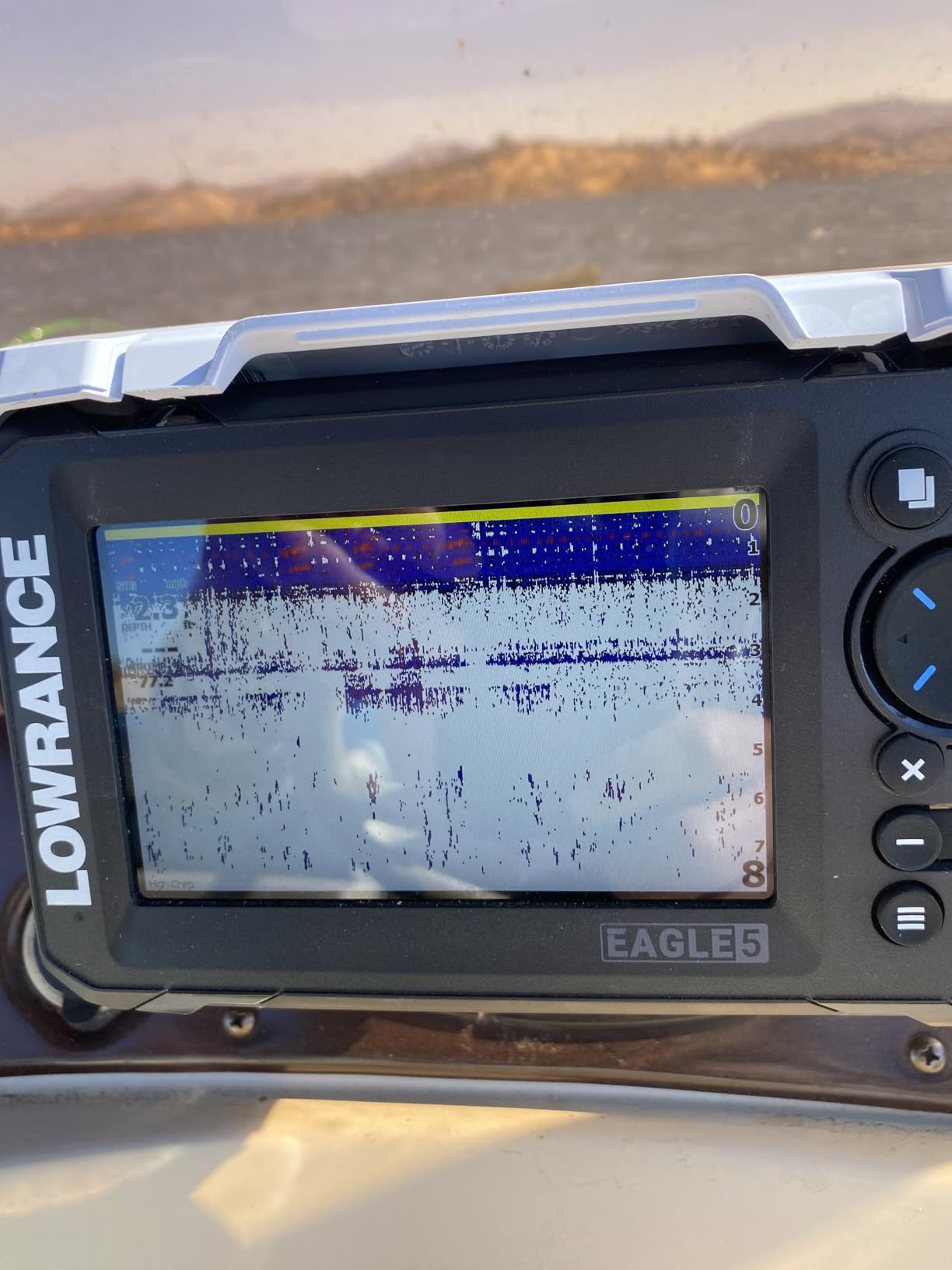
The IPS screen is specifically noted for staying readable in sunlight and through polarized sunglasses, which is the number one complaint about cheap marine displays. Transducer, bracket, power cable, locking collars, fuse and fuse holder are all included, so there is nothing to forget on the order.
Owners across the size range call it dependable and clear, with GPS that simply works. The recurring friction is the initial setup and menu navigation, particularly getting the sonar enabled, and one reviewer reported a registration problem that required a replacement. Expect to spend an afternoon learning the menus rather than an hour.
Best fit where battery capacity, not screen size, is the limit
On a kayak, a tender or a boat with a small single battery, every watt matters and every gram gets carried. This is the display we would put on a boat with one anchor light, one fish finder lead and no room for anything else. It mounts three ways, so a flat surface is enough.
Skip it for side imaging or deep water
There is no side-scan imaging on the SplitShot configuration, and the 500-foot ceiling is shallow for offshore work. If structure out to the sides is what you fish for, move up to the Helix 7 G4 or the Elite FS 10 instead. At 43 reviews averaging 4.4 stars, the review base is also one of the thinner ones here.
9. Simrad GO7 XSR – Best Radar-Ready Package
Simrad GO7 XSR – 7-inch Chartplotter with Active Imaging 3-in-1 Transducer, C-MAP Discover Chart Card
7 inch 1280x800 capacitive touch
Dashboard mount
Wi-Fi and NMEA 2000
Radar ready
Pros
- C-MAP DISCOVER charting genuinely included in the box
- 7 inch 1280x800 capacitive touchscreen
- Active Imaging 3-in-1 transducer included
- Wi-Fi mirroring and NMEA 2000 for expansion
Cons
- Lowest average rating in the group at 4.0 stars
- Learning curve for the touchscreen interface and menus
- Radar and any extra transducers are separate purchases
The GO7 XSR is the most self-contained package here, with charting and a sonar transducer in the same box. You get a genuine chartplotter with a C-MAP DISCOVER card in the box, complete with vector charts, custom depth shading, tides and currents, bathymetric contours and U.S. and Canada coverage, plus an Active Imaging 3-in-1 transducer giving you CHIRP, SideScan and DownScan with FishReveal.
The display is a 7-inch capacitive touchscreen at 1280×800, a resolution that keeps menus and chart text crisp on a small screen. Reviewers also note that this platform feels sturdier than some mainstream consumer brands, which matters on a boat that lives outside.
It is radar ready for plug-and-play Simrad radar, has built-in Wi-Fi for mirroring to a phone or tablet, and carries NMEA 2000 connectivity for vessel integration. A mounting bracket, dash mount kit, edge bezel, power cable and sun cover are all in the box.
Best fit for a boat that will get radar or a second display later
Simrad, B&G and Navico share a networking ecosystem, so a boat that already carries Simrad gear is the ideal home for this head. The dashboard mount suits a small console where a bail mount will not fit, and the mirroring feature gives you a second screen on an old phone for almost nothing.
The review profile is the warning
At 24 reviews averaging 4.0 stars, this is the least-proven head in the set, and the rating distribution includes a meaningful share of one-star reviews. Reviewers praise the included charting and transducer but report a steeper learning curve on the touchscreen interface. Buy it for the package, not for the software polish.
10. Garmin ECHOMAP UHD2 94sv – Best for Big Screens
Garmin ECHOMAP UHD2 94sv with GT56 Transducer, 9″ Touchscreen Chartplotter, Garmin Navionics+ U.S. Coastal
9 inch sunlight-readable touch
GT56-TM transducer included
Navionics+ coastal charts
Wi-Fi and trolling motor link
Pros
- Highest average rating in the group at 4.7 stars
- GT56 transducer covers traditional
- ClearVu and SideVu sonar in one package
- Navionics+ coastal charts built in so it works as a chartplotter out of the box
- Wireless Force trolling motor control from the screen
Cons
- Most expensive display in the roundup
- 9 inch head needs a suitably sized console or panel
- One year warranty is shorter than some rivals
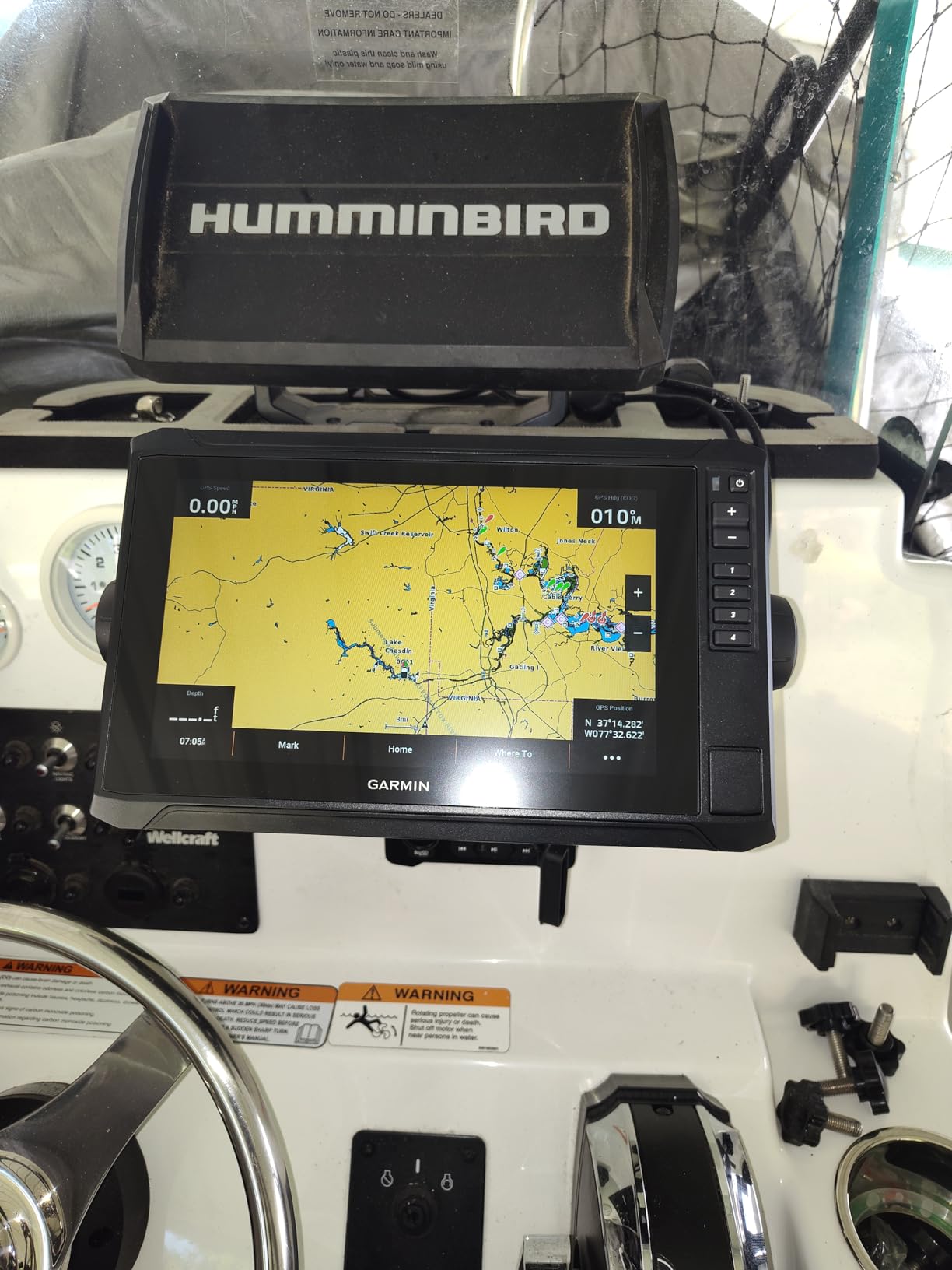
The ECHOMAP UHD2 94sv is the most complete navigation package here, and the one we would pick for a boat that spends time on unfamiliar water. Garmin Navionics+ U.S. Coastal charts are built in, so it is a working chartplotter out of the box rather than a fish finder that needs a card, and the GT56-TM transducer gives you traditional, ClearVu and SideVu scanning sonar in the box.
The 9-inch touchscreen is sunlight readable with improved detail, clarity and viewing angle over earlier ECHOMAP generations, which is the single most important screen trait on an open console. Built-in Wi-Fi lets you share sonar, waypoints and routes with a second ECHOMAP UHD2, and it connects wirelessly to a Force trolling motor for route creation, waypoint navigation, speed control and battery status.
Owners rate it as the strongest all-round unit in the group, and it does hold the highest average rating at 4.7 stars. Both the tilt mount and flush mount hardware are included, and Garmin offers twenty size, transducer and chart configurations from 6 to 9 inches, so staying inside one brand across sizes is straightforward.
There is no need to talk around the cost. This is the most expensive display in the roundup, and the price includes the transducer and the coastal charts, which is exactly why it stacks up. The 9-inch head also needs a console or panel with real area, and the warranty is one year, which is shorter than several rivals here.
It is also the unit to skip on a small boat. A 9-inch screen on a 16-foot hull is a compromise dressed as a feature, and the shared electronics ecosystem means you are committing to Garmin sensors, radar and autopilots for years.
Best fit on a 20-to-24-foot boat running coastal water
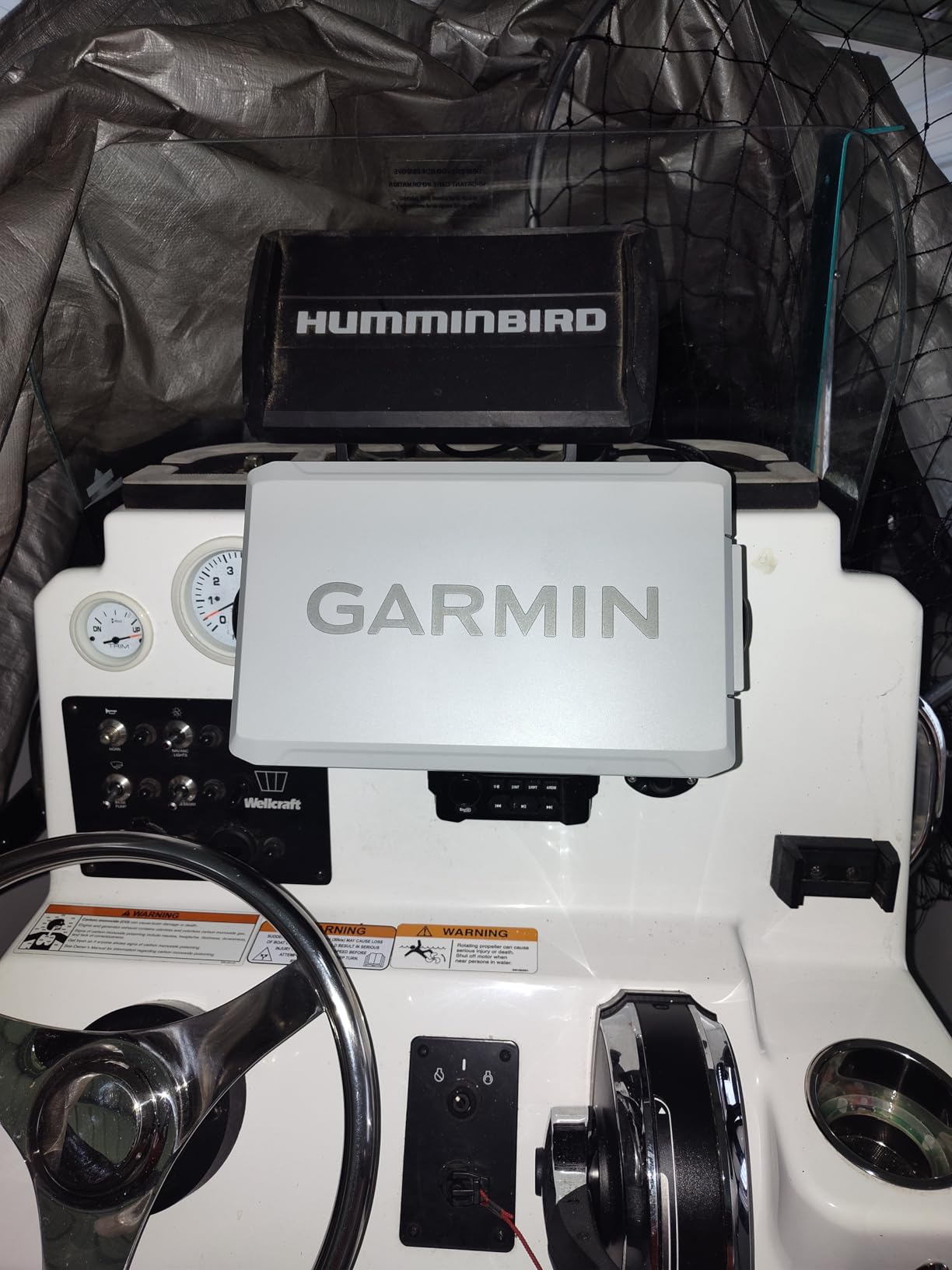
Built-in Navionics+ coastal charts remove the annual or one-off chart decision entirely, which is the strongest argument for this unit. The three-mode GT56 sonar package covers the majority of small-boat fishing and cruising needs without a second transducer purchase.
Measure the panel twice before ordering
The head measures 10.4 by 6.5 by 3.2 inches, and the flush mount needs a clean cutout in a flat panel. On a curved or dashless console the tilt mount is the realistic option. If your usable mounting area is under about 8 inches across, step down to a 7-inch unit and accept fewer features.
How to Choose a Chartplotter for a Small Boat
Measure the console before you look at a single product. Not the boat length, the usable flat area. Then work through these eight steps in order, and the shortlist writes itself.
- Measure your usable mounting area. A 7-inch head with a bail mount needs roughly 8 inches of width plus depth behind the glass. If you do not have that, your realistic ceiling is a 5-inch head on a surface or panel mount.
- Match screen size to boat length. The working rule is roughly one inch of screen per foot of boat, so a 16-foot boat lands near 7 inches and a 20-foot boat near 9 inches. Going bigger does not add information, it only adds windage and theft exposure.
- Check what is already on the boat. If the boat came with a display, note the brand before buying anything. Nearly all modern transducers plug into a NMEA 2000 network, so a matching head means reusing hardware instead of re-wiring the hull.
- Decide whether you need charts at all. If you only fish known lakes, a waypoint GPS and sonar is enough and it costs far less. If you run unfamiliar water, buy a head with charts in the box.
- Confirm the transducer is included. One of the units here is a display only, with no transducer in the box. A transducer is a separate purchase and it is the item most often forgotten at the register.
- Verify engine data integration. If you want fuel flow, RPM and trim on screen, confirm your outboard brand is supported over NMEA 2000 before you buy the head.
- Plan the power budget. The Striker 4 draws 0.23 amp at 12V, while a 12-inch IPS head like the NSS Evo3S draws considerably more. Size your breaker and your battery bank to the head you actually pick, and if you tow the boat, look at a marine battery charger that can keep up.
- Test the controls in the conditions you will use them. If your boat gets wet, your hands get cold, or someone else drives it, a keypad is worth more than a larger touchscreen.
Chartplotter vs Fish Finder vs Combo MFD
A chartplotter draws nautical charts and routes. A fish finder draws sonar returns and depth. A combo MFD, or multifunction display, does both on one screen and is the category most small-boat buyers should be shopping in. If you want both navigation and fish finding, buy the combo and stop deliberating between the other two.
Most confusion in this category comes from marketing language. A unit with a GPS and a waypoint map, like the Garmin Striker 4, is frequently called a chartplotter even though it carries no charts. A unit with preloaded C-MAP coverage, like the Simrad GO7 XSR, is a chartplotter that also does sonar. Judge by the chart layer and the networking, not the label on the box.
Transducers, CHIRP and What Is in the Box
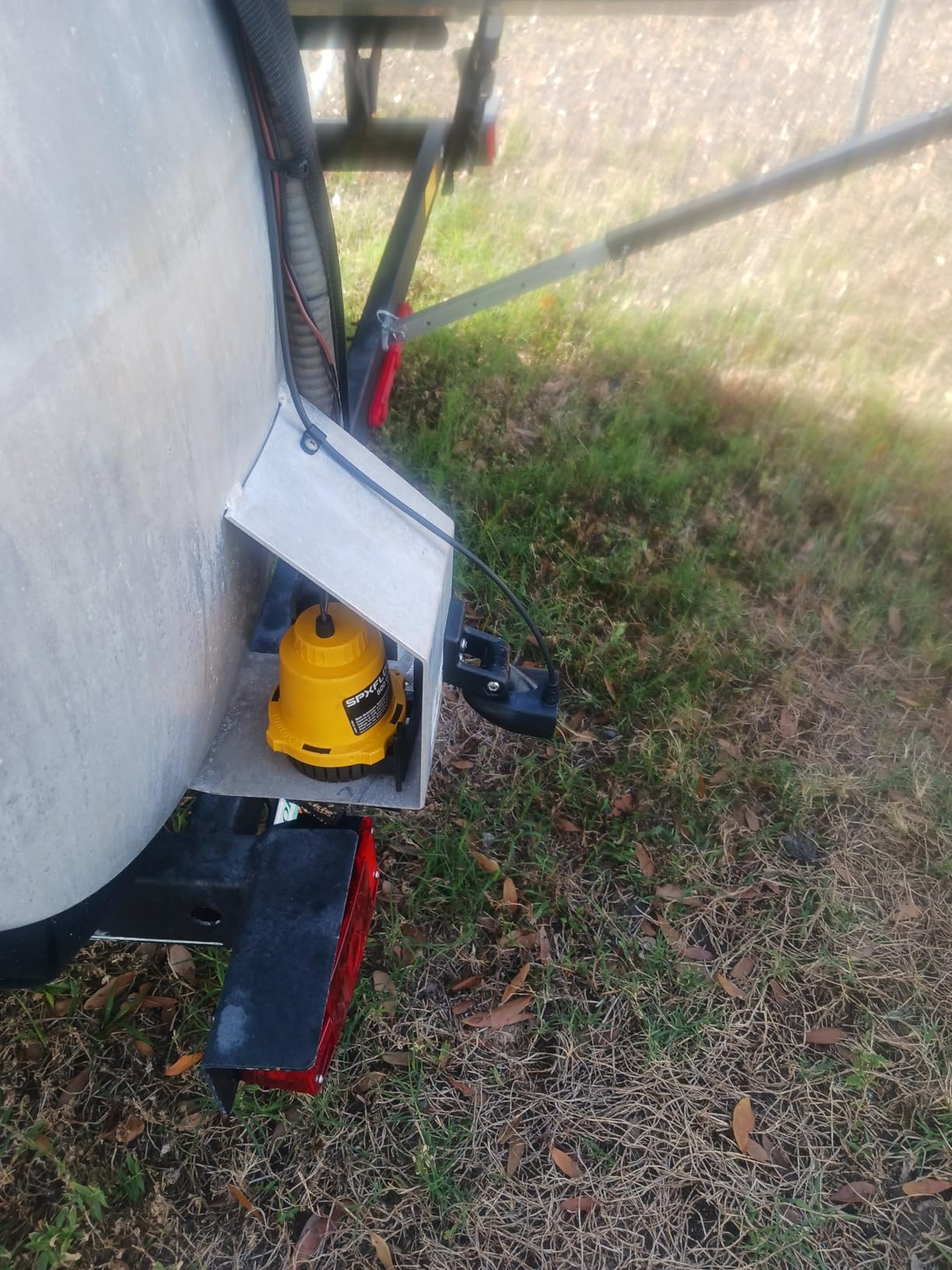
Nearly every transducer in this roundup is made by the same company and simply plugs into the head or the NMEA 2000 network, which is why forum users describe the install as unremarkable. The decisions that actually cause problems are location and hull material, not brand.
A transom-mount transducer hangs off the back of the boat and is the default choice on most small boats because it needs no hull drilling. An in-hull transducer sits inside the hull, looks better and stays protected, but it only works correctly in a solid fiberglass or metal hull. A foam-core hull, which includes many affordable boats, will cause depth readings to drop out or read wrong, and that is the single most common cause of the depth-cutout complaints in owner threads.
Deadrise matters too. A steeply veed hull needs an angled mounting block so the beam points where it should. Get it wrong and you get blind spots and false readings that owners usually blame on the electronics.
Total cost of ownership is where small-boat buyers get surprised. A display sold on its own can leave you buying a transducer, a mount, a fuse kit, a power cable and a chart card, and a chart subscription recurs annually. Units like the Humminbird Helix 5 G3, the Helix 7 G4, the Lowrance Eagle 5 and the Eagle Eye 9 include the transducer, which is most of the reason we rank them where we do.
NMEA 2000, Engine Data and Ecosystem Lock-In
NMEA 2000 is the plug-and-play network that lets a display talk to a transducer, a VHF, an AIS receiver, a radar, an autopilot and engine sensors. Nearly all modern transducers connect through it, which is why nearly all modern chartplotters have GPS built in and no external antenna on the rail.
The real trap is ecosystem lock-in, and it is the number one source of buyer confusion. Buying a Garmin head means Garmin transducers, Garmin radar and Garmin autopilots. If your boat already came with a Simrad unit, the sensible move is to stay inside that ecosystem, which is why the Simrad GO7 XSR ranks so well for owners of a used boat. Mixing brands is possible through NMEA 0183 adapters, but you trade away the features that make the network worth having.
Engine data is the feature owners care about most after navigation. Fuel flow, RPM and trim on screen come from the outboard itself over NMEA 2000, and Yamaha, Mercury and Honda each expose different amounts. If engine monitoring matters to you, confirm your engine brand is supported on the specific head before you buy it, not after the install.
Touch vs Buttons, Power Draw and Mounting
Touchscreens are cleaner and give you more screen for the same physical size, which is why every 9-inch and larger unit here is capacitive. The counterargument is spray, salt and gloves. Every one of the reviews on the Humminbird units mentions the softkey keypad staying usable in rough weather, and that is not marketing language, it is owners describing the reason they chose a button.
Sunlight readability is separate from brightness. IPS panels, which the Lowrance Eagle 5 and Eagle Eye 9 both use, hold contrast and colour at off-axis viewing angles that cheaper TN panels lose. Wide viewing angles matter when the helm is offset or when a passenger is reading the screen from the side.
Mounting style follows boat type. A bail mount uses a single bolt and swivels, which is right for a small console and lets you remove the unit in seconds. A trunnion or bail mount with a bail lock is the theft answer on an unattended skiff. A flush mount looks cleanest but needs a flat panel and a clean cutout, and it is the hardest to remove.
On power, the rule is simple and the forums agree: run the chartplotter for navigation and do not save electricity by switching it off. Turning a display off to protect a battery trades a known safety feature for a few amp-hours, and owners report adding a battery kill switch instead. If you want a chartplotter, size the bank for it. Our picks here are the marine stereos for wakeboard boats guide if audio is the other thing eating your battery.
The Budget Alternative: Phone, Tablet and Handheld
A phone app with offline nautical charts is a legitimate way to get from the dock to a known ramp, and a lot of owners use one as a backup. It costs almost nothing and needs no install, no transducer and no wiring, which is exactly why it appeals on a very small boat.
Here are the honest limits. Phones are not waterproof, and there is no good way to mount one where you can read it and keep it charged. Battery life on a long day is a question mark. And you cannot add a transducer, engine data, radar or autopilot to a phone. For coastal navigation where a mistake has consequences, a purpose-built marine display is a different category of reliability.
A handheld GPS is a better compromise than a phone if your boating is inland, because a waterproof handheld is a real navigation instrument that will tolerate a dunking. Our marine GPS units guide covers that category in detail, including how to pick a unit that can hand waypoints to a chartplotter later.
Buying a Used Display That Came With the Boat
Many small boats come with a display already installed, and the honest advice is to run it before you replace it. Owners of a used Simrad GO XSE report it is a great unit with real NMEA 2000 connectivity, which is the general shape of the experience: a working used plotter is often the most cost-effective thing on the boat.
Check four things before you buy accessories for an inherited unit. Identify the brand and model, then confirm the screen still boots without error. Test the transducer, because depth that reads for a few seconds and then stops is an installation problem, not a unit problem. And confirm the power draw is within your battery budget.
The most common mistake is buying a new transducer for an old head, or new charts for a head whose brand ecosystem you are about to leave. Make accessory purchases for a used unit only after you have decided to keep it. And if you do replace it, reuse the existing NMEA 2000 network rather than re-wiring the hull, provided the new head speaks the same protocol.
Frequently Asked Questions
What is a chartplotter?
A marine GPS chartplotter is a boat-mounted display with a built-in GPS receiver and preloaded nautical charts. It plots your position, heading and route on a map, and it can merge data from networked sensors such as sonar transducers, radar, AIS receivers and engine monitors over NMEA 2000 so navigation, depth and engine data appear on one screen. Nearly all modern units have the GPS receiver built in, so no external antenna is needed.
What is the difference between a chartplotter and a fish finder?
A chartplotter draws nautical charts, routes and your position. A fish finder draws sonar returns, depth and structure. A combo multifunction display does both on one screen, which is the category most small-boat buyers want. A unit that plots only waypoints with no charts, such as a GPS fish finder, is not a chartplotter even when the box says GPS, so check for actual preloaded chart coverage before buying.
Can I use my phone as a marine GPS?
A phone app with offline nautical charts is a workable backup and a fine way to get from the dock to a known ramp. The limits are real though: phones are not waterproof, there is no good way to mount one where you can read it, and battery life over a long day is uncertain. You also cannot add a transducer, radar or engine data to a phone, so for coastal navigation a purpose-built marine display is a more reliable instrument.
What is the best budget friendly GPS for a boat?
For most small boats the best budget option is a GPS fish finder with a keyed screen and a transducer in the box, such as a 3.5-inch Garmin Striker 4 or a 5-inch Lowrance Eagle 5. Both draw very little power, which matters on a single battery bank, and both mount easily on a small console. If you want charts, add a unit with coverage preloaded, or budget for a chart card separately.
Do I need a chartplotter for a small boat?
Not always. If you fish water you know and stay on lakes and rivers, a waypoint GPS with sonar is enough and it costs far less than a chartplotter. A chartplotter earns its place when you navigate unfamiliar water, run shallow bars, cross channels you do not know or need engine data on screen. If the boat is under about 14 feet, a waterproof handheld or a phone app with offline charts can cover most trips for a fraction of the cost.
Conclusion
On a boat under about 16 feet, the Garmin Striker 4 is the pick. It draws 0.23 amp at 12V, weighs 8 ounces, ships with a transducer and mounts, and carries by far the largest proven review base of anything we looked at. Just know it plots waypoints, not charts.
Between roughly 16 and 20 feet, the Garmin Striker Vivid 7cv is the balance point: a bright 7-inch screen, a GT20 transducer in the box and Quickdraw Contours, with Wi-Fi for building routes on shore. The Lowrance Elite FS 10 is the choice if you plan to add radar, a second display or engine data later, and the Lowrance Eagle Eye 9 is the inland-water answer when you want charts preloaded and live sonar.
At 20 feet and above, or if you run unfamiliar coastal water, the Garmin ECHOMAP UHD2 94sv is the most complete package and the highest rated unit here, while the Simrad GO7 XSR makes the most sense if your boat already carries Simrad gear. Add the chart card, the mount and the wiring to any of these figures before you buy, because that installed cost is where small-boat budgets usually break. Whatever you choose, measure the console first. That single step eliminates most of the returns and most of the regret.
Our picks reflect what is available in 2026 and are worth rechecking each season, because marine display models turn over faster than most electronics. For the larger end of the market, see our picks for offshore fishing chartplotters, and if sound matters more than screens, our marine subwoofer guide covers the rest of the electrical budget.