
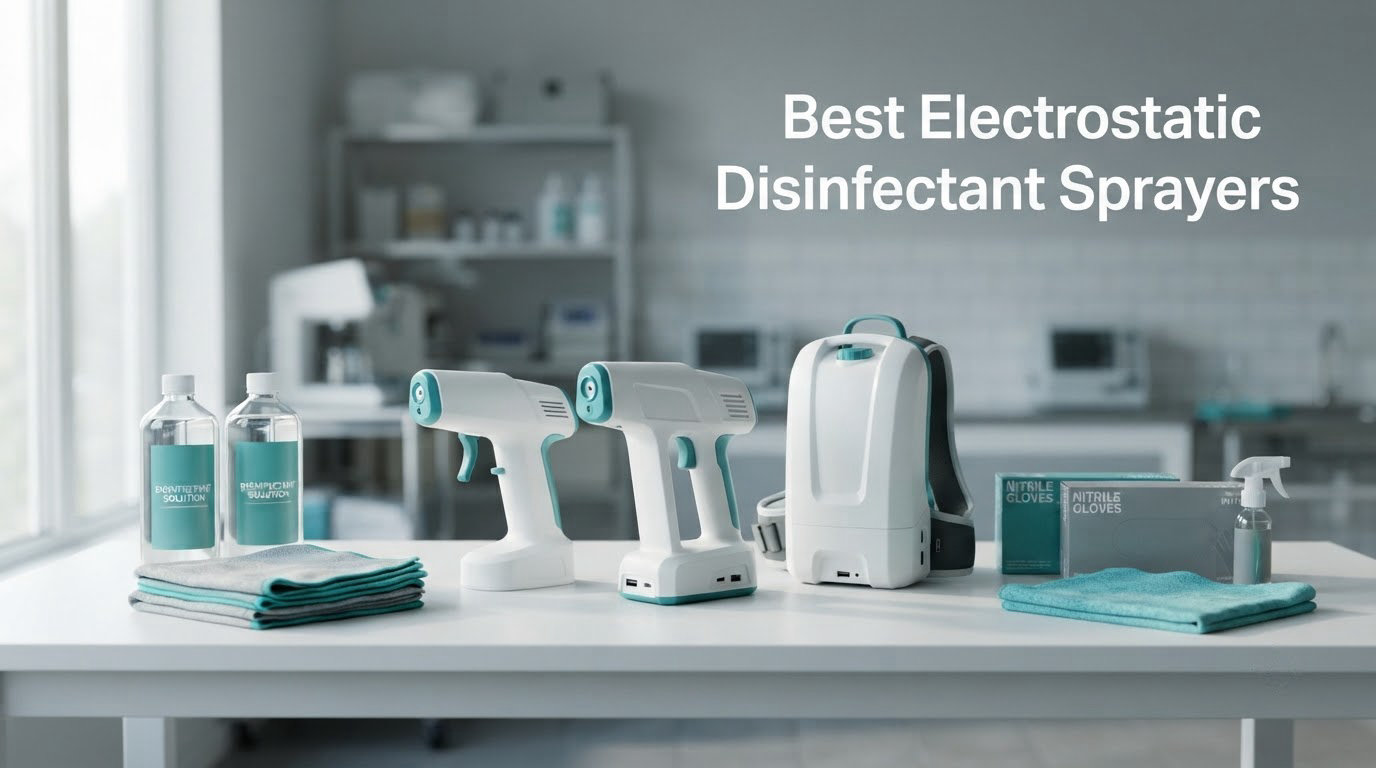
An electrostatic disinfectant sprayer is a device that gives a positive electrical charge to liquid disinfectant droplets as they leave the nozzle, so the droplets are attracted to and wrap around surfaces instead of falling straight down like a pump sprayer. The result is a room treated in a fraction of the time and with far less chemical than a hand trigger bottle, which is why schools, clinics, hotels and janitorial crews have moved to them. Vendor pages claim up to 70 percent faster application and up to 65 percent less chemical for the same area.
That is a real efficiency story, but it is not the whole story. An electrostatic sprayer improves how evenly a disinfectant lands. It does not shorten the contact time printed on the label, it does not replace wiping high-touch surfaces, and it can absolutely damage upholstery, paper, artwork and electronics if you point it at the wrong surface. Anyone who reads a product page without that context gets a tool that disappoints them the first week.
So this roundup covers the best electrostatic disinfectant sprayers across cordless handheld, cordless backpack, plug-in ULV fogger and pocket nano-mister form factors, with the honest limits spelled out. We weighed tank capacity, power source, droplet control, chemical compatibility, warranty length and how much published specification detail exists, then cross-checked against owner feedback. If you are outfitting a cleaning crew, a school, a clinic or an Airbnb turnover routine, the answer is in here somewhere. If you are decorating, you may want our guide to the best paint sprayers for interior walls instead.
Table of Contents
Top 3 Picks: Best Electrostatic Disinfectant Sprayers in 2026
If you want the short answer, start with the three below. The Victory handheld is the all-rounder, the Victory backpack handles whole facilities, and the HOLDWELL is the one to buy if you like seeing where the mist is going in dark corners.

Victory VP200ESK Cordless Handheld
- Patented electrostatic charge with 360 degree wrapping
- 34 oz tank covers up to 2800 sq ft
- Cordless IPX4 battery lasting 20 to 80 tanks
- Adjustable 3-in-1 stainless steel nozzle
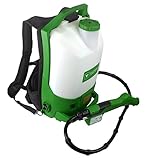
Victory VP300ES Cordless Backpack
- 23000 sq ft coverage per 2.2 gallon tank
- Cordless 16.8V lithium-ion battery
- Padded shoulder and waist straps
- 3-in-1 nozzle at 40 80 110 microns

HOLDWELL HW-03 Cordless Fogger
- Nano atomization with detachable stainless nozzle
- Dual 2200mAh batteries and 14.2 oz bottle
- Six blue LEDs for tracking
- High low and sleep gear control
The 12 Best Electrostatic Disinfectant Sprayers at a Glance
Every unit below is listed with the specs that actually change a buying decision. The short rows are the pocket and handheld misters; the long rows are the tank models for whole buildings.
| Product | Specifications | Action |
|---|---|---|
| Victory VP200ESK Cordless Handheld |
|
Check Latest Price |
| Victory VP300ES Cordless Backpack |
|
Check Latest Price |
| HOLDWELL HW-03 Cordless Fogger |
|
Check Latest Price |
 Konideke 4.5L Electric ULV Fogger Konideke 4.5L Electric ULV Fogger |
|
Check Latest Price |
 SWANSOFT 7L ULV Atomizer SWANSOFT 7L ULV Atomizer |
|
Check Latest Price |
 Smith Performance ULV-17 Smith Performance ULV-17 |
|
Check Latest Price |
 GAMMA+ Evo Nano Mister GAMMA+ Evo Nano Mister |
|
Check Latest Price |
 SKV 50032-ATM Atomizing Sprayer SKV 50032-ATM Atomizing Sprayer |
|
Check Latest Price |
 WOEden 5L ULV Fogger WOEden 5L ULV Fogger |
|
Check Latest Price |
 ZSYATN Nano Mist Atomizer ZSYATN Nano Mist Atomizer |
|
Check Latest Price |
 XPOWER F-16B Cordless Fogger XPOWER F-16B Cordless Fogger |
|
Check Latest Price |
 JAJEDS Nano Electrostatic Sprayer JAJEDS Nano Electrostatic Sprayer |
|
Check Latest Price |
Electrostatic Spraying Charges Droplets So They Wrap Around Every Surface
An electrostatic disinfectant sprayer uses induction. As solution is atomized at the nozzle, the hardware imparts a positive charge to each droplet. Because opposite charges attract and like charges repel, those charged droplets are pulled back toward the surface you are aiming at and cling to it, wrapping around the object rather than coating only the face pointing at you.
That wrapping is the entire point. A conventional trigger sprayer sends a cone of droplets straight ahead, so the back of a chair, the underside of a desk and the far side of a door get very little. A charged mist drifts and reattaches, so vertical and horizontal surfaces come out far more even.
Two vocabulary terms matter when you read spec sheets. ULV, or ultra-low volume, describes atomization producing droplets in roughly the 20 to 50 micron range, which is fine enough to stay suspended and drift before reattaching. Nano mist describes finer atomization intended for light-duty, targeted application on small surfaces. Droplet size is not a quality score; it is a matching decision, and it has to suit the contact time on your disinfectant label.
One term you will see marketed constantly. Closed-system chemistry means the disinfectant comes in a sealed container that attaches to the sprayer rather than being poured in, which cuts the chance of dilution error and of the wrong chemical being run through a machine. It is a real purchasing consideration, and it is the one question vendor pages never tell you to ask.
Electrostatic Sprayers Work, but They Do Not Replace Contact Time or a Wipe-Down
Yes, electrostatic sprayers work, and the coverage improvement is measurable in the field. What they do not do is shorten how long a disinfectant must stay wet, and they do not sterilise a room. The EPA registration number on your chemical label sets the dwell time, and a charged mist still has to sit on the surface for that long before it is wiped or allowed to air dry.
There is a second limit worth stating plainly. Owners on r/Firefighting describe treating the sprayer itself as a contamination vector after every call, and the same applies to you. A machine that touched a sick room is now a fomite, and running clean solution through the same nozzle without a proper flush is how cross-contamination happens.
So the honest workflow is: spray, respect the dwell time on the label, then wipe high-touch surfaces where the product label requires it. If you want evidence the process worked, an ATP swab before and after tells you far more than the appearance of the mist does.
1. Victory Innovations VP200ESK Cordless Electrostatic Handheld – Best All-Round Cordless Pick
Victory Innovations Cordless Electrostatic Handheld Sprayer for Disinfectants and Sanitizers, 360° Coverage, 3-in-1 Nozzle, Easy Fill Tank Covers 2,800 Sq Ft, Green, 33.8 Fl Oz (Pack of 1), (VP200ESK)
34 oz tank up to 2800 sq ft
Cordless IPX4 battery,20-80 tanks per charge
Adjustable 3-in-1 stainless steel nozzle
1 year limited warranty
Pros
- Patented electrostatic charge wraps droplets around surfaces
- 34 oz tank covers up to 2800 sq ft per fill
- Cordless so there is no cable to snag on furniture
- Stainless steel nozzle resists corrosion
- Storage bag and spare tank hose and gasket included
Cons
- 33.8 oz tank needs refills on large-area jobs
- 12 percent of ratings are one star
- 1 year limited warranty
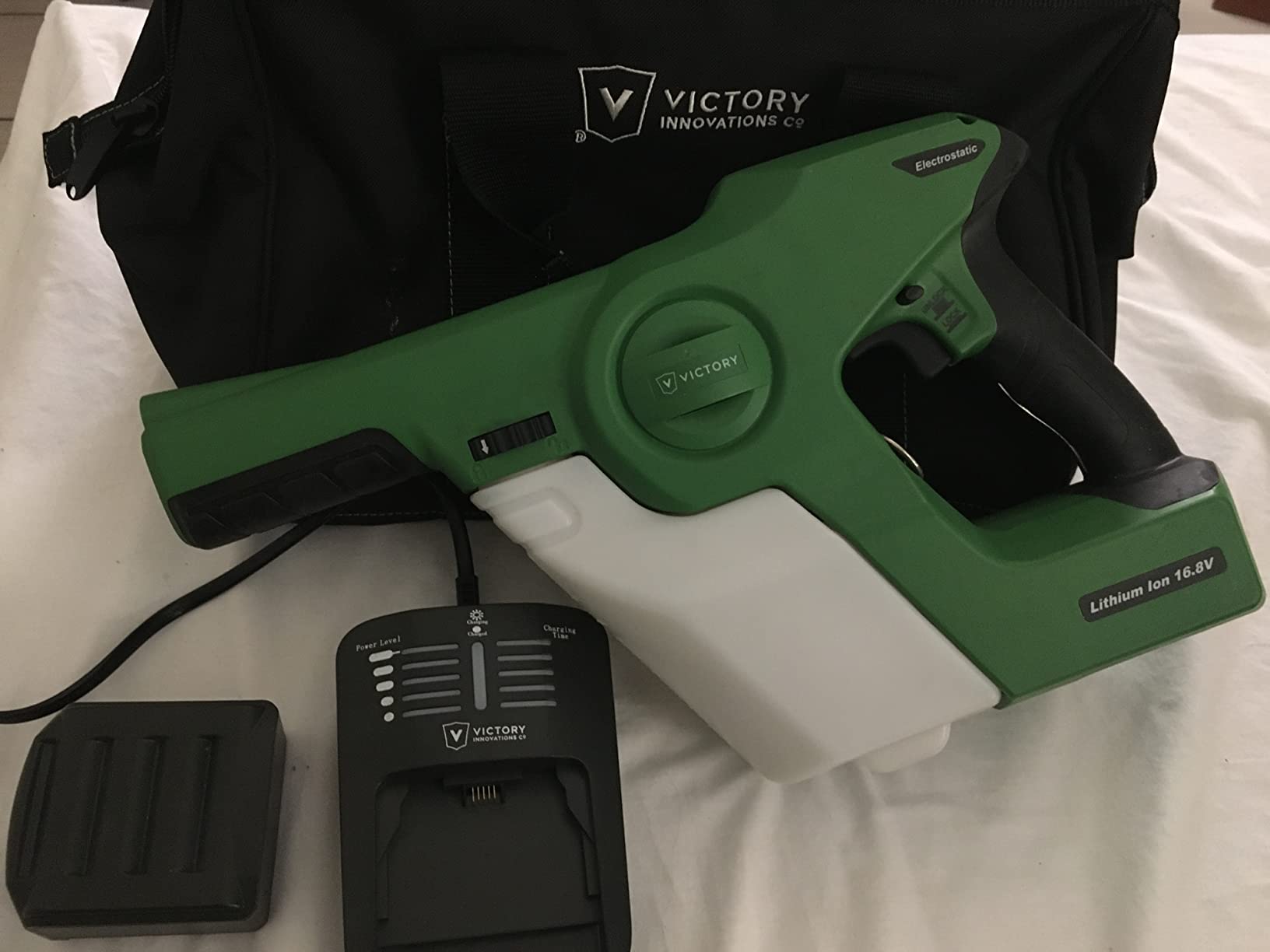
This is the unit I reach for when a room has to be done between meetings. The 34 oz tank covers up to 2,800 square feet per fill, and because the tank lifts straight off, refilling does not mean wrestling with a hose. That single design decision does more for real turnaround time than any spec on the box.
The cordless battery is the other reason it beats a plug-in machine in a building full of people. One charge is rated at 20 to 80 tanks depending on which of the three nozzle settings you use, and the IPX4 rating means it survives a wet utility room. You also get a heavy-duty storage bag, a spare tank hose and gasket assembly, and a charger.
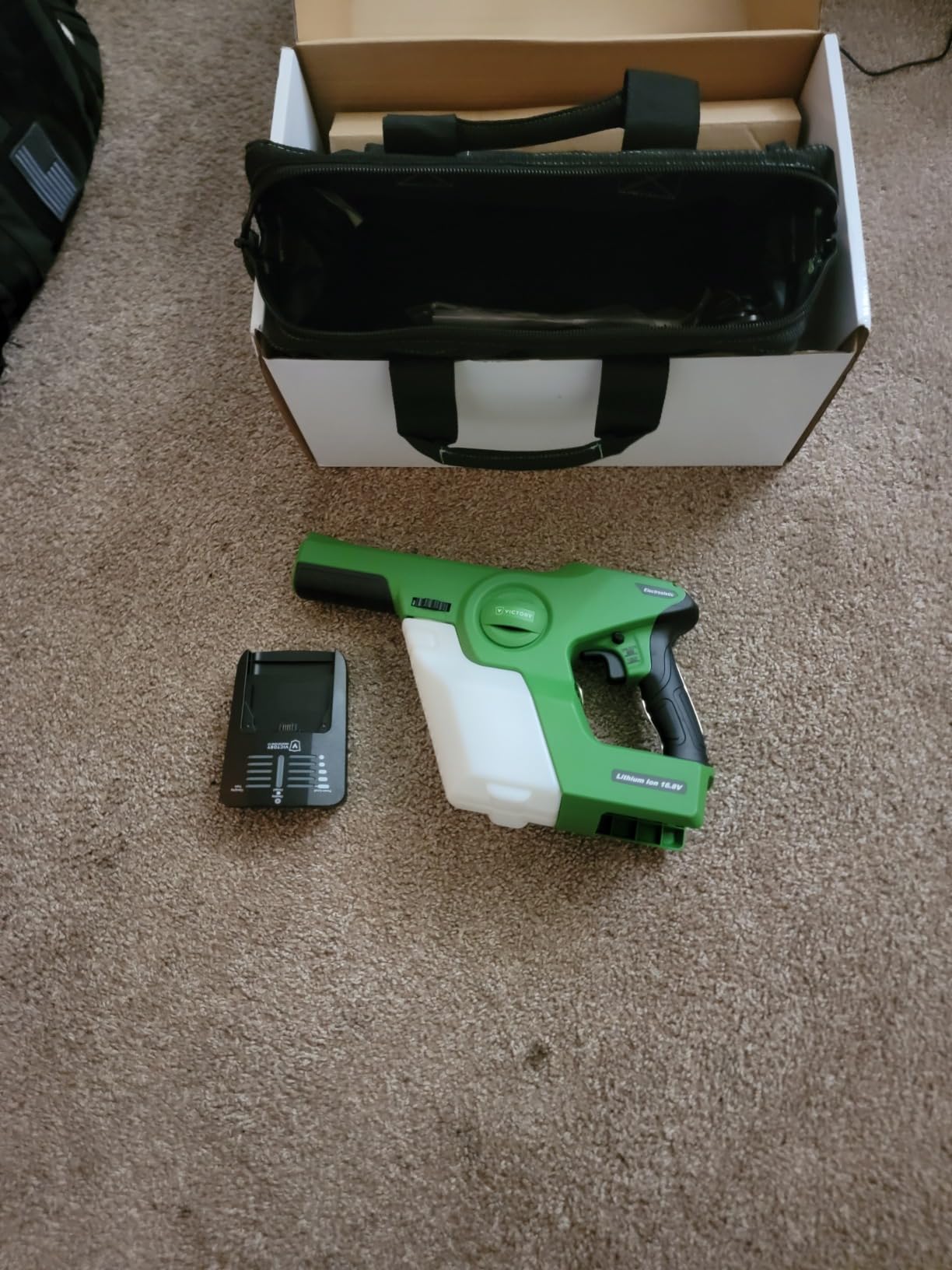
Owner feedback splits cleanly along nozzle-setting lines. People who understand that the 3-in-1 nozzle changes droplet size to match the chemical’s dwell time rate it highly, with 69 percent of reviews at five stars. The 12 percent of one-star ratings cluster around people who expected a full-building backpack and got a 1 liter handheld.
The stainless steel 3-in-1 nozzle is a corrosion-resistant choice that matters more than it sounds, because quat concentrates and daily rinsing are hard on cheap plastics. Dimensions are 7.24 inches wide by 13.5 inches high at 0.3 kg, so it is genuinely one-handed and genuinely portable.
Check the coverage figure before you plan a building turnover
The 2,800 square feet per fill assumes proper dilution and a normal pace of application, not a frantic sprint. In a real hotel corridor you will spend time on turning, on waiting the label dwell time and on re-filling. Budget on the tank size, not the headline number.
Also confirm the battery is included and check which battery platform it uses before you commit. Cordless convenience only pays off if charging is not the bottleneck at the end of a shift.
When this is the wrong pick
If you are covering a school wing or a warehouse floor, this handheld will make you refill constantly. A 34 oz tank is a room-scale tool, and the cordless runtime you get on the coarse nozzle setting will not cover a full shift of large-area work.
If your disinfectant is oil-based, step back. This is a water-based chemistry machine, and the one-year limited warranty from Victory Innovations will not cover damage from the wrong fluid.
2. Victory VP300ES Cordless Electrostatic Backpack – Best for Large Facilities
Victory Innovations Cordless Electrostatic Backpack Sprayer Machine for disinfectants, sanitizer, Cleaning,Green,VP300ES
2.2 gallon tank up to 23,000 sq ft
Cordless 16.8V 3400mAh battery included
3-in-1 nozzle at 40/80/110 microns
10 lb unit with padded straps
Pros
- Highest rated model in the list at 4.4 stars 23000 sq ft of coverage per tank fill
- Cordless so crews can work around furniture and through doorways without dragging a cord
- Includes battery charger nozzle wrench and multi-micron nozzle
- Padded shoulder and waist straps spread the load
Cons
- 10 lb backpack weight is heavy on long shifts
- Highest cost in the roundup
- 1 year limited warranty
This is the backpack that changed how I think about whole-building work. A 2.2 gallon tank disinfects up to 23,000 square feet before you refill, which means a janitorial crew can finish a floor without walking back to a supply closet mid-job. The cordless 16.8V 3400mAh battery removes the cable trip hazard that turns a corridor job into a two-person job.
Everything you need is in the box: the backpack tank, the 16.8V battery, the charger, a nozzle wrench, and a 3-in-1 stainless steel nozzle rated at 40, 80 and 110 microns. Having the nozzle wrench included tells you something about how the manufacturer expects you to swap settings between chemicals.
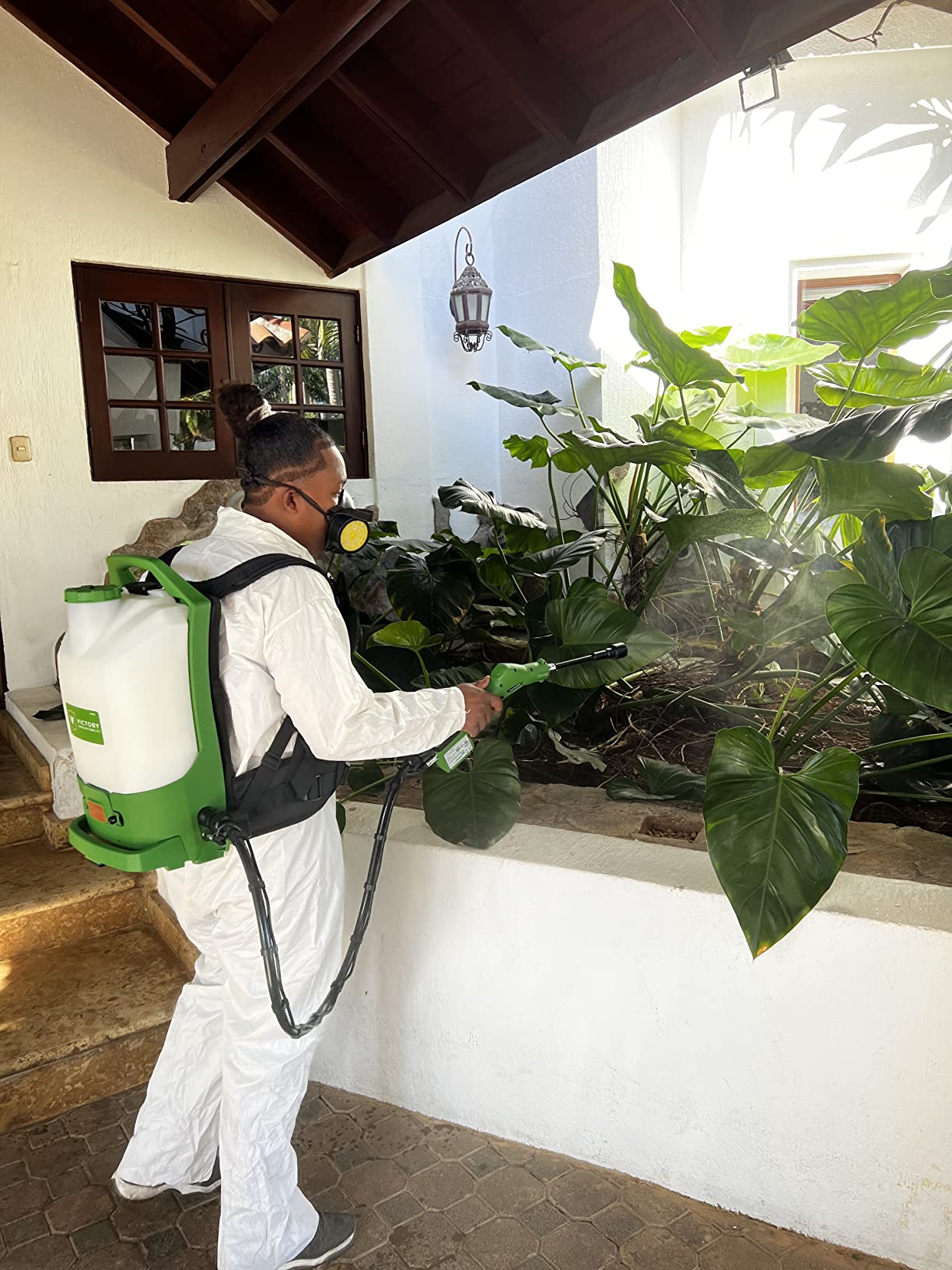
At 4.4 stars across 242 reviews with 71 percent five-star, this is the highest-rated unit in the lineup, and owners talk about the wrapping coverage on vertical surfaces in gyms and clinics. The padded shoulder and waist straps are the difference between this being usable on a full shift and being a one-floor tool.
Size is 17.5 inches wide by 23 inches high at 10 pounds filled. That weight is the honest trade-off: you get rid of the cord and you take on the pack.
Match the nozzle micron rating to your label dwell time
The 40, 80 and 110 micron settings are not interchangeable. A finer droplet gives faster wrap-around coverage but dries faster; a coarser one stays wet longer. Read the dwell time on your chemical and pick the setting that keeps the surface visibly wet for that long.
Rotate the setting per chemical rather than per room, and rinse the nozzle with clean water when you switch. That single habit prevents the mineral and residue buildup that causes most nozzle failures in this category.
When this is the wrong pick
Ten pounds is heavy for anyone doing spot treatments or a single room per day. A handheld covers the same job with far less fatigue, and for a two-bedroom short-term rental the backpack is overkill.
It is also the most expensive model here. If your disinfectant volume is low and your spaces are small, the cost per usable square foot does not favour it despite the coverage headline.
3. HOLDWELL HW-03 Cordless Disinfection Fogger – Best LED-Tracked Cordless Atomizer
Cordless Electric Disinfection Fogger, Detachable Stainless Steel Nozzle, 3-Gear Adj 14.2oz Sanitizer Atomizer, Blue Light Nano Spray Gun for Place Cleaning/High-Touch Item Contactless Sanitization
5500 rpm pump,30W peak power
Dual 2200mAh lithium batteries
14.2 oz bottle,3,000 sq ft per charge
Six blue LEDs for spray tracking
Pros
- Very fine dry mist that avoids soaking surfaces
- Blue LEDs show exactly where mist is landing
- Dual batteries and reported endurance through a large home or 6000 sq ft job
- Cordless and quiet compared with a trigger bottle
Cons
- Some reports of diaphragm pump or filter failure after weeks of use
- Occasional nozzle dribble after shutdown
- Thin documentation with no user guide online
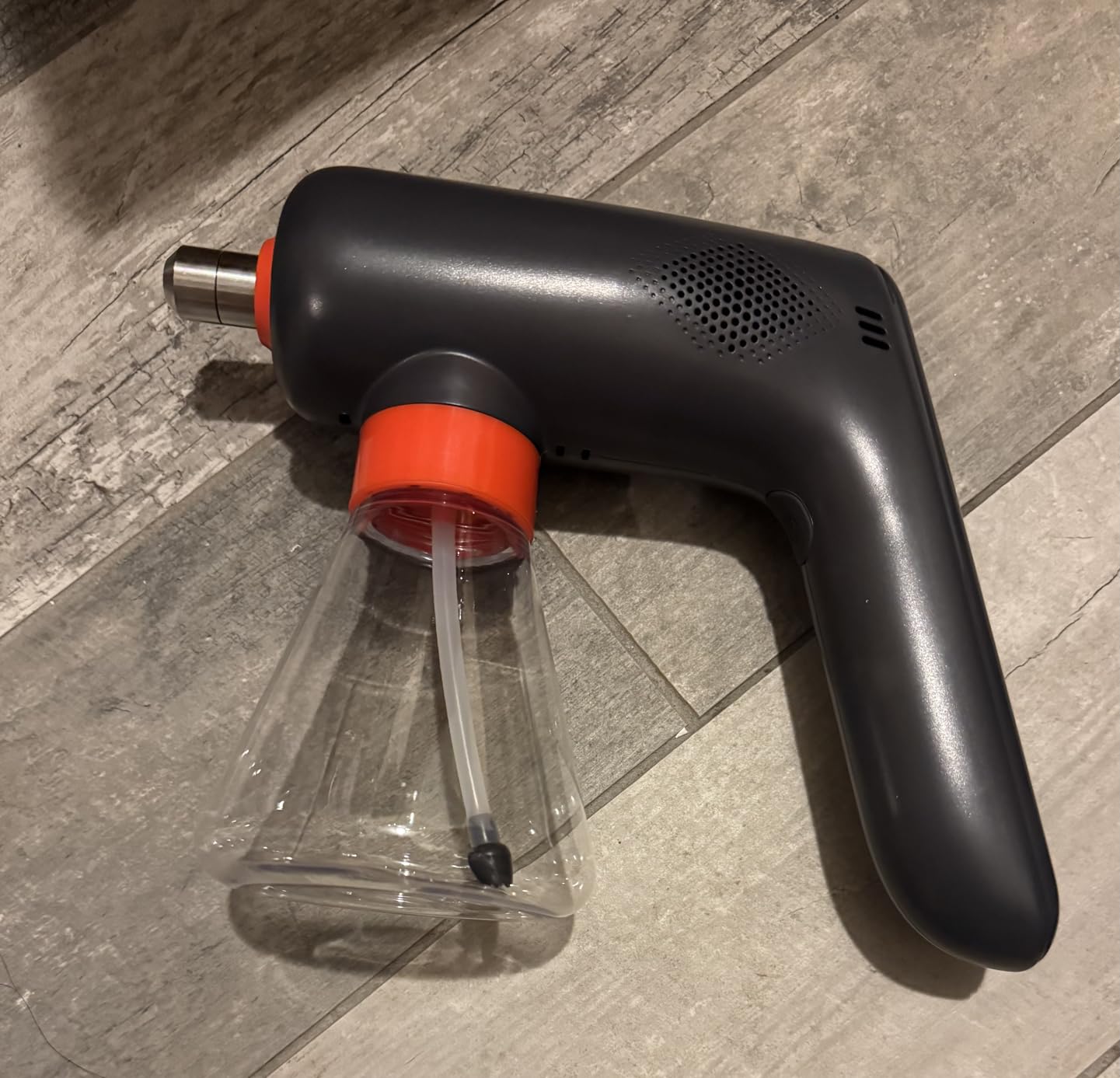
The six blue LEDs are the feature that convinced me this one is different. In a dark storage room or under a bank of desks, you can literally see where the nano mist is landing instead of guessing from the sound of the pump. For contact-sensitive disinfection work that visibility is worth more than a headline coverage number.
Under the shell it is a 5500 rpm DC vacuum diaphragm pump at 30W peak power with dual 2200mAh lithium-ion batteries and a protection board. The 14.2 oz bottle throws 5 to 6.5 feet and covers roughly 3,000 square feet per charge, using Bernoulli-principle Venturi atomization with a detachable stainless steel nozzle that reaches nano level.
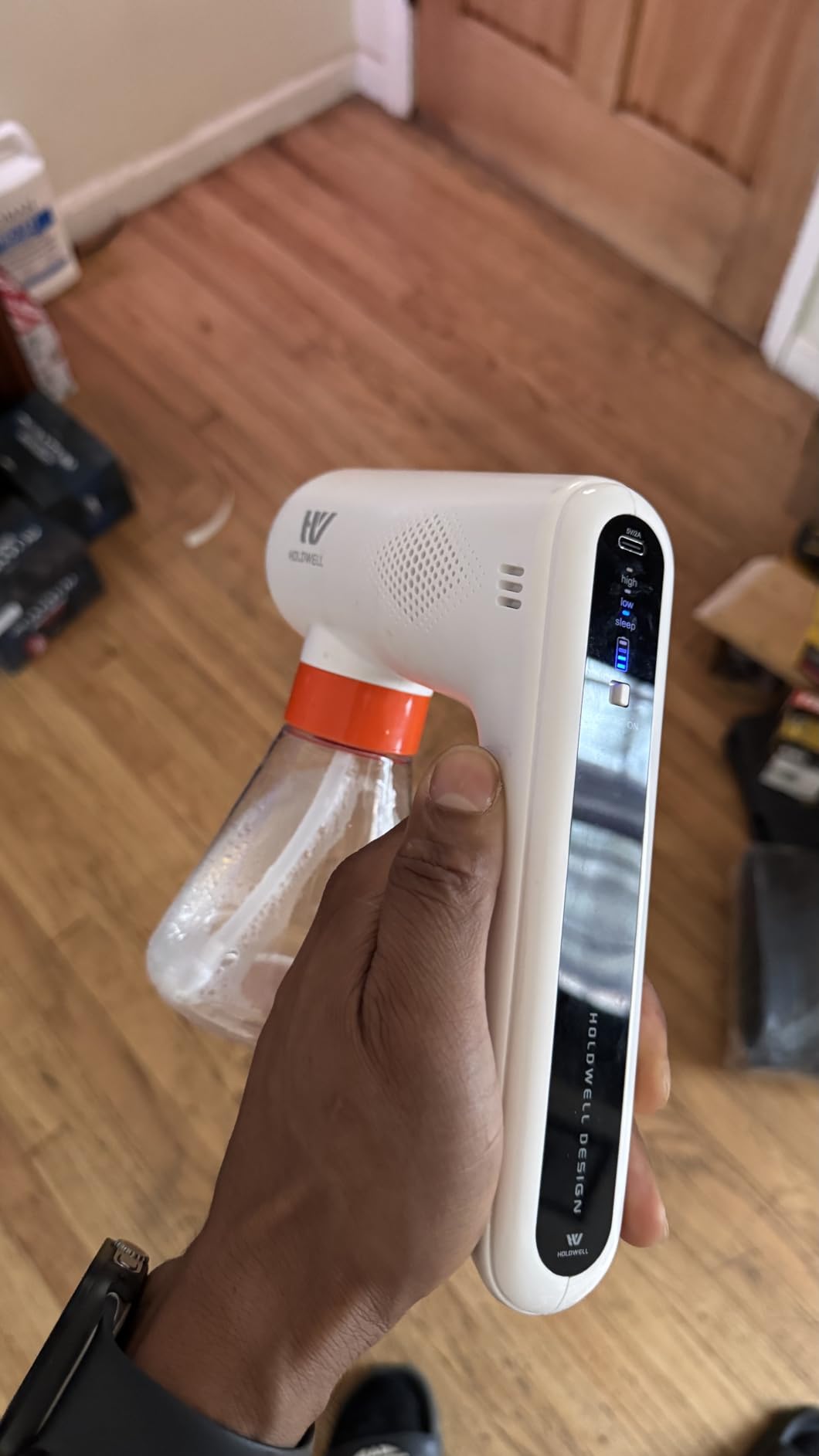
Owners consistently praise the combination of a dry, fine mist that does not wet down surfaces and battery endurance good enough to finish a large home or a 6,000 square foot commercial job on one charge. The high, low and sleep gear control lets you dial down for a bathroom and up for an open floor.
At 4.2 stars from 111 reviews with 70 percent five-star, the enthusiasm is real. The minority complaint is a consistent theme rather than one bad unit: reports of the diaphragm pump or reservoir filter failing after weeks of use, producing clogging or air-only spraying.
Keep a spare filter and expect to service the pump
Before a multi-week job, open the reservoir and inspect the filter. The failure pattern in reviews is gradual rather than sudden, so a filter that has been running a season will restrict flow before it stops entirely. A rinse cycle with clean water after each chemistry change goes a long way.
The nozzle is detachable and stainless steel, which is the part you can clean. If the pump hums but no mist appears, the filter is the first thing to check rather than the battery.
When this is the wrong pick
There is no user guide online for this model, so if you are not comfortable troubleshooting a small pump you are on your own. That matters if you are outfitting staff rather than yourself.
The 14.2 oz bottle is also small. If you are covering more than a few rooms per session, refilling every 3,000 square feet becomes the bottleneck rather than the battery.
4. Konideke 4.5L Electric ULV Fogger – Most Versatile for Big Rooms
Electric ULV Portable Fogger Sprayer Machine 4.5L (1.2 Gallon)
4.5L or 1.2 gallon tank
1200W motor,150-260 mL per min
20-50 micron ULV mist,26-30 ft range
16.6 ft power cord with 10 m hose
Pros
- Largest review base in the list at 644 reviews
- 20-50 micron ULV mist with fast spread and 30 ft throw
- 4.5L tank allows extended sessions with fewer refills
- Automatic start and stop continuous spraying
- Twist-off fill tank is quick to service
Cons
- Corded design with a 16.6 ft power cord limits reach
- Lightweight plastic construction rather than metal
- 3.05 kg unit is heavy for a handheld mist
With 644 reviews, this is the most thoroughly owner-tested machine in the lineup, and that matters more than any spec. When a category has almost no editorial coverage, the review history is your best evidence source, and this one has a deep one at 4.2 stars with 63 percent five-star.
The 1200W motor delivers a 150 to 260 mL per minute spray rate and 20 to 50 micron particles averaging around 30 microns, with a 26 to 30 foot spraying range. A valve on the unit adjusts the angle up or down 60 degrees, and automatic start and stop means you can spray continuously without holding a trigger.
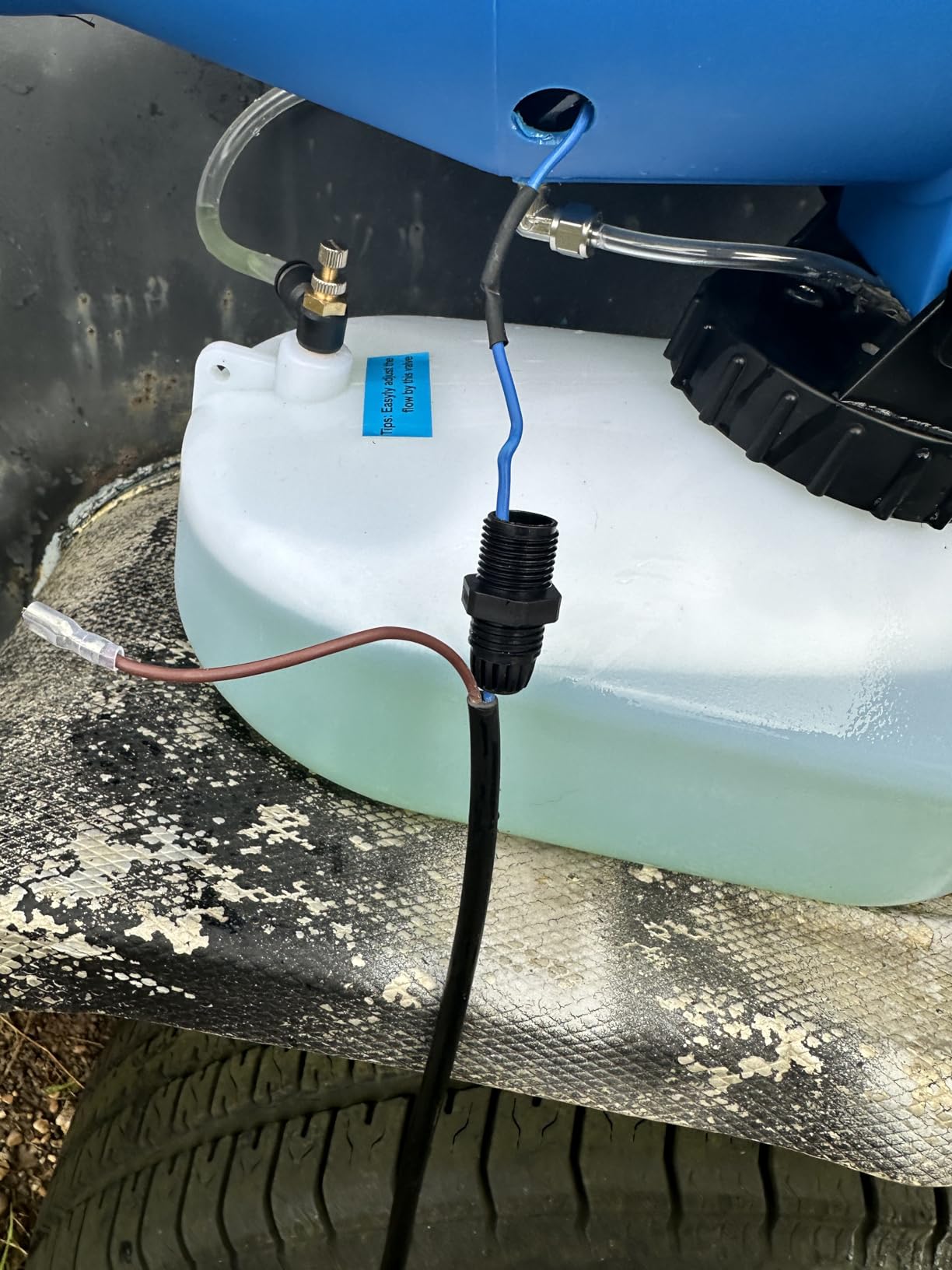
Owners cite strong mist output, an easy twist-off fill tank and adjustable flow for spaces ranging from a single room to a yard. The 10 metre hose and 26 to 30 foot range mean you can stand in one spot and cover more of a large room than the nominal tank size suggests.
The honest limitation is the cord. A 16.6 foot power cord is not a real constraint in a single large room, but it is in a corridor or a building where you have to work around doorways. Dimensions are 17.5 inches wide by 15.5 inches high at 3.05 kg.
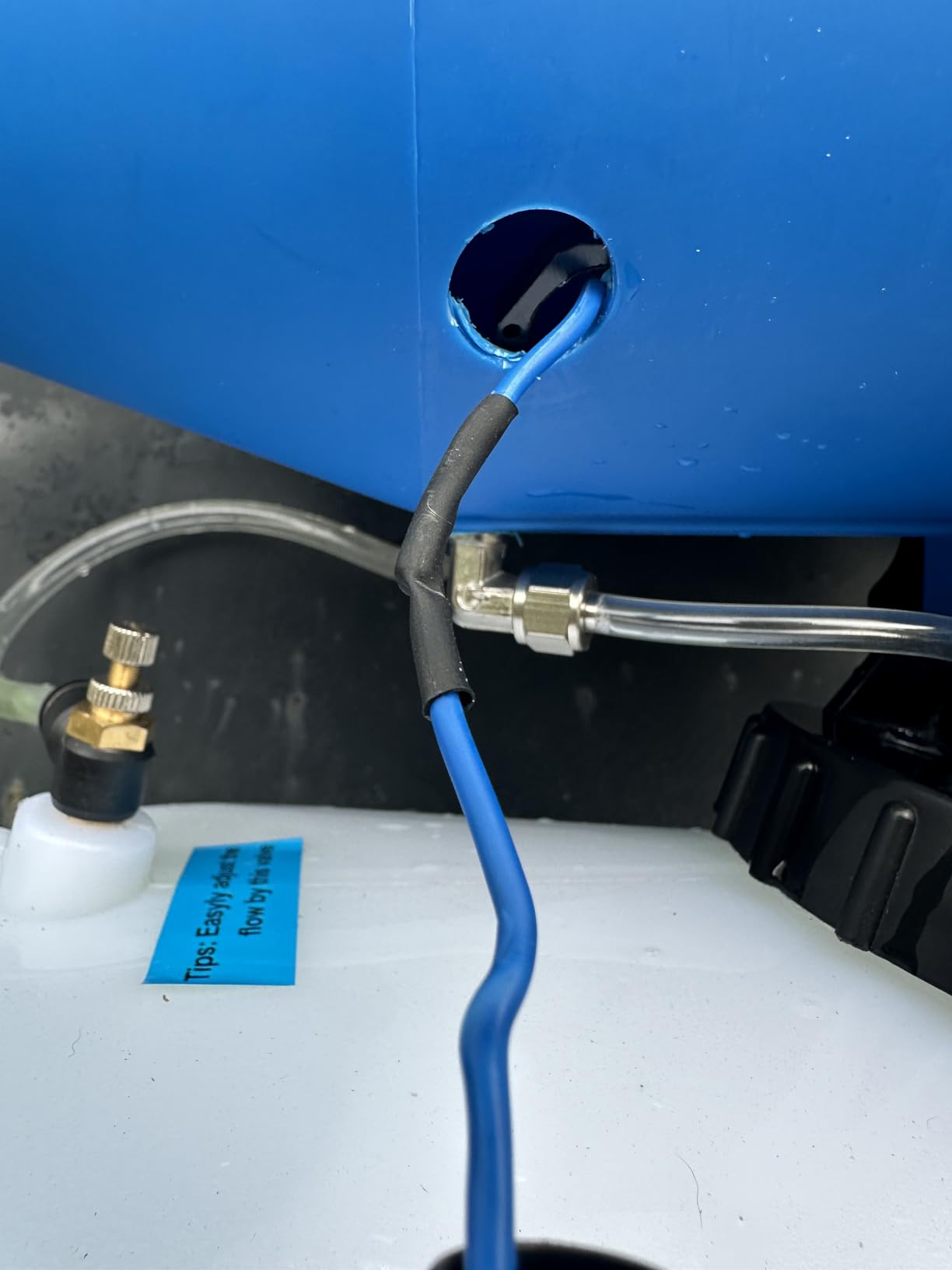
Position the hose before you fill the tank
Because the reach comes from the hose rather than your arm, think about where you can stand rather than what you can touch. A 4.5 liter tank that you have to set down mid-room to reposition is a spill risk, and a 16.6 foot cord in a room with furniture is a snag risk.
Do a dry run with water first. Confirm you can reach the ceiling line, the underside of desks and the back wall from a single standing position before you mix a real chemical load.
When this is the wrong pick
The construction is plastic rather than metal, and it is a mains unit. If your application involves a large building with no nearby outlets, a cordless model will save more time than this one saves on cost.
It is a fogger first. For light touchpoint work on a keyboard or a door handle, a handheld nano mister is faster and less wasteful of chemical.
5. SWANSOFT 7L ULV Atomizer – Best for Big Tanks and Long Sessions
SWANSOFT 7L(1.85 Gallon) ULV Fogger Machine, Electric Atomizer Sprayer, Portable Foggers Machine for Home Indoor
7L or 1.85 gallon tank
20-26 ft horizontal,5-6.5 ft vertical reach
Cold ULV atomization water-based solutions only
90 day manufacturer warranty
Pros
- Very large 1.85 gallon tank reported leak free at both nozzle and tank
- Adjustable mist density from fine to heavy
- Handle-mounted on/off switch
- Uses less chemical than comparable machines
Cons
- Noisy operation compared to a vacuum cleaner
- Requires a manual tank flush between uses to prevent corrosion
- 90 day warranty is the shortest in the list
- Reports of motor failure after short use and a US-style plug fitted
The 7 litre, or 1.85 gallon, tank is the reason to look at this one. A full tank covers roughly 4,000 square feet, and owners report it staying leak free at both the tank and the nozzle, which is where most foggers in this class start weeping within a few months.
Coverage is 20 to 26 feet horizontally and 5 to 6.5 feet vertically, with mist density adjustable from fine to heavy on the nozzle handle and a handle-mounted on and off switch. The 3.97 kg polypropylene body is heavy, and that weight is part of why it feels stable rather than portable.
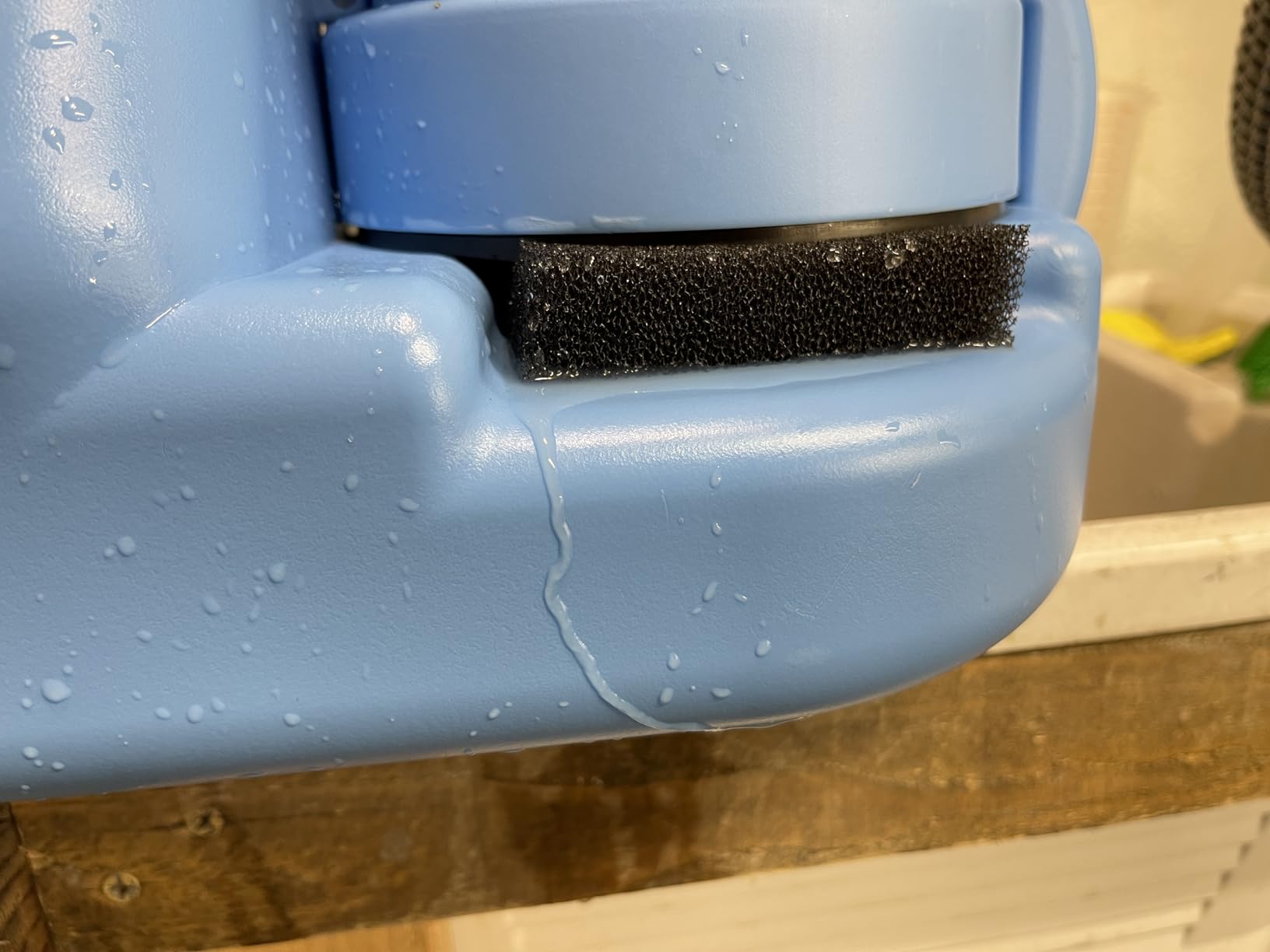
At 4.2 stars across 352 reviews with 68 percent five-star, reviewers describe it as a commercial-grade machine that is leak free and chemical efficient. The manufacturer specifies cold ULV atomization for water-based solutions only, with oily or corrosive chemicals prohibited, and a three-step shutdown: atomization off, wait 5 to 10 seconds, then power off and unplug.
That shutdown sequence matters more than it looks. Cutting power before atomization stops forces liquid back up into the nozzle path, which is how atomizer heads clog. The same manual calls for a clean water rinse after each use to protect the screen.
Follow the shutdown sequence or plan to replace the nozzle
Atomization off, wait 5 to 10 seconds, then power down and unplug. Skipping the wait step is the single most common way owners damage a ULV atomizer, and the replacement part is the expensive failure point in this machine.
Flush the tank with clean water after every session. Reviewers note that a tank left with solution residue corrodes internally, and the ninety-day manufacturer warranty is the shortest in this list, so that maintenance is not optional.
When this is the wrong pick
It is genuinely loud, on the order of a full-size vacuum cleaner. In an office with people still working, or a clinic with appointments running, that noise is a real problem rather than a minor annoyance.
The water-based only restriction also rules out oil-based solutions, and the ninety-day warranty gives you very little runway if the unit fails. If you need longer coverage on a warranty, look at the larger warranty models instead.
6. Smith Performance ULV-17 Electric Cold Fogger – Best for Adjustable Output
Smith Performance Sprayers Smith ULV (1.7 Gal) Electric Cold Fogger, 110V, Model ULV17, Atomizer Mist, Spraying for Home, Hotel, School, Yard
1.7 gallon tank,900W AC motor
Output adjustable 1.3 to 5.2 oz per min
35 mph airstream,36 inch hose
UL and CSA certified,1 year warranty
Pros
- UL and CSA certified 75 percent of reviews at five stars
- Output adjusts from fine mist 1.3 oz per min to heavy fog 5.2 oz per min
- Viton siphon tube and ceramic filter resist chemical corrosion
- One-hand power switch and 36 inch hose for targeting
Cons
- 10 lb unit plus cord restricts mobility
- Reports of the power cord connection failing
- One report of a unit that would not pump with unresponsive support
This is the one to buy if you switch between light misting and heavy fogging. The nozzle adjusts from 1.3 oz per minute for a fine mist to 5.2 oz per minute for full fog, and that range lets you match the application rate to a disinfectant label instead of forcing one chemical into one setting.
Build quality is where this separates itself. The siphon tube is Viton and the filter is heavy-duty ceramic, both chosen for chemical resistance, and the 900 watt AC motor drives a 35 mph airstream. It is UL and CSA certified, which is a claim you cannot make for most machines in this price range, and it carries a one year limited warranty.
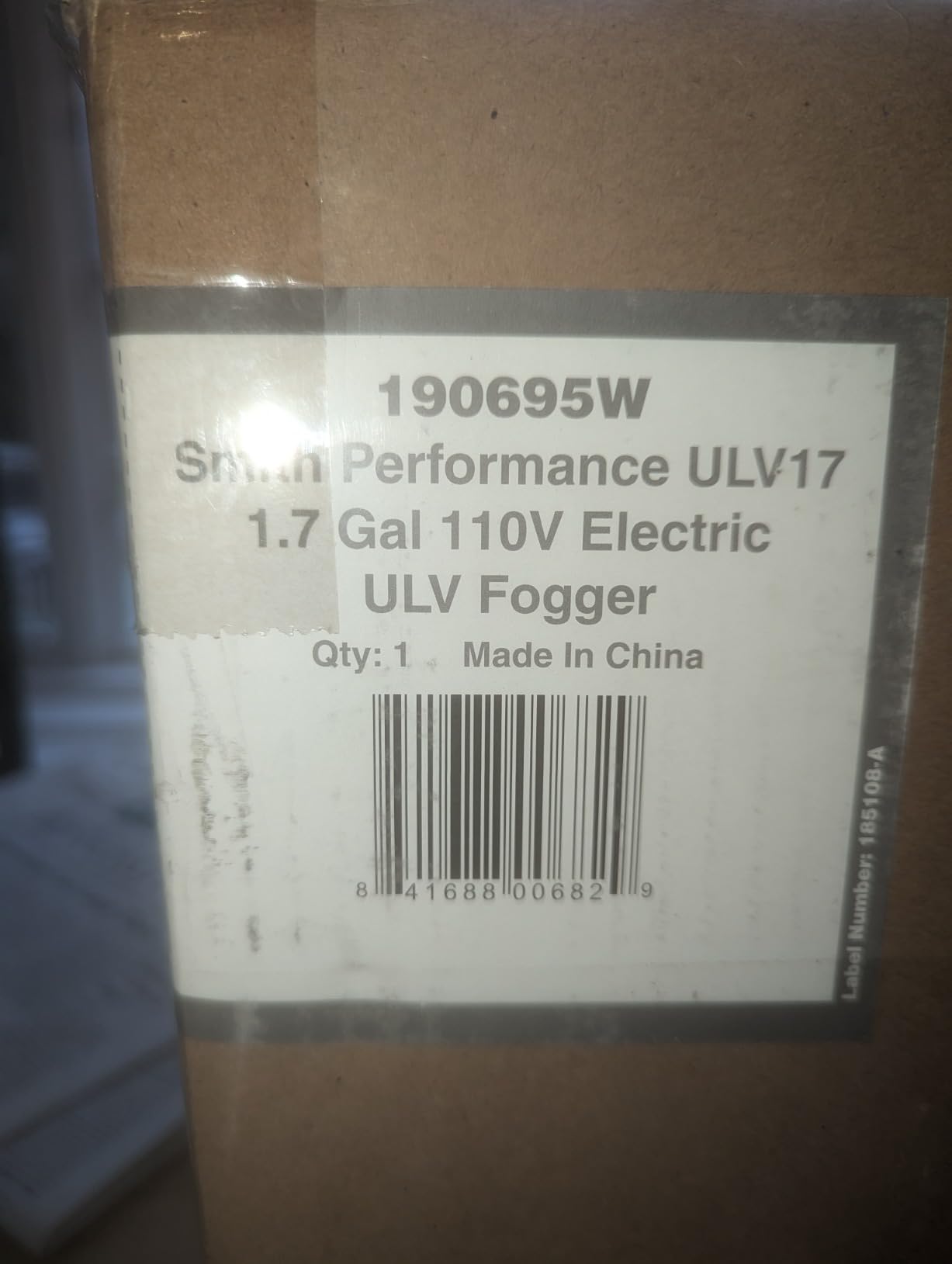
At 4.4 stars from 104 reviews with 75 percent five-star, the highest five-star share among the tank models, owners call it simple, well built and good value for pest, deodorising and disinfection fogging. The 36 inch hose and a one-hand power switch below the handle make precise targeting easy.
There is a 3.25 inch tank opening with a tethered cap, an internal gasket and handle cord management, which sounds mundane until you have used a fogger that leaks from the filler neck. The 1.7 gallon capacity at 10 pounds is a deliberate trade between endurance and portability.
Set the flow rate from the label, not from the nozzle
Start at 1.3 oz per minute and increase only as far as the label allows. Over-application is the most common user fear in this category, and a wide adjustment range becomes a liability when someone cranks it to maximum on a surface that should have been misted.
Ceramic and Viton wetted parts tolerate more chemistry than plastic, but check your SDS anyway. The material choice protects the machine from corrosion, not the surface you are spraying.
When this is the wrong pick
It weighs 10 pounds and needs a mains outlet within reach of a 36 inch hose. That is fine in a warehouse bay and awkward in a house with rooms spread across two floors.
It is also a cold fogger rather than a true electrostatic charger. If you need charged droplets that wrap onto vertical surfaces, this machine atomises without inducing a charge.
7. GAMMA+ Evo Nano Mister – Best for Travel and Grooming Spaces
GAMMA+ Evo Nano Mister Cordless Portable Water Sprayer, Disinfect Mist
13 oz liquid capacity
Lithium-ion 5V 10W battery,90 minute runtime
USB Type-C rechargeable,LED charging indicator
8.82 oz unit designed in Italy
Pros
- Compact cordless design aimed at barbers stylists and home users
- 90 minute runtime with USB-C charging suits travel
- 13 oz tank gives long mists per fill
- Whisper quiet 5V 10W operation
Cons
- A fine face and surface mister rather than a true ULV electrostatic unit
- Highest one-star share in the list at 15 percent
- 8.82 oz device covers a limited area per tank
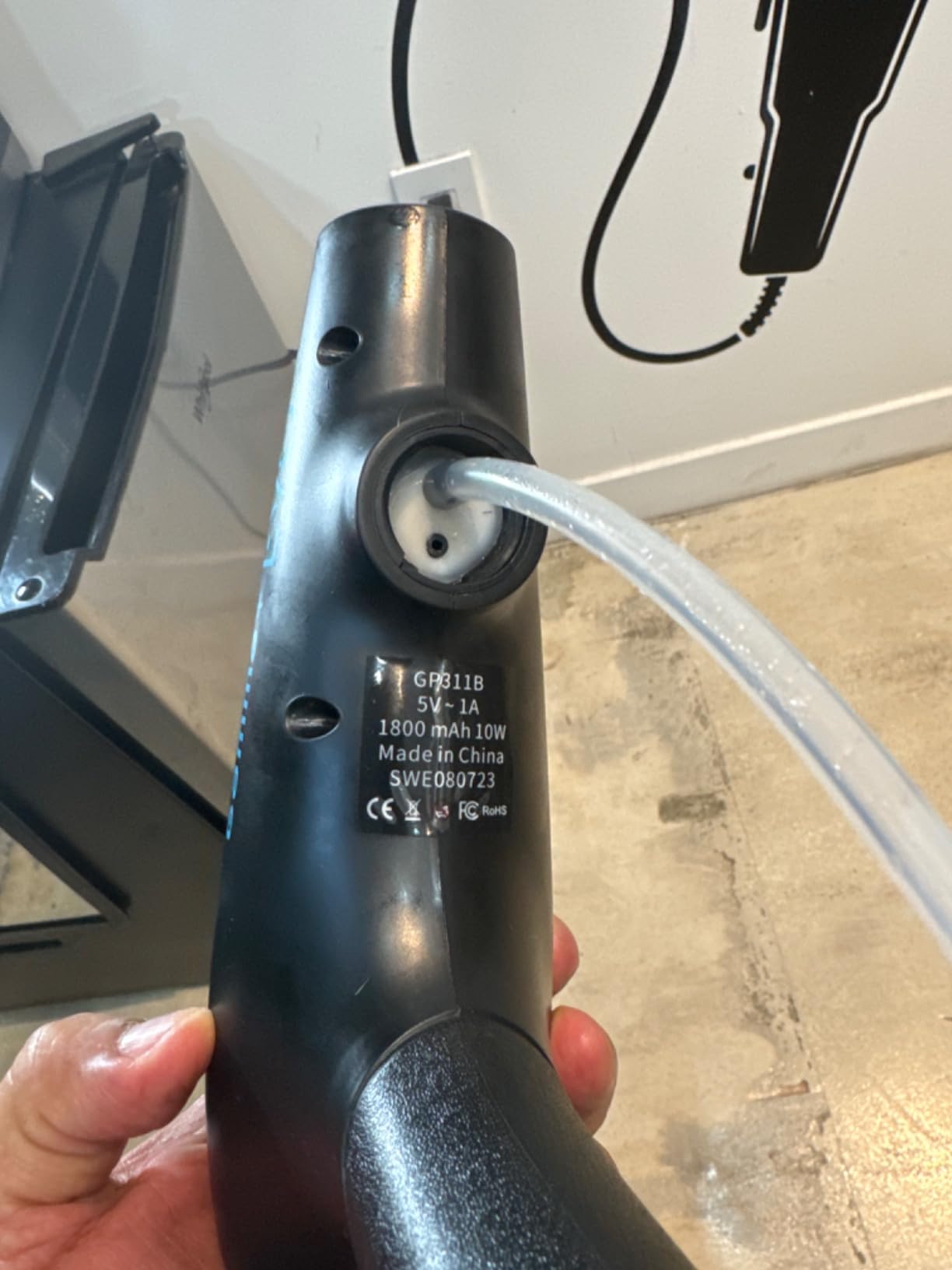
This is not a building disinfection tool and it is worth being straight about that. The Evo Nano Mister is a grooming-grade fine mister designed in Italy, aimed at barbers, stylists and light household surfaces, and it does the job it was built for better than anything else at this size.
The battery is a 5V 10W lithium-ion pack rated for up to 90 minutes of run time with USB Type-C charging, which means it works from a power bank or a travel adapter anywhere. The 13 oz capacity is large for a device weighing 8.82 ounces, and the LED illumination and charging indicator remove the guesswork about remaining charge.
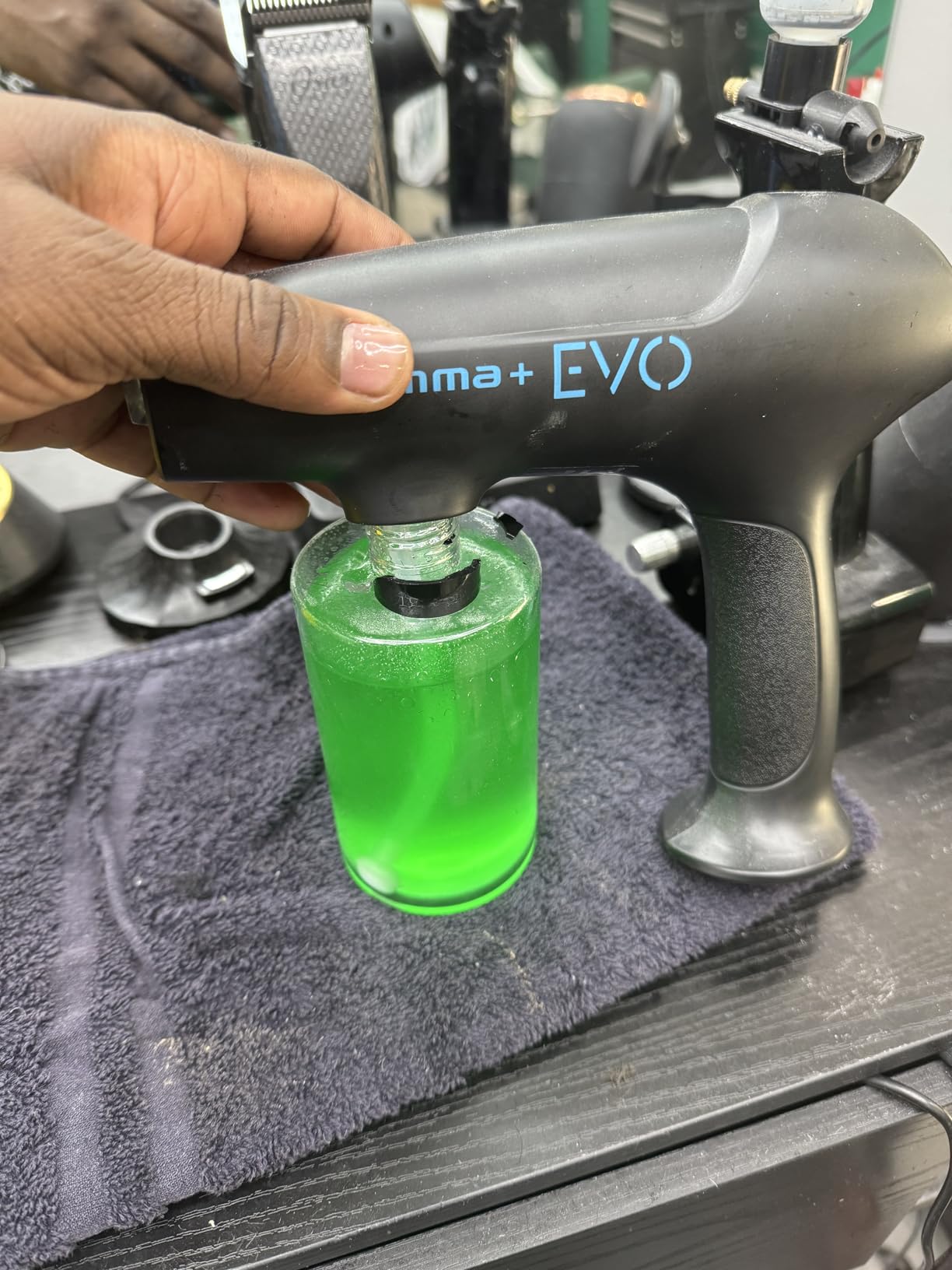
At 4.0 stars from 152 reviews with 64 percent five-star, owners favour portability and runtime rather than heavy-duty capability. The quiet 5V 10W operation means you can use it in a barbershop or a treatment room without raising your voice over it.
The 15 percent one-star share is the highest in the list, and the complaints are consistent: people bought a nano mister expecting room-scale disinfection coverage and got a targeted device. Dimensions are 2.76 by 7.52 by 8.5 inches.
Judge it on surface coverage, not on room coverage
Fine nano mist atomization means excellent targeted coverage and very poor large-area coverage. A 13 oz tank at this output treats a work surface, a chair, a salon trolley or a car interior, not a living room floor.
If your need is a hard-surface disinfectant sprayer for an entire space, this is the wrong tool and you will waste chemical trying to stretch it. Pair it with a ULV fogger for the room and keep the Evo for point work between deep cleans.
When this is the wrong pick
It is not a true ULV electrostatic unit, so it does not charge droplets. You are getting fine atomization and a light, so you lose the wrap-around coverage that makes electrostatic spraying worth owning.
If you need to disinfect soft furnishings in volume, look for a model with more runtime and a larger tank. If you need a warranty, this listing does not specify one, which is a gap in an otherwise well-specified device.
8. SKV 50032-ATM Cordless Atomizing Sprayer – Best for Nurseries and Food Prep
SKV Cordless Atomizing Sprayer, 360-Degree Coverage Disinfection Sprayer for Household Sanitization, Rechargeable, 16 oz Tank
16 oz solution tank,360 degree atomizing coverage
Rechargeable cordless battery
UV light for rinse-free sanitizing
Manufactured for Innovacyn, Inc.
Pros
- Rinse-free UV disinfection suits nurseries kitchens and food prep
- 360 degree atomizing coverage
- Rechargeable cordless battery covers a full cleaning project
- Reviewers report better durability than cheaper competing spray bottles
Cons
- Delay on shutdown leads to nozzle leakage
- Reports of units stopping working
- sometimes after a single use
- Warranty is voided if used with any liquid other than SKV solution
The rinse-free UV disinfection is what separates this from the other handheld misters. For a nursery, a change table or a food prep counter where a wet surface is a problem, being able to sanitise without a water wipe-down is a genuine workflow advantage, and owners rate the residue-free finish highly for those surfaces.
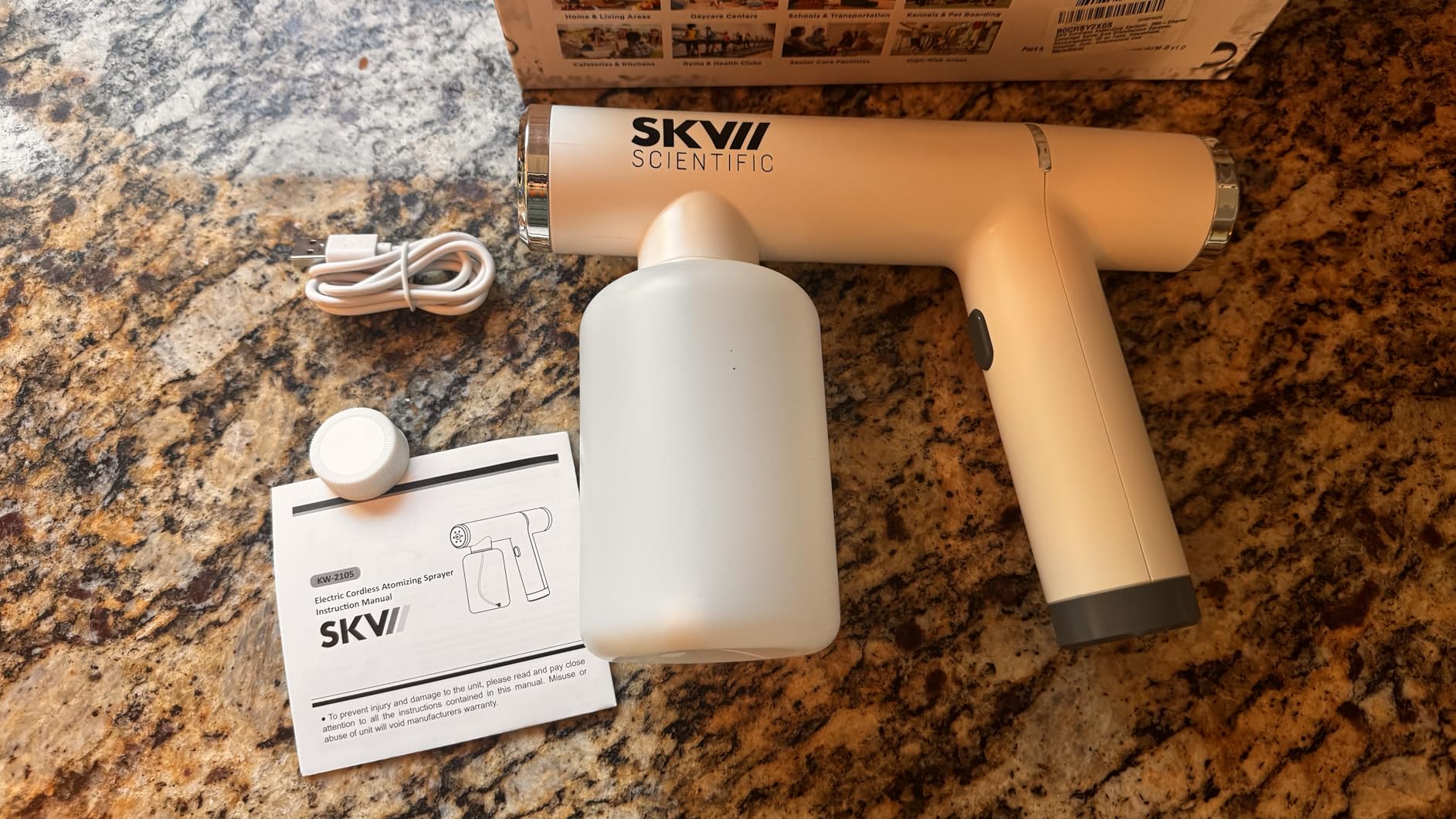
Coverage comes from 360 degree atomizing spray out of a 16 oz solution tank on a rechargeable cordless battery, and the manufacturer is Innovacyn, Inc. The listed uses are kitchen, nursery, bathroom, vehicles and general sanitising, which tells you the design target is exactly those situations.
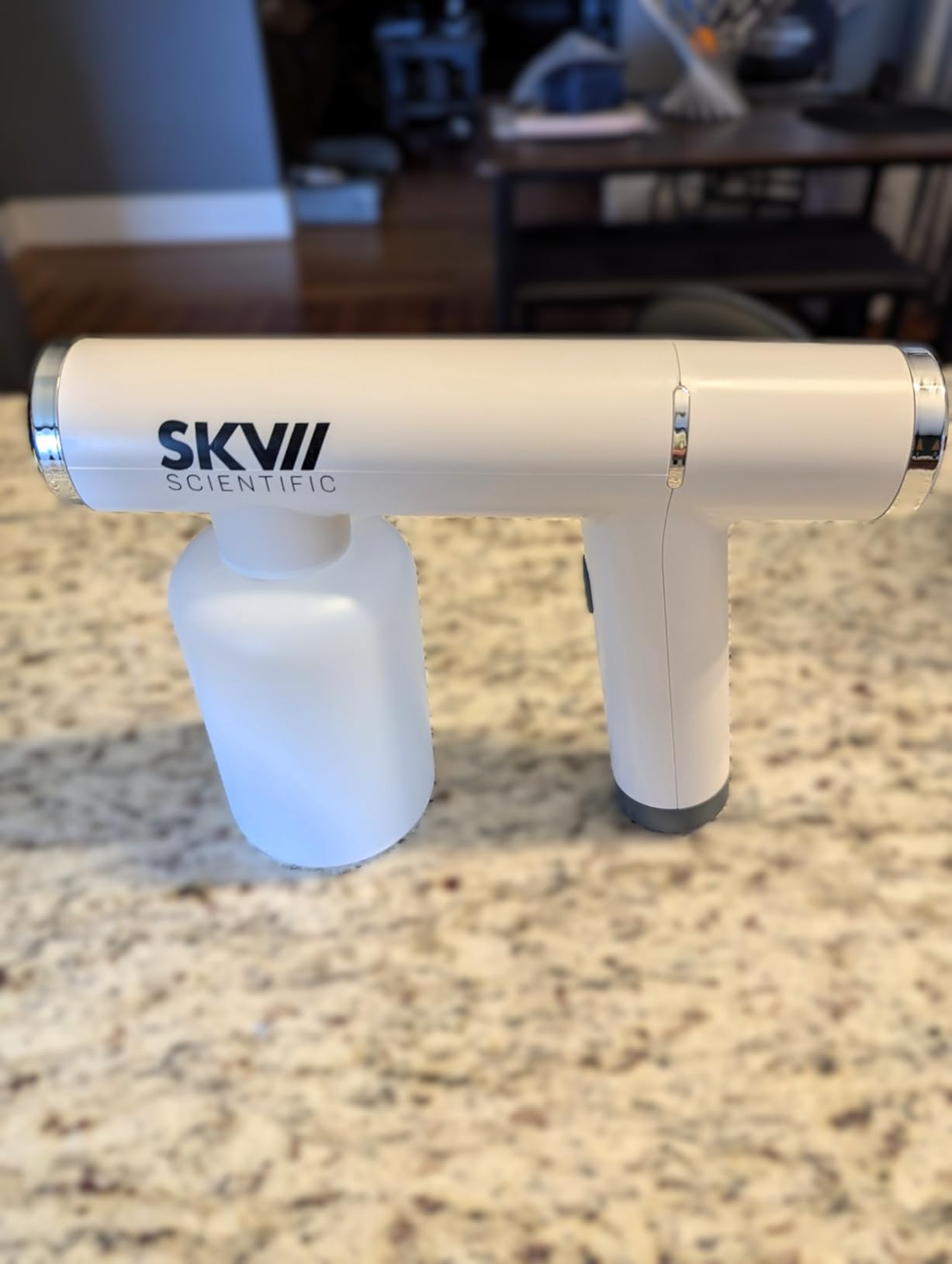
At 4.0 stars from 76 reviews with 57 percent five-star, barbers and household users like the fine 360 degree mist and the no-rinse workflow, and several reviewers report noticeably better durability than cheaper competing spray bottles. The battery life is reported as covering an entire cleaning project rather than one room.
There are two deal-breaker issues you need to know about. The warranty is a money-back guarantee that is voided if you use any liquid or detergent other than SKV disinfectant solution, so you are locked into one chemistry, and a number of owners report units that stopped working entirely, sometimes after a single use.
Read the warranty chemistry clause before you fill the tank
This unit carries a money-back guarantee voided by improper use, including use with liquids other than the manufacturer’s own disinfectant solution. That is a narrow constraint that can invalidate a warranty claim on a machine you bought to use with whatever is on your shelf.
If you already own a quat concentrate, the SKV is a harder sell than the price and the reviews suggest. The UV feature is what you are really paying for, and it only pays off if you intend to use the intended chemistry.
When this is the wrong pick
It is a handheld with a 16 oz tank, so it is a room-and-a-half tool. Anyone disinfecting a whole facility will be refilling constantly and losing the speed advantage.
Reliability is the other concern. Reports of units failing outright after light use make this a riskier choice than a larger-bodied model from a manufacturer with a serviceable parts programme.
9. WOEden 5L ULV Fogger – Best Nozzle Choice
5L (1.3 Gallon) Electric ULV Fogger Sprayer Machine with 3 Nozzles, Portable Cold Fogger with Adjustable Flow Rate, 30ft Spraying Distance for Home, School, Hotel, Church, Garden, Yard
5L or 1.3 gallon tank
Three interchangeable nozzles,30 ft reach
150-330 mL per min flow,60 degree head tilt
Corrosion-resistant PE construction
Pros
- Three precision nozzles let you match the mist to the job
- 5L tank supports extended continuous spraying
- Adjustable flow valve and 60 degree spray head tilt
- Corrosion-resistant PE with a smooth interior that cleans fast
- Good value for small business disinfection
Cons
- Loud operation with a roughly 20 minute duty cycle before cooling down
- No real power switch
- you turn it on by plugging in the cord
- Small awkward flow adjustment screw
- One unit arrived with kinked internal tubing
Three interchangeable nozzles is the feature that sets this model apart. Most single-nozzle foggers force you to compromise between coverage and dwell time, whereas here you can change the atomisation to suit pest control, sanitising or deodorising without buying a second machine.
The 5 litre, or 1.3 gallon, tank supports extended continuous spraying with an adjustable flow valve from 150 to 330 mL per minute, and the spray head tilts up to 60 degrees with a 30 foot spraying distance. The corrosion-resistant PE body has a smooth interior, which is exactly what you want when the manual tells you to flush after every use.
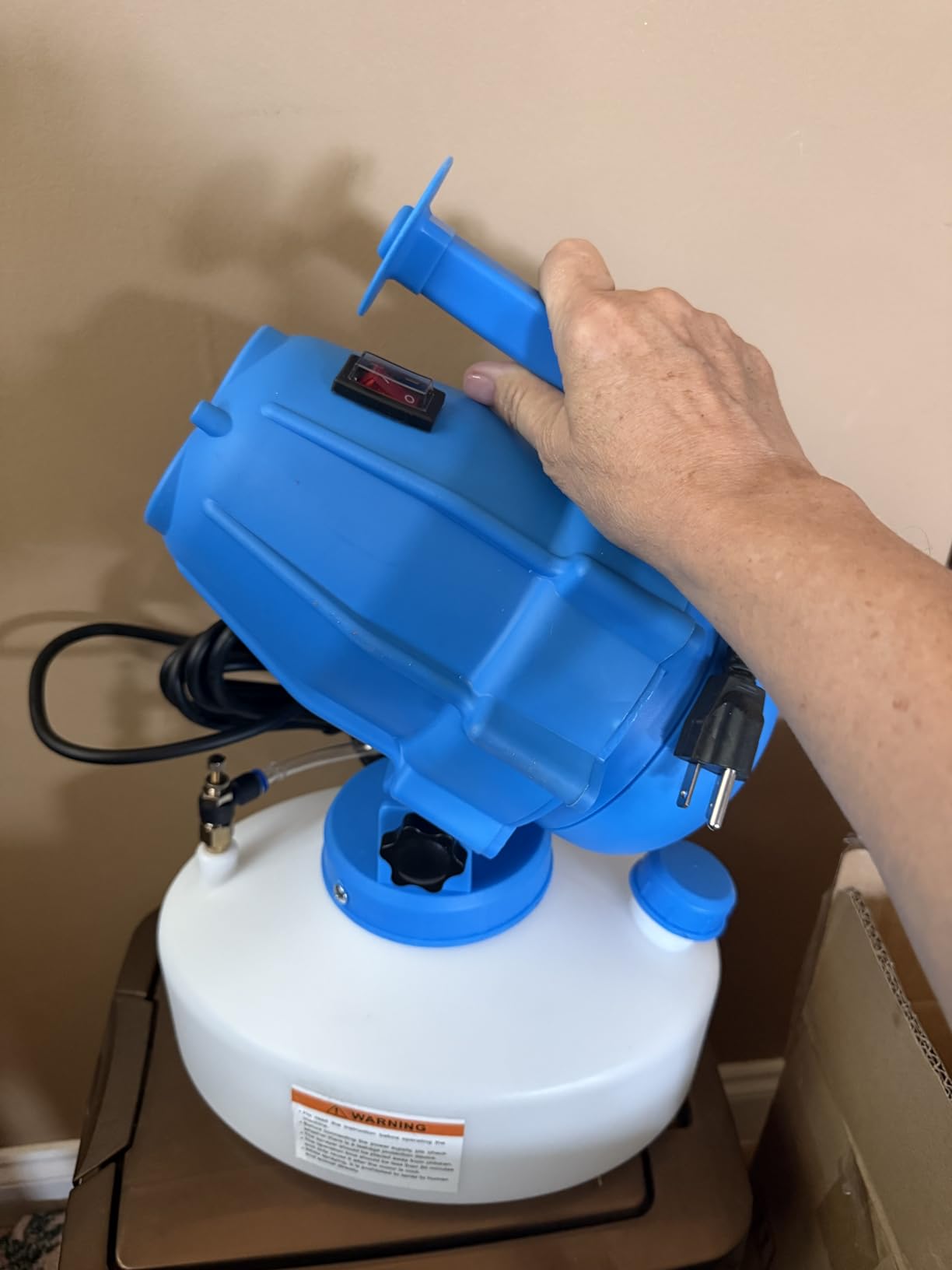
At 4.2 stars from 55 reviews with 67 percent five-star and only 5 percent one-star, this has the cleanest star distribution in the list. Owners cite power, tank size and nozzle choice, and the listed applications span schools, offices, gyms, warehouses and restaurants.
The criticisms are practical. It is loud, it has roughly a 20 minute duty cycle before it needs to cool down, and the flow adjustment screw is small and awkward to turn with gloves on. There is also no real power switch, so you control it by plugging and unplugging the cord.
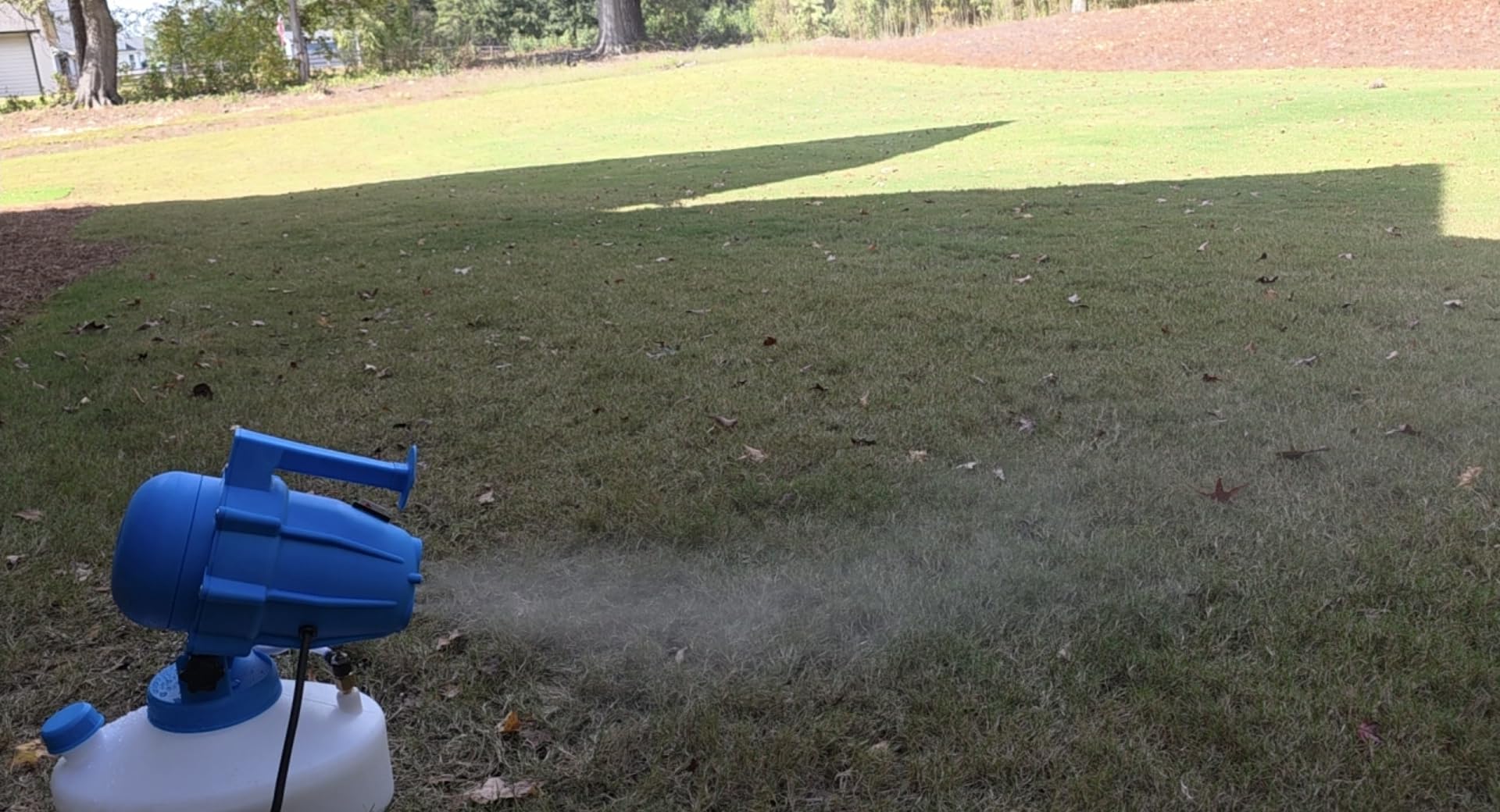
Respect the duty cycle if you plan a long session
Roughly twenty minutes of running before cooling down means this is a room-at-a-time machine despite the 5 litre tank. A full tank in one continuous run will get hot, and heat is what degrades the pump over time.
Work in stages: fill, run, pause. If you need uninterrupted output for an hour, the larger tank models with a proper switch are a better fit than this one.
When this is the wrong pick
The absent power switch is a genuine annoyance and a safety habit you have to build. You will be reaching for the plug every time you want to stop, and in a busy space that is the moment something goes wrong.
With only 55 reviews, the long-term reliability record is thinner than the machines with hundreds. For a commercial crew running this daily, that is a fair trade-off but a real one.
10. ZSYATN Nano Mist Atomizer Gun – Best for Quick Top-Ups
Atomizer Sprayer, Rechargeable Nano Mist Sprayer Gun with Blue Light, Portable Electrostatic ULV Fogger Machine, Cordless Handheld Atomizing Spray Device for Home, Office, Car & Barber Salon
380 ml tank with USB-C charging
1800mAh battery,up to 2 hours runtime
Six blue LED lights,precision nano nozzles
Dual-speed high and low mist control
Pros
- Ultra-fine even nano mist from precision nozzles
- Two hour runtime per charge with USB-C convenience
- Blue LEDs show where the mist is landing
- Lightweight one-touch operation with a 380 ml tank
Cons
- Smallest review base in the list at 21 ratings
- 380 ml tank needs frequent refills
- Manufacturer advises periodic charging because long inactivity drains the battery
This is the gun-shaped unit you keep in a vehicle or a utility cupboard for top-ups between full passes. The 1800mAh rechargeable battery gives up to two hours of continuous operation, USB Type-C charging means no proprietary brick, and one-touch operation removes the trigger fatigue that comes with hundreds of short sprays.
The nano atomizer uses six built-in blue LED lights and precision nano nozzles, with high and low dual-speed mist intensity control. It weighs roughly the same as a 1.5 litre water bottle, which is the right mental model for whether you will actually carry it.
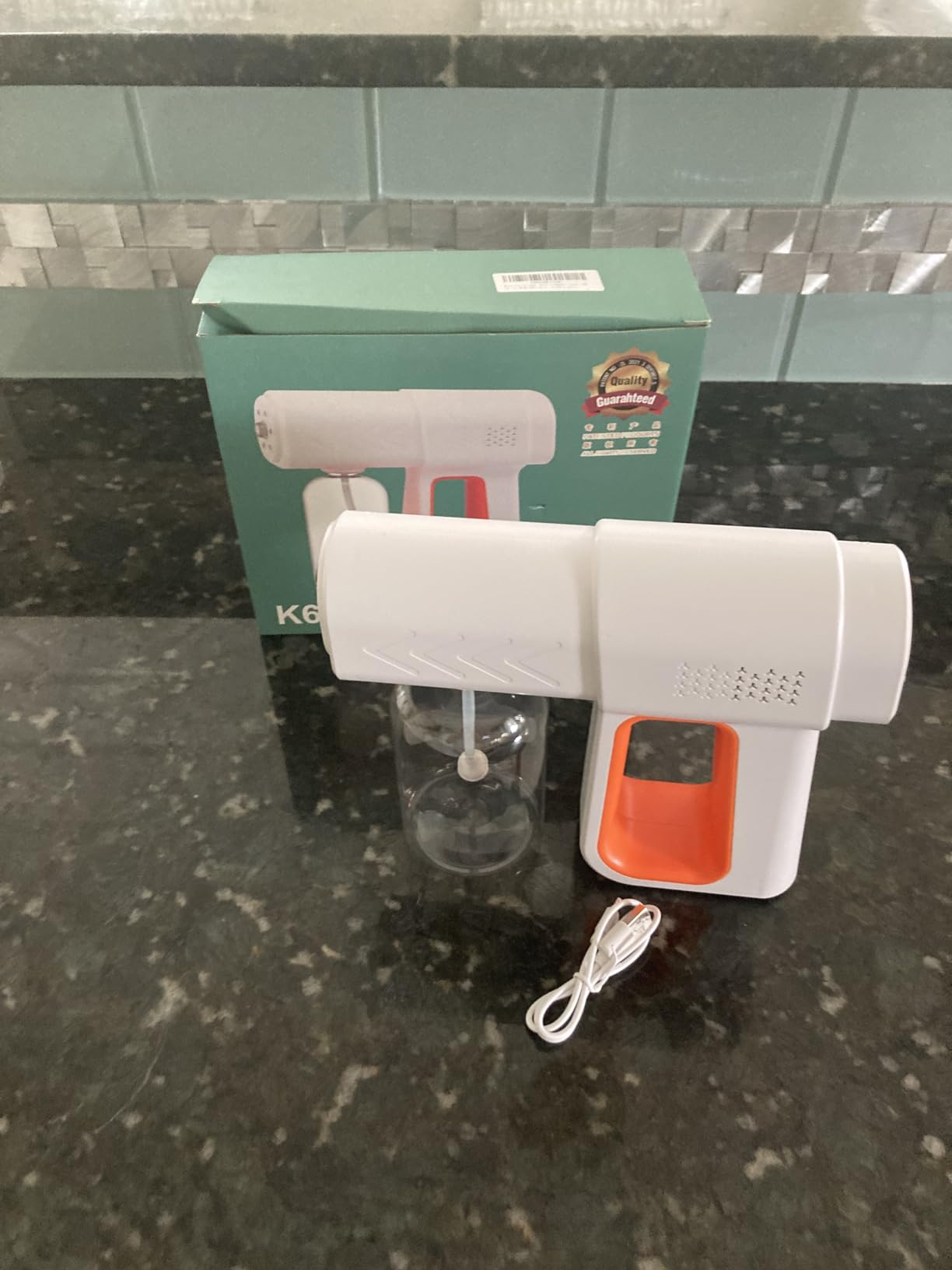
At 4.0 stars from 21 ratings, this is the thinnest evidence base in the roundup, and the distribution is unusual: 61 percent four-star and 26 percent five-star with no one-star ratings at all. Buyers like the fine mist and the LED visibility; the sample is simply too small to draw durability conclusions from.
The 380 ml tank is the practical limit. It is a top-up tool for a car interior, a keyboard, a reception desk or a single bathroom, and treating it as anything larger means standing at a tap constantly.
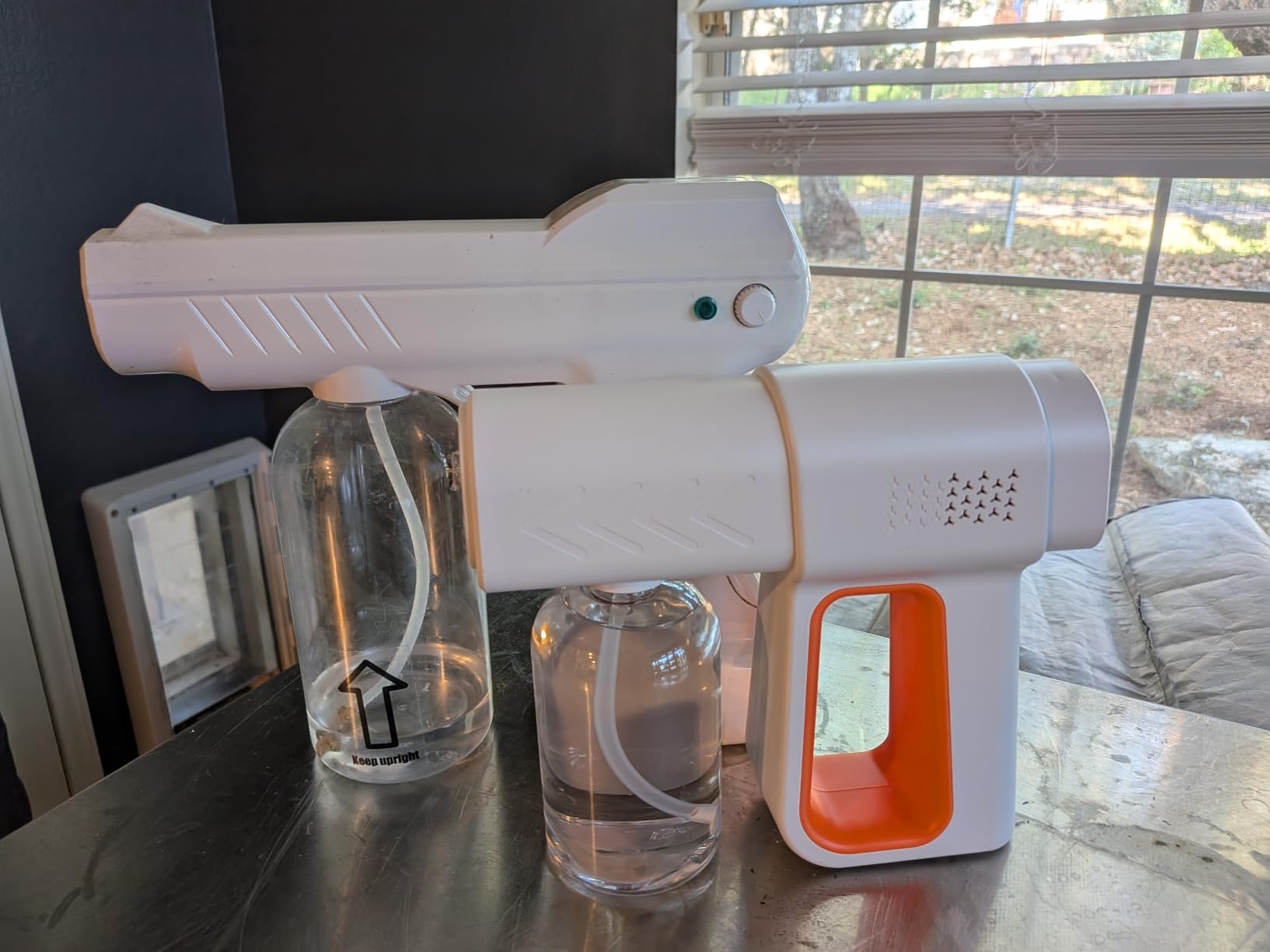
Charge it even when you are not using it
The manufacturer advises periodic charging because long inactivity drains the battery. Lithium cells sitting fully depleted for weeks come back sluggish, and that reads as a failed product rather than a flat battery.
Top it up monthly if it lives in a vehicle through winter. A full charge every few weeks costs nothing and is the difference between a tool that works on demand and one that does not.
When this is the wrong pick
Twenty-one ratings is not a reliability record. For a device you plan to depend on daily in a cleaning operation, you are buying on specification rather than on evidence.
It is also not a true electrostatic charger despite the listing language, and at 380 ml it cannot cover a meaningful area between refills. For anything beyond touchpoint work, choose a model with a real tank.
11. XPOWER F-16B Cordless Cold Fogger – Best Cordless ULV from an Established Line
XPOWER Ultra Low Volume Commercial 29.4-Volt Lithium-Ion Cordless Electric Cold Fogger with 135 W-h Battery and Charger F-16B
29.4V cordless lithium-ion cold fogger
135 watt-hour battery with charger
1.6 liter tank
One year limited warranty
Pros
- Cordless cold fogging from an established commercial equipment line
- 29.4V battery with 135 watt-hour capacity 1.6 liter tank suits rooms and vehicles
- Part of a family covering F-8 F-16 F-18 and F-35 in corded and rechargeable variants
Cons
- Published listing detail is thin
- no droplet or atomization specs
- Smallest review base among the foggers at 36 ratings
- 5.7 lb unit is heavier than handheld nano misters
XPOWER builds a recognised commercial cleaning and restoration equipment line, and the F-16B is the cordless cold fogger within it. The 29.4V lithium-ion pack is rated at 135 watt-hours with the charger included, which is a real capacity figure rather than a marketing label, and the 1.6 litre tank suits rooms and vehicles.
The family matters here. The F-8, F-16, F-18 and F-35 exist in corded and rechargeable variants, so parts, batteries and manual documentation are shared across the range. For a facility that might expand from one machine to a fleet, that is worth more than a spec sheet gap.
At 4.1 stars from 36 ratings with 70 percent five-star, published product detail is thin, which means buyers evaluate it mainly on the brand name and on cordless ULV convenience. That is not a criticism of the machine so much as a note about how much evidence is available. Dimensions are 6.8 inches wide by 8.3 inches high at 5.7 pounds.
Confirm the droplet specification before you buy
This listing does not publish droplet size or atomization rate, and for a fogger that information is the difference between a tool suited to disinfectant dwell times and one that is really a pest and deodorising machine. Ask the manufacturer before committing.
The 135 watt-hour battery rating is published, which is unusually good disclosure for this category. If runtime per charge matters to your shift planning, that number is the one you can plan around.
When this is the wrong pick
Thirty-six ratings is a thin base, and the absence of published atomization specs means you are buying on brand reputation. If you need to match a specific contact time, a model with published micron data is a safer bet.
At 5.7 pounds plus the battery pack it is heavier than the handheld nano misters, so it is not a pocket tool. It is a room-and-vehicle tool, not a whole-building one.
12. JAJEDS Nano Electrostatic Sprayer – Best for Fabric and Car Detailing
Atomizer Sprayer, Rechargeable Nano Electrostatic Sprayer with Blue Light, Handheld Portable Atomizing Fogger for Home, Office, Car,Barber,Salons
380 ml tank with USB-C charging
1800mAh battery,up to 2 hours
Nano atomizer with 6 blue LED lights
Dual-gear high and low mist output
Pros
- Impressively fine even mist that covers surfaces without soaking them
- One-button operation avoids sustained trigger fatigue
- 380 ml tank and 1800mAh battery give about two hours of runtime
- LED light makes the spray area visible and the bottle detaches for rinsing
Cons
- Several reports of units failing within minutes of first use
- Bottle cover broke after two uses in one review
- Reliability is inconsistent despite the low cost
The mist quality is genuinely good here. Owners describe a fine, even output that covers a surface without soaking it, which is exactly what you want on seat fabric, a headliner or a dashboard where saturation means staining. The one-button operation is a real benefit on a long detailing session because there is no trigger to hold.
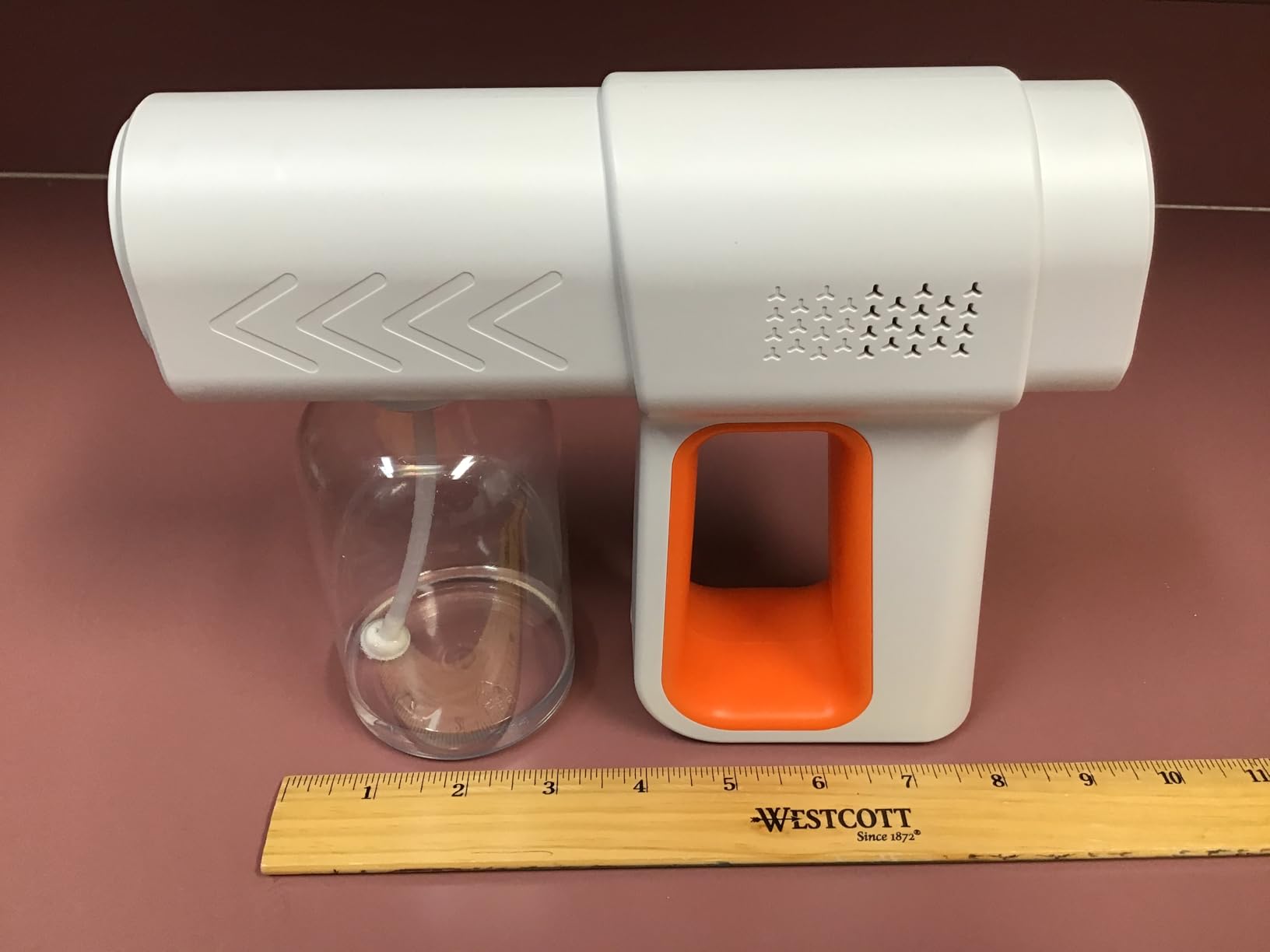
Specifications match the similar handhelds in this list: a 380 ml tank, an 1800mAh rechargeable lithium-ion battery giving up to two hours of continuous use, USB Type-C charging, dual-gear high and low mist output, and six blue LED lights that make the spray area visible in a dark vehicle.
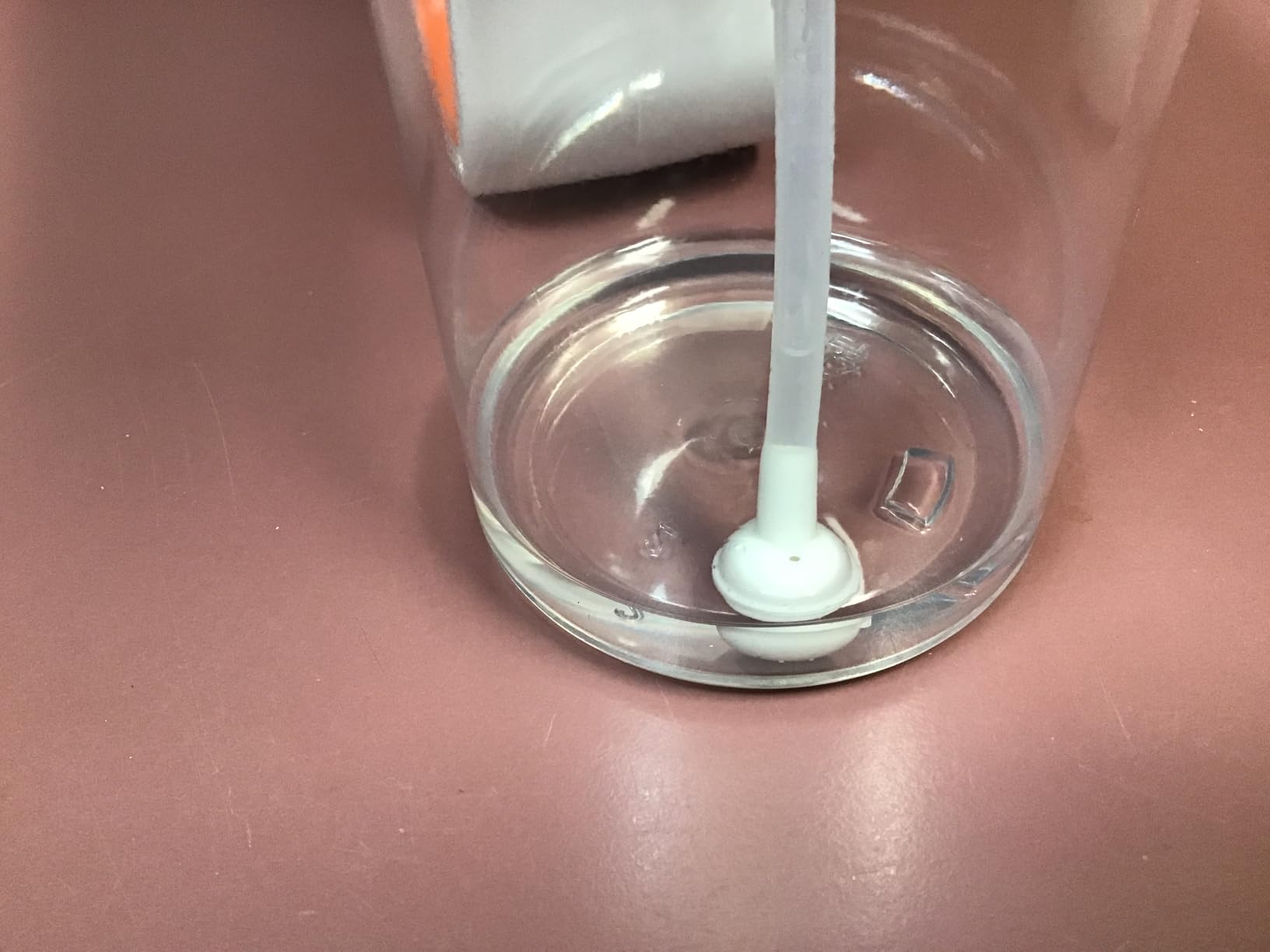
At 4.0 stars from 45 ratings with 53 percent five-star, fans love the fine mist and one-touch operation for hypochlorous acid and fabric misting. A meaningful group report early motor and tank failures, and one review describes the bottle cover breaking after two uses.
The detachable bottle is genuinely useful for rinsing, and the LED means you are not guessing where the mist is going in an unlit cabin. But the reliability reports are specific enough that I would treat this as a disposable-feeling secondary tool rather than a facility workhorse.
Keep a second unit, because failure is the main complaint
Reports of units failing within minutes of first use or on the second use are frequent enough to plan around. The sensible approach for fabric and car detailing is to own two, so an early failure does not stop a booking.
Never run a fabric mist through a machine you would also use on a kitchen counter unless you flush it properly. A nano mister this fine is easy to rinse, but only if you actually take the bottle off and wash it.
When this is the wrong pick
For a professional facility, the failure pattern makes it a poor core tool. You want a machine with a serviceable parts programme and a published warranty, not one where the motor is the whole product.
It is also the smallest tank in the list alongside the similar handheld at 380 ml, so treat it strictly as a point-of-use tool for vehicles, upholstery and small surfaces.
Choosing an Electrostatic Sprayer Comes Down to Tank Size, Power Source and Chemical Compatibility
Start with the room, not the machine. A single room or a vehicle needs a handheld or nano mister you can hold in one hand. A corridor, classroom or clinic suite needs a cordless handheld. A whole floor, gym or multi-room facility needs a backpack or a ULV fogger with a real tank.
Power source is the next filter. Cordless models give you freedom in furnished rooms and around doorways, but they trade capacity for a battery that may not last a full shift. Mains units give you unlimited runtime and stronger mist, but the cord is a trip hazard and a reach limit. Our guide to paint sprayers for interior walls makes the same cord-versus-cordless argument for a different job, and the reasoning transfers directly.
Tank size sets your refill frequency, and refill frequency is what actually determines whether a job finishes in an hour or two. A 380 ml tank means a trip to the tap every few minutes. A 2.2 gallon backpack tank means a floor per fill.
Chemical compatibility is non-negotiable. Every machine here is a water-based chemistry tool, and running an oil-based or corrosive solution through a plastic-bodied atomizer voids any warranty you have and can destroy the pump. Read the SDS of your chemical and the manual of the machine before the first fill, not after the damage.
Warranty length is a reasonable proxy for manufacturer confidence. One year limited warranties are common on the reputable models. A ninety-day warranty, as offered on one of the foggers in this list, is a signal that the manufacturer expects early failures and has priced parts accordingly.
Finally, look at published detail. Models that disclose droplet size, flow rate, tank volume and battery watt-hours let you match the machine to a label. Models with sparse listings force you to guess, and you will be guessing at contact time, which is where disinfection claims go wrong.
Quat Concentrates and Ready-to-Use Disinfectants Are Safe; Bleach and Oils Are Not
This is the question janitorial professionals ask most often, and the honest answer is that the sprayer manual and the chemical label decide it together. A machine safe for water-based quaternary ammonium concentrates is not automatically safe for solvent-based or oil-based products.
Janitorial professionals in Facebook janitorial groups consistently favour quat-based, low-odor, residue-free concentrates such as water-based bactericide and fungicide formulations, and they run them through electrostatic units. The reasons are practical: low odor matters in occupied buildings, and residue-free chemistry avoids the streaking complaints that follow spray-and-wipe work.
Here is how to check before you fill anything. Read the sprayer manual for approved chemistry types. Read the chemical SDS for the material compatibility of the wetted parts. And look up the EPA registration number on the label, because a disinfectant must be registered to make the public health claims people buy it for.
What to avoid: oil-based products in plastic-bodied machines, any chemistry the manual prohibits, and bleach unless the manufacturer explicitly approves it. Bleach corrodes metal parts and attacks stainless nozzles over time, and hypochlorous acid products vary so widely in concentration that you need the specific product’s guidance rather than a general rule.
Closed-system chemistry is worth considering if your operation is serious about consistency. A sealed bottle that attaches to the machine removes the dilution step entirely, which is where most concentration errors happen, and it means the manufacturer controls the chemistry matched to the hardware.
Indoor Electrostatic Spraying Needs Ventilation, the Right PPE and an Empty Room
Do not fog an occupied indoor space. This is the single most important line in this article. Aerosolised disinfectant is an inhalation exposure, and the fine droplets these machines produce are exactly the particle size that stays suspended in air longest.
Ventilate the space before you start and keep it ventilated until the product’s label-specified air drying or contact time has passed. Open windows and run the HVAC system with fresh air. If the area cannot be cleared of occupants and ventilated, use a wipe-and-wipe method instead of spraying.
Wear the PPE your chemical label and your safety data sheet require. That typically means chemical-resistant gloves, eye protection and a respirator specified by the SDS, plus the clothing protection appropriate to the volume you are applying.
Never spray toward a person’s face, and keep children and pets out of the space until the label says it is safe. Do not spray air, do not create an aerosol you are breathing, and do not use these machines as a substitute for hand hygiene or surface cleaning. They disinfect surfaces; they do not replace cleaning first or handwashing after.
Finally, treat the sprayer itself as a contaminated item. Owners on r/Firefighting describe sanitising their equipment after every call for exactly this reason. Wipe the housing, flush the reservoir with clean water, and let the machine dry before storing it.
Clogging Comes From Leaving Solution in the Tank – Flush After Every Use
Almost every nozzle failure complaint in this category traces to one cause. Electrostatic disinfectant sprayers clog because solution is left in the tank, wetted parts or nozzle screen, and the residue cures there until the passage is blocked.
A workable routine has three tiers. After every use, empty the tank, run clean water through the nozzle until the spray runs clear, and dry the machine open-air. Weekly, soak the nozzle and filter in a manufacturer-approved descaling solution, then rinse thoroughly. Monthly, inspect the filter and nozzle screen and replace anything that will not clear.
Watch for the early symptoms. A sputtering or pulsing spray, reduced spray distance, or a pump that runs but produces no mist all point at restriction. Mineral buildup from hard water is the usual culprit, and it responds to a proper soak rather than repeated poking at the nozzle with a pin, which permanently widens the orifice.
Never mix chemistries in the same tank. Running a quat concentrate immediately after a bleach solution can form precipitates that are genuinely impossible to clear, and a single episode can end the machine’s life.
Store it properly, too. A unit that sits in a hot vehicle or a cold shed will develop the same residue problems, and lithium batteries left in a vehicle through summer are a separate safety concern.
Skip the Electrostatic Sprayer for Fabrics, Paper, Art and Electronics
Not every surface should meet a charged mist. Oversaturating soft goods and paper is how you turn a disinfection round into a damage claim.
Conservation professionals discussing electrostatic sprayers for museum collections raise the core caution directly: this is not a tool for fragile or soft materials. Clorox-based solutions in particular are described in that community as not good for collections and furnishings, and that concern generalises to any bleach-based chemistry on upholstery.
Avoid spraying upholstered furniture, mattresses and fabric headliners unless the textile manufacturer says otherwise. Avoid paper of any kind, including wall coverings, file folders and cardboard storage boxes. Avoid artwork, prints, canvases and anything in a collection.
Use extreme caution around electronics and screens. Do not spray a monitor, a television, a server rack, or a switch with anything but a wipe-down. If a device is rated for it and the manufacturer approves disinfection, follow their method, not a sprayer method.
Wood furniture, painted metal, glass, laminate, tile, vinyl and sealed plastic are the safe list. Unfinished wood, natural stone that can darken, and any surface that waters marks are worth testing on an inconspicuous spot first.
If you are unsure whether a surface can take it, the answer is never to mist it and hope. A damp cloth and the label’s dwell time is slower but it never damages anything.
Frequently Asked Questions
What is the best electrostatic sprayer for home use?
For most homes, a cordless handheld electrostatic sprayer is the right tool. The Victory VP200ESK covers up to 2,800 sq ft per 34 oz fill, needs no cable to trip over, and charges between uses. A cabin or a large open-plan living area can be treated in one pass. Add a small nano mister for the car and for touchpoints between deep cleans, and skip the backpack models unless you are disinfecting property professionally.
Do electrostatic sprayers work?
Yes, and the coverage gain is real: positively charged droplets wrap around surfaces and reach undersides and vertical faces that a normal spray misses. Vendor pages claim up to 70 percent faster application and up to 65 percent less chemical. What they do not do is shorten the contact time printed on your disinfectant label, replace a wipe-down of high-touch surfaces, or sterilise a room. Verification still means an ATP swab, not the look of the mist.
What disinfectant can you use in an electrostatic sprayer?
Water-based chemistry is the rule. Janitorial professionals consistently run quat-based, low-odor, residue-free concentrates such as water-based bactericide and fungicide products. Check three things before filling: the sprayer manual for approved chemistry, the chemical SDS for wetted-part compatibility, and the EPA registration number on the label. Avoid oil-based and corrosive products in plastic-bodied machines, and avoid bleach unless the manufacturer explicitly approves it. Closed-system bottles remove dilution error entirely.
Are electrostatic sprayers safe for indoor use?
Only in an empty, ventilated room. These machines aerosolise fine droplets that stay suspended in air, so occupants, children and pets must be removed first. Ventilate before spraying and keep the space ventilated until the label contact time and air drying period have passed. Wear the PPE required by the chemical SDS, typically chemical-resistant gloves, eye protection and a specified respirator. Never spray toward a person, and never use a sprayer as a substitute for cleaning first or for hand hygiene.
Why does my electrostatic sprayer keep clogging?
Almost always because solution was left in the tank or on the nozzle screen and the residue cured there. The fix is a routine, not a repair: after every use, empty the tank, run clean water through the nozzle until the spray runs clear and let it dry. Weekly, soak the nozzle and filter in an approved descaler. Never poke the orifice with a pin, which permanently widens it, and never mix chemistries in the same tank, since some combinations form precipitates that cannot be cleared.
What are people saying about the Ryobi electrostatic paint sprayer?
Owner feedback on the Ryobi ONE+ 18V cordless electrostatic handheld is mixed, with ratings in the mid-3s, and hosts on the Airbnb community forum adopted it mainly because it shares a battery platform with tools they already own. Note that the Ryobi electrostatic tool is sold as a paint sprayer, so check whether its chemical compatibility suits a disinfectant before repurposing it. Battery-platform interoperability is the real reason it keeps coming up.
The Victory VP200ESK Is the Best Overall Electrostatic Disinfectant Sprayer in 2026
After weighing all twelve, the Victory VP200ESK takes the top spot for a simple reason: it is the only unit in this list that handles a real disinfectant job without a compromise. A 34 oz tank covering 2,800 square feet, a cordless battery rated at 20 to 80 tanks per charge, an adjustable stainless steel nozzle and a one year warranty add up to a tool that suits a home, a small clinic or a single-floor crew equally well.
For whole facilities, pair it with the Victory VP300ES backpack, which covers 23,000 square feet per 2.2 gallon fill on a cordless battery. For large open volumes where the cord does not matter, the Konideke 4.5L and SWANSOFT 7L foggers put mist into a room far faster than any handheld.
Whatever you pick, do three things before the first fill. Read the chemical label and check its EPA registration, match the droplet setting to the dwell time, and plan the flush routine so the nozzle is still working in month three. That is what separates a tool that stays useful from one that ends up in a cupboard, and it is why the best electrostatic disinfectant sprayer in 2026 is as much a habit as a purchase.