
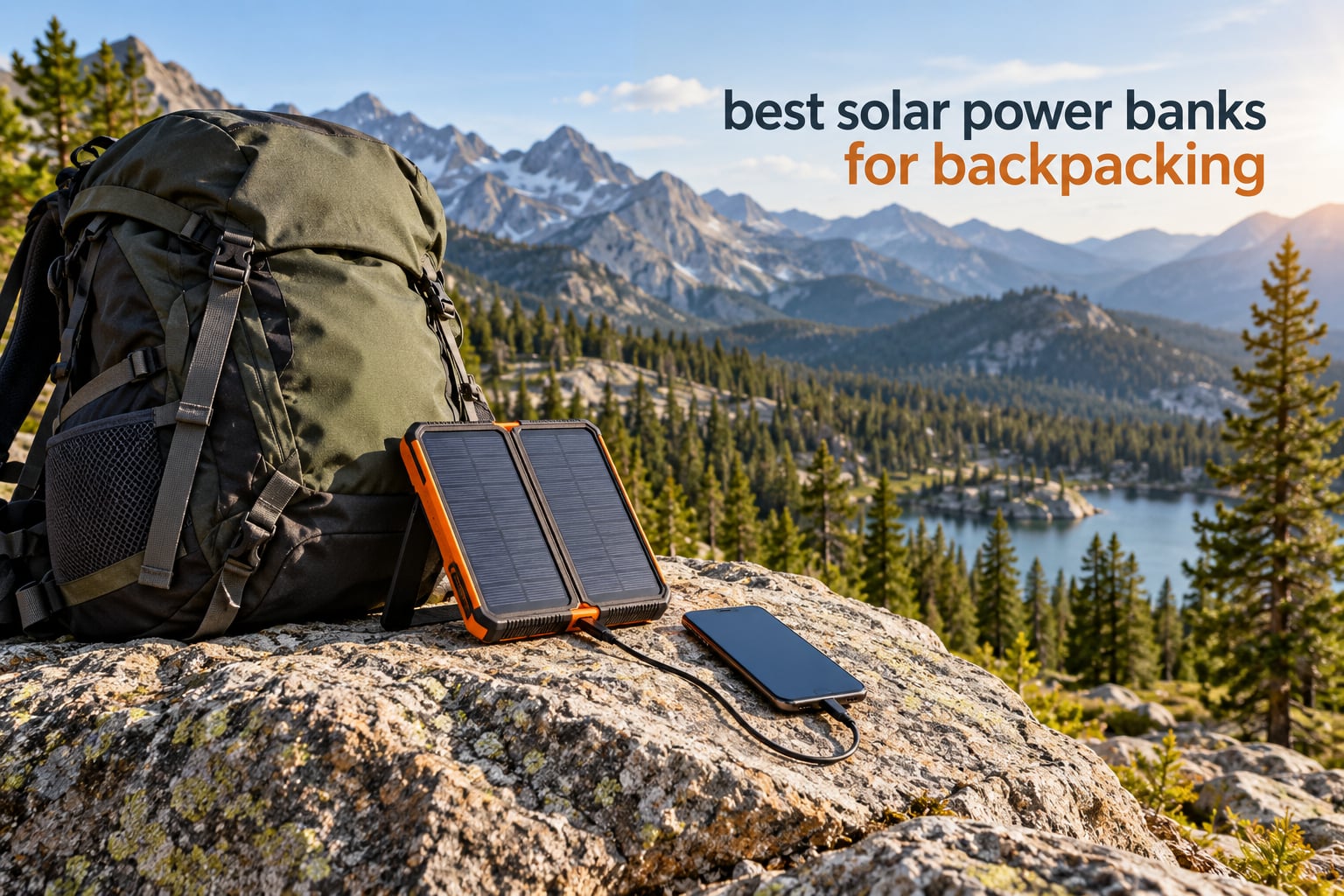
The best solar power banks for backpacking are the BLAVOR 10,000mAh, the SOARAISE 50,000mAh and the Durecopow 20,000mAh. The honest verdict: the small panels built into all-in-one banks are emergency trickle chargers, not real power sources, so the best solar charger for backpacking is a large bank you top up in town plus a separate folding panel you deploy only at camp.
I have carried power banks from the PCT to the desert Southwest for years, and the pattern repeats every trip. The bank is the power. The panel is insurance against a trip running longer than planned.
That changes how you shop. A 48,000mAh label says little about usable watt-hours, and a panel bolted to a pack flap collects almost nothing while you walk. What matters is real phone charges, weight in ounces, ingress protection, and whether a panel can be aimed at the sun while it sits still.
This roundup covers twelve solar power banks for backpacking, from a 20,000mAh unit weighing 8.32 ounces to a 50,000mAh bank with a hand crank. Every rating, review count and weight comes from the listing data rather than a guess. We also cover solar power stations if you are car camping, and how the rest of your kit, from an entrenching tool to a camping hatchet, affects how far a charged phone carries you.
Table of Contents
Top 3 Solar Power Banks for Backpacking
Those three cover very different trips. The BLAVOR is the one I finish a long trail on, the SOARAISE is the one I trust when a group shares camp, and the Durecopow is the one I hand to someone who refuses to carry cables.
Solar Power Banks for Backpacking in 2026
The table makes one thing obvious: capacity and weight have almost no relationship here. A 20,000mAh bank can weigh 8.32 ounces or 503.8 grams.
Is Solar Worth It on a Backpacking Trip?
Short answer: solar matters when you are more than about three days from a resupply point, and even then it is a backup rather than a primary.
Three rules explain most of the complaints in r/Ultralight and r/backpacking threads. First, a panel strapped to a moving pack collects nearly nothing, because the angle to the sun changes with every step and shade from trees and your own torso cuts the output. Second, an integrated panel is sized to keep a phone alive, not to refill a bank. Mregb states outright that its solar function is for emergencies, and MINRISE ships a 1.8W panel with the same warning.
Third, charge order matters. The reliable method is the buffer battery routine: point the panel at the sun and charge the bank first, then run devices off the bank at night. Plugging a phone straight into a fluctuating panel makes it cycle on and off, which wastes energy and confuses most charge controllers.
One recurring forum answer says it does not make sense to carry a panel unless you will be more than three days from an outlet. If your trail passes a town every few days, spend the weight on capacity and resupply.
1. BLAVOR 10,000mAh Solar Power Bank – Best Overall for Long Trails
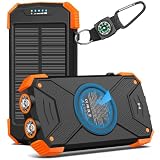
BLAVOR Solar Power Bank 10,000mAh Portable Wireless Charger for Cell Phones
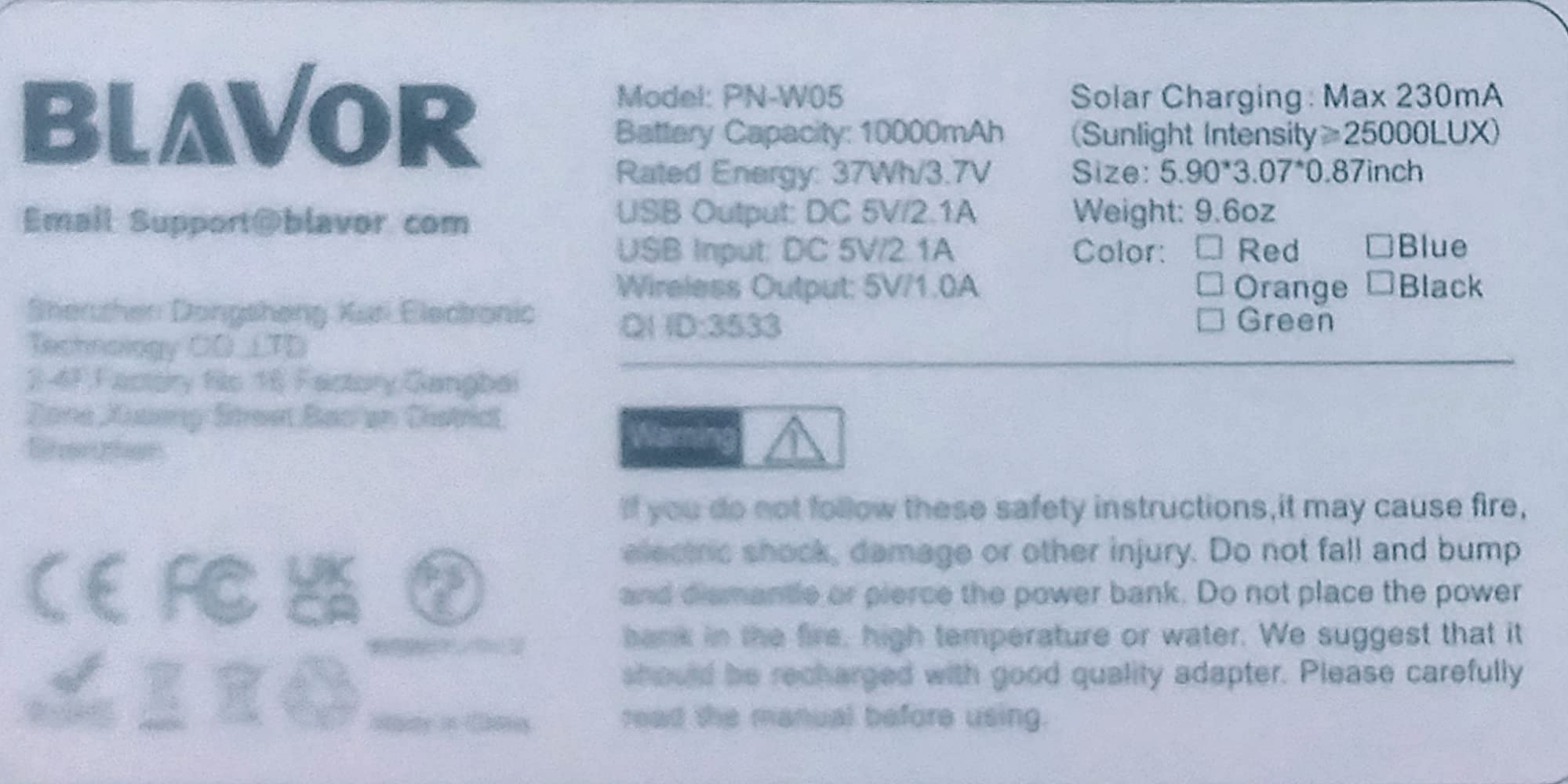
10000mAh lithium-cobalt
9.3 oz
Qi wireless and 20W USB-C
IPX5 shell
Pros
- Lightest published weight in the group at 9.3 oz
- Qi wireless charging works through thick cases
- 20W USB-C output
- IPX5 dustproof and shockproof shell
- Three-year warranty
Cons
- Panel only trickles charge
- About two flagship phone charges
- Flashlight has a cool blue tint
This is the bank I finish long trails with. At 9.3 ounces it is the lightest published weight in this group, and the lithium-cobalt cell gives roughly two full charges of a modern flagship.
That covers a phone and a GPS for a long weekend out of contact. The 20W USB-C output is genuinely fast for a bank this small, and the Qi pad means I can drop a phone on it in the dark without hunting for a cable.
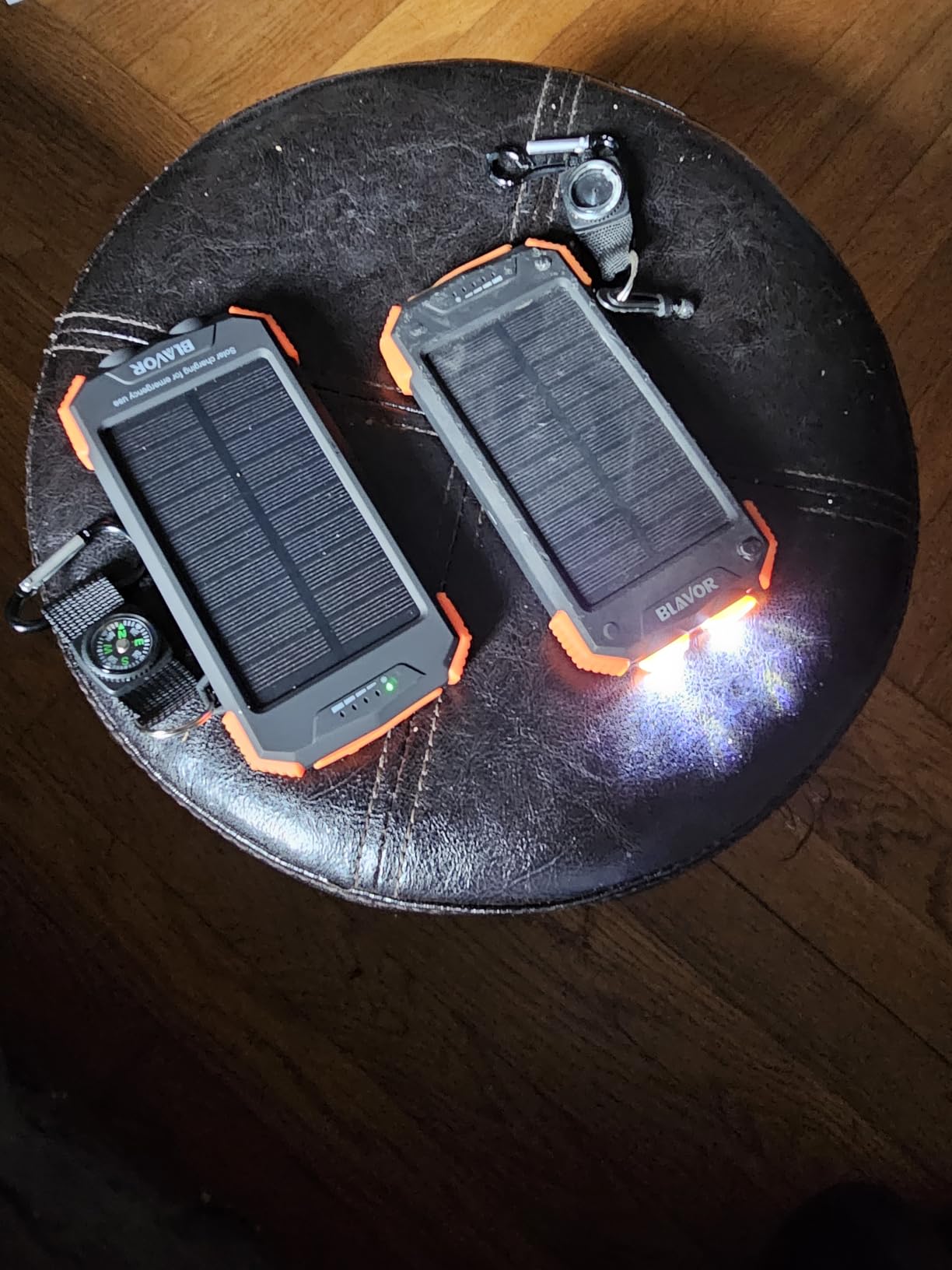
Three output ports let me run a phone, a headlamp and a satellite messenger at once, which is rare at this weight. Buyers consistently praise the small form factor and reliable wireless charging.
Where solar fits is simple: it does not. Reviews are consistent that the panel trickles a small amount of charge back over hours of sun, so I fill the bank from a wall outlet before leaving town and treat the panel as a last-resort top-up.
The IPX5 rating is what has saved me. Creek splash, rain on a ridge, a dropped bottle in a side pocket, and the shell shrugs it off. Reviewers also praise the reinforced rubber corners, while one recurring minor complaint is that the USB port hinge on some examples is fragile, so I do not clip the phone to it.
How it performs across a four-day stretch
Four days of navigation, two spare top-ups and one emergency satellite message, and this bank holds up without a resupply. The controller keeps output steady rather than tapering early, which is why I trust it more than its size suggests.
Budget for the fact that 10,000mAh is roughly two phone charges, not a week of power.
What you give up for the low weight
The flashlight has a cool blue tint that is less pleasant at camp than a warm white. The 3A output is shared, so charging three devices at once slows each one down.
There is also no wall charger in the box, which is true of most banks in this category.
2. Durecopow 20,000mAh Solar Power Bank – Best Value Built-In Cables
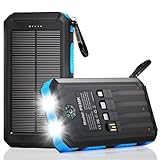
Durecopow Solar Charger Power Bank 20,000mAh, Portable Charger, 4 Cables 3 Ports Fast Charging External Battery Pack with USB C for Cell Phones, Solar Panel Charger with Dual Flashlight for Camping
20000mAh lithium-ion
250 g
4 built-in cables
SOS and strobe lights
Pros
- Four built-in cables so no spare cords
- Can power six devices at once
- Steady SOS and strobe light modes
- Drop-resistant silicone corners
- 12-month warranty
Cons
- Panel only trickle-charges
- Heavy at 250 g for its class
- No wireless charging pad
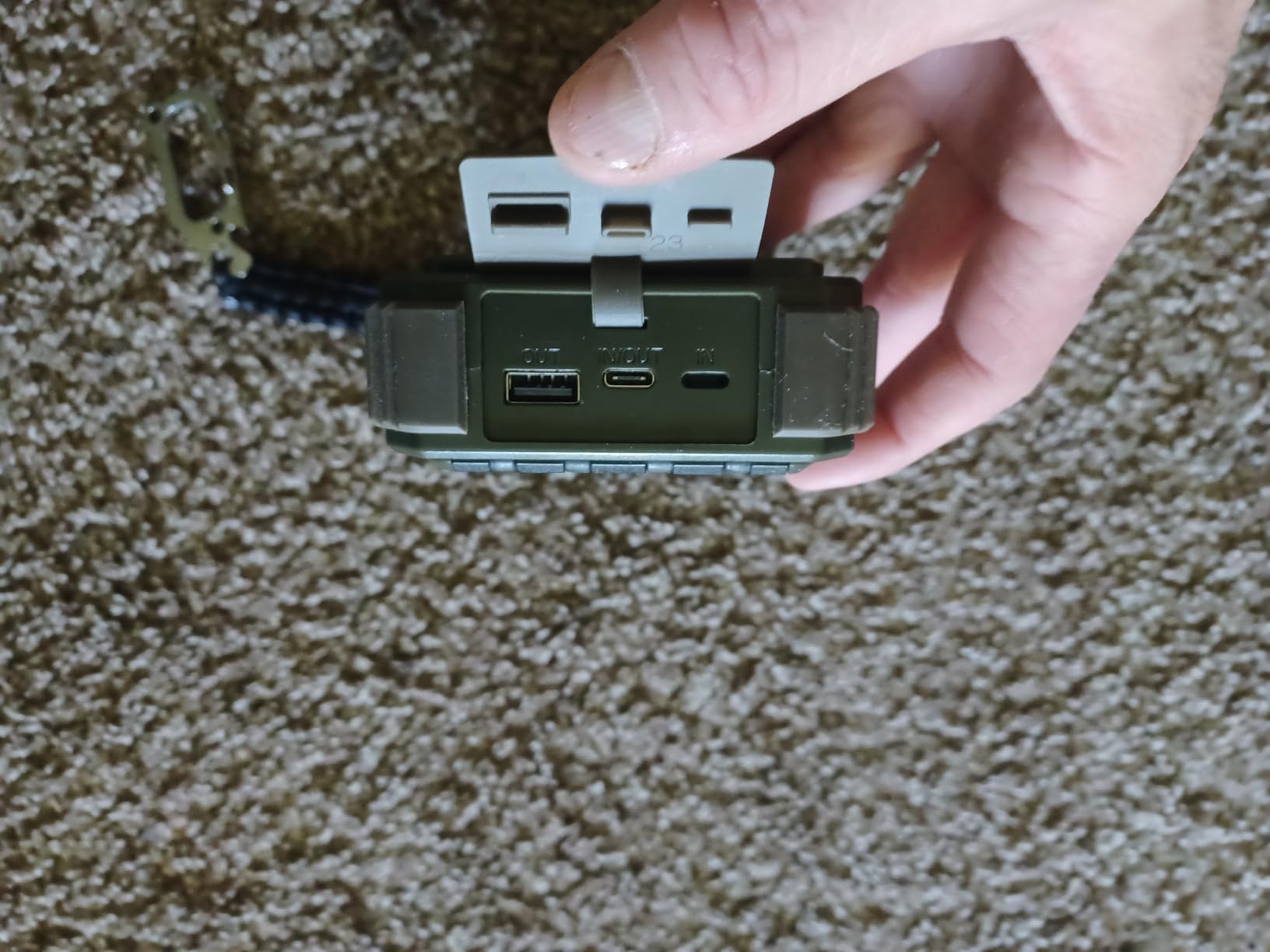
This is the bank I give to people who lose cables. Four built-in cables, Type-C, Lightning, Micro USB and a USB-A input, mean the whole charging kit fits in one pocket.
Twenty thousand milliamp-hours is a useful middle point for a weekend. Reviewers describe charging phones multiple times, and the ports plus built-in cables let six devices share the output when a group camps together.
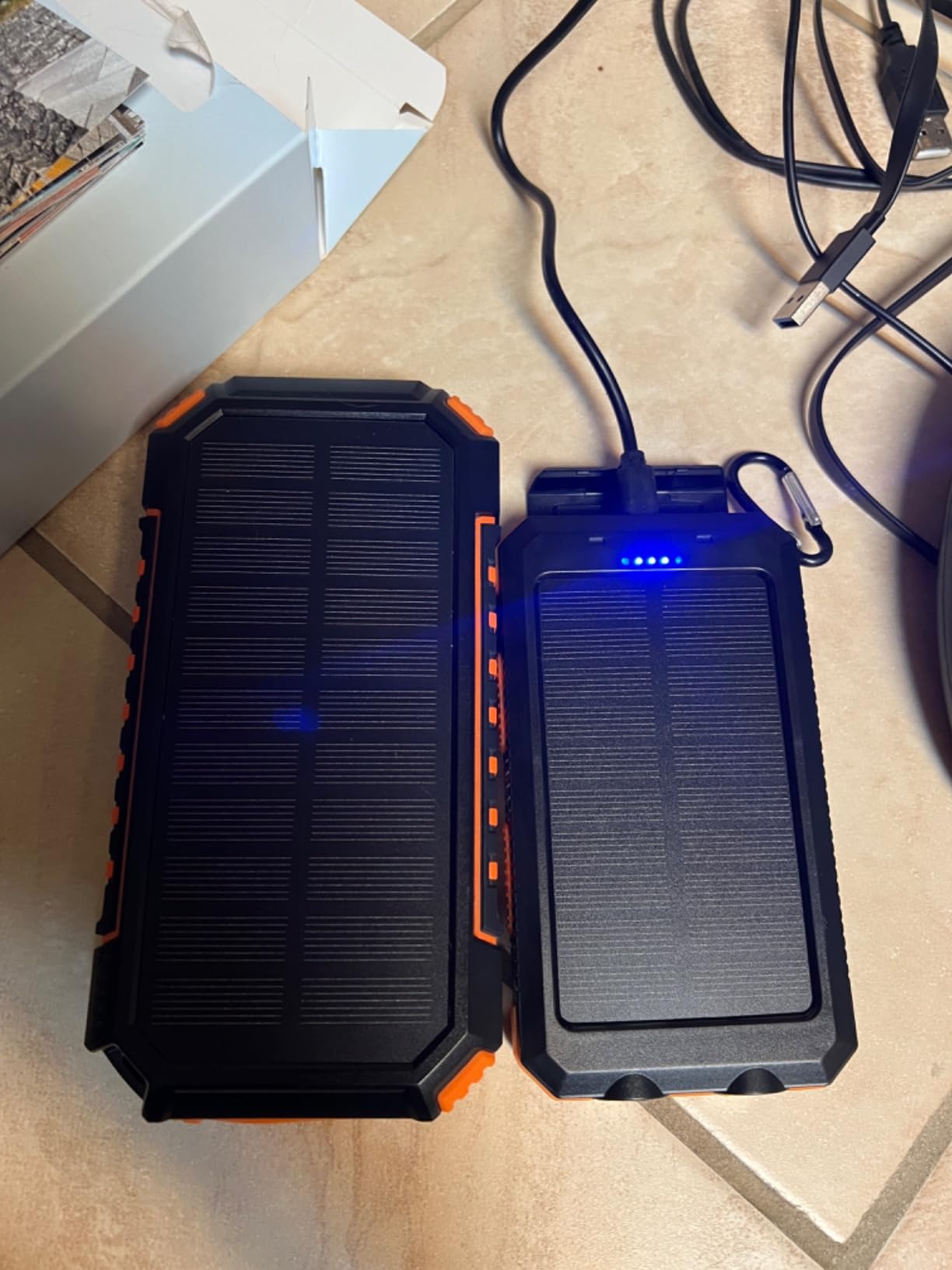
The flashlight is a sleeper feature. Two LED lights with steady, SOS and strobe modes matter when a group splits up at dusk, and reviewers single out the mode flexibility.
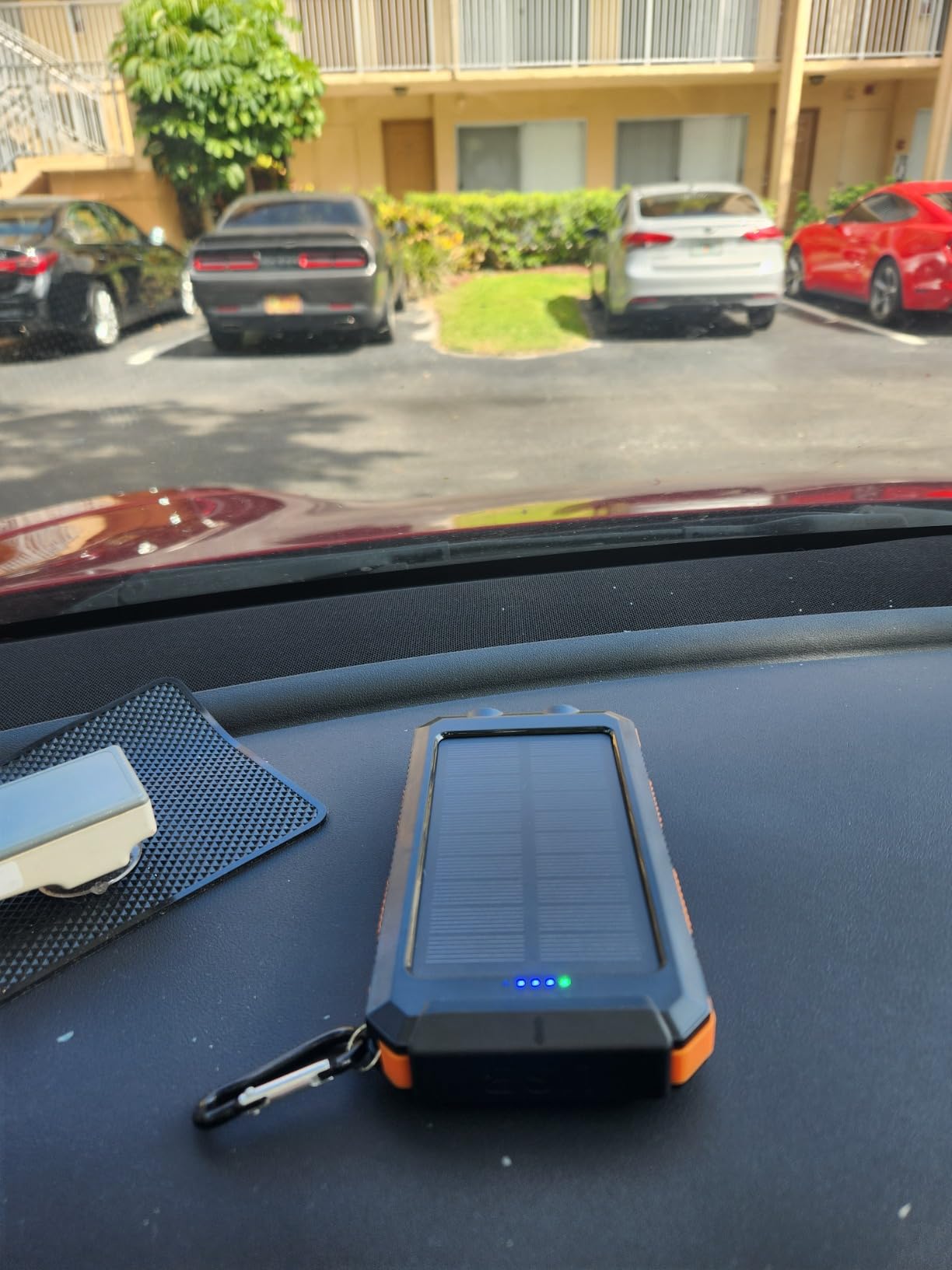
Two things to know before you commit. The solar panel is a trickle charger, not a recharge path, and the listed weight of 250 g is heavy for a 20,000mAh bank.
Compared with the 8.32 oz unit further down this list, that is a real pack-weight difference on a long approach. Two smaller banks in a dry bag can be a lighter way to carry the same reserve.
How it handles a shared campsite
When four people need power and only one bank is coming, six-device output matters more than raw capacity. Two USB-A ports, USB-C and three built-in cables mean everyone plugs in without a splitter.
The tradeoff is speed. Six devices on one controller means each charges slowly, and a tablet or laptop is not realistic here.
Where the weight shows up
At 250 g this is one of the heavier 20,000mAh options here, and the datasheet lists the battery alone at 200 g. On a five-day trip that is close to half a pound that never gets lighter.
The 12-month quality guarantee is also shorter than the three years on the BLAVOR, which matters for multi-season use.
3. BLAVOR 20,000mAh Wireless Charger – Best for Apple Watch Owners
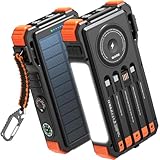
BLAVOR Solar Power Bank 20000mAh, Wireless Charger for Phones & Apple Watch
20000mAh
0.78 kg
Qi pad plus Apple Watch area
4 cables and 3 ports
Pros
- Dedicated Apple Watch charging area
- About 4 iPhone charges
- Four cables and three ports
- Flashlight plus camping light
- Compass and thermometer
Cons
- Very heavy at 0.78 kg
- Built-in cables are short
- Watch charging is inconsistent
- Panel trickles only
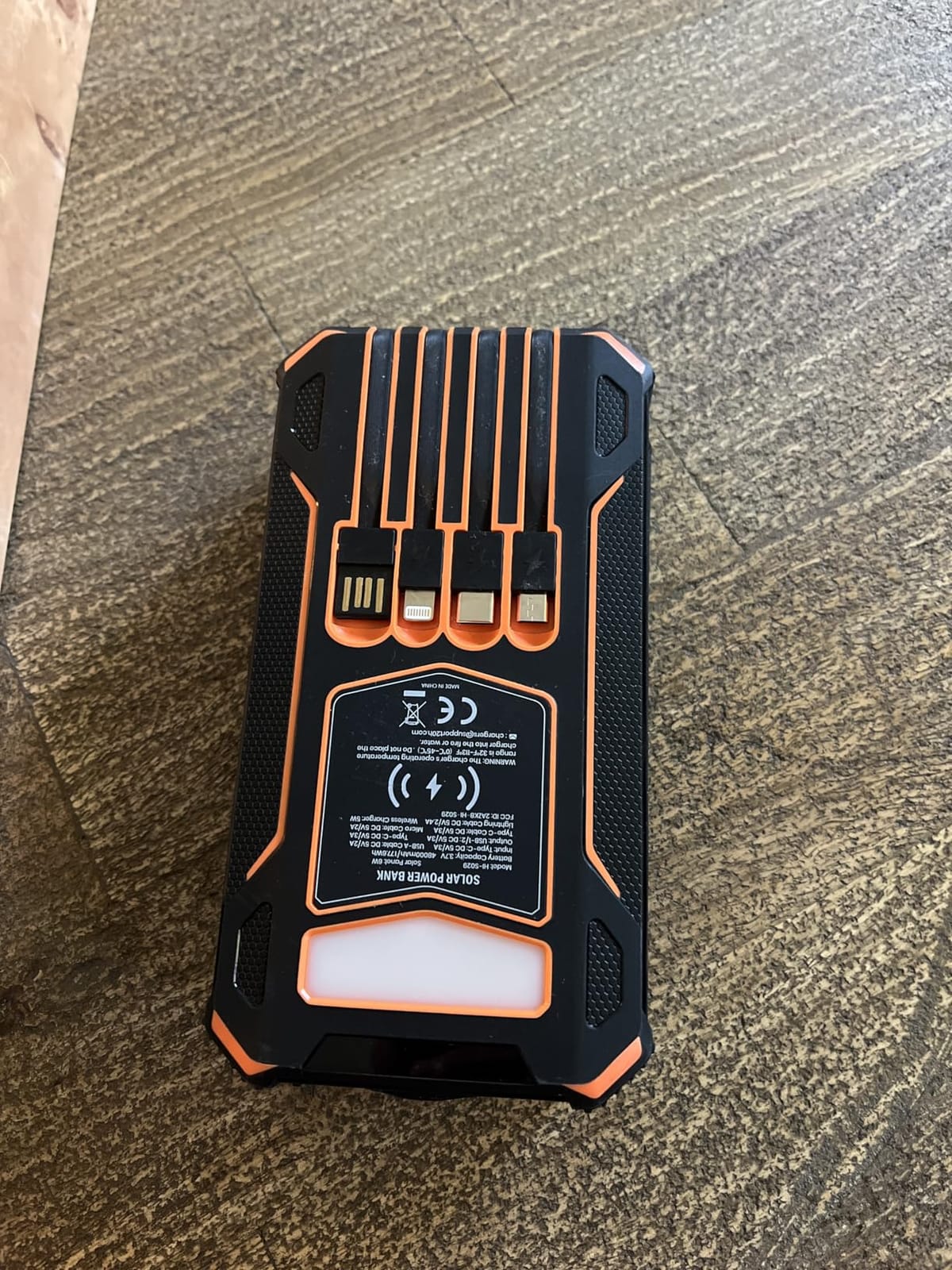
Almost nothing else here charges an Apple Watch, which is why this one earns a place in a roundup otherwise full of phones and headlamps. The Qi pad handles handsets and a separate zone handles the watch.
Reviewers put the real-world figure at roughly four iPhone charges from the full 20,000mAh. That headroom matters for anyone whose phone drains fast in cold weather.
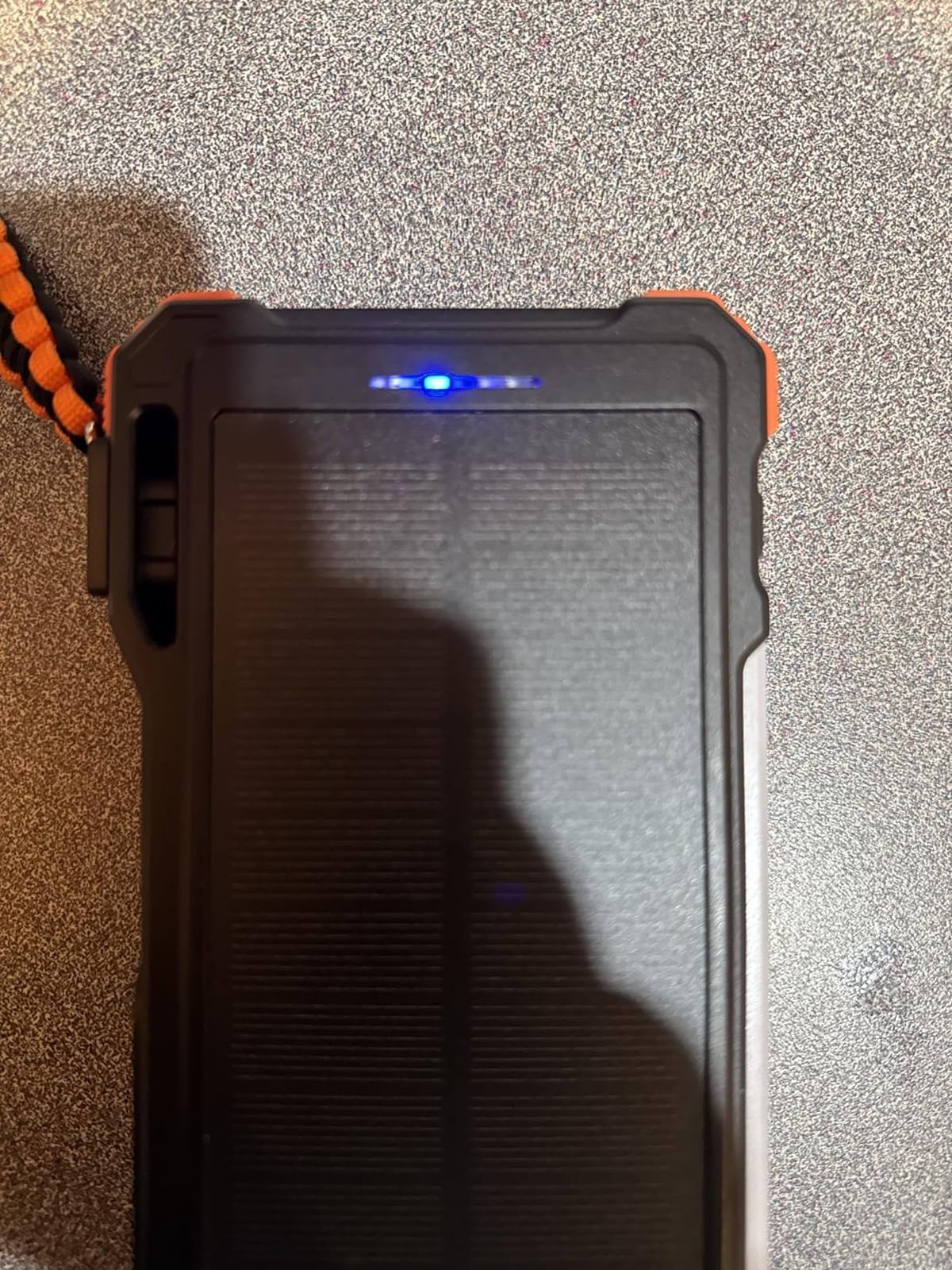
The accessory list reads like a gear closet. A three-mode flashlight, a three-level camping light, a red indicator, a compass, a thermometer, a carabiner and a rope.
The catch is size. Buyers call it a brick, and the listed weight of 0.78 kg is the heaviest single unit here. A reviewer reported a bank that never topped up in a full day of sun.
Overcharging, over-discharge, over-current and short-circuit protection gives me more confidence leaving it unattended, and reviewers report strong, responsive customer service.
Who gets real value from this bank
If your trip involves a watch that dies at 20 percent and a phone that drains overnight in cold air, the dedicated watch area earns its space.
It also suits anyone running a camera battery or a handheld GPS alongside a phone.
Where the bulk becomes a problem
This is not an ultralight pick. At 0.78 kg it changes your base weight and will not fit a pack pocket. The short built-in cables mean the device has to sit directly on the bank.
Watch charging is inconsistent across examples and has no confirmation light, so I would not build a plan that depends on it while moving.
4. SOARAISE 48,000mAh Solar Power Bank – Best for Base Camp Durability

SOARAISE Solar Power Bank 48000mAh Wireless Portable Charger with 4 Cables
48000mAh lithium-polymer
4 fold-out panels
4 cables and 3 ports
Pros
- Largest panel array in the group
- Four built-in cables plus ports and Qi pad
- 5V/3A adds 15% to 60% in 30 minutes
- Works for phones and tablets and GPS
Cons
- Usable output around 60 Wh
- Heavy and bulky
- Needs a 5V or higher wall adapter
- Panels act as a range extender
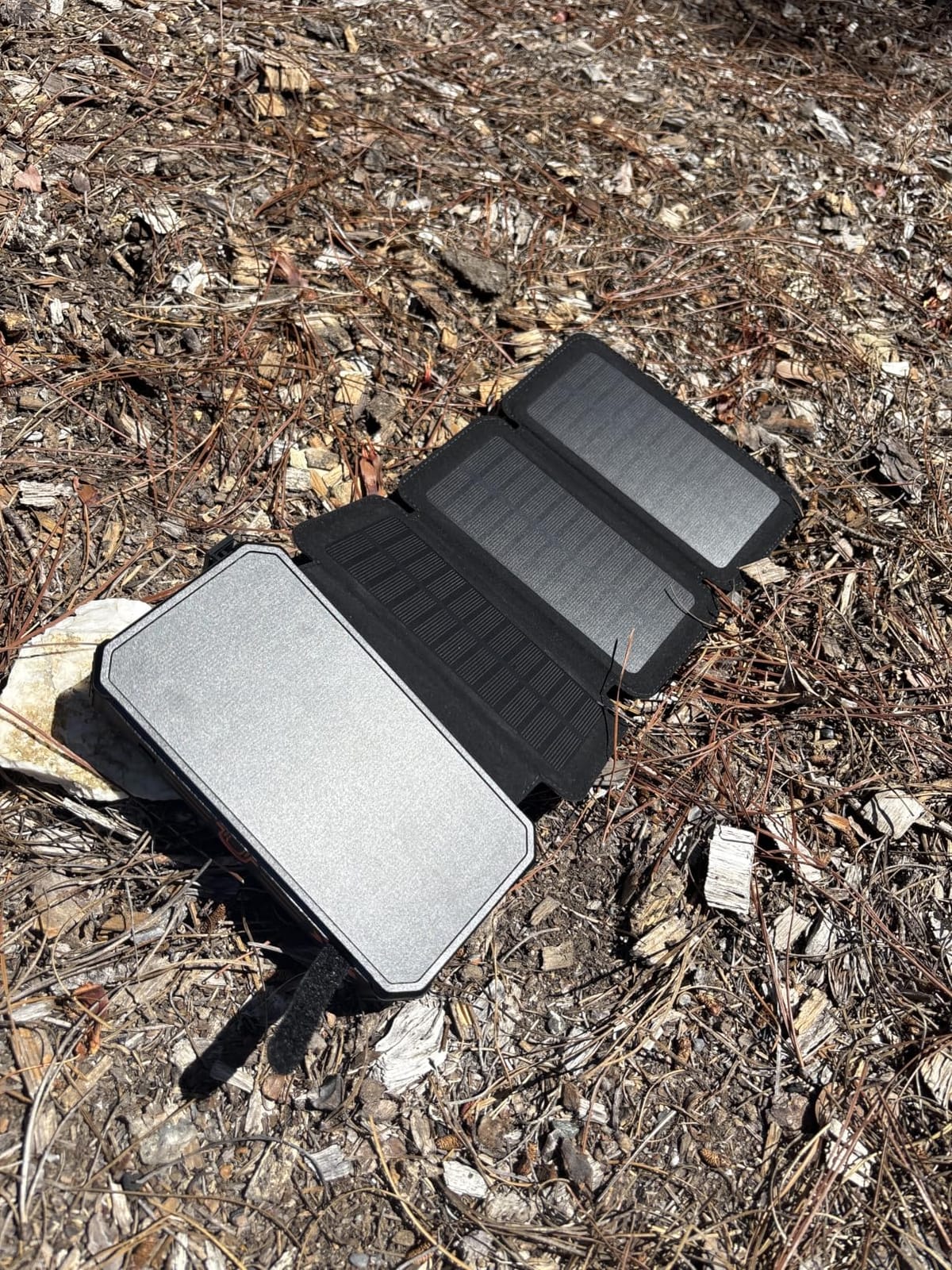
Four fold-out solar panels make this the only unit here with real panel surface. They fold flat onto a rock or a tent body and can be aimed directly at the sun instead of waiting for a lucky angle.
Reviewers report roughly 60 Wh of usable output, close to four full phone charges, and the 5V/3A USB-C port takes a compatible phone from 15 to 60 percent in 30 minutes.
Capacity labelling is where you have to be careful. The 48,000mAh label implies far more than the measured 60 Wh, and reviewers complain about the gap directly. Plan around the usable figure.
The panels are best described as a range extender. Owners say they will not push the bank much above half charge.
The housing is heavy and bulky at roughly a pound with poor pocketability, and a full wall recharge needs a 5V or higher adapter since cheap 4.2V chargers stall it at about half.
How it works as a fixed base camp bank
Set up at a camp that is a waypoint rather than a through-hike destination, the fold-out panels earn their keep. The waterproof, shockproof and dustproof housing suits a wet site.
The wireless pad works across a wide range of Qi phones, and reviewers use it for iPads as well as handsets.
Where it stops being a pack battery
Roughly a pound ends the road for this line of thinking. If you walk most of the day, a lighter bank plus a separate folding panel splits the same weight better and gives you far more usable panel.
It also charges slowly by wall, and some examples report long solar charge times, so budget an evening for a full top-up.
5. Mregb 42,800mAh Solar Power Bank – Best Waterproofing Here

Mregb Solar Charger Power Bank 42800mAh, Portable Charger, Solar Power Bank,External Battery Pack 5V3.1A Qc 3.0 Fast Charger Built-in Super Bright Flashlight (Orange)
42800mAh lithium-polymer
IP67 shell
QC 3.0 at 5V/3.1A
100-hour light
Pros
- IP67 waterproof and drop-proof and dust-proof shell
- Very high capacity for the size
- QC 3.0 with USB-C input and output
- Flashlight rated up to 100 hours
- Over-charging and short-circuit protection
Cons
- Solar is emergency-only by the brand's own statement
- No wireless charging
- No built-in cables
- Capacity claim relies on high-density cells
The IP67 rating is the headline. Waterproof, drop-proof and dust-proof in a chemical-resistant ABS shell, this is the bank I would not hesitate to dunk in a creek-side wash.
QC 3.0 fast charging at 5V/3.1A through a USB-C port that handles both input and output is a modern setup, and the battery holds enough for three devices at once.
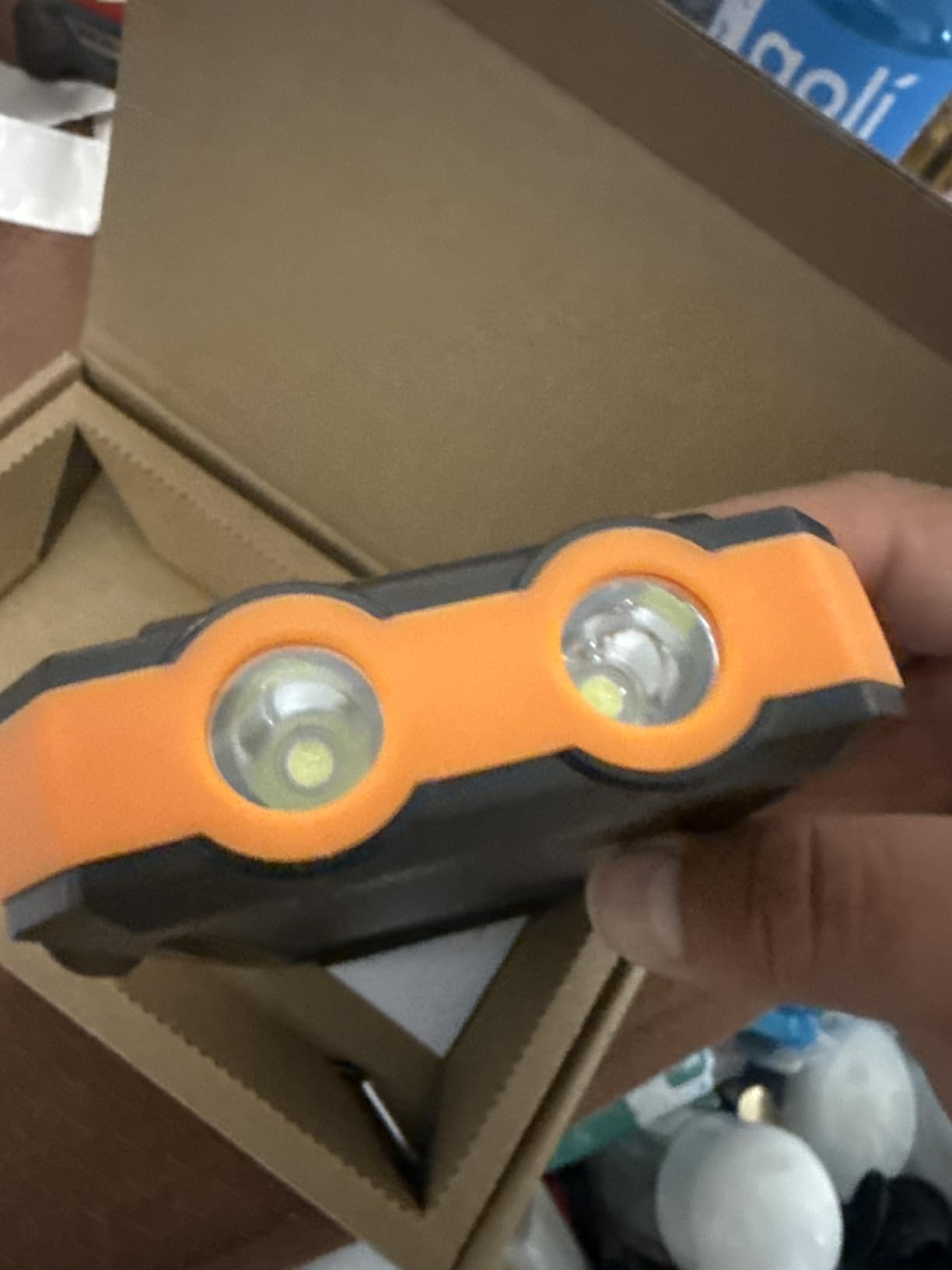
What stands out is the flashlight. Reviewers rate it as very bright with up to 100 hours of continuous runtime, which makes it a two-for-one with any headlamp you would otherwise carry.
Be clear about the solar, though. The manufacturer states that solar charging is very slow and should be treated as an emergency function only, the most honest solar language in this roundup.
There are no built-in cables, so you carry your own cord, and there is no wireless pad. Weight is not published for this model, so measure it before committing.
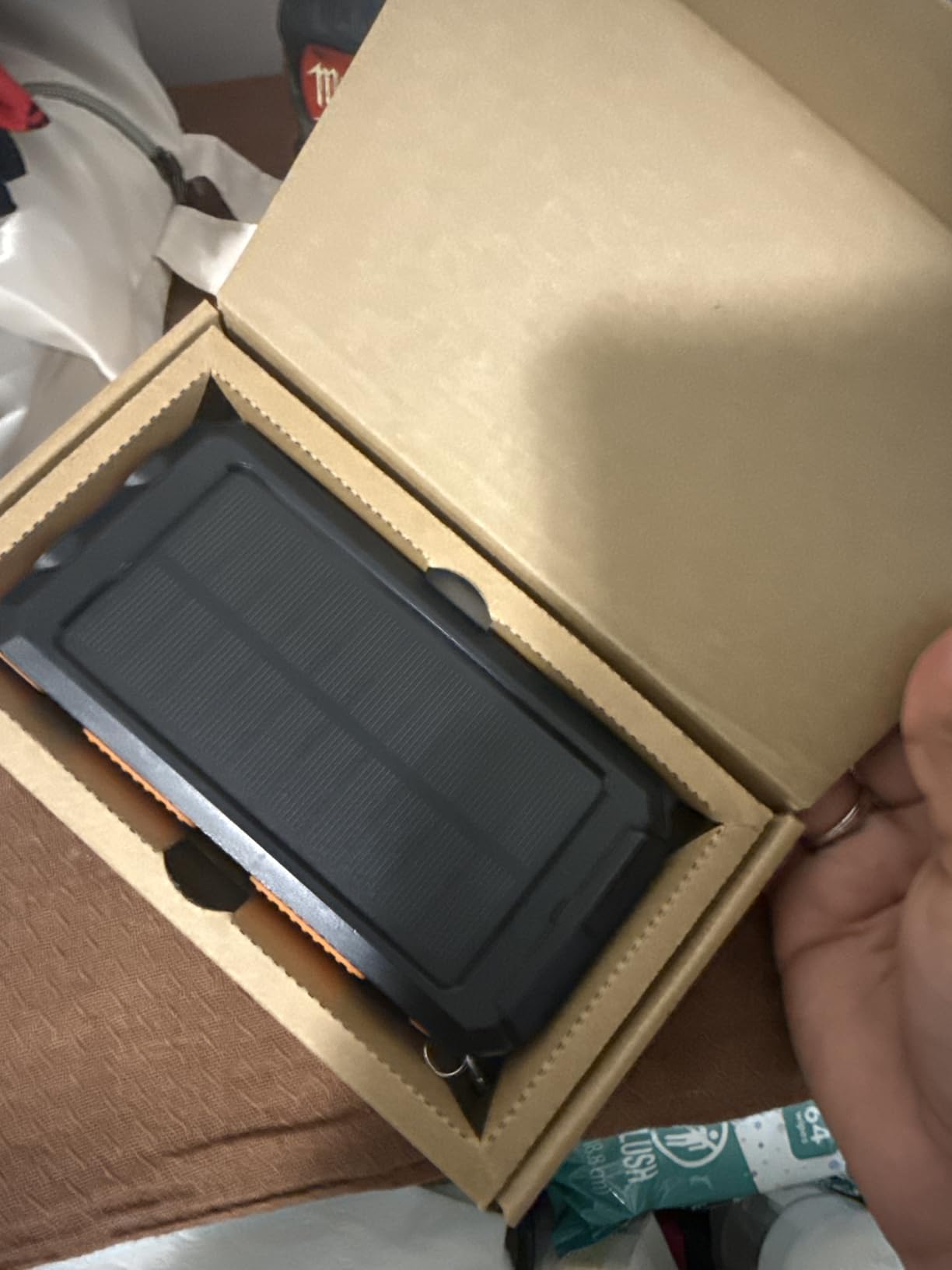
How it performs in wet, cold conditions
Rain, mud, sand, a dropped pack onto rock. The IP67 shell is the deciding factor where a splash-resistant bank is a gamble, and the flashlight doubles as an emergency signal in fog.
What you trade away for the rugged shell
You give up the convenience features that make lighter banks pleasant to use. No built-in cables means one more thing to keep track of, and every device needs a physical connection.
The capacity claim also depends on high-density cells packed into a tight volume, so treat the headline figure with scepticism.
6. FEELLE 50,000mAh Solar Power Bank – Best for Emergency Preparedness

FEELLE Solar Power Bank 50000mAh Magnetic Portable Charger with Hand Crank
50000mAh lithium-polymer
15W magnetic wireless
Hand crank
Compass and 3-mode light
Pros
- Only bank here with a hand-crank generator
- 15W magnetic wireless that auto-aligns
- 50000mAh for group trips
- Four built-in cables plus three ports
- Compass and 3-mode flashlight
Cons
- Bulkiest footprint at 7.24 x 3.54 x 1.97 inches
- 0.5 kg listed weight
- Magnetic charging weakens with thick cases
- Solar output modest for the capacity
The hand crank is why this one is different. Above treeline, out of contact with a flat bank, cranking is the last option you have, and no other unit here offers one.
Beyond that it is a serious capacity bank. Reviewers report 50,000mAh running several devices for a group on short trips, and the 15W magnetic pad auto-aligns a compatible phone.
The feature list is prepared-oriented on purpose. A high-precision compass, a three-mode LED flashlight with steady, SOS and strobe, a backpack hook, silicone corner bumpers and covered ports.
It is designed to live in a go-bag as much as a pack, and the three-year warranty is among the longest listed here.
The reservations are all about carrying it: 0.5 kg across a 7.24 by 3.54 by 1.97 inch footprint, the bulkiest in the group, plus magnetic charging that weakens through thick cases.
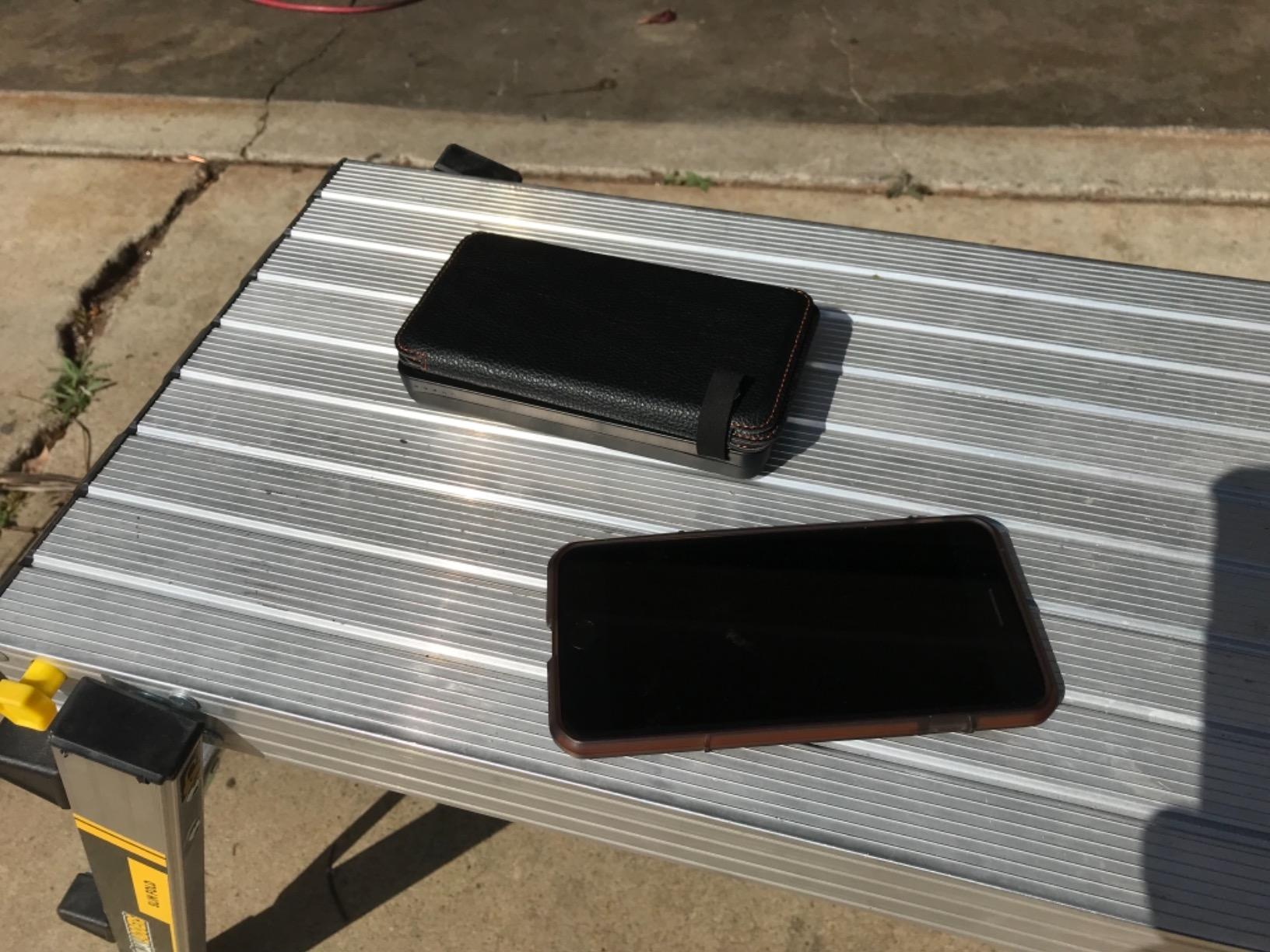
When the hand crank changes the equation
On a storm-battered trip or a winter overnight where the sun never appears, solar is a dead input and the crank is the only way to add charge. It is slow, but slow beats nothing when a phone is your only map.
The magnetic pad also charges while you drive between trailheads, turning dead vehicle time into bank time.
Where the size stops making sense
This is the one to leave at home if you are walking every kilometre. Half a kilogram in a pack lid changes how you move, and the footprint rules out a pack pocket entirely.
For magnetic charging, reviewers recommend a case under 3mm, which is another thing to buy.
7. SOARAISE 50,000mAh Solar Power Bank – Top Rated for Device Fleets

SOARAISE 50000mAh Solar Power Bank 22.5W Wireless Portable Solar Charger
50000mAh lithium-ion
16 oz
22.5W PD and 15W wireless
TSA approved
Pros
- Highest rating in the group at 4.4 stars
- 22.5W PD takes a phone from 0% to 70% in 30 minutes
- 15W Qi wireless plus 2 cables and 3 ports
- Airline approved and holds charge in storage
- Flashlight and compass and thermometer
Cons
- Heavy for its size
- Long wall recharge time
- Wireless slows with cases over 3mm
- Solar is a backup trickle only
At 4.4 stars this carries the highest average rating in the group, and the reason is speed. Twenty-two and a half watts of Power Delivery takes a compatible phone from 0 to 70 percent in 30 minutes.
That is fast enough to top up during a lunch break rather than over a long camp evening. Reviewers returning from international trips praise the long standby retention, which matters when you resupply every ten days.
The charging options are broad. Fifteen watts of Qi wireless for iPhone 8 and current Galaxy and Google flagships upward, two built-in cables, three extra ports and the pad, so six devices can run at once. The 16 oz listed weight keeps a bank of this capacity manageable.
It is also airline approved, which matters if you fly to a trailhead. The caveats are weight for its size, a long self-recharge even from a wall adapter, and wireless speed that drops through cases thicker than 3mm.
How the 22.5W output changes camp routines
Fast charging means a short top-up session at a break rather than dedicating the evening to it. That is the difference between charging while you make coffee and watching a battery bar.
The three-mode flashlight, compass and thermometer in a waterproof, shockproof and dustproof body cover the small emergencies that eat a trip’s power budget.
When a smaller bank is the smarter buy
Solo on a two or three day trip, 50,000mAh is more reserve than you will use, and you could carry a lighter bank and something else instead. Reviewers note the weight is a real cost.
Plan for a long wall recharge before the trip, and keep thick cases off during wireless charging if you want the full 15W.
8. Luvknit 20,000mAh Solar Power Bank – Best for Ultralight Pack Weight

Solar Power Bank 20000mAh with USB-C, Portable Charger for Travel Camping
20000mAh lithium-polymer
8.32 oz
15W USB-C
IP65 shell and TSA approved
Pros
- Lightest confirmed weight in the group at 8.32 oz
- 15W USB-C adds about 50% of a phone in 30 minutes
- IP65 water-resistant ABS and PC shell
- TSA approved under the 100Wh limit
- 24-month warranty
Cons
- Panel documented as an emergency trickle charger
- Only two devices can charge at once
- No wireless charging or built-in cables
- About 10 hours for a full wall recharge
This is the pick for anyone counting ounces. At 8.32 ounces with 20,000mAh inside, it is the lightest published weight in the roundup and still delivers 15 watts of USB-C fast charging.
Roughly 50 percent of a phone in 30 minutes is more than most banks this size manage, and reviewers note it survived drops without damage while keeping two phones topped up over a week.
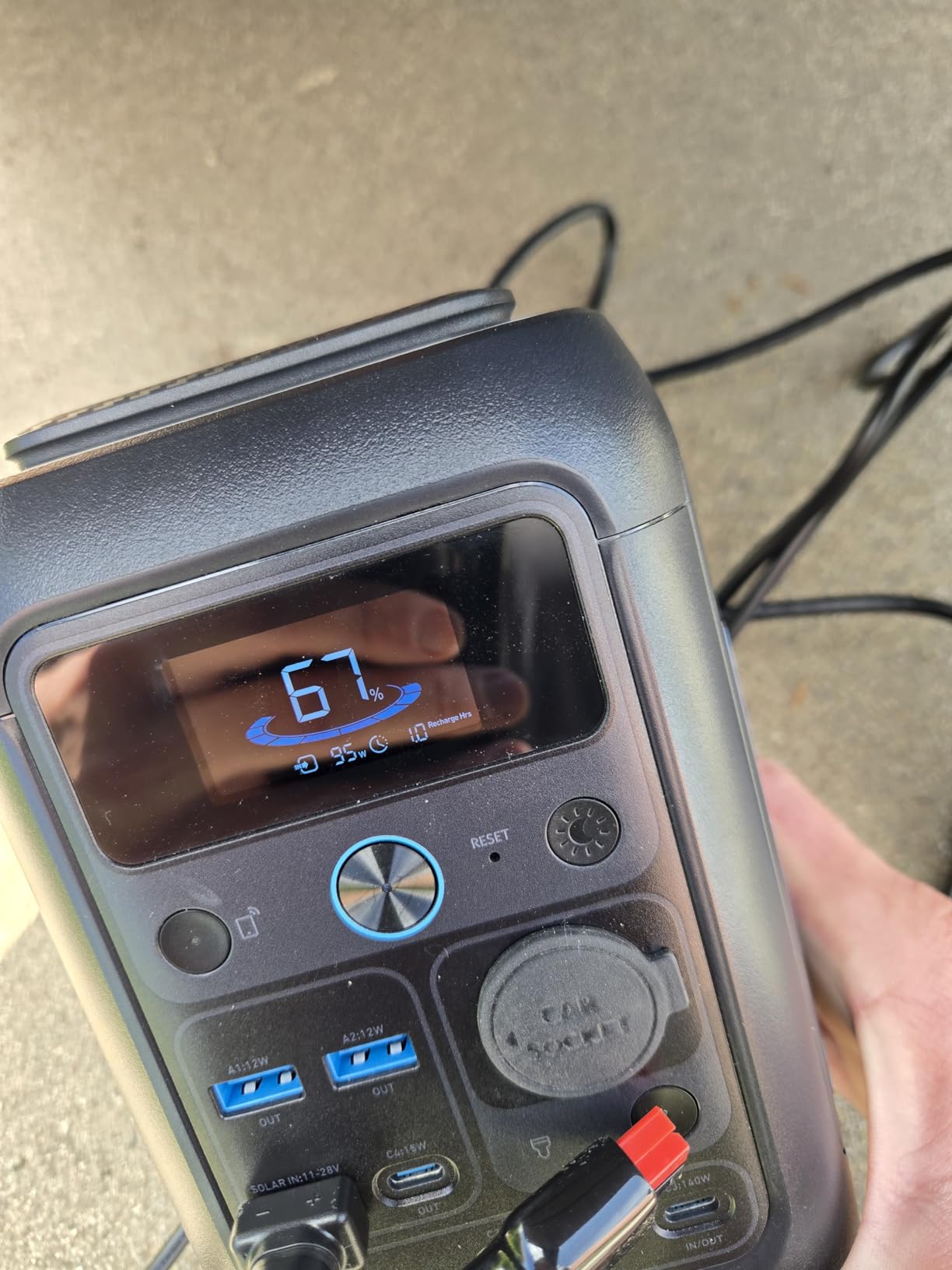
The listing is unusually candid about the panel, documenting it as an emergency trickle charger for direct sunlight only and stating that wall charging is required first.
That honesty tells you the real operating model before you buy rather than after. The IP65 shell handles drizzle and trail dust, and the carabiner makes it easy to hang outside a pack pocket.
The limits are clear. Only two devices charge at once, there is no wireless pad and no built-in cables, and a full recharge takes about 10 hours from a wall adapter.
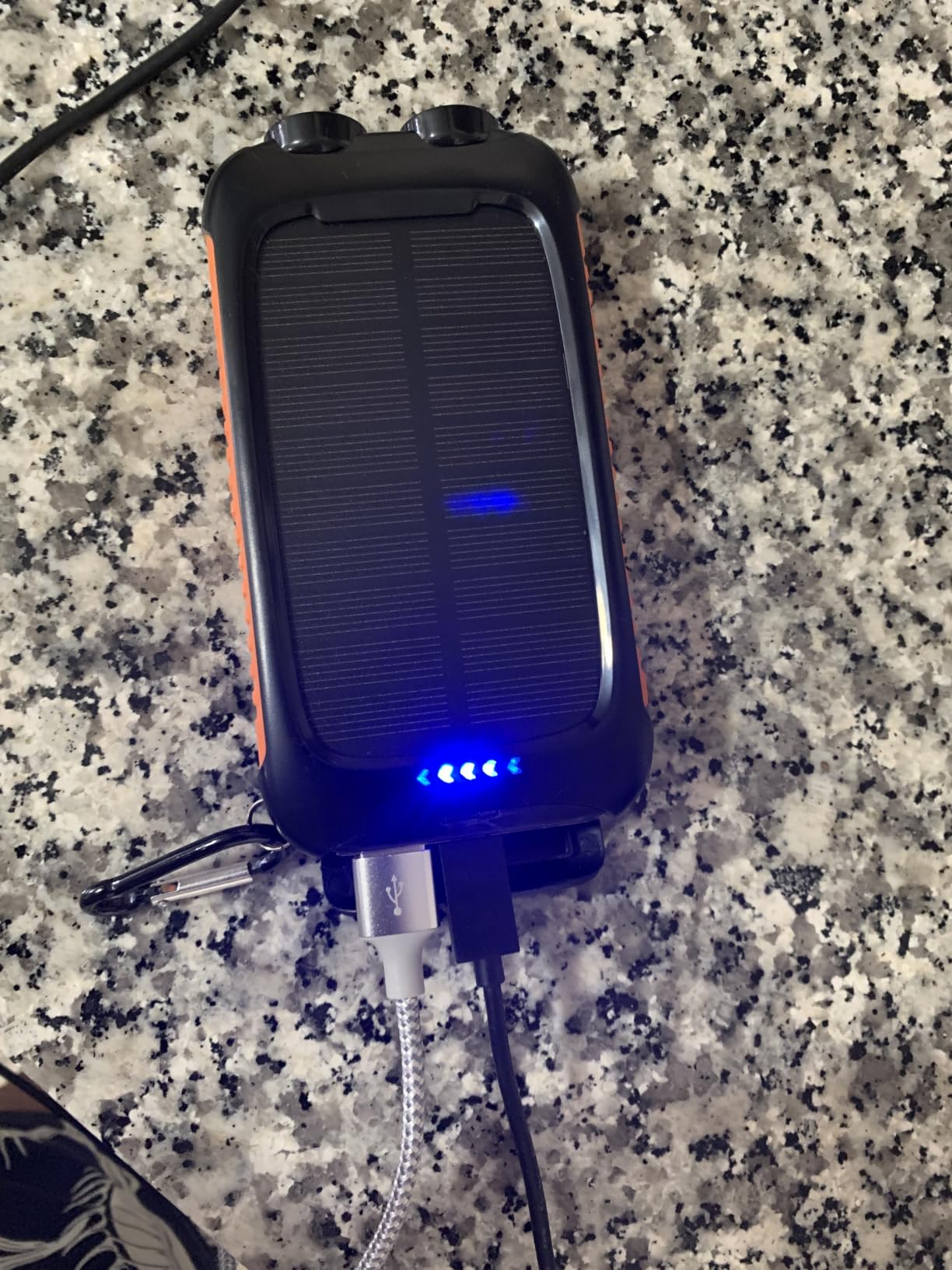
How it works for a fast and light weekend
Two devices at once is exactly right for a solo hiker running a phone and a GPS, and light use over a week is achievable. At 8.32 ounces it can sit in a pack lid and be forgotten.
The 24-month warranty and TSA approval make it a good pick for international trips where you charge it in town before flying in.
Where you will feel the limits
If a partner needs power too, the two-device ceiling is the first thing that hurts. There is no wireless pad and no built-in cables, so you carry at least one cord regardless.
This unit also carries the highest share of one-star reviews in the group, so buy it as a no-frills tool rather than a feature device.
9. MINRISE 40,000mAh Solar Power Bank – Best for Thru-Hiking Reference Power
MINRISE Solar Power Bank 40000mAh, Portable Charger PD 20W Fast Charging
40000mAh lithium-polymer
1.1 lb
20W PD Type-C
3 built-in cables
Pros
- 40000mAh at just over 1 lb
- 20W PD takes a phone from 15% to 65% in 30 minutes
- Three built-in output cables plus four input methods
- Twin flashlights reach about 165 ft
- Anti-fall silicone corners and covered ports
Cons
- Small 1.8W panel marked emergency-only
- About 6 hours for a full wall recharge
- Heaviest relative to its size at 1.1 lb
- No wireless charging
A 40,000mAh bank at just over one pound is a strong capacity-to-weight result, and 20W Power Delivery takes a compatible phone from 15 to 65 percent in 30 minutes.
That combination is why it works as a reference power supply rather than a primary one. The three built-in output cables cover Type-C, iOS and Micro USB, and four input methods mean you are not dependent on finding a matching cord.
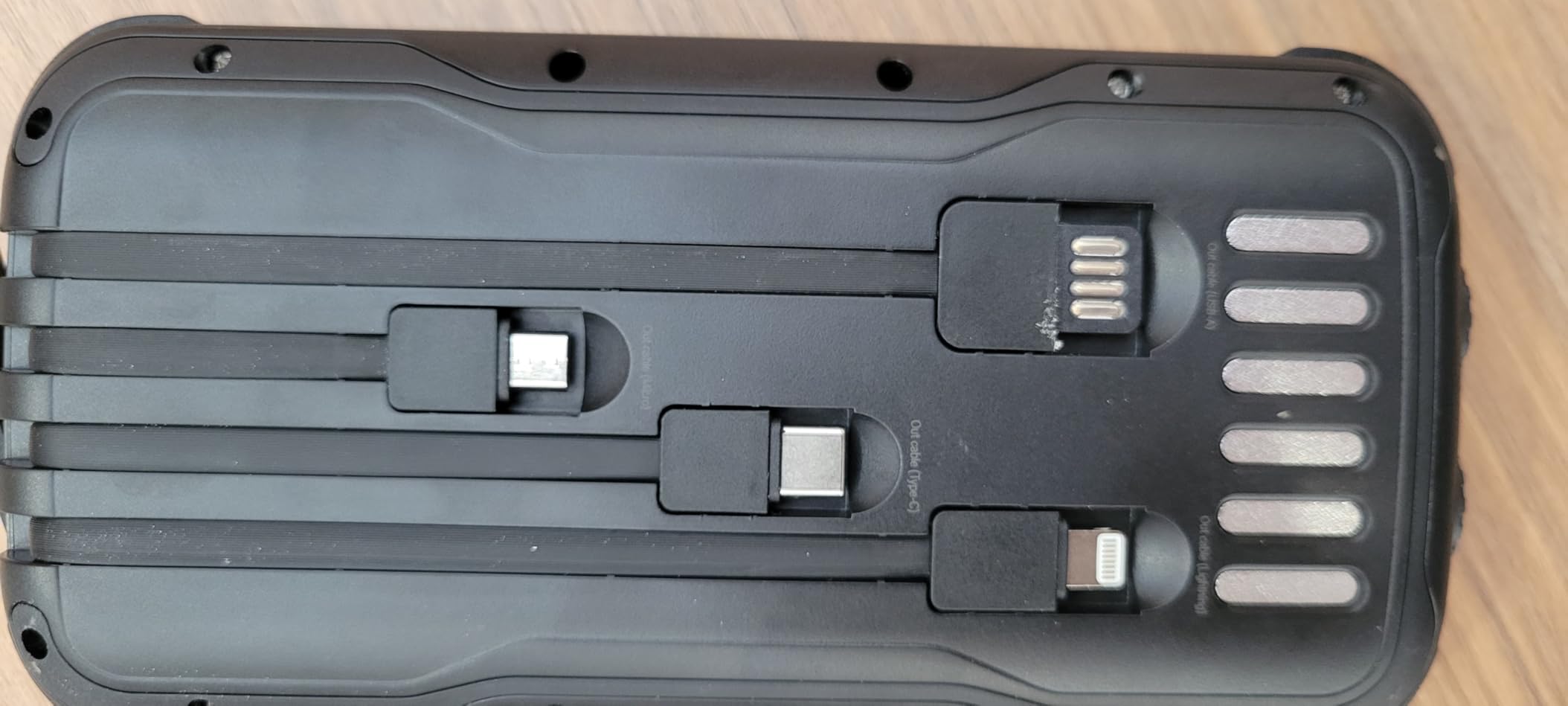
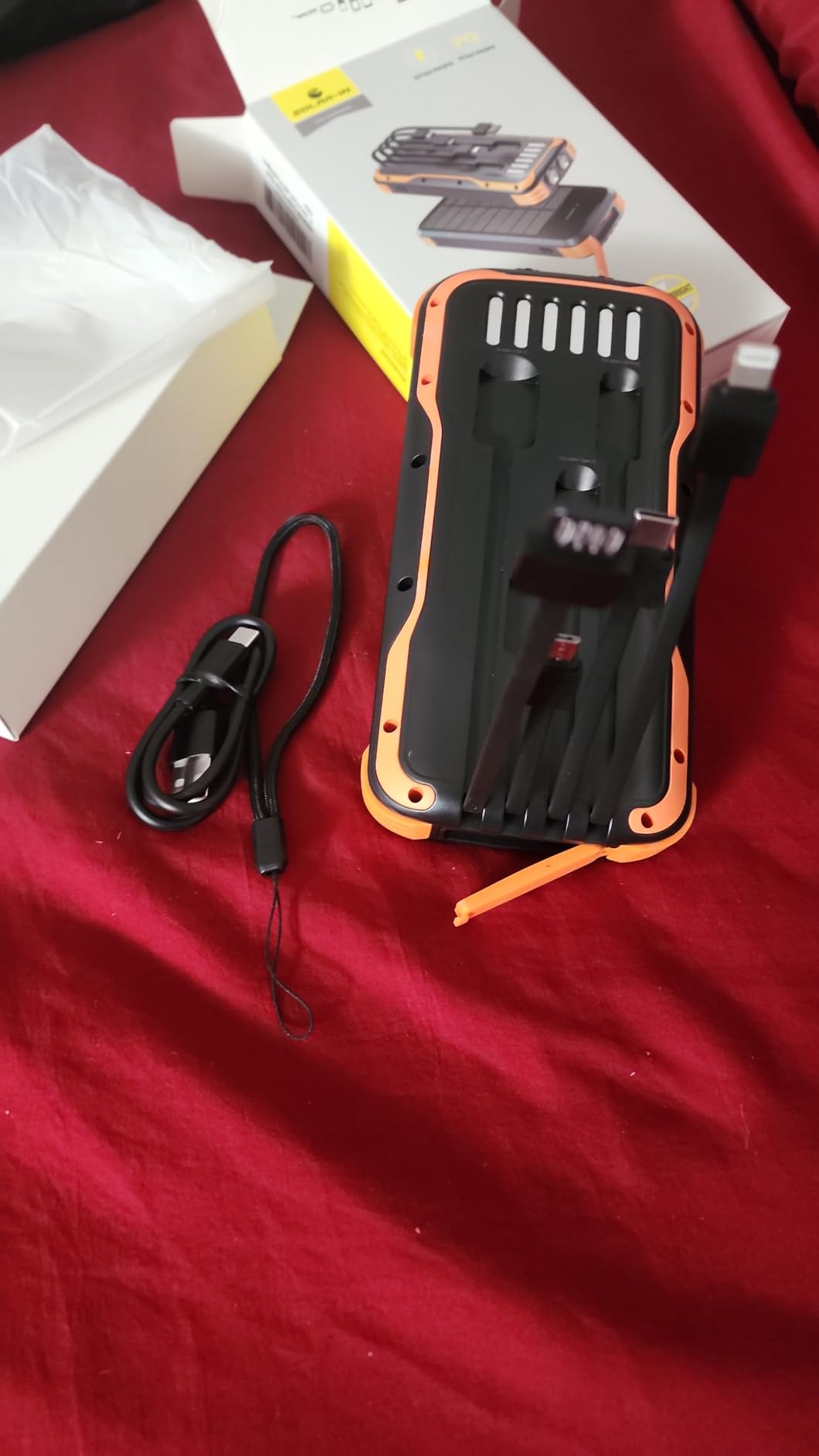
The two LED flashlights are the feature thru-hikers mention most. They throw about 165 feet and run up to 25 hours, a genuine backup light for a night walk when your headlamp fails.
Reviewers also highlight the rugged ABS body with anti-fall silicone corners, covered ports and a smart protection IC for overcharging and short circuits.
The solar panel is 1.8W and the brand states it is for emergency use only. A full wall recharge takes about 6 hours, and at 1.1 pounds it is the heaviest relative to its dimensions here.
How it works as a shared base battery
At a resupply stop you fill this once and everyone tops up from it. Three built-in cables mean four hikers can plug in without one person owning the only compatible cord.
The 165 ft flashlights let a group move safely at night without everyone switching on headlamps, conserving the power you carried in.
Where the pound matters
Just over one pound is a real load on a five-week trip and it grows with every resupply. Anyone optimising base weight should compare it against two lighter banks, which also adds redundancy.
Plan around the 6-hour wall recharge as a pre-trip task, not an evening one.
10. Nuynix 49,800mAh Solar Power Bank – Best for Long Off-Grid Trips

Nuynix 49800mAh Solar Power Bank with 15W Fast Charging & USB Charging
49800mAh lithium-polymer
15W USB-C
3 ports
Carabiner and LED flashlight
Pros
- Very high capacity for the money
- About 2.5 full Galaxy S22i charges
- 15W USB-C plus ports for three devices
- Rugged water and dust-resistant housing
- Owners report over a year with no capacity loss
Cons
- Solar charging is very slow
- No wall charger included
- Reliability reports of units failing within months
- Ports reported loose after moderate use
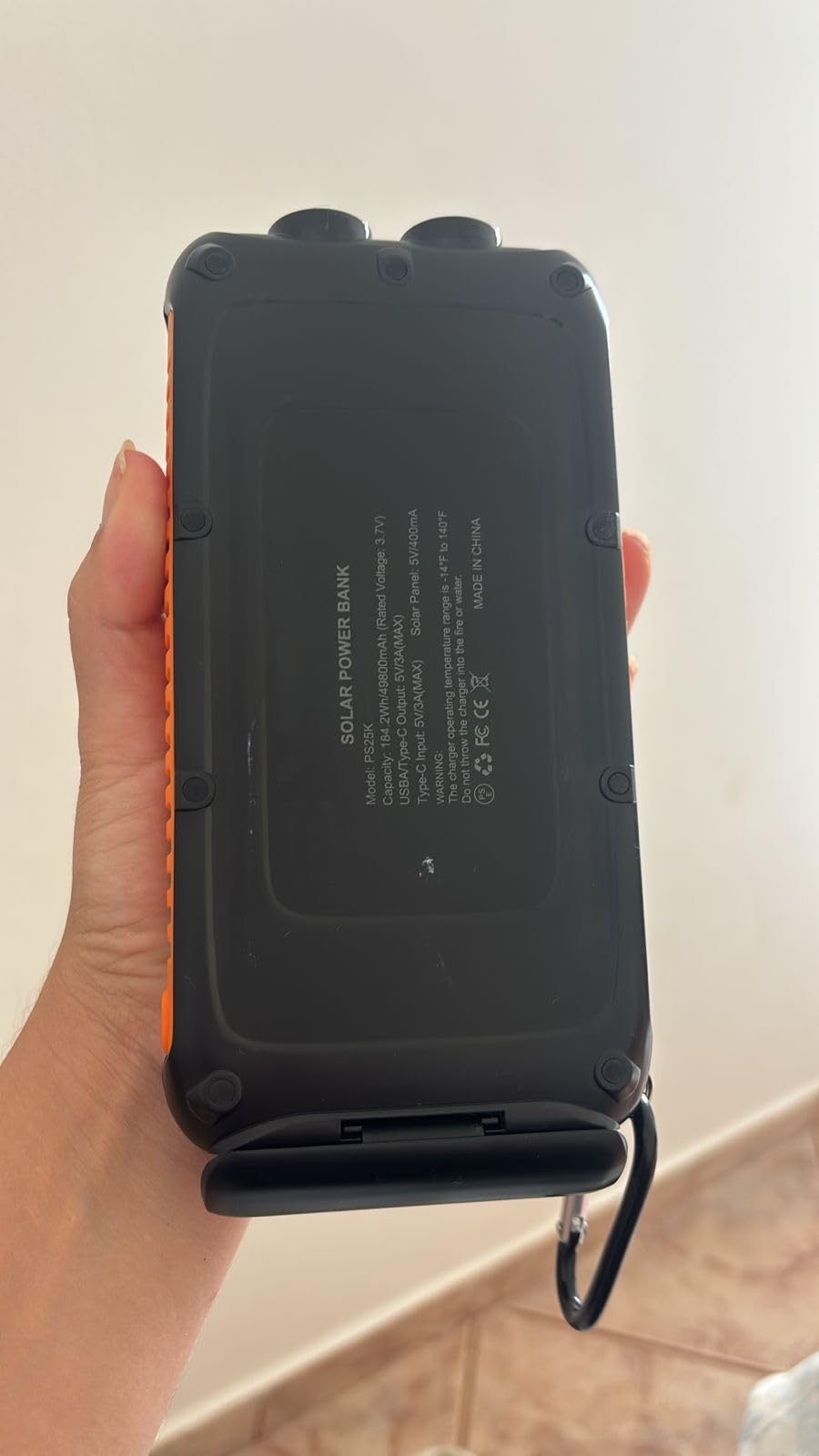
Reviewers use this bank for phones, headlamps, GPS units and even fish finders on multi-day trips, which tells you how flexible the output is.
Roughly 2.5 full Galaxy S22i charges at about 1 percent per minute is a useful, measurable figure for planning, and the 3A output handles small electronics without slowing to a crawl.
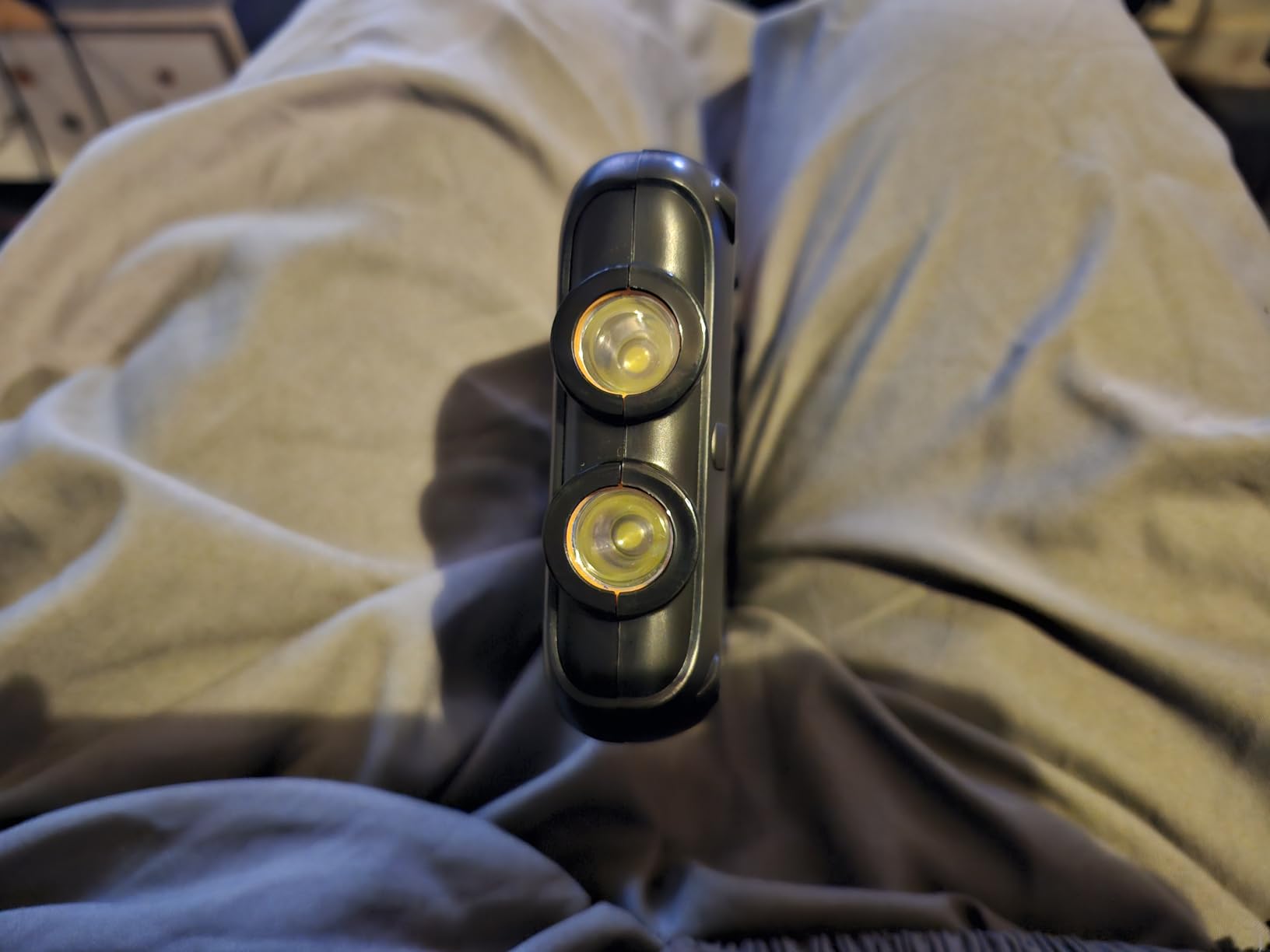
Fifteen watts of USB-C fast charging plus multiple ports for three devices covers most trail electronics, and the bright LED flashlight and carabiner earn their space.
Reliability is the issue to weigh. Several reviews describe units that stopped accepting a charge within two or three months, and one reviewer could not fully recharge it even in full sun.
Set against that, owners report a year of regular use with no loss of capacity, so the track record is genuinely split. Indicator lights stopping early and ports loosening also appear in one-star feedback.
How the capacity math works for electronics-heavy trips
Running a phone, a headlamp and a GPS off one bank is the scenario reviewers describe, and 49,800mAh gives roughly two and a half days of that pattern.
Bring your own wall adapter. Relying on whatever charger sits in a campground is where the long recharge times turn into a problem.
Where durability questions come up
With no published weight, plan to measure this one yourself. I would test a full charge cycle at home before trusting it on a long trip.
Compatibility is broad across iPhone, Samsung Galaxy, Google Pixel, iPad and Apple Watch, which helps when the kit list changes.
11. Uukto 20,000mAh Fast Battery Pack – Best for Camp Lighting

Uukto Solar Charger Power Bank 20000mAh Fast Battery Pack for Cell Phones
20000mAh lithium-polymer
503.8 g
3 cables and 3 ports
Camping light plus flashlights
Pros
- 76% five-star reviews - the highest share in the group
- Three built-in cables and three ports for five devices
- One large camping light plus two multi-mode flashlights
- Fire-proof PVC housing
- Two-year warranty
Cons
- Bulky at 503.8 g
- Built-in cables are short
- Solar is a trickle charge only
- A few units stopped accepting charge
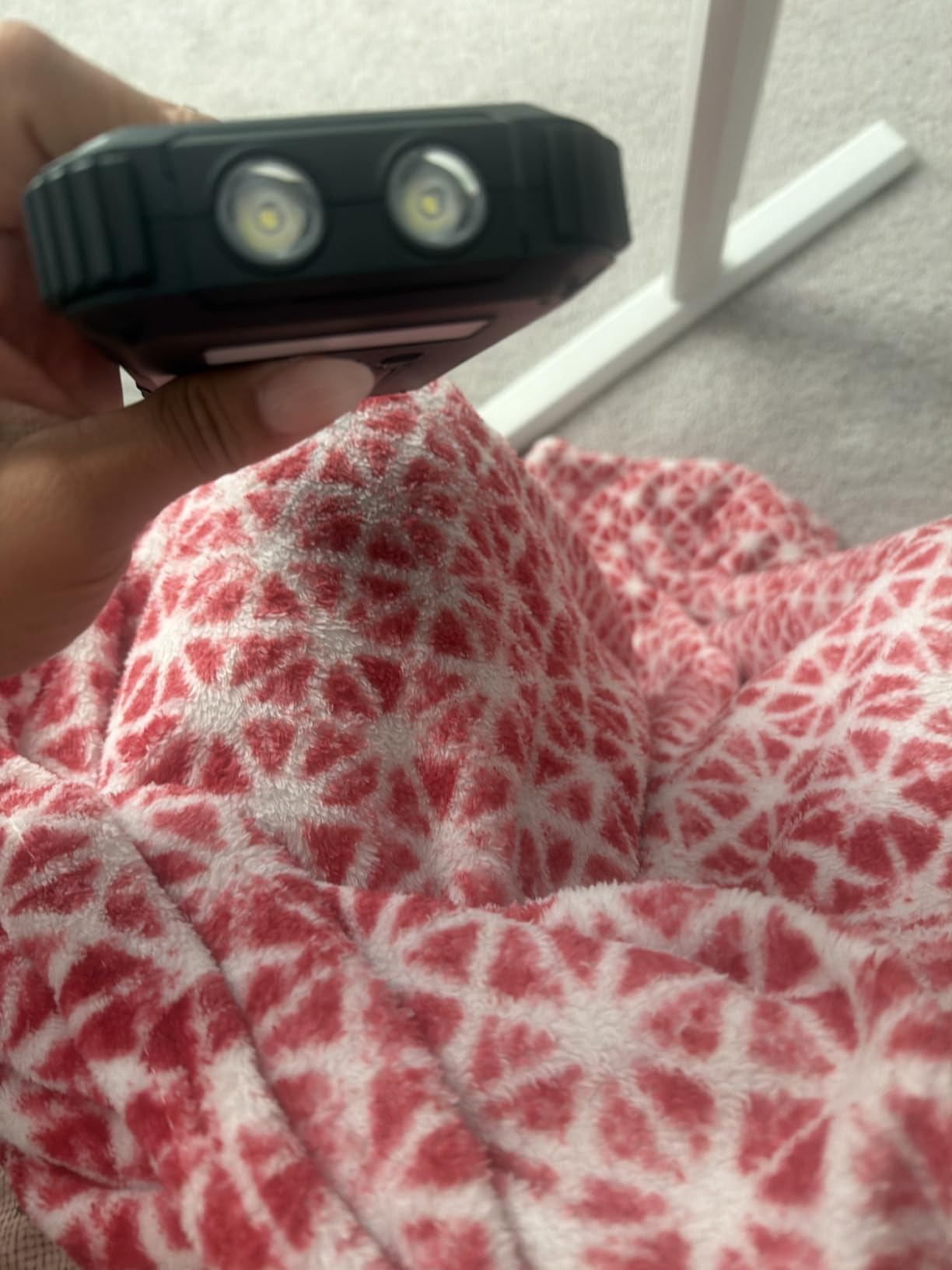
The lighting is the differentiator. One large camping light plus two bright multi-mode flashlights with SOS and strobe, and users call the output super bright.
On a trip where everyone navigates camp after dark, that replaces three small lights. At 4.4 stars with 76 percent five-star reviews, it has the highest proportion of top ratings in the group.
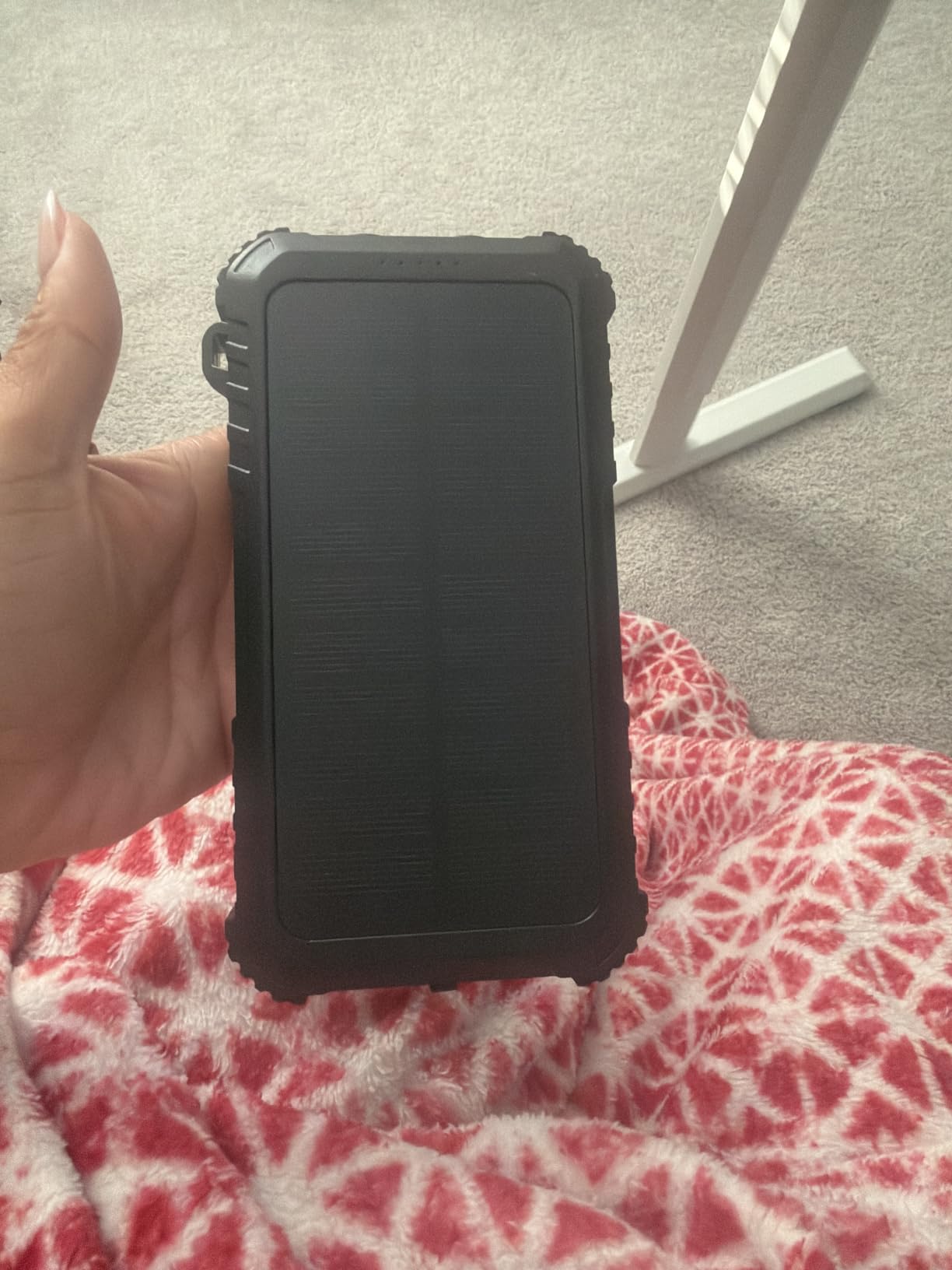
Three built-in cables and three output ports charge up to five devices, and users report charging a Galaxy S25 at least three times. Construction is a fire-proof PVC housing rated waterproof, shockproof and dustproof.
Overcharge, short-circuit and overheat protection are all present, and the two-year warranty with lifetime support is longer than most in this category.
Weight is the honest drawback, and buyers say so plainly. At 503.8 g it is heavy for a 20,000mAh capacity, and the built-in cables are short enough that the phone has to rest on top of the bank.
How it works for group camps and evening navigation
Hang it from a tree or set it on a rock at camp and the large camping light does the work of a lantern, with the flashlights covering the walk to water.
Five simultaneous device outputs is enough for a pair of hikers plus a shared GPS, and the built-in cables remove the cord-ownership argument.
Where the bulk shows on long approaches
At 503.8 g this is a base-camp unit rather than an all-day carry. Anyone walking a full week with it will feel it, and a lighter bank plus a dedicated headlamp is often the better trade.
A small number of examples stopped accepting charge while the flashlight kept working, so test it fully before the trip.
12. fmooostore 20,000mAh 8-Output Solar Power Bank – Best for Device Groups

Solar Charger Power Bank 20000mAh Wireless Charger QC 3.0 Fast Charging Power Bank 8 Outputs 4 Inputs Solar Portable Charger Compatible with All Mobile Devices,SOS/Strobe/Strong Flashlights (orange)
20000mAh lithium-polymer
200 g
8 outputs and 4 inputs
Qi wireless pad
Pros
- Widest charging flexibility with 8 outputs and 4 inputs
- Three built-in cables plus three output ports
- QC 3.0 fast wired charging
- ABS body with silicone corners
- Buyers cite it for camping and outages
Cons
- Lowest rating in the group at 4.0 stars
- Wireless pad has a small alignment window
- Built-in cables are about an inch long
- Instructions warn against leaving it in strong sun
- 90-day warranty
This one wins on connection count. Eight outputs, comprising three built-in cables, four output ports and a wireless charging area, plus four recharge inputs including solar.
Almost nothing in camp needs an adapter you do not have, and QC 3.0 fast wired charging gets phones filling quickly. The 200 g weight is reasonable for what it does.
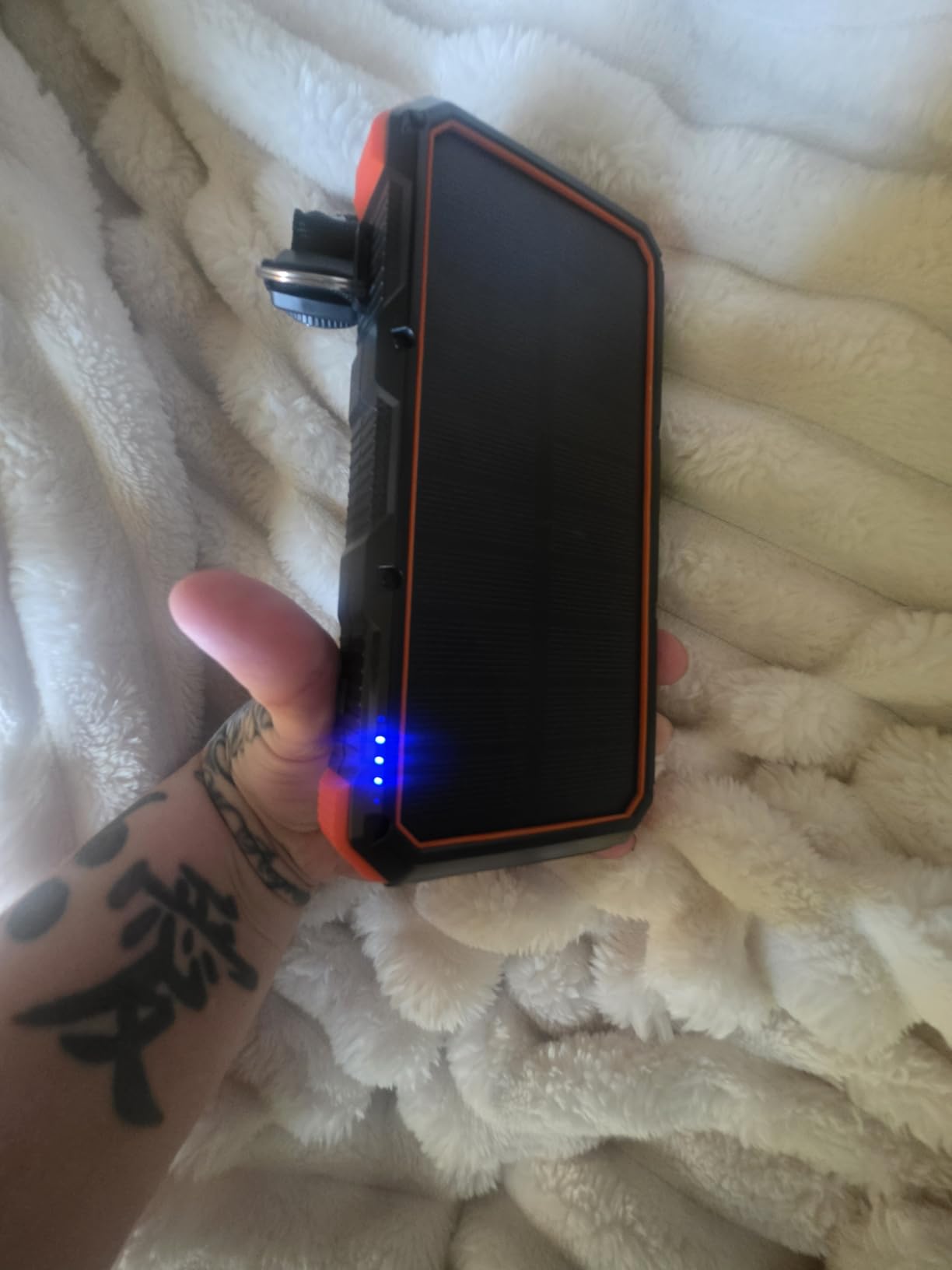
The wireless pad covers iPhone 12 through 15 and Galaxy S21 through S23 series, but the alignment window is small. Reviewers report it charging some phones slowly or not at all, so the wired ports are the path you will actually use.
It also has the lowest rating in the group at 4.0 stars and the smallest review base, so the track record is thinner.
The 90-day warranty is the shortest listed here, and one reviewer reported a battery that stopped holding charge within a month.
How it works for a mixed device kit
If your group includes an older phone that still wants Micro USB, a tablet that wants USB-A and a newer handset on USB-C, this is the one bank where nobody argues about cables.
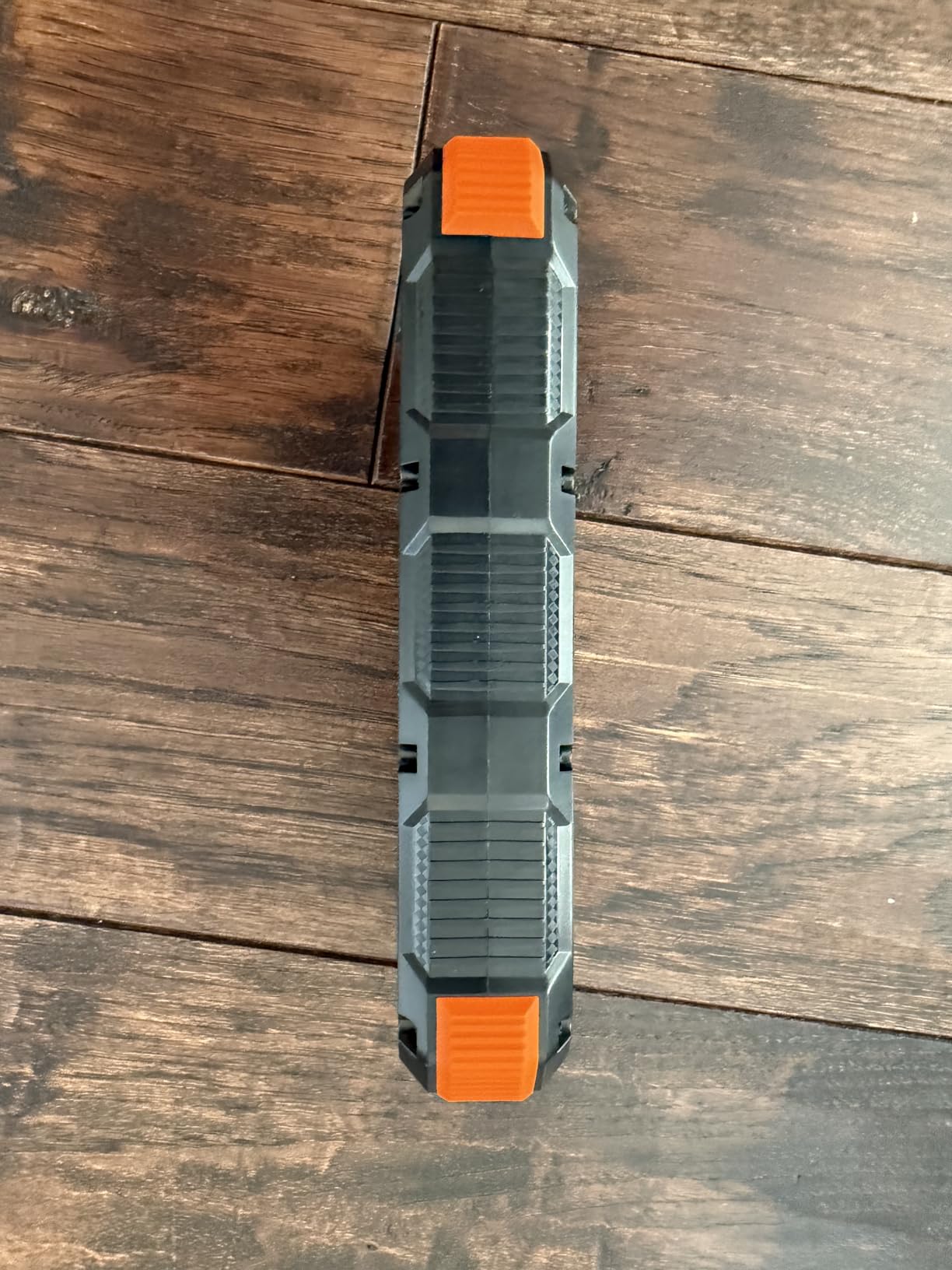
The silicone corners and covered charging ports hold up to drops, and the ABS body is rated dustproof and waterproof.
Where to look before buying
Read the solar instructions. The manual warns against prolonged sun exposure and against leaving the unit on a car dashboard, which effectively limits when you can use the panel.
The one-inch built-in cables and the fiddly wireless pad are the two things most likely to frustrate you in the field.
How to Choose a Solar Power Bank for Backpacking
Size capacity to trip length, not to marketing
A common phone battery is roughly 3,000 to 3,500mAh, so a 20,000mAh bank is realistically four to six charges after conversion losses. Plan on about 70 percent of the label as usable.
Sizing that works in practice: skip the bank for a day hike, use 10,000mAh for one to two nights, 20,000mAh for three to six days, and 40,000mAh and up for a week or more with a satellite messenger and camera batteries.
Two small banks beat one large one when the total is the same. You get redundancy, you can split weight between lid and hip belt, and a single failure does not end the trip.
Rated watts versus what a panel really delivers
A panel rated 20W delivers far less in the field. Angle, shade, dust on the glass and temperature all cut output, and the small panels in this roundup measure 1.8W on some models.
Two placement rules matter more than any wattage number. Set the panel up stationary at camp and aim it directly at the sun, and never strap it to a moving pack expecting a useful charge. Then follow the buffer battery order: panel to bank first, bank to device second.
Why the IP rating matters more than the panel
Water damage from rain and creek splash is the most common field failure. IP65 handles drizzle and dust, and IP67-rated housings survive immersion. On a wet trail that rating is worth more than a second folding panel.
Two extras: sleep with the bank rather than leaving it on a cold tent floor, where lithium performance degrades overnight, and keep it in a dry bag when rain is forecast. A solar GPS watch is worth considering as a low-drain navigation backup so the bank is not carrying that load.
Airline rules for flying with a solar power bank
Yes, you can take one on a plane. Spare lithium batteries and power banks must go in carry-on luggage, never in checked baggage, and each unit must stay under 100 watt-hours. Two units here are documented as airline approved for that reason.
Keep the terminals covered in your bag and expect a question at the gate about the capacity. A swollen or damaged bank will be refused.
Redundancy versus a single large bank
If solar recharging is part of your plan, redundancy matters more. A bank that stops accepting a charge after three months, as some examples here have, costs you the trip’s power budget. Two independent banks in separate dry bags protect against water, impact and failure.
For most trips the honest answer is one capable bank plus a small cheap backup. If you want a bigger system for a vehicle rather than a pack, our solar power station guide covers that category.
Frequently Asked Questions
Can I take a solar power bank on an airplane?
Yes. Power banks and spare lithium batteries must travel in carry-on luggage, never in checked baggage, and each one must stay under 100 watt-hours. Keep the charging terminals covered in your bag and be ready to state the capacity at the gate. A damaged or swollen battery will be refused, so inspect your bank before you travel.
Are solar power banks actually worth it for backpacking?
Only when you are more than about three days from a resupply point, and even then the panel is a backup rather than a primary. Panels strapped to a moving pack collect almost nothing, so set the panel up stationary at camp, charge the bank from it first, and run devices off the bank overnight. On shorter trips, spend the weight on capacity and resupply in town.
How long does it take to charge a phone with a solar power bank?
With the bank charged from a wall outlet first, most phones top up in 30 minutes or less on a fast port. Several models here deliver 15W to 22.5W, which is roughly 50 to 70 percent of a phone in half an hour. Charging a phone directly from an integrated solar panel is far slower, because the output fluctuates and the phone keeps restarting.
How many mAh do I need for a five day backpacking trip?
For one person running a phone, a GPS and a headlamp, 20,000mAh is a sensible starting point and 40,000mAh gives comfortable margin. Expect roughly 70 percent of the label as usable energy, and remember that cold nights reduce what a lithium bank will deliver. Two 20,000mAh banks also give you redundancy if one fails.
Do solar panels work when my backpack is moving?
Barely. A panel strapped to a moving pack changes angle constantly and is shaded by your body, trees and terrain, so the collected current collapses. Forum advice is consistent that mini panels only work when properly placed and stationary. Unfold the panel at camp, aim it at the sun, and let it refill the bank while you rest.
The Verdict for Backpackers in 2026
The BLAVOR 10,000mAh is the best solar power bank for backpacking overall, because 9.3 ounces and reliable wireless charging beat raw capacity when you walk every kilometre. Go to the SOARAISE 50,000mAh when the trip is long or the group is large, and to the Durecopow 20,000mAh when cable-free convenience matters more than weight.
Whatever you buy in 2026, fill the bank from a wall outlet before you leave, set any panel up stationary at camp, and keep the buffer battery order: panel to bank, bank to device. That single habit is the difference between a solar power bank that works on trail and one that sits in a pack pocket doing nothing.