

Nothing in a physics classroom gets a reaction like a machine that puts a hundred thousand volts on a metal dome and then hands a student a charged wand. The hair goes up, the ruler snaps across the gap, and an invisible force becomes something the whole room can see. That is why the best van de graaff generators for science demos remain worth buying in 2026, nearly a century after Robert Van de Graaff built the first working model.
A Van de Graaff generator is a bench-top electrostatic machine. An insulating belt runs over an upper comb and a lower comb, friction transfers charge onto the belt, and the belt carries that charge to the top of the machine where a metal dome collects it. The dome sits at a high potential difference against ground until the charge leaks away slowly or is deliberately discharged as a visible spark at a separate discharge sphere.
Yes, they are still used. High-school and introductory university physics courses use them more than ever because static electricity is hard to teach from a diagram alone, and museum and science-fair organisers rely on the same principle for the same reason. The largest machines ever built reached far beyond classroom scale, which is context for why classroom units top out in the hundreds of kilovolts rather than the thousands.
One warning before we get into the machines. Any kilovolt figure a manufacturer publishes, including every figure quoted in this article, is measured under specific humidity conditions. Dry winter air in a heated lab and damp late-autumn air in a classroom produce very different spark lengths from the same machine, and no manufacturer publishes a figure that holds in both. Treat the kV numbers as the ceiling rather than the promise.
For our part, we spent several weeks reading the review histories on every legitimate belt-driven unit we could find and comparing what each one actually puts in a demonstration. The category is narrow: the most-reviewed machine here has 82 reviews, so we kept to units with real review history and dropped the flood of unrated generic imports. If you want the physics background rather than the shopping, our notes on hard science fiction explained and why cats purr cover the other end of the popular-science spectrum.
Table of Contents
Top 3 Picks for Van de Graaff Science Demos in 2026

Lethan 325kV Humidity Control
- 325kV output under dry conditions
- Built-in humidity control bulb
- Motorised with discharge wand

EISCO Hand Crank 100kV
- Hand cranked
- no power cord
- 22 inch tall with 7.9 inch sphere
- Grounding wire included

EISCO Motorised 22 inch
- Motorised belt drive
- Up to 220000 volts
- Faraday's pail and neon bulb included
- Experiment guide
Every Machine Compared in 2026
Six machines, one table. The two columns that decide most purchases are drive type and stated output, and the two that get overlooked are overall height and what arrives in the box.
| Product | Specifications | Action |
|---|---|---|
| Lethan Corporation 325kV with Humidity Control |
|
Check Latest Price |
| EISCO Hand Crank 100kV, 22 inch |
|
Check Latest Price |
| EISCO Motorised 22 inch |
|
Check Latest Price |
 Arbor Scientific 10 inch dome, 200kV Arbor Scientific 10 inch dome, 200kV |
|
Check Latest Price |
 EISCO 9.8 inch sphere, 24 inch tall EISCO 9.8 inch sphere, 24 inch tall |
|
Check Latest Price |
 Lethan 325kV with accessory set and spare belt Lethan 325kV with accessory set and spare belt |
|
Check Latest Price |
1. Lethan Corporation 325kV with Humidity Control – the all-round lab workhorse
Van De Graaff Generator, 325KV, with Humidity Control
325kV stated output
10 inch dome, 26 inch tall
120V, 80W, 18 lb
Fuse overload protection
Pros
- Highest stated output in this lineup
- Built-in humidity control bulb improves dry-weather performance
- Quick connect terminal in the dome
- Motorised so the teacher is not also cranking
Cons
- Some owners add copper braid to reach full spark potential
- Dome assembly can be tight at first
- Loose foam beads in the box create a static mess
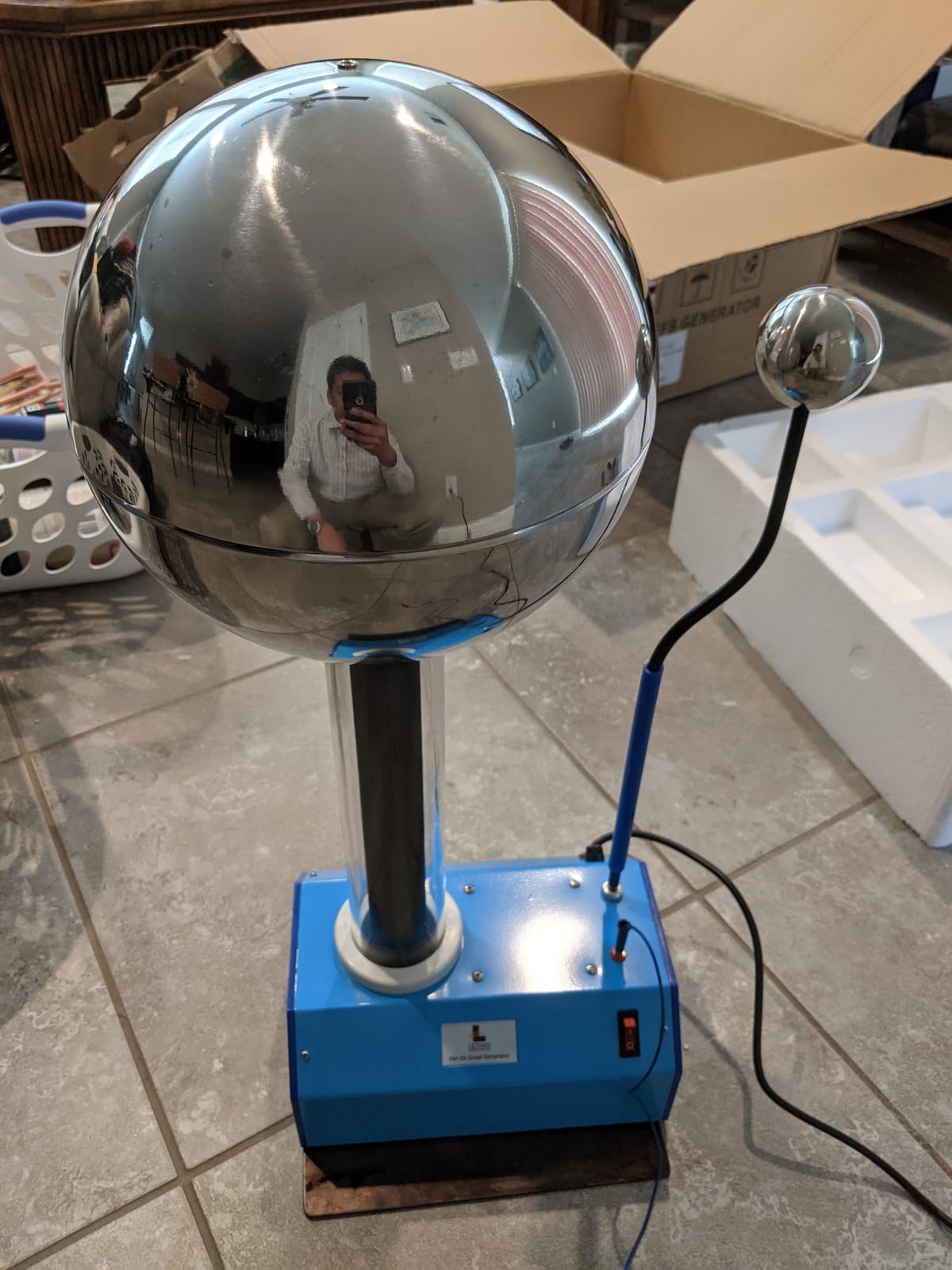
This is the machine I would put at the front of a teaching lab, and it is the one our group came back to most often. The 325kV figure is a manufacturer claim measured in favourable conditions, but the base is built to help you get closer to it: a humidity control bulb sits in the base, and owners consistently credit it for the difference between a stubby arc and a satisfying one in a dry room.
Construction is what separates it from the classroom kit tier. The hemispheres are stainless steel, the column is plexiglass tubing, and there is a dual riser belt tensioning system so you can correct belt tracking from outside the dome rather than dismantling the top. Fuse overload protection is fitted, and a quick connect terminal in the dome gives you somewhere to attach a terminal sphere or your own experiment.
The honest caveat is that a few owners report not reaching the headline output until they modify the lower pickup with copper braid. That is a twenty-minute job with basic tools and it is well documented in the reviews, but you should know it exists before the box arrives. The dome fit at first assembly is also described as tight by some buyers, and a handful mention having to back screws out of a slightly overtightened thread.
What I like most for a lab that moves between rooms is the custom foam case. It is not a marketing accessory, it is a transport solution, and it protects the dome far better than a blanket thrown over the top. At 18 pounds and 26 inches tall it needs a real trolley rather than a shelf, and the height matters for ceiling clearance, which we cover further down.
What to check when it arrives
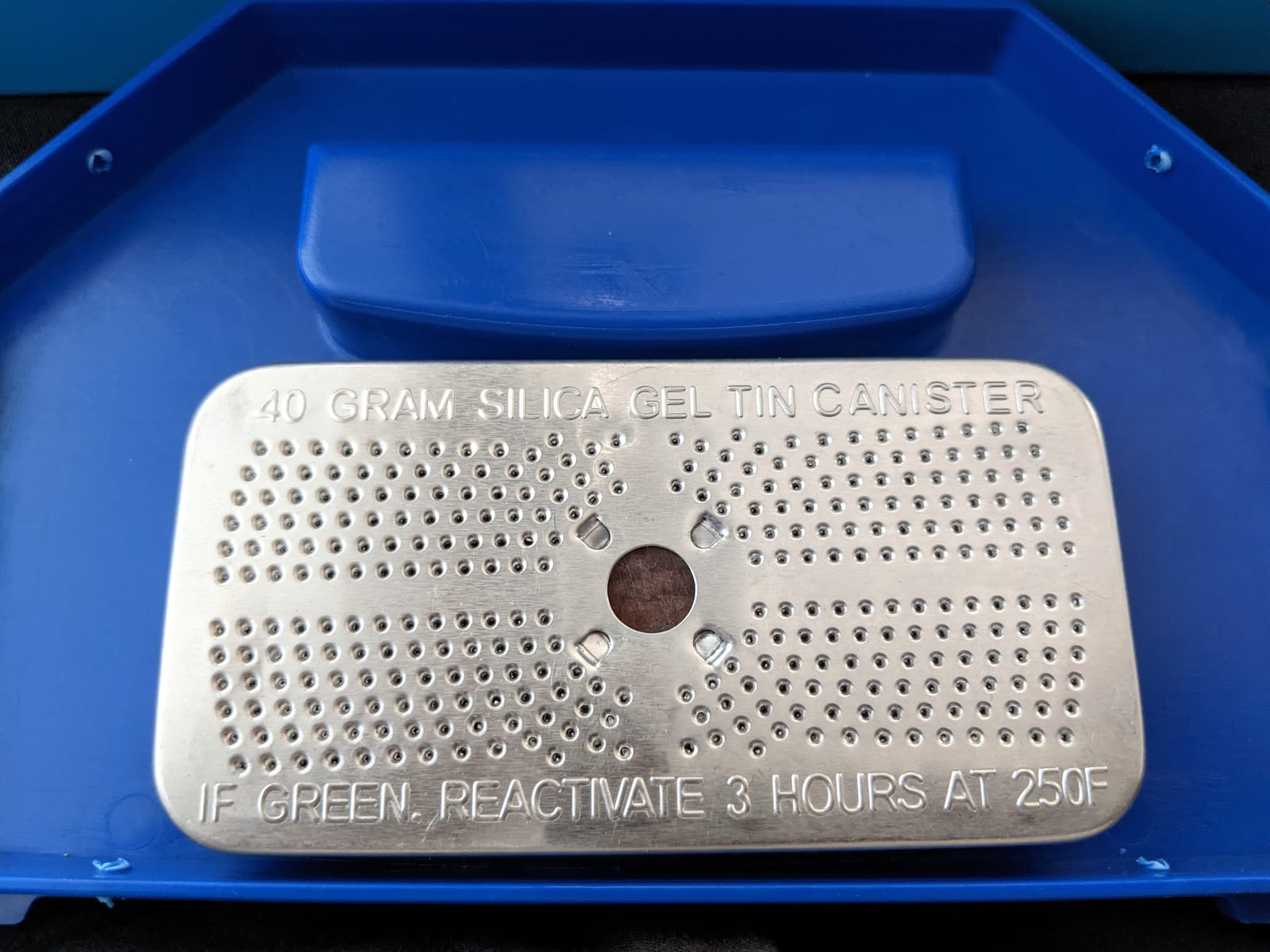
Run the belt tensioning system before the first demonstration and again after a few hours of use. Belts stretch, and a belt that has slack will not charge properly no matter what the machine is rated for.
Confirm the fuse is the type specified for the 120V, 80W supply, and check the grounding cable threads, since this model uses plastic screws in the ground lead and reviewers flag them as brittle. Treat that cable as a consumable.
Who should buy it and who should not
Buy it if you run demonstrations several times a week, need a long spark, and want the humidity problem at least partly handled. It suits a physics department that keeps one machine in permanent service rather than a single afternoon of outreach work.
Pass on it if your budget is fixed at the classroom-kit level or if your ceiling height is under about seven feet. With a 26 inch column plus dome you need room above the discharge sphere for the arc to develop without anyone in the strike zone.
2. EISCO Hand Crank 100kV, 7.5 inch dome – the one that keeps working
EISCO Hand Crank Van de Graaff Generator, up to 100kV – Static Electricity Generator, Hand Generator – 7.5″ Dome, 4″ Discharge Sphere, 22″ Tall
Hand crank drive
7.9 inch metal sphere, 22 inch tall
Up to 100000 volts
Belt, wand, grounding wire, guide
Pros
- Largest review base of any machine in the category
- No power cord and no outlet needed
- Interchangeable and replaceable components
- Grounding wire and experiment guide in the box
Cons
- Uninsulated handle can deliver a shock
- Some owners find it less powerful than expected
- Dome attachment needs assembly
- Documentation missing in some boxes
This is the model most teachers in our comparison ended up recommending to colleagues on a tight budget, and the reason is simple: it has more people using it than anything else here. Eighty-two reviews means that the failure modes are documented rather than hypothetical, and that replacement parts and advice circulate around this model rather than around a listing with no history.
At 22 inches tall with a 7.9 inch metal sphere, it is the most compact machine in the lineup, which matters in a normal classroom with a standard ceiling. The hand crank removes the electrical supply question entirely, so there is no adapter, no extension lead across a floor and no compatibility worry if you move between buildings. Included are the polished dome, a 4 inch discharge wand, a 4mm grounding wire and an experiment guide.
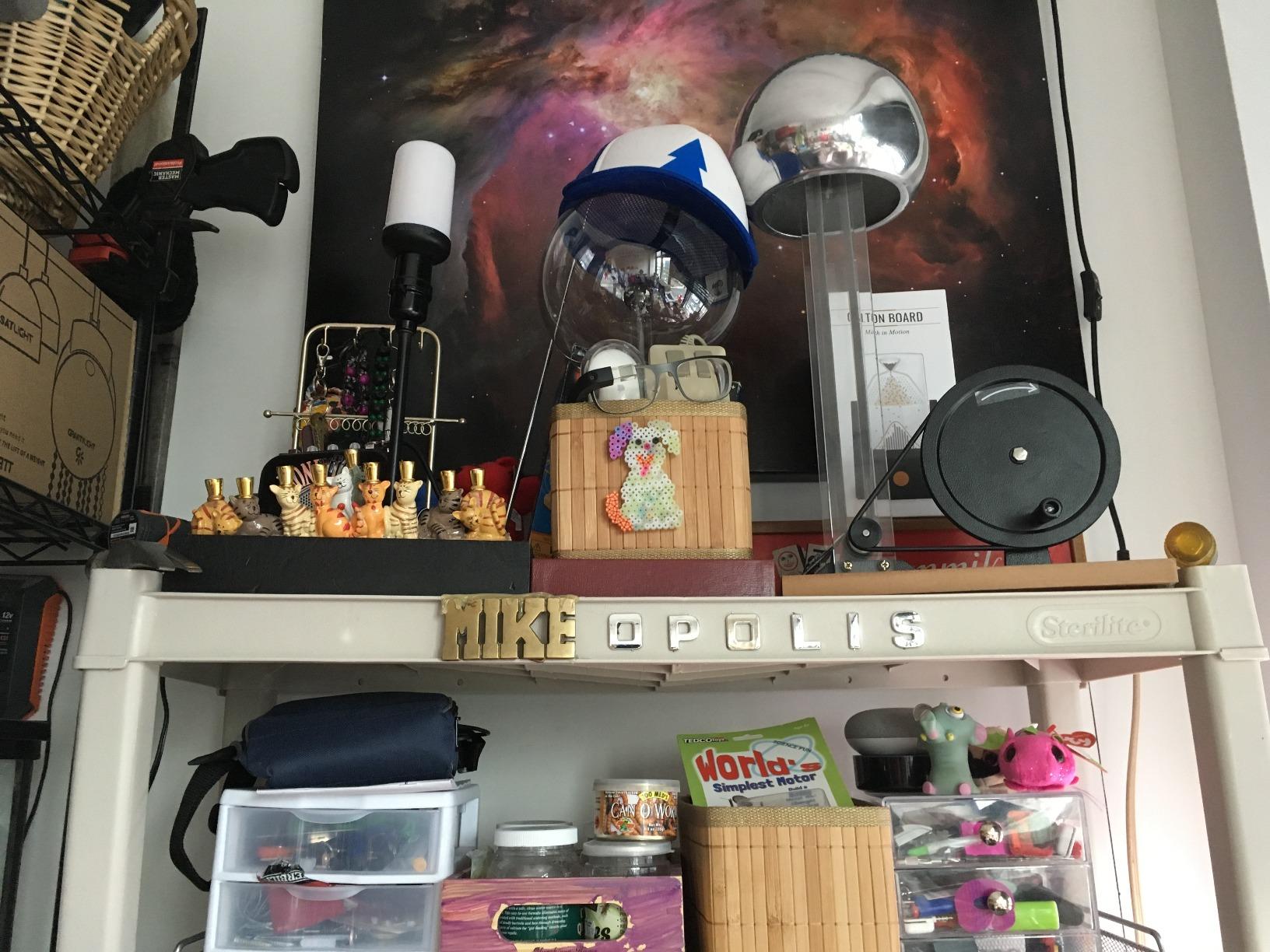
The mechanical side of the demonstration is genuinely good pedagogy. Turning the crank and watching hair rise shows energy transformation from mechanical to electrical far better than a switch being thrown, and it puts the student in charge of the charge. Components are interchangeable and replaceable, so a damaged wand or belt is not a dead machine.
Two cautions. The handle is not insulated and owners report a tingle through it, so grip the wand rather than the crank when discharging. And some buyers found the unit less powerful than they expected, which usually means the belt tension or roller cleanliness needs attention rather than a fault in the machine.
What to check when it arrives
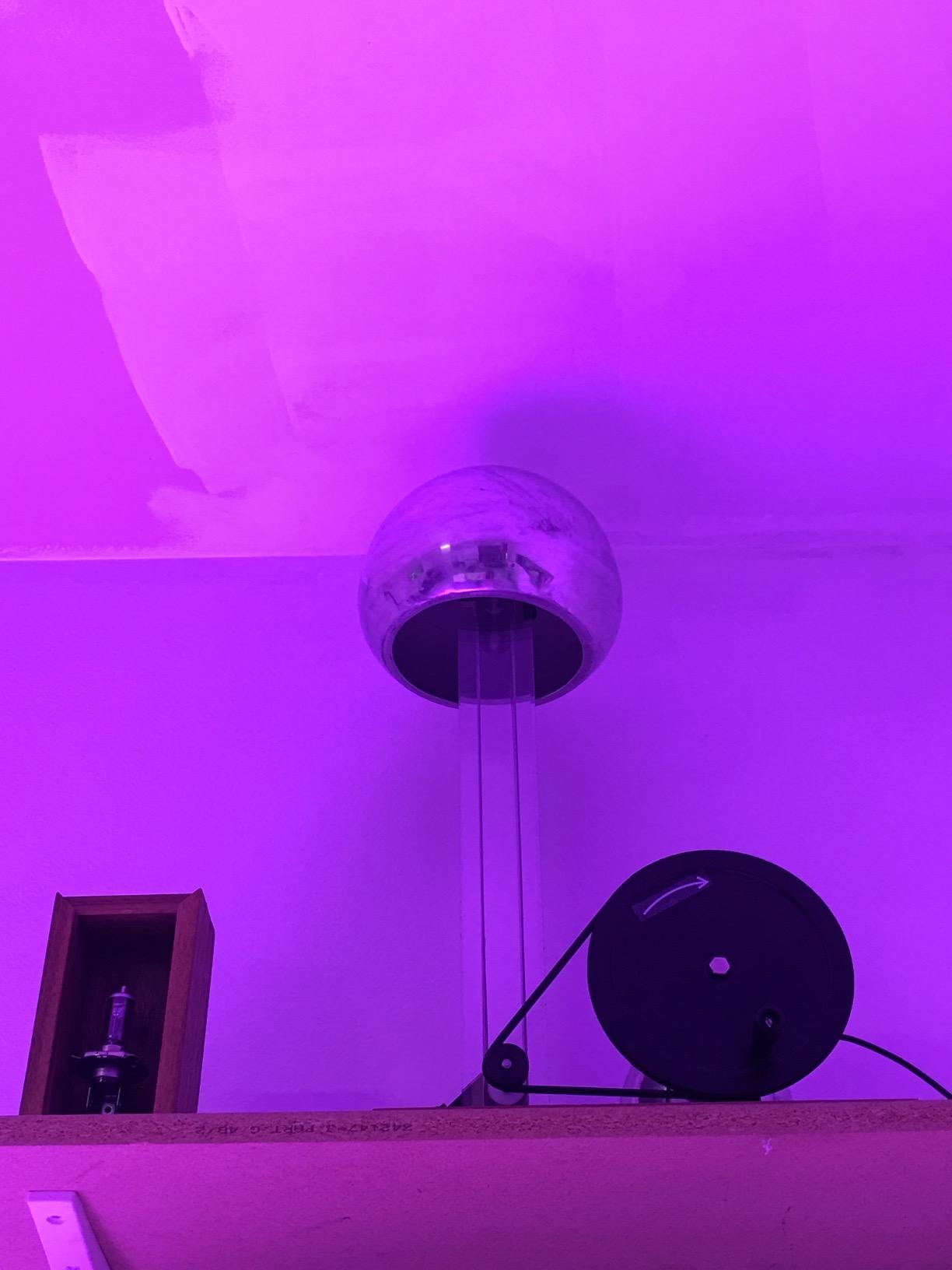
Confirm the belt sits square on the upper and lower pulleys before the first turn. On this class of machine the comb must sit inside the dome rather than above it, and a comb in the wrong place is the single most common reason a build produces nothing at all.
Keep the rollers clean and dry. Dust on a roller is a charge leak, and a five-minute wipe when you unpack restores performance that owners often assume was missing from the factory.
Who should buy it and who should not
Buy it for a single demo station, a primary or secondary classroom, a home science setup or a museum kiosk that cannot rely on a nearby outlet. It also makes the best loan unit, because there is nothing to plug in.
Pass if you need a long visible arc from across a lecture theatre, since 100kV in dry air gives a shorter gap than the motorised and 325kV machines here. Reviewers do report the effect holding up in humid conditions, which is rare in this category.
3. EISCO Motorised 22 inch – the biggest accessory box
Eisco Motorized Van De Graaff Generator, Electric Discharge Machine, 22″
Motorised belt drive
12.6 x 12.6 x 20.5 inch
Up to 220000 volts stated
Adjustable belt tracking
Pros
- Motorised drive frees both hands for the demonstration
- Large itemised accessory set for many separate experiments
- Assembled base with adjustable belt tracking
- Experiment guide supports structured lessons
Cons
- Lowest rating in this lineup at 4.1
- Some owners report reliability issues
- Needs a power outlet nearby
- More complex mechanism than a hand crank
Where the previous machine wins on simplicity, this one wins on what you can do in a single lesson. The included components are itemised in the box listing rather than described as a generic accessory kit: discharge wand, pillar with a suspended metallised sphere, Faraday’s pail, a perspex cylinder with metal caps and four metallised spheres, hair, a point discharger, a neon bulb, an electric whirl and an experiment guide.
That is close to a full term of lessons in one purchase. The Faraday’s pail and the neon bulb alone justify a unit on any course covering electrostatic induction, and the electric whirl gives you the spinning-turntable demonstration without sourcing a separate part. The 220kV figure is a manufacturer claim under optimal conditions, so read it as a ceiling.
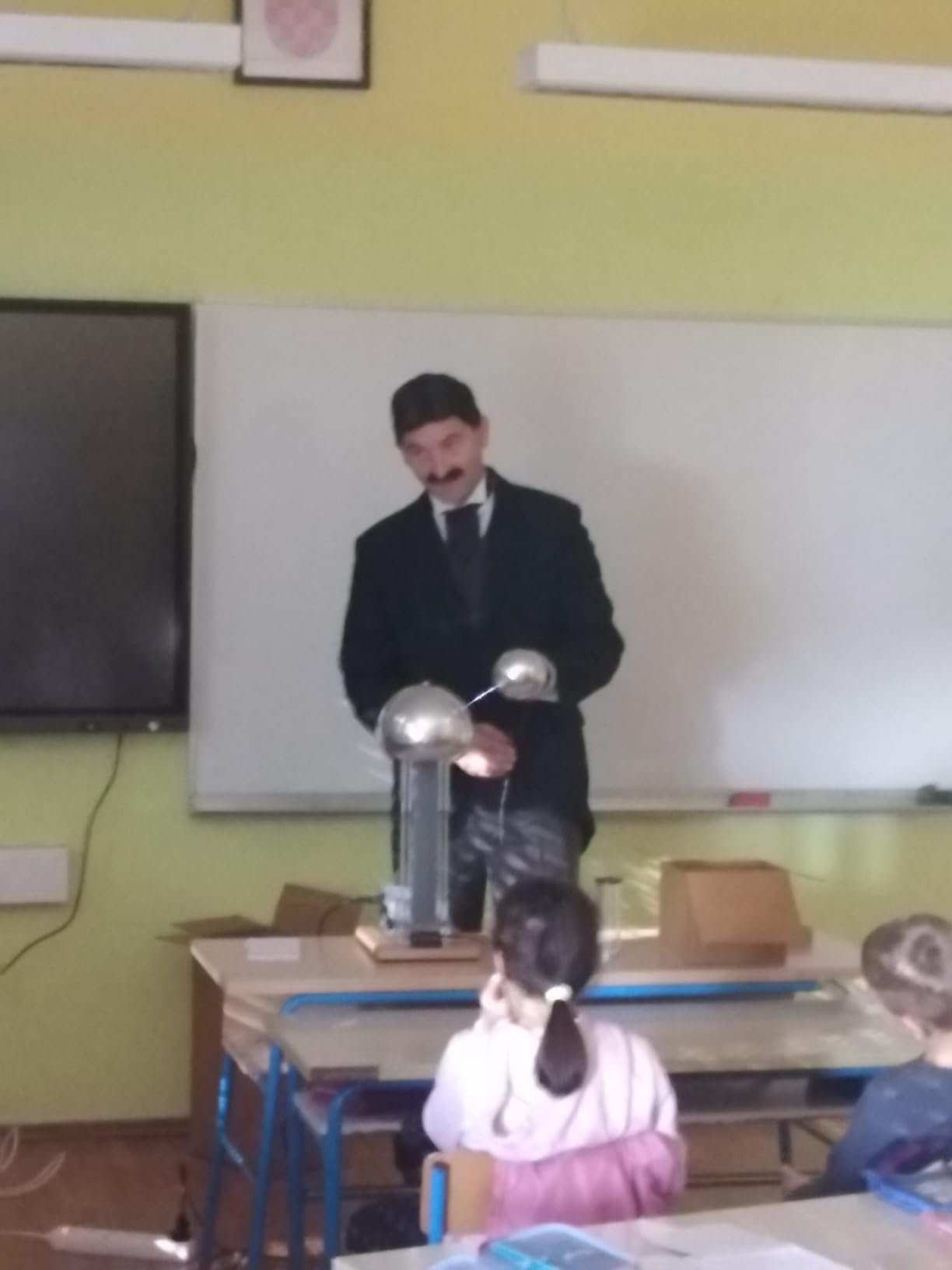
The motorised drive is the reason to choose this over a crank model. Once the belt is turning you can walk the discharge sphere toward the dome, hand the wand to a student, and run a static electricity experiment with two people instead of one. The assembled base with adjustable belt tracking also means less setup time between periods, which matters more than anything else in a shared lab.
What holds it back is the 4.1 rating, the lowest in this group, with a review history a third the size of the hand-cranked EISCO. Some owners report reliability issues, and the motor, belt tensioning and powered base give you more that can go wrong than a crank and a pulley. Give it a routine check every few weeks of use.
What to check when it arrives
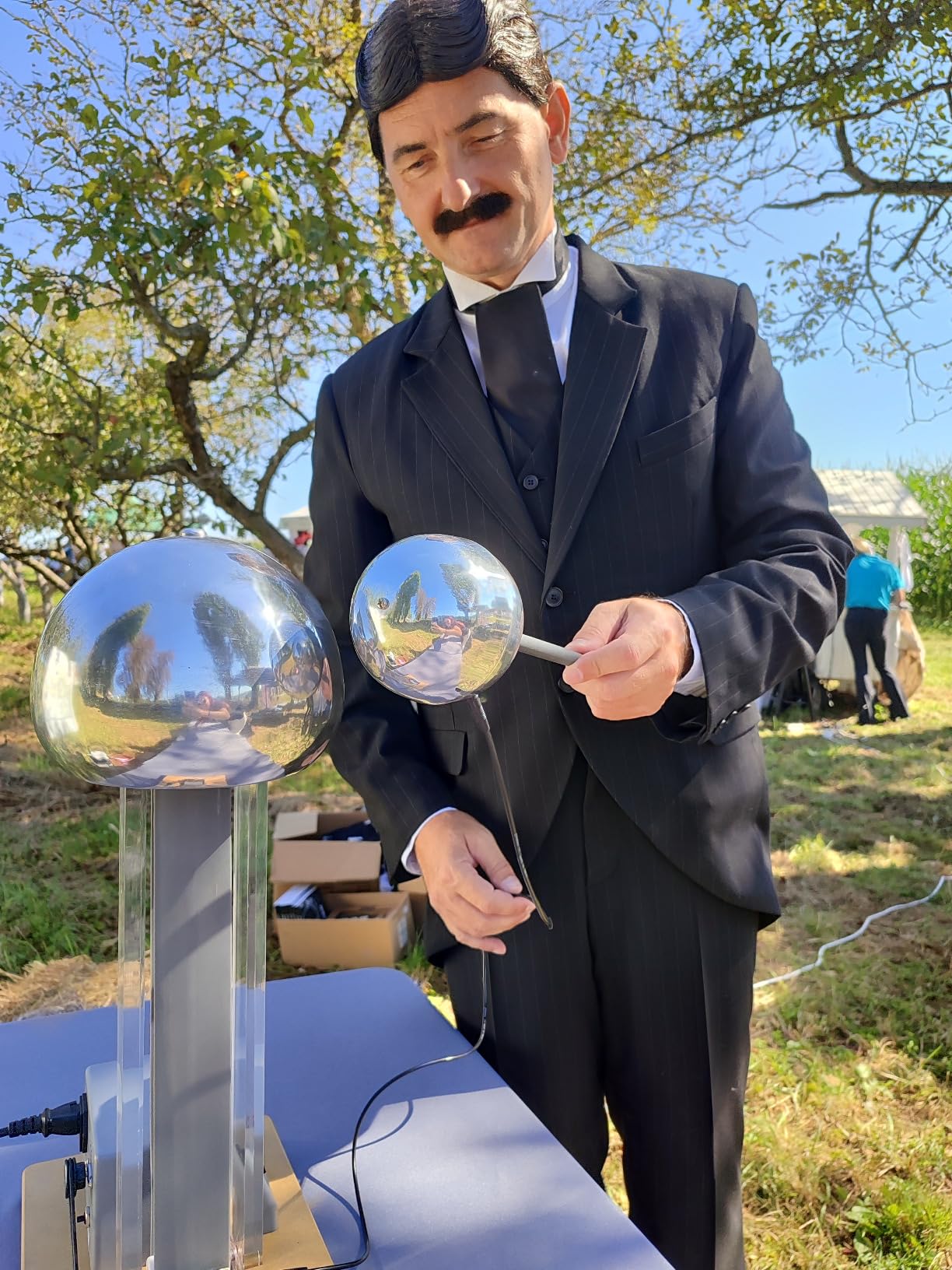
Run the base on its own for a few minutes with the dome fitted and confirm the belt is tracking on the pulleys rather than walking off. The adjustment is meant to be done by hand, and doing it once at setup prevents the alignment problem that shows up as a machine that will not build charge.
Inventory the accessories against the list above before you store the box. A missing neon bulb or point discharger is the one part most likely to be overlooked and it is the one that makes induction visible.
Who should buy it and who should not
Buy it if you want one box to cover induction, charge accumulation on a conductor, attraction and repulsion, and field visualisation without ordering parts separately. It is the strongest all-round teaching package in this roundup.
Pass if budget is the primary constraint or if your electrical supply is unreliable, since a motor that stutters under load will not build charge. The accessories on this model are also not the reason to choose it over a plain 325kV unit for a long spark.
4. Arbor Scientific 10 inch dome, 200kV – the visible arc
Hand Crank Van de Graaff Generator, 10” Dome, up to 200kV, 28” Tall, Includes Discharge Wand, Assembled Base, and Electric Plume
10 inch dome, 28 inch tall
Up to 200000 volts stated
Sparks up to 3.2 inch
16 inch discharge wand included
Pros
- Largest hand-cranked dome in this roundup
- Only machine here with a published spark length
- Includes electric plume and 16 inch discharge wand
- Assembled base for stability
Cons
- Only seven reviews
- Heaviest machine at 36 pounds
- Higher price than the hand-cranked alternatives
This is the machine to buy when the demonstration is specifically about seeing a spark jump a gap. A 10 inch dome gives more surface area and a longer working distance, and Arbor Scientific are the only manufacturer in this roundup publishing a spark length figure rather than only a voltage claim, with 3.2 inches quoted under their test conditions.
A published spark length is worth more to a buyer than a published kV number, because spark length is the thing a room can measure with a ruler on the back of the board. It is also the honest way to compare across brands, since a voltage figure alone tells you nothing about the machine’s behaviour in your building.
The included 16 inch discharge wand is the longest here and gives you a good stand-off distance, and the electric plume gives you a second visible effect for the same running time. The base arrives assembled, which matters when the machine weighs 36 pounds and the dome needs two people to lift.
What to check when it arrives
Before anything else, measure the room. At 28 inches tall this is the second tallest machine here, and a 3.2 inch arc develops above the discharge sphere, so you need clear space and a floor area students are not standing in.
Check the dome sits level on the base. A 10 inch dome that is a few degrees off will show you an asymmetric corona and a shorter effective gap on the high side, which is confusing if you have not seen it before.
Who should buy it and who should not
Buy it for a demonstration-focused course where the arc itself is the teaching point, or for a public exhibit where a visible spark sells the science better than anything else in the room.
Pass if you are buying on review evidence, because seven reviews is not enough to know the long-term reliability, and pass if you need to move it between rooms, since 36 pounds is a two-person lift. Check your ceiling height first.
5. EISCO 9.8 inch sphere, 24 inch tall – the hand-cranked middle step
EISCO Hand Crank Van De Graaff Generator, 9.8″ Sphere – Up to 100,000 Volts – Includes Assembled Base, Discharge Wand & Grounding Wire – 24″ Tall
9.8 inch metal sphere, 20cm
24 inch tall apparatus
Up to 100000 volts stated
Hand crank drive
Pros
- Large 9.8 inch sphere for a small bench footprint
- Assembled base included
- Grounding wire and experiment guide supplied
- No power supply needed
Cons
- Only five reviews
- Uninsulated handle can shock
- Blind threading on the dome attachment
- Some boxes arrive without the instruction booklet
This is the compromise model: a hand-cranked machine with a 9.8 inch sphere, which is the larger of the two hand-cranked sphere sizes in this roundup, on a 24 inch frame. If you want a bigger visual presence than the compact EISCO but do not need a motor or a long arc, it sits in the useful middle.
One point worth flagging because it confuses people: the box dimensions list a maximum height of 34.6 inches while the stated apparatus height is 24 inches. The extra figure covers packaging and the sphere assembly, so plan clearance on the 24 inch figure plus headroom, not the shipping figure.
The assembled base is a real convenience. On the smaller hand-cranked model the dome is attached by hand, and reviewers on both machines describe the threading as awkward to line up. Starting from a pre-assembled base removes the fiddliest part of setup for a teacher who is doing this in five minutes between registration and a lesson.
What to check when it arrives
Look for the experiment guide in the box before you put the packaging away. A few shipments on this listing arrived without the instruction booklet, and the guide is what tells you which accessory demonstrates induction and which shows field lines.
Run the crank with no load first and listen for a steady tone. A chattering or squeaking sound means the belt is not seated on the upper pulley correctly, which is worth fixing before the first class rather than in front of thirty students.
Who should buy it and who should not
Buy it for a demonstration table in a secondary classroom, a home lab, or an outreach stand where a larger sphere matters visually and a hand crank is an advantage because you can show mechanical to electrical energy conversion directly.
Pass if you need anything to happen without a person turning the handle, and be cautious if you are making an institutional purchase purely on ratings, because five reviews is thin evidence for a machine intended for daily use.
6. Lethan Corporation 325kV with accessory set and spare belt – the low-maintenance bundle
Lethan Corporation Van De Graaff Generator, 325KV with Accessory Set and Spare Belt
Motorised, 325kV stated
10.5 x 6.5 x 24 inch, 16 lb
120V, 80W
Spare belt and 1 year warranty
Pros
- Only machine here shipped with a spare drive belt
- Humidity control built into the base
- Motorised hands-free operation
- One year manufacturer warranty included
Cons
- Only four reviews
- Needs a power outlet
- Highest specification of the two 325kV models
Two things separate this from the other 325kV machine in the roundup. The first is the spare drive belt, and the second is the one year manufacturer warranty. For a school running a machine for a full academic year, a spare belt in the box removes the most common cause of a dead demonstration: a belt that has stretched or frayed with no replacement on hand.
Belts are the consumable every owner in this category eventually buys. Keeping one in a drawer alongside a spare discharge wand is the difference between a five-minute fix and a dead demonstration slot, and this is the only machine here that ships with one.
The humidity control bulb in the base and the quick belt tensioning system in the upper dome match the sibling model, so the 325kV figure carries the same caveat: it is a manufacturer claim under favourable dryness. The motorised drive is electric, so this one needs an outlet and a supply that will not sag when the motor loads up.
What to check when it arrives
Run the quick belt tensioner in the upper dome during the first hour and again after a full term of use. It is positioned in the dome specifically so you can correct tracking without stripping the machine down, and using it is the point of the design.
Locate the warranty documentation before you need it. With four reviews there is little community knowledge about how the manufacturer handles returns, so the printed terms are the only real reference you will have.
Who should buy it and who should not
Buy it if you are running a heavy demonstration schedule across a term, particularly in a dry heated building where humidity control and a spare belt both pay for themselves quickly.
Pass if you are buying once for occasional use, since the accessories and spare belt are wasted on a machine that runs twice a term, and pass if you want a large review base to guide the decision, because four reviews is the thinnest in this roundup.
How much should you expect to spend on a classroom generator?
Belt-driven Van de Graaff generators run from a small desk-top classroom kit to an institutional bench unit, and the gap between the cheapest and the most expensive is more than forty times. What you pay decides the tier you are in, and the tier decides the spark length, the drive type and what arrives in the box. Very small imported desk units exist, but they are unrated on retail listings and we would not put one in front of a class.
The budget tier covers hand-cranked classroom machines with a metal dome, a discharge wand, a grounding wire and an experiment guide. Expect no motor, no humidity control and no accessory set, but a fully functional demonstration if you have dry air and about half an hour of setup.
The classroom standard tier is where the motorised machines and the humidity-control machines sit. You get a motor, adjustable belt tracking and a meaningful accessory set, and this is the band most departments should be aiming at if a machine will be used weekly.
The institutional tier is the stainless and acrylic build: a larger dome, a taller frame, fuse protection, a transport case, spare parts and a warranty. The jump from standard to institutional buys durability, a serviceable belt system and a longer arc, not a different principle.
Is a Van de Graaff generator safe for students?
Short answer: a bare generator is safe to demonstrate in a classroom, and the thing that changes the risk is adding a storage capacitor. These machines produce very high potential difference but only microamp-level current, because the belt speed physically limits how fast charge arrives at the dome. A student touching a grounded discharge sphere gets a startling snap, not a dangerous shock, and the charge bleeds off in seconds.
What changes the picture is storing that energy. Community discussion of these machines repeatedly asks whether adding a high-voltage capacitor is a good idea, and the consensus in that discussion is that it is the capacitor, not the generator, that turns a classroom apparatus into a genuine hazard. For a teaching context, there is no demonstration benefit that justifies it.
Our working protocol for a classroom demonstration:
Keep students at arm’s length from the discharge sphere and never let a person bridge the dome to ground directly. A student holding the discharge wand is fine; a student gripping both the dome and the grounded sphere is not.
Ground the discharge sphere and the base properly, and treat the grounding cable as a consumable. On the 325kV models the plastic screw threads in the ground lead are the first part to fail, and a degraded ground is the reason a discharge wand starts passing charge into whoever is holding it.
Mark a floor area around the machine so nobody walks through the strike zone, and keep the overhead space clear. A spark develops above the discharge sphere, so the ceiling is part of the hazard area, not just the floor.
Do not let a student operate the crank while touching the dome or any upper fitting, and keep the top of the machine closed during a demonstration.
Hand washing and metal jewellery are worth mentioning with older students. A wristwatch or a ring on the hand nearest the discharge sphere is the most common way a harmless demonstration becomes an unpleasant one.
Hand crank, motorised, or dual drive: which drive type to buy
Drive type is the decision that shapes your lesson plan more than any other specification, because it decides what you can demonstrate and who can demonstrate it.
A hand-cranked machine puts a student in charge of the charge. You can stop at any point, wind slowly to a steady belt speed, and show the mechanical to electrical energy transformation in the act of turning it. There is no power supply to install, no adapter to source and no supply compatibility to think about if you move rooms. This is why the hand-cranked EISCO has the largest review base in the category.
A motorised machine frees both hands. That matters for every demonstration involving a discharge sphere you are walking toward the dome, for a class where a student holds the wand while a second student watches the spark gap, and for anyone demonstrating to a group too large to crowd around a crank.
Dual-drive units, which accept either a crank or a motor, are the flexible option and are worth having if a machine will serve both a lesson and an open day. None of the six machines here is dual-drive as standard, so if that flexibility matters to you it is a question to ask a supplier rather than a feature to tick on a listing.
Two other factors deserve more attention than listings give them. The first is humidity, which we flagged at the top: a machine rated at 325kV can perform very differently in a dry heated lab in midwinter than in a damp classroom in late autumn, and the humidity-control bulb on the two Lethan machines exists precisely to reduce that swing. If your building is consistently damp, that bulb is worth more than a slightly larger dome.
The second is ceiling clearance. Machines here range from 22 to 28 inches tall, and the discharge sphere sits above the dome with the arc forming in open air above it. Before you commit, measure from the floor to the ceiling in the room you will actually use, then allow roughly a foot of clear space above the discharge sphere and keep that whole volume free of lights, projectors and sprinklers. A machine that cannot reach full arc because of a light fitting is a disappointing purchase on day one.
Finally, think about what each included accessory actually demonstrates before you decide the box is better for having more parts. If you enjoy the wider context of how physical ideas end up in front of readers, we cover that in what biopunk in science fiction is, but in the lab a neon indicator lamp shows potential difference directly and costs almost nothing to add later. A Faraday’s pail shows electrostatic induction. A feather duster and comb show field visualisation. An electric whirl shows a charged body spinning. A spare drive belt shows nothing at all, but it is the part that keeps the rest of the lesson happening in month nine.
First 90 minutes: getting a new machine to actually charge
The highest-ranking thread on this topic right now is a person whose new commercial machine would not raise their hair. That failure is almost never a dead machine. It is nearly always one of five setup issues, and all five are fixable in the first hour and a half after delivery.
Check that the comb is inside the dome, not above it. A comb mounted above the dome will not charge it, and a build with the comb in the wrong position produces nothing at all. This is the most common construction error and it survives into factory-assembled units occasionally.
Set belt tension. A new belt is often slightly slack, and a slack belt slips on the pulley instead of moving charge. Correct it with the tensioning access your machine provides and check again after an hour of running, because belts stretch as they seat.
Clean the rollers. Dust and skin oils on a roller or comb are a charge leak, and wiping them with a dry cloth often restores performance that looked like a manufacturing fault. Do this before you conclude anything about the machine.
Confirm the grounding path. A loose ground on the base or discharge sphere bleeds charge away continuously, so the dome never builds a potential difference. Reseat the ground connection and check the cable threads, because plastic threads strip easily and a stripped thread looks connected while doing nothing.
Test in the right air. If the machine performs poorly, wait for a dry day before replacing anything. Charge leaks faster in humid conditions, and a healthy machine in damp air can look identical to a faulty one in dry air.
If the machine still will not charge after all five, the sequence to follow is belt, then rollers, then grounding, then motor or crank, then the upper comb alignment. That order is the one that works, and it is why we would rather buy a machine with a large review community than an unrated import with a longer feature list.
Frequently Asked Questions
Are Van de Graaff generators still used?
Yes, and they are not legacy equipment. High-school and introductory university physics courses use them regularly because static electricity is difficult to teach from a diagram, and a charge, an arc and a levitating object make the subject visible. Science museums, science fairs and outreach programmes use them for the same reason. A well-built classroom machine lasts for years.
What is the biggest Van de Graaff generator in the world?
The largest machines ever built were institutional-scale installations, several orders of magnitude above anything a classroom can use, and they were built to show a very long spark gap in controlled indoor conditions. That scale is useful context rather than a buying criterion. It explains why classroom units top out in the hundreds of kilovolts: they are designed to be safe, portable and affordable, not to approach a record.
How much does a Van de Graaff generator cost?
Prices span a wide band, from a small desk-top classroom kit to a heavy institutional bench unit, with the gap between the cheapest and most expensive more than fortyfold. The budget tier is a hand-cranked classroom machine with a dome, wand and grounding wire. The classroom standard tier adds a motor and humidity control. The institutional tier adds a stainless build, transport case, spare parts and a warranty. Check current pricing on each listing, since it moves.
Is a Van de Graaff generator safe?
A bare generator is safe to demonstrate in a classroom. It produces very high potential difference but only microamp-level current, because belt speed limits how fast charge reaches the dome, and the stored charge bleeds off in seconds. What changes the risk is adding a storage capacitor, which can hold a dangerous amount of energy. Ground the discharge sphere, keep students at arm’s length, and keep the overhead volume clear of lights.
What is a cool thing to do with a Van de Graaff generator?
The best one is the classic: stand a student on an insulating stool, have them touch a grounded discharge sphere, and watch every hair on their head stand up. Others worth planning are a neon indicator lamp showing potential difference, a Faraday’s pail for electrostatic induction, a charged metal ball that transfers charge to a second sphere, a feather duster or comb showing electric field lines, and a charged turntable spinning in a circle. The wand demonstrations are the ones students remember.
How to make a DIY Van de Graaff generator?
Homemade versions are a long-standing hobby and there is a lot of published guidance on them, but a commercial machine will outperform most builds on spark length because the belt tension, comb geometry and roller materials are matched properly. If you want a machine to teach with rather than to build, the ready-made units in this roundup cover hand-cranked, motorised and humidity-controlled options, and each arrives with a guide and the parts needed for a working demonstration.
Conclusion
The best van de graaff generators for science demos are not the ones with the biggest numbers on the box. The right pick depends on where the machine will live and how often it will run.
For a department running weekly demonstrations, the Lethan Corporation 325kV with humidity control is the machine we would buy first, because the humidity bulb, the stainless build and the transport case all solve real problems. For a single demo station, a home lab or an outreach stand with no reliable outlet, the EISCO hand-cranked 100kV model is the cheapest way into a real demonstration and has the widest body of owner experience. For the largest accessory set and the strongest induction package, the motorised EISCO 22 inch covers the most ground in one box.
Whichever you choose, run the commissioning checks in the first hour, keep a spare belt and grounding cable on hand, and remember that humidity decides how much of the rated output you will actually see in your room in 2026.