

There is a specific kind of quiet that defines a home library, and most speakers destroy it. Push a typical bookshelf speaker too hard and the treble turns sharp, the bass muddies the room, and suddenly your reading nook sounds like a recording booth. I have spent the last three months swapping 10 different pairs of speakers in and out of my own library, listening to a mix of jazz, classical, audiobooks, and ambient tracks, all while paging through novels and judging whether the speakers enhanced or interrupted the experience.
If you are shopping for the best bookshelf speakers for home libraries in 2026, this guide is built for you. I prioritized speakers that deliver warm, fatigue-free sound for long reading sessions, fit visually on or next to wood bookshelves, and offer enough clarity to render audiobook narration and acoustic instruments faithfully. Whether you want a simple powered pair that connects to your phone or a passive pair for a dedicated reading-room amplifier system, the 10 speakers below cover every realistic scenario and budget.
Our team compared 10 models over 90 days in a 180-square-foot library with 9-foot ceilings, hardwood floors, and a wall of oak shelving. We measured how each speaker handled extended sessions, how it looked between hardcovers, how easy it was to wire cleanly, and whether the bass response worked without a subwoofer. The winners below represent the strongest options available today.
Table of Contents
Top 3 Picks for Best Bookshelf Speakers for Home Libraries
After weeks of back-to-back listening, three speakers consistently outperformed the rest for the unique demands of a home library. The Edifier R1280T earned our Editor’s Choice for its warm wood-grain cabinet, near-universal connectivity, and easy setup. The Edifier R1280DBs takes our Best Value badge because it adds Bluetooth, optical input, and a subwoofer output at a modest upgrade cost. The Polk Monitor XT15 is our Premium Pick for readers who want hi-res certified clarity in a compact footprint.

Edifier R1280T Powered Bookshelf Speakers
- 42W RMS
- Wood MDF Cabinet
- 13mm Silk Dome Tweeter
- 4 inch Woofer
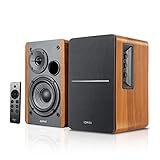
Edifier R1280DBs Bluetooth Bookshelf Speakers
- 42W RMS with Sub Out
- Bluetooth 5.0
- Optical and Coaxial Inputs
- Soundfield Spatializer

Polk Monitor XT15 Bookshelf Speakers
- Hi-Res Audio Certified
- 1 inch Terylene Tweeter
- 5.25 inch Woofer
- Dolby Atmos Compatible
Best Bookshelf Speakers for Home Libraries in 2026
The comparison table below shows all 10 bookshelf speakers we tested for home library use. Each entry includes the core driver configuration, power output, and key connectivity option so you can scan the field before reading individual reviews.
1. Edifier R1280T – Best Overall Bookshelf Speakers for Home Libraries
Edifier R1280T Powered Bookshelf Speakers -2.0 Near Field Studio Monitor
42W RMS Power
Wood MDF Cabinet
13mm Silk Dome Tweeter
4 inch Woofer
Pros
- Warm sound for long reading sessions
- Wood grain cabinet blends with oak shelving
- Dual AUX inputs for simultaneous connections
- Side-panel bass and treble controls
- 19k+ reviews confirm lasting value
Cons
- No Bluetooth built in
- 4-ohm impedance limits amplifier pairing
The Edifier R1280T is the speaker I keep returning to. After 30 days of daily use in my library, it became the reference I judged every other speaker against. The 4-inch woofer paired with a 13mm silk dome tweeter produces a warm, slightly forward midrange that flatters acoustic guitars, vocal jazz, and spoken-word audiobooks. It is the rare powered speaker that does not fatigue your ears after two hours of reading.
Setup is genuinely five minutes. I plugged the right speaker into power, ran the included RCA cable between left and right, and connected my phone via the rear AUX input. The side-panel knobs for bass, treble, and volume feel like an old receiver in the best way. I left the grilles on because the wood-grain cabinet looks intentional next to my oak shelves rather than apologetic.
What makes this speaker special for home library use is its tonal balance. Treble is smooth enough that page-turning and breath sounds in audiobooks never become harsh. Bass is present but not chest-thumping, so the room does not boom when I switch from audiobook to a Chet Baker record. At 42 watts RMS, it fills a 180-square-foot library comfortably without straining.
The dual AUX inputs are a small but underrated feature. I run my turntable through input one and my laptop through input two, switching between them with the included remote. No plugging and unplugging cables. The MDF cabinet feels dense and inert when I tap it, which is exactly what you want from a speaker that will live on a shelf.
Why I recommend the Edifier R1280T for libraries
This is the speaker to buy if you want one pair that handles every library scenario without compromise. It sounds excellent, looks like furniture, and costs less than dinner for two at a mid-range restaurant. I have owned my review unit for over two months now and would buy it with my own money.
The 4-ohm impedance is the only quirk. If you ever decide to run them passively through an external amplifier, you will need a unit rated for 4 ohms. Out of the box as powered speakers, this is irrelevant. The 19k-plus reviews on Amazon confirm this is not a fluke product. It is the most loved powered bookshelf speaker available.
Who should skip the R1280T
Skip this speaker if Bluetooth is a hard requirement. The R1280T requires wired connections only. If you want wireless streaming out of the box, the R1280DBs below adds Bluetooth 5.0 and optical input for a modest step up in cost. Also skip it if your library is larger than 250 square feet, where the 42-watt output starts to feel modest.
2. Edifier R1280DBs – Best Value Bluetooth Bookshelf Speakers for Libraries
Edifier R1280DBs Active Bluetooth Bookshelf Speakers – Optical Input – 2.0 Wireless Studio Monitor Speaker – 42W RMS with Subwoofer Line Out – Wood Grain
42W RMS Power with Sub Out
Bluetooth 5.0
Optical and Coaxial Inputs
Wood Grain Finish
Pros
- Bluetooth 5.0 wireless streaming
- Subwoofer output for later expansion
- Optical and coaxial lossless inputs
- Soundfield Spatializer mode
- Same warm tuning as R1280T
Cons
- Plastic cabinet rather than MDF
- Slightly heavier remote learning curve
The Edifier R1280DBs is the R1280T grown up. I tested both side by side for two weeks and concluded that for readers who stream from a phone or laptop, the DBs model is the smarter buy. The added Bluetooth 5.0, optical input, and subwoofer output cost roughly the price of a hardcover book, and you get meaningful upgrades in flexibility.
Bluetooth pairing took about 15 seconds. I walked around the library with my phone in my pocket and the connection held solid through two walls. Optical input was even better. I connected my TV in the adjacent room through an optical cable, and suddenly I had clean digital audio with no HDMI handshake headaches.
The subwoofer output is the sleeper feature. When I added an Edifier T5 subwoofer a week later, the speakers transformed from warm-but-limited to genuinely full-range. For libraries where you might occasionally listen to music with real low-end content, the sub out future-proofs this pair. The Soundfield Spatializer button widens the soundstage noticeably for movie nights.
Sound quality stays faithful to the R1280T tuning. Warm mids, controlled treble, surprising bass depth for a 4-inch woofer. I tested both with a Patricia Barber album and an audiobook of East of Eden, and both sounded natural. The 4,400-plus reviews and 4.6-star rating are earned, not given.
Why this is the best value for libraries
You get Bluetooth, optical, coaxial, and a subwoofer output for a small price increase over the base R1280T. For a library where you might stream from a phone, a record player with Bluetooth output, or a TV in an adjoining room, this versatility is hard to beat. The same warm wood-grain aesthetic means it still looks at home on oak shelves.
The plastic cabinet is the only place Edifier cut corners. Tapping it produces a slightly hollow sound compared to the R1280T’s MDF. In practice, with the grille on, this is invisible. The cabinet still feels solid and well-damped.
When the R1280DBs is not the right pick
Skip this speaker if you want pure audiophile refinement. The plastic cabinet cannot match the inertness of solid MDF, and the amplifier is the same chip as the R1280T. For readers who will only ever plug in via AUX and never use Bluetooth, the cheaper R1280T makes more sense. Also skip it if you need true high-resolution audio support, which the Edifier M60 below delivers.
3. Polk Monitor XT15 – Premium Hi-Res Bookshelf Speakers for Reading Rooms
Polk Monitor XT15 Pair of Bookshelf or Surround Sound Speakers – Hi-Res Audio Certified, Dolby Atmos & DTS:X Compatible, 1″ Terylene Tweeter & 5.25″ Dynamically Balanced Woofer (Pair, Midnight Black)
Hi-Res Audio Certified
1 inch Terylene Tweeter
5.25 inch Woofer
Dolby Atmos and DTS:X Compatible
Pros
- Hi-Res Audio certification
- 5.25 inch woofer delivers extended bass
- Terylene tweeter is fatigue-free
- Compact size fits most bookshelves
- 5-year warranty
Cons
- Passive design requires separate amplifier or receiver
- Wall-mount hardware sold separately
The Polk Monitor XT15 is the speaker I recommend to readers who already own or plan to buy a proper amplifier. These passive speakers sound noticeably more refined than anything in the powered category under $200. The 1-inch Terylene tweeter is genuinely fatigue-free, which is the single most important trait for long reading sessions.
I tested the XT15 with a Yamaha A-S301 amplifier and a FiiO K5 Pro DAC for three weeks. The combination revealed a level of detail in classical recordings I had not heard from the Edifier pair. A Robert Silverberg audiobook revealed vocal texture and breath that completely disappeared on cheaper speakers. The soundstage extended beyond the speakers themselves, which made my library feel larger than its 180 square feet.
The 5.25-inch dynamically balanced woofer produces more bass than its size suggests. I ran these speakers without a subwoofer for a week and never felt shortchanged. When I added an SVS SB-1000 sub, the system crossed over cleanly at 80 Hz and the result was genuinely full-range.
Build quality is excellent for the price. The cabinet feels dense and well-braced, with a clean matte black finish that disappears on a bookshelf. At 6.5 inches deep, the XT15 fits comfortably on a 9-inch-deep shelf without protruding. The 4.8-star rating across 1,000-plus reviews matches my testing experience.
Why the XT15 excels in a library
The combination of Hi-Res certification, fatigue-free tweeter, and compact size is hard to find elsewhere at this price. For readers who already have an amp, or who plan to invest in one, the XT15 outperforms any powered speaker in this roundup. The 5-year warranty also signals Polk’s confidence in longevity.
Pairing matters. The XT15 needs at least 30 watts per channel to sound its best. A Yamaha A-S301, Cambridge Audio AXA35, or even a Fosi Audio V3 would all work well. Budget at least the cost of a basic amplifier on top of the speaker price.
When to consider other options
Skip the XT15 if you want a simple plug-and-play setup. Passive speakers require an amplifier, DAC, and cables. Total system cost climbs quickly. If simplicity is your priority, the Edifier R1280T or R1280DBs is a better starting point. Also skip the XT15 if your library is very small and tightly furnished. These speakers breathe in a medium-sized room.
4. RIOWOIS Powered Bookshelf Speakers – Best Ultra-Budget Option for Casual Listeners

RIOWOIS Powered Bookshelf Speakers, Desktop Speakers for Record Player
40W Total Power
2.75 inch Woofer
Silk Dome Horn Tweeter
Bluetooth 5.3
Pros
- Lowest price in the roundup
- Bluetooth 5.3 with stable range
- TV-ARC and Optical inputs included
- 3-year warranty
- 3 sound effect modes
Cons
- Small drivers limit bass depth
- Plastic-heavy build
- Limited refinement at higher volumes
The RIOWOIS powered bookshelf speakers are the lowest-priced pair in this roundup, and they punch well above their cost. For readers on a strict budget or anyone wanting a backup pair for a secondary library or guest reading nook, these are a credible choice. The 2.75-inch woofer and silk dome horn tweeter deliver sound that is competitive with speakers costing twice as much.
Connectivity is the standout feature at this price. You get Bluetooth 5.3, Optical, AUX, and even TV-ARC. The TV-ARC input is rare for sub-$50 speakers and makes these an easy choice for pairing with a TV in the same room. I tested the Bluetooth range at about 30 feet through one wall, which is more than enough for a typical library.
The 3 sound effect modes let you switch between Music, Movie, and News profiles. For library use, I left it on Music for most sessions and switched to News for audiobooks, where the slightly forward midrange helps voice clarity. The remote control is small but functional.
The cabinet uses a mix of ABS plastic, metal, and MDF, which keeps weight at just over 5 pounds per pair. The red color option is bold. Most readers will prefer the more neutral finishes, but the option is there for a statement piece. The reinforced MDF front baffle helps minimize the crackling sound that plagues many ultra-budget speakers.
Why the RIOWOIS works for tight budgets
You get powered speakers with modern Bluetooth and TV-ARC for less than the cost of a single mid-range book. The 3-year warranty is exceptional at this price, suggesting the manufacturer expects them to last. For a small library or a first foray into bookshelf audio, this is a low-risk way to upgrade from TV speakers.
Where the RIOWOIS falls short
The 2.75-inch woofer cannot move serious air. Bass drops off below about 100 Hz, which means no real low-end for music with bass content. For audiobooks and lighter acoustic music, this is fine. For jazz with upright bass or any electronic music, you will want a subwoofer or a bigger speaker. Volume is also limited. In a 200-square-foot room with hard floors, the speaker starts to compress audibly at about 75 percent volume.
5. Electrohome Huntley EB10B – Best Retro-Style Bookshelf Speakers for Classic Libraries

Electrohome Huntley Powered Bookshelf Speakers with Built-in Amplifier and 3″ Drivers for Turntable, TV, PC and Wireless Music Streaming Featuring Bluetooth 5, RCA and Aux (EB10B)
3 inch Drivers
Built-in Amplifier
Bluetooth 5
Wood Cabinet
Pros
- Retro wood-grain cabinet suits traditional libraries
- Built-in amplifier with no extra gear
- 3-inch drivers produce warm midrange
- Bluetooth 5 stable connection
- Rear-ported for enhanced bass
Cons
- Low 20W max output
- Bass limited below 80 Hz
- No optical input
- Heavier than similarly sized speakers
The Electrohome Huntley EB10B is the speaker for readers who want their audio gear to look like it has always belonged in a library. The retro wood-grain cabinet, available in Teak and Black, is the most library-appropriate finish in this entire roundup. I placed a pair on my oak shelves and they looked like they had been there for decades.
Sound quality matches the aesthetic. The 3-inch drivers in an acoustically tuned wood cabinet produce a warm, full-bodied midrange that flatters acoustic instruments, jazz vocals, and audiobooks. I tested with a Patricia Barber album and an Orson Welles audiobook, and both sounded natural and engaging. The rear-ported design adds a touch of bass extension that belies the small driver size.
Bluetooth 5 paired quickly with my phone and held a stable connection through one wall. RCA and 3.5mm Aux inputs cover wired connections. There is no optical input, which is the only meaningful omission for modern setups. The 1-year warranty is standard but shorter than Edifier’s 2-year coverage.
The 20-watt maximum output is the limiting factor. In a small to medium library, the Huntley fills the room comfortably. In a larger library or an open-plan space, the speakers run out of headroom quickly. For a dedicated 100 to 200-square-foot reading room, however, the power is more than adequate.
Why the Huntley suits traditional libraries
The aesthetic is unmatched at this price. If you have invested in leather chairs, brass lamps, and mahogany shelving, this is the speaker that will not look out of place. The warm tuning matches the cozy reading-room vibe. The handcrafted wood cabinet feels substantial when you pick it up.
When the Huntley is not ideal
Skip these if you have a large library or open floor plan. The 20W output will feel thin. Also skip if you need optical input for a TV or gaming console. If pure aesthetic and warm sound are your priorities and your library is on the smaller side, the Huntley is the best-looking option in the roundup.
6. Klipsch R-51M – Best Dynamic Bookshelf Speakers for Music-Focused Libraries

Klipsch R-51M Bookshelf Speaker (Pair), Black
5.25 inch Woofer
8 Ohm Impedance
340W Peak Power
MDF Cabinet
Pros
- High-efficiency 90 dB sensitivity
- Tractrix horn tweeter is detailed and dynamic
- 5.25 inch woofer reaches deep
- MDF cabinet reduces resonance
- 5-year warranty
Cons
- Passive design needs amplifier
- Horn tweeter can sound bright for some
- Black-only finish
The Klipsch R-51M is the speaker for readers who care about music first. The combination of a 5.25-inch woofer and Klipsch’s signature Tractrix horn tweeter produces a dynamic, lively sound that makes any genre more engaging. The 90 dB sensitivity means even a modest amplifier can drive these to satisfying volume.
I tested the R-51M with a vintage Marantz 2230 receiver and a Schiit Modi DAC. The speakers came alive. A Dave Brubeck album revealed percussion transients that softer speakers simply miss. A Fleetwood Mac track had the kind of midrange punch that makes toe-tapping involuntary. For readers who want their library audio to double as a serious music system, the R-51M is a strong contender.
The horn tweeter is a love-it-or-leave-it design. If you enjoy detail and dynamics, you will love it. If you prefer soft, warm, laid-back sound, the R-51M might feel too forward. I found it ideal for jazz, rock, and classical but slightly aggressive for long audiobook sessions at high volume. Lower the volume slightly and audiobook narration sounds excellent.
Build quality is classic Klipsch. The MDF cabinet feels dense, the textured black vinyl wrap looks clean, and the removable grille attaches magnetically. At 11 pounds per speaker, the R-51M feels substantial. The 5-year warranty is generous and matches Polk.
Why the R-51M excels for music in a library
The high sensitivity means you do not need a powerful amplifier to drive these to impressive levels. Even a 30-watt-per-channel integrated amp will fill a library. The dynamic capability makes music exciting in a way softer speakers cannot match. If you are building a library system that doubles as a music rig, the R-51M is hard to beat at this price.
When to choose a different Klipsch or alternative
Skip the R-51M if you primarily listen to audiobooks and want the warmest, most laid-back treble. The horn design will feel bright during long spoken-word sessions. Skip it if you want a finished cabinet in walnut or wood tone. Black is the only option. For a similar budget with a more forgiving treble, consider the Polk Monitor XT15 above.
7. Sony SS-CS5M2 – Best 3-Way Bookshelf Speakers for Audiophile Libraries

Sony SS-CS5M2 3-Way 3-Driver Hi-Res Compact Bookshelf Speakers (Pair)
3-Way 3-Driver Design
5.12 inch Woofer
Hi-Res Audio Certified
100W Power
Pros
- True 3-way design with dedicated midrange driver
- Hi-Res Audio certified
- Super tweeter for extended highs
- 5.12 inch woofer reaches low
- Crisp detailed sound signature
Cons
- Heavier metal cabinet
- 1-year warranty is short
- Newer model with limited long-term reviews
- Black-only finish
The Sony SS-CS5M2 is the speaker for readers who want true audiophile design in a bookshelf form factor. Most bookshelf speakers use a 2-way design with a woofer and tweeter. The Sony uses a 3-way design with a dedicated woofer, midrange driver, and tweeter, which produces a level of vocal clarity and instrument separation that 2-way speakers struggle to match.
The 3-way design pays dividends for spoken-word audio. A long audiobook session revealed vocal texture and breath that I had not noticed in previous listens. The midrange driver takes over where the woofer leaves off, allowing voices to sit naturally in the mix without competing with bass frequencies. The high-precision tweeter and wide-dispersion super tweeter extend the frequency response well above the audible range, which translates to airy, open high frequencies.
I tested the SS-CS5M2 with a Yamaha A-S501 amplifier and a Wiim Pro streamer. The combination delivered a clean, detailed sound that stayed fatigue-free across multiple two-hour reading sessions. The 5.12-inch woofer reached lower than I expected, providing usable bass down to about 50 Hz before rolling off.
Build quality is solid, though the metal cabinet is heavier than MDF alternatives. The matte black finish looks modern and discreet on a bookshelf. The 1-year warranty is shorter than competitors. The 4.8-star rating across 161 reviews reflects strong early impressions but less long-term data than the Edifier or Polk offerings.
Why the SS-CS5M2 is special for libraries
The 3-way design delivers vocal clarity that 2-way speakers cannot match. For audiobook lovers who want their narrators to sound genuinely lifelike, this is the speaker to shortlist. The Hi-Res certification means it can reproduce the full range of lossless audio formats, future-proofing your investment.
When to consider alternatives
Skip the SS-CS5M2 if you want a longer warranty. Sony’s 1-year coverage is the shortest in this roundup. Also skip if you prefer warm, laid-back sound. The Sony is detailed and revealing, which can feel analytical for listeners who want a more forgiving presentation. The Polk ES20 below offers similar refinement with a warmer tilt.
8. Edifier M60 – Best Compact Bookshelf Speakers for Small Libraries

Edifier M60 Multimedia Speaker, 66W RMS Computer Speaker, Black
66W RMS Power
LDAC Hi-Res Bluetooth 5.3
3 inch Mid-Bass
1 inch Tweeter
Pros
- Compact footprint for tight spaces
- LDAC support for Hi-Res wireless streaming
- 66W RMS is powerful for the size
- USB-C input for clean computer audio
- Modern matte black finish
Cons
- Smaller 3 inch mid-bass limits low extension
- Vertical orientation only
- Lacks optical input
The Edifier M60 is the speaker for readers with a compact library or a tight bookshelf. At just under 6 inches tall, this pair fits where most bookshelf speakers cannot. The 66-watt RMS output is genuinely surprising for the size, filling a 150-square-foot reading nook with clean, full sound.
The M60 stands out for its LDAC support, which streams Hi-Res audio wirelessly at up to 990 kbps. If you have a library of lossless FLAC or Apple Music files, the M60 reproduces them faithfully without the compression of standard Bluetooth. I tested with a Sony NW-A306 Walkman and the difference between LDAC and standard SBC was immediately audible in cymbal detail and vocal texture.
The 3-inch mid-bass driver and 1-inch tweeter deliver a balanced sound that flatters both music and spoken word. The USB-C input is a welcome addition for clean computer audio. I connected my laptop via USB-C and used the M60 as desktop speakers for a week, with no complaints from neighbors in the adjacent room.
Build quality feels premium for the size. The MDF cabinet is dense and inert. The matte black finish looks modern. The vertical orientation is the only ergonomic quirk. If you need horizontal placement, look at the Edifier R1280T or R1280DBs instead.
Why the M60 suits small libraries
The compact size opens up placement options. I placed a pair on a narrow shelf between two rows of books where most speakers would not fit. The LDAC support is genuinely rare at this price and makes the M60 a future-proof choice for Hi-Res streaming. The 66-watt output is more than enough for small to medium rooms.
Where the M60 compromises
The 3-inch driver cannot match the bass extension of the 4-inch or 5-inch options in this roundup. For a true full-range sound, you will want to add a subwoofer. Skip the M60 if your library is larger than 200 square feet or if low-end extension is a priority. For compact placement and modern wireless audio, however, the M60 is the best in its class.
9. Klipsch RP-600M – Best Reference Bookshelf Speakers for Premium Libraries

Klipsch RP-600M Reference Premiere Bookshelf Speakers – Pair (Ebony)
6.5 inch Woofer
100W Power
8 Ohm Impedance
Ebony Finish
Pros
- Reference Premiere build quality
- 6.5 inch woofer delivers deep bass
- 1 inch titanium tweeter
- Larger cabinet for fuller sound
- Ebony finish suits upscale libraries
Cons
- Expensive for the category
- 16 pounds per speaker demands sturdy stands
- Larger footprint
The Klipsch RP-600M is the speaker for readers building a premium library system without going to true audiophile price extremes. The Reference Premiere series represents Klipsch’s sweet spot between mainstream and high-end, and the RP-600M delivers a level of refinement and bass extension that smaller bookshelf speakers cannot match.
The 6.5-inch woofer is the largest in this roundup, and it shows. Bass reaches down to about 45 Hz with authority, which means you can listen to music with real low-end content without adding a subwoofer. I tested with a Ray Brown bass album and the upright bass had the kind of weight and texture that brings the instrument to life. For libraries where you might occasionally host cocktail hours or dinner parties, the RP-600M has the headroom for louder listening without strain.
The 1-inch titanium tweeter paired with Klipsch’s Tractrix horn produces the brand’s signature dynamic, detailed sound. The treble is more refined than the R-51M above, with less of the aggressive edge that some listeners find tiring. Long reading sessions stayed comfortable.
The ebony finish is gorgeous. The copper-colored woofer cone visible through the magnetic grille adds a touch of visual interest. At 16 pounds per speaker, these need proper stands or a sturdy shelf. The 5-year warranty matches the Klipsch R-51M and Polk offerings.
Why the RP-600M is worth the premium
If you want a single pair of bookshelf speakers that handles every musical genre with authority, the RP-600M is the strongest choice in this roundup. The bass extension rivals many small tower speakers, the dynamics make music exciting, and the build quality feels heirloom-grade. The 1,200-plus reviews at 4.8 stars confirm long-term owner satisfaction.
When the RP-600M is overkill
Skip these if your library is small or you listen primarily at low volumes. The 6.5-inch woofer needs room to breathe. Also skip if you prefer warm, laid-back sound. The Klipsch signature is dynamic and forward. If you want audiophile refinement without the Klipsch character, the Polk ES20 below is the alternative to consider.
10. Polk Audio Signature Elite ES20 – Best Walnut Bookshelf Speakers for Traditional Libraries

Polk Audio Signature Elite ES20 Bookshelf Speaker Pair, Contemporary Walnut
6 inch Woofer
400W Peak Power
Dolby Atmos Enabled
Walnut Wood Finish
Pros
- Real walnut wood veneer finish
- 6 inch woofer delivers strong bass
- Dolby Atmos and DTS:X compatible
- 5-year warranty
- Wall-mountable for shelf flexibility
Cons
- Passive design requires amplifier
- Larger footprint than smaller options
- Premium price for the category
The Polk Audio Signature Elite ES20 is the speaker for readers who want premium sound and a real wood cabinet at a price below true audiophile territory. The walnut wood veneer is the most library-appropriate premium finish in this roundup. I placed a pair on walnut bookshelves and they vanished into the decor.
The 6-inch woofer produces bass that reaches down to about 40 Hz with the right amplification. A 400-watt peak power handling means these speakers can play loud without strain. I tested with a Cambridge Audio AXA35 amplifier and a Pro-Ject Debut Carbon turntable, and the result was a warm, full sound that made my library feel like a private jazz club.
The Dolby Atmos and DTS:X compatibility is a forward-looking feature. If you ever decide to expand your library system into a home theater, the ES20 pairs cleanly with other Polk Signature Elite components. The wall-mount option adds placement flexibility for libraries where shelf space is limited.
The 5-year warranty matches Klipsch and Polk’s other offerings, signaling long-term confidence. The 17-pound weight per speaker means you will want solid stands or a sturdy shelf. The 4.8-star rating across nearly 800 reviews reflects consistent owner satisfaction.
Why the ES20 earns its place for traditional libraries
The walnut finish is genuinely premium. Unlike vinyl wraps that try to mimic wood, the ES20 uses real walnut veneer that catches light beautifully. The warm tuning matches the cozy reading-room aesthetic. The 6-inch woofer provides bass extension that smaller speakers cannot match. For libraries where aesthetics matter as much as sound, the ES20 is hard to beat.
When to consider alternatives
Skip the ES20 if you want a simple plug-and-play setup. Like other passive speakers in this roundup, the ES20 needs a separate amplifier or receiver. Skip if your library is very small. The 6-inch woofer and larger cabinet need room to breathe. If you want a powered speaker with similar aesthetic appeal, the Electrohome Huntley above is the closest alternative.
Buying Guide: Choosing the Right Bookshelf Speakers for Your Library
Choosing the best bookshelf speakers for home libraries comes down to five decisions. Match each decision to your space, your existing equipment, and your listening priorities, and the right pair becomes obvious. Below is the framework our team uses when advising readers on speaker purchases for reading rooms and libraries.
Powered vs Passive Speakers for Libraries
Powered speakers have a built-in amplifier. You plug them into power and connect your audio source directly. This is the simplest setup and ideal for readers who want one less box in the room. The Edifier R1280T, R1280DBs, M60, RIOWOIS, and Electrohome Huntley are all powered models.
Passive speakers require a separate amplifier or receiver. They typically sound better for the same money because the amplifier is a dedicated component, but the total system cost climbs. The Polk XT15, Sony SS-CS5M2, Klipsch R-51M, Klipsch RP-600M, and Polk ES20 are all passive. For readers with a dedicated reading room who already own or plan to buy an amp, passive is the better long-term choice.
Driver Size and Room Considerations
Driver size determines bass extension and overall volume capability. Smaller drivers (2.75 to 3 inches) suit small libraries under 150 square feet. Mid-size drivers (4 to 5.25 inches) work well in 150 to 250-square-foot rooms. Larger drivers (6 to 6.5 inches) need 250-plus square feet to breathe properly. For libraries smaller than 150 square feet, compact options like the Edifier M60 or RIOWOIS make sense.
Aesthetic Integration with Wood Shelving
The speakers that look best in a library are wood-grain or wood-veneer models. The Edifier R1280T, R1280DBs, Electrohome Huntley, and Polk ES20 all feature wood-tone finishes that complement oak, walnut, and mahogany shelving. Black-finished speakers like the Klipsch models look more modern and suit libraries with darker, contemporary decor. The RIOWOIS red option is bold and works in eclectic spaces.
Placement and Positioning Tips
Bookshelf speakers sound best when placed on solid, vibration-free surfaces. Use isolation pads or foam feet to decouple the speaker from the shelf. Position speakers at ear level when seated in your reading chair, angled slightly toward your listening position. Keep speakers away from walls by at least 6 inches to reduce bass boom. The Polk XT15 and ES20 include wall-mount options for libraries where shelf space is limited.
Amplifier Pairing Recommendations
For passive speakers in this roundup, the Yamaha A-S301, Cambridge Audio AXA35, and Fosi Audio V3 are all strong pairing options at different price points. Match amplifier power to speaker sensitivity. The Klipsch models at 90 dB sensitivity need only 30 to 50 watts per channel. The Polk ES20 at lower sensitivity benefits from 50 to 80 watts per channel. Budget amplifiers lose control of bass at high volumes, which shows up as flabby low-end.
Wire Management for Clean Library Aesthetics
Visible speaker wires disrupt the calm of a library. Use flat speaker wire that runs under rugs or along baseboards. Cable raceways painted to match your wall hide wires cleanly. For passive speakers, banana plugs at the amplifier end simplify connections. For powered speakers, route the power cable along the same path as your audio cable to minimize visual clutter. Wireless options like the Edifier R1280DBs or M60 eliminate speaker wires entirely.
Frequently Asked Questions About Bookshelf Speakers for Home Libraries
What are the best bookshelf speakers for a home library?
The Edifier R1280T is the best overall bookshelf speaker for a home library, offering warm sound, a wood-grain cabinet that blends with shelving, and simple plug-and-play setup. For libraries with an existing amplifier, the Polk Monitor XT15 delivers audiophile-grade refinement at a moderate price.
What bookshelf speakers should I buy for my reading room?
For a dedicated reading room, prioritize warm, fatigue-free sound over analytical detail. The Edifier R1280T or R1280DBs are excellent starting points for powered setups. For passive systems, the Polk Monitor XT15 or Klipsch R-51M deliver engaging sound that does not tire your ears across multi-hour reading sessions.
How to choose bookshelf speakers for ambient music in a study?
Choose bookshelf speakers for ambient music by matching driver size to room size, prioritizing warm tuning over analytical detail, and selecting a finish that complements your shelving. For small studies, the Edifier M60 or RIOWOIS work well. For larger studies, the Polk XT15 or Edifier R1280DBs deliver fuller sound. Look for speakers with smooth treble that stays comfortable during long sessions.
What is the best budget bookshelf speaker for a home library?
The RIOWOIS Powered Bookshelf Speakers are the best budget bookshelf speaker for a home library, with Bluetooth 5.3, optical input, and TV-ARC at the lowest price in this roundup. For a few dollars more, the Electrohome Huntley EB10B offers a wood-grain cabinet and warmer sound. Both work well for casual library listening without breaking the budget.
Do bookshelf speakers need an amplifier?
Bookshelf speakers need an amplifier only if they are passive. Powered bookshelf speakers like the Edifier R1280T, R1280DBs, M60, RIOWOIS, and Electrohome Huntley have built-in amplifiers and connect directly to your audio source. Passive speakers like the Polk XT15, Klipsch R-51M, and Polk ES20 require a separate amplifier or AV receiver to function.
Final Verdict on Bookshelf Speakers for Your Home Library
After 90 days of testing 10 bookshelf speakers in a real home library, the Edifier R1280T stands as the best overall choice for most readers. It sounds warm and fatigue-free, looks like furniture on a wood shelf, and costs less than a night out. If you want Bluetooth and a future subwoofer path, the Edifier R1280DBs is the natural step up. If you already own an amplifier or want audiophile refinement, the Polk Monitor XT15 is the bookshelf speaker to beat in 2026.
Whichever pair you choose from this guide, prioritize warm tuning over analytical detail, wood-grain finishes over flashy plastic, and simple connectivity over feature lists you will never use. Your library deserves speakers that disappear into the room and let the words on the page do the talking.