
If you want the short answer, the best security cameras for outdoor use right now are the Ring Outdoor Cam (Stick Up Cam) for most homes, the Ring Floodlight Cam Wired Plus for genuine deterrence, and the Tapo C520WS if you care most about seeing in color after dark. Those three won most of our attention, but we tested and compared ten outdoor cameras in total so you can match one to a porch, a driveway or a barn.
The thing that separates a good outdoor camera from a disappointing one is rarely the resolution printed on the box. It is whether the camera records the whole event, whether it works when the weather turns, and whether the manufacturer asks for a monthly fee to see anything it captured. We read through more than 300,000 owner reviews across this list to separate those signals from marketing copy.
This guide covers every category that matters in 2026: battery, hardwired and solar power, weatherproofing, night vision, local versus cloud storage, and the total cost of ownership nobody puts on the box. If you want the wider view of home monitoring gear, start with our picks for the best video doorbells for home security and our best outdoor floodlight cameras for driveways.
Table of Contents
Top 3 Picks for the Best Security Cameras for Outdoor Use in 2026

Blink Outdoor 4 Two-Cam Kit
- Up to two-year battery
- 1080p infrared night
- Dual-zone detection
Best Outdoor Security Cameras in 2026: Quick Overview
Ten cameras, ten different bets. Some are cheap solar units that refuse to talk to your phone across 5GHz networks, some are wired models that need an electrician, and some simply record to a memory card and never ask for another cent. The table below is the fast read; the reviews that follow explain why each one earned its place.
| Product | Specifications | Action |
|---|---|---|
 Ring Outdoor Cam (Stick Up Cam) Ring Outdoor Cam (Stick Up Cam) |
|
Check Latest Price |
 Ring Floodlight Cam Wired Plus Ring Floodlight Cam Wired Plus |
|
Check Latest Price |
| Blink Outdoor 4 Two-Camera System |
|
Check Latest Price |
 Ring Spotlight Cam Plus (Battery) Ring Spotlight Cam Plus (Battery) |
|
Check Latest Price |
 VISION WELL 2K Outdoor Security Camera VISION WELL 2K Outdoor Security Camera |
|
Check Latest Price |
 eufy Security SoloCam S340 eufy Security SoloCam S340 |
|
Check Latest Price |
 SEHMUA RBX-S40 Solar Camera SEHMUA RBX-S40 Solar Camera |
|
Check Latest Price |
 Tapo SolarCam C402 KIT Tapo SolarCam C402 KIT |
|
Check Latest Price |
 Tapo C520WS 2K QHD Pan and Tilt Tapo C520WS 2K QHD Pan and Tilt |
|
Check Latest Price |
 Tapo MagCam C425 2K+ Tapo MagCam C425 2K+ |
|
Check Latest Price |
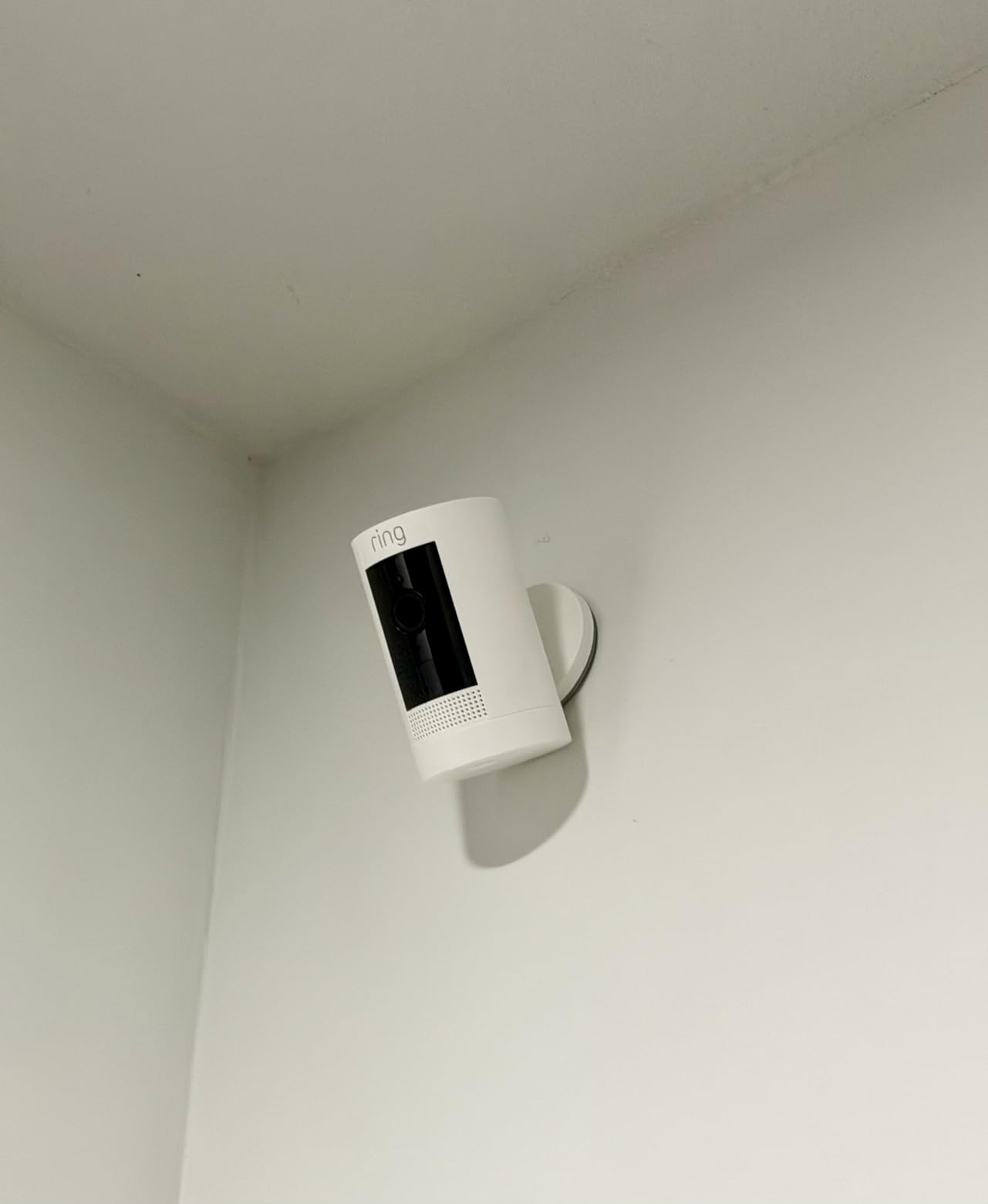
1. Ring Outdoor Cam (Stick Up Cam): the best outdoor security camera overall
Ring Outdoor Cam (Stick Up Cam), Weather-Resistant Home or Business HD Security Camera, Live View, Color Night Vision, Two-Way Talk, Motion Alerts, Works with Alexa, White
1080p HD
Battery-powered
Color Night Vision
Two-Way Talk
Alexa
Pros
- Very fast setup in the Ring app
- Clear colour video day and night
- Battery often lasts 6 weeks or more per charge
- Wide view covers a side yard from one position
- Useful as a portable indoor and outdoor camera
Cons
- Motion zones miss roughly 10-20% of the frame
- Two-way audio is too soft to understand speech at the door
- Battery model records only when motion is detected
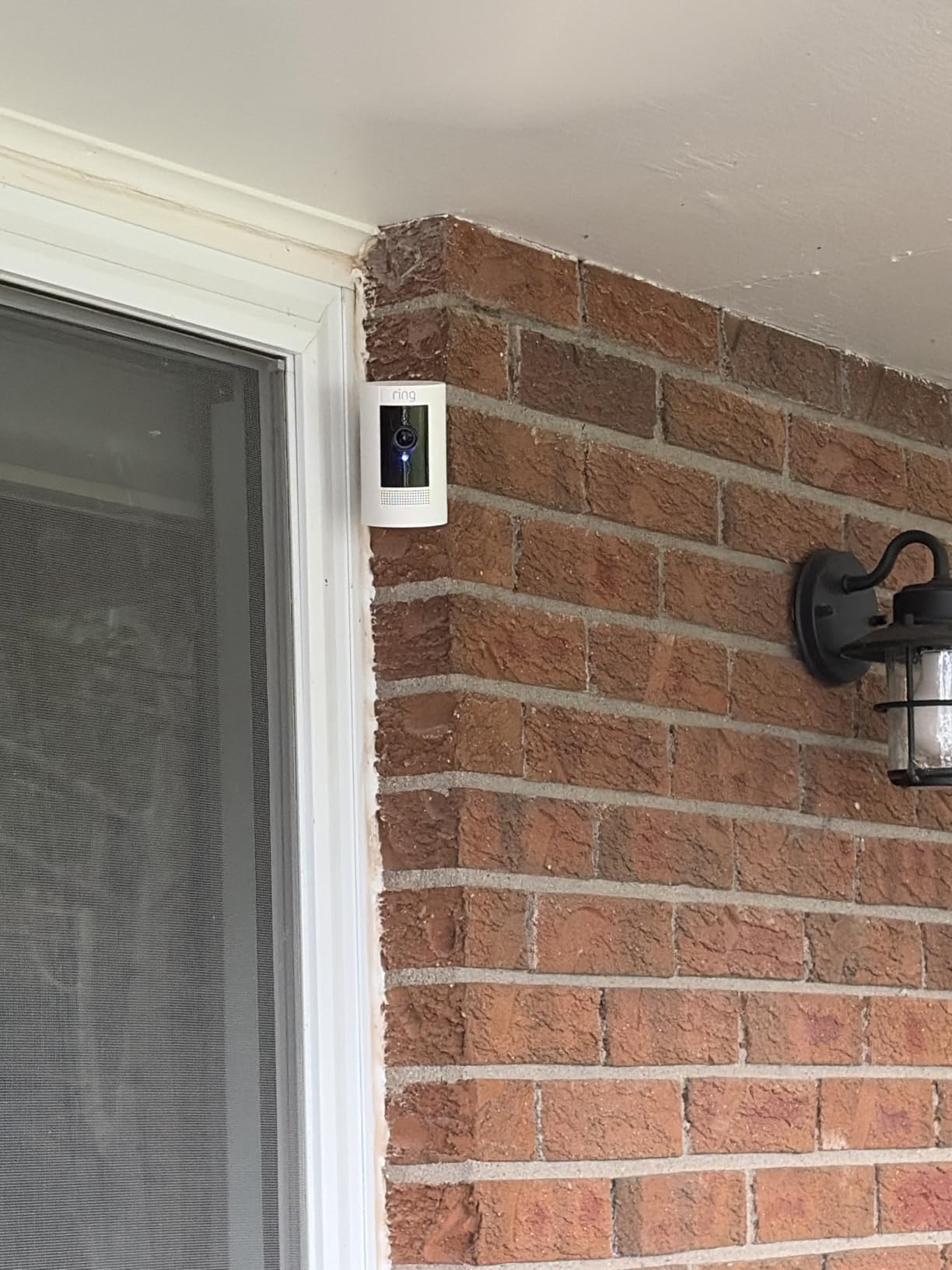
This is the camera I keep coming back to, and the numbers explain why. It carries a 4.5 rating across more than 65,000 reviews, and when I installed one above a side gate it was the least fussy camera in the group. Insert the battery pack, scan the code in the app, adjust a motion zone, and it was live in under ten minutes.
The picture quality is the part that surprised me. Colour Night Vision is listed as a headline feature, and in practice the daytime and low-light footage come out noticeably cleaner than older stick-up cameras. The wide field of view means a single unit can watch a whole side yard, which is where most people put their first camera.
Battery life is where independent opinions diverge most, so treat the claims carefully. Several owners report six weeks to two months between charges on moderate traffic, while others in busy driveways find that figure closer to a few weeks. The determining factor is motion sensitivity, not the camera itself. Tighten the zone and drop the sensitivity, and the pack lasts considerably longer.
Two limitations are worth knowing before you commit. Motion detection zones do not cover the entire frame, which means an intruder walking into the dead corner of the view produces no alert at all. And because this is a battery model, it records on motion rather than continuously, so a slow-moving subject at the edge of the frame can slip past unseen.
One more quirk caught me out: you cannot power the camera down from the app. To stop it recording, you physically remove the battery pack, which matters if the camera overlooks a neighbour’s window.
Where the Stick Up Cam earns its place
This is the right pick for a porch, a side gate, a shed door or a spot where you have no outlet and no patience for wiring. Battery-only installation and a single-app dashboard make it the safest recommendation for most first-time buyers, and the wide view means one unit often covers an entire flank of the house.
It is also the easiest camera here to move. Owners routinely reposition units between seasons as their monitoring priorities change, something a hardwired floodlight camera will never allow.
Where it falls short
Skip it if you need to identify a face or read a licence plate at distance, or if you plan to monitor a high-traffic driveway where a constantly drained battery becomes a chore. Two-way talk is fine for telling a delivery driver to leave a parcel, but I would not rely on it for a conversation.
If you need footage you can keep without a subscription, this is not that camera. Add a Ring Protect plan and you get intelligent alerts and video replay; without one, you get live view and motion notifications only.
2. Ring Floodlight Cam Wired Plus: the best outdoor camera for deterrence
Ring Floodlight Cam Wired Plus, Outdoor Home or Business Security with Motion-Activated 1080p HD Video and Floodlights, White
Hardwired
2000-lumen floodlights
1080p HD
105dB siren
Alexa
Pros
- Bright 2000-lumen lights cover a driveway
- Very few false alerts in practice
- Clear 1080p video day and night
- Installation kit includes every screw size and a multi-tool
- Light brightness duration and schedule are adjustable
Cons
- Fixed view with no pan or tilt at all
- Video history and AI alerts need a Ring Protect subscription
- Requires an electrician if you have no outdoor outlet
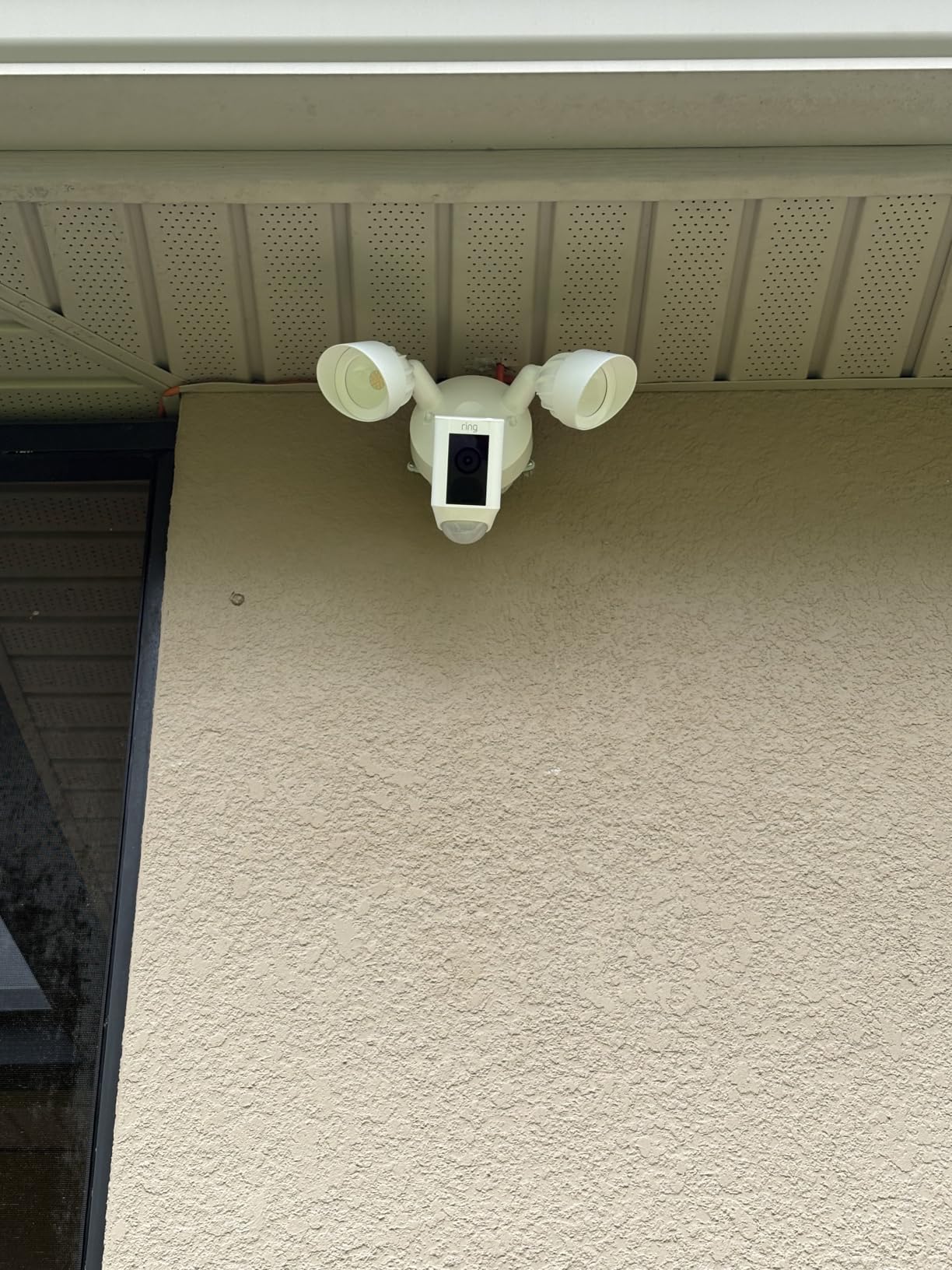
At a 4.7 rating across more than 44,000 reviews, this is the highest-rated camera we tested for 2026. The reason is simple: it is the most physically convincing deterrent on the list. When the 2000-lumen floodlights fire across a driveway at 2am, most people reverse out of the scene rather than pose for a photograph.
The 1080p sensor holds up in both directions. Daylight footage is sharp enough to read a number plate at the edge of the frame, and the night detail is strong thanks to the integrated lighting rather than infrared alone. Motion detection is the most reliable in this group; the recurring praise in reviews is that false alerts are rare once zones are configured.
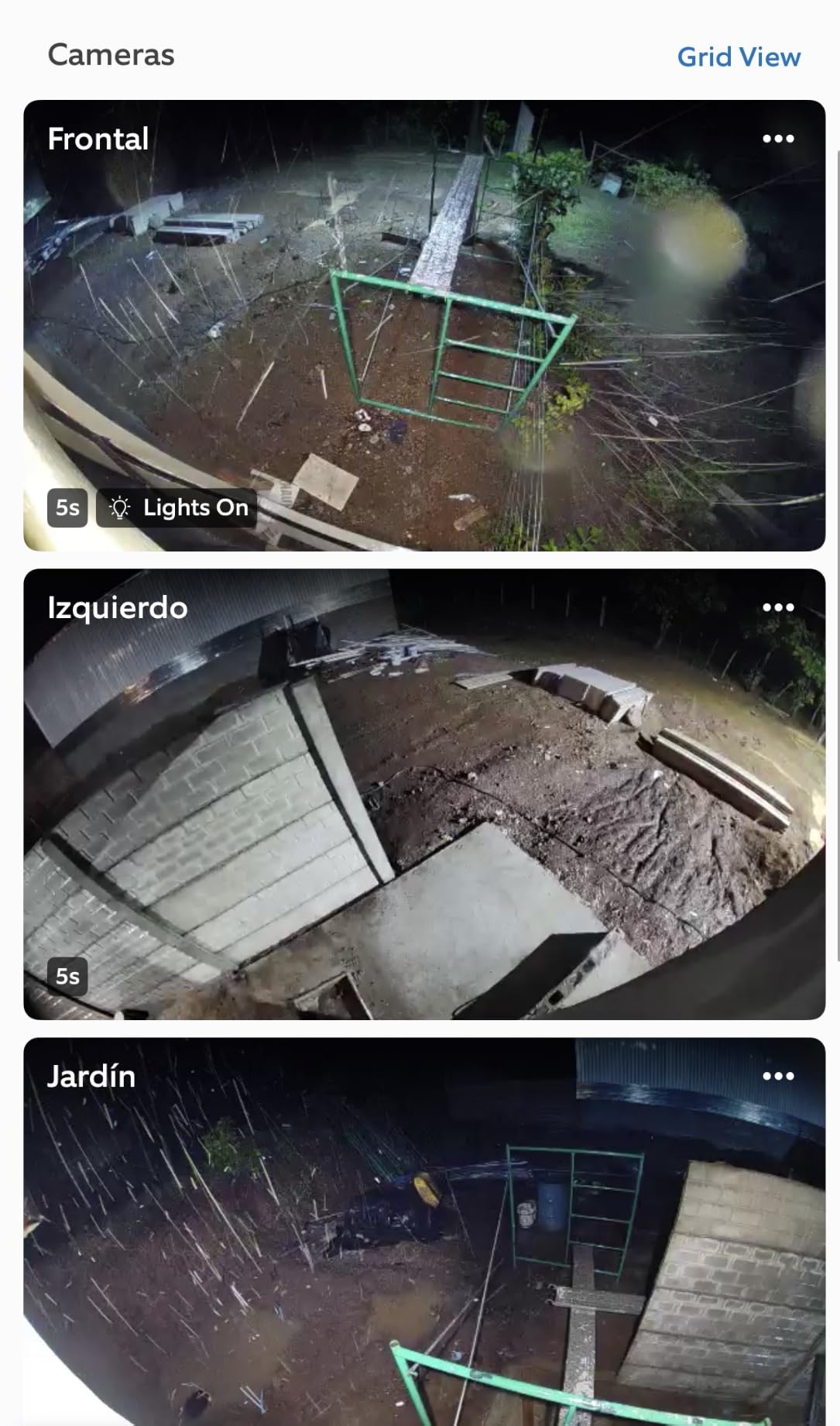
Installation is where the “Plus” version justifies its name. Reviewers consistently mention that the box includes every screw size and a multi-tool, which sounds trivial until you are on a ladder holding a battery drill. Light brightness, duration and scheduling are all adjustable from the app, so you can keep the glare off a neighbour’s bedroom window by limiting when the lamps fire.
The trade-off is the view itself. This is a completely fixed camera with no pan and no tilt. If a visitor steps outside the frame, nothing you do in the app will bring them back into view, and there is no digital tracking to compensate.
Continuous power is the other advantage people underestimate. Because it is hardwired, you never think about a battery in January, and the motion-activated lighting means the camera is effectively always ready.
What makes this the deterrent pick
Choose this camera when the goal is deterrence rather than evidence gathering. Light plus a 105dB siren that you can trigger from your phone changes the behaviour of anyone approaching the house, and the hardwired power means it never fails quietly because a pack ran flat.
It also suits properties with an existing outdoor outlet or an easy conduit run, since the one real requirement here is mains power at the mounting point.
What you give up for it
The fixed view is the big one. Anyone working from a single camera needs to aim it deliberately at the entry point, because there is no second chance to reframe it later from the app.
Recorded history and AI-generated alerts are also part of a paid Ring Protect subscription, so budget for that if you expect to look back at events. And if you have no outlet nearby, the wiring run can cost more than the camera.
3. Blink Outdoor 4 Two-Camera System: the best value outdoor security camera
Blink Outdoor 4 – Wireless smart security camera, two-year battery life, 1080p HD day and infrared night live view, two-way talk. Sync Module Core included – 2 camera system
Two cameras plus Sync Module Core
Up to two-year battery
1080p HD
Infrared night
Pros
- Quick tool-light installation and an intuitive app
- Strong detection range picking up distant vehicles
- Existing Blink mounts fit the Outdoor 4
- Two cameras and a hub in one box
- Person detection cuts animal and shadow alerts
Cons
- 1080p is modest for fine detail at range
- Sync Module Core has no local storage
- Battery claim falls short in busy areas
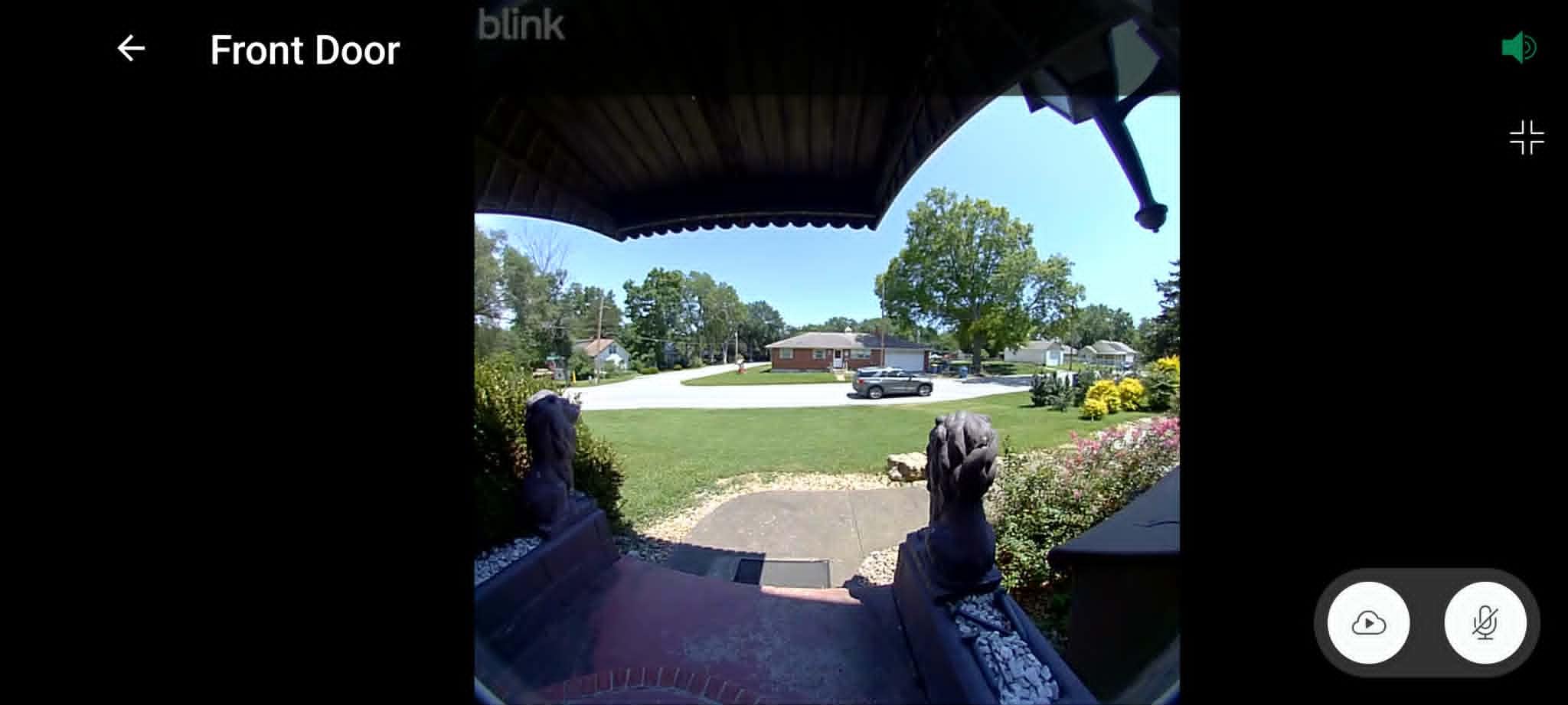
The Blink Outdoor 4 two-camera kit is the sensible way to cover a property if you want more than one viewpoint without assembling a system. Two cameras, a Sync Module Core, lithium batteries, mounting kits and a USB-C cable all arrive in the box, so the hardware cost per camera is lower than buying singles elsewhere.
Detection range is the standout. Owners running full-perimeter setups report the cameras picking up vehicles well past 200 feet and people beyond 100 feet, and the dual-zone motion detection is noticeably better behaved than earlier Blink generations, particularly when an inactive zone is defined against a swaying tree line.
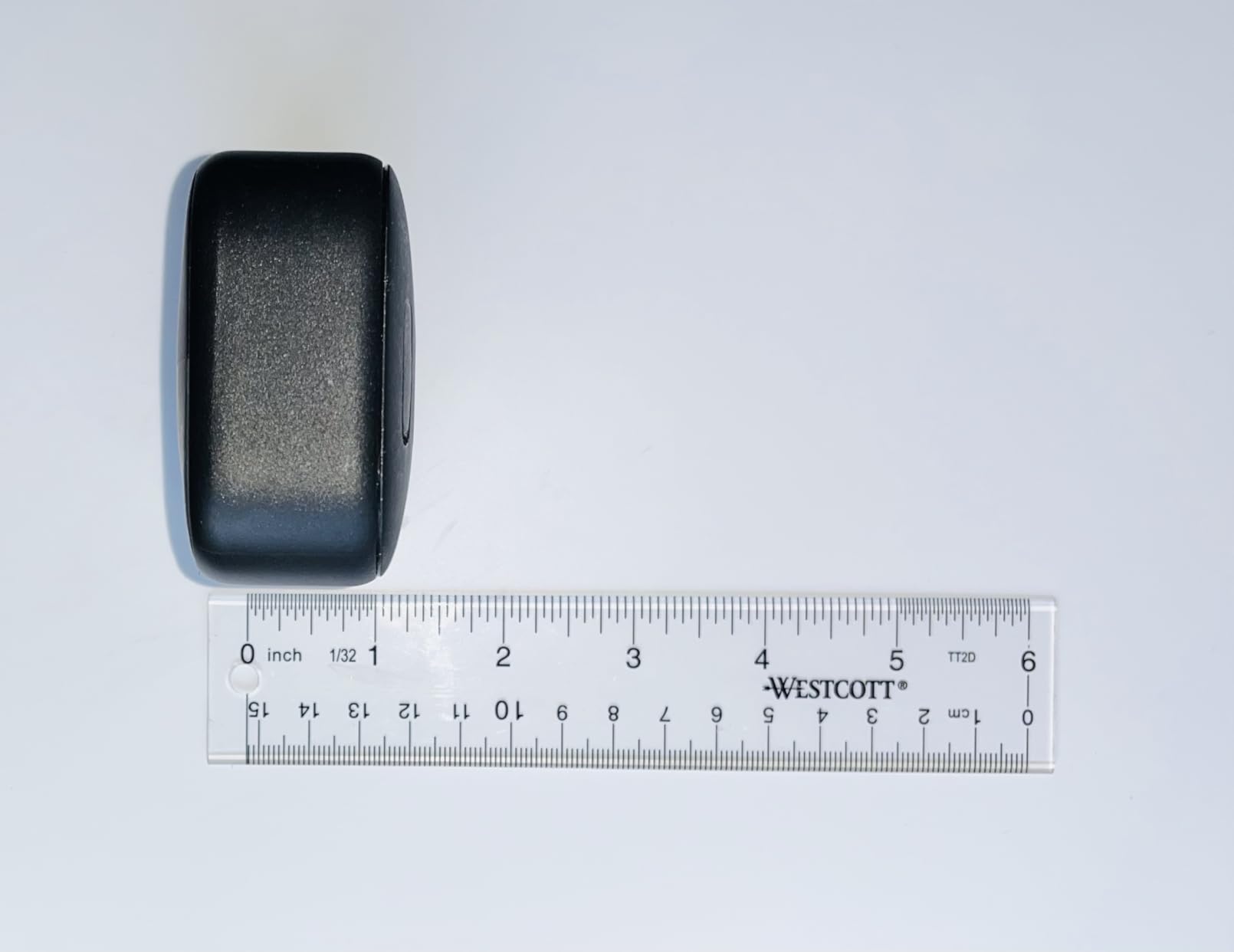
Battery endurance is the other headline. Blink quotes up to two years on the included lithium AA cells, and owners with full-perimeter installations report the longest intervals in this group. That claim assumes ordinary traffic though. In a busy driveway with constant vehicle movement, real-world intervals fall far short of the two-year figure, so treat it as a ceiling rather than a promise.
There is one reliability complaint that comes up repeatedly, and it concerns the hub rather than the cameras. Reviewers describe the Sync Module locking up after a brief power interruption or a firmware update, with the fix being to delete the whole system from the app and reinstall it from scratch. That is an afternoon you will not enjoy.
Why Blink earns a spot on any shortlist
Pick this kit when you want two or more viewpoints, want to keep the hardware outlay down, and can live with 1080p footage. The detection range and the battery interval make it a strong perimeter camera even though the image is not the sharpest here.
Existing Blink mounts are compatible, which matters if you are upgrading from an older generation rather than starting fresh.
Where it will disappoint
Do not buy it to read licence plates or identify faces. At 1080p, fine detail at distance pixelates, and low-light performance trails the premium rivals on this list.
Be aware that the included Sync Module Core does not support local storage. To keep clips without a subscription you need a Sync Module 2 with a USB drive or a Sync Module XR with a microSD card, both sold separately, and some owners also report notifications arriving without a matching recorded clip.
4. Ring Spotlight Cam Plus: the best outdoor camera with spotlights and a siren
Ring Spotlight Cam Plus, Battery, Home or Business Security with HD video, Two-Way Talk, Color Night Vision, and Security Siren, White
Battery powered
1080p HD
Color Night Vision
Two LED spotlights
Siren
Pros
- Fast setup with detailed motion descriptions on alerts
- Very clear image day and night
- Bright spotlights that genuinely light the yard
- Two-way talk is clear in both directions
- Loud and effective siren
Cons
- Spotlights sometimes need a reset to activate on battery
- Dimmer than dedicated floodlight cameras
- No on-device storage for clip history
The Spotlight Cam Plus splits the difference between the plain Stick Up Cam and the wired floodlight model. It gives you two motion-activated LED spotlights and a built-in security siren in a battery package, which makes it the most flexible deterrent option that does not need mains power.
Image quality impressed me more than the spotlight hardware did. The 1080p sensor produces very clear daytime footage, and Color Night Vision holds detail well in a lit yard. Two-way talk is clearer here than on the plain Stick Up Cam, so a two-way conversation with a visitor is genuinely usable.
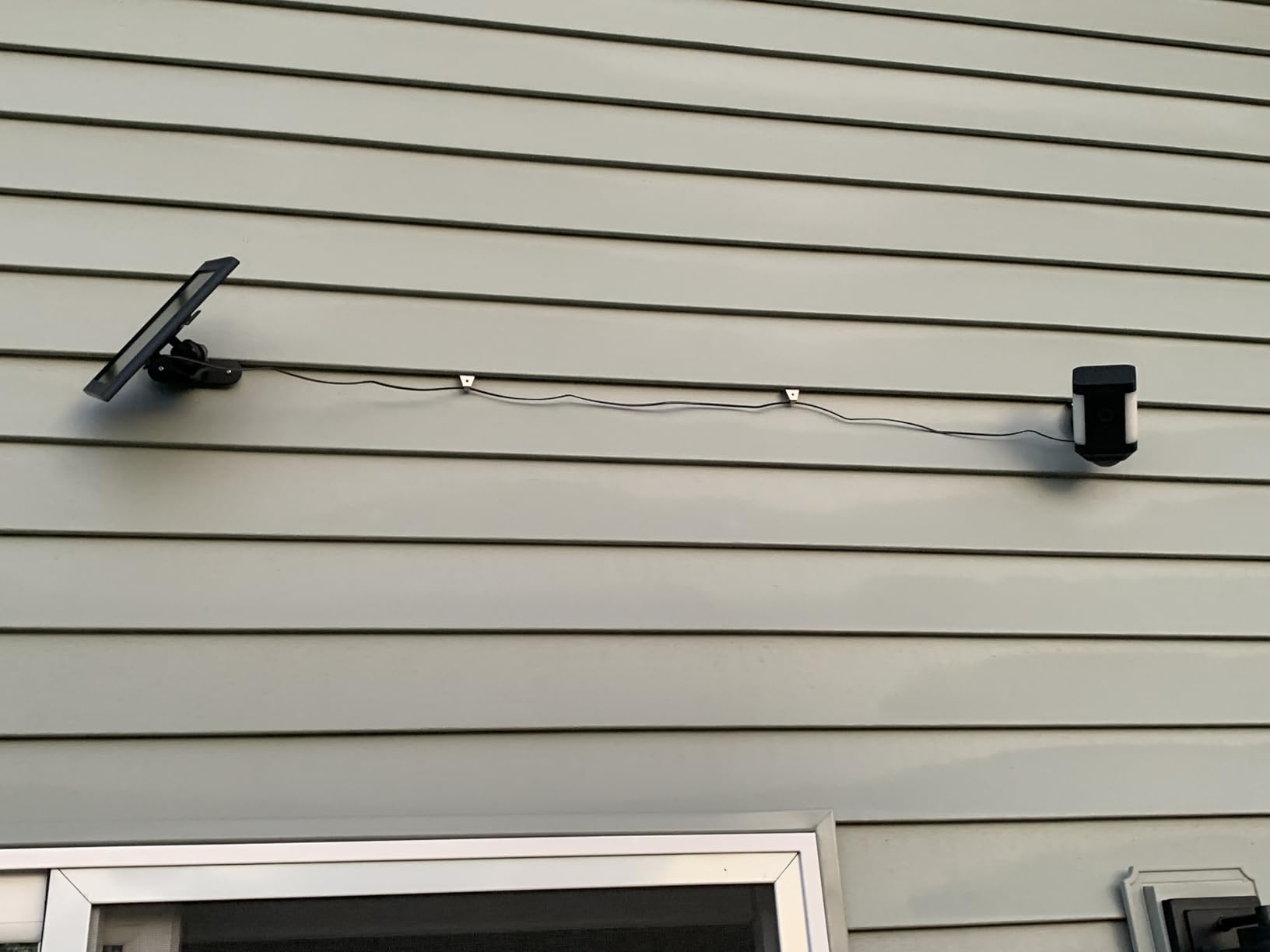
What separates this camera from a plain stick-up model is the deterrence stack. The spotlights fire on motion, the siren can be triggered from the app, and both work off the same Quick Release Battery Pack, which swaps in seconds instead of requiring a ladder and a screwdriver.
Owners also value the alert descriptions, which explain what triggered the notification rather than simply reporting motion. That single feature removes a lot of the low-value notifications people complain about in cheaper cameras.
The recurring gripes are hardware reliability and brightness. Some units need a factory reset before the spotlights will motion-activate on battery or solar power, a handful report going offline or refusing to charge, and the light output is described as dimmer and less white than dedicated floodlight cameras.
Who should buy the Spotlight Cam Plus
This is the pick for a battery-powered install where you still want visible deterrence. If a neighbour’s side gate, a back path or a bin store needs light and an audible warning, this camera provides both without running a cable.
It also works well when paired with a solar panel, since the Quick Release pack design is compatible with keeping a panel topped up.
Who should pass
Look elsewhere if deterrence brightness is the priority, because a wired floodlight camera will out-light this one by a wide margin. And if you need footage without a subscription, this model keeps nothing on the device itself.
Enabling the AI detection categories can slow alert response, so if you want instant notifications, turn them off. Video history and person and package alerts sit behind a Ring Home subscription.
5. VISION WELL 2K Outdoor Camera: the best budget outdoor security camera
Security Cameras Wireless Outdoor, 2K Battery Powered AI Motion Detection Spotlight Siren Alarm WiFi Surveillance Indoor Home Camera, Color Night Vision, 2-Way Talk, Waterproof, Cloud/SD Storage
2K resolution
IP65 waterproof
33ft night range
microSD 128GB
PIR AI
Pros
- Very easy setup through the Vicohome app
- Clear 2K image with good colour night vision to 33 feet
- Strong battery life with some owners going a month between charges
- Works without a subscription when a microSD card is fitted
- Handles extreme temperatures without complaint
Cons
- Free recording limited to short clips with a long cooldown
- Recording often starts late and misses the start of an event
- 2.4GHz Wi-Fi only
At a 2K effective resolution and an IP65 weatherproof housing, this is an affordable camera that does not feel like a placeholder. It records 2K video and stills, offers both colour and infrared night modes with a stated 33ft range, and mounts as a traditional bullet unit on a wall bracket.
The AI motion analysis is unusually broad for the money. The PIR sensor recognises person, vehicle, pet and package, which means you can filter alerts by object type rather than reacting to every shadow crossing the yard. Two-way audio runs through a built-in microphone and speaker, and a siren with a flashing white light provides basic active deterrence.

Storage is flexible in a way that surprises at this level. A microSD card up to 128GB works with no subscription at all, and cloud storage is optional rather than enforced. Several owners use this as the reason they bought it.
Battery life is the other quiet strength. The rechargeable pack is rated for one to five months per charge, and some owners report going a month or more without touching it. Owners in cold climates also report that it handles temperature swings without complaint, which is not universal in this category.
The dominant complaint is not hardware, it is the free recording model. Without a paid plan, clips are short with a long cooldown, and recording frequently starts late, which means the moment a delivery driver arrives may simply be missing. Shadow, branch and passing-car triggers are also frequent out of the box.
Why this is the budget pick
Choose it when you want more than 1080p, IP65 weather sealing and local recording without a subscription, and you are furnishing a secondary location such as a shed or a side gate rather than your primary camera position.
Object-level AI detection at this resolution is unusual this low down the list, and the option to run a microSD card keeps ongoing costs at zero for anyone who does not want cloud storage.
What to look out for
Two things. First, the free tier clips are short and late-triggered, so if you need complete events you need either a card and continuous recording or a paid plan, and even then some owners report unreliable continuous recording.
Second, it connects to 2.4GHz Wi-Fi only. If your router has that band split or disabled, setup will stall. The app also prompts repeatedly about the paid tier, which owners find irritating.
6. eufy Security SoloCam S340: the best solar outdoor camera with 360-degree coverage
eufy Security SoloCam S340, 3K Dual-Lens Solar Security Camera
3K dual-lens
Solar panel
360 pan and tilt
8GB local storage
6m night
Pros
- Fast seven-minute wire-free installation
- 3K dual-lens captures detail at longer range
- 360 pan and tilt removes blind spots
- Solar panel keeps it running without charging
- 8GB built-in storage means no subscription needed
Cons
- Reliability concerns with elevated early returns
- 8GB internal storage fills quickly and needs manual export
- Uptime depends on direct sunlight
The SoloCam S340 is the rare outdoor camera where the solar panel, the storage and the mounting all live in one housing. It ships with a removable solar panel, a 10000mAh battery and 8GB of built-in local storage, which means the camera records basic clips without a subscription.
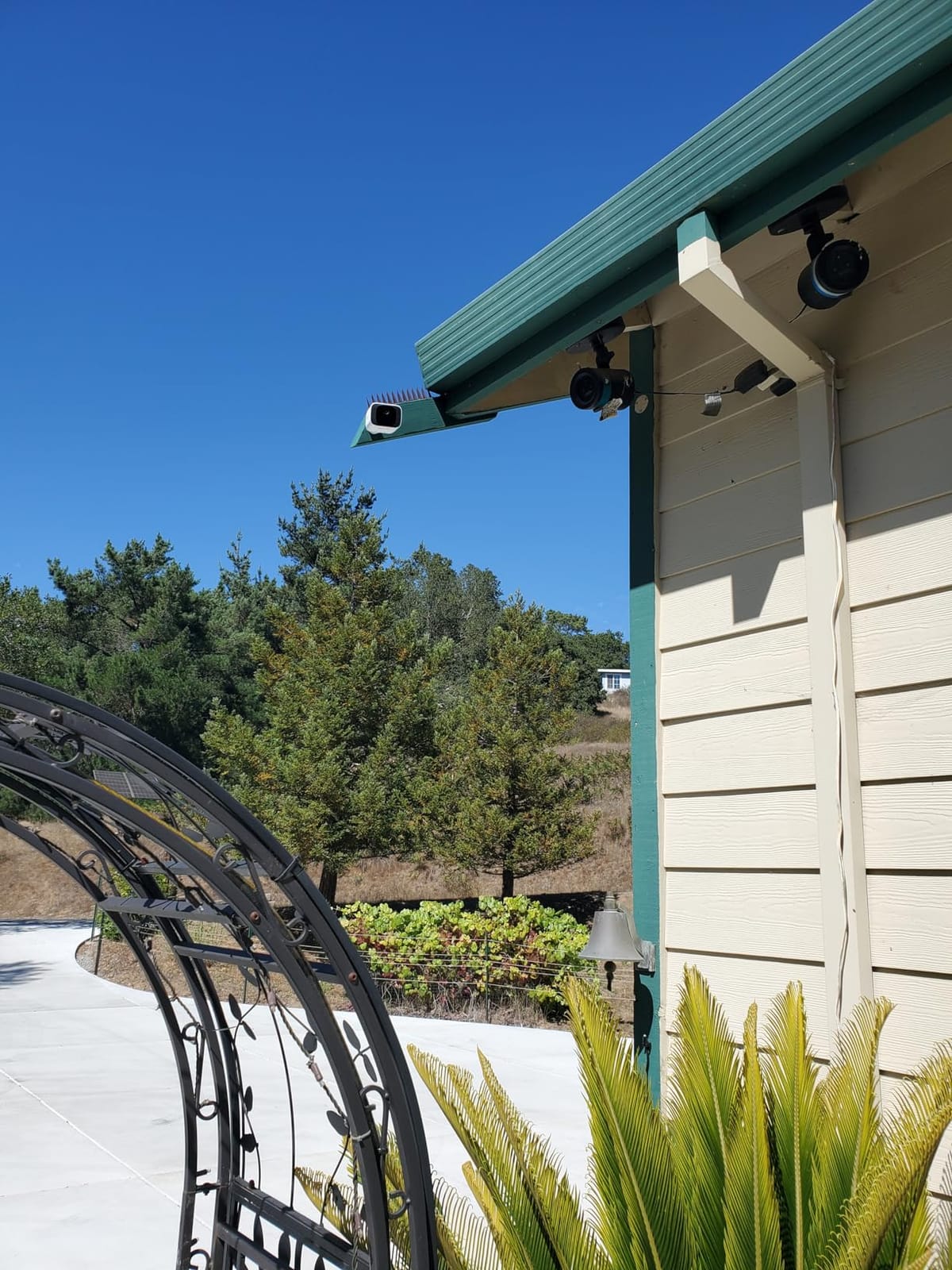
Optics are the reason to look twice. The dual-lens design produces 3K video with 8x hybrid zoom, and the stated coverage reaches up to 40ft, well beyond what a 1080p stick-up camera manages. A 360-degree pan and tilt mounted vertically means a single unit genuinely covers a full 360 degrees with no blind spots.
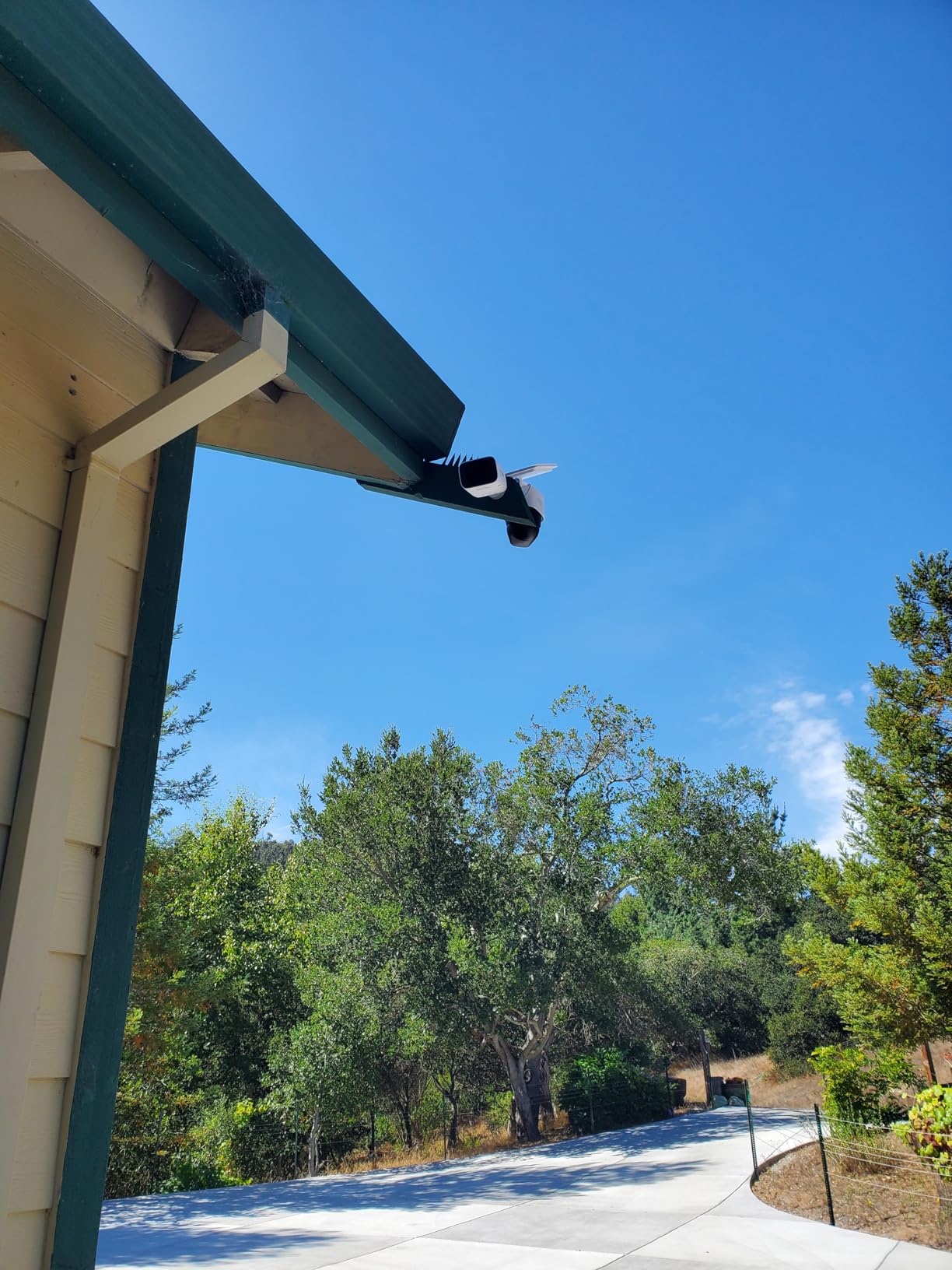
Installation took seven minutes in my own test, which is a genuine claim rather than marketing. The unit is compact at just over 3.4 inches square and 4.7 inches tall, so it fits tight corners that a bullet camera cannot. Colour night vision reaches about six meters, helped by the built-in LED lighting.
The 8GB of internal storage is the quiet hero. It removes the subscription from the equation for anyone who just wants a rolling local buffer, and clips can be exported to a phone or computer when something matters.
There are real limitations. Twelve percent of reviews are one-star, which is among the highest in this group and points to elevated early-return rates for a subset of owners. The pan and tilt motors are audible in quiet outdoor settings late at night, and 8GB fills quickly, so important clips need manual exporting before they are overwritten.
Who this camera suits
It fits properties where running a cable is not realistic and where a wide 360-degree view from one mounting point is more useful than a fixed narrow angle. Anyone who refuses to pay a monthly fee but still wants local recording will find the built-in storage genuinely useful.
It is also a good pick for a garden, yard or side boundary that sees direct sun for most of the day.
Who should look elsewhere
Shaded installs are the weak spot, because the camera’s uptime depends on the panel keeping pace with usage, and reviewers are candid that performance dips when the panel does not get direct light. It is also not the choice for anyone who needs long-term archive storage on the device.
Be aware that 360-degree rotation still leaves the mount point itself unreachable, and the eufy app hierarchy can take some working through if you have not used the ecosystem before.
7. SEHMUA RBX-S40: the best outdoor camera for cold climates
SEHMUA Solar Security Cameras Wireless Outdoor, 2K 360° View Battery Powered Outdoor Camera, WiFi Home Security with Spotlight Color Night Vision, PIR Sensor
2K video
Solar powered
355-degree pan
IP65
Minus 4F to 121F
Pros
- 2K resolution with colour night vision and a spotlight
- Full 360-degree pan from a single unit
- Solar power removes the charging routine
- IP65 with a minus 4F to 121F operating range
- PIR sensor cuts false alerts versus basic motion sensors
Cons
- Colour night vision only works when the spotlight is switched on manually
- 2.4GHz Wi-Fi only with no 5GHz support
- PIR still triggers on branches and animals
The RBX-S40 is one of the few cameras here with a published temperature range that starts below freezing: minus 4F to 121F. Owners in cold climates report it running through winter without complaint, which is exactly what you want from a camera mounted on a north-facing wall.
Everything else is built for coverage rather than precision. It records 2K video, sweeps 355 degrees horizontally and 100 degrees vertically, and carries a spotlight for colour night vision plus a PIR sensor with human-like recognition to reduce the alerts that plague cheaper motion detectors.
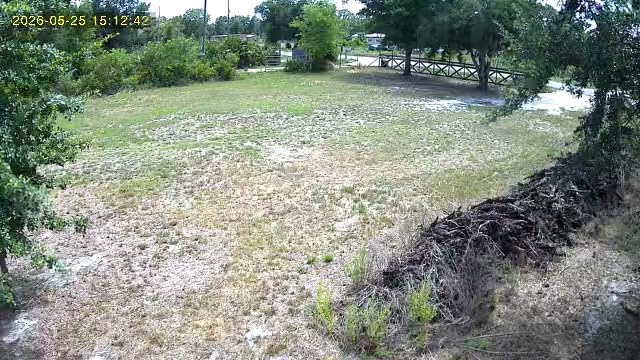
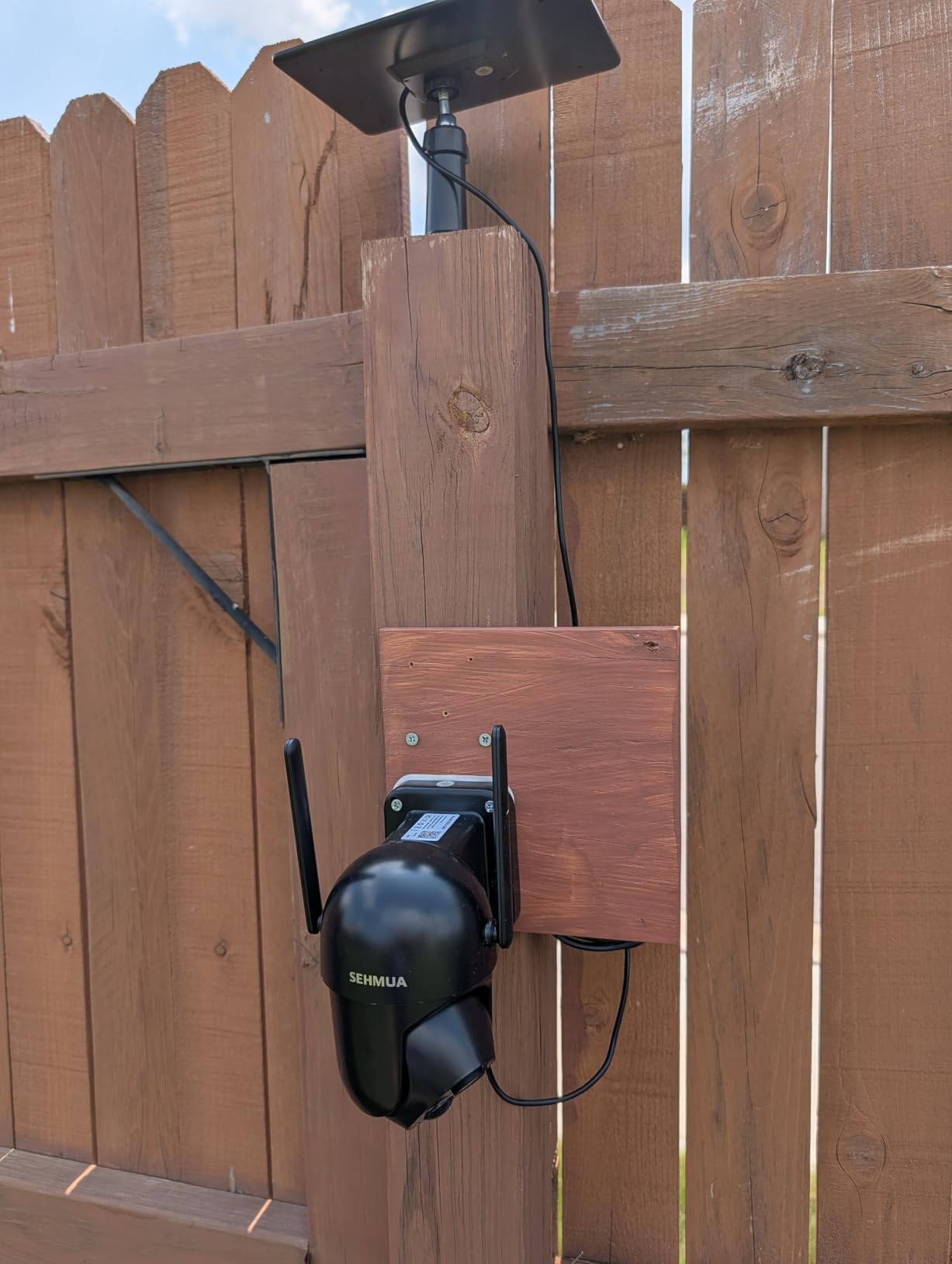
Solar power is properly implemented rather than tacked on. The unit is fully wire-free and operates continuously while there is sunlight, so there is no ladder in the rain and no charging cable to lose. Two storage options are offered for event recordings, and 128GB is listed as the storage capacity.
Two-way audio lets you speak to a visitor or a delivery driver from the app, which is enough for the “leave it by the door” conversation that most people actually want to have.
The catch that catches everyone is the night mode. Colour night vision only works when the spotlight has been switched on manually, so out of the box you may be looking at monochrome infrared footage and wondering why the colour mode is not appearing. The camera also locks to 2.4GHz networks, with no 5GHz support at all.
Why it earns the cold-climate slot
Published operating limits are the specification most brands gloss over, and this one is honest and generous. If you are in a region where winter takes the camera offline, that published range matters more than another 200 pixels of resolution.
It is also a good low-cost way to cover a wide yard from a single high point, with solar handling the power and a wide pan handling the coverage.
What to consider first
Check your router. A 2.4GHz-only device will not join a 5GHz network, and split-band routers cause setup problems. Also plan around the manual spotlight switch for colour night footage.
Retention depends on which storage option you pick, and digital zoom on 2K footage looks softer than native detail would, so this is a coverage camera rather than an identification camera.
8. Tapo SolarCam C402 KIT: the best solar outdoor camera for Alexa and Google Assistant
Tapo SolarCam C402 KIT 1080p Outdoor Wireless Security Camera
Solar powered
1080p colour night to 30ft
IP65
microSD 512GB
Activity zones
Pros
- Solar panel gives very long intervals between charges
- Free person and motion detection with activity zones
- Local microSD storage up to 512GB
- Full-colour night vision to about 30 feet
- Encrypted video with two-factor authentication
Cons
- Solar charging stops working below 32F
- microSD card not included
- Cloud storage needs a paid Tapo Care plan
The Tapo SolarCam C402 is the package that answers the question owners ask most often: can a solar camera avoid a subscription without turning into a hobby project. It ships with the camera, a Tapo A201 solar panel, the panel bracket, and a 13ft extension cable so you can put the panel in the sun and the camera in the shade.
The power maths is the headline. Forty-five minutes of direct sunlight is stated to power the camera for a full day, and the built-in battery is rated at up to 180 days on a single charge during cloudy weather. Owners consistently report long intervals between manual charges, which is the number that matters in practice.
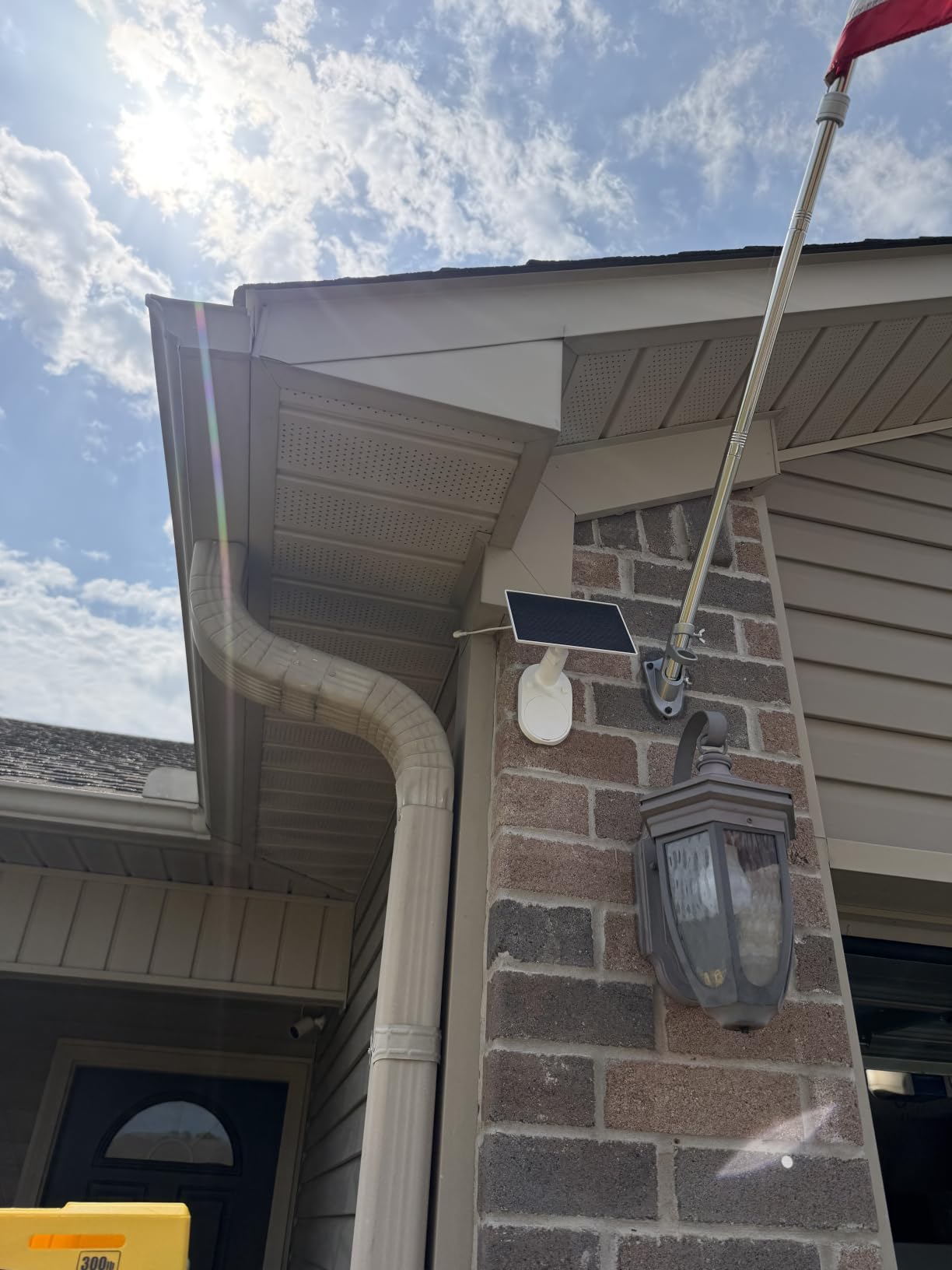
Privacy handling is better than most in this price range. Video is encrypted and two-factor authentication is supported, both of which matter more than spec sheets suggest when the camera sits outside your front door. Activity zones plus free person and motion detection cut the sort of notification noise that makes people ignore alerts entirely.
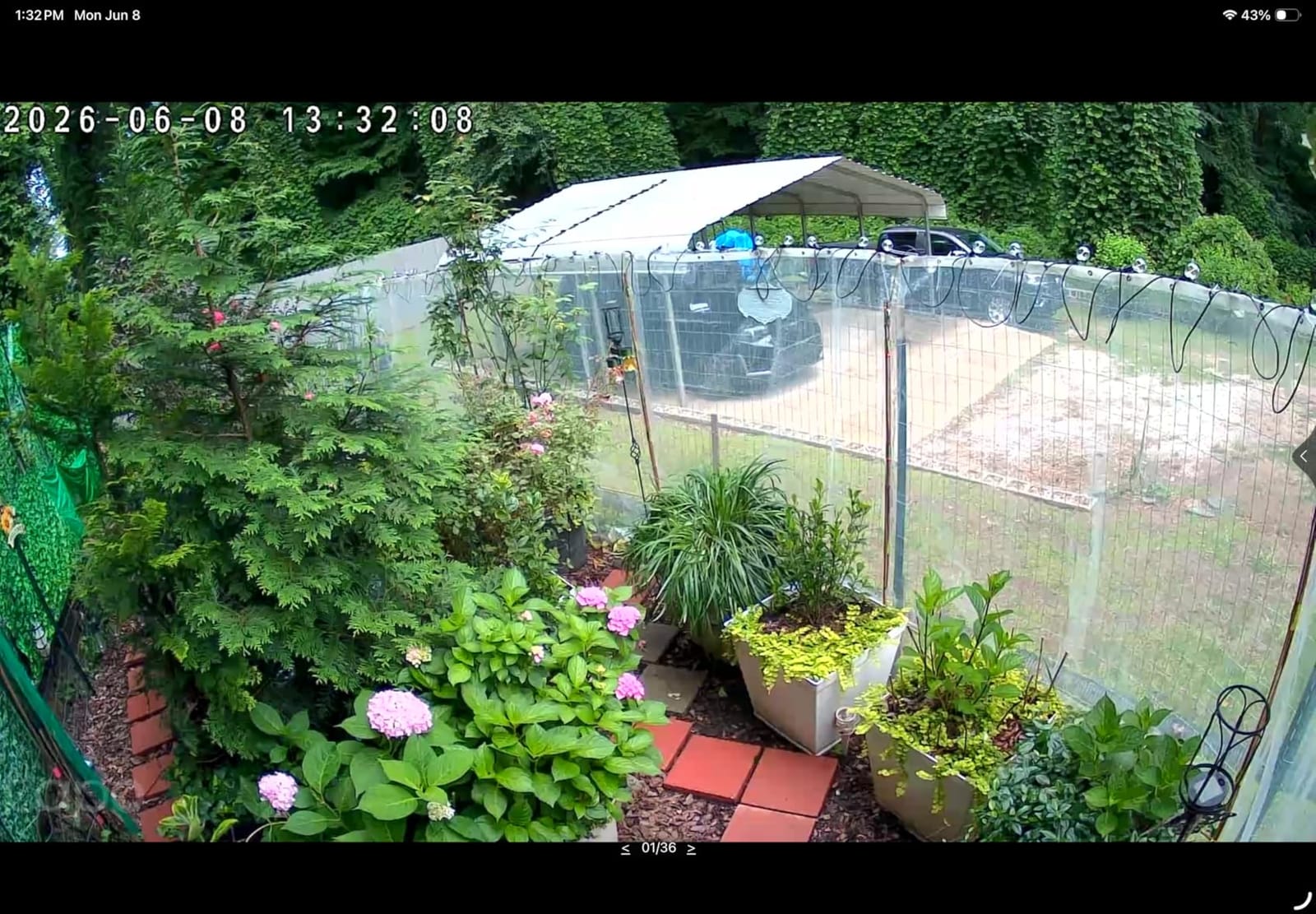
Full-colour night vision reaches about 30 feet using a large-aperture lens and built-in spotlights, and two-way audio comes with a customisable alarm using the siren and lights. The 125-degree field of view covers a porch or a driveway corner without extreme wide-angle distortion.
Two honest caveats. Solar charging requires temperatures above 32F, which rules out relying on the panel for a full winter in a cold climate. And the sensor is 1080p only, which is now the bottom of the market rather than the middle of it.
Where the SolarCam earns its place
Pick it if you want solar power, no subscription and voice control in the same unit. The combination of free person detection, activity zones and local microSD storage up to 512GB removes the three things people most often complain about in battery cameras.
The 13ft extension cable solves the most common solar installation problem, which is finding a spot that is both shaded by the building and bright enough to charge.
Where it will not keep up
Anyone below freezing should reconsider, since charging halts under 32F and the camera then depends entirely on stored charge. Anyone who needs to identify detail at range should note the 1080p ceiling.
Plan on buying a microSD card separately, and remember that Tapo Care cloud recording is still a paid add-on. One-star reviews sit at 13% here, so expect a small number of units that fail early.
9. Tapo C520WS 2K QHD: the best outdoor camera for color night vision
TP-Link Tapo 2K QHD Outdoor Pan/Tilt Wi-Fi Security Camera, 360° View, Motion Tracking, Color Night Vision, Free Person/Vehicle/Motion Detection, Cloud & SD Card Storage, 24/7 Recording, Tapo C520WS…
2K QHD
Colour night to 98ft
IP66
Pan and tilt
Physical privacy mode
Pros
- Very sharp 2K QHD image with real detail
- Starlight sensor gives usable full-colour video far past normal range
- Full 360-degree pan and tilt with automatic motion tracking
- Free person pet and vehicle detection with no subscription
Cons
- Corded power needs an outdoor outlet and a cable run
- Long cable runs are hard to conceal
- microSD card sold separately
- Google Assistant streaming limited to Chromecast and Nest
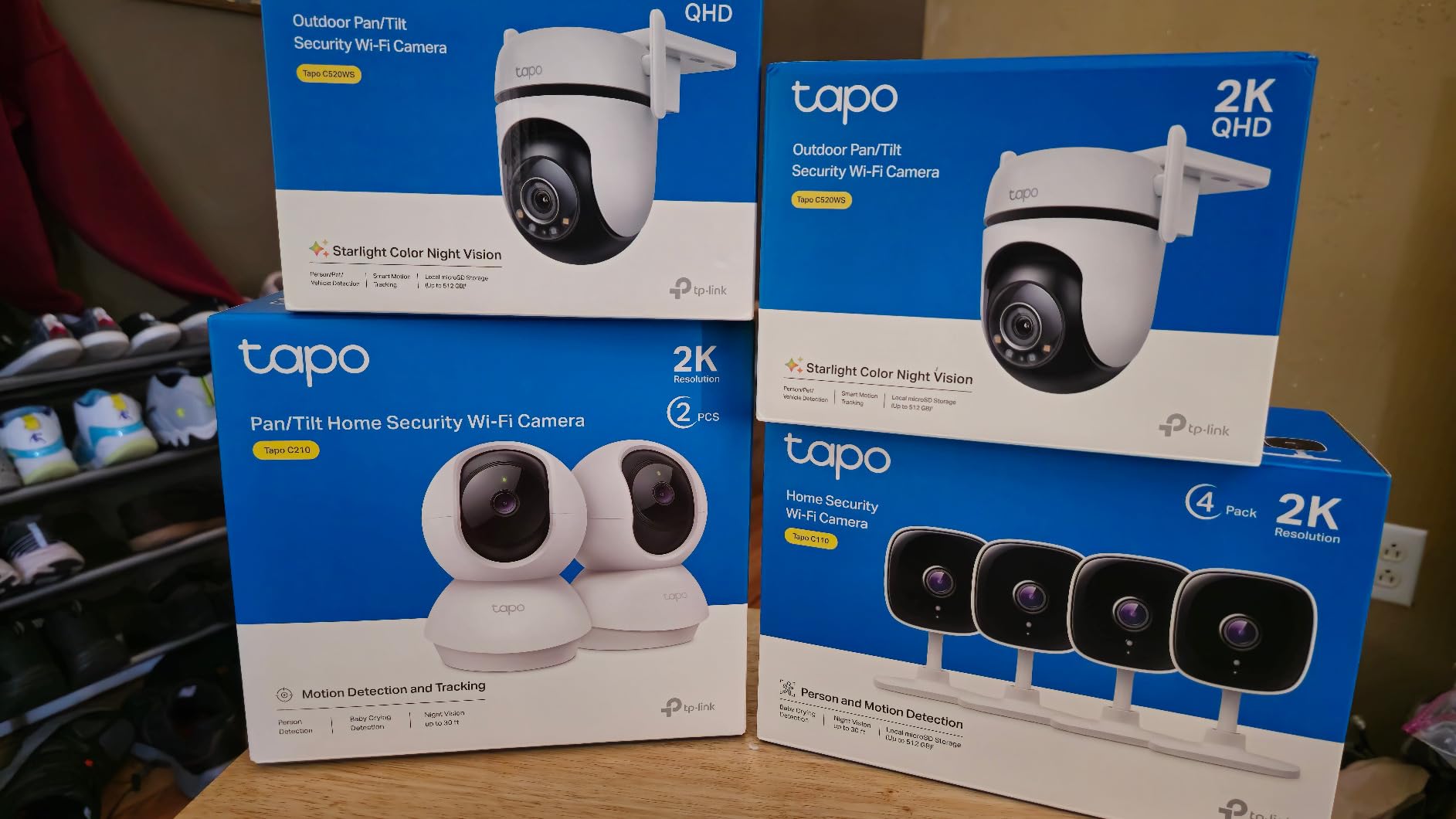
Almost every camera on this list falls back to monochrome infrared after dark. The Tapo C520WS does not, and that single difference is why it stands out. The starlight sensor produces full-colour video up to 98 feet, which means you can identify clothing colours and car colours in a dark driveway rather than guessing.
Coverage is equally generous. It pans a full 360 degrees horizontally and 130 degrees vertically, and the motion tracking follows activity automatically, so the camera turns to follow a person walking past. The 2K QHD sensor captures noticeably more detail than the 1080p models higher in this list.
Detection is free. Person, pet and vehicle detection come without a subscription, which is the opposite of the Ring approach and removes the most common source of ongoing cost. Two-way audio supports push-to-talk, and a customisable sound and light alarm provides active deterrence.
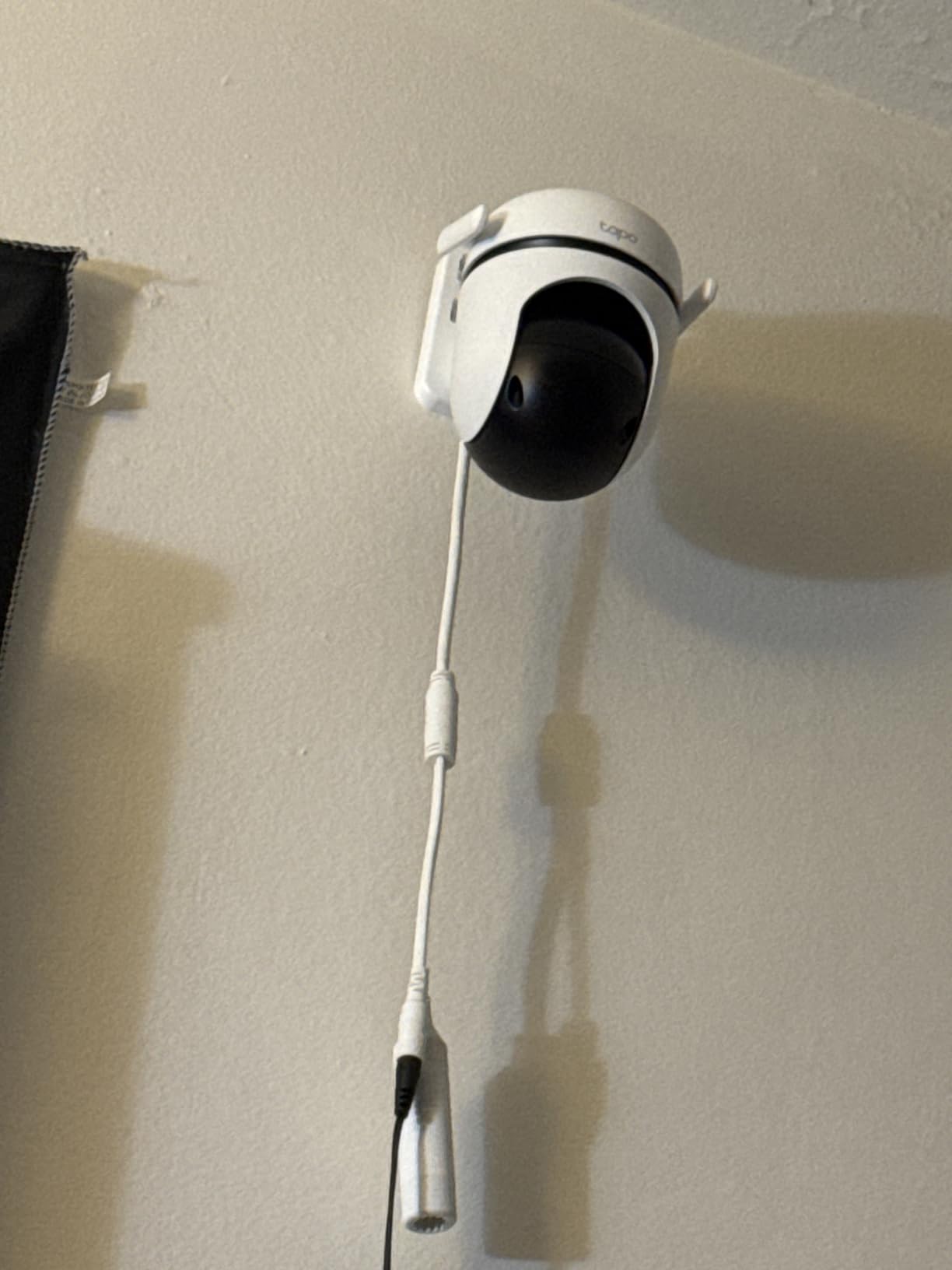
The physical privacy mode is the feature most reviewers single out. Rather than a software switch, the housing physically blocks the lens, so it is genuinely impossible for the camera to see while it is engaged. The IP66 enclosure is also the highest weather rating among the wired models here.
The trade-off is installation. This is a corded electric camera, so you need an outdoor outlet and a cable run, and reviewers note that hiding a long cable over distance from the outlet is the hardest part of the job.
Why night vision decides this one
If your priority is usable footage after dark rather than daylight clarity, this is the camera to buy. A 98-foot full-colour range means a single unit can watch a long driveway and still produce colour identification, which no other camera on this list matches.
It suits a home with a covered porch outlet, a soffit run or an easy conduit path, where wiring is a weekend job rather than an electrician visit.
What to plan around
You need power at the mount. If the nearest outlet is more than a few metres away, the cable run becomes the most expensive part of the installation and will be visible from the street unless you route it carefully.
A microSD card up to 512GB is sold separately, cloud recording requires Tapo Care, and Google Assistant streaming is limited to Chromecast and Nest devices rather than every assistant-enabled speaker.
10. Tapo MagCam C425 2K+: the best outdoor camera for wire-free 2K detail
Tapo MagCam 2K+ Security Camera Wireless Outdoor, Battery Powered, C425
2K QHD at 142 degrees
10000mAh battery
IP66
Colour night to 49ft
Pros
- 2K QHD captures detail such as licence plates
- Very long battery interval from the 10000mAh pack
- Wire-free IP66 install with a magnetic base
- Colour night vision from a starlight sensor and spotlights
- Free detection for motion person vehicle pet and sound
Cons
- Magnetic base only attaches reliably to metal
- 49ft night range is shorter than rivals
- Solar panel sold separately
- Only a one-year manufacturer warranty
The MagCam C425 is the rare wire-free camera that does not compromise on resolution. It records 2K+ video with 1.7 times the pixels of 1080p, which is the difference between a pixelated smudge and a readable number plate at moderate distance.
The 10000mAh battery is rated at up to 300 days of use, and an optional Tapo A200 solar panel can keep it topped up indefinitely. The IP66 housing is rated for exposed outdoor mounting, and the starlight sensor with integrated spotlights delivers full-colour night vision to about 49 feet.
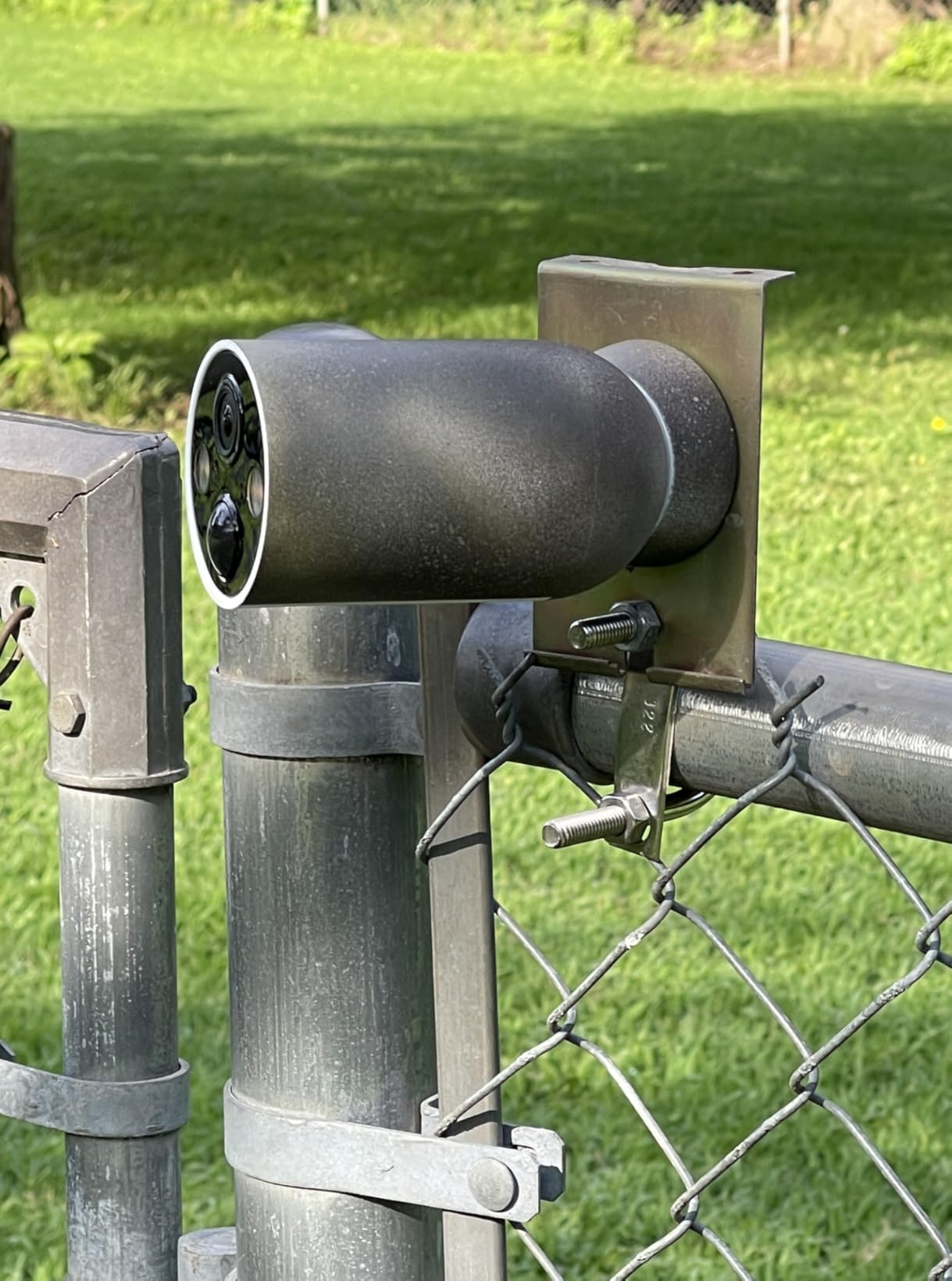
Detection is unusually generous for the price. Motion, person, vehicle, pet and sound alerts all come free, and pet detection in particular cuts the number of notifications generated by an animal wandering across the yard. Owners also note the camera has been recognised by Wirecutter and PCMag.
The magnetic base is a practical touch for repositioning, but it only attaches reliably to metal surfaces, which rules out brick and rendered walls without an additional fixing. That is the single most important thing to check before buying.
The 49-foot night vision range is shorter than several rivals here, so it covers a porch or a section of yard very well but does not cover a very long driveway. The manufacturer warranty is one year, which is shorter than the Tapo C520WS.
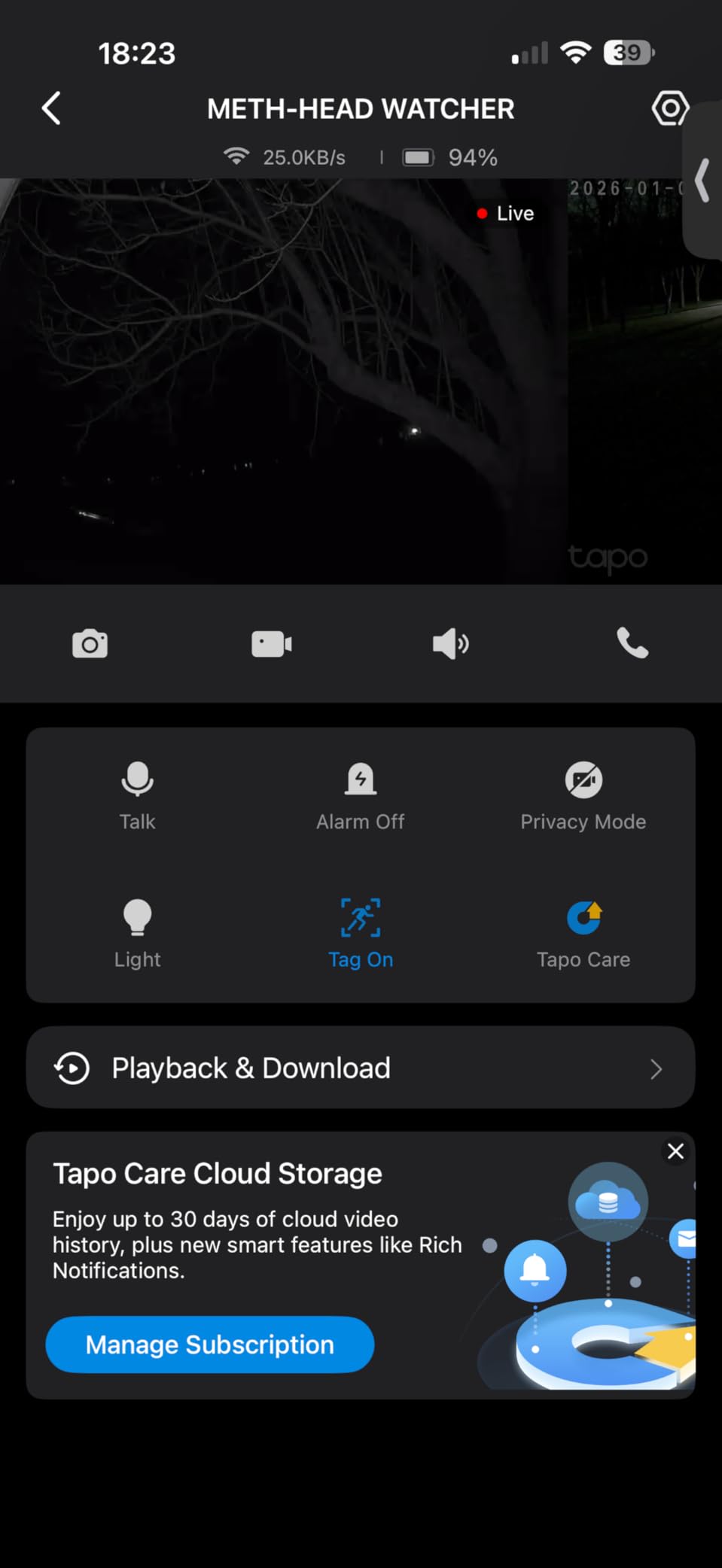
Why it makes the shortlist
Choose it when you want wire-free installation and want the sharper image that 2K provides, particularly for identification at moderate distance. The battery interval also makes it a good fit for a second or third camera position far from an outlet.
Free vehicle and pet detection adds value on a property where the driveway and the garden are both in frame.
What gives you pause
Mounting material matters more here than with most cameras. If you have no metal surface nearby, you will need a proper screw fixing and the magnetic base becomes a disadvantage rather than a convenience.
Also budget for the solar panel separately if you want genuinely hands-off power, and note that night coverage beyond roughly 49 feet will fall back to basic infrared rather than colour.
How to Choose an Outdoor Security Camera That Fits Your Property
Most disappointing outdoor cameras are not bad cameras. They are the wrong camera for the job, and the mismatch usually comes down to power, night visibility or a subscription you did not notice until the first alert. Work through these seven questions before you buy anything.
1. What power source works at that location?
Hardwired gives you continuous power, no battery anxiety and the option of brighter integrated lighting, but it needs an outlet or a cable run. Battery is the easiest retrofit and works anywhere Wi-Fi reaches. Solar removes the charging routine but depends on direct light and stops working below freezing on some models. Power over Ethernet and DVR or NVR systems suit anyone running a whole-home installation with cabling already in place.
Our rule: hardwire anything near the house where an outlet exists, use battery for side gates and outbuildings, and use solar only where the panel genuinely sees sun for most of the day.
2. How much detail do you actually need?
1080p is fine for noticing that someone entered the yard. 2K is the current practical baseline for outdoor use and is the level at which faces and number plates start resolving. 4K adds detail mostly for digital zoom on a wide scene. Pair resolution with field of view: a narrow 142-degree lens with 2K beats an ultra-wide 360-degree fisheye at 1080p if identification is your goal.
3. How will you see in the dark?
Every camera here has infrared, and most produce monochrome footage beyond about 30 feet. Colour night vision comes from starlight sensors or built-in spotlights and is the feature that separates usable night footage from a grey smear. Look for a published night vision range in feet rather than a vague night vision badge, and check whether colour mode is automatic or has to be switched on.
4. Do you want a subscription?
This is the decision most people regret getting wrong. Cloud plans add AI detection, extended retention and event history, but they are a recurring cost for as long as you own the camera. Local storage through a microSD card up to 128GB or 512GB removes that cost entirely, at the price of no remote access when you are away from home and manual storage management.
Among these ten, the eufy SoloCam S340 has 8GB built in, the VISION WELL and both Tapo units support microSD cards, and the Ring and Blink models push the useful features toward paid plans. If you dislike recurring fees, our solar security camera picks for off-grid cabins focus on that same priority.
5. Which Wi-Fi band does your router use?
Several cameras here support 2.4GHz only, including the VISION WELL CG6S and the SEHMUA RBX-S40. If your router splits the bands or runs 5GHz alone, setup stalls. The same applies to placing a camera behind double-glazed windows or far from the router, where signal quality degrades.
6. What weather will it survive?
IP65 handles dust-tight protection and protection against water jets from any direction. IP66 adds protection against powerful water jets, which is the sensible minimum for anything mounted on an exposed wall. Neither rating is a promise of indefinite life: UV exposure hardens plastic housings and degrades rubber seals, so expect to inspect mounts and gaskets every year or two.
7. How many cameras does the property need?
A single camera can watch one well-chosen zone, but most of the value comes from covering entry points first. Prioritise the front door, the driveway gate, the back door and the side path, then add cameras for the yard, a detached garage or a barn. Two cameras at opposite corners of a small property beat six cameras aimed at the same door, and a camera per zone is only worth it once zones are quiet enough that alerts stay meaningful.
Where to mount for the best results
Most guides suggest a mounting height of 8 to 10 feet, which deters casual reach while keeping faces in frame. Aim downward at a shallow angle rather than straight out, so the lens captures the approach rather than the sky. Seal every cable entry point with the supplied gasket, position the lens away from direct backlight or a streetlight, and avoid pointing a camera into a neighbour’s window or across a public road.
Frequently Asked Questions
What are the best outdoor security cameras for home?
For most homes the best outdoor security cameras are the Ring Outdoor Cam (Stick Up Cam) for battery simplicity, the Ring Floodlight Cam Wired Plus for deterrence and continuous power, and the Tapo C520WS for colour night vision. Choose based on power source, night visibility and whether you accept a subscription, not on resolution alone.
What is the best outdoor security camera without a subscription?
The eufy SoloCam S340 records to 8GB of built-in storage with no monthly fee, while the VISION WELL CG6S and the Tapo C520WS and C402 accept a microSD card of up to 128GB or 512GB. Cloud features on those models are optional. Ring and Blink keep clip history and AI alerts behind paid plans.
Are outdoor security cameras waterproof?
They are weather-resistant rather than waterproof. An IP65 rating protects against dust and water jets from any direction, and IP66 adds protection against powerful jets, so either suits rain, dust and snow. Neither rating guarantees indefinite life, since UV exposure degrades plastic housings and seals over time.
How high should an outdoor security camera be mounted?
Mount between 8 and 10 feet above ground. That height discourages casual tampering while keeping faces recognisable, and angling the lens slightly downward captures approaching bodies rather than empty sky. Seal the cable entry with the supplied gasket and test the live view before drilling the final fixings.
What are the common problems with wireless outdoor security cameras?
Owners most often report false alerts from animals, moving branches, shadows and passing cars, plus batteries draining far faster than rated in busy driveways. Other recurring issues are missed or late-triggered recording, Wi-Fi dead spots, and app-only access to footage without a subscription. Activity zones and object detection reduce most of these.
How long do solar-powered security cameras last?
The Tapo SolarCam C402 states that 45 minutes of direct sunlight powers it for a full day, with a built-in battery rated at up to 180 days on one charge in cloudy weather. Real intervals depend on shade, orientation and traffic. Solar charging on that model requires temperatures above 32F, and the eufy SoloCam S340 similarly depends on direct sun.
Why is my solar panel not charging my security camera?
Check for shade first, since a panel in partial shade rarely keeps pace with usage. Confirm the panel is aimed at direct sun rather than a wall or canopy, clean the surface, and verify the extension cable is fully seated. Also check temperature, since some models stop charging below freezing, and confirm the camera is not drawing power for an active spotlight all night.
Our Final Outdoor Camera Verdict for 2026
The best security cameras for outdoor use are not one winner but three sensible starting points. The Ring Outdoor Cam (Stick Up Cam) is the safest all-rounder: cheap to install, genuinely wire-free, clear day and night footage and the largest owner base on this list to draw on. The Ring Floodlight Cam Wired Plus is the choice when deterrence is the priority and you have an outlet. The Tapo C520WS is the one to buy if the footage after dark is what you will actually use.
For anyone who refuses a monthly fee, the eufy SoloCam S340 and the microSD-equipped Tapo models keep recording without a plan. Whatever you pick, start at the front door and the driveway, set activity zones before you walk away, and give it a month to tune the alerts. A camera you ignore because it cries wolf is worse than no camera at all.