
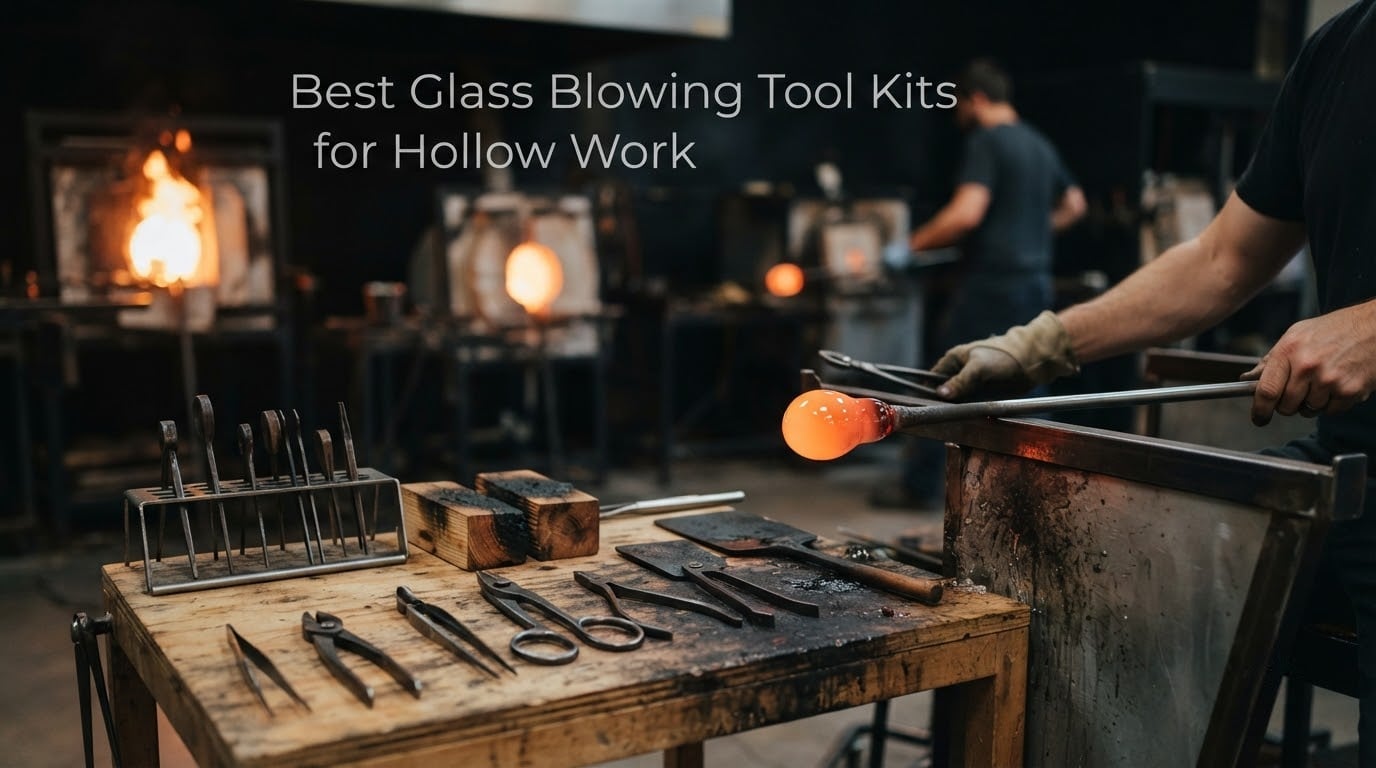
I spent a lot of time looking for a boxed glass blowing tool kit for hollow work, and here is the honest finding: there is not a good one on the retail shelf right now. What you will find instead is a scatter of individual lampworking and beadmaking tools, several of which do double duty in a hollow work hotshop, and one starter kit that advertises glass blowing in the name but is really a beadmaking bench anyway.
That is not a reason to skip the topic. It is the reason this guide exists. A hollow work kit, in the sense most people mean it, is a specific list of tools: a blowpipe, jacks, blocks, shears, paddles and a punty, plus a marver, a glory hole and a pipe cooler. Nobody bundles all of that. So below I take the ten most useful glass tools in this category, grade each one against the hollow work manifest, and tell you exactly which ones earn their bench space.
Everything below is written for 2026 readers working soft glass, mostly COE 104, in a home hotshop or a rented studio. No price is quoted anywhere in this guide, because prices move daily; use the check buttons and read the spec on the listing page.
If you came here from a bead kit, read the next section before you buy anything. It is the single most expensive mistake beginners make with this craft.
Table of Contents
Hollow Work vs Lampwork vs Cold Shop: What Changes
Can you make hollow glass with a beginner bead kit? No. A bead kit gives you a torch, a mandrel and small hand tools sized for a few grams of glass at a time. Hollow work means gathering a heavy blob of molten glass from a furnace, inflating it with breath, and shaping the walls with tools that must survive repeated contact with furnace-hot glass. Different tools, different heat, different cost.
Cold shop is the other branch entirely. No flame at all, just cutting, grinding and fusing, which is what our stained glass kit guide covers.
- Hollow work is hotshop work. Blowpipe, furnace, glory hole, jacks, blocks, shears, paddles, punty, cherry wood block, pipe cooler.
- Lampwork is a small flame and a mandrel. Beads, pendants, small hollow beads, murrini. Much lighter tools, much less glass.
- Cold shop is cutting and fusing at room temperature. No gather, no flame, no blowpipe.
Most tools in this roundup are lampwork tools. Three of them transfer directly into hollow work, and I flag which ones and why in each review.
Top 3 Picks for Hollow Work Tooling
The three below are the ones I would put on a bench first. Each has a review count above the median of this set, and each does something the others do not.


Devardi 6 Hole Graphite Marver
- Six hole sizes
- 1/2 to 1-1/4 inch
- Flips to paddle face
- Machined graphite

Devardi 2 x 3 Inch Graphite Block
- Commercial grade graphite
- 2 x 3 inch face
- 1/2 inch thick
- Rubberized handle
Glass Blowing Tool Kits for Hollow Work in 2026
All ten tools below in one place. Use the hollow work column in each review to decide whether a tool earns a place in a vessel workflow or stays on the bead bench.
| Product | Specifications | Action |
|---|---|---|
| JTS Mashing Tweezers 8 inch |
|
Check Latest Price |
| Devardi 6 Hole Graphite Marver |
|
Check Latest Price |
| Devardi 2 x 3 Inch Graphite Marver |
|
Check Latest Price |
 Devardi Stainless Rod Holder Devardi Stainless Rod Holder |
|
Check Latest Price |
 Natural Mystic Glass Blowing Straws Natural Mystic Glass Blowing Straws |
|
Check Latest Price |
 Devardi 4 Slot Round Graphite Shaper Devardi 4 Slot Round Graphite Shaper |
|
Check Latest Price |
 Devardi Graphite Round Point Poker Devardi Graphite Round Point Poker |
|
Check Latest Price |
 Devardi COE 104 Beginner Starter Kit Devardi COE 104 Beginner Starter Kit |
|
Check Latest Price |
 Devardi 10 Piece Stainless Shaping Set Devardi 10 Piece Stainless Shaping Set |
|
Check Latest Price |
 Devardi Three 3/16 Inch Mandrels Devardi Three 3/16 Inch Mandrels |
|
Check Latest Price |
1. JTS Mashing Tweezers – the Stainless Stand-In for Real Jacks
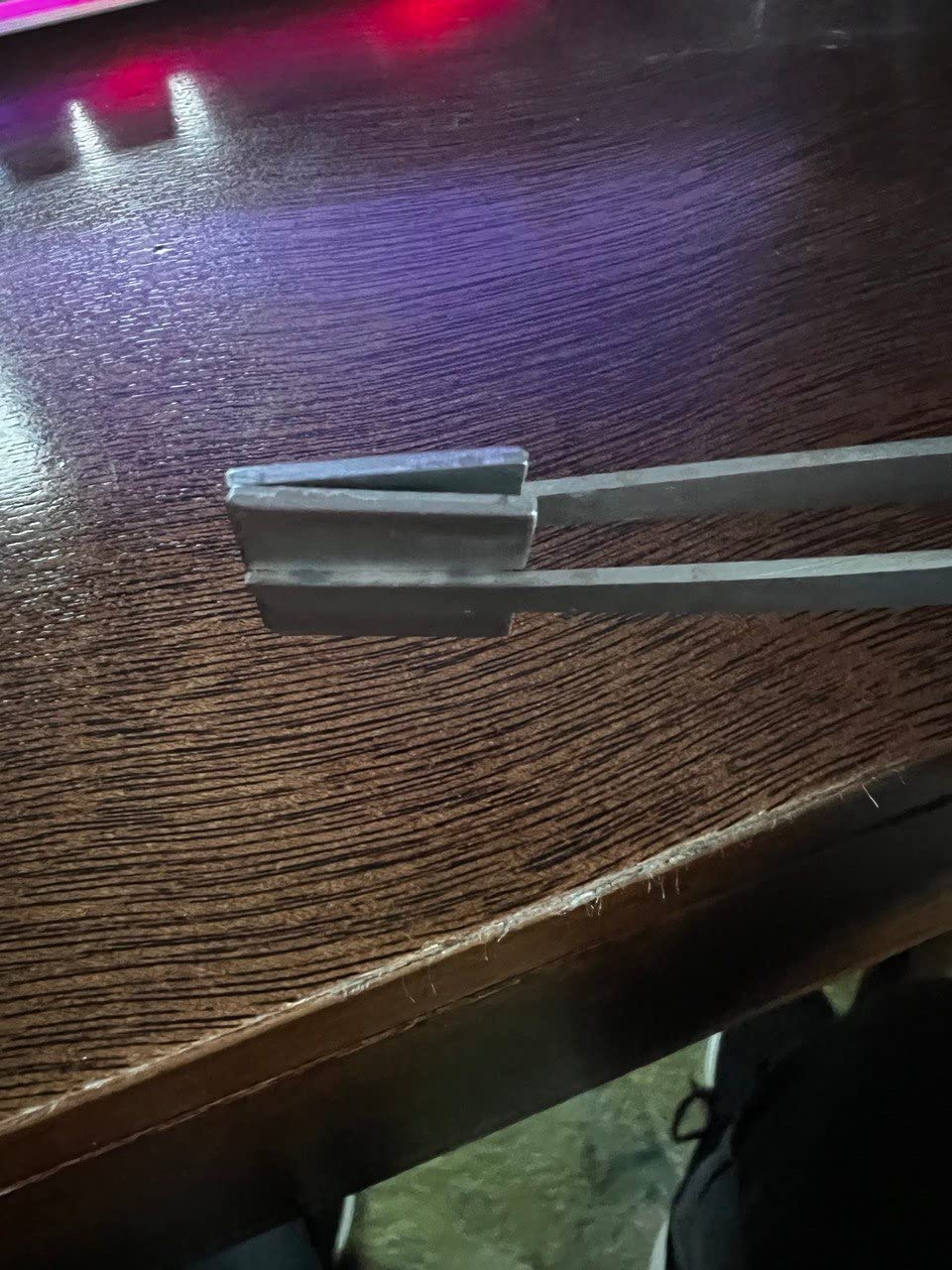
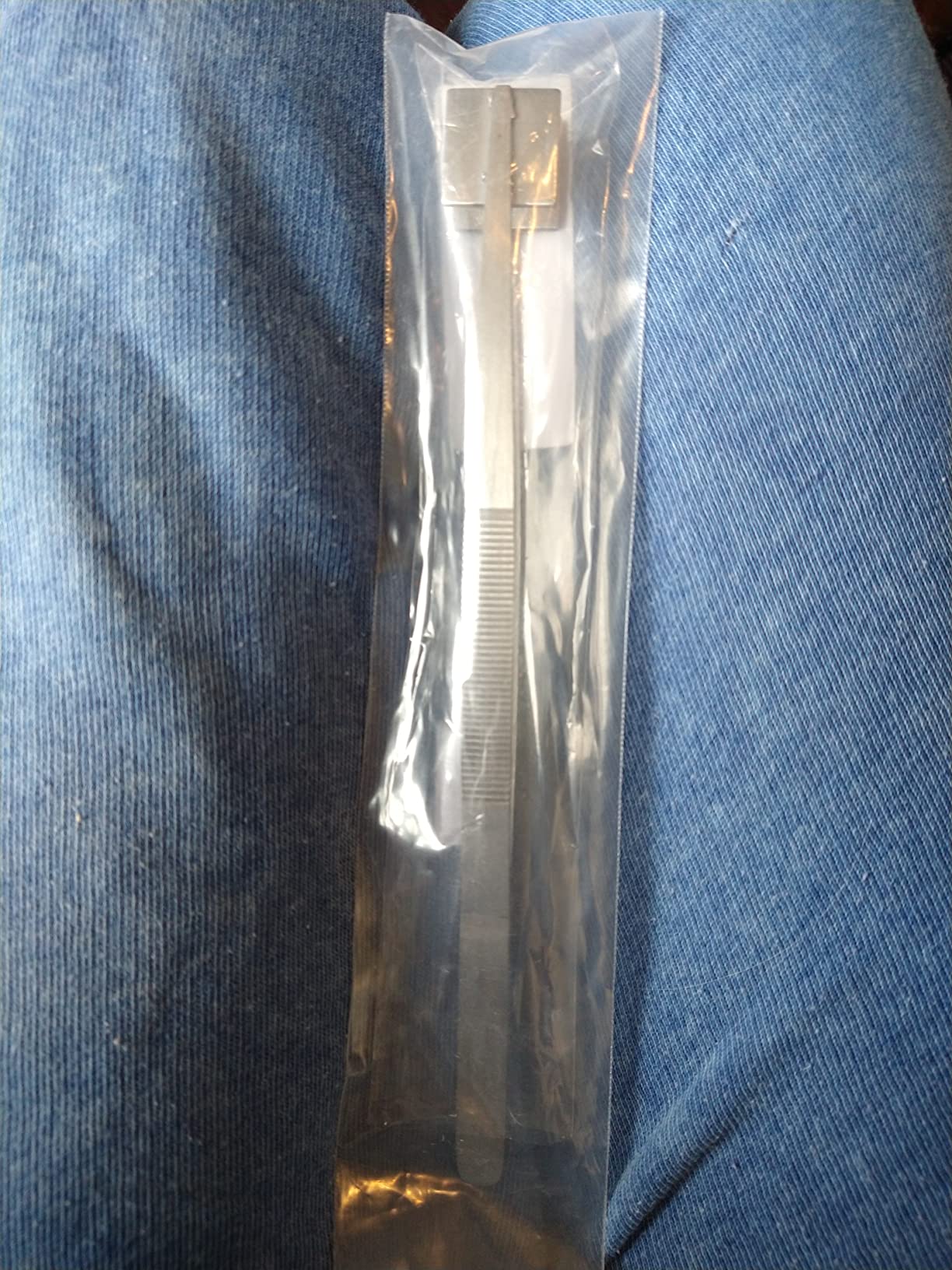
Mashing Tweezers Glass Work Bead Masher Tweezer 8” Lampworking 3/4″ Surface S.S. By JTS
8 inch length
Flat square faces 3/4 inch
Stainless steel
1.85 oz
Pros
- Durable two handled path to wall shaping
- Flat square faces give controlled contact on a soft bubble
- Light enough to keep fine control for long sessions
- Most reviews of any tool in this roundup
Cons
- Square faces only with no tapered point for fine shaping
- Stainless rather than graphite so it conducts more heat
- Not a substitute for real jacks on a heavy gather
These are not hollow work tools by design. They are lampworking mashing tweezers, rated 4.4 stars across 210 reviews, the largest review base of anything in this roundup. That matters, because when a tool has this many owners you can see its failure modes from the pattern rather than guessing.
What I like is the geometry. Flat square faces measuring 3/4 inch give you a defined edge to press against a bubble wall, which is the same basic gesture a hollow worker makes with jacks. The 8 inch length gives real reach, and at 1.85 oz the tweezers stay controllable through a long session instead of tiring your hand.
The stainless construction is the trade-off. Stainless conducts heat straight into your fingers faster than graphite or wood, so the discipline is to keep the tool out of the flame and only touch the piece on a brief pass, rotating the pipe constantly while you work. Wet it before contact, every time.
TalkGlass community consensus, as surfaced in the search results for starter tooling, is that most glass working tools are made from graphite or tungsten because they stand up to the heat, and that tungsten picks are a must-have. Steel sits at the other end of that spectrum. It is not wrong, but it is the tool you reach for when a graphite block is the better answer.
When these beat real jacks
For a thin walled bubble on a light gather, a pair of flat tweezers gives you more control than heavy tong style jacks, because the contact area is small and predictable. They also fit in places a jack will not, like the tight curve of a small ornament.
Used as a shaper, they work right after you pull the piece from the flame, which is exactly the workflow the stainless shaping set later in this guide describes.
When to skip them
Skip them for a heavy gather straight from the furnace. A gather that size transfers enough heat to a steel tool to make it seize, and the bubbles in the glass tell you the tool was not cool enough before contact.
If your goal is vessels, buy a real blowpipe and a pair of cherry wood blocks first. These tweezers are a genuine second pair of hands, not the foundation.
2. Devardi 6 Hole Graphite Marble Maker Marver – Sized Holes and a Paddle Face
Devardi Glass Lampwork, 6 Hole Marble Maker Graphite Marver, USA Made
Six hole sizes 1/2 to 1-1/4 inch
Precision machined graphite
13 oz
4 x 12 x 12 inch listed dims
Pros
- Six correctly scaled hole sizes
- Graphite surface stays cool enough to work near
- Reverse face works as a paddle marver
- Large handle gives a secure grip on hot glass
Cons
- Glue joint attaching handle can weaken with repeated heating
- Graphite residue needs cleaning off before first use
- Marble focused so hollow vessel shaping is an adaptation
Graphite is the material I would pick if I were choosing for hollow work, and this is a versatile graphite piece. It carries a 4.4 rating across 131 reviews with a 69 percent five star share, and owners describe it as heavy duty and well balanced.
The six holes are scaled for marbles and paperweights at 1/2 inch, 5/8, 3/4, 7/8, 1 and 1-1/4 inch. For hollow work you are not using the holes, you are using the body. The reverse face is a flat graphite plane that behaves like a paddle marver, and a paddle is exactly what you need to press a bubble wall into shape after inflating it.
Graphite is also the reason this tool tolerates a hotshop. It does not conduct heat the way steel does, and a flame-dried graphite tool is far less likely to seize molten glass than a stainless one. Wet it anyway, before every single contact.
What tells me this is the right buy for hollow work
The block mass is the point. A chunky graphite tool stays at a workable temperature through a long shaping session, where a thin steel tool climbs toward the glass temperature in seconds. In a vessel workflow where you are rotating a pipe for several minutes, that difference decides whether the piece survives.
Owners call it versatile, which tracks with using one tool for marbles, paddles and flat work in the same session.
Where it falls short
The handle-to-graphite glue joint is the recurring complaint. Owners report it cracking or softening with repeated heating, at which point the tool stops working as a marver. If you buy this, expect a repair or replacement eventually.
Clean the graphite off before first use. Graphite dust transfers into molten glass and contaminates the batch, and reviewers specifically mention needing to do this.
3. Devardi 2 x 3 Inch Graphite Marver Block – the Best Rated Graphite Surface Here
Devardi Glass Lampwork Beadmaking Block Graphite Marver
2 x 3 inch face
1/2 inch thick graphite
Rubberized handle on steel shaft
9 oz
Pros
- Highest rating of any tool in this roundup at 4.6 stars
- Even polished surface that rolls glass consistently
- Rubberized handle stays comfortable with hot glass
- Owners call it the most useful tool they own
Cons
- Blunt untapered working edge
- Tiny 2 x 3 inch face limits how much you can roll at once
- Graphite is not a jack so it shapes rather than pinches
This is the best rated tool in the entire roundup at 4.6 stars with a 77 percent five star share, and that is not a marketing number I invented. It is simply the top figure across all ten products here.
A flat graphite marver is the first tool a hotshop worker touches on every piece. You roll the gather on it to make it cylindrical and even before you ever blow into it, and in hollow work that roll is what sets the wall thickness you will have to manage for the rest of the piece. A rough or uneven marver shows up as a lopsided bubble twenty minutes later.
Users report it works evenly and does exactly what a marver should, and the rubberized handle on a steel shaft is a sensible heat break. At 9 oz it has enough weight to feel solid without being unwieldy.
Why the surface quality matters more than the price
In a hollow workflow, marving is not a bead step, it is a structural step. Every pass down the marver before inflating is a pass that makes the bubble more likely to inflate evenly. A glass blower who rushes this step ends up chasing asymmetry with jacks and blocks, which is a much harder problem.
Owners describe the surface as evenly polished and the result as a bead that comes out round without fighting it. That is the same quality that gives you a clean cylinder in a vessel.
When the size works against you
Two inches by three inches is a small face. If you are rolling a large gather for a big cylinder, the block is simply too small to take in one pass, and you will be building shape in increments.
Some users also want a tapered working end and this one is blunt. If tapering a rim or drawing a point is part of your plan, look at the round point poker later in this guide instead, or a dedicated paddle with a taper.
4. Devardi Stainless Rod Holder – Turning Short Rods Into Usable Material
Devardi Glass Stainless Glass Rod and Tube Holder for Lampwork, Beadmaking
Holds rods up to 12mm
Two piece stainless construction
Nut tightened grip
2 oz
Pros
- Turns otherwise unusable short rod offcuts into workable stock
- Two piece build is designed to limit heat transfer
- Lightweight and well balanced at 2 oz
- Nut adjustment fits a range of rod thicknesses
Cons
- Weld quality is criticized and some pieces sit off center
- Still transfers heat to the hand when holding hot glass
- Rods only and not glass tube despite the listing wording
This one splits sharply between fans and critics, and that split is the most useful thing about its 4.2 rating across 114 reviews. Roughly 65 percent give it five stars. The rest give one and two.
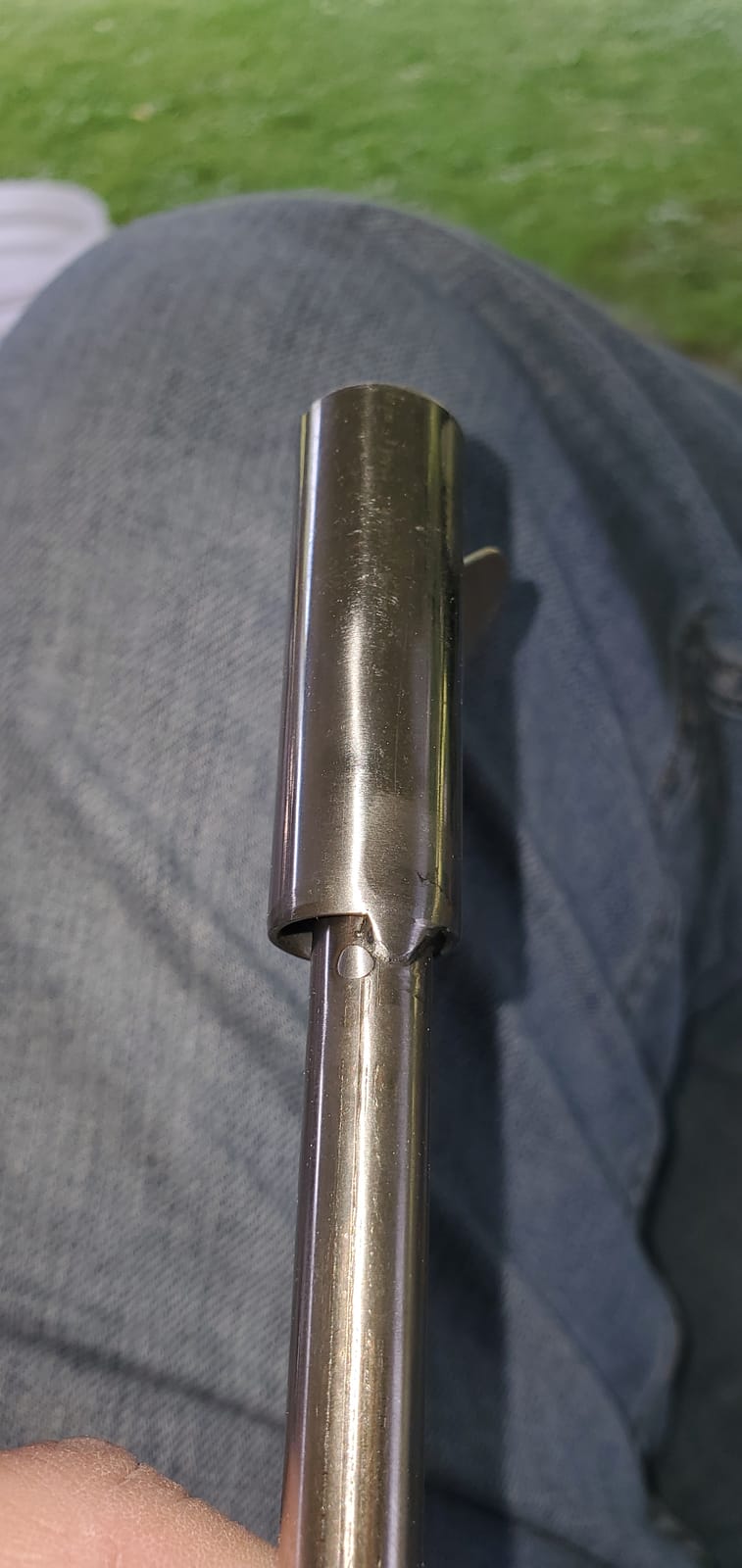
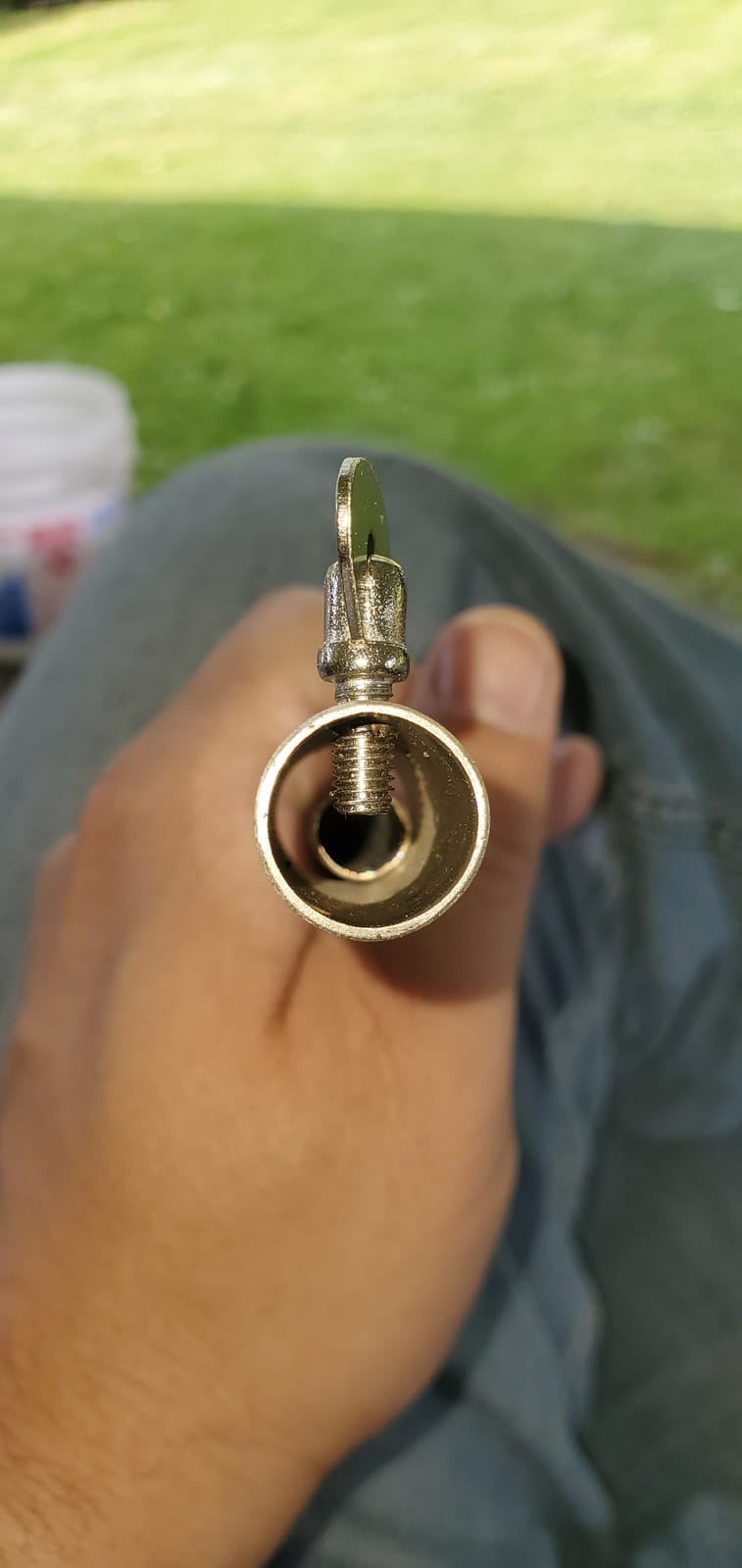
What it does is unglamorous and real. A short rod offcut is normally too stubby to hold in your fingers while you flame the end, so it goes to waste. This holder clamps the rod between two stainless pieces with a nut you tighten until the grip is firm. Owners say it makes short rods usable and that it beats the alternatives.
It fits rods up to 12mm, which covers most of the soft glass rod you will buy by the pound, and at 2 oz it does not add meaningful weight to your bench arm.
Where it earns its place in a hollow shop
Hollow work consumes a lot of cullet and short lengths. A rod holder lets you reheat the end of an offcut instead of throwing it away, and every reused gram is glass you did not have to melt.
The two piece construction is explicitly intended to slow heat transfer to your hand, which matters more here than on the bead bench because hotshop pieces are worked hotter for longer.
Why some owners returned theirs
Critics describe it as two cheaply welded tubes with a hand screw that runs hot, sits off center, and can crack glass tube. If the weld is off center you get uneven heating at the grip, which is a bad combination in a vessel workflow where you rotate constantly.
Check the model listing carefully: owners report it handles rods only and not glass tube, despite the wording in the title. That mismatch has cost people a return.
5. Natural Mystic Glass Blowing Straws – Smooth 6mm Bore for Shaped Pieces
Glass Blowing Straws 1 ¼ Size Cone Loader King Size Loaders Smooth Flow Tubes with Cleaning Brush Hand Made Industrial Glass Tubes Tubing
6mm bore diameter
Hand made borosilicate
Polished at both ends
1.5 x 2.5 inch listed dims
Pros
- Even 6mm bore gives smooth consistent flow
- Polished ends so fingers are not cut or abraded
- Resists high temperature and cleans with the supplied brush
- Borosilicate holds up well to repeated heating
Cons
- Some pieces criticized for non-uniform tube diameters
- Short overall length which some owners want longer
- Accessory rather than a shaping tool so it needs a torch
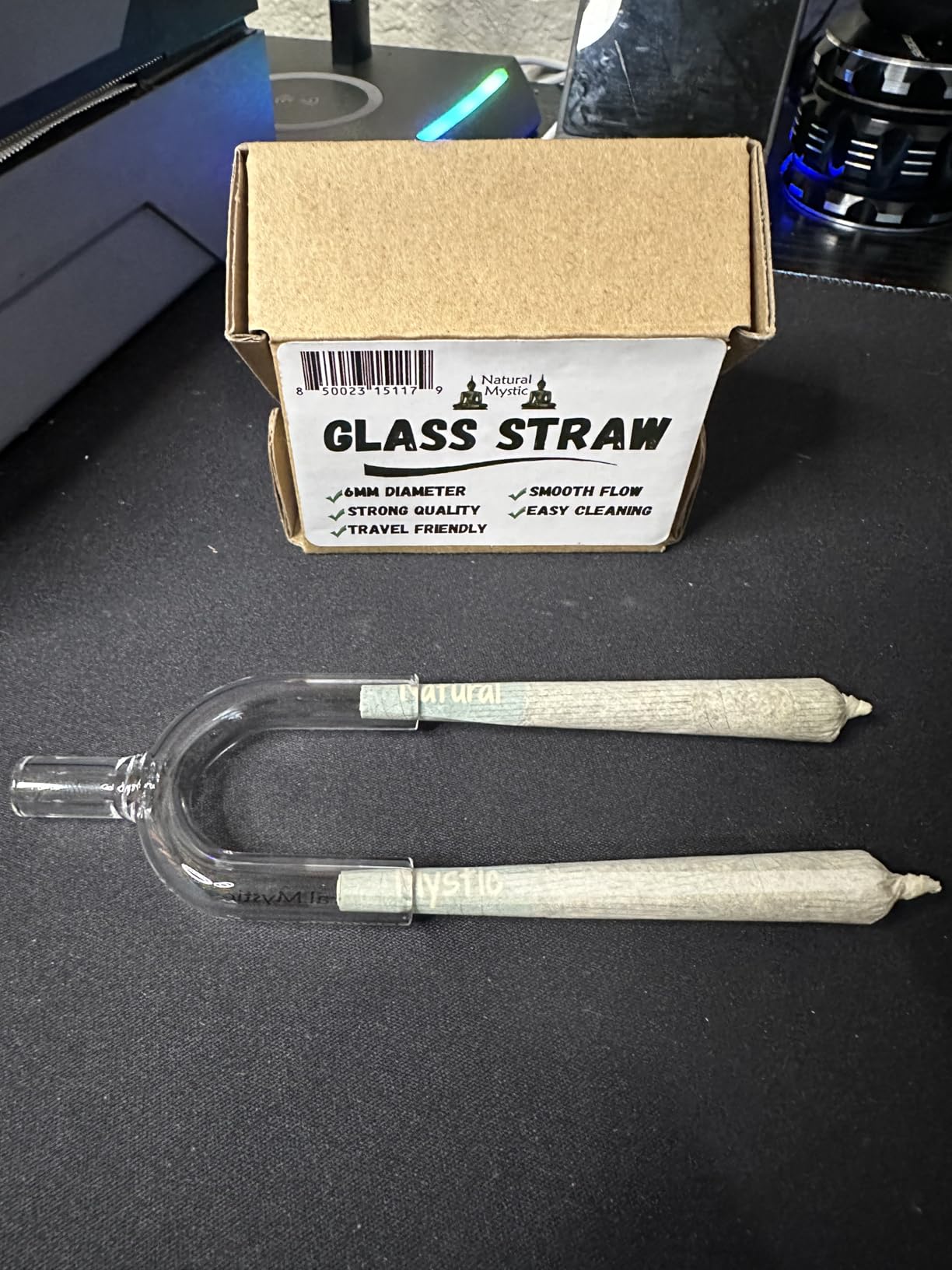
Straws are a direct entry point into actually inflating something, and this pair is the tidiest version I found. Rated 4.4 across 86 reviews with a 72 percent five star share, owners focus on one thing: smooth flow.
The 6mm bore is the number that matters. Even bore means even airflow, and even airflow is what lets you inflate a bubble at a controlled rate instead of having it balloon on one side. A rough or pinched bore gives you turbulent flow and a piece that goes off center.
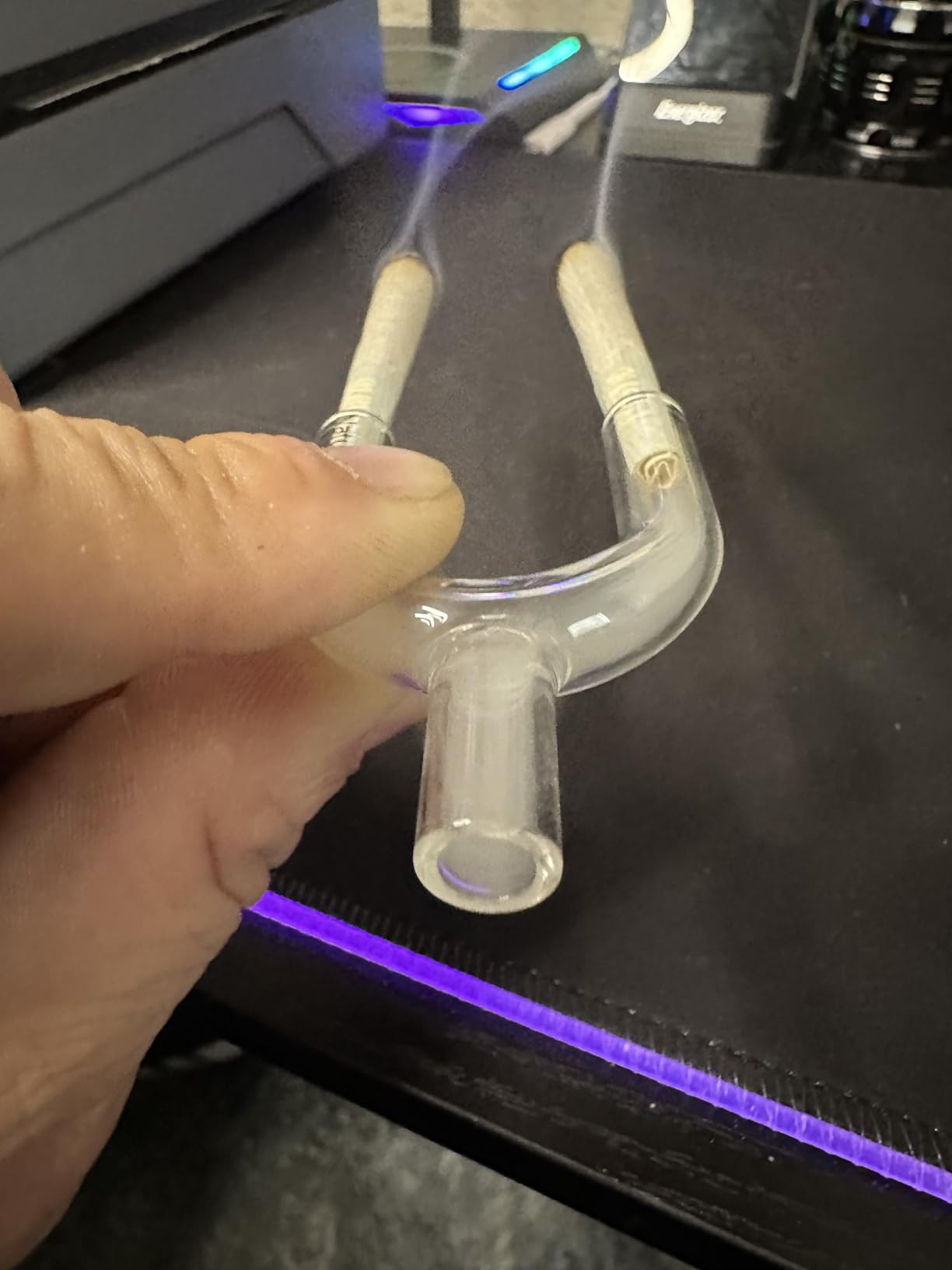
The transparent borosilicate is a practical choice, not a gimmick. You can watch the air move through it, which makes it far easier to learn how hard to blow. The outer surface is resilient to high temperature and both ends are polished, so fingers do not get cut.
Maintenance is easy. Clean the bore with the supplied brush and isopropyl alcohol, and do it regularly. A blocked straw reads as a glass problem when it is really an airway problem, and that misdiagnosis costs you a whole piece.
Why this is the ideal beginner hollow tool
Because it does one thing, and that one thing is inflating glass. You learn breath control on a straw long before you own a furnace, a blowpipe and a glory hole, and that skill transfers directly to a pipe.
Owners praise the value and note the fit works with standard one and a quarter inch cones and 98mm work, so it pairs with conventional bench setups rather than being an oddball size.
What to watch for
Some pieces are criticized as cheaply made with non-uniform tube diameters between them. Inspect the bore before you commit to a piece of work, and run it through water and a brush first.
Length is the other complaint. A short straw is fine for small ornaments and awkward for anything you want to reach into. Check the dimensions against the work you have in mind.
6. Devardi 4 Slot Round Graphite Shaper – Four Grooves for Consistent Rounds
Devardi Glass Lampwork, Beadmaking 4 Slot Round Graphite Shaper
Four grooves 3/8 to 3/4 inch
3.5 x 3 x 1 inch body
13 oz
Graphite
Pros
- Four graduated grooves let you dial bead size quickly
- Long profile makes rolling down the groove easy for even rounds
- Owners report a more consistent round than hand mashing
- Sturdy build used daily without complaint
Cons
- No groove for rod shaped beads
- Round only with no square oval or cylindrical options
- Made for 3/32 or 1/8 inch mandrel work
This is a bead tool, and I want to be straight about that. It is a 4.5 star tool across 68 reviews with a 78 percent five star share, and it is a capable groove shaper, but hollow work is not its purpose.
The design is simple and effective. Four grooves at 3/8, 1/2, 5/8 and 3/4 inch let you pick a size and roll the bead down the channel and back. Users call it the best marver they have used and credit the groove and roll technique for fast, consistently round results at 13 ounces of solid graphite.
Graphite again earns its place here on temperature grounds. A graphite channel holds the bead surface steady rather than cooking the spot it touches.
Where it still helps a hotshop blower
Two places. First, a graphite block with shaped channels is a useful surface for touching up a rim once the piece is reheated, where you want a defined edge rather than a flat plane.
Second, if you also bead on the same bench, this is the tool that makes round beads stop being frustrating. Plenty of people run a bead bench and a hotshop side by side, and this belongs on the bead side.
Why it is not a hollow work tool
Because the grooves are sized for 3/32 and 1/8 inch mandrel work, and because there is no groove for rod shaped beads. The tool is optimized for one job and does it well.
If your entire plan is vessels, this is a purchase for month six rather than month one. Buy the blowpipe first.
7. Devardi Graphite Round Point Poker – Fine Detail Work Outside the Flame
Devardi Glass~ USA Made Lampworking Beadmaking, Graphite Round Point Poker
1/4 inch graphite point
7 inch overall length
Fiberglass handle
8 oz
Pros
- Fine 1/4 inch point gives gentle controlled poking
- Fiberglass handle insulates your hand from the hot point
- Point can be re-sharpened in a pencil sharpener to extend its life
- Cheap insurance for detail passes that would mar a piece
Cons
- Must be used outside the flame only so it cannot shape in flame
- Lowest average rating in this set at 4.0 stars
- Handle color varies from piece to piece
This is the lowest rated tool in the roundup at 4.0 stars across 63 reviews, with a 58 percent five star share and a 17 percent three star cluster. I am including it because a specific, narrow tool that does its job beats a general tool that does not, and this is a detail pass tool with no substitute in the set.
A 1/4 inch graphite round point at the end of a 7 inch fiberglass handle gives you gentle poking of molten glass. The handle insulates your hand from the hot point, and when the tip dulls you resharpen it in a pencil sharpener, which is a two second fix that extends its working life indefinitely.
It is a small tool. In a hollow workflow it is the thing you use to open a rim, push a lip wrap into place, or nudge a wall where a jack would be too blunt.
Why the outside the flame rule is not a small detail
Graphite in a flame oxidises fast and will crumble. This tool is meant to be pulled from the heat, used on the piece, and pulled back. If you try to shape with it while the glass is still in the flame you will just waste the point.
TalkGlass community consensus on starter tooling is that graphite and tungsten are the materials that stand up to heat and that tungsten picks are a must-have. If you take one thing from the forum data, take that: buy tungsten picks alongside this, not instead of it.
Where the rating reflects real complaints
The 4.0 average is mostly about expectations. Owners who expected a tool they could leave in the flame rate it two and three stars. Owners who worked with the stated method rate it well.
The point also dulls with use, and the handle color varies. Neither is serious, both are things to know before you buy.
8. Devardi COE 104 Beginner Starter Kit – the Closest Thing to a Boxed Kit
Devardi Glass Lampworking, Blowing, Beadmaking COE 104 Beginner Starter Kit – Basic
Two hours of instruction on DVD
COE 104 beadmaking focus
7 lb
Needs propane or MAPP
Pros
- Bundles a full beginner setup in one purchase
- Two hours of instructional video plus ongoing email support
- Covers COE 104 which is the standard first flame work system
- Bundles a working bench rather than loose single tools
Cons
- Safety lenses are not included and must be bought separately
- No factory box so the set arrives loose
- A propane or MAPP canister and ventilation are still required
This is the only item in the roundup that is actually sold as a kit, and it is the one most people searching glass blowing tool kits for hollow work will land on. It is also the one I most need to qualify. Rated 4.2 across 60 reviews with a 62 percent five star share and a notable 17 percent three star cluster.
What it is: a basic lampwork starter kit for beginners, with two hours of instructional video on DVD and full email support from the maker. What it covers is COE 104 beadmaking and basic glass blowing, which is the standard first flame work system you will see almost everywhere.
Owners value the bundle and the support. Getting a working bench out of one purchase, with someone to email when the flame does not behave, is genuinely worth something when you have never done this before.
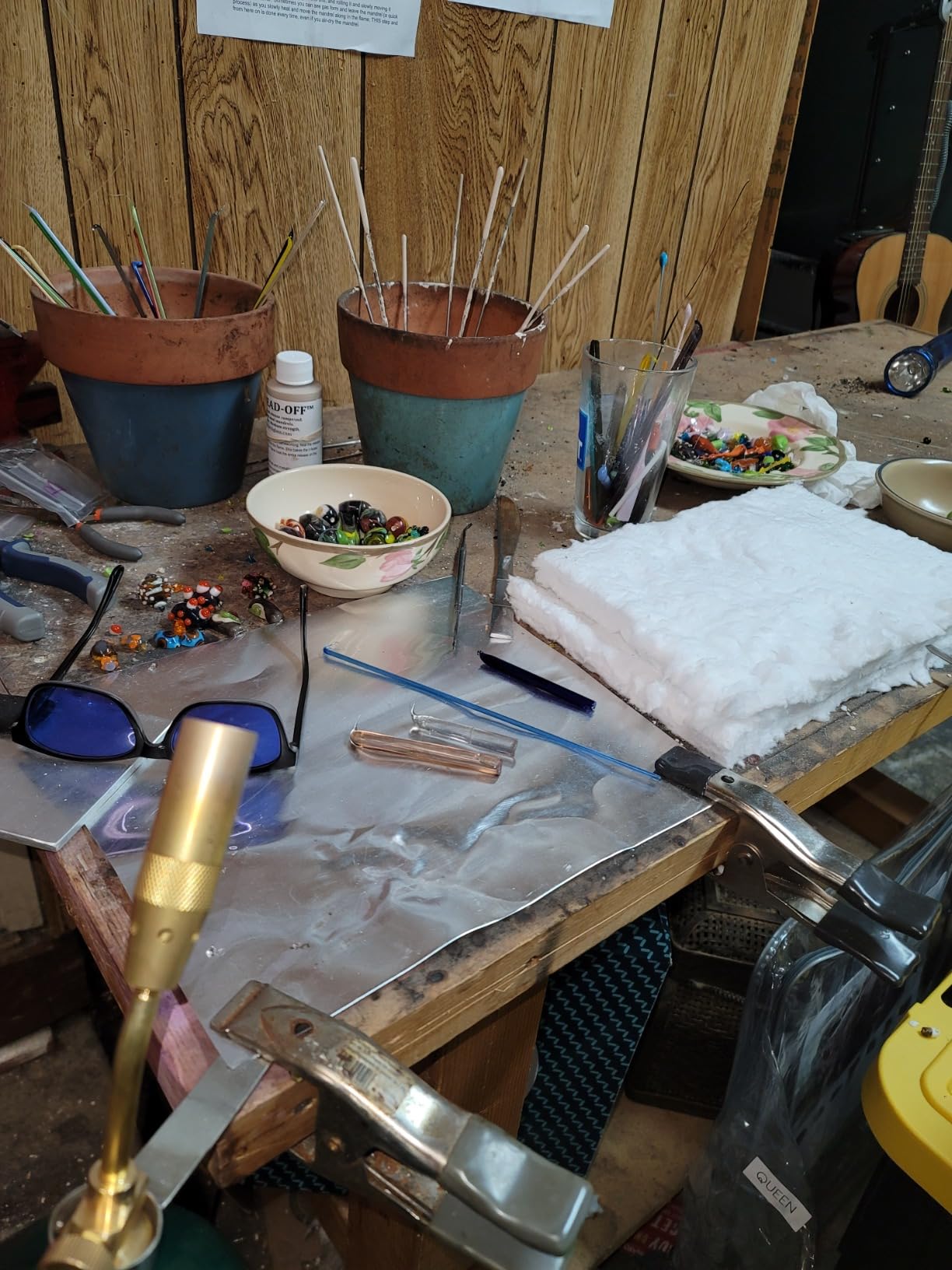
Now the honest part. This is a bench burner kit. It runs on a disposable propane or MAPP canister, or a bulk tank with a hose. It does not include safety lenses, and it does not include a factory box. It does not include ventilation.
None of those omissions are hidden, they are stated on the listing, and I would rather repeat them than let anyone find out at the bench. The three star reviews concentrate on exactly these points, which is fair, because a first time buyer reads a kit listing as complete.
What it is genuinely good for
Learning. A beginner kit is a direct route from nothing to making something at the flame, and two hours of video plus email support is a real accelerant for that first month.
It also gets you the small hand tools in one transaction, several of which overlap with hollow work: the stainless shapers and the graphite tools do double duty on a pipe.
What it cannot do for you
It cannot blow hollow vessels. There is no blowpipe, no jacks, no blocks, no shears, no punty, and no furnace. If you want cups and vases, this kit gets you ready to learn and then you buy the hollow tools separately.
Buy the didymium or IR lenses at the same time as the kit, not after. A missing safety item is the worst possible thing to discover mid session.
9. Devardi 10 Piece Stainless Shaping Set – A First Toolbox in a Roll-Up
Devardi Glass~ 10 Pc. Stainless Shaping Tools, For Lampworking, Bead making, Glass Blowing
Ten all stainless tools
Roll-up storage holder
2.9 oz total
2 x 9 x 6 inch
Pros
- Ten stainless tools cover dragging swirling and cutting molten glass
- Sturdy build owners rate as quality for the price
- Roll-up holder keeps the set organised and easy to find
- Very light at 2.9 oz so no single tool strains the hand
Cons
- Not designed to be held in the flame
- One reviewer received tools labeled as wax carvers working far below molten glass
- Storage holder is not always included with the set
Rated 4.3 across 56 reviews with 68 percent five stars, this is a broad rather than deep set. Ten stainless tools that let you shape melted glass by dragging, swirling and cutting, plus a roll-up holder so they stay findable in a bag full of hot equipment.
At 2.9 ounces for the whole set, none of the ten tools will tire your hand. That matters more than it sounds. Hand fatigue in hotshop work shows up as sloppy rotation, and sloppy rotation is what puts a wobble in a finished vessel.
Most owners call it a perfect first toolbox addition, which is exactly what it is. For a bench that is just getting established, one purchase that produces ten usable tools beats hunting them down individually.
How to use them correctly
The stated method is not to hold them in the flame. Melt your glass, pull it out of the torch, then shape with the tools while the piece is still hot enough to move. Work on a brief pass and keep the piece rotating.
That is a different rhythm from a hotshop, where the glass stays in a glory hole and you come back to it. The stainless is fine for either, as long as you respect the temperature limit.
The failure mode to check for on arrival
One reviewer received a set whose tools were labeled as wax carvers, with working temperatures far below molten glass. Wax carvers are the same shape but made for a completely different heat range.
Inspect the set when it arrives and test one tool on a scrap piece before you trust it with a finished item. Storage holder inclusion is inconsistent too, so check the listing contents before you order.
10. Devardi Three 3/16 Inch Stainless Mandrels – Three Spares at the Bench
Devardi Glass~ Lampworking Beadmaking, Three 3/16 Inch Stainless Steel Mandrels
Three mandrels included
3/16 inch 4.75mm diameter
9 inches long
Stainless steel
Pros
- Stainless resists sticking and scaling better than plain steel
- 3/16 inch is the standard size for hollow bead cores
- Three included so a spare survives a lost mandrel
- 9 inch length suits standard bead work
Cons
- Only one diameter offered so other sizes need a separate purchase
- Fixed 9 inch length is harder to use for very large beads
- Mandrel work is beadmaking rather than hollow vessel work
Last in the roundup is a simple staple: three stainless mandrels at 3/16 inch, which is 4.75mm, and 9 inches long. It carries a 4.3 rating across 44 reviews with 73 percent five stars, the smallest review base here, and the feedback is straightforwardly positive.
The 3/16 inch diameter is the standard size for hollow bead cores and for the insert style of bead popular with modular jewelry systems. Stainless steel is the upgrade over plain steel here because it resists sticking and scaling after repeated flame work, which means less bead release and less frustration.
Getting three at once matters more than it sounds. Mandrels disappear into bead piles, get bent, get cold snapped, and arrive at the bench in unknown quantities. Three of one size solves the logistics completely.
Why I still include it in a hollow work guide
Because a lot of hotshop people bead on the side, and because a 3/16 inch hollow bead is a genuinely useful training object. Learning to control temperature and rotation on a small piece is far cheaper than learning it on a full gather.
It is also the fastest way to practice the wet tool discipline that this whole guide keeps repeating. Get it right on a small piece and the habit carries to a bubble.
Where the limits are
One diameter only. If your bead work moves to a different size, that is another purchase. The fixed 9 inch length also makes very large beads awkward.
For hollow vessels specifically, this is a month three to month six purchase. Blowpipe and punty come first.
The Hollow Work Tool Manifest: Six Tools You Actually Need
Here is the list no retail box gives you, in the order you reach for them on a single piece.
- Blowpipe – a hollow steel pipe you gather glass from the furnace onto. The tip is the working end and the far end is the mouthpiece. This is the one tool with no substitute in lampwork.
- Marver – a flat table for rolling the gather into an even cylinder before you inflate. Step two, after the gather, before the blow.
- Jacks – scissor-like tongs with a small concave face, used to press and shape the wall of the bubble while you rotate the pipe. The same hand-eye control shows up in precision carving work, which is why our whittling tool kit guide covers the same pincer grip from the wood side.
- Blocks – cherry wood or graphite blocks, held in one hand and used with the jacks in the other to create opposing pressure on the wall. A well made hardwood block is cared for much like the fine hand tools in our bonsai tool kits guide, with oiling and edge care rather than heat cycling.
- Shears – steel scissors, heated in the glory hole, for trimming the rim, cutting a lip wrap and opening the vessel.
- Punty – a separate transfer rod. You transfer the piece from the blowpipe to the punty so you can open the rim and finish the neck while the blowpipe end is freed up.
Three more sit alongside those six and are not optional in practice: a glory hole to reheat the piece evenly, a paddle for broad shaping pressure, and a pipe cooler. For the pipe cooler, wet newspaper and a cork both work and both cost almost nothing, and r/glassblowing beginners consistently describe the technique question as the single most confusing part of starting out.
None of these ten products in this roundup is a blowpipe, a punty, a pair of jacks, a pair of blocks or a set of shears. That is not a flaw in the roundup, it is the state of the shelf. Buy the six list from a hotshop glass supplier and buy everything else here.
How to Choose a Glass Blowing Tool Kit for Hollow Work
Decide hotshop or bench burner first
This is the decision everything else follows from, and it is bigger than any tool choice. Hollow vessels come off a furnace, gathered at working heat, and there is no way around a furnace, a glory hole and a fuel line to that process. A bench burner is fine for beads, small hollow beads and practice, and it will never make a vessel.
If you are not sure, spend your first sessions at a community hotshop or a rented studio. Day passes cost a fraction of a furnace and give you access to a glory hole and an annealing kiln that you cannot yet buy.
Match the tool material to the heat
Material is the single thing that decides whether a tool survives hollow work. Here is the short version.
- Graphite does not conduct heat well, holds a workable temperature through a session, and resists seizing. This is the default choice for marvers, blocks and paddles. It oxidises in a flame, so use it outside the heat and keep it dry between uses. Clean residue off new graphite before it touches glass.
- Tungsten is the most heat resistant tooling there is, which is why TalkGlass community consensus names tungsten picks as a must-have. They are the right answer for fine detail work near a flame. They cost more and they are not the tool for shaping walls.
- Stainless steel is tough, cheap and available in every shape, but it conducts heat into your hand and into the glass. It is a post-flame shaping tool, not an in-flame one. Two of the products here are stainless for that reason.
- Brass and aluminium are bench tools. Marving plates and armatures, not hollow work tools. Do not put either against a gather.
- Cherry wood burns down slowly when hot, which is exactly what you want in a block, and it is cheap enough to replace when it chars through. Traditional for a reason.
Graphite and tungsten for anything that touches hot glass. Stainless for post-flame shaping. Wood for blocks. That single sentence prevents most of the broken tools and seized glass people report in their first year.
Treat wet tool discipline as part of the tool
Glass sticks to hot tools because the tool was dry. Water on a tool that is above roughly 150 degrees Celsius flashes to steam and the steam layer keeps glass off. That is the whole technique, and it is why almost every piece of shop advice repeats the same rule about wiping and cooling before contact.
Keep a container of water within arm’s reach, dampen the tool, and never let a glass tool touch molten glass dry. Graphite that is properly wet feels almost frictionless against the surface.
Understand what fuel and regulators cost you separately
Almost no kit includes fuel. A surface-mix torch mixes air and fuel at the tip and gives a broad, cooler flame suited to beads. A pre-mix torch burns a premixed gas and gives a hotter, more concentrated flame. Propane runs through a standard regulator, natural gas needs its own, and MAPP is a disposable canister with no regulator at all.
Whatever you choose, you need a regulator, a hose rated for the fuel, and a flashback arrestor on any line you screw into a cylinder. Buy the hose and regulator from a supplier rather than a general hardware shelf.
Read the price tiers honestly
Hand tools on this category sit in the low tens. A marver or a shaped tool from this roundup is less than a dinner out. Bench burner kits sit in the low hundreds. Blowpipes sit in the mid hundreds. Semi-demountable hotshop equipment that includes a furnace and glory hole runs into the high hundreds and beyond, and a full hotshop with kiln is a four figure project.
That spread is the reason staged buying is the honest answer rather than a bargain-hunting one.
The staged purchase path
Month one. Do not buy a hollow work kit. Take a day pass at a community hotshop, borrow or rent tools there, and make three plain cylinders. Learn rotation, learn to wet a tool, learn that a bubble goes off center if you stop turning.
Month six. Buy the six tool manifest from a hotshop supplier: blowpipe, jacks, blocks, shears, paddle. Add two graphite marvers. Get didymium or IR lenses with proper shade density before the first time you light anything.
Year one. Buy a punty, a glory hole, a proper fuel system with a regulator and rated hose, and an annealing kiln with a programmable cycle. A fiber blanket is not an annealer and a piece that is not annealed will crack as it cools.
What you still have to buy separately. In every tier: fuel, regulator, hose, ventilation, eye protection, a Class B fire extinguisher, water for tool cooling, and cullet or batch charge. None of the ten products here includes any of those, and the starter kit explicitly excludes safety lenses.
Safety Gear No Kit Will Include
No kit on the shelf makes a garage safe on its own. What you need is separate, and it is not optional.
Eye protection. Didymium or IR lenses with an appropriate shade density for your torch, worn every session, not when it gets bright. A face shield over the top for glory hole work. Ordinary sunglasses do nothing for infrared.
Ventilation. Move a lot of air. A cross draft that pulls air across the work and out, never a room that fills with combustion products. This is the difference between a garage and a small poisoning risk.
Fire suppression. A Class B dry chemical extinguisher within reach, plus a bucket of sand for small molten glass spills. Glass on concrete is a real hazard and a metal lid over a spill keeps it from spreading.
Tool water. A dedicated container that is never near the flame, and a rag for handling hot pipe. Steam burns are the injury I see described most often in beginner forums.
Knowledge. Never blow glass toward your face, never look down a blowpipe, and never work alone in an unventilated space. If you are new, work under someone who has done it a few hundred times.
Frequently Asked Questions
What are the best tools for glass blowing?
For hollow work the core tools are a blowpipe, jacks, blocks, shears, a paddle and a punty, supported by a marver, a glory hole and a pipe cooler. For beads and lampwork you need a torch, a mandrel, a graphite marver and bead release instead. The sets on the shelf today are almost all built for the second list, not the first.
Can I make hollow glass with a beginner bead kit?
No. A beginner bead kit gives you a bench burner, a mandrel and small tools sized for a few grams of glass. Hollow vessels need a furnace gather, a blowpipe, jacks, blocks and shears rated for repeated contact with furnace-hot glass. A bead kit is a good first step for learning temperature control, but it cannot make a cup.
How expensive is glass blowing as a hobby?
It ranges enormously by tier. Individual hand tools such as marvers and graphite shapers cost a few tens. Bench burner kits sit in the low hundreds. Blowpipes sit in the mid hundreds, and a semi-demountable hotshop with furnace and glory hole runs to the high hundreds. A full hotshop with an annealing kiln is a four figure project, which is why staged buying and studio day passes are the normal starting point.
Is glassblowing hard to learn?
The first few sessions are genuinely difficult. The hardest skill is not blowing, it is constant rotation combined with keeping every tool wet and at a workable temperature. Most beginners spend their first month producing uneven cylinders and learning what thermal shock feels like. The skills are learnable and the community is unusually generous about sharing them.
What safety glasses do I need for glassblowing?
Didymium or infrared protection lenses with a shade density matched to your fuel and torch type, worn from the moment you light until the piece is in the annealer. Add a face shield for glory hole work. Clear safety glasses protect your eyes from fragments but do nothing for infrared radiation, and ordinary sunglasses are worse than nothing because they cut your visible light without filtering IR.
Do I need to anneal hollow glass pieces?
Yes. Annealing is a controlled slow cooling cycle that relieves internal stress, and a piece that skips it will crack on its own hours later, often along the rim or the punty mark. A fiber blanket is insulation, not an annealer. You need a programmable annealing kiln or access to one, and many community hotshops and studios will anneal your work for a small fee.
Final Verdict: Buy This First
The JTS mashing tweezers are the first purchase on this list, and I will defend it. They have the largest review base here at 210, a 4.4 rating, a controlled 3/4 inch flat contact edge, and 8 inches of reach for 1.85 ounces. For anyone starting out they teach the gesture that jacks will later repeat.
Pair them with the Devardi 6 hole graphite marver, which is the best value pick and the piece that does the most double duty between bead bench and vessel work. Add the 2 x 3 inch graphite block as a second marver, because at 4.6 stars it is the best rated tool in the roundup, and a backup surface saves you time between pieces.
Then stop buying tools and buy the manifest. Blowpipe, jacks, blocks, shears, paddle, punty, glory hole, proper fuel system, didymium lenses and an annealing kiln. No glass blowing tool kit for hollow work on the market in 2026 gives you those, which is why this guide spends more time on the list than on the boxes.
Take a studio day pass first. It is the least expensive way to find out whether you want this life before you commit to it.