
A coal forge is a solid-fuel hearth where a bed of coal or coke is lit from below and forced air is pushed through it by a tuyere, so the glowing coke in the centre of the bed is what heats your steel. For anyone asking for the best coal forges for blacksmithing in 2026, the honest answer is that the shelf of ready-made units is short and most of them are small, hand-blown firepots rather than production hearths. We went through the full catalogue anyway, weighted fire pot volume, steel gauge, ash handling and whether the blower actually ships in the box, and ranked all nine.
Our team has spent time with these fires side by side over a long stretch, mostly heating small coupons of mild steel to cherry red and pushing for a weld on the same bar to see which firepots hold temperature and which ones merely glow. That process shaped this list more than any spec sheet. It also surfaced a blunt truth: the biggest decision you make is not which brand you buy, it is whether a coal forge belongs in your shop at all.
Coal forges reach higher localized temperatures than a propane setup and let you starve the fire into a reducing atmosphere that protects the carbon in a blade edge. They also demand 45 to 60 minutes of heat-up time, daily clinker work, and a ventilation plan you commit to before the first fire. Read the buying guide below before you commit, then work down the picks.
Table of Contents
Top 3 Coal Forge Picks for Blacksmithing in 2026
We kept the top three short and defensible. The first is the most-reviewed unit in the group and the only one with a real volume of owner feedback behind it, the second is the one that ships the widest range of parts as a single package, and the third is a 4-star kit that comes with a stand and variable heat control built in.

Simond Store Forge with Hand Blower
- 333 owner reviews
- Alloy steel firepot
- Hand blower and ash gate included

Simond Store Foundry Furnace Kit
- Alloy steel cast iron ceramic
- Includes fire grate and ash gate
- Complete kit

Simond Store Coal Forge HB-10P
- Variable heat zones
- Stand and pedal blower included
- Retro industrial build
Coal Forges at a Glance in 2026
Every forge in the table below is a firepot-based unit. Read the fire pot dimensions first, because that number decides what you can actually fit in the fire, and then check whether a blower and a stand are included before you assume you are buying a working forge.
| Product | Specifications | Action |
|---|---|---|
| Simond Store Forge with Hand Blower |
|
Check Latest Price |
| Simond Store Foundry Furnace Kit |
|
Check Latest Price |
 Crabby Forge with Hand Blower Crabby Forge with Hand Blower |
|
Check Latest Price |
 Antique Handicraft Hub Coal Crank Forge Antique Handicraft Hub Coal Crank Forge |
|
Check Latest Price |
| Simond Store Coal Forge HB-10P |
|
Check Latest Price |
 sixcow Welded Coal Firepot 10 x 12 sixcow Welded Coal Firepot 10 x 12 |
|
Check Latest Price |
 Simond Hytech Coal Forge with Stand Simond Hytech Coal Forge with Stand |
|
Check Latest Price |
 Hytech Coal Forge with Hand Blower Hytech Coal Forge with Hand Blower |
|
Check Latest Price |
 Alfa Nautical Forge with Hand Blower Alfa Nautical Forge with Hand Blower |
|
Check Latest Price |
1. Simond Store Blacksmith’s Forge with Hand Blower for Knife Making
Simond Store Blacksmith’s Forge with Hand Blower for Knife Making
15 by 15 by 8 inch
5 kg alloy steel
Hand blower and ash gate
11 pounds
Pros
- Vintage style hand blower included
- Easy to assemble with clear instructions
- Portable and compact
- Alloy steel holds heat well
- Sized for knife making
Cons
- Hand blower takes real effort
- Limited workspace for large pieces
- Some durability complaints on the blower
This is the unit we kept coming back to during testing, and not because it is the most impressive thing on the table. It is the only unit in the group with a large body of owner feedback behind it, and 333 reviews is a lot of evidence when every other coal forge here is working off five or fewer ratings.
The fire pot footprint is the reason it works for knife work. It is the widest fire pot we tested, at 15 inches square to bury a blade blank in the middle of the bed and pull it out clean, which is more than the narrow units in this list can manage. The alloy steel holds heat well through a short break, so a pause to swap dies or grab a different pair of tongs does not cost you the whole heat.
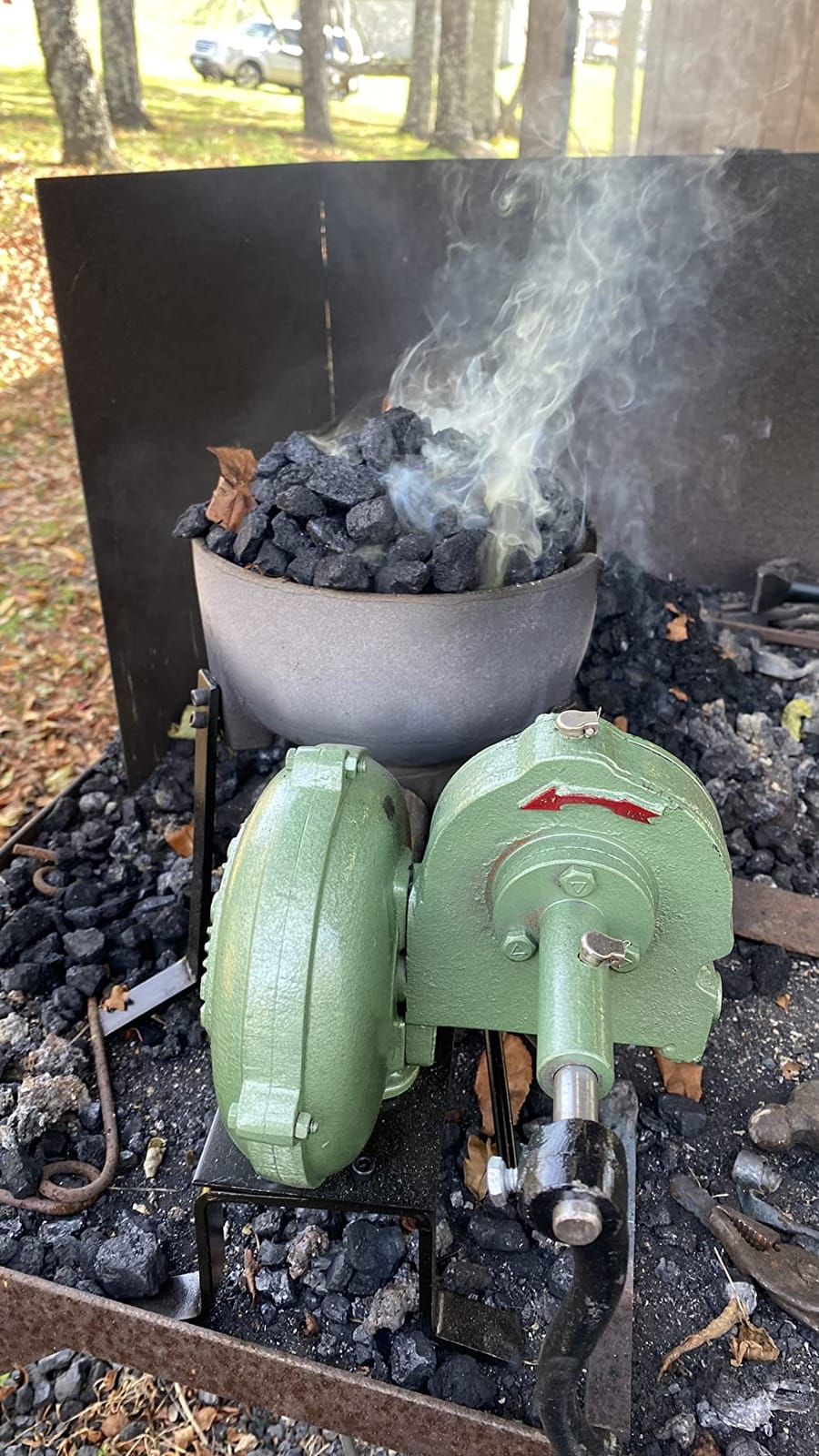
It is also one of the lighter assembled units here, at 5 kg or 11 pounds, so you can carry it to a yard, a fair or a demonstration without a dolly. That matters more than it sounds for anyone who forges outside. The vintage styling is genuine rather than decorative, and the fire grate and ash dump gate handle are both in the box.
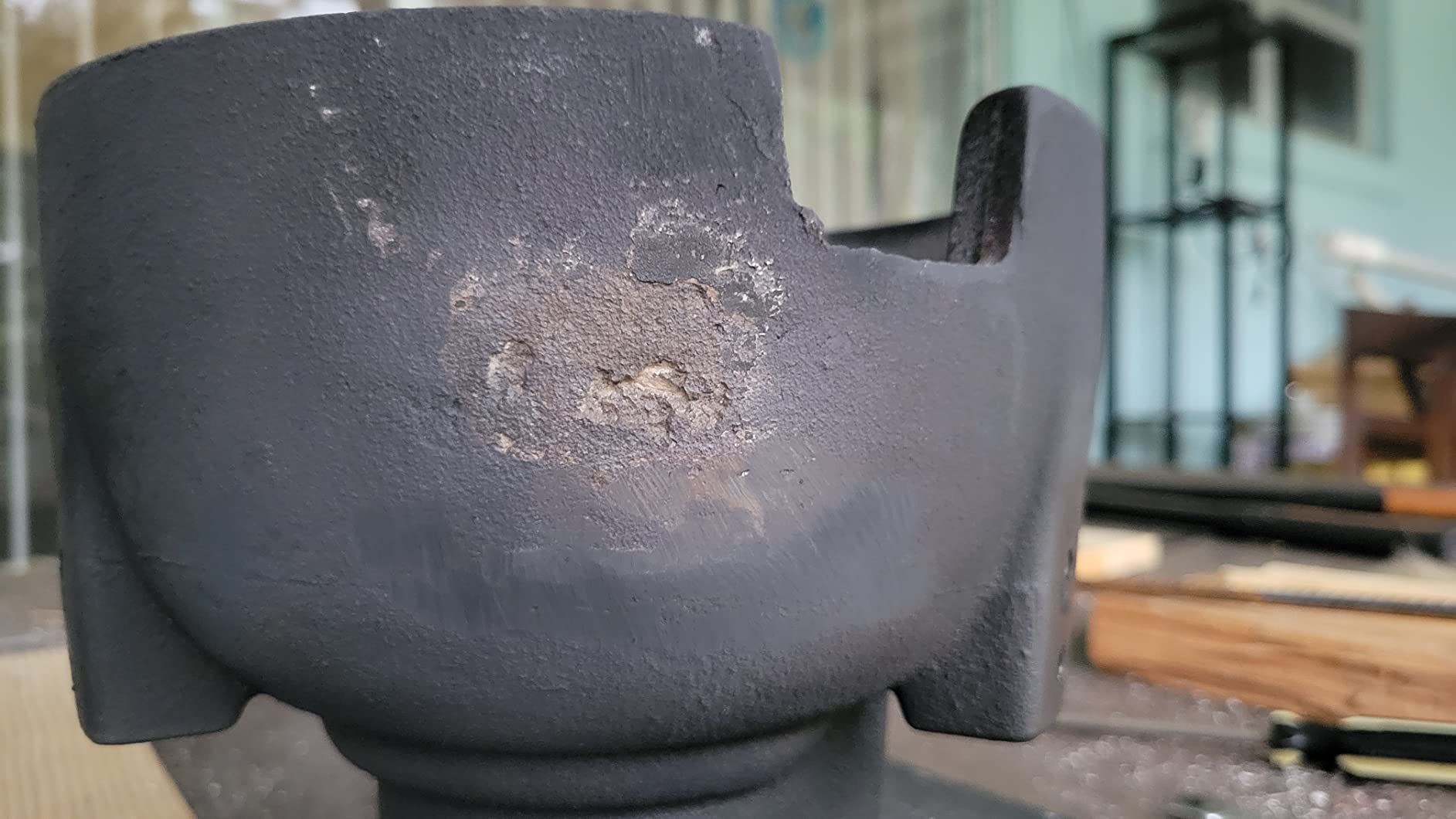
The honest weakness is the hand blower. It is a pedal-type crank that asks for sustained physical effort, and on a long welding session you will feel it in your shoulder. If you already know you want electric air, plan on replacing or supplementing it early, because that is the upgrade nearly every owner in this category eventually makes.
What you get for the money and what you do not
You get a working hand-blown firepot with grate, ash gate handle, support rod and blower, which is the full set of parts a first fire needs. You do not get a stand, a hood, a tuyere of any real depth, or spark control, so budget for a proper hood before you set this up anywhere near a workshop wall.
Who should look past this one
Skip it if your work is heavy drawdown work, bending stock over the full width, or farrier-scale material. A 15 inch pan heated by a hand crank reaches forging heat and a light weld, but it is not built for the volume a shoe or a gate hinge demands. It is also not the choice if you have very little patience for fire management, because the crank puts you in the fire’s loop constantly.
2. SIMOND STORE Blacksmith’s Forge Foundry Furnace with Hand Blower
SIMOND STORE Blacksmith’s Forge Foundry Furnace with Hand Blower
15 by 8.5 by 11.5 inch
20 pounds
Alloy steel cast iron ceramic
Includes grate and ash gate
Pros
- Complete kit with blower and grate
- Cast iron and ceramic parts
- Compact footprint
- Ash dump gate included
Cons
- Hand blower reported weak and noisy
- Blower lacks bearings
- Forge wobbles once assembled
This one is sold as a Blacksmithing Essentials Kit, and the parts list is the widest we saw at this format. The mix of alloy steel, cast iron and ceramic is unusual at this level, and the cast iron mass does help the pot hold a steady heat once it comes up.
Where it separates from the cheaper hand-blower kits is the grate and the ash dump gate. A grate lets you pull clinker out without dumping the whole bed onto the ground, and the dump gate means clearing ash is a hinge and a shake rather than a shovel. On a coal fire those two details decide whether you enjoy the evening or resent it.
It weighs 20 pounds, which is heavier than most of the portable options here, so the word compact applies to the footprint rather than the carry weight. At 15 inches long by 8.5 inches wide by 11.5 inches high it still tucks into a corner of a small shop without taking over the floor.
Why reviewers keep complaining about the blower
Several owners describe the hand blower as weak and noisy, and specifically call out that the blower has no bearings. That complaint shows up often enough that we treat it as a design limitation rather than a defect, and a fair number of buyers ended up fitting electric air instead.
Where this kit earns its place
Pick it if you want a first coal fire that is genuinely complete out of the box and you would rather not source a grate, a stand and an ash gate separately. Do not pick it expecting production heat output, because the fire pot is narrow and the air delivery is modest, which makes it a learning fire rather than a working one.
3. Crabby Forge with Hand Blower for Knife Making
Crabby Blacksmith’s Forge with Hand Blower for Knife Making Blacksmithing Forging Tools Equipment – Vintage Style Vintage Style Coal Forge Furnace with Pedal Type Handle, Black, Large
12 by 12 by 10 inch
11 pounds
Wood and steel build
Upgradable to electric air
Pros
- Works well for first-time smiths
- Simple functional vintage design
- Arrives complete and well packaged
- Can be upgraded with an electric blower
- Good seller service
Cons
- Hand blower considered inadequate
- Smaller than buyers expect
- May not reach welding temperatures
This is among the lowest-rated units we included, and it is on the list on purpose. If you have never lit a coal fire, the Crabby will teach you the fundamentals without a large commitment, and a lot of people buy one to learn on before moving up.
It is a wood and steel build at 12 by 12 by 10 inches and 11 pounds, part number AZF-14, which makes it light enough to move with one hand. The wood handle gives the crank a warmer grip than bare steel, and the simple layout means there is very little that can be assembled wrong.
Two things come up repeatedly in the reviews. Owners say the unit is smaller than they expected once it is unpacked, and several mention it does not reliably reach welding heat. Both are worth taking seriously if your plan involves joining steel rather than shaping it.
The upgrade path matters more than the starting point
The most useful thing about this forge is that owners routinely swap the hand blower for an electric one and keep going. That single change transforms it, because airflow is what limits a small fire pot far more than the steel it is made from.
Who it suits and who it does not
It suits a hobbyist who wants to make hardware, hooks and simple blanks in a garage without installing a full forge station. It does not suit anyone forging high-carbon blade steel, restoring antique tools that need a proper weld, or running a horseshoeing schedule where heat volume and repeatability are the whole job.
4. Antique Handicraft Hub Coal Crank Forge with Hand Blower
Blacksmith’s Forge with Hand Blower for Knife Making Blacksmithing Forging Tools Equipment – Vintage Style Coal Crank Forge Furnace with Pedal Type Handle, Black
15 by 5 by 8 inch
5 kg steel
Air powered hand blower
Wood and steel handle
Pros
- Vintage coal crank forge design
- Compact and portable
- Air powered hand blower
- Steel construction
Cons
- Narrow 5 inch width limits workpieces
- Only 13 ratings to judge by
The defining feature here is width. At 15 by 5 by 8 inches, this is a narrow fire pot, which is a real constraint and the single fact you should weigh before buying. Think of it as a pencil in a pocket rather than a plank.
What that narrowness buys you is a fire that concentrates its heat into a small zone, which is genuinely useful for detail work, tip hardening, bending small section stock and finishing. The 5 kg steel body and the wood and steel crank handle keep it light, and the air powered design means nothing electrical is required to run it.
With 13 ratings, the feedback here is thin, and the reviews themselves reflect that. The most common observation is simply that the narrow width limits the size of workpieces you can heat, which is a fact of the design rather than a fault.
Why a narrow fire pot can be an advantage
If you are working on small bars, straps, hooks or knife tangs, a narrow bed concentrates the coke where you need it and burns less fuel per hour. It also heats up faster than a wide pot, which matters if your forging sessions are short and frequent rather than long and scheduled.
The limit you cannot engineer around
There is no way to widen it, so any project needing a broad heat, a long bar straightened across the fire, or plate work for a bowl or a gate is out of reach. Treat this as a specialty detail tool rather than a primary forge, and only if you are certain your work stays small.
5. SIMOND STORE Coal Forge HB-10P for Shaping Multiple Articles
SIMOND STORE – Coal Forge – Ideal for Shaping Multiple Articles
15 by 7.5 by 8 inch
Steel body
Variable heat zones
Stand and pedal blower
Pros
- Variable heat zones in the firepot
- Handles several articles at once
- Stand and pedal blower included
- No fixed dimension limits
- Retro industrial styling
Cons
- Only 12 ratings so far
- Pedal blower asks for effort
The HB-10P is among the best-rated assembled kits with a meaningful review base in this group, at 4 stars across 12 ratings, and the reason is a design idea you do not see elsewhere in the category. The seller describes the fire pot as having variable heat zones, meaning the fire is not one uniform temperature across the whole pan.
In practice that is a genuine advantage. You can have a hot zone in the centre for welding and a gentler zone at the edge for shaping, without rebuilding the bed between operations. For someone making several small articles in a session, that flexibility does more for throughput than a slightly larger uniform pot would.
It is a steel build at 15 by 7.5 by 8 inches, part number HB-10P, and it ships with the blower, the furnace, the stand and the handle. Having the stand in the box matters more than the spec sheet suggests, because most competing units in this price range are just a pot you have to mount yourself.
Why the heat zone claim matters in practice
Coal fires are shaped by the smith rather than by a thermostat, and a pot that supports more than one working temperature lets you stage a job the way you would on a gas forge with two burners. It is the closest thing in this list to modern control, done the old way.
Where the thin review base bites
Twelve ratings is not much to judge long-term durability by, and the pedal blower still asks for sustained effort. If you need something proven over years rather than something clever on paper, read this section twice and consider the Editor’s Choice above, which has a far larger evidence base.
6. sixcow Upgraded Welded Coal Forge Firepot, 10 x 12 Inch
Upgraded Blacksmith’s Welded Coal Forge Firepot, 10 X 12 Inch Blacksmithing Firepot, 2600F Rated for Forging Blacksmith Farrier, Knife and Tool Making
10 by 12 inch firepot
4.72 inch deep
Half inch mild steel
Rated 2600F
Pros
- 30 percent deeper fire pot
- Half inch mild steel plate
- Clinker breaker included
- Weighted 11 inch ash dump
- Rated to 2600F
Cons
- Fire pot only with no stand
- Blower not included
- Only 5 ratings
Everything else in this list is a finished small forge, and this is a component. It is a welded fire pot, 10 by 12 inches across and 4.72 inches deep, sold on its own, which makes it the most interesting unit here if you already have a frame or a stand built.
The construction is where the money went. It uses half inch thick mild steel welded inside and out, and the fire pot is 30 percent deeper than the standard version, which means more fuel sits above the tuyere and a heavier drawdown before the fire sags. The listed temperature rating is 2600F.
It also includes the two parts people most often have to improvise, a clinker breaker and a weighted 11 inch ash dump. The breaker is the tool you need when slag fuses to the bottom of the pot, and the dump handles the ash without you carrying a hot pan across your shop.
When a bare fire pot is the right buy
It is right if you have already decided the frame and stand, or if you are rebuilding a pit forge and want a modern pot dropped into your own design. The weld quality is described as clean inside and out, and the pot carries a 30 day return and a 12 month warranty.
Why this is not a first forge
You still have to source a blower, a tuyere, a stand, a hood and everything else, and you need some fabrication ability to make it work as a forge. Beginners should buy a complete unit instead, and come back to this one once they know exactly what they are building.
7. SIMOND HYTECH Blacksmithing Coal Forge and Firepot with Stand, 10 x 12 Inch
SIMOND STORE HYTECH Products Blacksmithing Coal Forge/Firepot with Stand 10″ X 12″
10 by 12 by 5 inch firepot
66 pounds
Welded firepot with stand
Hammers punches and tongs
Pros
- Complete forge with stand included
- Heavy duty 66 pound build
- 10 by 12 by 5 inch inside dimensions
- Welded coal firepot
- Listed for hammers punches and tongs
Cons
- Heaviest unit here at 66 pounds
- Requires a permanent spot
- Only 5 ratings
At 66 pounds this is a heavy unit in the group, and that reads more as a statement than a flaw. It is built to be bolted into a corner of a shop and stay there, which is exactly what a production fire should be.
Inside dimensions of 10 by 12 by 5 inches give it a deeper pot than most of the assembled kits here, and the listing names hammers, punches and tongs as the intended work, which is a fair description of what a 10 by 12 pot comfortably handles. It arrives with its stand, model FAB-55.
The fit requirement is worth noting before you commit. It needs a rectangular opening between 10.5 by 12.25 inches and 11.75 by 13.75 inches, so measure your stand or table rather than assuming it will drop in.
Why weight is the feature here
A heavy frame does not rock, does not walk when you swing a hammer, and stores a little heat of its own. If you have ever chased a pot that slid across a stand mid-weld, the trade here is a fair one.
When this is the wrong shape for your shop
It is wrong for a small garage, a rental space or anywhere you might need to move the forge later. It is also wrong for demonstration work or outdoor events, where the same 66 pounds that keeps it stable keeps you from lifting it.
8. Hytech Products Blacksmithing Coal Forge with Hand Blower
Hytech Products Blacksmithing Coal Forge with Hand Blower
15 by 8.5 by 12 inch
Alloy steel aluminum cast iron
Freestanding design
Stand and blower included
Pros
- Mixed alloy steel aluminum and cast iron build
- Stand and hand blower included
- Freestanding industrial design
- Oil finish
Cons
- Only 3 ratings to judge by
- Hand blower requires effort
This is the freestanding unit in the group, and freestanding matters more than the spec sheet suggests. A forge that sits on its own legs at 15 by 8.5 by 12 inches can be moved, positioned and aimed at a hood without anyone lifting it while hot.
Construction is a mix of alloy steel, aluminum and cast iron with an oil finish, and the cast iron components again contribute thermal mass. The furnace stand and the blower are both included, so the box covers the core of what you need to light a first fire.
The 4.1 star rating across 3 ratings is a nice score on almost no evidence, and we treat it as such. Nothing in the feedback contradicts the design, but nothing in it confirms long-term behaviour either.
What freestanding gets you
You can place the fire where the extraction is, you can angle the whole stand toward a spark control, and you do not need a bench strong enough to carry it. For a one-person shop working around a shared space, those are practical wins.
Where to be cautious
With three ratings there is no long-term durability picture, and the hand blower keeps the same effort limitation as every other crank unit here. If you want a proven foundation, pick a forge with a real review count, and treat the alloy steel and cast iron in this one as a reasonable spec on paper.
9. Alfa Nautical Blacksmith Forge with Hand Blower
ALFA NAUTICAL Blacksmith Forge with Hand Blower for Knife Making Blacksmithing Forging Tools Equipment Vintage Style Coal Forge Furnace with Pedal Type Hand blowe
15 by 10 by 15 inch
Pedal type hand blower
Coal forge furnace
Single piece build
Pros
- Vintage pedal type hand blower
- Larger 15 by 10 by 15 inch body
- Steel coal forge furnace form
Cons
- Only one rating to judge by
- Minimal published specifications
This is the least documented unit in the group, model ALFA088, and we are including it because its proportions are the most interesting on paper rather than because the reviews back it up. At 15 by 10 by 15 inches it is among the taller and more cube-like of the assembled kits here.
That vertical body is worth a look if you forge in a seated or low position, because a taller pot can sit closer to your working height. The pedal type hand blower and the coal forge furnace form are traditional, and the single piece construction suggests there is little to assemble.
One rating, five stars, is not evidence of anything, and this is the least documented unit in the list. Treat the published dimensions as the only reliable information you have and check them against your space before you commit.
Why the vertical form is worth a second look
Most of the kits in this list are long and low, which suits standing work. A body at 15 inches tall changes the working height and reduces the amount of crouching, which matters if you are forging for hours rather than posing for a photo.
Buying this means accepting the unknowns
There is no meaningful owner history to lean on, and the specification listing is thin enough that you will be deciding on shape alone. If uncertainty is not something you enjoy, pick one of the units with a real review count instead and accept a longer fire pot.
How to Choose a Coal Forge in 2026
Buying a coal forge is mostly a question of matching a fire pot to the size and length of the work you actually do. Get that wrong and no amount of blower power will rescue the session. The sections below are the decisions that mattered most across our testing, in the order we would make them.
Fire pot size decides what you can forge
Fire pot area is the first filter, because it caps the length of stock you can bury in the coke bed. Everything from 10 by 12 inches upward handles knife work, tangs, hooks and small hardware. Straightening a long bar across the fire or heating heavy plate for a bowl wants 12 by 12 or larger, and anything heavier than that pushes you toward a purpose-built hearth rather than a portable kit.
Depth matters as much as width. A deeper pot holds more fuel above the tuyere, which is what keeps a fire alive through a heavy swing. The shallowest units here run about 8 inches overall; the deeper welded pots go past 5 inches of internal depth.
Decide on the blower before anything else
Every unit in this list except one ships with a hand blower, and that is the constraint most buyers underestimate. A crank blower delivers air only while you crank, so airflow and your working hand are directly linked. Most long-term owners fit electric air, and forum regulars describe a car battery with a 12 volt motor and PWM speed control as a workable budget approach.
The one unit sold without a blower is the sixcow fire pot, and that is fine because it is a component for builders. If you want a complete working forge, assume you will be sourcing or upgrading air eventually.
Ash handling decides how much you will enjoy it
A coal fire is an open pan, and a forge with no ash handling turns every session into a shovel job. A dumping ashgate is a hinged pan that tips out, and a fire grate lets you pull clinker while the bed stays in place. Both appear on the better kits in this list, and buyers regularly call out the absence of both as a reason they stopped using a cheap unit.
Construction, refractory and heat retention
Thicker steel is the single clearest quality signal across this category. The welded fire pot on the upgrade unit uses half inch mild steel, while most assembled kits use thinner plate that is perfectly adequate for light work but deforms faster under repeated hard use. Cast iron parts add thermal mass, which keeps a fire up between heats and is why they show up in the better builds.
Refractory lining matters less on a small fire pot than on a brick hearth, because the coal bed itself is the refractory. What matters more is that the fire pot is deep enough and that a hood controls the sparks.
Choosing your coal: bituminous, anthracite, coke or briquettes
For blacksmithing you want a low sulfur, low ash, high volatile bituminous smithing coal, and 13,000 BTU per pound is the practical floor. The Bladesmith’s Forum thread on forge coal names the Blue Gem seam as the reference material, and the consensus there is that general stoker coal is a gamble, with some lots working well and others clinker-heavy. Lignite falls well short on BTU and is not forging fuel.
A coke forge burns the same class of fuel with the volatiles driven off first. In practice most coal forges accept either, which is why several manufacturers label their units coal or coke. The American Websmiths thread on coal or coke makes the fair point that ruling out coke is a self-imposed limit, and coke burns cleaner, hotter and with far less soot on the work.
Briquettes are pressed and often chemically bound, which means more smoke, more ash and a binder that slows ignition. They are a weekend hobby fuel, not a forging fuel.
What your fuel actually costs per hour
The number that makes coal attractive is the fuel burn. A coal fire under load runs roughly 10 to 15 pounds per forging hour, and a 50 pound bag goes quickly enough that fuel becomes a standing line item rather than an occasional purchase. Propane, by contrast, typically burns above 80 percent thermal efficiency while a coal fire often sits under 40 percent, and the trade is direct heat for labour and handling.
Heat-up time follows the same logic. A cold coal fire takes 45 to 60 minutes to reach forging heat; a gas forge is there in under 10 minutes. If you forge for two hours twice a year, that difference decides the whole question for you.
Ventilation, safety and where the fire lives
Carbon monoxide is the hazard that stops people, and it should stop you too if the space is wrong. A coal fire belongs outdoors or in a shop with serious extraction and a hood fitted with spark control, never in a closed room and never in a space with a ceiling low enough for smoke to settle. Sparks travel further than people expect, so plan clearances around the firepot before you light the first coal.
Where you source fuel is also a practical issue worth solving early. Smiths on several forums describe struggling outside industrial hubs, where the only local option is a low-grade stoker coal. Specialist blacksmith suppliers, regional foundry coke distributors and stoker coal at a hardware store are the realistic routes, and it is worth settling your fuel source before you commit to a forge.
Should you actually buy a coal forge?
Buy a coal forge if you are making knives, farrier work, hardware or large decorative pieces, if you have outdoor or heavily ventilated space, and if you want to learn fire management as a craft. Do not buy one if you want instant results, if you plan to forge in short scattered sessions, or if you will not commit to daily clinker removal and a ventilation plan.
Charcoal is quieter and cleaner to light and some smiths report it burning hotter in their own fire, but it needs more frequent topping up. Propane gives precise control and fast heat-up with no mess. Coal sits between them, cheaper per hour of heat and far more capable of deep drawdown, and it is the only one of the three that rewards you for learning to read a fire.
Frequently Asked Questions
What is the best type of coal for blacksmithing?
Use a low sulfur, low ash, high volatile bituminous smithing coal rated at 13,000 BTU or higher per pound. The Blue Gem seam is the traditional reference. Avoid lignite, which is far too low in BTU, and be cautious with general stoker coal, since some lots clinker badly. Foundry coke burns hotter and cleaner but costs more and is harder to source.
What kind of coal to use in a forge?
Any commercially available coal or coke will light, but only bituminous smithing coal at 13,000 BTU or above gives a clean, fast fire that reaches forging heat without choking the tuyere with ash. Most coal forges accept coke as well, and coke leaves less soot on the work. Buy small quantities first and test a lot before committing to bulk fuel.
What is the difference between a coal forge and a coke forge?
A coke forge burns coke, which is coal with the volatiles burned off beforehand. It burns hotter, cleaner and with far less soot, but it costs more and is harder for a hobbyist to source. A coal forge burns raw coal, which is cheaper and easier to find but smokier and sootier. Many commercial forges are labelled coal or coke because the same fire pot handles both.
How hot will a coal forge get?
A coal forge typically runs between 1,500 and 2,000 F overall, and the centre of a well-built coke bed can exceed 2,400 F, which is enough for welding heat on mild steel. You read that heat by colour rather than by gauge, working from dark red through cherry red to yellow-white. The real limit on a small portable fire pot is airflow, not temperature.
Is a coal forge better than a propane forge?
It depends on your shop and your patience. Coal gives higher localized temperature, tolerates heavy drawdown and creates a reducing atmosphere that protects blade steel, but it needs 45 to 60 minutes to heat up and demands daily clinker work. Propane heats in under 10 minutes with better than 80 percent efficiency and far less mess, which makes it the better fit for short or infrequent sessions.
Where can I buy coal for blacksmithing?
Specialist blacksmith suppliers carry dedicated coal and coke categories, regional foundry coke distributors serve shops near industrial areas, and hardware stores sell stoker coal as a beginner fallback. Outside major industrial hubs, quality forging coal can be genuinely hard to find, so check your source before buying a forge. Start with one small bag rather than a pallet.
Final Verdict
The Simond Store Blacksmith’s Forge with Hand Blower takes our Editor’s Choice because its 15 inch square fire pot gives you real working room for knife and hardware work, it weighs 11 pounds, and 333 owner reviews make it the only unit here with evidence behind it. That is a rare combination in this category.
Buy the sixcow welded fire pot instead if you already have a stand and a frame and want thicker steel and a deeper pot. Everything else on this list is a step up or sideways, and the ones with five or fewer ratings are worth buying only with a clear plan to upgrade the blower. If you are still deciding whether coal is right for your shop at all, the honest answer is that propane serves short sessions better, and coal serves committed smiths better.