

A commercial grease trap is a sealed, baffled vessel that sits between a kitchen’s drain line and the sewer, slowing the flow of water so fats, oils and grease (FOG) separate out and can be pumped away before they harden and block the pipe.
That single piece of plumbing hardware decides whether your kitchen drains quietly for a decade or whether you are chasing backups, odours and emergency pump-outs. If you are building a new line or replacing a unit that never seems to hold enough, the best commercial grease traps below are the ones I would shortlist first.
Every unit in this guide was judged the same way: flow rate against the sink it serves, grease retention capacity, build material, code certification, how often it has to be emptied, and how awkward it is to lift out and clean. I leaned on manufacturer specification data and on what owners report after living with the unit, not on marketing copy.
Two numbers decide almost everything else. The first is flow rate in gallons per minute, which has to match or exceed the fixture feeding the trap. The second is grease capacity in pounds, which determines how long you can run between pump-outs. Buy on flow rate first, then size capacity to your cooking volume.
A note on code before we get into the list. Most US jurisdictions require some form of grease interception at any kitchen sink handling FOG, and the Uniform Plumbing Code plus local amendments set the detail. Requirements, permitted capacity calculations and inspection paperwork change from city to city, so confirm the local standard before ordering anything here.
While you are comparing equipment, you may also be running other business-scale hardware decisions. We have covered commercial blenders for smoothie operations and commercial binding machines for offices in the same style if those are on your list this quarter.
Table of Contents
Top 3 Picks for Commercial Grease Traps in 2026
All three earn their place for different reasons. The John Boos GT-8 is the safest default when your inspector wants a certified unit and your prep sink sees steady traffic. The BEAMNOVA 25 lb is the volume pick when a dishwasher discharge shares the line and 8 lb bodies keep filling. The Beseder GT4 is the paperwork pick, since it carries an ASME A112.14.3 mark many inspectors recognise by name.
All 10 Commercial Grease Traps Compared in 2026
| Product | Specifications | Action |
|---|---|---|
 John Boos GT-8 Carbon Steel Interceptor John Boos GT-8 Carbon Steel Interceptor |
|
Check Latest Price |
 BEAMNOVA 25 lb Stainless Steel Trap BEAMNOVA 25 lb Stainless Steel Trap |
|
Check Latest Price |
 Wadoy 8 lb Under-Sink Trap Wadoy 8 lb Under-Sink Trap |
|
Check Latest Price |
 Beseder GT4 HDPE Interceptor Beseder GT4 HDPE Interceptor |
|
Check Latest Price |
 IRONWALLS 8 lb Trap with Mesh Filter IRONWALLS 8 lb Trap with Mesh Filter |
|
Check Latest Price |
 Zurn 40 lb Polyethylene Interceptor Zurn 40 lb Polyethylene Interceptor |
|
Check Latest Price |
 Wentworth WP-GT-15 Floor Trap Wentworth WP-GT-15 Floor Trap |
|
Check Latest Price |
 KPS 30 lb Carbon Steel Trap KPS 30 lb Carbon Steel Trap |
|
Check Latest Price |
 Canplas 3920A02S Thermoplastic Canplas 3920A02S Thermoplastic |
|
Check Latest Price |
 AmGood GT-40-20G Interceptor AmGood GT-40-20G Interceptor |
|
Check Latest Price |
Read the flow column first and the capacity column second. Several of the 8 lb bodies here handle less than half the throughput of the 15 GPM and 20 GPM units, and that mismatch, not the price gap, is what causes repeat clean-outs.
1. John Boos GT-8 – PDI-Certified Carbon Steel Trap for Prep Sinks
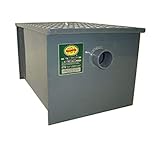
John Boos GT-8 Carbon Steel Grease Interceptor, 14.2″ Long by 11.2″ Tall by 10.5″ Wide, 8 lbs Grease Capacity
8 lb grease capacity
11 gauge TIG welded carbon steel
14.2 x 11.2 x 10.5 inch body
PDI certified
Pros
- PDI certification for code-compliant commercial installs
- 11 gauge TIG welded carbon steel
- locking non-skid deck plate with removable baffle
- T-vent flow control tee included
- compact body fits under most prep sinks
Cons
- 8 lb capacity needs frequent cleaning in high-volume kitchens
- carbon steel body needs care to avoid surface corrosion
This is the trap I keep coming back to for small prep sinks, and it earns the top spot here on evidence rather than prestige. It carries the largest volume of written owner feedback of any unit in this guide, which matters when you are deciding whether a spec sheet reflects what actually arrives.
The body is 11 gauge carbon steel, TIG welded, with a corrosion resistant coating. It measures 14.2 inches long by 11.2 inches tall by 10.5 inches wide, and holds 8 lb of grease, with the pipe opening sitting 2 inches below the top and 7.5 inches above the base.
What I like most is the PDI certification. The Plumbing and Drainage Institute mark is the thing an inspector actually looks for, and having it removes an entire category of argument at sign-off. The non-skid deck plate with a locking device is also smarter than it sounds, because a trap cover that slides is a trip and spill hazard in a working kitchen.
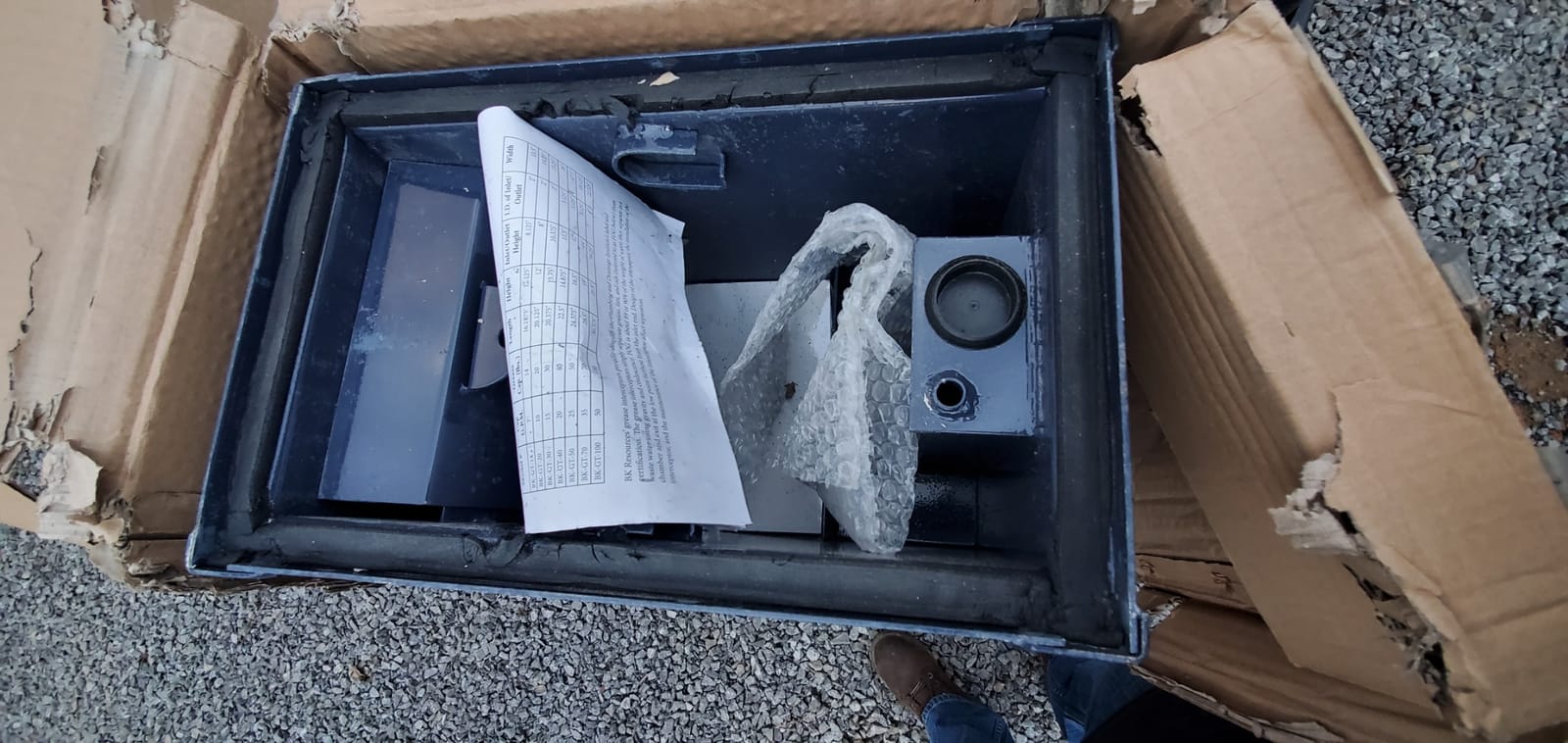
The removable baffle is the piece that does the actual separating work, and pulling it out is how you get at the accumulated solids. A T-vent flow control tee comes in the box, and both ends accept no-hub adapters, so connecting to either steel or plastic pipework is straightforward.
Owners report a straightforward install and code approval, which is exactly the experience you want from a component this size. The same reviews flag the ceiling on this unit: 8 lb fills quickly in a busy kitchen, and it needs a cleaning rhythm rather than occasional attention.
When the GT-8 is the right call
Choose it when you have one prep sink or a small three-compartment setup, when your inspector expects a PDI mark, and when the operator will actually pull the baffle every few weeks. It weighs 22 lb, so one person can lift it to a draining area, and the compact footprint leaves cabinet space for storage.
It also works well as the first unit in a two-stage setup, paired with a larger trap further down the line. A certified steel unit at the point of use takes the worst of the solids, and the bigger body downstream handles the volume.
When the GT-8 is the wrong call
Skip it if a dishwasher discharges into the same line, because dishwasher flow will outrun an 8 lb body and push grease past the baffle. It is also a poor match for a fryer-heavy operation or a wok line, where the retention capacity simply is not there.
Carbon steel needs a rinse and a wipe on a schedule. Left wet between cleanings, the coating dulls and surface corrosion starts, and that is the one maintenance habit this product asks of you.
2. BEAMNOVA 25 lb Stainless Steel Trap – Best Value for Busy Sinks
BEAMNOVA Commercial Grease Trap, 25lbs, Stainless Steel, Side Inlet
25 lb grease capacity
13 GPM flow rate
1.2 mm 201 stainless steel
23.82 x 12 x 11.22 inch body
Pros
- 13 GPM flow handles commercial sinks and dishwasher discharge
- 25 lb capacity in a compact body
- 201 stainless steel resists rust
- arrives assembled with outlet pipe and accessories
- dual side locking devices with rubber seals
- top handle eases carrying for cleaning
Cons
- Side inlet limits placement under some sink layouts
- buyers are told to verify local code compliance before fitting
This is the volume answer in the guide. Where the GT-8 handles a modest prep sink, the BEAMNOVA carries 25 lb of grease and moves up to 13 gallons per minute, which is the throughput you need when a prep sink and a dishwasher share a line.
The body is 1.2 mm 201 stainless steel, measuring 23.82 inches long by 12 inches wide by 11.22 inches tall. It uses a side inlet, which is the one design choice that needs checking against your cabinet before you order.
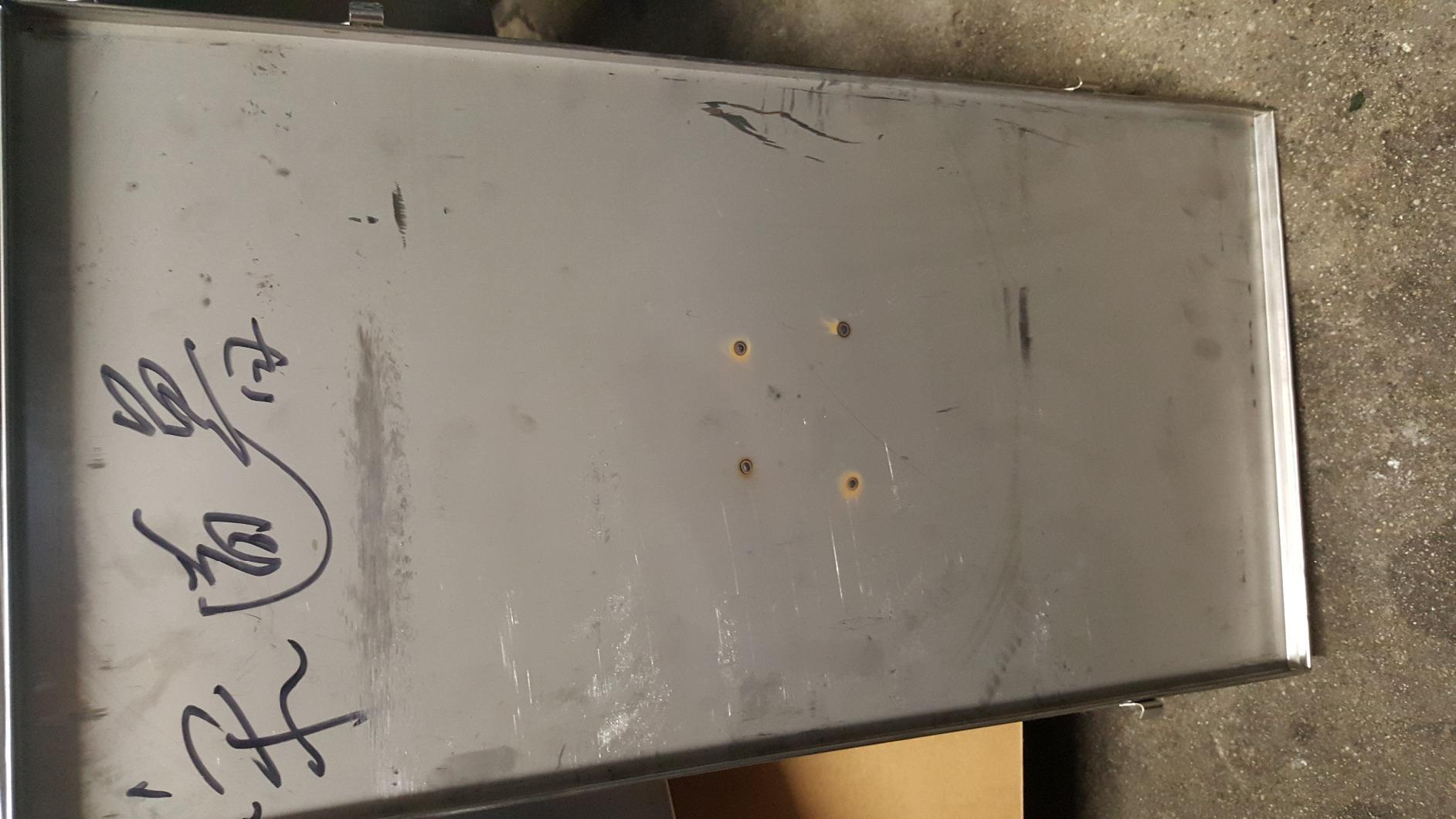
Owners consistently mention one thing in their reviews: it arrives assembled, with the outlet pipe, manual and fittings in the box. On a kitchen build that turns the install into connect, drain and test rather than a fabrication job, and it keeps labour hours down.
The sealing detail is worth noting too. Locking devices on both sides, a rubber ring on the inner face of the cover and a sealed faucet give you multiple barriers against the side leakage that plagues lighter plastic bodies.
Baffle plates separate the FOG from the outgoing water, and a top lifting handle makes it straightforward to move the unit to where you drain it. That last point sounds minor until you are lifting a stainless box out from under a sink with wet hands.
x
Where this unit earns its place
It fits the middle of the market: a full-service restaurant line with a dishwasher, a commissary kitchen, or a catering operation where the trap has to survive a service and hold enough grease to reach the next pump-out without filling overnight.
Stainless steel also handles the temperature swings of a commercial kitchen better than thin-gauge plastic. Dishwasher discharge runs hot, and a body that will not deform or soften at that temperature is worth the heavier handling.
Where it will disappoint
The side inlet is the constraint. If your cabinet run only offers top-entry or rear-entry clearances, this body will not drop in without re-plumbing the connection.
Also read the listing note about checking local code compliance before fitting. It has no certification mark printed in the specifications, so if your jurisdiction requires a certified unit for a new install, verify with the inspector first.
3. Wadoy 8 lb Under-Sink Trap – Budget Pick for Small Kitchens
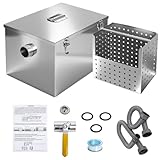
Wadoy 8 lb Commercial Grease Trap, Stainless Steel Under-Sink Interceptor
8 lb grease capacity
5 GPM flow rate
Thickened 201 stainless steel
14 x 10 x 9.8 inch body
Pros
- Entry point for small commercial kitchens
- thickened 201 stainless steel resists rust and deformation
- multiple seal points plus side buckle locks
- threaded drain outlet gives a secure pipe connection
- compact body fits tight under-sink spaces
- top handle eases carrying
Cons
- 8 lb capacity and 5 GPM flow suit small sinks and light duty only
- needs cleaning every 2 to 3 months to hold performance
The Wadoy is the unit I would put under a coffee bar sink, a small prep sink in a bakery, or a food truck where space is the scarcest thing you own. It weighs 8 lb and measures 14 by 10 by 9.8 inches, so it goes where larger bodies simply will not.
Material is thickened 201 stainless steel, and the flow rating is 5 GPM against 8 lb of grease capacity. Owners like the multi-point sealing: a rubber sealing ring inside the lid, a sealed faucet, and a side buckle lock with several sealing points around the body.
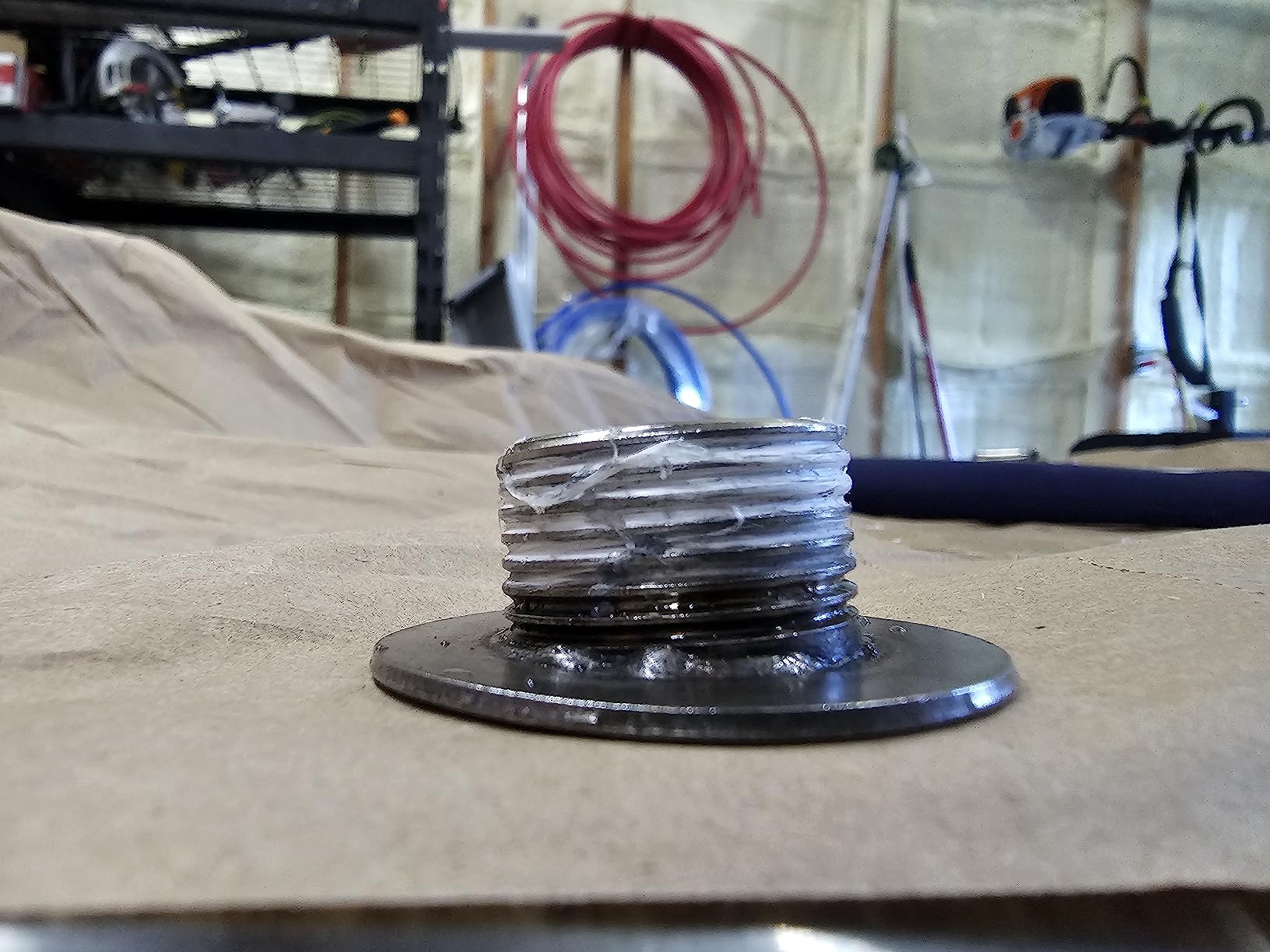
The threaded drainage outlet is matched to the pipeline for sealing, which is a better detail than the slip-fit or rubber-sleeve connections common on cheap units. A top handle makes it easier to carry to a drain point.
The manufacturer’s own guidance is to clean the residual tank every 2 to 3 months. Treat that as a schedule, not a suggestion, because undersized traps fail on consistency rather than on any single dramatic event.
Reviews point to the same two things repeatedly: the sealing holds up well, and the size is the limitation. Reviewers report it fitting food trucks, coffee shops and small prep sinks rather than high-volume restaurant lines.
x
Who should buy the Wadoy
A single small sink with low FOG load. A mobile food unit where the whole plumbing system is compact. A home kitchen that has outgrown a nothing. In each of those cases this unit does the job at a fraction of the cost of a certified steel body.
It is also a sensible first-stage unit in a larger system, taking the solids at the point of use so a bigger trap further down the line stays cleaner between services.
Who should not
Anyone with a dishwasher on the same line. Five GPM is well below the demand of a commercial dishwasher discharge, and you will be pumping this unit several times a day rather than a few times a month.
It also has no listed certification mark. For a new commercial install where the inspector requires a certified interceptor, choose a unit with a PDI or ASME mark instead.
4. Beseder GT4 – ASME A112.14.3 Certified HDPE Interceptor
Beseder Grease Trap Interceptor 4 GPM Plastic for Home, Cafe, Restaurant
22 lb grease capacity
4 GPM flow
ASME A112.14.3 certified
15.75 x 13.2 x 10.63 inch body
Pros
- ASME A112.14.3 certification for US commercial kitchens
- 1/4 inch HDPE walls will not rust or weld
- multistage cleaning handles emulsified and mixed oils
- 22 lb capacity in a compact under-sink body
- 2 inch threaded side inlet with adapter fittings
- simple to empty and clean
Cons
- Side leakage if threaded joints are not tightened and sealed
- included female fittings may need extra 2 inch unions
- the 22 lb size can be small for a busy sink load
The Beseder carries the highest average rating among the well-reviewed units in this guide, at 4.6 across 79 reviews, and the reason is the certification. It is engineered to ASME A112.14.3, the standard for grease interceptors, which is a named reference an inspector can check.
The body is HDPE plastic with a 1/4 inch wall thickness, measuring 15.75 by 13.2 by 10.63 inches overall. Thick plastic of that gauge will not rust and will not weld shut if it takes a knock, which removes two failure modes that metal traps carry.
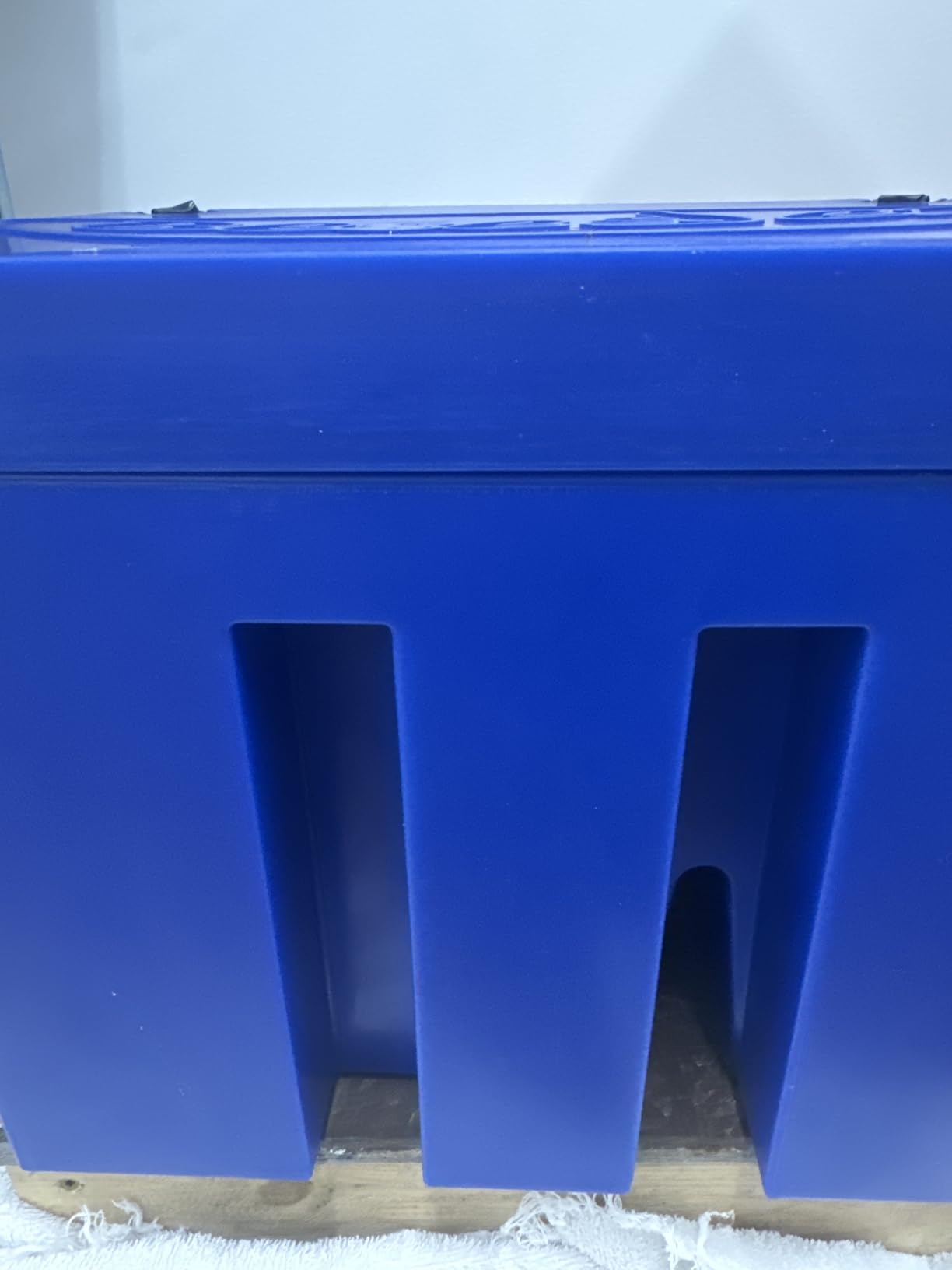
Capacity is 22 lb of grease at 4 GPM flow, which puts it in the same flow band as the small under-sink units but with nearly three times their grease capacity. That combination is the reason it performs so well against its rating.
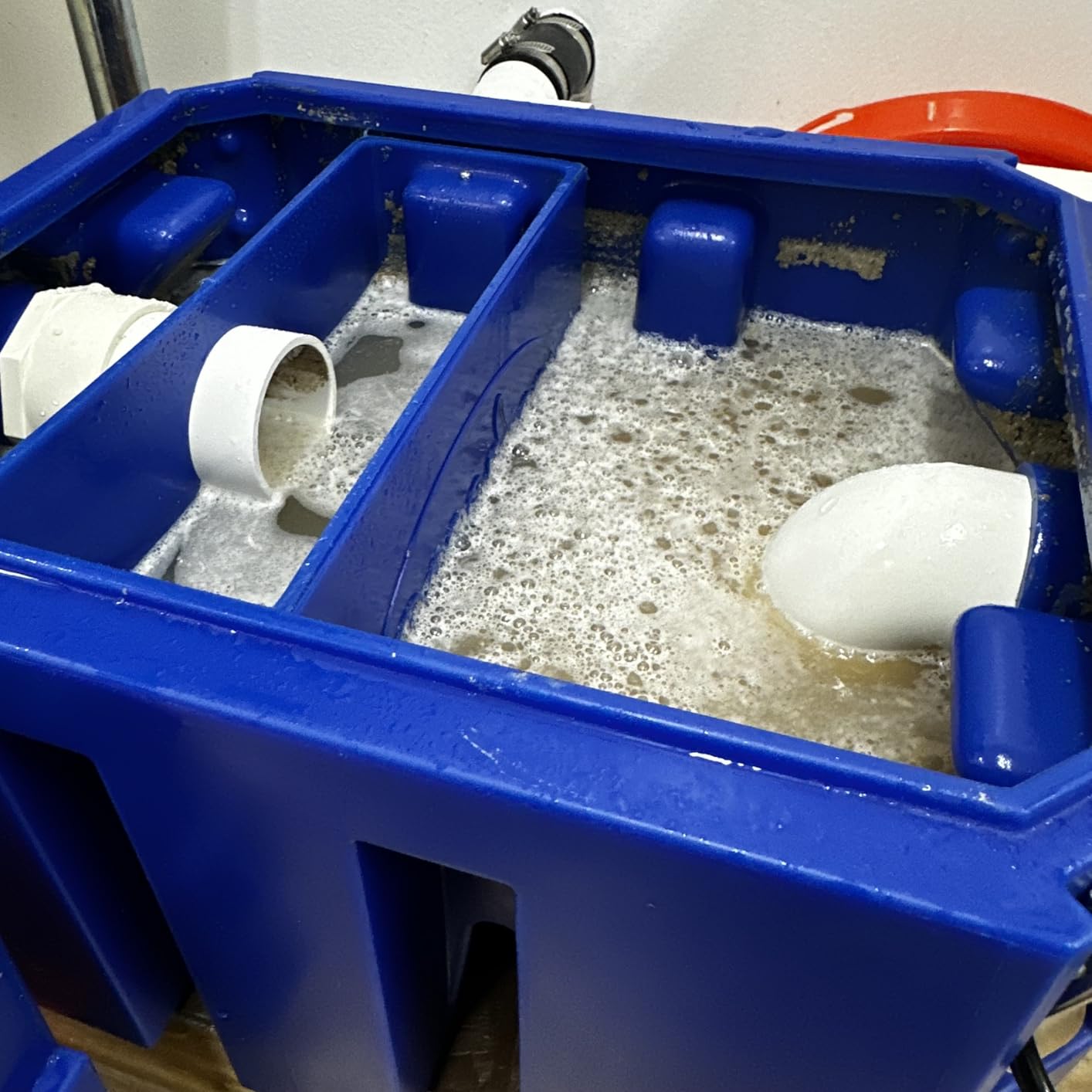
The multistage cleaning system is claimed to handle mineral, animal, vegetable, mixed and emulsified oils. Emulsified oil is the hard case, because it is already mixed with water and would otherwise carry straight through a simple baffle.
The box contains the main box, inner box, cover, latches, rubber seals and adapter fittings. Connection is a 2 inch threaded side inlet sized for sink and dishwasher tubing, with comfortable handles on the unit for lifting it out to clean.
Why the certification matters here
Reviewers repeatedly mention that the ASME mark was accepted for commercial installs without argument, and that the unit is straightforward to drain and clean. For an operator who has fought a failed inspection before, that is worth more than a higher grease number.
The warranty description is unusual for this category: a 30 day return policy, 90 days of free technical troubleshooting and a 10 year warranty on the supply of consumables. Check the current terms on the listing before you rely on them.
What to fix before you install
Sealing is the recurring theme in reviews, and it is fixable. Some buyers report side leakage unless the threaded joints are properly tightened and sealed, so budget time for fresh tape or sealant on every connection.
Also note that the included female fittings may not mate with standard 2 inch PVC or CPVC pipe. Several customers had to source their own unions. Buy a couple of extra 2 inch unions before you start the job rather than mid-install.
5. IRONWALLS 8 lb Trap – Built for Small Prep Sinks
IRONWALLS 8LBS Commercial Grease Trap, Side Inlet Stainless Steel Wastewater Grease Interceptor Oil-Water Separator with Removable Mesh Filter for Restaurant Coffee Shop Home Kitchen
8 lb capacity, 4 GPM flow
1.2 mm 201 stainless steel
14.17 x 10.24 x 9.45 inch body
Removable mesh filter basket
Pros
- Removable mesh filter basket traps solids before the drain
- 1.2 mm 201 stainless steel body
- dual side locking clasps with a lid rubber strip
- threaded inlet and outlet fittings tighten onto standard pipe
- compact body suits under-sink and countertop use
Cons
- 4 GPM flow suits small sinks only
- 8 lb capacity needs regular service in busy settings
The distinguishing feature here is the removable stainless steel mesh filter basket. Reviewers single it out as the reason solid food debris gets caught before it can reach the drain line, which is the failure that ends up on a plumber’s bill.
Capacity is 8 lb of grease at up to 4 GPM flow. The body is 1.2 mm 201 stainless steel measuring 14.17 by 10.24 by 9.45 inches, with an item weight of about 10 lb.
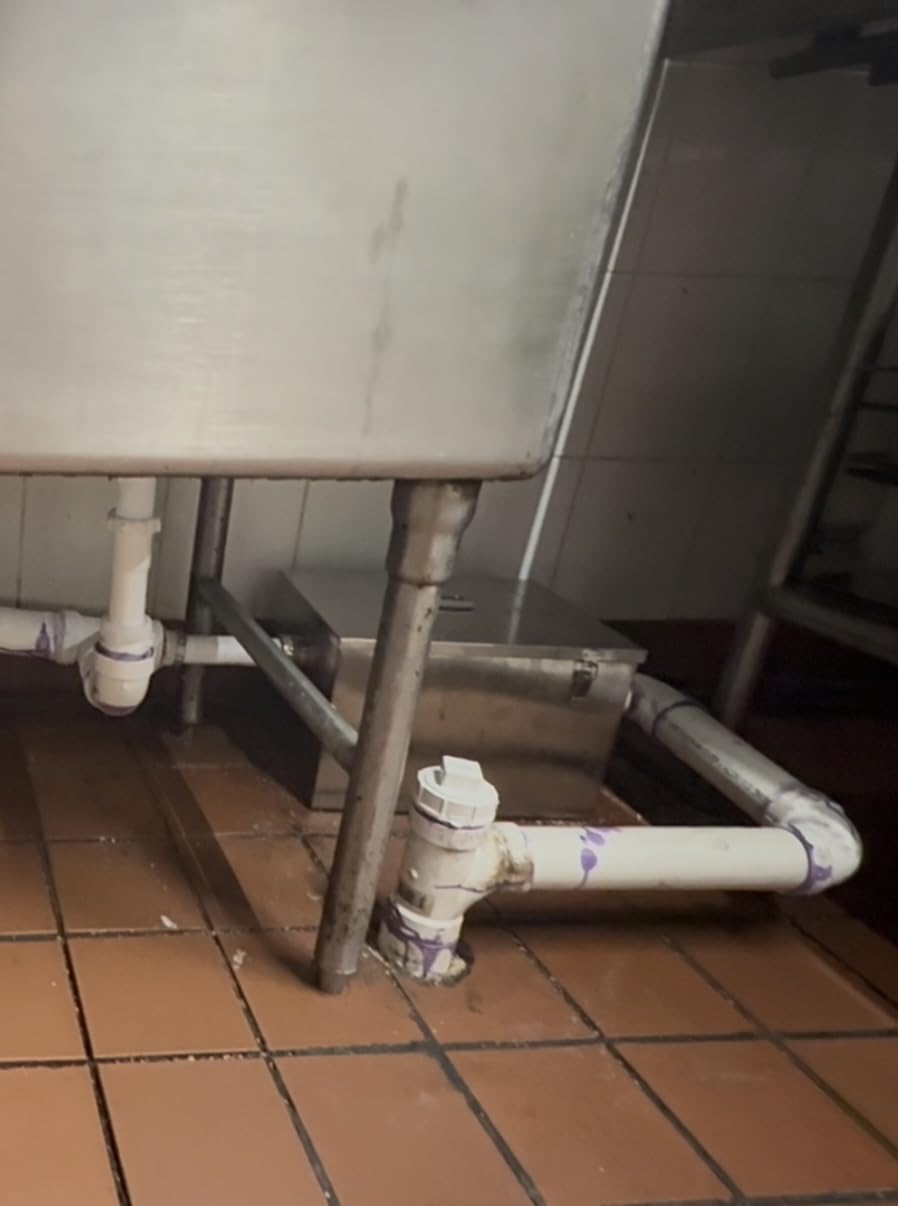
Port sizes are specific and worth noting: a 1.77 inch wastewater inlet, a 1.77 inch water outlet and a 1.18 inch grease outlet. Both the inlet and drain outlet are threaded and welded, which tightens cleanly onto standard pipe.
Sealing comes from locking clasps on both sides plus a rubber seal strip inside the lid. Owners generally report solid sealing in service, with the same caveat that all stainless units carry: clean it out and dry it between services.
Like the Wadoy, it is claimed to treat mineral, animal, vegetable, mixed and emulsified oils. The mesh basket does the coarse work that a baffle alone would let pass.
The case for the mesh filter
Where a baffled trap relies on velocity alone, a mesh basket intercepts larger solids physically. In a prep sink where food is scraped rather than rinsed away, that difference shows up as fewer drain blockages between pump-outs.
It is also a good fit for coffee shop sinks, small bakery prep areas and home kitchens, which is consistently what reviewers say they use it for.
Where it falls short
Four GPM is modest flow. This unit is built for a single small sink and nothing more, and pairing it with any dishwasher discharge is a mismatch.
Like the other 8 lb bodies here, it will fill inside a service in a busy room. If your cleaning interval is already tight, the extra pump-outs will outweigh what you saved on the front end.
6. Zurn 40 lb Polyethylene Interceptor – Lightest Body to Handle
Grease Interceptor, Matte, 40 lb. Cap.
40 lb capacity class, 20 gallon variant
Polyethylene matte finish body
Multi-chamber separation
Removable lid for pumping
Pros
- Polyethylene body is far easier to empty and clean than steel
- multi-chamber flow path separates oil and solids
- removable lid for scheduled cleaning and pumping
- spec sheet accepted for local permitting
- light body simplifies handling versus steel
- quiet with no moving parts
Cons
- Drain and flow are slower than larger steel interceptors
- listed spec block dimensions are incomplete
The Zurn is the one to look at if the operator who has to clean the trap is not strong. At 28.9 lb in polyethylene, it is the body you can carry out from under a sink and tip into a drain without calling for help, and reviewers repeatedly praise how much easier it is to clean than steel.
The design is a multi-chamber flow path that separates oil and solids from the wastewater, with a removable lid for scheduled cleaning and pumping. This listing shows the 20 gallon variant within a 40 lb capacity class, so confirm the exact volume with the manufacturer before you order.
The most useful review comment across this listing is from operators who fitted it as a pre-screener ahead of a larger trap. Because it intercepts the coarse solids first, the downstream unit stays cleaner and the pumping interval on the bigger body stretches out.
Several users also report that the published spec sheet was accepted for city permitting in place of an underground trap, which avoided a much bigger excavation. That single data point can change the economics of an install entirely.
Installs are reported as a day of straightforward plumbing connections, and there are no moving parts to wear out or make noise.
Best used as a second stage
This unit makes the most sense either as a pre-filter feeding a larger trap or as the primary unit in a kitchen with modest flow and a preference for light handling. The combination of permitting acceptance and cleanability is unusual in this category.
Polyethylene also will not corrode the way carbon steel does, so over a long service life the maintenance curve is flatter.
Limitations to plan around
Owners report slower drain and flow than larger steel interceptors, which means it needs regular cleaning to stay within its performance window. Do not expect to set it and forget it.
One practical issue: the dimensions listed in the specification block read 2 inch by 2 inch by 2 inch, which is incomplete. Get the real drawing from the manufacturer before you try to fit it into a cabinet.
7. Wentworth WP-GT-15 – 15 GPM Freestanding Floor Trap
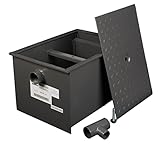
Wentworth Commercial Grease Trap Interceptor, 30 lb Capacity, 15 GPM
15 GPM flow rate
30 lb grease capacity
11 gauge carbon steel
23 x 16 x 14 inch freestanding body
Pros
- 15 GPM handles far beyond under-sink bodies
- 30 lb capacity suits prep and pot sinks
- powder-coated carbon steel resists corrosion
- PDI certified and accepted by local inspectors
- removable top cover makes cleaning easy
- size options from 7 to 100 GPM
Cons
- some bodies arrive with misshapen threads
- one reviewer received no installation instructions or flow direction arrows
This is the first unit in the walkthrough that reads as a floor installation rather than an under-sink box, and that changes what it can handle. It is freestanding, weighs 62 lb, and measures 23 inches deep by 16 inches wide by 14 inches high.
Flow is 15 GPM with 30 lb of grease retention, which is the combination I look for in a mid-size kitchen serving prep sinks, pot sinks and commercial food-service fixtures. The body is 11 gauge carbon steel with a powder-coated corrosion protection finish.
It is PDI certified, and owners report passing town inspection with it installed. A removable top cover handles the scheduled cleaning, which matters when you are dealing with a pot sink rather than a small prep basin.
One advantage worth calling out for operators with more than one fixture group: this model is offered across a range of flow sizes from 7 GPM to 100 GPM, so you can match capacity to the actual load instead of over-buying.
Most owners are satisfied with the capacity-to-size relationship and find the unit easy to clean. The recurring complaints are about the delivery condition of some bodies rather than the design.
Where a freestanding trap wins
When your pot sinks discharge faster than an under-sink body can pass, or when cabinet clearance will not take a 24 inch body, a floor mount is the practical answer. It also keeps the trap out of the cabinet where it can be inspected and pumped without moving the sink.
For a mid-volume restaurant, 30 lb of retention combined with 15 GPM flow is a sensible pairing that fills slowly enough to make a pumping schedule realistic.
What to check on arrival
Some units arrive with misshapen threads that will not accept pipe. Inspect the inlet and outlet threads before you commit to the install, and have a union or coupling ready if the threads need to be redone.
One reviewer received a body with no installation instructions and no flow direction arrows. Confirm flow orientation before you connect, because a trap installed backwards will not separate anything.
8. KPS 30 lb Carbon Steel Trap – PDI Approved and NSF Certified
Commercial Carbon Steel Grease Trap Interceptor 30lb – PDI Approved – NSF
30 lb grease capacity
PDI approved
NSF certified
16.5 x 24 x 17.75 inch freestanding body
Pros
- PDI approved and NSF certified together
- heavy-duty carbon steel for demanding kitchens
- fits the standard 3-compartment sink requirement
- capacity variants from 8 lb to 70 lb
- built for restaurants cafes bakeries and commissaries
Cons
- Thin review base limits long-term durability feedback
- heavier freestanding footprint than plastic under-sink bodies
Certification is the entire argument for this unit, and it is a good one. It is both PDI approved and NSF certified, which is the pairing buyers in this category look for when a health department rather than a plumber is the audience.
Capacity is 30 lb in a heavy-duty carbon steel body measuring 16.5 inches deep by 24 inches wide by 17.75 inches high. It is a freestanding rectangular unit, so plan floor space and access for pumping.
It is aimed squarely at 3-compartment sinks, prep sinks and utility sinks, and the listing names restaurants, cafes, bakeries, food trucks and commissary kitchens as the intended settings. Capacity variants run from 8 lb through 70 lb in the same family.
Owners rate the build quality and the value highly, and the certification is the main draw in reviews. People buying at this level want something they can put in front of an inspector and point at a mark.
When dual certification is the deciding factor
Institutional kitchens, schools, healthcare food service and any operation facing a health department inspection are the cases where NSF alongside PDI is worth the extra specification work. It answers the question before it is asked.
The 30 lb capacity class sits in the range where you get a meaningful service interval without needing a full in-ground interceptor.
Where the evidence is thin
This listing has 13 written reviews. Buyers confirm the steel feels solid and consider the price reasonable, but that is a small sample, and long-term durability feedback simply is not there yet.
It is also a heavier, larger footprint than any plastic under-sink unit here. If cabinet space is the binding constraint rather than certification, a plastic interceptor is the more comfortable fit.
9. Canplas 3920A02S – 20 GPM Thermoplastic Interceptor
Canplas 3920A02S Thermoplastic Grease Interceptor 20 Gallons per Minute, 40 lb. Grease Capacity
20 GPM flow rate
40 lb rated, 70 lb actual capacity
Thermoplastic body
2 inch connections
Pros
- 20 GPM flow suits busy commercial kitchen lines
- 70 lb actual capacity exceeds the 40 lb rated class
- thermoplastic body will not corrode like carbon steel
- 2 inch connection size
- tested and certified to PDI-G101
Cons
- Small review sample of 12 limits the long-term read
- 23.5 inch length needs more clearance than compact plastic bodies
The Canplas is the highest-rated unit in this guide at 4.9 stars, though that figure rests on 12 reviews, so I would read it as a promising signal rather than a settled verdict. What the specs say is genuinely interesting.
It is rated 20 GPM in a 40 lb class, but the listed actual grease capacity is 70 lb. That headroom between rated and actual capacity is the reason the same unit can hold a longer service interval than its class number suggests.
The body is thermoplastic, which will not corrode the way carbon steel does over years of exposure to grease and wash water. Connections are 2 inch, and the unit measures 23.5 by 17.5 by 16.3 inches.
It is tested and certified to Standard PDI-G101, which is the performance standard inspectors reference. Buyers mention the certification specifically as a factor that gives an inspector something to work with.
Buyers are also drawn to the thermoplastic construction and the fact that real-world grease capacity exceeds the rated figure. At 20 GPM, this is one of two units here rated for the highest flow band.
Where this unit is strongest
High-volume lines where 15 GPM is not enough headroom, and any kitchen that would rather not maintain a carbon steel body. The thermoplastic shell removes corrosion from the maintenance conversation entirely.
For a full-service restaurant, a hotel kitchen or a high-volume quick-service line, the combination of flow, real capacity and corrosion resistance is hard to argue with on the numbers.
What the rating does not tell you
Twelve reviews is not a durability record. Nobody installing this unit can tell you how the thermoplastic behaves after a decade of hot dishwasher discharge cycling through the chamber.
The 23.5 inch length also means you need real under-sink or floor clearance. Measure the cabinet before ordering, because it will not fit where the 8 lb bodies go.
10. AmGood GT-40-20G – 40 lb Interceptor That Arrives Complete
AmGood 40 lb Grease Trap Interceptor – 20 GPM, PDI Certified 11-Gauge Carbon Steel – Under-Sink FOG Interceptor for Commercial Kitchens, Restaurants & Bars
40 lb capacity, 20 GPM flow
11 gauge carbon steel with coating
24.3 x 15.8 x 15 inch body
PDI certified
Pros
- 40 lb capacity rated for a 20 GPM fixture
- ships complete with no-hub connections
- T-vent baffles and deck plate
- PDI certification supports local inspection
- 11 gauge carbon steel with corrosion-resistant coating
- sizing guide helps match the unit to the fixture
Cons
- At 84 lb it is the heaviest unit here and needs two-person handling
- largest footprint at 24.3 inch width
- newer listing with limited long-term feedback
The AmGood is the newest listing here and the most complete out of the box. Everything needed for the connection is included: no-hub inlet and outlet connections, the T-vent, removable baffles and a non-skid deck plate, which removes the trip to a supplier mid-install.
It is rated 40 lb capacity for a 20 GPM fixture, making it a point-of-use interceptor for restaurants, bars, food trucks and commercial kitchens at the higher end of the flow range. The body is 11 gauge carbon steel with a corrosion-resistant coating.
Dimensions are 24.3 by 15.8 by 15 inches and the unit weighs 84 lb. That is the heaviest body in this guide and the widest, so plan the floor space and the handling before it arrives.
PDI certification is the other main draw, since it helps satisfy local plumbing codes and inspections. The listing also includes a sizing guide to help match the right unit to the fixture, which is useful given the 8 lb to 40 lb capacity range in the family.
Reviewers point to the 20 GPM and 40 lb specification and the completeness of the package as the reasons they bought. The weight and width are what come up in the practical questions afterwards.
Why completeness matters on a commercial job
Missing fittings are the most common cause of an install stopping halfway. When the no-hub connections, T-vent, baffles and deck plate all arrive in the box, the plumbing contractor can finish the connection on one visit.
At 40 lb rated and 20 GPM flow, this unit suits a bar or restaurant line handling fryer discharge as well as prep sinks, where the smaller bodies in this guide would simply be overworked.
Before you commit
Budget for two-person handling. Eighty-four pounds is a two-person lift, and it needs to come out for pumping as well as go in for installation.
This listing has 11 reviews, so there is not much long-term feedback yet. Ask the manufacturer for the certification documentation and the submittal drawing your inspector will ask for.
How to Size a Commercial Grease Trap Step by Step
Size the trap to the flow of the sink first, then pick capacity large enough to reach a realistic pumping interval. Work through it in this order and the spec comparison above becomes a straightforward lookup.
List every fixture on the line. Prep sink, pot sink, three-compartment sink, dishwasher discharge and floor sink all count. A trap only serves the fixtures plumbed into it.
Find the flow rating of the highest-demand fixture. Manufacturers publish GPM per fixture. Your trap must meet or exceed that number, and the dishwasher discharge is usually the fixture that sets it.
Match the trap flow rating to that number. A 4 GPM trap on a 13 GPM fixture passes grease straight through. This is the single most common sizing error I see in spec sheets written by people who did not check the fixture.
Estimate your FOG load from cooking volume. A coffee shop and a full-service fryer line produce completely different grease volumes from the same sink size. Volume of food served per day is the better guide than sink count.
Pick a capacity class that gives you a workable interval. Compare the trap’s grease capacity against how much grease your operation deposits between services. Small traps in busy kitchens are cleaned multiple times a day, which is the real cost of an undersized unit.
Confirm the code calculation locally. Required capacity and retention time are often calculated from meal counts or fixture units under the Uniform Plumbing Code and its local amendments. Your inspector may require a specific figure that differs from the manufacturer’s class rating.
A worked example. Take a mid-size restaurant with a prep sink at 8 GPM, a pot sink at 15 GPM and a dishwasher discharging into the same line. The controlling fixture is the 15 GPM pot sink, so the trap must be rated at 15 GPM or higher, which pushes you to the Wentworth or the 20 GPM class of units. From there, capacity decides the pumping interval rather than the flow rating.
If you add a fryer station later and the grease load doubles, the same flow rating can stay in place while the capacity class goes up. Size capacity with a little headroom for that reason.
Grease Trap vs. Grease Interceptor: What the Code Actually Requires
The distinction is mostly terminological in daily use, but it matters on paper. A grease trap is the small, under-sink or floor-mounted unit described in this guide. A grease interceptor is the larger, usually in-ground or high-capacity unit that most code conversations are actually about.
In US practice, the Uniform Plumbing Code and its local amendments set the requirement, and local amendments differ meaningfully from state to state and city to city. Requirements generally cover required capacity, permitted materials, clean-out access, burial depth and inspection at installation.
Certification marks are how you demonstrate compliance without an argument. In this guide you will see PDI certification on the John Boos, Wentworth and AmGood units, PDI approval on the KPS unit, PDI-G101 testing on the Canplas, and ASME A112.14.3 engineering on the Beseder. NSF certification appears where health departments are the audience.
Two practical notes. First, submittal paperwork can substitute for an in-ground unit in some jurisdictions, which several users of the Zurn unit here report having had accepted. Second, an un-certified unit can still be legal for an existing replacement in some places, while a new commercial install often demands a marked unit.
Confirm all of this with your local authority before ordering. Code arguments are the least predictable part of any grease trap purchase.
Installation, Venting and Pumping Basics
Most of these units are point-of-use devices that connect to a sink drain, and the install is modest compared with a full in-ground interceptor. It still has failure modes worth knowing before you start.
Air gap. The trap should not be directly plumbed tight to the sink drain in most jurisdictions. An air gap between the sink outlet and the trap inlet stops a blocked line from backing waste into the basin.
Vent. The T-vent flow control tee included with the John Boos, and similar devices on other units, sit in the vent line to control flow velocity. That velocity control is what gives the FOG time to separate, so do not omit it in the hope of saving a fitting.
Access for pumping. Plan where the unit will be drained before you install it. A trap under a sink that requires moving the sink to service will be skipped, and a skipped trap becomes a blocked line.
Threaded joints. Seal every threaded connection. Leakage at the side of the body is the most common complaint on the stainless and plastic units in this guide, and it is nearly always a sealing fix rather than a product fault.
Enzyme dosing. Biological enzyme dosing is sold as a way to break down residual grease between pump-outs. It helps keep a line clean and reduces odour, but it does not replace pumping and it is not a substitute for correct sizing.
Know when to stop. Anything involving a new branch line, a connection to a grease interceptor, a burial, or an inspection is licensed-plumber territory. Fixtures, venting and a point-of-use box are where a competent DIY install ends.
Warning Signs Your Trap Is Undersized or Failing
Slow drainage in the kitchen line is the first and most common symptom of an undersized trap. If the sink takes noticeably longer to empty than it used to, grease is likely passing the baffle and building in the line downstream.
Odour is the second signal, and it usually means the trap is nearly full and the water seal that blocks sewer gas is breaking down. An odour that appears between services and clears after a pump-out points straight at capacity.
Backups that recur on a schedule are the third. A trap that overflows every few weeks in an otherwise steady kitchen is undersized for the load, and no amount of enzyme dosing fixes that.
Grease solids appearing in the downstream clean-out or in the yard tell you solids are escaping the baffle entirely, which usually means the unit is beyond capacity or the flow rating is too low for the fixture.
The common thread is that all four symptoms trace back to the same two numbers. Recheck flow rating against the controlling fixture, and recheck capacity against your service interval. If both are correct and the symptoms persist, the trap is damaged or badly sealed and needs replacing rather than servicing.
Buying Guide: How We Judged These Ten Units
Five criteria decided the ranking, and they are worth applying to any commercial grease trap you evaluate beyond this list.
Flow rate against the real fixture. Not the sink’s nominal size, but the GPM rating of the fixture feeding it, including any dishwasher discharge. This eliminates units faster than any other test.
Grease capacity against your service interval. Capacity is what determines how often you pump and what that costs you across a year. In a busy kitchen, an undersized trap costs far more in service calls than it saves on the purchase.
Material. Carbon steel is the most robust and the most repairable, and it needs rinsing to slow corrosion. Stainless steel handles heat and does not corrode easily but costs more and dents. HDPE and thermoplastic will not rust or weld shut, are light to handle, and are the easiest to clean.
Certification. PDI, ASME A112.14.3, PDI-G101 and NSF each tell an inspector something specific. If you cannot produce a mark, you may have to argue capacity instead.
Handling and service. The weight of the unit, whether the lid lifts in place, and how far it has to be moved to drain it. Owners tell you this more honestly than any spec sheet, and it is the factor most likely to determine whether your cleaning schedule actually gets followed.
For operators also equipping a full facility, the comparison approach we use for commercial riding mowers and commercial leaf blowers follows the same logic: match the machine to the workload, then judge it on running cost.
The trap category is unusually split, and that is worth saying plainly. There is no single best commercial grease trap because the units serve genuinely different fixtures, from an 8 lb under-sink box to a 40 lb floor mount.
Frequently Asked Questions
What size commercial grease trap do I need?
Size it in two steps. First, match flow rate to the highest-demand fixture on the line, including dishwasher discharge, and pick a trap rated at or above that GPM figure. Second, choose a grease capacity class that gives you a realistic pumping interval for your volume of food served. A trap rated below your controlling fixture will pass grease straight through.
How often should a commercial grease trap be cleaned?
Frequency depends on capacity and load rather than a fixed calendar. Small 8 lb units serving a busy kitchen can need attention every few days, while larger 25 lb to 40 lb units may run a week or more between pump-outs. The manufacturer guidance on some units suggests cleaning the residual tank every 2 to 3 months at minimum. Track how quickly yours fills and set the schedule from real data.
What is the difference between a grease trap and a grease interceptor?
The terms are often used loosely. A grease trap is the small point-of-use unit that sits under a sink or beside a floor sink. A grease interceptor is the larger, higher capacity unit, usually in-ground, that a commercial kitchen line is more often required to install. Requirements are set by the Uniform Plumbing Code and local amendments, which vary significantly by jurisdiction.
Do I need a grease trap for my restaurant or coffee shop?
Almost certainly, yes. Any kitchen that discharges fats, oils and grease into a drain is generally required to have interception, and a coffee shop produces significant grease from its dishwasher and milk systems. The exact type and capacity required depend on your local plumbing code, so confirm with your authority before ordering a unit.
Can I install a commercial grease trap myself?
A point-of-use unit serving a single sink is often within reach of a competent installer, especially if it arrives assembled. Connections, threaded joints and sealing are straightforward. Anything involving a branch line, a grease interceptor connection, a burial or an inspection should go to a licensed plumber. Verify local requirements first, since code approval is part of the install, not an afterthought.
Why does my grease trap smell bad?
An odour that appears between pump-outs almost always means the trap is nearly full and the water seal that blocks sewer gas is breaking down. Pump it out and the odour should clear. If it returns within days, the unit is undersized for your load and capacity, not flow rate, is the number to change. A badly sealed threaded joint can also leak and produce a similar smell.
Final Verdict on the Best Commercial Grease Traps in 2026
The John Boos GT-8 is the pick. It is PDI certified, built from 11 gauge TIG welded carbon steel, backed by the largest body of owner feedback in this guide, and compact enough to sit under a standard prep sink. If your inspector wants a marked unit and your flow demand is modest, that is the one to buy.
Below it, the segment winners matter more than the ranking. Take the BEAMNOVA 25 lb when a dishwasher shares the line and 13 GPM matters more than compact size. Take the Beseder GT4 when the ASME A112.14.3 mark is the argument you need to win. Take the Wentworth or AmGood when 15 to 20 GPM and 30 to 40 lb of capacity are the real requirement.
Whichever one you choose, size on flow rate first, verify the code calculation locally, and set a cleaning schedule you will actually keep. An undersized trap that gets pumped on time beats a correctly rated one that gets ignored.
This roundup was rebuilt for 2026 against current manufacturer specifications and owner feedback, and the comparison table above is the fastest place to start your shortlist.