
The phone is how older adults order help, speak to family and keep appointments, so a ringer they cannot hear has consequences that go past inconvenience. We spent weeks reading spec sheets and weighing what thousands of owners say after living with amplified phones.
Our rule was simple. If a phone does not publish a decibel figure, it does not make this list. “Extra loud” tells you nothing, and the gap between a phone that is loud and a phone that is clear is where disappointed buyers end up. Every pick below quotes a disclosed dB number and names a catch.
We also separated two problems people mix up. Missing a call and not understanding the caller are different failures. A boosted handset fixes the second. An extra-loud ringer and a flashing light fix the first. If your parent misses calls, start with the ringer picks further down. Everything here was checked for 2026.
Table of Contents
Top 3 Amplified Phones for Hearing Impaired Users

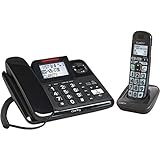
The Panasonic KX-TGM450S pairs the best published amplification with the strongest owner satisfaction we found. The AT&T CL2940 is the sensible first purchase, and the Clarity E814CC covers households that need both a corded and a cordless handset.
All 12 Amplified Phones at a Glance
| Product | Specifications | Action |
|---|---|---|
| Panasonic KX-TGM450S |
|
Check Latest Price |
 AT&T CL2940 AT&T CL2940 |
|
Check Latest Price |
 Panasonic KX-TGU432B Panasonic KX-TGU432B |
|
Check Latest Price |
 Future Call FC-1507 Future Call FC-1507 |
|
Check Latest Price |
 ClearSounds CSC500 ClearSounds CSC500 |
|
Check Latest Price |
| Clarity E814CC |
|
Check Latest Price |
 Sacumea Corded Senior Phone Sacumea Corded Senior Phone |
|
Check Latest Price |
 Serene Innovations HD40P Serene Innovations HD40P |
|
Check Latest Price |
 HePesTer HP-45 HePesTer HP-45 |
|
Check Latest Price |
 Clarity D704 Clarity D704 |
|
Check Latest Price |
 Clarity XLC3.4 plus Clarity XLC3.4 plus |
|
Check Latest Price |
 VTech SN5127 plus SN5107 VTech SN5127 plus SN5107 |
|
Check Latest Price |
Read the dB column before the feature column. Some of these publish a handset figure, some publish only a ringer figure, and some describe loudness in words. That distinction decides which phone fixes your actual problem.
1. Panasonic KX-TGM450S – 50 dB Boost and a 112 dB Ringer With Slow Talk
Panasonic 1 Handest Amplified Cordless Phone with Slow Talk, 50dB Volume Boost, 112dB Lound Visual Ringer, Hearing Aid Compatibility, Large Screen and Backlit Keypad – KX-TGM450S (Silver)
Handset boost up to 50 dB
112 dB base ringer
Slow Talk
13 hours talk time
Pros
- Disclosed 50 dB handset boost
- 112 dB ringer with red LED visual alert
- Slow Talk slows the caller in real time and on messages
- Noise reduction helps in noisy rooms
- 250 number call block and expansion to six handsets
Cons
- Programming is complex and the manual is thin
- At high boost settings line noise rises with the voice
- Base unit has no display or keypad
Very few amplified phones publish both numbers a buyer needs. This one does: 50 dB of handset boost and a 112 dB ringer, and owners with significant loss say the boost is doing real work rather than just adding volume.
Slow Talk was the feature we did not expect to value. It slows the caller’s speech as it arrives, and it also slows answering machine playback, which is where conversations are most often lost.
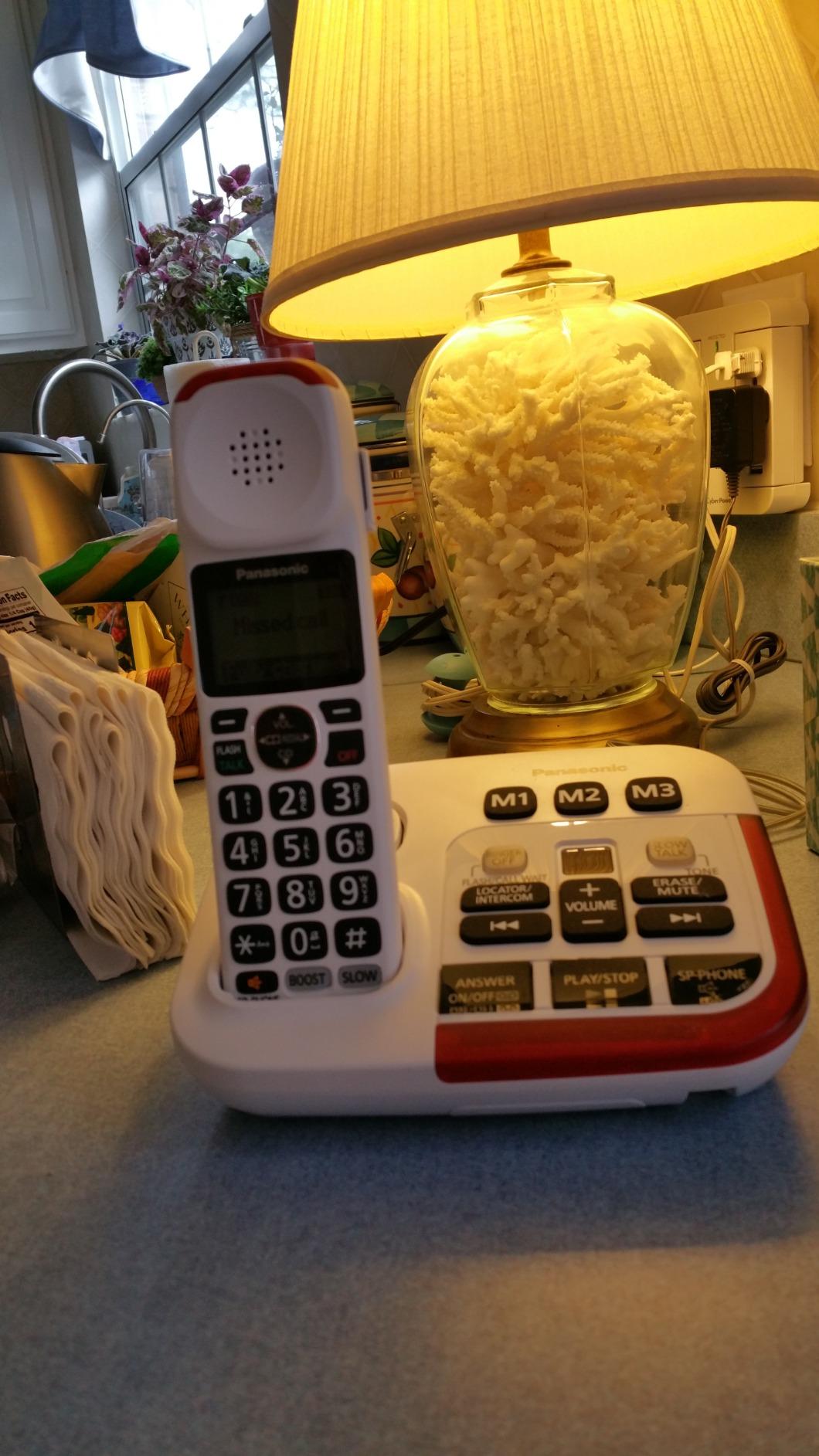
Setup is the weak point. Owners consistently describe the programming and the small-print manual as the hardest part of the experience, and we would budget an afternoon for it.
Tone runs across six levels and noise reduction is on by default, which reviewers in noisy homes rate as the difference between following a call and abandoning it.
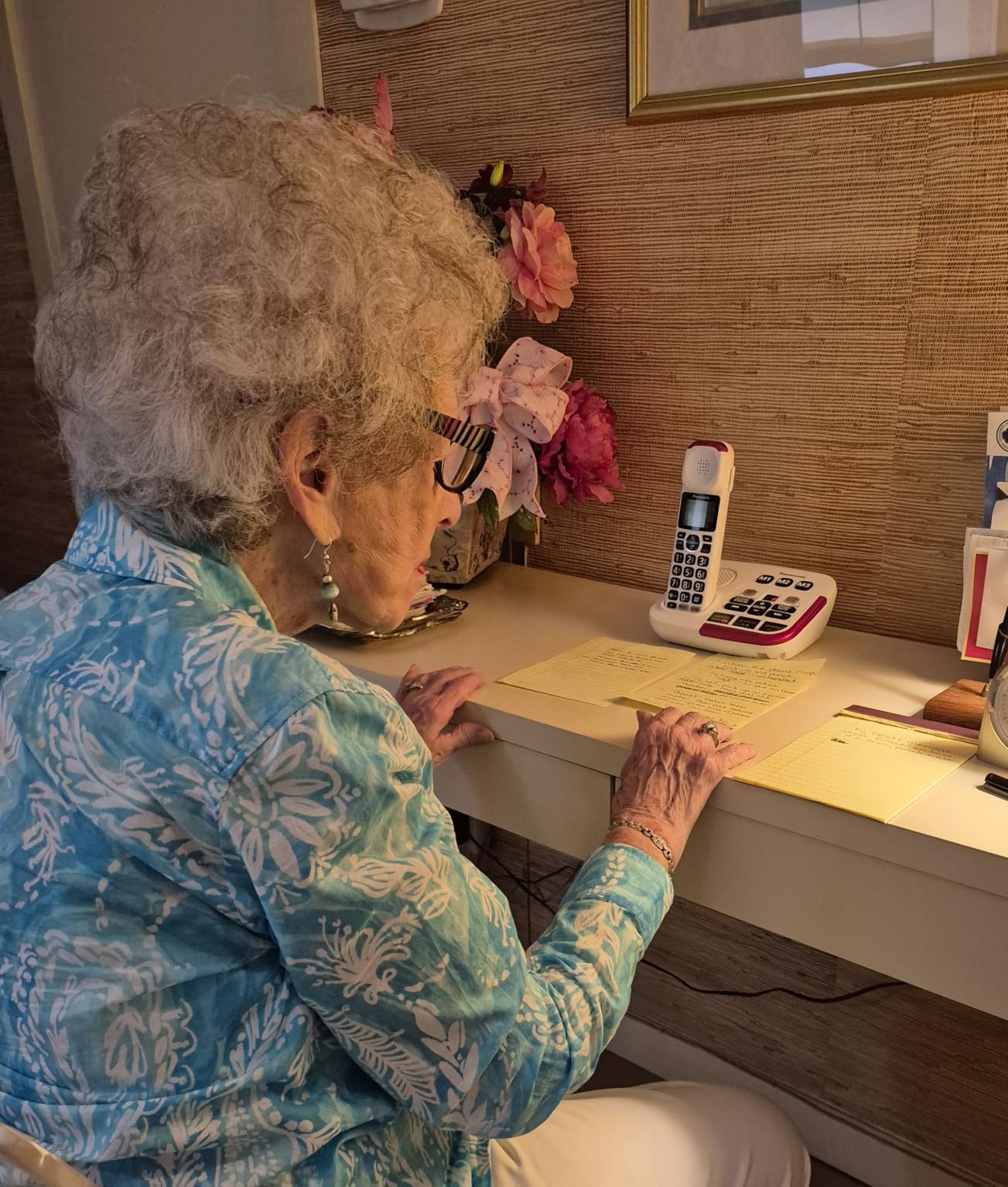
Who this phone suits
Adults with moderate to severe loss who also miss calls in a busy house, and caregivers willing to handle the initial setup.
Where it falls short
It suits nobody who wants a phone that works perfectly with zero configuration. Line noise rises with the voice at the top of the boost range, so a sensitive user should have the level set by an audiologist.
2. AT&T CL2940 – The Corded Phone That Keeps Working in a Power Cut
AT&T CL2940 Corded Phone with Speakerphone, Extra-Large Buttons and Tilt Display, Caller ID/Call Waiting, Audio Assist Volume Boost, Black
Audio Assist volume boost
Extra-loud adjustable ringer
Corded, no mains power needed
50 name caller ID
Pros
- Audio Assist makes the handset usable with moderate loss
- Extra-large buttons and a tilt display
- Works during a power outage because it runs on the line
- Corded handset never goes flat or gets mislaid
Cons
- Display is not backlit so it is hard to read at night
- Speakerphone audio is mediocre
- Caller ID needs four AA batteries that are not included
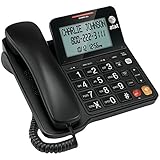
With more than ten thousand ratings, the CL2940 is the most thoroughly used phone here, and the feedback is consistent. It does two jobs well: Audio Assist makes the handset louder, and an adjustable ringer covers the announcement problem.
Families keep it because it is physical. A corded phone has no battery to drain and no handset to lose, and it draws power from the telephone line, so it still rings when the electricity fails.
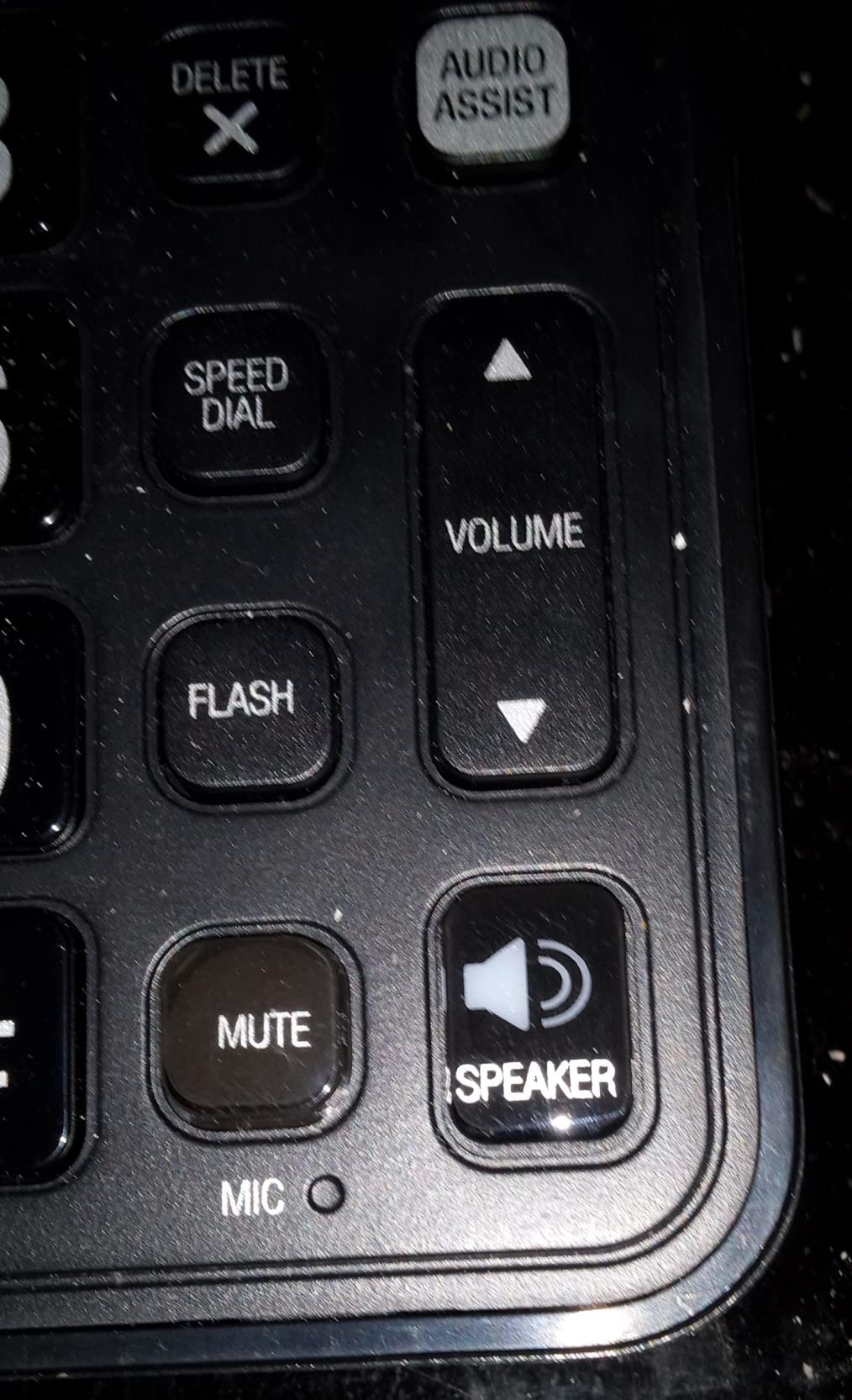
It is also a sound call-screening phone. The display tilts toward you, the buttons suit low vision, and caller ID holds fifty names.
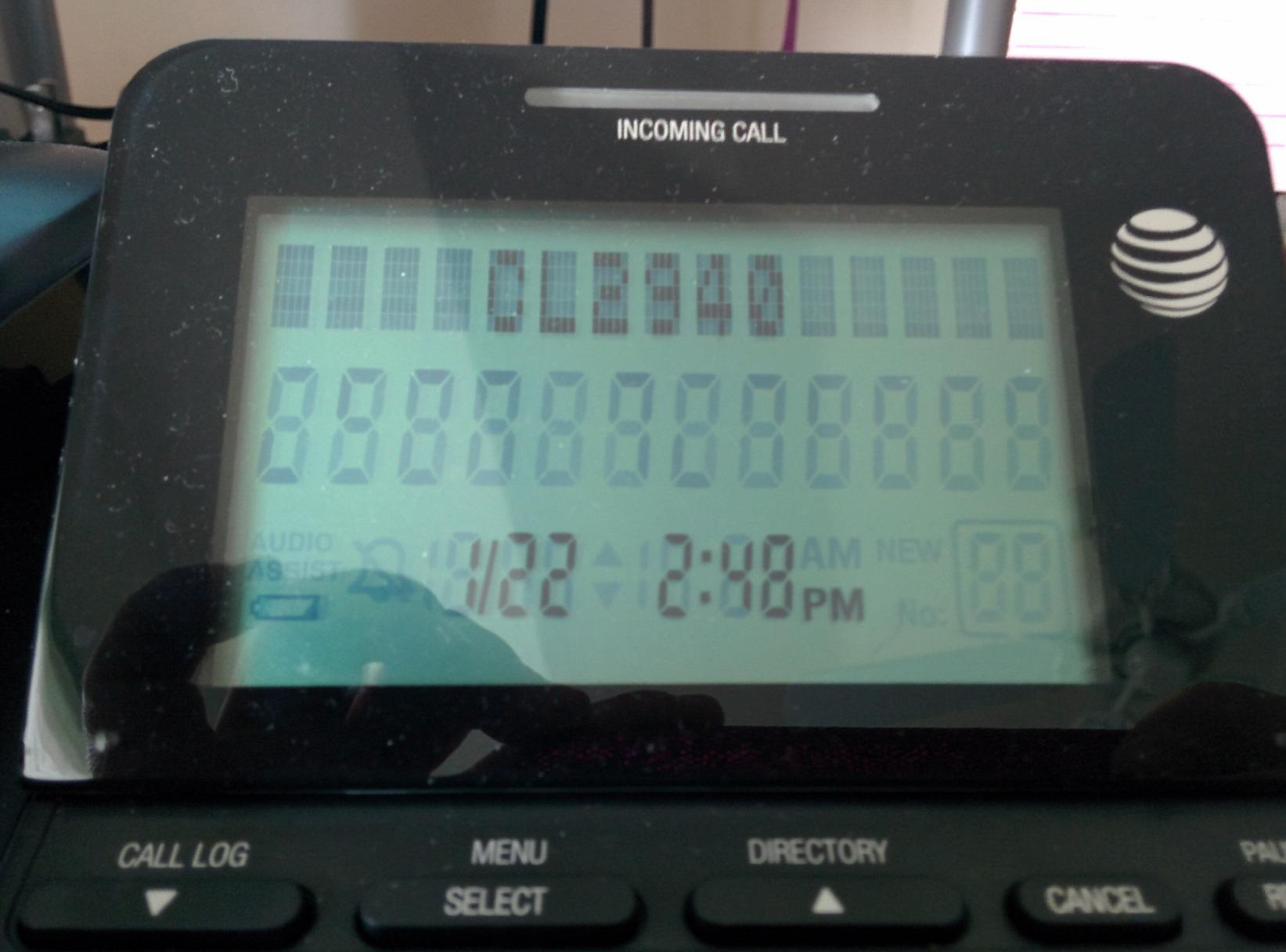
Be honest about the trade. The display does not light up, so in a dark room the caller has to be located by sound, and the speakerphone is the weakest part of the phone.
Who this phone suits
Mild to moderate loss, and anyone buying as a sensible first step before spending on a dedicated amplified model. It also works as a second phone in a hallway.
Where it falls short
There is no visual alert for someone who cannot hear a ring at all, and no answering machine. If calls go unheard from another room, look at the flashing-light models instead.
3. Panasonic KX-TGU432B – Two Handsets, a Big Display and a Built-In Flashlight
Panasonic Cordless Phone, Easy to Use with Large Display & Big Buttons, Flashing Favorites Key, Flashlight, Call Block, Volume Boost, Talking Caller ID, House Phones, 2 Cordless Handsets – KX-TGU432B
Volume Boost up to plus 12 dB
2.1 inch display
Two handsets included
17 minute answering system
Pros
- Two handsets cover several rooms at once
- Large display and big buttons with high visibility
- Flashing Favorites key signals calls from another room
- Built-in flashlight for nighttime emergencies
- Call blocking stores up to 1000 numbers
Cons
- Plus 12 dB boost is modest for significant loss
- Instruction booklet is tiny with very small print
- Automated call block is on by default and can silence wanted callers
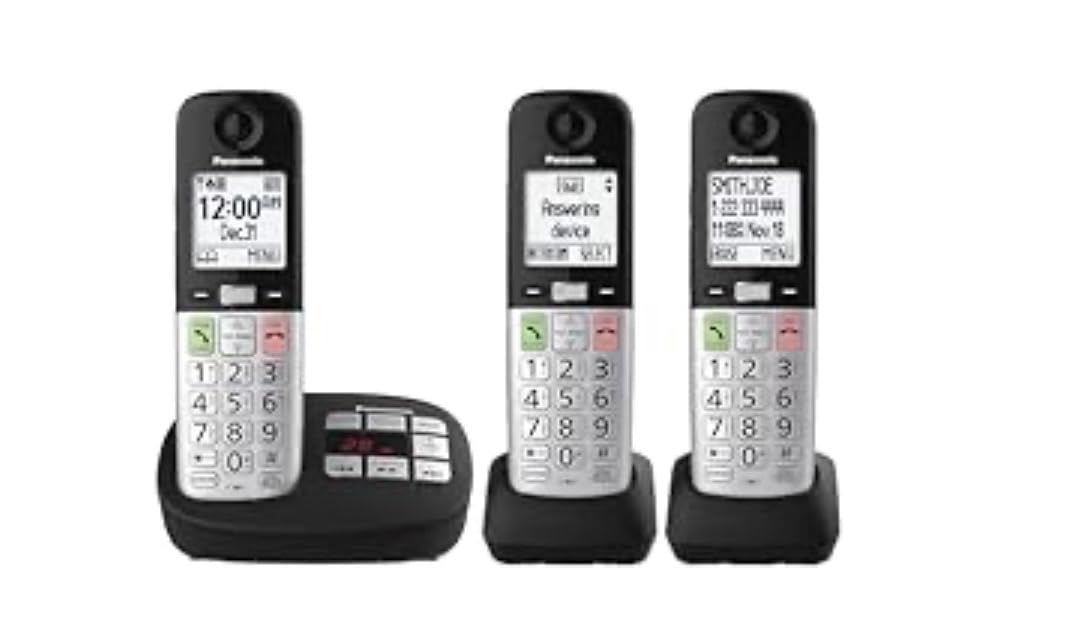
This is the pick when the house is the problem rather than the ear. Two handsets mean a phone in the kitchen and another in the lounge, which halves the chance of a call going unheard.
The boost is honest but small at up to 12 dB. That satisfies plenty of owners with moderate loss, while buyers with more significant loss say the speakerphone works better than the handset at the top setting.
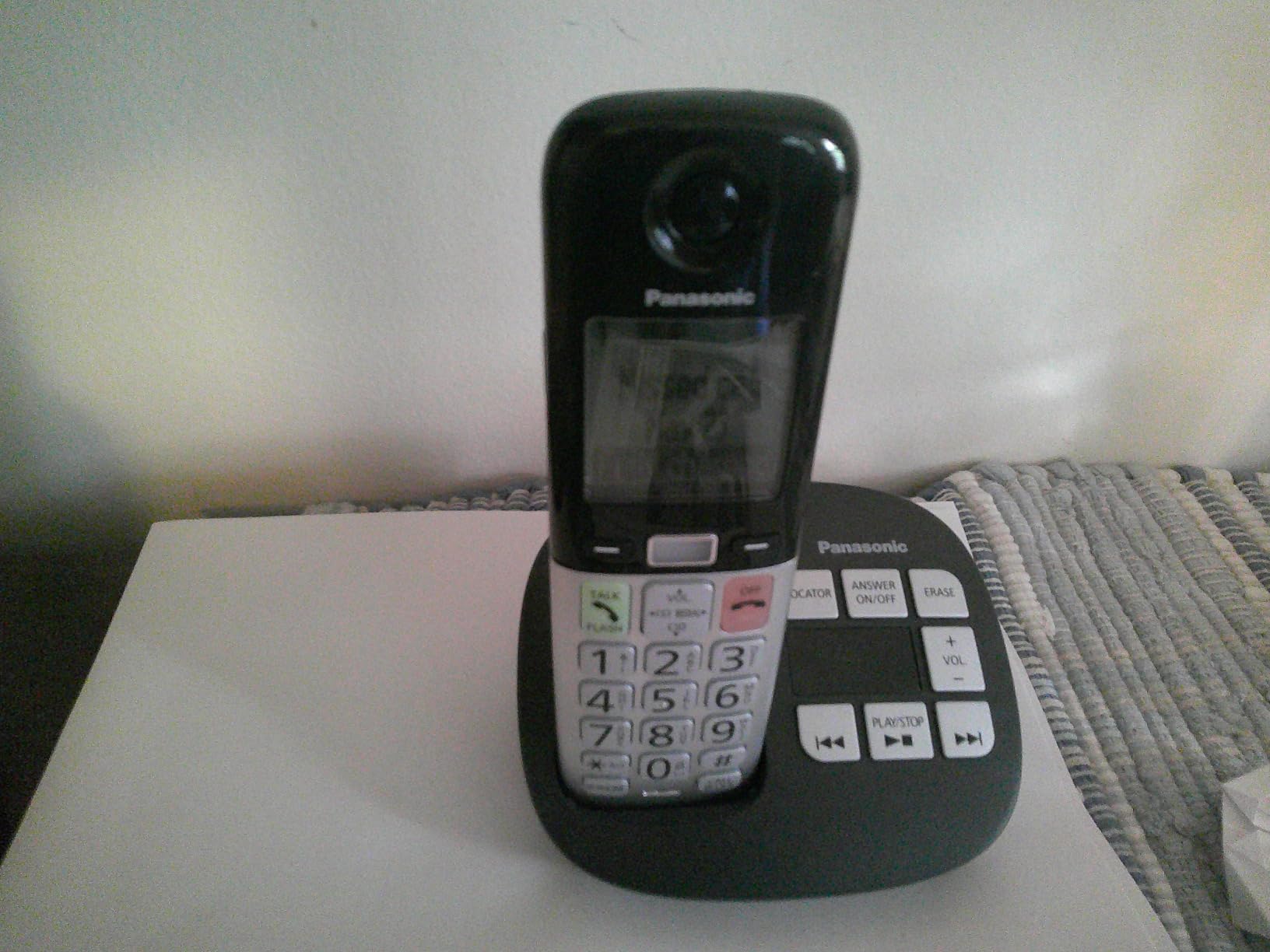
Two small details carry weight. The Favorites key flashes when a registered contact calls, giving a visual cue without extra equipment, and the handset flashlight is useful during a night-time fall.
Call blocking holds a thousand numbers with robocalls pre-blocked, but it ships switched on and has silenced wanted callers for some users, so set it up carefully.
Who this phone suits
Households covering more than one floor, and users who want a visual call cue alongside the ring. A good second step for moderate loss.
Where it falls short
Anyone with severe loss will find 12 dB under-amplified. The booklet is close to unreadable, and handsets must go back on the base or the off button pressed to end a call.
4. Future Call FC-1507 – 40 dB of Handset Volume on a Plain Corded Phone
Future Call FC-1507 Big Button Phone with 40db Handset Volume
40 dB amplified handset volume
Oversized buttons
Line powered corded design
30 day warranty
Pros
- 40 dB handset volume is noticeably louder than a standard phone
- Oversized buttons are easy to locate in low light
- Operates from the phone line so no outlet or charging is needed
- Very simple to operate
Cons
- No visual ringer or flashing alert
- Microcassette answering system is dated
- Limited feature set compared with modern amplified phones
Sometimes the right answer is a phone with no menu. The FC-1507 delivers 40 dB of handset volume through a corded handset, and there is almost nothing to learn.
It also runs from the telephone line, which removes the two failure modes that cause missed emergency calls on cordless phones: a flat battery and a dead adapter.
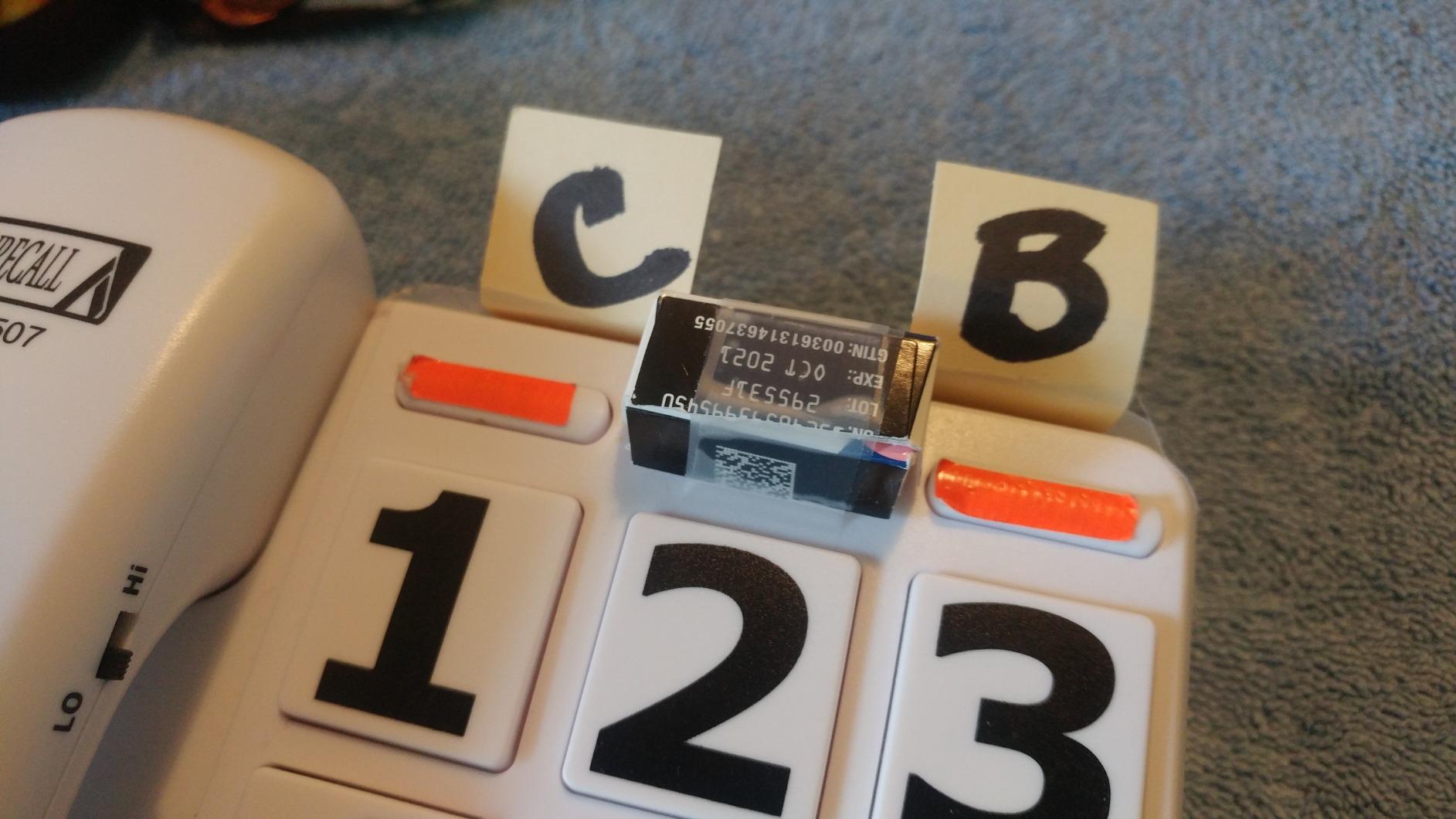
The ringer is not the story. This is a handset-amplification phone, so if the problem is not hearing a ring in another room, it does not solve that.
The feature list is thin. There is no caller ID, no visual alert and no modern answering system, so treat it as a single-purpose device rather than a phone hub.
Who this phone suits
Moderate loss where loud sound is the only goal, and anyone who wants a backup phone for an outage. It is a sensible first amplified purchase on a budget.
Where it falls short
It does nothing for a ring that cannot be heard, and there are no photo speed dials for a user with memory decline.
5. ClearSounds CSC500 – Built Around Hearing Aids With a Telecoil
ClearSounds CSC500 Amplified Landline Phone with Speakerphone and Photo Frame Buttons – Up to 30dB Amplification, T-Coil Hearing Aid Compatible
Up to 30 dB boost
T-coil and cochlear implant compatible
Eight photo memory keys
85 dB ringer with flasher
Pros
- Works with T-coil hearing aids and cochlear implants
- Meets FCC hearing aid compatibility standards
- Eight one-touch photo memory keys store full numbers
- Ringer adjustable to 85 dB with a visual flasher option
- Speakerphone for users who cannot hold the handset
Cons
- Only 30 dB of amplification
- Photo memory buttons need careful programming
- Corded handset only with no cordless option
This is the phone to shortlist first if the person using it wears hearing aids with a telecoil. The CSC500 is built for that route and is also listed for cochlear implants, which is unusual at this level.
The eight photo memory keys are what families mention most. Storing a number takes effort, but once set, the user presses a face and the call connects, which is why many people with memory decline still answer.
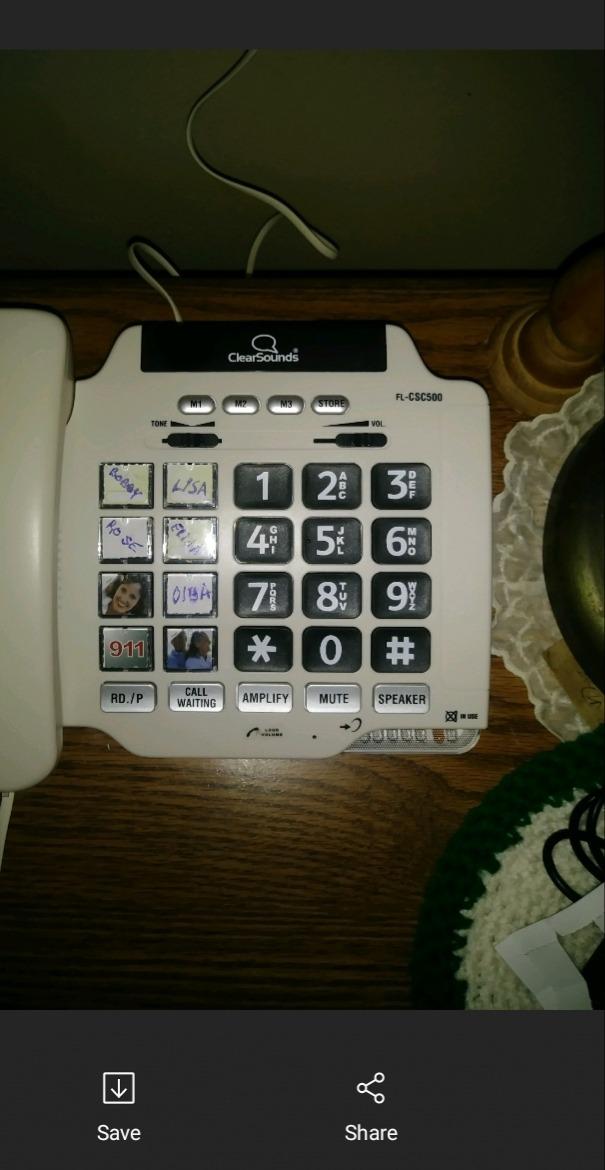
Thirty dB is a real but moderate boost. It suits users who can hear normal speech with aid and will not carry severe loss on its own.
It is corded, which brings the outage benefit and removes the misplaced handset problem, but also keeps the user near the base.
Who this phone suits
Teleccil wearers, cochlear implant users, and anyone who needs one-touch dialling to a face rather than a name.
Where it falls short
Severe loss needs more than 30 dB, and no cordless handset is included. The photo keys take real programming effort, so budget time rather than assuming it arrives ready.
6. Clarity E814CC – Corded and Cordless in One System
Clarity E814CC Amplified Corded/Cordless Combo with Answering Machine- Bundles, Dual-SIM and Dual keypad
Corded plus cordless handsets
18 minute digital answering machine
Boost control
Loud adjustable ringer
Pros
- Owners report comprehension improving markedly at severe loss
- Corded and cordless together so each family member can pick one up
- Digital answering machine with a 50 number directory
- Adjustable loud ringer for incoming calls
- Expandable with additional handsets
Cons
- Instruction booklet is long
- dense and hard to follow
- Message alert is an audible beep with no visual alternative
- Handset sits loosely in the cradle
Several owners describe this phone as the point where conversations with a family member stopped being a struggle, crediting the boost and clarity with restoring comprehension at significant loss.
The dual-handset design is the practical reason to choose it. A corded handset lives in the kitchen and never leaves, while a cordless one roams the house, and more handsets can be added.
Who this phone suits
Households where one person hears well and another does not. The boost can be raised and turned back down, and the fifty name directory helps families return calls without guessing.
Where it falls short
Usability is the real complaint. The manual is widely described as confusing, the new message alert is a beep with no flashing option, and the handset lifts out of the cradle too easily. Boost can also be too much for some hearing aid users at full strength.
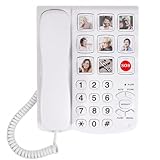
7. Sacumea Corded Senior Phone – Nine Photo Keys and a Ring Above 110 dB
Corded Landline Phone for Seniors, Dementia/Alzheimers Phone for Seniors -Amplified Senior Phone -9 Picture Memory One-Touch Dial Telephone, Hands-Free Calling, Home House Phones for Senior
9 photo memory keys
Ringer over 110 dB
Earpiece above 90 dB
LED call flash alert
Pros
- Nine one-touch photo keys suit users with dementia or memory loss
- Very large numbers that are easy to see and press
- Hands-free calling helps users with limited mobility
- No batteries or power supply needed and numbers are retained
Cons
- No caller ID
- voicemail or message recording
- Will not work on an internet-only VoIP line
- Some buyers could not adjust the ring volume
This phone is built for one situation: a parent who cannot reliably remember a telephone number. Nine keys hold a photograph each, and storing a number takes four steps, which does more for memory loss than any amount of extra volume.
Both figures are disclosed, which is rare. Ringtones run above 110 dB across three settings and the earpiece exceeds 90 dB, so it covers missed calls and unclear conversation at once.
Who this phone suits
People with dementia, memory loss or low vision who need to place calls without dialling, and anyone still on a traditional line. The LED call flash adds a visual cue without a separate device.
Where it falls short
There is no caller ID, voicemail or recording, so unanswered calls leave no trace. Some buyers found the ring volume controls unresponsive, leaving a ringer they could not lower, and it will not work on an internet-only service.
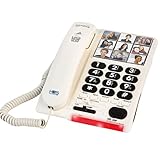
8. Serene Innovations HD40P – An 85 dB Ringer Powered by the Phone Line
Serene Innovations Amplified Big Button Landline Phone for Seniors with Dementia – 26dB Home Phone with Photo Buttons – Hearing Impaired Telephone
26 dB amplification
85 dB ringer
Photo speed dial keys
Runs from the phone line
Pros
- 85 dB ringer cuts through background noise
- Line powered so it works when mains power fails
- Large buttons with photo speed dials assist memory and vision
- Simple controls suited to seniors
Cons
- 26 dB is modest for severe hearing loss
- Microcassette answering system is dated
- Build and interface feel basic
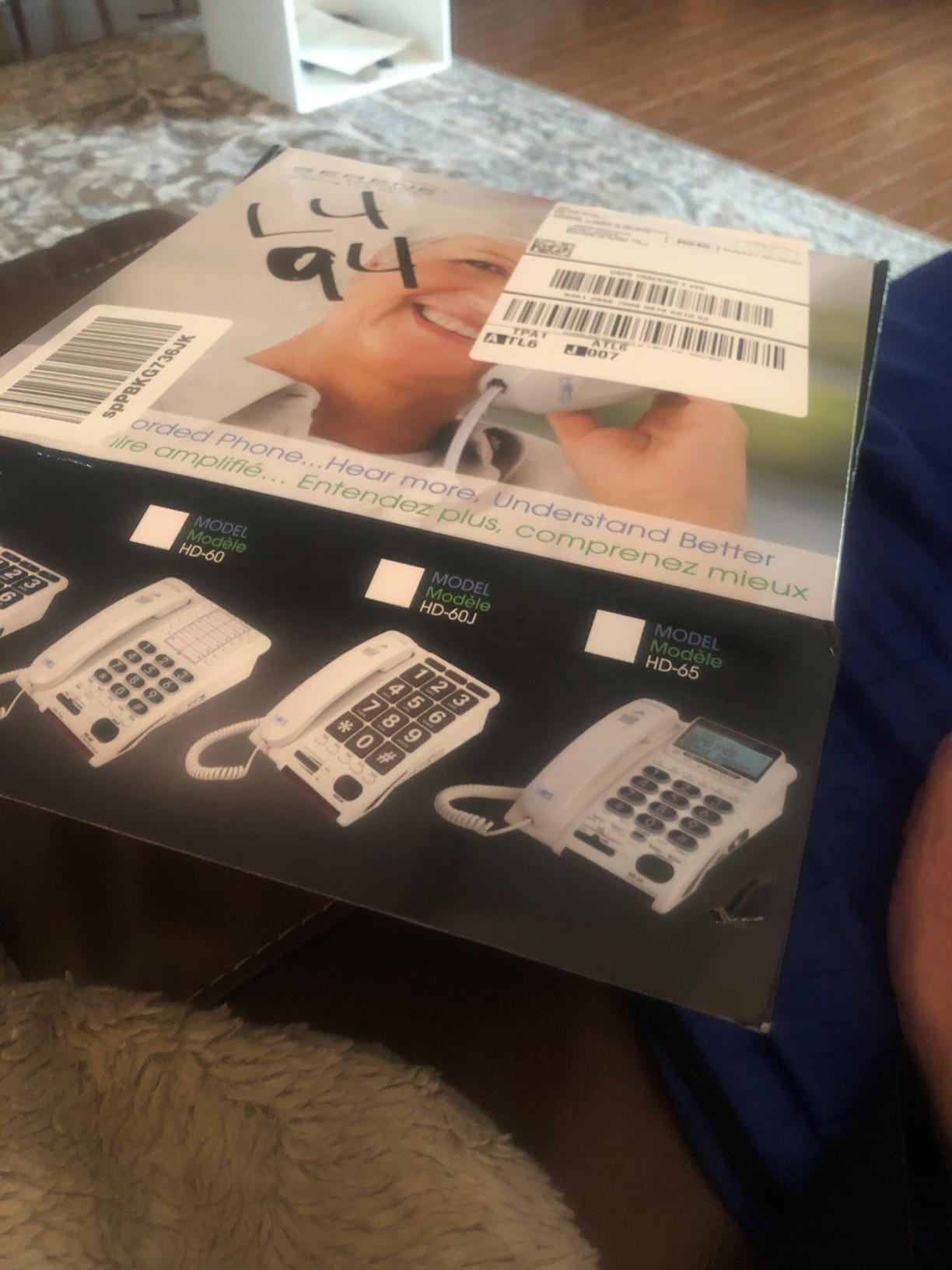
This is the phone for a household where power cuts are routine. It draws power from the telephone line rather than an adapter, so the ringer still sounds when the electricity does not. A caregiver on a UK Alzheimer’s forum thread described exactly this approach working, with the amplification set once and left as the default.
What it does well is announce itself. The 85 dB ringer carries over a television or a washing machine, and the photo speed dial keys give a memory route to the people who matter most.
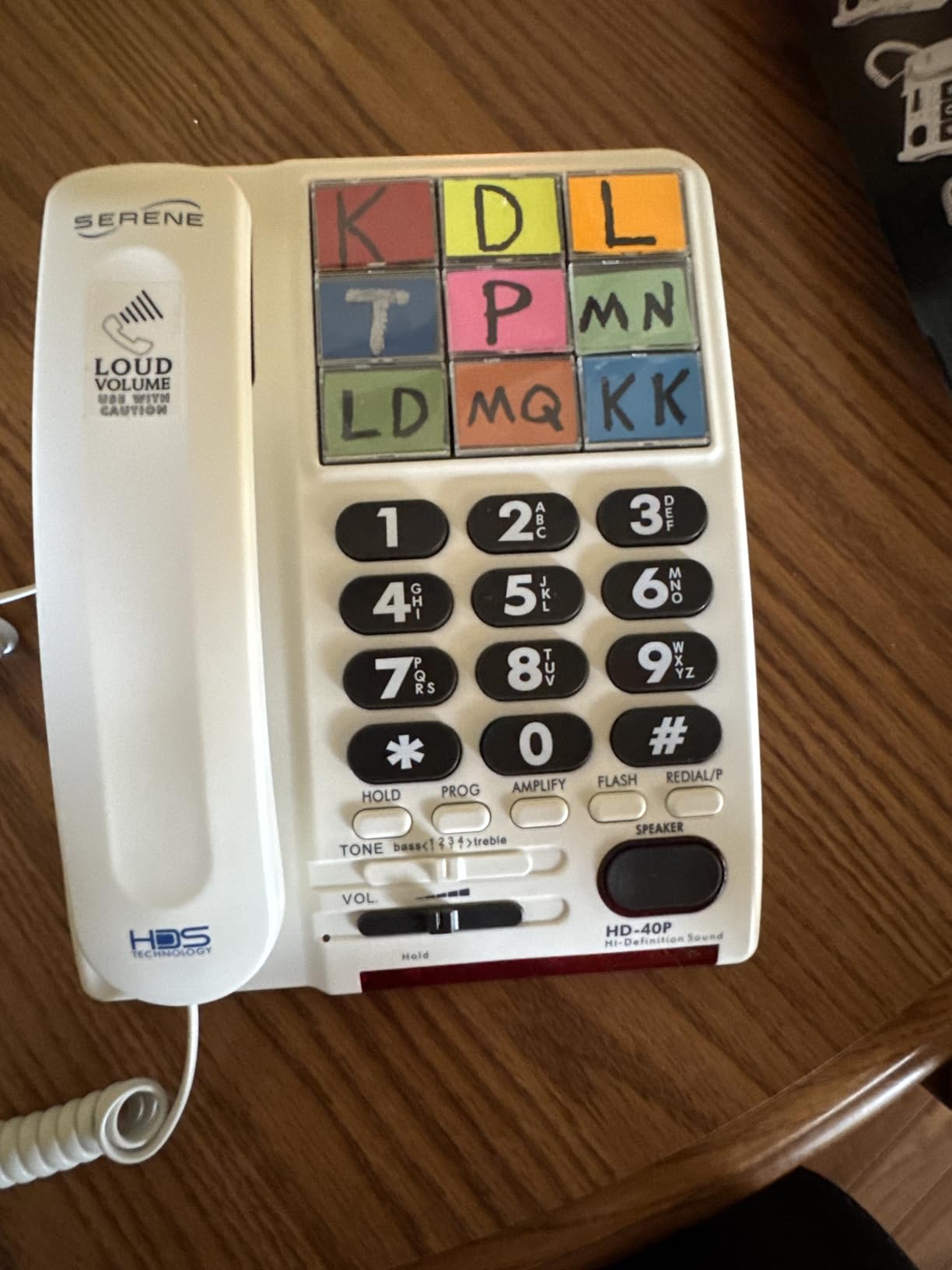
The 26 dB handset boost is real but modest, so it will not carry a quiet caller on its own. Buyers who are disappointed usually describe it as adequate rather than transforming.
The answering system uses a microcassette and there is no cordless option, so the phone is tied to wherever the base sits.
Who this phone suits
Moderate loss where the main problem is a ring that cannot be missed, in areas with unreliable power or where a flat cordless battery has already caused missed calls.
Where it falls short
It is not a serious-loss phone. Twenty-six dB will not solve a conversation problem, and the dated answering system makes it harder to recommend for a household that relies on recorded messages.
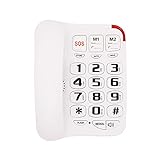
9. HePesTer HP-45 – 40 dB Plus Amplification With Three Picture Buttons
HePesTer Big Button Phone for Elderly Home Corded Landline with Picture Care Assist for Seniors Amplified for Hearing Impaired Aid Wall Mountable
Up to 40 dB plus adjustable volume
Three replaceable picture buttons
Wall mountable
Stored numbers retained
Pros
- Strong 40 dB plus adjustable amplification
- Very large buttons sized for low vision
- Stored numbers survive the phone line being unplugged
- Wall mountable with non-skid pads for desktop use
Cons
- No visual ringer for someone who cannot hear the ring
- Only three picture button slots
- Corded handset with a limited feature set
The amplification here is among the strongest in the group at up to 40 dB plus, and the buttons are large enough for a user who also has reduced vision. That combination is common, and it is where this phone earns its place.
Three replaceable picture buttons store favourite contacts. Fewer than the Sacumea or the ClearSounds, but each slot takes a proper printed photo and the programming is straightforward.
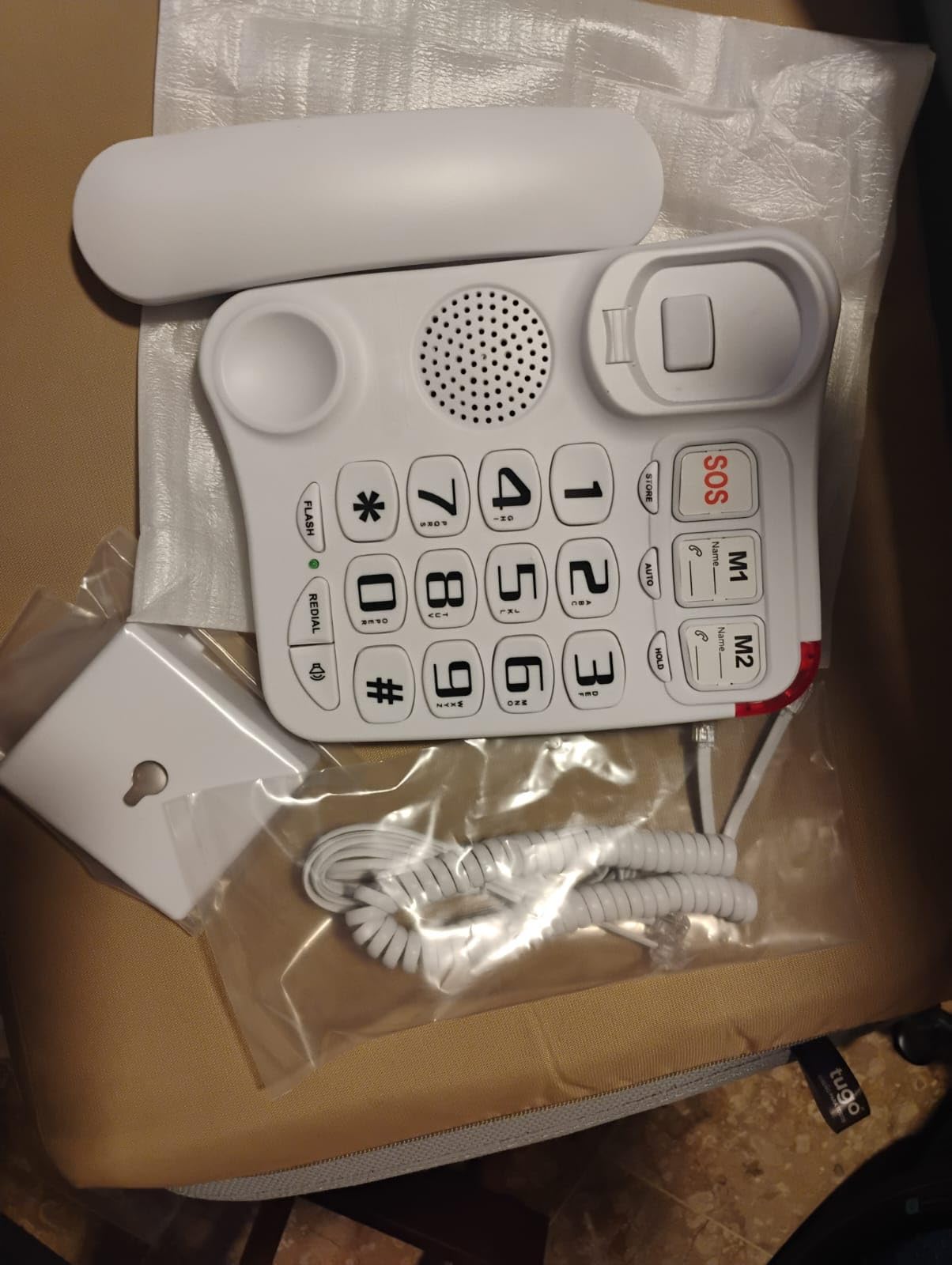
One detail is worth highlighting: stored numbers are retained even if the line is unplugged, so a phone moved or disconnected for repairs does not lose its contacts.
There is no visual ringer. If the user cannot hear the ring acoustically at all, this phone will not alert them and you need a strobe model instead.
Who this phone suits
Moderate to severe loss combined with low vision, and households wanting photo dialling without a large button count. The wall mount makes it a good bedside phone.
Where it falls short
Three picture slots is limiting for someone with many regular contacts, and the corded handset means the base must stay within reach. No answering system is included.
10. Clarity D704 – 40 dB Clarity Power With Adjustable Tone Control
Clarity D704 40db Amplified/Low Vision Cordless Phone with CID Display
Clarity Power up to 40 dB
Adjustable tone control
DECT 6.0 cordless
Large caller ID display
Pros
- Clarity Power amplification up to 40 dB
- Adjustable tone control helps across different voice qualities
- DECT 6.0 reduces interference and extends range
- Handset speakerphone is loud and clear
- Display is easy to read for low-vision users
Cons
- Older design without a visual ringer or talking caller ID
- No answering machine on this model
- Menu navigation is less intuitive than expected
This is the phone to shortlist if loudness is not your problem. Age-related hearing loss erodes the consonant band first, so a voice at full volume can still be unintelligible. The D704’s adjustable tone control addresses that, shifting emphasis toward the frequencies carrying s, f, th and sh.
The cordless handset runs on DECT 6.0, which means less interference from neighbouring phones and usable range around a normal house, and 40 dB of Clarity Power sits at the upper end of this group.
Who this phone suits
Users whose complaint is that they hear the caller but cannot make out the words, and anyone who wants a cordless handset with a readable display. Pair it with a separate flashing light if the ring is also a problem.
Where it falls short
It is a dated design with no visual ringer, no talking caller ID and no answering machine, and buyers find the menus slower to learn than on current models.
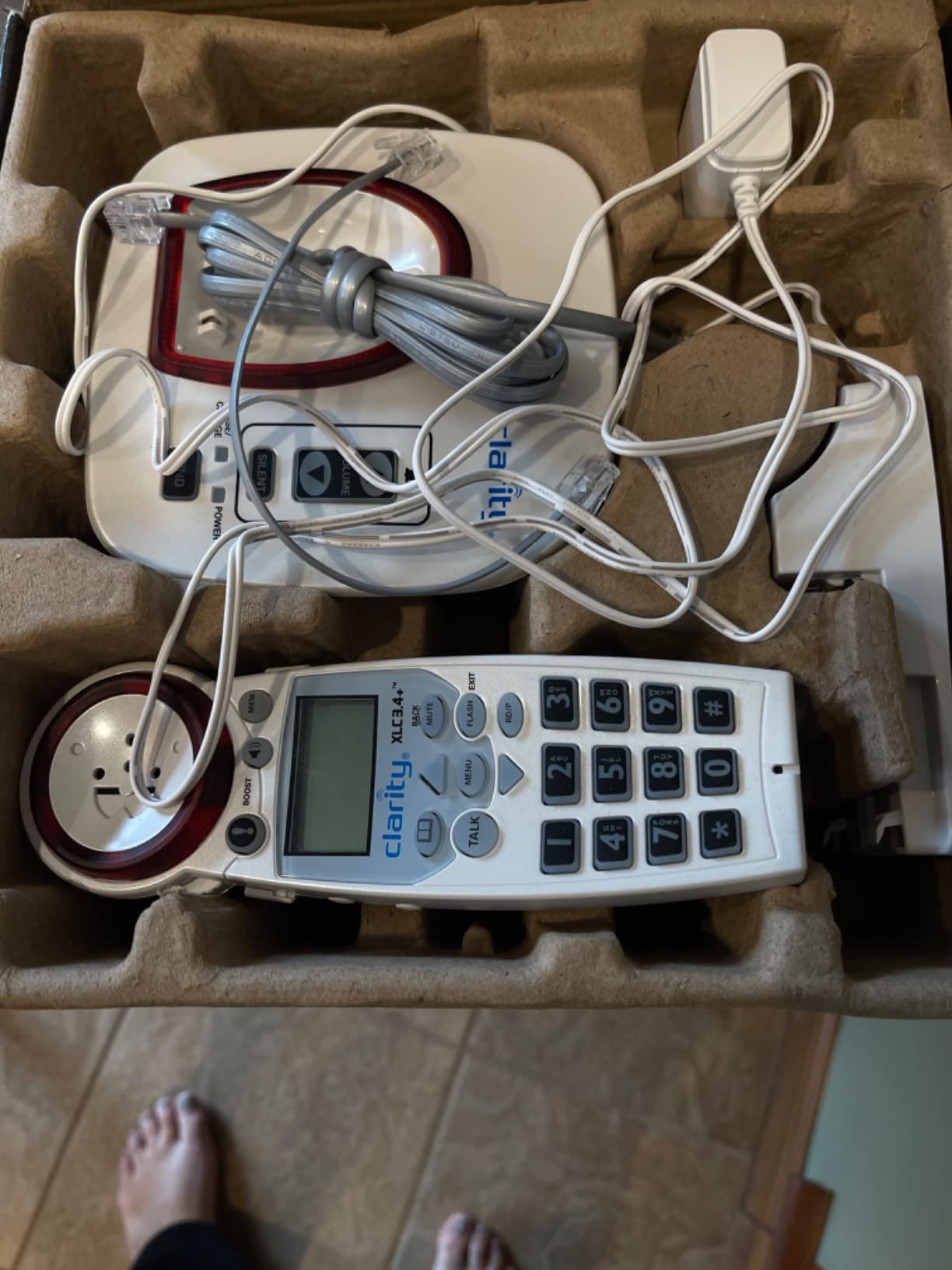
11. Clarity XLC3.4 plus – A Long Range Cordless With an Extra-Loud Ringer
Clarity XLC3.4+ DECT 6.0 Landline Amplified Cordless Phone, Extra-Loud Ringer, Big Buttons Cordless Home Phone, Talking Caller ID & Dual Power Battery
Digital Clarity Power boost
Extra-loud ringer
DECT 6.0 wide range
Dual power battery with 18 minute answering system
Pros
- Digital Clarity Power gives strong incoming amplification
- Extra-loud ringer makes calls easier to notice
- Big buttons plus talking caller ID for limited vision or hearing
- Dual power battery extends talk time and helps in outages
- 18 minute digital answering system
Cons
- Weakest average rating in this group
- Menu-driven interface needs learning
- Build quality feels less refined and the handset is bulky
If the house is large or the walls are thick, this is the one built for it. The DECT 6.0 platform gives strong range, and the dual power battery system is designed to hold a call through a power interruption.
The amplification works. Owners credit it with making callers audible, and the talking caller ID plus big buttons mean the user does not need to see well to answer.
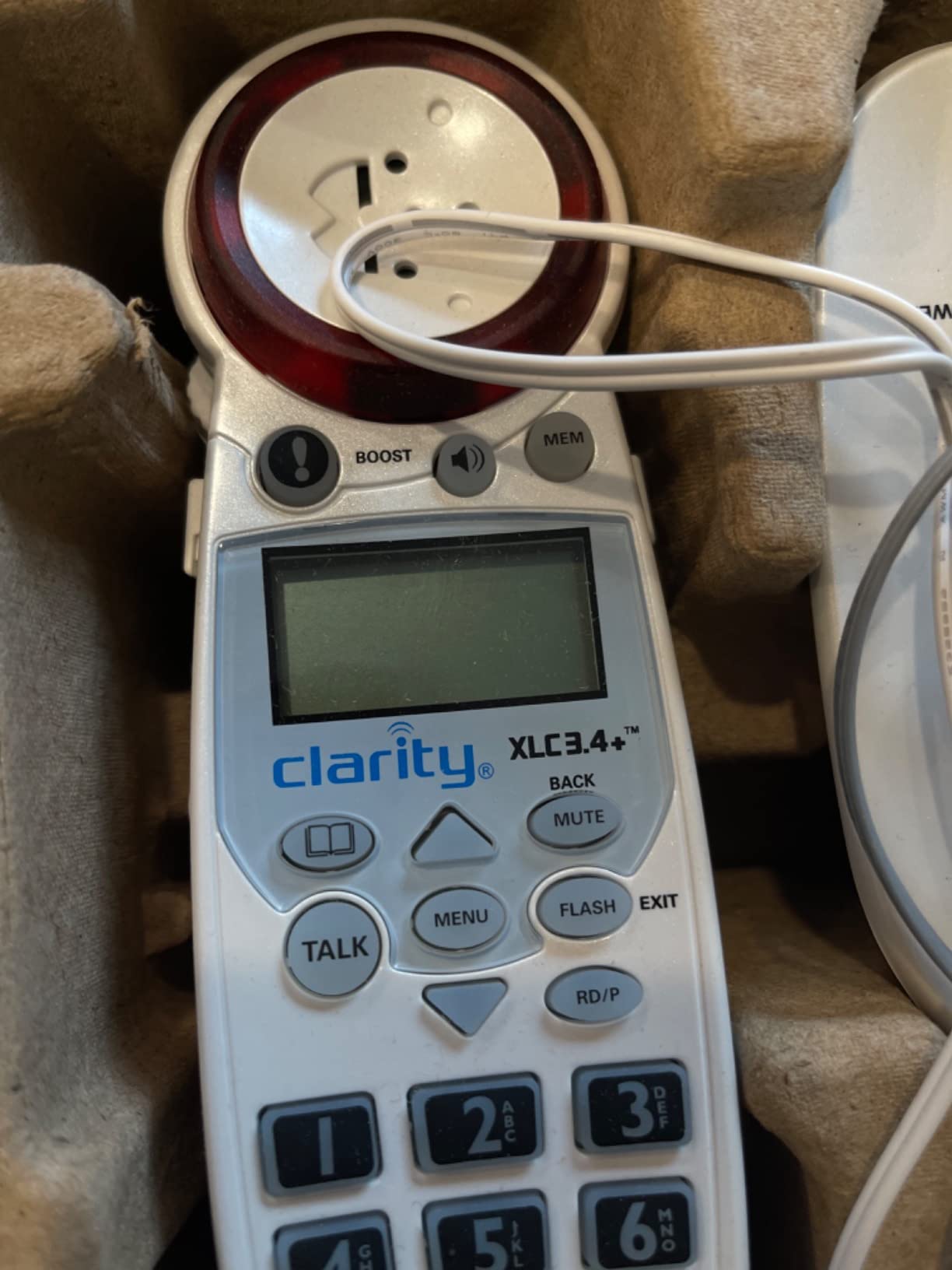
Our reservation is the interface. This is a menu-driven phone with a lot of nesting, and the reviewers who praise the range describe setup as something you have to learn.
It also has the lowest average rating of the twelve, with a minority reporting a handset that feels less solid than the cost suggests.
Who this phone suits
A long hallway or a property where a cordless handset regularly loses the line partway from the base, and a user who wants a battery-backed cordless that keeps ringing through a short outage.
Where it falls short
The menus will frustrate anyone who wants a phone that works the moment it is switched on, and the build is not what we would call refined. Compare the Clarity D704 and the Panasonic KX-TGM450S first.
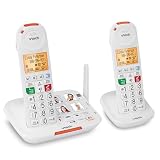
12. VTech SN5127 and SN5107 Bundle – A 50 dB Booster With a 90 dB Ringer
Bundle of VTech SN5127+VTech SN5107 Amplified Cordless Senior Phone with Answering Machine, Call Blocking, 90dB Ringer, Audio Assist, Big Buttons
50 dB Audio Booster
90 dB extra-loud ringer
22 minute answering system
Four photo speed dial keys
Pros
- 50 dB Audio Booster raises caller volume on demand
- 90 dB ringer plus visual ringer lights on all handsets
- Four photo speed dial keys for regular contacts
- Call blocking stores up to 1000 numbers
- Slow playback on the answering system
Cons
- Menu navigation is difficult for very elderly users
- Speakerphone can feed back at higher volume settings
- Two-base bundle can ring inconsistently between handsets
The Audio Booster is the story. It temporarily raises the caller’s voice by up to 50 dB without cranking the master volume, so a user can turn it on for a difficult call and off for an easy one. Owners say it is strong enough for a relative who refuses hearing aids.
Call screening is well covered, with a 90 dB ringer, visual ringer lights on every handset, four photo speed dial keys and a blocker holding up to a thousand numbers.
Who this phone suits
Households that want per-call control of boost, and anyone needing a visual cue on the handset as well as a loud ring. Slow playback on the answering system helps anyone who has struggled with recorded messages.
Where it falls short
The interface is the recurring complaint and it matters if the user is very elderly. Speakerphone feedback is reported at higher volume settings, and because this is a two-base bundle the handsets do not always ring together consistently.
How Much Amplification Do You Actually Need?
Amplified phones publish two different numbers, and confusing them is the most common buying mistake. Ringer decibels describe how loudly the phone announces a call. Handset boost describes how much extra volume the earphone adds to the voice. Someone who misses calls needs the first, and someone who cannot follow a conversation needs the second.
Roughly, mild loss is handled by Audio Assist or a low boost setting, moderate loss sits around 30 to 40 dB, and severe loss reaches toward 50 dB. Beyond that, most buyers gain more from a captioned phone or a personal listening device than from turning a landline up further.
Here is the trap worth naming. A headline gain of 20 dB or more on a single dial is common marketing, and a boost that sounds dramatic on a quiet desk can disappoint in a real call. That is why we skipped every phone that does not publish a handset figure at all. If the listing says only “extra loud,” assume the number is not flattering.
One thing loudness cannot fix. Landline audio travels over a narrow range, roughly 300 to 3000 Hz, which is why voices on any amplified landline sound thinner than the same person on a mobile. On a Digital Spy forum thread, users made exactly this point while weighing whether a speakerphone was enough, and for several of them it was.
Hearing Aid Compatibility: What M-Ratings and T-Ratings Mean
Hearing aid compatibility is sold as a badge, and it is worth understanding. An M4 rating is designed for use with the hearing aid in the microphone position, in your ear. A T4 rating works with a telecoil, the coil inside many hearing aids that picks up an inductive signal. The higher the number, the stronger the intended coupling, and an M4 and T4 phone supports both routes.
The two ratings are separate tests, and a phone can pass one and not the other. A listing that says only hearing aid compatible tells you almost nothing, which is why audiologists sometimes tell families no landline phone works with hearing aids. They usually mean that a poorly rated phone leaks feedback into the aids as a hum or whistle on the call. A properly rated phone is designed to avoid that, though fit still varies.
Where a telecoil exists, it is often the cleanest listening route, because the sound bypasses the microphone path entirely. On the Hearpeers forum, users describe switching a phone into telecoil mode as the difference between straining and following a conversation, particularly in a noisy room. The ClearSounds CSC500 is built explicitly around that route.
Free and Subsidised Amplified Phones: TRS, CapTel and Other Routes
You may not need to buy at all. In the United States, every state runs a Telecommunications Relay Service program for people with hearing, speech or vision disabilities, and most distribute equipment, often at no cost. Users across several disability communities confirmed on the DisBoards forums that amplified landline phones are available free or at low cost to older people with a diagnosed hearing loss, and the state programme is where to ask.
Ask about three things: an amplified or big-button landline, a captioned telephone, and ringer-only amplifier add-ons. That last category is a small box between your existing phone and the wall socket that raises the ring for everyone in the room. For someone whose only problem is an unheard ring, it is the cheapest correct fix by a wide margin.
If you have a flexible spending account or health savings account, a letter of medical necessity from your audiologist may make an amplified phone or captioned telephone reimbursable. Some Medicare Advantage plans carry an over-the-counter benefit that can cover these items, though the rules differ by plan.
On the captioned side, CapTel-style services relay calls and display the conversation as text on a large screen, with a fallback to a normal voice line if the connection drops. It is a different experience rather than a louder one, and it is the right answer for many people at the severe end of the range.
Amplified Phone or Captioned Phone?
Start with volume. It is the cheapest and least disruptive step, and it works for most people with moderate loss. If a boosted handset still leaves the user straining, add tone control, which shifts emphasis into the consonant band instead of adding more of everything.
If conversations are understood but rushed, slow playback is next. Several phones here slow the caller’s speech in real time, and the Panasonic applies it to answering machine messages too, which is where failures often happen. A UK Alzheimer’s forum caregiver described setting amplification once and leaving it as the default, a useful model for setting up a parent’s phone.
If words are not arriving, stop buying volume and move to captions, which remove the listening problem entirely. The catch families report is that a user who will not wear hearing aids may also refuse a captioned phone, so the amplified option has to stay on the table.
Corded vs Cordless: Outages, Range and Misplaced Handsets
Corded phones have one decisive advantage and one decisive limit. They run from the telephone line, so they ring during a power cut and the handset cannot be lost or left off its cradle. They also stay within reach of the base, which limits a user who moves around the house.
Cordless phones free the user to move, and DECT 6.0 models such as the Clarity D704 and XLC3.4 plus give good range with little interference. The costs are a battery that drains, a handset that ends up in another room, and a base that stops ringing when the power goes. Caregivers report misplaced cordless handsets as a direct cause of missed calls, which is why several corded picks exist here.
A pragmatic setup is a corded phone in the room where calls are expected plus a cordless handset for roaming, which is what the Clarity E814CC offers in one system. The AT&T CL2940 is a good single-room start because it needs no configuration and no charging.
Frequently Asked Questions
What is the best phone amplifier for people with hearing loss?
The best amplified phone is the one that matches your actual problem. The Panasonic KX-TGM450S is our overall pick because it publishes both numbers that matter: 50 dB of handset boost and a 112 dB ringer, plus Slow Talk and a red visual alert. For mild loss, the ATu0026amp;T CL2940 is enough, and it keeps working during a power cut.
What are some good phone options for people with hearing loss?
Good options fall into a few groups. Disclosed-boost cordless phones such as the Panasonic KX-TGM450S and the Clarity D704 handle conversation. Corded amplified phones such as the ClearSounds CSC500, the Future Call FC-1507 and the Serene Innovations HD40P work during outages and never go flat. Photo speed dial models such as the Sacumea and HePesTer HP-45 suit users with memory loss.
Is hard of hearing considered a disability?
Yes. In most contexts hearing loss that substantially limits daily life is treated as a disability, and in the United States hearing impairment is specifically recognised as a disability for employment and program purposes. That recognition is what opens access to state Telecommunications Relay Service equipment, captioned telephone services and workplace accommodations.
What is the loudest cell phone for people with hearing loss?
Among the landline phones we reviewed, the Panasonic KX-TGM450S is the loudest, with a 112 dB ringer and a bright red LED visual alert, followed by the Sacumea at over 110 dB. Mobile phones do not publish comparable figures, so loudness has to be judged by pairing the handset with hearing aids, a speakerphone or an external Bluetooth amplifier instead.
What is the best landline phone for seniors with hearing loss?
The Panasonic KX-TGM450S is the best overall landline for seniors with hearing loss, combining 50 dB of handset boost, a 112 dB ringer, Slow Talk and talking caller ID. If setup simplicity matters more than raw boost, the ATu0026amp;T CL2940 is easier by a wide margin and works during a power outage, which is why caregivers often choose it as a first step.
Is there a free iPhone program for people with deafness?
There is no separate free iPhone program, but every iPhone ships with accessibility features that cover much of the need at no cost. Live Listen streams audio from a microphone or hearing aid straight to the ear, Live Captions transcribes calls and surroundings, and audio relay works with Bluetooth hearing devices. Android offers equivalents through Live Transcribe and sound amplification.
Which Amplified Phone Should You Buy?
Start with the Panasonic KX-TGM450S if you want the most disclosed amplification, the loudest ringer and speech slowing in one device and someone will handle the setup. Choose the AT&T CL2940 when reliability and simplicity matter more than raw boost. Look at the ClearSounds CSC500 for telecoil wearers, the Sacumea or HePesTer HP-45 for memory loss, and the Clarity D704 when consonants are the problem.
Before buying, ask your state Telecommunications Relay Service programme what they provide at no cost, and work out whether the real issue is a missed ring or an unclear conversation. We re-checked every figure in this guide for 2026, and skipped every phone that would not say how many decibels it delivers.