
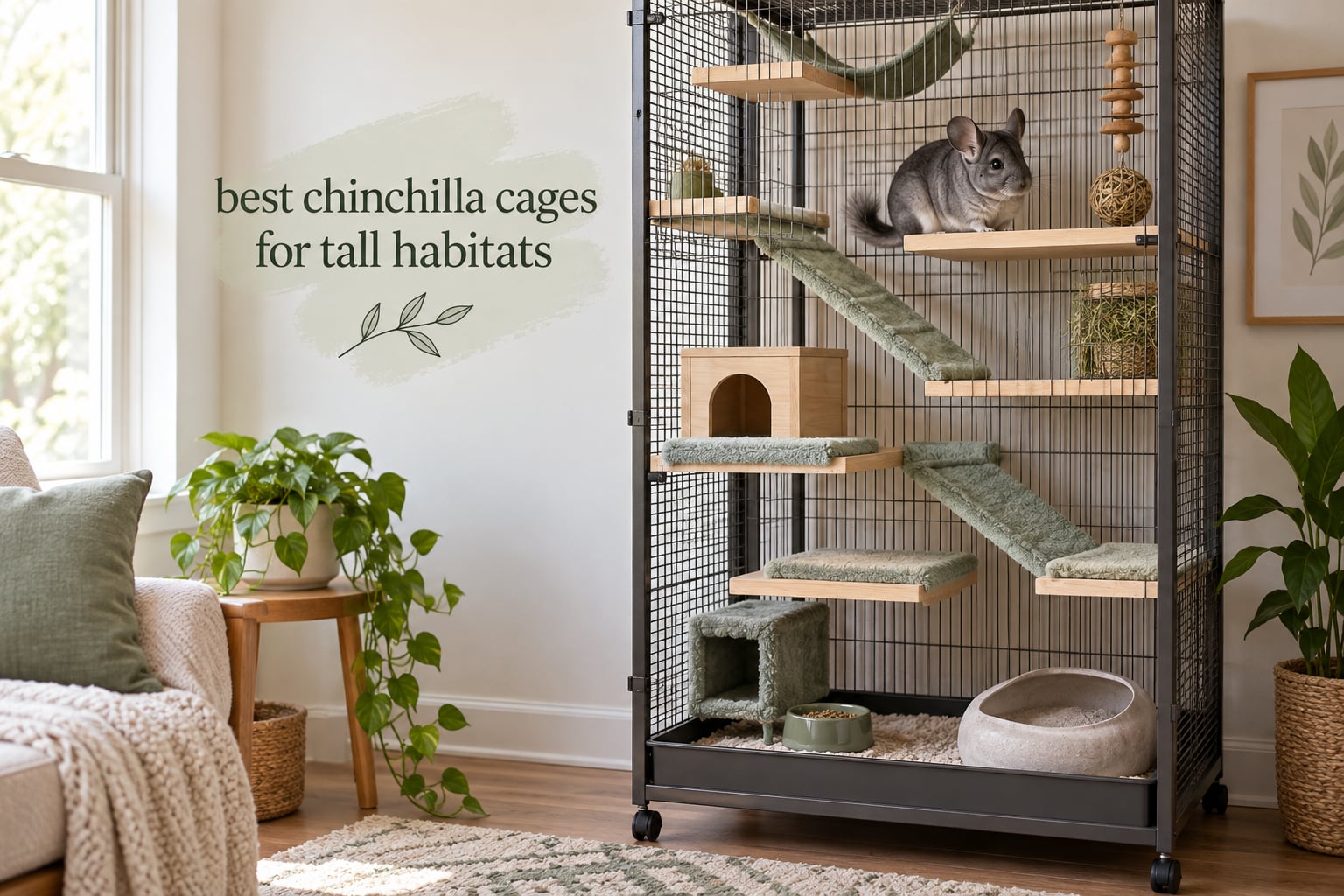
Chinchillas are built for height, not floor space. In the wild they climb rocky slopes and squeeze into crevices, and a flat, wide pet-store cage with a single level leaves all of that instinct unused. That is the entire argument behind the best chinchilla cages for tall habitats: vertical space, staggered levels and safe landings are what turn a cage into a habitat.
There is a catch, and it is the one most roundups skip. Height plus drop distance equals fall risk, and a 60-inch tower with one wide gap between platforms can injure a chinchilla that has no map of the space yet. Our team spent weeks measuring bar spacing, platform gaps and ramp angles across ten cages so you can see both sides of the trade-off before you buy.
We compared ten tall cages from MidWest Homes for Pets, Prevue, Yaheetech, PawHut, HABUTWAY and Mcage. We weighed the wire gauge and bar spacing, counted the levels, checked whether the trays and grates come out for cleaning, and looked hard at what each one gets wrong. The cages that survived that process are the ones below, ordered by how well they handle a tall habitat without adding avoidable injury risk.
If you are still deciding how many animals you are housing, start with our guide to chinchilla cages for multiple pets, since cage size scales with the number of animals, not just their species.
Table of Contents
Top 3 Picks for Tall Chinchilla Habitats

Critter Nation Double Unit
- 36 x 24 x 63 inch two-story habitat
- 1/2 inch horizontal wire spacing
- 3 ramps with covers and 2 full-width shelves

Prevue 485 Feisty Ferret Home
- 31 x 20 x 54 inches on a storage stand
- Ramps shelves and hammock included
- Removable platforms grille and tray

Yaheetech 52 inch 6-Level Cage
- Six tiers of vertical space
- Powder-coated steel frame
- Slide-out tray with metal grate
All 10 Tall Chinchilla Cages at a Glance
Every cage below is tall by design. The column that matters most for a chinchilla is bar spacing, because a cage can be beautiful and still be a poor fit if the bars are wide enough to trap a head or a limb.
| Product | Specifications | Action |
|---|---|---|
| Critter Nation by MidWest Double Unit |
|
Check Latest Price |
| Prevue Pet Products 485 Feisty Ferret Home |
|
Check Latest Price |
| Yaheetech 52 inch 6-Level Metal Cage |
|
Check Latest Price |
 PawHut 6-Level Small Animal Cage PawHut 6-Level Small Animal Cage |
|
Check Latest Price |
 Yaheetech 69 Inch Wrought Iron 3-Level Cage Yaheetech 69 Inch Wrought Iron 3-Level Cage |
|
Check Latest Price |
 PawHut 63 Inch 6-Tier Small Animal Cage PawHut 63 Inch 6-Tier Small Animal Cage |
|
Check Latest Price |
 PawHut 59.5 Inch 6-Level Portable Cage PawHut 59.5 Inch 6-Level Portable Cage |
|
Check Latest Price |
 Mcage Huge X-Large Wrought Iron 4-Level Cage Mcage Huge X-Large Wrought Iron 4-Level Cage |
|
Check Latest Price |
 HABUTWAY 50 Inch Metal Small Animal Cage HABUTWAY 50 Inch Metal Small Animal Cage |
|
Check Latest Price |
 HABUTWAY 40 Inch 2-Tier Rolling Cage HABUTWAY 40 Inch 2-Tier Rolling Cage |
|
Check Latest Price |
1. Critter Nation by MidWest Double Unit – Best Overall for Vertical Space
Critter Nation by MidWest Double Unit Small Animal Cage
36 x 24 x 63 inches
Two full living levels
1/2 inch wire spacing
44 pounds
Pros
- Huge two-story layout from a 36 by 24 inch floor plate
- 1/2 inch horizontal spacing is among the tightest here
- Three textured ramps with covers and two full-width shelves
- Full-width double doors with a swing-up locking ramp
Cons
- Assembly is slow and tight
- best handled by two people with a rubber mallet
- Deep base pans are awkward to slide out at an angle
This is the cage that sets the baseline for everything else in this roundup. At 36 by 24 by 63 inches with two full levels of living space, it gives a single adult chinchilla more usable surface than most of the towers here hand over at a fraction of the height. The 36-inch floor plate matters more than the 63-inch height, because a chinchilla still needs room to sprint and dust bathe.
Wire spacing is 1/2 inch measured horizontally, which is tight enough to contain a chinchilla and its head while still letting you reach in for a chin scratch. The hammertone gray finish is a scratch-resistant coating over sturdy metal wire, and reviewers consistently describe the build as solid after the first month of use.

The included kit is genuinely complete: two removable base pans, three textured ramps with covers, and two full-width resting shelves. Those ramp covers matter more than most listings suggest, because bare corrugated wire is one of the main routes to sore feet and, over time, bumblefoot.
The swing-up locking ramp that divides the two levels is the feature we found most useful. It lets you section off the bottom half for cleaning, for feeding, or for separating a bonded pair during a vet visit without dismantling the whole cage.
Assembly is the honest downside. Owners describe a tight fit where panels need to be persuaded into place, and most recommend two people and a rubber mallet. Budget an hour and do it on a carpeted floor rather than sliding panels across hard flooring.

Why this works for a tall habitat
Two full levels with wide shelves let you stagger platform positions so no single drop exceeds about a foot, which is the single most effective fall-prevention move available. The full-width shelves also let you add wood ledges or fleece-covered platforms later without rethinking the layout.
The removable pans and shelves mean a deep clean takes minutes rather than an afternoon. For an owner who wants tall space without constant disassembly, that combination of capacity and access is hard to beat.
Where owners report trouble
The base pans sit deep, and sliding them out at an angle is awkward once bedding is packed in. Owners also report casters that stick or freeze and corner seams that can show rust after years of use, so the cage needs the same care as any metal habitat in a damp room.
Because the cage weighs 44 pounds, moving it to clean behind or under it is a two-person job even with wheels. Plan the placement before assembly rather than after.
2. Prevue Pet Products 485 Feisty Ferret Home – Best Standing Perch Design
Prevue Pet Products 485 Feisty Ferret Home with Stand, Black Hammertone Small
31 x 20 x 54 inches
7/8 inch wire spacing
23.6 pounds
Stand with storage shelf
Pros
- Largest review base in this group at over 7000 ratings
- Cage measures 31 by 20 by 41.5 inches and 54 inches on the stand
- Two hinged escape-proof doors that also split the interior
- Removable platforms grille and bottom tray
Cons
- Vertical-bar layout was designed around ferret movement
- 7/8 inch spacing is too wide for small rodents
- Built for ferrets rather than chinchilla foot health
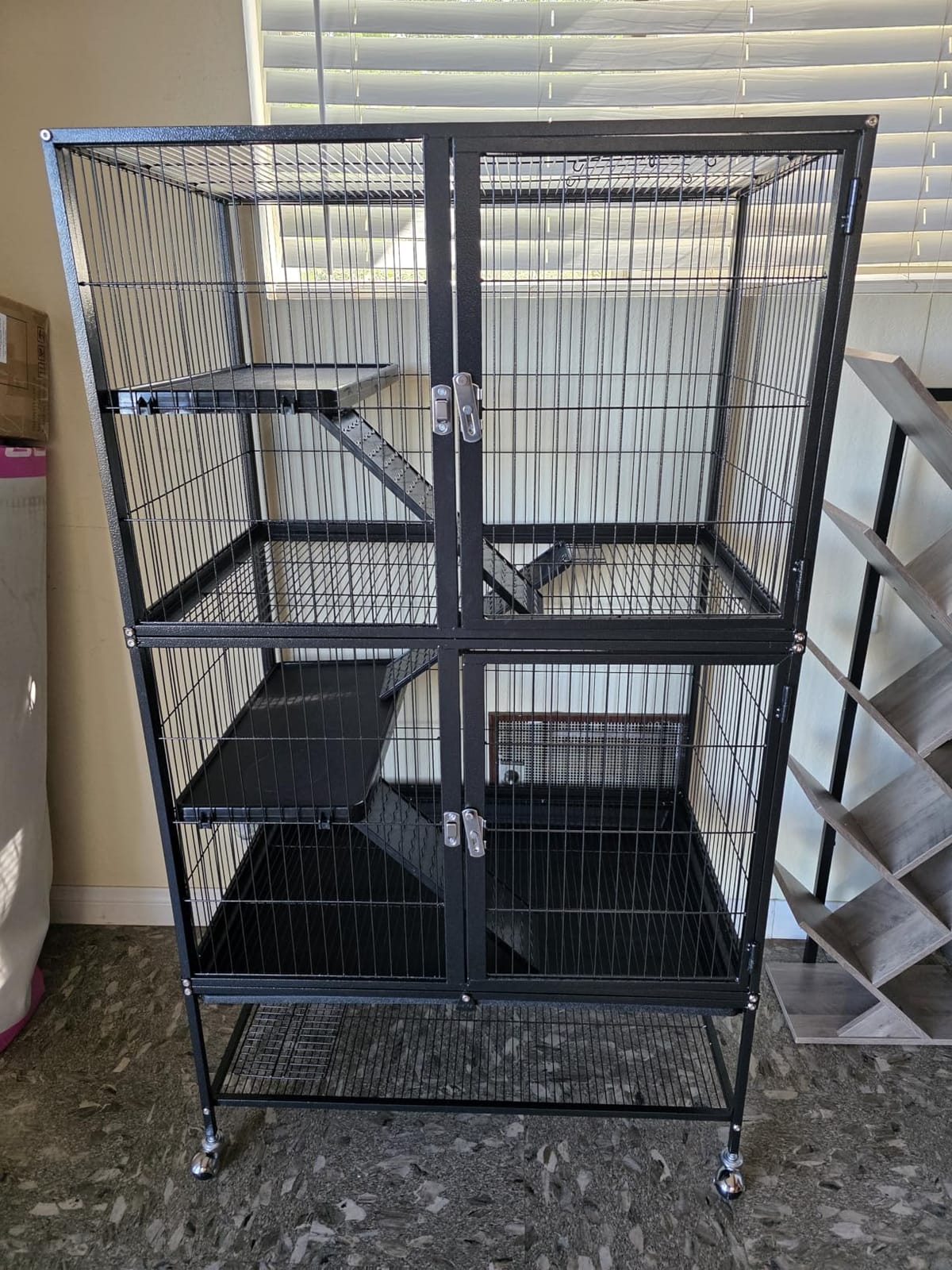
Longest-running cage in this group, available since 2007, and the one with by far the deepest pool of owner feedback. Reviewers consistently praise the steel construction, the two large hinged doors and the way the whole unit sits on a stand with caster wheels and a space-saver shelf underneath.
Measuring 31 by 20 by 41.5 inches for the cage itself, it stands 54 inches tall on the stand. That combination of a wide floor plate and a raised storage shelf below makes it a strong fit for small rooms where you need height but not a wide footprint.
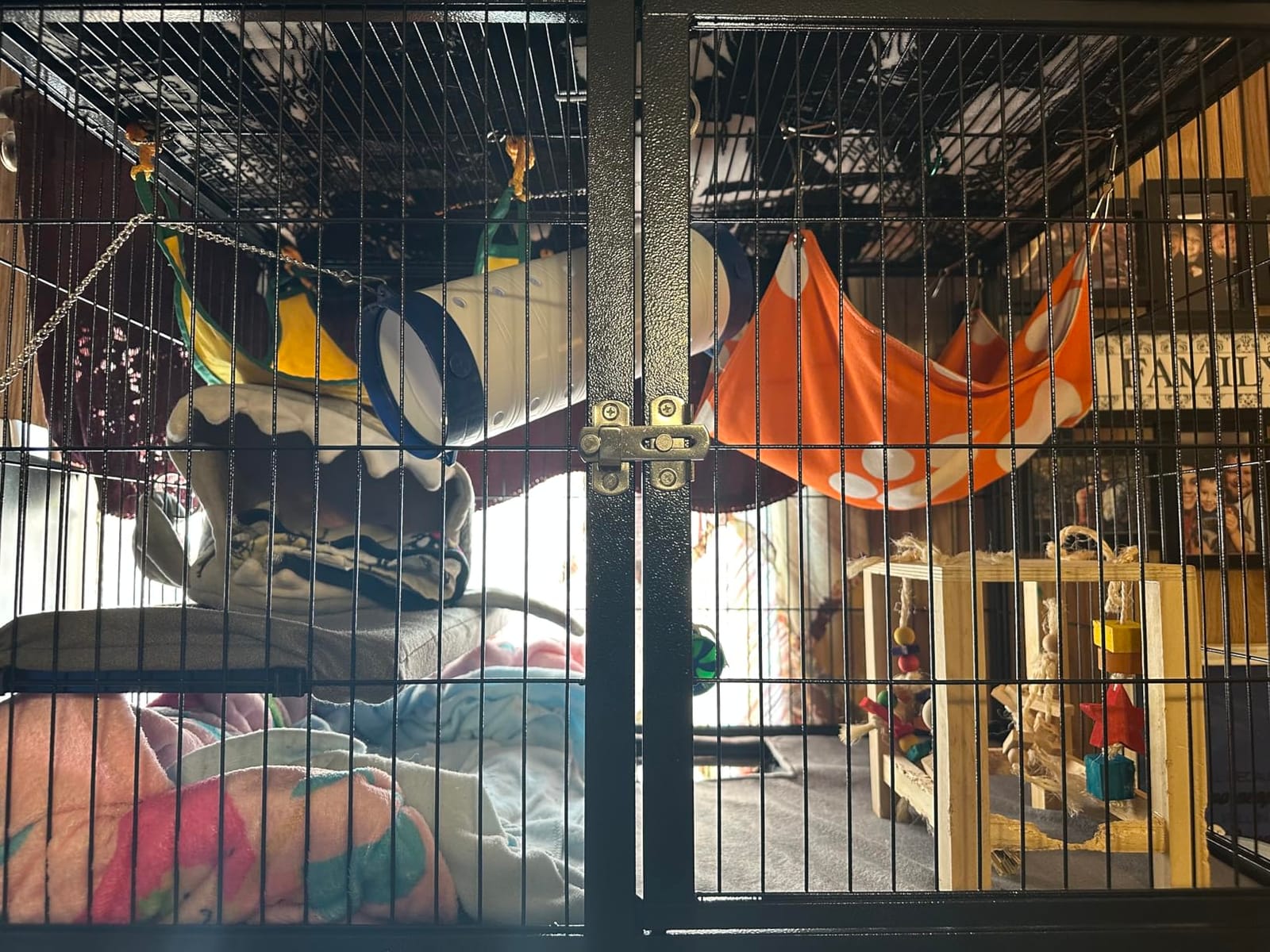
Removable platforms, grille and bottom tray are the quiet hero feature. Owners who house more than one chinchilla can clean one section at a time rather than emptying the entire habitat, and the grille keeps feet off the tray surface.
Two hinged doors are described as escape-proof, and when closed they can create two separate spaces. That is useful during cleaning, introductions, or separating a pair that needs individual feeding.
The honest caveat is intent. This is a ferret habitat, and the vertical-bar layout, the 7/8 inch wire spacing and the ramps are all built around ferret climbing and ferret-proof latching. Nothing about it is unsafe for a chinchilla, but it is not engineered around chinchilla foot care.
Why it suits a tall setup
Standing the cage on a stand converts floor area into usable height, and the storage shelf underneath holds bedding, dust bath sand and food without taking up floor space. That is the simplest vertical gain in this entire list.
The wide 20-inch depth plus included ramps and shelves give you several landing points, and because the platforms are removable you can rearrange them into a staggered pattern after assembly.
Where it falls short for chinchillas
The 7/8 inch spacing rules out any young chinchilla, and reviewers note the cage is oriented more toward ferrets than toward chinchillas. If you have a kit under about seven months, this is the wrong cage.
Ramp covers are not included in the way they are on the MidWest unit, so plan to add fleece or wood ramp covers yourself. Without them the corrugated ramps are a long-term foot hazard.
3. Yaheetech 52 Inch 6-Level Metal Cage – Best Value Vertical Tower
Yaheetech 52-inch Ferret Cage 6 Level Metal Rat Cage with 3 Front Doors/Feeder/Wheels Small Animal Cage for Ferret/Chinchilla/Bunny/Rabbit/Squirrel, Black
25 x 17 x 52 inches
Six tiers
Powder-coated steel
28.2 pounds
Pros
- Six tiers of climbing space in a 25 by 17 inch footprint
- Three latched front doors give access at multiple levels
- Slide-out litter tray with a metal grate underneath
- Powder-coated steel resists wear and water
- Four 360-degree industrial casters
Cons
- Narrow 17 inch depth limits running and sprinting space
- Some buyers report minor wobble after assembly
- Modest finish quality at this price tier
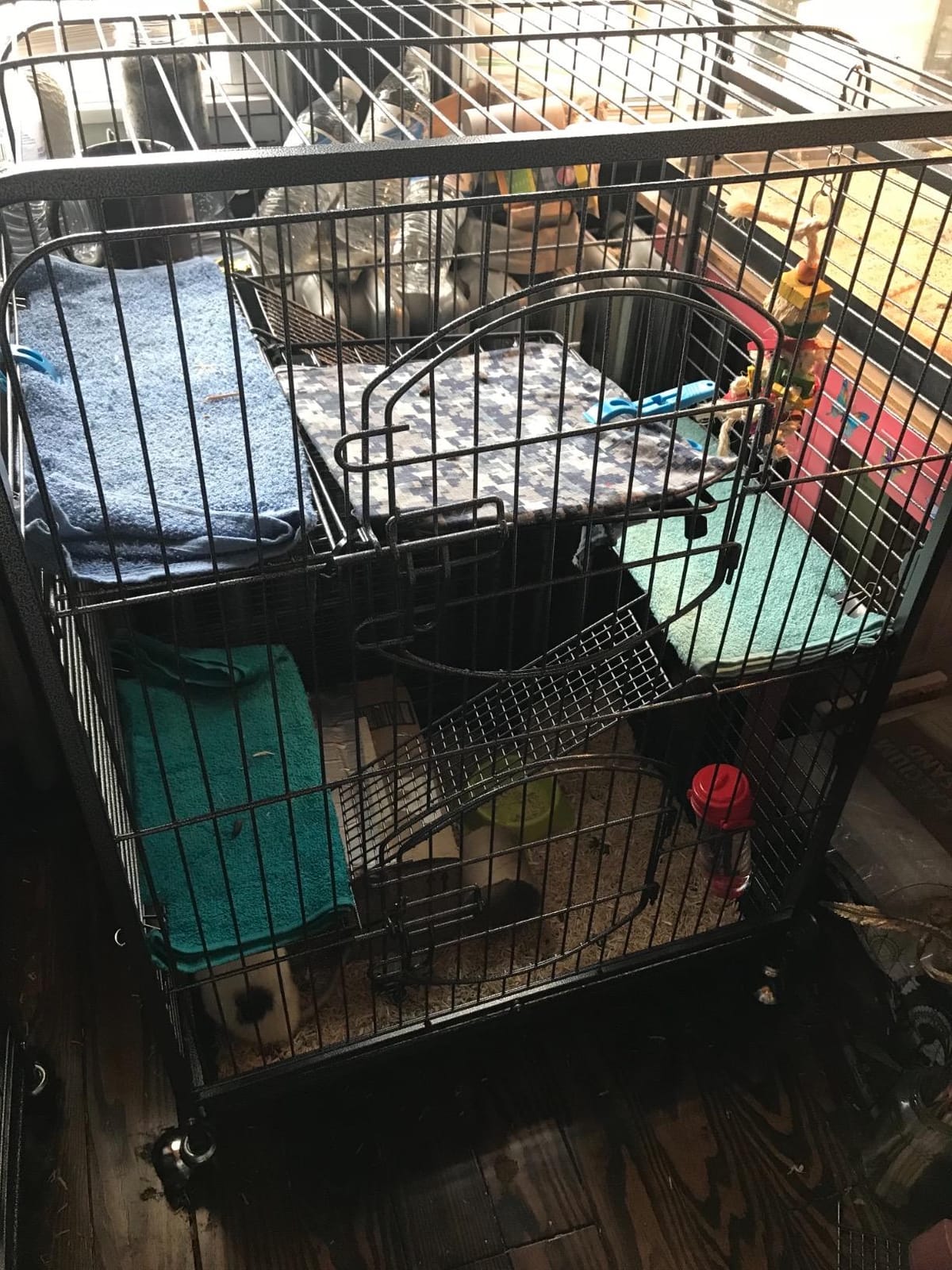
When people ask where to get tall vertical space without spending heavily, this is the answer most owners land on. Six tiers inside a 25 by 17 inch footprint is the best space-to-height ratio here, and reviewers repeatedly note that the tier count alone justifies the money.
Powder-coated steel gives you good strength with real wear and water resistance, which matters in a cage you will hose down weekly. The three latched front doors open at different levels, so you can reach a chinchilla on the top tier without dismantling the cage.
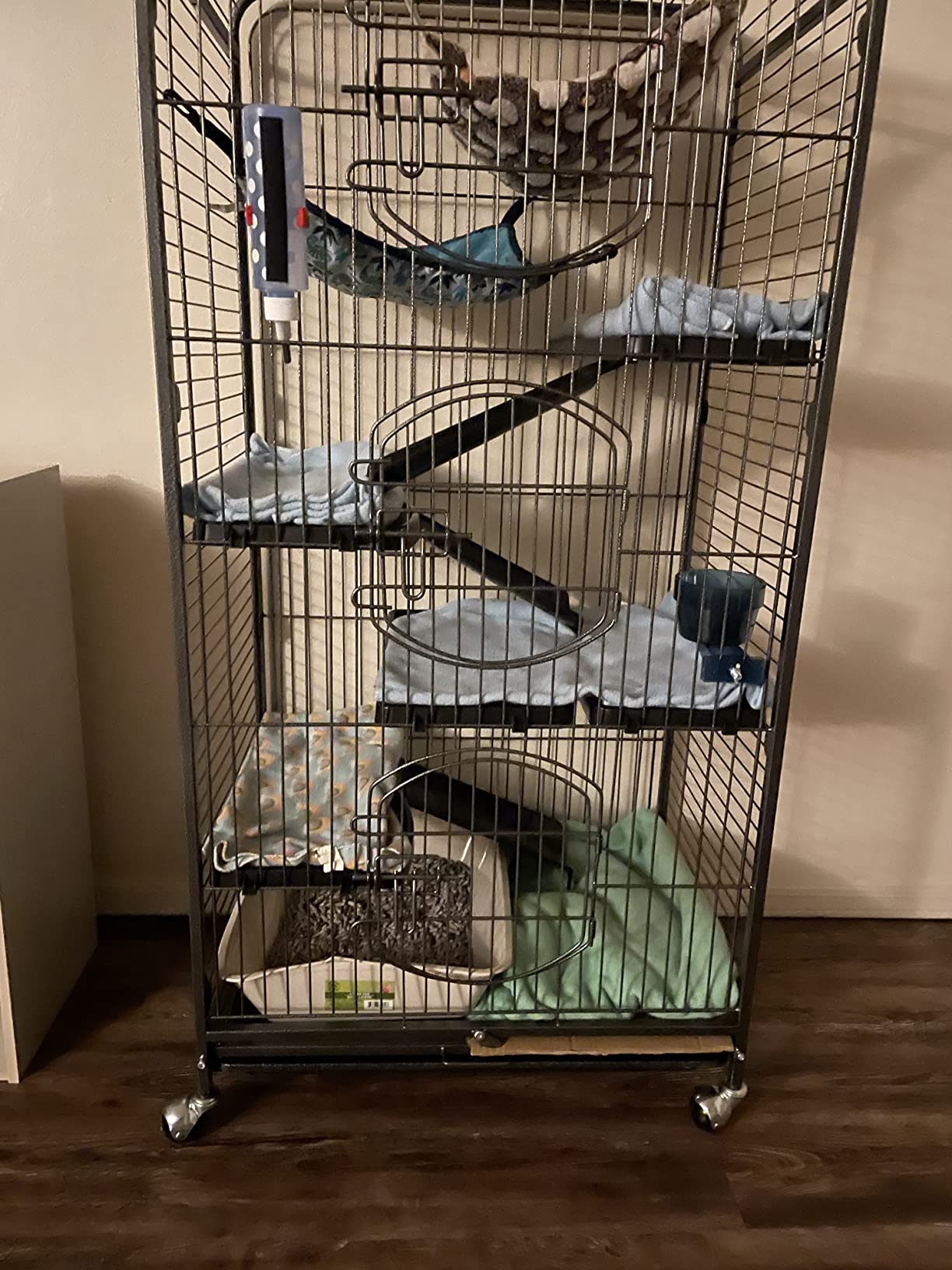
The slide-out litter tray has a metal grate beneath it that keeps the animal off its own droppings. That single detail does more for foot health than any decorative ledge, and it is the reason we would build a bumblefoot prevention setup around this cage.
Corrugated ramps are included to reduce slipping, and four 360-degree casters make the whole tower movable despite the 52-inch height. Being able to roll the cage away from a wall for cleaning is worth more than it sounds.
Depth is the compromise. At 17 inches wide the chinchilla can climb well but cannot sprint in a straight line, and adult chinchillas sprint daily. Treat this as a climbing habitat rather than an exercise habitat.
Why owners keep it
Six tiers let you stagger platforms in an offset pattern, so a chinchilla moving upward or downward always has a nearby landing rather than one long drop. With 4.3 stars across more than 5,000 ratings, the satisfaction level on that layout is well documented.
The combination of casters and slide-out tray makes the weekly clean genuinely quick, which is the factor owners mention most in the long run.
Where it falls short
Buyers sometimes report a minor wobble once the cage is loaded, and a few note the finish is not to the standard of the MidWest or Prevue builds. Tightening every connector during assembly addresses most of it.
For a bonded pair or a small group, the 25 by 17 inch plate gets cramped fast. If more than one chinchilla will live here, look at one of the wider models further down.
4. PawHut 6-Level Small Animal Cage – Best for Multi-Level Groups
PawHut 6-Level Small Animal Cage Rabbit Hutch with Wheels, Removable Tray, Platform and Ramp for Bunny, Chinchillas, Ferret, Black
32 x 20.75 x 62.75 inches
0.95 inch bar spacing
35.2 pounds
Four wheels, two braked
Pros
- Tall six-level layout reaching nearly 60 inches
- Wire frame construction listed for chinchillas among others
- Four universal wheels with two brakes
- Two openings plus a removable tray for fast cleaning
Cons
- 0.95 inch bar spacing is too wide for young chinchillas
- Assembly required and best done by two people
- Wire spacing excludes hamsters and rats
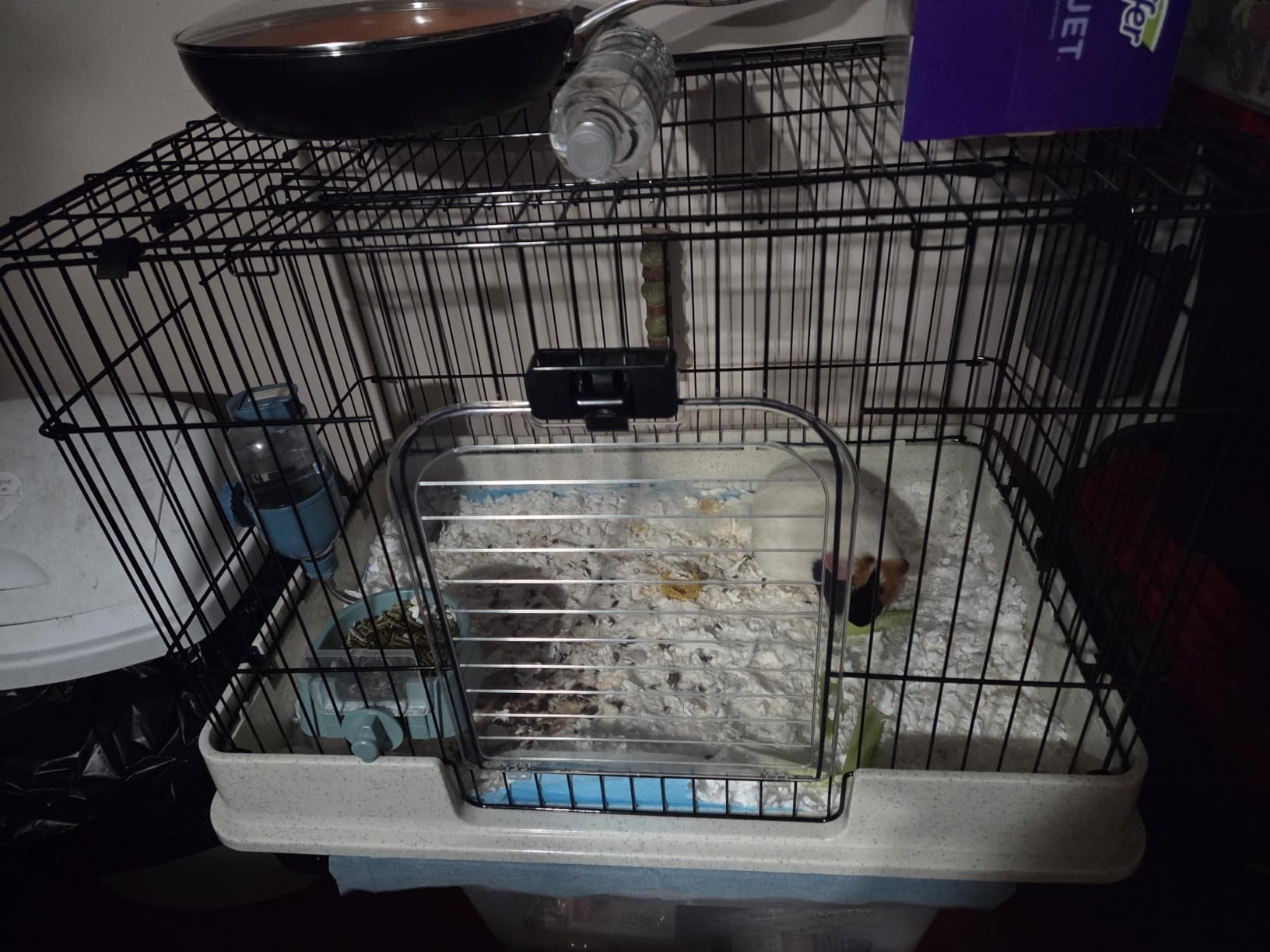
This 32 by 20.75 by 62.75 inch tower is built around a wide floor plate with six levels stacked above it. That combination is why it works well for more than one chinchilla: each animal can claim a level instead of sharing the same floor space, which cuts conflict in bonded pairs.
The manufacturer lists the wire frame for chinchillas among the intended animals, and the 0.95 inch bar spacing tells you exactly what kind of animal that claim covers. Adult chinchillas are contained comfortably; kits are not.
Two openings plus a removable tray means cleaning does not require moving the animal to a separate cage. With 75% of reviewers awarding five stars, the vertical space plus wheels combination is what owners keep mentioning as the reason to buy.
Four universal wheels, two of which have brakes, let you roll the cage out for cleaning and lock it in place once positioned. On a 62.75 inch tall frame, the brakes are not a luxury.
Why it works for a tall habitat
Six levels over a 32-inch floor plate gives you room to stagger shelves left, right and center so that every climb has a short hop. That layout is what keeps a tall cage from becoming a drop tower.
The wide plate also means two chinchillas can be moving at once without constant collision, which matters for pairings where one animal is more active than the other.
Where it does not work
Bar spacing of about 0.95 inch rules out any chinchilla under roughly seven months, and reviewers are clear that this cage is not suitable for hamsters or rats. If you are housing a kit, choose a cage with half-inch spacing instead.
Like most tall cages in this price range, assembly needs two people. It is not a flaw, but it is an afternoon rather than an evening.
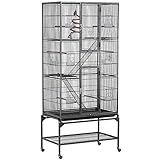
5. Yaheetech 69 Inch Wrought Iron Cage – Best Maximum Height in a Small Footprint
Yaheetech 69-Inch Extra Large Wrought Iron 3 Levels Ferret Chinchilla Sugar Glider Squirrel Small Animal Cage with Cross Shelves and Ladders, Black
30.3 x 18 x 69 inches
3/8 inch bar spacing
47.8 pounds
One year manufacturer warranty
Pros
- Tallest cage here at 69 inches on a narrow 18 inch footprint
- 3/8 inch bar spacing is narrow enough to hold chinchillas
- Panels and ladders are not fixed so the layout can be redesigned
- Ten small doors plus two larger front doors for full access
- Detachable rolling stand with open storage shelf
Cons
- Ladders and wire platforms should be covered or removed for chinchillas
- Small side doors need clips or ties added
- Not securely fastened to the wheeled base
At 69 inches tall and only 18 inches deep, this is the strongest vertical climb per square foot of floor space in the roundup. Owners of chinchillas specifically tend to call it a mansion once the ladders and platforms are lined with wood or fleece.
Bar spacing of 3/8 inch is the tightest here, which makes it one of the safest choices for a young chinchilla or a small group. Wrought iron construction with a plastic-free core stands up to chewing better than cages with plastic trim.
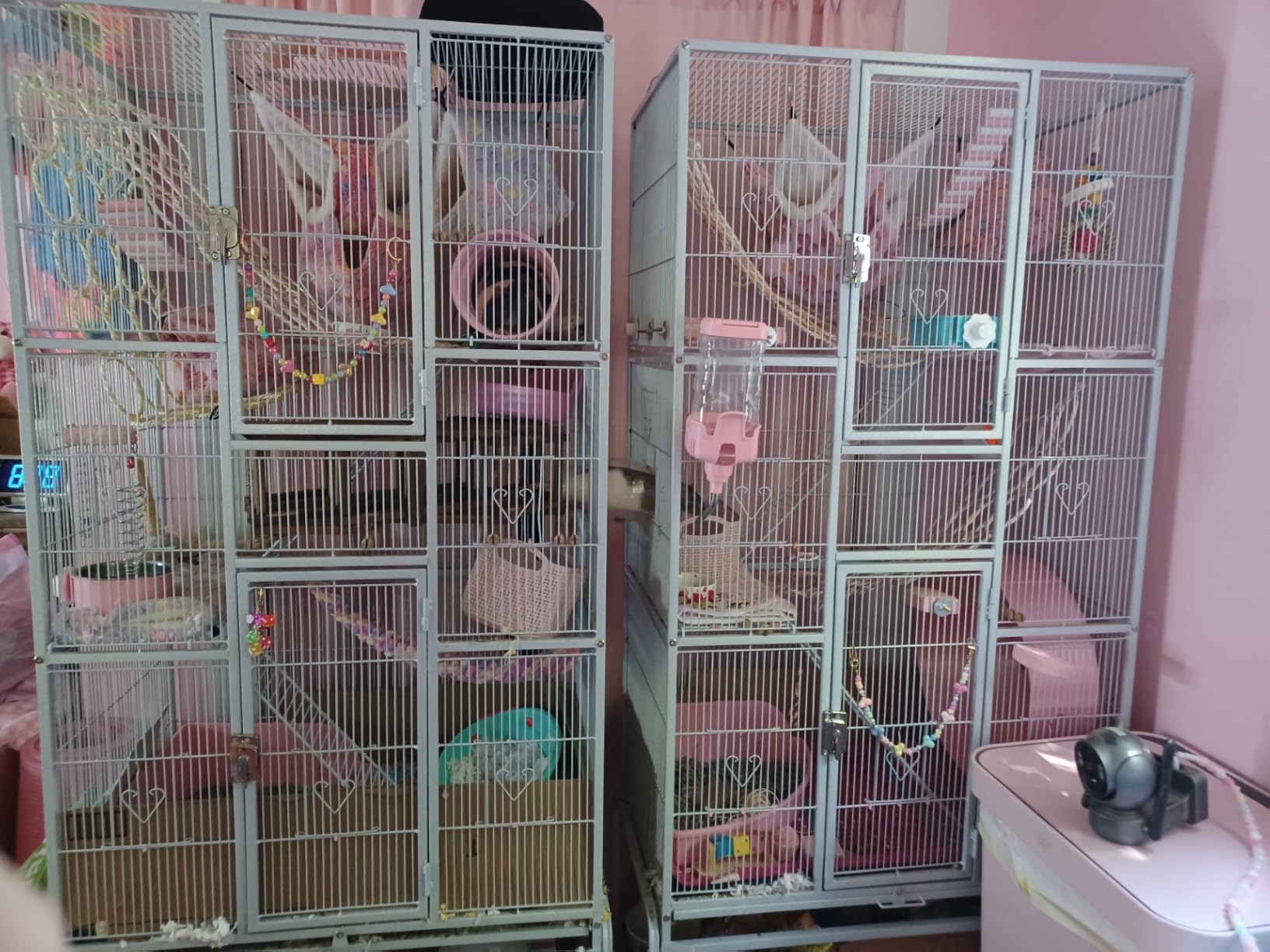
Two platforms connected by ladders divide the interior into three sections, and neither panels nor ladders are fixed in place. That means you can strip out the bare metal and rebuild the layout with solid wood perches, which is exactly what chinchilla feet need.
The slide-out tray and bottom grate separate the animal from its droppings for quick cleaning, and a detachable rolling stand with an open storage shelf keeps supplies off the floor. Two large front doors plus ten small utility doors give you access to almost every area.
At 4.6 stars from just under 1,000 ratings with 82% five-star, this is the highest rated cage in the roundup. The consensus from chinchilla owners is that the height and narrow bar spacing are worth a few afternoon modifications.
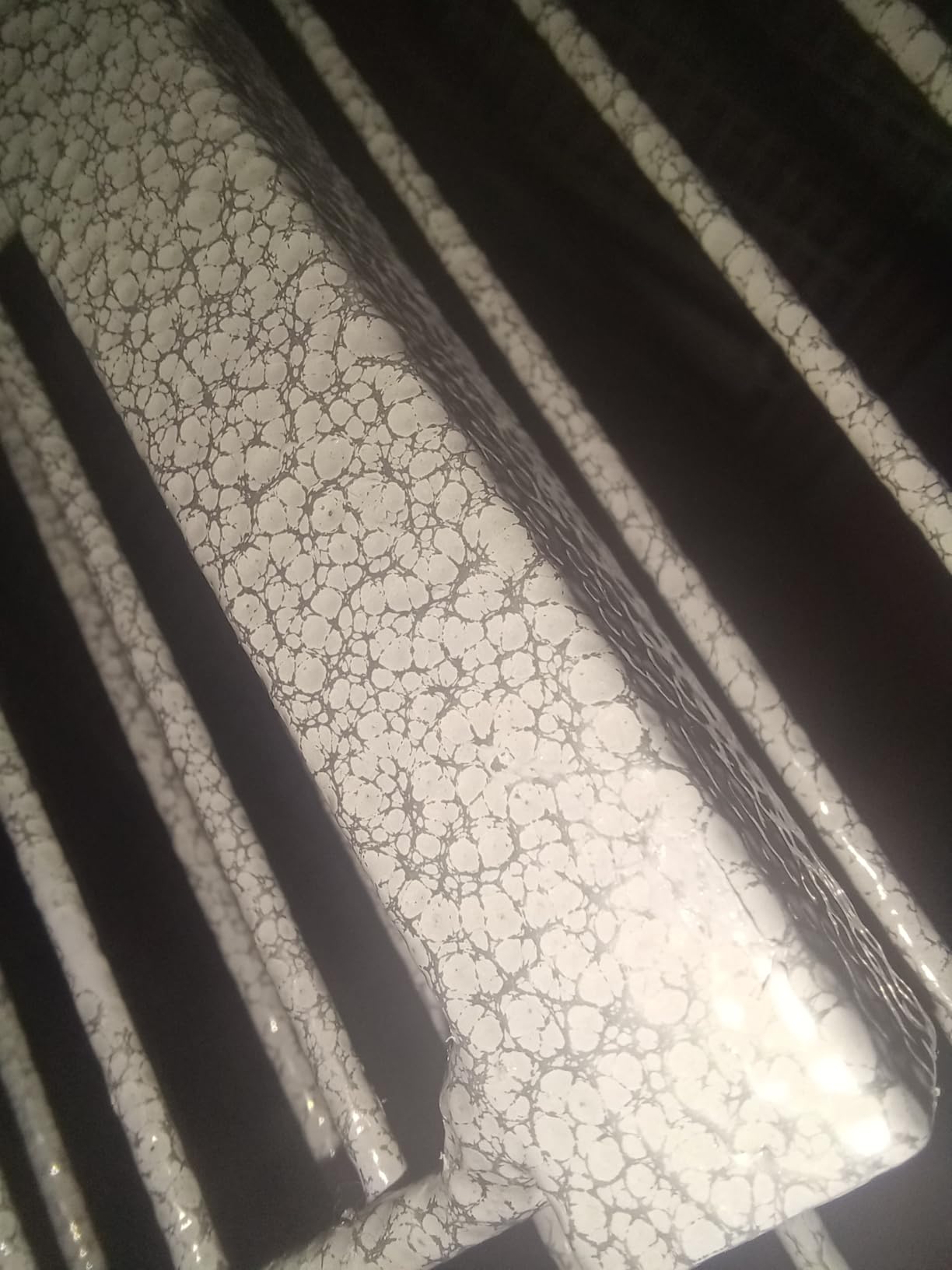
Why the height matters here
A 69-inch frame with a small footprint can sit in a corner of an apartment without eating into walking space. Because the climb is vertical, you get more habitat from less floor area than any other cage on this list.
Three tiers with rearrangeable panels means you can create a zig-zag route rather than a single vertical shaft, which slows falls and gives a chinchilla more interesting paths.
Where owners report trouble
The metal ladders and wire platforms need to be covered or removed for chinchillas, since unpadded rungs can injure feet. Owners recommend fleece covers or simply removing the ladders after setup.
The small side doors need clips or ties added so a determined animal cannot open them, and the cage is not securely fastened to the wheeled base, so treat the stand as a storage frame rather than a climbing structure. Cleaning also means reaching through doors instead of opening the front wide.
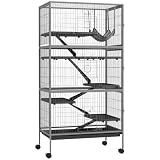
6. PawHut 63 Inch 6-Tier Small Animal Cage – Best With a Built-In Hammock
PawHut 63″ 6-Tier Small Animal Cage, Ferret Cage, Large Chinchilla Cage with Hammock Accessory & Heavy-Duty Steel Wire, Small Animal Habitat with 6 Doors, Removable Tray, Gray
31.5 x 20.5 x 62.6 inches
1 inch bar spacing
48 pounds
Six doors
Pros
- Very tall six-tier layout gives a lot of climbing room
- Includes a hanging hammock at the top tier
- Six doors spread across levels for feeding and handling
- Pull-out bottom tray and wheels for easy rearrangement
- Powder-coated steel frame resists scratching
Cons
- 1 inch bar spacing is not safe for smaller or young chinchillas
- Heavier and wabbly out of the box
- Highest share of one-star ratings in this group
This 31.5 by 20.5 by 62.6 inch tower ships with a hanging hammock at the top, which is the feature most owners mention first. For a chinchilla, a suspended sleeping spot at the top of a tall cage is genuinely useful, and chinchillas do like to sleep up high.
Six doors across multiple levels means you can reach any tier without moving the animal, and the pull-out bottom tray cleans quickly. Wheels let the whole 48-pound frame be repositioned, which you will want to do at least a few times a year.
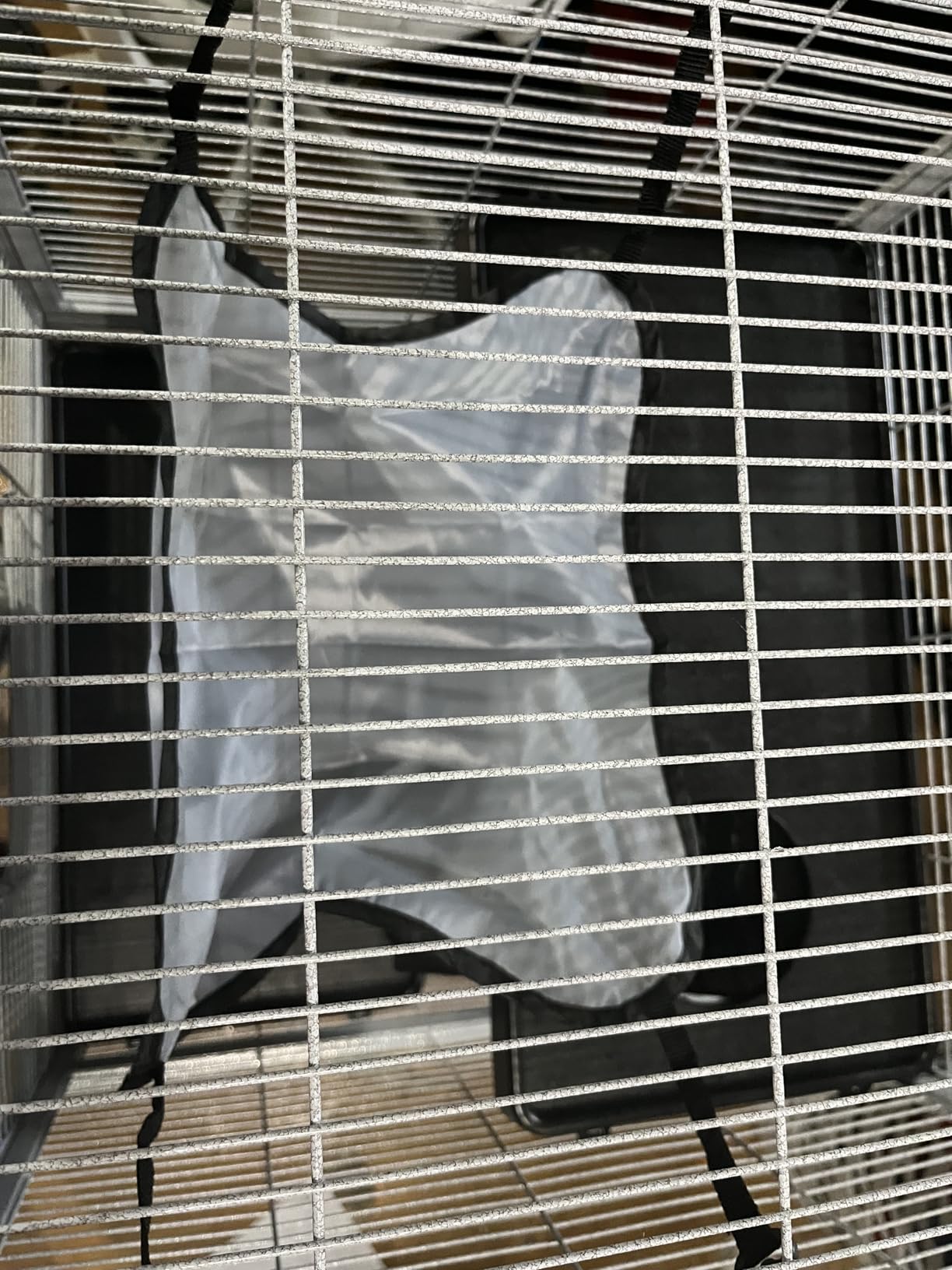
The powder-coated steel frame resists scratching during daily use. At 4.1 stars from more than 2,000 ratings, satisfaction is real but noticeably more mixed than the leaders here, and the reviews show exactly where the friction is.
The one-star share in this group is the highest, and reviewers cite assembly difficulty, finish quality and bar spacing. It is a large popular cage that suits adult chinchillas well, provided you are not housing kits.
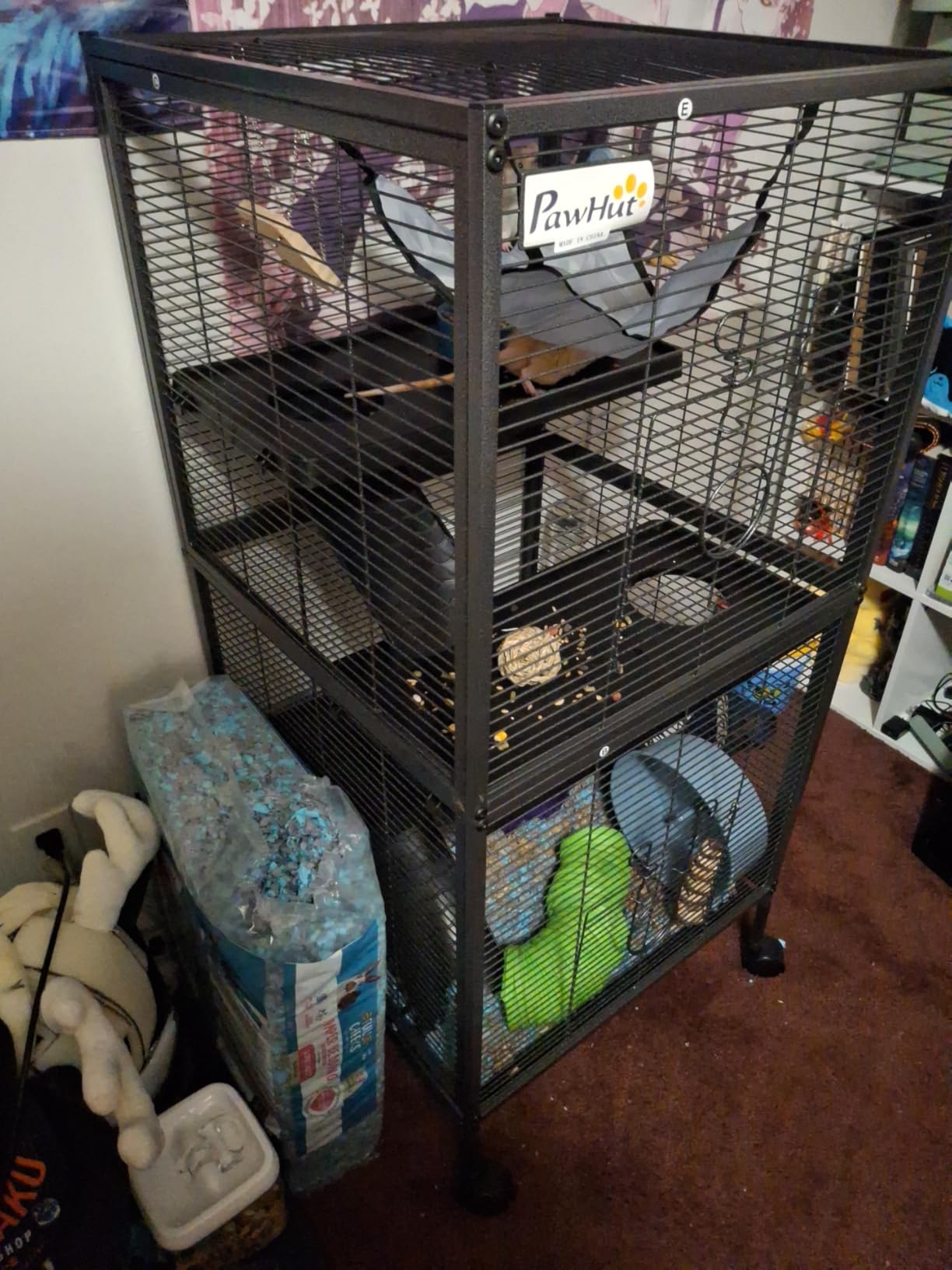
Why it works for tall habitats
A 62.6 inch six-tier layout gives plenty of room to climb and jump, and the top hammock adds a destination that encourages use of the upper tiers instead of the animal camping on the bottom shelf.
With a strong sales rank in small animal cages, the parts ecosystem around it is well established, which makes tray and grate replacements easier to source than for lesser-known brands.
Where it falls short
Bar spacing of 1 inch is the widest in this roundup and is not safe for smaller or young chinchillas. Adults only, with no exceptions.
Owners also report the cage is heavier and wabbly out of the box and that some assembly is required, so expect a firm afternoon and a second pair of hands.
7. PawHut 59.5 Inch 6-Level Portable Cage – Best Bar Spacing for a Pair
PawHut 59.5″ Small Animal Cage with Wheels, 6-Level Portable Bunny Cage, Chinchilla Ferret Cage with Removable Tray, Platform and Ramp
0.5 inch bar spacing
Six levels
40.7 pounds
Four wheels with brakes
Pros
- 0.5 inch bar spacing is tighter than most PawHut cages
- Solid bottom door that opens down with no gaps for legs
- Removable ladders and removable bottom grate
- Four openings plus doors on top for feeding and cleaning
- Four universal wheels with two security brakes
Cons
- Assembly is slow and instructions do not always match the parts supplied
- Flimsy wire gauge and clips in the upper structure
- Plastic shelves and latches feel rickety over time
What sets this PawHut apart is the half-inch bar spacing, which is tighter than the roughly 0.95 inch spacing on other models in the same range. Chinchilla owners rate it as a genuine upgrade from basic pet-store cages, and the safer wire spacing makes it usable for animals under a year old.
The solid bottom door that opens downward is an underrated detail. There are no gaps for a chinchilla’s legs to catch in, which removes one of the more common injury routes on taller cages.
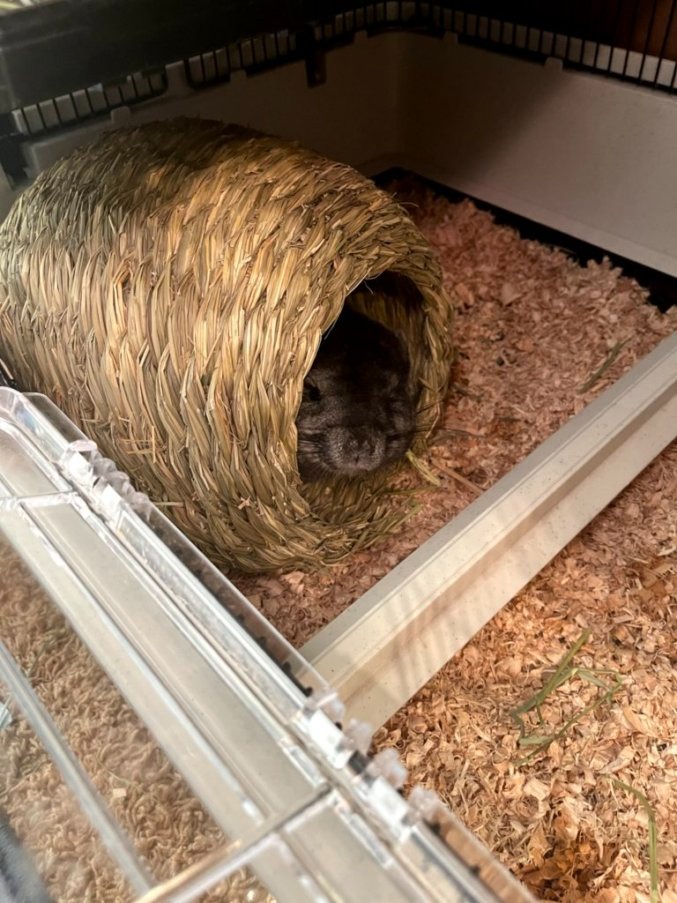
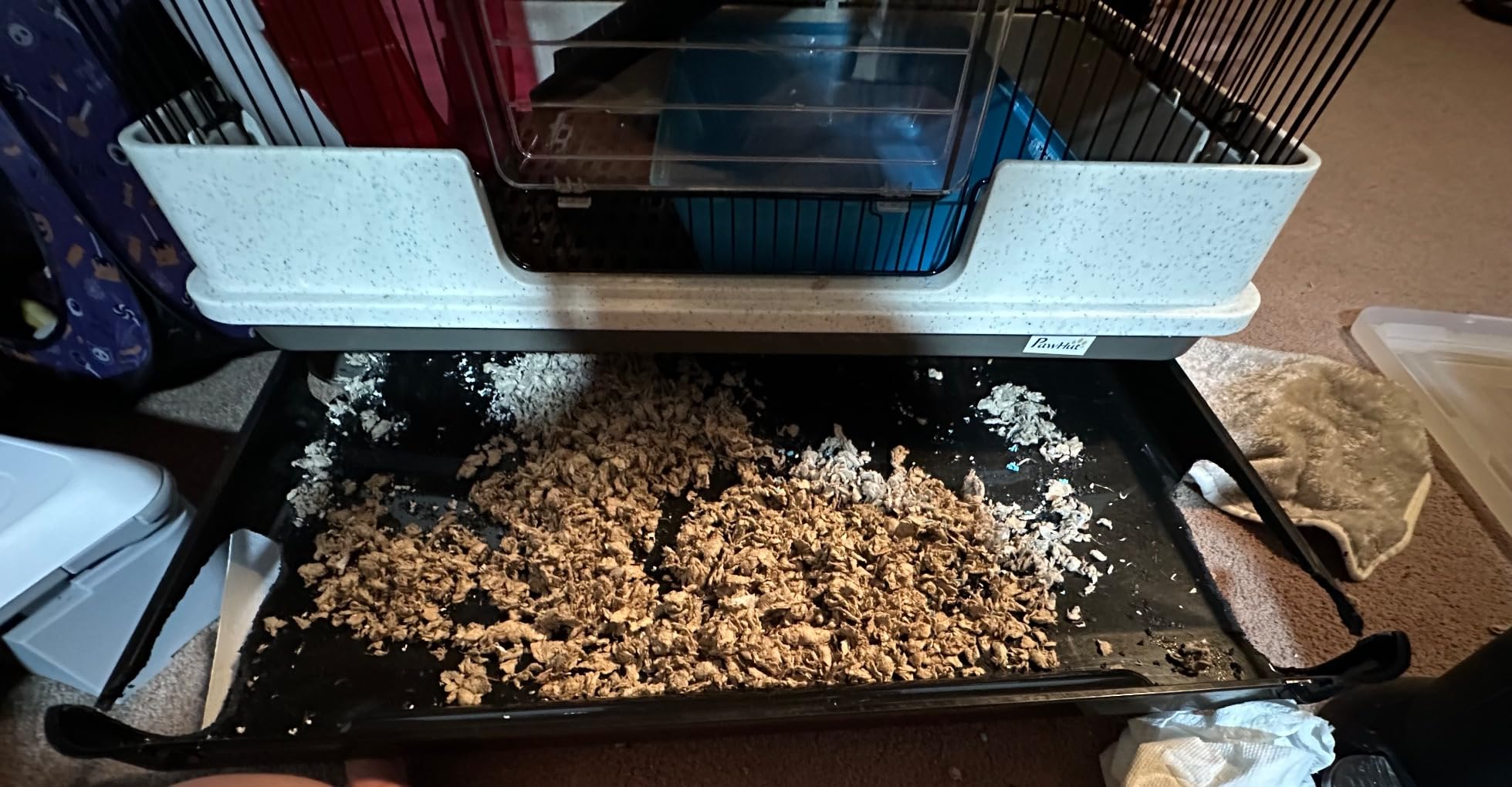
Removable ladders and a removable bottom grate let you tailor the interior, and the wire floor keeps small animals away from wet or dirty feet. Four large openings plus doors on the top make feeding and cleaning straightforward, and the sliding-out bottom trays keep waste contained.
Four universal wheels, two with security brakes, and a deep litter base round out a design aimed at function. At 4.4 stars from around 445 ratings with 71% five-star, satisfaction is high among owners who have actually configured the interior.
Why the spacing matters for a pair
Half-inch spacing means you can house a bonded pair, or a pair plus a younger animal, without worrying about escapes. That flexibility is what makes it a better long-term choice than a wider-spaced tower.
For two chinchillas, the staggered levels created by the removable ladders let each animal claim territory while still sharing the same cage, which reduces conflict during dust bathing.
Where owners report trouble
Critical reviews focus on wire gauge and clip quality, with the upper structure feeling less solid than the base. Owners suggest adding cage clips and fleece ramp covers as a matter of course.
Assembly is slow, the instructions do not always match the supplied parts, and an occasional bent wire is reported. Check every panel against the hardware list before you start building.
8. Mcage Huge X-Large Wrought Iron 4-Level Cage – Best All-Metal Chew-Proof Build
Huge X-Large Wrought Iron 4-Level Chew-Proof Tight 1/2-inch Wire Spacing Ferret Chinchilla Sugar Glider Rats Mices Rabbit Squirrel Hamster Cage with Detachable Rolling Stand
32 x 19 x 67.5 inches
1/2 inch wire spacing
Wrought iron with epoxy finish
Four-level
Pros
- Very tall 67.5 inch structure with multiple levels
- Tight half-inch spacing across bars platforms and ramps
- All-metal chew-proof construction without plastic trim
- Double front swing-out doors with a metal safety lock
Cons
- Large footprint and height need a dedicated wall of space
- A step ladder is needed to load the top levels
- Casters and detachable stand add parts that can rattle
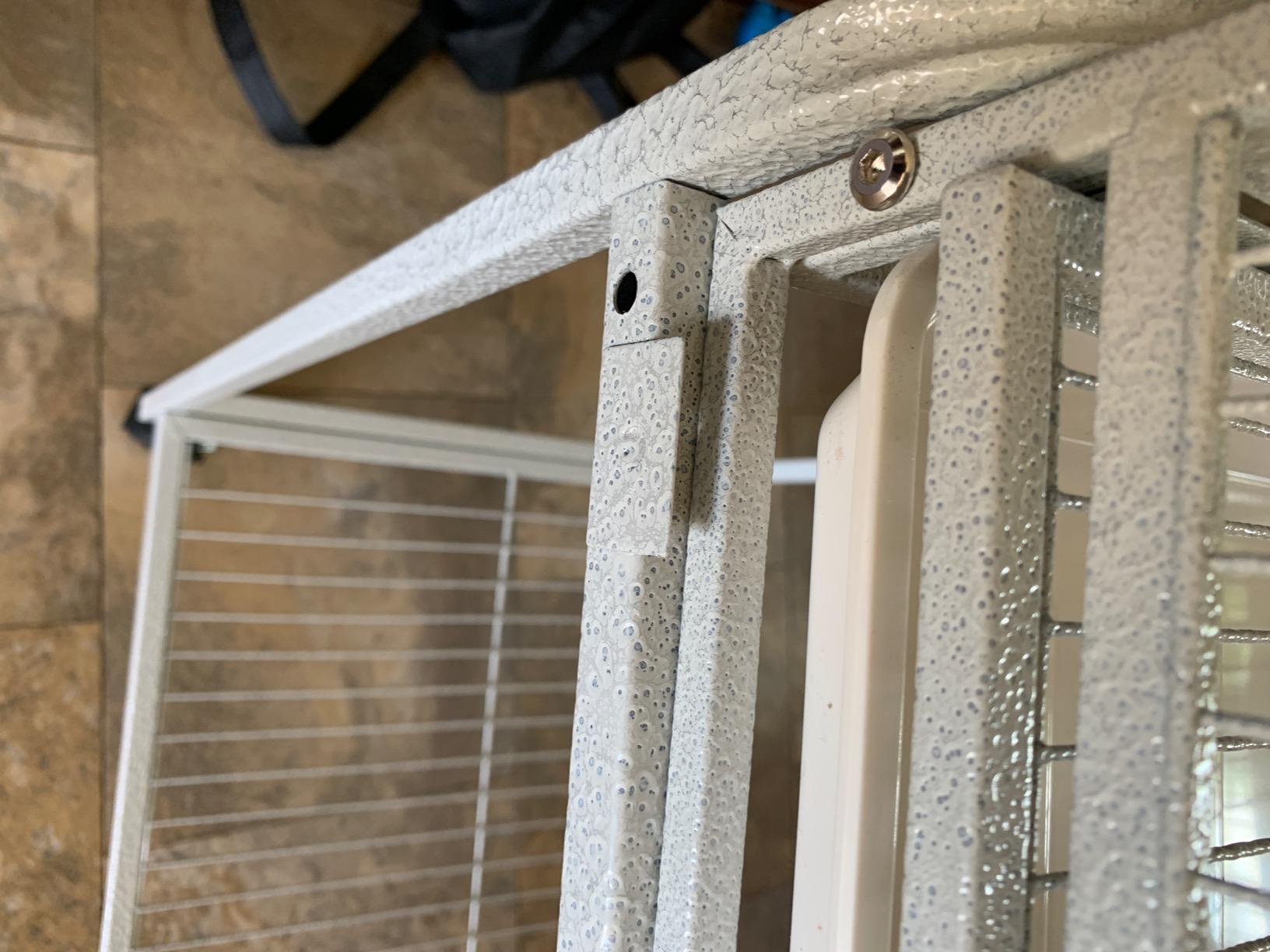
The defining feature here is half-inch wire spacing applied consistently across the bars, the platforms and the ramps. Most cages in this roundup have one wire gauge in the walls and something looser underfoot, and that inconsistency is where foot injuries start.
All-metal chew-proof construction matters more than most guides admit. Chinchillas chew constantly, and a cage without plastic trim removes the single most dangerous thing they could ingest, which is why reviewers across the small-animal community treat plastic-free builds as a top requirement.
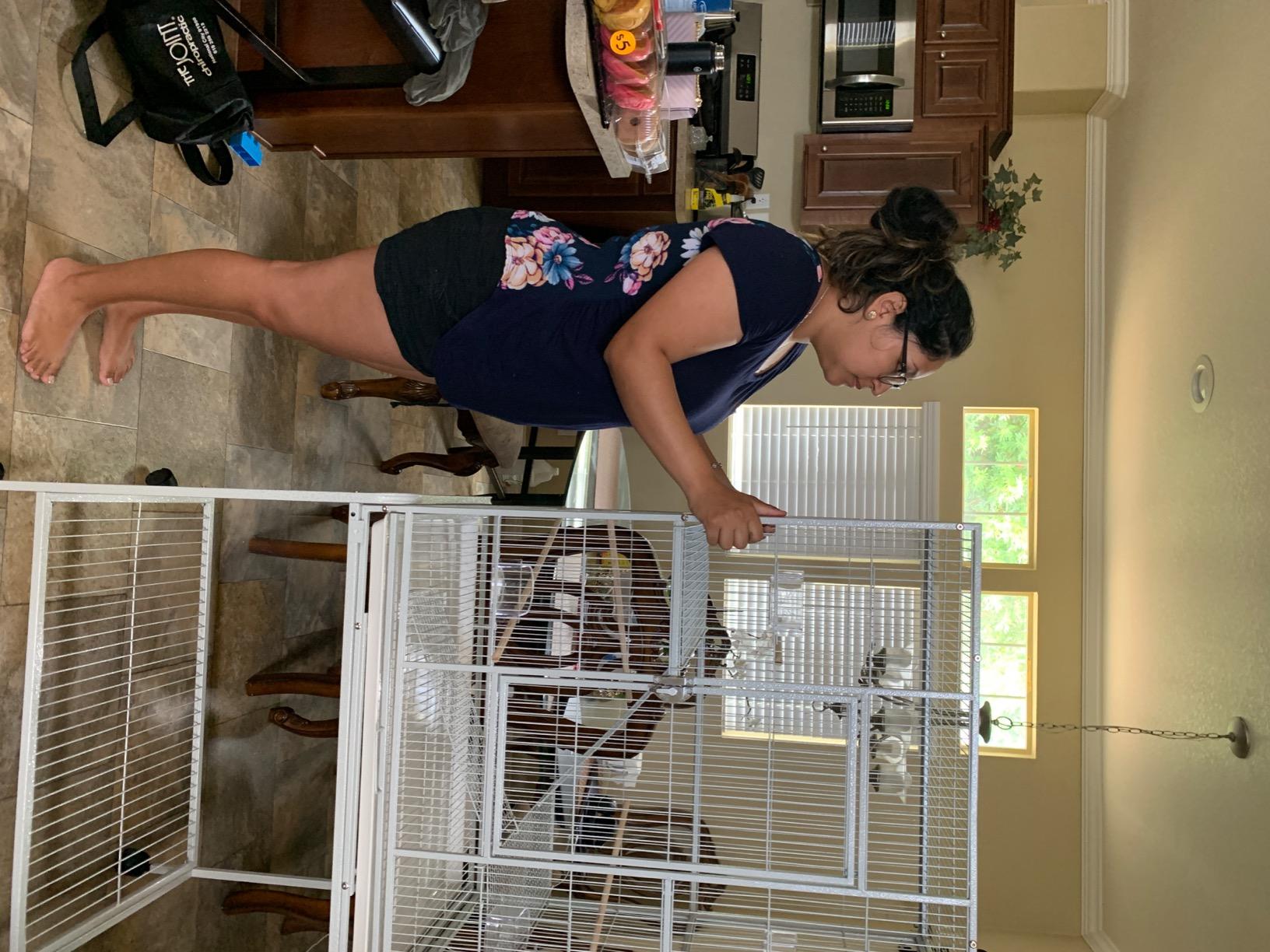
Double front swing-out doors with a metal safety lock keep the animal contained, and the detachable rolling stand includes a storage shelf plus four heavy-duty casters, two of them lockable. The pull-out metal raised grate sits above a washable plastic tray, so feet stay dry and cleaning stays quick.
At 32 by 19 by 67.5 inches, this is the second tallest structure here, and 4.2 stars from roughly 450 ratings reflects a solid product with a smaller review base than the long-running rivals.
Why the all-metal build matters
Uniform half-inch spacing on the platforms and ramps means your chinchilla is not standing on wide wire while climbing. Combined with the raised grate, this is the most foot-friendly configuration in the roundup without any modifications.
With a detachable stand, you can use the cage alone on a low surface for a young chinchilla and later raise it into a full climbing tower as the animal grows.
Where it is impractical
A 32 by 19 inch footprint and 67.5 inch height mean this needs a dedicated wall and clear floor space. Reviewers note that loading the top levels means using a step ladder.
The detachable stand adds moving parts that can rattle or shift out of alignment, so check the fasteners periodically, especially if the cage gets nudged during cleaning.
9. HABUTWAY 50 Inch Metal Small Animal Cage – Best Mid-Height Starting Point
HABUTWAY 50”H Metal Small Animal Cages, Rolling Chinchilla Cage with Removable Ramps, Lagre Cage for Chinchillas/Guinea Pigs/Rabbit, Ferret Cages with Hammock & 5 Tiers, Black
31.5 x 20.5 x 50.4 inches
Five platforms
0.9 inch wire spacing
35.7 pounds
Pros
- Five platforms at different heights plus flannel-lined ramps
- Top hammock included with the cage
- Metal construction with solder joints and hammertone finish
- Side access doors as well as front doors for cleaning
- Waterproof pull-out tray and four wheels with two brakes
Cons
- Bottom tray is widely reported as flimsy and lacks a proper metal grate
- Wheel legs and plastic inserts can break if moved while loaded
At 50.4 inches, this is the shortest of the towers in the roundup, and that is deliberate. If you are buying for a chinchilla under a year old or setting up a first habitat you may later expand, a 50-inch cage gives climbing room without the drop distances of a 65-inch tower.
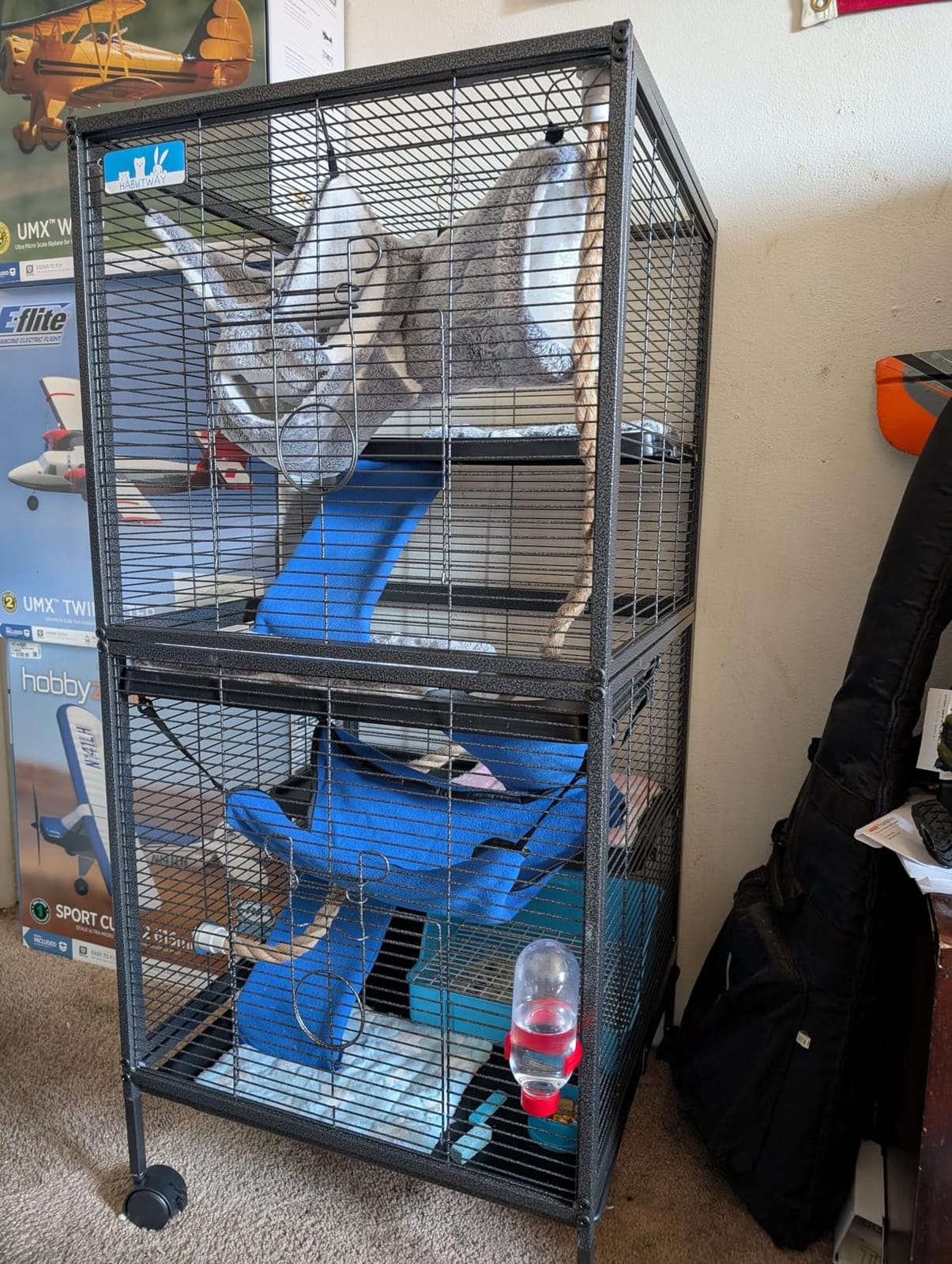
Five platforms sit at different heights, connected by flannel-lined ramps. Those sleeves are a real advantage for foot comfort, and the top hammock gives the animal a high resting spot that encourages it to use the upper platforms.
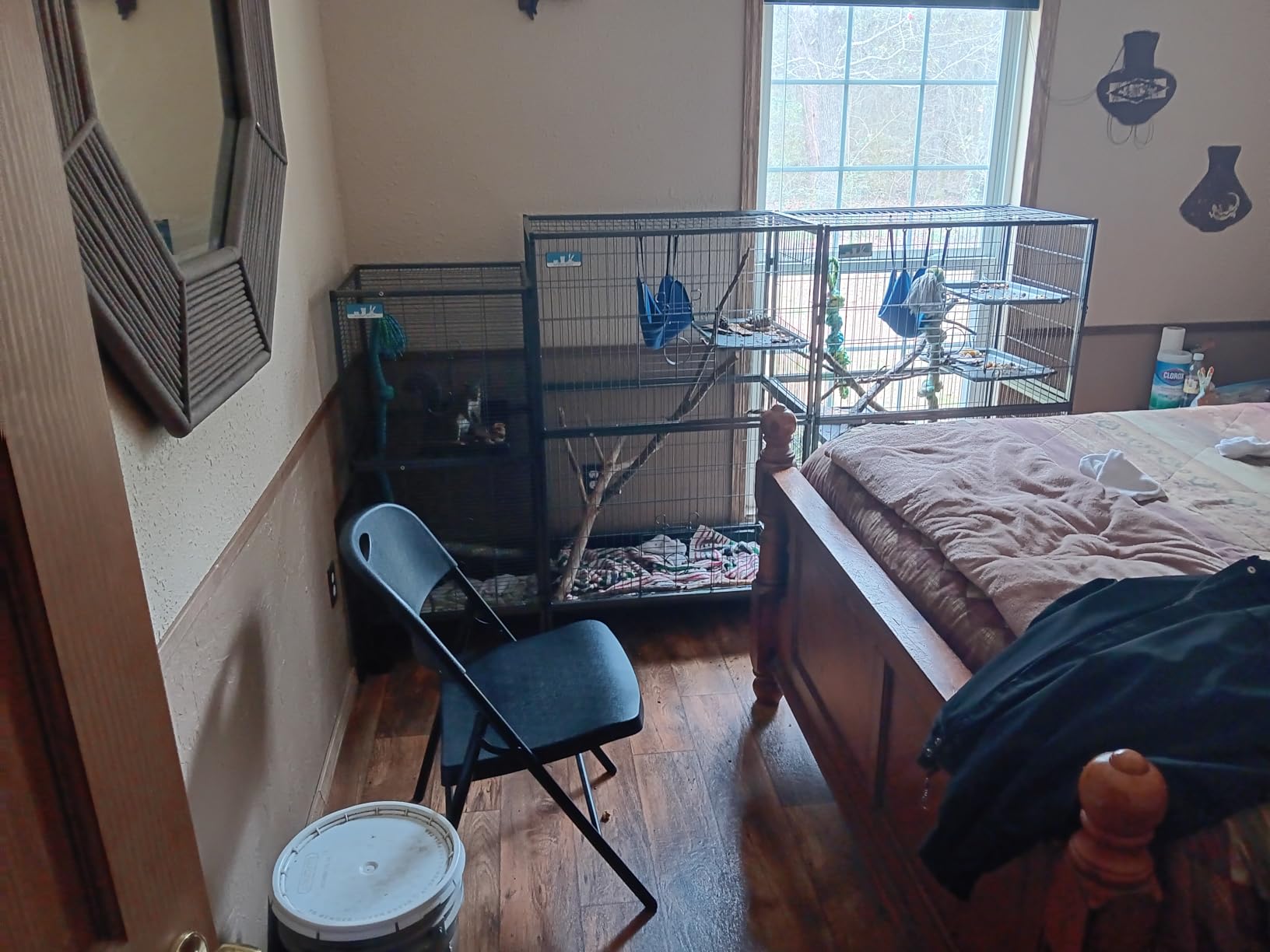
Metal construction with solder joints and a hammertone finish resists rust and wear, and the side access doors mean you can clean the interior without pulling the animal through the front. The waterproof pull-out tray and four universal wheels, two braked, handle the daily routine well.
The 4.0 average from around 880 ratings is the lowest here, and the reviews are consistent about why: the height and accessories are good value, while the tray and wheel design are not.
Why a shorter tower can be smarter
Fall injuries are the main risk in a very tall cage, particularly for animals under seven months. A 50-inch cage with five staggered platforms keeps every drop short while still letting the chinchilla climb vertically most of the day.
The flannel ramp sleeves reduce the need to buy ramp covers separately, which makes this one of the more complete packages for foot health out of the box.
Where owners report trouble
The bottom tray is widely reported as flimsy and lacks a proper metal grate, so plan to add one if foot health is a priority. Wheel legs and plastic inserts are a weak point and can break if the cage is moved while loaded, so empty it before rolling.
Instructions are confusing and some units arrive with missing or uncut holes. Bar spacing of 0.9 inch is also too wide for very small animals, so this is an adult-only cage.
10. HABUTWAY 40 Inch 2-Tier Rolling Cage – Best for Tight Spaces
HABUTWAY 40”H Large Metal Rolling Ferrets Cage, 2-Tiers Small Animal Cages, Cage for Rats/Chinchillas, 0.5” Bar Spacing for Ferret,Small Animal Cage w/Removable Ramp & Platform
36.5 x 23 x 39 inches
0.5 inch bar spacing
42.05 pounds
Two tiers
Pros
- 0.5 inch bar spacing safely contains chinchillas
- Door lock designed so the animal cannot open it
- Large open storage shelf beneath the cage
- Side door cleaning access and pull-out waterproof tray
Cons
- About 40 inches tall
- shorter than the other options here
- Two tiers gives less vertical variety than four to six
This is the counterpoint to the whole roundup. At 36.5 by 23 by 39 inches it is the shortest cage here, but it has half-inch bar spacing, a lock designed so a chinchilla cannot open it, and a removable flannel ramp sleeve. For a small room or a first habitat, that combination can be the sensible choice.
Two tiers still give genuine vertical use, and the under-cage storage shelf keeps food, dust bath and toys off the floor. The 36 by 23 inch footprint is wide rather than tall, so plan where it goes before you assemble it.
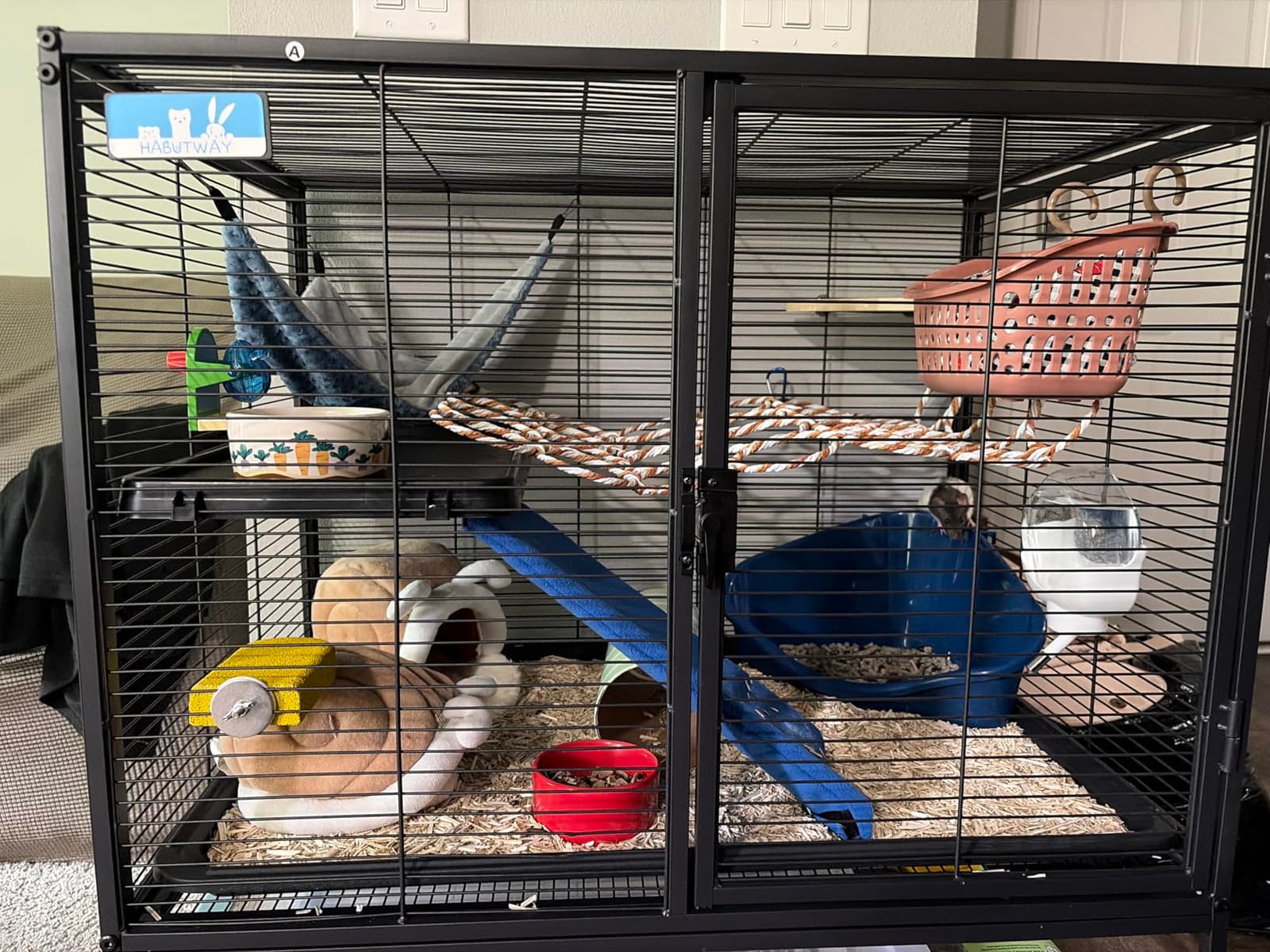
Side door cleaning access plus a waterproof pull-out tray means you can service the habitat without removing the animal. Four universal wheels handle repositioning, and all hardware, numbered parts, tools and step-by-step instructions are included, which is unusual in this category.
At 4.2 stars from roughly 274 ratings with 64% five-star, the feedback is positive but comes from a smaller pool. Owners highlight the secure lock, the storage shelf and the flannel ramp sleeve as the practical additions.
Why it works where towers do not
Half-inch spacing makes this safe for young chinchillas, which none of the six-tier towers in this roundup can claim. That matters if you are buying before you know how big your animal will get.
The 42-pound weight is manageable on wheels, and the wide floor plate allows running space that the narrow towers cannot offer.
Where it falls short
Two tiers means less vertical variety than four to six tier models, so an adult chinchilla will use the space faster. If your animal is already full grown and climbing, this cage will feel short within weeks.
The 36 by 23 inch footprint takes up more floor area than a narrow tower would, so it suits a wide wall or corner rather than a tight nook.
Buying Guide: Bar Spacing, Height and Cage Safety
Vertical space is the headline feature in this category, but four details decide whether a tall cage works for a chinchilla day after day. Bar spacing, shelf arrangement, surface material and tray construction account for most of the difference between a cage that works and one that causes problems.
Bar spacing is the first filter
Half-inch spacing is the safe standard, and three cages in this roundup hit it: the Critter Nation Double Unit at 1/2 inch horizontal, the PawHut 59.5 inch at 0.5 inch, the Mcage 4-Level at 0.5 inch, and the Yaheetech 69 inch at an even tighter 3/8 inch. Anything at 0.9 inch or wider holds an adult chinchilla safely but will not hold a kitten.
Forum discussions in the chinchilla community come back to this question constantly, and the consensus is consistent: buy for the youngest animal you will ever house, not the adult you have now. Our multi-level cage roundup covers the ferret-oriented designs in more depth if you are weighing the wire layouts.
Stagger levels to prevent falls
The reason the most recommended advice in forums is to avoid cages over three feet tall is the drop. A chinchilla falling from the top of a 60-inch cage hits the same way a person falling several storeys hits, and kits are the most at risk because they have not yet learned the layout.
The fix is layout, not cage size. Offset each platform so it sits opposite rather than directly above the one below, keep vertical gaps around 8 to 12 inches, and put solid wood or fleece-covered surfaces at every landing point. With staggered levels, a 63-inch cage produces a series of short hops rather than one long fall.
Solid surfaces and ramp covers for foot health
Bumblefoot, or ulcerative pododermatitis, starts when a chinchilla spends its life on bare wire. Prevention is straightforward: solid wood platforms, wood ledges, and ramp covers on every ramp. Several cages here include them, including the Critter Nation’s three textured ramps with covers, the HABUTWAY 50 inch’s flannel-lined ramps and the 40 inch model’s removable sleeve.
Anything with wire floors or metal ladders should be covered or removed. The Mcage raised grate is the closest thing to a foot-friendly floor in this roundup, because the grate lifts feet away from the tray surface.
Trays, pans and metal replacements
Nearly every cage here ships with a plastic tray, and chinchillas chew plastic. Forum owners consistently recommend replacing them with metal pans with roughly 3-inch sides, and several mention Bass Equipment as a source. Adding a metal pan plus ramp covers to a cheaper cage is the single most worthwhile upgrade, and it costs far less than buying a new habitat.
Removable trays and grates also determine how often you will actually clean. A tray that slides out straight saves you ten minutes per week compared with one that has to be lifted and replaced at an angle.
What goes on the bottom, and what the rest of the cage needs
Kiln-dried pine or aspen shavings are the standard bedding choices; untreated pine and cedar should be avoided. Pelleted paper bedding is an alternative for owners who want less dust, and fleece liners work well on trays if your chinchilla does not chew them.
Every tall habitat also needs a solid exercise wheel sized for the animal, a dust bath with fine volcanic ash, a wooden hideout, safe chew wood, and heavy ceramic or glass food and water bowls. Our guide to large small-pet habitats covers the surrounding room setup, including temperature and humidity ranges that keep a tall metal cage from turning into a heat trap in summer.
Frequently Asked Questions
What is the best habitat for chinchillas?
The best habitat for chinchillas is a tall, multi-level metal wire cage with solid wood platforms, half-inch bar spacing, staggered shelves so no drop exceeds about a foot, and covered ramps. Add a solid exercise wheel, a dust bath, a wooden hideout, chew wood and ceramic bowls. The Critter Nation Double Unit is the strongest all-round example at 36 by 24 by 63 inches with two full levels.
What is the best size cage for a chinchilla?
For a single adult chinchilla, aim for at least 36 inches wide by 24 inches deep, with height that supports two full levels of living space. A bonded pair needs roughly double the floor area, and a tower with six tiers gives more climbing room in the same footprint. For a kitten under about seven months, add half-inch bar spacing to your requirements.
How tall should a chinchilla cage be?
Chinchillas do best with two full levels of living space rather than one very high drop. Roughly 40 to 63 inches works well when platforms are staggered so each climb is a short hop. Cages over three feet are usable but only if shelves are offset, landing surfaces are solid, and the animal is past the climbing-accident stage, which is usually around seven months.
What bar spacing is safe for chinchillas?
Half-inch wire spacing is the safe standard for chinchillas, and 3/8 inch is tighter still. Spacing at 0.9 inch or wider will contain an adult chinchilla but will not hold a kitten or a small chinchilla. Buy for the youngest animal you will house rather than the adult you have now, since the spacing never changes as the animal grows.
Should I get 1 or 2 chinchillas?
Chinchillas are social animals and most do best in pairs, provided you buy from a reputable breeder or rescue and confirm they are the same sex, or that you are prepared to manage the pairing. A pair needs roughly twice the floor area of a single animal, so plan for a wider cage rather than simply a taller one. Keep the two animals together whenever possible, since separating them briefly is stressful.
What to put on the bottom of a chinchilla cage?
Put kiln-dried pine or aspen shavings on the bottom of the cage, or pelleted paper bedding if you want less dust. Avoid untreated pine and cedar, and never use clay or cat litter, which can cause serious illness if ingested. Many owners add a fleece liner over a metal pan, but check often because chinchillas will chew fabric. Skip wire floors entirely to reduce the risk of bumblefoot.
Where do chinchillas like to sleep?
Chinchillas prefer to sleep high up in their habitat, in a sheltered spot near the top. A wooden hideout placed on an upper shelf, a hammock, or a covered ledge satisfies that instinct and encourages use of the vertical space. Providing more than one hiding place also reduces conflict between bonded pairs, since each animal can claim its own elevated spot.
Do chinchillas like to be in the dark?
Yes, chinchillas are crepuscular and most of their activity happens in the evening and overnight, so they do not need a bright cage. Keep the habitat in a calm room away from direct sunlight and avoid strong night lighting during the day. What they do need is a choice, since many enjoy a dim hideout during daylight hours as much as they use open shelves at night.
Final Verdict on Tall Chinchilla Cages
The best chinchilla cages for tall habitats are not simply the tallest ones on the market. The Critter Nation by MidWest Double Unit takes the top spot because it pairs a wide 36 by 24 inch floor plate with two full levels, half-inch wire spacing and included ramp covers, which is the most complete package here for an adult chinchilla or a pair.
If you want vertical height in the smallest floor space, the Yaheetech 69 inch wrought iron cage takes that title with 3/8 inch spacing, though it needs ladders covered or removed. For the tightest spacing and a pair, the PawHut 59.5 inch is the pick, and the HABUTWAY 40 inch makes sense for a young chinchilla in a small room.
Whatever you choose, measure your chinchilla against half-inch bar spacing, stagger every platform, cover every ramp, and replace plastic trays with metal pans. Those four steps matter more than any extra tier.