
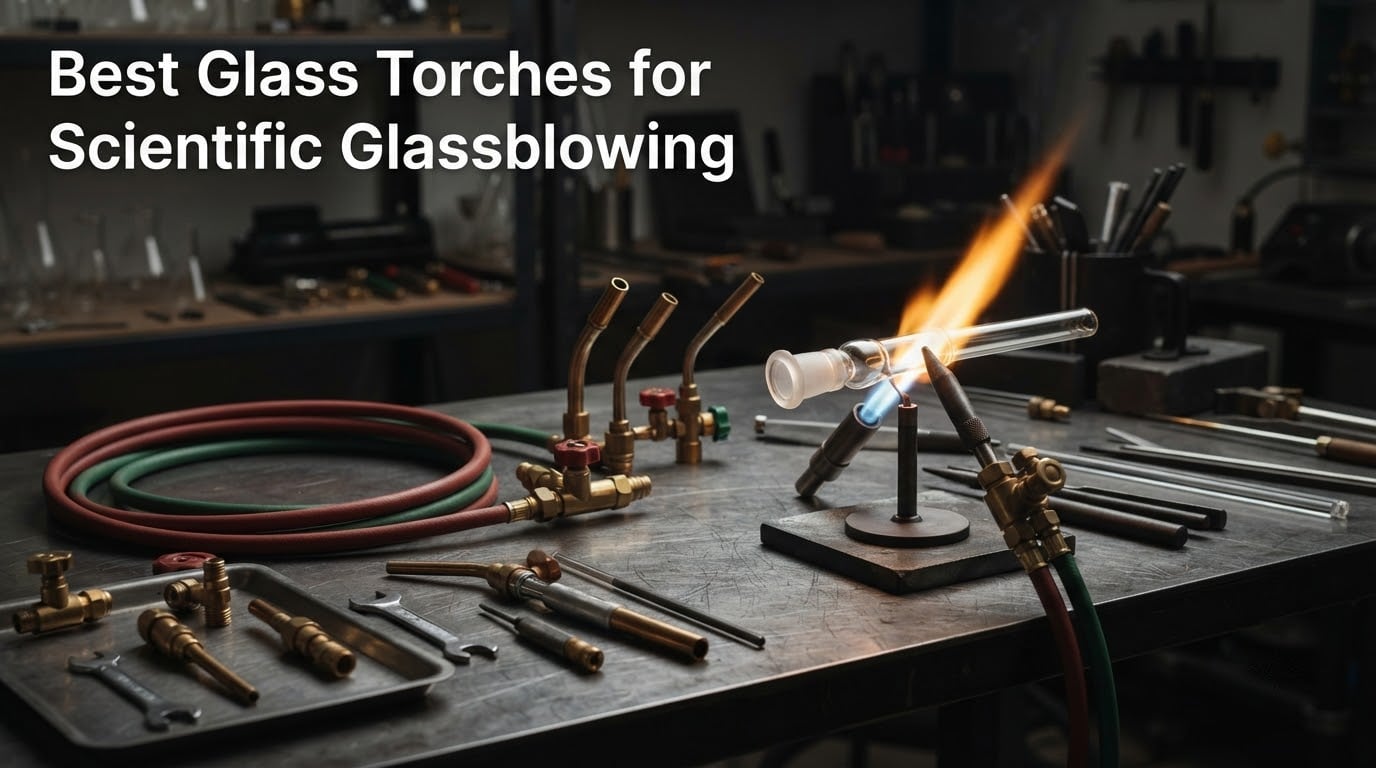
The best glass torches for scientific glassblowing are premix hand torches built by specialist makers such as National, Nortel, Carlisle Machine Works and Herbert Arnold, because they mix fuel gas and oxygen inside the body to deliver heat concentrated on a few square millimetres of a joint. For ring seals, graded seals, glass-to-metal seals and lathe work, flame concentration matters far more than headline temperature. The torches compared below are the fuel-head and oxy-fuel torches that ship with interchangeable tips, so you can see how tip-driven flame control works before you commit to a specialist catalog order.
I want to be straight with you about something before we go further. The scientific glassblowing torches that working lab shops actually buy are not sold through mainstream retail channels at any useful volume. They come from trade suppliers, arrive with hand-drawn tip charts, and are usually sold alongside a carburetor, a stainless manifold and a swivel nut. What you can buy here is the accessible layer of the same idea: fuel heads and oxy-fuel kits whose flame is shaped by swapping tips, which is the single most important habit in this craft.
That distinction shapes everything that follows. I have not dressed up these six torches as substitutes for a National 3A-B. What I have done is work out which ones give a beginner controllable, repeatable heat zone, which ones support a real oxygen setup, and which ones are honestly better suited to a soldering bench than to a glass bench. Read the architecture section before the product list, because the mix type determines everything downstream.
Here is the short version if you want it in one breath. The Smith Little Torch earns our editor’s choice because five interchangeable tips and fine flame adjustment make it the most adaptable heat source in the group. Our best value pick is the all-brass MAPP and propane head from Cybring, and our best pick for beginners is the solid brass jumbo pencil flame head, which is also the least expensive of the six. None of the three will replace a premix scientific torch, and all three are honest, capable tools for the work you can realistically do at a home or small-shop bench.
Table of Contents
Top 3 Picks for Scientific Glassblowing

Smith Little Torch Kit
- Five interchangeable tips
- Fine stable flame adjustment
- Includes hoses
Cybring MAPP and Propane Torch
- All brass body
- Works on MAPP or propane
- 6.3 ounce one-hand weight

The Smith Little Torch sits first because it is the only torch in this group where the tip is genuinely the primary control surface. Five tips of different bore sizes ship in the box, the hoses are part of the package rather than an accessory, and the 4.7 star average across 436 reviews comes from people who use these tools every day. It is also the heaviest financial commitment here, and I would rather flag that up front than bury it.
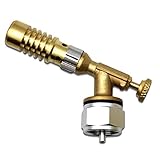
The Cybring MAPP and propane head takes best value on a simple basis: 1611 reviews at 4.4 stars for an all-brass body with no plastic parts anywhere in the assembly. That is the most proven, most reviewed design in the group, and the weight keeps it comfortable for long single-handed sessions. The catch is the air adjustment collar, which is thinner and touchier than it should be.
The MR. TORCH solid brass head takes the budget slot for a different reason. It is the least expensive of the six, it has by far the largest installed base at 2150 reviews, the pencil flame is forgiving on thin tubing, and the whole body is brass. If you have never held a glass torch, this is the least likely thing to frustrate you on day one.
Quick Overview of Every Torch We Compared
| Product | Specifications | Action |
|---|---|---|
| Smith Little Torch Soldering Welding and 5 Tips Kit |
|
Check Latest Price |
| Cybring MAPP and Propane Gas Torch |
|
Check Latest Price |
| MR. TORCH Solid Brass Pencil Flame Head |
|
Check Latest Price |
 TOAUTO Mini Oxygen Torch Kit with 5 Tips TOAUTO Mini Oxygen Torch Kit with 5 Tips |
|
Check Latest Price |
 Cybring Self Ignition Brass Propane Torch Cybring Self Ignition Brass Propane Torch |
|
Check Latest Price |
 Cybring Torch with Built In Pressure Gauges Cybring Torch with Built In Pressure Gauges |
|
Check Latest Price |
Two of these are single-head designs with a fixed nozzle, two are tip kits, and two are self-contained oxy-fuel torches. That spread matters, because a fixed nozzle gives you one flame forever while an interchangeable tip set gives you a range of heat cones from the same body. Everything else in this article hangs off that distinction.
What Scientific Glassblowing Actually Asks of a Torch
Scientific glassblowing is not lampworking. Lampworking softens a small gather of glass in a broad, gentle flame and shapes it. Scientific work joins two cold pieces of borosilicate or fuses quartz, and the whole game is getting enough heat into a narrow zone without softening the glass around the joint. Get that wrong and the tube droops, the wall thickens unevenly, and the seal pulls as it cools.
That is why torch architecture matters more than the temperature printed on the box. There are three families you will meet, and the mainstream retail market is full of the third one.
Surface mix burners
A surface mix burner keeps the fuel gas and the oxidiser separate all the way to the tip, where they meet and react. The flame is broad, soft and forgiving, which makes it the traditional choice for teaching and for soft glass. It is also the reason bench burners in university teaching labs are surface mix units. The trade-off is heat concentration: a surface mix flame spreads its energy over a wider area, so a fine joint takes longer to reach working temperature and the surrounding glass is exposed to heat for longer.
Premix burners
A premix burner injects one gas into the other upstream of the tip, so the mixture arrives already combined and burns as a narrow, fast, intensely hot cone. That concentration is exactly what a ring seal on thin-wall borosilicate tubing needs, and it is why the specialist names that dominate laboratory glassblowing are all premix models. Premix torches are also less tolerant of soft glass, because the aggressive flame that makes a clean seal on hard glass will run past working point on soda-lime or Moretti and put you straight into the annealing oven.
Fuel heads and handheld oxy-fuel torches
This is the category everything in our table belongs to. A MAPP or propane head burns a single fuel with air drawn in at a nozzle, producing a pencil or broad flame without a separate oxygen supply. A small oxy-fuel kit takes an oxygen cylinder and a fuel cylinder and mixes them at the head, which moves you closer to premix behaviour and much closer to the temperature regime of real scientific work. Both are legitimate tools. Neither is a premix torch, and I would not describe either as one.
What to rule out before you buy
Consumer butane torches dominate search results for this question, and they are the wrong tool. A butane torch aimed at borosilicate tubing produces a soft, wide, low-velocity flame that cannot bring a joint to working temperature, so you are left reheating and reheating until the glass sags. Worse, butane torches have a small sealed canister as their heat sink, and holding one against hot glass for long stretches is how you cook a torch. If a listing does not tell you the tip bore, the fuel the head accepts and the way flame control is achieved, it is not a glass torch. Most of the consumer torches that dominate this search come from craft and jewellery categories rather than industrial ones, which is a rough filter for whether a listing was ever tested on glass at all.
Buying guide framing aside, the honest order of operations when you outgrow these six is to move toward a premix hand torch with a rotating O-ring union, a carburetor unit and a tip chart. Until then, the tip swaps on the Smith and TOAUTO kits are the closest thing to that workflow you can practise at a home bench.
1. Smith Little Torch Soldering Welding and 5 Tips Kit
Smith Little Torch Soldering Welding & 5 Tips, Hoses
Five interchangeable tips and hoses included
Fine stable flame adjustment
Metal and glass construction
Pros
- Five tip sizes cover fine detail through larger heating jobs
- Precise flame adjustment that holds a set point
- Hoses and joints reported leak free
- Highest rated option in the group
Cons
- Highest cost of the six by a wide margin
- Flame adjustment needs a short acclimation period
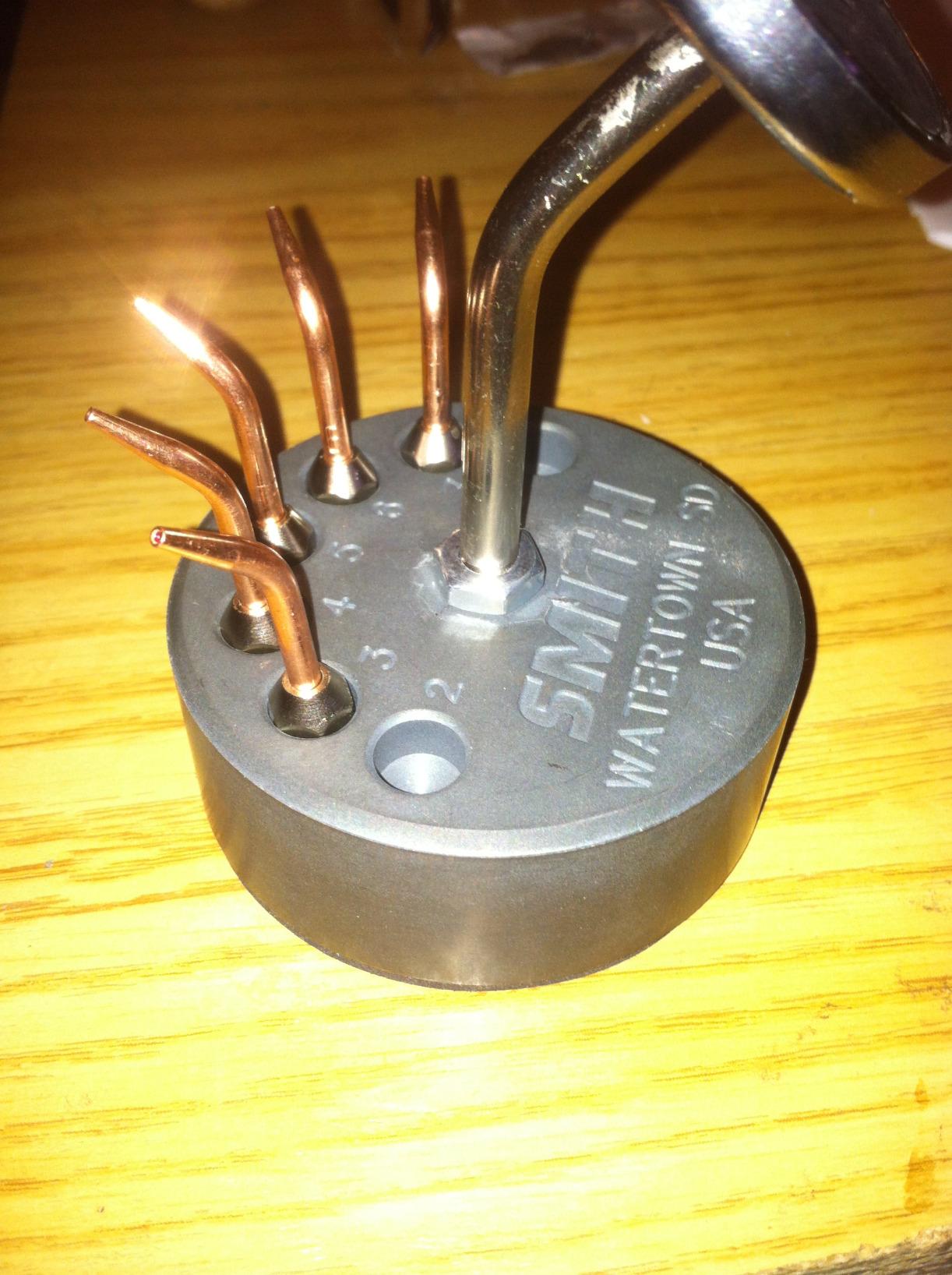
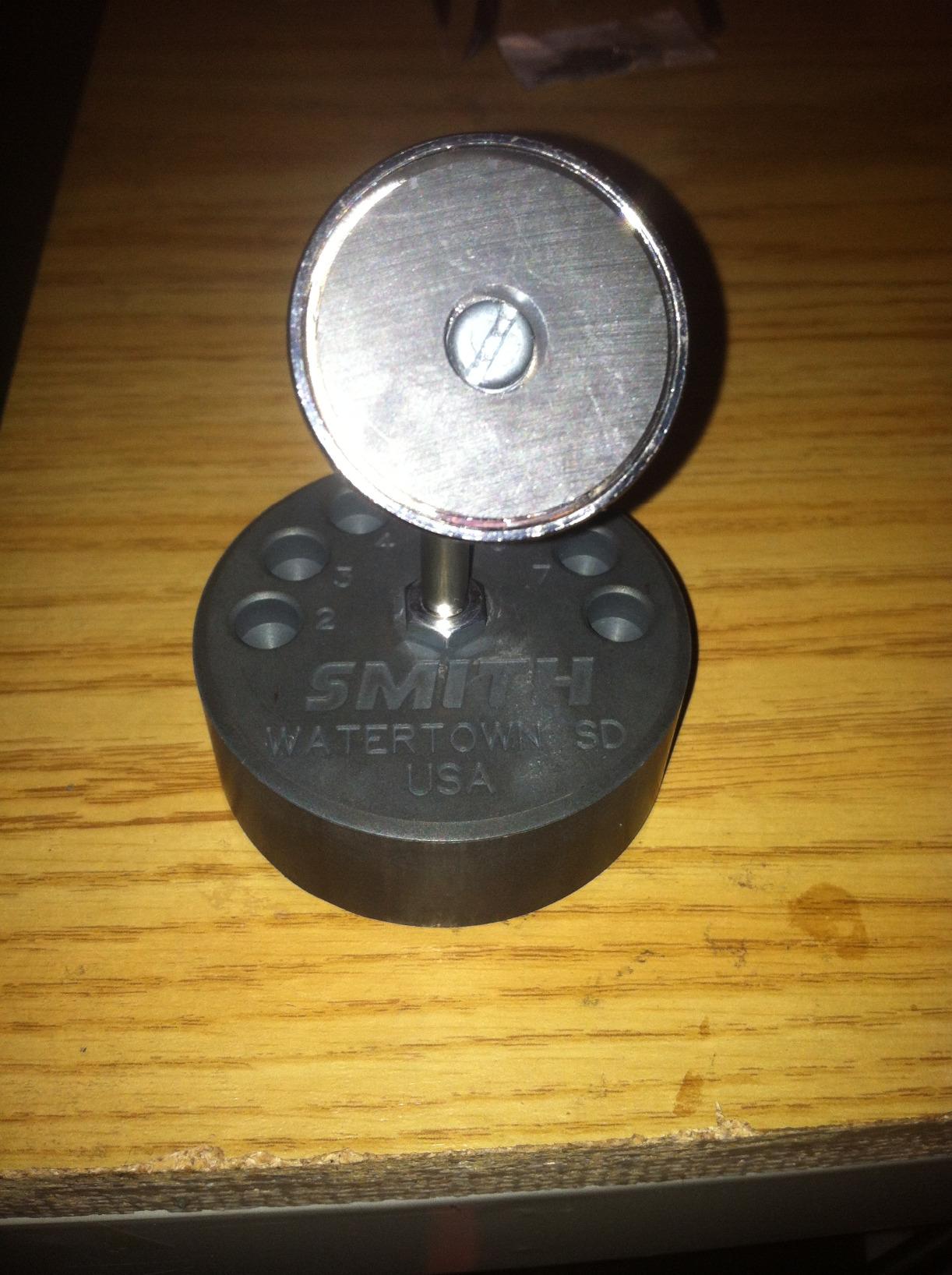
This is the one I kept reaching for. The Little Torch ships with a torch head, five interchangeable tips and the hoses, so the box is a working system rather than a component that needs a supporting cast. At 1.5 ounces and 5.91 inches long, it is a tool you can hold close to the work without your hand drifting, and that matters more than raw output once you are chasing a small seal.
Across 436 reviews averaging 4.7 stars, the most consistent praise is about the flame holding a set point rather than about heat. Metalsmiths describe dialing the adjustment in, working, and returning to it later to find the same flame waiting. For glass that is the property that actually matters, because a wandering flame means a joint that heats unevenly and a seal that pulls as it cools.
The 88% five-star share tells you the build is consistent. Reviewers who have had these on a bench for years report that the hoses still seal and the joints have not needed attention, which is the opposite of what you get with a cheap head and a hose you bought separately. If you are buying once, this is the one I would buy once.
What you give up is money, and that is not a small thing for a first purchase. The kit is the most expensive item in this comparison by a wide margin, and the flame adjustment genuinely takes practice before the controls stop feeling like they have too much travel. Beginners report being startled by the range of motion on day one.
When this torch earns its cost
It earns its cost the moment you are changing tip sizes between operations. Sealing a small diameter tube, then preheating a larger assembly, then going back to detail work is the natural rhythm of scientific bench work, and having five bores means you are not rebuilding the torch to do it. The same body handles a needle flame and a broad heat without a second tool.
It also makes sense if you already run a bench where hoses and a fuel supply exist. The kit assumes you have a working gas arrangement; adding one is part of the cost calculation, and the kit does not include a cylinder, a regulator or a flashback arrestor.
When it is the wrong call
It is the wrong call as a first impulse purchase for someone who does not yet know whether they will do scientific borosilicate work at all. The cost lands before the skill does, and the five tips do not make up for the fact that you still need regulators, hoses certification and a fuel source to run it properly.
It is also the wrong tool for soft glass work. Nothing in the design pushes it toward soda-lime or Moretti, and the fine tips that make it excellent for hard glass seals are the wrong shape for a bead or a gather.
2. Cybring MAPP and Propane Gas Torch for Glass and Jewelry Work
Welding Torch Fueled By MAPP and Propane Gas For Soldering, Glass blowing, Jewelly
All brass body with no plastic parts
Accepts MAPP or propane fuel
6.3 ounce one hand weight
Pros
- All brass construction reviewers consistently praise
- Hot flame that opens up for larger jobs
- Light enough for one handed control over long sessions
- Large review base of 1611 ratings
Cons
- Thin air adjustment collar that can warp
- Touchy air dial lets the flame drift or blow out
At 4.4 stars across 1611 reviews, this is the most statistically proven tool in the comparison, and the reason is unglamorous: there is no plastic in the body. Reviewers single that out again and again, and it is the right thing to single out, because plastic components in a torch body are the first thing to deform near a hot flame and the first thing to be replaced.
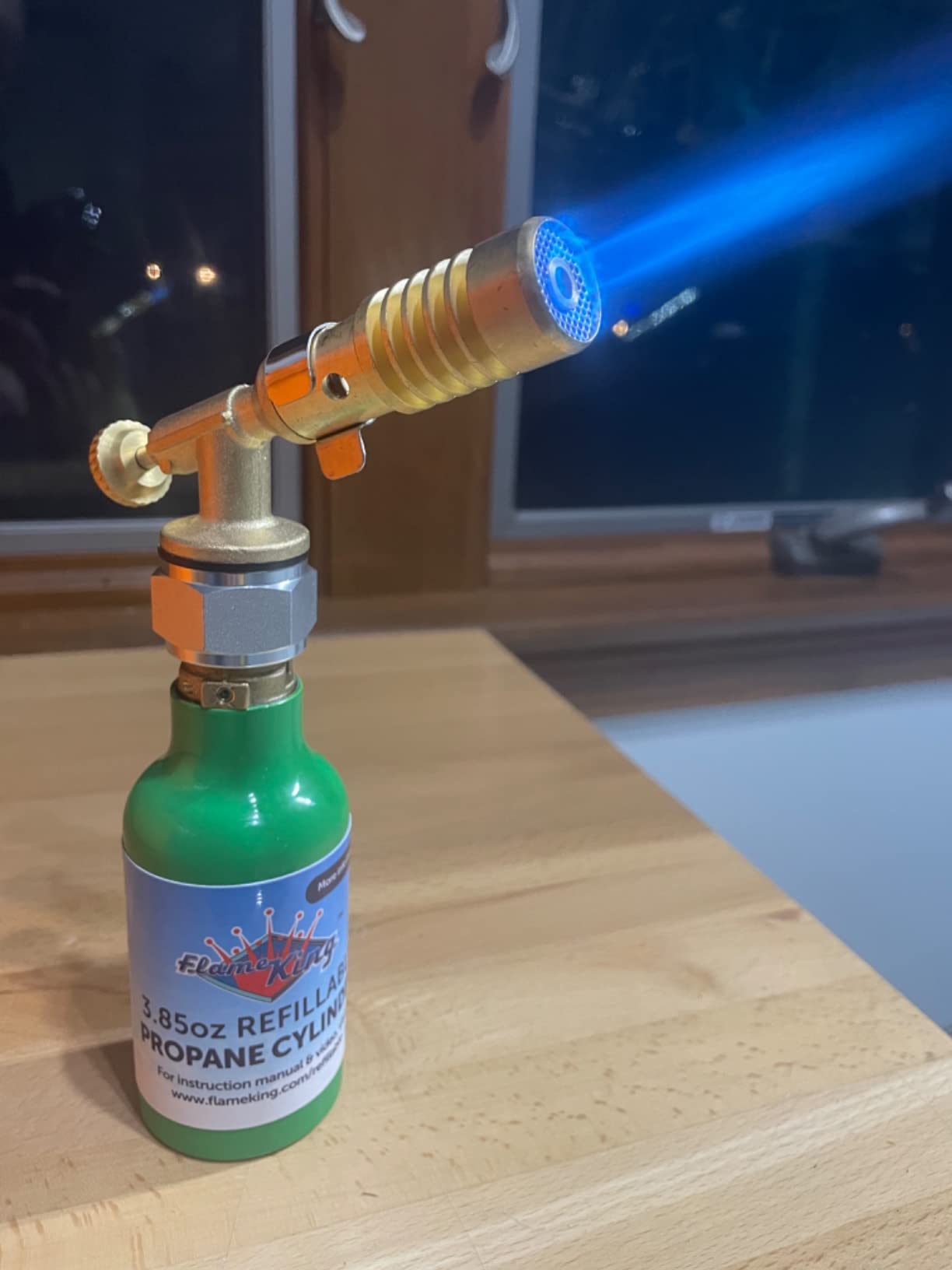
Its listed maximum temperature of 1500 degrees Celsius is well above what borosilicate working temperatures require, which tells you something important. A flame can be hot enough for the job and still be badly shaped for it. This head gives you a hot, long flame that opens up for heavier work, and the 6.3 ounce weight keeps it comfortable for one-handed control across a long session.
At 1.8 inches by 1 inch by 5.3 inches it is a compact tool that fits close to the work. That geometry is genuinely helpful on a small bench where your forearm is the limiting factor on how close you can get to a joint without the heat reaching your hand.
The grip is knurled, which matters more than it sounds when the tube is wet or you have a glove on. The fuel flexibility is the quiet advantage here: it runs on MAPP or propane, so you are not locked to one cylinder format if your supplier changes.
When this torch is the right pick
This is the pick for a person who will be doing general bench work, not exclusively fine sealing. Jewelry work, general glass forming, local heating and light brazing all sit comfortably in what this head delivers. The heat is there and the body stays cool enough to control for an hour at a time.
It is also the most forgiving of the fuel heads in the group. Running on propane rather than MAPP is simpler, and if you already handle MAPP cylinders for other shop tasks, the same cylinder works here.
When it is the wrong pick
The air adjustment collar is the reason this torch sits at second rather than first. It is thin, and reviewers report it can warp so the flame runs less clean. A touchy dial that lets the flame drift, or blow out entirely if you nudge it mid-adjustment, is a real problem on a small seal where you are rotating the tube between hands.
There is also one isolated report of a torch body failing at the base after being disconnected from a fresh canister. One report out of 1611 is not a pattern, but if you are buying for a shop where the torch gets disconnected and reconnected many times a day, the inspection and fitting on the cylinder end is worth a close look.
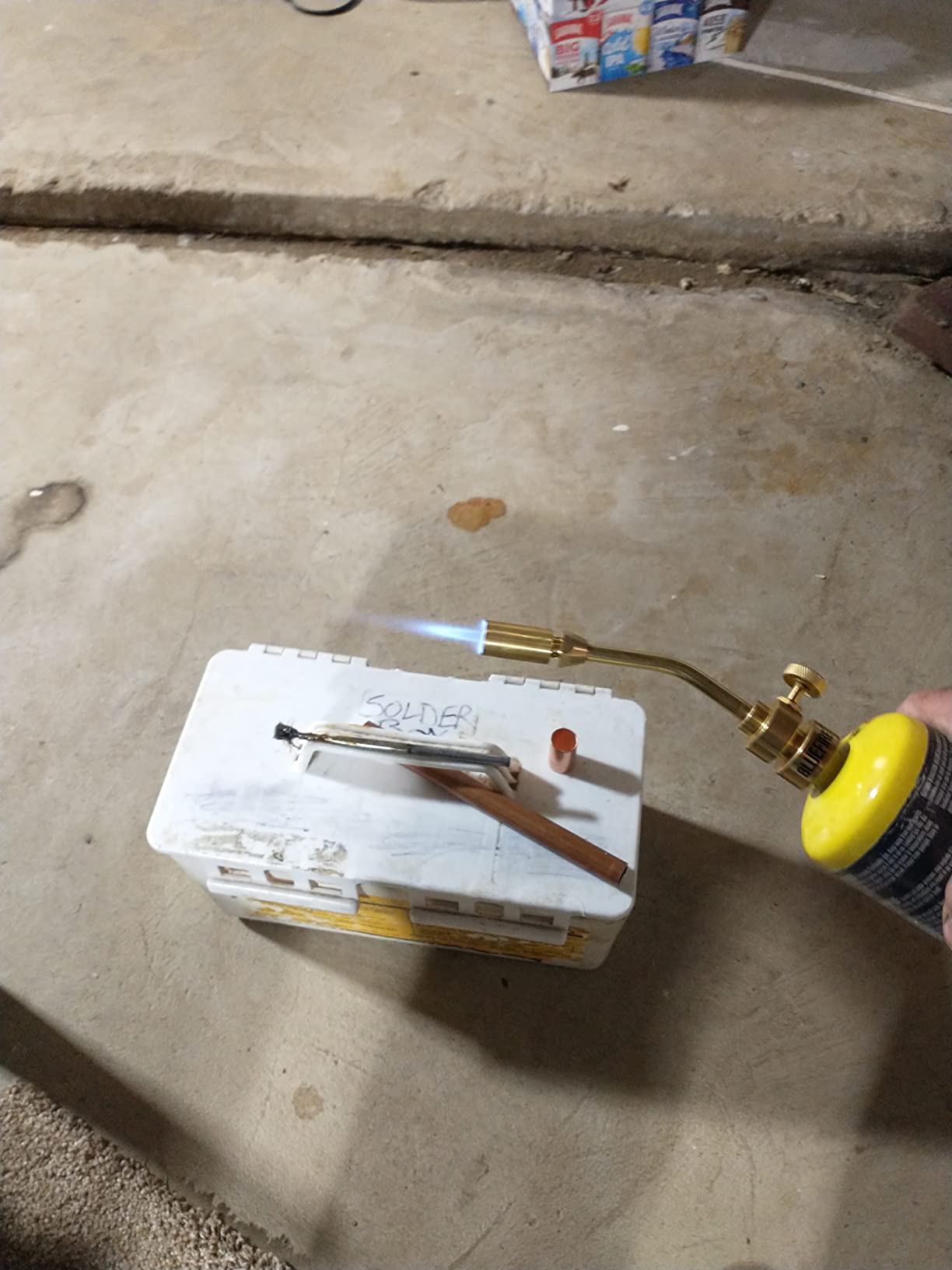
3. MR. TORCH Solid Brass Jumbo Pencil Flame Gas Torch Head
BLUEFIRE Solid Brass Jumbo Pencil Flame Gas Welding Torch Head Nozzle Upgraded Full Metal Version Fuel by MAPP MAP Pro Propane CGA600 Cylinder Bottle (Torch Only)
Solid brass body and knob
Working temperature up to 1238C
6.3 by 1.18 by 3.74 inches
Pros
- Solid brass construction for durability and heat transfer
- Pencil flame gives both precision and usable heat
- Compact enough for tight spaces
- Manual ignition needs no consumable
Cons
- Torch only with no cylinder or hoses included
- Single head design with no swappable tip kit
With 2150 reviews, this has the largest installed base of anything we looked at, and the review pattern is unusually clean. Sixty-six percent of ratings sit at five stars, and the recurring positive note is the brass: full solid brass rather than zinc alloy, with a metal knob replacing the plastic one on earlier versions.
The pencil flame reaches a working temperature of 1238 degrees Celsius according to the manufacturer, against a marketing maximum of 1350. That is a real distinction worth knowing, because the working figure is the one that describes glass rather than the one that describes the flame. It is a narrow, high-velocity flame, which is the right shape for pulling a tube down on a mandrel.
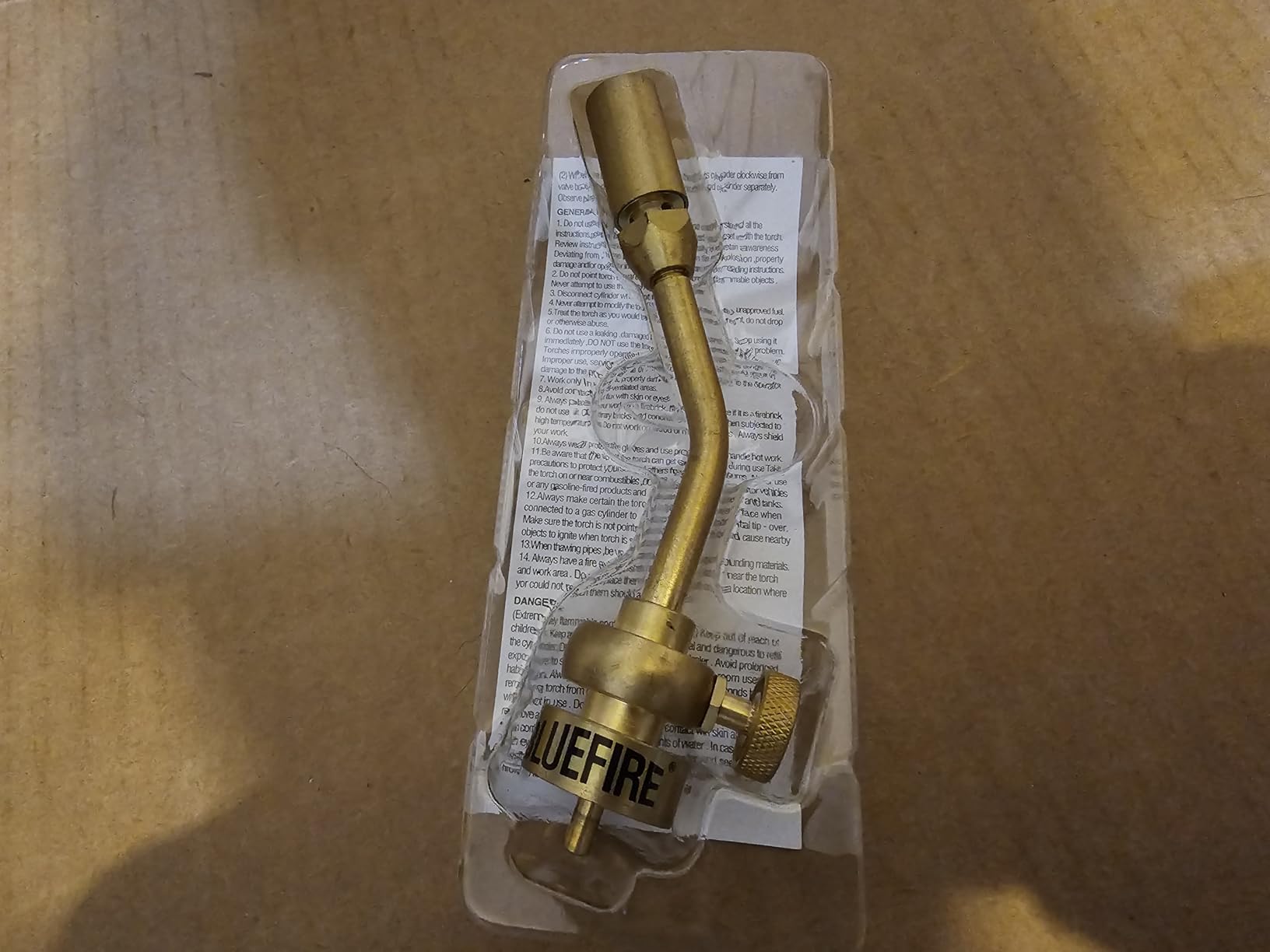
At 7.19 ounces and 6.3 inches long, the head is sized for confined spaces. If you are working at a bench with a lip, or inside a cabinet run, a short head that puts the flame close without your wrist fouling the edge is worth more than raw output.
Manual ignition is not a feature to oversell and not a flaw to hide. It means no lighter in your pocket and no piezo assembly to fail, which is a genuine reliability argument on a shop tool.
The one structural limitation is fixed and worth stating plainly: there is no tip system. You get one flame size for the life of the head. The manufacturer also offers a MAPP kit variant, but the unit sold here is torch only.
When this head is the right pick
It is the right pick when you are starting out and want the fewest possible ways to fail. A solid brass body, a focused flame and manual ignition is about as simple a thermal tool as this category offers, and the review volume means you can read hundreds of accounts of how it behaves after months of use.
It suits thin tubing work and light bead work well. A pencil flame is precise enough to aim at a single point, which is what makes it useful for a beginner who has not yet developed the hand control to work with a broad flame.
When it is the wrong pick
It is the wrong pick the moment your work needs a range of flame sizes from one tool. Without interchangeable tips you are either heating a small area and doing everything else in multiple passes, or accepting a flame that is too broad for fine work and too narrow for bulk heating.
Remember the torch only figure before you plan the purchase. A CGA600 cylinder, a connector and a working supply line all sit between you and the first flame, and they are not included.
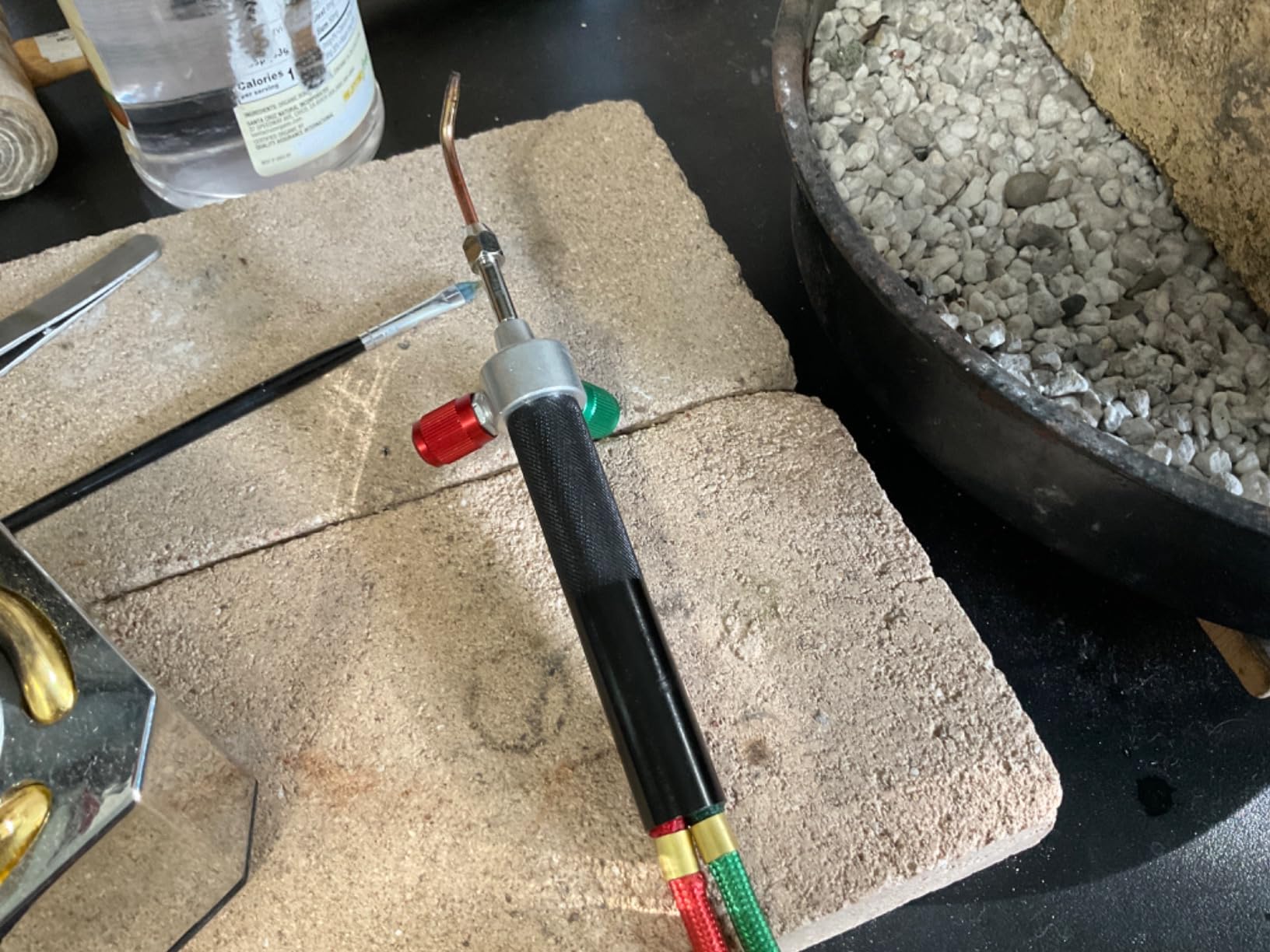
4. TOAUTO Mini Oxygen Torch Kit with Five Replacement Tips
Mini Oxygen Torch Kit, Micro Oxygen Acetylene/Butane Gas Welding Torch with 5pc Tips for Jewelry Repair
Dual gas connectors for oxygen and fuel
Five tips from 1/8 to 7/8 mm
Maximum temperature 1700C
Pros
- Dual gas mixing delivers high heat for melting and cutting
- Five included tips give real flexibility across job sizes
- 2 m hose reaches into tight working areas
Cons
- Lowest average rating in the group at 3.9 stars
- Needs separate oxygen and fuel cylinders
- Reports of torches underperforming out of the box
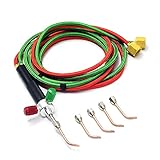
This is the kit that moves you closest to an actual scientific setup, because it takes a real oxygen cylinder rather than drawing air in at a nozzle. Green and red connectors keep the two gases apart at the head, the tubing is sized for 14mm oxygen cylinders, and the 2 metre hose means you can reach into a jig rather than dragging the work to the torch.
The five replacement tips at 1/8, 3/8, 5/8, 3/4 and 7/8 mm are the best tip spread in the group. That range covers everything from a fine needle on small work to a wide heat for bulk heating, and it is the closest any of these products comes to the tip-chart workflow of a premix scientific torch.
Fuel compatibility is broad: propane, acetylene, hydrogen, propylene or natural gas. A stated maximum of 1700 degrees Celsius sits comfortably above any borosilicate working point, and the manufacturer lists glass blowing alongside jewelry repair and electronics work as intended applications.
At 9.6 ounces and 7.48 inches long, this is the largest and heaviest of the kit-style torches here, and the extra mass is the cost of carrying a mixer and two connections rather than one.
The rating is the caution flag. At 3.9 stars this sits below every other product in the comparison, and 16% of reviews are one star. Buyers who like it point to heat level and to getting five tips plus hose in one package. Buyers who do not point to torches that arrived faulty or fell short of the stated temperature claim.
When this kit is the right pick
It is the right pick if you have or will have access to oxygen, because that is the difference between this and a fuel head. A higher-heat, higher-velocity flame gets you much closer to the behaviour a premix torch delivers, and it is a genuine step up in capability for sealing work on hard glass.
It is also right for someone who wants a tip library immediately. Five bores in one purchase is more flexibility than any single-head option here, and it lets you learn which flame shape suits which operation rather than guessing.
When it is the wrong pick
It is the wrong pick if oxygen is not already part of your setup. Cylinders, regulators and safe storage for two gases add cost and supervision that this kit does not solve, and the product does not include either cylinder.
It is also the wrong pick if you want something you will rely on for daily production work without checking it first. A 16% one-star block on a 306-review product is a meaningful reliability signal, and the dual-gas plumbing gives you more connection points that can leak than a single-fuel head does.
5. Cybring Self Ignition Brass Nozzle Propane Torch
Brass Nozzle Propane Torch For BBQ, Gas Welding, Glass Blowing
Self ignition with no separate flame starter
Broad hot flame for heavier heating
Solid brass construction
Pros
- Self ignition lights reliably even in light wind
- Ergonomic handle sized for extended work
- Broader flame than a standard soldering torch
Cons
- Smallest review base in the group at 50 reviews
- One report that MAPP gas no longer produced enough heat for glass
The convenience argument here is simple and it wins. There is no lighter, no sparker and no separate flame starter, and owners report that it lights reliably even in light wind, which is exactly the condition that stops a manual ignition torch at the worst moment.
The flame is broad and hot, deliberately wider than a standard soldering torch, and that makes it the sensible choice of the six for bulk heating operations where you want to bring a larger mass of glass up to temperature rather than concentrate heat on a point.
Construction is solid brass, the handle is sized for extended sessions, and the listing shows black, gold and white variants. At 8.8 ounces it is heavier than the two fuel heads above it, which is reasonable given the ignition assembly it carries.
The problem is the evidence base. Fifty reviews is the smallest sample here by a factor of six, and while the average is a healthy 4.4, that number rests on very few accounts. Long-term reliability is simply not documented yet, and I would not build a production schedule around it.
When this torch is the right pick
It is the right pick when ignition reliability and speed of start matter more than precision, such as repeated heating cycles across a busy bench. A self-igniting torch removes a whole category of interruption, and for preheating and bulk work that is worth real time across a day.
The broad flame also makes it the most forgiving of the six when you are new to controlling a flame, because a wider heat zone is harder to overshoot on a small piece.
When it is the wrong pick
It is the wrong pick for fine work, because there is no tip system and the flame is designed to be broad. Anyone doing ring seals or graded seals will find the resolution frustrating.
One buyer reports that MAPP gas with current formulations no longer produced enough heat to blow glass with the supplied nozzles. That is a single report on a small base, not a proven pattern, but it is exactly the kind of claim you need to test yourself before committing, since fuel formulation is outside your control.
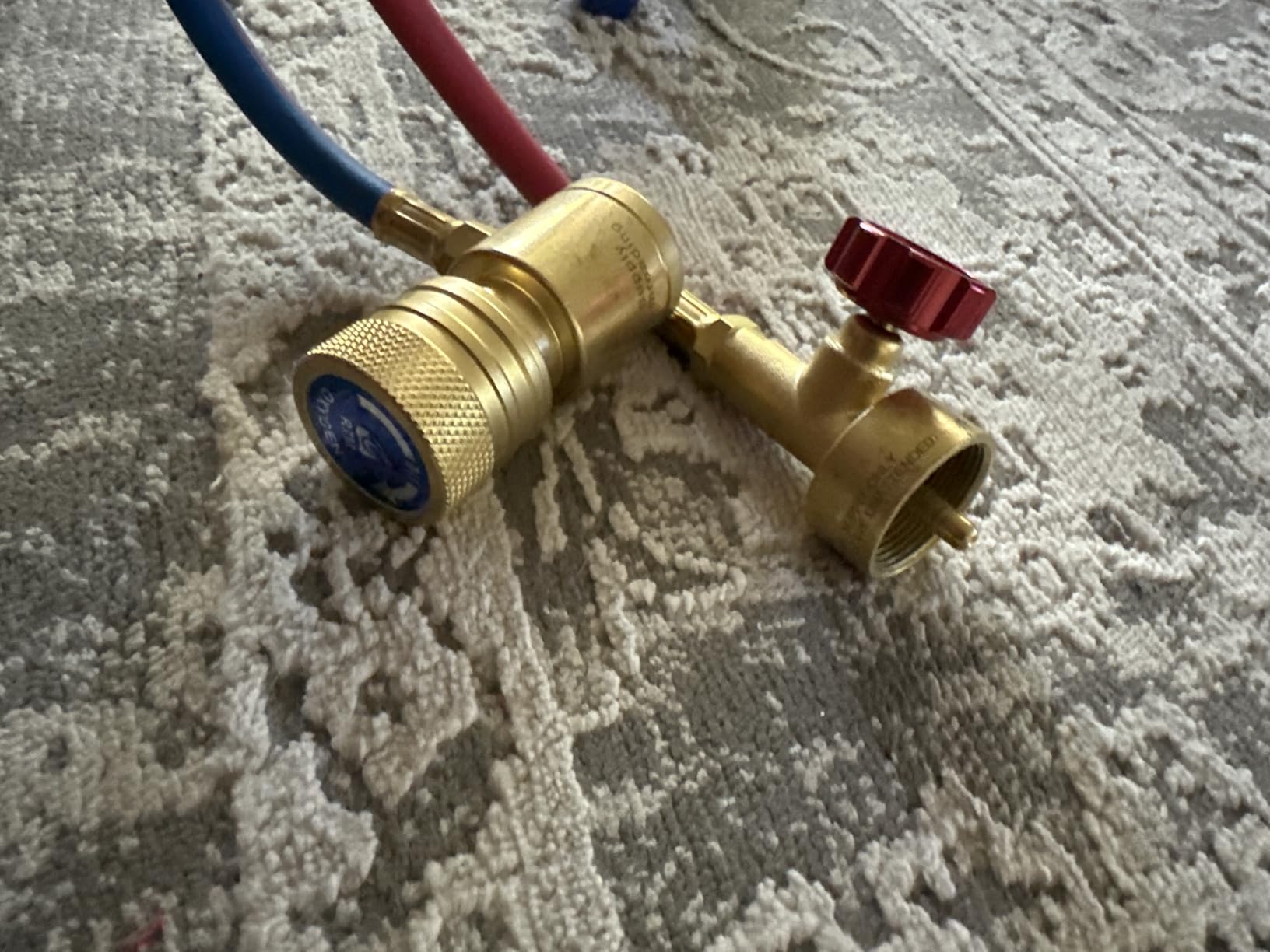
6. Cybring Torch with Built In Pressure Gauges
Pressure Gauges MAPP/Oxygen Welding Torch
Built in pressure gauge on the gas valve
Anti backfire valve design
Second adjustment valve on the handle
Pros
- Gauges show remaining cylinder pressure at a glance
- On handle adjustment gives finer control than the regulator
- Anti backfire valve adds a safety margin
- Owners replacing gauge-less versions call it a clear upgrade
Cons
- Needs both an oxygen and a MAPP cylinder
- Reports of leaking threads needing hand re sealing
- Heavy at 2.4 pounds for a hand torch
The built-in pressure gauge is the entire reason most owners keep this torch, and the reason is practical rather than romantic. On a small oxygen cylinder that holds roughly fifteen minutes of torch work, being able to read remaining pressure at the torch instead of walking to the regulator is the difference between finishing a piece and running out mid-seal.
Control is on the handle rather than at the regulator, which is the second big win. Fine adjustment at the point of use is much easier than reaching back to a wall-mounted regulator, and several owners replacing older gauge-less versions describe it as a clear upgrade over what they had.
There is an anti-backfire valve design intended to stop flame flash-back into the cylinder, and a second adjustment valve on the handle for gas control. The stated maximum is 3000 degrees Celsius, well beyond what any glass in this article needs.
At 2.4 pounds this is by some distance the heaviest hand torch in the comparison. That weight is real on a long session, and it is a direct consequence of carrying a gauge, a valve assembly and a dual connection in your hand rather than on a wall.
When this torch is the right pick
It is the right pick when gas supply is your most common source of interrupted work, which in a small shop is often the case. Seeing pressure at the torch removes a whole class of mid-job surprise, and the handle-mounted valve makes small corrections without leaving the piece.
It is also right if you are moving to a production or fabrication rhythm where throughput matters. Being able to shut gas off at the torch instead of at the regulator directly conserves oxygen.
When it is the wrong pick
It is the wrong pick for a long session held in one hand, because 2.4 pounds accumulates in the wrist and forearm. Bench workers who use a torch continuously all day generally prefer lighter tools.
Thread sealing is the recurring complaint. Multiple owners report leaks on fittings that they had to re-tape by hand, and the gauges and valves themselves are described as grossly imprecise under light use. If accurate pressure reading is the reason you are considering it, read that carefully: the convenience is real, the accuracy is not.
How to Choose a Glass Torch for Your Bench
Every choice in this guide is downstream of one fact: in glass work the tip determines the flame, not the torch body. Flame size, shape, velocity and oxygen appetite all come from the bore and groove geometry of whatever is installed. Buy a body and you have bought a platform; buy a tip set and you have bought a tool.
That is the single most useful piece of advice I can give a beginner, and it is why the Smith and TOAUTO kits rank where they do. A fixed nozzle gives you one flame forever, and you will spend the rest of your learning period compensating with technique for a tool that could have given you three options.
A second, less obvious point follows from it. When you change tips, change them deliberately and let the flame stabilise before you touch the glass. A jet that has just been swapped behaves differently for a few seconds, and the first piece of glass you put in that flame will tell you about the tool, not about the glass. Plenty of people conclude a new tip is faulty when they simply heated too soon.
Ask the supplier one question before you commit: which tip bores does this body take, and are the charts still current? Torch bodies outlive their documentation surprisingly often, and a manufacturer who cannot produce a current tip chart for their own product is telling you something about their support.
Match the fuel to your supply reality
Start with what you can legally and safely store, because that decision constrains everything else. Propane and MAPP cylinders are the easiest starting point for a home bench. Natural gas suits shops already piped for it. Acetylene, hydrogen and propylene appear on some of the kits here and offer different flame chemistry, but each brings storage and handling considerations that a small bench may not want to take on.
Oxygen is a separate decision with a separate cost. Small oxygen cylinders hold limited volume relative to the fuel side, so on a real oxygen setup the fuel lasts far longer than the oxygen. Anyone planning long sessions needs a plan for that, which usually means a larger cylinder or a refill arrangement rather than a bigger torch.
Decide whether you need oxygen or compressed air
Compressed air gives you a hotter, more controllable flame than plain air entrainment without the cost, storage and safety profile of a high-pressure oxygen supply. Oxygen pushes you closer to a premix flame, with more heat concentration and more aggressive oxidation of the glass surface. Scientific seals are generally easier with oxygen; light forming work often does not need it.
Whichever you pick, put a flashback arrestor on the fuel line. This is the one piece of safety equipment nobody should treat as optional, and it costs a fraction of what a torch does. Install it where the fuel line enters the bench, not at the cylinder, and test it according to its own instructions.
Match your threads before you buy
Shop hardware is famously unhelpful about this, and mismatched fittings are the most common reason a new torch will not connect. Scientific premix equipment commonly uses 7/16-24 threads on the fuel side and 9/16-18 B-size fittings on the oxidiser side, with quarter-inch NPT elbows appearing at bench plumbing junctions. Oxy-fuel kits in this group commonly use their own quick-connect conventions instead.
Before you order anything, measure what is already on your bench and write down thread size and fitting type for each connection. A five minute check with a thread gauge or calipers saves an afternoon with a torch you cannot use. If your existing hoses and regulators are fine, keeping them is a real saving, and the cross-reference is the difference between that and buying duplicates.
Work out which glass you are actually making
Borosilicate and fused quartz are the hard glasses. They tolerate fast, concentrated heating and are forgiving of a flame that overshoots, because their annealing schedule is wide. Soda-lime, Moretti and other soft glasses need a gentler approach and a broad flame, and a tight high-velocity premix-style flame will run them past working point in seconds.
Amber and green container glasses are soda-lime compositions. They are not laboratory glasses and they do not belong in a premix flame. If you find yourself reaching for a soda-lime bottle in front of a scientific glassblowing torch, you have the wrong torch for that job.
Set a budget for the system, not the torch
This is where buyers get caught out. A torch is one line in a list that also includes a tip set, hoses, a fuel regulator, an oxidiser regulator if applicable, a flashback arrestor, a cylinder, and somewhere safe to put the cylinders. None of the six products here includes a complete working supply, and three of them ship as a bare head with nothing else.
My suggestion is to budget in three tiers. A home or student bench needs one torch, one tip set, a regulator set, an arrestor and a cylinder arrangement, and nothing else until you know what you want to make. A working lab bench adds a second torch so that a tip change does not stop production, plus proper storage and a dedicated oxygen arrangement. A production or fabrication shop needs redundancy across tools and supply, and at that point the marginal cost of a specialist premix torch stops being the deciding factor.
Whatever tier you start at, buy one piece of quality at a time and get it working before you add the next. The most common failure I see in new shops is a wall of hardware where only the torch works, and the same discipline applies to the room itself, since bench layout, cylinder storage and glass-front storage are decisions that are far harder to reverse than a torch purchase. We covered the glass-front storage side separately in our lockable glass cabinet roundup, and the same locking logic is worth applying to any bench where regulators, tips and small gas fittings are within reach of people who should not be handling them. Storage and display of finished work deserve their own line in that budget as well, so our glass front bookcase roundup for collectors covers the storage side, and our picks for glass terrarium displays for offices cover the lit case where finished pieces end up once they come off the flame.
Frequently Asked Questions
What is the best torch for glass blowing?
The best torch for scientific glassblowing is a premix hand torch from a specialist maker such as National, Nortel, Carlisle Machine Works or Herbert Arnold, because it delivers heat concentrated on a small joint rather than spread across a broad area. Accessible alternatives are oxy-fuel kits with interchangeable tips, which get you closer to premix behaviour than a single-fuel head does.
Can you use a butane torch for borosilicate?
No. A consumer butane torch produces a soft, wide, low-velocity flame that cannot bring a borosilicate joint to working temperature, so you end up reheating until the glass sags. Holding a butane torch against hot glass also risks damaging the torch itself, since the sealed canister is a poor heat sink.
What is the difference between a premix and surface mix torch?
A surface mix burner keeps fuel gas and oxidiser separate until the tip, giving a broad, soft, forgiving flame that suits teaching and soft glass. A premix burner injects one gas into the other upstream of the tip, producing a narrow, fast, intensely hot cone that concentrates heat on a fine joint, which is why seal work favours premix.
How much heat can borosilicate glass handle?
Borosilicate has a wide working range and tolerates fast, concentrated heating far better than soda-lime or Moretti glass. A flame in the region of 1200 degrees Celsius or above is comfortably above borosilicate working temperatures, which is why the temperature printed on a torch box matters far less to your glasswork than the shape and concentration of the flame.
Can glass withstand 500 degree heat?
Yes, easily. Annealing points for common soda-lime container glass sit far above 500 degrees Celsius, so glass can be held at that temperature without damage. The real risk is thermal shock, where a local temperature change cracks a piece, and uneven heating that distorts the shape rather than a single uniform temperature.
Which burns hotter, yellow or blue flame torches?
The blue flame burns hotter and cleaner than the yellow, and it is the one you want for borosilicate work. Flame colour alone is a poor guide to glass suitability though, because a yellow flame from a burner head and a blue flame from a premix torch behave very differently once you look at flame shape and velocity rather than colour.
Do I need oxygen to blow glass?
No for lampworking and light forming, where air entrainment at the nozzle is enough. Yes for serious sealing work on hard glass, because an oxygen supply gives a hotter and more concentrated flame that makes a clean joint far easier. Oxygen also adds cost, storage obligations and a real safety requirement for proper regulators and flashback protection.
Conclusion
For scientific glassblowing, the Smith Little Torch earns our editor’s choice because five interchangeable tips and a flame that holds its set point give you the most usable range from one body, and 436 reviews at 4.7 stars back that up. For a tighter budget, the all-brass Cybring MAPP and propane head offers the most proven design at 4.4 stars across 1611 reviews, and the MR. TORCH solid brass head is the least intimidating place to start.
Whichever you choose for 2026, buy the tip system rather than the torch body if your budget allows, fit a flashback arrestor before the first session, and keep every cold joint out of the annealing math. The tools in this guide are a solid platform for learning, and the moment your work needs premix concentration, move up rather than fighting the flame.