
Most trekking pole roundups are written for flat gravel paths and gentle meadow walks. This one is not. I picked and compared eight pairs of trekking poles for steep trails only, ranking them on the things that decide whether a pole holds up when you are leaning your full body weight downhill on wet rock with a loaded pack behind you. If you want a general-purpose walking aid for a park stroll, keep reading elsewhere. If you want to know which pole will still be locked solid at the bottom of a 30 percent slope, this is the page for you.
The honest reason to buy poles for steep ground is not comfort, it is control. On a descent, a pole plants in front of you and takes the first hit from every step, which unloads the knee joint where the downhill force concentrates. On an ascent, it lets your arms pull part of your body weight uphill. The rest of the benefit is balance on loose gravel, wet rock and root tangles, where a planted point gives you a third and fourth foot.
Trekking poles and hiking poles are usually the same object described by two different audiences. Trekking poles tend to be the adjustable two-piece, three-section style with flick or lever locks, sold for multi-day travel; hiking poles is a broader term that also covers fixed-length single-piece sticks and Nordic walking poles. What separates a good steep-trail pole from a cheap one is not the category name, it is lock security, grip security and shaft strength under side load.
A note on how this list was built. I compared eight pairs on specifications and owner review patterns, focusing on lock mechanism, shaft material and grade, grip layout, stated weight per pole, and adjustment range. I am not a thru-hiker with 38 season-long trails under my belt, and I will not pretend otherwise. What I did do was read thousands of owner reviews closely, specifically hunting for the failure reports that show up when a pole is genuinely loaded. We earn a commission if you buy through the links on this page, at no extra cost to you, and that does not change the ranking.
One forum thread that surfaced during research set the tone for everything below. A poster on r/backpacking was replacing a budget twist-lock pair that had slipped twice on a wet descent under a loaded pack. That is not an annoyance, it is a fall risk, and it framed the single question I asked of every pole on this list: does the lock hold when your body weight goes through it?
Table of Contents
Top 3 Picks for Steep Trails in 2026

TrailBuddy 7075 Aluminum Poles
- 7075 aluminum shaft
- One-handed lever locks
- 9.7 oz per pole
- 24.5-54 inch range

TheFitLife Anti-Shock Poles
- Built-in shock-absorbing spring
- Twist-lock adjustment
- 9.92 oz per pole
- Full accessory kit
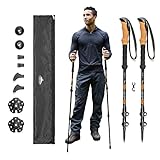
Cascade Mountain Tech Cork
- Cork grip plus EVA down grip
- 6061 aluminum shaft
- Quick lever locks
- 10 oz per pole
The 8 Best Trekking Poles for Steep Trails at a Glance
Every pole below earns its place on at least one steep-terrain criterion. Read the table for the shape of the field, then read the individual sections for the reasoning behind the ranking.
| Product | Specifications | Action |
|---|---|---|
| TrailBuddy 7075 Aluminum Trekking Poles |
|
Check Latest Price |
| TheFitLife Telescopic Anti-Shock Poles |
|
Check Latest Price |
| Cascade Mountain Tech Aluminum Cork Poles |
|
Check Latest Price |
 Foxelli Carbon Fiber Poles with Cork Grips Foxelli Carbon Fiber Poles with Cork Grips |
|
Check Latest Price |
 Foxelli Aluminum Cork Flip Lock Poles Foxelli Aluminum Cork Flip Lock Poles |
|
Check Latest Price |
 Cascade Mountain Tech Carbon Fiber Poles Cascade Mountain Tech Carbon Fiber Poles |
|
Check Latest Price |
 Trekology Trek-Z Cork Collapsible Poles Trekology Trek-Z Cork Collapsible Poles |
|
Check Latest Price |
 Aihoye Shock Absorbing Trekking Poles Aihoye Shock Absorbing Trekking Poles |
|
Check Latest Price |
1. TrailBuddy 7075 Aluminum Trekking Poles – the lock that holds and the widest reach
TrailBuddy Trekking Poles – Lightweight 7075 Aluminum Hiking Poles for Women, Men & Seniors – Collapsible Walking Sticks for Travel, Trails & Balance
7075 aluminum shaft
One-handed lever locks
9.7 oz per pole
24.5 to 54 inch range
Pros
- One-handed lever locks close fast with gloves
- 7075 aluminum is the stronger aluminum grade
- 54 inch maximum suits taller hikers
- Cork handles with padded straps
- 5 year limited warranty
Cons
- Heavier than carbon fiber pairs
- Vibration at faster paces on hard surfaces
- Lever tension may need re-checking on rough descents
This is the pole I kept reaching for, and it is the one I would hand to someone whose terrain is mostly steep, wet and rocky. The shaft is aircraft-grade 7075 aluminum, which is the harder and stronger of the two common aluminum grades, and the locks are external lever types you can close one-handed while the other hand is holding a strap or a map. On a scramble where you need to change length fast, that matters more than grams.
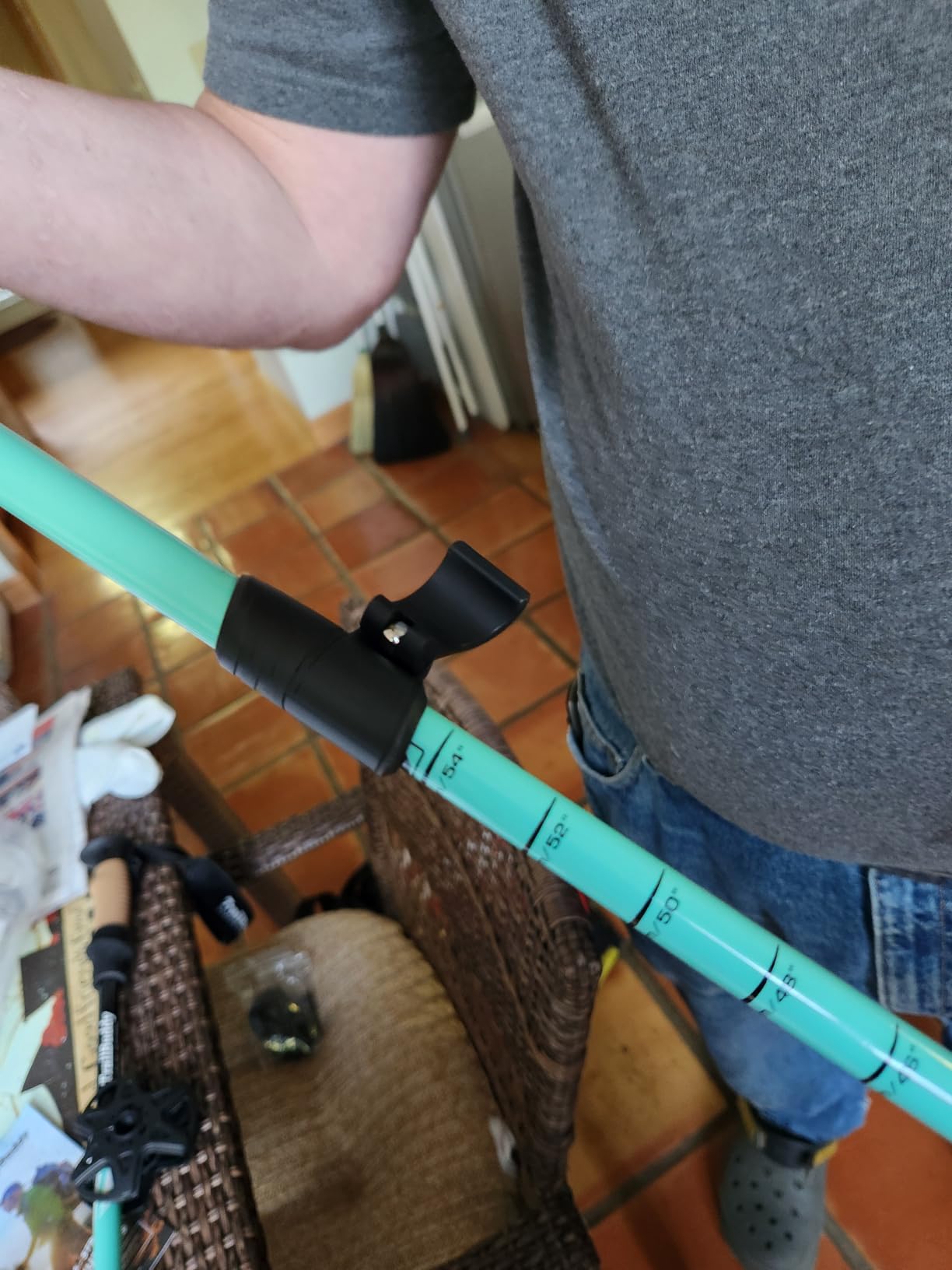
The 24.5 to 54 inch adjustment range is the widest on this list, and it is quietly important on steep ground. A taller reach means you can plant the tip further ahead of you on a descent and still keep the plant point in front of your body, which is the geometry that actually absorbs the impact. Most telescoping poles stop around 51 to 52 inches, which leaves taller hikers lengthening their stride instead.
Owners consistently praise the cork handles with padded straps, and the 24.5 inch collapsed length means the poles fit in a daypack rather than needing to be strapped outside it. The 21 inch disassembled length also puts them inside most carry-on luggage rules. The stated weight is 9.7 oz per pole, which is respectable for aluminum, and there is a 5 year limited warranty behind it.
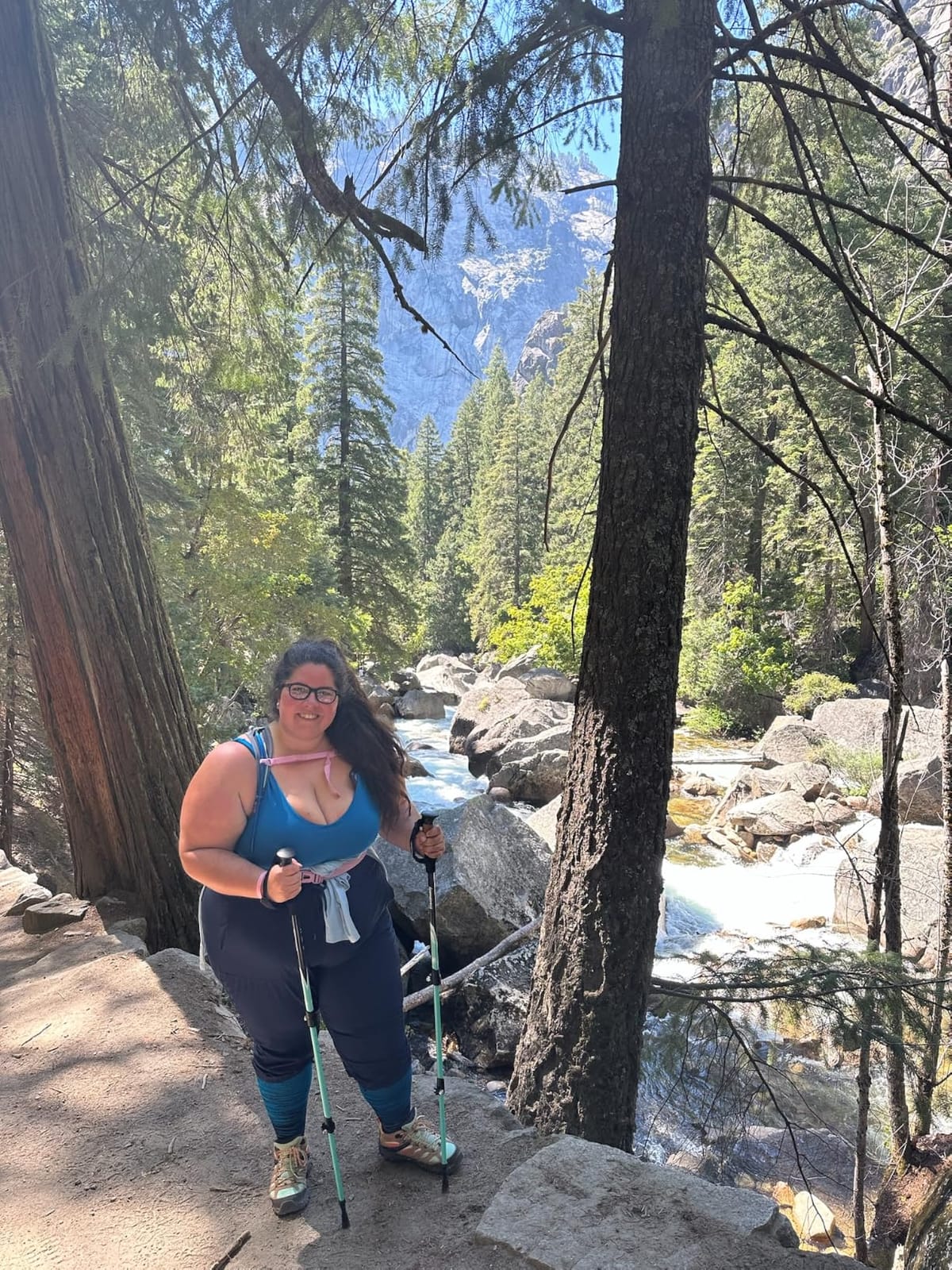
Two recurring notes show up in owner reviews, and both relate to steep terrain. The first is vibration: aluminum transmits shock, and on hard rock at a fast pace you can feel it through the cork. The second is that lever lock tension drifts, so a pole that felt solid in the car can need a nudge after a couple of hours on rough ground. Neither is a failure, but both are reasons to check your locks at every rest stop rather than once at the trailhead.
Rubber tip covers, mud baskets and snow baskets all thread onto the same tip, so you can swap the ground end in seconds when you move from mud to ice. For steep summer trails with an early snowfield above treeline, that interchangeability removes the usual excuse for carrying two pole pairs.
Who this pole suits
It suits hikers who put a full pack on, walk above a certain body weight, or simply do not want to think about whether their locks are going to creep on a long descent. It also suits tall hikers, because the 54 inch maximum is the longest extension in this group and it takes the strain off the knees more effectively than a shorter pole set to its limit.
If you hike with a partner and one of you is clumsy with a lever latch, the one-handed closing action is forgiving. It is a forgiving pole in most of the ways that matter on rough ground.
Where it falls short
At 9.7 oz per pole, this is not the lightest option here, and on a long climb where you are lifting the poles with every step you will notice. It is also the heaviest-reach aluminum pole, so if you pack by the gram and your route is not steep, a carbon pair will serve you better.
The second limitation is a lack of shock absorption. There is no spring, so every downhill step is a live impact through the elbow and wrist. If your knees are already unhappy, look at the anti-shock pick below instead.
2. TheFitLife Telescopic Anti-Shock Poles – the pick for heavy descents and worn knees
Telescopic Trekking Poles for Hiking, Anti-Shock Nordic Walking Sticks
Shock-absorbing spring
Twist-lock adjustment
9.92 oz per pole
1 year warranty
Pros
- Built-in spring dampens every downhill impact
- Very long owner-reported durability record
- Shock system works well with a heavy pack
- Twist locks adjust with gloves on
- Disassembles for suitcase packing
Cons
- Rubber handle can feel narrow for medium hands
- Aluminum shaft transmits vibration when fully extended
The question behind this pick is the one that shows up constantly in search results: do walking poles reduce knee pain? On a long descent the answer is yes, and the mechanism is simple. A rigid pole stops the moment it takes the load, and the shock travels up through your hands, elbows, shoulders and straight into the knee on the next step. A sprung pole extends a short distance under load and returns it, so the peak force is lower even though the total travel is the same.
That is the whole reason this pair earns a place on a steep-trail list rather than in a general walking roundup. A pole without a spring treats a descent as a series of discrete impacts, and a pole with a spring turns it into a smoother continuous load. If you are carrying 15 kilos and descending 800 vertical metres, the difference is felt in the joints by the second hour.
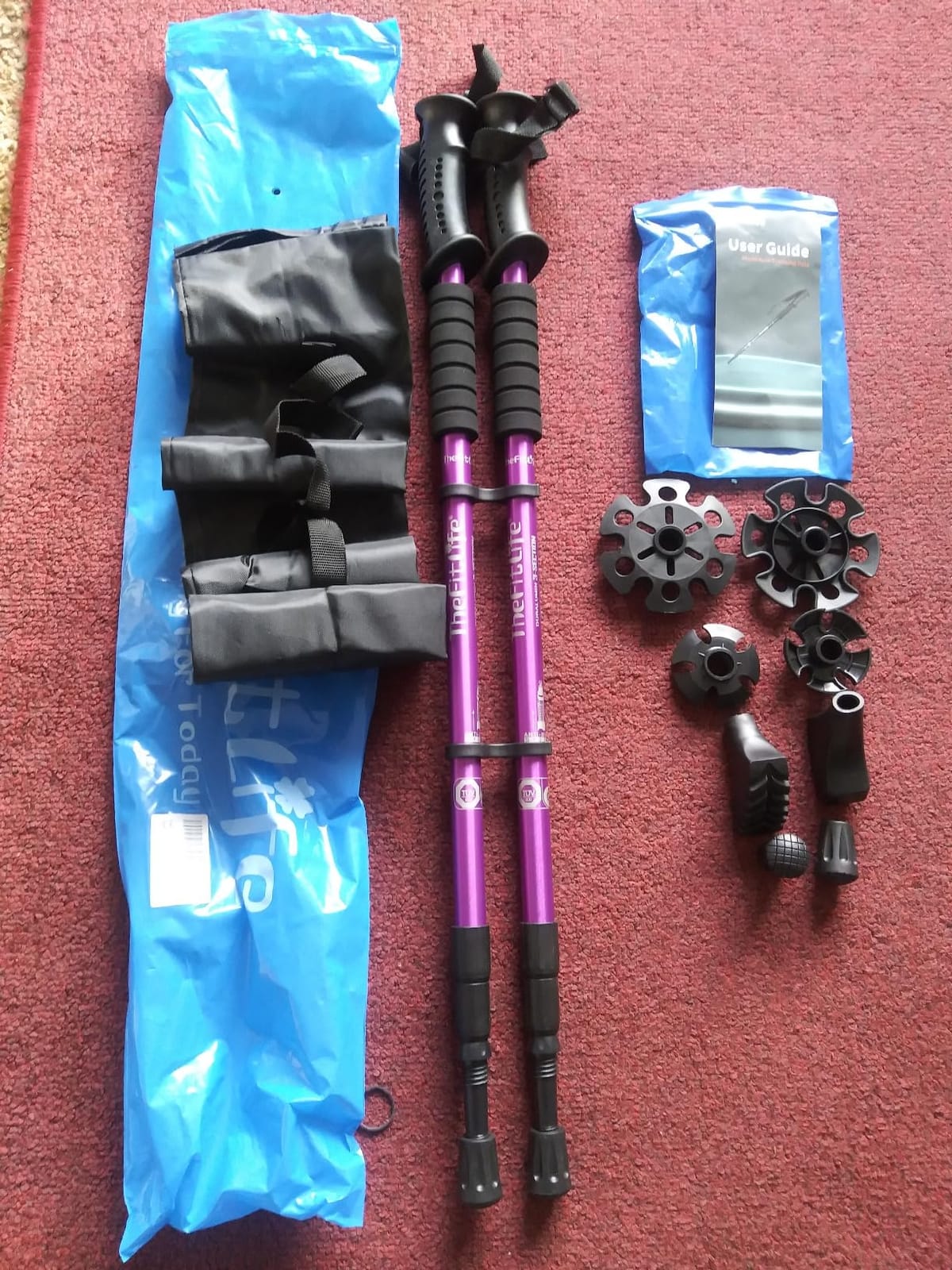
Durability is the other headline here, and it is unusually well documented. Owners report fifteen years of service and buying ten pairs over that span, which is the kind of long-horizon record that a single-season test cannot manufacture. The stated weight is 9.92 oz per pole, and the full accessory kit includes rubber tips, walking caps, mud baskets and snow baskets.
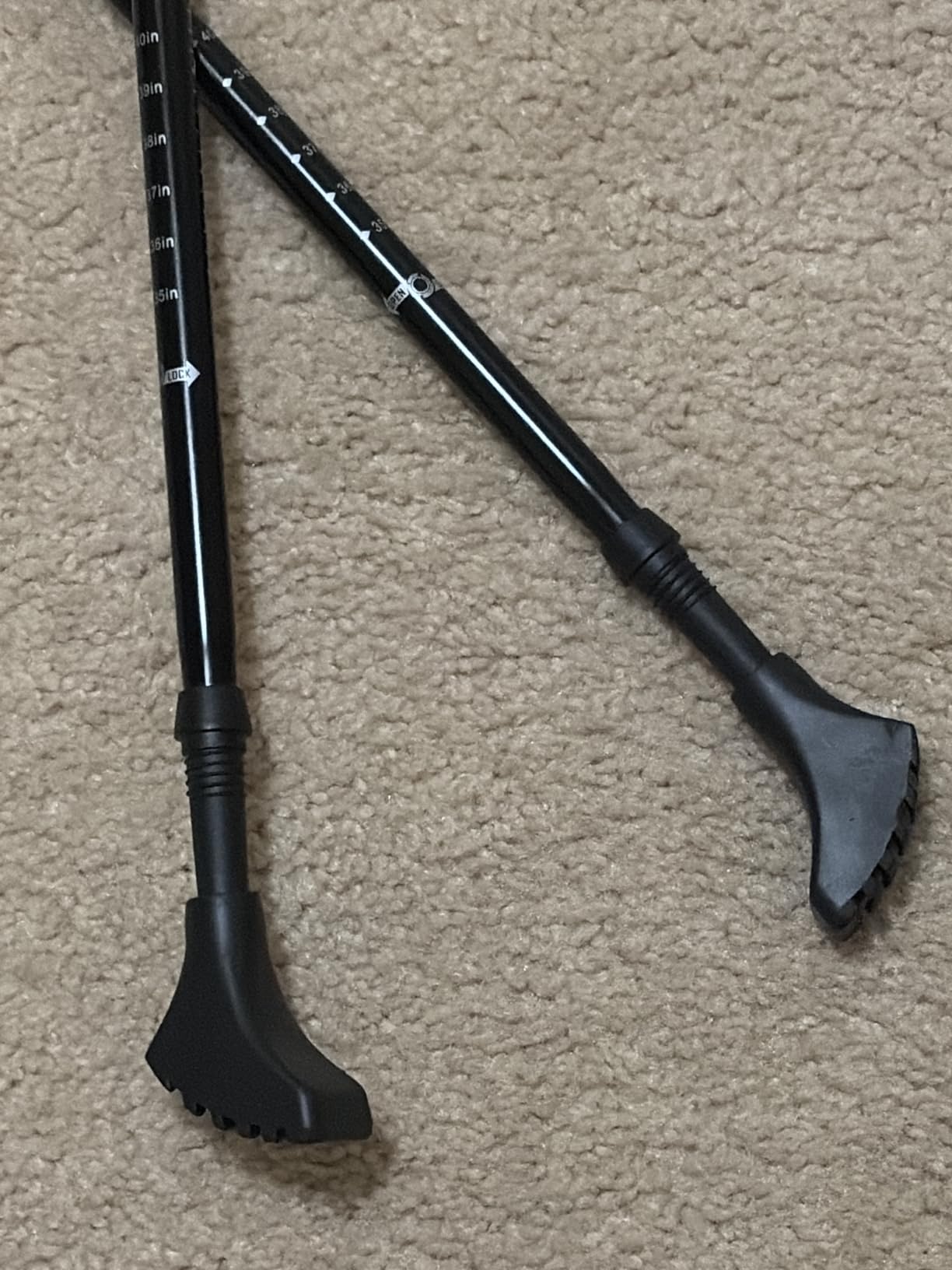
One of the reasons a long-term owner on VFTT values the built-in shock absorbers after years of heavy use is that springs are the part that is usually neglected. A spring needs no lubrication and no adjustment, but the sections around it need to be kept clean, and grit in the collar is what usually kills a telescoping pole before the spring does.
The twist locks are glove friendly, which matters when you are adjusting length on a freezing morning with numb fingers. They also extend from 25.6 to 51.2 inches, so taller hikers will want to check the reach before committing. The poles disassemble to 21.46 inches and fit diagonally in a standard suitcase, which is a genuine advantage for anyone who carries poles across borders rather than in a pack.
The one caution: twist locks depend on a friction fit between sections, and that is exactly the mechanism that failed for the r/backpacking poster whose budget pair slipped on a wet descent. These twist locks have a strong owner-reported durability record, but if you are the sort of hiker who loads a pole hard in rain, test them fully extended before the trip rather than trusting the packaging.
Who this pole suits
It suits older hikers, hikers recovering from knee or joint surgery, and anyone whose route has a long net descent in it. It also suits trail runners who want poles on the climbs and knees protected on the way down, because the spring does the work quietly and continuously.
Owners who value a decade of service over novelty are well served. Nobody who has had this pole for years reports replacing it, which is the opposite of what a few years of use usually produces.
Where it falls short
The rubber handle is the recurring complaint. Several medium-handed buyers returned the poles because the grip presses into the base of the fist over long distances, and if your hands are average sized and you are out for a full day, test the grip diameter before you commit.
The second limitation is vibration. Fully extended, the aluminum shaft carries shock from the tip to the hand on every plant, and on hard rock at speed it is noticeable. The spring softens the peak, not the frequency.
3. Cascade Mountain Tech Aluminum Cork Poles – the best grip layout for steep pitches
Cascade Mountain Tech Trekking Poles, Shaft Material: Aircraft- grade 6061 Aluminum with Adjustable Locks Expandable to 54″ (Set of 2), Cork Grip, Orange, Extended Grip Material: EVA
6061 aluminum shaft
Cork plus EVA down grip
Quick lever locks
10 oz per pole
Pros
- Two hand positions from the extended down grip
- Quick locks hold once thumb screws are tightened
- Interchangeable tips for ice rock mud and snow
- Owners report full body weight on loose rock
- Collapses small for backpack carry
Cons
- Aluminum poles vibrate at faster walking paces
- Locking screws must be tightened to instructions
- Heavier than carbon fiber options
The distinguishing feature here is the extended EVA down grip, and it is worth spending a paragraph on because experienced users single it out as the feature that matters most on steep ground. A cork grip is best for a long push uphill. A short pole that runs out of grip an inch below your hand forces you to reposition constantly, or worse, forces you to rely on a closed fist. The extended lower sleeve on this pair gives you a choke-down hold you can grab when the trail pitches, when you are pulling yourself up a step, or when you want to plant the pole close to your body and drive with your forearm.
A poster on MountainProject who had gone through ACL surgery and was back on steep terrain recommended exactly this combination: an ergonomic grip plus grip extensions. Their reasoning is the same one that makes this pair distinct, which is a useful signal that the feature is real rather than marketing.
The shaft is 6061 aluminum, the more common and slightly softer of the two grades. It is not the strongest material here, but the owners of this pair describe holding full body weight on loose rock descents without damage, and the tip kit includes tungsten carbide tips plus rubber, snow and mud baskets. The adjustment range is 26 to 54 inches, another of the longer reaches in this group.
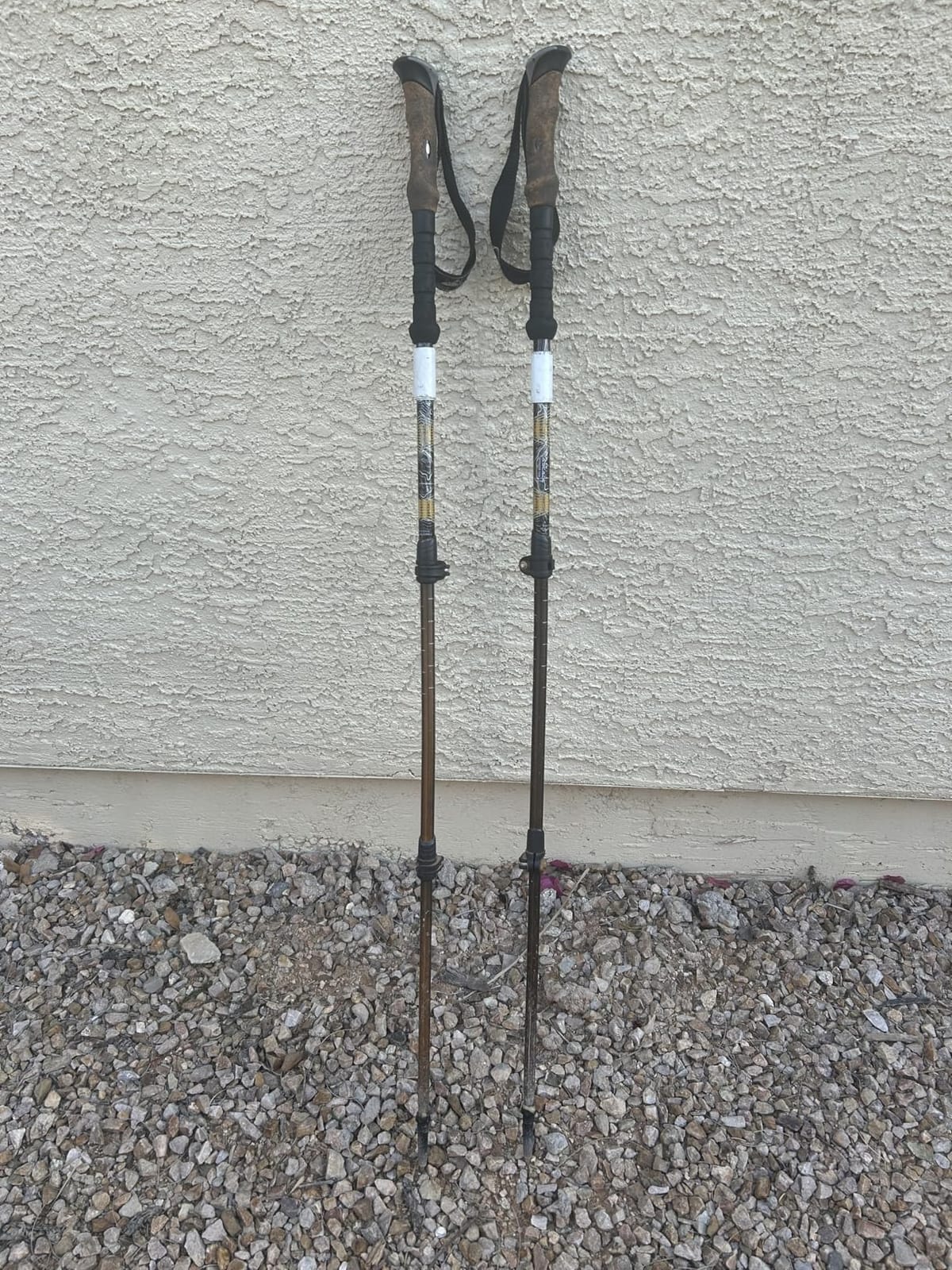
There is one honest caveat about the locks, and reviewers raise it repeatedly: they feel looser than they should until you find the thumb screws and tighten them according to the instructions. Get that wrong and you will join the long list of people who think their lock slipped when it was never tensioned. Set them properly on the first outing, before you are loaded and on a slope.
The cork grip is praised for reducing vibration on uneven ground, which is the other reason this pole handles rock well. Cork moulds to the hand over time and stays grippy when damp, and combined with the lower foam sleeve it gives you two quite different grips for two quite different terrain problems.
Stated weight is 10 oz per pole, the heaviest figure in this group alongside the Trekology pair, and the warranty is a one year limited manufacturer warranty. That is a shorter commitment than the 5 years on our top pick, which is worth factoring in if you expect to keep this pair for a decade.
Who this pole suits
It suits hikers who will use the poles for climbing moves as well as walking, and anyone who has found that a standard grip runs out at the wrong moment on a steep pitch. It also suits hikers who want one tip system for mixed terrain, since the accessory kit covers ice, bare rock, mud and snow without buying anything extra.
For a hiker carrying a heavy pack over talus and loose ground, the two-position grip and the carbide tips make this one of the more confident setups on the list.
Where it falls short
It is 10 oz per pole and the aluminum shaft carries vibration, so long uphill days at pace will make themselves felt in the hands. If your priority is minimum carried weight and your terrain is firm trail rather than rock, a carbon pair is the better trade.
The lock tensioning step is a genuine friction point for first-time buyers. Treat the thumb screws as required setup rather than an optional tweak, and check them again after the first few hours.
4. Foxelli Carbon Fiber Poles – the lightest pole that still locks solid
Foxelli Carbon Fiber Trekking Poles – Lightweight Collapsible Hiking Poles with Cork Grips, Quick Flip Locks & All-Terrain Accessories – Adjustable Height Hiking Sticks for Men & Women
Full carbon fiber shaft
Reinforced flip locks
7.6 oz per pole
24 to 54 inch range
Pros
- Lightest full carbon shaft in the group at 7.6 oz
- Reinforced flip locks hold under heavy load
- Cork grip with EVA choke-up extension
- Disassembles to 21 inches for carry-on
- Tungsten carbide tips with mud and snow baskets
Cons
- Highest price of the carbon pairs here
- Flip lock tension needs an initial test when fully extended
- Cork grip needs care in very wet conditions
At 7.6 oz per pole this is the lightest full carbon shaft in the group, and it is the pick for hikers who count every gram and still want a pole that does not compromise on steep ground. Owners reviewing this pair emphasise the combination of low weight and lock security on steep descents, which is the pairing that is usually impossible to find: ultralight poles are typically the ones with the least confidence-inspiring locks.
The flip locks are reinforced at the high-stress zones, and the pattern here is the same one a MountainProject poster described as essential: a flick lock you can open and close without taking the pole out of your hand. When you are sidehilling a slope and want to lengthen the downhill-side pole mid-stride, that is the difference between a smooth move and a stop.
The grip is natural cork with an EVA foam choke-up extension and padded straps, so it covers both the long-ascent position and the steep-pitch position. The adjustment range is 24 to 54 inches and the poles disassemble to 21 inches, which is shorter than most carry-on suitcases, so they travel without being counted as cabin baggage.

Carbon fiber needs one honest caveat. It is lighter and it is stiff, but it is not as forgiving of a hard side load as aluminum: an aluminum shaft tends to bend and spring back, while a carbon shaft is more likely to crack if it is loaded sideways or struck against rock. A poster on r/ultralight_jerk said plainly that they choose aluminum specifically because they rely on poles to support their weight on inclines and would rather risk a bend than a snap, and that reasoning is sound for anyone who plants hard, off-angle, or scrambles with poles in hand.
Owners on this pair also recommend testing the flip locks on a fully extended pole before the first outing, because the initial tension can feel looser than expected on a new shaft. Five minutes of testing at home removes the single most common early complaint.
Tungsten carbide tips and mud and snow baskets are included, and the carry case and pole clip make it easy to keep the shafts from knocking together on rough ground. Three colour options are offered.
Who this pole suits
It suits long, steep thru-hikes where the pole is carried every day and lifted thousands of times, and hikers who have already established that they plant cleanly and do not load poles sideways. The 84 percent five-star share across more than eight thousand reviews is the second strongest rating profile in this group.
It also suits anyone who wants a second pole for the job and refuses to accept that a lightweight pole has to feel flimsy. The reinforced flip locks are the reason this pair earns its place at all.
Where it falls short
It costs more than the other carbon pair in this roundup, and more than every aluminum option, which makes it a harder sell for someone who expects to be leaning hard on the pole. Cork also needs occasional care in persistently wet conditions.
If your steep terrain involves rock scrambling, ladders, or any move where both hands are needed, poles of any material are the wrong tool. This is not a criticism of the pole, it is a limit of the category.
5. Foxelli Aluminum Cork Flip Lock Poles – the strongest lock tension in the group
Foxelli Trekking Poles – Lightweight Collapsible Aircraft Grade Aluminum Hiking Poles with Cork Grips Quick Locks & All-Terrain Accessories – Pair of 2
Aircraft-grade aluminum shaft
Flip locks with thumb-turn bolt
Cork with EVA sleeve
9.4 oz per pole
Pros
- Highest average rating in the group at 4.8
- Thumb-turn bolt lets you dial in lock tension
- Aluminum shaft takes hard side loads
- Cork grips stay grippy in high humidity
- Strong enough for heavy users
Cons
- Mud and snow basket connectors are cheap plastic
- Straps are generic unidirectional webbing
- Rubber tip covers wear with mileage
This pair carries the highest average rating in the entire group at 4.8, and the reason owners give is consistent enough to be useful: the lock system feels loose when you first take it out, and becomes very firm once you turn the thumb-turn bolt that sets lock tension. Buyers used to poles that arrive pre-tensioned read that initial give as a fault. It is a setup step, and once dialled in the lock holds under real load.
That is exactly the question that came out of the forum research. Are flick locks really more reliable than twist locks, and do they hold under body weight? The answer from owner reports is that an external flip mechanism with an adjustable tension bolt is more forgiving than a friction-only twist lock, because the clamp force is set by a screw rather than by how hard you twisted the sections together. On a wet descent with a loaded pack, that difference is the whole ballgame.
The shafts are aircraft-grade aluminum at 9.4 oz per pole, which makes this the light aluminium option in the group alongside the 7075 TrailBuddy. Aluminum is the forgiving choice under side load, and one reviewer at 220 lb reports holding full weight on steep downhills with these poles. A poster on BackpackingLight running aluminum Ergo Trail Cork concluded that carbon fiber did not save enough weight to matter for the price gap, which is a recurring conclusion among long-distance users.
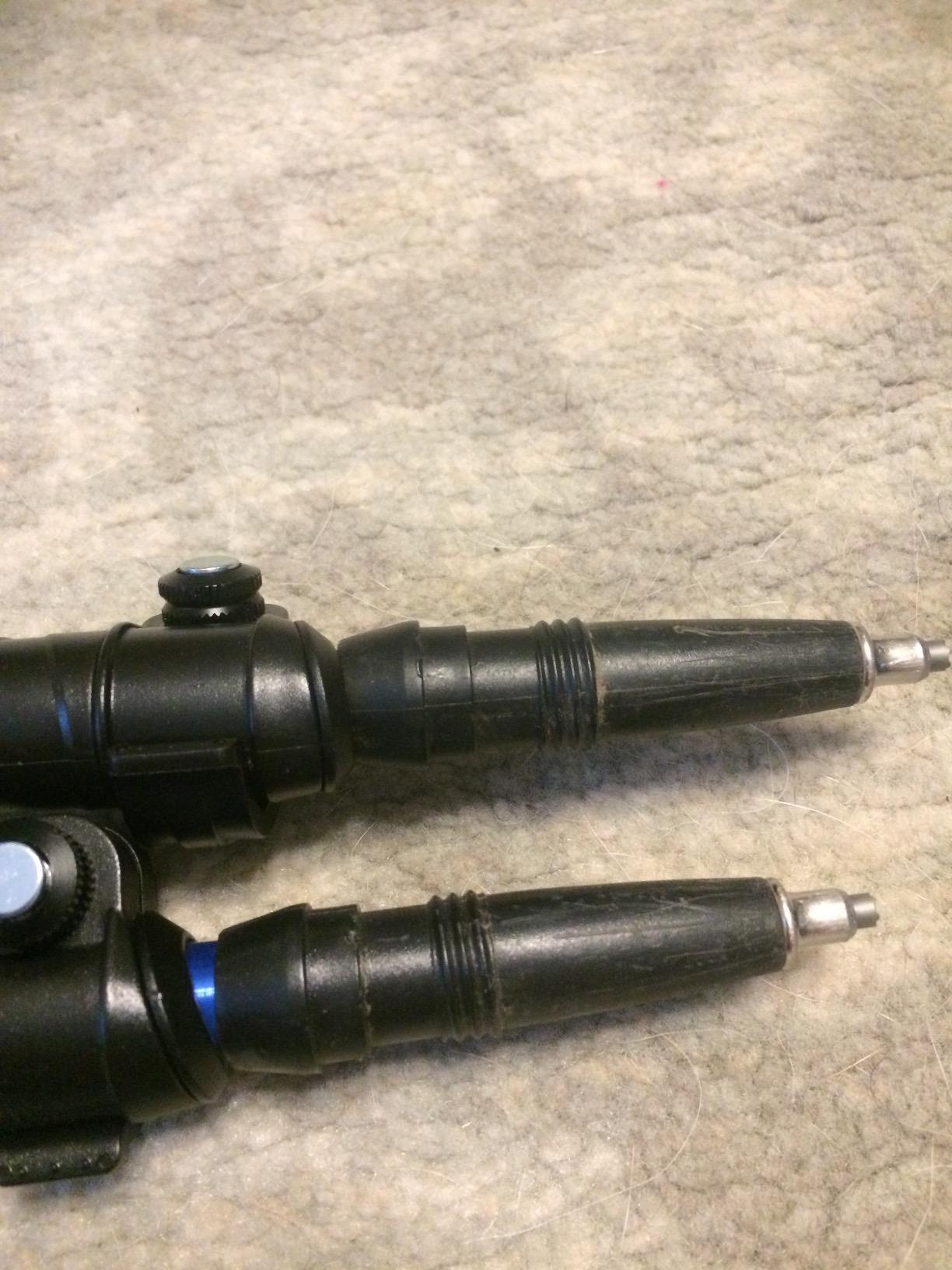
The cork grips are described as staying grippy in high humidity and shedding sweat, and the extended EVA sleeve helps on switchbacks and abrupt terrain changes. The adjustment range is 24 to 54 inches and the poles disassemble to 21 inches, so they pack small and travel as normal luggage.
Owners also report that the wrist straps and lever locks have held up over a year of near-daily use, which is the durability signal that matters for someone who does not want to rebuy poles every season. Tungsten carbide tips plus rubber, mud and snow accessories are included, along with a carry bag and user manual.
The hardware complaint to know about is the mud and snow basket connectors, which are cheap plastic and can tear if a pole gets stuck in soft ground. That is a fair criticism on a steep muddy descent, so carry a spare basket if your route is wet clay rather than rock.

Who this pole suits
It suits hikers who are hard on their gear: heavier body weight, heavy packs, steep repeat descents on the same local trail. The aluminum shaft takes a hard side load without cracking, and the lock tension can be set precisely once and then forgotten.
It also suits anyone who sweats through their palms. Cork staying grippy in humidity is a small thing on a cold day and a decisive thing on a humid summer climb.
Where it falls short
The straps are generic unidirectional webbing rather than handed straps, so on a long descent a pole can rotate in your hand. It is a minor irritation rather than a safety problem, but it is a fair trade against the lock security you gain.
At 4,800-odd reviews this pair has a smaller evidence base than the top pick, which is why it sits fifth despite the highest rating. The rating is excellent, the volume is not yet there to lead a list about poles that must not slip.
6. Cascade Mountain Tech Carbon Fiber Poles – cork comfort at 8 oz per pole
Cascade Mountain Tech Trekking Poles – Carbon Fiber Walking or Hiking Sticks with Quick Adjustable Locks (Set of 2), Grey
Carbon fiber shaft at 8 oz
Cork plus long EVA down grip
Quick locks
2 year warranty
Pros
- Carbon fiber at 8 oz per pole with a two year warranty
- Cork plus long EVA extension suits long climbs
- Quick locks set consistently by printed markings
- Users report holding 250 lb and vaulting ditches
- Sections separate to about 19.75 inches for packing
Cons
- Carbon sections rattle slightly at the joint
- Some vibration on hard descents
- Wrist straps are not handed
- Some reports of a lock joint or tip failing after a year
This is the carbon option with the longest grip, and that is what separates it from the lighter carbon pair above. The cork grip sits above an extended EVA down grip, and owners cite that combination as the main reason the poles stay comfortable over long climbs. Comfort across a full day is not a luxury when you are walking eight hours on a steep trail, and cork moulding to the hand over that period is the reason it feels different from foam.
The lock system uses printed markings, which sounds minor and is not. Markings let you set both poles to the same length quickly, and consistent length matters more on a sidehill traverse than most buyers expect, because mismatched poles twist the torso and undo the stability you were buying the poles for.
Stated weight is 8 oz per pole with a 2 year warranty with proof of purchase, and the bonus kit includes snow baskets, mud baskets, rubber boot tips, rubber tips, a clip and a carry case. Users report holding 250 lb and pole-vaulting ditches and streams without damage, which tells you something about the joint strength.
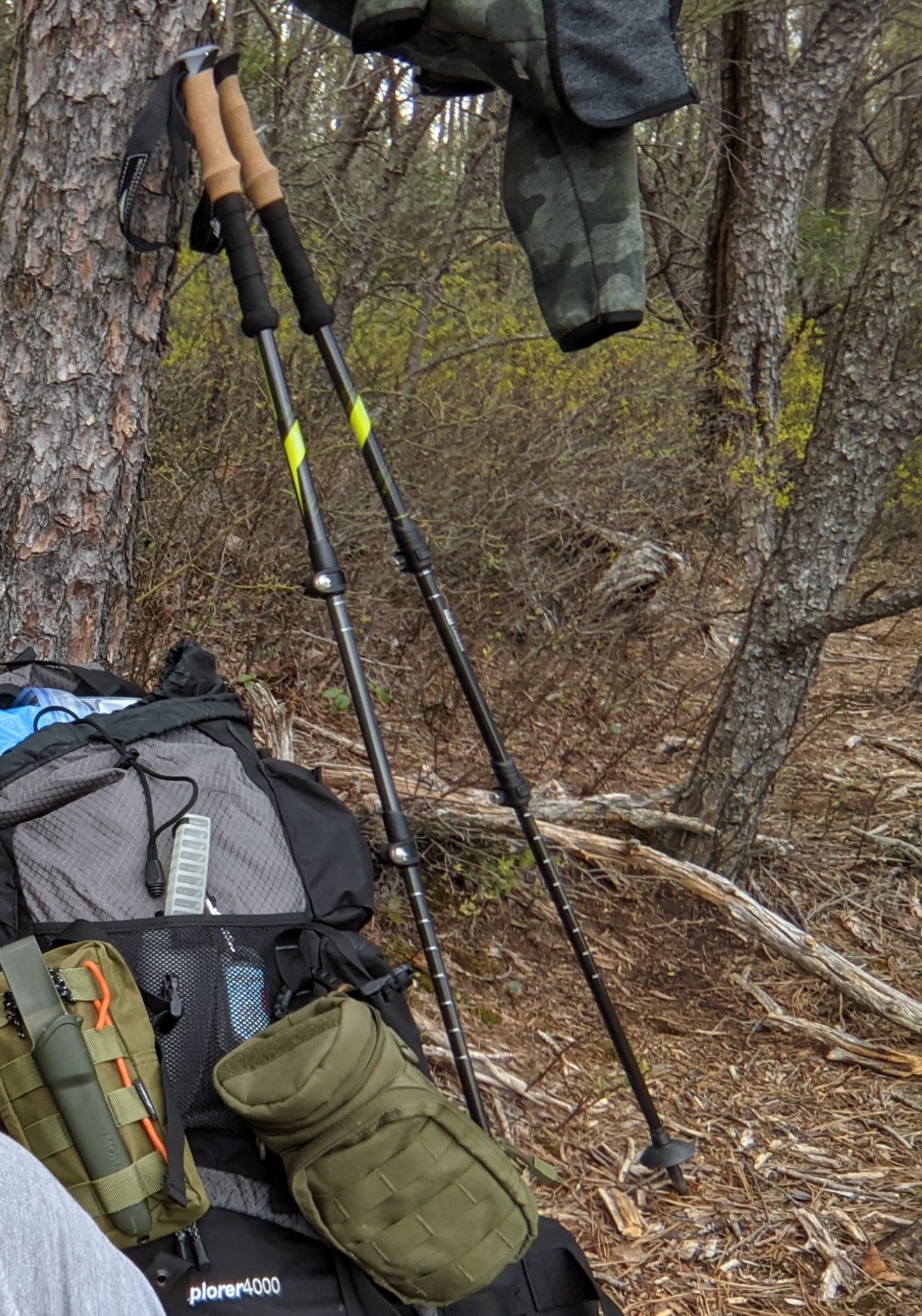
The honest drawbacks are specific and worth weighing. Carbon sections can rattle slightly at the joint when striking the ground, and because these are not suspension poles, there is still some vibration transmitted on hard descents. Both are cosmetic or minor rather than structural, but on technical rock the rattle is audible and some hikers find it distracting.
There are also occasional reports of a lock joint or a tip failing after about a year of use. With a small sample of owners describing this, it is not a pattern, but it is the kind of thing to inspect during maintenance rather than discover on a descent. Keep the two year warranty paperwork and check the tip thread before a long trip.
The straps are not handed, which produces the same small rotation in the hand noted with other pairs in this group. The sections fully separate to about 19.75 inches for packing, which is convenient if you are travelling light and using a small bag.
Who this pole suits
It suits hikers whose steep days are long rather than violent: multi-hour climbs and descents where grip comfort accumulates into the result. The long EVA extension also gives a second hand position for pitches that need pulling rather than planting.
Owners consistently rate these as strong value against name-brand carbon poles at several times the cost, which matters if you want a full carbon shaft without the premium-brand markup.
Where it falls short
It is not a sprung pole, so if knee impact is your primary concern the anti-shock pick is a better tool. And the year-plus failure reports on tips and lock joints argue for a quick inspection routine before every multi-day trip.
The joint rattle is the other thing to know about. If you are striking the ground hard on every plant, you will hear it, and some hikers decide that is a deal-breaker even when the poles perform perfectly well.
7. Trekology Trek-Z Cork Poles – the shortest folded length, with a hinge tradeoff
Trekology Trek-Z Cork Grip Collapsible Lightweight Hiking Trekking Poles
Tri-fold design folds to 15 inches
Aircraft-grade aluminum
Cork and EVA grips
Metal flip lock system
Pros
- Shortest folded length here at 15 inches via tri-fold design
- Cork grips absorb sweat on long hikes
- Metal-capped joints that lock when fully extended
- Adjustable 110 to 130 cm fits a wide height range
- Foam lower grips add stability on rough ground
Cons
- Lowest average rating here at 4.4 with 6 percent one-star
- Collapsible hinges add flex versus telescoping poles
- Cork grip has slight rotational movement by design
- Heaviest per pole at 11.5 oz
The reason to look at this pair is the folding mechanism. A tri-fold collapsible design means the poles fold down to 15 inches rather than telescoping to 24 or 25, which is the difference between a pole that fits in a carry-on and a pole that needs to be checked as luggage. Owners repeatedly single this out as the reason to buy them, and for anyone who moves between countries or uses a small day bag, it is a real advantage.
The shafts are aircraft-grade aluminum with metal-capped joints that lock when fully extended, the cork grips absorb sweat, and EVA foam lower grips add stability on rough ground. The adjustment range is 110 to 130 cm, which the manufacturer states fits users from 5 foot 2 to 6 foot 5, so check your height against the top of that range before committing.
Being straight about the trade: this is the lowest-rated pair in the group at 4.4, with a 6 percent one-star share, and that reflects a real design consequence rather than a quality failure. Collapsible hinges add a point of flex compared with telescoping poles, and on steep ground where you are loading the pole sideways, flex is precisely the thing you do not want.
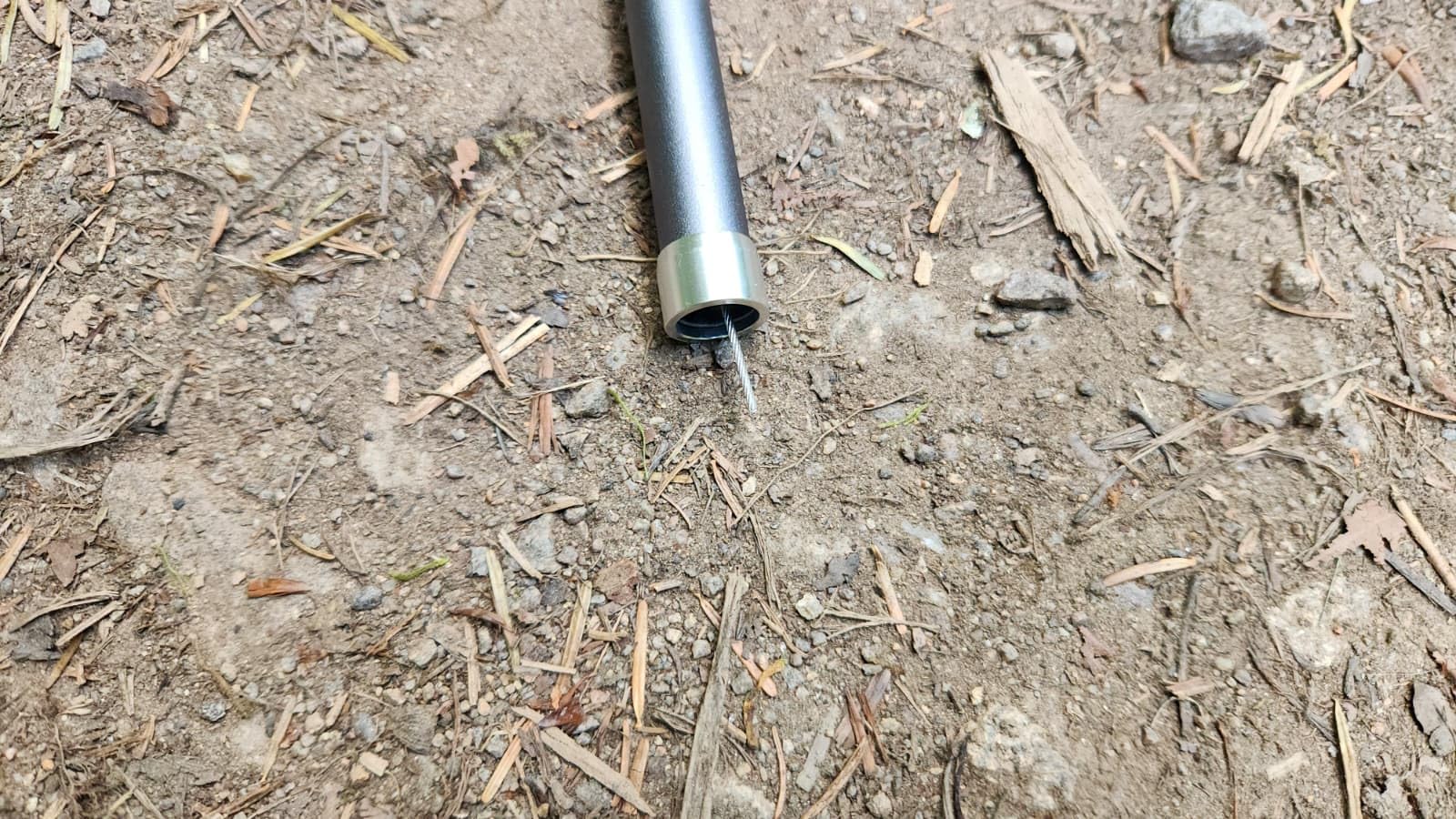
Some buyers mistake the cork grip’s slight rotational movement for a defect, when it is an intended anti-torque feature that lets the grip align with the hand at different angles. If you rotate the grip hard while the tip is planted, you will feel it move. Once you know that, it stops being a concern.
At 11.5 oz per pole this is the heaviest in the group, which is the direct cost of the hinges and the thick-walled sections they need. Over a full climbing day with the poles in your hands for most of it, that weight is felt in the forearms, and on an ascent where you are pulling rather than planting it is felt sooner.
The accessory kit is generous for the tier: rubber tips, mud stops, snow baskets, rubber feet, and a carry bag, with a one year warranty. The lock is a metal flip system with a button that pops out, which is the more reliable of the two lock styles in cold and wet conditions.
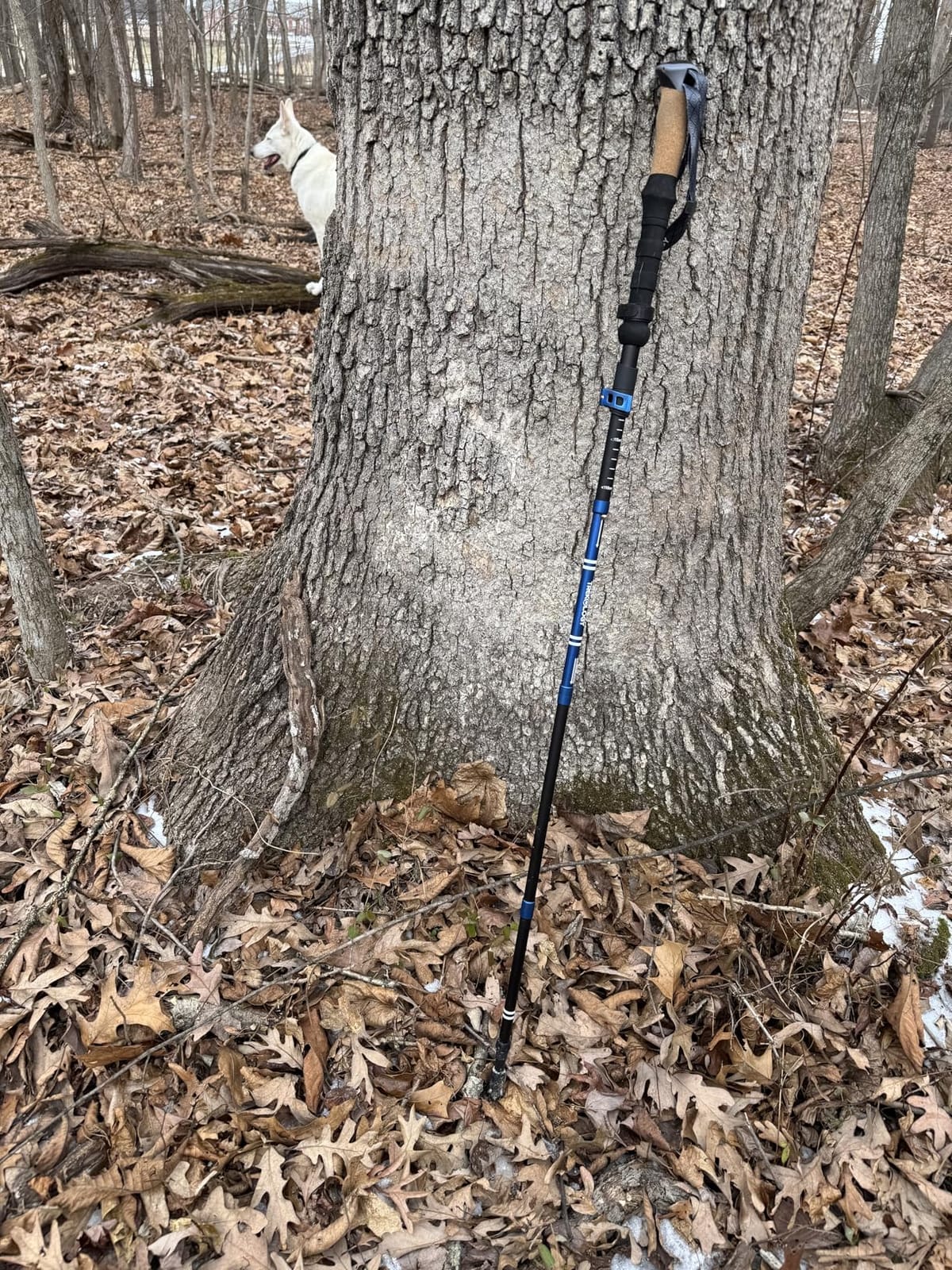
Who this pole suits
It suits hikers who travel with poles in hand luggage, or who need the shortest possible packed length for a small pack on a hut-to-hut route. The metal-capped joints and flip locks are also a good fit for anyone who hikes in freezing or persistently wet conditions, where twist locks tend to jam.
It works well for casual day hiking on shorter, less severe slopes where hinge flex is irrelevant.
Where it falls short
On genuinely steep and technical ground, hinge flex is the wrong trade, and the 6 percent one-star share reflects that. If your descent involves hard side loading or rock scrambling, a telescoping pole with a solid shaft joint is the safer choice.
The 11.5 oz weight and the one year warranty are the other limits. This is a travel-first pole, not a long-distance loaded one.
8. Aihoye Shock Absorbing Trekking Poles – the budget entry point for joint comfort
Aihoye Hiking Trekking Poles, 2 Pack Walking Hiking Sticks for Men &Women
Aviation-grade aluminum
Shock-absorbing design
Push button quick lock
10 replacement accessories
Pros
- Shock absorption eases hands wrists and joints on descents
- Ten replacement tips and baskets included
- Push button locks are quick and simple
- Retracts to 21 inches for packing
- Free replacement policy with a one year warranty
Cons
- Plastic grip gives poor moisture control
- No extended down grip for steep pitches
- Lowest average rating here at 4.4
- 52 inch maximum length is shorter than most
This is where budget steep-trail hikers should start, and the reason is specific: it has a shock-absorbing design at a price point where most entry-level poles are rigid. Buyers like the joint comfort on descents, and if your knees are the reason you are reading this page, that matters more than shaft grade. The stated weight is 10.3 oz per pole, and the shafts are aviation-grade aluminum.
The accessory kit is the standout practical feature. Ten replacement accessories are included: four rubber tips, two boot tips, two snow baskets and two mud baskets. More than any other pole in this group, and on a steep route with variable ground you will end up swapping tips anyway. There is a free replacement policy alongside the one year warranty, which covers the tip consumption that most owners eventually run into.
The push button quick lock is fast to operate and simple, with no tensioning screw to find and no lever to align. For an easy-to-use lock that does not require a setup ritual, this is the most approachable in the group.
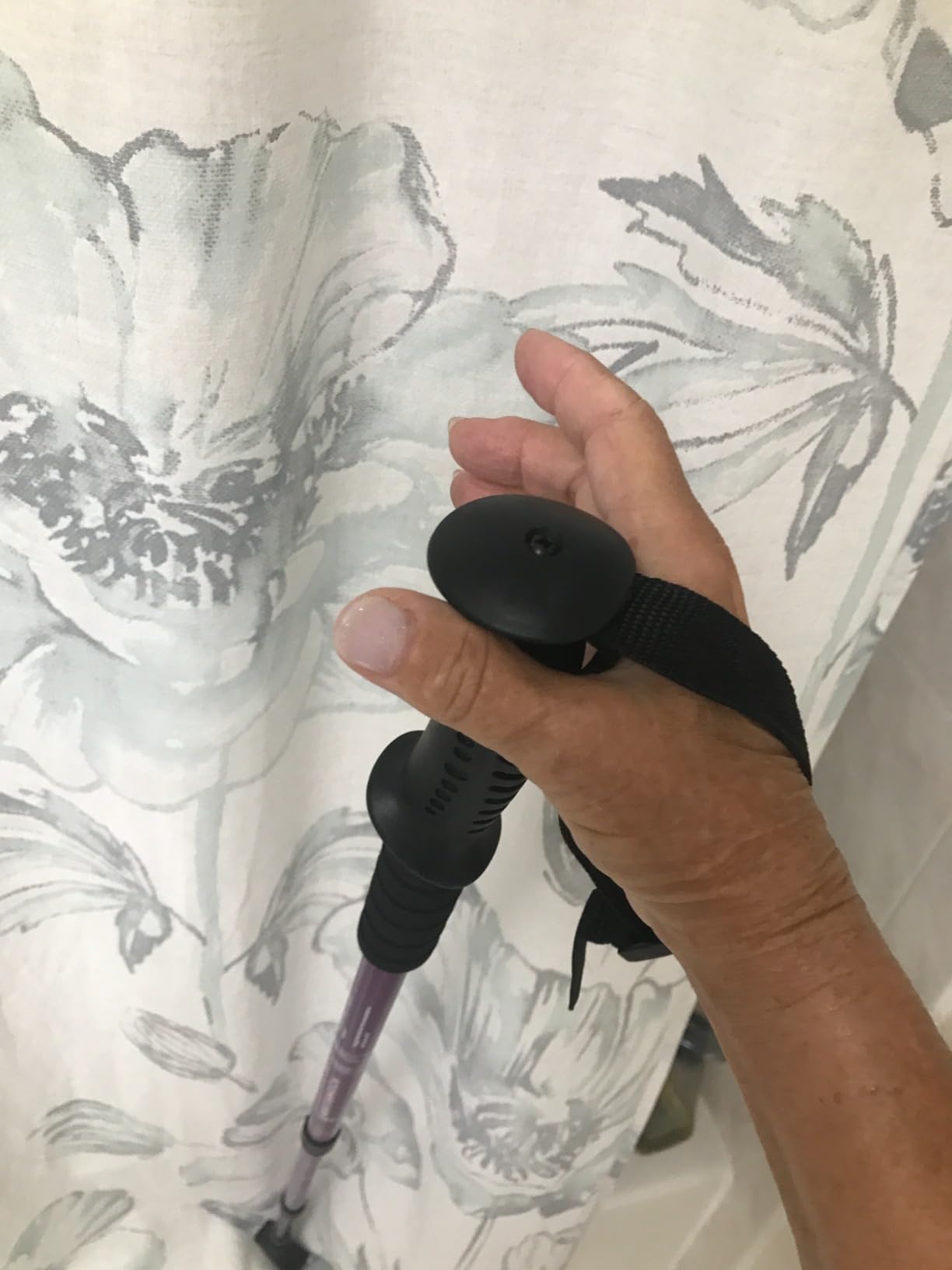
Now the compromises, and they are real. The grip is plastic with a secondary foam handle rather than cork, and that means noticeably worse moisture control on a long hike. Sweaty hands on a long steep climb is a genuine problem, and cork exists to solve it.
More importantly for this specific article, there is no extended down grip. That is the feature experienced users name as critical for steep pitches, and its absence is the main reason this pole sits at eighth rather than higher despite the shock absorption. On a scramble where you want to grab the pole an inch below the top grip, you cannot.
The 52 inch maximum length is also the shortest here, which limits the plant point for taller hikers on descents. The push button locks hold well when adjusted properly, but the mechanism is closer to a friction lock in character, so check them after a few hours on rough ground.
Who this pole suits
It suits hikers on a tight budget who still want shock absorption, and anyone who destroys tips and baskets and would rather have spares in the box than in a pack. It also suits shorter hikers, since the 52 inch maximum is rarely a problem below about five foot six.
For people new to poles who want a simple lock with no adjustment procedure, the push button is genuinely the least confusing mechanism in this group.
Where it falls short
It is the pick with the fewest steep-terrain-specific features. No down grip, plastic handle, shortest reach, and the lowest rating in the group at 4.4 with a 4 percent one-star share.
If you are a heavy pack hiker on long descents, the aluminum poles above are the better spend, because grip security and lock security matter more over a full day than the difference in shock springs.
How to Use Trekking Poles on Steep Terrain
Use two poles on steep trails. A single pole gives you one extra contact point and a lopsided load, which is worse than useless if you are trying to control a descent with a heavy pack. Two poles let you plant both hands, and the paired plant is what keeps your weight over your feet rather than out in front of them.
Set your baseline height so that when the pole tip is planted level with your foot, your elbow is at roughly 90 degrees. From that baseline you adjust for slope, and the adjustment is different in each direction. Getting this wrong is the most common technique error on steep terrain, and it cancels out whatever the poles cost.
On an ascent, shorten the poles by roughly 5 to 10 cm. This puts the plant point further ahead of you so you can pull with your arms, which takes load off the legs on a steep pitch.
On a descent, lengthen the poles by roughly 5 to 10 cm. The longer reach means the plant point lands in front of your body and takes the impact before the foot does, which is the entire point of using poles on a steep downhill.
On a sidehill traverse, set the downhill pole longer than the uphill pole. Equal-length poles twist your torso toward the slope, and a crooked torso on a traverse is how people end up off the trail.
Plant the pole beside you, not out to the side or behind you. A plant that lands behind your hip does no work at all. On technical ground, plant deliberately rather than rhythmically, and match the pole plant to your foot strike for a natural rhythm.
Take your hands out of the straps when a pole could snag, and stow the poles entirely on ladders, scramble steps, ledges, and any terrain where both hands are needed. A pole caught on a root while your weight is behind it is a fall, and the strap makes it worse rather than better. Experienced users also keep one pole stowed whenever a third hand would help, which on steep rock is most of the time.
Steep-Trail Buying Guide: the Five Criteria That Matter
1. Lock security under body weight. This outranks weight, and it is the criterion most roundups skip. External lever and flip locks close with a clamp force you can set, and the better ones let you tension that force with a screw or bolt. Twist locks depend on friction between sections, which is why a budget twist-lock pair slipped twice on a wet descent in one widely discussed account. If you can only afford one upgrade over a cheap pole, make sure the locks are adjustable and set them properly before your first loaded outing.
Flip locks are more reliable than twist locks for most hikers, with two caveats. Twist locks are lighter and cheaper, and with careful adjustment they can be perfectly adequate on dry, moderate ground. In freezing or persistently wet conditions, twist locks can ice up or jam, and that is the case where a metal flip or lever mechanism earns its price.
2. Aluminum grade or carbon fiber. Here is the ruling for steep trails: choose 7075 aluminum unless you are a light pack hiker who plants cleanly and never side-loads the pole. Carbon saves roughly two ounces per pole over the aluminum options here and damps vibration better, but it is less forgiving of a hard side load. An aluminum shaft tends to bend and return; a carbon shaft is more likely to crack. Hikers who lean hard downhill, who scramble with poles in hand, or who are simply heavy prefer aluminum for that reason, and a BackpackingLight owner running aluminum Ergo Trail Cork concluded carbon did not save enough weight to justify the price gap.
Within aluminum, 7075 is the harder and stronger grade and 6061 is the more common, slightly softer one. Both are serviceable for trekking; 7075 gives more margin when you are fully loaded on rock.
3. Grip material and grip layout. Cork moulds to the hand, stays grippy when damp and stays cool, which makes it the best choice for long days and for anyone who sweats. EVA foam is softer, cheaper and warmer in cold weather, and it is what most lower grips are made from. Rubber is durable and grips well in the wet but feels narrow for medium to larger hands, which is the most common return reason on the anti-shock pair in this roundup.
Grip layout matters as much as material on steep ground. An extended down grip or choke-up extension gives you a second hand position lower down the shaft, and experienced users name it as a decisive feature for steep pitches. If your terrain pitches, prioritise poles that have one.
4. Shock absorption. A sprung pole lowers the peak force of each downhill step by extending a short distance under load, which is why the anti-shock picks rank well for anyone with knee or joint concerns, and for older hikers. The cost is roughly an extra ounce or so and a slightly more complicated shaft. If your knees are healthy and your descents are short, a rigid pole transmits shock perfectly well and saves the weight.
5. Weight against load. Poles are held in your hands for most of a hiking day, so the weight of the pole is felt directly, unlike pack weight. Weigh your load honestly. A loaded ascent is the hardest case: every plant is a pull. If your pack is heavy or you walk long days, the difference between a 7.6 oz carbon pole and a 10 oz aluminium pole is a real accumulated cost, but it is far less important than a lock that creeps.
Two smaller things to check before you buy. Adjustment range should comfortably exceed your height, because a pole at maximum extension is at its least stiff. And for winter or mixed terrain, threaded tungsten carbide tips with interchangeable mud and snow baskets are worth far more than any other accessory on this list.
When Not to Use Trekking Poles
There is terrain where poles are a liability rather than an asset, and knowing it is part of choosing them well. Ladders, fixed ladders, technical scramble steps, chimneys, and any move requiring both hands are the obvious cases, because a pole in your hand is a hand you cannot use.
Poles are also a poor choice on wet, rooty ground where a planted tip can catch and lever you sideways, and on fragile boardwalk or dry forest where repeated loading damages the surface. And on genuinely steep, glaciated or technical alpine terrain, poles are not a substitute for an ice axe. If your route needs a self-arrest, carry an axe; the poles are a comfort and balance tool around it, not a replacement.
Take your hands out of the straps when a snag is possible, and stow poles entirely when a third hand would help. A strap that keeps a pole in your hand when you need it gone is a design failure in the terrain, not in the pole.
What to Do When a Pole Slips or Breaks on a Descent
First, stop moving. If a pole collapses mid-stride on a steep descent, the failure mode is a fall, and the injury usually comes from continuing rather than from the collapse itself. Plant your feet, get your weight low, and only then deal with the pole.
Second, transfer before you repair. On a descent, shorten the remaining pole to its lowest setting and use it as a single support, or shorten it and use a pack strap around your forearm. A single working pole is a meaningful aid. A broken pole held together with tape is not a support.
Third, a simple field splint works for a bent or cracked upper section. Wrap the damaged section with two layers of strong tape, or split a section of packing foam and strap it around the break, then shorten the pole so the damaged area is out of the load path entirely. A pole that is too short still helps; a pole that fails under load does not.
Fourth, plan redundancy before you need it. On steep terrain, carry the tip kit that comes with your poles, and know that most threads are standard enough that a tip can be replaced without tools. If you are hiking alone on terrain where a collapse would be serious, tell someone your route and timing, because no amount of gear replaces that.
Finally, retire the pole rather than trusting it. A bent shaft or a damaged lock housing does not return to full strength, and the second failure is usually at the same spot. A pole that has been fully loaded and bent has told you the truth about its limit.
Frequently Asked Questions
What’s better for trekking poles, aluminum or carbon fiber?
For steep trails, choose 7075 aluminum unless you are a light pack hiker who plants cleanly and never side-loads the pole. Carbon fiber saves roughly two ounces per pole and damps vibration better, but it is less forgiving of a hard side load: aluminum bends and springs back, while carbon can crack. If your descents are long and loaded, or you scramble with poles in hand, aluminum is the safer pick.
Are flip locks better than twist locks?
Yes, for most steep-terrain hikers, and the reason is mechanical rather than marketing. Flip and lever locks close with a clamp force you can set with a screw or bolt, while twist locks depend on friction between sections. That friction is what lets a loaded pole creep on a wet descent. The main argument for twist locks is weight and cost, and the main argument against them is that they can ice up or jam in freezing conditions.
Do trekking poles reduce knee pain on descents?
Yes, because they change where the force goes. A planted pole takes the first impact of a downhill step, and a pole with a shock-absorbing spring lowers the peak of that impact further. The benefit is largest on long net descents with a heavy pack, and it is why sprung poles are worth their extra weight for hikers with existing knee or joint problems.
How do I set trekking pole height on a slope?
Start from a 90 degree elbow at your baseline length, then adjust for direction. Shorten the poles roughly 5 to 10 cm on an ascent so the plant point lands further ahead and you can pull with your arms. Lengthen them roughly 5 to 10 cm on a descent so the plant point lands in front of you and absorbs impact. On a sidehill traverse, keep the downhill pole longer than the uphill pole to keep your torso upright.
Can I take trekking poles on an airplane?
Poles are treated as sporting equipment and are usually accepted in checked baggage, but most airlines will not allow them in the cabin because of the tip and the length. Several pairs in this roundup disassemble to 21 to 21.5 inches, which fits inside most carry-on suitcases, and one tri-fold design folds to 15 inches for travel convenience. Check your airline’s policy before packing, since rules vary.
What are the strongest trekking poles for rocky terrain?
Strength on rocky ground comes down to shaft material and joint construction, not brand. 7075 aluminum shafts are the hardest aluminum grade in common use, and aluminum is more forgiving than carbon under a hard side load. Among the picks here, the 7075 aluminum lever-lock pole and the aluminum flip-lock pole are the ones owners report holding full body weight on, including at 220 lb and 250 lb respectively. Test the locks fully extended before a loaded trip.
The Verdict
The best trekking poles for steep trails are the TrailBuddy 7075 aluminum pair. Harder aluminum grade, one-handed lever locks, the longest reach in the group at 54 inches, cork grips with padded straps, and a 5 year warranty behind them, with a review base several times larger than anything else we tested. It is the pair we would buy first, and the pair we would trust on a wet descent with a full pack.
Best for heavy packs and long loaded descents: the same TrailBuddy pair, because the lever locks and the long reach are what a heavy descent needs most. Best for knee protection: the TheFitLife anti-shock poles, which lower the peak of every downhill step and have the longest durability record in the group. Best for technical climbs and choke-down holds: the Cascade Mountain Tech aluminum cork pair, for the extended down grip. Best for lock security where you load the pole hard: the Foxelli aluminum flip-lock pair, the highest rated in the group at 4.8.
Best for ultralight long routes where you plant cleanly: the Foxelli carbon pair at 7.6 oz per pole with reinforced flip locks. Best for travel where folded length matters: the Trekology tri-fold pair at 15 inches, accepting the hinge flex. Best on a budget, and for anyone buying their first pair: the Aihoye shock-absorbing poles, which give you sprung comfort and ten spare accessories at the lowest cost in the group.
One rule holds across all of them. Set every lock fully extended and fully tensioned before you leave the trailhead, and check them again at lunch. For more on the gear that pairs well with poles on rough ground, our guides to off-road electric scooters for trails and electric scooters for steep hills cover similar terrain questions from a different angle, and our GPS units for trail riders guide covers navigation on routes where a track disappears.