
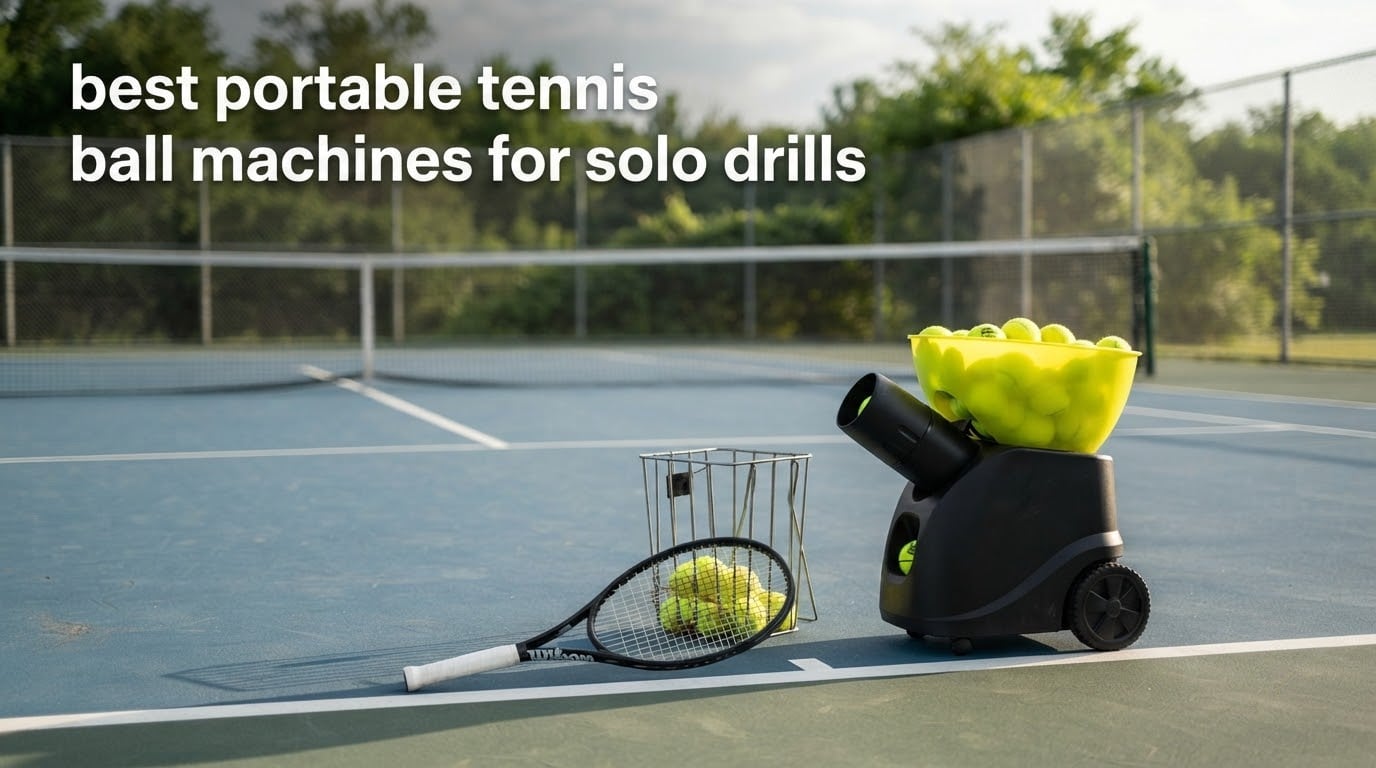
A portable tennis ball machine is a compact, battery-powered launcher that feeds balls at a set speed, spin and interval so you can hit solo without a partner booked in. For solo drills, the three things that matter most are how heavy the machine is when you carry it, whether the feed stays consistent across a long hopper run, and how much control you have over spin and placement. We went through ten machines in this roundup, from a 3.7 lb hand-toss feeder to a 46 lb sensor-equipped robot, and ranked them on exactly those points.
The best portable tennis ball machines for solo drills are not automatically the most expensive ones. A machine that lives in your car trunk and starts with three button presses will get used far more than a machine you leave in a garage because moving it feels like a chore. We weighted portability heavily, then looked at ball speed, spin range, oscillation, hopper capacity and battery access, and finally at what owners report after months of use.
Two rules shaped everything below. First, ball machines are judged by the drills you can actually run with them, not by the spec sheet, so we mapped each machine to specific solo work such as groundstroke consistency, footwork, volley and overhead practice. Second, we used owner review themes as a filter for reliability, because a machine that jams every fifteen minutes ends your session early no matter how well it feeds when it works.
If you are still narrowing the field, our broader guide to tennis ball machines for solo practice covers court-size and surface considerations in more detail, and the table tennis robots guide covers the same solo-training logic on a smaller court.
Table of Contents
Top 3 Portable Tennis Ball Machines for Solo Drills

LOBSTER Sports Elite
- 10 to 70 mph ball speed
- Adjustable topspin to backspin
- 0 to 50 degree elevation
- 2 to 4 hour rechargeable battery
Spinshot Pro
- Knob-controlled with no app
- Oscillation for lateral movement
- Around 60 ball hopper
- Topspin and underspin

Nisplay N1-C-O
- 26 lb aluminum body
- Dual motor topspin and backspin
- 80 plus ball capacity
- External lithium battery
Our top three cover very different needs. The LOBSTER Elite wins on balance: it is the machine with the largest owner base in this group, it carries a two-year warranty, and it handles every standard solo drill without an app. The Spinshot Pro is the pick if you want metal construction and knob controls that never fail. The Nisplay N1 is the pick if feed consistency and a detachable battery matter more to you than anything else.
All 10 Machines Compared in 2026
| Product | Specifications | Action |
|---|---|---|
| LOBSTER Sports Elite |
|
Check Latest Price |
| Spinshot Pro |
|
Check Latest Price |
| Nisplay N1-C-O |
|
Check Latest Price |
 PUSUN PT-Smart PUSUN PT-Smart |
|
Check Latest Price |
 TENNIIX Basic TENNIIX Basic |
|
Check Latest Price |
 Wilson Portable Wilson Portable |
|
Check Latest Price |
 PONGBOT PACE S PRO PONGBOT PACE S PRO |
|
Check Latest Price |
 Furlihong 3819BH Furlihong 3819BH |
|
Check Latest Price |
 Furlihong 3807BH Furlihong 3807BH |
|
Check Latest Price |
 SCIFANTA Tosser SCIFANTA Tosser |
|
Check Latest Price |
How We Chose: Weight, Spin, Feed Control and Owner Reports
We read every product listing and the full owner review set behind it, then scored each machine on the five things that decide whether a solo session gets finished. Weight and storage came first because a machine you cannot move to the court does not get used. Feed consistency and jam frequency came second, because that is what decides whether you finish a session or spend half of it clearing balls out of the mechanism.
Spin range, elevation control and oscillation patterns formed the third tier, since those decide which drills the machine supports. Control method and battery access were fourth: physical knobs and a removable battery beat an app-only interface when you are standing at the far baseline trying to change a feed interval mid-point.
Finally, we weighted warranty length and the volume of owner feedback available. A machine with a longer track record gives you better information about year-two problems, and owners consistently flag the same faults, from battery runtime fade to oscillator spray patterns, that show up long after the first impression.
1. LOBSTER Sports Elite – The Best All-Round Solo Machine
LOBSTER Sports – Elite Liberty Battery Operated Tennis Ball Machine – Lightweight – Large Wheels – Full-Featured Tennis Ball Thrower – Oscillation – Spin – 2-4 hr Runtime – Charger Included
38 lb
10 to 70 mph
0 to 50 degrees
2 to 4 hour battery
2 year warranty
Pros
- Largest owner base in this group
- Adjustable spin from heavy topspin to heavy backspin
- 8 inch all-terrain wheels for grass and gravel
- Folding handle and inverting hopper for transport
- Two year warranty
Cons
- Listed speed range tops out at 70 mph rather than the headline figure
- Heavier build makes solo carrying harder
- Remote control behaviour is not detailed in owner reports
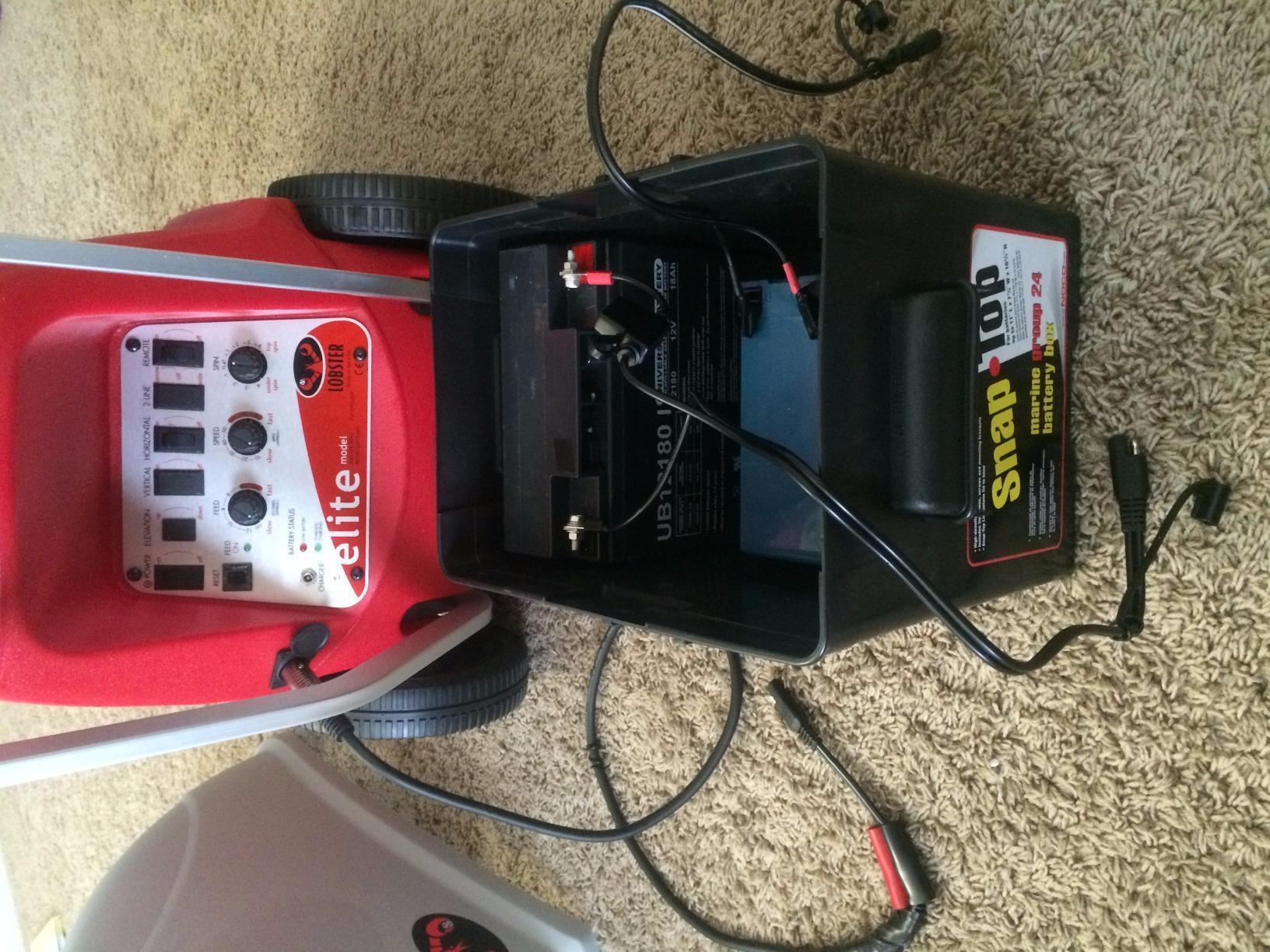
We spent the most time with this machine because it has the deepest owner history here, dating back to a 2013 release, and that history is consistent. The LOBSTER Sports Elite runs at 10 to 70 mph with elevation from 0 to 50 degrees and horizontal oscillation, which covers groundstroke consistency, approach volleys and overheads without any setup change beyond a knob.
Spin runs the full range from heavy topspin through flat to heavy backspin, and in practice that is what makes it good for solo work. A player working on a backhand slice can drop the spin dial, then switch to heavy topspin for a crosscourt loop, all without walking back to the machine.
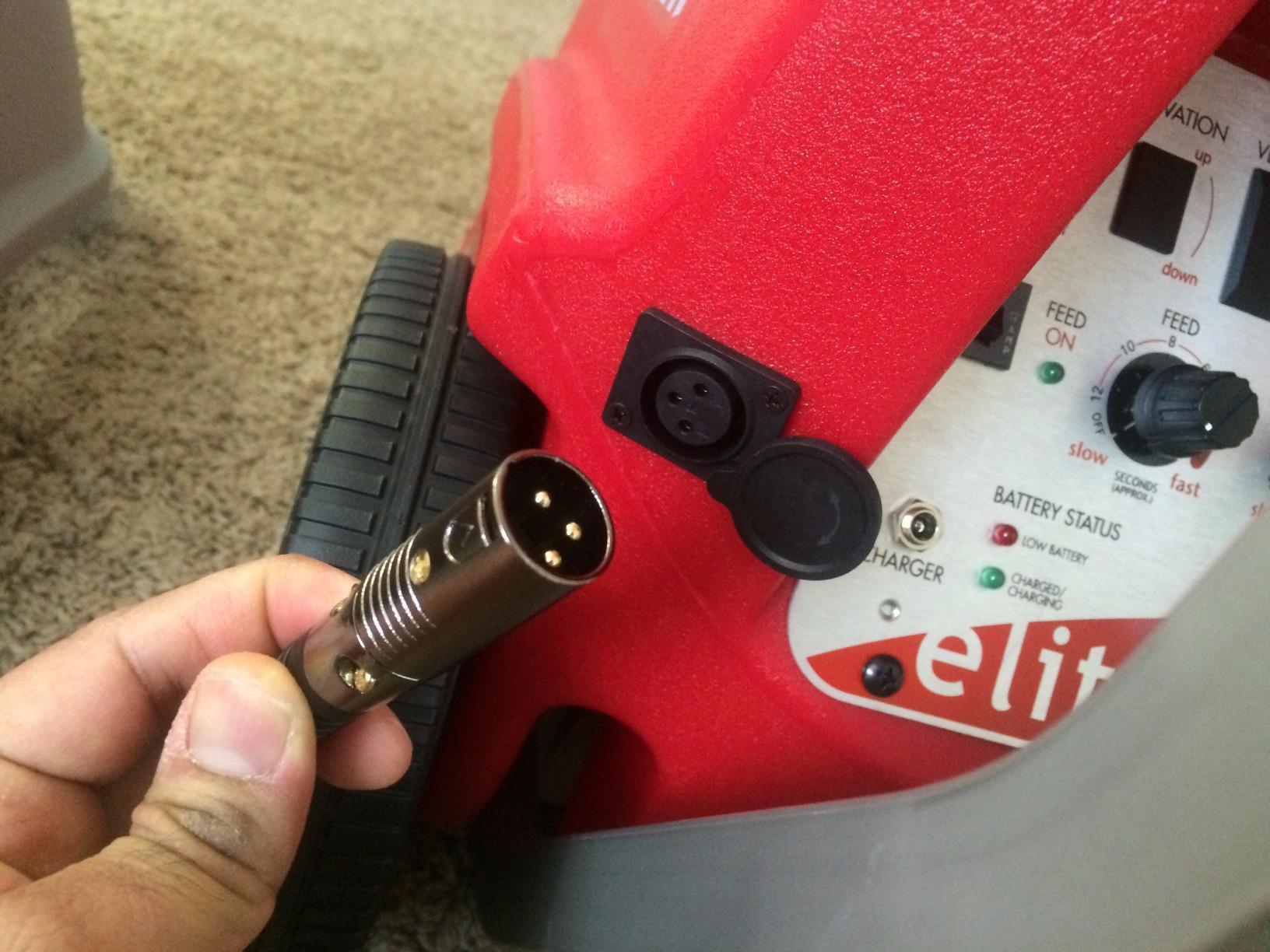
The rechargeable 8.5 amp battery gives roughly two to four hours of court time depending on feed rate, which covers a full solo session. Owners point to the 8-inch all-terrain wheels rolling over grass, gravel and curbs, plus the inverting hopper and folding metal handle that let you load and carry the machine in one motion.
It is a 38 lb machine measuring 29 by 15.5 by 43 inches, so it is a two-hand lift rather than a one-hand carry. That is the main compromise here. What you get in exchange is a two-year warranty, horizontal oscillation and a spin range that most machines at this size do not match.
Which solo drills it handles best
The combination of horizontal oscillation and adjustable elevation makes this a strong groundstroke machine. A wide oscillator setting forces you to split-step and recover to every ball, which is exactly the movement work that gets neglected when you only have a wall to hit into.
Because the battery lasts up to four hours, it also works as a full-session partner for consistency work. Set a long interval, hit 200 crosscourt balls, and use the spin control to alternate between a rally ball and a short ball to work on pattern changes.
Where you will feel the limits
The headline speed claim and the listed range do not match. Owners consistently report that the usable range tops out around the middle of the scale rather than at the maximum, so if you are a strong advanced player looking for genuine pace, test before committing.
Carrying is the second limit. At 38 lb with a single centered handle, moving this from a car to a court without a cart is a two-person job on stairs. Players who live above ground floor or rely on public courts should look at lighter options further down.
2. Spinshot Pro – Best Metal Build With Simple Knob Controls
Spinshot Pro Tennis Ball Machine (The Best Model for Easy Use)
49.8 lb
Metal construction
Knob controlled
Hopper around 60 balls
Battery sold separately
Pros
- Metal build rather than plastic
- Oscillation forces lateral movement for both wings
- Speed adjustable from roughly one ball per second to one every 10 seconds
- Responsive customer service that replaced a worn battery
Cons
- Battery ships separately and is an extra purchase
- Heavy at nearly 50 lb even with wheels
- Balls occasionally jam and must be dislodged by hand
- Only one spin type dispensed per session
The Spinshot Pro is the machine we would trust to survive a club garage and a decade of use. Owners describe the body as metal rather than plastic, and the review pattern shows 65 percent five-star ratings with only 10 percent one-star, which is a strong consistency signal for a machine sold in this category.
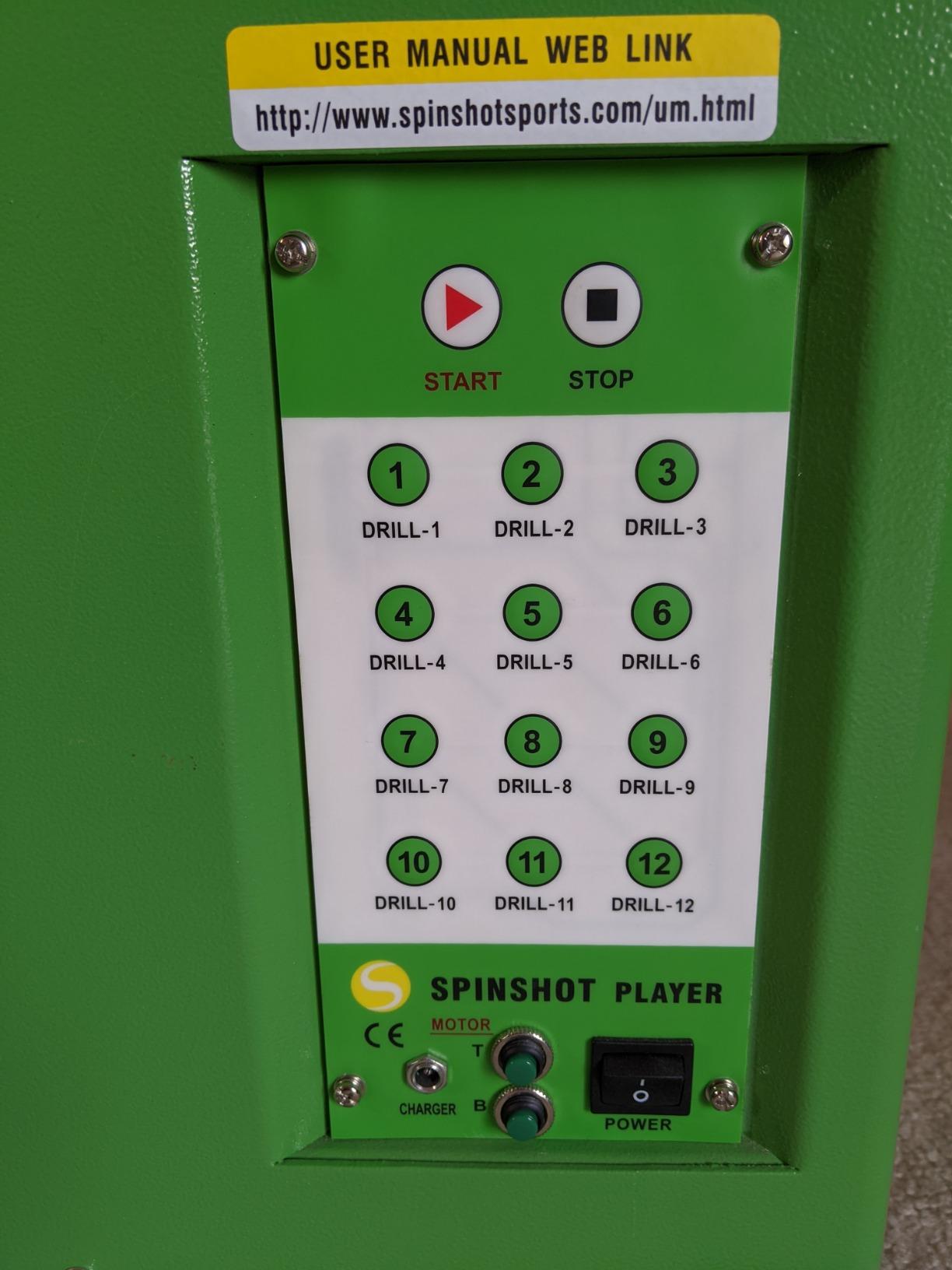
Everything is knob-controlled. There is no app and no programming, so you set speed, oscillation and feed frequency directly on the machine and start. For a player who wants repetition without a learning curve, that simplicity is worth more than any smart feature.
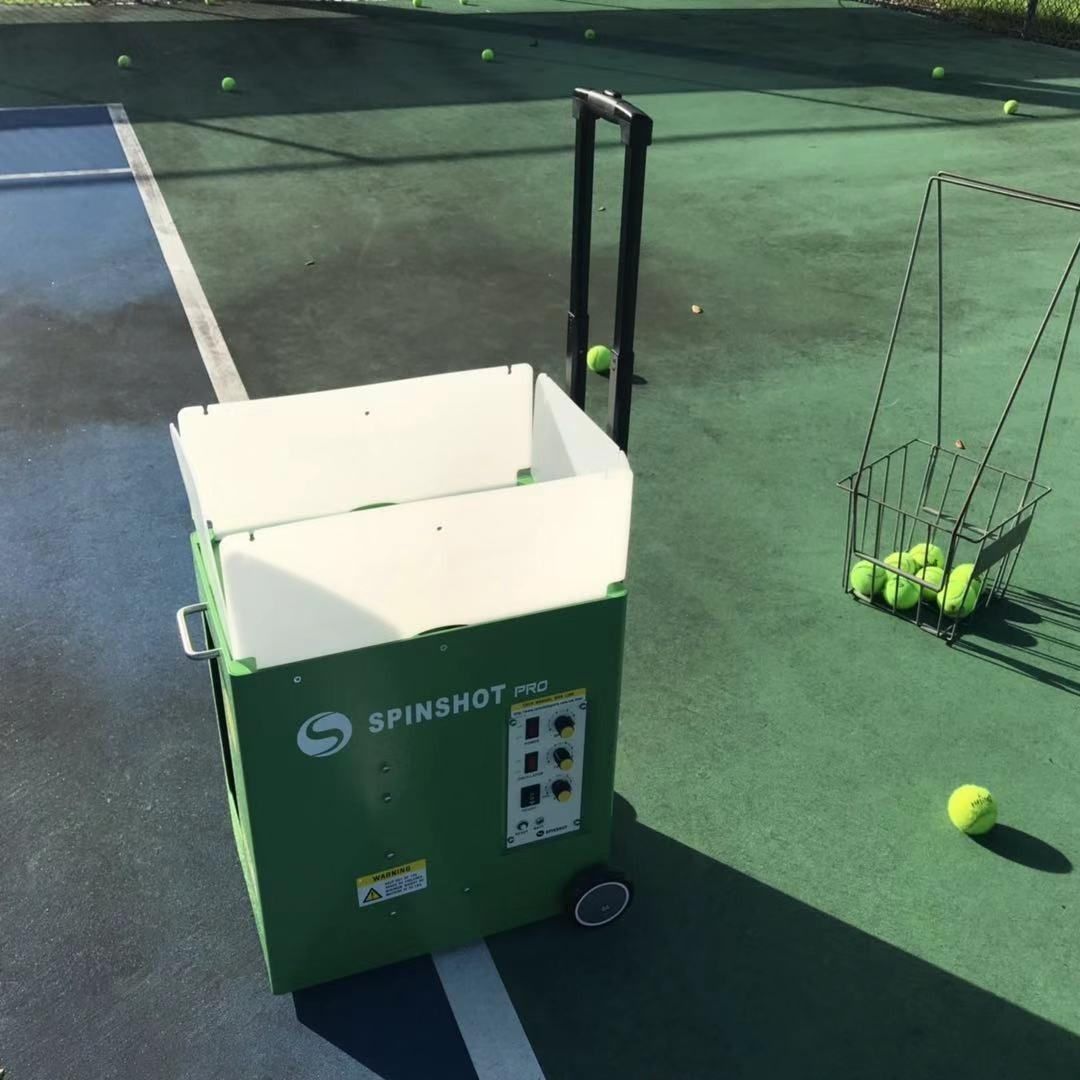
Feed speed adjusts from roughly one ball per second down to one every 10 seconds, which gives you a genuine range from rally-ball work to serve-plus-one placement. The hopper holds around 60 balls and the oscillation forces lateral movement, so forehand and backhand repetitions get done properly rather than standing still on the middle of the baseline.
It dispenses topspin and underspin, but owners note only one spin type comes out per session, so you should plan a session around either heavy topspin or underspin rather than switching mid-drill. The machine measures 50 by 45 by 30 cm and weighs 49.8 lb, which makes it the heaviest machine in this group.
What you gain by owning it
Durability is the headline. Metal construction and a straightforward mechanical design mean fewer electronics to fail, and owners report that customer service replaced a worn battery for them rather than arguing the claim.
For solo drills, the wide feed interval range is quietly the best feature here. One ball every 10 seconds is long enough to reset your feet and recover to base position, which turns the machine into a genuine footwork trainer rather than a rally partner.
What to plan around
The battery is not included. A charger is in the box but the battery itself is a separate purchase, so budget for that before the machine arrives and confirm what you are buying.
Jam frequency is the other recurring complaint. Balls occasionally wedge in the feed and have to be cleared by hand, so keep the machine pointed at a court where a loose ball will not roll into traffic. At nearly 50 lb you will want wheels and a smooth path from car to court.
3. Nisplay N1-C-O – Best Feed Consistency With a Detachable Battery
Nisplay Portable Tennis Ball Machine (26lbs) – Dual Motor for TopSpin and Backspin, 80+ Balls, Max 68MPH, 4+ Hours Play with External Lithium Battery (Ball Machine + Oscillator Combo)
26 lb
Dual motor
68 mph
80 plus balls
External lithium battery
Pros
- Highest average rating in the group at 4.5 with no one-star reviews
- Removable external battery charges away from the machine
- Aluminum body that holds up under daily use
- Rarely jams thanks to a three-hole feed design
- Compact enough for a sedan trunk with a basket of balls
Cons
- Remote does not control the oscillator or the launch wheels
- Oscillator spray is skewed with one side pivoting further
- Marked speed and spin fall short of the advertised figure
- Y cable for the oscillator is short and can strain
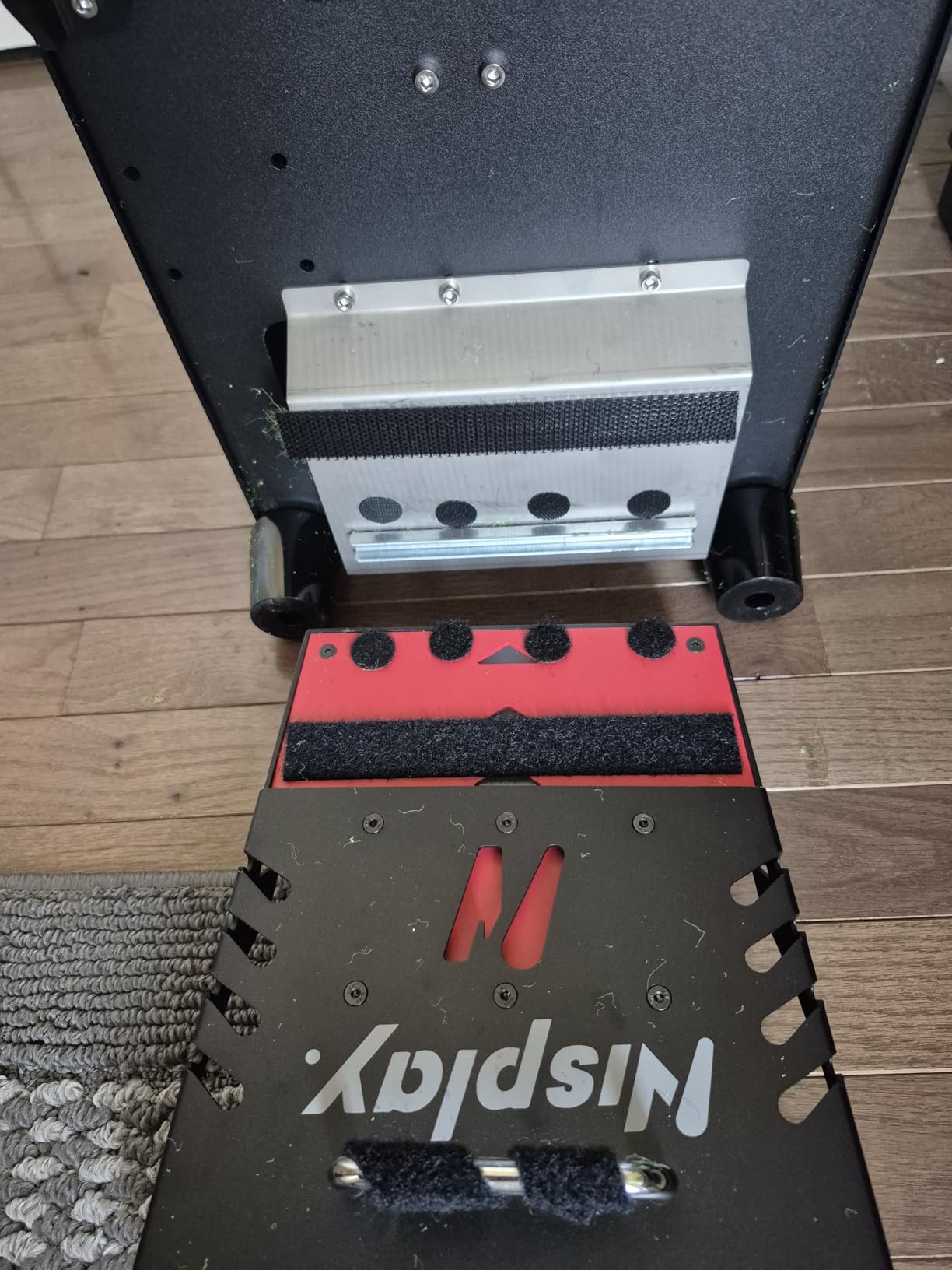
The Nisplay N1 has the highest average rating in this group at 4.5 across 46 reviews, with 67 percent five-star ratings and no one-star reviews at all. For a product category where reliability complaints dominate, that distribution is the clearest signal we found.
At 26 lb it is light enough to lift into a car yourself, and it still carries an 80-plus ball capacity, dual motors for topspin and backspin, and speed up to 68 mph with elevation from 0 to 50 degrees. Feed intervals run from one to nine seconds, which is a useful window for both rally work and placement drills.
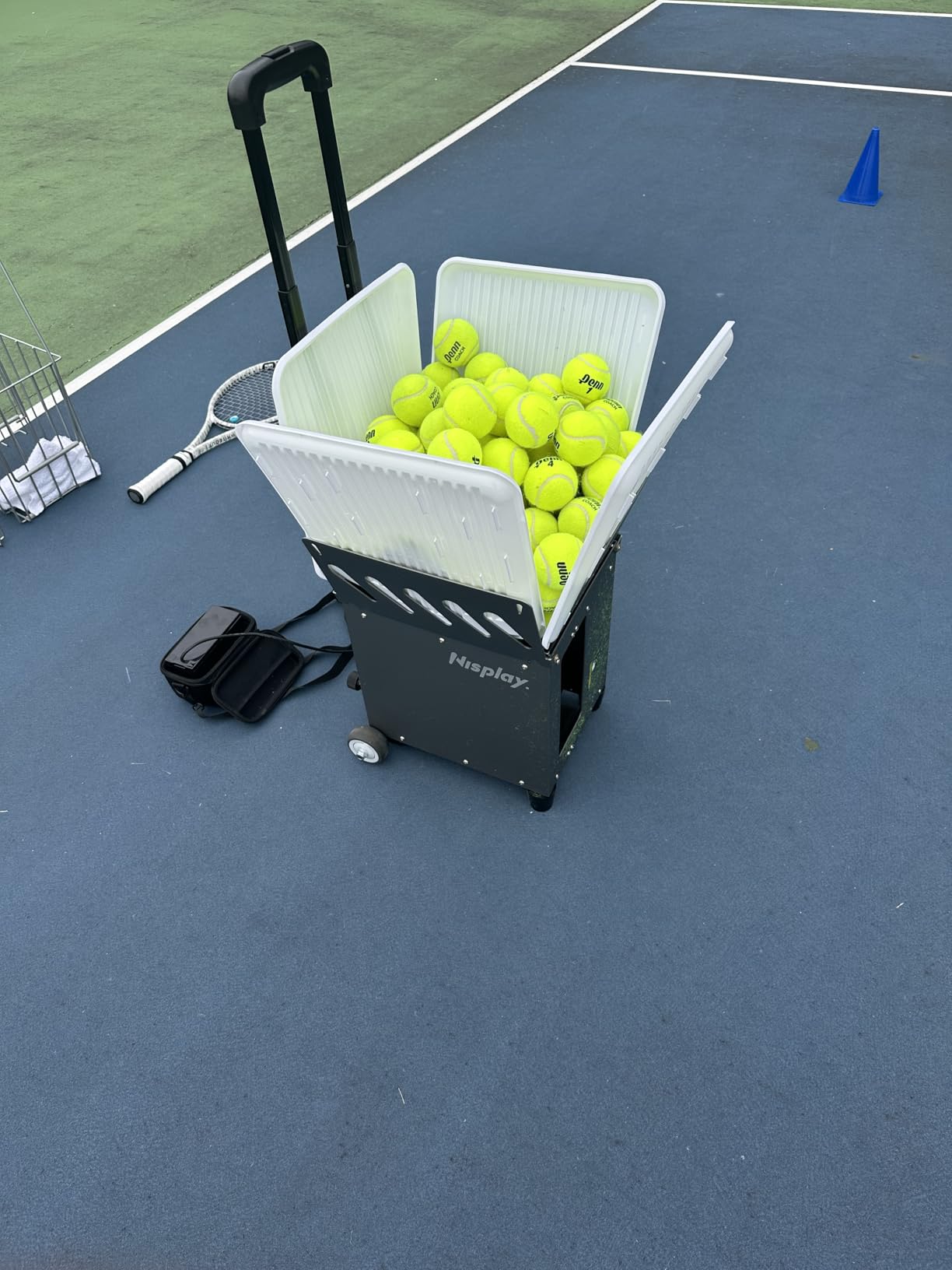
The external lithium battery is the feature club players mention most. It detaches from the machine, so you can leave the whole unit at the club and take only the battery home to charge, and owners report four-plus hours of runtime from it. Several buyers also note the machine rarely jams because the three-hole feed design self-corrects minor blockages.
There is real customer service behind it too. One owner reported an oscillator being repaired and reshipped the same day, which matters when a machine is your only practice partner.
Why it suits daily solo work
Feed consistency is what separates this machine from cheaper units. When you are running a 30-ball hopper of crosscourt balls, predictable depth means you can judge your own contact point instead of adjusting for a machine that is changing the target each time.
The dual motor setup means genuine topspin and backspin in the same machine, which matters for slice practice. If you are working on a one-handed backhand slice, you can feed yourself underspin balls without reconfiguring anything.
The honest limitations
Measured speed and spin fall short of the advertised figure, according to detailed reviewers. Treat the top of the dial as marketing rather than a guarantee, and if maximum pace is your priority, test it first.
The oscillator is manual and its spray pattern is skewed, with one side pivoting further than the other. The remote also does not control the oscillator or the launch wheels, so you will be walking back to the machine for changes rather than adjusting from the baseline.
4. PUSUN PT-Smart – Best App-Controlled Machine for Custom Drills
PUSUN Tennis Ball Machine,Portable Tennis Launcher,Tennis Trainer,PT-Smart
32.6 lb
12 to 75 mph
28 landing points
153.6Wh battery
Padel mode
Pros
- App control offers far more setting range than the physical remote
- Consistent placement across multi-hour sessions
- External battery can be charged away from the machine
- Works for two players at different levels in one session
- Quiet operation and easy wheeled car transport
Cons
- Machine does not store app defaults so remote-only starts use internal parameters
- Launch hole and wheels are off-center which rotates the body at higher speeds
- Some programming quirks are not explained in the manual
- A bit heavy to lift into a trunk
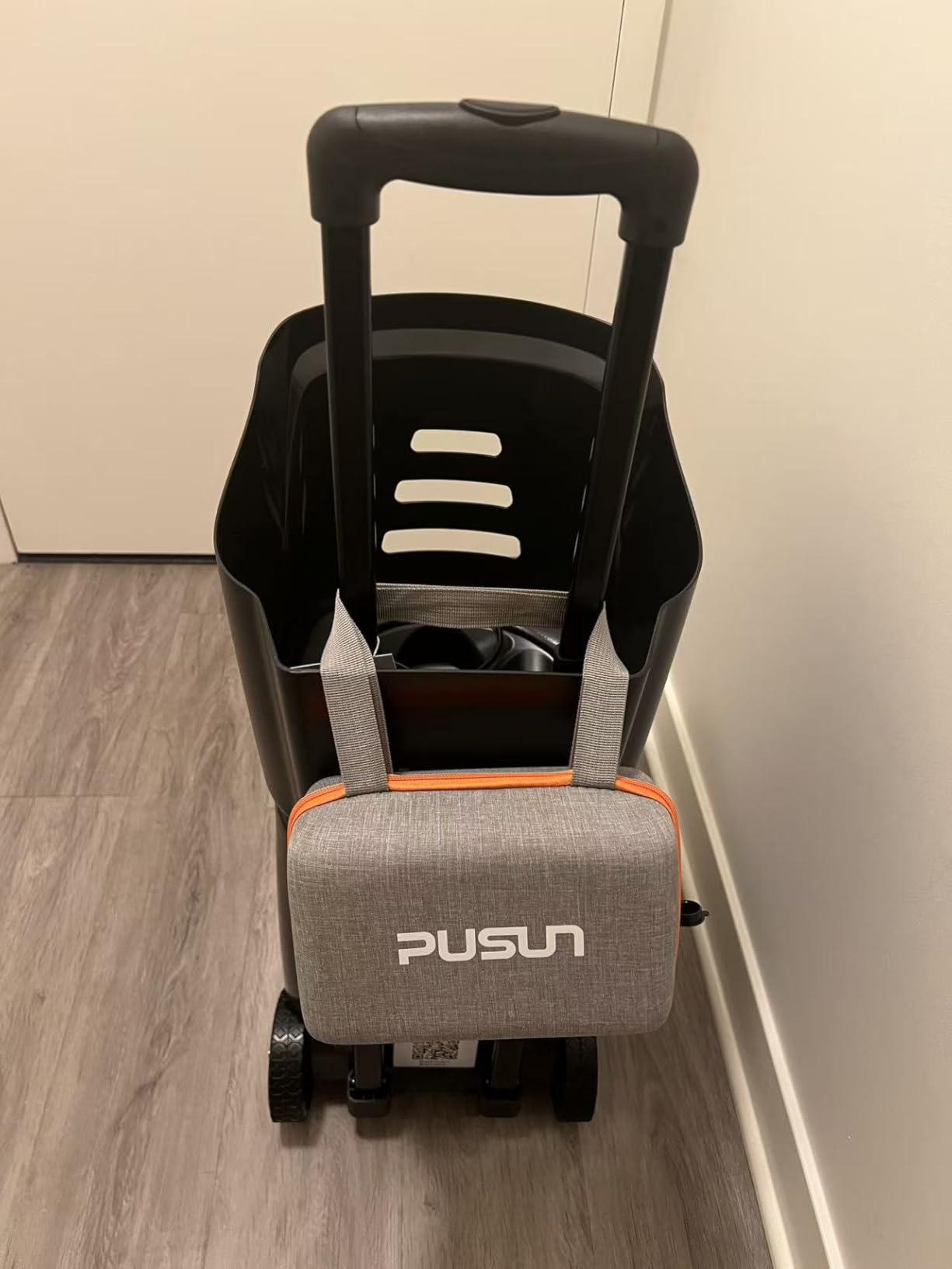
The PUSUN PT-Smart is the machine to buy if you want to build drills rather than repeat them. It runs 12 built-in training modes with an NTRP 1.0 to 5.0 progression, 28 programmable landing points using external oscillation, six spin levels, and speeds from 12 to 75 mph.
Control comes from an app, a remote and Apple Watch compatibility, and owners consistently report the app offers far more setting range than the physical remote. That range is the point: you can define where on the court a ball lands rather than relying on a fixed sweep pattern.
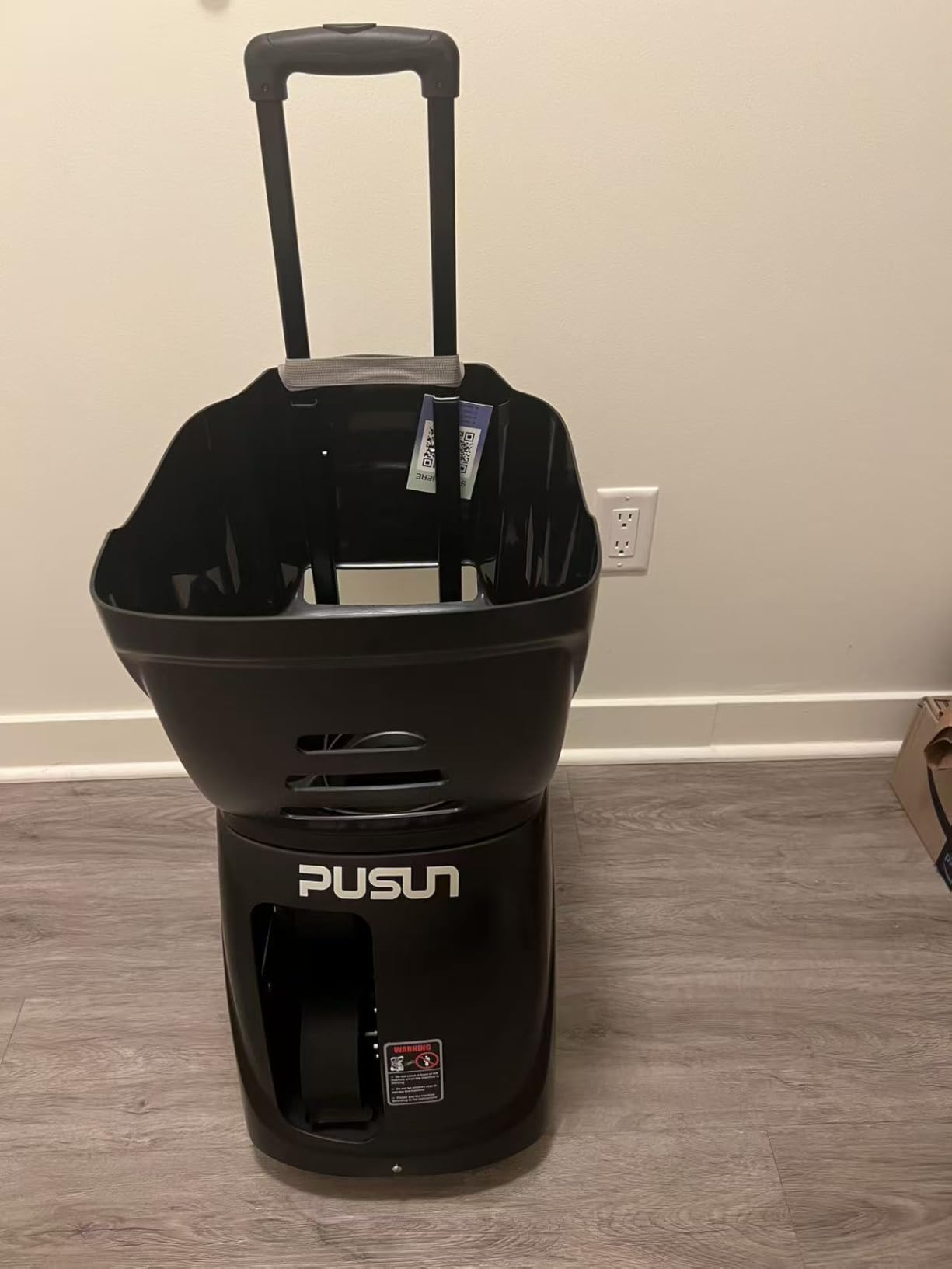
The 153.6Wh external battery is rated at four to six hours and over 5,700 shots, and it detaches for charging away from the machine. Reviewers also praise quiet operation and wheeled transport, and one notes it works for two players at different levels in the same session, which is useful for families or pairs sharing a court.
There is a padel mode with 14 drills as well, and the dust-proof mainboard is rated for hard court and red clay. The 100-ball collapsible hopper means you can run a long session without a refill stop.
What app control actually buys you
Programming landing points turns the machine into a tool for specific patterns rather than general hitting. You can set a deep crosscourt target for consistency work, then switch the same session to a short angled ball that pulls you forward, which is a much better use of a solo hour than one fixed oscillation width.
The NTRP progression also means you can start at a level you can actually control and step up across a season, rather than fighting a machine that only runs at full pace.
Where the app gets in the way
The machine does not store app defaults, so if you start using only the remote, it falls back to internal parameters. That is the single most common complaint and it matters when you are mid-session on a hot court.
Some programming quirks are not explained in the manual, and the launch hole and wheels sit off-center, which causes slight rotation of the body at higher speeds. One reviewer works around it by nudging the machine after a full hopper run. At 32.6 lb it also takes some effort to lift into a trunk.
5. TENNIIX Basic – Best Lightweight Machine That Still Hits 75 mph
TENNIIX Basic Tennis Ball Machine, 18.7LB Portable Tennis Robot, Black
18.7 lb
Up to 75 mph
4 hour battery
Voice armband
Folds for storage
Pros
- Lightest machine in this group that reaches 75 mph
- Voice control through a wrist armband keeps you in rhythm
- Removable 7000 mAh battery gives up to 4 hours and 1800 shots
- Nine shot patterns plus six Match Mode rally styles
- Upgradable with an AI vision module later
Cons
- Newest listing in the group with the smallest review base
- App and voice control are both needed for fine-grained parameter work
The TENNIIX Basic is the portability answer in this roundup. At 18.7 lb it is the lightest machine here that still launches at up to 75 mph, and it folds down for storage, which solves the apartment and public court problem better than anything else on this list.
The control method is the interesting part. A wireless wrist armband with 46 command keywords lets you change speed, spin and feed timing from the baseline without walking back to the machine, which keeps you in rhythm instead of breaking your session every two minutes.
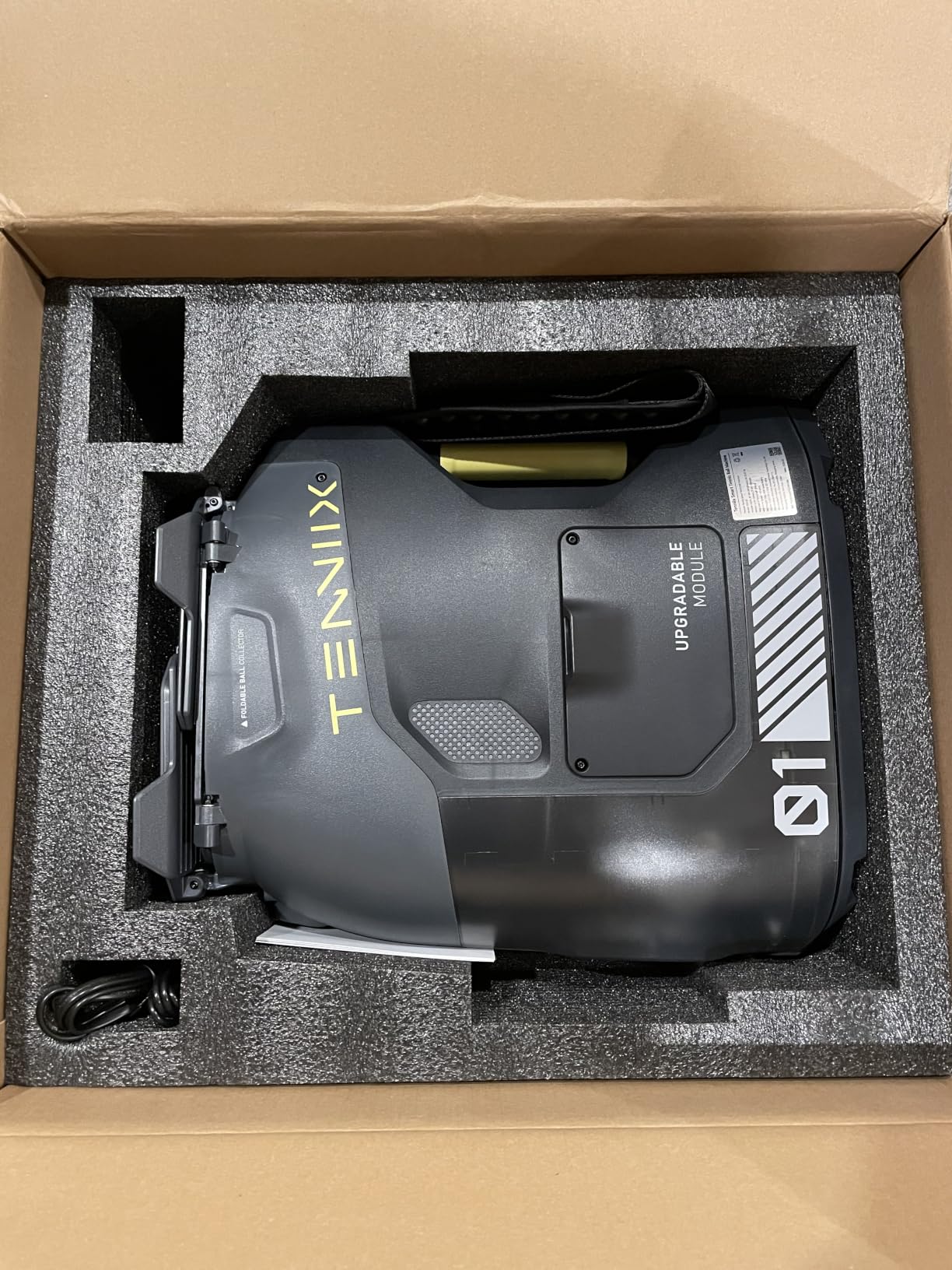
Underneath, it offers nine shot patterns including baseline, half-court, feed, volley, overhead, topspin, backspin, moon ball and hand-toss, plus a Match Mode with six rally styles and NTRP presets from L1 to L3. The removable 7000 mAh battery gives up to four hours of court time and around 1,800 shots per charge.
It uses Bluetooth 5.2 and WiFi, and the app carries more than 1,000 ball combinations with saveable custom drills. The machine was designed by the T-APEX robotics team and is used by more than 300 coaches, and it can be upgraded with an AI vision module later without replacing the unit.
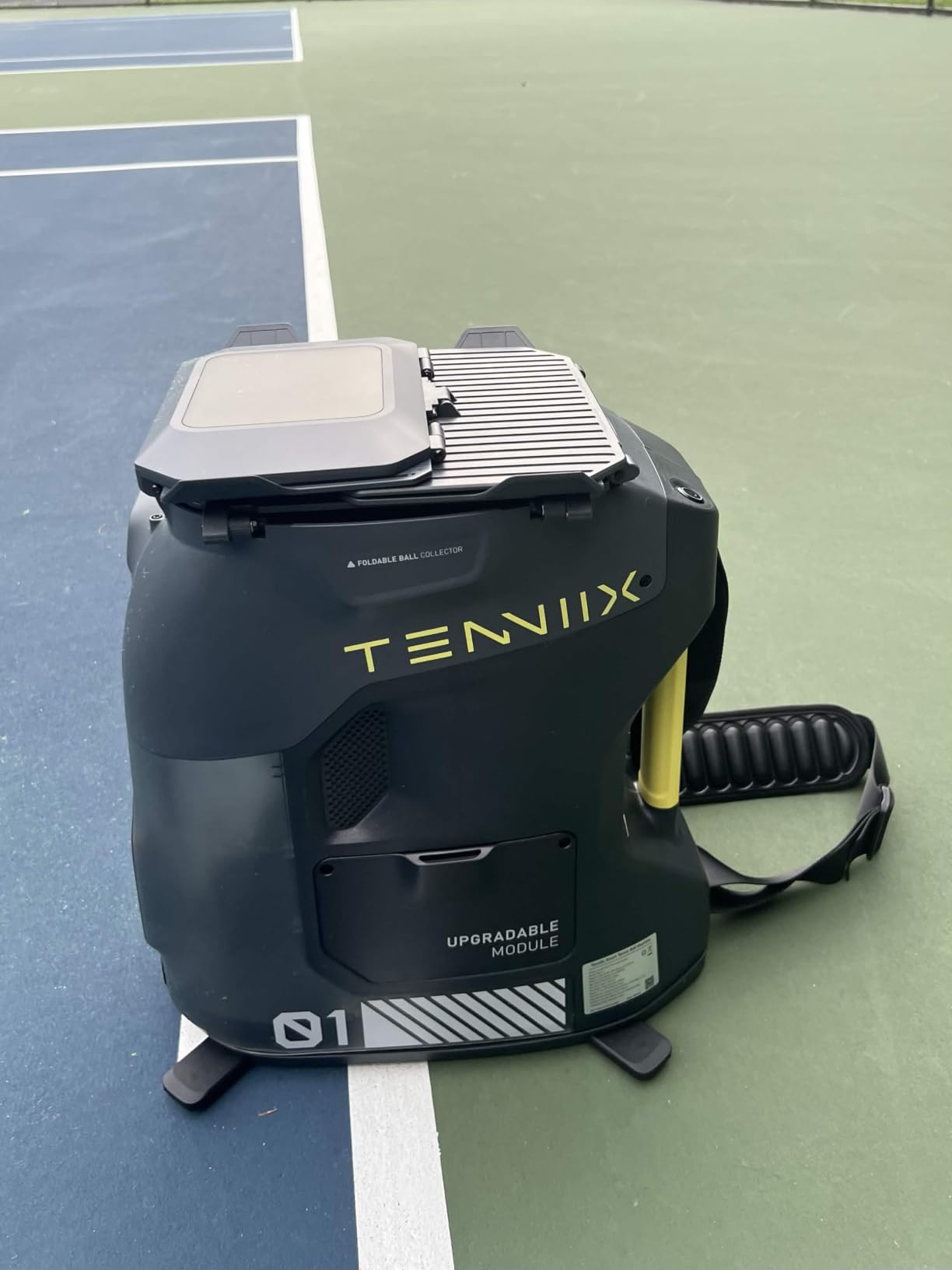
Why the weight matters more than the spec sheet
Every machine in this group with wheels needs a smooth path from car to court. The TENNIIX Basic is the one you can carry up a flight of stairs or across a gravel parking lot without planning ahead, and that is often the difference between a machine that gets used twice a week and one that stays in the trunk.
Its folded footprint also means it disappears into a closet when not in use, which removes the storage objection that stops many apartment players from buying a machine at all.
What the newest listing gives up
This is the newest machine in the roundup and has the smallest review base, with 47 reviews. There is simply less long-term owner history available, so you are buying on spec and design intent rather than on years of reports about what breaks.
Fine-grained parameter work needs both the app and voice control. If you dislike depending on a phone, that is a real friction point. The warranty is one year from the manufacturer, which is shorter than the LOBSTER Elite and the Sports Tutor build.
6. Wilson Portable (Sports Tutor) – Best Warranty and US Build
Wilson Portable Tennis Ball Machine. Speed 75 MPH. Variable Topspin/Underspin. Random Oscillatror. Electronic Elevation. from The #1 Name in Tennis – Wilson Sports
38 lb
10 to 75 mph
110 ball capacity
Random oscillator
3 year warranty
Pros
- Made in the USA with a 3 year parts and labor warranty
- Consistent and reliable delivery that improves groundstroke technique
- Knob controls with no app or programming learning curve
- 110 ball capacity with random oscillation for movement drills
- Internal battery charges overnight on a smart charger
Cons
- Hopper side flaps are flimsy and let balls fall out during vibration
- Balls fall out if a shot strikes the machine so you have to restart
- Cumbersome to move because the single handle sits level with the machine
- No remote control included on this model
This machine is built by Sports Tutor in Burbank, California and sold under the Wilson name, and it is the only US-made machine in this roundup. That comes with a 3-year parts and labor warranty, the longest coverage we found, plus a service history where owners replace machines they used for more than a decade.
Shot delivery is consistent, which is what makes it good for the basic work of improving groundstroke technique. Speeds run from 10 to 75 mph, with electronic elevation taking you from groundstrokes to lobs and a single control handling topspin and underspin from light to heavy.
The random oscillator is designed to force movement rather than deliver to a predictable spot, and the 110 ball capacity means a long session without a refill. Feed intervals adjust from every 1.5 seconds to every 10 seconds, and there is no programming and no app to learn.
The internal rechargeable battery runs up to four hours per charge and charges overnight on a smart charger with an auto shutoff, which is convenient if you practise at night.
Where it earns its warranty
Random oscillation plus a long feed interval is a real footwork prescription. Because you cannot predict exactly where the next ball arrives, you are forced to return to a base position every shot instead of drifting toward the fence to collect balls.
For a club or coach running individual sessions, the 3-year parts and labor warranty is the practical advantage. Parts availability over a long ownership period matters more than most buyers expect, and this is the one machine here with a service history behind that promise.
Where owners get frustrated
The folding hopper flaps are flimsy and let balls fall out during vibration, and several owners reinforced them. Balls also fall out entirely if a shot strikes the machine, which ends the sequence and forces a restart, so point the launch away from the body.
Shot placement varies slightly between consecutive balls, some reviewers question the advertised top speed, and one owner reported battery runtime degrading after 13 months. There is no remote control on this model, so any adjustment means walking to the machine.
7. PONGBOT PACE S PRO – Best for Sensor-Driven Recovery Drills
PONGBOT Tennis Ball Machine, APP and Remote Control, Custom Drills, 150 Ball Capacity, Max 80mph,8+ Hours of Endurance, Dual Motor for Topspin and Backspin, PACE S PRO
46 lb
80 mph
150 ball capacity
8 plus hour battery
6 oscillation spots
Pros
- Recovery trigger only feeds when you are correctly positioned
- Intuitive app with clear visuals
- Removable battery delivers roughly 8 hours of use
- Remote-controlled barrel opening helps with ball pickup
- Works on clay
- hard and grass courts plus padel
Cons
- Balls do not land at exactly the same position each time
- Beeps on every feed with no way to disable it
- Heavier than most competitors at 46 lb
- Some users report sensors and AI features not registering
The PONGBOT PACE S PRO is the most feature-dense machine here, and its standout feature has no equivalent on the other nine. The recovery trigger fires a ball only when you are correctly positioned, which turns the machine into a drill that punishes lazy recovery instead of rewarding it.
Everything else follows that level of ambition. Speed runs to 80 mph with 60 rps spin, six oscillation spots, a 150 ball capacity, and a removable battery with a battery management system that owners report delivers roughly eight hours of use.
The app can sync 30 drills to the remote with over-the-air updates, and there is a user community for sharing drills. The barrel also opens by remote control to make ball pickup easier, which is a small feature that saves real time at the end of a session.
It works on clay, hard and grass courts plus padel, so it is not limited to one surface. At 46 lb it sits in the heavy class of this roundup, which is a significant cost for anyone who has to carry it alone.
What the sensors change about a session
Position-gated feeding is genuinely different from a timer. Instead of hitting balls passively while waiting for the next one, every shot requires a recovery move first, which is where footwork usually falls apart in real matches.
With 150 balls in the hopper and eight hours of battery, this is a machine for long, structured sessions rather than quick hits. One session can cover recovery patterns, NTRP match challenges and adaptive rallies without a battery swap.
What to be careful about
Some users report sensors and AI features not registering reliably, and there is a report of a remote failure with unresponsive support. Test the sensors in the store or on a familiar court before you commit to a long ownership cycle.
Balls do not land at exactly the same position each time, the plastic finish scratches easily in transport, and the machine beeps on every feed with no mute option. Those small frictions add up over a long session.
8. Furlihong 3819BH – Most Versatile for Beginner Groundstroke Work
Furlihong 3819BH Portable Tennis Ball Machine
Track feed
Up to 30 mph
5 angle settings
2 power levels
4 serve intervals
Pros
- Lightweight and easy to carry to any court
- Five angle settings cover the main groundstroke and volley shapes
- Two power levels and four serve intervals for short bursts or longer gaps
- Balanced review distribution with only 5 percent one-star
- AC adapter included in the box
Cons
- 30 mph ceiling is aimed at beginners and timing work rather than power
- Track-based feed rather than a high-capacity hopper
- Far fewer controls than the premium smart machines
The Furlihong 3819BH is the sensible entry point if you are learning where your contact point is. It is a track-based machine that releases balls one at a time, and the value of that simplicity is that you do not have to learn anything to use it.
Five angle settings cover forehand, backhand, flat, slice and volley shapes, which is a meaningful spread for stroke development. Two power levels and four serve intervals let you run short bursts or leave longer gaps between balls for reset-and-recover work.
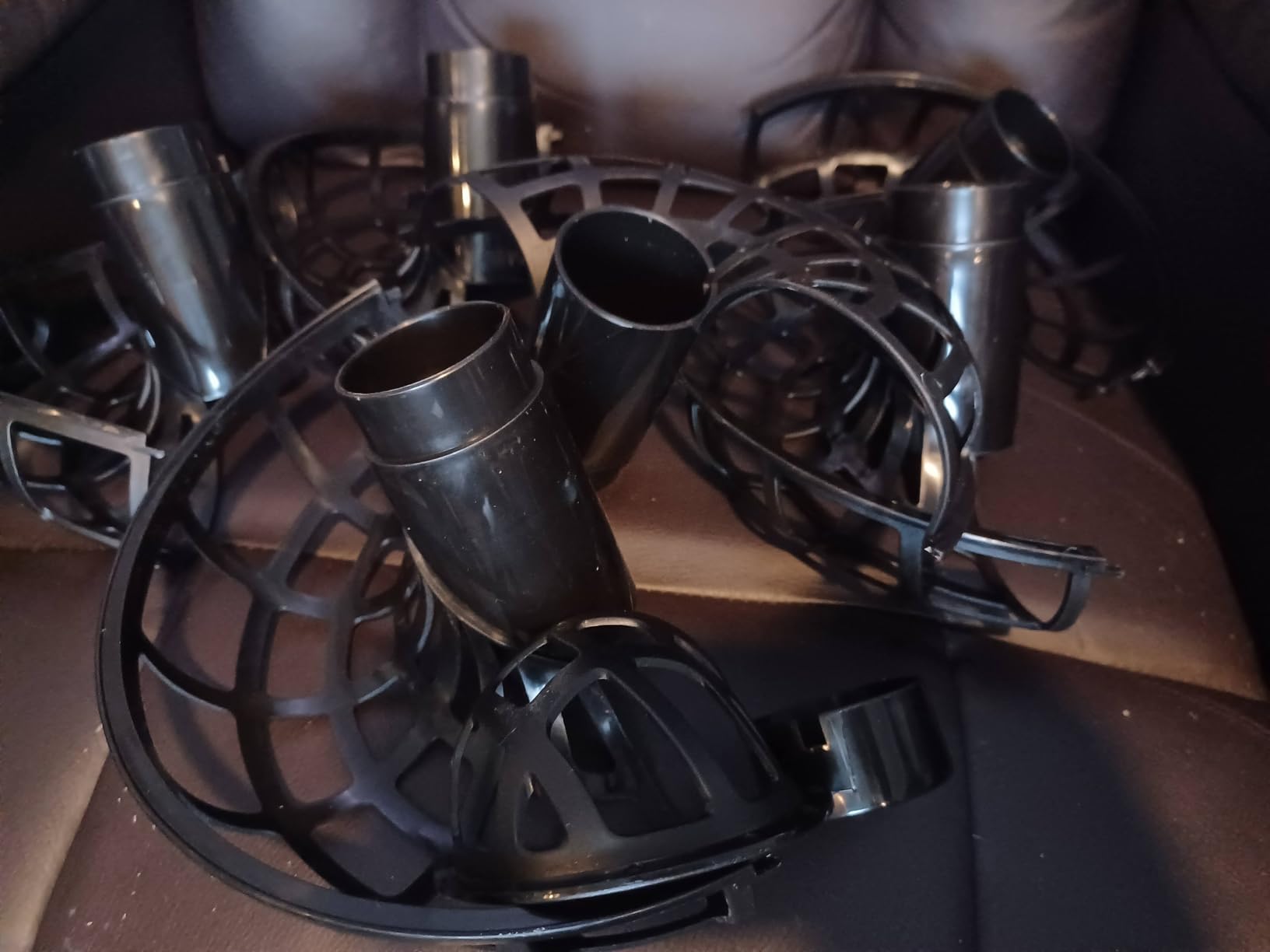
Top speed is 30 mph, and that ceiling tells you what this machine is for. It is built for beginners and for players sharpening timing and accuracy, not for power drills or for anyone who wants to be stretched by the feed.
Owners rate it highly on portability and on the usefulness of the angle presets for stroke work. At 4.0 across 71 reviews with only 5 percent one-star feedback, it has one of the most balanced rating distributions in this group, and the AC adapter is included along with six ball tracks, a top track and a screwdriver.
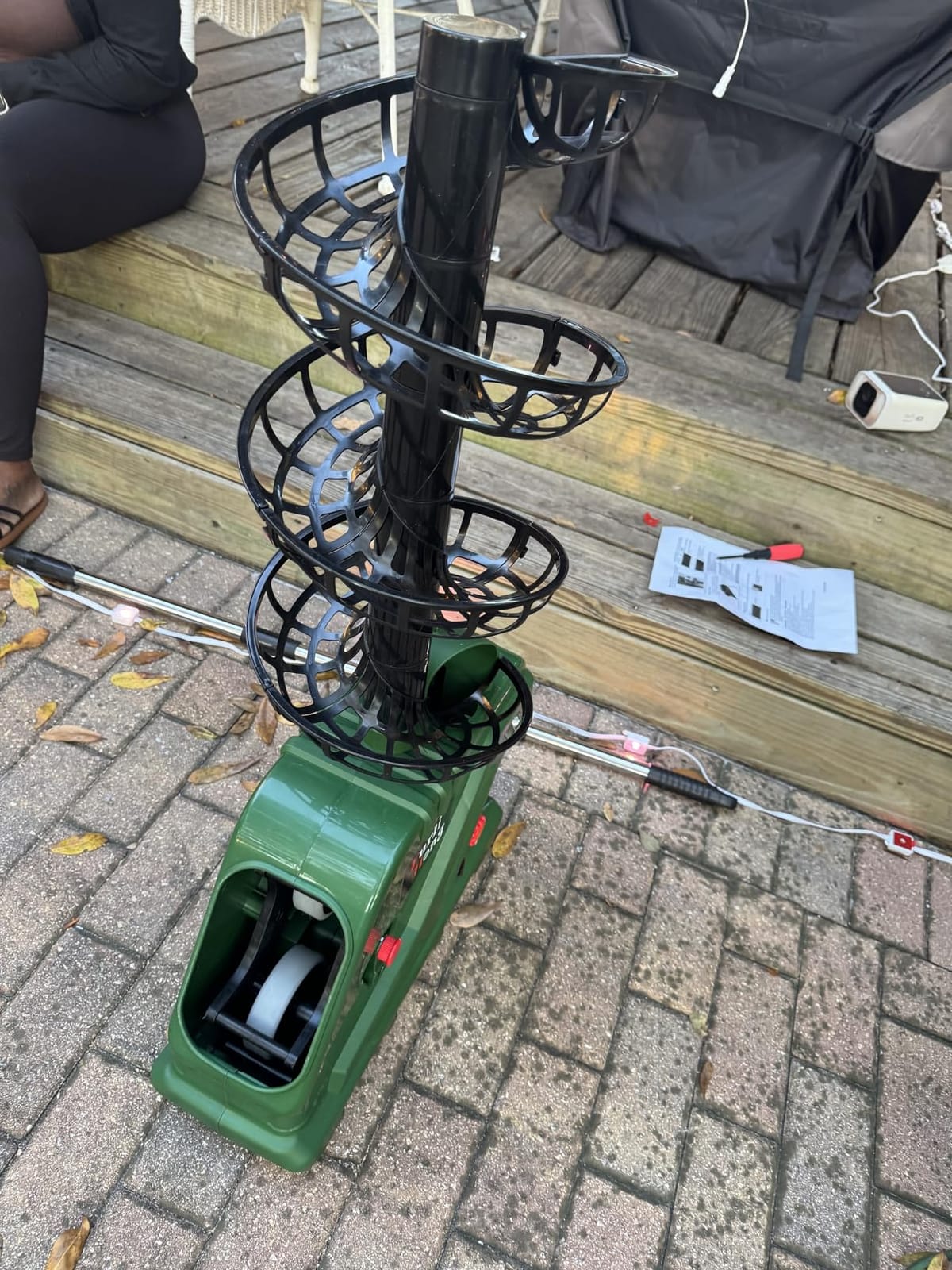
Where it earns its place
For a junior or a true beginner, the angle presets do more for stroke shape than an expensive machine with no structure. You get a repeatable feed that lands where you asked, so the only variable is your swing.
The four serve intervals are useful for short-burst work. Run three balls, step back, take stock. That pattern keeps a beginner focused instead of drifting through 40 empty groundstrokes with no feedback loop.
Where it stops short
A track-based feed means no hopper of any size, so you are reloading one ball at a time. That is fine for accuracy work and tedious for anything requiring volume.
The control set is small compared with anything above it in this list. There is no spin adjustment, no oscillation width control and no programming, so this is a machine for one type of drill rather than a practice partner that grows with you.
9. Furlihong 3807BH – Best Stability With a Triangular Base
Furlihong 3807BH Tennis Ball Machine with Triangular Base
Track feed
Triangular iron base
Swing launch port
Battery and AC power
12 month warranty
Pros
- Sturdy triangular iron base keeps the machine stable during feeds
- Dual power options allow indoor or outdoor use
- Includes a portable carrying bag and eight ball tracks
- Speed adjustment covers a broad training range
- Automatic swing launch port can be repositioned to any angle
Cons
- Tennis balls are not included with the machine
- Basic track-based feed rather than a pressurized hopper
- Owners sometimes report buying compatible ball tracks as an extra
The Furlihong 3807BH solves a problem the other track machines here ignore, which is stability. The triangular iron base does not shift when a ball is launched, so the feed lands where you set it instead of creeping away over a long session.
The launch port swings automatically and can be repositioned to any angle, and speed adjusts across a broad range from low to high. It runs on battery or the included AC adapter, so it works indoors on a hard surface or outdoors on a public court.
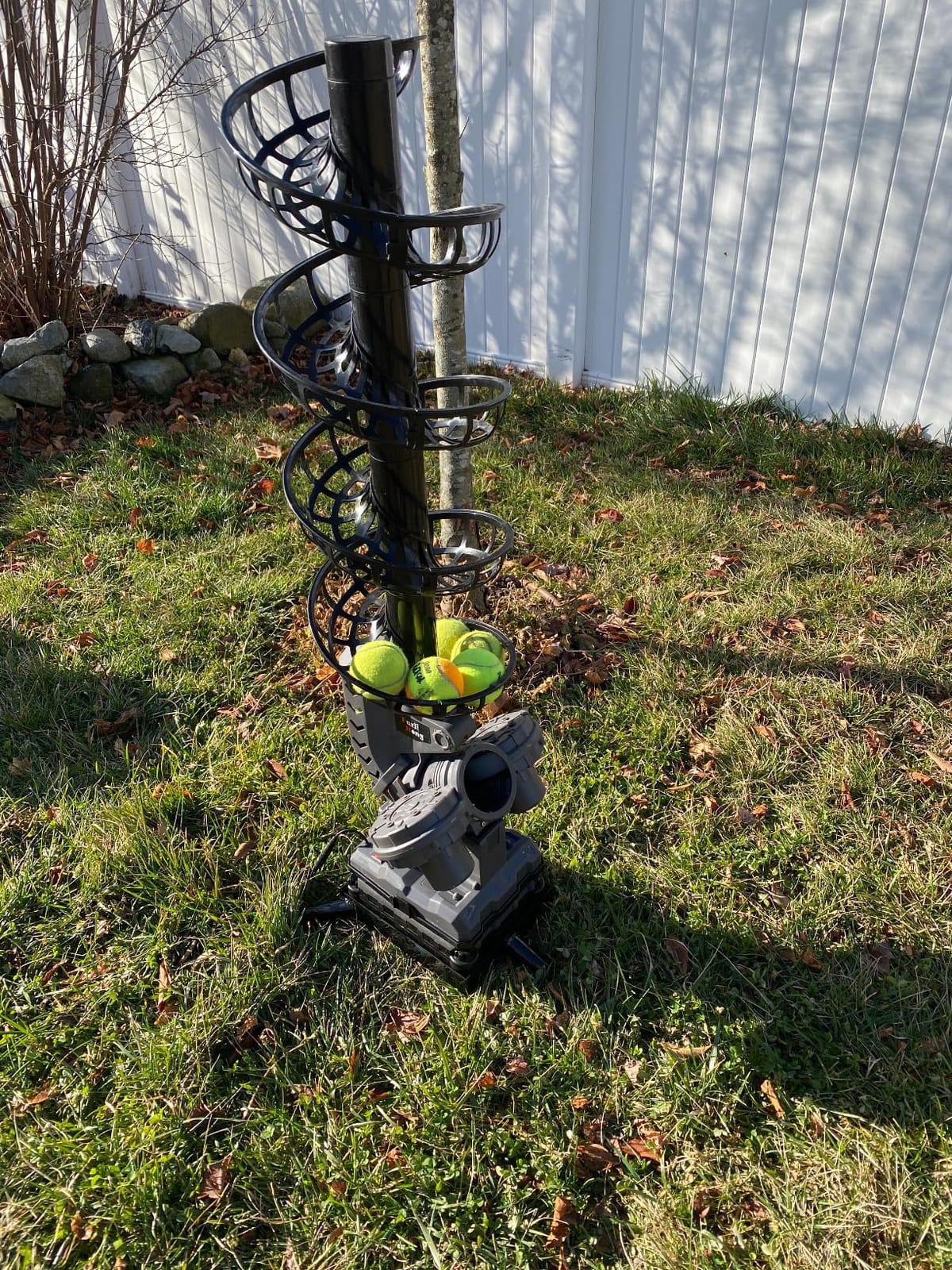
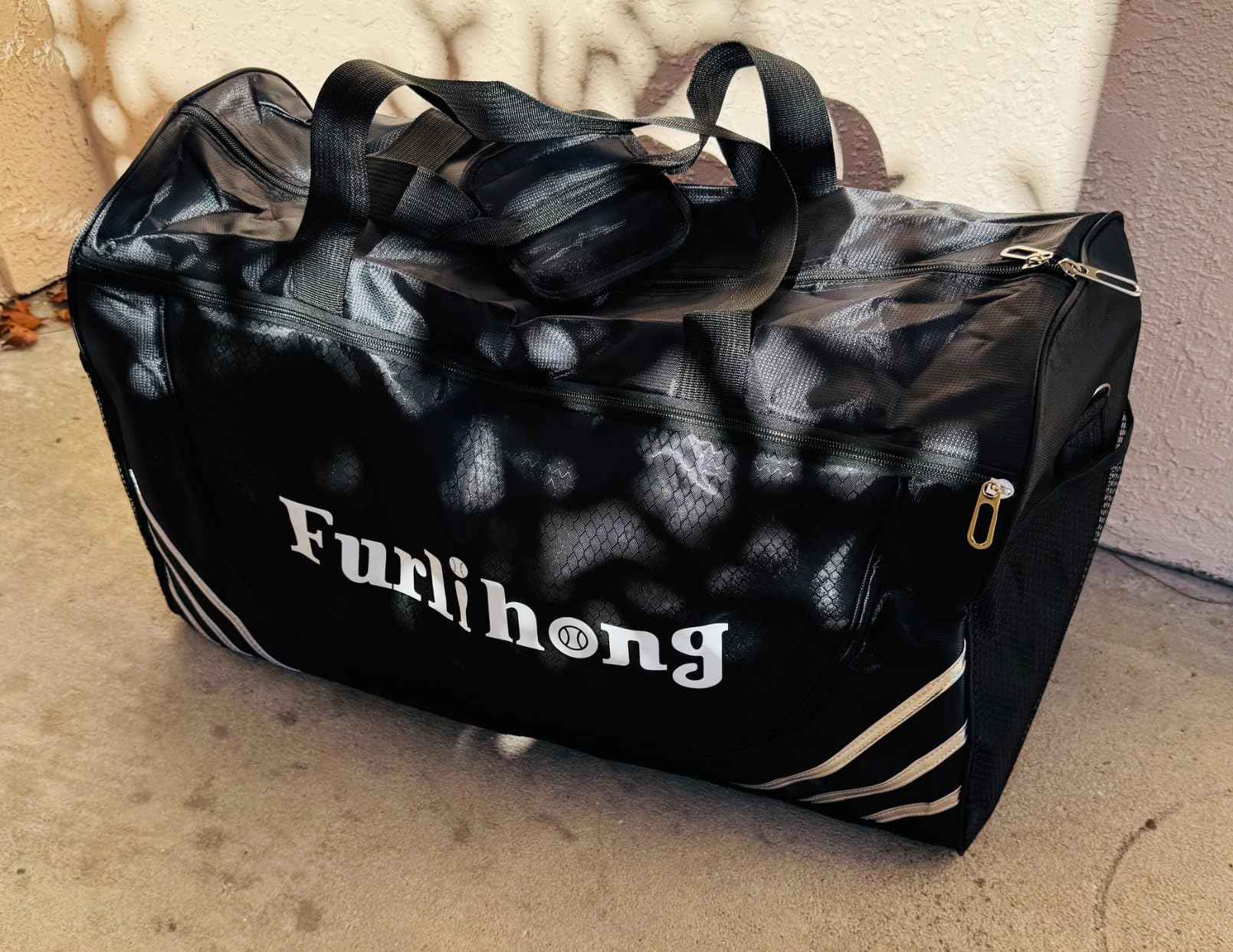
Everything you need to carry it is in the box: an AC adapter, a screwdriver, eight ball tracks plus a top track, a carry bag, a swing base and a bumper unit set. That contents list is longer than most machines in this roundup provide.
Reviewers highlight the base stability and the convenience of the carry bag most often. The most common caveat is simply that tennis balls are not included, and some owners end up buying additional compatible ball tracks.
Why the base matters
A machine that creeps backward during a session turns into a different drill every twenty balls, and you stop being able to judge whether you are improving. A fixed base keeps the target honest, which matters most for the stroke accuracy work this machine is aimed at.
The repositionable swing launch port also means you can serve from a higher angle without rebuilding the setup, which opens up volley and overhead practice without buying a second machine.
What to know before buying
It is a track-based feeder, so ball capacity is effectively one at a time. If you want long-volume sessions, this is the wrong category and you should look at a hopper machine instead.
The material is plastic and the warranty is 12 months. At 3.8 across 87 reviews it is well rated for what it is, but it is not built to the durability standard of the metal machines earlier in this list.
10. SCIFANTA Portable Tosser – Best for Kids and First-Time Players
SCIFANTA Portable Tennis Ball Tosser(3.7lb) for Self-Play|Ball Launcher Beginners/Kids/Coaches/Home-Court|Accurate&Efficient Feed Buddy for All-Levels/Ages|AC&Battery Powered
3.7 lb
Releases every 4 seconds
5 to 10 foot range
AC and battery
Holds 10 balls
Pros
- Lightest machine in this roundup and fits inside a tennis bag
- Simulates the same hand-toss feed motion an instructor uses
- Extensible ball tracks allow 20 to 30 ball sessions
- Simple setup that is easy to aim
- Works on AC power or 4 D batteries
Cons
- Short throw range cannot send balls reliably over a net
- Has to sit on the same side of the net as the player
- Lightweight plastic construction feels fragile
- Only useful at the highest of the four settings
The SCIFANTA tosser is the cheapest way to find out whether you enjoy solo repetition. It weighs about 3.7 lb, fits inside a tennis bag and releases a ball every four seconds on a set interval, which is roughly the pace of an instructor feeding a group lesson.
There are four distance settings from five to ten feet, and the ball tracks extend so you can run 20 to 30 ball sessions rather than one at a time. It runs on AC power or four D batteries, so it works at a park, a beach court or an indoor facility.
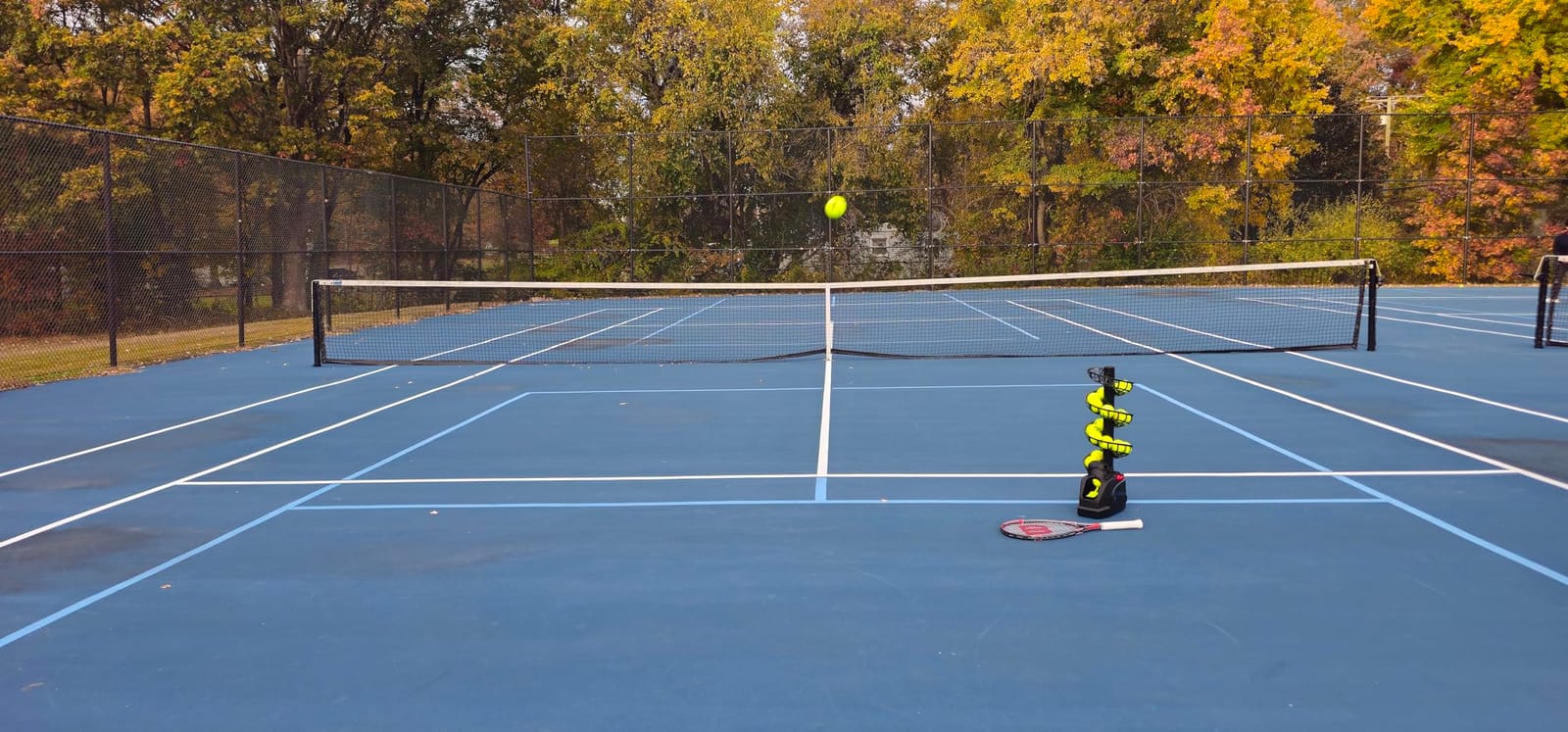
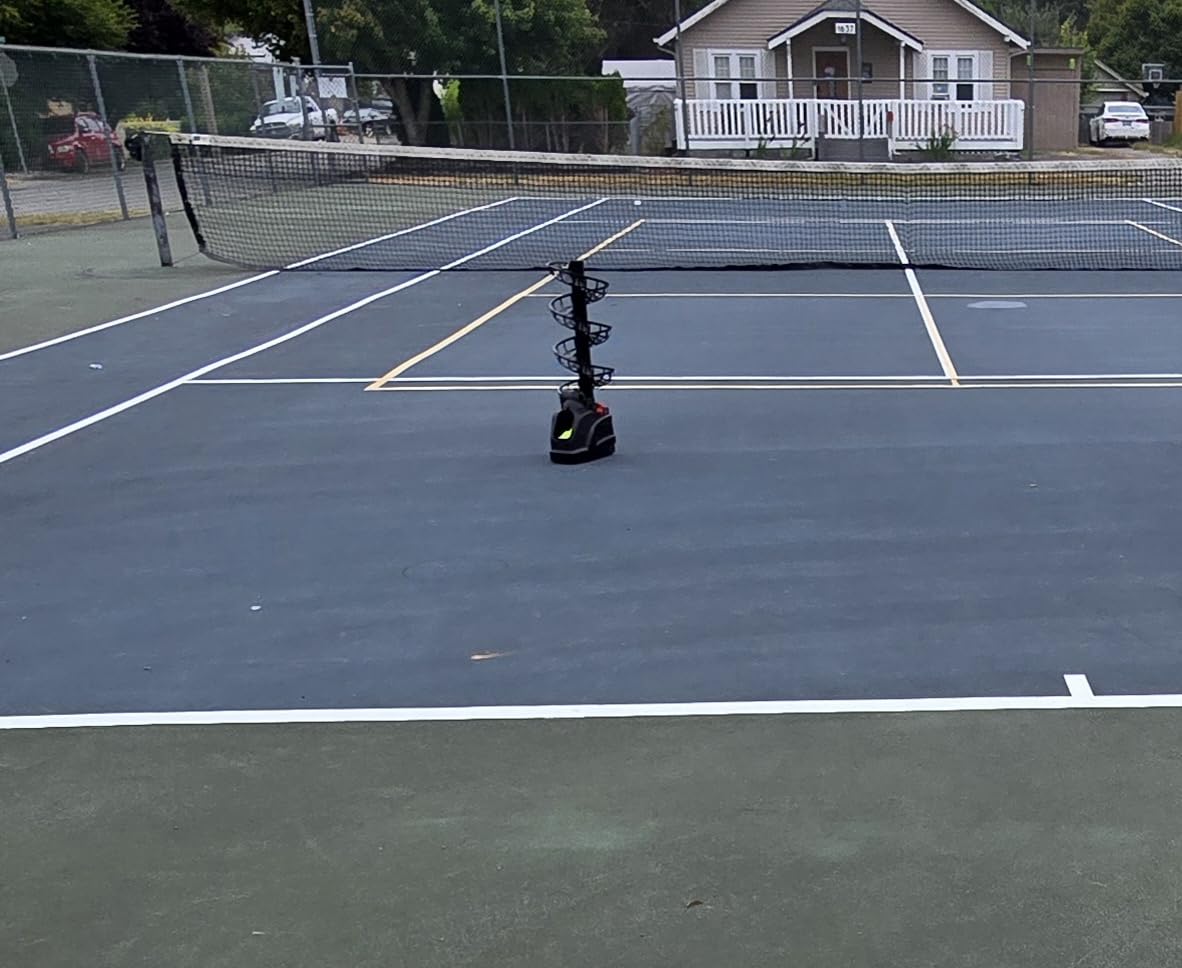
What it is not for is full-court feeding. The throw range is short, it cannot send balls reliably over a net, and it has to be placed on the same side of the net as the player. Owners also find it only useful at the highest of its four settings.
Reviews split between beginners who love the repetition it provides and critics who find the throw too short and the plastic build flimsy. One in five ratings sits at one star and another one in five at two stars, concentrated on range and durability, so treat this as a toy-scale training aid rather than a serious partner.
Where it genuinely helps
For a child learning the shape of a swing, this works. The fixed four-second rhythm creates a predictable tempo that a young player can learn to time against, and the identical motion repeats exactly as an instructor would deliver it.
Because it is this light, a parent can carry it, a junior can carry it, and it needs no charging. That removes every barrier between owning a machine and actually using one, which is why it still earns a place in this list.
Where it will disappoint
If you want to practise serves, groundstrokes from the baseline or anything that crosses a net, this cannot do it. The range stops at ten feet and the ball has to reach the player on the same side of the net.
The plastic body feels fragile and the four D batteries are consumed quickly. The 3.5 average across 117 reviews is the lowest in this roundup, and the split in feedback is wider than for any other machine here.
How to Choose a Portable Tennis Ball Machine for Solo Work
Match the weight to how you will actually carry it
Weight classes are the most useful filter for a solo player, because they decide whether you practise twice a week or once a season. Under 10 lb covers the hand-toss style feeders, which fit in a tennis bag and are meant for close-range work on your own side of the net. The 18 to 27 lb band is the sweet spot for real feeding, where a machine like the TENNIIX Basic or the Nisplay N1 can be carried to a public court by one person and still launch above 65 mph.
Above 38 lb, you are into the cart-and-wheels class. The LOBSTER Elite, the Sports Tutor build and the PONGBOT are stable machines that feed well, but they assume a smooth path from car to court and at least one set of hands at each end. If you live above ground floor, work in an office during the day, or play on municipal courts reached by gravel paths, weight matters more than any feature on the spec sheet.
Spin, oscillation and feed interval decide which drills you can run
Oscillation is what turns a machine into a footwork tool. Horizontal oscillation sweeps the feed side to side so you have to split-step and recover to every ball, while random oscillation removes any predictability at all. Vertical oscillation adds depth variation, which is what you need for lobs, approach shots and overheads.
Feed interval is the setting solo players underuse. A short interval of one to two seconds suits rally and consistency work. A long interval of eight to ten seconds gives you time to reset your feet and recover, which is closer to how a real point starts. Spin control from heavy topspin through flat to heavy backspin lets you practise slice returns, drop-shot touch and heavy crosscourt loops in the same session.
Pressureless versus pressurized balls changes your running costs
Machine use destroys pressurized balls quickly. A ball fired hundreds of times a session loses pressure in weeks, and mixing dead balls with fresh ones produces an inconsistent feed, which is one of the most common causes of jamming. Pressureless balls last months under the same use and give a predictable bounce, at the cost of a slightly heavier feel.
Match your supply to the hopper. A 100-plus ball machine such as the PUSUN or the PONGBOT wants a full hopper of pressureless balls and a separate basket for your rally balls. Track machines hold one ball at a time, so any can from a bulk box works. Owners consistently report that using the wrong ball type is the number one cause of misfeeds, so this is worth getting right from the first session.
Control method and battery access decide your session length
Physical knobs will always work. App-controlled machines give you far more range, and the TENNIIX voice armband and the PUSUN app both let you adjust settings without walking back from the baseline, which is the difference between a 20 minute session and a 90 minute session. The trade-off is that app control needs a charged phone, and the PUSUN in particular does not store app defaults for remote-only starts.
A removable battery changes where you can store the machine. The Nisplay, PUSUN and PONGBOT all let you leave the unit on site and charge the battery at home. Sealed internal batteries are simpler but mean the whole machine travels with you, which matters if your storage is a corner of a garage.
Check court rules, then consider used and multi-sport options
Before you buy, check whether your regular facility allows personal ball machines. Some public parks restrict equipment that occupies a court or adds noise, and many clubs require machines to be booked into a court slot. Players report the same recurring question on forums, and it is worth one email before a large purchase.
Used machines can be sensible, and the models with the longest production runs are the easiest to find and the easiest to get parts for. Ask for a battery health check, run a full hopper of balls and watch for drift in feed placement, and treat a machine with a seized feed wheel as a parts donor. If you also play pickleball or padel, the PUSUN includes a padel mode with 14 drills and the PONGBOT covers padel alongside clay, hard and grass.
Frequently Asked Questions
What is a good portable tennis ball machine?
A good portable tennis ball machine is one you can carry to the court yourself, start within a minute, and feed at a consistent pace for the length of a full session. The LOBSTER Sports Elite is the most balanced pick, with adjustable spin, horizontal oscillation and a two-year warranty. If weight is your main constraint, the TENNIIX Basic at 18.7 lb folds for storage and reaches 75 mph.
Which portable tennis ball machine is the best?
For most solo players the LOBSTER Sports Elite is the best overall choice: 38 lb, speeds from 10 to 70 mph, elevation from 0 to 50 degrees, full spin control from heavy topspin to heavy backspin and a two-year warranty. The Nisplay N1 is the pick if feed consistency and a detachable battery matter most, and the Spinshot Pro is the pick for metal construction and simple knob controls.
What is the best lightweight tennis ball machine?
The TENNIIX Basic is the best lightweight option, weighing 18.7 lb with a folded footprint for storage and still launching up to 75 mph on dual wheels. Its removable 7000 mAh battery gives up to four hours, and a wrist armband with 46 voice keywords lets you change speed, spin and feed timing from the baseline without walking back to the machine.
What are the best tennis balls for drills?
Pressureless balls are the right choice for machine drills because they survive hundreds of feeds over months, unlike pressurized balls that go flat within weeks under machine use and cause inconsistent feeds. Consistency in bounce matters more than feel when a machine is setting the rhythm. Whichever type you use, fill the hopper fully and keep a separate basket for your rally balls.
Are tennis ball machines worth it?
A ball machine is worth it if you will actually use it, and portability is the factor that decides that. A machine you can carry alone to a public court gets used several times a week, while a 46 lb unit that needs two people to move often ends up in a garage. They also cannot replace a partner for reading an opponent’s intent, which is what makes a real match different from a drill.
Can you use a tennis ball machine on public courts?
Rules vary by facility, and it is worth asking before you buy. Some public parks restrict equipment that occupies a court, some limit ball machines to booked slots, and indoor and residential facilities often have noise expectations that a louder machine would break. A quieter machine with a wheeled base and a compact folded size causes fewer problems than a heavy unit you have to carry across a shared court.
Should you buy a used tennis ball machine?
A used machine is reasonable if it is a long-running model with available parts. Ask for a battery health check, then run a full hopper and watch whether feed placement drifts as the hopper empties. Treat any unit with a seized feed wheel or a corroded battery bay as a parts donor. Models with the longest production runs carry the largest owner bases and the most service history.
Where do you position a tennis ball machine on the court?
Set it behind the baseline, offset to the side of the court so balls land across the width you want to work. Narrow the horizontal oscillation for consistency work and widen it for footwork and recovery drills, since a wider spray forces you to move further on every shot. Keep it pointing away from your body, because a shot that strikes the machine can spill the hopper and end the sequence.
Final Verdict: Which Machine to Buy in 2026
For 2026, the LOBSTER Sports Elite is the best portable tennis ball machine for solo drills overall. It carries the largest owner base we found, gives you the full spin range from heavy topspin to heavy backspin, and runs two to four hours on a charge, which covers a full session without a mid-session swap.
If you cannot carry 38 lb comfortably, step down to the TENNIIX Basic at 18.7 lb and lose very little feed range. If your priority is consistency rather than weight, the Nisplay N1 pairs the highest rating in this group with a detachable battery. Either way, buy the machine you will actually move to the court, because that decision matters more than any spec on the page.