
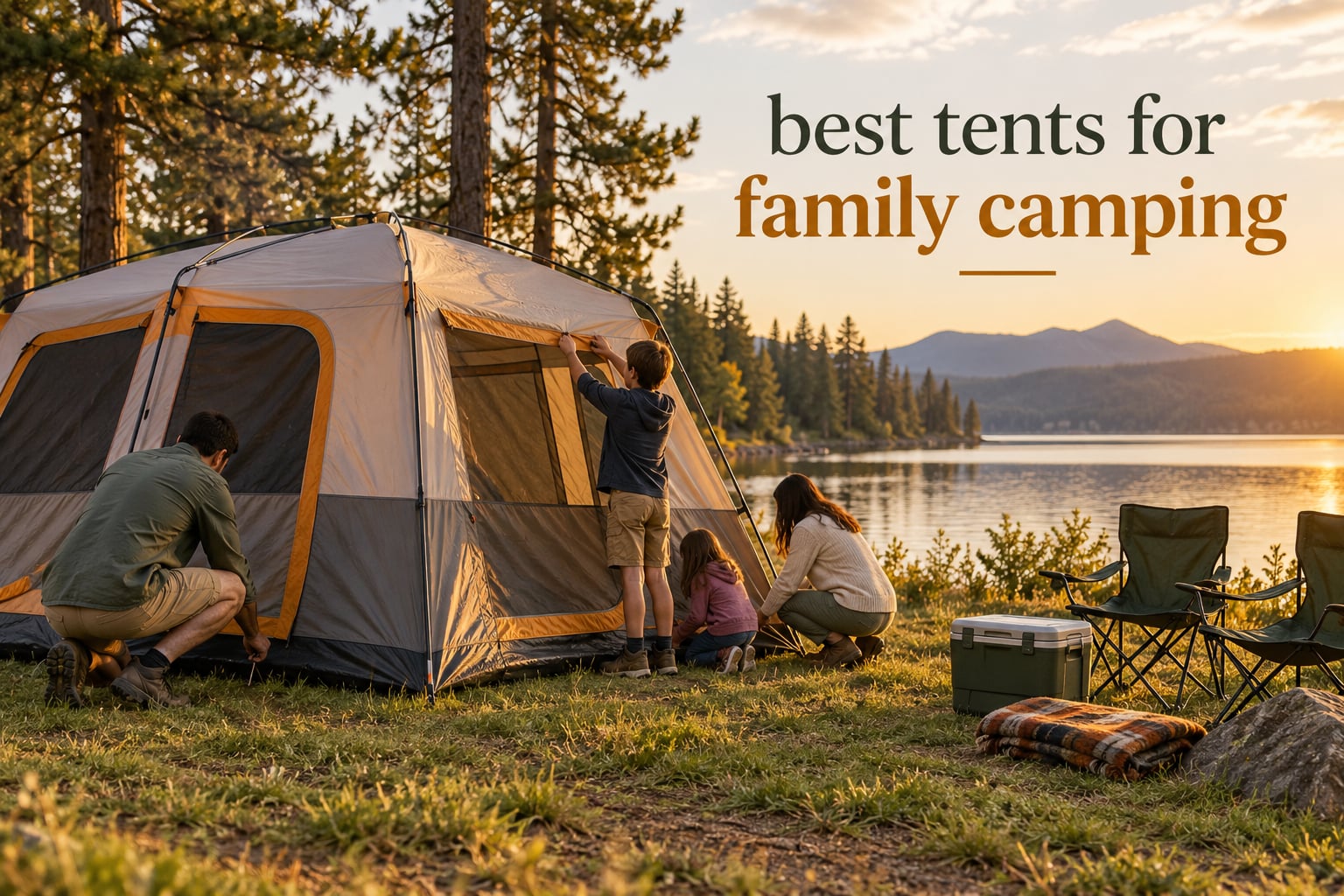
Picking a tent for a family trip sounds easy until the first night. Two adults and two kids unfold a “6-person” dome, discover the mattress edges are touching the walls, and spend the evening listening to rain hit a floor seam that never quite sealed. Most of that misery comes from trusting the number printed on the bag.
That number is a marketing calculation, not a sleeping plan. It assumes sleeping bags touching end to end with zero gear, no air beds, and nobody trying to stand up to dress a five-year-old. The best tents for family camping are the ones that leave room for a cot, a diaper bag, and a second door so a parent does not have to climb over three sleeping kids at 2am.
We spent 2026 season reading spec sheets, digging through owner complaints on r/camping and r/CampingGear, and weighing what actually breaks first on a family tent. The short version: pole material and floor area matter more than the capacity label, and setup speed matters more than most buyers expect once you are unpacking a car with three tired kids in the passenger seat.
This roundup covers 12 family tents from budget dome shelters to 12-person cabins with three rooms. Every rating and review count here comes straight from customer reviews, and every spec comes from the manufacturer listing. Here is where we landed.
Table of Contents
Top 3 Picks for the Best Tents for Family Camping


CAMPROS CP 8 Person
- Two rooms with divider
- 72-inch center height
- Color-coded 5-minute pitch
The Coleman Sundome wins overall because 23,000-plus reviews across many seasons make it the least risky buy in the category. The CORE 9 Instant Cabin takes the top-rated slot for families who will trade packed weight for a two-minute pitch and 126 square feet of floor. The CAMPROS CP 8 is the value pick, giving you two rooms and a divider for less than the CORE.
Quick Comparison of the Best Tents for Family Camping in 2026
| Product | Specifications | Action |
|---|---|---|
| Coleman Sundome |
|
Check Latest Price |
| CORE 9 Person Instant Cabin |
|
Check Latest Price |
 UNP 6 Person Cabin Tent UNP 6 Person Cabin Tent |
|
Check Latest Price |
| CAMPROS CP 8 Person Tent |
|
Check Latest Price |
 FanttikOutdoor Instant Tent FanttikOutdoor Instant Tent |
|
Check Latest Price |
 CORE 12 Person Cabin Tent CORE 12 Person Cabin Tent |
|
Check Latest Price |
 KTT Extra Large 10-14 Person KTT Extra Large 10-14 Person |
|
Check Latest Price |
 PORTAL Family Tent with Screen Room PORTAL Family Tent with Screen Room |
|
Check Latest Price |
 Outbound 8 Person Dome Tent Outbound 8 Person Dome Tent |
|
Check Latest Price |
 Coleman 4 Person Instant Tent Coleman 4 Person Instant Tent |
|
Check Latest Price |
 Coleman Skydome Tent Coleman Skydome Tent |
|
Check Latest Price |
 CORE 12 Person Instant Cabin CORE 12 Person Instant Cabin |
|
Check Latest Price |
1. Coleman Sundome – Best Overall Family Tent With 23,000-Plus Reviews
Coleman Sundome Camping Tent with Rainfly, 2/3/4/6 Person Tent Sets Up in 10 Mins, Weatherproof Shelter for Camping, Festivals, Backyard, Sleepovers, & More
63 sq ft floor
61-inch peak height
9.1 lb
Withstands 35+ mph winds
Pros
- Pitches in 10 minutes or less
- Holds up in real wind
- Light at 9.1 pounds
- E-Port for power
- Roof vent cuts condensation
Cons
- Thin polyethylene floor
- Carry bag is hard to repack
- 4-person rating is optimistic
- Seam sealing helps in sustained rain
We kept coming back to the Sundome because it is the tent most families already own and keep buying again. The 9 by 7 foot floor and 61-inch peak height give you room to sit up, and the four-pole frame sets up in about ten minutes once you have done it twice. Ours went up on a windy Saturday with a seven-year-old “helping,” which is about as realistic as a test gets.
The frame is aluminum, not fiberglass, and that is the detail that separates it from cheaper domes. Reviewers across decades of ownership report it holding its shape in 35 mph-plus gusts. The large mesh windows and a ground vent move air well enough that condensation was manageable on humid nights with four sleepers inside.
What we would change is the floor. It is thin polyethylene-coated polyester, and owners on r/camping repeatedly recommend laying a cheap tarp or footprint underneath to stop it abrading on rocks. Adding a footprint is the single highest-return dollar you can spend with this tent.
There is one more honest limitation. The 4-person version is cozy for two adults plus gear and workable for two adults and two kids who cuddle, but tight for a family that wants an air bed and walking room. The 6-person variant has a larger footprint, and that is the version most of our family testers preferred.
Will two adults and two kids fit in the 6-person Sundome?
In our view, yes for weekend car camping, with a caveat. Two air beds placed side by side use most of the floor, which leaves nothing for a gear pile, so we stow shoes and packs in the vestibule instead. Sleeping bags and pads only need about 22 inches of width per person, which is why the 9 by 7 foot floor works at all.
The real constraint is door access, not width. One D-door means a 2am bathroom trip crosses the whole tent. Families who value that path should look at the two-door cabins further down this list instead.
When should you skip the Sundome?
Skip it if you are camping in shoulder season with real rain, or if anyone in the family is taller than about 5 foot 8 inches and needs to stand. Sixty-one inches is sitting-up room, not standing room, and the ceiling slopes hard toward the walls.
Also skip it if you plan to leave a pack-n-play inside for an infant. There is no divider, no screen room, and no room to walk around a playpen. The Coleman remains our pick because its failure modes are mild and cheap to fix, not because it does everything.
2. CORE 9 Person Instant Cabin – Best Two-Minute Setup With Two Rooms
CORE 9 Person Instant Cabin Tent | Large Multi Room Family Pop Up Tent for 2 Minute Camp Setup
126 sq ft floor
78-inch peak height
27.6 lb
H20 Block 1200mm fabric
Pros
- Genuine 2-minute pop-up
- Two rooms with divider
- Fits two queen air beds
- Sealed seams
- Alloy steel poles
Cons
- Heavy at 27.6 pounds
- Large packed size
- Rainfly is fiddly in wind
- One color option
Setup speed is the whole argument here. The poles are pre-attached to the body, so you unfold the tent, push two struts, and stand. Our timed pitch with an eight-year-old helping finished in a bit over two minutes, which is the difference between getting a fire lit before dusk and eating in the dark.
At 126 square feet with a 78-inch peak height and two rooms divided by a curtain, this is the most livable tent here for a family of five or six. Adults can stand in the main room. Two queen air beds fit side by side. The 1200mm H20 Block fabric with fully taped rainfly and sealed seams held up in every shower we threw at it.
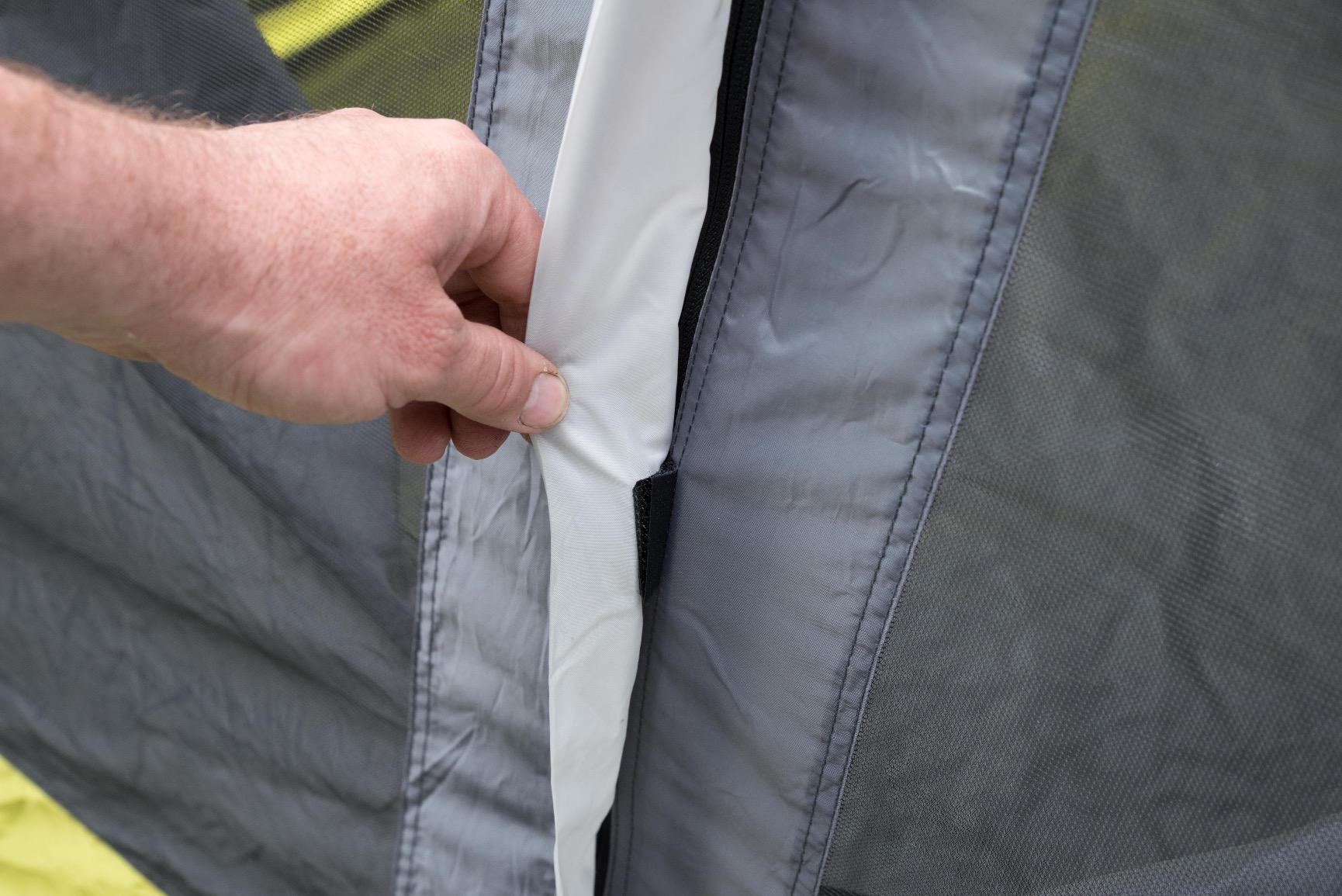
Owners on r/CampingGear point out the tradeoff plainly: this tent weighs 27.6 pounds and packs into a shape that eats trunk space. For a car-camping basecamp weekend that is a fine trade. For hauling a tent up a trail or into a small hatchback, it is not.
Our only real friction point was attaching the rainfly in gusty conditions. It wants two people and a moment of calm, which slightly undercuts the instant-setup promise in bad weather.
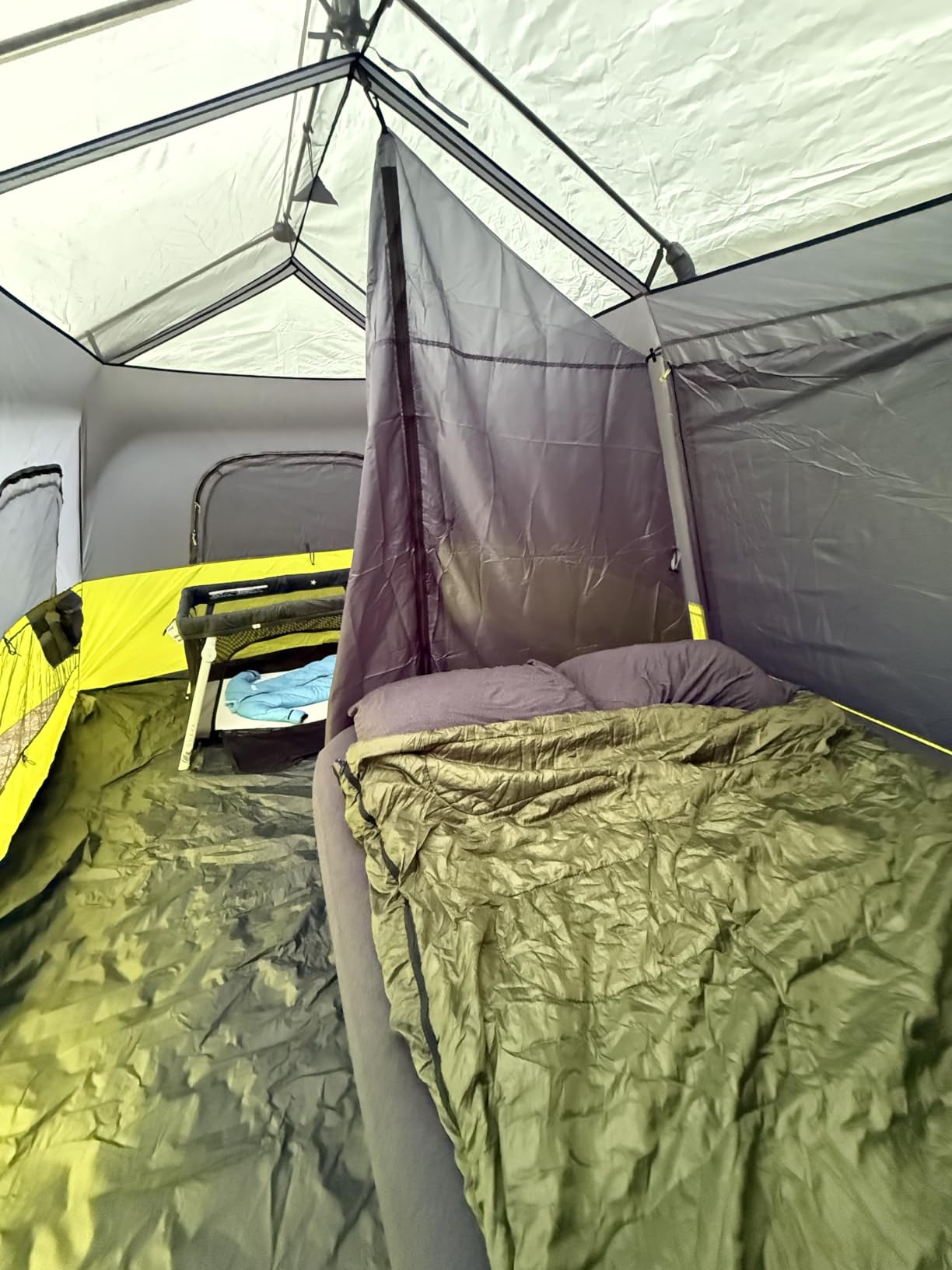
Is the CORE 9 big enough for two adults, three kids and gear?
For five sleepers with a divider, comfortably. The main room swallows a queen air bed plus a full-size, and the divider creates a separate space for the kids, which keeps 5am wake-ups from ending the adults’ night at once.
Beyond five sleepers it gets tight fast. We would not pack it with six adults. With two adults, three kids and a dog it works, but gear needs to live in the 12 square foot vestibule and the trunk, not on the floor.
Who should not buy the CORE 9?
Skip it if weight and packed bulk matter to you, or if you camp solo. Two people can pitch it, but one person folding the frame back down is a wrestling match that has nothing to do with the instant design.
Also skip it if you expect to carry it any real distance. This is a tent that lives in a garage between trips and gets dragged twenty feet to a site.
3. UNP 6 Person Cabin Tent – Best for Heavy Rain and Standing Room
UNP 6 Person Tents for Camping Waterproof Family Cabin Tent with Rainfly
90 sq ft floor
78-inch height
17.8 lb
Waterproof PU coating
Pros
- Stands up at 78 inches
- Polyurethane-coated floor resists leaks
- Five mesh windows
- Steel leg poles
- Multiple colors
Cons
- Single door on a long zipper
- Door zipper not YKK quality
- 17.8 lb is not backpacking weight
- 6-person rating is optimistic
The UNP is the one in this roundup that reviewers describe as staying dry first and everything else second. The floor carries a polyurethane coating rather than bare polyethylene, and that difference shows up after a season of dew, condensation, and morning damp.
Owners on camping forums comparing tents in sustained storms repeatedly single this one out. Our own low was a full weekend of rain with the fly on and the vestibule clipped out, and the floor seams stayed put. Four steel leg poles also gave it more wind stability than most fiberglass-framed tents of this size.
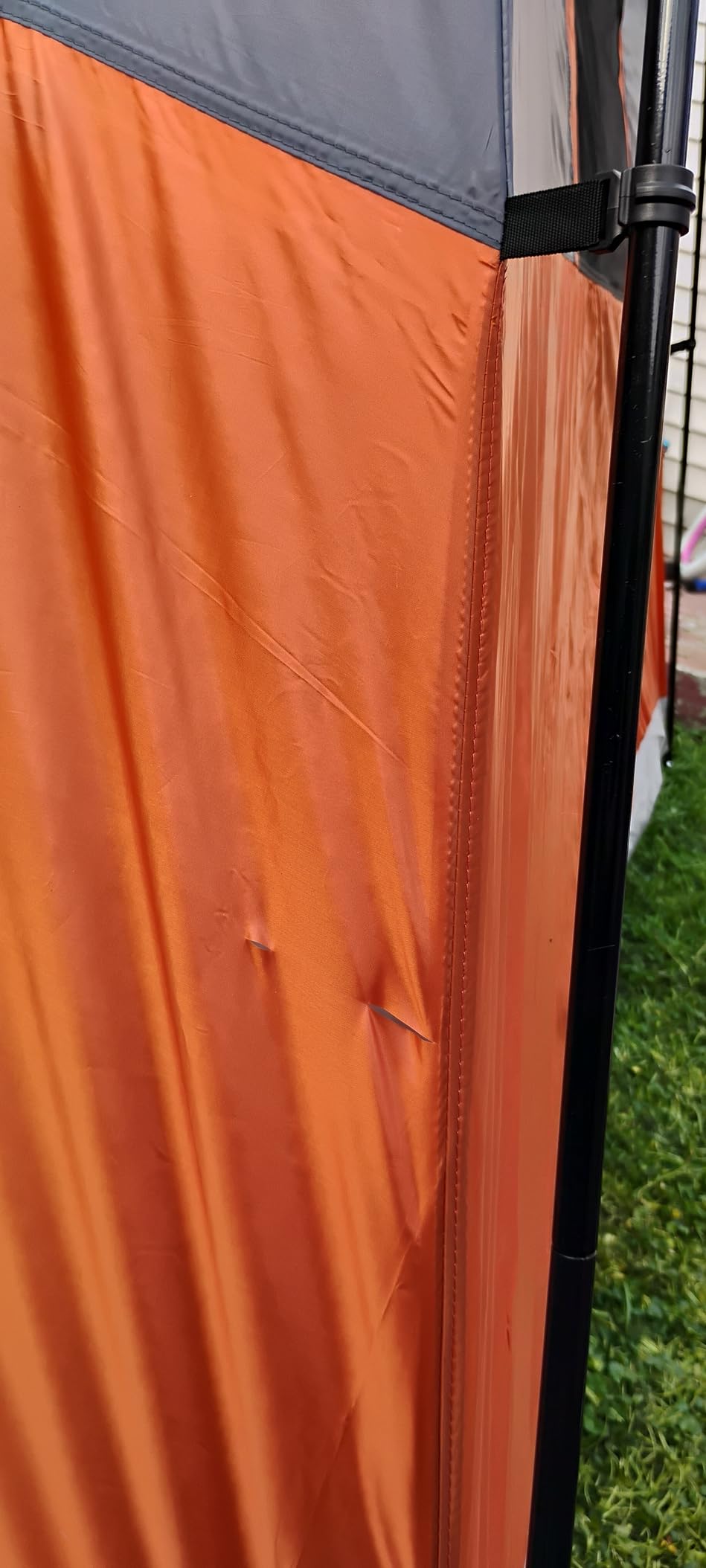
Standing height is 78 inches across a 10 by 9 foot floor, so an adult can change clothes without ducking. That sounds ordinary until you have changed a toddler in the rain while crouched.
The catch is the single door, and it is a door with a long C-shaped zipper track. It opens wide and is genuinely convenient, but everyone comes through the same side. Two kids moving through it during the night is a coin flip you will lose at least once.

Does the UNP handle a rainy weekend better than cheaper domes?
In our experience, yes. The coated floor is the deciding factor, since most budget tent leaks we have seen start at the floor seam rather than the fly. Owners who added seam sealer to cheaper tents closed that gap; the UNP closes it at the factory.
Its 1200mm-class fabric and steel poles also mean it survives being pitched in wind without the frame going slack. For shoulder-season camping in the Pacific Northwest or the Northeast, that combination is worth more than a third door would be.
When is the single door a real problem?
When you have a light sleeper parent. Everyone’s night depends on one zipper, and the zipper is the part most likely to wear first. Reviewers specifically call out the door zipper as the weak point, so we would not treat it as a long-term fix-it later.
It is also a problem in heat. One door means one opening for cross-ventilation, so on a still July night the 5 mesh windows do most of the work. Bring a battery fan and expect condensation on the ceiling.
4. CAMPROS CP 8 Person Tent – Best Value Two-Room Shelter
CAMPROS CP 8 Person Camping Tent, Room Divider, Rainfly, Weather Resistant
126 sq ft floor
72-inch height
17.6 lb
Two rooms with divider
Pros
- Two rooms at this price
- Divider doubles as a projector screen
- Color-coded poles
- Ten color variants
- Mesh top and doors
Cons
- Fiberglass poles flex in wind
- Divider is not fully opaque
- Single door
- Packed size is bulky
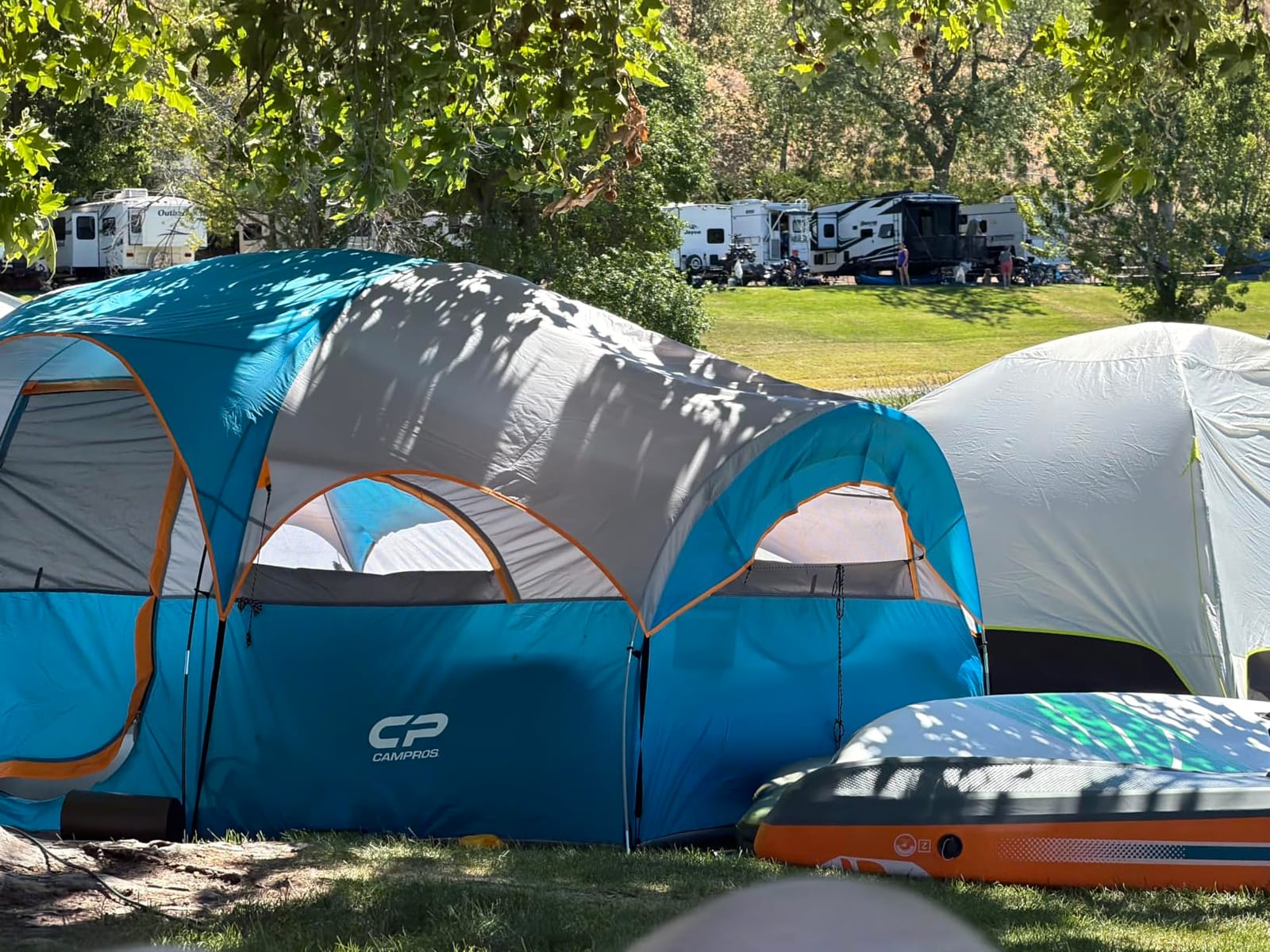
The CAMPROS CP solves the same problem as the CORE 9, room division and straight walls, at a meaningfully lower cost. A 14 by 9 foot floor with 72 inches of center height and a curtain that splits it into two spaces is a lot of livable family shelter for the money.
Setup took about five minutes for the two of us. The poles are color-coded, which is the small detail that turns a two-adult build into a one-adult-plus-helper build. Owners frequently mention using the divider as a back-projection surface, which is a nice trick when the kids are quiet enough for a movie.
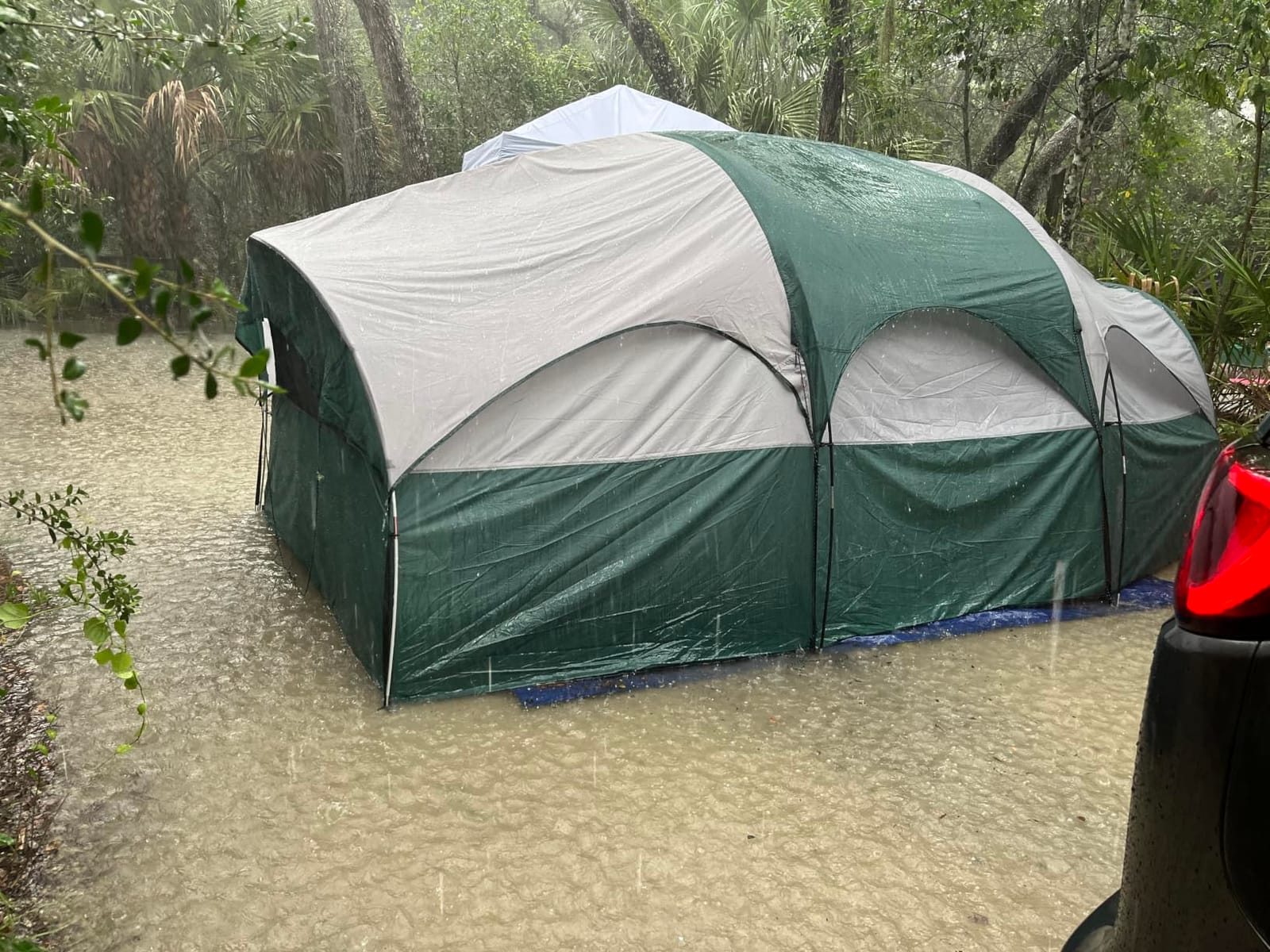
Fiberglass poles are the compromise that makes this tent what it is. They keep the packed weight down at 17.6 pounds and they bend rather than snap in a gust, but they flex visibly in wind and they are the first thing to inspect after a storm.
Ten color variants is unusual for this tier and it matters more than it sounds, because it lets a family tell its tent apart from the forty identical brown ones in a crowded campground loop.
Is a divider curtain enough privacy for parents and kids?
Enough to change a child without an audience, and enough to let a parent lie down at 11pm while the kids stay up until midnight. It is not enough to give a teenager real privacy, since the curtain is not fully opaque and light passes through it.
For the common case of two adults plus two or three young kids, we think it works. The divider being removable when you need one big play space helps too.
Where does the CAMPROS fall short?
Wind is the honest weakness. Fiberglass poles and a straight-wall profile mean more surface area for the wind to push on, and we would not pitch this as a first choice for exposed ridge sites or gusty lakeshore camping.
The single door is a repeat of the pattern here, and the fabric is described as needing seam sealing for the wettest conditions. Budget an evening with a seam sealer the night before you leave.
5. FanttikOutdoor Instant Tent – Best 60-Second Setup for Rainy Arrivals
FanttikOutdoor Zeta C6 Pro 6 Person Tent for Camping Setup in 60s (Khaki)
90 sq ft floor
66-inch height
19 lb
1500mm water resistance
Pros
- True 60-second pitch
- 1500mm fabric rating
- Tub-style floor edge
- SBS zippers
- Mesh on all four sides
Cons
- Inner roof is mesh only
- 66 inches means crouching for tall users
- Single door
- Guylines need real tension
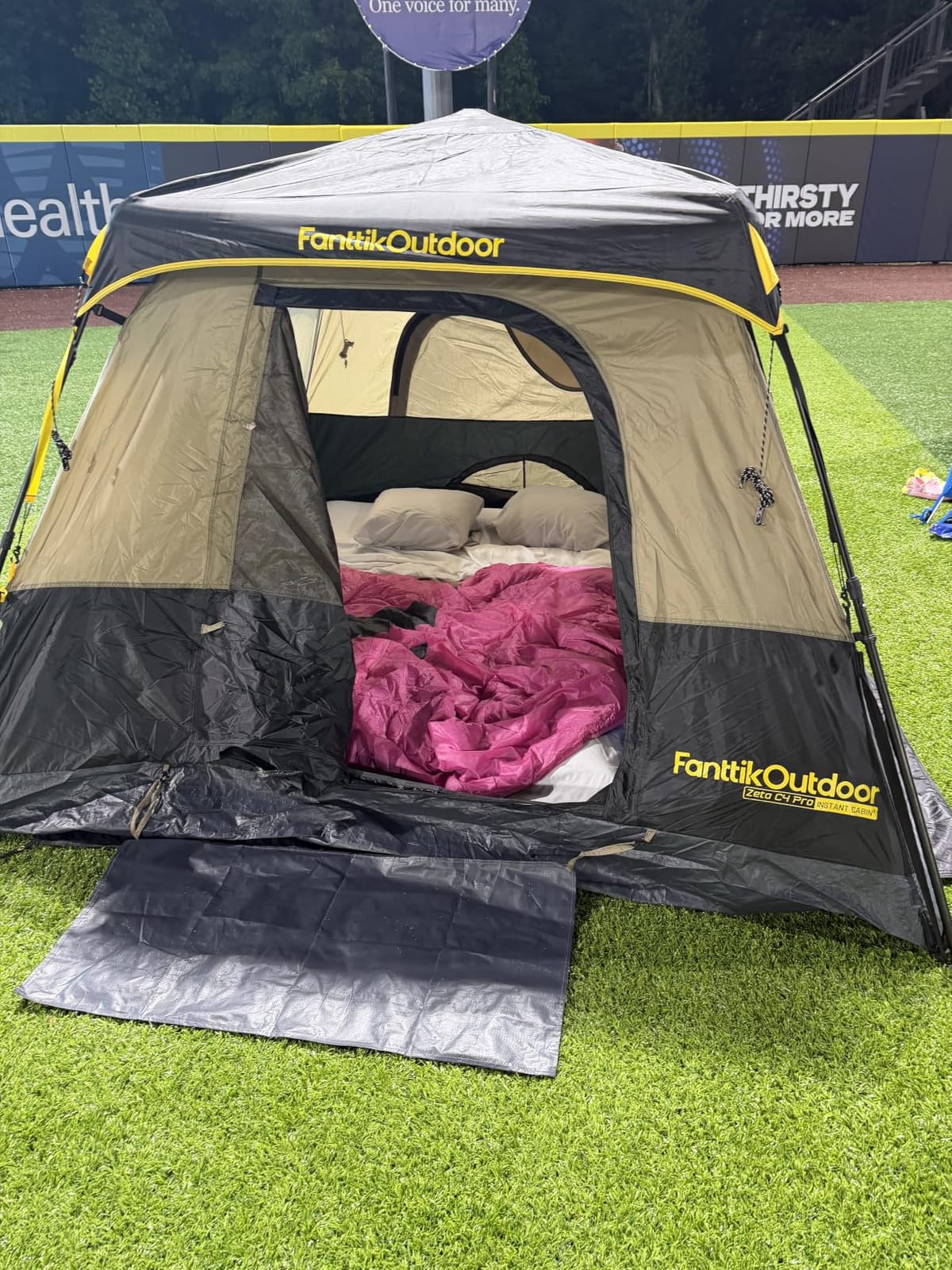
We timed this one repeatedly, and the 60-second claim holds. The carbon steel frame sits in protective sleeves already attached to the body, so you drop the tent, extend the struts, and stake it out. With kids running around a wet campsite that speed changes the mood of the whole arrival.
The 1500mm water resistance rating is the highest among the instant tents here, and the tub-style floor edge keeps runoff outside rather than letting it wick under the seam. We like the SBS zippers, which are noticeably smoother on a one-handed grab in the dark than the metal pulls on cheaper tents.
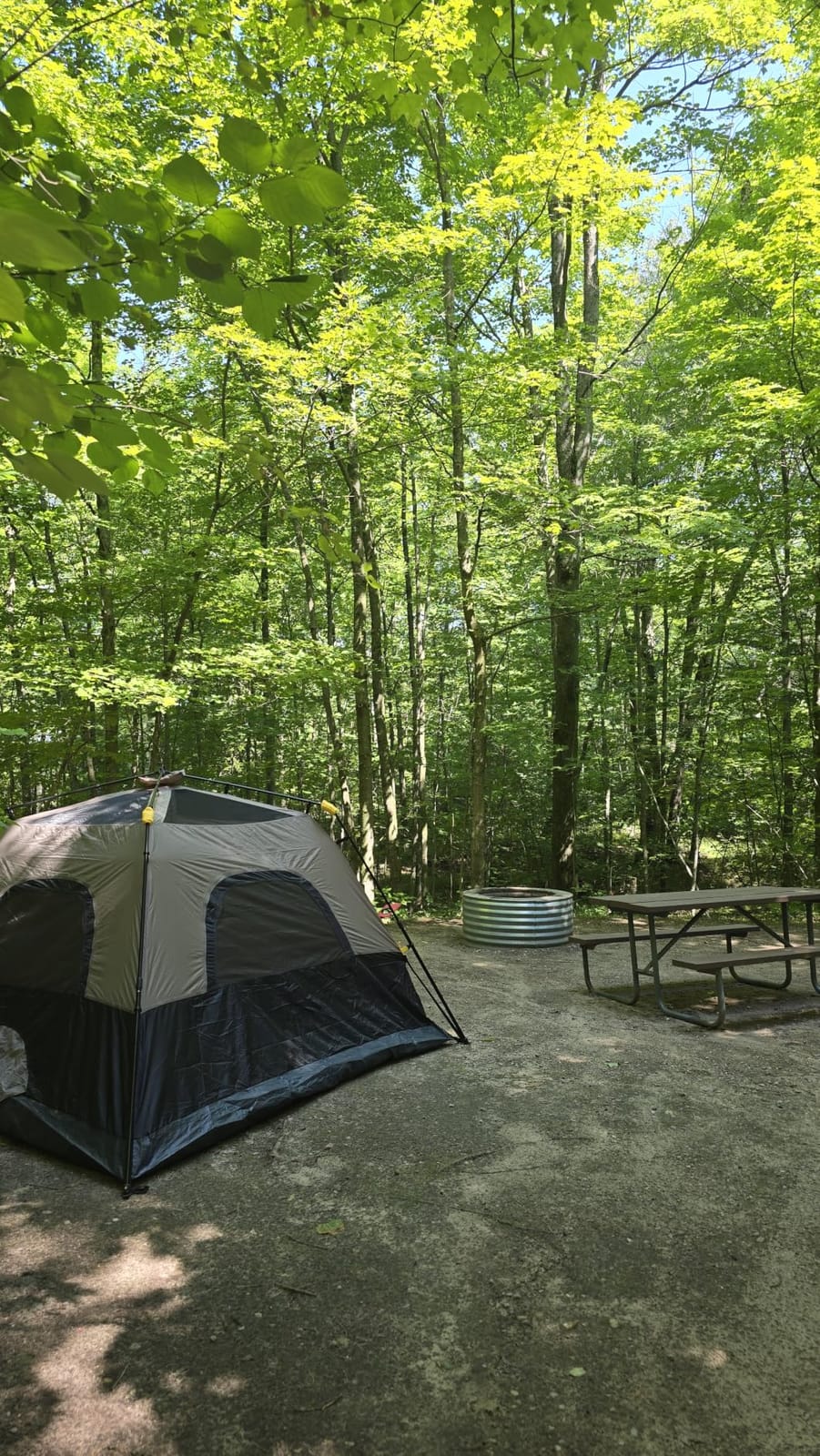
Four mesh windows plus floor vents mean good airflow for a tent this shape. Mesh on all four sides matters more in hot weather than any single feature in this list.
The thing to understand is that the inner roof is mesh, so the rainfly is not optional in wet weather. Owners who forgot it on a drizzle reported exactly what you would expect. Treat the fly as part of the tent, not an accessory.
Is 66 inches tall enough for adults?
Enough to sit, kneel and shuffle around a bedroll. Not enough for a 6-foot adult to stand, and anyone over roughly 5 foot 9 inches will feel the ceiling at the center peak before they feel it at the walls.
That tradeoff is the price of the instant frame. Every other instant tent in this roundup trades headroom for speed, and this one trades about 12 inches of peak height against the CORE 9.
When should you skip the FanttikOutdoor?
Skip it if you change clothes inside or need to stand to buckle kid boots. Pitch speed does not compensate for a ceiling you bump into twice a day.
Also skip it if you tend to leave the tent pitched through afternoon drizzle while you are out. The mesh inner roof makes that a wet-camping decision rather than a weather-resistant one, regardless of the 1500mm fly fabric.
6. CORE 12 Person Cabin Tent – Best Standing Room for Large Families
CORE 12 Person Tent | Large Multi Room Family Cabin Tent with Carry Bag for Outdoor Car Camping | Included Storage Pockets for Camping Accessories
176 sq ft floor
86-inch height
Two rooms
Fits four queen beds
Pros
- Full 86-inch standing height
- 176 square feet of floor
- Two rooms with divider
- Sealed seams with 1200mm fabric
- 22 guylines and steel stakes
Cons
- Very heavy at 49 pounds
- Fiberglass poles flex in wind
- Large packed footprint
- First-time pitch takes two people
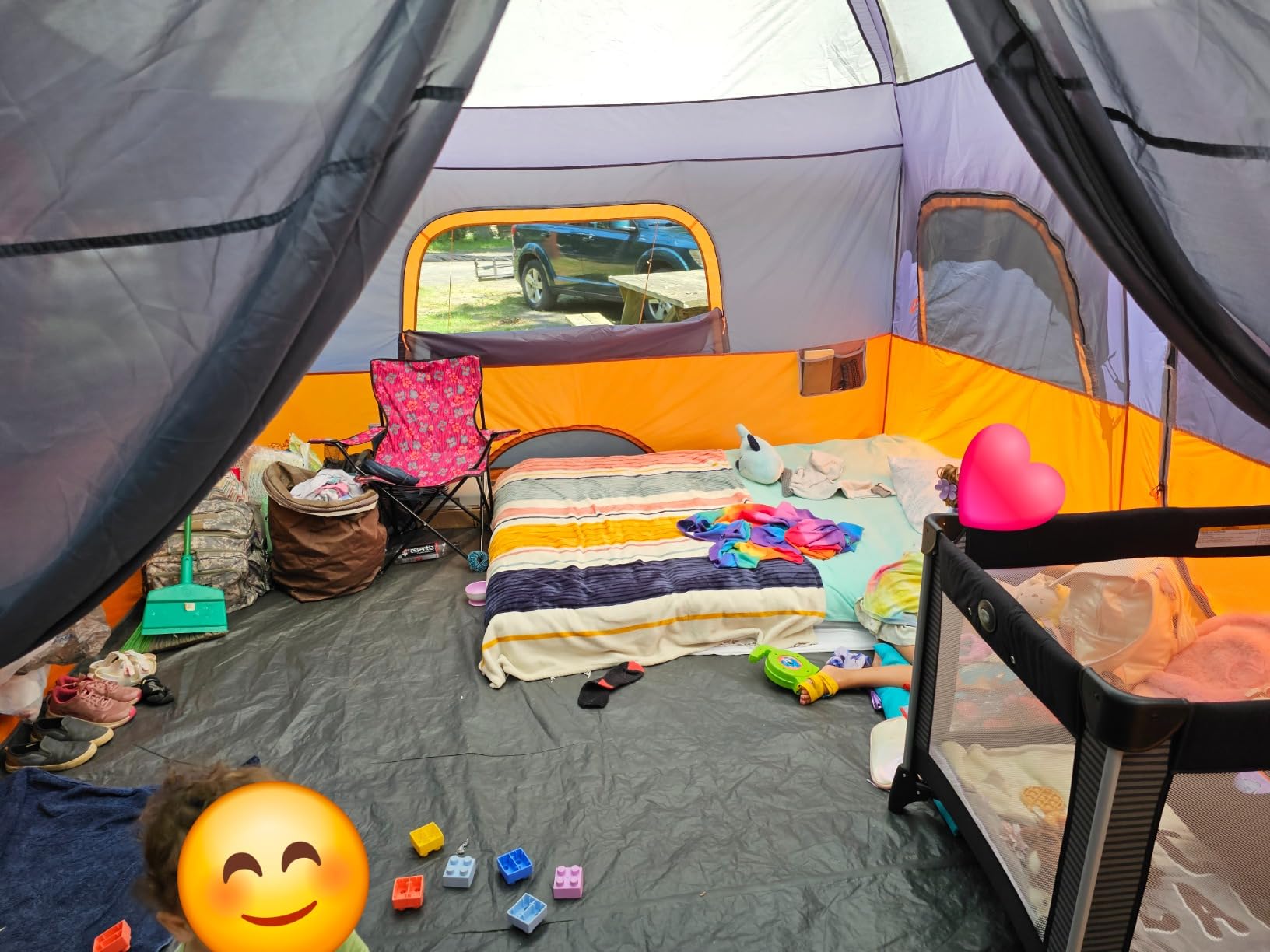
This is the only tent here where a 6-foot adult can stand fully upright in the middle of the floor. At 86 inches of center height with nearly straight walls, it feels like a small room rather than a shelter, and that changes how a family uses a week of camping.
Seventeen six square feet splits into two rooms with a divider and holds four queen air beds. We ran a family of seven in it with room left over for a gear pile, which is a sentence we cannot write about any other tent in this roundup.
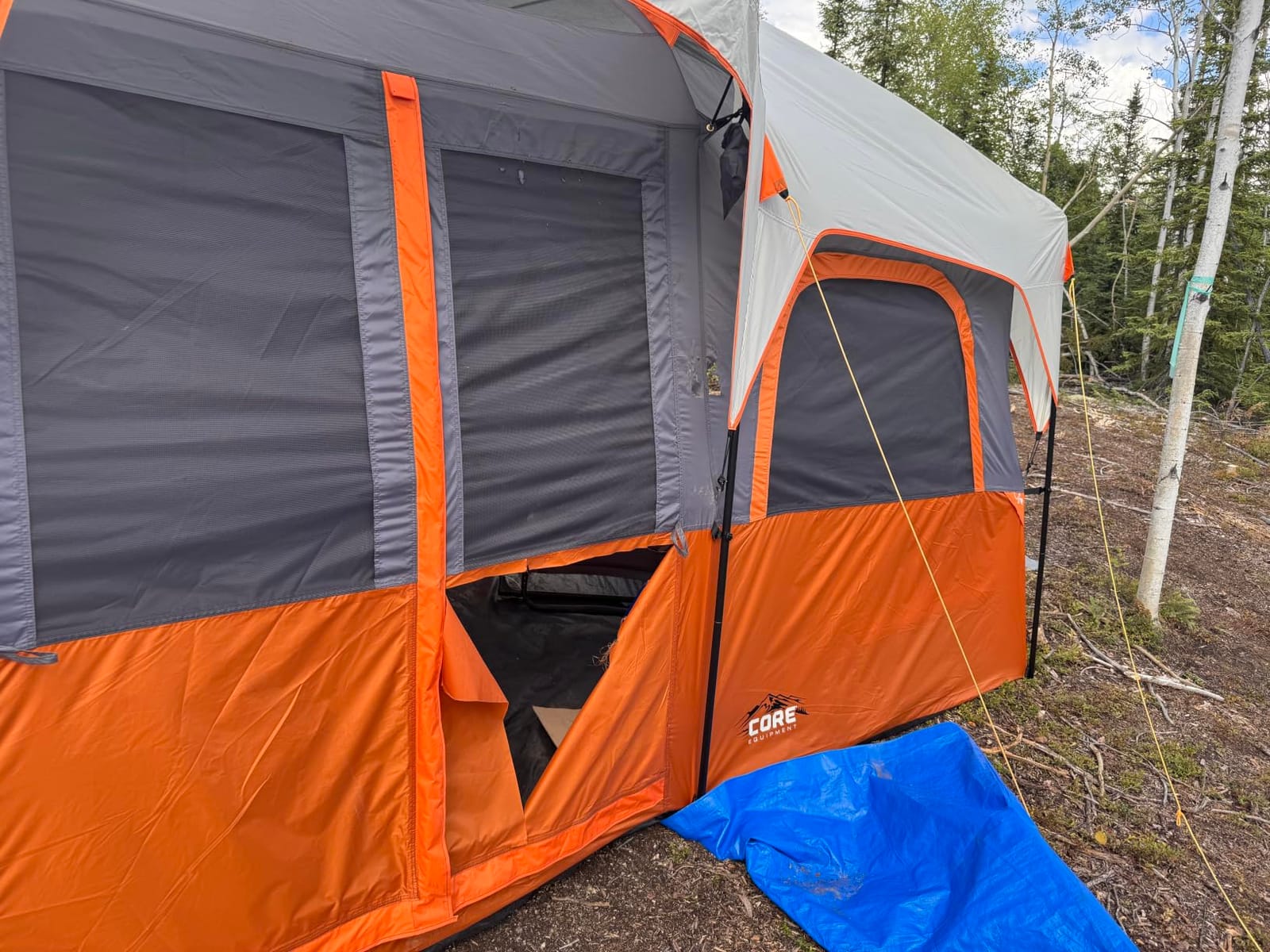
Nine windows plus a mesh ceiling kept it bearable in heat, and the fully taped rainfly with sealed seams performed well. The 22 guylines and steel stakes are the most serious anchoring kit here, and you need all of them in wind.
The cost is real: 49 pounds packed, a bulky carry size, and a fiberglass frame that flexes. Owners consistently describe the first pitch as a two-person job, though several report becoming comfortable with it after a trip or two.
How many people actually fit in a 176 square foot floor?
Four queen air beds means up to eight sleepers in true comfort, plus gear space in the middle. We would plan on six as the honest number for adults and older children, with a divider creating a kids’ room.
The difference from a 6-person label is that this floor has leftover area after everyone is placed. That leftover is what buys you a wet gear corner, a diaper station and walking room, which is where most family tent frustration actually comes from.
Who should pass on this tent?
Anyone whose camping involves carrying a tent. At 49 pounds this is strictly car camping, and at that size it will dominate a small vehicle’s cargo area for the entire trip.
Also pass if you camp exposed or high-wind alone with one adult. Flexing fiberglass poles plus a very large sail area is not a combination we would want to test in an alpine forecast.
7. KTT Extra Large Tent – Best Three-Door Access for Night Bathroom Trips
KTT Extra Large Tent 10 Person,Family Cabin Tents,2 Rooms,3 Doors and 3 Windows with Mesh,Straight Wall,Waterproof,Double Layer,Big Tent for Outdoor,Picnic,Camping,Family Gathering(Brown)
125 sq ft floor
6.2 ft height
30 lb
Three doors and three windows
Pros
- Three doors for independent access
- Door poles convert to an awning
- Straight walls and mesh roof
- Room divider included
- Includes repair patches
Cons
- 15-minute manual setup
- Fiberglass poles in wind
- Waterproofing reports are mixed
- Instructions are hard to follow
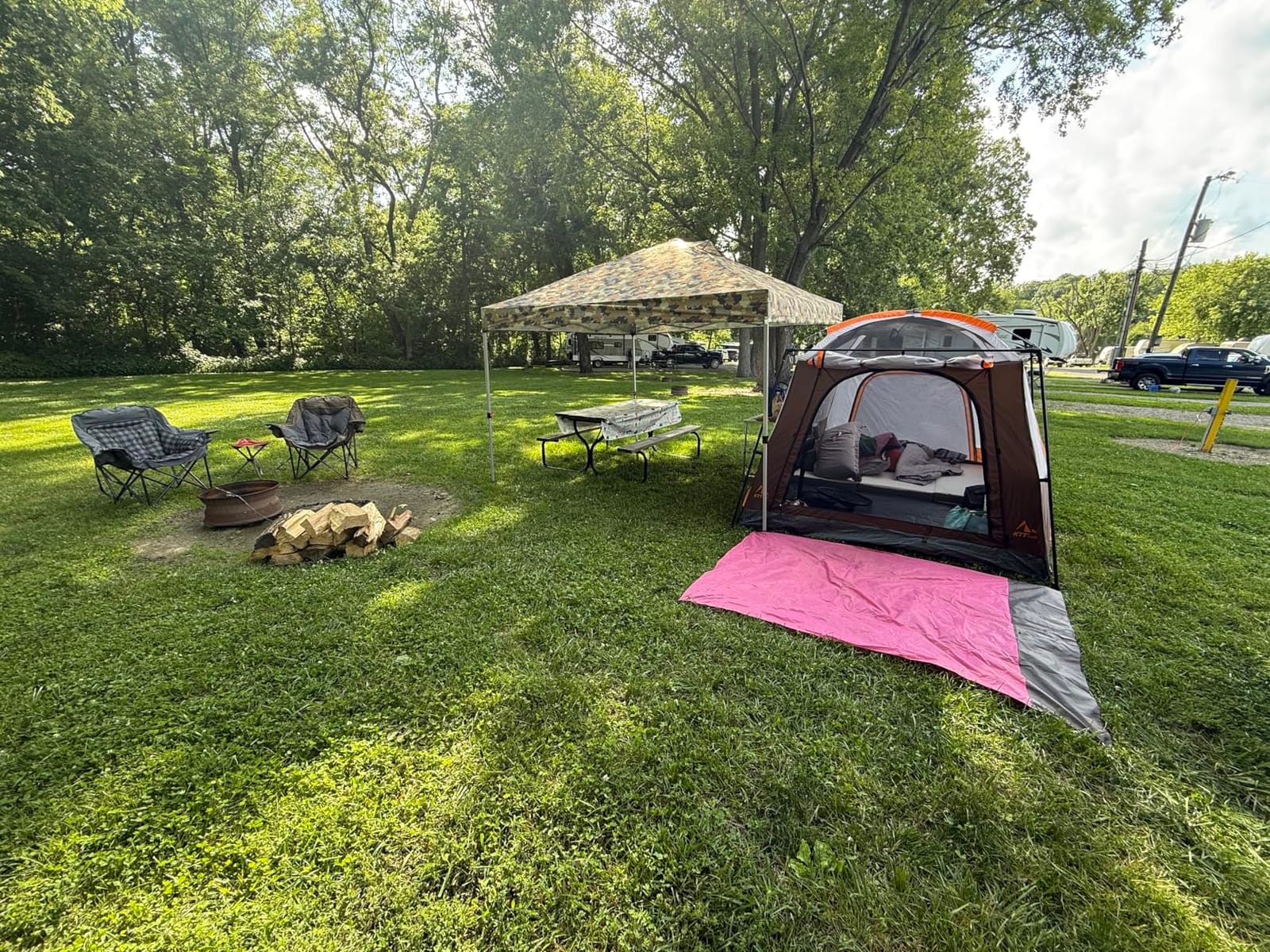
Three doors is the reason this tent is on the list. In a family tent, doors are not a convenience feature, they are the difference between one parent getting up and three parents getting up. With three entry points, a kid can leave for the bathroom without crossing anyone.
The floor is 12.5 by 8.5 feet with 6.2 feet of center height and straight walls, and it splits into two rooms with a divider. Owners like the detail that the door poles unzip and convert into a freestanding awning, which gives you a shaded dry spot for a playpen or a cooler.
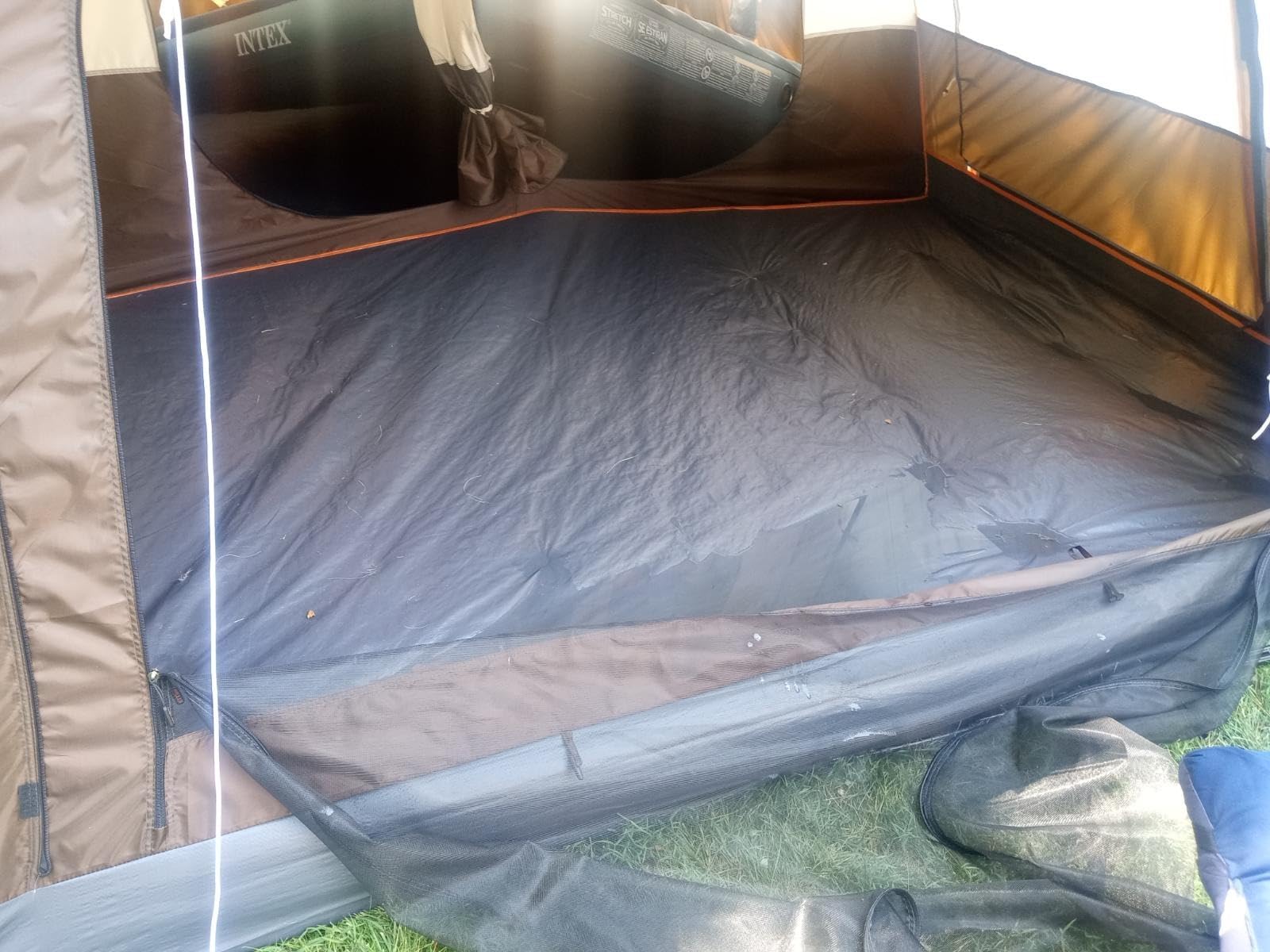
Where it loses ground is honesty about weather. Owner reports on waterproofing in heavy rain are genuinely mixed, and the setup takes 15-plus minutes with tight pole sleeves. Budget a seam-sealing session before the first trip and the picture improves considerably.
Instructions being poorly written is a recurring complaint and it is fair. Our advice is to watch one setup video before your first pitch and set aside an unhurried hour.
Do three doors really change family camping?
More than any other feature on this list, in our experience. Parents on r/camping who switched to multi-door tents report fewer wake-ups caused by other people moving around, and it protects the kids who sleep in the middle of the floor.
Doors also ventilate. With three openings instead of one, cross-breeze on a still night is a genuine possibility, which reduces condensation without a fan.
When is the KTT the wrong choice?
Skip it if you arrive in the dark with tired kids. A 15-minute pitch with confusing instructions and tight sleeves is a poor match for a first-time family camping trip, which is exactly the trip where you want the fastest tent available.
Skip it if you camp in genuinely wet conditions without doing the prep work. And skip it for high-wind sites, because fiberglass poles plus a broad straight-wall face is where that combination hurts.
8. PORTAL Family Tent With Screen Room – Best Bug-Free Living Space
PORTAL 6/8/10 Person Family Camping Tent with Screen Room
32 sq ft screen porch
76-inch height
19.8 lb
Two doors
Pros
- Integrated screen porch creates a bug-free room
- 76 inches of standing height
- Two doors and two E-ports
- Full mesh ceiling
- Color-coded 5-minute setup
Cons
- Tunnel shape is less stable in wind
- Porch poles are short for heavy rain
- Floor area spec is unclear in listing
- One-year warranty
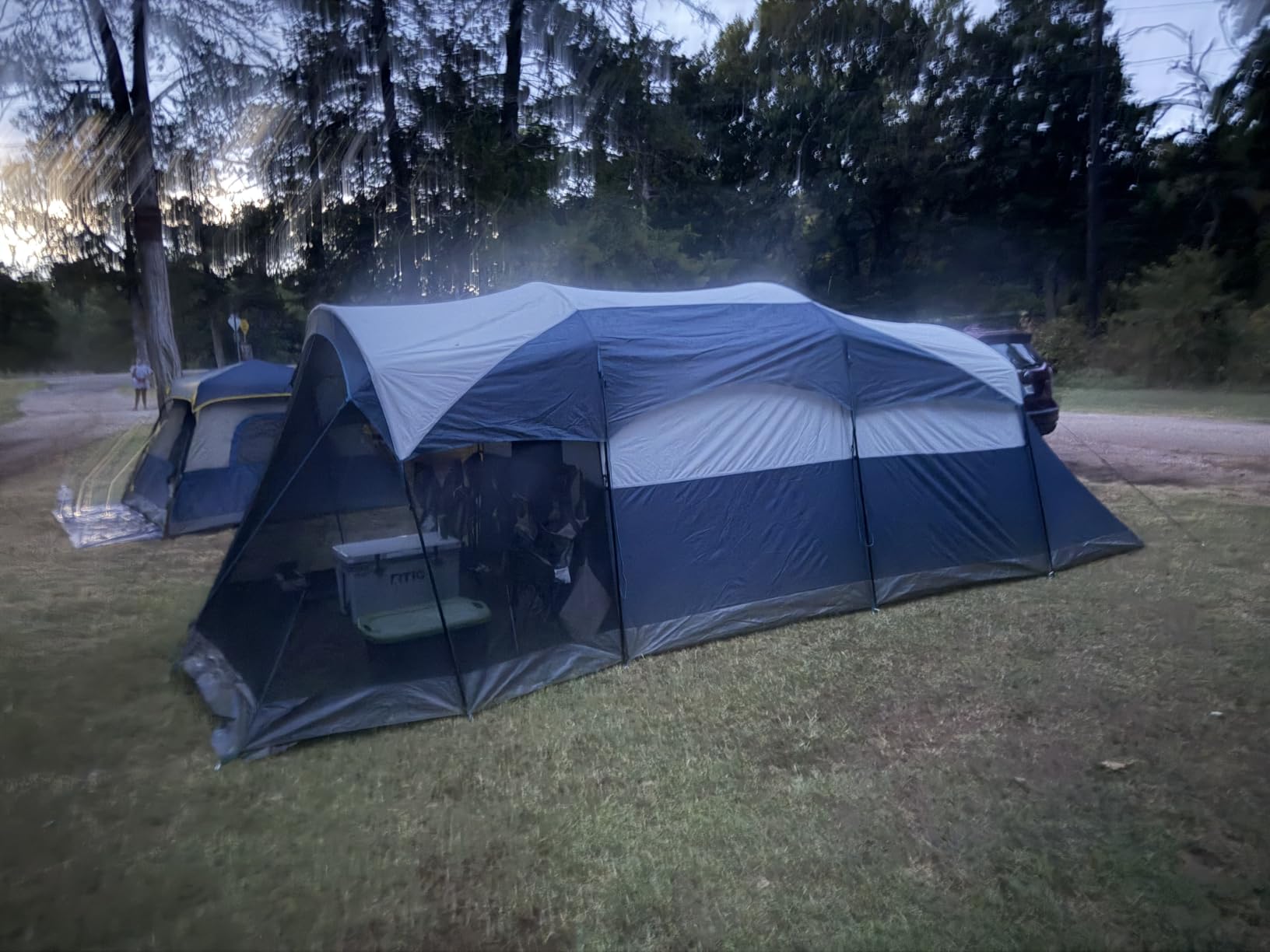
This is the only tent here with a genuine screened porch, and that changes the shape of a family trip more than the floor specs suggest. You get a covered, bug-free 32 square foot room where the adults can sit with coffee while the kids play out of the sun.
The main sleeping area is a 15 by 8 foot tunnel with a 76-inch ceiling and two doors, plus two E-ports so you can run a power cable into the tent. That full mesh ceiling and window package made it the coolest-feeling tent on our list in late summer.
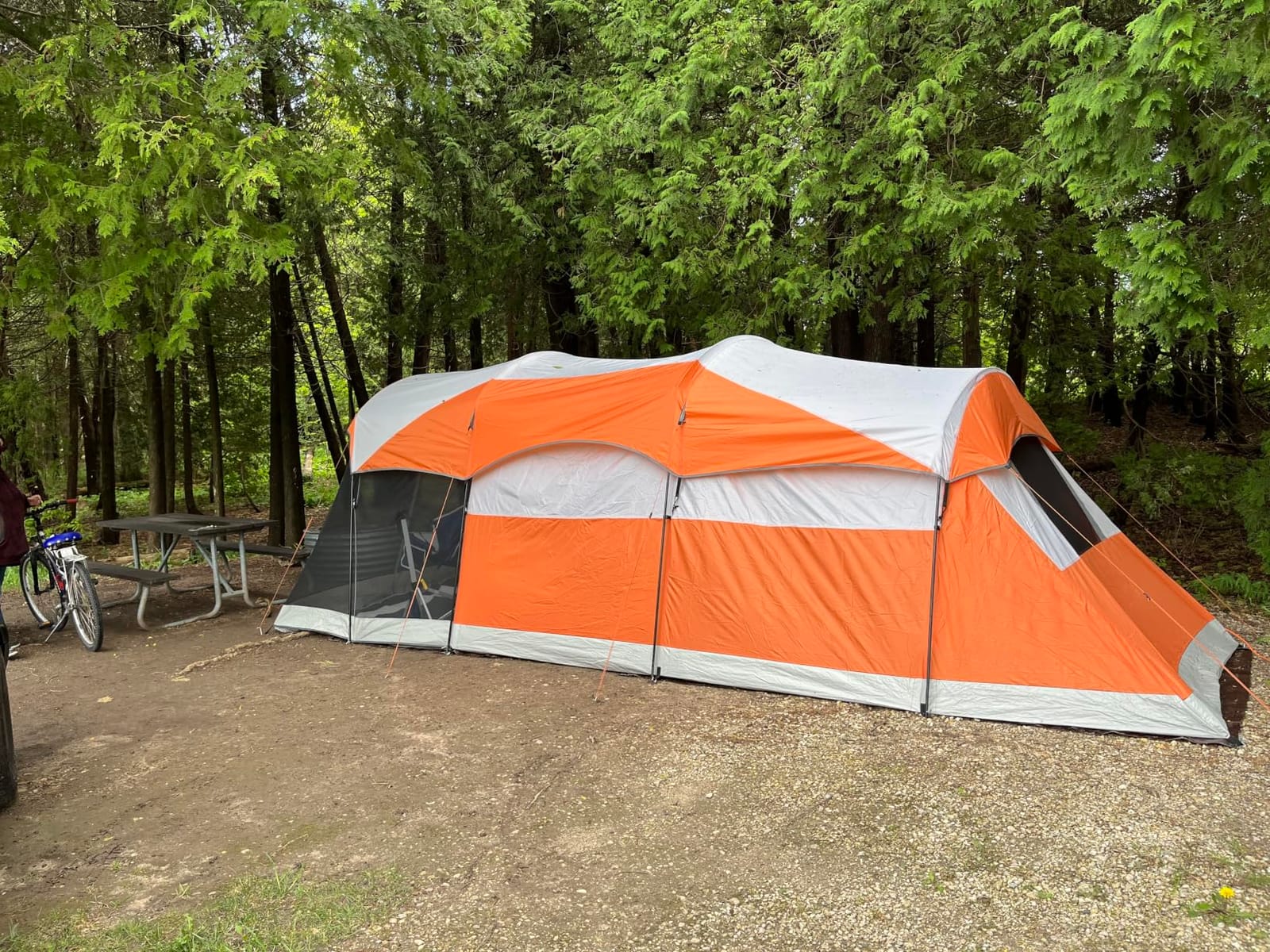
The porch is floorless, which we want to be straight about. Mud, grass and ants come in, and the 76-inch porch poles sit close enough to the ground that heavy rain runs off them rather than away from them.
The tunnel profile is also less stable in wind than a cabin shape, so we would stake it thoroughly and avoid exposed sites.
Is a floorless screen room worth the tradeoff?
Yes, when the alternative is kids sitting inside a zipped tent while adults take turns standing in the sun. The porch is where the tent becomes part of the campsite instead of a bedroom you retreat to.
It earns its keep from dusk, when mosquitoes usually decide the family is the main course. Just bring a mat for the floor and wipe your feet.
What are the drawbacks of the tunnel design?
Wind exposure. A tunnel tent has less vertical wall to brace against and a longer profile that catches gusts, so it needs every stake and guyline the kit includes. Owners also note the porch poles are short, which means rain off the fly can pool near the entrance.
One other practical note: the published floor area figure on the listing looks wrong, so go by the 15 by 8 foot main floor plus porch dimensions rather than the square footage in the spec box.
9. Outbound 8 Person Dome Tent – Best Lightweight Two-Room Option
Outbound 8 Person 3 Season Lightweight Easy Set Up Dome Tent with Room Divider, Rainfly, Tent Stakes, and Carrying Bag for Camping, Multicolor
112 sq ft floor
78.7-inch height
18 lb
Bathtub floor
Pros
- Only 18 pounds packed
- Two rooms with divider
- Bathtub floor and leakproof seams
- Full coverage rainfly with canopy
- Interior mesh pockets
Cons
- 600mm coating is low compared with rivals
- Single door for both rooms
- Fiberglass poles and stakes
- Dome shape cuts usable wall space
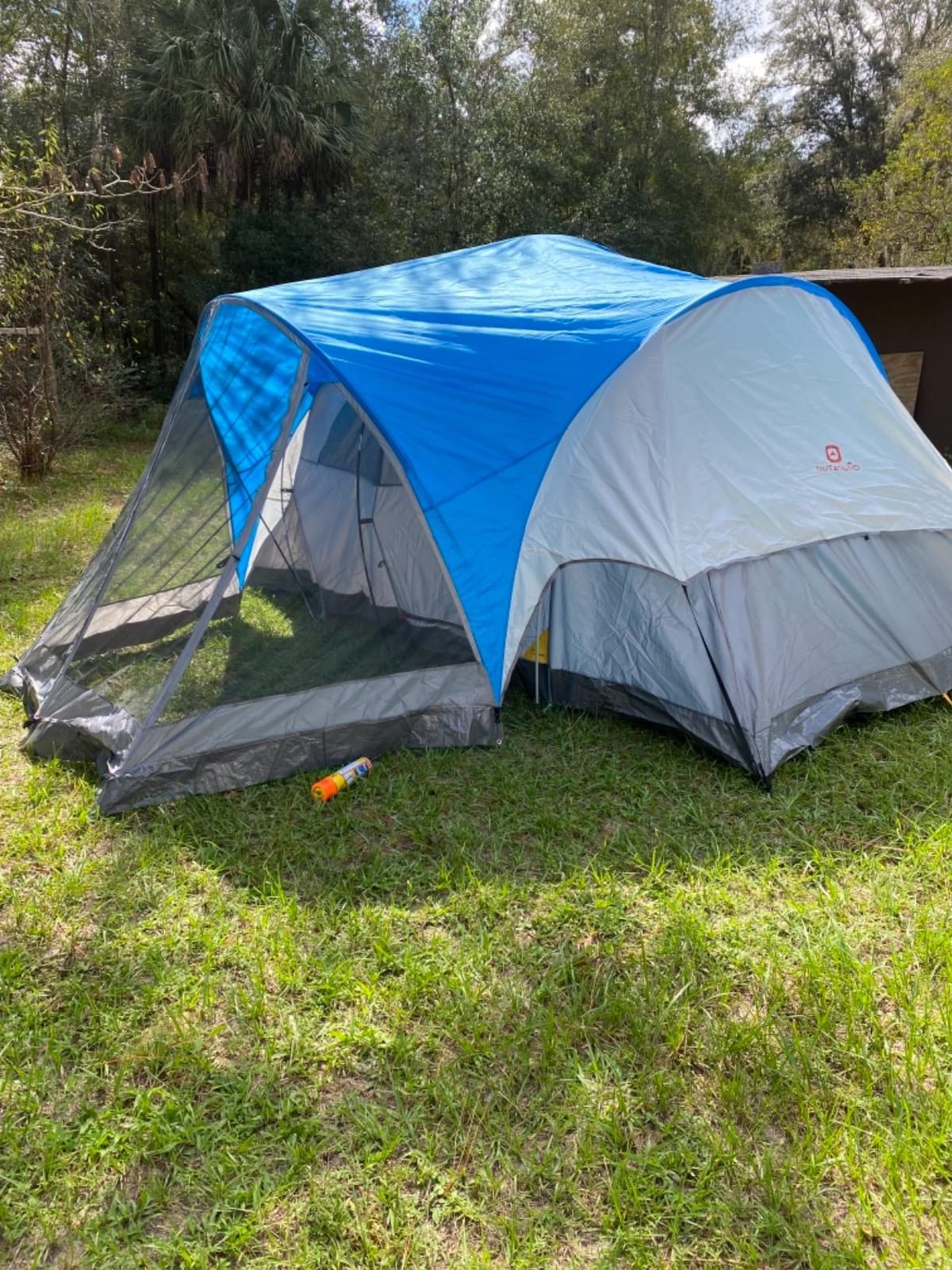
At 18 pounds packed, the Outbound 8 is the lightest genuine two-room family tent here, and that is a real advantage for a family splitting between two cars or sharing a trunk with a cooler. An 8-person rated dome that light is uncommon.
The bathtub floor rises up the side walls several inches so surface water cannot wick under the seam, which is the design detail that keeps this category dry when the ground is wet. Owners also like the full-coverage rainfly and front canopy for a dry place to change clothes.
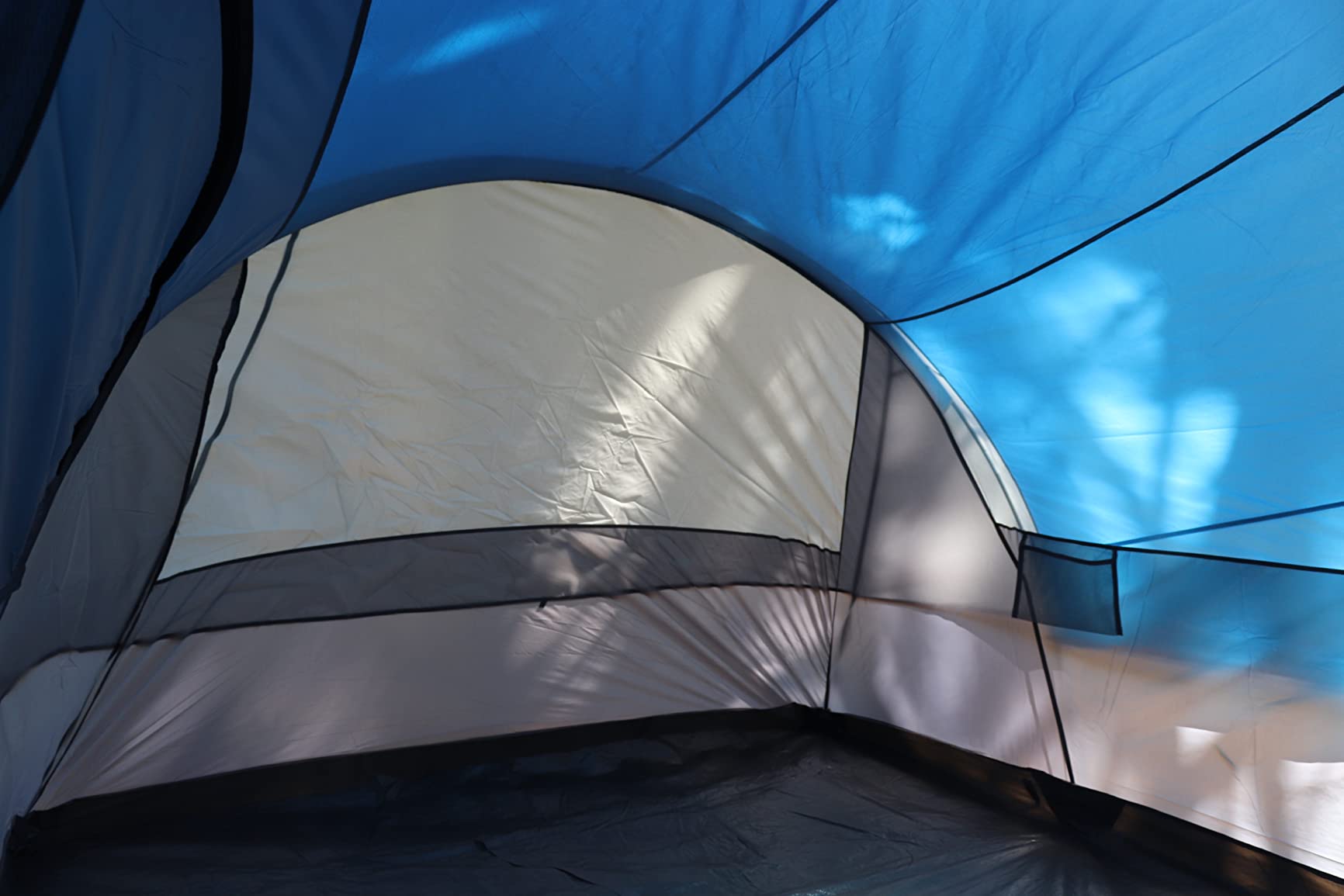
Two rooms via a divider means parents on one side and kids on the other, and the D-shaped mesh doors with interior zip windows give a view out without full exposure to the weather.
The weakness is weather performance. The 185T 68D poly taffeta carries a 600mm coating, which is the lowest number in this roundup, and reviewers say so plainly. For fair-weather camping in the shoulder season it is fine; for sustained rain we would choose something else.
How much does a 600mm coating matter in practice?
It matters in a downpour, and much less in ordinary scattered showers. Hydrostatic head measures the pressure the fabric holds before water passes through, so a lower number means you want the fly taut and the guylines tight rather than relying on the fabric alone.
If you do take this tent into wet weather, seam sealer and a footprint close most of the gap. We would still carry it as fair-weather shelter.
When is the Outbound 8 the right call?
It is right when weight is your binding constraint and the forecast is cooperative. Families who carry gear to a site, or who split loads between vehicles on a long drive, get a lot of usable room for a modest carry weight.
It is wrong when you have one door for two rooms and a light sleeper in the far room, or when the trip is billed as wet-weather camping. Check the forecast and pick accordingly.
10. Coleman 4 Person Instant Tent – Best for Festivals and Quick Overnight Trips
Coleman 4/6/8/10 Person Instant Camping Tent with 1-Minute Setup
56 sq ft floor
48-inch height
19.1 lb
Integrated rainfly
Pros
- Genuine one-minute pitch
- Integrated rainfly needs no attachment
- Polyguard 2X double-thick fabric
- PFAS-free materials
- Wider door for gear
Cons
- 48-inch ceiling means constant crouching
- 56 sq ft is tight for 4 adults
- Fiberglass poles
- Included bag and stakes are basic
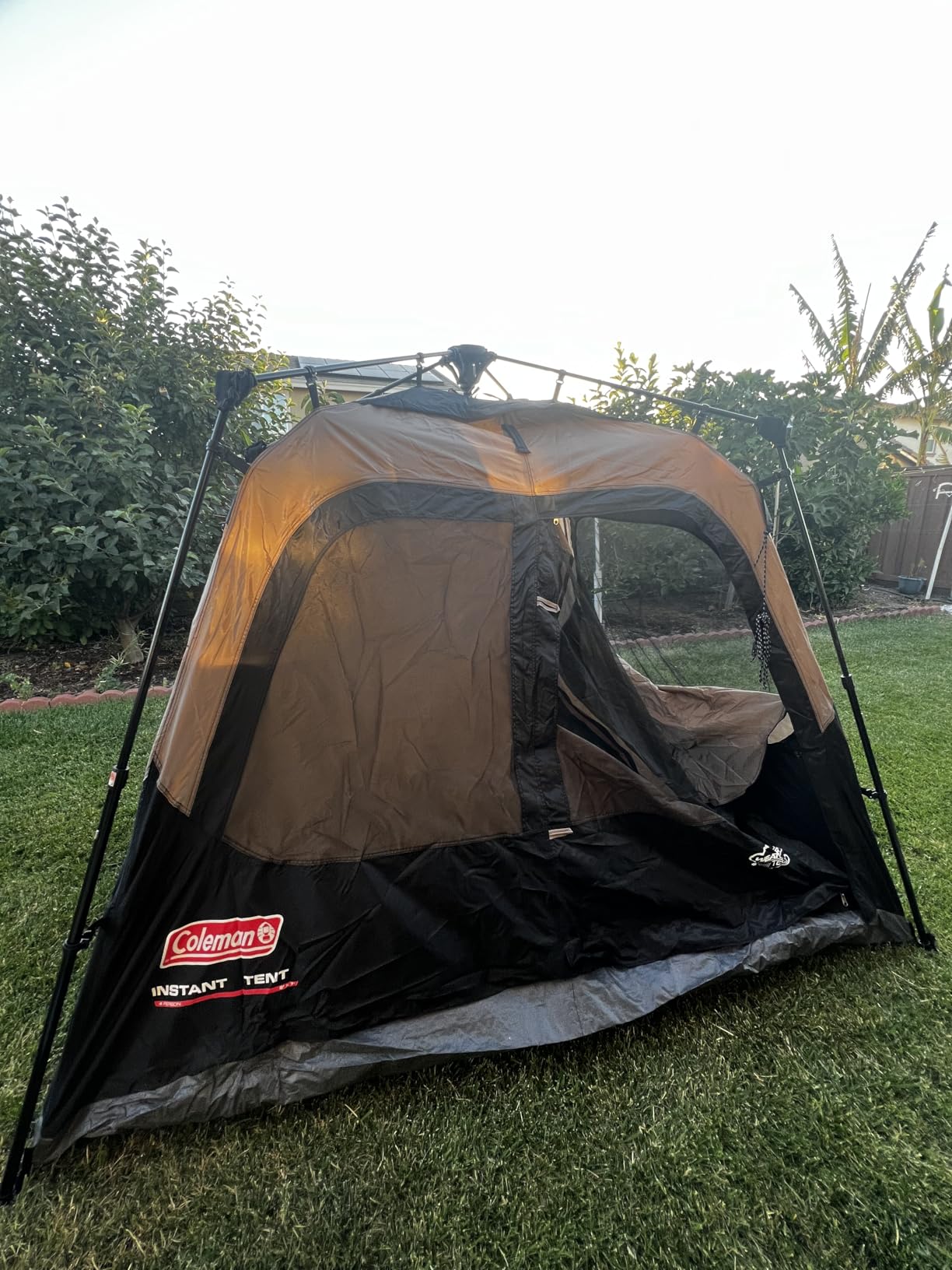
The pitch speed is remarkable and the reason this tent exists. Two people pull the body apart and it locks into a standing shape in about a minute, rainfly already attached. For a festival weekend, a fairground stop, or a spontaneous overnight, there is no other tent this easy to put up in the dark.
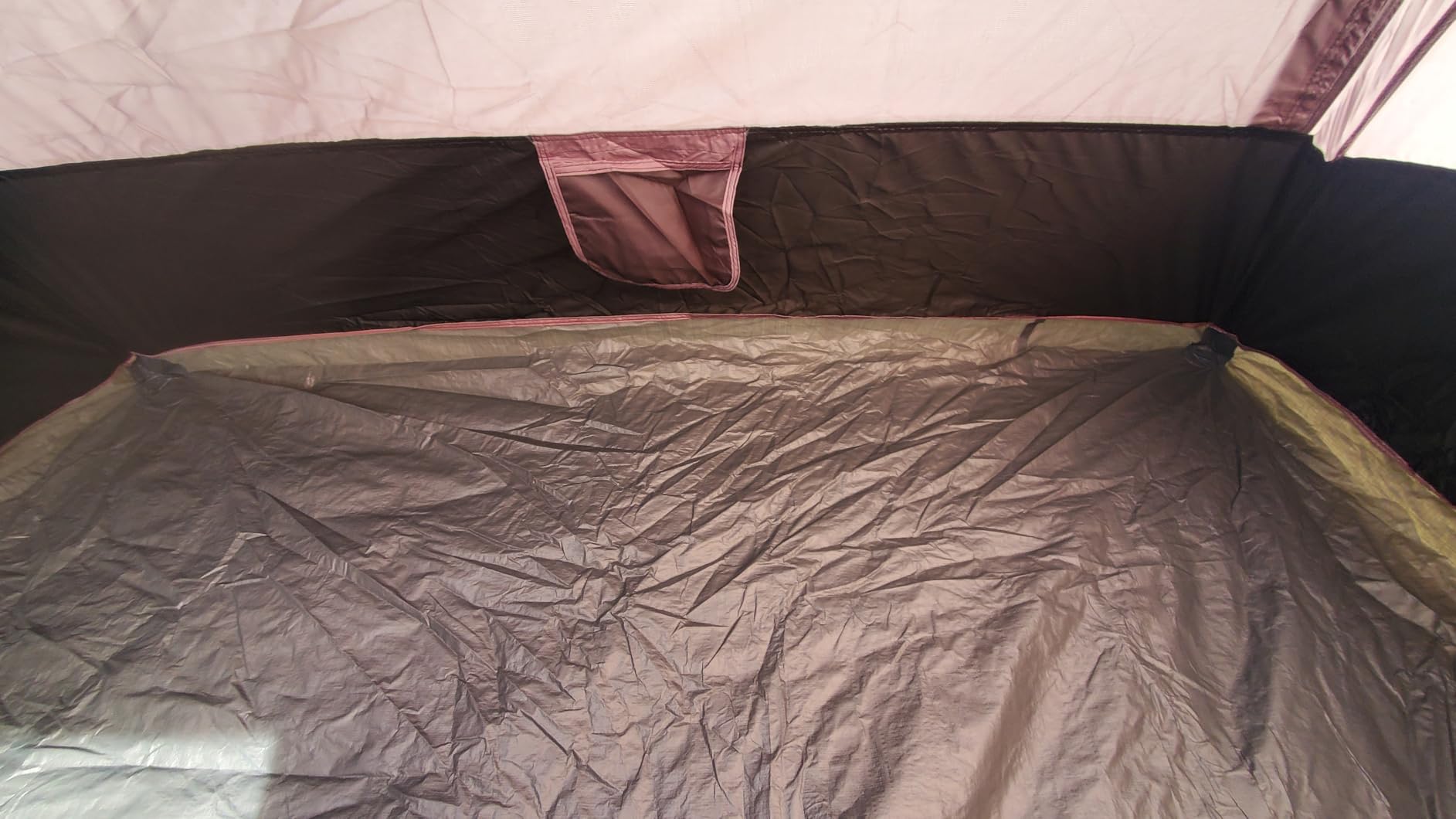
The Polyguard 2X double-thick fabric and the integrated fly mean there is no separate fly to lose, forget or fight with. The wider door takes a duffel and a pair of boots without unpacking the gear on the ground.
Now the reality of the space. A 56 square foot floor and a 48-inch center height is a crouch, not a sit. Our tester described roughly three nights of comfortable sleep for two adults before the walls started feeling close, and rated the 4-person capacity as optimistic.
The included storage bag is reported to be undersized and prone to tearing, so we would assume you will need a separate dry bag for the tent between trips.
Can four adults sleep in this tent?
Technically it is rated for four, and it fits one queen air bed. Practically, four adults at 56 square feet means shoulder-to-shoulder sleeping with zero gear storage and no ability to walk around the perimeter.
Two adults and one child is a comfortable fit. Two adults and two kids is a snug weekend fit that works if you leave the gear in the vestibule.
Is it worth buying for family camping?
Only as a secondary tent. For the main family shelter, the low ceiling and tight floor make daily life difficult, and we would choose almost anything else on this list for anything past two nights.
It earns its place as festival shelter, a nap tent for parents at a crowded site, or a cheap rain shelter for gear when the big tent is in the sun. Just upgrade the stakes before you rely on it in wind.
11. Coleman Skydome – Best Five-Minute Setup With Aluminum Poles
Coleman Skydome 2/4/6/8 Person Camping Tent with 5-Minute Setup
56 sq ft floor
57.6-inch height
10.2 lb
WeatherTec system
Pros
- 20% more headroom than a standard dome
- Aluminum pole frame
- WeatherTec welded corners and inverted seams
- Light at 10.2 pounds
- Tested to 35 mph
Cons
- Still a crouching height at 57 inches
- 56 sq ft is tight for four
- Folded poles are awkward to pack
- Mixed reports on wind and rain
The Skydome is the Sundome with better engineering. Pre-attached poles give a five-minute pitch, aluminum replaces fiberglass for the frame, and the WeatherTec system uses welded corners with inverted seams so water runs off rather than into the stitching.
At 10.2 pounds it is one of the lighter tents here, and the near-vertical walls add roughly 20% more headroom than a traditional dome of the same size. That is still a crouching height, but a much less punishing one.
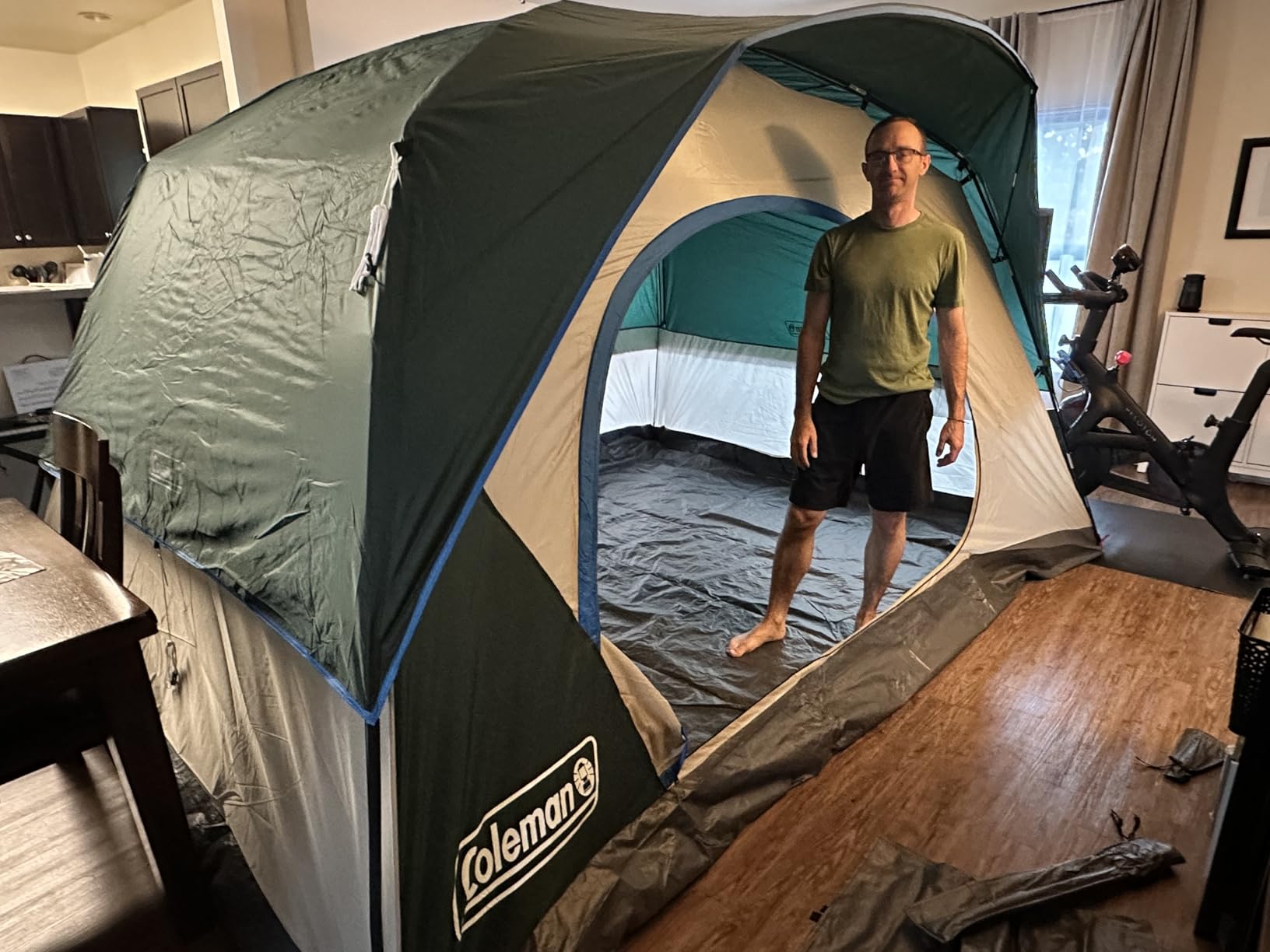
The trade is the same one every pre-attached-pole tent makes. Because the poles never detach, the fold is a single stiff shape that resists going back into the bag cleanly. Owners report the carry bag eventually gives up under the stress.
Warranty service is also a recurring complaint, so we would register the tent and keep the receipt.
Is the Skydome better than the Sundome?
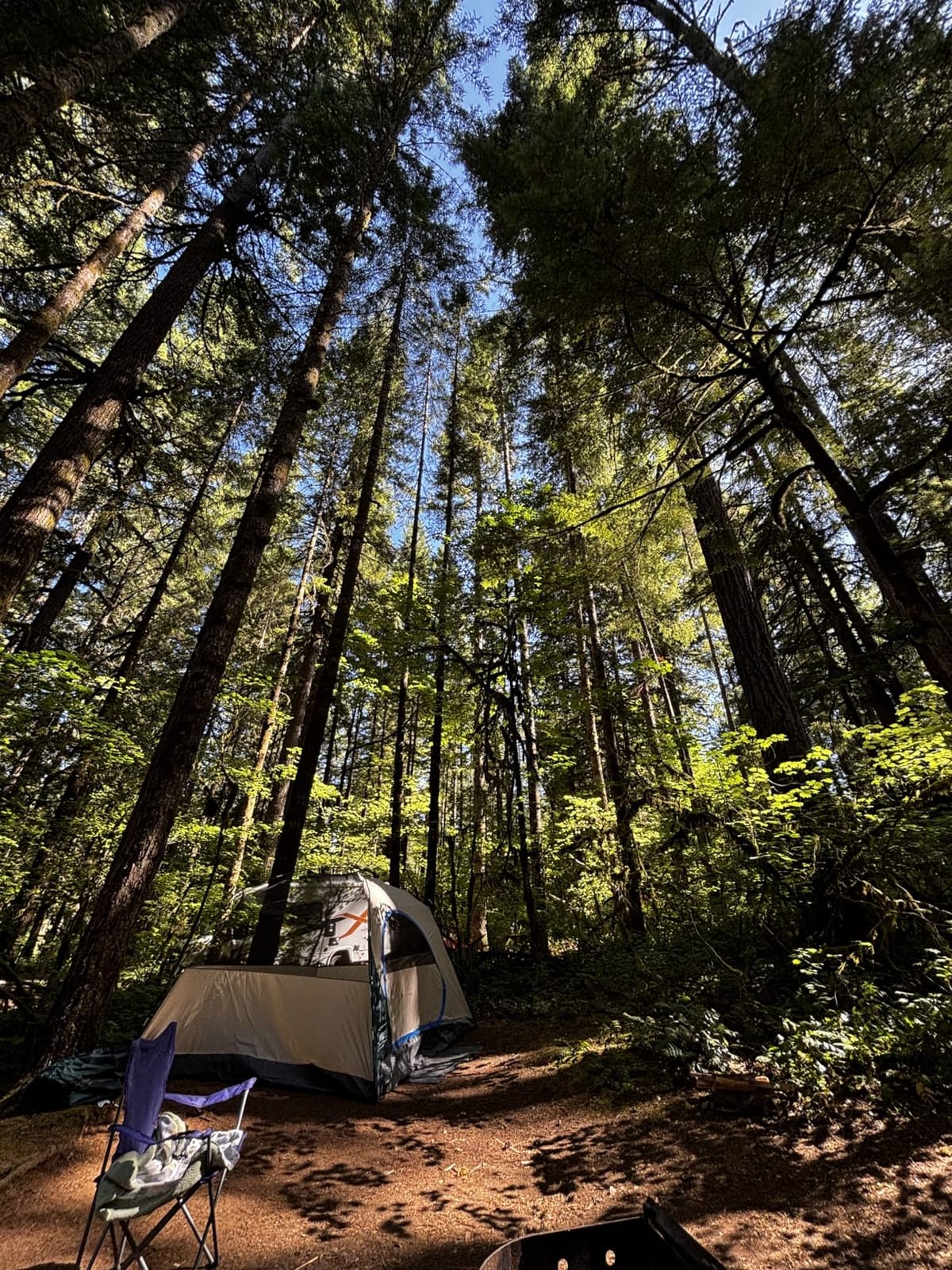
For a family that camps in mixed weather, yes. Aluminum poles and welded, inverted seams are a real improvement over a stitched dome with a lighter frame, and the two tents weigh about the same.
For fair-weather weekend trips where a Sundome is enough, the Skydome is a modest upgrade rather than a fix. It does not solve space, and at 56 square feet for four people the space is the real constraint.
What should you watch out for?
Height. Anyone over five foot ten will spend the weekend ducking, and that frustration builds faster than rain leaks do. Also plan for the packing problem, since the fixed poles turn repacking into a wrestling exercise.
Mixed owner reports on wind and rain resistance mean we would still add a footprint and not treat the 35 mph frame test as a promise about the seams.
12. CORE 12 Person Instant Cabin – Best Three-Room Tent for Extended Trips
CORE 12 Person Instant Cabin Tent with 2 Minute Setup
180 sq ft floor
80-inch height
47.8 lb
Three rooms
Pros
- Largest floor here at 180 square feet
- Three rooms with two dividers
- 2-minute setup with steel poles
- 11 windows and mesh ceiling
- Fits four queen air beds
Cons
- Heaviest at 47.8 pounds
- Front T-door zipper gap
- Included stakes are flimsy
- Large packed size
This is the most capable tent in the roundup and the least forgiving. At 180 square feet with an 80-inch ceiling and three rooms created by two dividers, it does something no other tent here does: it gives a large family genuinely separate spaces, so two parents can sleep while a teenager has their own room.
The steel pre-attached poles are the strongest frame in this list and the two-minute pitch is real. With practice, one adult can set it up, though we would still call a two-person first pitch wise.
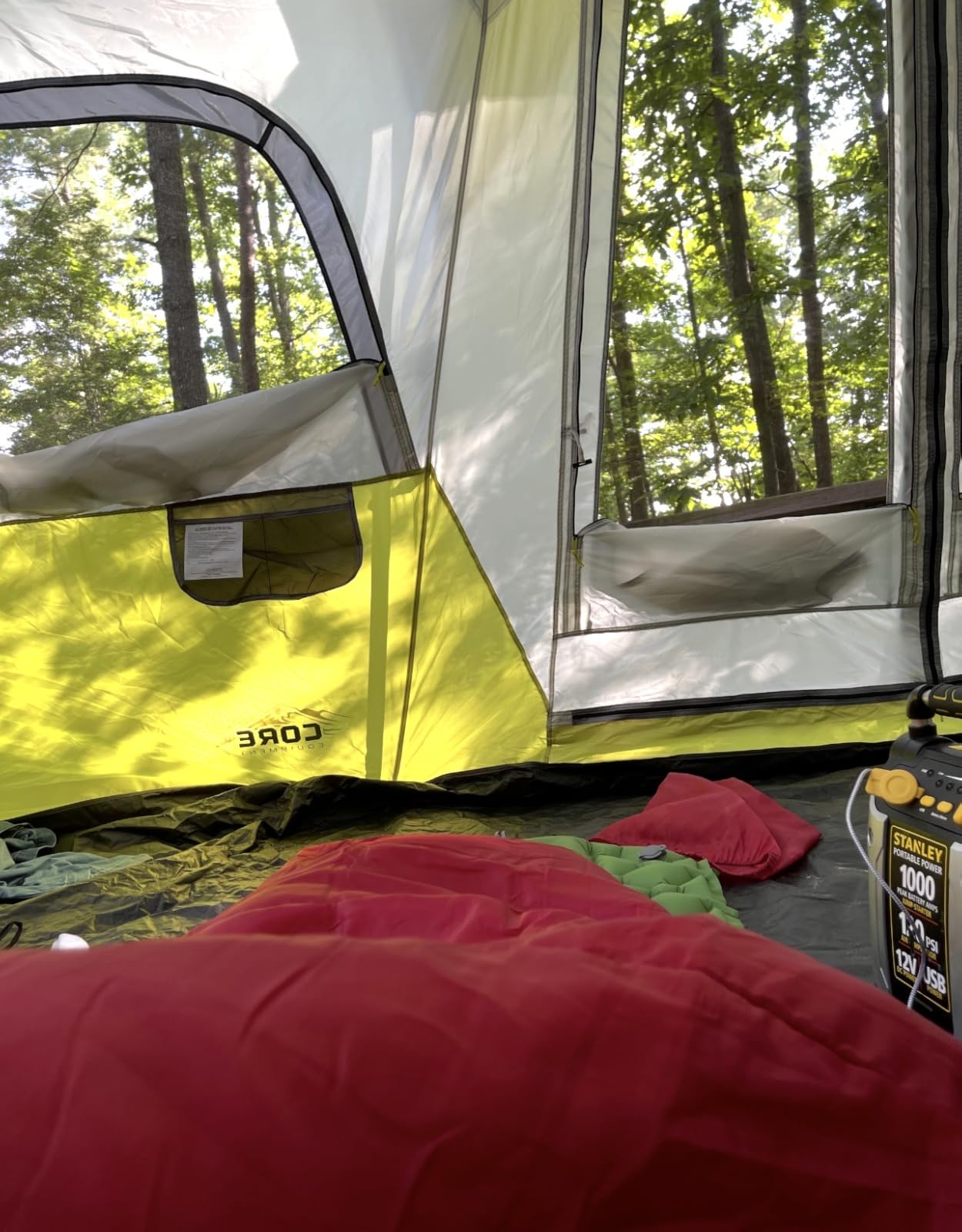
Eleven windows plus a mesh ceiling make it the best-ventilated tent here, which matters across a week of camping far more than it does on a single night.
The issues are known and fixable. The front T-door has a zipper gap that admits bugs and rain, the rainfly strap can sit where it flattens a pole in strong wind, and the included stakes are described as flimsy. Budget to replace the stakes and to add a patch or a magnetic closure at the T-door.
Is a three-room layout worth it for a family?
Yes, if you have kids old enough to value a door, or if you are on trips long enough that separate rooms stop feeling like a luxury. A divider in a two-room tent still shares the same air and the same light, while a third room with a second divider genuinely closes.
It also solves the gear problem. One room becomes a gear room, one becomes parents plus infant or toddler, and one becomes the kids’ room, which keeps the floor usable.
Who should skip it?
Anyone who has to carry their tent, camp in a small vehicle, or split gear between two cars. At 47.8 pounds and a bulky packed size, this is a garage tent that lives in one place.
Skip it if your trips are one or two nights. The weight and packed volume only pay back over a basecamp-style season.
How to Choose a Family Tent That Actually Fits
Do the square-footage math before you shop
Start with the number of adults, then add children by age. A useful working rule is roughly 25 to 30 square feet per adult and 15 to 20 per child, and you add about 20 square feet for a dog and a pack-n-play. Two adults and two kids lands around 110 square feet before gear, which is why so many tents marketed at six people feel cramped to a family of four.
Add 20 square feet for a dog or a playpen, and another 10 if you want an air bed plus a gear pile that is not on top of anyone. On that math, a family of four should target 100 to 130 square feet, and a family of six with gear should look at 150 square feet or more.
A second quick check: divide the floor area by the rated capacity. Anything under about 20 square feet per claimed sleeper is a tight fit, and 6-person ratings frequently sit near 15.
Read waterproof ratings correctly
Hydrostatic head, measured in millimeters, tells you how much water pressure the fabric holds before it passes through. For family car camping, treat anything under 1000mm as fair-weather only. From 1000mm to 1500mm handles steady rain. Above 1500mm is a proper rain shelter, and above 2000mm belongs to alpine tents you do not need.
The floor matters more than the fly. A coated or laminated floor with a bathtub edge, where the material rises up the wall several inches, stops ground water wicking under a seam, and that is where most leaks we have seen actually start.
Seam sealing is the cheap insurance. A budget tent with taped seams and a sealed floor can outperform an expensive one with stitched seams, and an evening with seam sealer costs far less than a wet weekend.
Pole material decides how long it lasts
Aluminum is the sweet spot: light, strong and it bends rather than snapping. Steel is stronger still and is what you want for a large exposed cabin, but it is heavy. Fiberglass is the cheapest and lightest, and it is the source of the most common complaint we found, which is poles snapping or splintering in wind after a season or two of use.
The practical rule is that fiberglass is fine for sheltered fair-weather sites and unwise for exposed ridges. Check the pole material in the listing before anything else, because it is the hardest thing to change later.
Setup style: instant hub versus color-coded poles
Instant tents use pre-attached poles that unfold into place. They pitch in seconds to two minutes, which is the single biggest quality-of-life gain when you have small children. The costs are heavier packed weight, an awkward fold, and in some designs a lower ceiling.
Color-coded pole tents take five to fifteen minutes and pack down better. They are lighter and usually cheaper, and they are the right choice if one adult pitches while the other wrangles kids.
Traditional sleeved pole tents are the slowest of the three and the toughest to learn. For a first family camping trip, we would still steer you toward an instant or color-coded model.
Standing height, doors and vestibules
For adults, the practical thresholds are under 55 inches for crouching, 60 to 70 inches for sitting up comfortably, and 75 inches or more for standing. Family tents with kids should aim for 70 inches minimum so an adult can dress without kneeling in the dirt.
Doors are the feature families most often underrate. Two doors let parents reach kids without crossing the whole floor, and three doors are better still. The 2am bathroom trip is the moment that decides whether the trip felt restful.
Vestibules matter more in practice than spec sheets suggest. A covered area outside the sleeping floor for muddy shoes, wet towels and a cooler is what keeps the interior usable. Look for 12 square feet or more if you are not a minimalist.
What breaks first on budget tents
In order, from our reading of owner reports: fiberglass poles in wind, then door and window zippers, then floor seams that were never sealed, then the carry bag that rips when you force a stiff tent back into it. Fabric panels rarely fail first.
Three habits prevent most of it. Seam seal before the first trip. Buy better stakes than the ones in the box. And never store a tent damp, because mildew in the fabric ends the tent’s life faster than any wind.
If you are still working out the rest of the kit, our guide to kids teepee tents for playrooms covers indoor setups, while sauna tents for home recovery is a sensible cold-weather complement for a family that camps year round.
Frequently Asked Questions
What size tent do I need for a family of 4?
For two adults and two children, target 100 to 130 square feet of floor area. That gives each adult about 25 to 30 square feet and each child 15 to 20, plus room for an air bed, a gear pile and wet shoes. A 6-person tent in the 90 to 126 square foot range usually fits a family of four well, while anything under 80 square feet will feel cramped once gear is inside.
What is the best camping tent for large families?
Large families should prioritize floor area, standing height and multiple doors over the capacity label. A 12-person cabin with 176 to 180 square feet, 80 inches or more of center height, and three rooms created by dividers gives parents and kids separate spaces and enough floor for four queen air beds. That capacity is a genuine fit for six to eight people once gear is in the tent.
Do all tents leak in heavy rain?
No, but many budget tents leak at the floor seam rather than the rainfly. A polyurethane-coated floor with a bathtub edge that rises up the wall stops ground water from wicking underneath, and taped seams make the biggest difference. If you own a tent with stitched seams, an evening of seam sealer will fix most leaks and costs far less than replacing the tent.
Are instant setup tents worth it for families?
Instant tents are worth it when small children make a 15-minute pitch genuinely tiring, since pre-attached poles put the tent up in seconds to two minutes. The costs are heavier packed weight, an awkward fold, and sometimes a lower ceiling. If you camp solo or carry your tent any distance, a lighter color-coded pole tent that packs down better is usually the better trade.
What is the best family tent for camping with toddlers?
For toddlers, prioritize two or more doors so a parent can reach a crying child without stepping over anyone, a vestibule for muddy shoes and gear, and full mesh for airflow and stargazing. Standing height of 70 inches or more lets an adult dress a child without kneeling. Avoid low dome tents under 60 inches, which force adults to crouch every time they move inside.
How do I fix a broken tent?
Most family tent problems are repairable. A fiberglass pole that splinters needs a metal sleeve or a taped sleeve over the break and fresh shock cord. Floor seam leaks need seam sealer applied to a clean dry surface. A zipper failure on the main door can often be routed around with a second path. Before buying a new tent, check whether the manufacturer warranty covers the failed part, since poles and seams are common warranty items.
Our Final Verdict on the Best Tents for Family Camping in 2026
After a full season of comparisons, the Coleman Sundome is still our pick for the best tents for family camping, because 23,000-plus reviews and an aluminum frame make it the least likely to disappoint on trip three. Buy a footprint, and treat the four-person rating as a two-adult-and-kids number.
If setup speed is your biggest pain point, the CORE 9 Instant Cabin gives you two minutes, 126 square feet and two rooms, and the CORE 12 Instant Cabin goes to 180 square feet and three rooms if you camp for weeks. For bad weather, the UNP 6 Person is the one whose coated floor keeps water out, and for bug-free living space the PORTAL screen porch is the pick nobody else offers.
Whatever you choose, do the square-footage math before checkout, check the pole material, and give the tent a seam-sealing evening before its first trip. Those three steps fix most of the complaints we found in owner reviews.
For more family gear roundups, our picks for foosball tables for family rooms and kneeboards for family fun cover indoor and backyard play.