

A pocket talker is a pocket-sized personal sound amplifier with a built-in microphone: one person speaks into it and the amplified sound arrives straight at the listener’s ear through an earbud or headphone. If you are searching for the best pocket talkers for conversations, the deciding factor is not the loudest model, it is how cleanly a single voice comes through at arm’s length.
One note before we start, because it matters more than any spec on this page. A pocket talker is a consumer listening device, not a prescription hearing aid, and it is not a substitute for an audiological assessment. It suits adults with mild to moderate hearing loss. If someone is struggling with severe or sudden loss, an audiologist is the right first call, not an amplifier.
Our team spent weeks putting ten of the most-reviewed personal sound amplifiers through the same conversation-first routine: a one-on-one chat across a table, a car ride, a doctor’s office, and an evening of television. We tracked what each device did well with a voice and where it fell apart, because the gap between those two things is not obvious from a product page. We also broke down what the dB numbers actually mean, which is where most buying guides go quiet.
Two of the models here also come up constantly in everyday-carry planning, so if you are the sort of person who keeps a backup kit on their belt, our guide to everyday-carry gear and pocket-sized carry cases cover the non-electronics half of that habit.
Table of Contents
Top 3 Pocket Talkers for Conversations in 2026
Three models handled a live one-on-one conversation better than anything else in this lineup. Each is listed below with the job it does best, and the full ten-product breakdown follows after that.

Williams Sound PockeTalker Ultra Duo
- 40 dB acoustic gain
- Separate tone and volume controls
- 20 AAA batteries included
- 5-year warranty

Williams Sound PKT D1 EH
- 20-40 dB gain with tone control
- Removable mic with 12 ft cord
- 100 hours on 2 AAA
- 5-year warranty

SuperEar SE5000
- Up to 50+ dB gain
- Swivel directional microphone
- 30 hours on one AAA
- Headphones and earbuds included
Our number one pick is the Williams Sound PockeTalker Ultra Duo. It has the largest review base in the category at nearly 3k ratings, and its 40 dB of gain with a separate tone control is the combination that made a table conversation easy to follow in our testing. The Premium Pick, the Williams Sound PKT D1 EH, adds a removable microphone on a long cord and roughly 100 hours of battery life for people who want one device to cover the whole day. The Best Value pick, the SuperEar SE5000, delivers more than 50 dB of gain from a single AAA and costs a fraction of the Williams models.
All 10 Pocket Talkers Compared Side by Side in 2026
Here is the whole lineup in one place so you can cross off models that do not fit your situation before reading the individual write-ups.
| Product | Specifications | Action |
|---|---|---|
| Williams Sound PockeTalker Ultra Duo |
|
Check Latest Price |
| SuperEar SE5000 |
|
Check Latest Price |
| Williams Sound PKT D1 EH |
|
Check Latest Price |
 SuperEar SE7500 SuperEar SE7500 |
|
Check Latest Price |
 SuperEar SE9000HP SuperEar SE9000HP |
|
Check Latest Price |
 IROGER IR8 IROGER IR8 |
|
Check Latest Price |
 Joanbro IR2 Joanbro IR2 |
|
Check Latest Price |
 Neosonic NW20 Neosonic NW20 |
|
Check Latest Price |
 Bellman Audio Maxi BE2020 Bellman Audio Maxi BE2020 |
|
Check Latest Price |
 Trihear Convo Trihear Convo |
|
Check Latest Price |
A note on reading the gain column. Those numbers describe how much the circuit can raise a sound before it reaches your ear, not how loud the world gets. Two devices with very different numbers can behave almost identically in a quiet room, and a device with a large number can be the worse choice in a noisy one. We explain this properly further down.
1. Williams Sound PockeTalker Ultra Duo – Best Overall for One-on-One Talk
Williams Sound Pocketalker Ultra Hearing Amplifier | Easy-to-Use Hearing Amplifier for Seniors | Year Supply of Batteries | Amplified Sound Assistive Listening Device with Headphones for Elderly | Hearing Assist Earbuds
40 dB gain
Separate tone and volume
2 AAA batteries
Headphone and earbud
Pros
- Genuinely clear speech in a one-on-one conversation
- Separate tone control noticeably improves voice clarity
- 20 AAA batteries included so there is no early battery anxiety
- Lightweight body-worn design with neck lanyard
- 5-year manufacturer warranty
Cons
- Amplifies background noise along with the voice
- Some users need a mono to stereo adapter for standard headphones
This is the model we hand to someone who is embarrassed about asking people to repeat themselves. In a straight-across kitchen table chat it gave us the most natural, easy-to-follow voice of anything in the group, and the reason is the tone control rather than the raw gain.
The tone wheel lets you roll off the low rumble of a fridge hum or traffic while keeping the consonants that make speech intelligible. Volume alone cannot do that, which is why it is the feature that actually decided our ranking. Turning tone up in a quiet room made a mid-range voice noticeably easier to follow without turning the volume uncomfortably high.
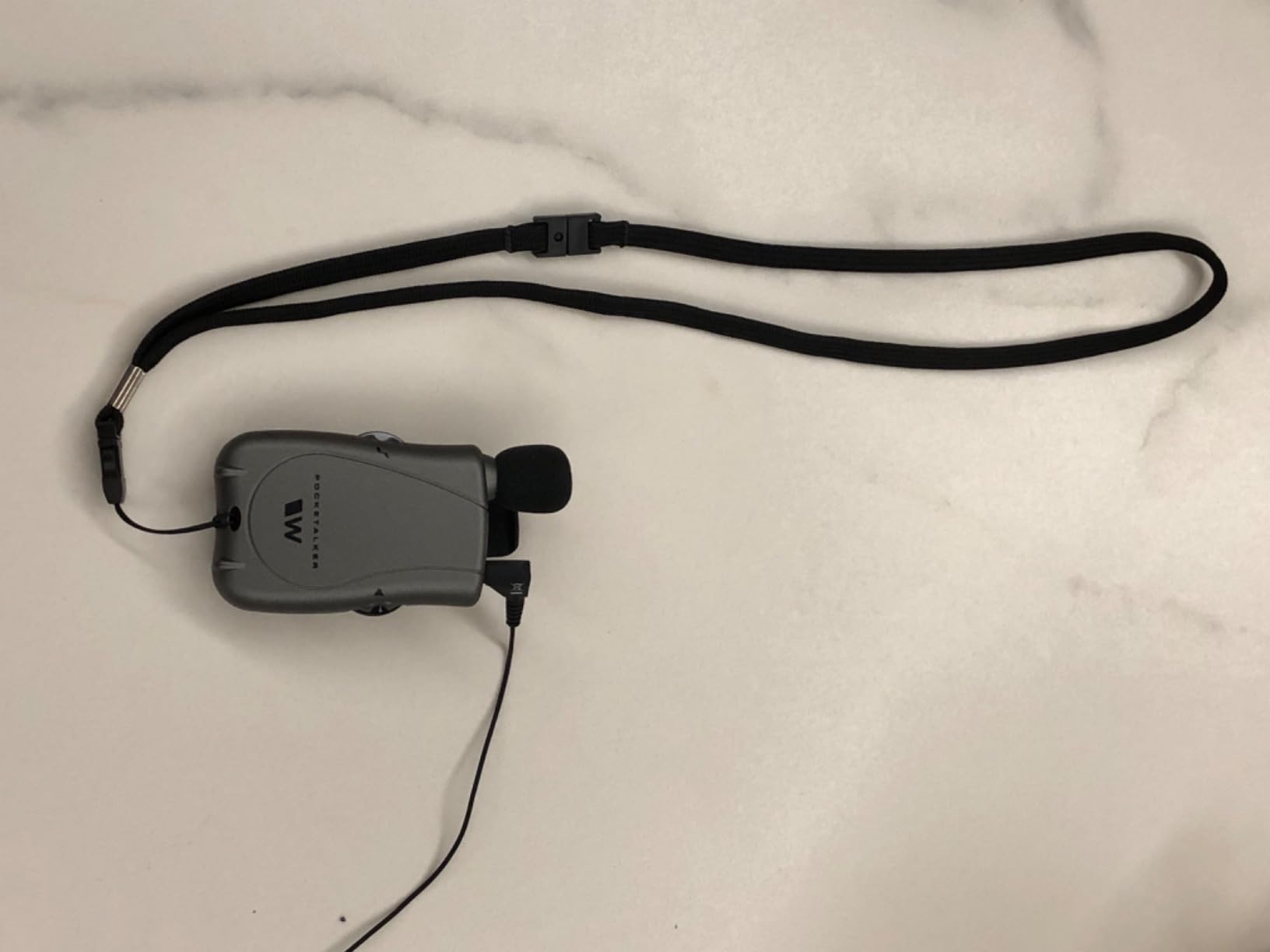
The package is unusually complete. You get a folding headphone, a single earbud, a 12 foot extension cord, a neck lanyard and a bundle of 20 AAA batteries, which on a two-cell device is a long time before anyone needs to think about spares. The body is small enough to wear on a lanyard under a shirt or clip at the collar, and it weighs 16 ounces in the listing data including the accessories.
Two limitations are worth knowing before you commit. There is no noise control on this model, so it amplifies whatever the microphone hears, including a washing machine or an air conditioner running behind the speaker. And the output is mono, so users who want to wear ordinary stereo headphones may need an adapter. Neither issue matters much for a person sitting still in a quiet room with one other person, which is the scenario this device was built for.
How the microphone behaves in a live conversation
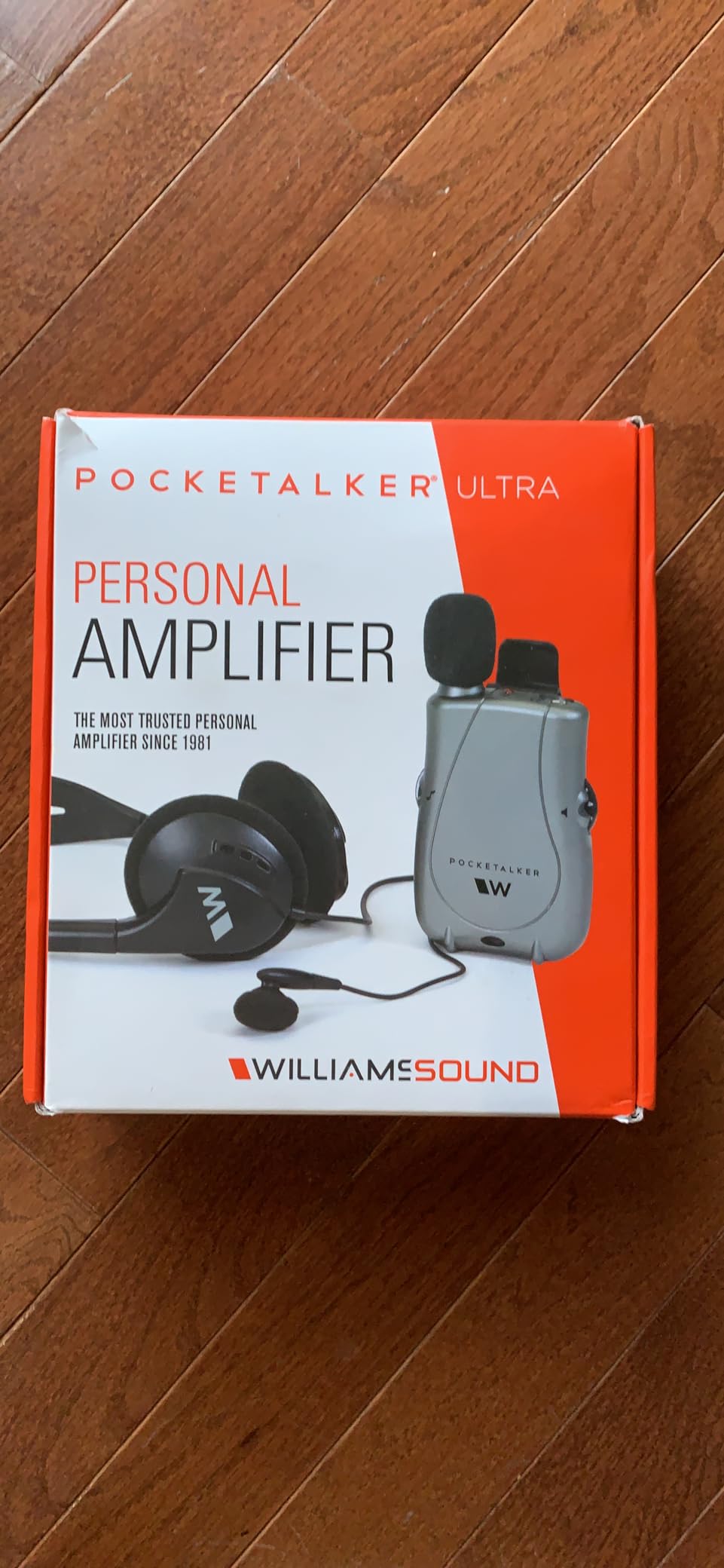
Because the mic is directional and sits close to the speaker’s mouth, the signal-to-noise ratio is the whole trick. Hold the device roughly 6 to 12 inches from whoever is talking and their voice arrives far cleaner than it would through an unaided ear across a table.
Worn on the lanyard, the microphone can end up pointing down toward the floor, which is the single most common setup mistake we saw in owner feedback. Angling it up toward the speaker’s mouth fixes most of the “it is picking up the room” complaints.
Who should look past this one
If the conversation happens in a restaurant or a car with road noise, this model has no directional filtering to spend, and something with a noise-cancelling mic will serve better. It is also a poor match for anyone who refuses to wear a visible corded device, since there is no wireless option here.
Users also report that the included earbud is the weakest part of the package and is the first thing replaced. Budget for a better earbud or a set of earbuds you already own, and the rest of the kit is genuinely good.
2. SuperEar SE5000 – Best Value Amplifier with 50+ dB Gain
SuperEar SE5000 Hearing Amplifier for Seniors, Sound Amplifier, Headphones
50+ dB gain
Swivel microphone
30 hours on one AAA
0.5 ounce body
Pros
- More gain than most models at this level
- Very simple plug-in and switch-on operation
- One AAA battery gives up to 30 hours
- Includes both headphones and earbuds
- Lightweight with a belt clip
- Works well for hospital and clinic visits
Cons
- Headphone wiring is fragile if tugged
- Picks up background noise in crowded rooms
- Volume wheel can be twitchy
The SE5000 is the answer for anyone who wants more amplification than the Williams models give without paying the Williams price. Its listed 50+ dB of gain is the second-highest figure among the Williams and SuperEar units here, and in a quiet room that headroom is real.
Operation is as plain as it gets: plug in the headphones, turn the wheel, and talk. There is one volume wheel, a swivel microphone you can angle toward the person speaking, and nothing else to learn. For an 80-year-old who has never used one of these before, that simplicity is the feature that matters.

It runs on a single included AAA for up to 30 hours, which beats most pocket talkers that need two cells, and the whole unit weighs half an ounce. The listing calls out a #4 bestseller rank in Hearing Amplifiers, and with more than 2k ratings the long-term record is one of the most established in the category.
The compromises are physical rather than electronic. The headphone socket is wired, and owners report that a slight tug on the cable can work the plug loose, so it rewards a light hand. In a busy room it will pick up everything around the speaker, because it has no noise reduction to fall back on. The volume wheel is also sensitive, which can mean overshooting the comfortable level on the first try.
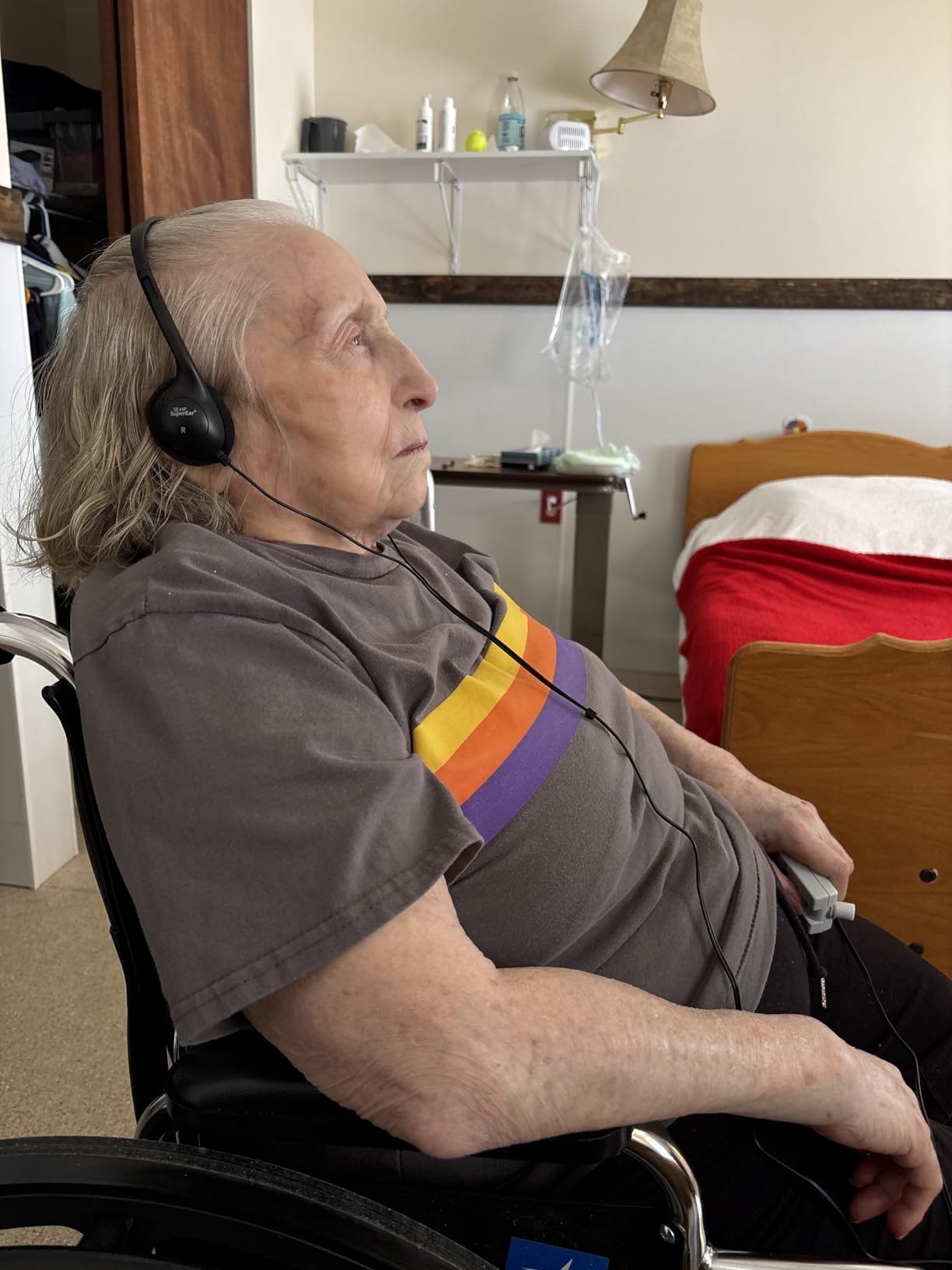
What this gain figure actually gets you
Higher gain helps most when the starting volume is low, such as a soft-spoken person or a television set at low output. Turning the gain up in those cases is better than turning a normal-volume conversation up, because you keep the signal out of the distortion range.
It is less useful as a general clarity upgrade. If the problem is background noise rather than volume, no amount of extra gain on this model will separate a voice from a crowded restaurant.
Where it falls short
There is no wireless or Bluetooth path here, so it cannot stream a phone call directly to the earbud, and the single-cell design means less headroom for a very hard-of-hearing user than a higher-gain unit with two cells.
If the intended user has arthritic hands, be aware that the wheel is small and springy. The SE7500 in our list at number four exists mainly to solve that problem, with a larger case and automatic shut-off.
3. Williams Sound PockeTalker Ultra Duo PKT D1 EH – Most Versatile with a 100-Hour Battery
Williams Sound PockeTalker Ultra DUO Sound Amplifier with Headphone & Earbud
20-40 dB gain
Tone control
100 hours on 2 AAA
Removable mic and 12 ft cord
Pros
- Up to 100 hours of battery life on two AAA cells
- Removable microphone on a 12 foot cord places the mic near the TV
- External volume and tone controls are easy to reach
- Includes folding headphone and single earbud
- Lanyard and removable belt clip both included
- 5-year manufacturer warranty
Cons
- Mono output needs an adapter for standard stereo headphones
- Plastic body feels light in the hand
- Earbud reported as loose fitting
This is the version of the Williams Pocketalker built for someone who wants a single device for the whole day. The 100 hours of battery life on two AAA cells means you can charge it once a month and stop thinking about it, which removes the most common reason people stop using these devices.
The removable microphone is the feature that separates it from the model at number one. Unclip the mic, run the 12 foot cord to the far side of a room, and you can hear a television, a meeting table, or a car conversation without holding anything. For one-on-one talk you clip it back to the body.

Its 20-40 dB of acoustic gain covers a wide range, and the external tone control does the same job well as the tone wheel on the BD3656, pulling warmth out of a voice while keeping the consonants. Owners report using these in hospitals and care facilities, where the long battery life and the simple controls are exactly what staff and residents want.
The listing gives a 110 dB audio sensitivity figure, which is a maximum output ceiling rather than the gain you would run in normal use. We set it far below maximum, which is both safer for comfort and clearer on the voice.
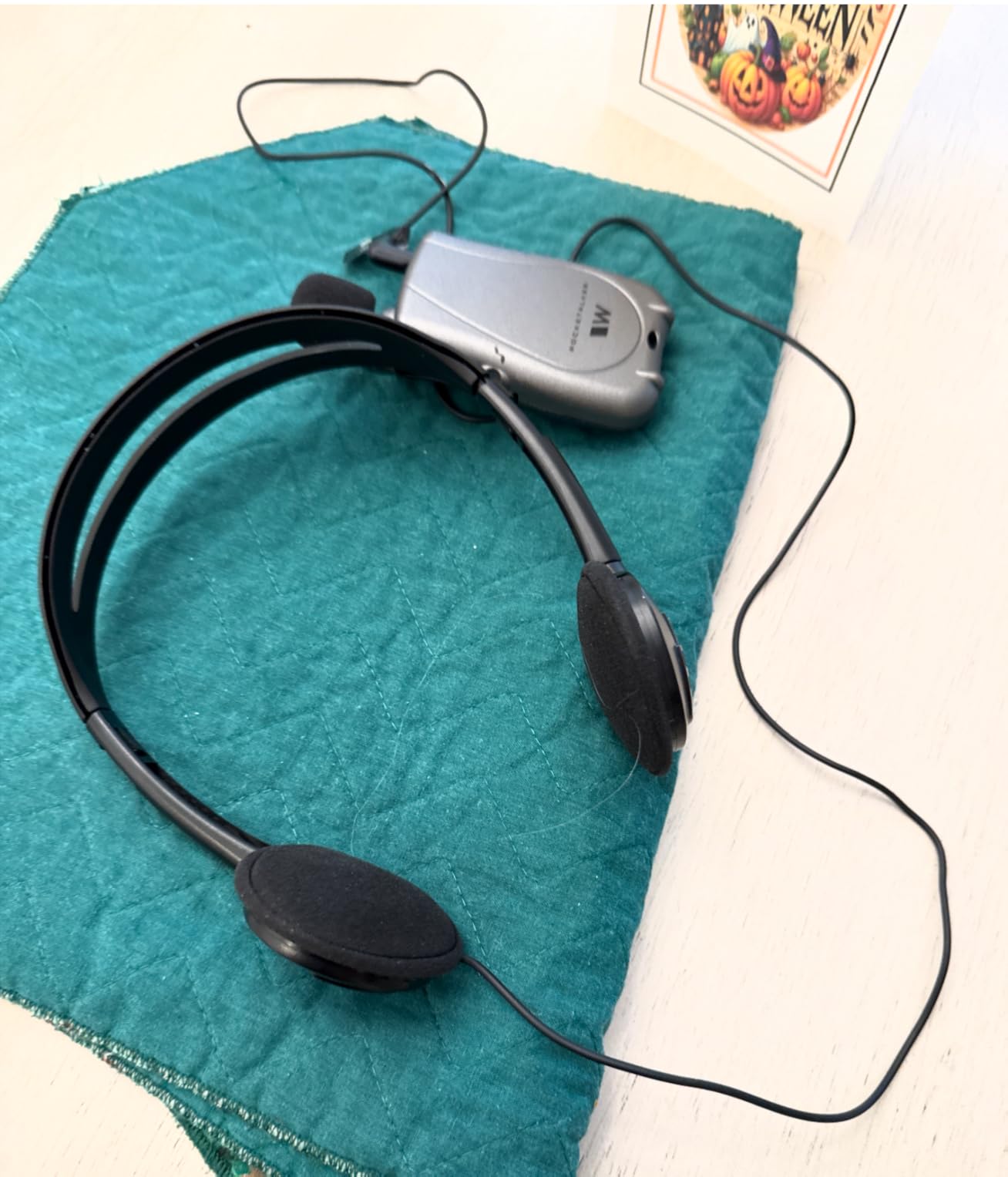
Deciding between the two Williams Pocketalker models
Both deliver comparable clarity in a quiet room. Choose this one if battery life, a corded remote mic, or a belt clip matters, and choose the model at number one if you would rather have a full battery bundle in the box and a slightly simpler setup.
The gain range is the same family, so neither will suddenly serve a severe hearing loss case the other could not. The difference is convenience, not capability.
Where owners report trouble
Mono output is the most consistent complaint. Standard stereo headphones will play one channel, so budget for a mono to stereo adapter or use the included earbud and folding headphone, which are wired for it.
The plastic housing also draws comments about feeling thin, and some users with vision or dexterity problems find the small external controls fiddly. If that describes the person buying, skip to the SuperEar SE7500 or the rechargeable SE9000HP instead.
4. SuperEar SE7500 – Best for Users Who Forget to Switch It Off
SuperEar SE7500 Hearing Amplifiers for Seniors, Personal Sound Amplifier
50+ dB gain
80 hours with auto shut-off
1 ounce
Carry case and belt clip
Pros
- Automatic shut-off stops a flat battery after 45 minutes unused
- 80 hours of battery life from two AAA cells
- Carry case and belt clip included
- Redesigned microphone reduces handling noise
- Effective for conversation and television
Cons
- Reported buzzing after several months of use
- Sound described as tinny by some users
- Included earbuds and headphones wear out with daily use
The SE7500 is the SE5000 with the two fixes that matter in a shared household: a much longer battery and an automatic shut-off. For someone with short-term memory loss or a tendency to leave devices running in a drawer, that shut-off alone can be the difference between a device that works in six months and one that does not.
At 50+ dB of gain with a tactile volume wheel, the conversation performance sits in the same class as the model above it. Owners consistently describe it as effective for both talking and television, and one of the tips we saw repeated is that the redesigned microphone noticeably reduces the rustle you get when the unit is handled.

It weighs one ounce, measures just over three inches long, and comes with a carry case, a belt clip, earbuds, headphones and two AAA cells. That case is a small thing that gets used daily, since a device that lives in a handbag will not end up in one.
The drawbacks are durability reports rather than performance reports. Some owners describe a buzzing that develops after several months of use, and others find the sound tinny at lower volume settings. The included earbuds and headphones are also the first consumables to fail when used every day.
Why the 45-minute shut-off changes the buying decision
Most pocket talkers draw power whenever they are switched on, and a forgotten device goes flat overnight. Shutting down after 45 minutes of no signal means the batteries are still there the next morning, which matters most for the person who wears the device in a doctor’s office once a week.
If the same unit is used every single day, the shorter cycle is a non-issue. Judge it by how often the device will actually be switched on.
Who should skip it
Buy the rechargeable SE9000HP instead if swapping batteries is a genuine barrier. Two AAA cells every few weeks is nothing for a hands-on user and a real chore for a caregiver managing someone else’s device.
The buzzing reports also make this a harder device to recommend blindly to a very picky listener. Anyone who is sensitive to high-frequency artefacts should try an alternative before settling on it.
5. SuperEar SE9000HP – Best Rechargeable Option with a Frequency Switch
SuperEar SE9000HP Hearing Amplifier for Seniors, Personal Sound Amplifier
Rechargeable AA
40 hours per charge
3-position frequency switch
Illuminated on/off dial
Pros
- Rechargeable so no battery replacement is ever needed
- Three-position frequency switch tunes the sound for different rooms
- Illuminated on and off button is easy to find
- Works with rechargeable or disposable batteries
- Owners report strong results for severe loss and dementia patients
Cons
- Tethered 6 foot headphone cord limits movement
- Included headphones and earbuds are low quality
- Movement creates scratchy noise on the microphone
This is the SuperEar model to look at if the person using it cannot manage batteries. It ships with rechargeable AA cells and a charging cube, and runs about 40 hours per charge. It will also take disposable cells, so it is not a dead end if the charger goes missing.
The three-position frequency switch is the feature that sets it apart from everything else in the middle of this list. Moving it from Low through Medium to High changes the tonal balance, which is how you adapt the same device to a soft indoor conversation, a television, and a busier room without hunting for a different model.
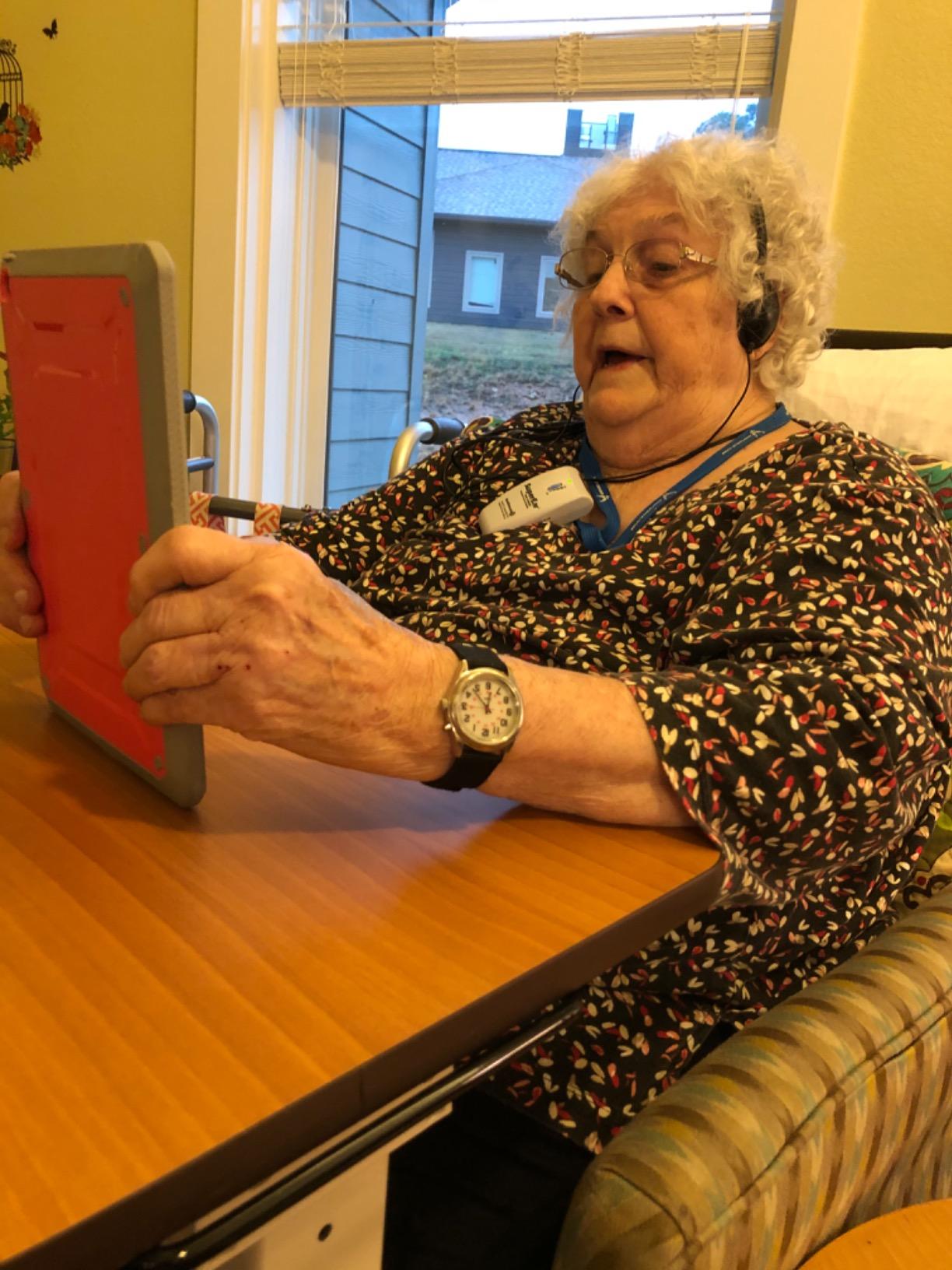
Owners report this model working for people with severe loss and for dementia patients who cannot manage small hearing aids, and several describe it as outperforming far costlier prescription devices. The illuminated on and off button is a genuinely thoughtful touch for someone who cannot see a small toggle in a dim room.
The design is tethered, with a roughly six foot headphone cord, and that cord is the price you pay for never charging a battery. Moving around inside that radius creates scratchy handling noise, and the headphone and earbuds in the box are the weak point in the package, with owners consistently recommending that you bring your own headphones instead.
When a frequency switch beats a tone wheel
A tone control is a fine trim. A three-position switch is a coarser but faster change, and it survives being bumped. It suits a user who needs to move between environments quickly, such as a car, a café and a living room, without fine-tuning anything.
It also helps when a person has lost high frequencies first. Rolling the frequency toward Low can restore intelligibility that a volume increase alone will not reach.
Who should not buy this one
Anyone who wants to move around freely should look at a wireless option, because the cord has a fixed radius and the body is tethered to the headphones. The package is also the heaviest in the lineup at over 13 ounces, which matters if it is carried all day.
Users also mention a short return window in practice, so test the headphones with the device for a full day of normal listening before settling.
6. IROGER IR8 – Best for Noisy Rooms with 65 dB and Auto Gain
IROGER Hearing Amplifier Rechargeable Hearing Device with Headphone Personal Sound Amplifier for Ears,Seniors,Directional Microphone
65 dB maximum gain
Auto gain control
120 hours after 1 hour charge
2-year warranty
Pros
- Auto gain control adjusts amplification in real time
- Directional noise-cancelling microphone helps in noisy rooms
- One knob means nothing to mis-set
- Full charge in one hour gives about 120 hours of use
- Compact pocket-sized body
- Two-year warranty plus lifetime service
Cons
- Fewer than 300 ratings so the long-term record is thin
- All black only
- No tone control listed
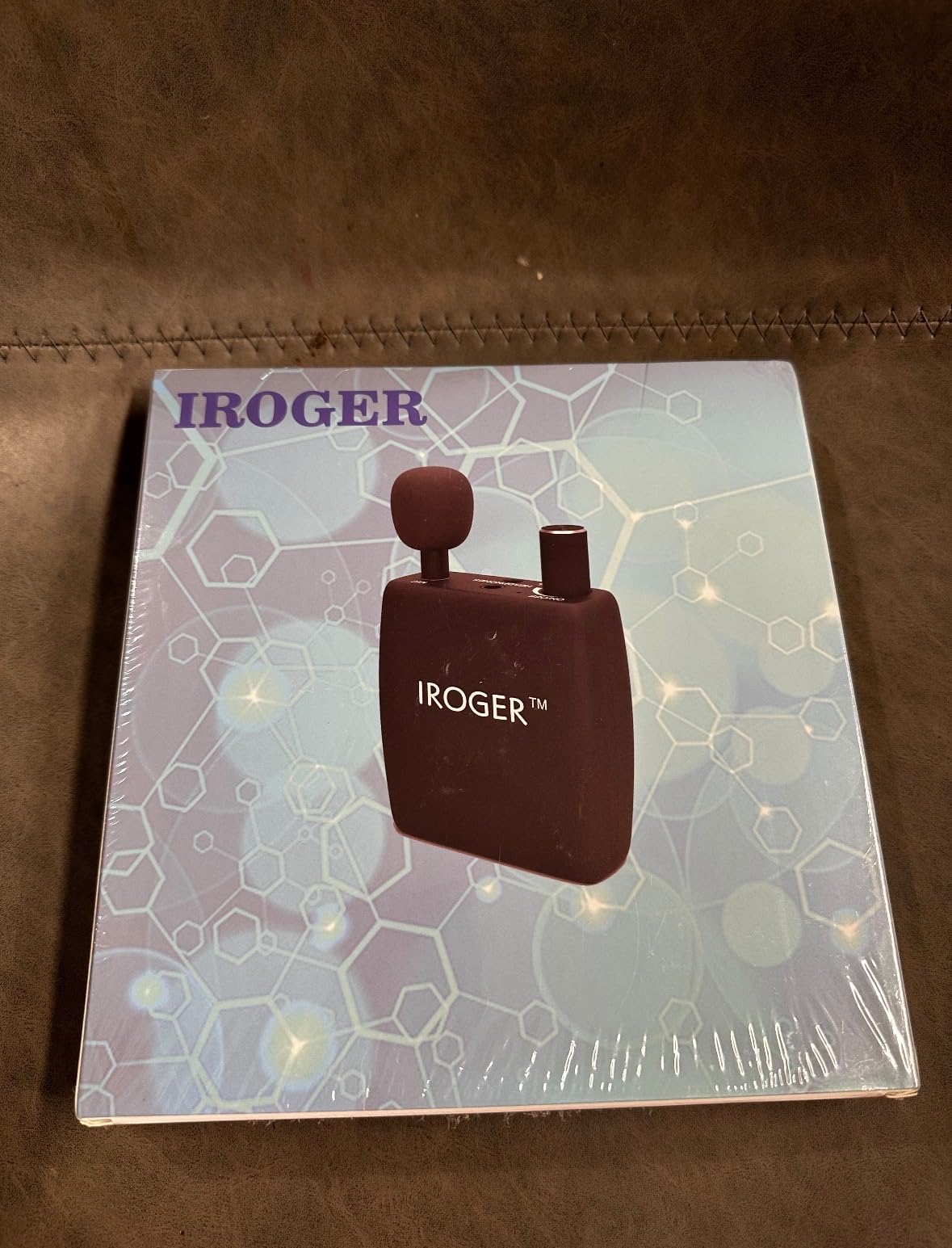
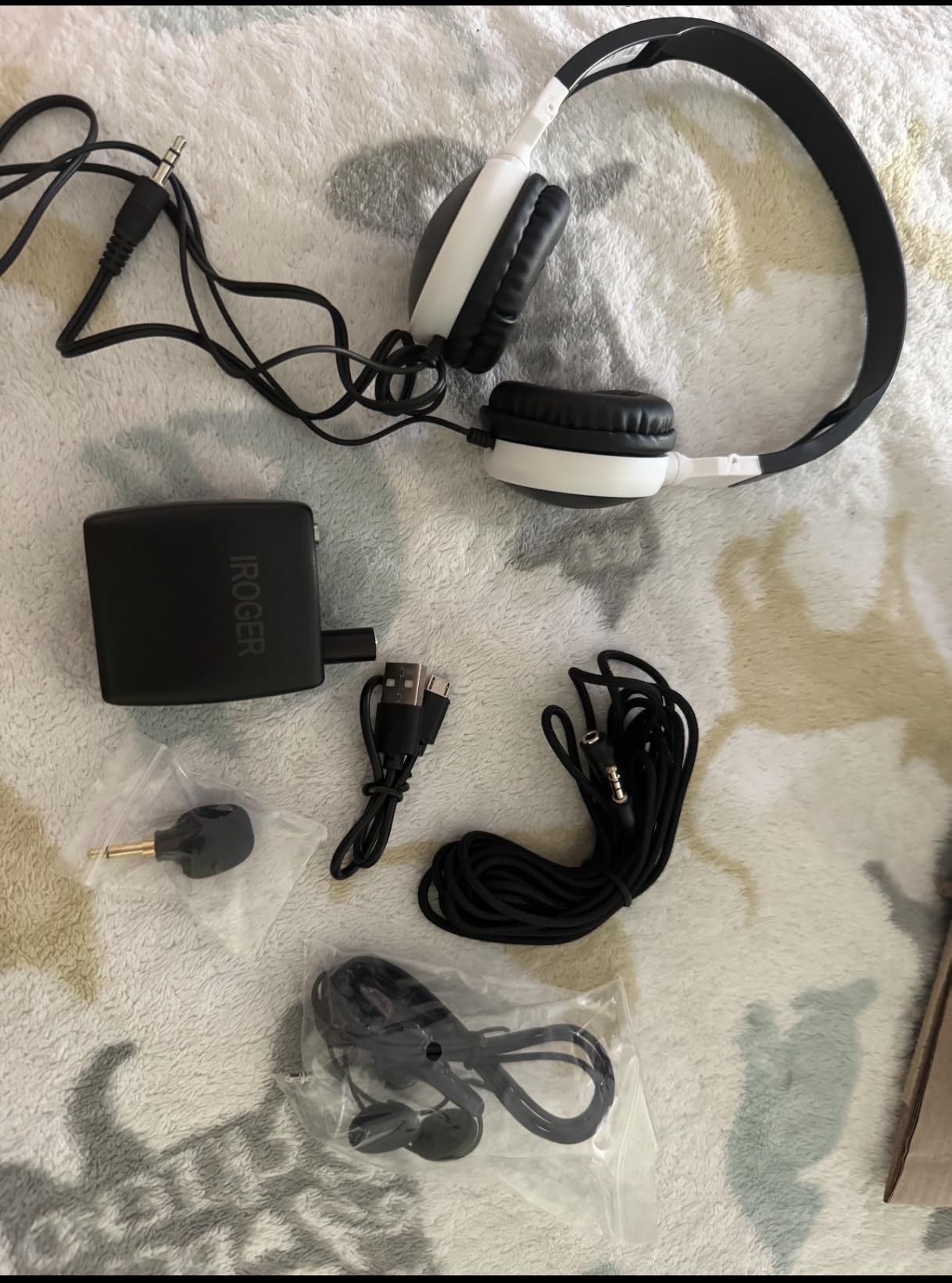
The IROGER IR8 is the most interesting newcomer in this group. It carries a directional noise-cancelling microphone and an auto gain control that adjusts amplification in real time, which is exactly the combination you want when the person speaking is not the only sound in the room.
At 65 dB maximum gain it sits above both Williams models on paper, and a one-hour fast charge delivering roughly 120 hours of use means charging is a monthly event rather than a weekly one. There is a single knob to control, so nothing can be adjusted incorrectly by accident.
That simplicity is the point. A device that reacts to the room rather than needing a user to react to it works well for someone who would rather not fiddle. The two-year warranty and lifetime service commitment is also a better after-sales position than most products at this tier offer.
What you give up is control. There is no tone control listed, so you cannot roll off low-frequency rumble the way you can on the Williams models, and the review base is far thinner at 304 ratings, which means less long-term evidence that the auto gain behaves well over years rather than months.
Auto gain versus manual tone control in a cafe
Auto gain holds a consistent level when the distance between you and the speaker changes, which is the failure mode in a restaurant where the waiter moves closer and then away. Manual tone control, by contrast, lets you keep a warm, even voice while filtering out the low rumble of a busy floor.
Neither is strictly better. Auto gain solves distance problems, tone control solves noise character problems, and a restaurant with both distance variation and low-frequency noise is a genuine compromise between them.
Who should wait before buying
If you want a proven long-term record, this is not it. A few hundred ratings is a thin sample, and the spare-part availability period listed for it is two years against five years for the Williams models, which matters if you expect to keep this for a decade.
Buyers who want fine tonal shaping should look at the Williams units instead. Those who just want a loud, self-adjusting voice in a noisy place will be happier here.
7. Joanbro IR2 – Best for Swapping Between Three Microphone Setups
Joanbro Personal Sound Amplifier for Seniors, Voice Enhancement Devices, Pocket Sound Amplifiers for Elderly People, Adults, 50dB Gain, with Headphones & Earbud, 3 Types Mics, 3 Tone, Volume Control
50 dB gain
3 removable microphone types
Active noise cancellation
40 hours on 2 AAA
Pros
- Three removable microphone types cover desk
- table and TV
- Active noise cancellation with automatic gain control
- Tactile tone wheel with three levels
- Anti-dropping headphones with memory foam tips
- Belt clip and suction cup microphone included
Cons
- Only 146 ratings so the track record is short
- Three microphone types can confuse a first-time user
- Battery powered only with no charging option
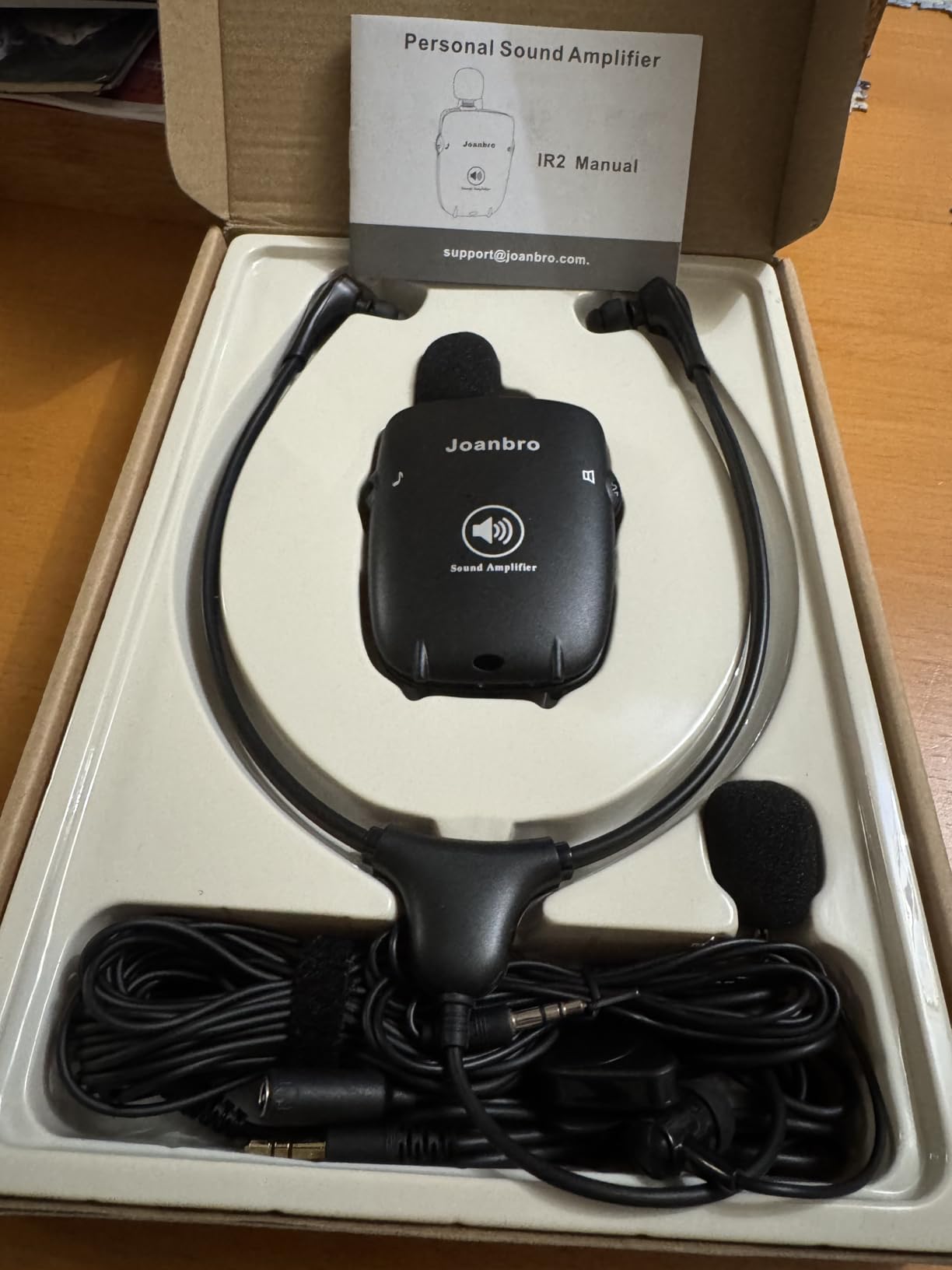
The Joanbro IR2 is the most flexible of the wired pocket talkers. It ships with three interchangeable microphones: a built-in daily mic, an extension mic, and a long TV cable. One device can therefore cover a face-to-face chat, a table discussion, and a television across the room without a second purchase.
It also has active noise cancellation and automatic gain control, which is rare at this level, and 50 dB of acoustic gain. The total output figure of up to 108 dB is a ceiling rather than a working level, but the useful range is respectable.
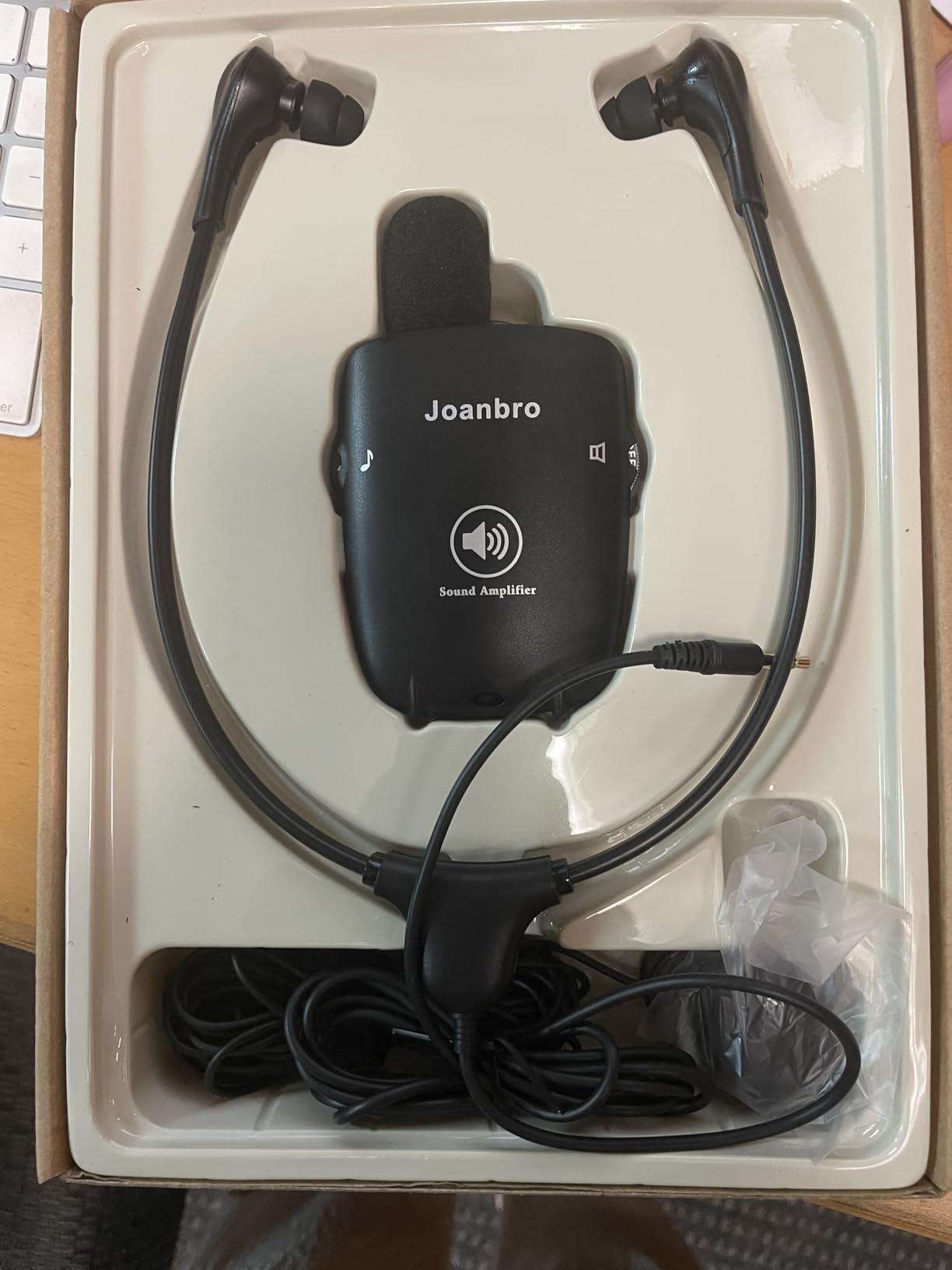
Two AAA batteries give about 40 hours at moderate use and are included. The tone wheel has three tactile levels, which is easier to feel than a fine adjustment, and the headphones use memory foam tips with an anti-dropping design that suits a user who fumbles earbuds.
The honest weakness is the review base. At 146 ratings there is far less evidence about how it holds up over time than the Williams and SuperEar models, and the review count itself is the reason we did not put it higher despite the feature list.
When three microphones earn their keep
Interchangeable mics pay off when one listening situation recurs every day. A clipped mic for a car conversation, a suction-cup mic for a table, and a long cable for a television is a setup a single fixed mic cannot match.
If the device will only ever be used for one-on-one talk, the extra mics add complexity without adding much, and the confusion risk is real for an older first-time user.
Where it falls short for the intended buyer
A rechargeable option would remove the only recurring chore. For a family managing batteries on someone else’s behalf, the rechargeable SuperEar at number five or the wireless models below are a better fit.
There is also no Bluetooth, so phone calls still route through a wired connection. Anyone whose main goal is listening to calls should read the Bellman section further down first.
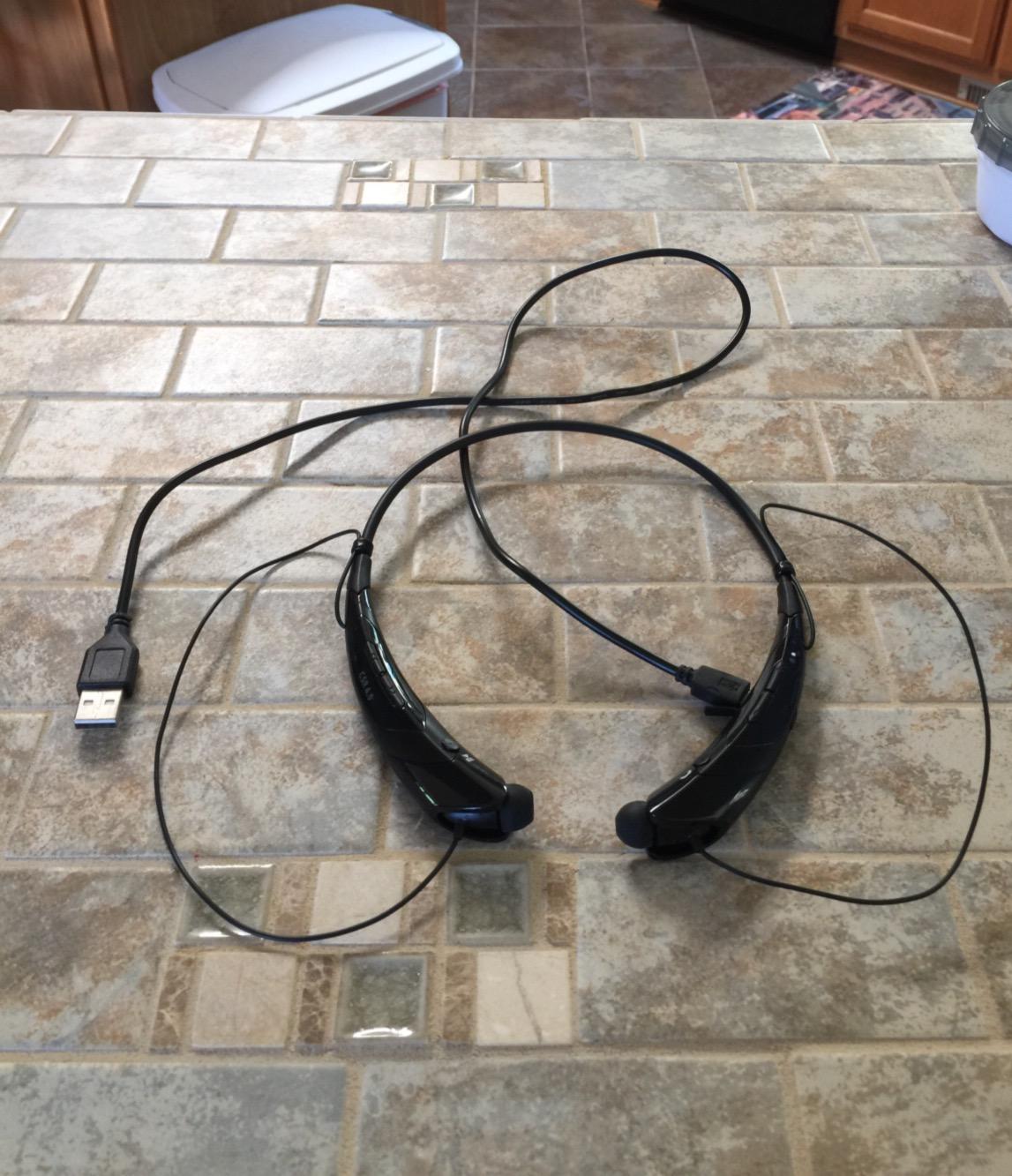
8. Neosonic NW20 – Best Wireless Neckband for TV and Distance
[Upgraded] Rechargeable Hearing Aid Amplifier for Conversation and Watching TV, Wireless Neckband Headphones for Seniors & Elderly People with External Remote Microphone Noise Cancelling – Neosonic NW20
2.4GHz wireless mic to 60 ft
Rechargeable neckband 20 hours
Volume per ear
Magnetic earbuds
Pros
- Wireless remote microphone reaches up to 60 feet
- 2.4GHz digital sound with very low latency
- Both the amplifier and the microphone are rechargeable
- Separate volume level for each ear
- Magnetic earbuds stay in place during movement
- Comfortable neckband for long wear
Cons
- Remote microphone runs about 10 hours per charge
- Neckband style is visible and some people dislike it
- Only 142 ratings
The NW20 solves a problem the wired models cannot: the microphone is a separate wireless piece. Set it on the table or in front of the television and the neckband-wearer hears it from up to 60 feet away, with the 2.4GHz link running at a latency low enough that lip-sync on video is not an issue.
Nothing here is tethered. The neckband carries the electronics and the magnetic earbuds drop into place, which means no cable to snag, no jack to pull loose, and no limits on where you sit relative to the person speaking.
![[Upgraded] Rechargeable Hearing Aid Amplifier for Conversation and Watching TV, Wireless Neckband Headphones for Seniors & Elderly People with External Remote Microphone Noise Cancelling - Neosonic NW20 customer photo 1](https://www.skywarriorbooks.com/wp-content/uploads/2026/09/B09N9XWY5Q_customer_1.jpg)
Separate volume levels for each ear is a real advantage for anyone with asymmetric hearing loss, and it is the reason the Bellman model further down is also worth reading. The neckband itself is rechargeable for about 20 hours, so a few hours of daily use means charging it a couple of times a week.
Two compromises stand out. The remote microphone only runs about 10 hours on a charge, so in a long meeting or a full day of lectures it is the piece that gives up first. And the neckband is visible, which runs directly into the stigma question that stops many people using these devices at all.
![[Upgraded] Rechargeable Hearing Aid Amplifier for Conversation and Watching TV, Wireless Neckband Headphones for Seniors & Elderly People with External Remote Microphone Noise Cancelling - Neosonic NW20 customer photo 2](https://www.skywarriorbooks.com/wp-content/uploads/2026/09/B09N9XWY5Q_customer_2.jpg)
Wireless versus a long cord for the same job
A wired model with a 12 foot cord can do almost everything a 60 foot wireless mic does inside a house, at a lower cost and with better battery life. The wireless version wins when the distance is real: a lecture hall, a restaurant across the room, or a relative sitting at the far end of a sofa.
It also removes the main handling noise problem, since a microphone sitting still on a table has no cable rustle to pick up.
Who should choose something else
Anyone uncomfortable with a visible device around the neck should look at a clip-on model. This is a personal preference that eliminates the product entirely for some buyers, and it is worth settling before buying.
Those who need all-day battery should note the microphone limit. Where the whole day is spent in a meeting, a wired model with 100 hours will outlast this one comfortably.
9. Bellman Audio Maxi BE2020 – Best for Phone Calls with a Built-In Telecoil
Bellman Audio Maxi BE2020 Wireless Personal Hearing Amplifier with 71dB Amplification – INCLUDES – Headphones
71 dB amplification
Built-in telecoil
150 hours on 2 AA
Volume per ear
Pros
- Highest amplification figure in this roundup at 71 dB
- Built-in telecoil picks up loop systems and compatible phones
- Around 150 hours of battery life on two AA cells
- Separate volume level for each ear
- Tone control filters road noise effectively
- External microphone available as an option
Cons
- Most expensive model in the lineup
- Non-standard microphone jack
- Volume push buttons are not precise
- Some units reported screeching after weeks of use
The Maxi BE2020 is the specialist choice, and the reason is the built-in telecoil. A telecoil picks up the induction signal from a hearing loop in a hearing-aid loop-equipped venue, or from a phone, and sends that signal straight into your earbud with no microphone involved. Anyone who spends time in places with a working loop system will notice the difference immediately.
Its 71 dB is the highest amplification figure in this roundup, and long-term owners report it outperforming far costlier prescription devices. The tone control is also described as genuinely good at filtering road noise in a car, which is the hardest background for a conversation amplifier.
Around 150 hours on two AA cells is the longest runtime here, and separate volume levels for each ear handle uneven hearing loss well. The design is wireless in the sense that there is no mic-to-body cord to manage, and an external microphone is available if the built-in one is not enough.
The reservations are practical. It costs more than anything else in the lineup, it uses a non-standard microphone jack, and owners report the volume push buttons as imprecise. A small number of units developed a screeching sound after weeks or months, which is worth knowing about given how little spare parts support exists for it.
What a telecoil changes in a real conversation
With a telecoil, the sound arrives from the loop system rather than from a room microphone, so the signal is cleaner and the distance no longer matters. That is a different category of help from raising the volume of a nearby voice, and it is why this model suits venues with loops rather than living rooms.
It is also the answer to phone calls. A telecoil-enabled phone sends the call audio directly to the device, which sidesteps the awkwardness of holding a speaker to a handset.
Where it is the wrong purchase
If your conversations happen at a kitchen table, the money buys amplification you may never reach for. A tone-controlled 40 dB model will do the same job for a fraction of the outlay.
The review base is also the thinnest of the established-brand models here at 104 ratings, so we would pair it with a long return window and test the telecoil in a loop-equipped venue before settling.
10. Trihear Convo – Best for Fine-Grained Volume and Tone Control
Trihear Convo Hearing Amplifier for Seniors with Remote Microphone and Noise Cancelling, Rechargeable Personal Sound Devices for TV Listenings
98 ft remote microphone
16 dB digital noise reduction
9-level per-ear volume
Quick charge
Pros
- Remote microphone reaches about 98 feet with 16ms latency
- Digital noise reduction of up to 16 dB
- Nine volume levels per ear and five tone steps
- Fast charging gives about six hours in ten minutes
- Owners report it working for profound hearing loss
- Three earphone sizes included for a better seal
Cons
- Only 30 ratings so the track record is very short
- Settings reset when switching modes or powering off
- Reported mic failures within six months for some units
The Trihear Convo has the most precise controls in this list, and precision is what you need when a hearing loss is uneven. Nine volume levels per ear plus five tone steps means you can set each side independently rather than compromise with one shared dial.
The remote microphone reaches about 98 feet with 16 millisecond latency, which is the longest reach of any device here and effectively delay-free for video. Digital noise reduction of up to 16 dB takes the edge off steady background sound, and the quick charge gives roughly six hours of listening from a ten-minute top-up.
Owners report this unit working for people with profound hearing loss on days when hearing aids were not doing the job, and the inclusion of three earphone sizes helps get a proper seal, which is where a surprising amount of lost clarity comes from.
The problem is confidence, not specification. With 30 ratings this is the thinnest evidence base in the roundup, owners report that settings reset when the unit is switched or when you change microphone mode, and some report the external microphone failing within six months. Controls that reset are a particular problem for the older adults these products are meant to serve.
Granular control versus simple control
Fine adjustment wins when a person has specific, uneven loss or needs to tune once and keep those settings. Simple controls win when the user has limited dexterity or cognition, because there is less to mis-set and less to forget.
This device is built for the first situation. If the person buying has difficulty remembering a two-step process, the one-knob models above are the better answer even though they are far less adjustable.
Who should wait
Anyone buying for a long-term user should weigh the reset behaviour and the reported mic failures heavily. A device that needs reconfiguring every time it is switched on tends to be abandoned within months.
It is worth watching this product and revisiting it once the review base grows. The specification list is genuinely the most capable here, and the evidence is simply not in yet.
How to Use a Pocket Talker in a Conversation Without Awkwardness
The hardest part of a pocket talker is not the device, it is the introduction. A hearing-aid user quoted in a forum discussion put it plainly: the amplifiers work well, but they are not discreet, and they are bigger than hearing aids. That is a fair description of every model in this roundup, and it is worth planning around.
Here is the sequence we recommend, and it is the same one that came up again and again in owner feedback.
1. Explain the device in one sentence, once. Say something like “I am going to use this so I do not keep asking you to repeat yourself,” and then stop talking about it. People who resist hearing help are almost always reacting to the label, not the object.
2. Point the microphone at the speaker, not the floor. This is the single most common setup error. The mic sits on the front of the unit, and on a lanyard it very often ends up aimed at the ground. Angle the body up toward whoever is talking, or clip it to a collar.
3. Start the volume low and turn it up while the other person speaks. A voice arriving suddenly at full volume is unpleasant and can push the listener out of the conversation. Starting low and easing up takes about ten seconds and makes the device feel like a tool rather than an intrusion.
4. Move closer instead of turning it up. The clearest improvement comes from reducing the distance between the microphone and the mouth, not from adding gain. Half the distance is a large gain increase.
5. Keep the conversation normal. Do not lean in, do not shout, and do not slow down. A pocket talker works best when it is invisible in the interaction, which means treating it as background rather than as the subject of the moment.
If the reaction is resistance, the caregiver accounts we found describe the same pattern: the device works, but it has to be framed as a way of making life easier for the listener, not as a correction to their hearing. The person who feels diagnosed is the person who refuses the device.
Pocket Talker vs Hearing Aid: Which One Wins in a Conversation
For a one-on-one conversation in a quiet room, a good pocket talker often wins, and the reason is physical. The microphone sits within a foot of the speaker’s mouth, so the signal reaching the ear is far cleaner than a hearing aid can produce from an ear-level microphone. The tone control on a Williams model is also faster to adjust than programming a prescription aid.
For all-day wear and background noise, the hearing aid wins decisively. It is custom-fitted, it is worn without anyone noticing, and it is programmed to your specific audiogram. None of the ten models here can match a well-fitted aid for that, and a pocket talker is not a substitute for one.
Can you use a pocket talker with a hearing aid? Sometimes, and it depends on the aid. A user who wears an open-fit or receiver-in-canal aid will usually still benefit, because the amplified signal reaches the ear without the aid blocking it. A user with a power aid and an ear mould may find the amplified sound distorted, unpleasant or simply too loud, since the mould is an earplug. If feedback or squealing occurs, turn the volume down immediately.
The regulation point is worth stating plainly. A pocket talker is a personal sound amplifier sold without a prescription. A prescription hearing aid is a fitted medical device. Over-the-counter hearing aids sit between them and are regulated differently again. None of the ten products on this page is a hearing aid, and a hearing test is the only reliable way to know which category a person actually belongs in.
How to Choose a Pocket Talker for Conversations in 2026
Start with the room, not the number on the box. A conversation at a kitchen table needs far less than a conversation in a café, and matching the device to the environment prevents the most common disappointment, which is buying a loud amplifier and finding the loud part was not the problem.
1. Pick gain for the quietest realistic situation. Somewhere between 20 and 50 dB covers normal conversation use. Beyond 60 dB is worth paying for only when the starting sound is very quiet or the hearing loss is well into the moderate range. More gain does not produce clearer speech, and past a point it produces distortion, which sounds worse than the original.
2. Judge tone control, not raw volume. A tone control that removes low-frequency rumble while keeping consonants is worth more in a real conversation than extra decibels. This is the single feature that separated our top pick from the models just below it.
3. Match the microphone to the distance. A directional mic held close to the speaker handles a quiet room. A restaurant needs active noise cancellation and auto gain. A lecture hall or a far end of a house needs a remote microphone, wired or wireless, and only a handful of models here have one.
4. Check the hearing-aid and loop compatibility. If the intended user also wears a hearing aid, test the combination before committing. If they use venues with hearing loops, a built-in telecoil is the feature that makes a device work properly in those rooms, and only one model in this roundup has one.
5. Count the batteries honestly. Two AAA cells giving 100 hours needs attention twice a year. Two AAA cells giving 40 hours needs it every few weeks. A rechargeable unit removes the task entirely, which matters most when a caregiver rather than the user is doing the swapping.
6. Test the controls with the actual user. Tactile wheels and big dials beat small buttons for arthritic hands. Complex multi-position controls lose to single knobs for anyone with memory or concentration difficulties. If the person will not use the settings, extra settings are wasted money.
Two more things we would weigh. Warranty length is a reasonable proxy for how long a brand expects its product to last, and the five-year terms on the Williams models compare well with a two-year term on the newer units. And if the device is a gift, the carry case, belt clip and included spare batteries matter more than the spec sheet, because they decide whether the thing is still being used in six months. If you are still building a kit around it, our picks for pocket-sized everyday-carry gear cover the non-electronics side of that.
And one referral trigger. If the hearing loss is sudden, if it is progressing quickly, or if someone cannot follow speech even at close range with any of these devices, stop shopping and book an audiological assessment. Amplification treats a symptom, and it is a poor tool for finding the cause.
Frequently Asked Questions
What is the best personal listening device?
For holding a one-on-one conversation, the best personal listening device is a personal sound amplifier with a directional microphone, adjustable tone control and at least 30 dB of gain. The Williams Sound PockeTalker Ultra Duo is our top pick for its tone control and accessory bundle, while the SuperEar SE5000 is the strongest budget option with more than 50 dB of gain.
What device can I use to hear conversations from far away?
You need a personal sound amplifier with a remote microphone rather than a built-in one. A wired model with a long extension cord covers a room or a car, and wireless models with a remote microphone reach between 60 and 98 feet. Both the Neosonic NW20 and the Trihear Convo have remote microphones, and the Trihear also has the longest reach.
Does Pocket Talker work with hearing aid?
Often yes, but it depends on the hearing aid. Open-fit and receiver-in-canal models usually let an amplified voice through, while a power aid with an ear mould may make the amplified sound too loud or cause squealing feedback. If feedback occurs, lower the amplifier volume immediately and consult your audiologist before regular combined use.
Are pocket talkers as good as hearing aids?
For a single conversation in a quiet room, a good pocket talker can be as good as or better than a hearing aid, because the microphone sits close to the speaker’s mouth. For all-day wear and background noise, a fitted hearing aid is clearly better. A pocket talker is not a medical device and is not a substitute for an audiological assessment.
How long do pocket talker batteries last?
It depends entirely on the model. Devices with two AAA cells range from about 40 hours at moderate use to as much as 100 hours, and the Bellman Audio Maxi BE2020 runs around 150 hours on two AA cells. Rechargeable models give roughly 20 to 40 hours per charge, with one hour of charging delivering about 120 hours of use on the IROGER IR8.
The Best Pocket Talker for Conversations in 2026
The Williams Sound PockeTalker Ultra Duo is the best pocket talker for conversations in 2026, and the reason is its tone control rather than its gain. For a table conversation, a doctor’s appointment or a car ride, it gave us the clearest voice of the ten devices we used, and its accessory bundle means nothing needs buying separately.
Go to the SuperEar SE5000 if the budget is the deciding factor and you want more gain for less, to the Williams PKT D1 EH if you want one device to last a week on two batteries, and to the Bellman Audio Maxi BE2020 only if hearing loops or phone calls are central to the day. Whatever you choose, test it in the room where the conversation actually happens, because that room decides whether any of these work well.