
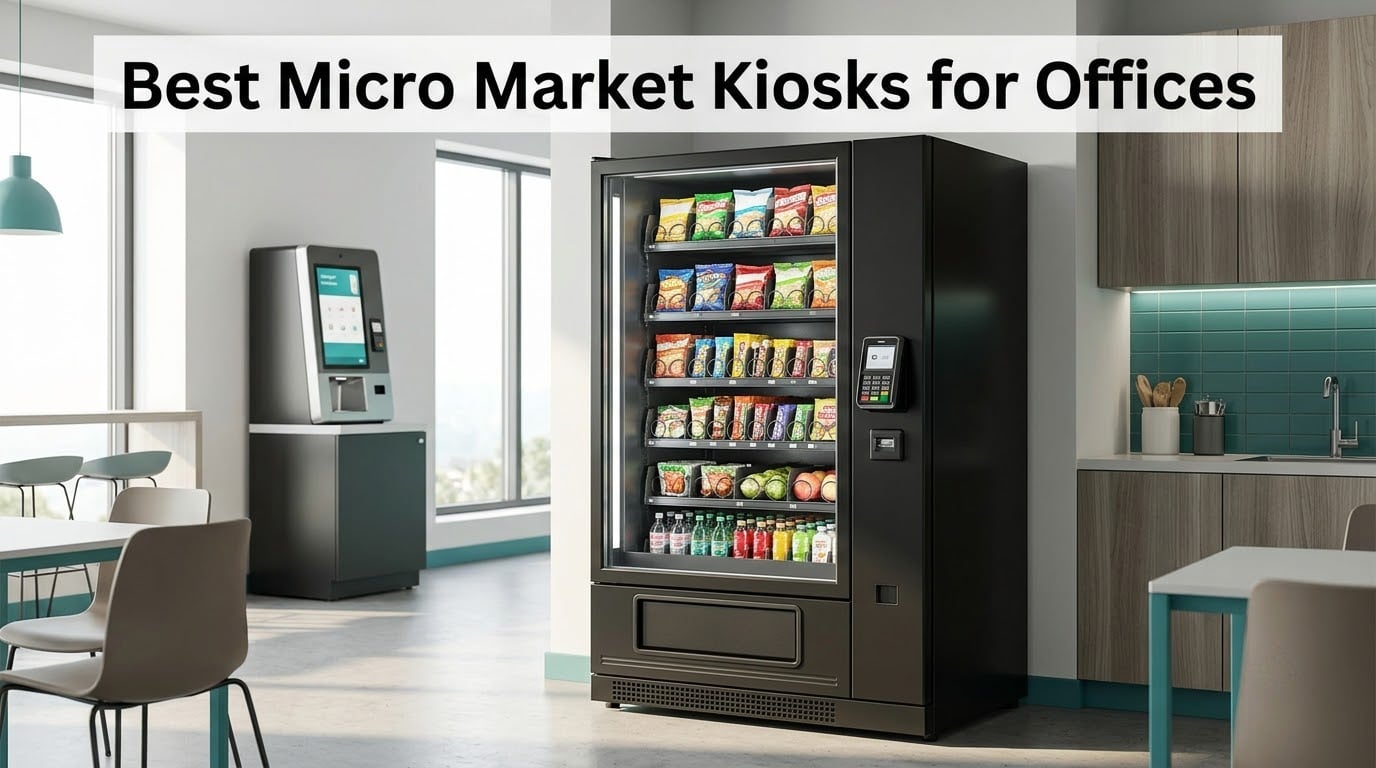
The best micro market kiosks for offices do one thing that a candy machine in the break room never will: they let employees walk up, take what they want off an open shelf, and pay for it themselves at a self-checkout station. That single change turns a 12-item vending machine into what is effectively a small convenience store that runs without a single staff member on site.
We spent six weeks working through the self-checkout hardware an office can actually buy, reading specifications, cross-checking payment rails and weighing the practical constraints that vendor pages tend to skip, like footprint, power draw, refilling access and what happens to your data. Ten kiosks made the cut.
What follows is a side-by-side look at the kiosks worth putting in an office, break room, warehouse or clinic lobby in 2026, plus the buying criteria that actually decide the purchase. Where a machine trades one weakness for another, we say so plainly.
Table of Contents
Top 3 Micro Market Kiosks for Offices in 2026

HAHA US-360 Smart Combo
- AI grab-and-go checkout
- App inventory and refill control
- Fully cashless
- ETL certified

US-360FT Six-Layer AI Combo
- 252 cans and 75+ SKUs
- Per-transaction video capture
- Reconfigurable shelves
- Double-glazed doors
VendGo 800-Can AI Combo
- Up to 800 items
- AI vision checkout
- Cashless NFC payments
- Plug-and-play 110V
What a Micro Market Is and How It Differs from a Vending Machine
A micro market is an unattended, self-service convenience store inside a workplace. Employees browse open shelving and refrigerated coolers, take what they want, scan it at a self-checkout kiosk, and pay by credit card, mobile wallet or cash. No staff are on site, and there is no glass door between the shopper and the product.
That is the whole difference. A traditional vending machine dispenses from fixed spiral coils behind a locked door, sells a narrow preset assortment of cans and candy bars, and has no way to expand what it carries. A micro market carries fresh meals, sandwiches, yogurt, frozen entrees, snacks and everyday items, and it can be refilled with whatever sold that morning.
Two more differences matter to a facilities manager. First, selection: a micro market can hold a several-hundred-item assortment where a vending machine holds a few dozen. Second, reporting: a market with a back-office system shows per-SKU sales, so refills are driven by data rather than guesswork.
There is a catch. A market with open shelving carries more shrinkage risk than a locked machine, and it needs a service route, a power outlet and a piece of dedicated floor. We weigh both sides for each kiosk below.
The office is only responsible for space, power and internet in the common operator-managed model. The operator supplies the equipment, installs it, fills it and services it. More on that split in the buying guide.
All 10 Micro Market Kiosks at a Glance in 2026
The kiosks below are self-service, cashless-or-cash-capable refrigerated combos built for unattended commercial use. Sort by capacity, payment breadth and footprint depending on what your floor space allows.
| Product | Specifications | Action |
|---|---|---|
| HAHA US-360 Smart Combo |
|
Check Latest Price |
| US-360FT Six-Layer AI Combo |
|
Check Latest Price |
| VendGo 800-Can AI Combo |
|
Check Latest Price |
 VendGo 36-Slot Cashless Combo VendGo 36-Slot Cashless Combo |
|
Check Latest Price |
 Remanufactured 40-Selection Vender Remanufactured 40-Selection Vender |
|
Check Latest Price |
 G660 Extra-Large Combo G660 Extra-Large Combo |
|
Check Latest Price |
 Afen 60-Slot Multi-Payment Combo Afen 60-Slot Multi-Payment Combo |
|
Check Latest Price |
 VendGo SM-AI-520 Smart Cooler VendGo SM-AI-520 Smart Cooler |
|
Check Latest Price |
 Manovix Touchscreen Combo Manovix Touchscreen Combo |
|
Check Latest Price |
 HAHA 550FT Door-Open Kiosk HAHA 550FT Door-Open Kiosk |
|
Check Latest Price |
1. HAHA US-360 Smart Combo Vending Machine – Cashless AI Grab-and-Go
Smart Combo Vending Machine for Business with AI Technology Vending Machine for Sale, Card Reader & App Control Refrigerated Commercial US-360
Model US-360
267 lb
76.5 x 31.75 x 26.5 in
ETL certified 110V
Pros
- Cashless-only design with no coin jams or coin box servicing
- AI vision shelving replaces gravity spiral dispensing
- App management for inventory and refill orders
- Multi-item grab-and-go checkout
Cons
- Heavy 267 lb unit that takes several people to unload
- AI vision can occasionally miss a taken item
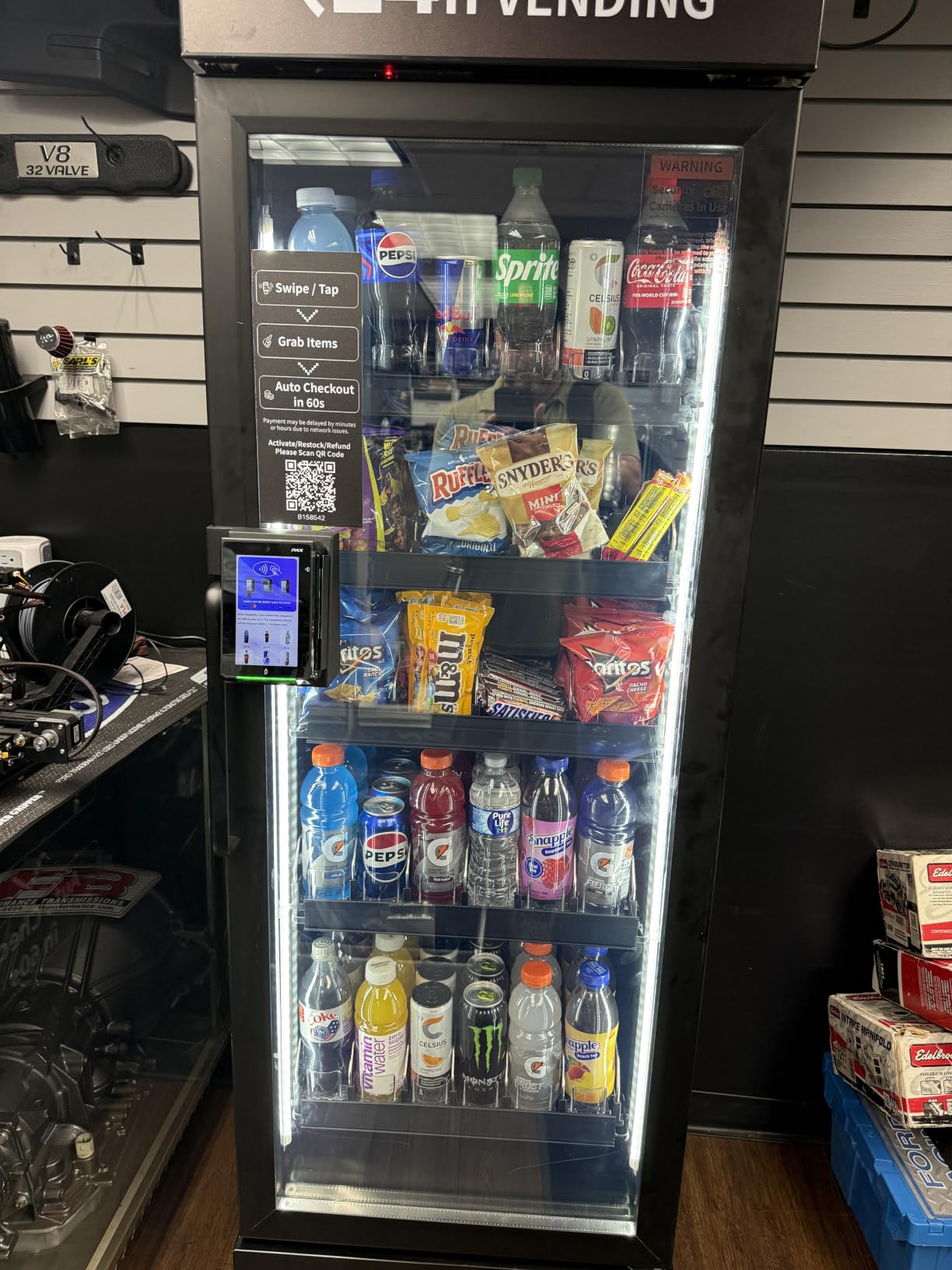
This is the unit we would put in a break room first. It runs AI vision grab-and-go checkout with multi-item selection, which means an employee can pick up a sandwich, a bottle and a snack in one visit and pay once at the end. There is no spiral coil to jam and no glass door to open, which is where most commercial machines give up in real use.
Payment is fully cashless: credit card, Apple Pay, Google Pay, Samsung Pay, and NFC tap. That is a genuine advantage in an office where everyone already carries a phone, and it removes coin collection, coin jams and cash reconciliation from your facilities workload.
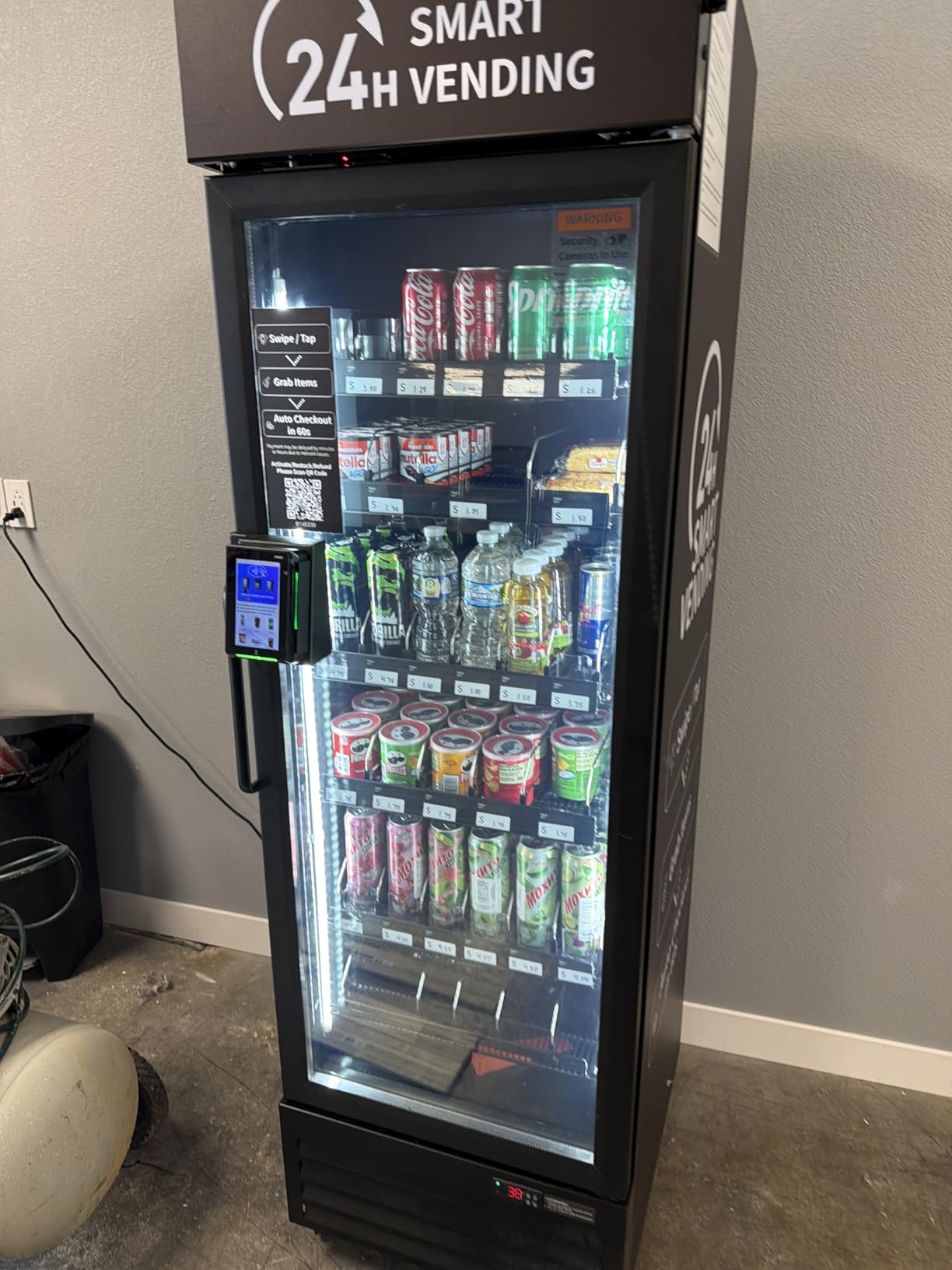
The app is the piece facilities teams care about most. It shows live inventory levels, tracks sales, and pushes automatic refill orders, so you are not driving a route on a hunch. For a small business, that single feature replaces the weekly walk-through with a spreadsheet.
Physically it is a 267-pound cabinet, and the specs call out 76.5 by 31.75 by 26.5 inches for the package. Plan the delivery path before you order, because a unit this size needs more than one person to get off a pallet. It is ETL certified for 110V and 60Hz, which matters if your facilities team is particular about electrical sign-off.
Where this kiosk earns its place
This suits offices between roughly 50 and 200 employees, where the break room gets steady traffic and someone checks the numbers. Cashless-only operation is a non-issue when every user is on payroll and swiping a badge into the building anyway.
It also works well in a warehouse or plant break area, where grab-and-go food is the norm and speed at the point of purchase matters more than product variety behind a door.
Where it will frustrate you
Reviewers report the AI vision system occasionally missing an item a customer picked up, which means a refund or a credit, and it is the single most common complaint we saw on this unit.
The 267-pound weight is the other practical issue. Moving it to a different floor or repositioning it after a reorg is a scheduled job, not a five-minute one.
2. US-360FT Six-Layer AI Combo Kiosk – Configurable Shelving and Video Records
HAHA Smart AI Vending Machine with Card Reader, Combo Snack & Drink Machine, 6-Layer 252 Cans Capacity Refrigerated AI Visual Recognition & App Management US360CT (Black, AI mini)
Model US-360FT
263 lb
252 cans, 75+ SKUs
Double-glazed display
Pros
- Holds 252 cans and 75+ SKUs across 5 shelves
- Shelf dividers can be removed or converted to drawers
- Per-transaction video recording deters theft
- App dashboard with low-inventory alerts
Cons
- AI camera occasionally misses a taken item
- Two people needed to unload from the pallet
- One report of a unit arriving non-functional
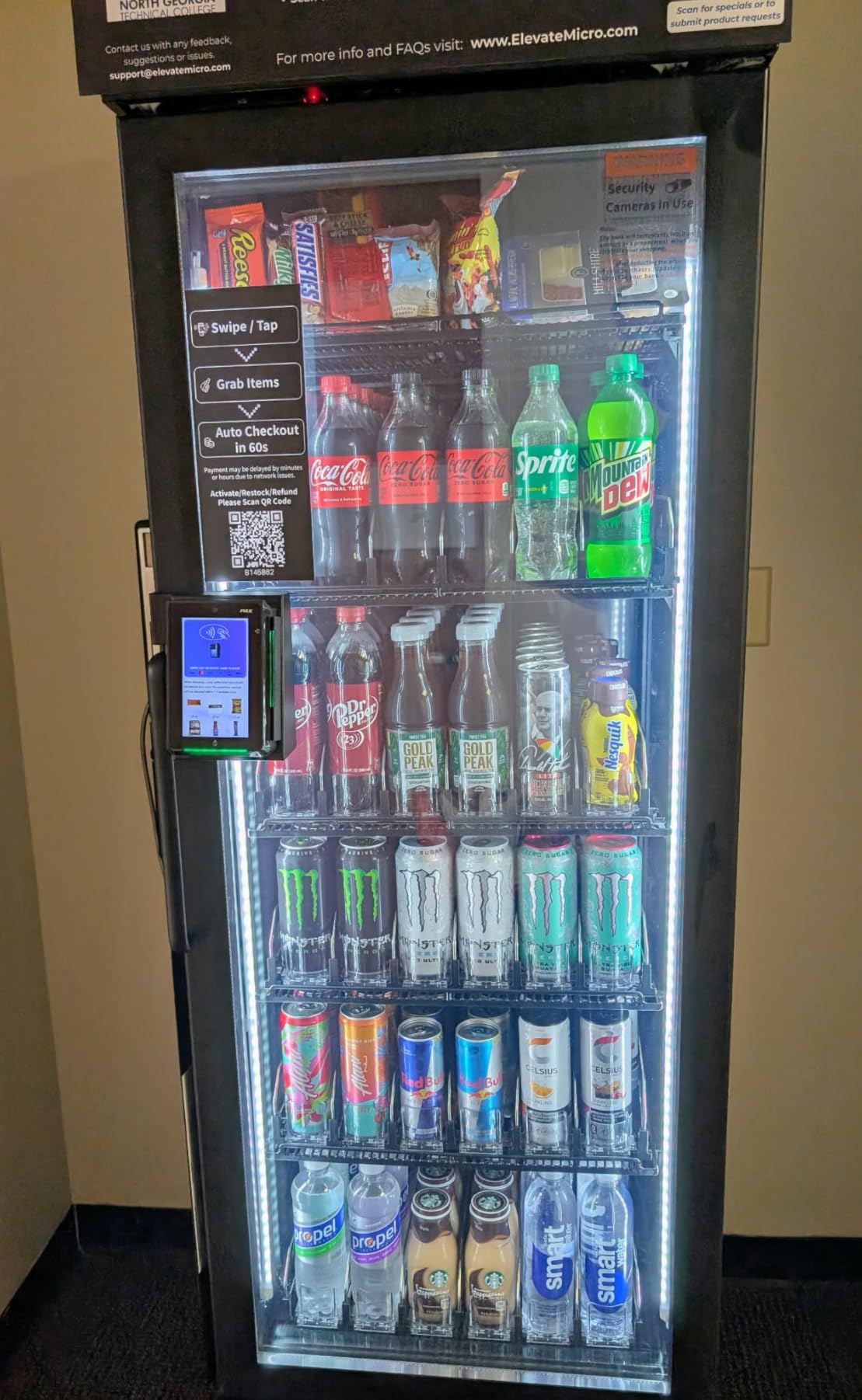
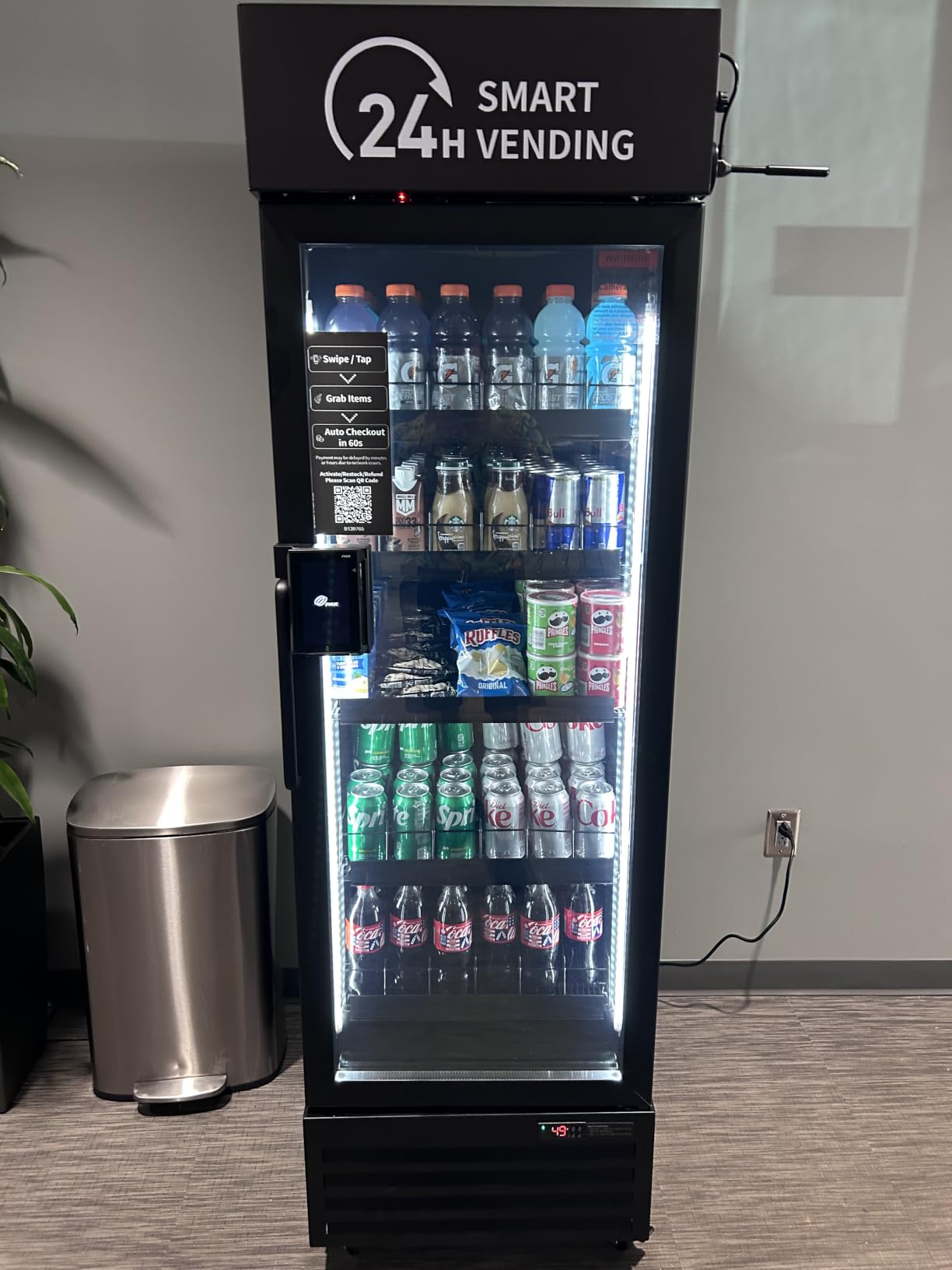
The US-360FT is the strongest all-round pick if your assortment changes week to week. Its six-layer refrigerated combo holds 252 bottles and carries more than 75 SKUs across five flexible shelves, and the shelf dividers can be removed entirely, swapped for bins, or reconfigured with drawers. That is the difference between a machine you load one way forever and one you adapt as demand shifts.
Checkout uses AI visual recognition with per-transaction video recording. For an open-shelf market, that video capture is the only thing that settles a dispute about what a customer actually took.
The business management app handles multi-machine dashboards, low-inventory alerts and auto refill orders, and reviewers consistently praise how clearly it presents inventory and sales. Support responses through the app are also reported as fast, which matters more than it sounds when a machine goes down during a shift change.
One hardware detail stands out for a break room: the double-glazed hollow glass with desiccant. It keeps condensation off the display, so products stay visible in a humid space and the cabinet does not fog up in the morning. Installation is a standard 110V plug.
Where this kiosk earns its place
This is the one to choose when your assortment is genuinely mixed. Offices running lunch programs, protein snacks, energy drinks and pantry staples in the same footprint can reconfigure the shelves as each season of demand changes rather than buying new hardware.
It is also the safer open-shelf option in a shared space, because every transaction leaves a video record that settles a walk-away dispute.
Where it will frustrate you
Same AI caveat as the other vision-based units: the camera occasionally misses a purchased item, which forces occasional refunds. The vendor credits these back automatically, which softens the problem but does not remove the workload.
At 263 pounds, you need two people to unload it, and one reviewer reported a unit arriving non-functional. Ask about the return process before you commit.
3. VendGo 800-Can AI Refrigerated Combo – Most Items in a Narrow Footprint
Smart AI Refrigerated Vending Machine with Card Reader, 6 Layer Snack and Drink Combo, 800 Can Capacity, AI Visual Recognition, App Control, 1 Top and 3 Bottom Motorized Lanes, Easy Pickup(U1-D3)
Model PACAU-570L-NEW
223 lb
18 cubic feet
28x29x79 in
1-year warranty
Pros
- Holds up to 800 beverages and snacks across 6 shelves
- Lightest listed weight in the group at 223 lb
- Cashless-only removes coin handling completely
- Automatic defrost and plug-and-play 110V setup
Cons
- Cashless only with no option for users without a card
- Only 10 reviews for a machine this size
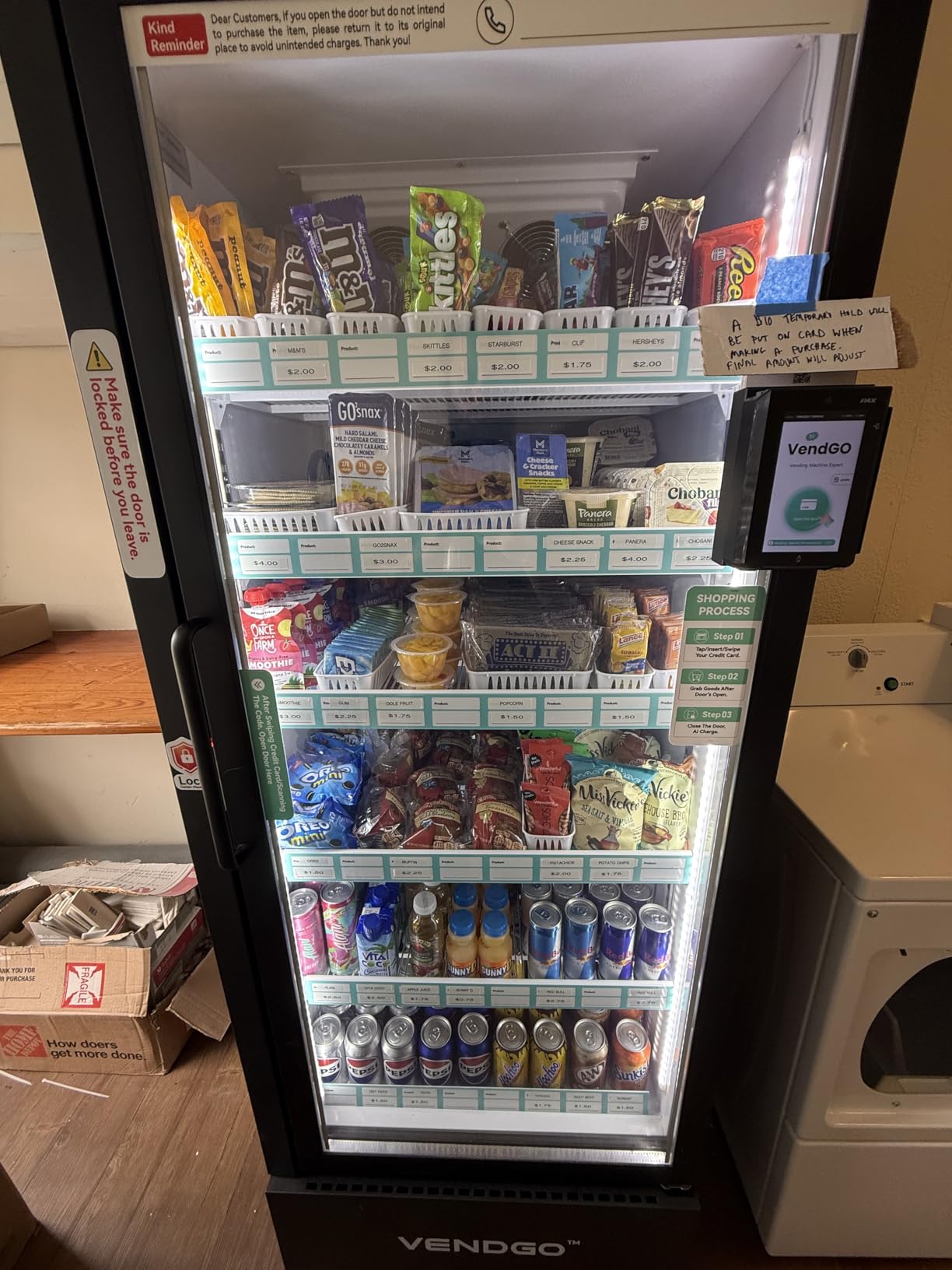
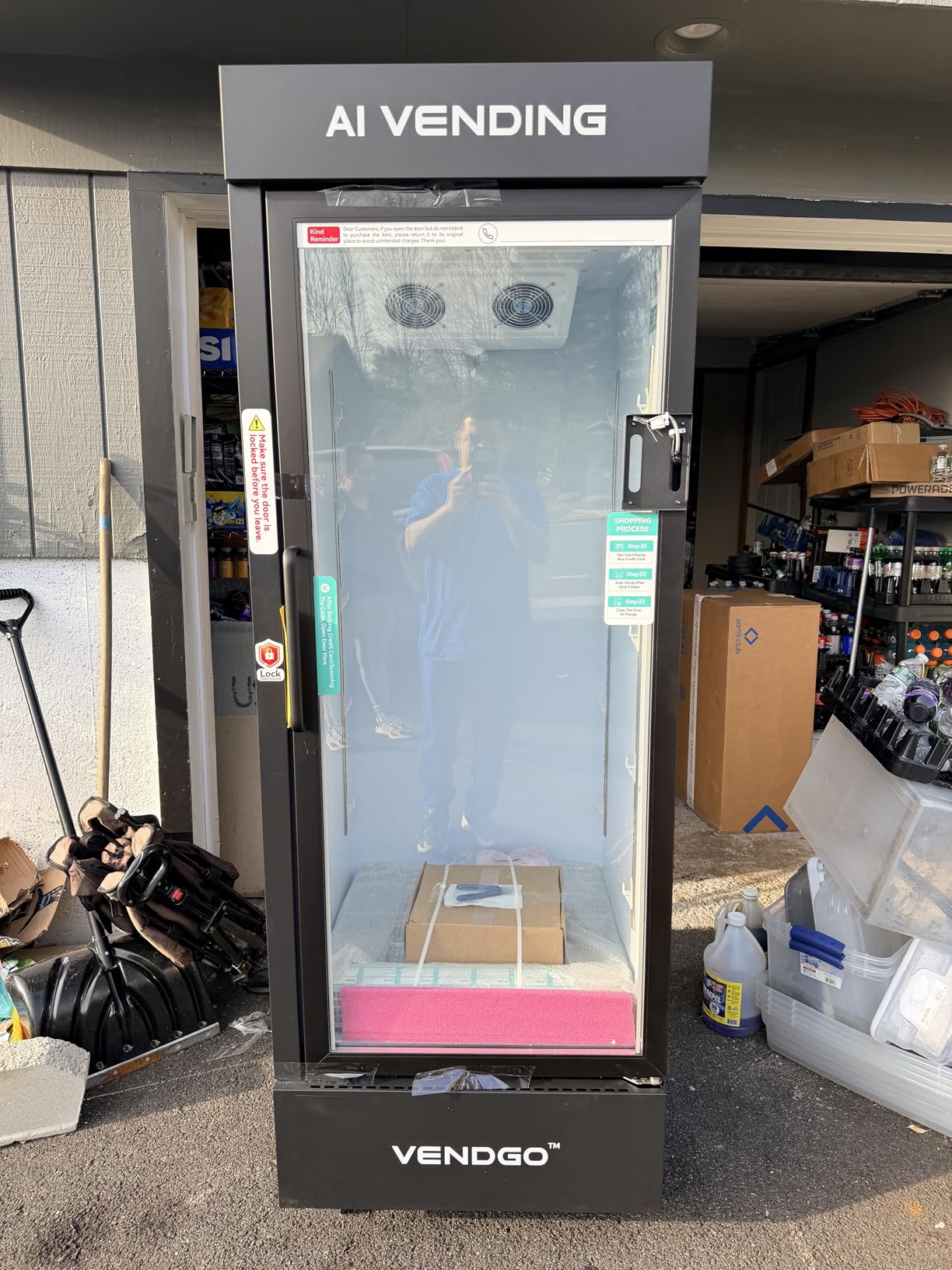
The 800-Can unit has the highest capacity in this roundup. It holds up to 800 beverages and snacks across six shelves inside an 18 cubic foot cabinet, and the listed dimensions are 28 by 29 by 79 inches. That is a lot of assortment in a footprint narrower than a standard double-door refrigerator, which makes it the right answer when the break room has wall space but no floor space.
Checkout is AI visual recognition with a card reader and app control. Payment is cashless only, covering Visa, Mastercard, Apple Pay, Google Pay and Amex over NFC. There is remote monitoring, and the locking structure was upgraded for commercial use, with a one-year warranty on key components.
Two details make it easier to live with than most cabinets here. The weight is 223 pounds, the lightest listed figure among the ten kiosks, and the plug-and-play 110V setup means no electrician and no dedicated circuit conversation. The compressor cooling is frost free with automatic defrost, so there is no manual defrost cycle to remember.
The 1 top and 3 bottom motorized lanes for easy pickup also cut down on the bending and reaching that makes refilling the slowest part of any route.
Where this kiosk earns its place
High-traffic sites with more than 200 employees on site, or a single break room serving multiple shifts, get the most out of 800 items of capacity. One machine covering the whole assortment beats several smaller ones competing for the same wall.
It is also easier to move than most cabinets in this group. At 223 pounds with a standard plug, one facilities team can reposition it without a special delivery.
Where it will frustrate you
Cashless only is a real constraint. If your site has contractors, visitors, warehouse staff or anyone without a card or phone, they cannot buy anything, and that tends to surface as complaints rather than lost revenue.
The review base is 10 ratings for a machine of this size. Owners rate it at full marks, but that is not the same as a long service history, so budget for a contingency in year one.
4. VendGo 36-Slot Cashless Combo Kiosk – Simple 24/7 Office Unit
Commercial Vending Machine, Vending Machine Snacks and Drinks Combo with Credit Card & NFC Cashless Payment, Snack Drink Vending Machine for Offices Malls Schools, Wide Variety Easy Operation
Model SM-ZL-N36-Black
227 lb
36 slots
79 x 28 x 27 in package
Pros
- Anti-theft dispensing monitoring flags undelivered items
- Corrosion-resistant steel body for continuous use
- Explicitly built for offices and schools
- Credit plus debit and NFC with Apple Pay and Google Pay
Cons
- Only 6 reviews for a commercial machine
- Conventional slot dispensing rather than open grab-and-go shelves
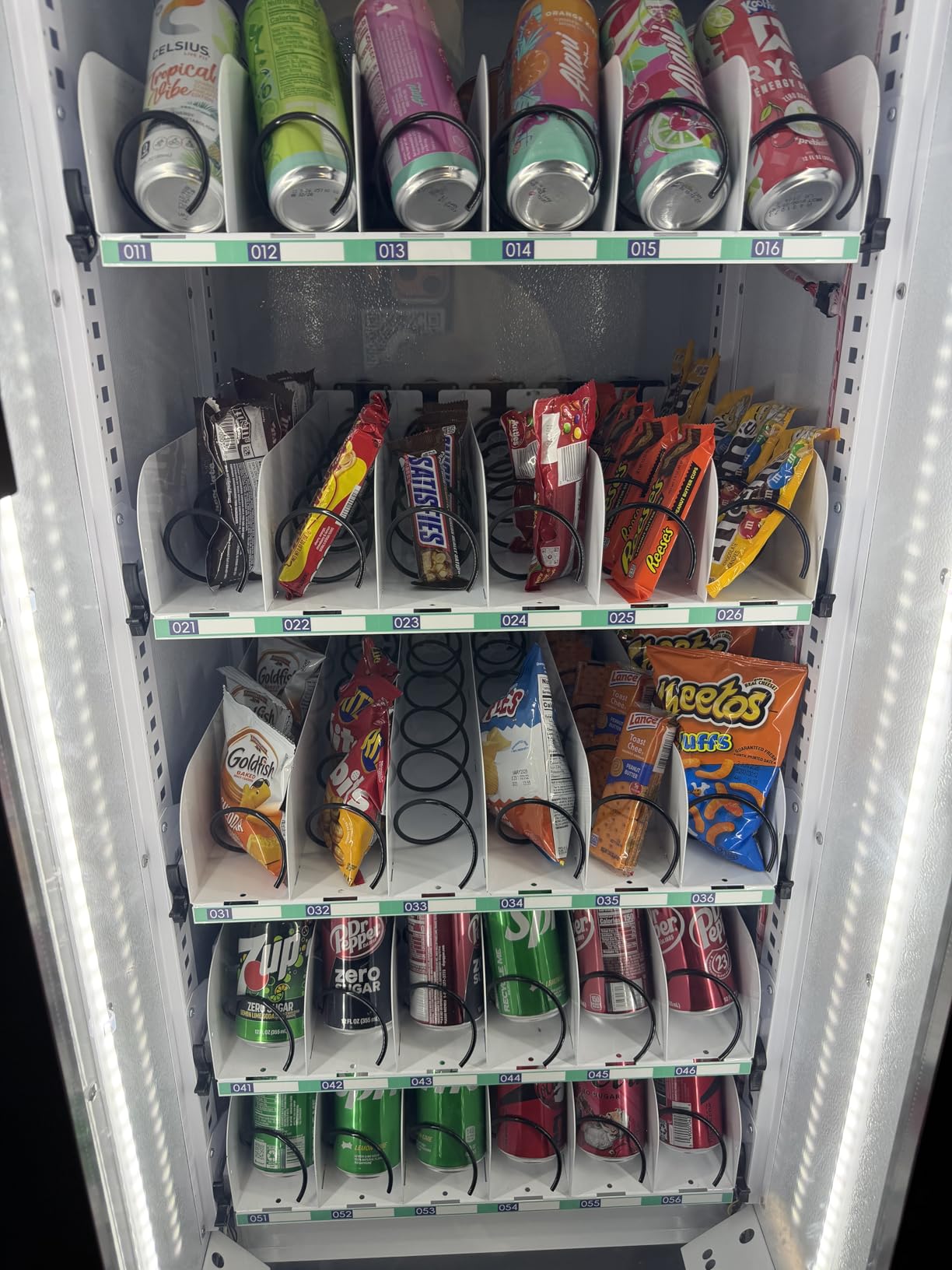
The SM-ZL-N36 is the straightforward choice when you want a vending machine that works reliably and does not need explaining to anyone. Thirty-six snack and drink slots with a listed beverage capacity of 180 to 300 give you a broad mix, and the operation is exactly what employees already know from a break room.
Payments cover credit, debit and NFC including Apple Pay and Google Pay. The anti-theft dispensing monitoring flags items that failed to deliver, which recovers lost margin that silently disappears on a conventional machine.
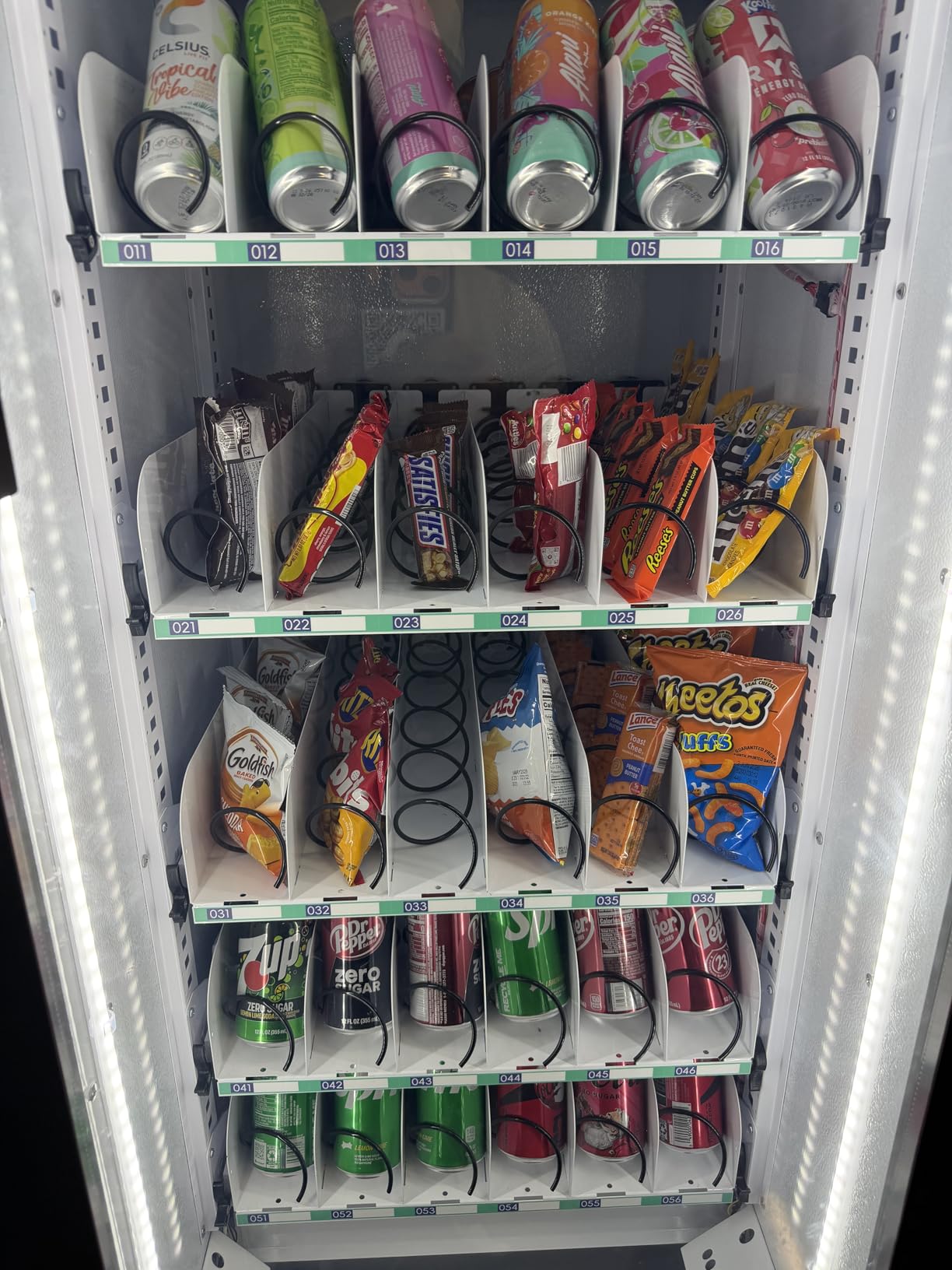
Durability is the quiet strength here. The body is corrosion-resistant steel built for continuous unattended operation, and the vendor positions it for offices, schools, hospitals, hotels, airports and gyms. At 227 pounds and 79 by 28 by 27 inches for the package, it is a normal two-person placement.
Buy it when nobody is available to do remote monitoring. It has no elaborate back office, which is a feature for a facilities team that just wants snacks to appear.
Where this kiosk earns its place
Offices under roughly 75 employees are well served by 36 slots. It fits a smaller break room, it is simple enough that no training is required, and the operating cost per machine is low because there is no subscription layer to manage.
Waiting rooms, clinic lobbies and small warehouse offices are good fits too, anywhere the audience is transient and card-based.
Where it will frustrate you
This is conventional dispensing behind a door, not a true open-shelf micro market. You cannot add fresh meals or adjust the layout to match a different season the way you can with the configurable kiosks above.
With six reviews behind it, treat the five-star rating as encouraging rather than proven. For a machine expected to run for years, that is a thin sample.
5. Remanufactured 40-Selection Vender – No Recurring Software Fees
Commercial Snack Vending Machine – Credit Card Reader Included, No Monthly Software Fees, Remanufactured & Tested, 40 Selections, Bill & Coin, Indoor Use
40 selections
690 lb
35 x 39 x 72 in
Card reader plus bill and coin
Pros
- No monthly software subscription beyond standard card processing
- Accepts credit card plus bills and coins out of the box
- Remanufactured and tested before shipment
- Standard parts any vending technician can service
Cons
- Only 1 customer review so long-term reliability is unproven
- Very heavy at 690 lb making placement a two-person job
This remanufactured 40-selection unit answers a buyer whose main objection to modern kiosks is the recurring software line item. There is no monthly software subscription, only standard card processing, which keeps the running cost of ownership as close to flat as a commercial machine gets.
It is also one of only three kiosks in the set that accept real cash alongside cards. The card reader is pre-installed alongside a bill acceptor and coin mechanism, so cash works out of the box. In a site with a cash-handling culture, or with a visitor population, that matters more than most spec sheets suggest.
It was cleaned, inspected and tested before shipment, and it is built from standard commercial components with widely available parts and US-based technical support, so a repair does not become a sourcing problem six months from now.
Where this kiosk earns its place
A first-time operator or a facilities team that wants zero subscription exposure will like the flat cost model. It is also attractive for a break room where employees expect to pay cash, since nothing about this machine assumes a smartphone.
Standard components mean your existing vending technician can service it, which removes the need to learn a new vendor’s parts system.
Where it will frustrate you
There is exactly one customer review, and it is a five-star review. That is not enough evidence to plan a five-year service life around, and you should treat a remanufactured unit accordingly.
At 690 pounds it is the heaviest cabinet in this roundup by a wide margin, and installing or repositioning it is firmly a two-person job with a proper dolly.
6. G660 Extra-Large Combo – Stratified Temperature Control
G660 Extra Large Beverage Snack Combo Refrigerated Vending Machine with Stratified Temp Control
Model EP-G660
560 lb
45W x 31D x 75H in
61.56 cubic feet
1-year parts warranty
Pros
- Extra-large 45-inch-wide body with 60 selections
- Stratified temperature control with automatic defrost
- Tiltable two-stage shelves simplify refilling
- Drop sensor confirms successful vending
Cons
- Spiral dispensing rather than grab-and-go shelf format
- Only 5 reviews with a door-shading complaint
- Heavy at 560 lb
The G660 is about temperature and volume rather than self-service elegance. At 61.56 cubic feet with a 45-inch-wide body, it is one of the larger cabinets here, and it runs six trays with 60 selections in the default configuration, holding 200 snacks, 50 bottles and 100 cans.
Stratified temperature control is the feature to notice. A 1 HP Donper compressor with DuPont R-134A coolant holds different zones at different temperatures inside the same cabinet, which is how you keep yogurt cold and sandwiches safe in a single unit. Power draw is listed at 110 to 220V, 60/50Hz, averaging 400 to 500 watts.
Maintenance ergonomics are genuinely good here. The 45 and 90 degree two-stage tiltable shelves swing out for loading, and a drop sensor confirms the item actually landed in the tray before the sale is recorded. There is automatic defrost and a one-year parts warranty.
Where this kiosk earns its place
If your office is carrying perishable food and wants one machine to cover dairy, chilled drinks and ambient snacks, the stratified cabinet does the work that would otherwise mean two separate machines.
Plants and distribution centers with warm, high-traffic break areas benefit most from the cooling capacity and the tiltable shelves during refills.
Where it will frustrate you
This is spiral-based dispensing, so it is a vending machine rather than a true open-shelf micro market. Employees pick a code, the coil turns, and the assortment is fixed by which slot a SKU sits in.
One reviewer raised concerns that the glass door shades the product display. With only five reviews, the 4.5 rating is directionally useful but not conclusive, so check the display visibility in person.
7. Afen 60-Slot Multi-Payment Combo – Cards, Wallets, Bills and Coins
Afen Commercial Vending Machine with Bill & Coin Acceptor and Card Reader, 60 Slot Refrigerated Beverage Snack Combo Vending machine for Business, Durable Cashless Drink Vending in Bulk
Model AF-CSC-60C(H5)
647 lb
390 liter capacity
Nayax reader, bill and coin
Pros
- Widest payment acceptance here including PayPal and Venmo
- 390-item capacity with two spring types
- 39F to 77F cooling with anti-fog glass
- Stainless steel shelving and steel body
Cons
- Very heavy at 647 lb with spring-coil dispensing only
- Review spread from 5 down to 3 stars
- Highest listed price in the group
The Afen AF-CSC-60C wins on payment breadth. It pairs a Nayax card reader with ICT bill and coin acceptors that take one, five and ten dollar bills plus nickels, dimes, quarters and dollar coins, and it supports Visa, Mastercard, Apple Pay, Google Pay, Samsung Pay, Amex, Alipay, PayPal and Venmo. No other kiosk here accepts that many ways to pay.
Capacity is 390 snacks and beverages across 60 slots, using two spring types said to cover around 80 percent of standard food specifications. Cooling is stratified from 39F to 77F, backed by high-density microporous foam insulation and anti-fog glass so the display stays clear.
Construction is explosion-proof, corrosion-resistant steel with stainless steel shelving, four wheels for repositioning, and a one-year warranty.
Where this kiosk earns its place
Mixed-population sites are where this pays off. A manufacturing floor with a cash-handling culture, a union break room, or an office with heavy international staff all benefit from accepting every payment type at once instead of turning people away.
The four wheels also make it easier to reposition than the fixed-footprint cabinets it is comparable to, which helps during a floor reorganisation.
Where it will frustrate you
At 647 pounds, this is the second-heaviest kiosk here, and moving it without a proper dolly is a genuine injury risk. Budget the equipment and the people for the move.
The 4.2 rating reflects a spread of five, four and three-star reviews, which points to some dissatisfaction around durability and value for this tier. It is also spring-coil dispensing, not grab-and-go shelves.
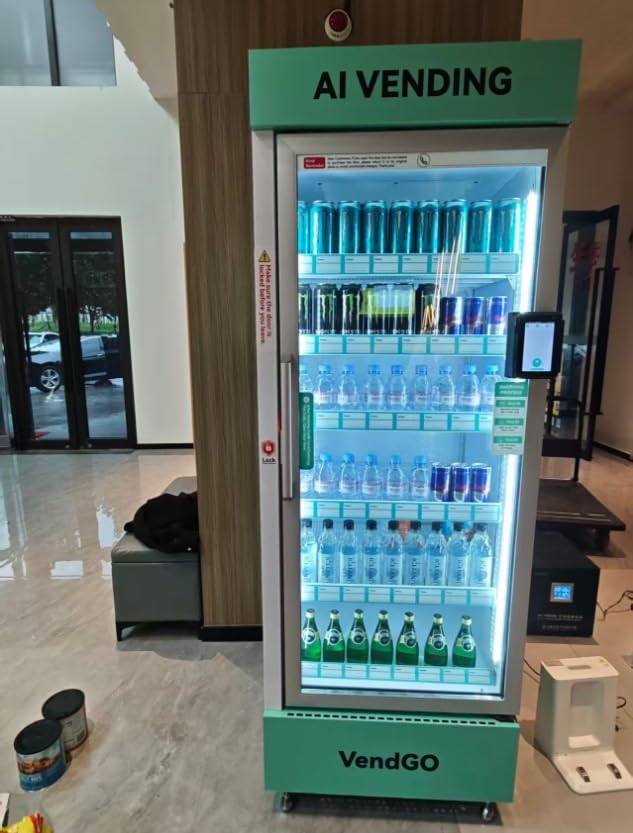
8. VendGo SM-AI-520 Smart Cooler – Compact AI Unit for Small Offices
Ai Smart Vending Machine with Card Reader, Cashless Payments, Inventory Tracking, Restock Alerts, Commercial-to-Use Design for Business
Model SM-AI-520
227 lb
27 x 29 x 78 in
Holds up to 700 items
Pros
- Holds up to 700 beverages and snacks
- Open grab-and-go shelves avoid items getting stuck
- Fast responsive support that guides setup step by step
- Simple installation with a user-friendly interface
Cons
- One reviewer rated it 3 out of 5 calling it essentially a fridge
- Card and mobile wallets only
- No cash option
The SM-AI-520 is among the most compact of the AI units here, at 27 by 29 by 78 inches and 227 pounds, and it still claims a capacity of up to 700 beverages and snacks. For a small office that wants a step up from a 20-selection machine without losing wall space, the size-to-capacity ratio is the appeal.
Payments are cashless only over Visa, Mastercard, Apple Pay, Google Pay and Amex via NFC, with remote inventory monitoring and refill alerts. The upgraded locking structure targets commercial security, and setup is plug-and-play on 110V.
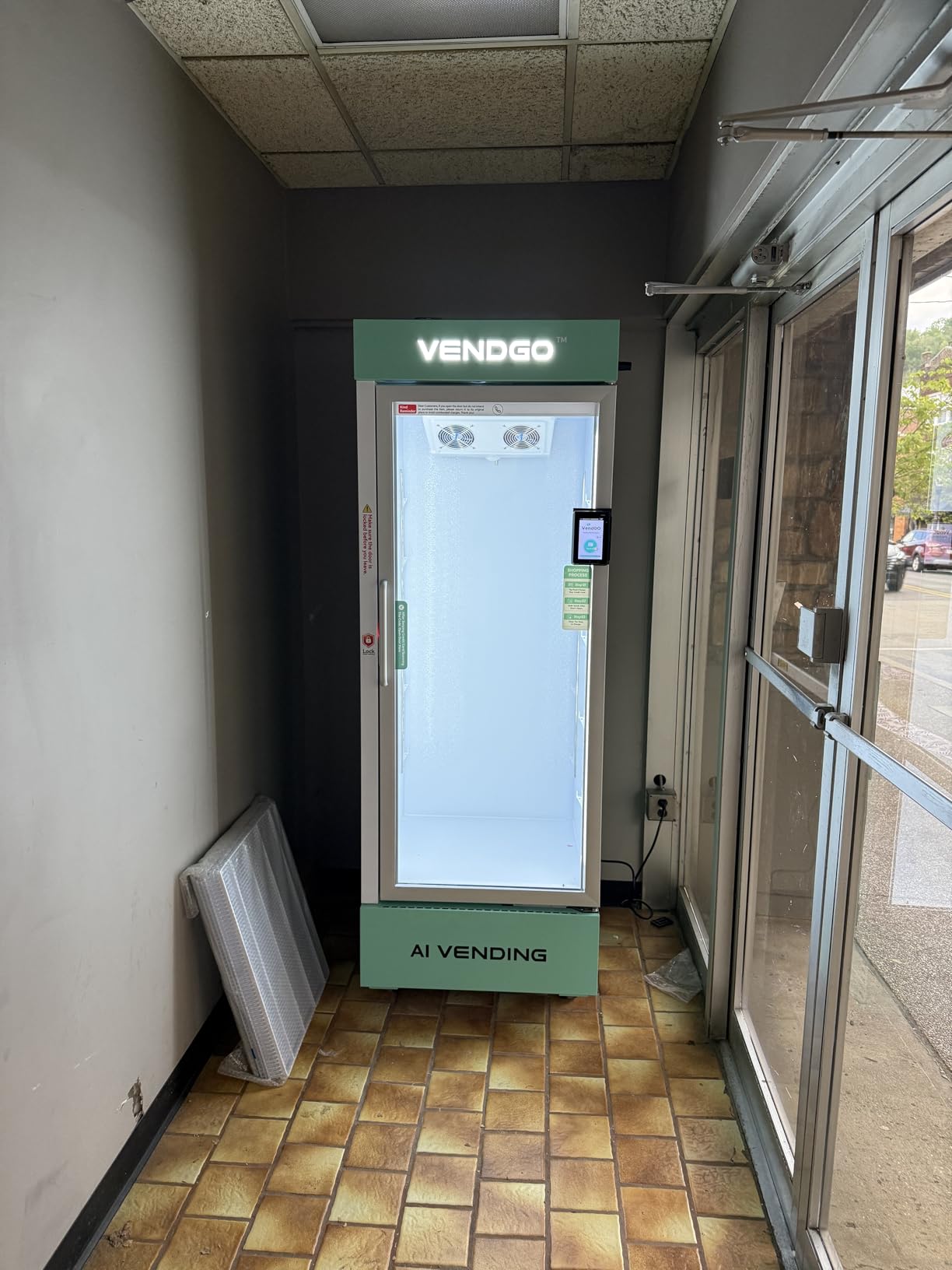
The grab-and-go open-shelf design is a practical advantage over spiral machines, because nothing gets stuck in a coil. Reviewers also call out fast, responsive support that walks you through setup step by step, and an interface a non-technical operator can manage.
Be blunt about the weak spot: one reviewer rated it 3 out of 5 and described it as essentially a fridge rather than a full vending solution. That criticism lands on the payment and accounting layer more than the hardware.
Where this kiosk earns its place
Offices of roughly 25 to 75 employees are the natural fit, particularly a compact break room or a secondary floor that cannot host a full-size market. The narrow footprint and simple install make it the least disruptive option to introduce.
It also works as a satellite unit at a second location, where a smaller machine keeps the service route simple.
Where it will frustrate you
No cash acceptance at all. Anyone without a card or phone wallet is locked out entirely, and that is a bigger problem in a plant or warehouse than in a downtown office.
With three reviews behind it, the 4.2 rating is one data point rather than a track record. Verify the payment reporting and the refill alerts with a trial before rolling it out to a whole floor.
9. Manovix Touchscreen Combo – Screen-Led Purchasing and DEX Monitoring
Manovix Snack Vending Machine for Business with Credit Card Reader
560 lb
35.43 x 35.43 x 75.2 in
10-inch touchscreen
DEX monitoring
Pros
- 10-inch touchscreen speeds purchase and plays video content
- DEX real-time monitoring of inventory and sales
- Refrigerated selection of snacks and cold drinks
- Card reader plus bill acceptor and coin mechanism
Cons
- Only 2 reviews so the 5.0 rating is a thin sample
- Spiral combo format rather than grab-and-go shelves
- Heavy at 560 lb
The Manovix unit is built around its screen. A 10-inch touchscreen handles the purchase flow and can also play video content, which turns the front of the machine into a display for your own internal communications. For an HR or facilities team, that is a channel you can use rather than a cost you absorb.
It also carries DEX real-time monitoring of inventory and sales, a standard in route-vending telemetry that lets you see sell-through by SKU as it happens. The refrigerated snack and beverage cabinet uses integral foam insulation, with anti-fog double front glass and LED interior lighting so the product stays visible.
Payment covers a card reader plus a one, five, ten and twenty dollar bill acceptor and a coin acceptor taking quarters, 50-cent pieces and dollar coins. Anti-theft drop sensors confirm a vend.
Where this kiosk earns its place
Workspaces that want to run internal messaging on the kiosk, or operators who depend on DEX data for route planning, get the most from this design. The screen-led flow also lowers the learning curve for first-time users.
It fits smaller footprints well at 35.43 inches square, close to the depth of a standard double-door fridge.
Where it will frustrate you
Two reviews is a very thin basis for a five-star rating. Ask any vendor here for a reference site that has had one in daily use for a year.
It is also a spiral combo rather than a true grab-and-go shelf, and at 560 pounds it needs a deliberate installation plan.
10. HAHA 550FT Door-Open Kiosk – Supermarket-Style Grab-and-Go
HAHA Vending Vending Machine Combo,Smart Refrigerated Vending Machine with Touch Card Reader (Black, Plus B)
Model 550FT
286 lb
26 x 26.8 x 77.5 in
4G and Wi-Fi app management
Pros
- Door opens on payment so customers take multiple items
- Camera records the entire customer session
- 4G plus Wi-Fi for multi-site oversight
- Supports stacked goods and broad product categories
Cons
- Only 2 reviews behind the 5.0 rating
- No cash or bill option at all
- Heavy at 286 lb and needs coordinated delivery
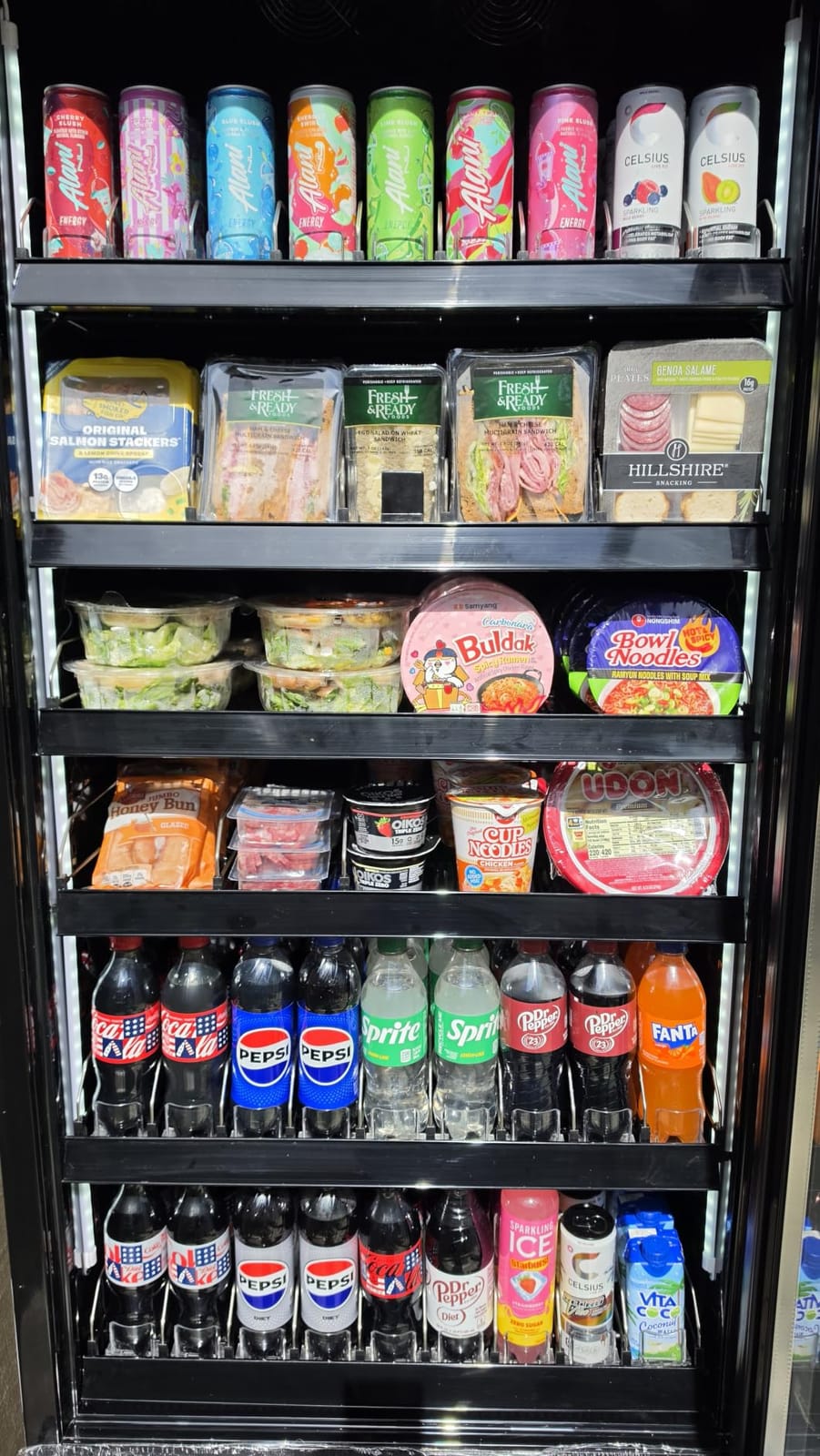
The 550FT is the closest thing to a real convenience store in this group. The customer swipes or taps, an electromagnetic lock opens the door, and they take their items off open shelving. The camera then records the entire session, which is both a loss-prevention record and the mechanism that settles what was taken.
Connectivity is 4G and Wi-Fi through a professional business management app, which is the difference between one machine and a fleet. If you are running markets at more than one office, cellular failover is what keeps reporting alive when a building’s wired network has a bad week.
The AI vision shelving is designed to prevent spills and broken cans that gravity dispensing causes, and the cabinet supports stacked goods across broad product categories. Payment is fully cashless across credit card, Apple Pay, Google Pay, Samsung Pay and mobile NFC. Dimensions are 26 by 26.8 by 77.5 inches at 286 pounds.
Where this kiosk earns its place
Offices that want a genuine shoppable market, where employees expect to browse and pick, benefit most from the door-open format. It handles multi-item baskets in one transaction, which is exactly how a real store behaves.
Multi-site operators should also look here, because the 4G fallback keeps every location reporting to one dashboard.
Where it will frustrate you
Cashless only with no bill acceptor, so a portion of your population cannot buy anything. That is fine in a card-based office and a problem in a mixed or industrial site.
Only two reviews support the five-star rating, and at 286 pounds the unit needs coordinated delivery rather than an afternoon with a hand truck.
How to Choose a Micro Market Kiosk: A 7-Step Checklist
1. Decide who buys the equipment and who services it
This is the decision that actually determines your experience, and most offices get it wrong on the first pass. In the operator-managed model, a route operator supplies, installs, fills and repairs the kiosk, and the office provides only space, power and internet. You pay nothing, and the operator carries the inventory and the shrinkage risk.
In the self-purchase model, you own the machine, you buy the product, and your own staff or a service contract handles maintenance. You keep the margin, and you take on the refilling labour. Operators on vending forums describe that second model as where software fragmentation bites, because kiosk platforms and back-office reporting do not always agree on the fields each exposes.
Ask directly who owns the transaction data. If the answer is vague, that is a sign you are renting your own sales history.
2. Map the headcount to kiosk count and cooler configuration
Stop sizing by habit. A rough sizing rule: 25 to 75 employees is served well by one machine in the 36 to 60 slot range. From 75 to 200, you want one high-capacity machine or a pair of complementary machines, one ambient and one refrigerated. Above 200, plan on a primary market plus at least one satellite unit on another floor or building.
Adding fresh food changes the calculation more than headcount does. Sandwiches, yogurt and chilled drinks need refrigerated capacity and a reliable refill cycle, and a unit that sells out by 11am is a complaint generator no matter how many employees you have.
If the room itself is the constraint, our notes on conference tables for small offices cover the footprint math that applies to any break room reconfiguration.
3. Audit the infrastructure before you order
Check the floor space including door swing and refill access, a dedicated 110V outlet on its own circuit for a machine drawing 400 to 500 watts or more, and a network connection. A cellular fallback matters if the machine is going into a basement break room or a plant floor with poor coverage, since operators on vending forums repeatedly flag offline behaviour in exactly those locations.
Also confirm temperature. A cabinet running its compressor in an unconditioned space will shorten equipment life, and food safety rules apply to anything chilled.
While you are auditing the room, it is a good moment to check whether the space around it is secure. If your office stores anything sensitive near the break room, our guide to fireproof safes covers the storage side of that conversation.
4. Match the payment rails to your actual population
Cashless-only machines are simpler, cheaper to run and less prone to mechanical failure, but they exclude everyone without a card or phone wallet. If your site has contractors, visitors, warehouse staff or a cash-handling culture, either choose a machine with a bill acceptor and coin mechanism, or accept that a slice of your population cannot buy.
Mobile wallet support is close to table stakes now, and it is what employees reach for first. Biometric and subsidy-card ecosystems are worth asking about if you run a wellness or benefit program, since payroll-deduct and benefit-card funding change the economics of an office program more than any hardware choice.
5. Price the total cost of ownership, not the machine
Standalone self-checkout hardware is a fraction of the cost of a full turn-key micro market build, and that gap is where buyers get surprised. A complete build bundles the kiosk, coolers, shelving, freezers, installation, software, and the ongoing refill and maintenance route.
When comparing quotes, break out five lines: equipment, installation, software subscription or per-transaction fees, product refills, and maintenance. Ask whether the software fee is per machine, per transaction or flat. A flat model with no per-transaction charge is far easier to forecast across a year of transactions, and a remanufactured machine like the 40-selection model in this roundup is the clearest example of that trade-off.
One piece of operator data worth knowing going in: micro market locations typically produce higher gross revenue per site than a single smart vending machine, but with a longer payback period. Buyers who only model the first quarter tend to bail out before the curve turns.
6. Treat shrinkage as a design choice
Open shelving is the point of a micro market and also its main risk. The mitigations are concrete: cashless-only operation removes cash handling entirely, per-transaction video recording makes disputes resolvable, anti-theft delivery monitoring catches dispensing failures that would otherwise vanish into the margin, and a smart cooler with door monitoring can lock down high-value items.
Decide your loss tolerance before you pick hardware. A snack-only office tolerates more shrink than a market carrying energy drinks and supplements.
7. Ask the service questions before you sign
Before any purchase order, get written answers on five things: what the software fee structure is, who performs installation, what happens when the machine goes down and how fast someone responds, who owns the transaction and inventory data, and what the refill frequency and route look like in your area.
Used versus new is a legitimate choice at low volume. A remanufactured 40-selection machine gets you a working setup with standard parts and no subscription, which is a sensible trial platform. Newer AI units give you video records and refill automation that used hardware typically does not.
As you upgrade the room, you may also be replacing shared equipment such as office binding machines or display shelving, and those refreshes tend to share the same delivery window and the same facilities contact.
Frequently Asked Questions
How much does a micro market vending machine cost?
A standalone self-checkout kiosk is a fraction of the cost of a full turn-key micro market build. Expect to pay for equipment, installation, software subscriptions, product refills and maintenance as separate lines. Full builds bundle the kiosk, coolers, shelving, freezers, install and service, which is why the total is several times the hardware figure alone.
What are the key differences between a vending machine and a micro market?
A vending machine dispenses from fixed spiral coils behind a locked door and carries a narrow preset assortment. A micro market uses open shelving and refrigerated coolers with a self-checkout kiosk, so customers choose their own items, pay once for a multi-item basket, and the operator refills based on per-SKU sales data. The trade-off is higher shrinkage risk and a real need for power, space and a service route.
Can you give me an example of a micro market?
A typical example is a break room in a 120-person software company. Employees walk into a space with open snack shelving, a refrigerated cooler of sandwiches, yogurt and drinks, and a freezer. They take what they want to a self-checkout kiosk, tap a card or phone, and pay once. A route operator refills it twice a week based on what sold.
What is the best self-checkout machine for a small business?
For a small business, the best self-checkout machine is usually the one that fits your wall space and your population. Compact AI units in the 27 to 29 inch footprint class hold several hundred items and install on a standard 110V outlet. If any of your users pay cash, choose a model with a bill acceptor and coin mechanism instead of a cashless-only unit.
How many employees do you need for a micro market?
Around 25 employees is the practical floor for a dedicated micro market, since the cost of refilling a machine needs enough transactions to cover itself. From 25 to 75 employees one unit in the 36 to 60 slot range works. From 75 to 200 you want one high-capacity unit or an ambient and refrigerated pair. Above 200, plan a primary market plus a satellite unit.
Who pays for a micro market in an office?
In the operator-managed model, the route operator pays for and owns the equipment, installs it, fills it and services it, while the office provides only space, power and internet. If your company buys the hardware instead, you keep the margin but take on refills, maintenance and shrinkage. Neither arrangement obliges an employer to subsidise employee purchases.
Are micro markets secure?
They are less secure than a locked vending machine, which is the honest trade-off of open shelving. Common mitigations are cashless-only operation, per-transaction video recording, anti-theft delivery monitoring for dispensing failures, and smart coolers that lock high-value items. Your actual loss tolerance should determine how much of that hardware you buy.
What equipment comes in a micro market package?
A standard micro market package includes the self-checkout kiosk, open shelving, refrigerated coolers and often a freezer, plus lighting and power, the payment terminal, and the back-office software that handles inventory, telemetry and reporting. A turn-key build adds installation, initial product loading, and an ongoing refill and maintenance route.
Final Verdict: Which Micro Market Kiosk Should You Buy?
The HAHA US-360 is our pick for the best micro market kiosks for offices in 2026, because it pairs the deepest review history in the group with genuinely useful app-based inventory and refill control, plus a fully cashless AI grab-and-go checkout. If your assortment shifts week to week, the US-360FT with adjustable shelves and per-transaction video is the stronger long-term fit. For a narrow wall space holding several hundred items, the VendGo 800-can unit wins on capacity per footprint.
Whichever route you take, settle the operator-versus-employer question before you sign anything, and get the software fee structure in writing. More break room equipment advice lives in our office display picks and our indoor flying drone guide if the space needs a refresh beyond snacks.