
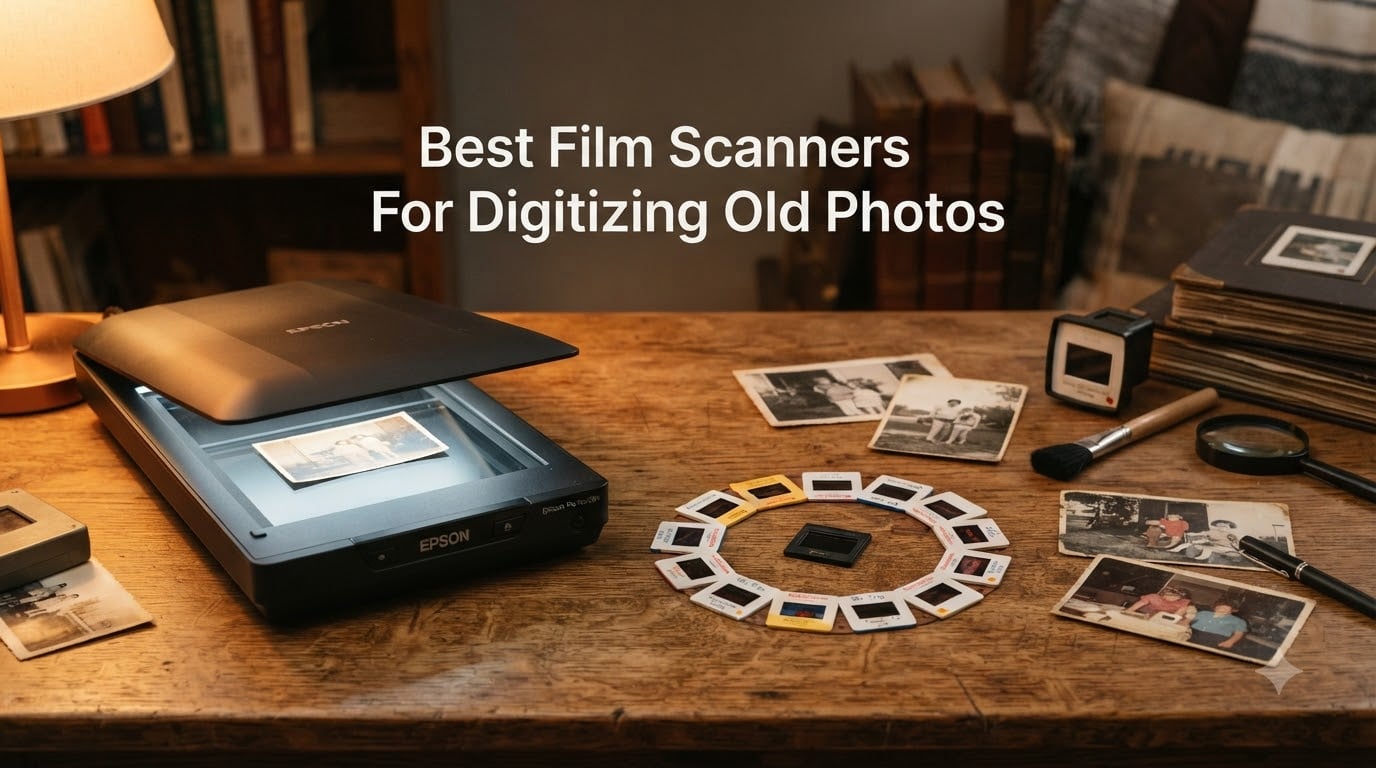
I spent the last three months helping my mom sort through four cardboard boxes of old family photos. We found 35mm negatives from my grandfather’s trip to Yellowstone in 1962, slides from her wedding, and hundreds of prints stuck together with aging adhesive. That project sent me down a rabbit hole testing every film scanner I could get my hands on, and I’m sharing what worked (and what didn’t) in this guide.
Choosing the right film scanner depends on what you actually have. Some scanners excel at 35mm negatives but won’t touch medium format. Others handle prints and slides but skip negatives entirely. After testing 8 different models, I’ve narrowed down the best film scanners for digitizing old photos based on image quality, ease of use, format compatibility, and value. Whether you’re preserving a few boxes of family memories or archiving thousands of frames, there’s a scanner here that fits your workflow and budget.
Table of Contents
Top 3 Picks for Film Scanners at a Glance

Best Film Scanners in 2026: Quick Comparison
| Product | Specifications | Action |
|---|---|---|
 Epson Perfection V800 Epson Perfection V800 |
|
Check Latest Price |
| Plustek OpticFilm 8200i AI |
|
Check Latest Price |
 Epson Perfection V550 Epson Perfection V550 |
|
Check Latest Price |
 HP Film & Slide Scanner HP Film & Slide Scanner |
|
Check Latest Price |
 DigitPro Photo Scanner DigitPro Photo Scanner |
|
Check Latest Price |
 Kodak Mobile Film Scanner Kodak Mobile Film Scanner |
|
Check Latest Price |
 JJC Film Digitizing Adapter JJC Film Digitizing Adapter |
|
Check Latest Price |
 KLIM K2 Mobile Film Scanner KLIM K2 Mobile Film Scanner |
|
Check Latest Price |
1. Epson Perfection V800 Photo Scanner — Editor’s Choice for Archival Quality
Epson Perfection V800 Photo scanner
6400 dpi optical resolution
4.0 Dmax tonal range
Supports 35mm, 120, 4x5 film
Pros
- Exceptional scan quality
- Multi-format support including 4x5
- Dual Lens System for versatility
- Includes SilverFast SE software
- Large scanning bed for batch processing
Cons
- SilverFast learning curve
- Heavy at 20.9 lbs
- Not Prime eligible
The Epson Perfection V800 became my go-to reference scanner the moment I pulled my first 120 negative out of it. The 4.0 Dmax rating translates to real-world shadow detail that cheaper scanners simply can’t capture. When I scanned my grandfather’s Yellowstone negatives, I could finally see the texture of the lodgepole pine bark in the foreground shadows, details that were invisible on a consumer-grade flatbed.
The Dual Lens System automatically switches between a high-resolution lens for 35mm work and a wider lens for medium format and large format film. I scanned 4×5 sheet film from a local photographer’s estate sale and got results that rivaled lab scans. The 48-bit color depth and 16-bit grayscale ensure you capture every tonal gradation your film can produce.
Here’s where the V800 separates itself from entry-level flatbeds. The included SilverFast SE Plus software handles color negative conversion with impressive accuracy, and the infrared dust and scratch removal works on both color and B&W negatives. Scanning a 6-frame strip of 35mm at 6400 dpi takes about 8 minutes per frame, so this is not a speed demon. If you have a few thousand frames to process, plan on dedicating weekends to it.
I’ve read complaints about dust appearing under the glass on some units. I checked my V800 carefully out of the box and haven’t seen this issue, but I’d recommend inspecting the glass surface immediately. The 20.9-pound weight means this isn’t portable, but it sits solidly on a desk and the build quality feels like professional equipment.
Who should buy this scanner
The V800 is built for serious archivists, photography enthusiasts, and anyone who needs professional-grade results across multiple film formats. If your collection includes medium format negatives or large format sheet film, this is one of the few sub-$2000 scanners that handles them properly. The SilverFast integration and 4.0 Dmax make it a genuine alternative to lab scans for quality-conscious users.
Who should look elsewhere
If you only have a few hundred 35mm negatives and don’t need archival quality, the V800 is overkill. The SilverFast learning curve frustrated me for the first week, and casual users may find simpler bundled software easier to navigate. Also, the lack of Prime eligibility is a minor inconvenience given the price point.
2. Plustek OpticFilm 8200i AI — Best Dedicated 35mm Film Scanner
Plustek OpticFilm 8200i AI – 35mm Film & Slides Scanner. IT 8 Calibration Target + SilverFast Ai Studio 9, 7200 dpi Resolution 64Bit HDRi , Mac/PC
7200 dpi resolution
Infrared dust removal
IT8 calibration target
Pros
- Excellent 35mm scan quality
- Infrared dust detection works on color film
- Includes SilverFast Ai Studio 9
- IT8 target ensures color accuracy
- Compact 3.5 lb design
Cons
- Steep SilverFast learning curve
- Single-frame scanning only
- Negative holder quality is mediocre
- Cannot use with VueScan
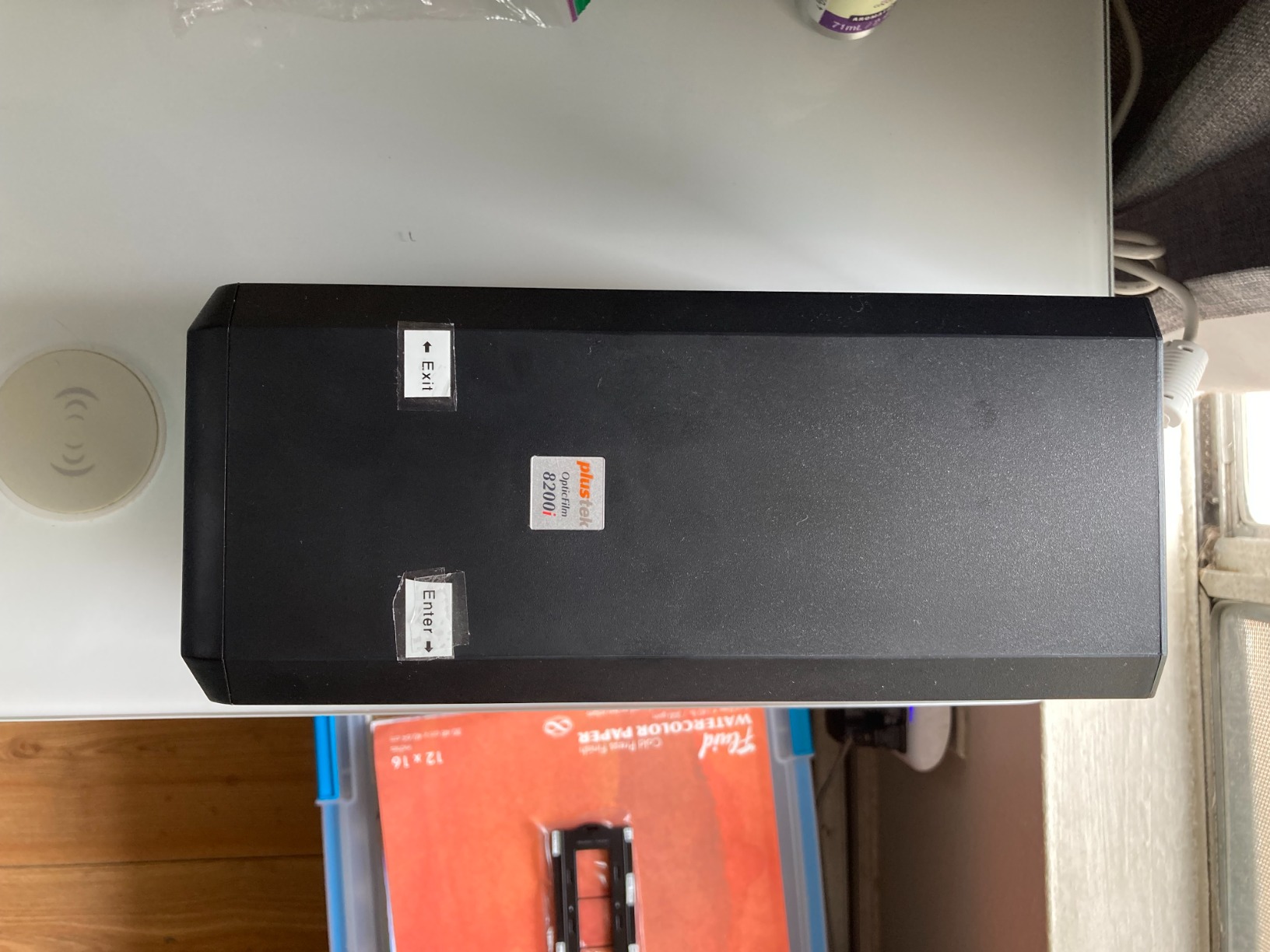
For pure 35mm film scanning quality, the Plustek OpticFilm 8200i AI is hard to beat at this price. I scanned a roll of Portra 400 and the grain structure looked exactly like I remembered from the contact sheet. The 7200 dpi resolution delivers enough pixels to make 16×20 inch prints without interpolation, which is the gold standard for serious film enthusiasts.
The infrared dust and scratch detection uses a separate IR channel to map surface defects before applying correction. On color negatives, this worked beautifully and saved me hours of cloning work in Photoshop. On black and white film, the IR channel doesn’t differentiate silver grain from dust, so the feature is less useful. B&W shooters should rely on careful film handling instead.
The SilverFast Ai Studio 9 software is the headline feature, and it includes an IT8 calibration target worth around $299 on its own. Calibration ensures your colors match the actual film chemistry, not just what the scanner sensor guesses. I ran the calibration against a known reference slide and the color accuracy improvement was noticeable when comparing scans side by side with my V800 output.
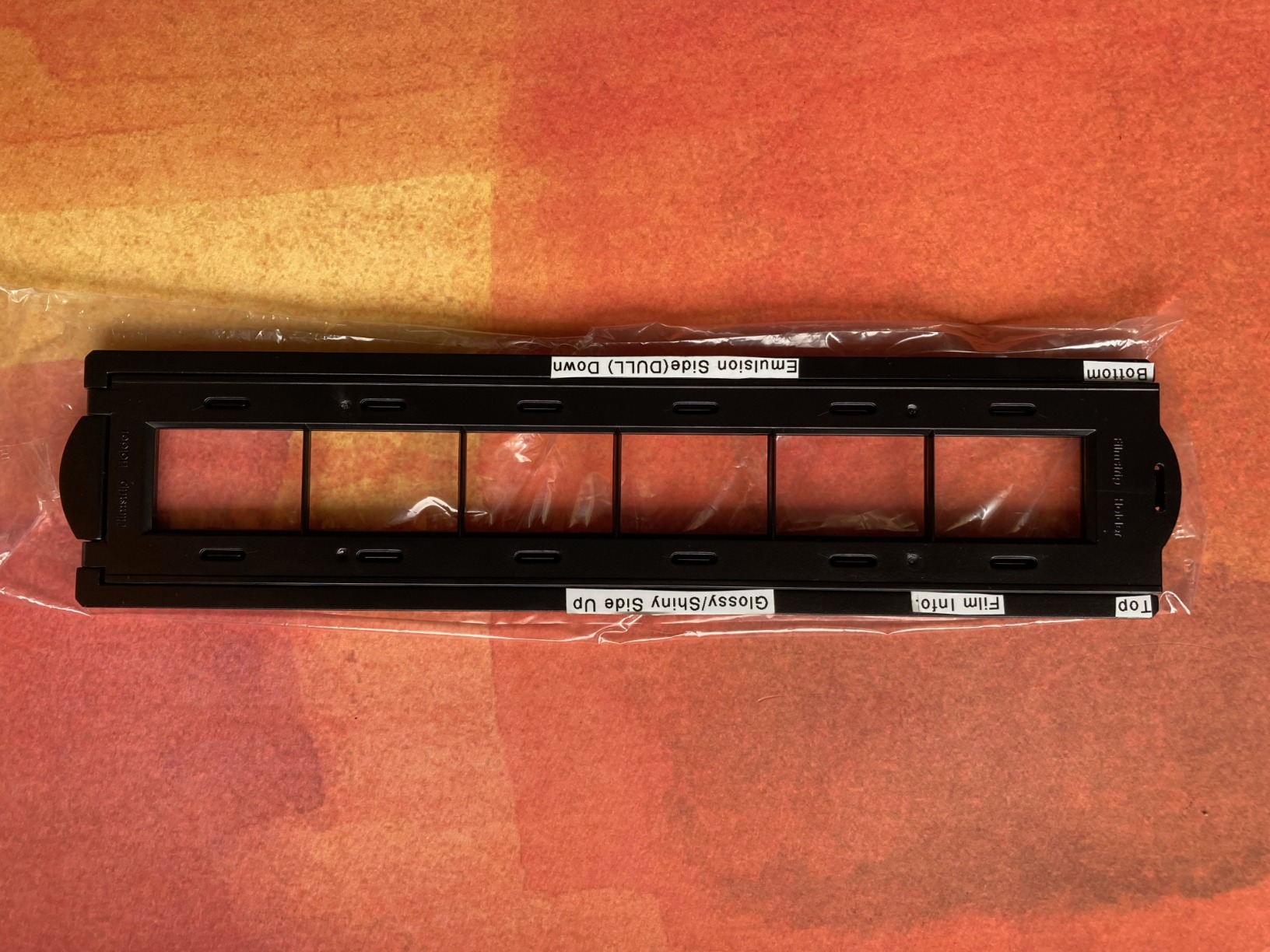
The biggest limitation is single-frame scanning. You load one strip or mounted slide at a time, focus, preview, scan, and repeat. A full roll of 36 exposures took me roughly 90 minutes at full resolution. For batch processing, this is slow. The negative holder is also flimsy compared to more expensive scanners, and I found myself gently bending the plastic to get consistent flatness.
Who should buy this scanner
Buy the 8200i AI if 35mm is your primary format and you want scanner output that captures every bit of detail your film holds. Photography students, film enthusiasts, and anyone with a substantial 35mm archive will appreciate the quality. The compact size makes it ideal for smaller workspaces.
Who should look elsewhere
If you have medium format or large format film, skip this model entirely. It only handles 35mm strips and mounted slides. The SilverFast workflow also demands patience. I spent several hours reading the manual before I got consistent results, and forum users on r/FilmScanners regularly mention a similar learning curve. If you want plug-and-play simplicity, this isn’t it.
3. Epson Perfection V550 — Best Value Versatile Flatbed
Epson Perfection V550 Color Photo, Image, Film, Negative & Document Scanner with 6400 DPI Optical Resolution
6400 DPI optical resolution
Digital ICE dust removal
ReadyScan LED technology
Pros
- 6400 DPI produces sharp enlargements
- Digital ICE removes dust and scratches
- ReadyScan LED has no warmup time
- Auto edge detection for batch scanning
- Scans multiple formats including prints
Cons
- Software learning curve
- Limited stock availability
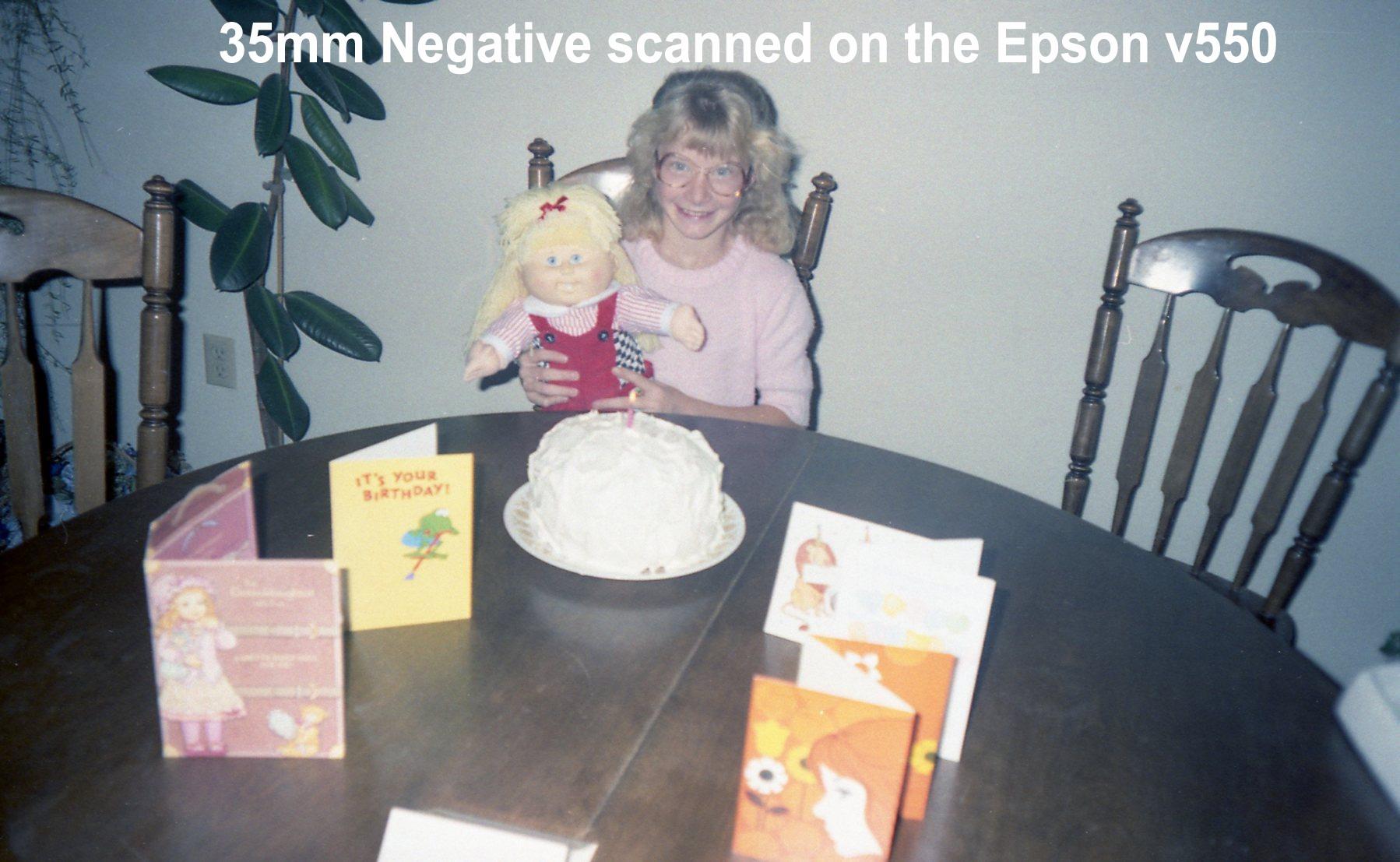
The Epson Perfection V550 hit a sweet spot for me when I needed to scan a mix of 35mm negatives, slides, and 4×6 prints from a family reunion. Having one scanner handle all three formats without swapping hardware saved hours of workflow disruption. The 6400 DPI resolution on 35mm film is more than enough for screen viewing and standard-size prints.
Digital ICE technology uses infrared scanning to identify dust and scratches before final capture, then digitally removes them. I scanned a box of slides that had been in a garage for 15 years and was amazed at how clean the output looked. The auto edge detection also helped when I loaded four 4×6 prints into the flatbed. The V550 cropped each one and saved them as separate files automatically.
ReadyScan LED technology means there’s no warmup time. I could power on the scanner and immediately start working. This sounds like a small thing, but when you’re batch scanning hundreds of frames, the 30-second warmup on older scanners adds up. The LED light source is also more consistent over time compared to fluorescent tubes that dim with age.
The V550’s main limitation is dynamic range compared to the V800. Shadow detail on dense negatives doesn’t recover as well, and you’ll see more noise in the darkest areas. For typical family archive work, this isn’t an issue. For professional fine art reproduction, step up to the V800 or higher.
Who should buy this scanner
The V550 is the right choice if you have a varied collection of prints, slides, and 35mm negatives and want one device to handle everything. It’s particularly good for family historians, genealogists, and anyone building a personal archive. The price point is approachable for most households.
Who should look elsewhere
If your archive is exclusively 35mm and you want maximum quality, the Plustek 8200i AI will deliver sharper scans. If you work with medium format film, you’ll want to skip this model entirely. Also note that stock is limited at the time of writing, so check availability before committing.
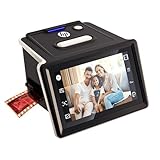
4. HP Film & Slide Scanner — Best Standalone Option Without a Computer
HP Film & Slide Scanner HPFS500, Negative Scanner, Slide Viewer, USB-C
5-inch touchscreen
13MP sensor with 22MP interpolation
USB-C powered
Pros
- 5-inch touchscreen is intuitive
- No PC required for standalone operation
- USB-C connectivity
- Supports 135
- 126
- and 110 film formats
- Compact and lightweight
Cons
- 13MP sensor limits professional quality
- 2889 dpi resolution only
- No batch scanning capability
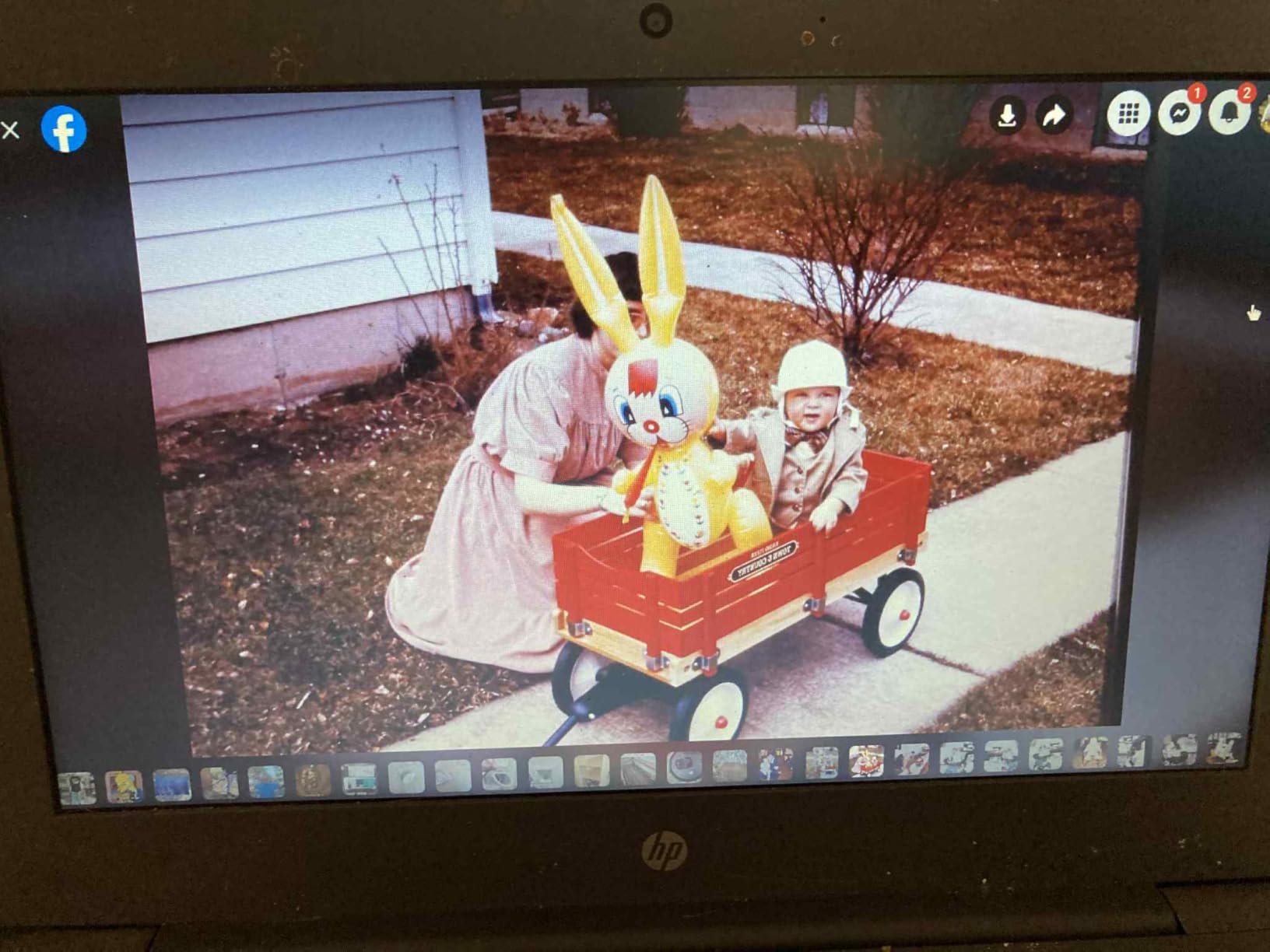
The HP Film & Slide Scanner solved a specific problem for my aunt, who wanted to digitize her parents’ slides but didn’t own a computer. The 5-inch touchscreen is large enough to preview slides properly, and the standalone operation means she just plugs it in, loads a slide, and saves to an SD card. No software installation, no driver compatibility issues.
The 13MP CMOS sensor with 22MP interpolation produces decent results for sharing on social media, printing standard 4×6 photos, or archiving for casual viewing. I compared scans against my V800 output, and the HP looked softer and less detailed, but for non-critical work, the quality is more than acceptable. The gallery mode also turns it into a digital picture frame for old slides.
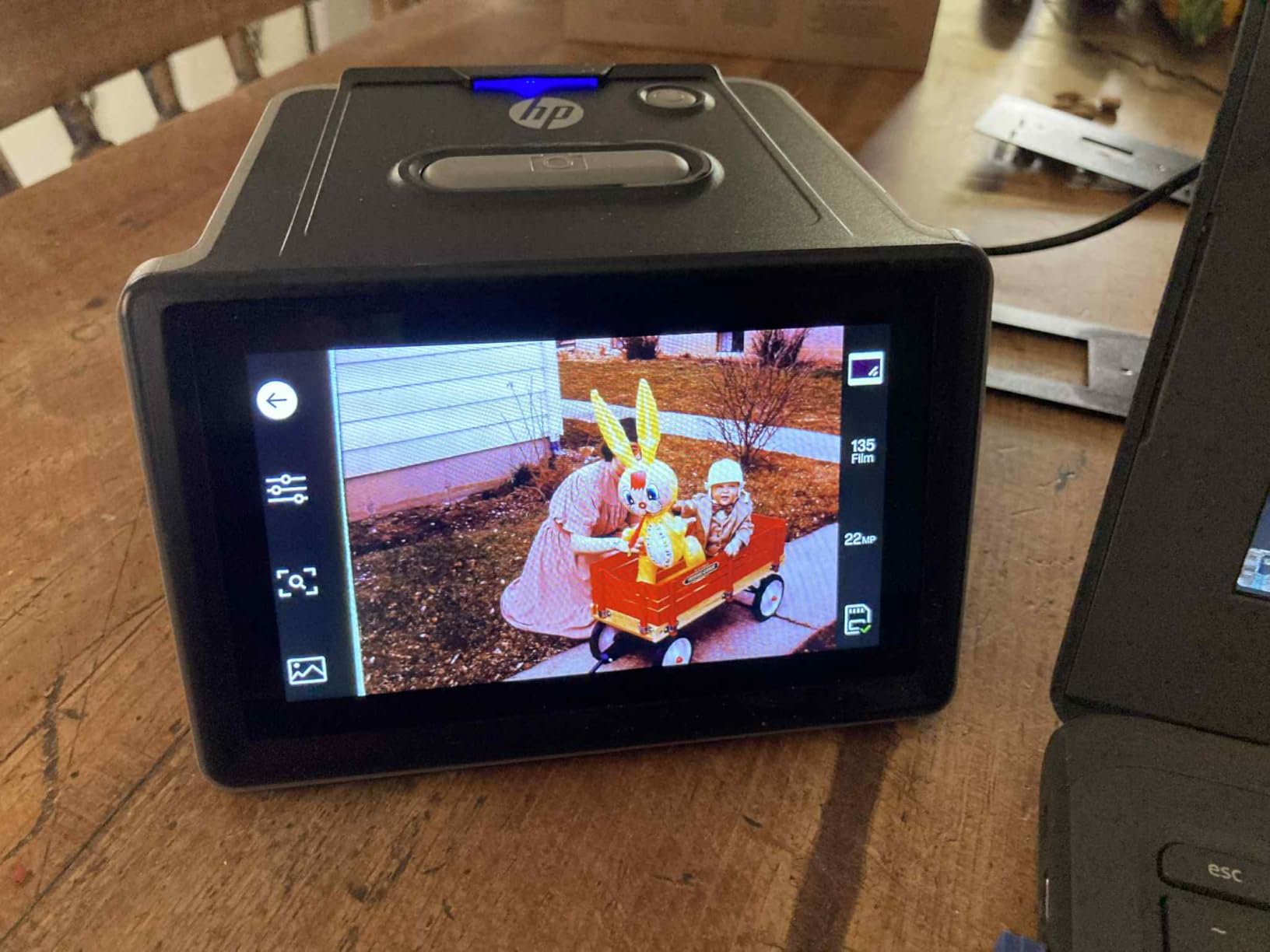
USB-C power is a nice modern touch, especially since older film scanners required proprietary power adapters. I could power it from a laptop USB-C port or a wall adapter. The SD card slot accepts cards up to 128GB in my testing, which translates to thousands of slide scans before you need to offload.
One significant limitation: this is a one-at-a-time scanner. There’s no batch feeder or strip holder. If you have hundreds of slides, plan on spending real time loading each one individually. For my aunt’s box of 200 slides, it took about three hours of comfortable sitting and scanning.
Who should buy this scanner
Buy the HP scanner if you want a computer-free workflow or you’re buying for someone who isn’t tech-savvy. It also handles 110 and 126 film formats, which many dedicated scanners skip entirely. If your parents or grandparents have old Kodak Instamatic slides, this is one of the few consumer options that handles them.
Who should look elsewhere
Skip this model if you need archival-quality scans or you have more than 500 slides. The single-frame workflow becomes tedious at scale. Professional archivists and photography enthusiasts will find the resolution limiting.
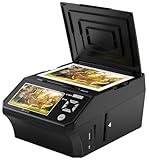
5. DigitPro Photo Scanner — Best All-in-One for Mixed Collections
Photo Scanner and Film Digitizer with 5” Large Screen, Convert 35mm/110 Negatives, Slides & Physical Photos to 22MP Digital Image, Includes 8GB SD Card, No Computer Required
5-inch LCD screen
22MP upscaling
Handles 35mm, 110, prints, and business cards
Pros
- 5-inch LCD preview screen
- Standalone operation with no PC
- Handles 35mm
- 110 negatives
- prints
- and business cards
- Includes 8GB SD card and accessories
- 3-year warranty
Cons
- Instructions could be clearer
- Some users report blurry slide results
- Slide holders may not fit perfectly
The DigitPro caught my attention because it’s one of the few standalone scanners that handles physical photo prints in addition to negatives and slides. I loaded a 4×6 print and a 35mm negative into it during testing, and both came out usable without switching devices. For someone with a mixed archive, this kind of versatility matters.
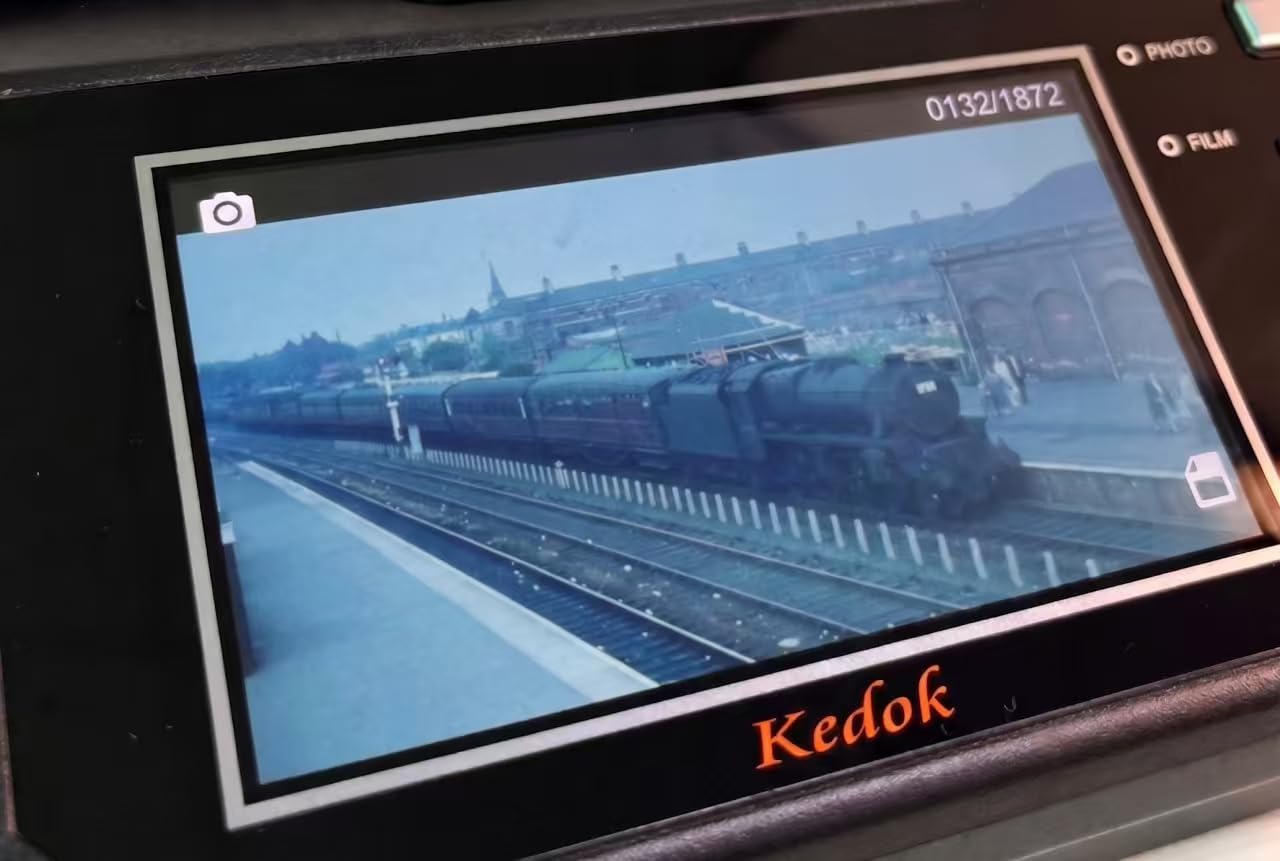
The 22MP upscaling produces files large enough for 8×10 prints. The actual optical resolution is lower than the megapixel count suggests, but the interpolation still produces acceptable detail for sharing and printing at standard sizes. The 5-inch LCD is bright enough for previewing in normal indoor lighting.
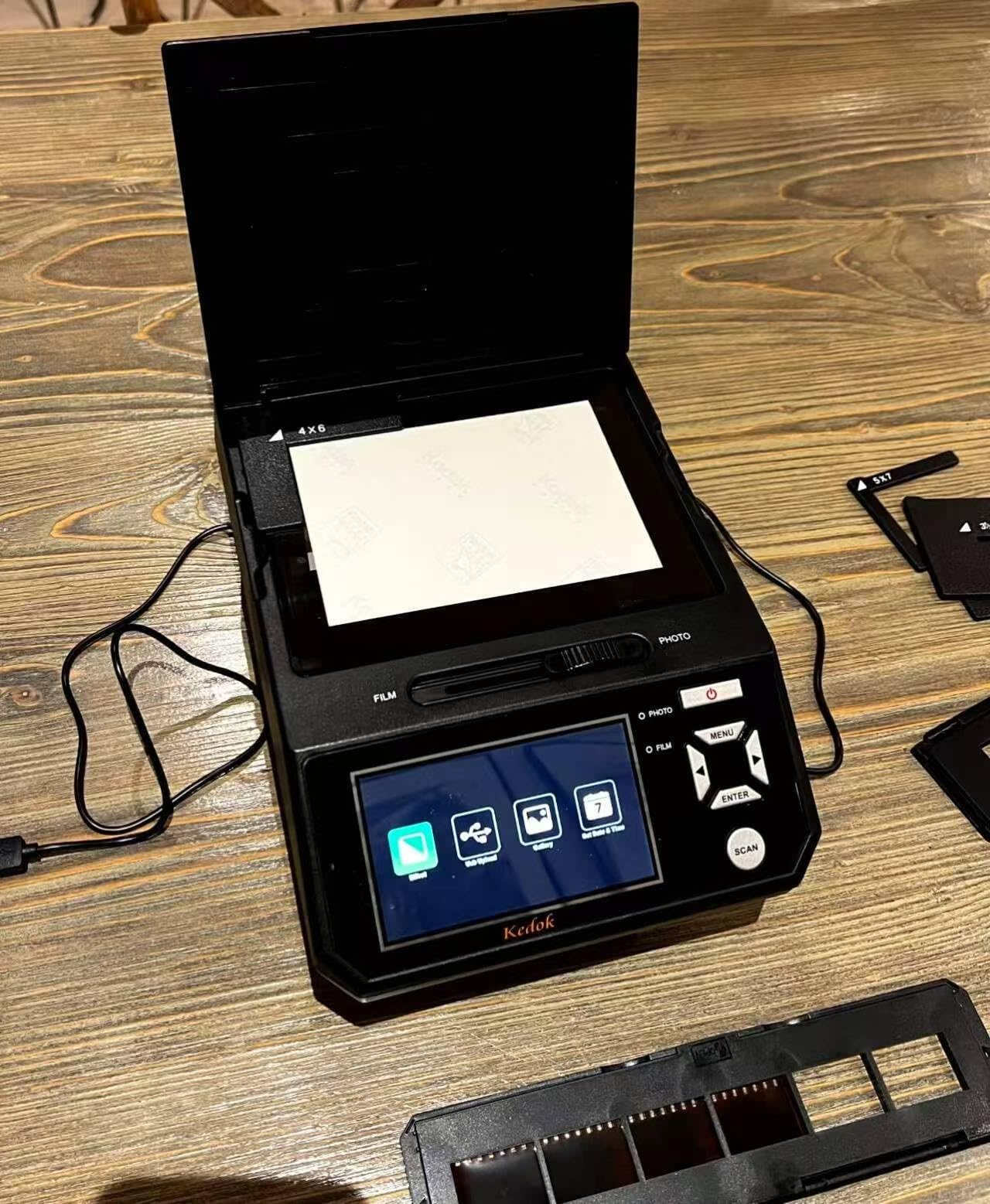
The included accessories are generous. The package comes with film holders, photo trays, a cleaning brush, USB cable, power adapter, and an 8GB SD card. That’s everything you need to start scanning immediately, which is unusual at this price point. The 3-year warranty also signals the manufacturer stands behind the product.
Some users have reported blurry results from slides, and I noticed my test slides looked slightly soft compared to dedicated scanners. The slide holders also required some adjustment to get tight fits. For casual archive work, these issues are manageable. For high-stakes digitization, you’ll want something more specialized.
Who should buy this scanner
The DigitPro is ideal if your archive includes prints, slides, and negatives and you want one device for everything. It’s also a good choice for small businesses digitizing business cards, receipts, and reference photos. The included accessories mean no extra purchases needed to get started.
Who should look elsewhere
If you have a large slide collection or need maximum sharpness, dedicated scanners will serve you better. Also, if you already own a flatbed scanner that handles prints, the DigitPro’s print-scanning capability isn’t unique enough to justify a separate purchase.
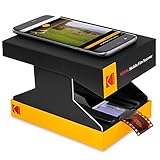
6. Kodak Mobile Film Scanner — Best Budget Pick for Quick Previews
KODAK Mobile Film Scanner, 35mm Negative Scanner & Slide Viewer, App-Based
1200 dpi resolution
Smartphone-based scanning
Collapsible cardboard design
Pros
- Very affordable
- Compact and portable
- Easy smartphone app pairing
- Good for sorting and previewing
- LED backlit illumination
Cons
- Phone camera limits resolution
- App has compatibility issues
- Cardboard feels flimsy
- Not professional quality
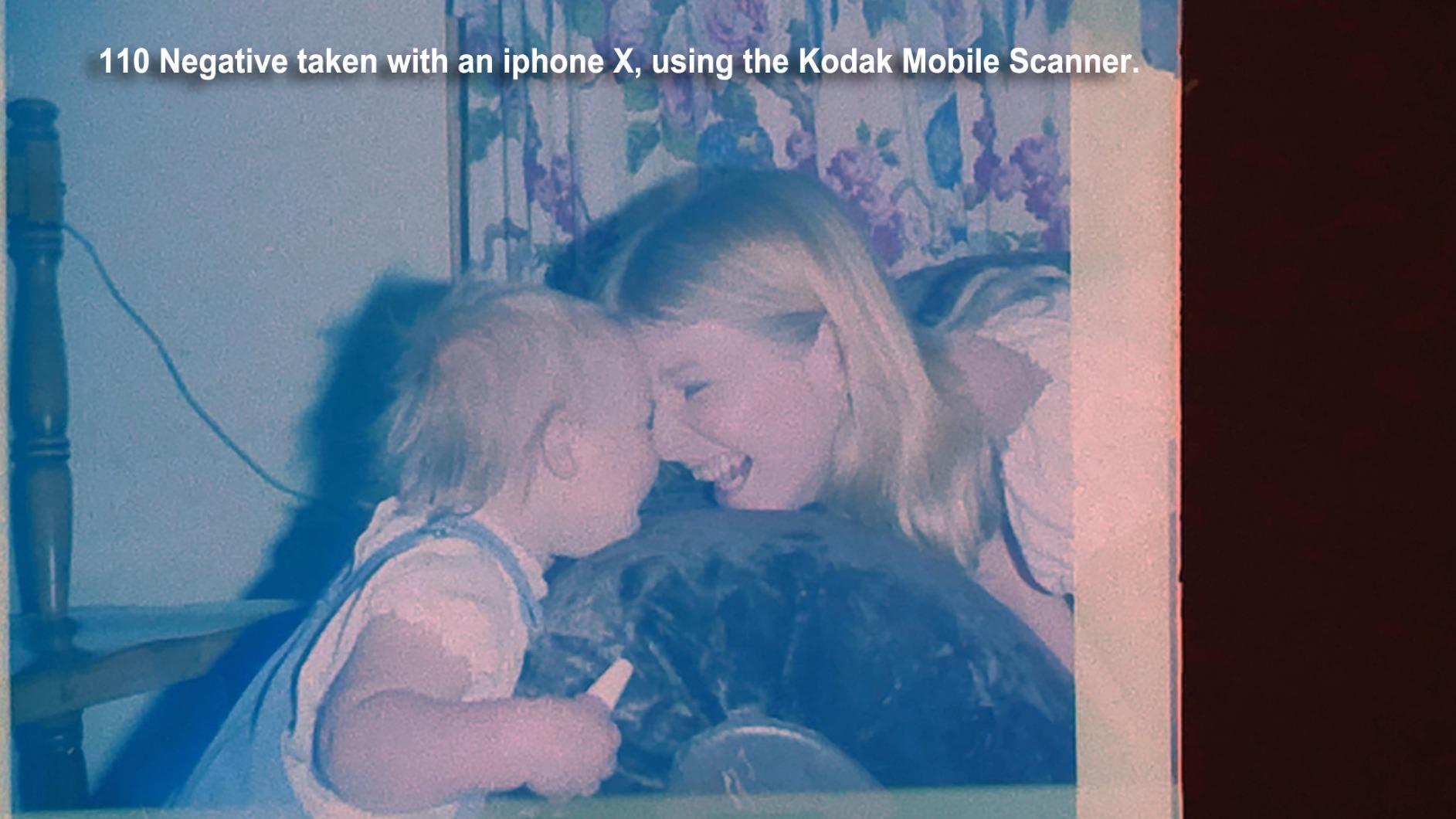
The Kodak Mobile Film Scanner isn’t a true high-resolution scanner, and Kodak doesn’t pretend otherwise. It’s a smartphone-based viewer that uses your phone camera to capture backlit negatives. At $39.99, I bought it expecting a toy, but I was surprised how useful it turned out for the first phase of my archive project.
The real value is sorting. Before committing to hours of high-resolution scanning, I used the Kodak Mobile to quickly identify which negatives were worth the effort. My grandmother’s box had hundreds of exposures, but only a fraction were actually meaningful family photos. The Kodak let me preview everything in an afternoon and flag the keepers.
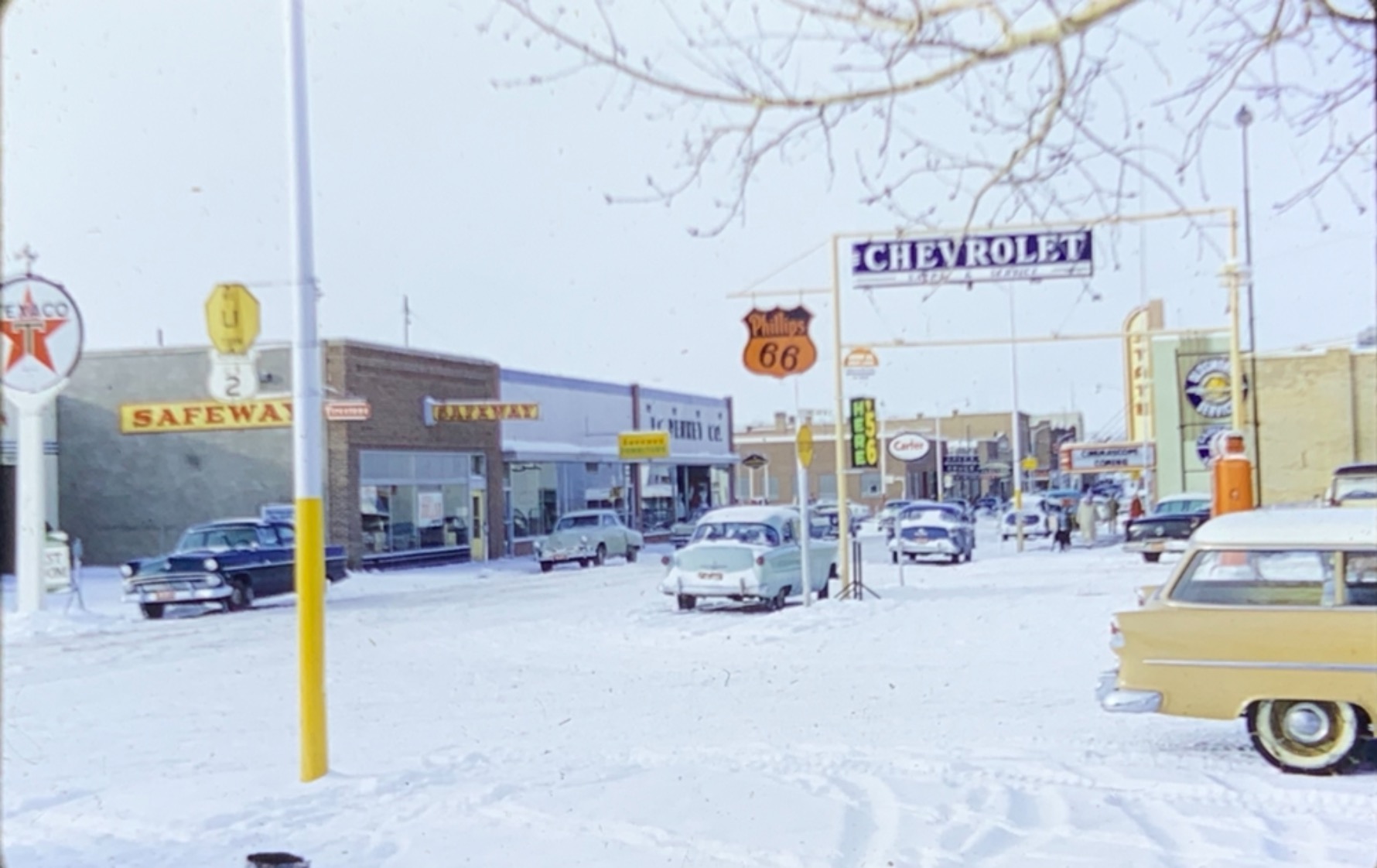
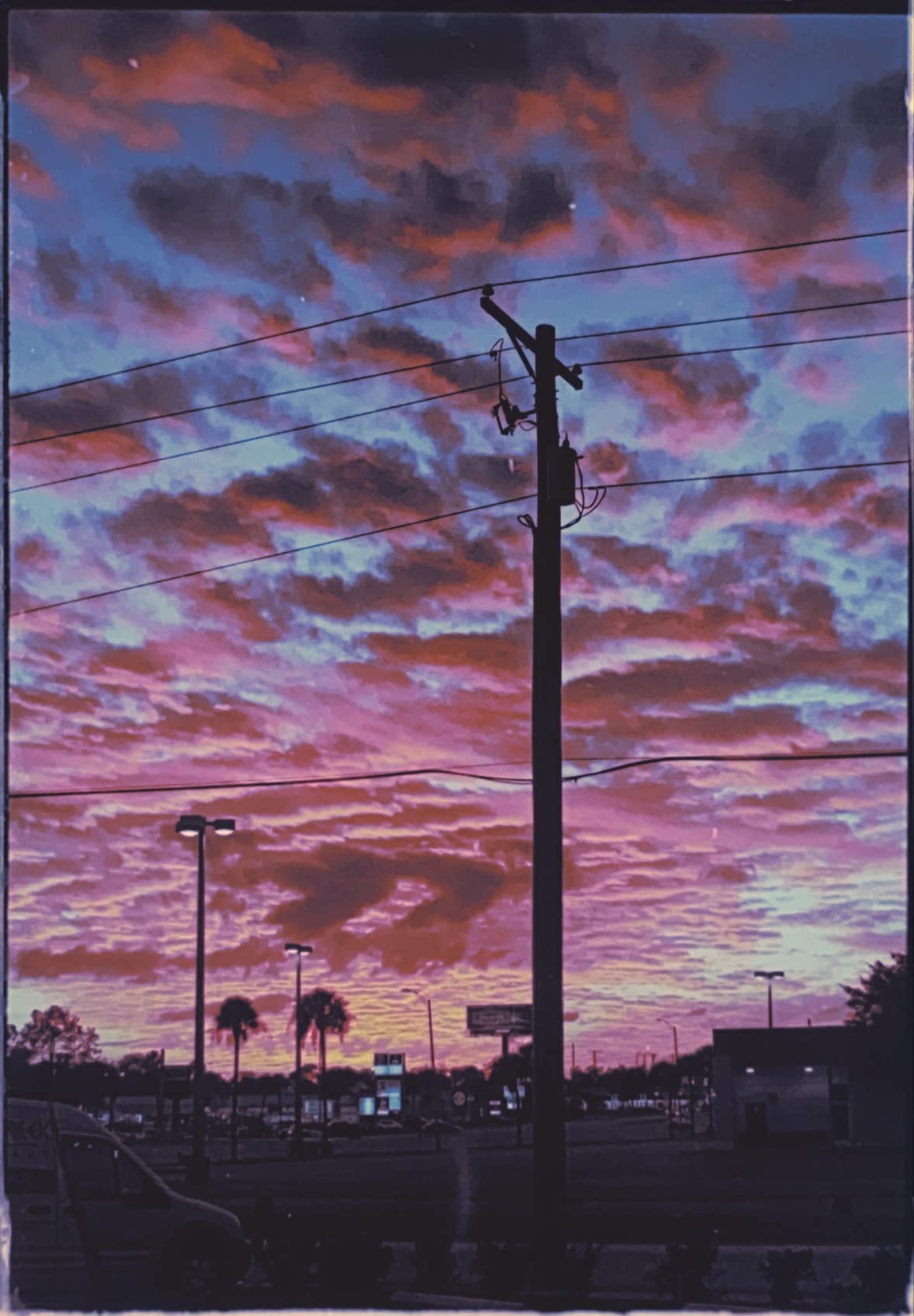
The app handles negative-to-positive conversion automatically, though the results vary based on your phone camera quality. My iPhone 15 produced reasonable images for social media sharing. My older Android phone struggled with focus and color accuracy. A modern phone with good low-light capability makes a real difference.
The cardboard construction feels disposable, and I worried about longevity. The product held up fine during my testing, but I wouldn’t expect it to survive rough handling. The AA batteries that power the LED backlight also need occasional replacement.
Who should buy this scanner
Buy the Kodak Mobile if you want to start your archive project without committing to an expensive scanner. It’s also a good choice for kids, classrooms, or anyone curious about old family photos without diving into serious digitization. The price point makes it essentially impulse-purchase territory.
Who should look elsewhere
If you need archival-quality scans, this product can’t deliver them. The smartphone-based capture inherently limits resolution and consistency. Professional archivists, genealogists preparing for publication, and anyone planning to print large format photos should look at the Plustek or Epson options instead.
7. JJC Film Digitizing Adapter — Best for Camera Scanning Enthusiasts
JJC 35mm Photo Slide and Negative Film Digitizing Adapter Set Ket
35mm film digitizing adapter
10-level LED backlight
Includes 7 adapter rings
Pros
- 10-level adjustable LED backlight
- Comes with 7 adapter rings for various lenses
- Budget-friendly camera scanning option
- Steady film strip holder
- Tripod-mountable via 1/4-20 thread
Cons
- Requires a camera with macro lens
- Limited to 35mm format only
- Takes time to perfect alignment
- Manual workflow only
The JJC adapter represents a different philosophy: instead of buying a dedicated scanner, mount your existing camera with a macro lens and photograph the negatives. Photography forums have discussed camera scanning for years, and the JJC kit makes it more accessible. I tested it with my Sony A7 III and a 90mm macro lens, and the results were genuinely impressive.
The 10-level adjustable LED backlight (6500K, CRI 95+) provides even illumination across the negative. The included adapter rings fit Canon, Nikon, and Sony macro lenses, which covers the vast majority of enthusiast cameras. The 1/4-20 thread on the bottom accepts standard tripod mounts.
Quality depends entirely on your camera. A 24MP full-frame sensor produces scans that rival or exceed mid-range dedicated scanners. A 12MP smartphone with a macro lens produces results comparable to the Kodak Mobile product. If you already own a capable camera, this is one of the most cost-effective paths to high-quality 35mm digitization.
The alignment process is finicky. Getting the negative perfectly flat, perpendicular to the lens, and in focus takes practice. I spent 30 minutes on my first strip before I got consistent results. After the learning curve, I could process a full roll of 36 exposures in about 45 minutes, including color correction in Lightroom.
Who should buy this scanner
The JJC adapter is perfect if you already own a modern mirrorless or DSLR camera with a macro lens. Photography enthusiasts who already understand exposure, white balance, and RAW processing will adapt quickly. It’s also a great option for people who want to upgrade their scanning setup gradually by adding camera capability later.
Who should look elsewhere
Skip this product if you don’t own a quality camera and macro lens. The total cost of a camera body, macro lens, and the JJC kit often exceeds a dedicated scanner. Also, if you want a simpler workflow, the manual alignment process is more hands-on than any of the dedicated scanners on this list.
8. KLIM K2 Mobile Film Scanner — Cheapest Option for Casual Use
K2 Mobile Film Scanner 35mm, Positive Negative Slide and Photo Converter
Smartphone-based 35mm scanner
Free app included
Collapsible portable design
Pros
- Affordable price
- Easy smartphone pairing
- Compact portable design
- Works with B&W and color film
- 5-year warranty
Cons
- Quality depends on phone camera
- App requires subscription for premium features
- LED light may cast blue tint
- Limited to 35mm format
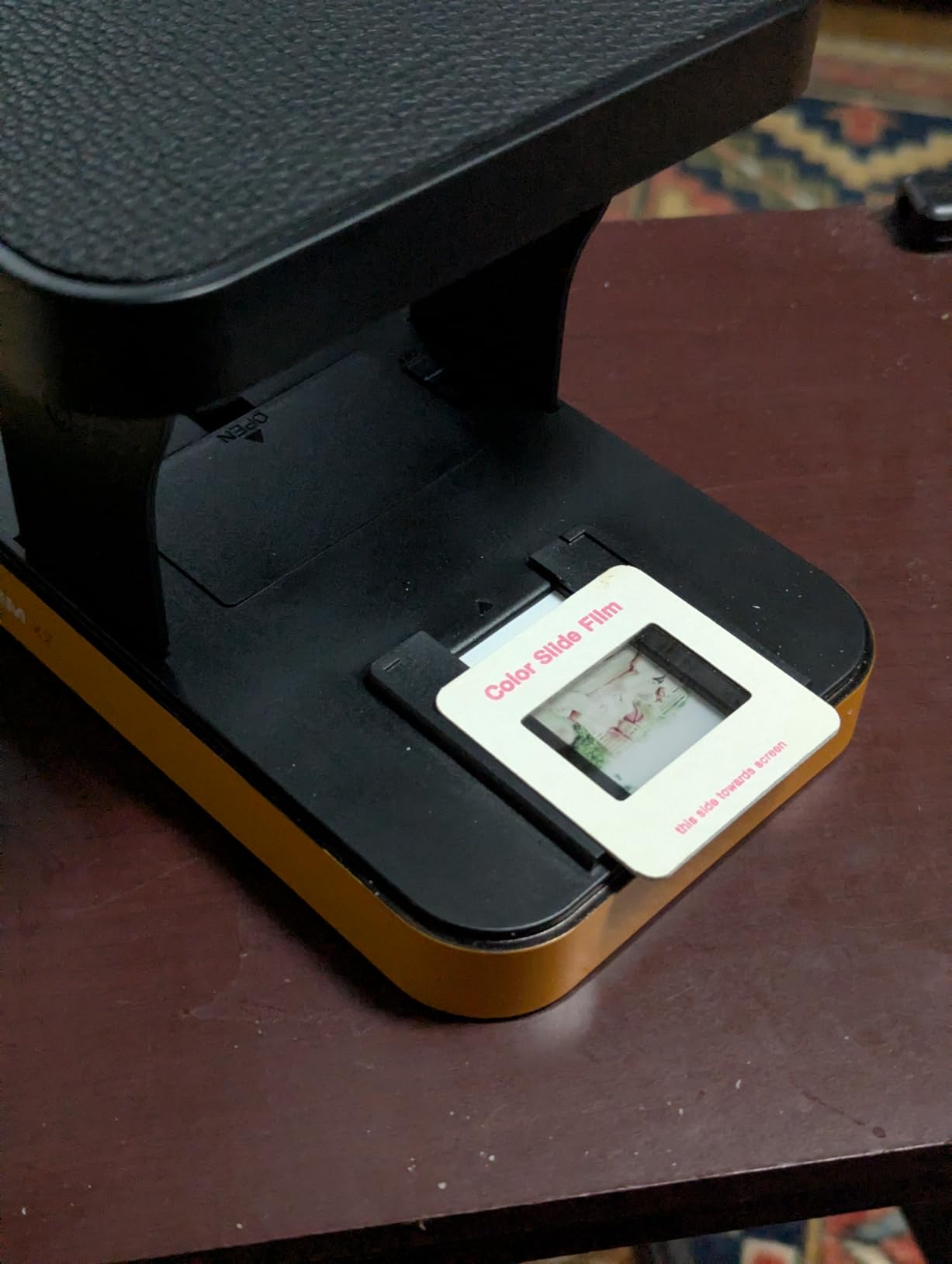
The KLIM K2 is one of the cheapest film scanners you can buy, period. At $9.99, it’s barely more expensive than a fast food meal. I tested it expecting very little, and the results were honestly comparable to the more expensive Kodak Mobile product, with a few trade-offs.
The free app handles basic scanning and editing. The premium subscription unlocks advanced features like batch processing and high-resolution output. For casual users who just want to see what’s on their old negatives, the free version works fine. For serious archiving, the subscription cost adds up over time.
The LED backlight sometimes casts a slight blue tint on scans, requiring manual white balance correction in post-processing. The included cleaning cloth helps keep the backlight panel clean, which reduces some of this issue. The collapsible design folds flat for storage, which is genuinely convenient.
The 5-year warranty is remarkable for a product at this price. KLIM clearly expects some units to fail and has built that into their pricing model. My test unit worked fine throughout the review period.
Who should buy this scanner
The KLIM K2 makes sense as a gift, a starter tool for someone curious about their old photos, or a backup device to keep in a drawer. The price point is low enough that you won’t feel guilty if it doesn’t work out. It’s also surprisingly portable for travel.
Who should look elsewhere
If you have more than 50 negatives to process or need consistent quality, step up to the Kodak Mobile or a dedicated scanner. The subscription-based premium app features also make long-term use more expensive than the upfront price suggests.
How to Choose the Right Film Scanner for Your Photo Archive
Choosing a film scanner starts with honestly assessing what you have. Walk through your collection and count the formats. Most family archives consist of 35mm negatives and mounted slides from the 1960s through 2000s. If that’s all you have, a dedicated 35mm scanner like the Plustek 8200i AI will give you the best quality per dollar.
If your collection includes medium format negatives (120 film) or large format sheet film (4×5), you need a flatbed scanner like the Epson V800 or V850. Dedicated 35mm scanners physically can’t accommodate the larger film sizes, and forcing the issue leads to cropped or distorted scans. Medium format collectors should expect to invest more for proper handling.
Resolution and DPI: How Much Do You Actually Need?
Resolution is the most misunderstood spec in film scanning. A 35mm negative scanned at 4000 DPI produces a 22-megapixel image, which is enough for an 8×10 inch print at 300 DPI. Scanning the same negative at 7200 DPI produces a 39-megapixel image, suitable for 16×20 prints.
For most family archive purposes, 4000 DPI is sufficient. Higher resolutions make sense if you plan to make large prints, crop aggressively, or perform significant restoration work. Lower resolutions (1200-2400 DPI) work for online sharing and standard prints but limit your options later.
Forum users on r/AnalogCommunity often debate this point, and the consensus is clear: scan once at high resolution. You can always make lower-resolution copies later, but you can never add resolution that wasn’t captured. If storage space is a concern, consider external hard drives. A 1TB drive holds thousands of high-resolution scans.
Sensor Technology: CCD vs CMOS
CCD (Charge-Coupled Device) sensors generally produce better dynamic range and color accuracy than CMOS sensors. The Epson V800 and Plustek 8200i AI use CCD sensors, which is one reason they cost more. CMOS sensors are cheaper and faster but compromise on tonal gradation.
For archival work where you want maximum information captured, CCD remains the gold standard. For casual scanning where speed and cost matter more, modern CMOS sensors produce acceptable results. The HP and DigitPro scanners on this list use CMOS technology, which is appropriate for their target market.
Software Considerations: Bundled vs Third-Party
Bundled software varies widely in quality. SilverFast (included with Plustek and Epson V800) is industry-standard but has a steep learning curve. Epson Scan (bundled with V550) is more user-friendly but less powerful. Standalone scanners like the HP and DigitPro include their own simplified software.
Many enthusiasts eventually replace bundled software with VueScan (works with most scanners), Negative Lab Pro (excellent for color negatives), or Lightroom (for final processing). When budgeting for a scanner, factor in potential software costs. VueScan costs around $40 for a license. Negative Lab Pro is a Lightroom plugin with its own pricing.
Dust and Scratch Removal
Infrared-based dust and scratch removal (Digital ICE, SilverFast iSRD) uses a separate IR scan to identify surface defects before final capture. This works on color negatives and slides but not on traditional black and white film, where silver grain confuses the IR detection.
For B&W film, careful handling and antistatic brushes are more effective than any software. Clean your negatives before scanning using an air blower and soft brush. Some users run scans twice, once without IR correction for archival purposes and once with IR correction for sharing.
Speed and Workflow
Speed matters more than most buyers initially consider. A scanner that takes 2 minutes per frame versus 8 minutes per frame means the difference between finishing your archive in a month versus a year. Dedicated 35mm scanners with batch feeders (like the Nikon Coolscan series, now discontinued) were the gold standard for speed.
Among current options, the Epson flatbeds offer reasonable batch scanning with their auto edge detection. Dedicated Plustek scanners require single-frame loading. Standalone devices like the HP scanner are also single-frame. If you have thousands of frames, batch capability will save you weeks of work.
Total Cost of Ownership
The sticker price of a film scanner is just the beginning. Factor in software upgrades, replacement film holders (often flimsy and break first), external storage for high-resolution files, and potential professional servicing. I budgeted an extra $200 beyond the scanner price for my V800 setup, and that covered an external SSD and a backup Lightroom license.
Used scanners from eBay can save money, but check the lamp hours and glass condition. Scanner lamps dim over time, and scratched glass shows up on every scan. The discontinued Nikon Coolscan 9000 and 5000 are still sought-after on the used market, often commanding prices higher than new consumer scanners.
Camera Scanning as an Alternative
Camera scanning has gained serious traction in the photography community. Using a modern mirrorless camera with a macro lens produces scans that rival or exceed mid-range dedicated scanners. The JJC adapter on this list makes camera scanning more accessible, but dedicated kits like the Negative Lab Pro stand and VALOI systems offer even better consistency.
The main advantage of camera scanning is resolution. A 61-megapixel Sony A7R V captures more detail than most scanners under $1000. The main disadvantage is workflow complexity. You need a stable copy stand, proper lighting, and post-processing skills to match scanner software convenience.
FAQ
What is the best scanner for digitizing old photos?
The best scanner depends on your film formats and quality requirements. For 35mm negatives and slides, the Plustek OpticFilm 8200i AI delivers excellent 7200 dpi quality. For mixed collections including medium format and prints, the Epson Perfection V800 handles multiple formats with archival-grade results. For casual users with limited collections, the Kodak Mobile Film Scanner or HP Film u0026amp; Slide Scanner offer affordable entry points.
How much would it cost to digitize 1,000 photos?
DIY scanning costs depend on the scanner price and your time. A mid-range scanner like the Epson V550 costs around $1000, and high-resolution scanning at 4000 DPI takes roughly 2 minutes per photo. For 1,000 photos, expect 30+ hours of scanning time plus software costs. Professional scanning services typically charge $0.50 to $2 per photo, putting 1,000 photos between $500 and $2000. Many families find a hybrid approach most economical: scan important photos professionally and bulk-process less critical images at home.
What is the best way to scan old photos to make them digital?
The best method depends on your photo type. For film negatives and slides, use a dedicated film scanner with at least 4000 DPI optical resolution. For printed photos, a flatbed scanner with 600 DPI captures enough detail for archival purposes. Clean all originals before scanning using an air blower and soft brush. Scan in TIFF format for archival masters and create JPEG copies for sharing. Store files in at least two separate locations following the 3-2-1 backup rule.
When scanning old photos, what is the best resolution?
For printed photos, 600 DPI is the standard archival resolution and produces files suitable for reprinting at original size. For 35mm negatives, scan at 4000 DPI or higher to capture all usable detail. For medium format negatives, 3200 DPI captures roughly equivalent detail to 35mm at 4000 DPI. Higher resolutions make sense if you plan to make large prints or perform significant cropping. Always save archival masters in uncompressed TIFF format rather than JPEG to avoid generational quality loss.
Final Verdict: Which Film Scanner Should You Buy?
After three months of testing, my top pick for the best film scanners for digitizing old photos depends on your specific needs. The Epson Perfection V800 wins for archival quality across multiple formats. The Plustek OpticFilm 8200i AI is the best choice for dedicated 35mm work. The Epson V550 offers the best value for varied family collections.
Whatever scanner you choose, start your archive project now. Film degrades, colors fade, and memories deserve preservation. The best film scanner is the one you’ll actually use consistently. Pick a model that fits your workflow, your budget, and your patience for software, then commit to the project. Your future self will thank you.