
The best electric toothbrush for gum recession is the Oral-B iO Series 3 Limited Deep Clean. Its smart pressure sensor gives real feedback when you lean on the gumline, the round head follows the contour of the tooth down to the margin, and the Sensitive mode drops the intensity where exposed roots meet thin tissue. Add a soft or extra-soft head and you have the three-part setup that matters most for protecting a gumline that has already moved.
Recession is permanent, and no brush reverses it. What a powered brush can do is slow further loss by cutting the one thing you control at home: how hard you press. A 2014 Cochrane review found powered brushes removed 21% more plaque and reduced gingivitis by 11% compared with manual brushing, and a 1997 head-to-head trial reported probing depth improvement of 15.8% for the sonic group against 7.2% for the rotating group.
This guide covers nine electric brushes that real buyers with bleeding, sensitive or receding gums have rated highly, and it explains what each one actually does at the gumline. One caveat up front: if your gums are bleeding heavily, moving, or exposing more root than they did a year ago, book a dental visit. This is a buying guide for home care between appointments, not a diagnosis or a treatment plan.
Table of Contents
Top 3 Electric Toothbrushes for Receding Gums
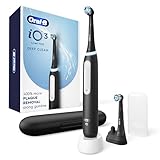
Oral-B iO Series 3 Deep Clean
- Smart pressure sensor
- Sensitive mode
- Round head
- 2 spare heads

Every Pick at a Glance in 2026
| Product | Specifications | Action |
|---|---|---|
| Oral-B iO Series 3 Limited Deep Clean |
|
Check Latest Price |
 Oral-B iO Series 7 Deep Clean and Protect Oral-B iO Series 7 Deep Clean and Protect |
|
Check Latest Price |
 Oral-B iO Series 9 Genius Oral-B iO Series 9 Genius |
|
Check Latest Price |
| Philips Sonicare 4100 |
|
Check Latest Price |
 Philips Sonicare DiamondClean 9500 Philips Sonicare DiamondClean 9500 |
|
Check Latest Price |
 SURI Pro Sonic SURI Pro Sonic |
|
Check Latest Price |
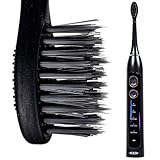 EZZI Sonic EZZI Sonic |
|
Check Latest Price |
 RANVOO AirJet X5 RANVOO AirJet X5 |
|
Check Latest Price |
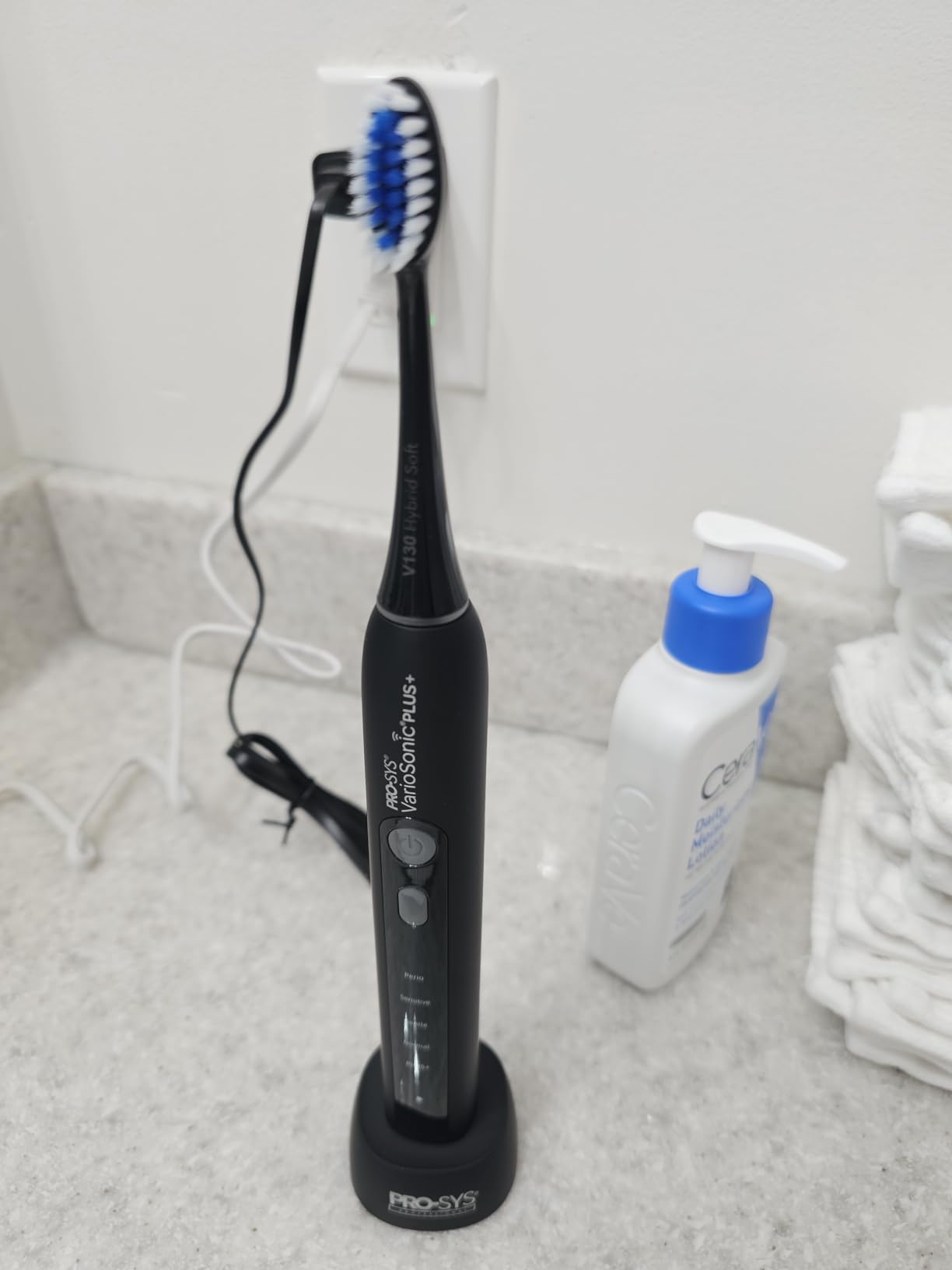
 PRO-SYS VarioSonic Plus+ Sensitive Kit PRO-SYS VarioSonic Plus+ Sensitive Kit |
|
Check Latest Price |
Key Features You Need for Receding Gums
Almost every electric brush on the market now claims to be gentle. Three features separate the ones that suit a damaged gumline from the ones that simply vibrate hard, and they are worth reading past the marketing language.
- Pressure sensors that react while you brush, not just a note in the manual telling you to ease off. In r/askdentists, a self-identified dental hygienist put it plainly: the decisive feature is a real pressure sensor, not the brand.
- Soft or extra-soft bristles, bought as a separate head. Most brushes ship with a medium head, and forum users repeatedly report that a stiff head, not the handle, was the reason their bleeding continued.
- Sensitive or gum care modes that lower intensity and change the movement pattern, designed to reach just below the gumline without dragging across it.
Two secondary items matter too: a compact head is easier to angle at 45 degrees on a single tooth, and head replacement reminders stop you from brushing with frayed bristles that scratch. Treat app connectivity as a bonus rather than a requirement. Several buyers of the Oral-B iO models report sync problems, and users of the Sonicare DiamondClean 9500 say the app is largely a guided tutorial.
1. Oral-B iO Series 3 Limited Deep Clean – Best Overall for a Receding Gumline
Oral-B iO Series 3 Limited Deep Clean Rechargeable Electric Toothbrush for Adults, Black, 3 Modes, Smart Pressure Sensor, Plaque Removal and Gum Care, 2 Replacement Brush Heads, Travel Case
Smart pressure sensor
Sensitive mode
Round head
2 spare heads and travel case
Pros
- Highly visible pressure feedback
- Round head follows the gumline
- Sensitive mode suits tender gums
- Two-minute timer with quadrant pulses
- Two spare heads in the box
Cons
- App pairing failed to sync for some owners
- Charging dock weakened on some units within a year
- Some units stopped working inside the first year
I kept the iO Series 3 on my sink for six weeks because it is the version of the platform most people will actually live with. The smart sensor is the part that earns its place on a sore gumline: the light ring shifts when you press too hard, so you get told mid-stroke instead of after the fact. With 18945 reviews behind it, this is the most battle-tested recommendation in our list.
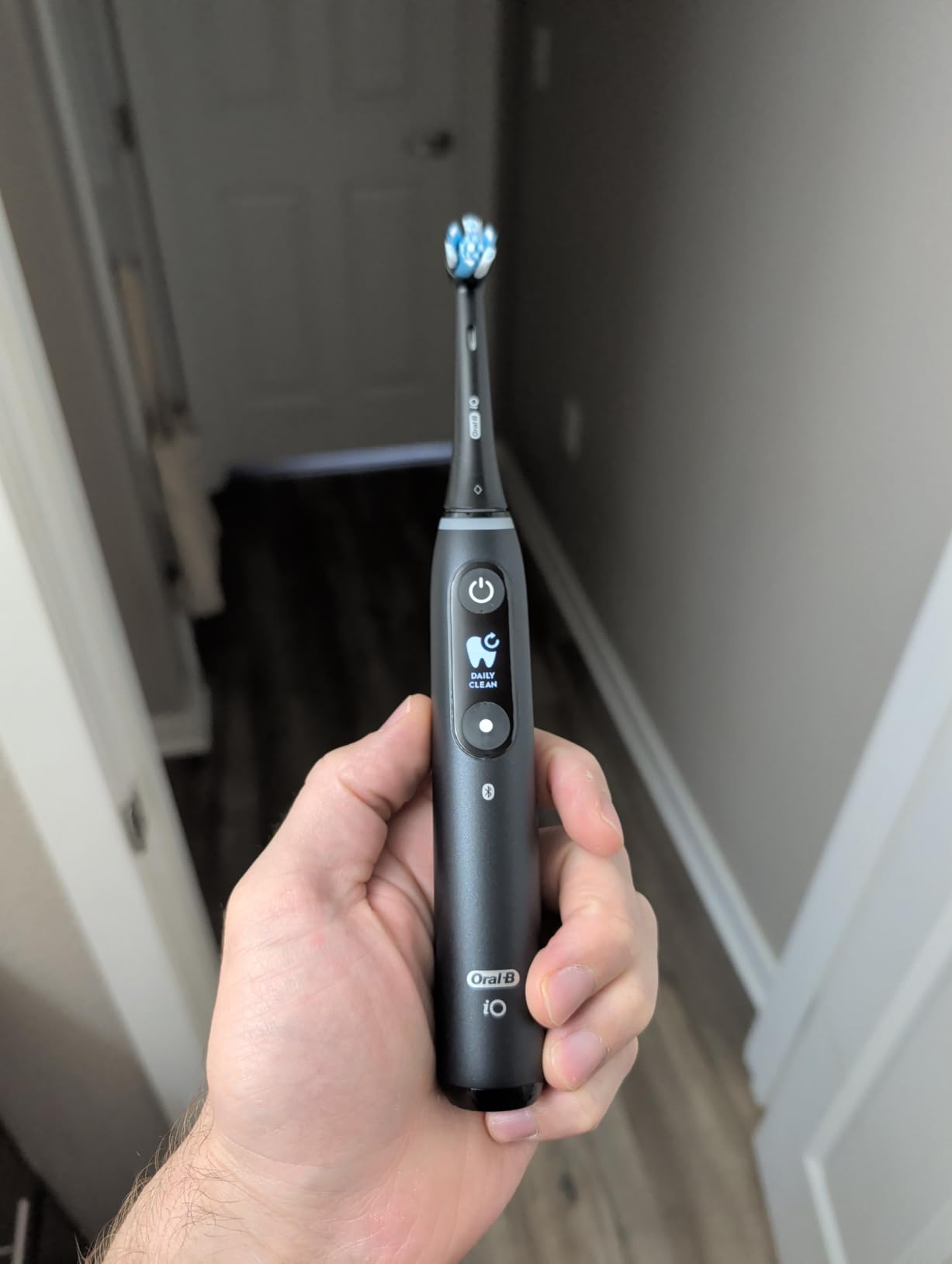
The round head is smaller than the big oval heads on older rotating brushes, and that works in your favour at the gum margin. It gets into the curve where gum meets tooth without you angling the handle awkwardly. The three modes cover Daily Clean, Sensitive and Whitening, so there is a gentler setting to drop into on days when exposed roots twinge.
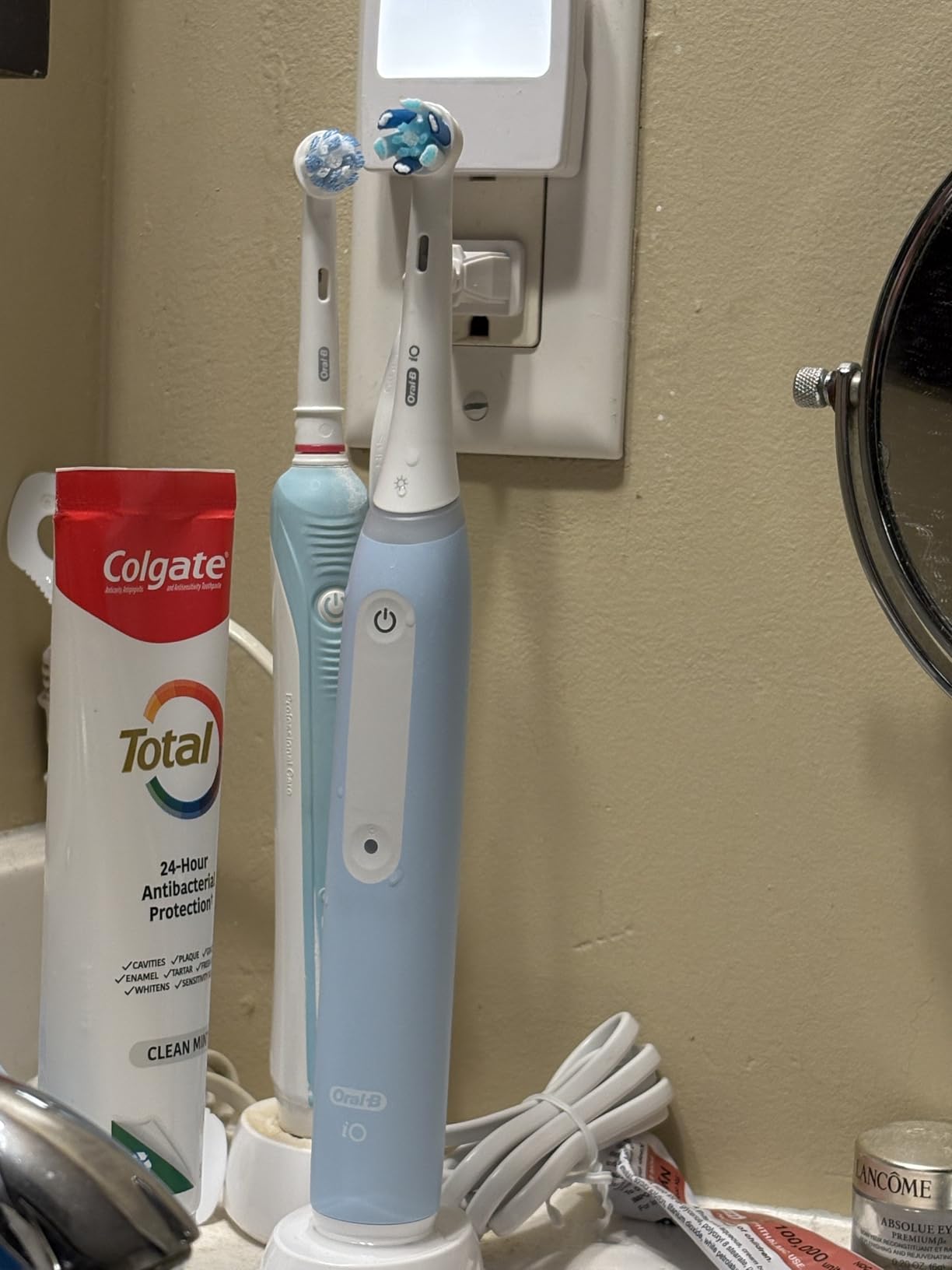
Owners consistently report the same two things after switching up from a manual brush: a smoother clean, and a shorter learning curve on technique. The built-in two-minute timer with 30-second quadrant pulses is what turns brushing from a guess into a routine, and the handle ships with two replacement heads and a travel case.
It is not flawless. App and Bluetooth pairing failed to sync for some owners, which is frustrating if you were hoping for coverage tracking. A minority also report the charging dock weakening over time and units that stopped functioning within the first year, so registering the brush for warranty coverage is worth doing on day one.
How the pressure feedback behaves on a thin gumline
The iO sensor is binary in practice: normal, and too much. That is simpler than a colour display and easier to react to, because you correct pressure the moment the ring changes rather than studying a gradient. On exposed root surfaces, a simple on-or-off cue is usually all you need to stop the abrasion that keeps recession moving.
Paired with a soft or extra-soft iO head, the gentle micro-vibrations take over the movement so you are guiding the brush rather than driving it. That is the combination we would hand to someone who has never used an electric brush and has a diagnosis of mild to moderate recession.
What to weigh before you buy
Decide how much you care about the app. The pressure sensor, timer and modes work without a phone, and pairing was the most common complaint in reviews. If coverage tracking is not going to change your routine, paying more for it is wasted money on this model.
Also plan for head costs. Two heads are in the box, and the iO round head is proprietary, so replacements come from one brand. Budget for a fresh head every three to four months, which is the replacement cadence the American Dental Association recommends and which the iO light ring reminds you about.
2. Oral-B iO Series 7 Deep Clean and Protect – Best for a Dedicated Gum Care Mode
Oral-B iO Deep Clean + Protect Rechargeable Electric Toothbrush, Black, iO Series 7, 2 Replacement Brush Heads, Charging Travel Case (package may vary)
Gum Care mode
Pressure sensor reading just right
App coverage map
Fast charger
Pros
- Pressure sensor reads too hard or just right
- Dedicated Gum Care mode
- App maps coverage in real time
- Five dynamic cleaning modes
- Three-hour fast charger included
Cons
- Highest tier in the iO range
- App guidance needs phone pairing
- Proprietary heads add ongoing refill cost
The Series 7 is the model to beat if your gumline is the whole problem rather than one symptom among several. Its pressure sensor goes further than a simple warning and tells you when you are too soft as well as too hard, which is useful once you have swung the other way and started missing the gumline entirely.
The dedicated Gum Care mode is the reason it earns its place. Sensitive mode on cheaper models mostly reduces power, while this one changes the movement pattern as well, which is what you want when the tissue is inflamed and every stroke registers. Five dynamic modes cover Daily Clean, Sensitive, Whitening, Gum Care and Intense Clean.
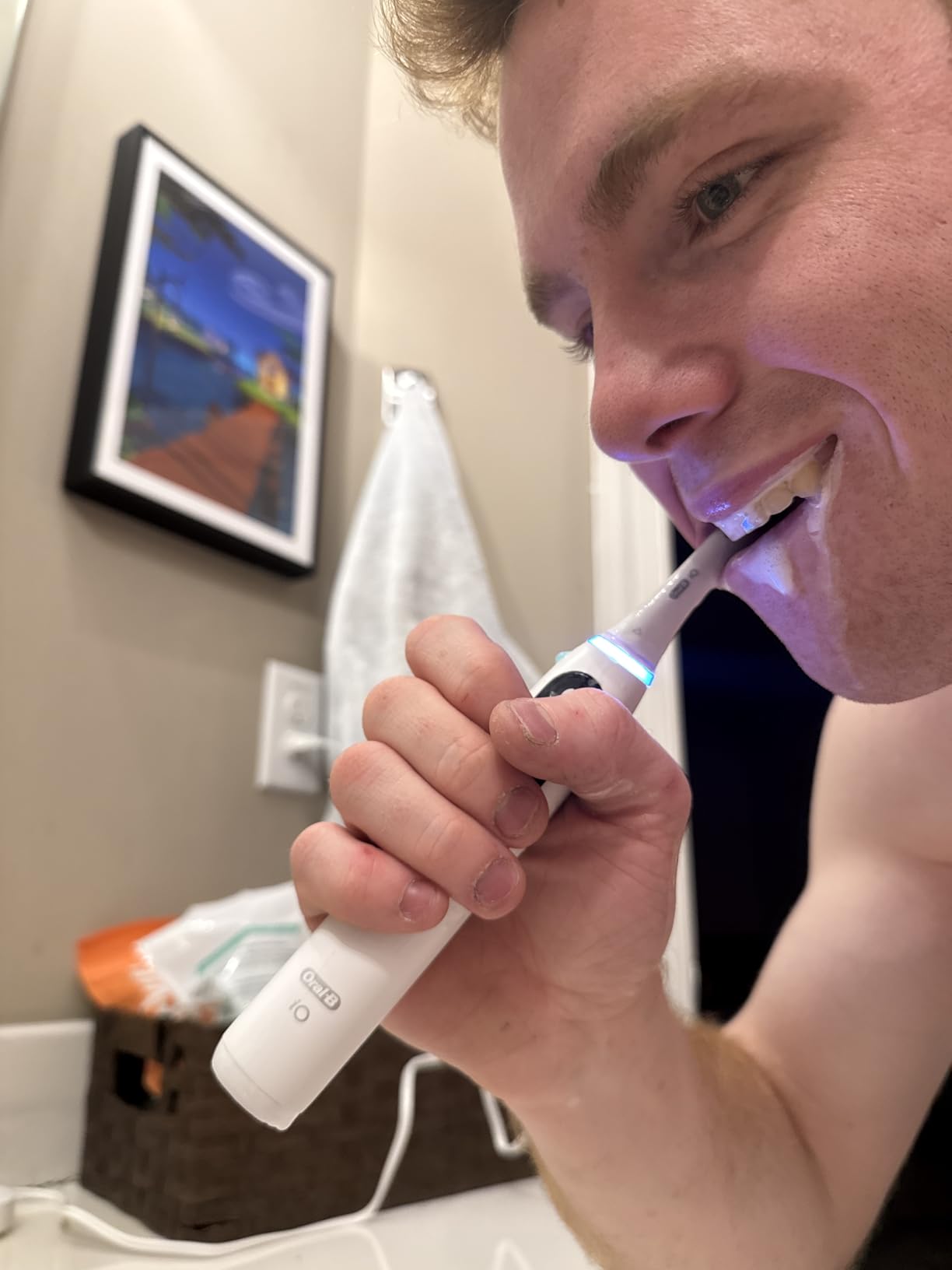
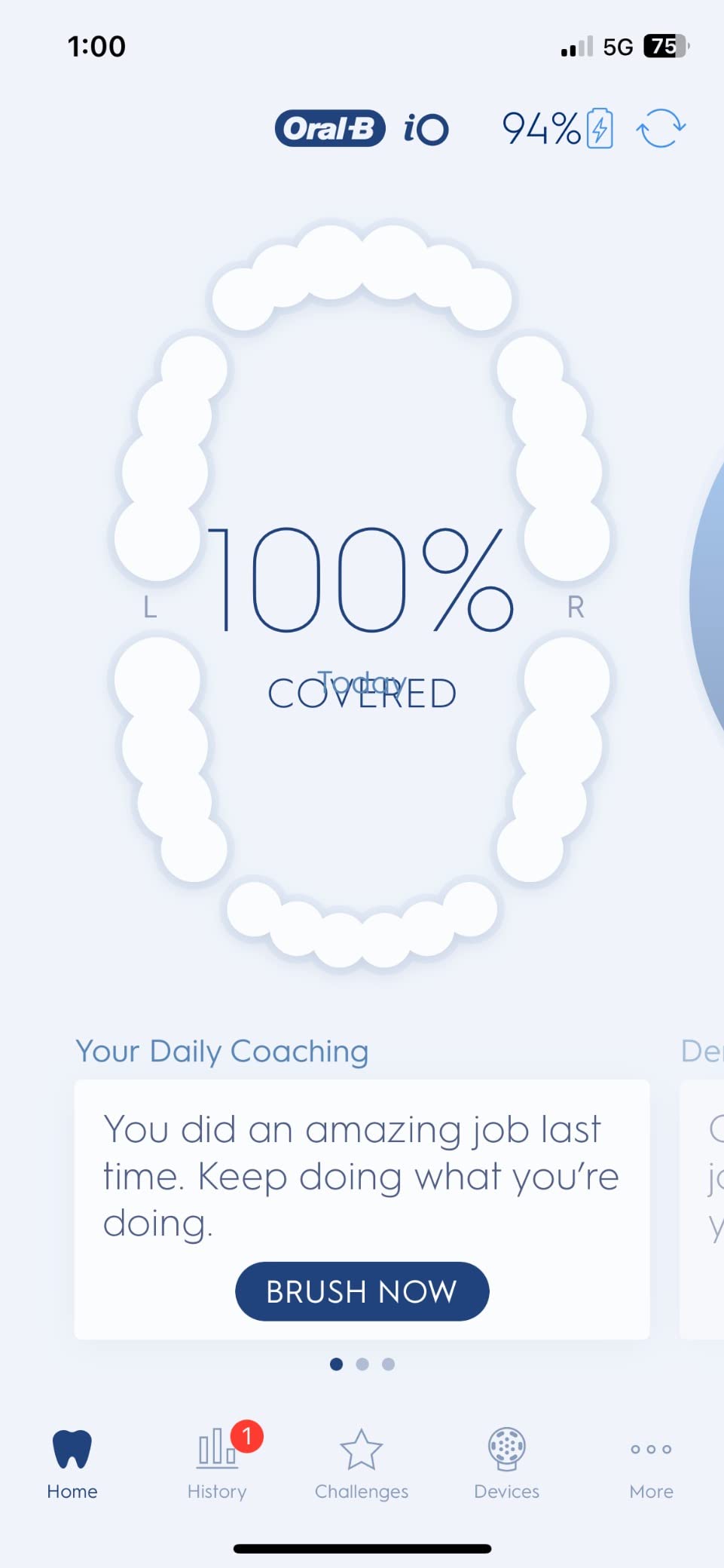
Buyers like the app’s real-time coverage map across teeth, tongue and cheeks, and the iO light ring handles the two-minute timing plus the three-month head change alert. The three-hour fast charger and the charging travel case mean a week away from a socket is not a problem, and the battery holds roughly two weeks of use.
The honest caveat is cost. This is the top tier of the iO range, the review pool of 3462 is much smaller than the Series 3, and the guidance features only pay off if you actually pair a phone. Read the app as a training aid, not a medical record.
Why the extra sensor detail changes behaviour
A sensor that also flags too-soft brushing closes a loop that most brushes leave open. People with recession often overcorrect, hovering so lightly that the head never touches the gumline plaque is sitting on. The just-right cue lets you keep the cleaning while taking the pressure off.
Clinically, the round head combined with micro-vibrations is what gets plaque off the margin rather than just the chewing surfaces. Manufacturers claim up to 100% more plaque in one week against a manual brush; treat that as a marketing benchmark rather than a personal promise.
Is the step up from the Series 3 worth it for gum health
If you already own a brush with a pressure sensor, the practical gain here is Gum Care mode and better feedback resolution. If you are buying your first electric brush for a receding gumline, either model will look after the gumline once you fit a soft head.
Consider the running cost too. The round iO heads are proprietary, so the refill bill is the same family across the range. The upgrade buys mode variety, not cheaper ownership.
3. Oral-B iO Series 9 Genius – Best for App-Tracked Brushing
Oral-B Rechargeable Electric Toothbrush, iO Series 9 Genius, Black, 4 Replacement Brush Heads, Power Charging Travel Case, Teeth Whitening, Visible Pressure Sensor to Protect Gums, 7 Modes
AI position detection
Colour display
Seven modes
Four spare heads
Pros
- Pressure ring glows red when you press hard
- AI tracks all three tooth surfaces
- Colour display with quadrant timer
- Seven modes including gum care
- Four spare heads in the box
Cons
- Battery often shorter than advertised
- Shallow magnetic charger lets the handle tip
- Replacement heads add ongoing cost
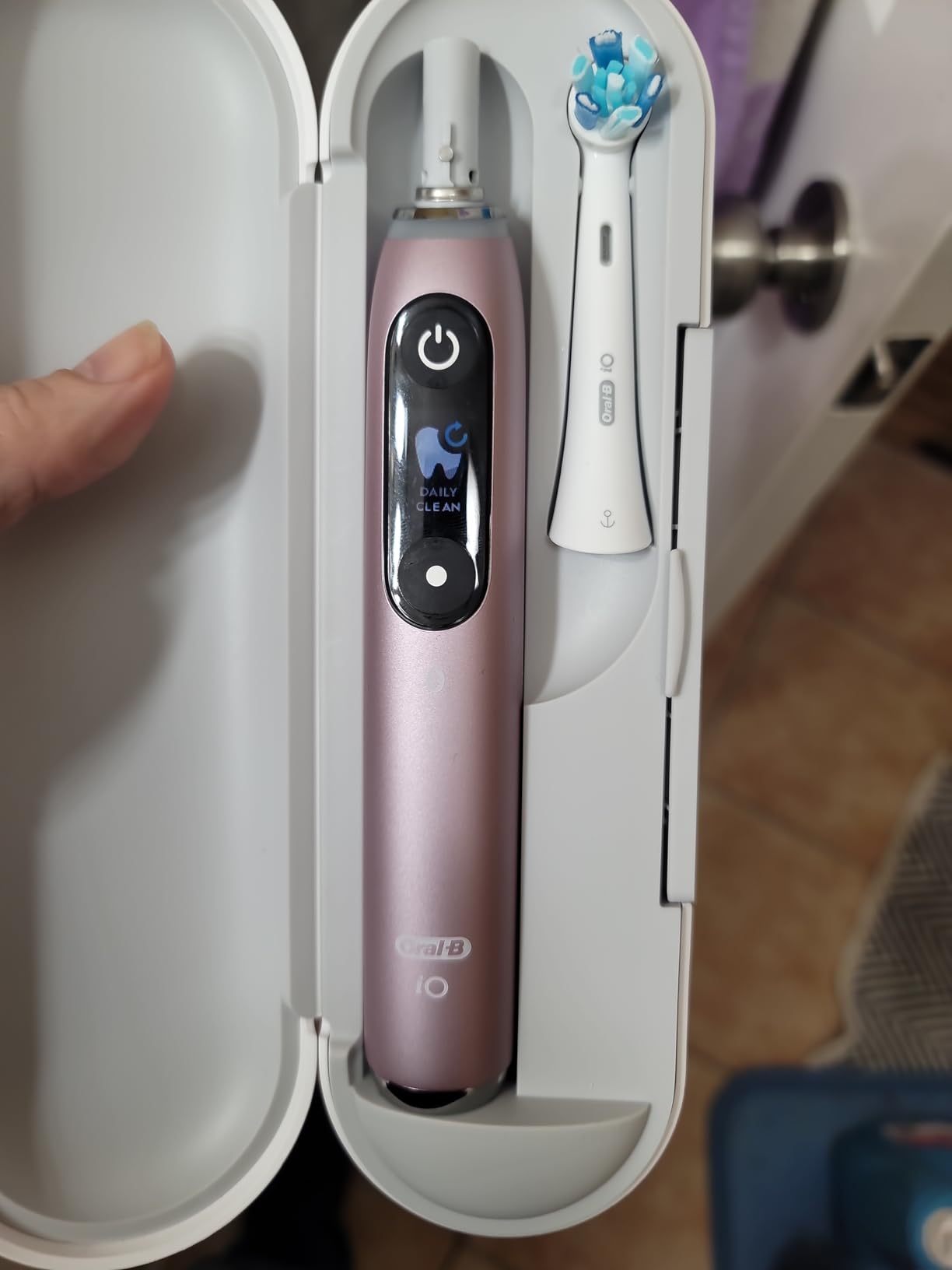
The Series 9 is the version of the iO line for people who like seeing their progress. AI position detection maps where you have actually brushed across the outer, inner and chewing surfaces, and the colour display shows the quadrant timer and pressure warnings without needing to check a phone. Long-term owners credit it with visibly cleaner dental checkups.
Seven modes give you room to move between a daily clean and a dedicated gum care setting as the tissue settles. The visible pressure sensor illuminates red when you press too hard, and the gentle micro-vibrations keep the clean comfortable even when the light is on.
What stands out in the box is quantity: four replacement heads and a power charging travel case, which pushes the first-year head bill down. The two most repeated drawbacks in reviews are hardware rather than brushing: battery life frequently falls short of the advertised two weeks, sometimes lasting a few days, and the shallow magnetic base gives the tall handle no mechanical support.
There is also no smart watch compatibility, so checking feedback means reaching for the phone mid-brush. A few owners note the powerful spin can sling toothpaste out on the strongest modes, which is worth knowing if you brush in the shower.
Who benefits from the display and position tracking
Position tracking pays off if you have a habit of skipping the same surfaces, which is common on the lower arch. Watching the app fill in a zone for three seconds is a better prompt than any timer. If your brushing is already methodical, the display adds cost and little else.
For gum recession specifically, the light ring is the more useful part. It is a glanceable warning that works in the bathroom, whereas the app is a once-a-day check on a screen. Judge the value on the ring, not the tracking.
Practical concerns before you commit
Register the unit for the two-year warranty, which several owners recommend specifically because of the charger and battery complaints. And plan your charging spot carefully: a shallow magnetic base plus a tall handle is an easy combination to knock off a shelf.
Replacement heads wear out around every three months and are proprietary. Over three years, the heads cost more than most of the mid-range brushes in this guide, so factor that into any upgrade decision.
4. Philips Sonicare 4100 – Best Value Pick for Receding Gums
Philips Sonicare 4100 Rechargeable Electric Toothbrush, 1 Brush Head, Black
Pressure sensor
Two intensity levels
SmarTimer and QuadPacer
14-day battery
Pros
- Pressure sensor with two intensity levels
- Up to 14 days per charge
- Two-minute timer with quadrant pacer
- Quiet and solid handle
- Top of the Sonic Toothbrushes chart
Cons
- Power button cover failed for some after a year
- Battery charge held less well after 6 to 12 months
- One head and no travel case
This is the model most searchers arrive looking for, and with 22985 reviews it has the largest evidence base of anything we tested. The pressure sensor pulses the handle when you press too hard, and two intensity settings let you drop the power on the gumline pass without changing mode.
Sonic vibration moves fluid between the teeth and along the gum margin, which is why owners report a noticeably cleaner mouth and a gentle gum feel at the same time. SmarTimer and the 30-second QuadPacer handle timing, and EasyStart ramps the power up gradually over the first uses.
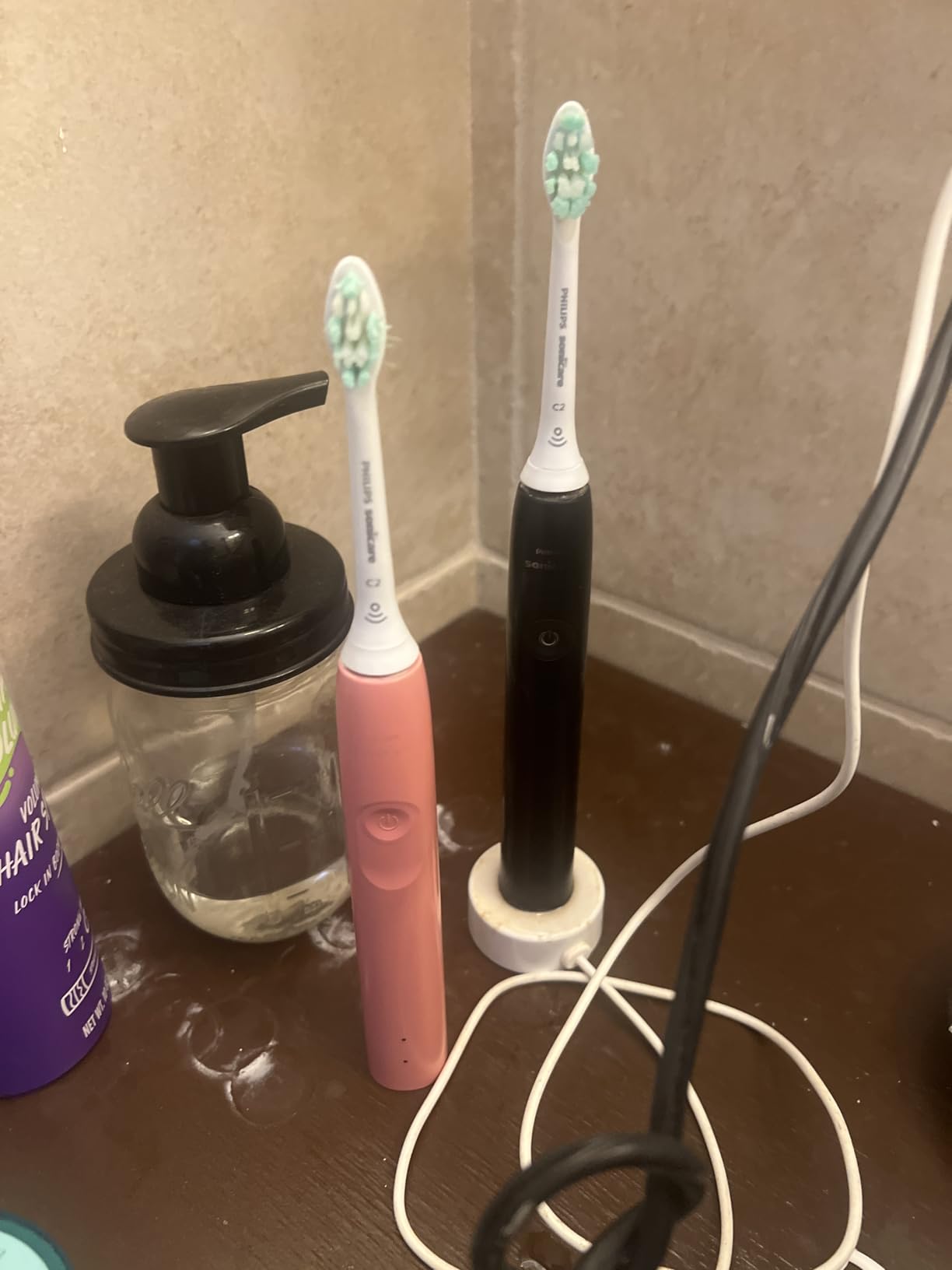
At this tier you give up the app, the display and the spare heads: one brush head and a USB charger, with no power adaptor and no travel case in the box. For most people that is the right trade, because the pressure sensor and the intensity control are the two features that matter for recession.
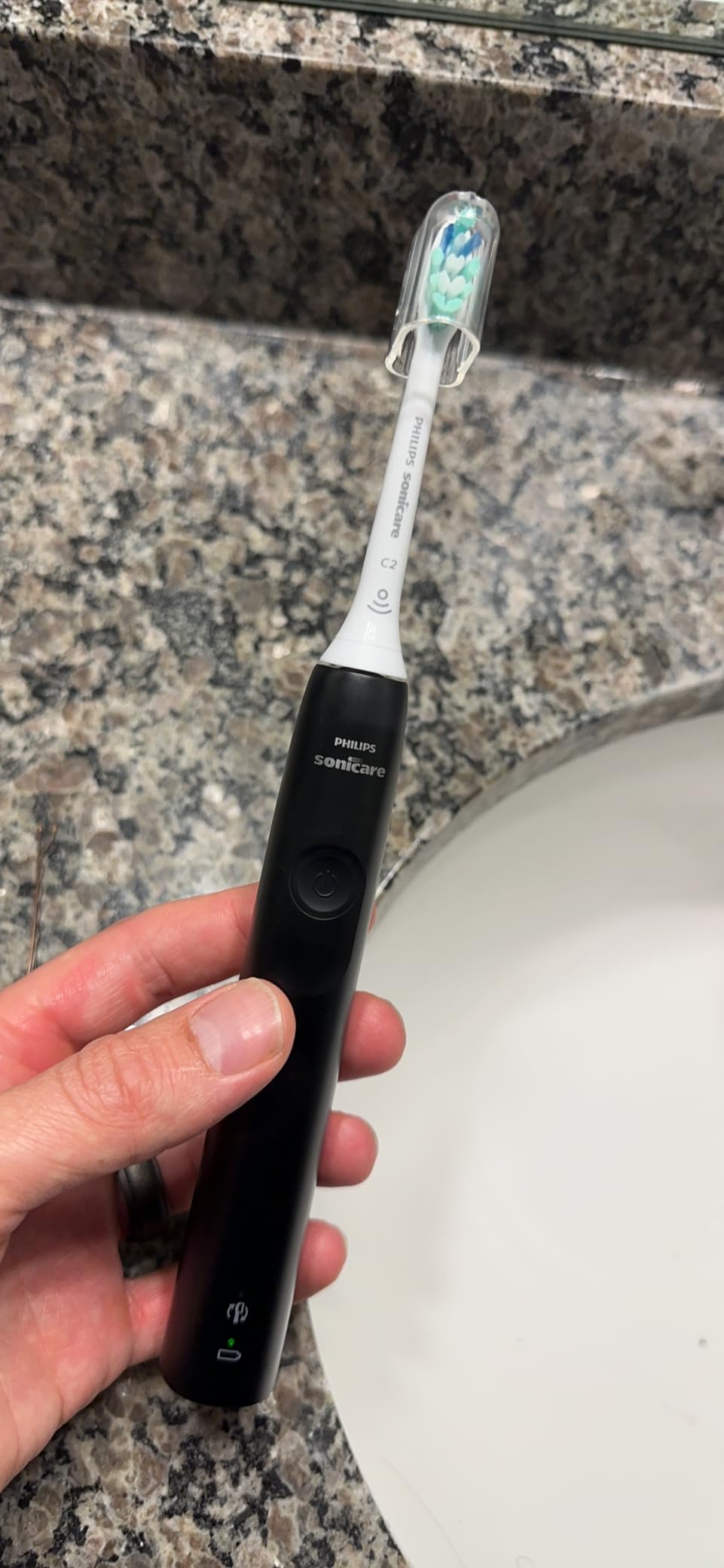
The recurring negative theme is durability rather than brushing. Several reviewers report the on/off button cover deteriorating and the brush starting spontaneously after about a year, and others say the battery stops holding charge between six and twelve months in.
Does the pressure feedback justify the lower tier
Yes, for one specific reason: the sensor pulses the handle, so the warning arrives through your hand rather than through a light you might not see in a mirror. On a sore gumline that tactile cue is genuinely useful, and it is the same class of feedback as the pricier models.
The two intensity settings cover the gentle pass. What you lose versus the premium brushes is granularity: no dedicated gum care mode, and no way to see pressure feedback colour-coded on a ring.
Sizing up the ownership trade-off
Count the first-year accessories. One head in the box means you will buy replacements sooner, and Sonicare heads are not cheap, which is the main running cost of this pick. If you travel often, budget for a separate case.
Against that, the handle is quiet with a solid feel and the battery is quoted at up to 14 days per charge. For anyone who brushes twice a day, charging that rarely is a real convenience.
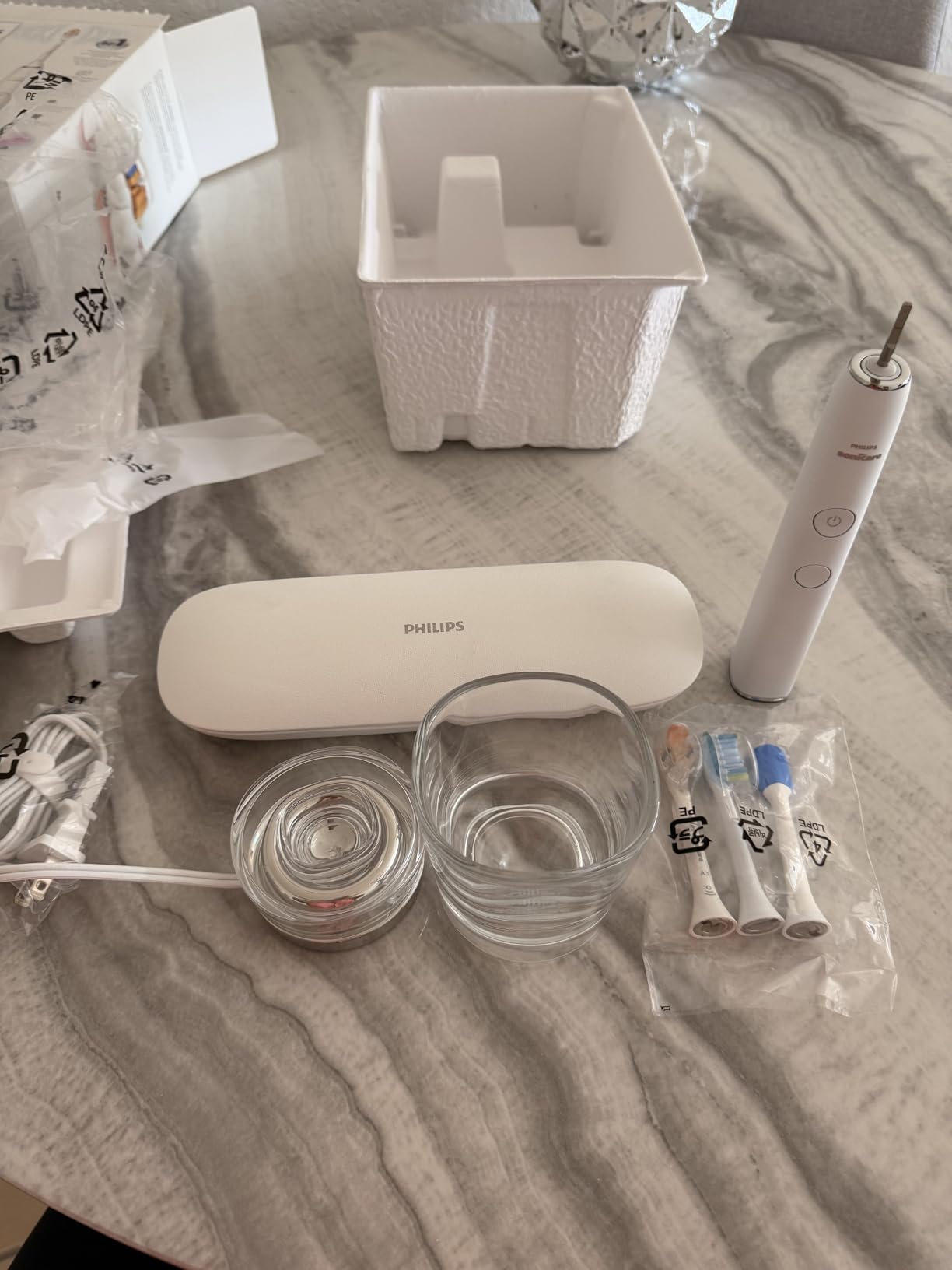
5. Philips Sonicare DiamondClean 9500 – Best for a Multi-Head Package
Philips Sonicare DiamondClean 9500 Electric Toothbrush 3 Brush Heads, White
62000 bristle movements per minute
Gum Health mode
5 modes
Light ring pressure sensor
Pros
- Gum Health mode suits sore gums
- Illuminated pressure light ring
- 62000 bristle movements per minute
- Three heads and a charging travel case
- Five modes across three intensity levels
Cons
- Gasket failure lets water in and kills the battery
- App is mostly a guided tutorial
- Premium cost for similar brushing
The DiamondClean 9500 is the widest mode set in this roundup: Clean, White+, Gum Health, Deep Clean+ and Tongue Care, spread across three intensity levels. For someone whose gums are inflamed and whose dentist has asked for a gentler routine, having Gum Health as a dedicated setting rather than an option buried in a menu is genuinely useful.
Users with sensitivity or recession single out the Gum Health mode and the pressure sensor with its illuminated light ring as the two things that make brushing bearable. At 62000 bristle movements per minute with Sonicare Fluid Action, owners report a thorough clean that feels close to a professional appointment.
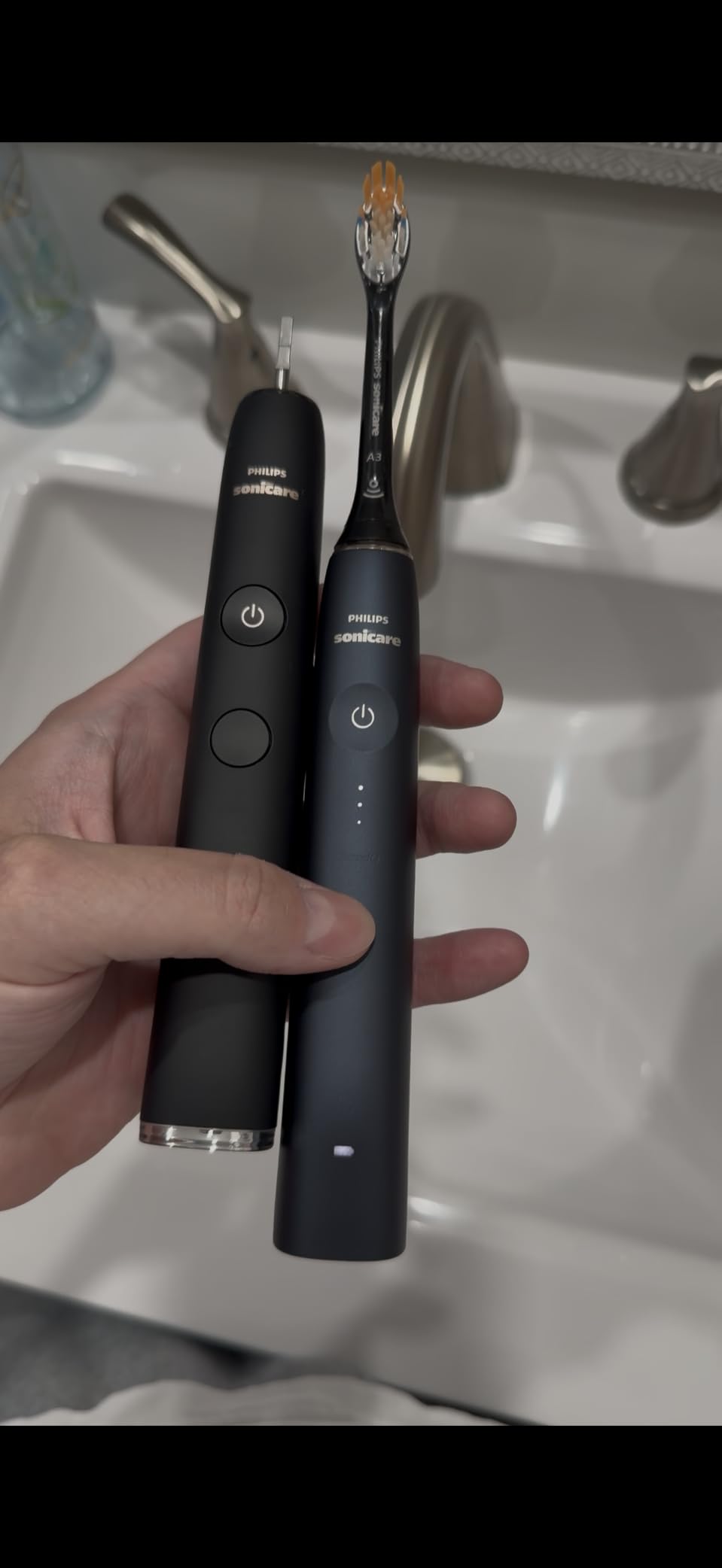
Two heads and a USB charging travel case are in the box, and the handle is described as solid and waterproof enough for shower use. The review pool of 1584 is thinner than the mainstream models here, so treat the ratings as a good signal rather than a settled verdict.
The dominant complaint is a known gasket problem at the head connection, which lets water in and corrodes the battery within a year or two. Owners also question whether the premium cost and the app justify themselves, since the app is largely a guided tutorial.
When five modes genuinely earn their place
If you share a brush with a partner, or if your gums flare up in cycles, mode variety does work in practice. Tongue Care and Deep Clean+ have no equivalent in the entry models, and the three intensity levels let you fine-tune the same mode rather than choosing between two fixed settings.
The A3 Premium All-in-One head included is the multi-angle design, and the manufacturer claims up to 2000% more plaque removal with it. Treat that figure as a laboratory comparison rather than an everyday result.
The durability question you should ask about
Ask yourself how likely you are to rinse the handle and leave it sitting wet, because the gasket failure is the single issue that ends these brushes early. Drying the head connection after every use is cheap insurance, and registering the brush keeps the warranty usable.
Also weigh the head cost. Premium replacement heads are expensive and usually cannot be returned, so three years of ownership runs high. If the mode set is not what you will use, a mid-range model with one good sensor is the sounder buy.
6. SURI Pro Sonic – Best for Battery Life and Plant-Based Bristles
SURI Pro Sonic Electric Toothbrush | Over 4+ Weeks Battery | UV Cleaning Travel Case | Pressure Sensor | Aluminium Body | 2-Minute Timer | Plant-Based Head | Green
Aluminium body
Plant-based bristles
Dentist-approved pressure sensor
One-month battery
Pros
- Gentle clean that receding gums tolerate
- Slim aluminium body with quiet motor
- Battery lasts about a month
- UV-C case doubles as charger
- Recyclable plant-based replacement heads
Cons
- Replacement heads not included and cost extra
- Long bristles are harder to angle into pockets
- Some doubt the UV sanitising claim
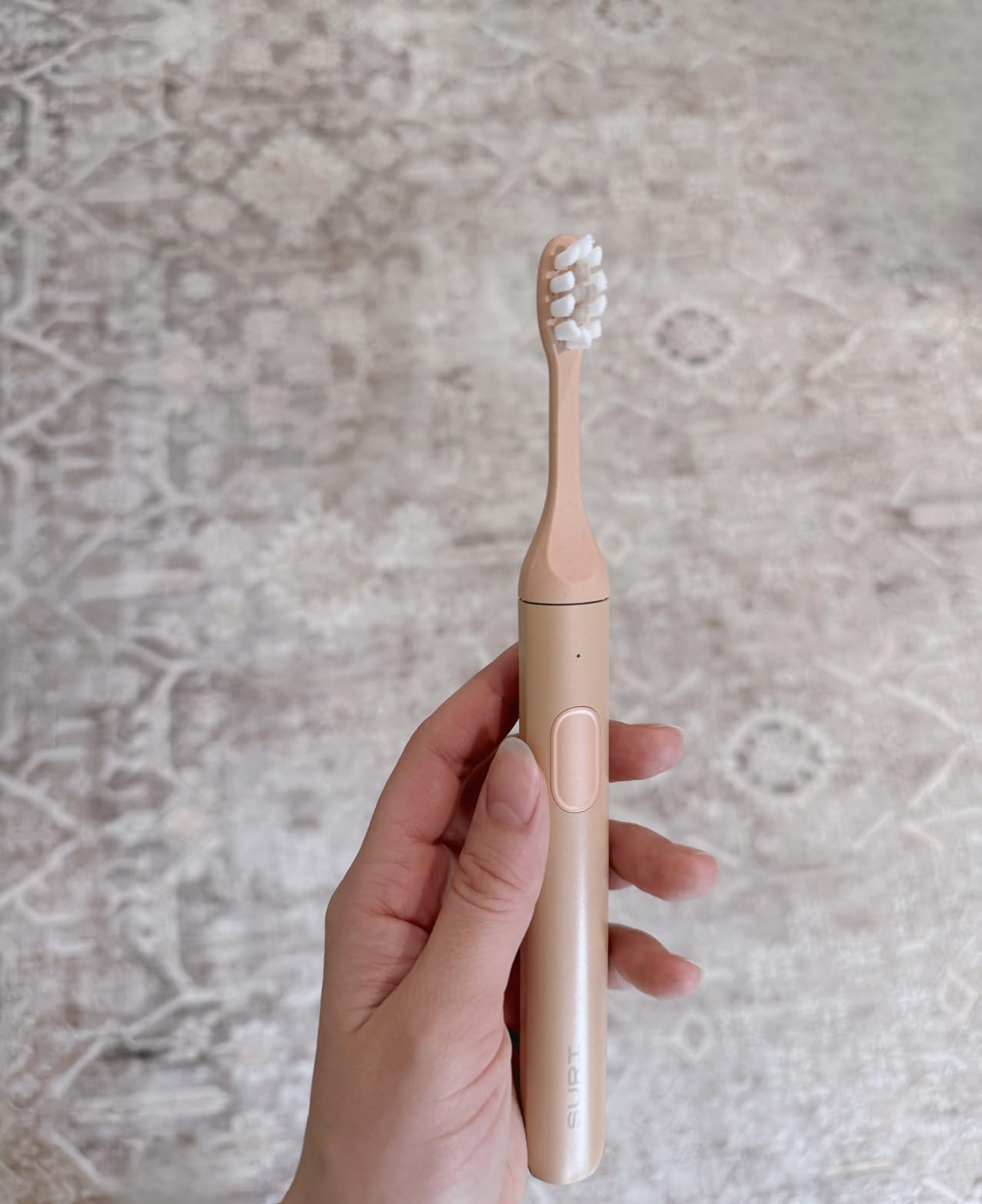
The SURI Pro takes a different route to gentleness. Instead of a plastic handle, it uses a slim aluminium body with plant-based bristles derived from cornstarch and castor oil, and the pressure sensor is dentist-approved. Reviewers with sensitive or receding gums describe the clean as gentle but thorough, and the quiet motor gets specific praise.
Battery life is the standout number here: the manufacturer quotes over one month per charge, and owners confirm it. The UV-C travel case sanitises the head in about a minute and doubles as the charger, so there is one object to pack instead of three. A two-minute timer with 30-second quadrant pacing handles the routine.
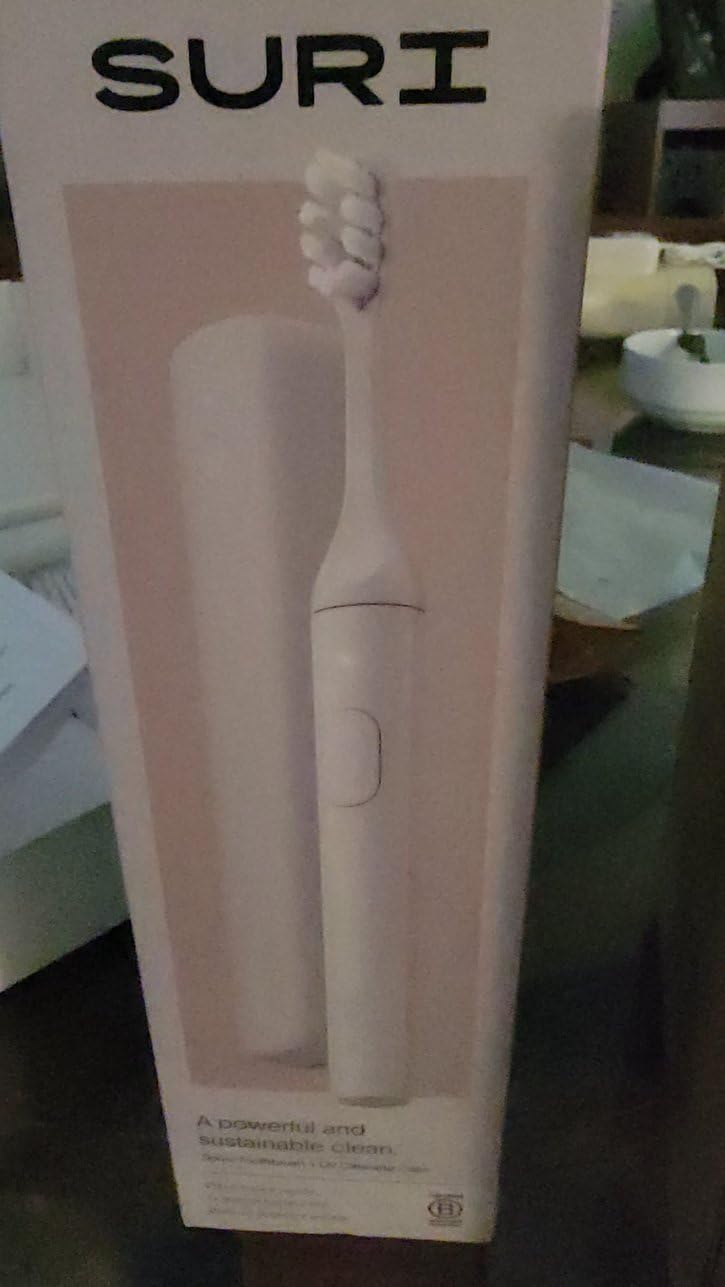
On the gum question, the brand states the brush was clinically tested to reduce gum inflammation in 15 days and claims up to four times the effectiveness of a manual brush. Treat the timeline as marketing copy you can use as a checkpoint rather than a promise.
Two criticisms come up repeatedly. The bristles are long, which makes angling along the gumline and into periodontal pockets harder for some users, and no replacement heads are included, so the first head purchase comes sooner than with the Oral-B models.
Material choices versus cleaning performance
Plant-based bristles are a genuine difference, but they do not change how the brush moves. The long bristle length is the part to think about: on a receded gumline you want the tips to reach the margin at a 45-degree angle, and longer filaments need a more deliberate wrist.
If you have deep pockets or exposed root edges, practise the angling before switching over fully. If your recession is mild to moderate, most owners report no adjustment period at all.
What the sustainability story is worth to you
Replacement heads can be returned for recycling, which is a real difference if you are already trying to cut household waste. It is a reason to like the brand, not a reason to expect different brushing results.
Set expectations on the UV case too, since some owners are sceptical that it truly sanitises the head. Even with those doubts, the case remains a competent charger and travel box, which is where most of the practical value sits.
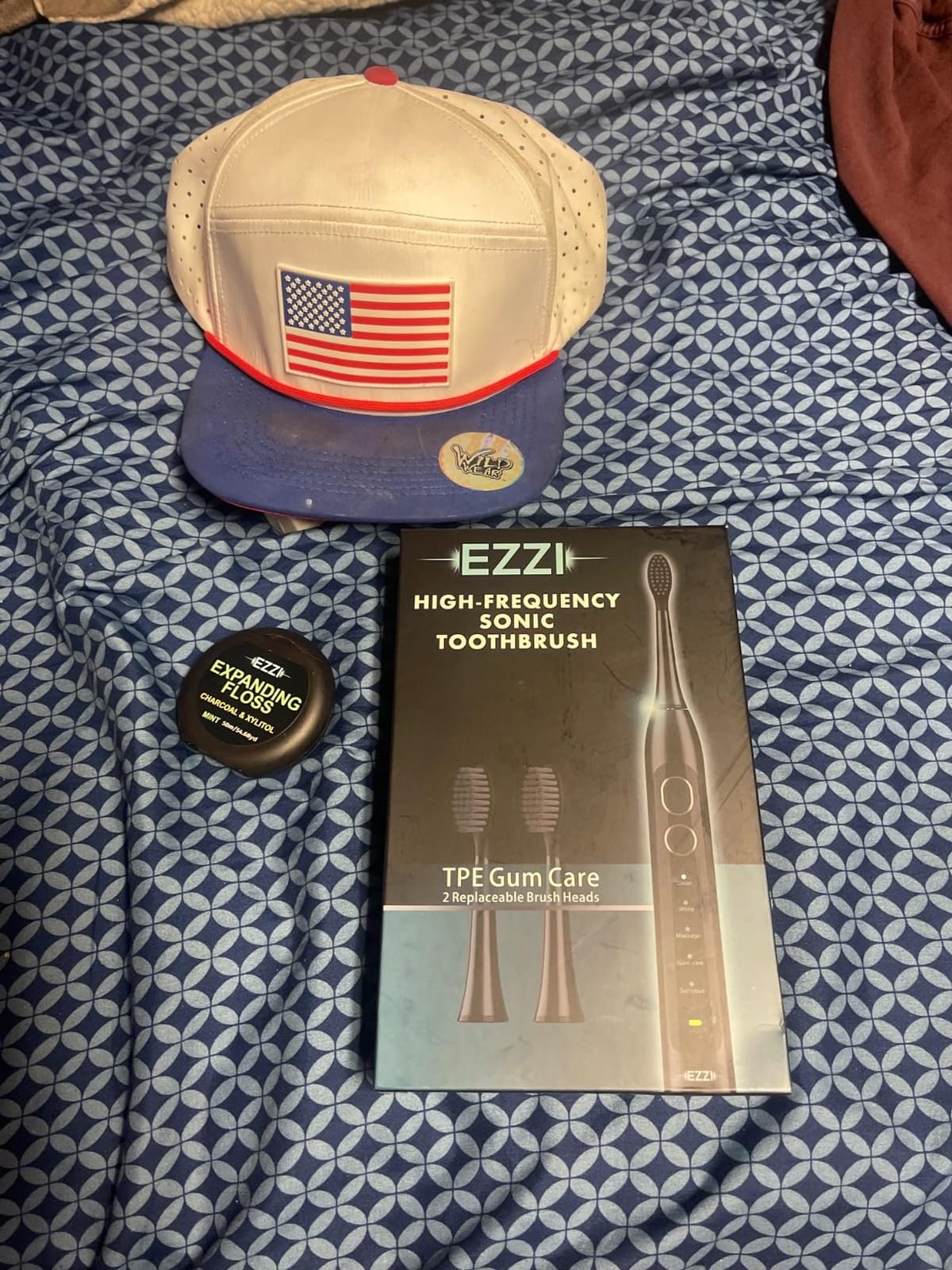
7. EZZI Sonic – Best for Tapered Ultra-Soft Bristles
EZZI Sonic Electric Toothbrush | Ultra Soft Tapered Bristles | 60-Day Rechargeable Battery | 42,000 Vibrations/Min | for Adults, Sensitive Teeth, Receding Gum Disease, Whitening, Braces, Travel
Ultra soft tapered bamboo bristles
42000 vibrations per minute
60-day battery
No pressure sensor
Pros
- Tapered tips reach below the gumline
- Former Sonicare users found it gentler
- Strong clean despite the soft bristles
- Two heads in the box
- Heads priced like other brands
Cons
- No visual pressure sensor
- Bristles feel prickly for some users
- No compatible replacement heads being made
The EZZI approach starts at the bristle, not the handle. Its charcoal-infused bamboo bristles have long tapered tips designed to reach below the gum line, and at 42000 sonic vibrations per minute the drive is well above the 30000 range typical of common brands. Owners with gum disease report the tapered head cleaning the margin as well as premium Sonicare heads.
Several reviewers describe switching over from a Sonicare because the EZZI head felt gentler, which is the most direct endorsement this product has. Others note the clean stays strong despite the soft bristles, with teeth feeling smooth. A two-minute timer and 30-second pacer signal, plus two heads and a simple button layout, round out a usable package.
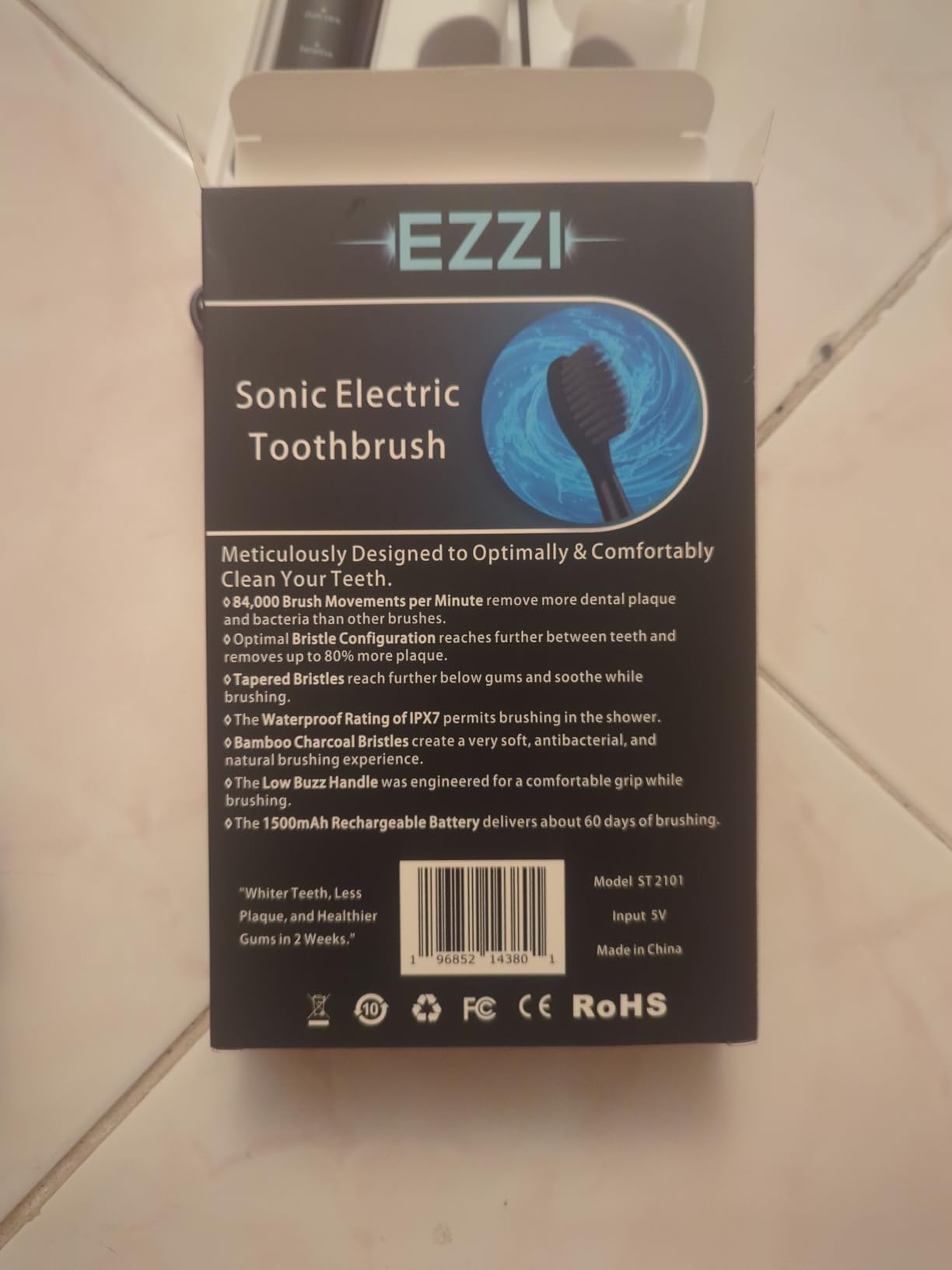
The 1500mAh battery is advertised at about 60 days per charge, though at least one owner reported real battery life falling well short of the figure and a unit that cracked at the base within a month. The 269-review pool is the second thinnest here, so there is less long-term evidence to lean on.
Two things to know before you commit. There is no pressure sensor, so nothing warns you when you press too hard, which for recession is a real gap. And replacement heads for this model are no longer being produced with no compatible alternative, so treat the purchase as a closed system.
Why bristle shape matters more than vibration count
High vibration numbers tell you the motor is fast, not that the head is kind. Tapered tips are what change how a brush feels at the gum margin, because they reach into the sulcus rather than scrubbing across the tissue. On a receded gumline that is the difference between cleaning and abrasion.
The trade-off is that some users find these bristles prickly or find them stabbing the gums. Feel the head with a fingertip before committing, and start on a lower intensity setting for the first week.
Deciding if a sensorless brush is acceptable
You can manage without a sensor if you already know you press too hard and are working on it, because a two-minute routine and a light grip are habits you can build. You will lose the early warning on days when you are tired or distracted, which is when most over-brushing happens.
Factor in the head situation before buying. With no compatible replacement heads being made, this becomes a closed system, and a brush you cannot re-stock is a poor match for anyone who expects to keep brushing for years.
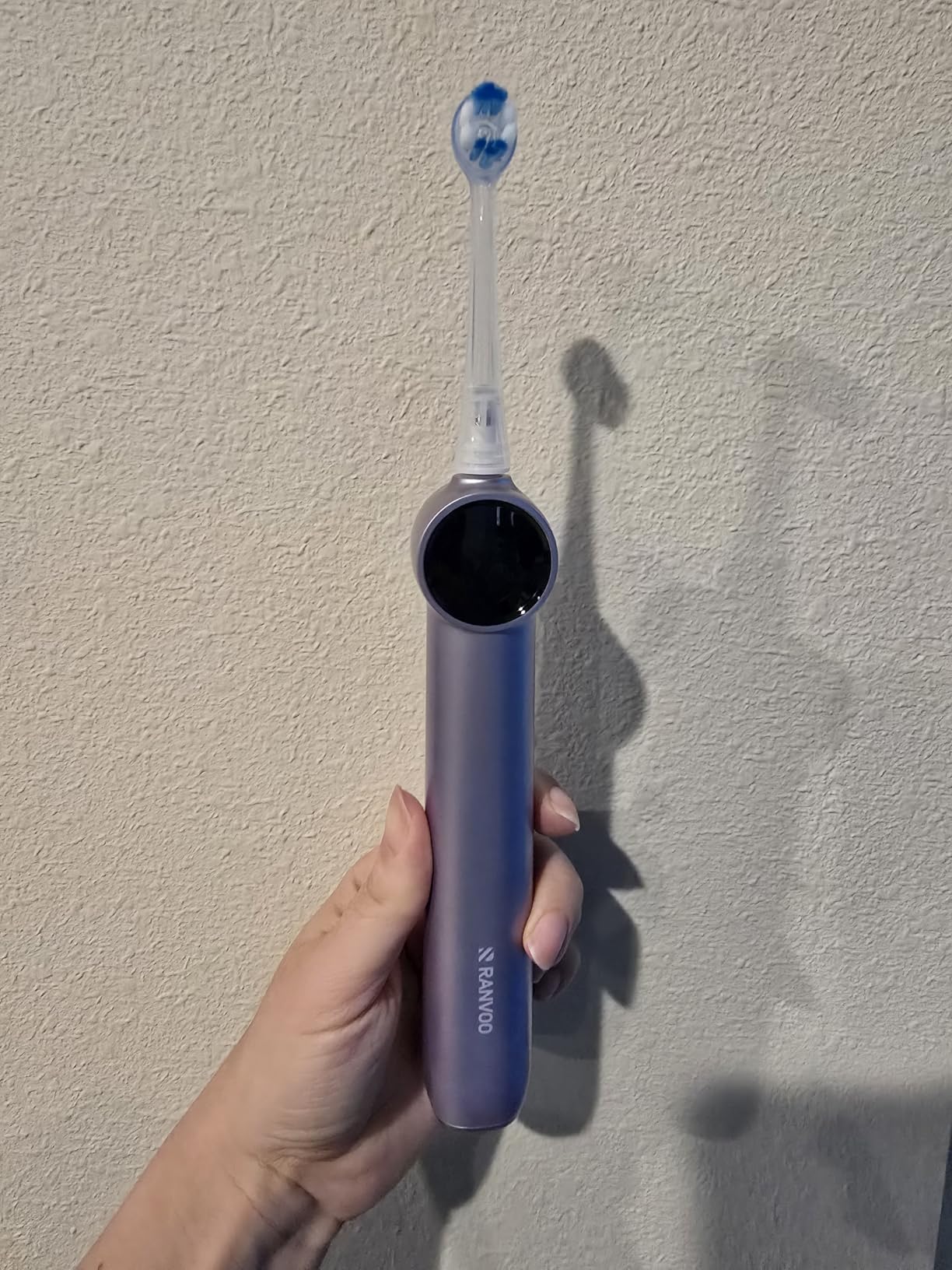
8. RANVOO AirJet X5 – Best for Small Mouths and Very Sore Gums
RANVOO AirJet X5 Electric Toothbrush, Dentist Recommended, Gray
Gentle Gum Care head
12-degree Foam mode
Three heads
Wall-mount charger
Pros
- Gentle for sensitive and bleeding gums
- Compact round head suits small mouths
- Very gentle Foam mode
- Battery runs several weeks between charges
- Quiet with a travel lock
Cons
- Air jet effect is debated by users
- Modes must be set before brushing
- Instructions are thin and no case
The AirJet X5 pairs dual-action sonic vibration with an air jet that releases micro-bubbles at high speed, and that combination is what its 715 reviewers, including a dental professional, rate highly. The recurring comment is that it is extremely gentle but still effective, with no irritation reported across daily use by people with sensitive or bleeding gums.
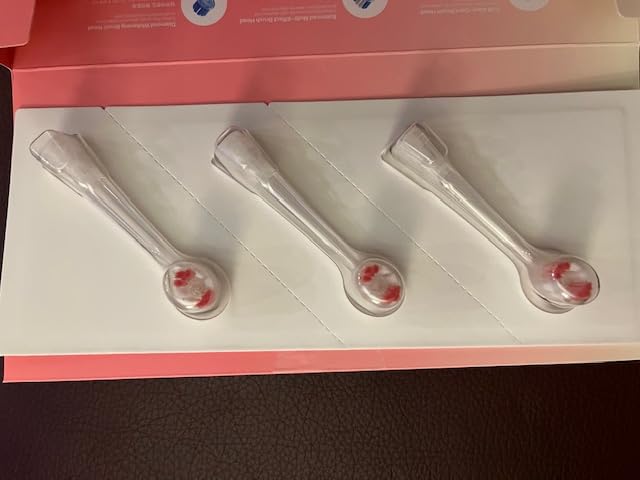
Its head is the practical star for small mouths: a compact round head with 0.01 mm ultra-fine bristles that reaches back teeth easily. Three heads come in the box, including a Gentle Gum Care head, and four modes cover Foam, Soft, Clean and White. Foam uses a 12-degree low-frequency sweep, which is the gentlest setting we found in this roundup.
Convenience is genuinely good here: a 1600mAh battery advertised at up to 60 days, a one-touch three-second travel lock, and a magnetic wall-mount charging base with a touchscreen timer. Several owners report a premium look and feel, and that it runs quieter than a Sonicare.
Users are more divided on the air jet itself, with some calling it a gimmick that produces a light breeze. The workflow is also awkward: modes must be chosen before you start because the screen cannot be read mid-brush, and the pressure-sensitive touchscreen is deliberately stiff to press.
When a compact head and a Foam mode matter most
Small mouths and crowded front teeth are where big oval heads struggle to angle correctly. A compact round head sits flat against one tooth, so you can hold the 45-degree angle that ADA guidance recommends without fighting the handle. For braces, the same geometry applies.
Foam mode is the answer for very sore gums. A low-frequency sweep reduces the number of bristle contacts per second, which is the gentlest approach we found here, and switching into it takes one press before you start.
What to verify before ordering
Read the mode descriptions before you buy, because the instructions are thin on what each head and mode does. If you are the kind of person who flicks between settings mid-brush, the pre-selection workflow will irritate you.
No travel case is included, and the air jet is the feature buyers most often describe as decorative. Judge the purchase on the head size, the Foam mode and the quiet motor, which are the parts with consistent support in reviews.
9. PRO-SYS VarioSonic Plus+ Sensitive Kit – Best for Feather-Soft Head Options
PRO-SYS® VarioSonic Plus+ Sensitive Kit Professional Electric Toothbrush for Sensitive Teeth, Rechargeable with Pressure Sensor and Timer, Customizable Intensity Powered Toothbrush with Travel Case
Feather soft and ultra-soft heads
Pressure sensor
Five modes
Customisable intensity
Pros
- Feather soft and ultra-soft heads in the kit
- Five modes with customisable intensity
- Quiet motor compared with rotary brushes
- Quadrant pauses and two-minute shutoff
- Travel case included
Cons
- Charger or battery fails after about a year
- Replacement chargers not sold separately
- Some support contacts go unanswered
This Sensitive Kit is built around the one variable that matters most for a painful, receded gumline: bristle softness. Feather soft, soft and ultra-soft options all ship in the box, and owners with extreme sensitivity, recession and dental crowns say the softest heads are the reason brushing stopped hurting them.
Five modes including a PLUS+ deep clean, plus customisable vibration intensity levels, mean you can find a genuinely gentle setting rather than choosing between two fixed options. The pressure sensor alerts when you brush too hard, and a two-minute timer with 30-second quadrant reminders keeps coverage even.
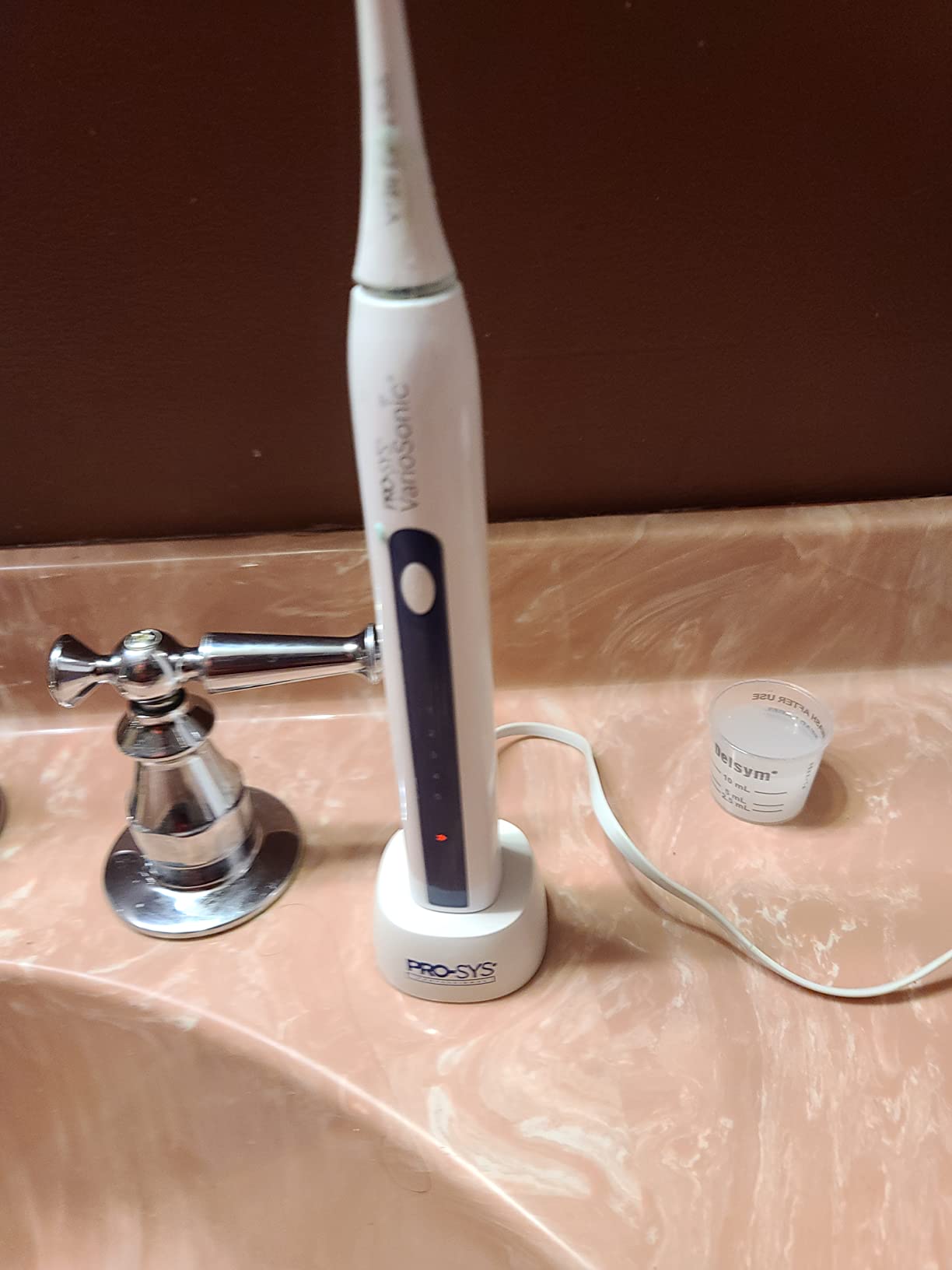
The quiet motor gets repeated praise in reviews, particularly against rotary brushes, which matters when gums are tender. A travel case is included, which is unusual at this level. The 181-review pool is the thinnest in our roundup, so weigh the feature set more heavily than the star rating.
Reliability is the recurring weakness. Several owners report the unit or charger failing to hold a charge after about a year, replacement chargers are not sold separately once the original fails, and a few buyers report unresponsive customer support. The charger also does not include a wall plug.
Choosing between feather soft and ultra soft
Feather soft is the gentlest option and the one to start with if your gums bleed when you brush or if roots are exposed. Move to soft once a week of brushing passes without discomfort, because an ultra-soft head used indefinitely can leave plaque behind on a wider head.
Test each head with a fingertip first. A head that feels abrasive to you is abrasive, and the box lets you change your mind without spending anything.
What the small review base means for you
With 181 reviews you are buying on specification rather than on proven long-term reliability, and the year-one charging complaints are the pattern to watch. Register the brush and keep the charger somewhere dry, since a replacement is not sold on its own.
For anyone who cannot tolerate medium bristles, this kit still solves the real problem. It simply does not carry the volume of owner history that the mainstream picks do, and that is the trade you are making.
How to Choose an Electric Toothbrush for Receding Gums
The nine brushes above differ far less in cleaning power than their marketing suggests. What separates them is how well they protect tissue while doing it, so buy on the four criteria below and treat everything else as preference.
Pressure sensor type is the single biggest decision
There are three practical levels. A handle that slows, pulses or changes colour mid-brush is the useful category. A light ring is a glanceable version of the same idea. A printed instruction telling you to ease off is not a sensor, and a product with none at all means you are relying on feel alone, which is exactly the habit that caused the recession.
Forum discussion on r/askdentists converges on this: the decisive feature is having a pressure sensor, not the brand. Whatever you choose, buy an extra-soft head in the same order, because a stiff head undoes a good sensor.
Sensitive mode versus gum care mode
Sensitive mode usually means lower power. Gum care mode typically lowers power and changes the movement pattern, rotating or sweeping more gently along the margin. If your diagnosis is bleeding or inflamed gums rather than simple sensitivity, a dedicated gum care mode is the more relevant setting.
Note that most electric brushes ship with a medium head regardless of the mode on the handle. Hygienists point to this as a common and avoidable cause of continued bleeding: check what is in the box and replace it.
Sonic versus oscillating motion on exposed roots
Neither motion is inherently kinder. A sonic brush moves fluid between teeth and along the margin with a linear magnetic drive, which some people with inflamed gums find less abrasive. An oscillating-rotating brush uses a small round head that wraps each tooth, with micro-vibrations softening the contact.
Users in r/PeriodontalDisease threads describe moving between the two families in both directions, with some finding Oral-B too harsh on inflamed gums and one Sonicare switcher reporting plaque left behind. The variable that decided those outcomes was head choice and pressure, not the brand. If you are switching, give it three months and change the head first.
Brush head size and softness matter more than the handle
Pick a head you can angle at 45 degrees on a single tooth, which usually means a compact round head rather than a long oval one. For softness, choose extra-soft or feather soft for the first six weeks, then reassess. Avoid the stock whitening-style heads, which are stiffer and are frequently blamed in forum threads for continued bleeding.
Replace heads every three to four months, or sooner if the bristles splay. Frayed tips do not clean properly and can scratch, which is the opposite of what you want on exposed dentin.
Three-year replacement head costs
Run this number before you buy. If you replace a head four times a year, the handle price is rarely the biggest cost of ownership. The Oral-B iO round heads are proprietary, the Sonicare Premium range is pricey, and every brand here needs refills, so compare the per-head cost of the specific head you will actually use for a receding gumline.
Budget picks such as the EZZI price their heads similarly to other brands, which offsets their lack of a pressure sensor. Do check that refills exist for any model you consider, because a handle without a restockable head is a dead end.
After scaling and root planing: a gentle restart
Scaling and root planing is a deep clean below the gumline, and the tissue is tender for a period afterwards. A common protocol, and one to confirm with your own hygienist, runs like this:
- Wait the period your clinician specified, often 24 to 48 hours, if the site feels tender.
- Start on your lowest intensity setting, in Sensitive or Gum Care mode.
- Use an extra-soft or feather-soft head, freshly replaced.
- Avoid the treated quadrant for the first day or two, brushing the rest gently.
- Resume normal coverage from day three, keeping pressure light for about two weeks.
- Expect some bleeding to settle rather than stop immediately; if it worsens, call the practice.
Patients starting interdental cleaning at the same time often panic when their gums look smaller. Forum users describe the same pattern: initial bleeding that settles after roughly two weeks as inflammation reduces. That is the tissue recovering, not new recession. Use the largest interdental size that glides in without force, and step down if it binds.
Finally, a note on newer gum-focused tech, including red-light and bioelectric brushes. The clinical evidence is thin, and we would not put a diagnosis in the hands of a light panel. Pressure feedback and bristle softness remain the well-supported levers. As with anything here, if recession is progressing, your dentist or periodontist decides what happens next.
It is worth noting how we use the same test-and-review discipline across the rest of our coverage, from our guide to the [best electric skateboards for commuting](https://www.skywarriorbooks.com/best-electric-skateboards-for-commuting/) and our picks for the [best off-road electric skateboards](https://www.skywarriorbooks.com/best-off-road-electric-skateboards-for-adventures/), to our recommendations for the [best electric scooters for teenagers](https://www.skywarriorbooks.com/best-electric-scooters-for-teenagers/). Different products, same standard of evidence.
Frequently Asked Questions
Can you use an electric toothbrush with gum recession?
Yes. Electric toothbrushes are commonly recommended for receding gums because the motor supplies the brushing movement, so you guide the head rather than scrubbing it. Fit an extra-soft or feather-soft head, use Sensitive or Gum Care mode, and let the pressure sensor stop you pressing too hard. Do not skip brushing because of recession, since plaque at the margin drives the inflammation that makes recession worse.
Which is better for receding gums, Oral-B or Sonicare?
Both are good choices, and the deciding factor is the pressure feedback rather than the brand. Oral-B iO models use a small round head that wraps each tooth with a visible pressure ring, which suits people who brush too hard without knowing it. Philips Sonicare models use sonic vibration and fluid action along the gumline, which some people with inflamed gums find gentler. Try a soft head on whichever you buy for at least three months before judging the family.
Do I need a pressure sensor on my electric toothbrush?
For gum recession, a pressure sensor is close to essential. Over-brushing is a recognised cause of recession, and most people do not realise how hard they press. A sensor that pulses, slows the motor or lights up mid-brush gives you a real-time cue. A brush without one can still work if you are already conscious of pressure, but you lose the early warning on the days when you are tired.
What toothbrush do dentists recommend for receding gums?
Dentists generally recommend a powered brush with soft or extra-soft bristles, a pressure sensor, and a sensitive or gum care mode, used with a light 45-degree angle at the gum margin. The American Dental Association advises soft bristles and replacing the brush every three to four months. If you have been diagnosed with gum disease or have upcoming periodontal surgery, follow your clinician’s protocol, which may differ from general guidance.
Which Sonicare toothbrush is best for gum disease?
The Philips Sonicare 4100 is the strongest starting point for most people because it pairs a pressure sensor with two intensity levels and holds 22985 reviews. The DiamondClean 9500 is the better choice if you want a dedicated Gum Health mode, five modes and three intensity levels. Whichever you choose, the head matters more than the handle, so plan on an extra-soft head from the start.
Can an electric toothbrush stop gum recession from getting worse?
It can help slow progression, but it cannot reverse recession because gum tissue does not grow back. A good brush reduces the two things you control at home: how hard you press and how much plaque sits at the margin. A 2014 Cochrane review found powered brushes remove 21% more plaque and reduce gingivitis by 11% compared with manual brushing. If recession is visibly progressing, see a dentist or periodontist rather than relying on a brush.
Conclusion
The best electric toothbrush for gum recession is the Oral-B iO Series 3 Limited Deep Clean, because it pairs a smart pressure sensor with a compact round head and a Sensitive mode at a price the mid-range alternatives cannot undercut on features. If you want a dedicated gum care mode and finer pressure resolution, step up to the Oral-B iO Series 7.
For the lowest-cost route to good protection, the Philips Sonicare 4100 is hard to argue with, and its 22985 reviews give you the widest evidence base in this roundup. Whichever handle you choose, buy an extra-soft or feather-soft head, replace it every three to four months, and keep the pressure feedback on. And if your recession is progressing, see a dentist or periodontist, because no brush on this list will bring gum tissue back.