

Acoustic panels are sound-absorbing treatments that reduce echo and reverberation, helping a home writing studio sound clearer for audiobook narration, remote interviews, podcasts, and playback. They do not stop traffic, neighbors, or household noise from entering a room; that is a sound-blocking problem, not an absorption problem.
The best acoustic panels for home writing studios balance absorption, coverage, mounting, and how the room looks when the camera is on. I compared the supplied specifications and review data for 10 options, from thin self-adhesive tiles to 2-inch fiberglass panels and decorative slatwall panels, so you can build a focused space without covering every wall.
For a writer, the first win is usually less flutter echo around the desk and microphone rather than a fully treated control room. Start with the wall behind or beside your speaking position, listen again, then add coverage only where the room still sounds hard and reflective.
Table of Contents
The top three picks are the UMIACOUSTICS panels, ZonaSonic Brick panels, and TONOR Wood Slatwall panels.
UMIACOUSTICS is my strongest all-round starting point because it combines 2-inch fiberglass construction with removable hanging brackets. ZonaSonic is the compact pick when peel-and-stick setup and a declared 0.95 NRC rating matter most, while TONOR Wood Slatwall makes the most sense when the room must also read as a finished home office.
The best acoustic panels for home writing studios in 2026 cover different room and mounting needs.
This quick overview is a fact-led shortlist, not a promise that one material fixes every frequency. Fiberglass and thicker foam can offer more depth than thin tiles, while polyester tiles and wood slats can be the cleaner fit for a visible writing room.
| Product | Specifications | Action |
|---|---|---|
 ZonaSonic Brick Panels ZonaSonic Brick Panels |
|
View Details |
| UMIACOUSTICS Fiberglass Panels |
|
View Details |
 Olanglab Fiberglass Panels Olanglab Fiberglass Panels |
|
View Details |
 varrisin Egg Crate Foam varrisin Egg Crate Foam |
|
View Details |
 TONOR Wood Slatwall TONOR Wood Slatwall |
|
View Details |
 Soon Global Decorative Panels Soon Global Decorative Panels |
|
View Details |
 Lebenforce Self-Adhesive Panels Lebenforce Self-Adhesive Panels |
|
View Details |
 Jdejiela Egg Crate Foam Jdejiela Egg Crate Foam |
|
View Details |
 Dailycooper Y-Lined Panels Dailycooper Y-Lined Panels |
|
View Details |
 TONOR Dual-Layer Panels TONOR Dual-Layer Panels |
|
View Details |
1. ZonaSonic Brick Panels are the easiest compact choice for reducing nearby reflections.
16 Pack Brick Acoustic Panels with Self-Adhesive, 12″ X 12″ X 0.4″ Sound Proof Foam Panels for Walls, High Density Soundproof Wall Panels, Sound Dampening Panels for Home Studio Decor Office – Gray
16 panels
12 x 12 x 0.4 inch
NRC 0.95
Pros
- NRC 0.95
- Self-adhesive backing
- 3D brick look
- High-density polyester
Cons
- 0.4 inch profile limits low-frequency absorption
- Large rooms need many panels
ZonaSonic gives you 16 gray 12-by-12-inch tiles with a 3D brick pattern, so it can turn a blank wall near a desk into a deliberate decor feature. Its supplied NRC rating of 0.95 is the clearest absorption figure in this group, and the listing identifies an ultra-high-density polyester fiber material.
I would treat this as a reflection-control product rather than a bass solution because each tile is 0.4 inch thick. That is a sensible distinction in a writing space: reducing the sharp slap around a spoken voice can help, but low-frequency buildup needs more depth and often corner treatment.
The best placement is a small cluster beside and behind the narration position.
Put several tiles at the first hard surfaces that face your mouth and microphone, not randomly across the room. The self-adhesive backing makes a compact pattern practical on a smooth wall, and the 3D surface is less visually plain than flat foam.
The right buyer is a writer who needs a low-profile visual treatment.
Choose ZonaSonic when you want a stated NRC figure, a modern gray pattern, and a simple tile-by-tile layout. Skip it as the only treatment for a bass-heavy recording room, since the supplied data itself points to a thin profile.
2. UMIACOUSTICS Fiberglass Panels are the most flexible removable option for a serious voice setup.
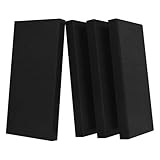
4 Pack Acoustic Panels 23.6″x11.8″ Soundproof Fiberglass Panel, Black
4 panels
2 inch fiberglass
Removable brackets
Pros
- 2 inch fiberglass
- Removable mounting
- Fabric wrapped
- 2-year warranty
Cons
- Fiberglass needs careful handling
- Mounting requires brackets and nails
These four UMIACOUSTICS panels use a 2-inch fiberglass core under high-density polyester fabric, a construction that is more substantial than thin decorative tiles. The supplied listing also includes hanging brackets and nails, which matters if you rent or want the option to move the panels as the desk layout changes.
For my own decision process, removable mounting is a major plus in a writing room that doubles as an office or guest room. The tradeoff is that fiberglass deserves sensible handling during installation, and bracket placement takes more planning than pressing a tile onto the wall.
The best use is controlling wall reflections around an audiobook or podcast desk.
Place one panel at each first reflection point, then use the remaining panels on the wall behind the speaker or on the wall facing the desk. At 2 inches thick, these fabric wrapped acoustic panels make more sense than 0.4-inch tiles when your recordings still feel boxy after a minimal setup.
The right room is one where future rearrangement matters as much as absorption.
Pick UMIACOUSTICS if you need a wall treatment you can remove, a black fabric finish, and a thicker core. It is less appealing for someone who cannot make nail holes or wants the quickest possible peel-and-stick project.
3. Olanglab Fiberglass Panels are the strongest large-format choice for covering a broad reflective wall.
Olanglab Sound Absorbing Acoustic Wall Panels 2 Pack, 2” 24”x48” Fiberglass Sound Dampening Panels, Large Fabric Wrapped Sound Proof Panels for Walls (Navy)
2 panels
24 x 48 x 2 inch
Absorption up to 0.95
Pros
- Large 24 x 48 inch face
- 2 inch fiberglass
- Absorption up to 0.95
- Impaling-clip mounting
Cons
- Panels weigh 19.61 pounds
- Secure mounting is required
The Olanglab set takes a different route: two large navy fabric-wrapped panels, each 24 by 48 inches and 2 inches thick. The supplied feature data gives an absorption coefficient up to 0.95, and the size lets two panels cover a meaningful part of a wall without the grid effect of small squares.
These are the panels I would consider when an untreated wall sits directly behind the microphone or directly opposite it. Their listed 19.61-pound weight makes placement a real installation task, not an afterthought, so locate studs or use mounting hardware suited to the wall before ordering.
The best result comes from treating the wall that creates the loudest voice reflection.
Record a short spoken sample, clap once from the chair, and listen for the wall that throws the quickest hard return. A large 2-inch panel surface can tame that area neatly, especially in a dedicated room where the navy finish suits the rest of the decor.
The right buyer is a dedicated-room writer who prefers fewer, larger panels.
Choose this set if you have secure mounting options and want thick fiberglass in broad rectangles. It is not the natural first pick for temporary setups, delicate walls, or anyone who wants to reposition panels without hardware.
4. varrisin Egg Crate Foam is a lightweight 2-inch route to basic echo reduction.
4 Pack Sound Proof Foam Panels 48x24x2 Acoustic Foam Panels Egg Crate Foam for Walls Soundproof Studio Noise Thermal Insulation Soundproofing Waterproof with Adhesive Stickers
4 panels
48 x 24 x 2 inch
Egg crate foam
Pros
- 2 inch foam profile
- Large panel area
- Lightweight
- Adhesive stickers included
Cons
- Only 13 supplied reviews
- Egg crate look is visible
varrisin supplies four 48-by-24-inch, 2-inch egg crate foam panels with adhesive stickers. The foam profile offers substantially more depth than the thin polyester tiles here, and its light 4.64-pound package weight makes it less intimidating for a first acoustic treatment project.
Egg crate foam is still absorption treatment, not a way to make a bedroom silent from the outside. I would look at it for a writer who needs less echo for calls or rough voice recordings and accepts that the sculpted studio look will remain visible.
The best placement is on the nearest exposed wall rather than every surface.
Use the large rectangles as a deliberate band behind the desk or on the wall facing the speaker. Start with one reflection zone, listen for improvement, and save the remaining panels for a second wall only if the reverberation still distracts you.
The right buyer is a beginner who wants thick, lightweight panels with included stickers.
Choose varrisin if 2-inch foam, large panels, and a simple setup are the priorities. The supplied review base is small at 13 reviews, so I would check the wall surface and adhesive suitability carefully before treating it as a permanent installation.
5. TONOR Wood Slatwall Panels are the most furniture-like option for a visible writing office.
TONOR Wood Slatwall Panels, 2 Pack 47.2″ x 23.6″/ 120 x60cm(15.5ft²) Acoustic Wall Panels, Wood Slat Acoustic Panels for Noise Cancelling and Wall Décor Living Room, Bedroom, Home Decor, Office, Oak
2 panels
15.5 square feet
Wood and polyester
Pros
- Natural wood appearance
- 15.5 square feet
- Easy to cut
- Included screws
Cons
- May need added adhesive
- Wood-slat format is not a bass trap
TONOR’s two oak slatwall panels pair polyester fiber with MDF and wood veneer, covering 15.5 square feet in the set. Each panel measures 47.2 by 23.6 inches, and the provided information says they can be cut for custom sizing, useful around bookcases, outlets, or a built-in desk.
For writers who see their office every day, appearance is part of the decision rather than a bonus. I like this direction for a room that appears on video or needs to feel like a library instead of a recording booth, provided the goal is modest reflection control rather than low-frequency treatment.
The best location is a feature wall behind the desk or reading chair.
A pair can turn the wall in camera view into a finished backdrop while bringing polyester-backed surface area into the room. Use the included screws as directed, and plan the cuts and stud locations before committing to a layout.
The right buyer is a writer who puts decor and broad coverage ahead of a foam look.
Choose TONOR Wood Slatwall if a natural oak appearance, cut-to-fit flexibility, and a large visible surface matter. Do not mistake slats for bass traps; a room with heavy low-frequency issues still benefits from thicker purpose-built treatment in the corners.
6. Soon Global Decorative Panels are the art-forward choice for a creative writer room.
Soon Global 8-Pack Acoustic Panels, Soundproof Wall Panels, 48 X 32 Inches Sound Absorbing Panels, Decorative Acoustical Wall Panels, Acoustic Treatment for Recording Studio, Opulence
8 panels
Polyester fiber
50 sticky dots included
Pros
- Eight-panel set
- Decorative artist designs
- Polyester fiber
- 50 sticky dots
Cons
- No supplied thickness figure
- No cons listed in supplied reviews
Soon Global’s eight-panel set is built from high-density polyester fiber and is notable for designs curated from artists. The supplied package information includes 50 transparent double-sided sticky dots, making this a practical alternative when you want sound absorbing panels that look more like wall art than technical equipment.
The listing does not provide a thickness or NRC figure, so I would not compare its absorption numerically against products that do. Instead, judge it on the supplied material, its decorative intent, and whether the tile layout helps you cover a specific reflection zone.
The best arrangement is a framed gallery-style cluster at a reflection point.
Set the eight tiles in a rectangular block or balanced arrangement near the desk, rather than scattering them solely for decoration. Transparent sticky dots can keep the pattern visually quiet, though it is wise to test adhesion on the exact wall finish first.
The right buyer is a writer whose room must look personal on and off camera.
Choose Soon Global if art-forward styling and a tile layout are central to the project. Buyers who need a stated thickness, measured coefficient, or deep treatment for demanding recording should favor a product with those supplied details.
7. Lebenforce 22-Pack Panels are the coverage-focused pick for a larger peel-and-stick layout.
22 Pack Sound Proof Foam Panels for Walls, Acoustic Panels 12″x12″x0.4″
22 panels
21.27 square feet
0.4 inch polyester
Pros
- 21.27 square feet coverage
- Peel-and-stick backing
- High-density polyester
- Modern black finish
Cons
- 0.4 inch thickness
- Low-frequency control is limited
Lebenforce provides 22 black polyester panels, each 12 by 12 inches and 0.4 inch thick, for a stated 21.27 square feet of coverage. That clear coverage figure is helpful when you are mapping a small office and want enough identical tiles for a continuous visual treatment rather than a few isolated patches.
The supplied listing recommends treating 20 to 30 percent of the wall surface area for sound dampening. I would use that only as a starting reference, because one reflective room can need attention at a few first-reflection zones while another has rugs, books, and curtains already doing part of the work.
The best plan is to map coverage before peeling any backing.
Lay out the 22-tile grid on paper, leaving space around outlets, shelves, and art, then apply it to the most reflective wall areas. The peel-and-stick approach suits a do-it-yourself setup, but it is harder to revise a large pattern after the tiles are attached.
The right buyer is someone who wants stated coverage for a broad thin-panel treatment.
Choose Lebenforce for the large panel count and black, uniform look. Its 0.4-inch profile is best treated as echo and flutter control; use thicker panels or bass traps studio treatment if low frequencies are the main issue.
8. Jdejiela Egg Crate Foam is a broad-coverage 2-inch foam set for multipurpose rooms.
Jdejiela 4 Pack Egg Crate Foam Sound Proof Foam Panels for Walls,48”X24”X2” inch Acoustic Panels, high-Density Fireproof soundproof Wall Panels, Professional Acoustic Treatment (BlacK)
4 panels
48 x 24 x 2 inch
Polyurethane foam
Pros
- 2 inch thickness
- Four large panels
- Flame-retardant foam
- Studio and office use
Cons
- No cons listed in supplied reviews
- Egg crate surface remains visible
Jdejiela includes four black polyurethane foam panels at 48 by 24 by 2 inches. The manufacturer describes the three-dimensional surface as increasing contact area with sound, and the supplied material description calls the foam high-density, flame retardant, non-toxic, and tasteless.
Compared with small tiles, four broad panels make it easier to address a whole wall segment in a home theater, office, podcast corner, or writing studio. The visual tradeoff is obvious: egg crate foam announces itself, which may not suit a room where you want a calm, bookish background.
The best application is a dedicated audio corner that needs large treated zones.
Mount panels around the narration position rather than behind every bookcase. A focused 2-inch foam zone can help reduce reflected speech, while leaving the rest of the room livable and avoiding the over-treatment concern that comes up often in small-room discussions.
The right buyer is a writer who values foam depth more than decorative subtlety.
Choose Jdejiela if you want a four-panel set with large dimensions and stated 2-inch thickness. If the panels will be in a video-call background, compare it with fabric-wrapped or slatwall choices that better suit visible home office acoustics.
9. Dailycooper Y-Lined Panels are a tidy self-adhesive option for smaller reflection zones.
Dailycooper 12 Pack Self-Adhesive Acoustic Panels 12″ X 10″ X 0.4″ – Sound Proof Foam Panels for Walls with High Density, Y-Lined Design, Flame Resistant, Absorb Noise and Eliminate Echoes(Black)
12 panels
7.5 square feet
0.4 inch polyester
Pros
- Self-adhesive backing
- 9.4 lb per cubic foot
- Y-lined appearance
- Flame-retardant polyester
Cons
- 7.5 square feet per pack
- 0.4 inch profile
Dailycooper packs 12 black polyester tiles measuring 12 by 10 inches, with stated coverage of about 7.5 square feet. Its supplied density is 9.4 pounds per cubic foot, and the Y-lined beveled pattern gives the thin tiles more character than a plain flat square.
These are sound absorption panels for taming reverb and flutter echoes close to a desk, not a full studio soundproofing build. I would place the smaller pack where it can have a specific job, instead of expecting it to solve a large empty room on its own.
The best first step is treating the wall nearest the microphone side position.
For narration, the first reflections usually matter more than distant corners, especially when the room already has a rug, upholstered chair, and books. Arrange the 12 panels in a compact rectangle or a deliberate staggered pattern, then listen to a new recording before adding more.
The right buyer is a writer who wants a small, safe-to-handle starter layout.
Choose Dailycooper when self-adhesive installation, stated density, and a flame-retardant polyester material are useful. Consider a larger-coverage set if 7.5 square feet will look undersized on the reflection zone you need to treat.
10. TONOR Dual-Layer Panels are a wide peel-and-stick treatment with a cleaner stripe pattern.
TONOR Dual-Layer Thickened Acoustic Wall Panels-4 Pack 47.2″x23.6″x0.72″
4 panels
47.2 x 23.6 x 0.72 inch
Dual layer
Pros
- Dual-layer structure
- Large panel dimensions
- Self-adhesive backing
- Classic stripe pattern
Cons
- 0.72 inch is not deep bass treatment
- Strong adhesive needs careful placement
TONOR’s four large black panels measure 47.2 by 23.6 inches and are 0.72 inch thick. The supplied information identifies a dual-layer reinforced, high-density polyester structure, self-adhesive backing, reinforced corners, and a stripe pattern intended to work as wall decor.
That wide format is useful when a writer wants a continuous treatment area without a seam-heavy grid of small tiles. The 0.72-inch depth sits between thin tiles and 2-inch foam or fiberglass, so I would expect it to serve echo control first and leave deep bass concerns to thicker treatment.
The best placement is a wide horizontal or vertical band on one key wall.
Use the large rectangles to cover the wall behind the desk, beside a speaking position, or in a clean video-call frame. The listing says panels can be cut to fit different rooms, which can help around furniture, but measure twice before applying the strong adhesive.
The right buyer is a writer who wants broad peel-and-stick coverage without an egg crate look.
Choose TONOR Dual-Layer if you prefer a stripe pattern, large panels, and a no-additional-tape installation method. Choose a 2-inch fiberglass or foam product when depth is more important than a thin, polished wall finish.
The right buying guide starts with absorption goals, not a promise of soundproofing.
Acoustic treatment reduces reflected sound inside a room. Soundproofing blocks sound transmission through walls, doors, windows, and ceilings, so a panel can make your narration clearer without making a busy street disappear.
The term NRC rating means Noise Reduction Coefficient, a single-number indicator of how much sound a material absorbs on average under a standard test range. A supplied NRC or absorption figure is useful for comparison, but it does not tell you everything about low-frequency control, room geometry, mounting, or the noisy gaps around a door.
The best panel count begins with two to four targeted reflection areas.
For a compact writing studio, begin with the wall behind the speaker, the wall facing the speaker, and the two side-wall points where a voice or monitor sound first bounces back. Record the same 20-second passage before and after each step, using the same microphone position and input level.
That staged method is more reliable than filling every surface at once. Forum discussions repeatedly point out that small rooms need less treatment than people expect, while thin foam alone does little for low frequencies; if the issue is boomy bass, look toward thicker panels and properly placed bass traps rather than more thin tiles.
The best placement follows the sound path from voice to wall to microphone.
- Set your microphone and chair where you will actually write and record.
- Speak or clap from that position and identify the nearest bare, hard walls that return a sharp echo.
- Treat the first reflection points beside, behind, or in front of the speaking position with the panels you selected.
- Retest with a spoken paragraph, then add treatment to the strongest remaining reflection instead of guessing.
- Address corners separately if low-frequency buildup persists, because flat thin panels are not bass traps.
This sequence respects the limits of the products. It also avoids the common disappointment of expecting a decorative tile to solve a room problem created by an empty corner, a bare floor, or sound leaking through a door.
The best material depends on whether depth, removability, or appearance leads your decision.
Fiberglass panels such as UMIACOUSTICS and Olanglab provide supplied 2-inch cores and are the most convincing options here when deeper wall absorption is the priority. Their mounting calls for more care, particularly with Olanglab’s listed panel weight, but the material and depth suit a dedicated narration room.
Egg crate foam from varrisin and Jdejiela also supplies 2-inch depth in a lightweight form. It works for general echo reduction, though its sculpted surface is a clear studio aesthetic and should not be confused with a barrier against outside noise.
Polyester tiles from ZonaSonic, Lebenforce, Dailycooper, Soon Global, and TONOR Dual-Layer make a practical choice when simple placement, a thin profile, and flexible patterns matter. For the most decor-led approach, the TONOR Wood Slatwall panels combine polyester fiber with a wood finish and can be cut to fit the room.
The best minimal setup solves one recording problem before expanding the treatment.
Start with a desk corner, a bookcase-backed wall, or the one reflective surface that makes your voice sound brittle. Add a rug, filled shelves, curtains, and upholstered furniture where they make sense for the room; those are not replacements for panels, but they can reduce hard parallel surfaces before you commit to more wall treatment.
For a writer who records only occasional voice notes, a few targeted sound absorbing panels may be enough. For a regular audiobook narrator or podcast host, 2-inch panels at reflection points plus thoughtful corner treatment offer a more credible path than a wall covered only in 0.4-inch foam.
The answers below explain the most common home-studio panel questions.
What are the best acoustic panels for a home studio?
The best choice depends on the job: UMIACOUSTICS offers a removable 2-inch fiberglass option; Olanglab offers large 2-inch fiberglass panels; ZonaSonic supplies a stated NRC 0.95 in thin self-adhesive tiles; and TONOR Wood Slatwall suits a decor-led office. Choose by reflection control, depth, mounting, coverage, and appearance rather than expecting any panel to block outside noise.
How many acoustic panels do I need for a home studio?
Start with two to four targeted reflection areas: the wall behind the speaker, the wall facing the speaker, and side-wall points beside the desk or microphone. Record a short voice sample after each addition. A small room usually benefits more from treating the strongest reflections first than from covering every wall, while low-frequency problems call for thicker treatment or bass traps.
What is the difference between acoustic panels and acoustic foam?
Acoustic panels is a broad term that includes fabric-wrapped fiberglass, polyester fiber, and foam products used to absorb reflected sound. Acoustic foam is one panel material, often shaped with wedges or egg-crate texture. Thicker fiberglass panels and thicker foam generally provide more depth than 0.4-inch tiles, but neither category by itself soundproofs a room from exterior noise.
How do I acoustically treat my home studio on a budget?
Treat one recording position first. Find the nearest hard wall reflections with a clap or spoken sample, install a targeted tile or panel layout, and record again from the same microphone position. Add ordinary soft furnishings and filled shelves where they fit the room, then spend on thicker panels or bass traps only if low-frequency buildup remains. Avoid buying enough thin foam to cover every wall before listening.
Where should I place acoustic panels in my home studio?
Place panels at first reflection points: the walls beside the speaker or desk, the wall behind the speaker, and the wall facing the speaking position. For voice work, start with the closest bare surfaces that send a quick echo toward the microphone. Retest after each placement, and reserve corners for bass-focused treatment because thin wall tiles do not replace bass traps.
The best final choice is the panel that treats your reflection problem and fits your writing room.
Choose UMIACOUSTICS or Olanglab when 2-inch fiberglass and focused voice work lead the decision. Choose ZonaSonic, Lebenforce, Dailycooper, or TONOR Dual-Layer for thin self-adhesive layouts; choose varrisin or Jdejiela for large 2-inch foam zones; and choose TONOR Wood Slatwall or Soon Global when visual design carries equal weight.
The best acoustic panels for home writing studios in 2026 are not the ones that promise to turn every room silent. They are the ones you can place at the reflections you actually hear, live with visually, and expand only after your next recording tells you what the room still needs.