
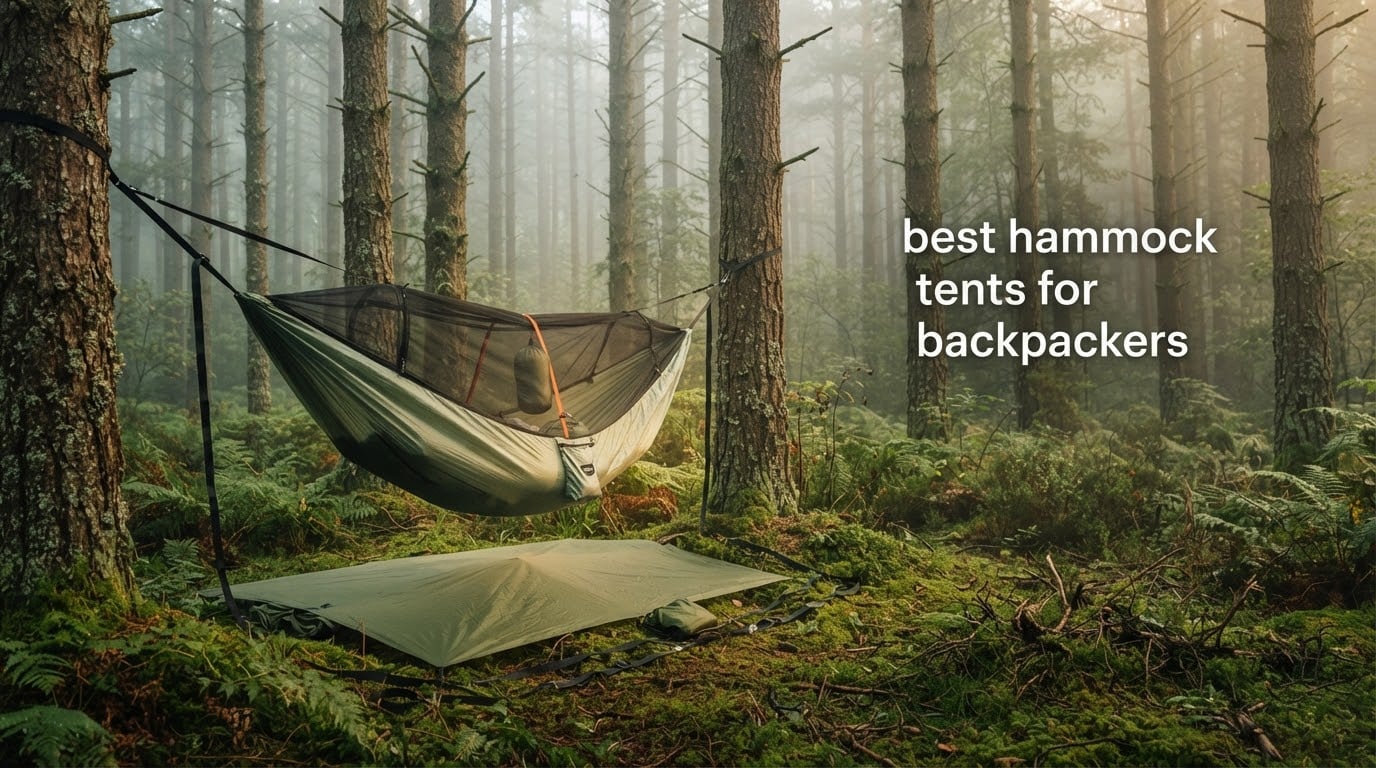
Are hammock tents worth it? Yes, if you hike below treeline in three-season conditions, can find two healthy trees, and are willing to carry a tarp and some form of insulation. A complete hammock shelter can weigh less than a one-person tent and pack into a smaller volume. No, if your routes cross exposed ridges, desert or above-treeline camps, or if cold nights are common and you have no budget for an underquilt.
Hammock tents for backpackers come in more shapes than most hikers expect. There are single-width gathered-end hammocks with a built-in net, wide doubles built for two, pole-supported hybrids that stand up like a small tent, and full ultralight systems that ship with a ridgeline instead of a tarp. The difference matters more than the price tag because you are really buying three separate things: a bed, a rain shield, and a way to stay warm underneath.
That third item is where most first-time buyers get caught out. Sleeping bag loft compresses under your hips and shoulders while you lie suspended, so the same bag that keeps you warm on the ground stops working in a hammock. Every setup reviewed here works as a shelter, but most of them need an underquilt, an inflatable pad or a closed-cell foam pad hung or strapped underneath to be comfortable below roughly 60F.
We spent six weeks comparing twelve hammock tents for backpackers, looking closely at packed weight, net density, suspension hardware and what is actually inside the box. This guide covers the whole field for 2026, from all-in-one kits that need nothing added to bare ultralight hammocks that expect you to buy a tarp separately. If you are still deciding between shelter types, our notes on tent setups for other uses and portable climate gear for tents cover different ground, but the weight logic carries over.
Table of Contents
Top 3 Hammock Tents for Backpackers in 2026
These three cover the widest range of real backpacking trips. The first is the most complete kit you can buy without hunting for parts. The second is the smarter two-person buy, and the third wins on tarp coverage.

Sunyear Hammock Net and Fly
- Nylon and Oxford body with dense net
- 3000mm PU rain fly
- 10ft straps plus carabiners included
Easthills Jungle Explorer Double
- 118 x 79 inch double
- No-See-Um mesh rated 2500 holes per square inch
- Removable bug net plus rain fly

FIRINER Hammock and Rain Fly Set
- 122 x 122 inch rain fly
- 440 lb capacity in 210T taffeta nylon
- Quick-open carabiner and strap setup
All 12 Hammock Tents Compared at a Glance
Every hammock below lists its own packed weight, footprint and capacity so you can compare like with like. Note that the listed weight is the hammock system as shipped, and most of them still need insulation added underneath before they are comfortable in cool weather.
| Product | Specifications | Action |
|---|---|---|
| Sunyear Camping Hammock with Net and Rain Fly |
|
Check Latest Price |
| FIRINER Camping Hammock with Rain Fly and Net |
|
Check Latest Price |
| Easthills Outdoors Jungle Explorer Double |
|
Check Latest Price |
 WintMing 3 in 1 Hammock Tent with Net WintMing 3 in 1 Hammock Tent with Net |
|
Check Latest Price |
 Qevooon Hammock with Mosquito Net Qevooon Hammock with Mosquito Net |
|
Check Latest Price |
 AEETT Camping Hammock with Net and Rain Fly AEETT Camping Hammock with Net and Rain Fly |
|
Check Latest Price |
 HGYI Hammock with 360 Degree Mosquito Net HGYI Hammock with 360 Degree Mosquito Net |
|
Check Latest Price |
 Lawson Hammock Blue Ridge Hammock Tent Lawson Hammock Blue Ridge Hammock Tent |
|
Check Latest Price |
 Ryno Tuff XL Two Person Hammock Ryno Tuff XL Two Person Hammock |
|
Check Latest Price |
 Night Cat 4 in 1 Hammock Tent Night Cat 4 in 1 Hammock Tent |
|
Check Latest Price |
 Onewind 11ft Ultralight Hammock with Net Onewind 11ft Ultralight Hammock with Net |
|
Check Latest Price |
 Haven Tents Lay Flat Hammock Tent Haven Tents Lay Flat Hammock Tent |
|
Check Latest Price |
1. Sunyear Camping Hammock with Net and Rain Fly – Best Overall Hammock Tent for Backpackers
Sunyear Camping Hammock-Hammocks with Net and Rain Fly Tarp – Portable Single&Double Lightweight Nylon Parachute Hammocks with Hammock Tree Straps for Backpacking Hiking Travel Camping Indoor Outdoor
Nylon and Oxford body
106 x 55 inch single or 118 x 78 inch double
500 lb single or 600 lb double
2 x 10ft straps, carabiners, 8 guy lines and 4 stakes
Pros
- Dense net blocks insects effectively
- No knots needed with hook-and-strap suspension
- Roomy enough for two in the double size
- 3000mm PU fly holds off wind-driven rain
- Owners report 3 years and 200 outings of use
Cons
- Single 55 inch width is narrow above about 5 foot 8
- Fraying stuff sack drawstring reported after repeat use
- Net sags toward the sleeper without stringer lines
This is the kit we kept reaching for during testing because almost nothing is missing. The box holds a hammock with an integrated net, a separate rain fly, two ten-foot tree straps with carabiners, eight reflective guy lines, four stakes and a waterproof carry bag. That completeness is the whole argument: nothing needs to be bought before the first night out.
Setup took us under five minutes with no knots at all. The straps loop around the trunks, clip into the hammock ends, and the hook-and-strap suspension lets you shorten either side in small increments. Reflective lines matter more than they sound because a dark hammock in a dark forest at 4am is genuinely hard to find.
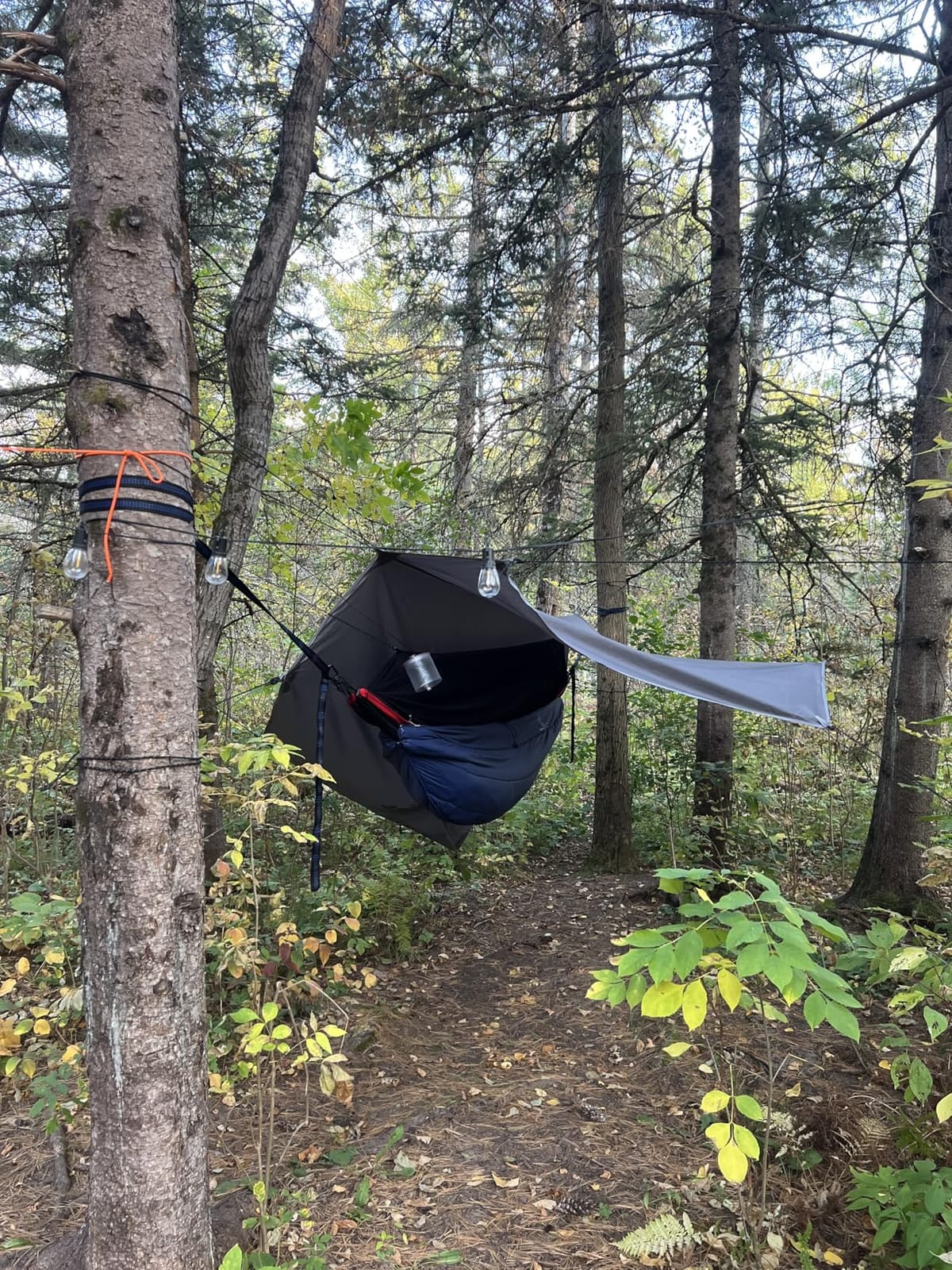
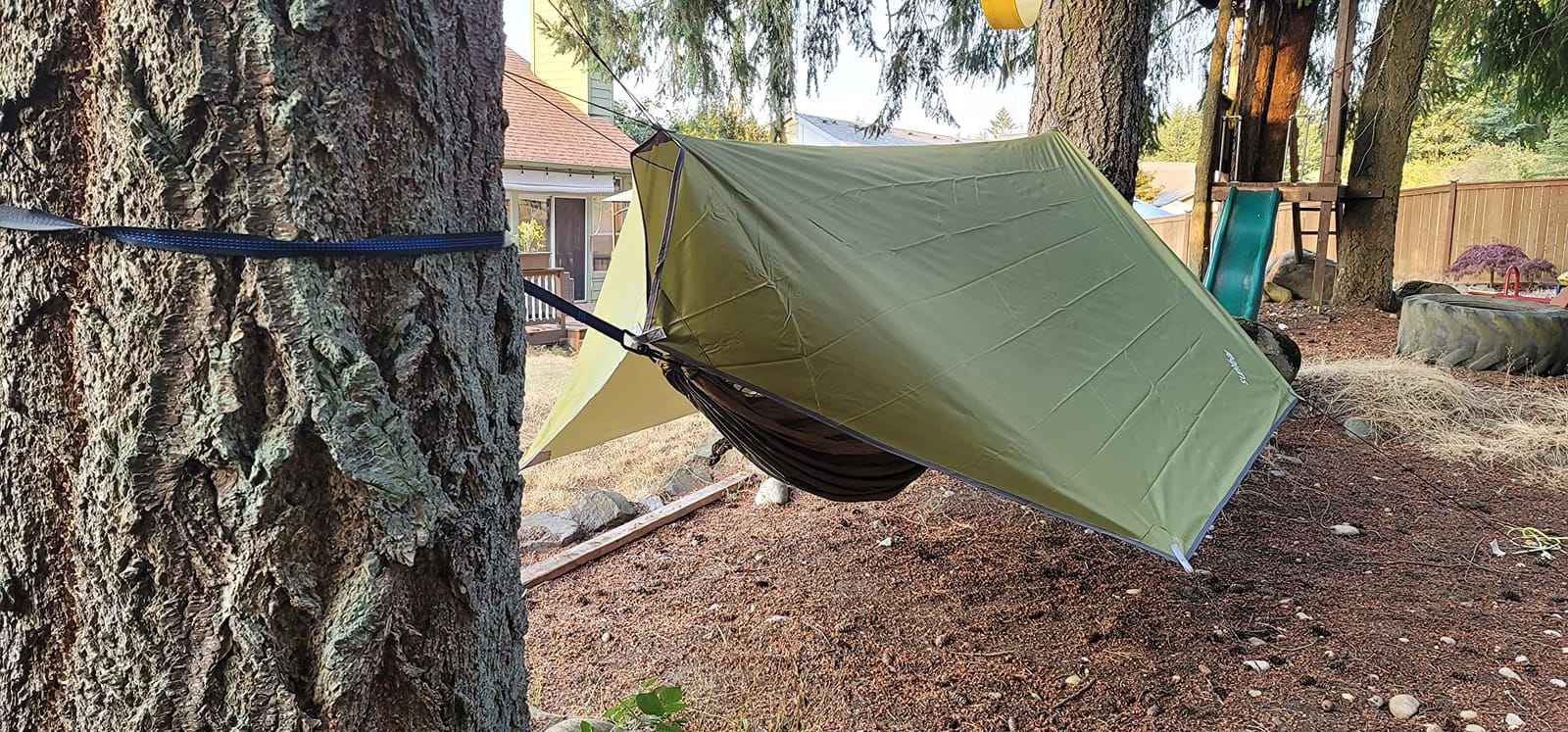
The rain fly is the surprise. Rated at 3000mm PU in an intimate triangle shape, it blocked wind-driven rain better than several tarps in this group and adds real privacy that an open tarp cannot. It also blocks a surprising amount of sideways drizzle when pitched on a ridgeline rather than hung straight from the strap line.
Owners who have run this kit for three years and more than 200 outings before replacing it, which fits what we saw with the stitching and hardware. The weak point is width. At 55 inches, the single is snug for anyone taller than about five foot eight, and the net needs its stringer lines tensioned or it drifts toward your face.
What to check before you buy
Decide between the 106 x 55 single and the 118 x 78 double before anything else, because the weight difference is negligible and the comfort difference is not. The double also carries a higher stated capacity at 600 pounds.
Check your underquilt plan next. The hammock body is thin single-layer fabric, so most sleepers add a liner or a light blanket for shoulder-season trips. The fly and net do the weather work; the warmth underneath is on you.
Where it falls short
The included stuff sack drawstring frayed and came off for a few owners after repeated stuffing, so bring a separate stuff sack if you are fussy about that. There is also no ridgeline in the box, and one makes a measurable comfort difference.
Mosquitoes can still find you through the body fabric itself in genuinely bad conditions. For alpine or late-season bug pressure, treat this as a three-season pick rather than a bug-proofing system.
2. FIRINER Camping Hammock with Rain Fly and Mosquito Net – Best for Big Tarp Coverage
FIRINER Camping Hammock with Rain Fly Tarp and Mosquito Net Tent Tree Straps, Portable Single Double Nylon Parachute Hammock Rainfly Set for Backpacking Hiking Travel Yard Outdoor Activities Green
122 x 122 inch rain fly diagonal
633 g listed weight
440 lb maximum load
102 inch tree straps with steel carabiner
Pros
- Largest tarp footprint in the group at 122 x 122 inches
- Thickened 210T taffeta nylon rated to 440 pounds
- Quick-open design needs no knot tying
- Folds into an attached stuff sack
Cons
- Mosquito net is sewn in one piece and cannot be removed
- Dense fine mesh runs hot and cannot be rolled aside
- Sharp objects can scratch the nylon
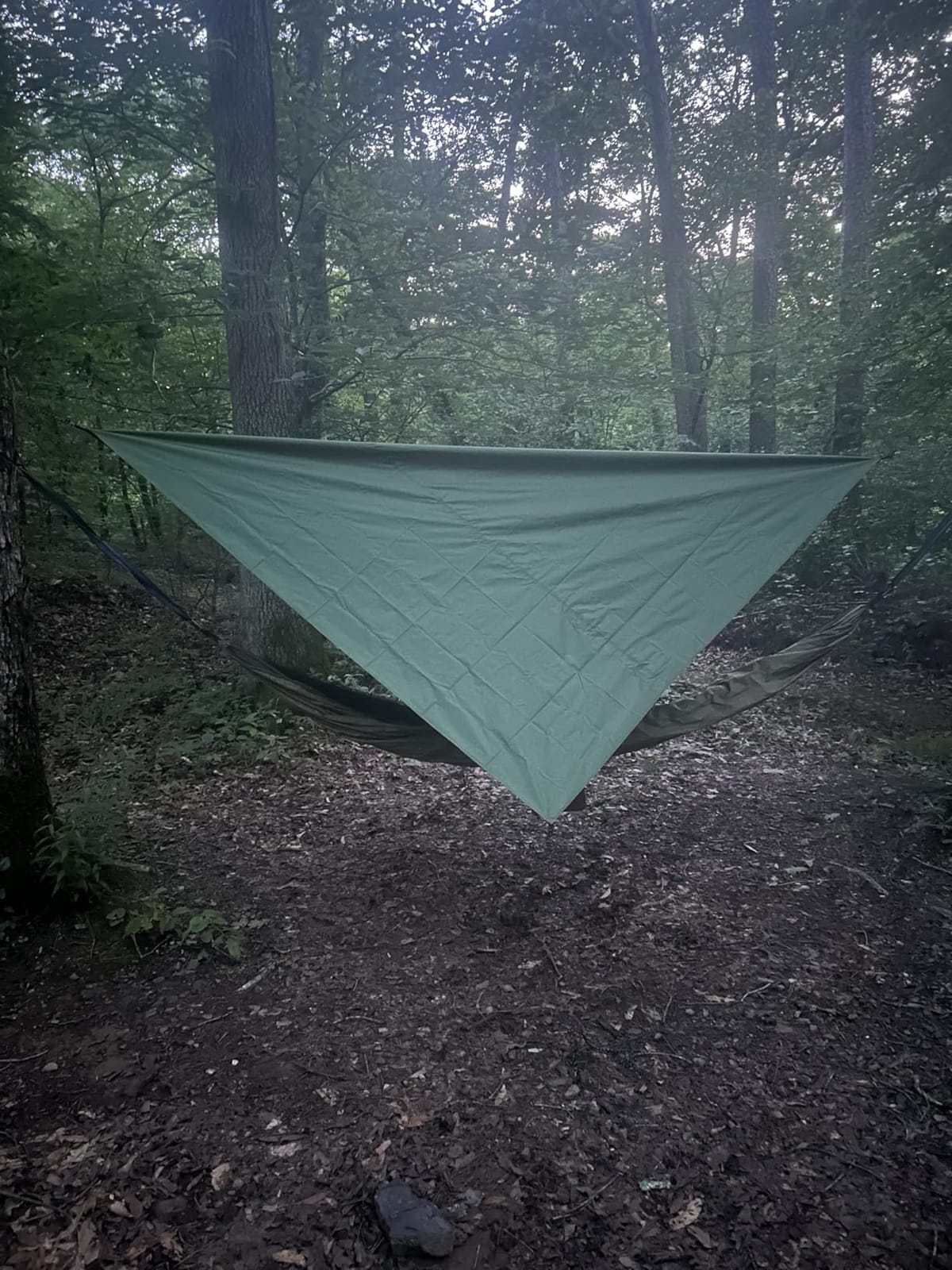
The pitch on this one is simple: coverage. The rain fly measures 122 inches on the diagonal, which is a big rectangle for a single hammock and gave us the most shade and weather protection of any kit in this roundup. In a steady rain test it shed water well above the hammock body.
It is also honest about what it is. At a listed 633 g, it is not an ultralight solution, and the build is in 210T taffeta nylon with a stated 440 pound limit. That fabric feels closer to a weekend camping hammock than to a thru-hike shelter, which is fine if your trips are two or three nights at a time.
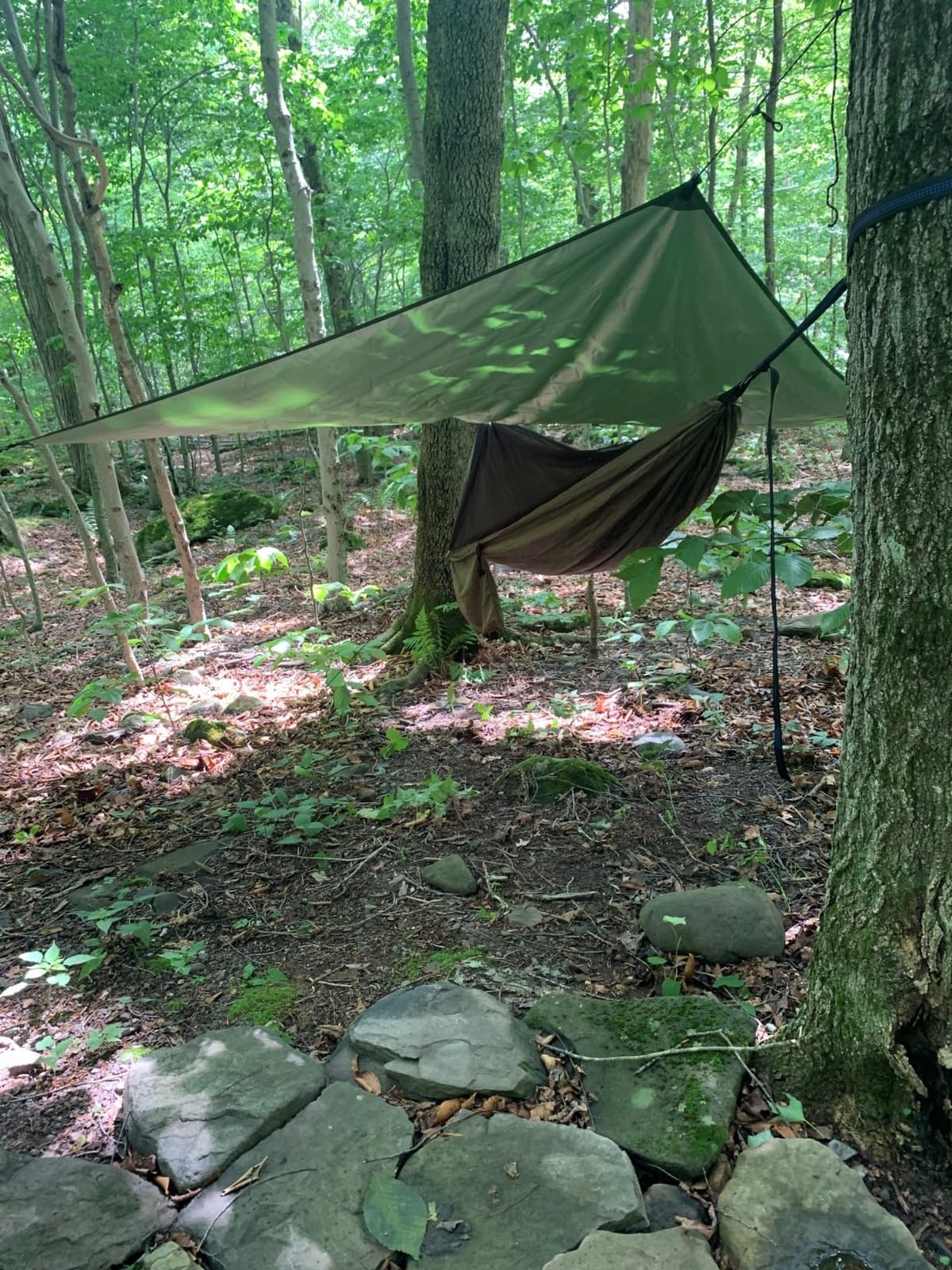
Setup was genuinely quick. A steel carabiner and 102 inch straps mean you wrap, clip and tension without tying a single knot, which matters if you are pitching in fading daylight. The attached stuff sack doubles as a pocket, a small convenience that stops small items migrating to the bottom of your pack.
The fixed net is the decision point. It is sewn in as one piece and cannot be removed or rolled back, so in warm weather you are sleeping inside a fine mesh tube no matter what. Reviewers describe it as breathable but hot, and it stays in the way when you are not in mosquito country.
What to check before you buy
Count your real rain exposure. A 122 x 122 fly gives you a real chance of staying dry in an open, unsheltered spot, which a smaller tarp cannot promise. If your routes are wooded and sheltered, the extra coverage is weight you do not need.
Also decide whether you will ever want the net off. If not, the permanent mesh is a bonus. If you run warm or travel in shoulder seasons, plan around it.
Where it falls short
This is a two-person rated shelter at 440 pounds, but the internal width means it is comfortable for one. Plan on it as a solo hammock and treat the rating as a limit rather than a comfort promise.
At that listed weight it will not suit anyone counting every ounce on a long route. It also lacks a ridgeline, so rain shed from the tarp edges runs down toward the sleeper.
3. Easthills Outdoors Jungle Explorer Double – Best Value for Two People
Easthills Outdoors Jungle Explorer 118″ x 79″ Double Camping Hammock Lightweight Rip-Stop Parachute Nylon 2 Person Hammocks with Removable Bug Net, Tree Straps and Tarp Blue
118 x 79 inch double hammock
36 oz packed per listing
600 lb capacity
210T taffeta parachute nylon
Pros
- No-See-Um mesh with 2500 holes per square inch
- Removable net so you can use the hammock bare
- Daisy-chain straps and wiregate carabiners
- Two gear pockets and four hanging loops
- Elastic net lines stretch instead of tearing
Cons
- Rain fly is fair-weather with light tie-out stitching
- Bundled aluminum stakes are worth replacing
- No ridgeline hardware included
This is the one we recommend to hikers moving up from a cheap hammock and buying their first real one. The mesh is the headline: 2500 holes per square inch of No-See-Um netting is the tightest specification in the group, and owners in bug-heavy forests report it simply works. Several mentioned it is the first net that stopped them from wearing a head net at night.
Unlike most kits here, the net detaches. That single feature decides whether the hammock works across seasons, because you can strip it back to a plain 118 x 79 inch double for warm nights and reattach it when the mosquitoes arrive. Daisy-chain straps and aluminum wiregate carabiners make a knot-free hang straightforward.
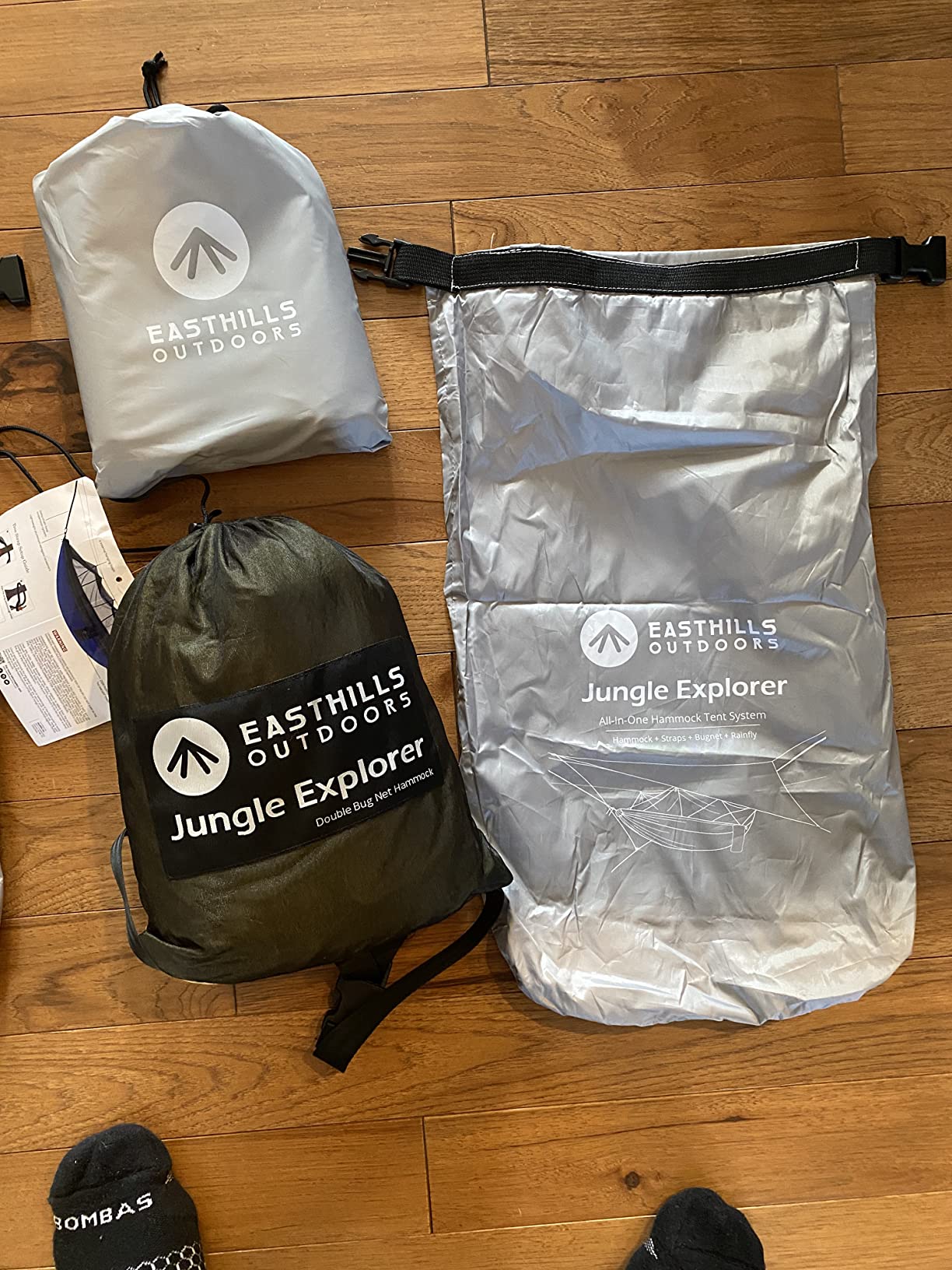
Construction details are better than the price suggests. You get 210T taffeta parachute nylon with triple-stitched edge seams, two interior gear pockets, four hanging loops for a light or a small item, and full-length double-side zippers on the net. The elastic net ridge lines stretch when you sink into the hammock instead of tearing, which is a real fix for a common failure point.
Multiple owners report the rain fly holding up through thunderstorms and heavy downpours. Others call it fair-weather, and the tie-out stitching is lighter than we would like. Think of it as adequate summer rain protection rather than a storm shelter, and pitch a ridgeline above it if the forecast turns serious.
What to check before you buy
Budget for two small upgrades. The included aluminum stakes are entry-level and worth swapping, and you will want your own ridgeline cord. Owners consistently report that adding a ridgeline changes comfort more than any other single accessory.
Check your tree spacing. With daisy-chain loops the straps adjust, but a wide double still wants two trunks roughly 10 to 15 feet apart to hang properly.
Where it falls short
The 79 inch width is the number to test against your sleeper. It is a genuine double for two adults lying side by side, and the review data is strong on roominess, but it is not a wide two-person hammock with space to sit up.
Net tie ropes can run short in some setups and the sewn-in side fabric can drape toward the face of a solo sleeper. A minority of shipments also arrive missing the fly or stakes, so check the box before you leave the house.
4. WintMing 3 in 1 Hammock Tent with Mosquito Net and Rain Fly – Best for Stormy Weather
WintMing Hammock with Mosquito Net and Rain Fly Cover 3 in 1 Camping Hammock Tent 440lbs Load
Twin aluminum poles support the net
3 lb listed weight
440 lb capacity
107 x 55 inch hammock
Pros
- Integrated poles remove the need for a ridgeline
- Triple-stitched nylon survives repeated storm use
- Sealed ripstop fly with 4 to 5 inch side overhang
- Brightly colored straps are easy to spot on trees
Cons
- Net zipper pull can detach once hung tight
- Only two guy lines included so the hammock sways
- Pole design can block an underquilt from fitting underneath
Most hammock nets hang from a cord above you and collapse onto your face in wind. This one uses twin aluminum poles that hold the net open on their own, which means no ridgeline, no stringer lines and nothing to retension at 3am. For campers who have fought sagging nets on windy nights, that is the whole pitch.
The fly is sealed ripstop nylon with 4 to 5 inches of side overhang and 12 inches at the end, which gives the hammock body real shelter from wind-driven rain. Owners report the triple-stitched nylon body surviving 30-plus nights and serious storms, and the high-visibility strap color is a small touch that reduces the chance of leaving hardware on a tree.
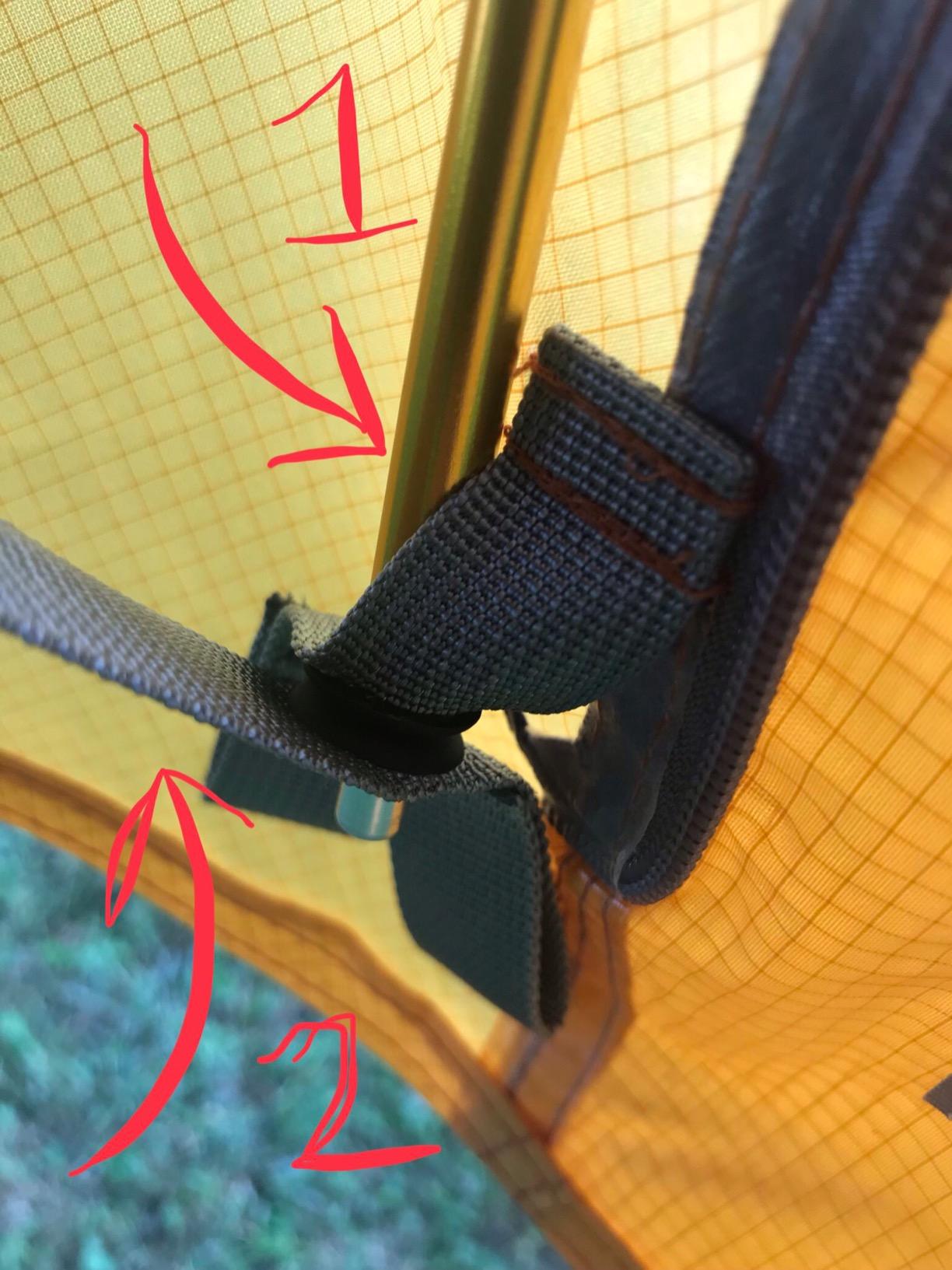
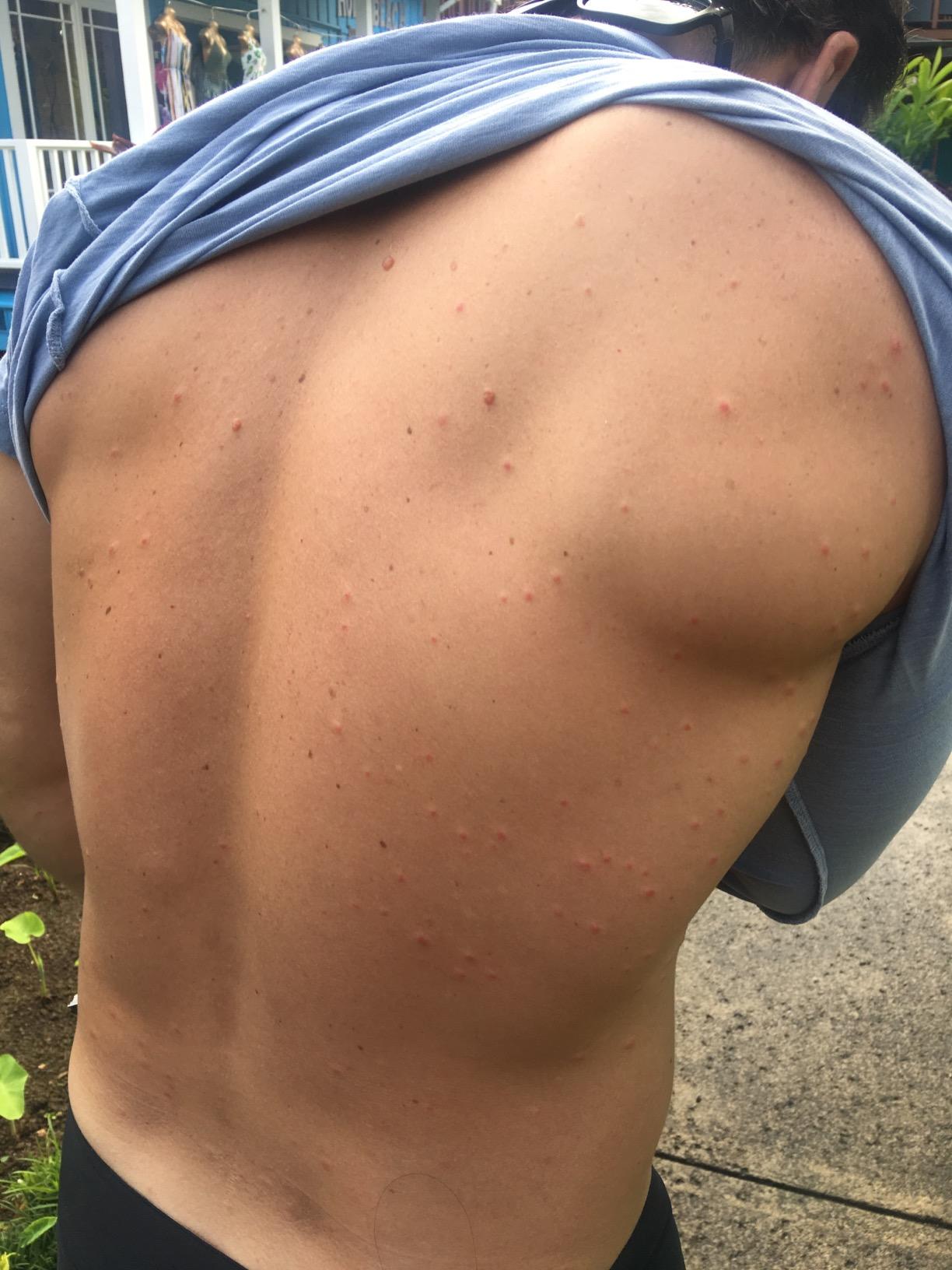
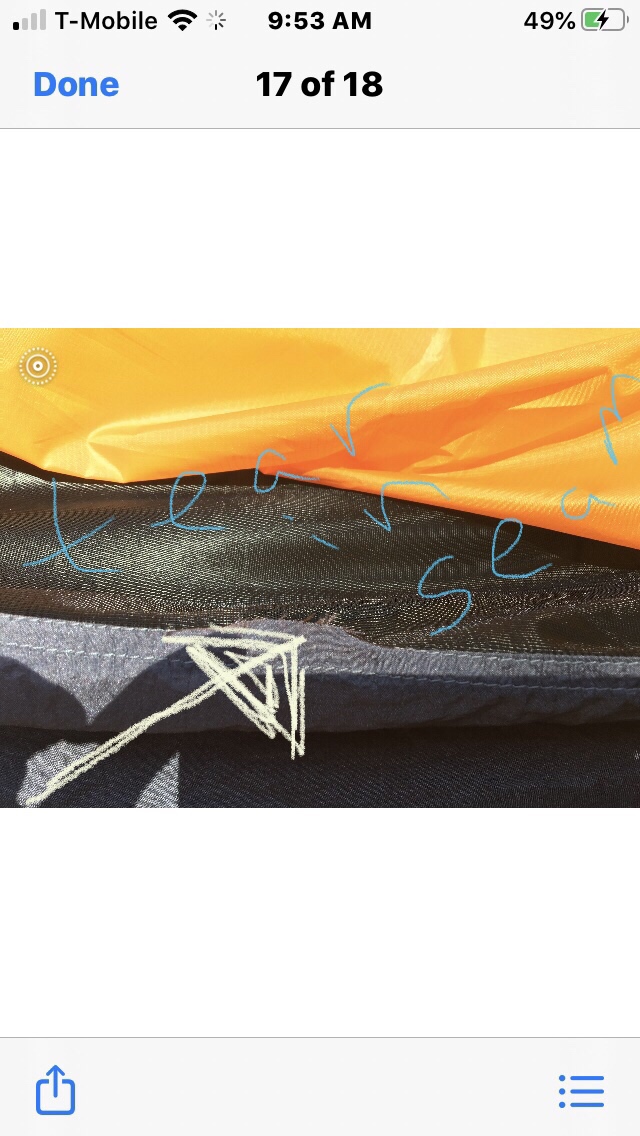
The quality-control record is the reason this pick sits below the top three. The 4.1 average and 11 percent one-star share come from specific complaints: zipper teeth that misalign, a pull that detaches once the hammock is pulled tight, fly eyelets that come undone in wind, and a small number of pieces arriving with the rain fly opening on the wrong end. That is a real spread, not a rounding error.
At a listed 3 pounds it is also heavy for a deep backcountry route, and only two guy lines are included, so it moves more than you would like in wind. The pole-supported frame is the reason it works as a small stand-alone shelter, but it is also what limits what you can hang underneath it.
What to check before you buy
Inspect the net zipper and fly eyelets the day it arrives. Most of the negative reviews trace back to those two parts, and finding a problem at home costs an hour rather than a night in the woods.
Plan your insulation around the poles. Because the frame sits close to the hammock, an underquilt can be difficult to fit underneath. A sleeping pad or foam mat is the more workable choice with this particular design.
Where it falls short
At a listed 3 pounds it is heavy for a deep backcountry route, and pack volume matters as much as weight on a long trail.
It also has the widest quality spread in this group. Buy it from a seller with easy returns, and test it at home before taking it out.
5. Qevooon Hammock with Mosquito Net – Best Budget Starting Point
Camping Hammock, Portable Hammocks with Mosquito Net,Lightweight Nylon Parachute Hammock with 10ft Tree Straps,Camping Gear Must Haves for Travel Hiking Backpacking Beach Patio-Green&Khaki
114 x 57 inch nylon parachute hammock
2.1 lb listed weight
500 lb capacity
Folds to 9.4 x 5.5 x 4.7 inches
Pros
- Fine mesh keeps insects out while staying breathable
- Sturdy straps and steel D-rings hang quickly
- Compact carry bag suits backpacking
- Several size and color variants available
Cons
- No rain fly or tarp in the base set
- Fabric is thin and light rather than plush
- Net sits close unless the two elastic ropes are positioned carefully
If you have never slept in a hammock and want to find out whether you like the shape of it, this is a sensible way to test the idea on a budget. The hammock comes with an integrated fine mesh net, a suspension rope, two elastic ropes, two solid steel D-rings and two tree straps in a compact 9.4 x 5.5 x 4.7 inch package.
That is not a shelter, though, and the absence of a tarp is the single fact that defines it. Nothing keeps rain off you, so treat this as a three-season hammock for dry forests and warm nights, or as the sleeping half of a system where you buy the tarp separately. Several owners in forum threads recommend exactly that path for first-timers: start with the hammock, add accessories later as you learn what you actually use.
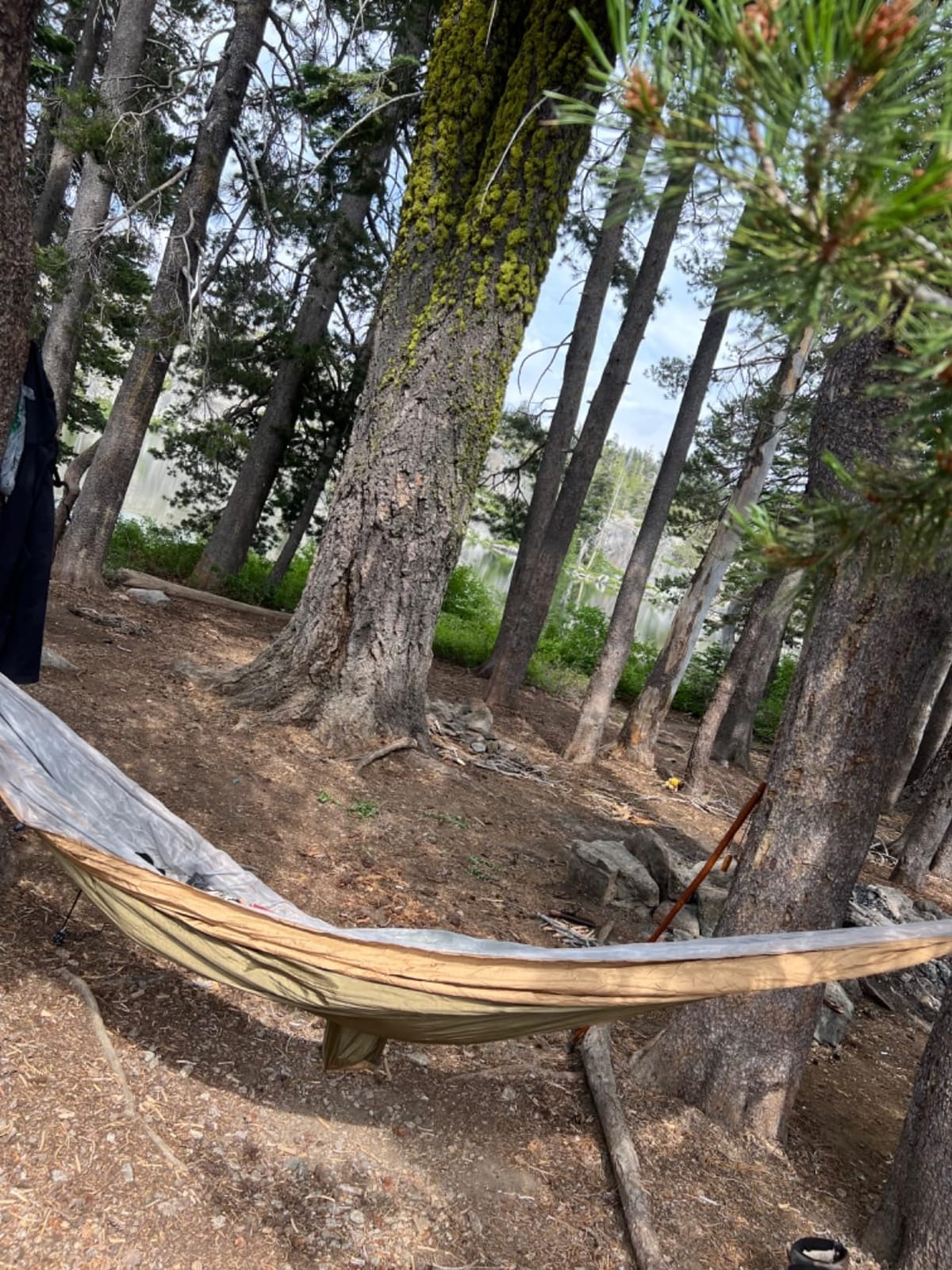
Setup is straightforward with straps and steel D-rings, and the two elastic ropes prop the net away from your face if you position them deliberately. Get that wrong and the net sits close enough to be annoying all night. The mesh itself is fine enough to keep insects out while remaining breathable, which is rarer than it sounds in cheap hammocks.
Construction is 500-pound-rated nylon parachute fabric at a listed 2.1 pounds. The word that matters is parachute: it is thin and light rather than plush, and it is not the fabric you want if you plan to hang an underquilt against it for a long season of cold nights.
What to check before you buy
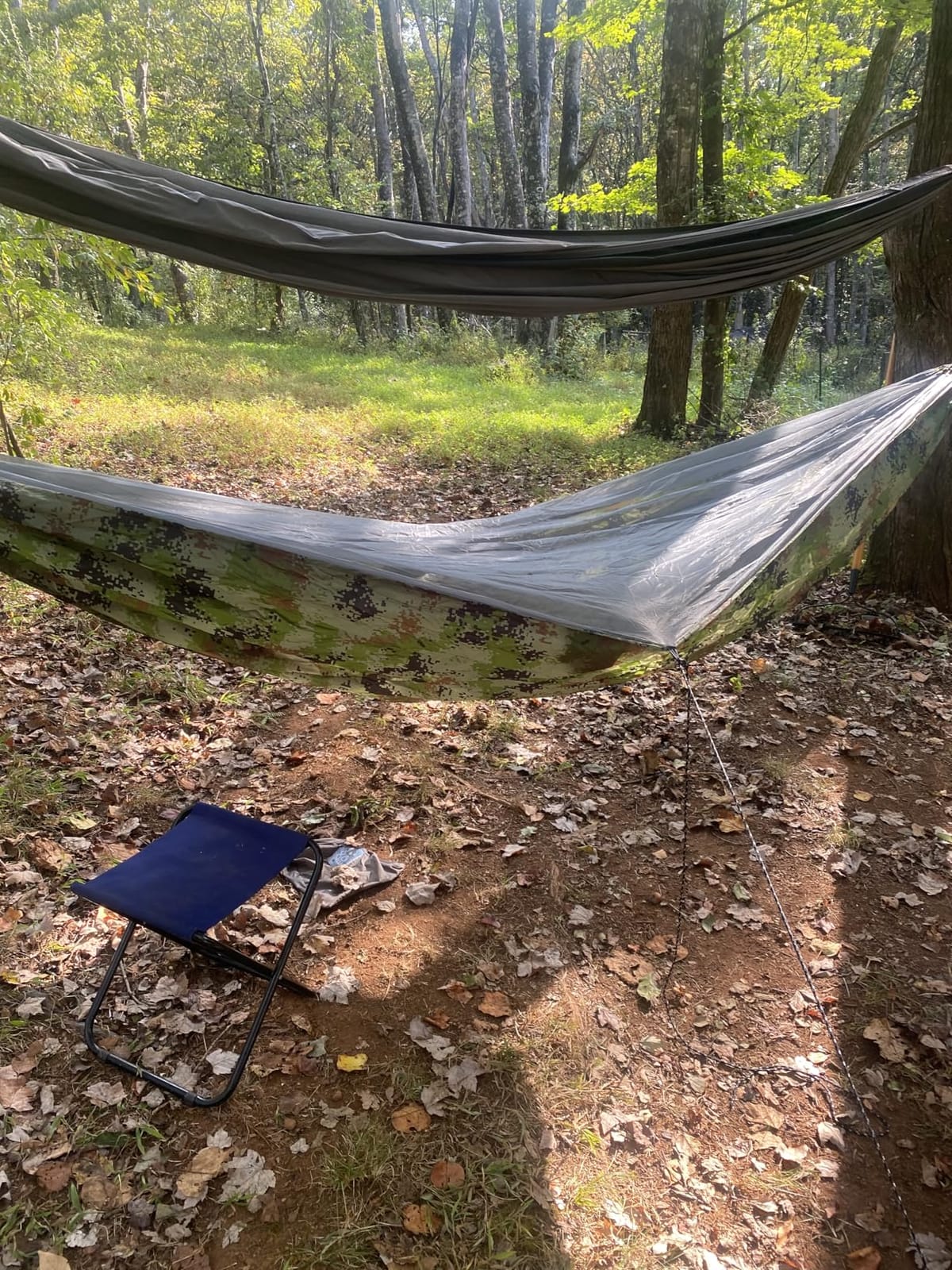
Add a tarp to the mental total. A 10 by 10 foot tarp is the standard size for one hammock and is the piece that turns this from a hanging bed into a shelter. Without it you are one step from a comfortable night and about three steps from a dry one.
Check the size variants. Small, large and extra-large versions exist, and picking the right footprint up front matters more than any accessory you could add later.
Where it falls short
No rain protection is the honest limitation. If rain is part of your forecast, look at the Sunyear or Easthills kits instead, both of which include a fly.
At a listed 2.1 pounds it is also not the weather-ready option you might assume from the low entry point. If your priority is weight, the Onewind at 2.1 pounds with a net and ridgeline is a fundamentally more capable piece of equipment.
6. AEETT Camping Hammock with Mosquito Net and Rain Fly – Best for Small Pack Size
Camping Hammock with Mosquito Net and Rain Fly – Travel Hammock Bug Net – Hammock Tent for Outdoor Hiking Backpacking Travel Camping Accessories and Camping Gear…
114 x 55 inch reversible hammock
1.5 lb listed weight
660 lb stated capacity
98 inch straps with steel carabiner
Pros
- 210T 75D nylon taffeta with triple stitching
- Packs into a very small pouch
- Quick-open carabiner setup with no knots
- Bundled sleep mask and inflatable pillow
- Reversible design works with or without the net
Cons
- Rain fly is undersized for serious rain
- Included carabiners are often swapped for climbing-rated ones
- Straps are shorter and less adjustable than competitors
- Net hangs in your face without a ridgeline
The fabric is the story here. 210T 75D nylon taffeta with reinforced triple stitching is a step up from plain parachute nylon, and at a listed 1.5 pounds this is one of the lighter complete kits we tested. It also compresses into an unusually small pouch, which matters more for pack volume than most spec charts suggest.
The reversible design is clever in a way that pays off on a two-season trip. Flip the hammock and you use it without the net, so you are not carrying mesh you do not need on cool dry nights. The kit also bundles a sleep mask, an inflatable pillow and a survival bracelet, small items that reduce how much else you need to pull out of your pack.
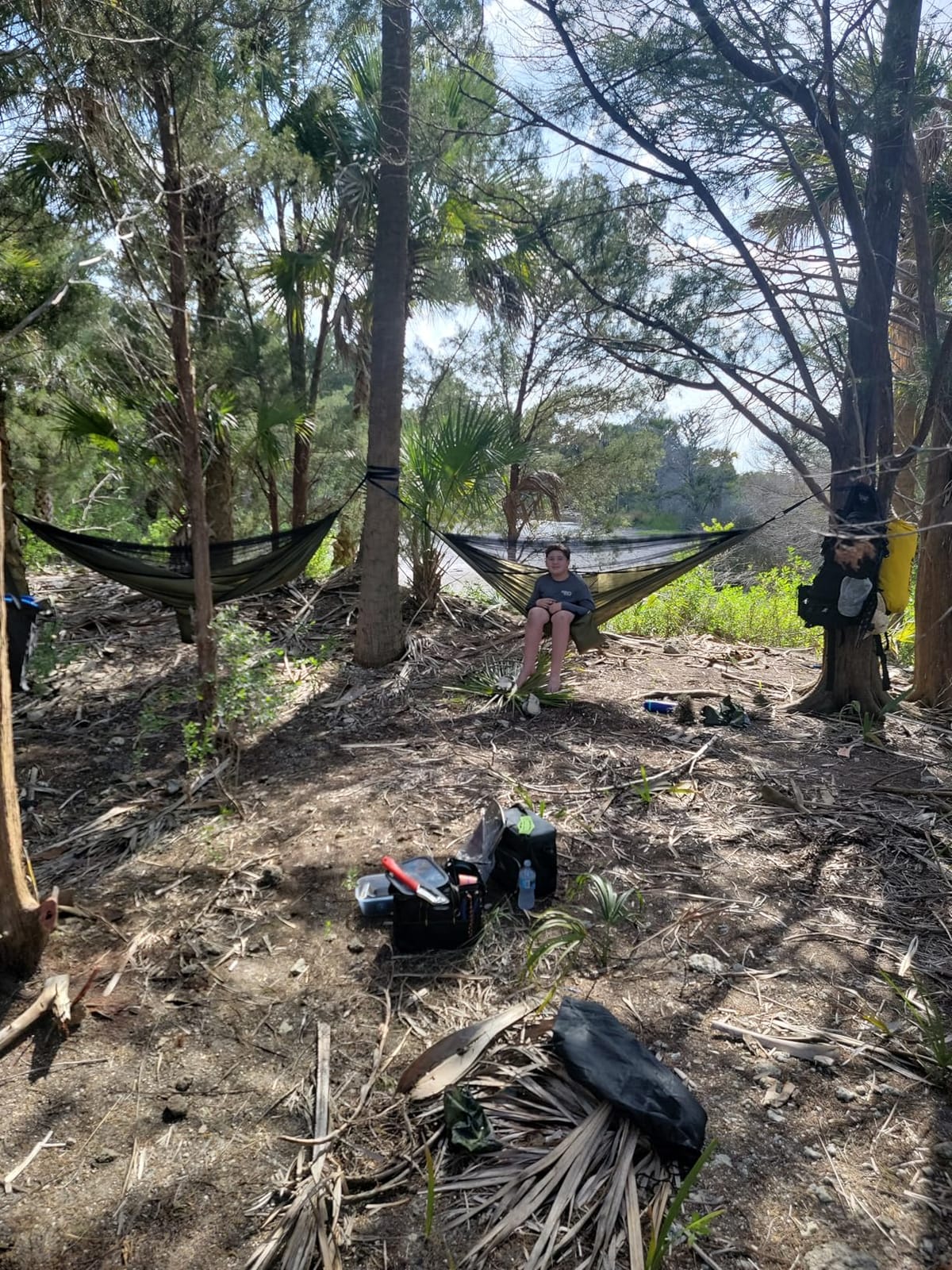
Two details deserve your attention before this leaves the house. The included carabiners are the most common upgrade owners make, and reviewers consistently report swapping them for climbing-rated hardware, which is the sensible move given the stated 660 pound limit. The 98 inch straps are also shorter and less adjustable than most kits in this group.
The rain fly works for drizzle and summer showers but owners describe it as small for real rain, with several suggesting a larger tarp. Without a ridgeline the net will hang toward your face, which is the same limitation that shows up on every net-equipped hammock without an overhead line.
What to check before you buy
Replace the carabiners and upgrade the straps before the first trip. Those two fixes remove most of the complaints we saw and take about ten minutes.
Decide on a tarp. At 1.5 pounds this is a strong base for a lightweight system, but only if you add real rain protection rather than relying on the bundled fly.
Where it falls short
The 660 pound rating is a laboratory number rather than a comfort number. At 55 inches of width, this is a one-person hammock and larger users will find the stated capacity irrelevant.
Because the kit gives you hammock, net, fly and carabiners in one small package, the component that feels least considered is the tarp. Plan for an upgrade there.
7. HGYI Hammock with 360 Degree Mosquito Net – Best Mesh in the Group
Camping Hammock Mosquito Net,Double & Single Portable Hammocks Hammocks with 2 Tree Straps,Hammock Tent for Travel Camping,Camping Accessories for Indoor Outdoor Hiking Backpacking Backyard Beach
About 380 holes per square inch mesh
114 x 57 inch hammock
2.2 lb listed weight
600 lb capacity
Pros
- Highest average rating of any hammock in this roundup
- 360 degree wrap-around net coverage
- Tool-free setup with straps and hooks
- Single double and extra-large variants
Cons
- No rain fly or tarp in the base package
- Fabric is described as high-density nylon or polyester
- Not built as a full tent shelter
This hammock carries the highest average rating in our entire test group at 4.7 out of 5 across more than 500 reviews, and 80 percent of those reviews are five stars. The reason is the net: roughly 380 holes per square inch in a 360 degree wrap-around design that leaves no exposed side to find an opening.
Setup needs no tools. Straps and hooks let you hang it between trees or between stands, which means it also works on a deck or in a yard when no trees are close enough. Variants cover single, double and family sizes, so two people are not limited to the 114 x 57 inch version.
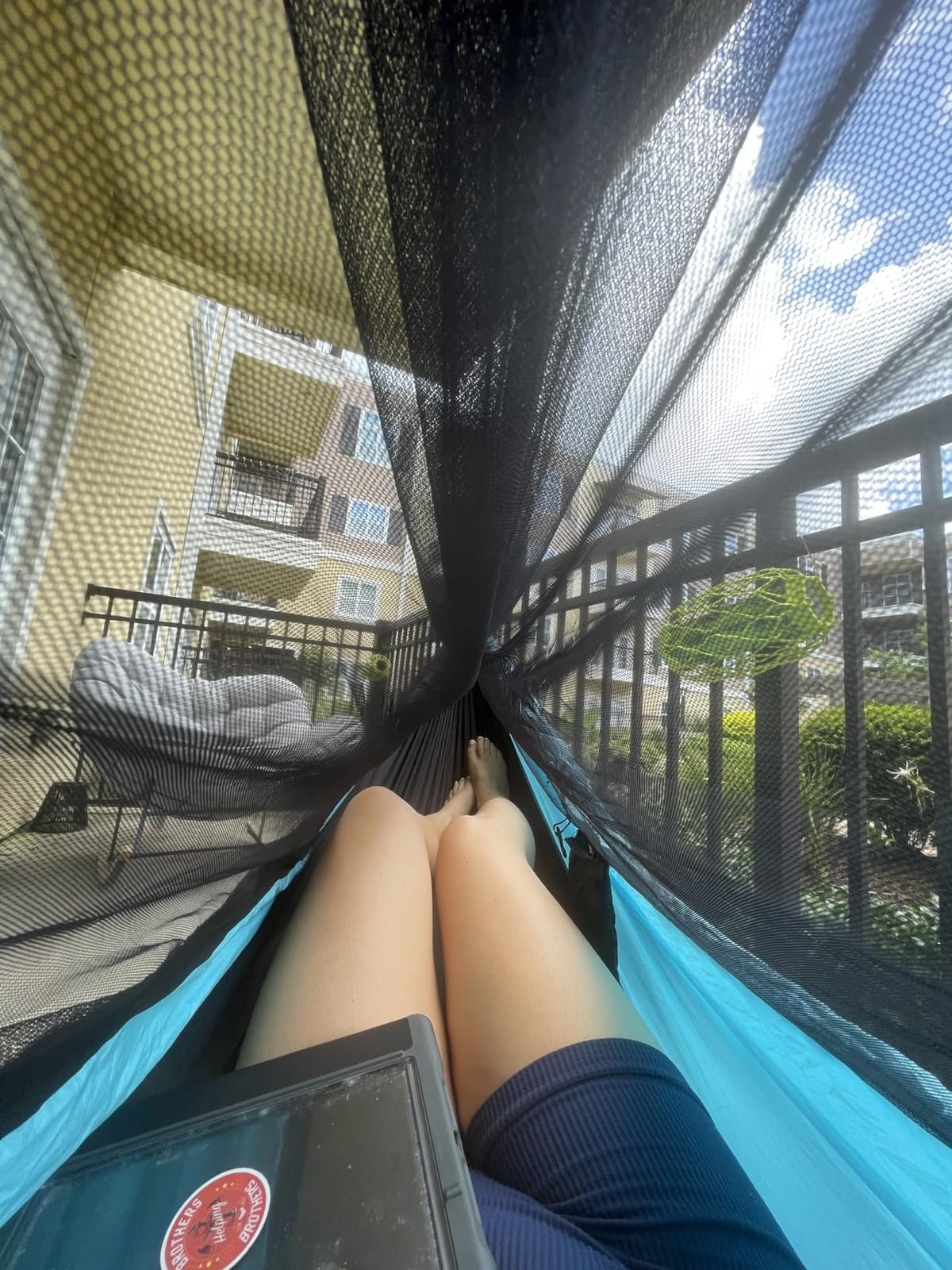
At a listed 2.2 pounds it is not a thru-hike ultralight option, and the reason is that the base package is a hammock with a net and nothing else. There is no tarp and no rain fly in the box. Reviewers are clear about this, describing it as a bug-proof lounging and camping hammock rather than a weather shelter.
The fabric is described as high-density nylon or polyester rather than a heavier weave, so expect less abrasion resistance over a decade of hard use than you would get from a 210T parachute nylon body. For backyard hangs, family camping and bug-heavy forest trips it works very well.
What to check before you buy
Confirm your priority. If insects are the deciding problem and rain is rare, the mesh density here is the best in the group. If weather is the deciding problem, look at the Sunyear or Easthills kits, which pair the net with a real fly.
Pick the size that matches your party. The double and extra-large variants change what this hammock can do on a family trip.
Where it falls short
No weather protection at all, and the listing does not claim otherwise. That makes it a component rather than a complete shelter.
At a listed 2.2 pounds with a nylon or polyester body, it is heavier than it looks and less durable than a parachute nylon build. Plan on replacing it sooner if you hang it hard every weekend.
8. Lawson Hammock Blue Ridge Hammock Tent – Best for Camping and Backpacking Versatility
Lawson Hammock Blue Ridge Camping Hammock and Tent (Rainfly and Bug Net Included)
90 x 42 inch hammock
4.25 lb with poles
Packs to 22 x 6 inches
275 lb capacity
Pros
- Patented arch pole and spreader bar flatten the bed
- Works as both hammock and tent
- Detachable waterproof fly and bug netting included
- Has won Gear of the Year recognition from outdoor publications
Cons
- Tree straps are sold separately and not included
- Rated to only 275 lb so it is a solo shelter
- Heaviest tarp-style design in this group
- 90 inch length is short for taller sleepers
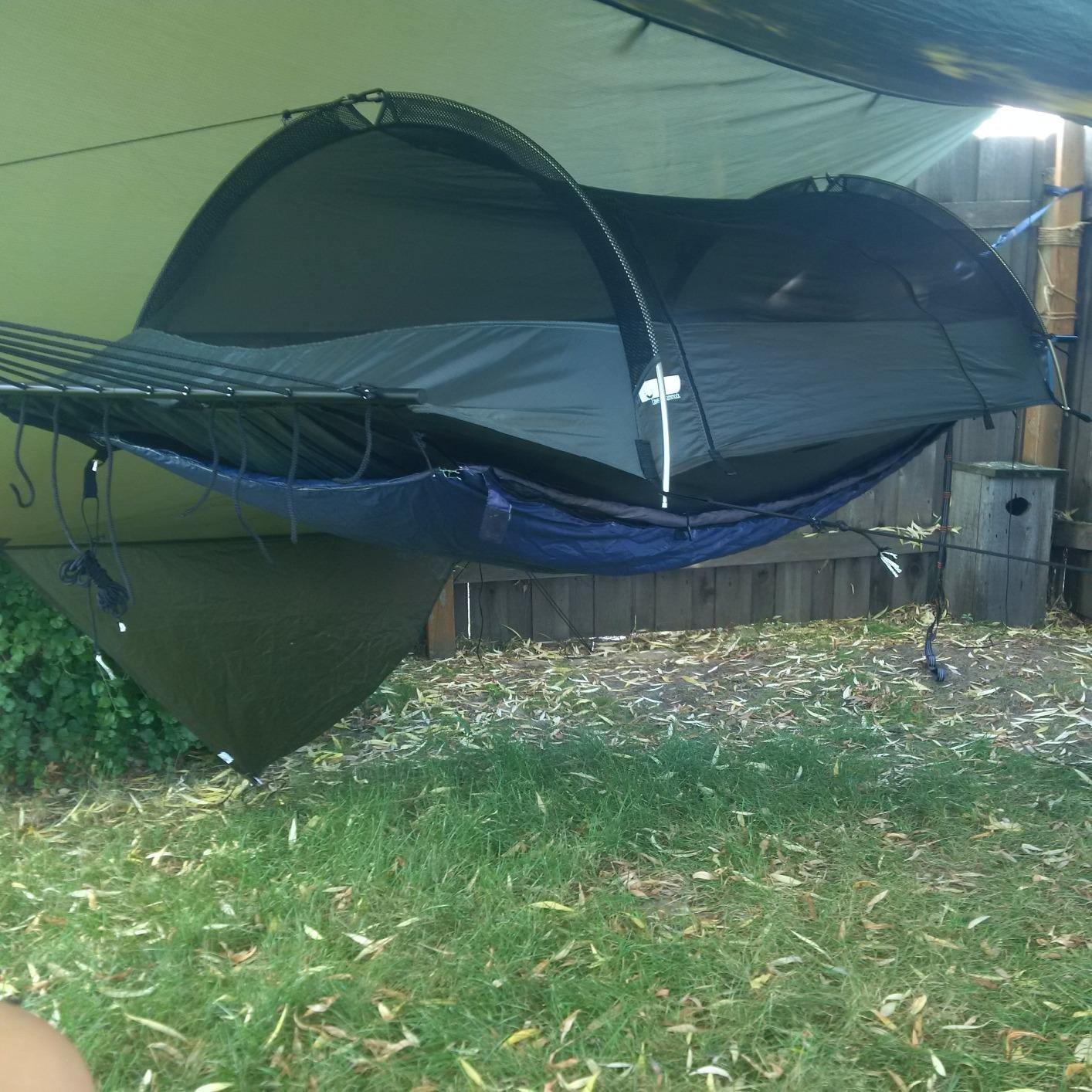
This is the oldest design in the roundup and the only one that solves the hammock’s worst problem: shape. A patented arch pole and spreader bar pull the fabric outward so you lie on a much flatter surface, cutting the banana curl that makes some hikers abandon hammocks after one night. It is a hammock and a tent in one body.
The fly and bug netting detach, so the same unit works as an open hanging hammock on a warm evening or as an enclosed shelter when the weather turns. Buyers note it sets up quickly and packs small for the amount of shelter it provides, landing at 22 by 6 inches with the poles.
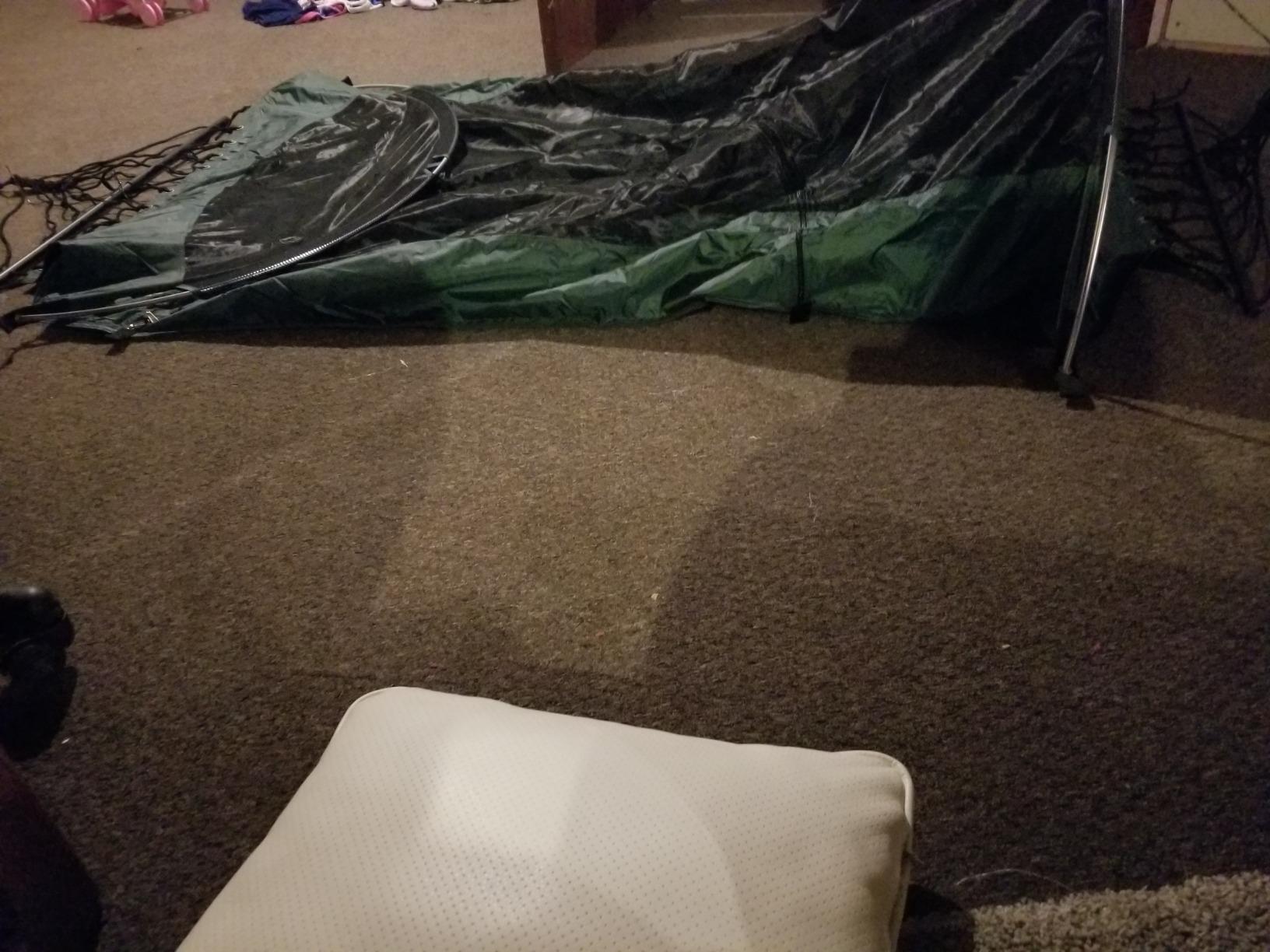
Two things count against it on foot. At 4.25 pounds with poles, this is roughly twice the weight of the tarp-style kits here, and the straps are not included, so you are buying those on top. That combination suits car camping, scout trips, bike trips and short base-camp routes far better than a long-distance walk.
The 90 inch length is also the shortest in the group, and taller sleepers notice. Reviewers praise the flatness and the enclosed, weatherproof feel while accepting that the trade is weight and length.
What to check before you buy
Add tree-safe straps to your plan from the start, since they are not in the box. Wide straps with a tree-saver loop are the minimum, and several campsites require them.
Measure your height against the 90 inch body. Under about five foot nine it works comfortably, and above that you will feel the ends of the hammock.
Where it falls short
Weight is the decisive number here. On any route where every half pound matters, a tarp-style hammock will serve you better than a pole-supported floor.
The 275 pound limit rules out sharing it, and the length rules out tall sleepers. It is a solo, shorter-rider shelter with a high weight price for its comfort win.
9. Ryno Tuff XL Two Person Hammock – Best True Double for Couples
Ryno Tuff XL 2 Person Camping Hammock with Mosquito Net & Rain Fly – Compact Double Hammock with Bug Net, Tarp, Pocket, Tree Straps & Heavy Duty Carabiners – Parachute Grade Nylon Holds Over 600lbs
118 x 78 inch double
4.8 lb listed weight
600 lb capacity
210T parachute nylon at 75D denier
Pros
- Genuinely double-width at 118 x 78 inches
- 75D denier is roughly 30 percent stronger than typical competitors
- Net and rain fly both included and reversible
- 10 foot strap with 16 loops plus heavy-duty carabiners
- Sewn-in pocket and extra pouch
Cons
- Listed at nearly 4.8 pounds before the fly
- Minimal strap and carabiner count for a two-person load
- Rain fly is thinner than the strong net build implies
Most so-called doubles are a single-width hammock stretched across two people. This one is not. At 118 by 78 inches it gives two adults genuine room, and the 75D denier parachute nylon is specified as roughly 30 percent stronger than the fabric most competitors use, which matters for a hammock that carries two bodies and moves all night.
The net and rain fly are both included and reversible, so the same kit works with or without mesh. Suspension runs through a 10 foot strap with 16 loops plus heavy-duty carabiners, and the 16 loops give you fine control over length and sag rather than the coarse adjustment most hammocks allow.
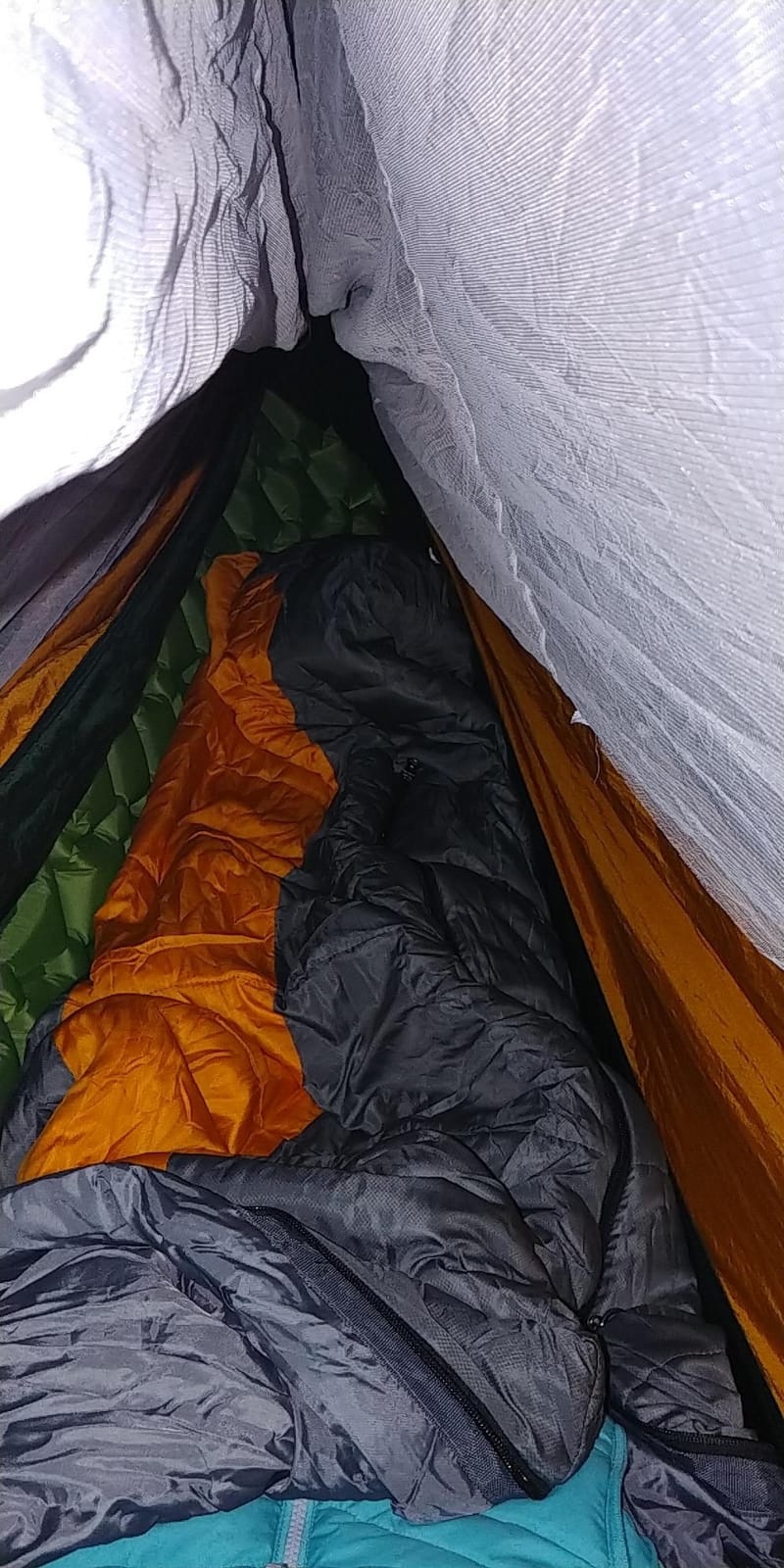
Weight is the trade and it is significant. At a listed 4.8 pounds before the fly, it is a notably heavy hammock body in this group, and a two-person load is exactly the case where weight compounds. For couples splitting weight across two packs, that can work. For one person carrying everything, it will not.
The accessory count is light for the job, with a minimal number of straps and carabiners for a shelter rated to two adults, and the rain fly is thinner than the strong net build implies. Owners remain positive on durability and roominess, with weight as the recurring complaint.

What to check before you buy
Do the pack math for two. The number works if each person carries half, which is common on maintained trails with resupply. It does not work if one person is hauling the whole system.
Confirm both sleepers fit 78 inches of width. Side-by-side sleeping works; sitting up or stretching out does not.
Where it falls short
The 4.8 pound listed weight disqualifies it from long ultralight routes. If pack weight drives your decisions, the Easthills double delivers similar room at roughly half that figure.
Buy extra carabiners and straps with it. The included set is scaled for one hammock, not for a two-adult load.
10. Night Cat 4 in 1 Hammock Tent – Best for Taller Sleepers
Night Cat Camping Hammock Tent: Lightweight Portable 4 in 1 Hammock with Rain Tarp and Mosquito Net for Adults Hiking Jungle Outdoor Green
132 x 55 inch sleeping body
3.5 lb listed weight
440 lb capacity
Hammock, fly and net in one package
Pros
- Long 132 inch body suits taller sleepers
- All-in-one net and rain fly in a single package
- Waterproof fly designed to keep airflow up
- Aimed at jungle military and heavy-bug settings
- Packs compactly for travel
Cons
- 55 inch width gives a curved rather than flat sleep
- 440 lb limit keeps it to one adult
- Manufacturer listing detail is thin
- Costs more than comparable net and tarp kits
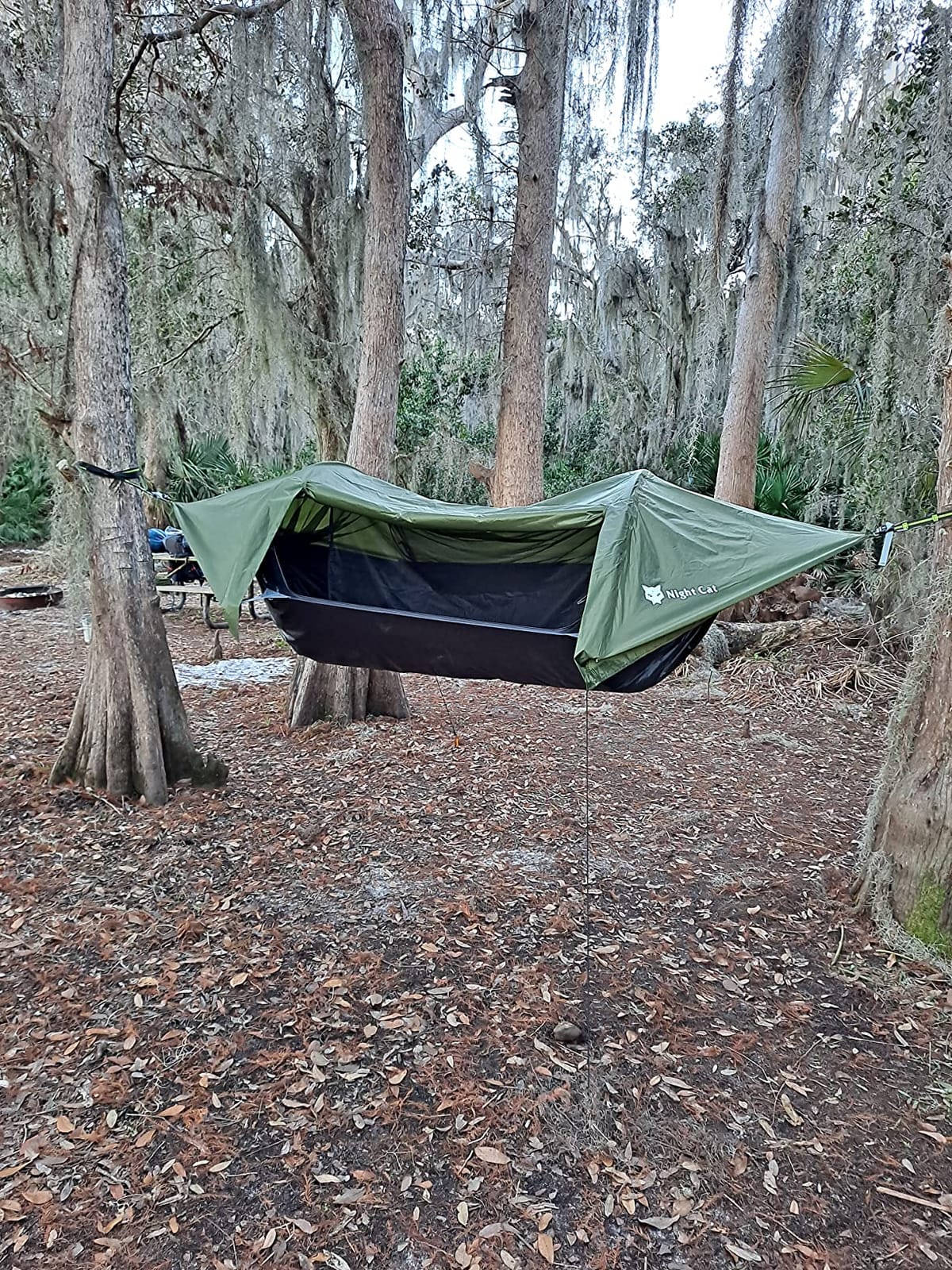
Length is the reason to look at this one. At 132 inches, it is one of the longest hammock bodies available for a single sleeper, and if you have consistently run out of foot space on 114 inch models it solves a problem that a wider hammock would not.
The 4 in 1 packaging puts the hammock, rain tarp and mosquito net together, aimed at jungle and military use where insects and rain arrive together. The waterproof fly is designed to keep airflow moving underneath, which matters in humid conditions where a sealed shelter would be miserable.
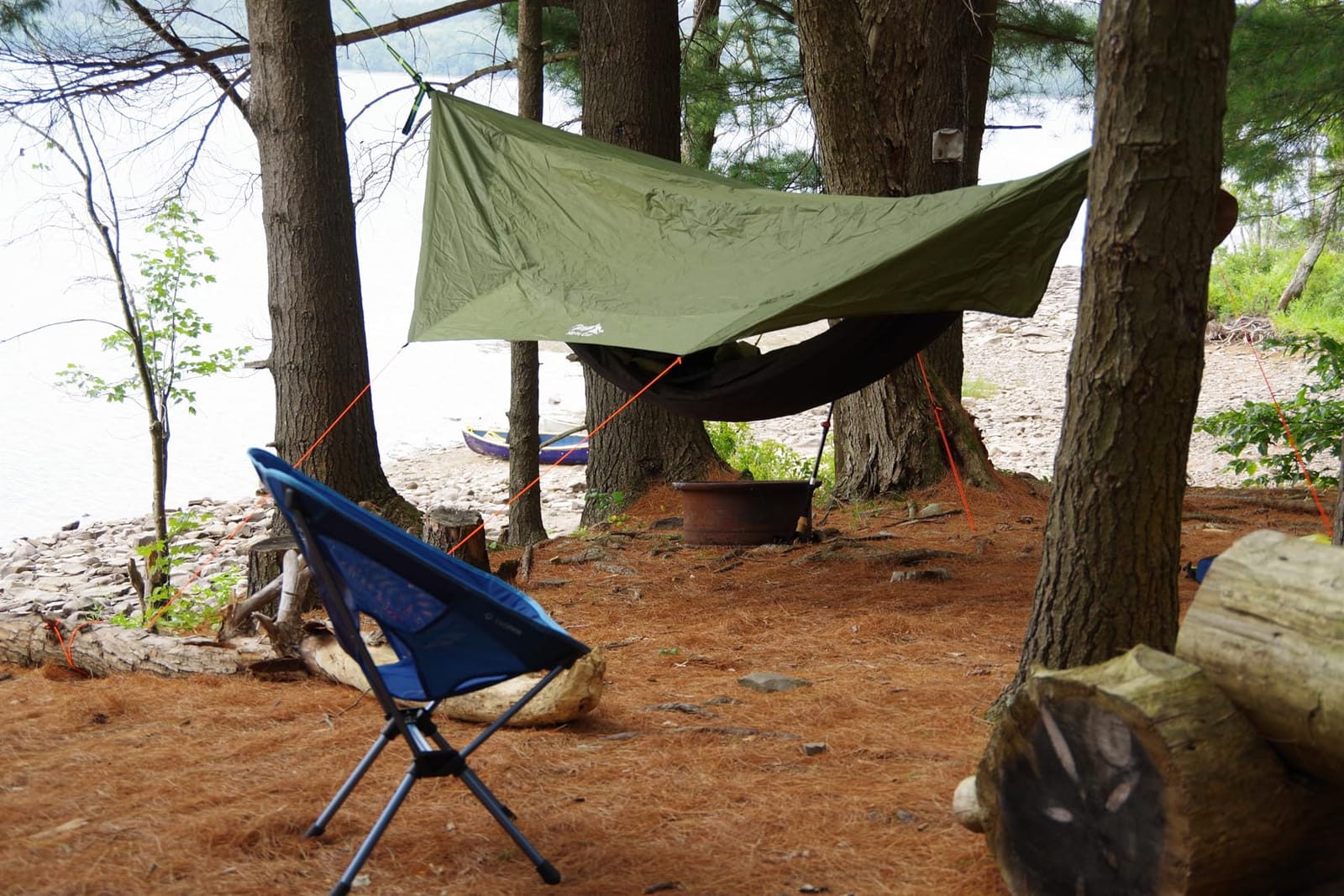
Everything else is the compromise that comes with long and narrow. At 55 inches of width, you sleep in a pronounced curve, and the listing itself gives a weight of about 4.2 pounds in the feature summary against a 3.5 pound listed item weight, so treat the packed figure with caution.
The 440 pound capacity and single-person width rule out sharing. Feedback is solid at 4.3 stars without being emphatic, and reviewers point to narrow width and single-person rating as the main limits, with the price sitting above comparable net-and-tarp kits from other brands.
What to check before you buy
Measure your height first. This hammock is built for someone who needs length, and if 114 inches already works for you, the extra 18 inches adds weight without adding comfort.
Plan for a separate insulation layer. Nothing in the package addresses the cold coming up from below, and a 440 pound one-person hammock in cool weather needs it more than most.
Where it falls short
Width is the real limit. Sleeping diagonally helps, but 55 inches is the narrowest category here and side sleepers feel it first.
The thin manufacturer detail also means you are buying on reported specs rather than a clear construction story, which makes it harder to judge long-term durability.
11. Onewind 11ft Ultralight Hammock with Net and Ridgeline – Best Ultralight Pick
Onewind 11ft Ultralight Camping Hammock with Mosquito Net and Ridgeline
132 x 64 inch hammock
2.1 lb packed
Packs to 4.7 x 11 inches
500 lb capacity with UHMWPE ridgeline
Pros
- 40D hexagon ripstop nylon is lighter and tougher than 210T parachute nylon
- Stitch-free single 64 inch panel removes seam ridges
- 11 foot length lies flatter for diagonal sleepers
- Adjustable ridgeline rated to 1500 lbs
- Smallest packed size in the group
Cons
- No rain fly included in this configuration
- 64 inch width is still narrow for diagonal sleeping
- Net adds bulk to an otherwise ultralight pack
- Straps and shock cord need careful routing
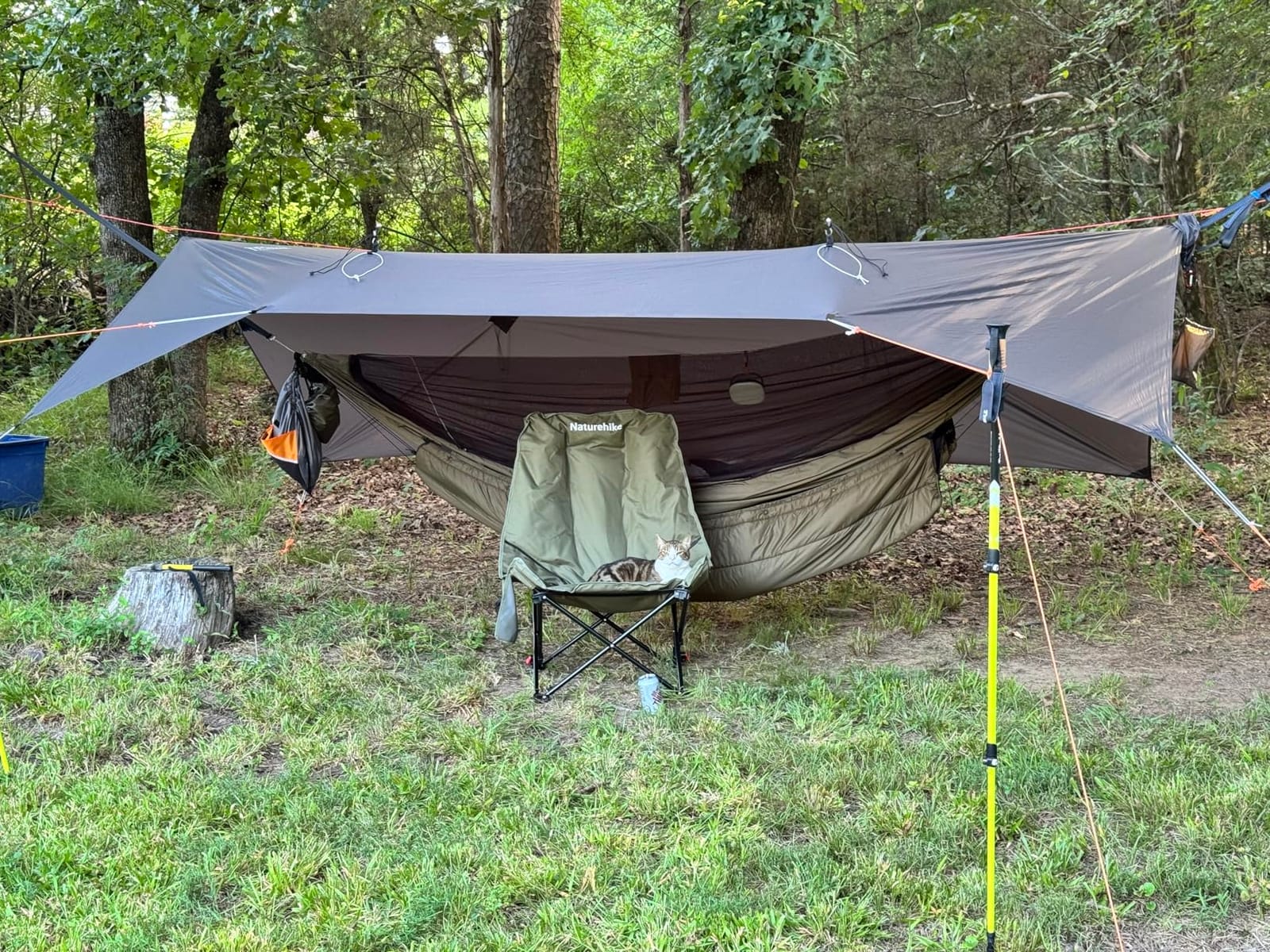
This is the only hammock here designed by someone who clearly sleeps in them every night. The 40D hexagon ripstop nylon is a different class of fabric from the 210T parachute nylon used by the budget kits, and the single stitch-free 64 inch panel removes the seam ridges that cause tossing and turning through the night.
At a listed 2.1 pounds packed to 4.7 by 11 inches, it is the lightest complete net hammock we tested and by far the smallest object in your pack. The included adjustable UHMWPE ridgeline is rated to 1500 pounds and lets you tune length and sag by sliding the line, which is the feature that keeps the net off your face and removes the separate ridgeline line most setups need.
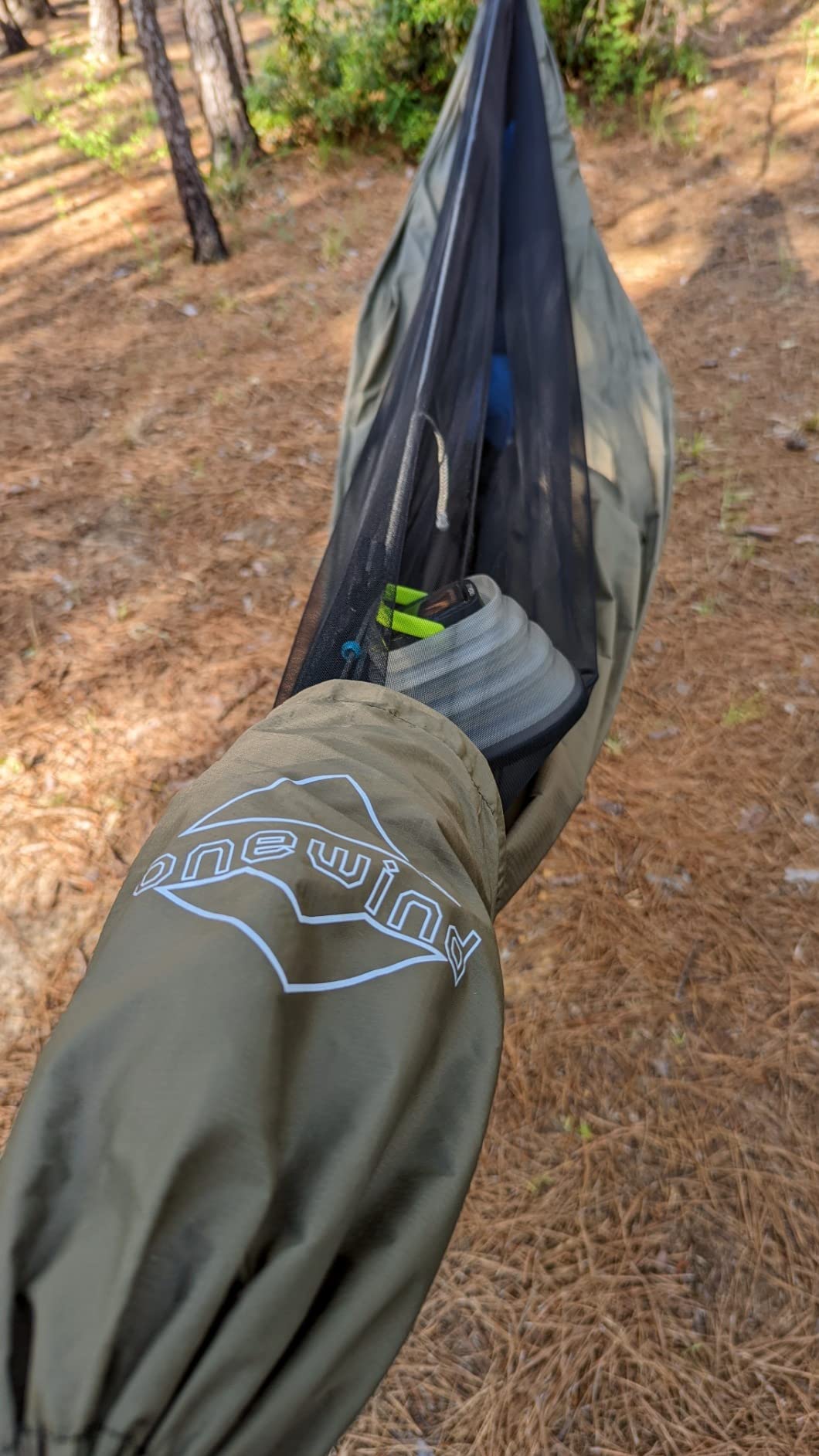
Feedback reflects real enthusiasm, with 81 percent of reviews at five stars across more than 300 ratings. Owners who have used it long term call out the ridgeline, the flat panel and the pack size as the reasons it works on long trails where other kits become dead weight.
There is no rain fly in this configuration, so you are buying a tarp separately. For most hikers that is the correct choice anyway, because a dedicated tarp serves double duty as ground cover, but budget for it before you commit to this as a shelter.
What to check before you buy
Budget for a tarp and insulation separately. Those two additions take the system from a hammock to a shelter, and neither is optional if you plan to be out in rain or cold.
Learn diagonal sleeping before your first trip. With 64 inches of width, lying across the diagonal is what flattens the bed, and it takes a night to adjust to.
Where it falls short
The 64 inch panel is still narrow for solo diagonal sleeping, and taller sleepers should note that comfort here comes from length and panel width together rather than width alone.
The net adds bulk, and the included tree straps and shock cord need careful routing to avoid abrasion on the fabric. None of this is a dealbreaker, but it is a system that asks a little more attention than an all-in-one kit.
12. Haven Tents Lay Flat Hammock Tent – Best for Comfort and Side Sleepers
Haven Tent Original Lay-Flat Hammock Tent (Forest Green) – Comfortable Waterproof Camping Hammock with Mosquito Net – Includes Insulated Sleeping Pad & Rainfly
78 x 24 inch lay-flat platform
6.8 lb system weight, trail weight 6 lb 1.3 oz
4000mm rainfly
285 lb capacity
Pros
- Patented lay-flat platform removes pressure points
- Complete system including a custom insulated air mattress
- 4000mm waterproofing handled a violent overnight thunderstorm dry
- Six storage pockets and an end-to-end ribbon for lights
- Can be pitched on the ground or converted to a suspended lounge chair
Cons
- Heaviest system here at 6.8 pounds
- Included carabiners are cheap with sharp edges
- Mesh blocks airflow and can feel hot with the fly on
- Thin written instructions and a single-ended net zipper
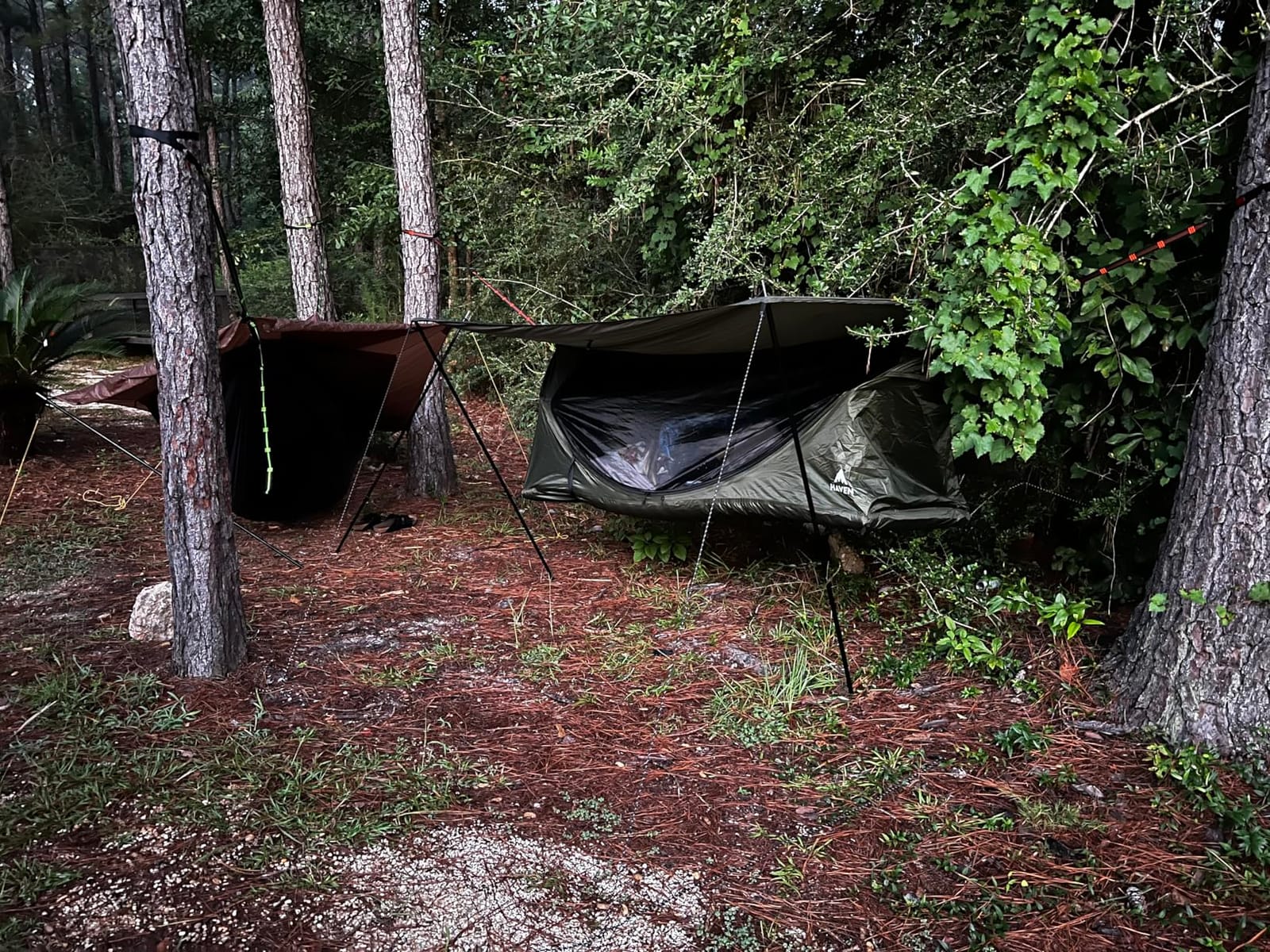
This is the comfort answer. A patented spreader bar and structural ridgeline create a 78 by 24 inch sleeping platform that lets side, back and stomach sleepers lie flat with no pressure points. Several buyers with back, neck and knee problems report sleeping through the night pain-free for the first time in years, and 75 percent of reviews are five stars.
It is also the most complete system we looked at. The box holds the hammock tent, a custom insulated air mattress with an R-value of about 3 for three-season warmth, a removable 20D ripstop rainfly, a fine mesh net, suspension, four guylines and four stakes. The 4000mm coated fabric on both the fly and the hammock body stayed dry through a violent overnight thunderstorm.
The insulation question is already answered. Because the air mattress is included and built for the hammock shape, this is one of the few kits in the roundup that works out of the box in cool weather without a separate underquilt, which removes the single biggest reason people abandon hammocks late in a season.
Weight is the trade, and it is a big one. At 6.8 pounds as a complete system, this is not a long-distance choice; it suits shorter routes, heavy gear loads and campers who value a good night over a light pack. It also converts to a ground pitch with trekking poles for above-treeline camps, or to a suspended lounge chair at camp.
What to check before you buy
Check your route length against the 6.8 pound figure before anything else. This system earns its weight through comfort, not through lightness, and a weekend trip is where it makes sense.
Replace the included carabiners. Buyers describe them as cheap with sharp edges, which is uncomfortable against bare hands in the dark and worth ten minutes of work.
Where it falls short
Heat builds up under the mesh in warm weather, particularly with the fly on, so it is a three-season shelter rather than a summer hammock. Users in hot, humid conditions report it running warm.
The written instructions are thin, so setup relies on online video, and the net zipper pulls from one end only. A small number of buyers also report bottom seam separation and an air pad that slowly leaked over time, so test both before a long trip.
How to Choose a Hammock Tent for Backpacking
Most wrong decisions come from comparing hammock weight instead of complete system weight. Once you add straps, a tarp, an underquilt or pad and a ridgeline, several of the lightest kits on paper become ordinary, while a heavier all-in-one package can come out ahead because the pieces are already in the box.
Hammock Tent vs Backpacking Tent: Which Should You Carry?
A hammock wins on site flexibility and generally on weight. You can hang it over uneven, wet or rocky ground where a tent would be unusable, and it never floods. A tent wins on warmth, wind resistance and predictability, because it puts fabric on the ground and stops wind-driven moisture from reaching you on every side.
The verdict most hikers reach: carry the hammock for three-season trips below treeline where trees are reliable, and carry a tent for cold, wet or exposed routes. If your itinerary includes both, some hikers carry the hammock and accept a colder night rather than paying for both shelters.
Set Your Weight Budget Using Complete System Weight
Add every component before you compare two products. The realistic total is the hammock plus straps and carabiners, plus a tarp or rain fly, plus an underquilt or pad, plus a ridgeline if you use one. Fly weights alone can double a hammock’s contribution to your pack.
Then check pack volume separately. Forum users repeatedly note that a full hammock system can occupy more cube inches than a one-person tent with a pad, even at similar weight, because a tarp and a hammock are both bulky relative to a folded tent body. If you want more examples of how shelter weight and volume trade off, our roundup of lightweight tent setups covers a different style of shelter.
Suspension: Looped Webbing Beats Rope in the Dark
Looped webbing straps with carabiners are easier to adjust than rope, and that difference matters most at midnight. Every kit here except the Qevooon uses a hook, loop or carabiner suspension for that reason, and the Easthills and Ryno Tuff go further with 16 adjustment loops.
Look for straps wide enough to protect bark, ideally 1.5 inches or more with a tree-saver loop. Many campsites now require them, and a narrow strap can scar a tree well enough to get you banned from a campground.
Tarp, Rain Fly and Ridgeline Sizing
A 10 by 10 foot tarp is the standard for one hammock. The FIRINER flies go larger at 122 by 122 inches on the diagonal, which buys real coverage and shade in exchange for weight. Coverage matters more in exposed camps and less in dense forest.
A ridgeline is the single cheapest comfort upgrade available: one cordline running above your hammock, with the tarp and the net both attached to it. It solves the net-in-your-face problem, keeps the fly sloped so water runs off, and lets you adjust your hang with one piece of cord.
Underquilt or Sleeping Pad: Keeping the Cold Out
Your sleeping bag works less well in a hammock because loft compresses under you. Below roughly 60F you need something underneath. An underquilt is the purpose-built answer: it hangs below the hammock, holds insulation away from your body weight and adds warmth without touching the fabric.
Underquilts cost more than expected because they use the same insulation as sleeping bags but are cut hammock-shaped with a differential baffle structure, and they are made in far smaller volumes. If that price does not work for your budget, an inflatable sleeping pad, a closed-cell foam pad, a sleeping bag liner or double-bagging your sleeping bag all restore some of the lost warmth at a fraction of the cost.
Tree-Safe Straps and Leave No Trace
Hang only on healthy, living trees with intact bark, never on dead, diseased or paint-marked trunks. Check with campground rules first, since many sites now require wide straps and some restrict hammock use entirely. And choose high-visibility strap colors, which are cheap insurance against leaving gear on a tree overnight.
Forum users report getting asked to leave sites after damaging bark, so this is a practice point rather than a formality. If the only trees available are wrong, that is a signal to carry a tent instead of a hammock.
When Not to Use a Hammock Tent
Above treeline there is nothing to hang from, which ends the discussion. The same applies to desert routes, open plains, exposed ridgelines and any campsite where the only trees are dead, painted or too far apart. In those places a small tent is not a preference, it is a requirement.
Cold and wet nights are the second case. A hammock makes drafting worse than a tent because air moves around you on every side, and condensation forms against a cold hammock body rather than running off a taut fly. If nights regularly drop below 50F and you are not carrying an underquilt, the tent is the warmer and drier choice.
The third case is comfort. Some sleepers never adapt to the curve, particularly those with back or shoulder issues who have not found a flat hammock such as the Haven or the Lawson. Test it on a weekend close to a road before committing a long trip to it.
Frequently Asked Questions
Is a hammock or a tent better for backpacking?
A hammock wins on site flexibility and often on weight, because it lets you sleep on uneven, wet or rocky ground that would rule out a tent and it never floods. A tent wins on warmth, wind resistance and predictability, since it insulates you from the ground and blocks wind-driven moisture from every side. For three-season trips below treeline with reliable trees, the hammock is usually the better choice. For cold, wet, exposed or above-treeline routes, carry a tent.
Is it okay to sleep in a hammock while backpacking?
Yes, provided you have two healthy trees with intact bark, tree-safe straps, a tarp above you and insulation below you. Check campground rules first, since some sites require wide straps and a few restrict hammock use. You also need a warm setup: sleeping bag loft compresses under your body weight in a hammock, so add an underquilt or sleeping pad for cold nights. Practice the hang at home before a long trip.
Are hammock tents worth it?
Yes, if you hike below treeline in three-season conditions, can find a suitable tree pair, and will carry a tarp plus some insulation. A complete hammock shelter can weigh less than a one-person tent and take up less pack volume. No, if your routes cross above-treeline or exposed terrain, if cold nights are common without budget for an underquilt, or if you prefer the predictability of a pitched tent.
Do I need a rain fly for a hammock?
Yes, unless you are camping in a reliably dry climate. A hammock body is open on top and offers no weather protection on its own, and most models in this roundup are sold without a fly. A 10 by 10 foot tarp is the standard for one hammock, and larger 122 inch flies add coverage for exposed camps. Pitch it on a ridgeline so water sheds away from you.
What can I use instead of an underquilt?
An inflatable sleeping pad is the most common alternative and works well when strapped or hung beneath the hammock. A closed-cell foam pad is cheaper and more durable if you do not mind bulkier packed size. A sleeping bag liner adds a few degrees of warmth, and double-bagging a sleeping bag does the same. In warm weather you can skip all three and rely on the bag alone.
Final Verdict: Which Hammock Tent Should You Carry in 2026?
The Sunyear kit takes the top spot for the best hammock tents for backpackers in 2026 because it is the only one that works on the first night without a shopping trip: hammock, dense net, a 3000mm rain fly, ten-foot straps, carabiners, guy lines and stakes in one bag. Buy the double size if you are over five foot eight.
Pick the Easthills double for the best two-person value, the FIRINER set if you want the largest tarp in the group, the Onewind if you are counting ounces and willing to buy a tarp, and the Haven Lay Flat if comfort matters more than weight. Whatever you choose, budget for insulation underneath before your first cold-weather trip.