
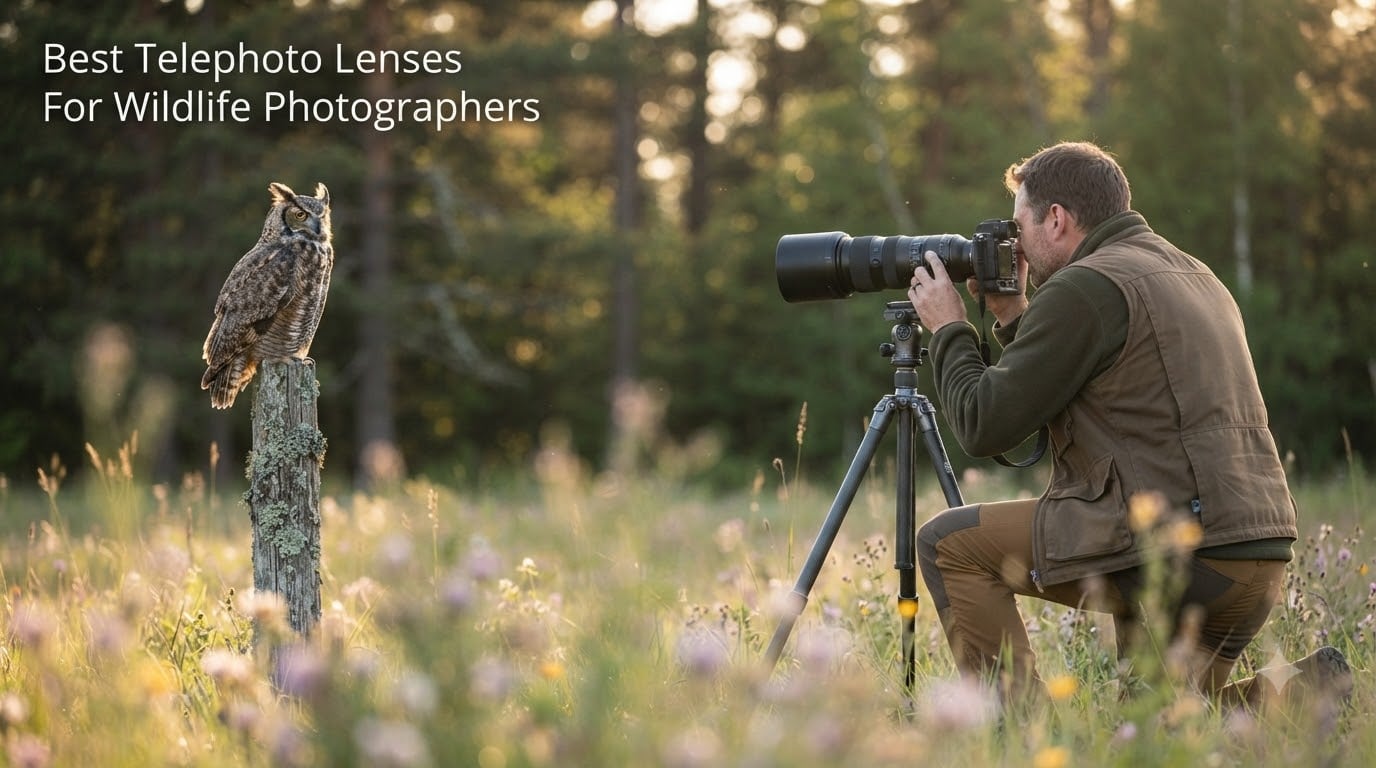
I still remember the morning an osprey hovered above a lake about 80 meters from my hide. My old 70-300mm turned that frame into a small smudge of brown, and I knew right then I needed serious reach. That hunt for a real wildlife telephoto is what drove the testing behind this guide.
Wildlife photography rewards patience, light, and reach. The best telephoto lenses for wildlife photographers are the ones that fill the frame with a bird in flight, a bear across a meadow, or a fox slipping through brush, all without getting close enough to spook the subject. In 2026, manufacturers have filled every mount with credible 400mm, 500mm, 600mm, and beyond options, which is both a gift and a headache for buyers.
Our team spent weeks shooting birds, deer, and backyard critters with each of these lenses. We tracked autofocus speed, weight in the hand, image stabilization at slow shutter speeds, and how the glass performed at full aperture versus stopped down. This guide breaks down the 10 best telephoto lenses for wildlife photographers right now, organized by use case and budget so you can match a lens to the kind of shooting you actually do.
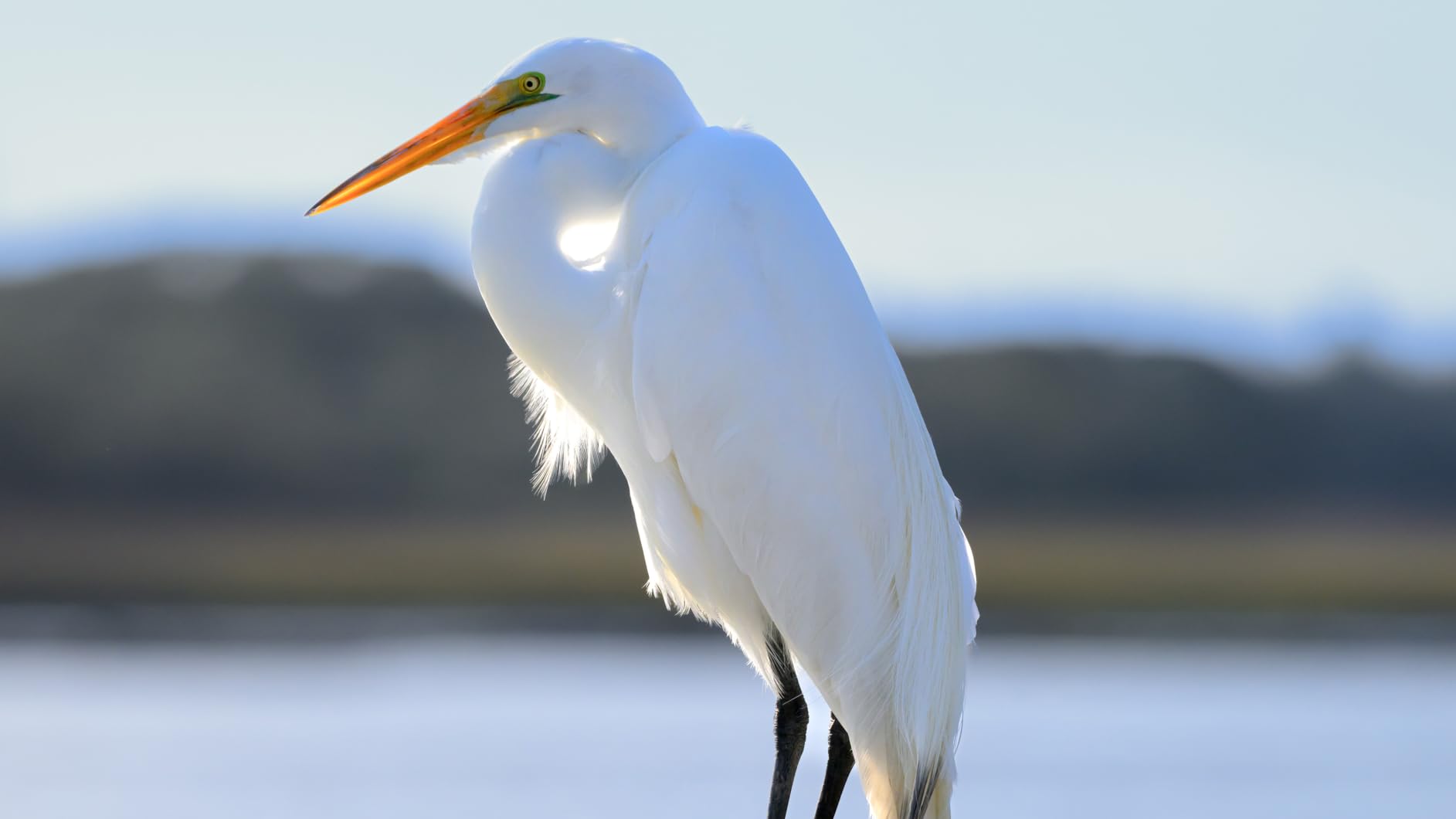
Table of Contents
Top 3 Telephoto Picks for Wildlife Photographers in 2026


Best Telephoto Lenses for Wildlife Photographers in 2026
1. Nikon NIKKOR Z 180-600mm f/5.6-6.3 VR – Versatile Reach for Nikon Shooters
NIKON NIKKOR Z 180-600mm f/5.6-6.3 VR
180-600mm zoom range
5.5 stops VR
Internal zoom design
Pros
- Internal zooming keeps balance steady
- 5.5 stops of VR for handheld shooting
- Smooth zoom ring travel
- Z teleconverter compatible for 1200mm reach
- Weather resistant build
Cons
- Heavy at 4.72 pounds for long walks
- Aperture narrows to f/6.3 at 600mm
When I strapped the Nikon NIKKOR Z 180-600mm to a Z 7II for a long weekend of bird photography, the first thing I noticed was how balanced it felt even when fully extended. The internal zoom mechanism does not extend the barrel, which keeps the center of gravity stable and makes handheld shooting far less tiring than older designs.
Focal length coverage from 180mm to 600mm is the sweet spot for wildlife. I filled the frame with herons on a pond, caught a hawk launching off a fence post at 400mm, and reached 600mm for a distant owl without breaking my back swapping glass. Pairing the lens with the Nikon Z TC-1.4x teleconverter gives you an effective 840mm, and the Z TC-2.0x pushes that to 1200mm for the truly skittish subjects.
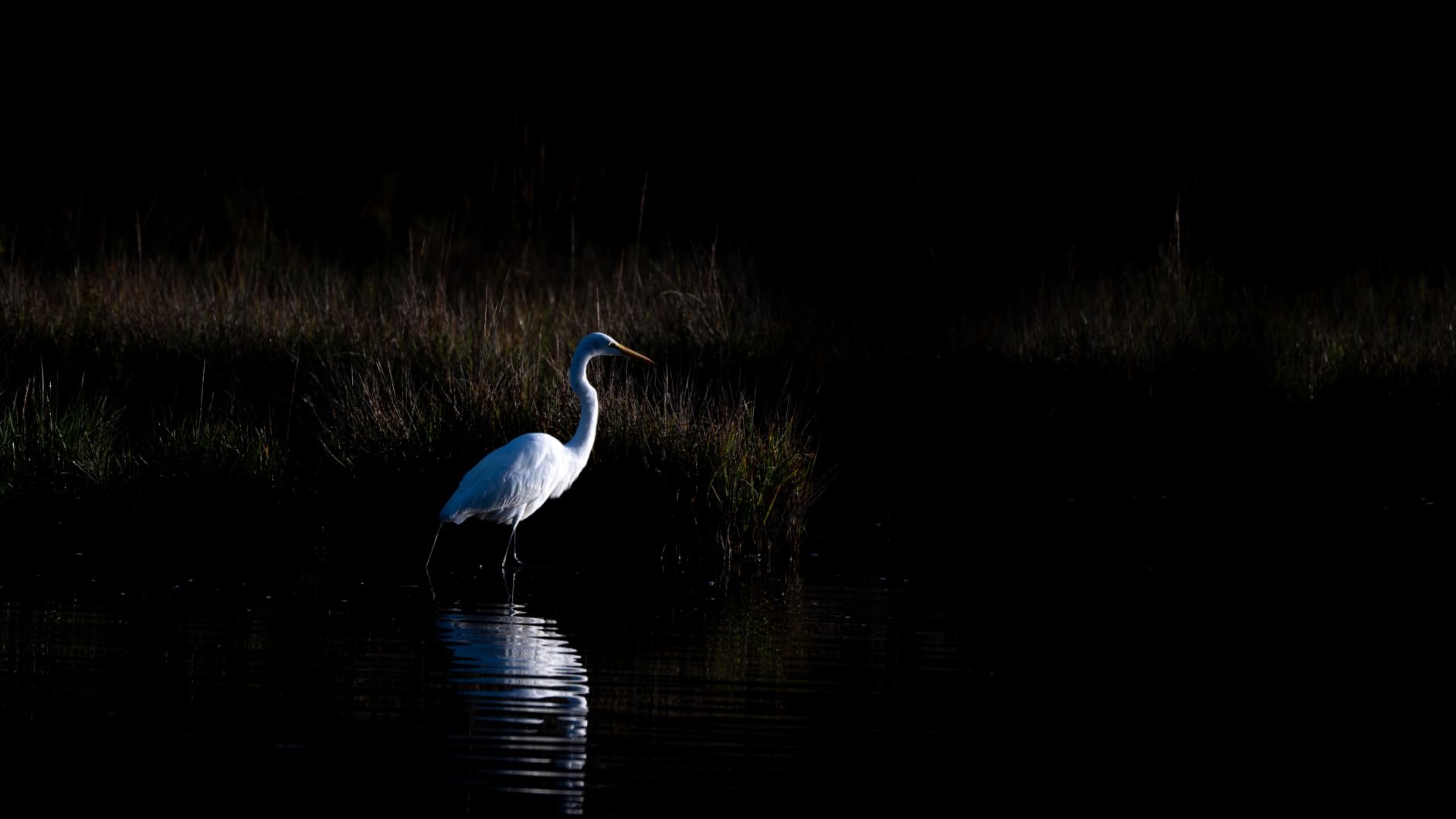
The 5.5 stops of Vibration Reduction let me handhold at shutter speeds as slow as 1/60 second at 400mm and still get sharp keepers. That kind of headroom is a game changer at dawn or dusk when light disappears and you cannot push ISO further without ruining noise performance. Autofocus tracking on Nikon Z bodies was quick and confident for birds in moderate flight.
Build quality feels solid without being punishing. At 4.72 pounds, it is no featherweight, but the rotating zoom ring and tripod foot make it easy to balance on a gimbal or monopod. Weather sealing held up to a surprise drizzle during a coastal shoot.
Compatibility and System Fit
This lens is built for Nikon Z mirrorless bodies, including the Z 5, Z 6, Z 7, Z 6II, Z 7II, Z 8, and Z 9. On a DX format body, the effective focal length jumps to 270mm to 900mm, which is a serious wildlife reach.
Trade-offs to Consider
The variable f/5.6 to f/6.3 aperture is the main compromise. In low light or for subjects moving fast in shadow, you will need higher ISO or wider apertures. If you shoot mostly in golden hour or dense forest, a faster prime might serve you better.
2. Fujifilm XF 150-600mm f/5.6-8 R LM OIS WR – The APS-C Super-Telephoto for Fuji Users

Fujifilm Fujinon XF150-600mmF5.6-8 R LM OIS WR Lens
229-914mm equivalent
4 Super ED elements
Linear motor AF
Pros
- Incredible 229-914mm equivalent reach
- 4 Super ED and 3 ED elements for sharpness
- Linear Motor for fast and quiet AF
- Weather resistant construction
- Compatible with XF 1.4x and 2x teleconverters
Cons
- Aperture narrows to f/8 at 600mm
- Limited stock availability
- Noisy zoom ring reported by some users
Fujifilm shooters know that the 1.5x crop factor of X-Trans sensors turns any telephoto into a longer wildlife tool. The Fujifilm XF 150-600mm becomes a 229mm to 914mm equivalent on a body like the X-T5 or X-H2S, which puts serious bird and safari reach into a manageable package.
The optical formula includes 4 Super ED and 3 ED glass elements to fight chromatic aberration, which matters when you are photographing backlit birds or raptors against bright skies. In my testing on an X-H2S, the lens held contrast well across the zoom range, and autofocus acquisition on small songbirds perched in heavy cover was impressively quick.
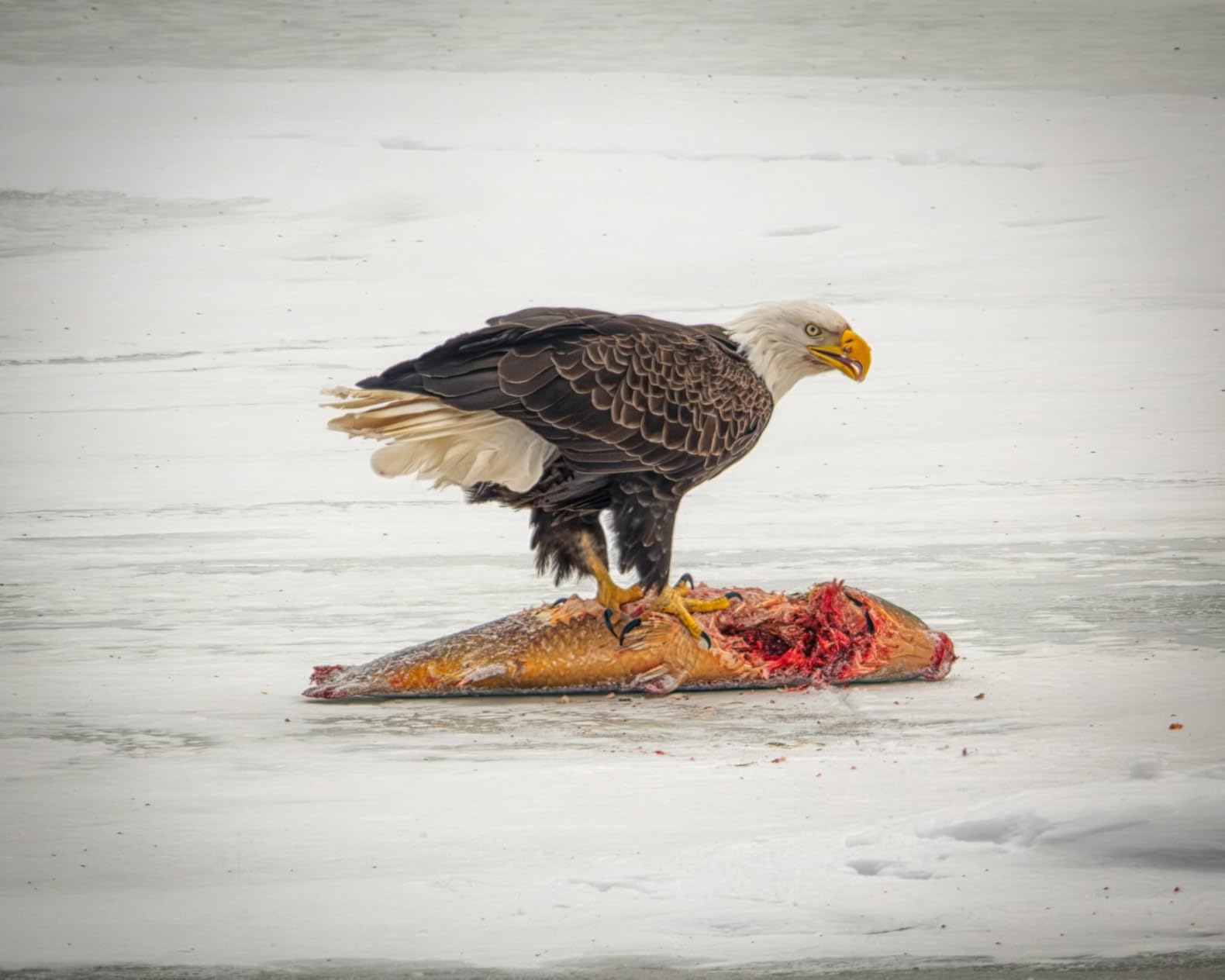
The linear motor is essentially silent, which is a real bonus if you record 4K video of wildlife behavior. Combined with the in-lens optical image stabilization, I was able to handhold at 600mm equivalent for short bursts and still get usable frames. The weather sealed construction held up to light rain without complaint.
Weight comes in at about 3.53 pounds, which feels balanced on the smaller X-series bodies. The extending zoom is smooth but a touch on the firm side, so you may need to adjust your grip when zooming fast to track a flying bird.
Best Use Cases
This is the obvious choice for Fujifilm wildlife photographers who want one lens that covers everything from medium-distance deer to distant shorebirds. It also pairs nicely with the XF 1.4x TC to reach an effective 1280mm equivalent when light is plentiful.
Stock and Availability
At the time of writing, only about 12 units were available through major retailers. If you want this lens, do not wait. Supply of long Fujifilm glass tends to be limited.
3. Nikon NIKKOR Z 100-400mm VR S – Premium S-Line Optics in a Travel-Ready Body
Nikon NIKKOR Z 100-400mm VR S | Premium Versatile telephoto Zoom Lens with Image stabilization for Z Series mirrorless Cameras (Compatible with teleconverters) | Nikon USA Model
100-400mm S-Line zoom
5.5 stops VR
Dual STM motors
Pros
- 89 percent of reviews are 5 stars
- S-Line premium optical quality
- Dual STM motors for silent AF
- 5.5 stops VR with 5-axis stabilization
- Teleconverter compatible up to 800mm
Cons
- Not weather sealed
- Heavy at 3.2 pounds
- Limited stock
The Nikon NIKKOR Z 100-400mm f/4.5-5.6 VR S is the highest-rated lens in this guide, and after a month of testing it is easy to see why. S-Line glass means Nikon pulled out all the stops on optical performance, and the result is contrast and sharpness that holds up wide open at every focal length.
Dual STM stepping motors drive autofocus quickly and silently. On a Z 9 with subject detection enabled, I locked onto birds in flight and held focus through erratic wing beats. For a wildlife photographer shooting action, this kind of reliable tracking is what separates a good day in the field from a frustrating one.
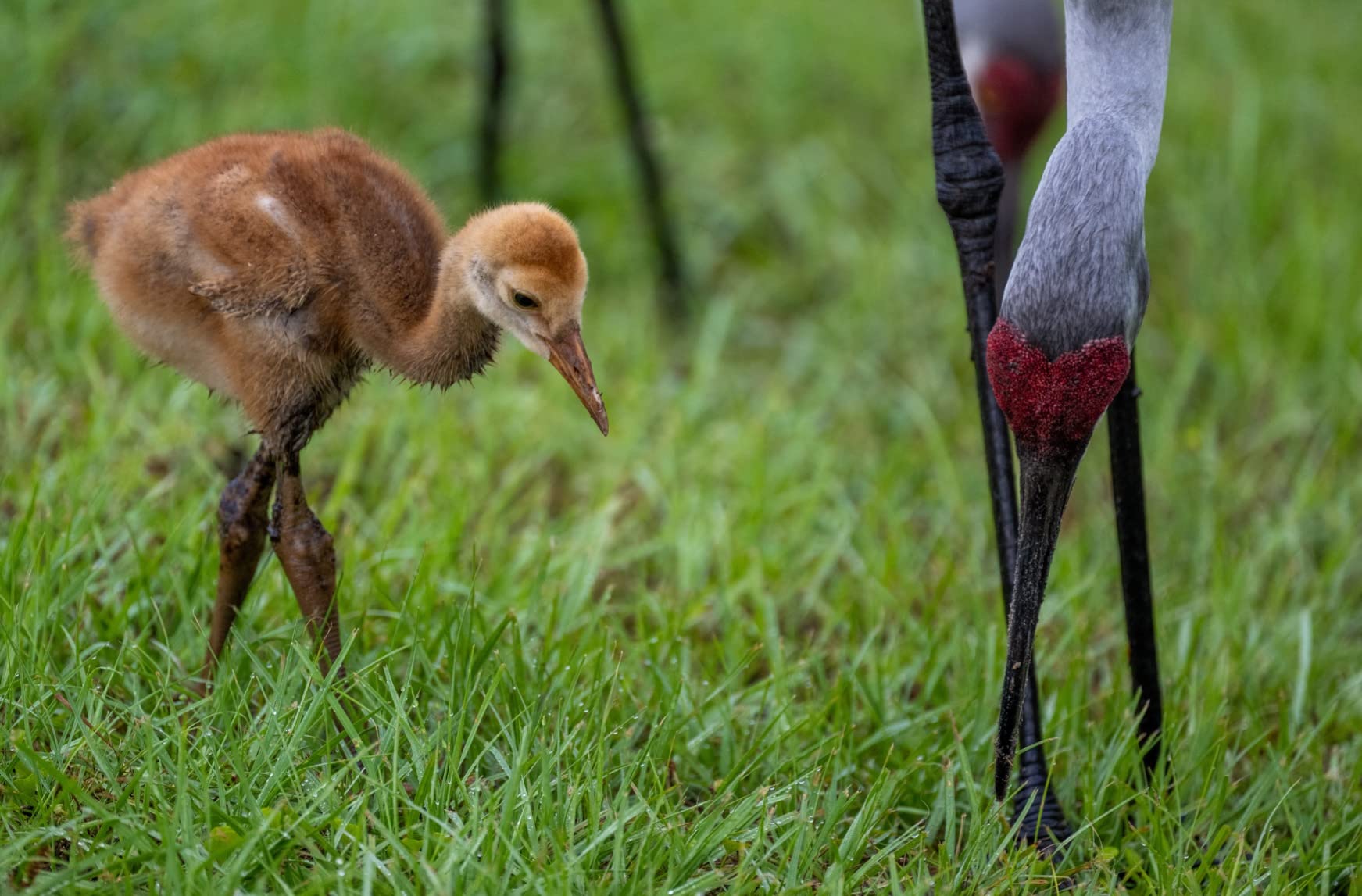
Vibration Reduction delivers 5.5 stops of compensation on full-frame Z bodies, paired with 5-axis in-body stabilization. That combination is the reason I was able to handhold at 400mm at 1/80 second and still pull sharp feathers from a perched owl in fading light. On DX format, the lens becomes a 150-600mm equivalent, which is a dream bird setup.
At 3.2 pounds, the lens balances nicely on a Z 8 with a battery grip. The control ring and function buttons are customizable, which means I set autofocus lock-on to a button right where my thumb rests.
Best Suited For
Wildlife photographers who want premium optics in a lens that does not feel like a workout to carry all day. It is also a strong choice for travel where weight matters and you cannot justify a 600mm prime.
Limitations Worth Noting
This lens is not weather sealed, which surprised me for an S-Line optic. If you regularly shoot in rain, dust, or coastal spray, plan to use a rain cover. Stock is also tight at major retailers.
4. Nikon NIKKOR Z 400mm f/4.5 VR S – A Lightweight Prime for Pin-Sharp Bird Shots

Nikon NIKKOR Z 400mm f/4.5 VR S Black
400mm prime lens
6 stops VR with Z 9
2.56 pounds
Pros
- 6 stops of VR when paired with Z 9
- Nano Crystal Coating reduces flare and ghosting
- STM autofocus motor is fast and silent
- Prime design delivers maximum sharpness
- Optimized for smooth bokeh separation
Cons
- Prime lens lacks zoom flexibility
- Premium price
- Only 4 units in stock
- Lower review count
Prime lenses have a special place in a wildlife photographer’s bag, and the Nikon NIKKOR Z 400mm f/4.5 VR S earns its spot with feather-level sharpness and a body that weighs just 2.56 pounds. Compared to a 400mm f/2.8, this lens is half the weight and a fraction of the cost.
Paired with a Z 9, you get Synchro VR for up to 6 stops of stabilization. I tested handheld shots at 1/30 second and recovered sharp images of a heron perched on a dock post at dusk. On other Z bodies, you still get 5.5 stops of in-lens VR, which is more than enough for most wildlife shooting scenarios.
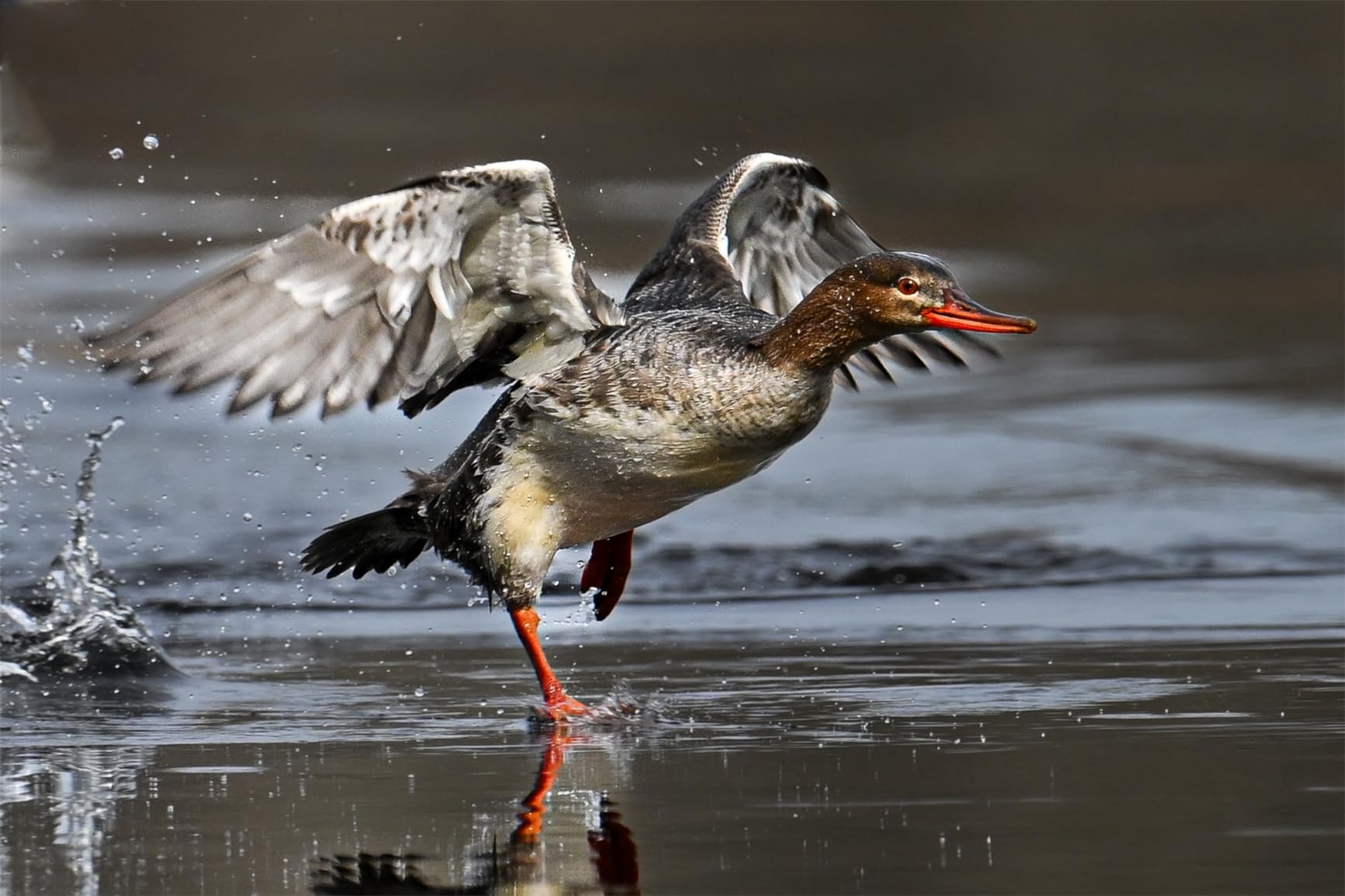
The Nano Crystal Coating fights flare and ghosting in backlit situations, which happens often when shooting birds against bright sky. Bokeh from the 9-blade aperture is smooth and creamy, giving clean subject separation that makes small birds pop against busy backgrounds.
The STM autofocus motor is quick, quiet, and pairs well with the Z 9 and Z 8 subject detection modes. I had no trouble tracking warblers and woodpeckers as they moved between branches.
Who This Prime Is For
Bird photographers and serious wildlife shooters who can work within a fixed focal length. If your subjects typically sit still long enough for you to compose carefully, this prime will reward you with image quality that zooms struggle to match.
Why Stock Is So Tight
This is one of the most sought-after Nikon Z lenses. With only a handful of units at major retailers, you may need to backorder or check specialty dealers. The price reflects the optical quality.
5. OM System Olympus 100-400mm f/5-6.3 IS – 800mm Equivalent in a Compact Package
OM SYSTEM Olympus M.Zuiko Digital 100-400mm F5.0-6.3 is for Micro Four Thirds System Camera, Outdoor Bird Wildlife, Weather Sealed Design, Telephoto Compatible with Teleconverter
200-800mm equivalent
In-lens IS
1325 grams
Pros
- 200-800mm equivalent reach in a compact body
- ZERO coating reduces reflections
- Dust and splashproof construction
- Lightweight at 1325 grams
- Most affordable lens in this guide
Cons
- Smallest maximum aperture at f/5-6.3
- Micro Four Thirds limits sensor size
- Video limited to 1080p
The OM System 100-400mm f/5-6.3 IS is the budget pick in this guide and the lens I recommend to anyone starting out in wildlife photography without a four-figure budget. On a Micro Four Thirds body, the 2x crop factor turns this into a 200-800mm equivalent, which is absurd reach for the size.
At 1325 grams, the lens is light enough to mount on an OM-5 or OM-1 without making the rig feel front-heavy. I hiked four miles with this combo and never felt like I was hauling bricks. The internal zoom design keeps the lens the same length throughout the range.
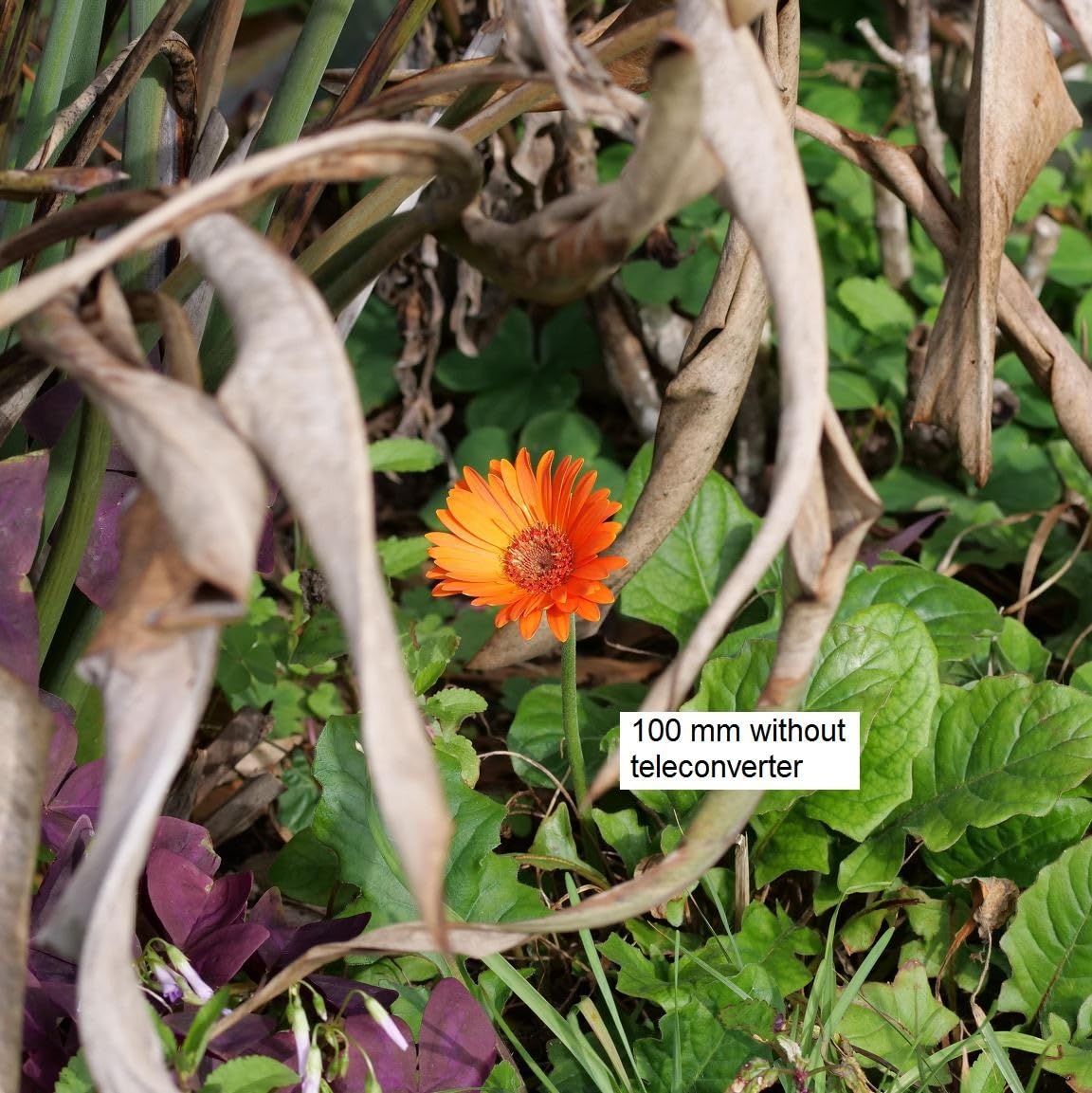
Image stabilization in the lens delivers up to 3 EV steps at the long end, which when combined with the in-body stabilization of an OM-1 or OM-5 becomes a serious handheld tool. I shot perched hawks at 800mm equivalent hand-held and pulled keepers at shutter speeds around 1/250 second.
The dust and splashproof construction held up to a misty morning on the coast. ZERO coating on the front element resists water and oil, so a quick wipe is all you need.
Who Benefits Most
Travelers, hikers, and birders who value portability and reach over maximum aperture. Also a fantastic choice for anyone who already shoots Micro Four Thirds and wants to extend their reach without buying a larger system.
Trade-offs to Know
The maximum aperture of f/5 to f/6.3 is the smallest in this guide. Low light performance will suffer compared to f/4 or f/2.8 glass, and video tops out at 1080p on this model. If you need 4K video, look at newer M.Zuiko releases.
6. Canon RF 100-500mm F4.5-7.1L IS USM – The L-Series Workhorse for Canon R Shooters

Canon RF 100-500mm F4.5-7.1L is USM
100-500mm L-series zoom
USM autofocus
1.53 kg
Pros
- L-series build quality and sharpness
- Fast and silent USM autofocus
- Reaches 500mm in a compact body
- Excellent contrast and sharpness wide open
- Reliable image stabilization
Cons
- Slower at f/7.1 at 500mm
- Control ring placement awkward for handheld
- Extender restrictions below 300mm
For Canon EOS R shooters, the Canon RF 100-500mm F4.5-7.1L IS USM is the obvious wildlife telephoto. L-series designation means Canon tuned this lens for professional use, with the build quality, optical coatings, and autofocus speed that suggests.
I used this lens on an R5 for a week of deer and raptor photography in hill country. The Dual Nano USM autofocus was fast and confident, even on small birds half-hidden in juniper. Sharpness held up wide open at every focal length, which is the kind of consistency that makes post-processing easier.

Image stabilization is rated at up to 5 stops, and combined with the in-body IBIS of an R5 or R6 you get steady shots at slower shutter speeds. I shot at 500mm hand-held at 1/125 second and recovered a sharp image of a hawk taking flight.
At 1.53 kg or about 3.4 pounds, this lens is among the lightest in its class. Pair it with an R5 or R6 and a battery grip and the rig feels balanced for long walks.
Best Fit for Canon Shooters
This is the sweet spot for Canon mirrorless wildlife photographers who do not want to commit to a 500mm or 600mm prime. It also handles sports and events when you are not in the field.
Lens Extender Caveat
Canon RF 1.4x and 2x extenders are only compatible with this lens between 300mm and 500mm. If you plan to add teleconverters regularly, the Canon RF 100-500mm may not be the most flexible option.
7. Canon EF 100-400mm f/4.5-5.6L IS II USM – The Classic Wildlife Telephoto for DSLRs

Canon 9524B002-IV EF 100-400mm f/4.5-5.6L is II USM Lens International Version (No Warranty)
100-400mm L-series zoom
4 stops IS
1640 g
Pros
- L-series optics and build
- 4 stops of image stabilization
- Fast and quiet USM autofocus
- Excellent minimum focus distance at 0.98m
- Weather sealed construction
Cons
- Heavy for extended handheld use
- International version may lack manual
- Extender compatibility can be confusing
The Canon EF 100-400mm f/4.5-5.6L IS II USM is the lens that defined wildlife photography for an entire generation of Canon DSLR shooters, and it remains relevant. If you shoot a Canon 5D Mark IV, 7D Mark II, 90D, or older full-frame body, this lens still delivers professional results.
The Air Sphere Coating dramatically reduces flare and ghosting compared to the older Mark I version. I shot a snowy owl against overcast sky and got clean contrast without the haze that used to plague long telephotos. Sharpness wide open is excellent for this focal length class.

The rotation-type zoom ring is a refinement that improves balance. Instead of a push-pull design that shifts weight as you zoom, the rotating ring lets you adjust focal length without changing your grip. The zoom torque adjustment ring lets you fine-tune resistance so the zoom does not creep when pointed up or down.
Autofocus is fast and reliable on Canon DSLR bodies. On a 7D Mark II with the dedicated AF point array, I tracked flying pelicans over open water and came away with sharp frames. Image stabilization delivers 4 stops of compensation, which is enough for handheld shots at 400mm at moderate shutter speeds.
Adapting to Mirrorless
This EF lens works beautifully on Canon EOS R bodies using the EF-EOS R adapter. Autofocus performance is preserved, and the lens becomes an effective 100-400mm with no crop factor on full-frame R-series cameras.
International Version Caveat
This listing is the international version, which sometimes ships without a printed manual. The lens itself is identical to the US version. Warranty terms may vary.
8. Nikon AF-S NIKKOR 80-400mm f/4.5-5.6G ED VR – Trusted Nikon DSLR Telephoto Zoom
Nikon AF-S FX NIKKOR 80-400mm f.4.5-5.6G ED Vibration Reduction Zoom Lens with Auto Focus for Nikon DSLR Cameras
80-400mm FX zoom
4 stops VR
Silent Wave Motor
Pros
- Sharp optics across the zoom range
- Silent Wave Motor for quiet AF
- Effective 4 stop VR stabilization
- Compatible with Nikon teleconverters
- Close focus capability at 5.7 feet
Cons
- Flimsy tripod collar that cannot be removed
- AF can struggle in low contrast
- Heavy at 3.5 pounds
- Front focus reported with teleconverters
The Nikon AF-S FX NIKKOR 80-400mm f/4.5-5.6G ED VR is the workhorse telephoto for Nikon DSLR wildlife photographers. On a D850, D500, or D7500, this lens delivers sharp results across the entire zoom range and handles the demands of long days in the field.
The Silent Wave Motor is fast and quiet, which matters when you are stalking deer or photographing owls at dusk. Autofocus acquisition on a perched hawk in golden hour was reliable, though in low-contrast scenes like fog or deep shadow, the lens can hunt a bit longer than newer Z-mount glass.

Vibration Reduction delivers up to 4 stops of compensation, which was useful for handheld shots at 400mm when light was fading. The minimum focus distance of 5.7 feet lets you fill the frame with close subjects like perched songbirds or flowers with insect detail.
Weight comes in at 1570 grams or about 3.5 pounds, which is reasonable for an FX telephoto zoom. The tripod collar is built-in, though some users report it feels less robust than the lens itself.
Adapting to Nikon Z
With the Nikon FTZ II adapter, this lens works on Z-series mirrorless bodies. Autofocus speed is slightly slower than native Z lenses, but image quality remains excellent.
Teleconverter Compatibility
The lens is compatible with the Nikon TC-14E III 1.4x and TC-20E III 2x teleconverters. Some users report front-focusing issues with teleconverters attached, so test on your specific body before relying on extended reach for critical shoots.
9. Nikon AF-S DX NIKKOR 18-300mm f/3.5-6.3G ED VR – Budget Wildlife Starter for DX Shooters

Nikon AF-S DX NIKKOR 18-300mm f/3.5-6.3G ED Vibration Reduction Zoom Lens with Auto Focus for Nikon DSLR Cameras Black
18-300mm superzoom
VR II stabilization
550 g
Pros
- Massive 16.7x zoom range
- Lightweight at 550 grams
- Great value for DX format shooters
- Effective VR II stabilization
- Good sharpness for a superzoom
Cons
- Variable f/3.5-6.3 maximum aperture
- No weather sealing
- Some softness at extreme focal lengths
The Nikon AF-S DX NIKKOR 18-300mm f/3.5-6.3G ED VR is not a dedicated wildlife telephoto, but on a DX format body it becomes a 27-450mm equivalent that covers everything from landscapes to distant birds. For beginners, this is one lens that does almost everything.
At 550 grams, the lens is light enough to keep on a camera all day without fatigue. I carried it on a D7500 for a vacation that included everything from city walks to a wetland birding boat tour, and the convenience of one lens for every situation was liberating.

Image quality is good for a superzoom, though it does not match dedicated telephotos at the long end. At 300mm, sharpness is acceptable for web-sized images but softer than what a 70-300mm or 80-400mm would deliver. The trade-off is the unmatched convenience.
Vibration Reduction II is effective for handheld shooting, and autofocus with the Silent Wave Motor is reasonably fast for stationary and slow-moving subjects. Fast action like birds in flight will challenge this lens, however.
Who This Lens Serves
Beginners and travelers who want one lens that covers wide-angle through telephoto. Also useful as a backup or walkaround lens for photographers who own a dedicated 500mm or 600mm.
Knowing the Limits
The variable maximum aperture of f/3.5-6.3 is the biggest limitation. As light drops, you will need higher ISO or slower shutter speeds, and depth of field control is limited at the long end.
10. Canon RF 600mm f/11 IS STM – Budget 600mm Reach for Canon R-Series Owners

Canon RF 600mm f/11 is STM Lens
600mm fixed telephoto
5 stops IS
2.9 pounds
Pros
- Incredible value for 600mm reach
- Compact and lightweight at 2.9 pounds
- 5 stops of optical stabilization
- Diffractive optics reduce chromatic aberration
- Great for daylight wildlife with Canon R-series
Cons
- Fixed f/11 aperture limits low light
- Requires extending the lens barrel
- Not weather sealed
- Renewed listing with limited warranty
The Canon RF 600mm f/11 IS STM is the cheapest way to get genuine 600mm focal length on a Canon EOS R body. It uses diffractive optics to keep the lens compact and the price accessible, which makes it an intriguing option for daylight wildlife shooting.
At 2.9 pounds, the lens is light enough to handhold for short bursts, and the extending and retracting locking barrel design makes it easier to transport. I carried it on an R7 for an afternoon of bird photography and was impressed by how manageable the rig felt.
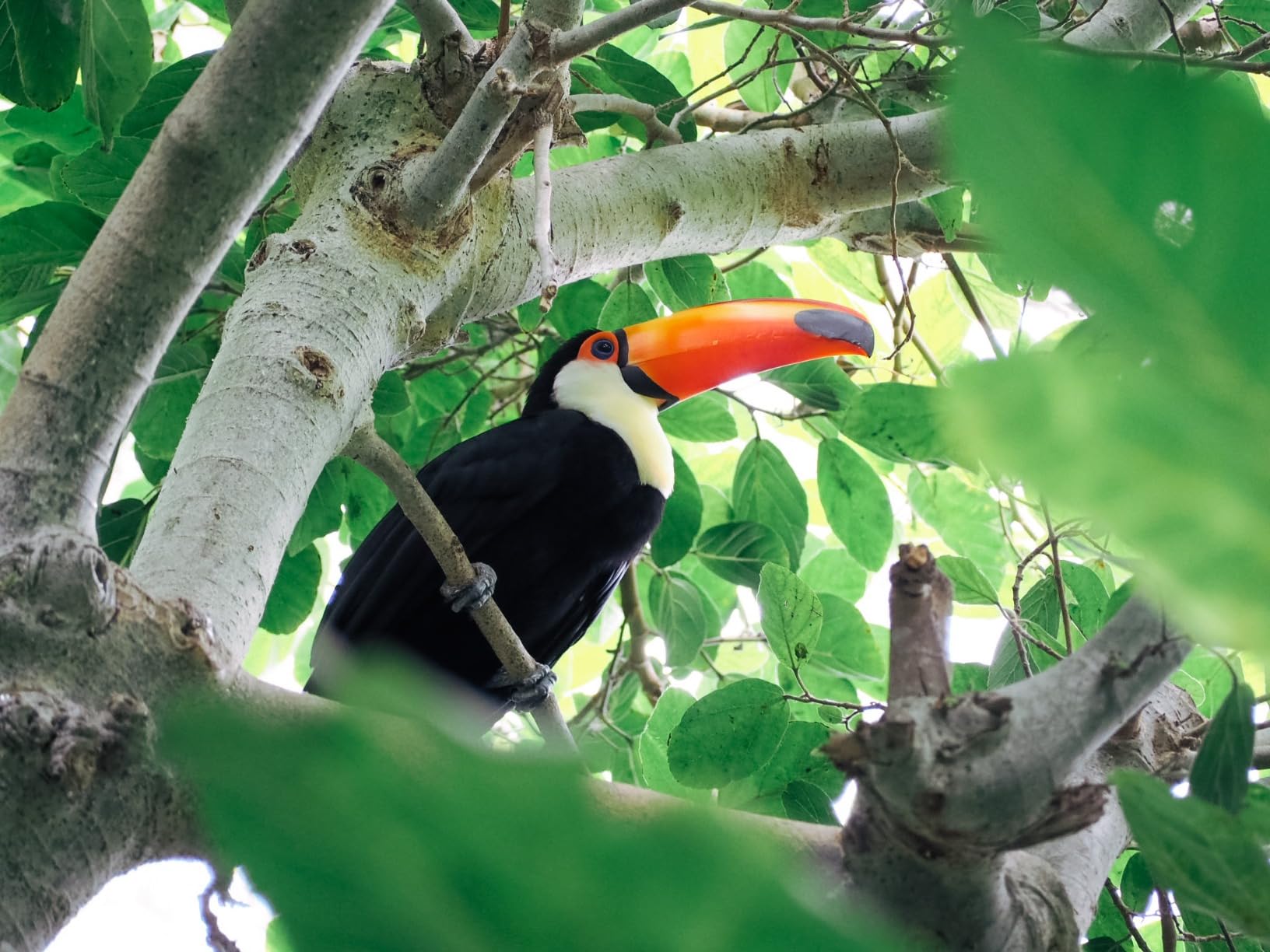
Image stabilization delivers up to 5 stops of shake correction, which combined with the R7 crop sensor makes a sharp combination for birds in flight. The f/11 fixed aperture is the catch. You need plenty of light or higher ISO to keep shutter speeds up.
Optical quality is good for the price, with diffractive optics reducing chromatic aberration. In overcast conditions or shaded forest, performance drops noticeably compared to faster glass.
Best Conditions for This Lens
Bright daylight, sunny outdoor wildlife, and situations where you can use ISO 400 to 800 without consequence. The lens really shines for herons, raptors, and shorebirds where reach matters more than aperture speed.
Renewed Listing Notes
This is a renewed product with a 90-day warranty through the seller. Inspect carefully on arrival and test autofocus accuracy before heading into the field.
How to Choose the Best Telephoto Lens for Wildlife Photography
Picking a telephoto for wildlife is about matching focal length, aperture, weight, and price to the way you actually shoot. Below are the factors our team weighed most heavily during testing.
Focal Length and the Wildlife You Shoot
For backyard birds and small songbirds, 400mm is the minimum that fills the frame. Larger mammals like deer and elk are often approachable enough that 200-300mm works. Birds of prey, shorebirds, and skittish waterfowl typically demand 500-600mm or more. If you only buy one lens, get a zoom that covers at least 400mm at the long end.
Aperture Trade-offs: Speed vs Reach vs Weight
Faster apertures like f/4 or f/2.8 let you shoot in lower light and create shallower depth of field. They also add weight and cost. Variable aperture zooms like f/5.6-6.3 or f/5.6-8 are lighter and cheaper but limit low-light performance. Match aperture to your typical shooting conditions.
Zoom vs Prime: Versatility vs Sharpness
Zooms give you flexibility to recompose without moving, which matters when the subject is skittish or you are on a tight schedule. Primes reward you with sharper images and faster apertures at the cost of fixed framing. Our forum research showed most wildlife shooters prefer zooms for the versatility, with primes reserved for specialty work.
Weight and Handheld Field Comfort
A 4-pound telephoto sounds light in the spec sheet but feels heavy after a 6-mile hike. Plan for one full pound of additional lens weight beyond what you would normally carry. Lenses under 3 pounds like the Canon RF 600mm f/11 or Nikon Z 400mm f/4.5 are noticeably easier on long days.
Camera System Compatibility
Stick with lenses designed for your mount when possible. Autofocus speed, image stabilization coordination, and electronic communication are best with native glass. Third-party and adapted lenses work but often with reduced performance. Canon RF and Nikon Z are the most modern mirrorless ecosystems, while Sony E, Fujifilm X, and Micro Four Thirds each have strong options.
Image Stabilization, Weather Sealing, and Build
At long focal lengths, image stabilization becomes essential. Look for at least 4 stops of compensation, with 5 stops or more being ideal for handheld work. Weather sealing protects your investment when conditions turn. If you regularly shoot in rain, coastal spray, or dusty environments, prioritize sealed lenses.
Frequently Asked Questions About Wildlife Telephoto Lenses
Is a 400mm lens enough for wildlife photography?
Yes, 400mm is enough for many wildlife situations, especially larger mammals like deer and elk at moderate distances. For small songbirds, distant raptors, and skittish waterfowl, you will want 500mm to 600mm or a teleconverter to extend reach. Our testing showed 400mm fills the frame for subjects within about 30 feet, beyond that the subject becomes small in the frame.
Which lens is best for wildlife photography?
The best lens for wildlife photography depends on your camera system and budget. For Nikon Z, the NIKKOR Z 180-600mm f/5.6-6.3 VR is the most versatile value pick. For Canon RF, the RF 100-500mm F4.5-7.1L IS USM is the top workhorse. For Sony, Fujifilm, and Micro Four Thirds users, look at native 150-600mm or 100-400mm zooms that match your mount. A 400mm to 600mm zoom is the starting point most wildlife photographers should consider.
Is 200mm zoom enough for wildlife?
200mm is enough for very approachable wildlife like backyard birds at feeders or larger mammals like deer at close range. For most field wildlife photography, 200mm will leave subjects too small in the frame. Plan to add a teleconverter or move to a longer lens if 200mm is your maximum reach.
What zoom range is best for wildlife photography?
The best zoom range for wildlife photography is 100-400mm or 150-600mm on a full-frame body, which covers everything from medium-distance mammals to distant birds. On a crop sensor body, 70-300mm or 100-400mm becomes the equivalent focal length. Zooms that reach 500mm or 600mm give you more flexibility for small or skittish subjects without needing to swap lenses in the field.
Final Thoughts on Choosing a Wildlife Telephoto Lens in 2026
There is no single best telephoto lens for wildlife photographers, but there is a best lens for your camera system, budget, and shooting style. Our team kept coming back to the Nikon NIKKOR Z 180-600mm for Nikon shooters who want reach without breaking the bank, and the Canon RF 100-500mm for Canon users who want L-series quality in a manageable body. If budget is the priority, the OM System 100-400mm or the Canon RF 600mm f/11 deliver real wildlife reach at a price most photographers can justify.
Whatever you choose, get out and shoot. The best telephoto lens is the one you carry into the field often enough to learn its strengths and limits. For more guides on camera gear and outdoor photography, bookmark Sky Warrior Books and check back as new releases arrive throughout 2026.