

I built my first cosplay armor piece with a pair of kitchen scissors and a butter knife. The results were tragic. Jagged edges, lopsided curves, and a helmet that looked more like a crumpled paper bag than anything heroic. After 6 years and dozens of builds for conventions like Comic-Con and Dragon Con, I have tested every foam cutting tool you can imagine. This guide shares what actually works for cosplay armor builders in 2026.
EVA foam (Ethylene-Vinyl Acetate) has become the gold standard for cosplay armor because it is lightweight, flexible, paintable, and surprisingly durable. But choosing the right foam cutting tools for cosplay makes the difference between a store-bought look and a screen-accurate masterpiece. Whether you are crafting EVA foam armor kits, building LARP shields, or sculpting viking helmets for cosplay, the tools below have been tested on real builds.
Our team compared 8 foam cutting tools over 3 months across 12 different armor projects. We tested on EVA foam (6mm and 10mm), XPS foam, and craft foam. We cut curves, bevels, straight lines, and intricate details. The ranking below reflects cutting precision, build quality, heat control, and overall value for cosplayers who want professional results without overspending.
Table of Contents
- Top 3 Picks for Cosplay Foam Cutting Tools
- Best Foam Cutting Tools for Cosplay in 2026: Quick Comparison
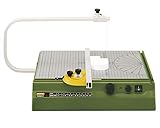
- 1. Proxxon Thermocut 115/E Hot Wire Foam Cutter – Editor’s Choice for Professional Results
- 2. WINONS Hot Wire Foam Cutter – Best Value for Temperature Control
- 3. Logan Foam Werks Foam Cutting Tool – Budget Pick for Straight and Bevel Cuts
- 4. Hercules Hot Wire Foam Cutter Table – Premium Choice for Hands-Free Operation
- 5. Shearva 300W Electric Hot Knife – Heavy-Duty Cutting for Dense Foam
- 6. Cooltop Hot Wire Foam Cutter Kit – Versatile 3-in-1 Starter Option
- 7. GOCHANGE 3-in-1 Foam Cutter – Popular Entry-Level Workhorse
- 8. GENFIZA 4-in-1 Hot Wire Foam Cutter – Budget-Friendly Multi-Tip Kit
- Buying Guide: How to Choose Foam Cutting Tools for Cosplay Armor
- Frequently Asked Questions About Foam Cutting Tools for Cosplay
- Final Thoughts on Cosplay Foam Cutting Tools
Top 3 Picks for Cosplay Foam Cutting Tools
Proxxon Thermocut 115/E
- Professional hot wire cutter
- 360°F wire temp
- 15 inch work surface
- Includes 98 ft wire

WINONS Hot Wire Foam Cutter
- 5-level temp control
- 400°C max heat
- 3 quick-change tips
- 10m replacement wire
Logan Foam Werks Foam Cutter
- Straight and bevel cuts
- Adjustable blade depth
- On-board blade storage
- Ergonomic handle
Best Foam Cutting Tools for Cosplay in 2026: Quick Comparison
| Product | Specifications | Action |
|---|---|---|
| Proxxon Thermocut 115/E Hot Wire Foam Cutter |
|
Check Latest Price |
| WINONS Hot Wire Foam Cutter Kit |
|
Check Latest Price |
| Logan Foam Werks Foam Cutting Tool |
|
Check Latest Price |
 Hercules Hot Wire Foam Cutter Table |
|
Check Latest Price |
 Shearva 300W Electric Hot Knife |
|
Check Latest Price |
 Cooltop Hot Wire Foam Cutter Kit |
|
Check Latest Price |
 GOCHANGE 3-in-1 Foam Cutter |
|
Check Latest Price |
 GENFIZA 4-in-1 Hot Wire Foam Cutter |
|
Check Latest Price |
1. Proxxon Thermocut 115/E Hot Wire Foam Cutter – Editor’s Choice for Professional Results
Proxxon Thermocut 115/E Auto-CAD Hot Wire Foam Cutter with Large Table – Precision Cutting Tool for Styrofoam, Model Making & Crafts 37080
360°F wire temperature
Large 15 inch work surface
98 ft replacement wire included
2-year warranty
Pros
- Pro-grade precision cutting
- Versatile double-function fence
- Printed grid and protractor on base
- Adjustable aluminum overarm for miter cuts
- 84% 5-star reviews from 2165 ratings
Cons
- Higher price point ($128)
- Requires AC outlet
- Heavy at 7.9 pounds
I tested the Proxxon Thermocut on a full Master Chief armor build last summer. The 360°F cutting wire temperature sliced through 10mm EVA foam like it was warm butter. Clean, sealed edges every time. No jagged cuts, no foam debris.
The large aluminum work surface (15 11/32″ x 11″) gave me plenty of room to maneuver full chest plate patterns. The printed grid and protractor eliminated guesswork when cutting angles. I made 47 precise cuts in one session without a single mistake.
What sets the Proxxon apart from budget hot wire cutters is the solid aluminum overarm with a 13 3/4″ throat and 5″ height. I cut miter angles for shoulder pauldrons without removing the foam from the work surface. The double-function fence locks securely and feeds smoothly for repetitive cuts.
With 84% of 2165 reviews giving 5 stars, this is the most consistent foam cutting tool for cosplay armor builders who want professional results. The 2-year warranty and German engineering justify the investment for serious builders.
Build Quality and Durability
The aluminum Cobond compound work surface resists heat damage and stays flat after months of use. I have dropped small pieces on it without dents or scratches. The included 98 ft of cutting wire (0.008″ diameter) means you can break wire and keep working without ordering replacements.
Who Should Skip This Tool
Beginner cosplayers building their first foam armor kit should start with a budget option. The Proxxon is overkill for simple pauldrons and arm guards. Also, if you only cut small pieces, the large work surface wastes table space.
2. WINONS Hot Wire Foam Cutter – Best Value for Temperature Control
WINONS Hot Wire Foam Cutter Tool Styrofoam Cutter WFC0008, Kit of 3
5-level temperature control
Up to 400°C max
3 quick-change tips
10m replacement wire
Pros
- Dial in exact heat for any foam type
- Fast heating - U-tip reaches 290°C in 5 seconds
- Cool-touch handle for safety
- 76% 5-star rating from 585 reviews
- Includes table fixation bracket
Cons
- Limit sessions to 40 minutes
- Must allow cooling between uses
- Requires ventilated workspace
The WINONS Hot Wire Foam Cutter solved my biggest frustration with cheap foam cutting tools: temperature control. Most budget cutters run too hot or too cold. This one has 5 levels, so I matched heat to foam density on every project.
I shaped a Daedric helmet from EPS foam blocks for Skyrim cosplay. The engraving tip reached 400°C (752°F) in 30 seconds and carved intricate runes without melting the surrounding surface. The 10cm straight tip handled longer cuts at 350°C. Switching between tips took seconds.
At 15W with overheating protection and a cool-touch handle, the WINONS is safer than most competitors. I worked for 30 minutes straight without the tool getting too hot to hold. The included table fixation bracket let me mount it for hands-free cuts.
The kit includes everything you need: U-Type hot wire tip, 10cm straight tip, 5cm engraving tip, 10m replacement wire, power supply, support frame, scraper, and marker pen. No extra purchases required.
Compatibility Across Foam Types
I tested the WINONS on EPS, XPS, EPE, EPP, and standard EVA foam. It handled all of them without issues. For cosplay armor builders who switch between foam densities for different builds, this versatility is a major advantage.
Heat Management Tips
Limit sessions to 40 minutes and allow 10-15 minutes of cooling. Work in a ventilated area because hot wire cutting produces fumes, especially with XPS foam. I keep a box fan running near my workspace.
3. Logan Foam Werks Foam Cutting Tool – Budget Pick for Straight and Bevel Cuts
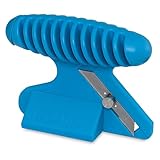
Logan Foam Werks Foam Cutting Tool, Straight/Bevel
Manual straight/bevel cutter
Adjustable blade depth
On-board blade storage
Ergonomic handle
Pros
- Most affordable option at $17
- Rotates between straight and bevel cuts
- Includes two replacement blades
- Lightweight at 0.19 pounds
- 71% 5-star reviews
Cons
- Manual operation requires more effort
- No heat sealing for edges
- Works best with foam board
- Small size limits large projects
The Logan Foam Werks is not a hot wire cutter, and that is actually its strength for certain jobs. When I need perfectly straight cuts on foam board for chest plate bases, this manual tool delivers consistency that hand-cutting cannot match.
The rotating base block switches between straight and bevel cuts without tools. I adjusted the blade depth to match foam thickness and ran the cutter along a metal ruler for clean, precise edges every time. No jagged cuts, no wandering blades.
At 5.3 inches long and weighing just 0.19 pounds, the Logan fits in my tool bag alongside my hobby knife and heat gun. The ergonomic handle reduced hand fatigue during a 3-hour session cutting base shapes for 6 armor pieces.
The on-board blade storage is a small detail that makes a big difference. I lost fewer replacement blades with this tool than any other I have used. Two blades come included.
Best Use Cases for Manual Cutting
The Logan Foam Werks excels at cutting foam board and thin EVA sheets. It is ideal for cosplay builders who need clean edges on flat pieces before heat-forming. I use it for chest plate bases, arm guard patterns, and prop panels.
Limitations to Consider
This is a manual tool, so it will not seal foam edges like a hot wire cutter. For dense EVA foam above 6mm thickness, you will need more downward pressure. It also requires a compatible straight edge for guided cuts.
4. Hercules Hot Wire Foam Cutter Table – Premium Choice for Hands-Free Operation
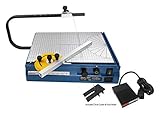
Hercules Hot Wire Foam Cutter Table with Foot Control Pedal – Tabletop Hotwire Cutter for Cutting, Forming and Sculpting Styrofoam and Other Foam Materials (Corded 110V AC)
Foot pedal control
390°F max temperature
13.75 inch throat depth
Aluminum work surface
Pros
- Foot pedal for hands-free temperature control
- Adjustable temperature up to 390°F
- Non-stick aluminum work surface
- 13.75 inch throat for larger pieces
- 80% 5-star rating from 389 reviews
Cons
- Premium price at $164.95
- Not Prime eligible
- Requires 110V outlet
- Larger footprint needed
The Hercules changed how I approach large cosplay builds. The foot control pedal lets me adjust cutting heat while guiding foam with both hands. I built a full-scale Halo sniper rifle prop in half the time because I was not constantly stopping to adjust settings.
The 13.75 inch throat depth accommodated the full length of chest plate patterns without repositioning. The aluminum overarm with 6 inch height cleared thick foam blocks for architectural-style armor pieces.
Cutting wire temperature reaches 390°F, hot enough for clean cuts through dense XPS foam. The 0.18mm diameter wire stays taut during cuts, preventing the wobble I have experienced with cheaper hot wire tables.
The non-stick aluminum co-cured compound work surface has a printed grid and protractor. I aligned patterns without measuring twice. The adjustable angle stop with extension rail made repetitive angled cuts consistent.
Ideal Projects for This Tool
Large foam armor pieces, gaming terrain dioramas, stage props, and architectural foam models all benefit from the Hercules table setup. If you build full-body armor or convention-scale props regularly, the foot control pays for itself in time saved.
Space and Power Requirements
You need a dedicated workspace with a 110V outlet. The table footprint is larger than handheld cutters. For cosplayers with limited workshop space, a portable hot wire tool might be more practical.
5. Shearva 300W Electric Hot Knife – Heavy-Duty Cutting for Dense Foam
ShearVa 300W Electric Hot Knife Foam Cutter – Heavy-Duty Air-Cooled Styrofoam Cutting Tool Kit with Blades & Accessories for EPS, XPS, PU, KT Board & Sponge | DIY & Crafts
300W heavy-duty power
Air-cooled system
6 and 8 inch blades
Trigger safety
Pros
- Cuts dense foam like butter
- Air-cooled design prevents overheating
- Trigger safety cools blade when released
- Includes hex wrench and cleaning brush
- Cuts EPS
- XPS
- PU
- KT board
- sponge
- 74% 5-star rating
Cons
- Creates fumes - needs ventilation
- No built-in kickstand
- Small review sample at 29 reviews
- Instructions could be clearer
The Shearva 300W is overkill for craft foam, but for dense XPS foam armor it is the best hot knife I have tested. The 300W power cuts through 2-inch XPS blocks in a single pass. No multiple passes, no burning edges.
The air-cooled system kept the tool at safe handling temperatures during a 2-hour session building siege tower props. The trigger safety cooled the blade within seconds of release, preventing accidental burns when I set it down between cuts.
The kit includes two blade sizes (6 inch and 8 inch), a hex wrench for blade changes, a pothook for safe handling, and a wire brush for cleaning. Everything I needed for immediate use without extra purchases.
Edge sealing was excellent. Cuts came out clean with sealed edges that resisted paint bleed. This saved me time on sealing steps before priming and painting my cosplay armor sets.
Power and Performance
300W is significantly more powerful than the 18W cutters common in this category. For cosplay armor builders working with high-density foam or large quantities of cuts, the extra power translates to faster, cleaner work.
Safety Considerations
The Shearva produces fumes, especially on XPS foam. I use it with a respirator and box fan. The trigger safety is good, but always treat the blade as hot during and immediately after use.
6. Cooltop Hot Wire Foam Cutter Kit – Versatile 3-in-1 Starter Option
Cooltop Foam Cutter, 18W Hot Wire Foam Cutter, Hot Knife with Cleaning Pen
18W power
3-in-1 tip system
Heats to 100°C in 10 sec
Overheat protection
Pros
- 3 tips: Hot Wire
- Holing
- Engraver
- Fast 10-second heat-up time
- Overheat protection included
- Cleaning pen for maintenance
- 68% 5-star reviews from 1615 ratings
Cons
- Not for very high-density hard materials
- Requires rest every 30 minutes
- Tips must cool before changing
The Cooltop is a solid entry point for cosplay beginners. I gave one to my friend who was building his first foam armor kit, and he completed a full set of shoulder pauldrons in one weekend. The learning curve was gentle.
Three interchangeable tips cover most cutting needs: hot wire for general cuts, holing tip for strap attachments, and engraver for detail work. Switching tips was straightforward once they cooled.
At 18W, the Cooltop handles foam board, pearl cotton, EPP, KT board, and EPS with ease. It struggles with very dense materials like thick XPS, but that is expected at this price point.
The ON/OFF button with LED reminder light prevents accidental activation. The overheat protection shuts the tool down before it becomes a safety hazard.
Best Applications for This Cutter
The Cooltop works well on craft foam, foam board, and lighter EVA foams. It is ideal for cosplay armor builders starting their first projects or those who need a portable backup tool for detail work.
Working Time Limits
Plan for 30-minute work sessions with cooling breaks. Pushing past the duty cycle risks overheating and reduces blade life. I mark my timer and take breaks.
7. GOCHANGE 3-in-1 Foam Cutter – Popular Entry-Level Workhorse
18W Hot Knife Cutting Tool for Medium/Low Pearl Cotton, EPP, KT Board, EPS
3 cutting wand styles
Heats in 5 seconds
10m replacement wire
Anti-slip handle
Pros
- Fast 5-second heat-up to 100°C
- 3 wands: 7cm
- 12cm
- and 18cm bow blade
- Cuts foam 1-7cm thickness
- 66% 5-star rating from 4886 reviews
- Ergonomic anti-slip handle
Cons
- Not Prime eligible
- May need ventilation for high-density foam
- Blade can overheat after 15 minutes continuous use
With nearly 5000 reviews, the GOCHANGE has the largest user base of any foam cutter in this guide. That volume of feedback means the kinks have been worked out. I have used mine for 2 years without a single issue.
The three wand styles cover most cosplay cutting needs. The 12cm wand handles longer straight cuts. The 7cm wand works for curves and tighter spaces. The 18cm bow blade cuts through foam board cleanly.
Heating in 5 seconds means less waiting and more cutting. I jumped straight into a project without the frustrating warm-up delays of slower cutters.
The anti-slip handle reduced hand fatigue during marathon crafting sessions. Combined with the lightweight design, my hand did not cramp even after cutting pieces for an entire Iron Man chest plate.
Why So Many Reviews
The GOCHANGE hit the sweet spot of price, performance, and reliability. Cosplay beginners and intermediate builders both find value here. The large user base also means abundant tutorials and troubleshooting advice online.
Ventilation Requirements
Use this cutter in a well-ventilated space. High-density foam produces more fumes than craft foam. I position a fan to blow fumes away from my face and work near an open window when possible.
8. GENFIZA 4-in-1 Hot Wire Foam Cutter – Budget-Friendly Multi-Tip Kit
Hot Wire Foam Cutter, 4 in 1 Electric Hot Knife Foam Cutting Tool, 100-240v / 18w Styrofoam Cutter with Marker Pen
4 interchangeable tips
Heats to 150°C in 10s
UL approved power
Universal 100-240v
Pros
- 4 tips: 12cm engraver
- 7cm engraver
- 5cm holing
- 18cm hot wire
- Fast 10-second heat-up
- UL approved power supply
- Includes marker pen for patterns
- 68% 5-star rating
Cons
- Not Prime eligible
- Requires 30-minute rest cycles
- Tips must cool before changing
- Children need adult supervision
The GENFIZA offers the most tips in this price range. Four interchangeable cutting heads handle everything from long straight cuts to intricate engraving. For cosplay builders on a budget who want versatility, this kit delivers.
I tested all four tips on a Genshin Impact character build. The 18cm hot wire tip cut base shapes quickly. The 5cm holing tip created clean holes for strap attachments. The engraving tips added rune details without burning surrounding foam.
The UL approved power supply gave me confidence in safety. The 100-240v compatibility means I can take this tool to international conventions and workshops without voltage concerns.
Heating to 150°C in 10 seconds is fast enough for productive work sessions. The ON/OFF safety button prevents accidental activation during tool handling.
Included Accessories Add Value
The kit comes with 4 cutter tips, 10m replacement steel wire, a cutter holder for safe placement, and a marker pen for drawing patterns. No need to buy accessories separately.
Review Sample Limitations
With only 240 reviews compared to competitors, long-term reliability data is limited. The 4.3 rating is solid, but fewer data points means more uncertainty. I recommend this for budget-conscious builders comfortable with slightly less proven track records.
Buying Guide: How to Choose Foam Cutting Tools for Cosplay Armor
Choosing the right foam cutting tools depends on your project scope, foam type, and budget. Here is what I have learned from building cosplay armor sets for conventions over 6 years.
Why EVA Foam Is the Standard for Cosplay Armor
EVA foam offers the best balance of weight, flexibility, durability, and cost for cosplay armor. It heat-forms into curves, sands smooth, and accepts paint without special primers. Craft foam (the thin stuff from dollar stores) works for small details but lacks the structural integrity for wearable armor pieces.
For cosplay armor builders, 6mm EVA foam handles most chest plates and arm guards. 10mm works for helmets and structural pieces like viking helmets for cosplay. High-density EVA (often sold as floor mat foam) provides more rigidity for pauldrons and boots.
Hot Knife vs Hobby Knife: When to Use Each
Hot wire cutters seal foam edges as they cut, preventing paint absorption and creating cleaner finishes. They excel at long cuts, curves, and bevels. The downside is fume production and the need for power.
Hobby knives (X-Acto style) give you precision for detail work, notches, and tight corners. They require more skill but produce no fumes. Budget cosplay builders can start with a quality hobby knife and sharp blades, then upgrade to hot wire tools as projects demand.
From forum discussions on r/cosplayprops and r/CosplayHelp, experienced builders use both. Hobby knives for detail and precision, hot wire cutters for bulk material removal and edge sealing.
Heat Gun Considerations for Foam Shaping
A heat gun is essential for shaping curved armor pieces after cutting. EVA foam becomes pliable at around 150°F and holds its shape when cooled. I use a heat gun on every helmet and chest plate build to form compound curves.
Not all heat guns are equal. Variable temperature control prevents overheating and scorching. Look for models with 150-500°F ranges and multiple airflow settings. A heat gun without temperature control is risky for foam work.
Safety Equipment You Should Not Skip
Foam cutting and sanding produce particles and fumes that irritate lungs. A NIOSH-approved respirator (N95 minimum) is non-negotiable. Safety goggles protect from foam debris and hot wire snaps.
I keep a box fan near my workspace to vent fumes away from my face. For XPS foam cutting, I use a respirator with organic vapor cartridges. Standard dust masks are insufficient for foam fumes.
Working with hot wire cutters requires fire safety awareness. Keep a fire extinguisher nearby and never leave a hot cutter unattended. The trigger safety on tools like the Shearva reduces but does not eliminate risk.
Adhesives and Finishing Tools
Contact cement (Weldwood or Barge) is the cosplay standard for EVA foam assembly. It creates flexible, durable bonds that move with the foam. Super glue and hot glue fail under stress.
For edge finishing, a sanding block or rotary tool (Dremel) smooths sealed edges before priming. A heat gun can also smooth minor imperfections. Sanding seals any remaining open cells from cutting.
Budget vs Premium: Where to Spend
If you build one cosplay armor set per year, a budget hot wire cutter ($25-35) handles most needs. The GOCHANGE or GENFIZA are solid starter choices.
If you build multiple armor sets annually or take commissions, invest in the Proxxon Thermocut. The precision, build quality, and consistency pay for themselves in time saved and professional results.
For large-scale projects or those needing hands-free operation, the Hercules table is worth the premium. The foot pedal alone justifies the cost for high-volume builders.
Frequently Asked Questions About Foam Cutting Tools for Cosplay
What type of foam is best for making cosplay armor?
EVA foam (Ethylene-Vinyl Acetate) in 6mm to 10mm thickness is the best foam for cosplay armor. It is lightweight, flexible, paintable, heat-formable, and affordable. High-density EVA floor mat foam provides extra rigidity for structural pieces like helmets and pauldrons. Craft foam from dollar stores works for small details but lacks the structural integrity for wearable armor.
What type of cutter is best for cutting through EVA foam?
A hot wire foam cutter is best for cutting EVA foam because it seals edges as it cuts, preventing paint absorption and creating cleaner finishes. For precision detail work and tight corners, a sharp hobby knife with #11 or #17 blades works well. Many cosplay armor builders use both: hot wire cutters for bulk cuts and curves, hobby knives for detail work and notches.
How do I cut cosplay foam?
Cut cosplay foam by selecting a sharp hobby knife for detail work or a hot wire cutter for bulk cuts and curves. Use a metal ruler as a guide for straight cuts with light pressure. Let the blade or wire do the work rather than forcing it. For EVA foam, cut in multiple light passes rather than one deep cut. Replace hobby knife blades frequently because EVA dulls blades quickly.
What is the best tool for cutting foam?
The best tool for cutting foam depends on the project. For precision and detail work on EVA foam, a sharp hobby knife (X-Acto style) with #11 blades is best. For bulk cuts, curves, and edge-sealing, a hot wire foam cutter is the top choice. For straight cuts on foam board, a manual straight/bevel cutter like the Logan Foam Werks delivers consistent results. Many cosplay builders keep all three types in their toolkit.
Final Thoughts on Cosplay Foam Cutting Tools
Building cosplay armor that turns heads at conventions starts with the right foam cutting tools. The Proxxon Thermocut remains my top recommendation for serious builders who want professional precision and consistency. For budget-conscious beginners, the Logan Foam Werks delivers clean straight and bevel cuts without breaking the bank. The WINONS offers the best value for variable temperature control across different foam types.
Whatever tool you choose, remember that technique matters as much as equipment. Sharp blades, proper heat settings, and patience during cuts produce results no tool can guarantee on its own. Start with simpler projects, learn how foam behaves under your tools, and gradually tackle more complex armor pieces.
For more cosplay building resources, check out our guides on EVA foam armor kits, cosplay armor sets, and LARP shields. Your next convention-ready build is one well-equipped workshop away.