
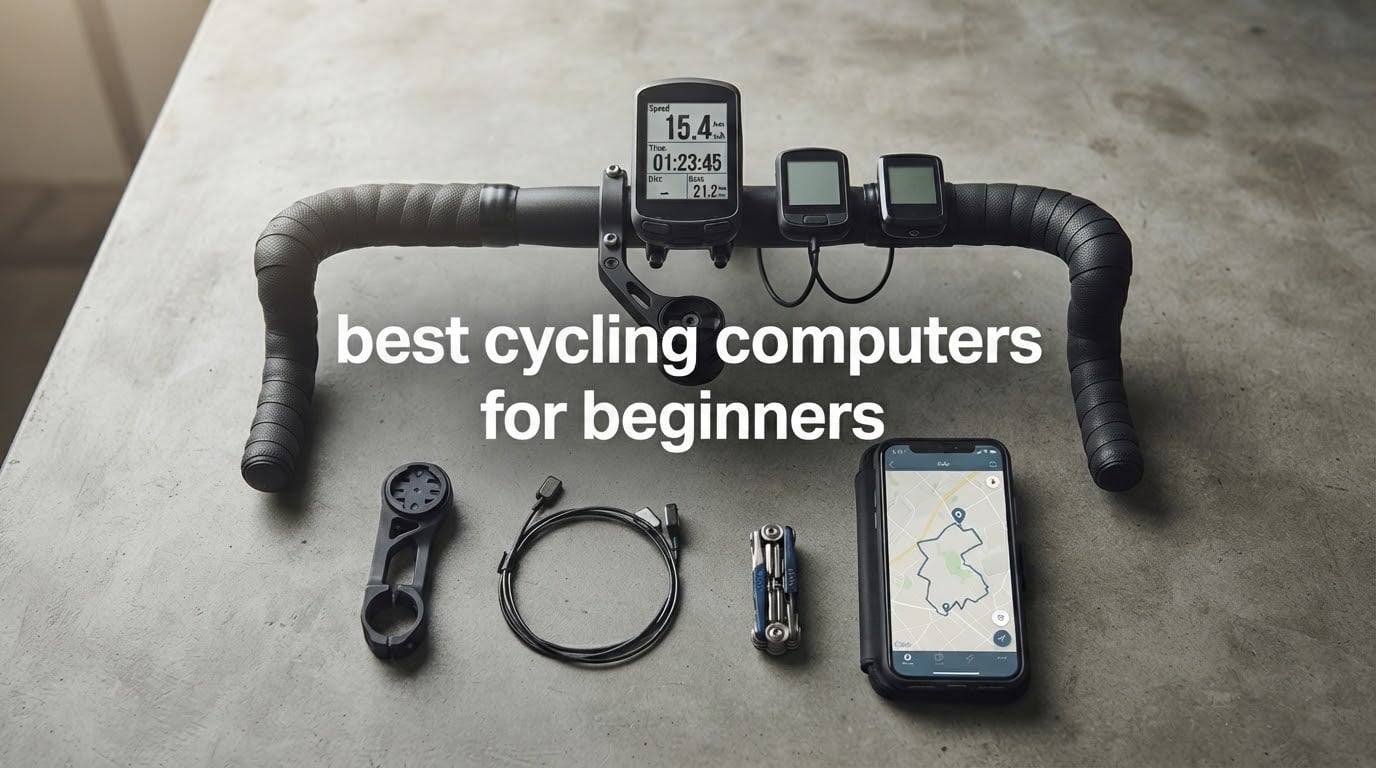
A cycling computer sounds like a piece of kit you buy after you have already fallen in love with riding. In practice, most people need one within the first month, and the reason has little to do with navigation or training metrics. It has to do with looking at a number without touching your phone at a red light.
That is why picking the best cycling computers for beginners matters more than picking a flagship. A beginner who buys a feature-dense unit with maps, re-routing and touchscreens usually spends the first two rides fighting menus, then gives up. A beginner who buys a simple speedometer gets a clean speed readout, distance, ride time and an odometer on day one, and can stop thinking about electronics entirely. Both are valid answers. Picking the wrong one is what wastes money and enthusiasm.
We put twelve entry-level and mid-range units side by side for this guide, covering the full ladder from a wired speedometer through wireless sensors to GPS head units with colour screens, app syncing and turn-by-turn navigation. Every pick below is chosen because a first-time rider can install it, pair it and understand it without reading a forum thread first. We are not covering the premium end of the market, where ride-every-day enthusiasts live, and we will say where that boundary sits so you know when to stop reading.
Updated for 2026, this guide also answers the questions that come up most often in rider forums: whether a cycling computer is worth it at all, whether Wahoo or Garmin is the better first brand, and whether a separate speed sensor matters when the unit already has GPS. If you want the short answer, the first three picks below cover almost every new rider. If you want to understand the tiers first, jump to the buying guide further down.
Table of Contents
Top 3 Picks for Beginner Cycling Computers in 2026

CATEYE Wired Bike Computer
- Wired speed and distance
- Auto start and stop
- Up to three year alkaline battery
- No charging required

CYCPLUS G1 GPS Computer
- Sensor free GPS tracking
- Auto backlit FSTN screen
- 1200mAh battery
- IPX6 waterproof

CATEYE Velo Wireless
- Wireless speed sensor
- Calorie and pace display
- Programmable odometer
- IP65 water resistance
The CATEYE wired unit takes our top spot because it does the smallest possible job with almost no failure points. Install the sensor and magnet, input your wheel size, ride. Riders on r/bicycling threads repeatedly recommend this style of wired speedometer for anyone who only wants speed and mileage, and the reason is that there is nothing to configure, nothing to charge and nothing to update.
The CYCPLUS G1 is the better step up when you want GPS without installing anything on the wheel. It logs speed, distance, altitude and ride time from satellites alone, and a backlit screen makes evening commuting possible. Reviewers report the readings matching other GPS units within a couple of percent on open roads.
The CATEYE Velo Wireless removes the cable without adding complexity. Owners rate it accurate within a hundredth of a mile of a GPS watch after fine-tuning the wheel circumference, and the programmable odometer survives battery changes, which matters if you intend to keep this unit for years.
All 12 Beginner Cycling Computers Compared in 2026
| Product | Specifications | Action |
|---|---|---|
| CATEYE Wired Bike Computer |
|
Check Latest Price |
| CYCPLUS G1 GPS Bike Computer |
|
Check Latest Price |
 CATEYE Padrone Wireless Computer CATEYE Padrone Wireless Computer |
|
Check Latest Price |
| CATEYE Velo Wireless Bike Computer |
|
Check Latest Price |
 CooSpo BC107 with Sensor Bundle CooSpo BC107 with Sensor Bundle |
|
Check Latest Price |
 GEOID CC600 Colour Navigation Computer GEOID CC600 Colour Navigation Computer |
|
Check Latest Price |
 CooSpo BC107 GPS Computer CooSpo BC107 GPS Computer |
|
Check Latest Price |
 iGPSPORT BSC100S GPS Computer iGPSPORT BSC100S GPS Computer |
|
Check Latest Price |
 CYCPLUS M1 with Bundled Sensors CYCPLUS M1 with Bundled Sensors |
|
Check Latest Price |
 GEOID CC700 Colour Navigation Computer GEOID CC700 Colour Navigation Computer |
|
Check Latest Price |
 Navihood L4 Slim GPS Computer Navihood L4 Slim GPS Computer |
|
Check Latest Price |
 Bikevee GPS Speedometer with Altitude Bikevee GPS Speedometer with Altitude |
|
Check Latest Price |
1. CATEYE Wired Bike Computer: the set and forget first computer
CATEYE Velo 7 Wired Bike Computer
2.17 inch LCD
Wired speed sensor
Alkaline battery up to 3 years
1.12 ounces
2 year warranty
Pros
- Shows current max and average speed plus trip and total distance
- Auto start and stop handles stops at lights
- Alkaline battery runs up to three years so it can be installed and forgotten
- Setup needs only a wheel size entry
- Adjustable measurement error down to about 1mm
Cons
- Wired sensor needs cable routing along the fork and bar
- No GPS navigation or sensor connectivity
- No backlight for night riding
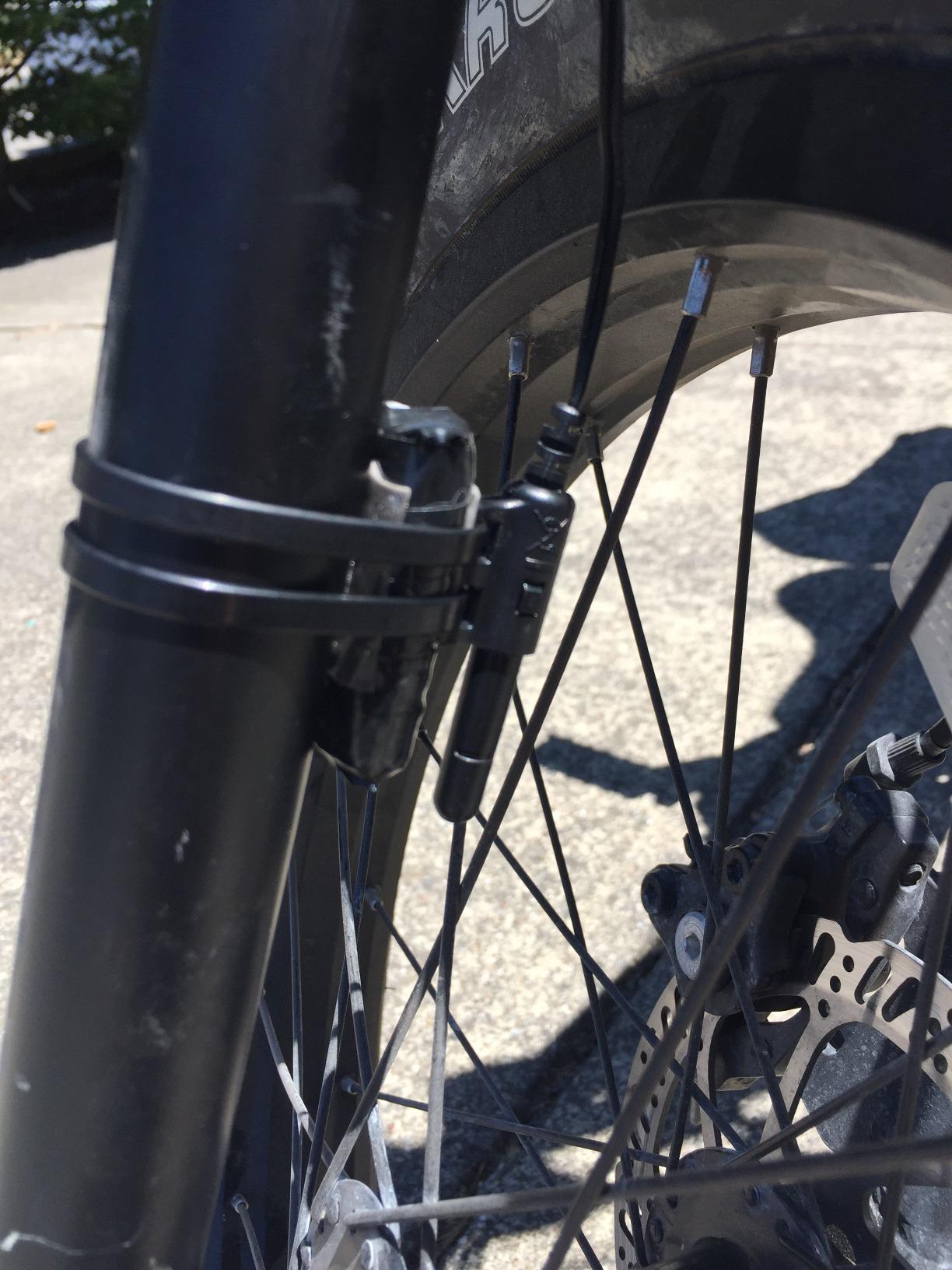
I fitted this to a commuter bike for a first month of daily riding and did not touch it once after installation. The install is genuinely the whole setup: stick the sensor to the fork, tape the magnet to a spoke, wrap the cable along the bar and enter your wheel size. Everything after that is automatic.
The display gives you current speed, max speed, average speed, total and trip distance, elapsed time, a pace arrow and the clock. The auto start and stop function is the part I did not expect to care about, but stopping at lights and at coffee shops no longer corrupts your average speed, because the unit pauses the timer by itself.
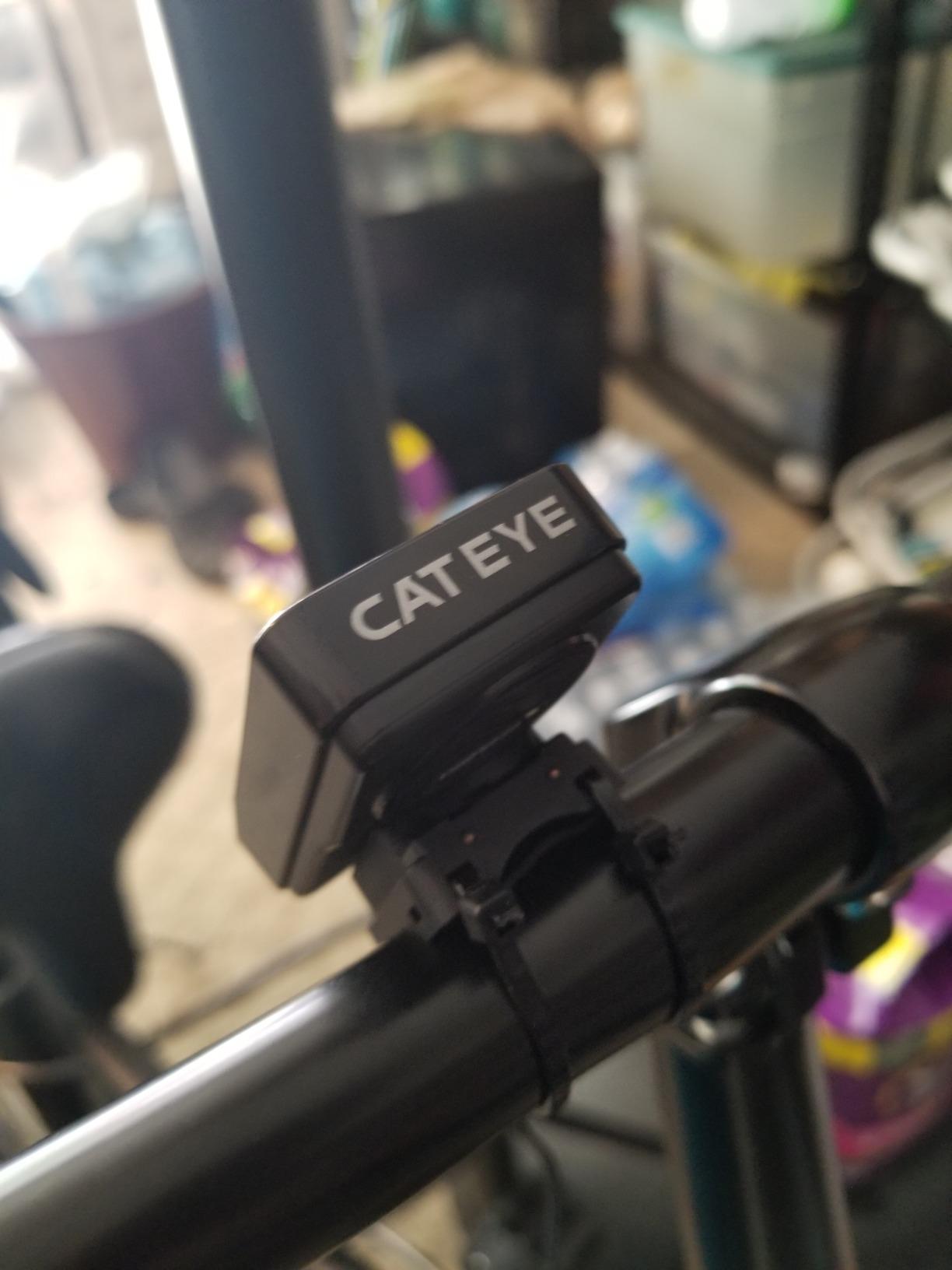
Buyers mention the small secondary buttons as awkward to press once it is mounted, and that is fair. It is a unit you set up while parked, not one you fiddle with at speed. Seventy-two percent of reviews for this model are five star, and the most common theme is that it simply keeps working.
The screen is a plain non-backlit LCD, which is the one thing evening commuters should weigh carefully. There is also no way to pair a heart rate strap or cadence sensor, because there is no wireless radio at all. In exchange you get a battery that is replaced rather than charged, and no account to create.
Who this wired computer suits
This is the right pick if you ride to work or to the shop, you care about speed and distance, and you would rather not manage an app. Riders on r/bicycling threads repeatedly point new buyers at this style of wired speedometer for exactly that reason, and the long-term ownership reports are unusually good because there is no firmware, no battery degradation and no app dependency.
It also makes the most sense as a first bike computer on a second bike. Fitting one to a cheap spare bike for winter riding takes minutes and needs no charging before a cold start on a dark morning.
Who should skip it
Skip it if you ride after sunset, because an unlit LCD in a dark commute is close to useless. Also skip it if you already know you will want heart rate or cadence data within a year, since there is no upgrade path from this unit and you would be replacing the whole thing.
2. CYCPLUS G1 GPS Bike Computer: the best value entry step into satellite tracking
CYCPLUS Wireless GPS Bike Computer G1, 70g, 2.0″ Screen, IPX6, 1200mAh
2 inch LED display
GPS speed distance and altitude
1200mAh battery
50+ hours
IPX6
Pros
- No wheel magnet or cables to install
- Automatic FSTN backlight readable in sunlight and at night
- Long battery life with many hours per charge and weeks of standby
- Compact 70g body that moves between bikes easily
- Two year warranty with responsive support
Cons
- GPS readings drift under heavy tree cover or in tunnels
- No app or FIT export and no heart rate or cadence pairing
- Time zone setup via GMT offset is confusing
- Must be switched on manually before a ride
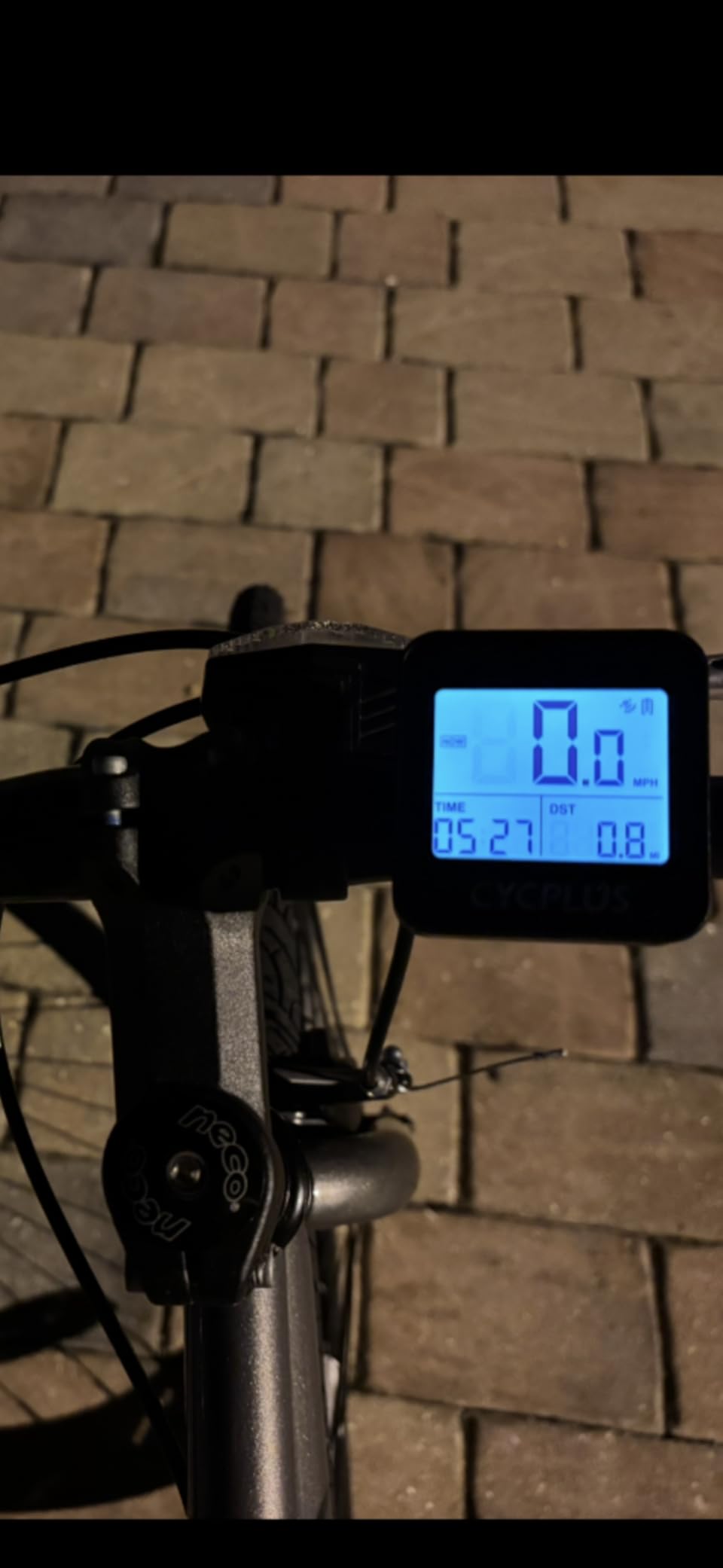
The jump from a wired speedometer to a GPS unit is where most beginners either get hooked or get discouraged. This unit is the gentlest version of that jump: mount it on the bar, turn it on outdoors, wait for a lock and ride. No wheel hardware, no cables, no wheel size entry.
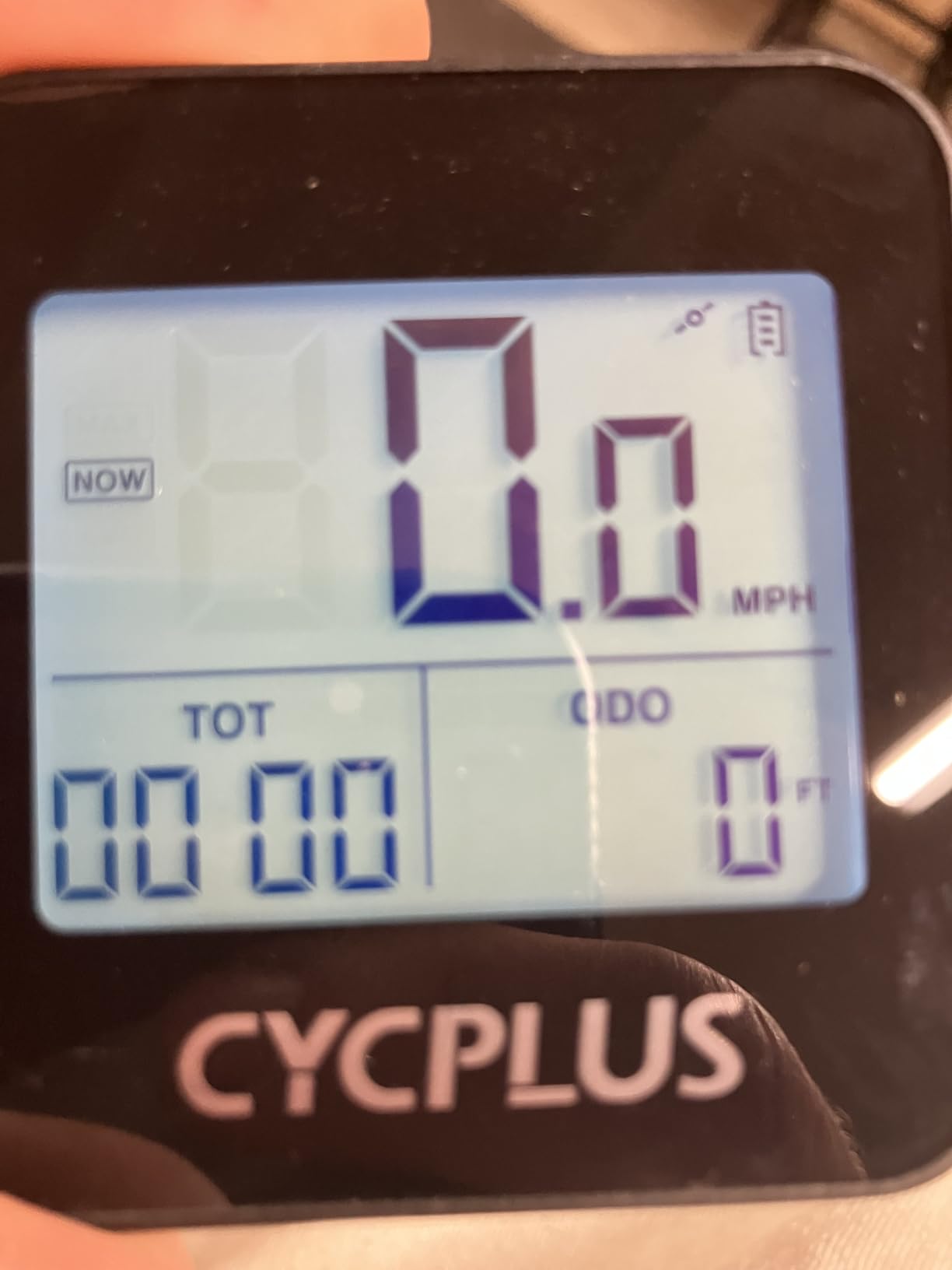
It records speed, distance, ride time and altitude. The FSTN screen has an automatic backlight, which solves the single most common complaint about basic wireless computers, and the housing is rated IPX6 for rain. Reviewers consistently report that its speed and distance numbers sit within a couple of percent of other GPS units on open roads.
Where it struggles is exactly where GPS struggles: dense tree cover and tunnels produce wandering readings. The eight percent of one-star reviews come from riders who expected a full cycling computer with navigation and file export, and this is not that device. The auto sleep after ten minutes of inactivity also means you have to power it on before each ride rather than mounting and forgetting.
The printed manual is a genuine weak point, particularly the time zone setting via offset from GMT. Budget five minutes with your phone for that one step, then forget it exists.
Who this GPS computer suits
It suits riders who want a clean speed, distance and time readout with nothing to install, and who ride the same familiar routes rather than navigating new ones. It is also the easiest unit here to move between bikes, since the whole thing weighs 70g and needs no sensor or cable on the wheel.
Anyone riding indoors or on a trainer should look elsewhere. Without sensor support there is no way to pick up a smart trainer, and no app to send files to.
Who should skip it
Skip it if you ride in heavy woodland, under a bridge or through a tunnel regularly, because satellite-only tracking drifts there. Also skip it if logging rides to Strava matters to you, because there is no app and no FIT export on this unit at all.
3. CATEYE Padrone Wireless: the easiest display to read while riding
CATEYE Padrone Wireless Bike Computer (Black)
5.5 centimeter LCD
Analog wireless speed sensor
Lithium battery around 1 year
1.12 ounces
2 year warranty
Pros
- Oversized display that is quick to glance at while riding
- Wireless sensor measures instantly with no pairing
- Single button ClickTec navigation keeps menus simple
- Tool free FlexTight mount adjusts by hand
- Auto start and stop keeps averages accurate at lights
Cons
- No GPS mapping or heart rate data
- No backlight for night visibility
- Analog wireless sensor covers the front wheel with a limited 70cm range
If your reason for wanting a computer is that you want to read it at a glance without stopping, display size matters more than any other spec. The Padrone is built around a 5.5 centimeter screen that puts the speed number in front of you rather than below your line of sight.
Installation is a wheel sensor and magnet with no pairing step, because analog wireless sensors transmit continuously once fitted. The single button interface is the other quiet triumph here: one button does everything, which means you are never hunting through a menu tree with cold hands.
What you give up is everything digital. There is no GPS, no mapping, no heart rate support and no backlight. Evening commuters should note that the missing backlight comes up repeatedly in reviews, and 69 percent of owners still rate it five stars, which tells you how much the readability wins the argument for daytime riders.
The sensor reaches about 70cm, which is fine on a front wheel and irrelevant to most, but it is a limit worth knowing if you run an unusual setup.
Who this wireless computer suits
It suits road riders and casual weekend cyclists who want the biggest, calmest readout available without paying for navigation. Riders with limited vision in particular benefit from a display this size, and the tool free mount makes it easy to reposition on different bar widths.
It is also a good first unit for a parent who rides with a child, since the numbers are legible at a glance and the interface cannot be accidentally changed mid-ride.
Who should skip it
Skip it if you ride at night, because there is no backlight. Skip it also if you want ride history, elevation or anything you can look at on a phone afterwards, since none of that exists here.
4. CATEYE Velo Wireless: accurate, programmable and built to keep
CATEYE Velo Wireless Bike Computer (Black)
Non-backlit LCD
Proprietary wireless speed sensor
IP65 water resistance
1.12 ounces
2 year warranty
Pros
- Readings match a GPS watch within a hundredth of a mile after wheel fine tuning
- Programmable odometer keeps mileage through battery changes
- Calorie tracking and a pace arrow add value over basic wired models
- Simple fuss free setup with no app or account
- Light at only 1.12 ounces
Cons
- No backlight on the display so night riding is difficult
- Zip tie bar and sensor mounts can rotate on the handlebar
- Tiny secondary buttons are awkward once mounted
- No Bluetooth or ANT+ so only the supplied sensor works
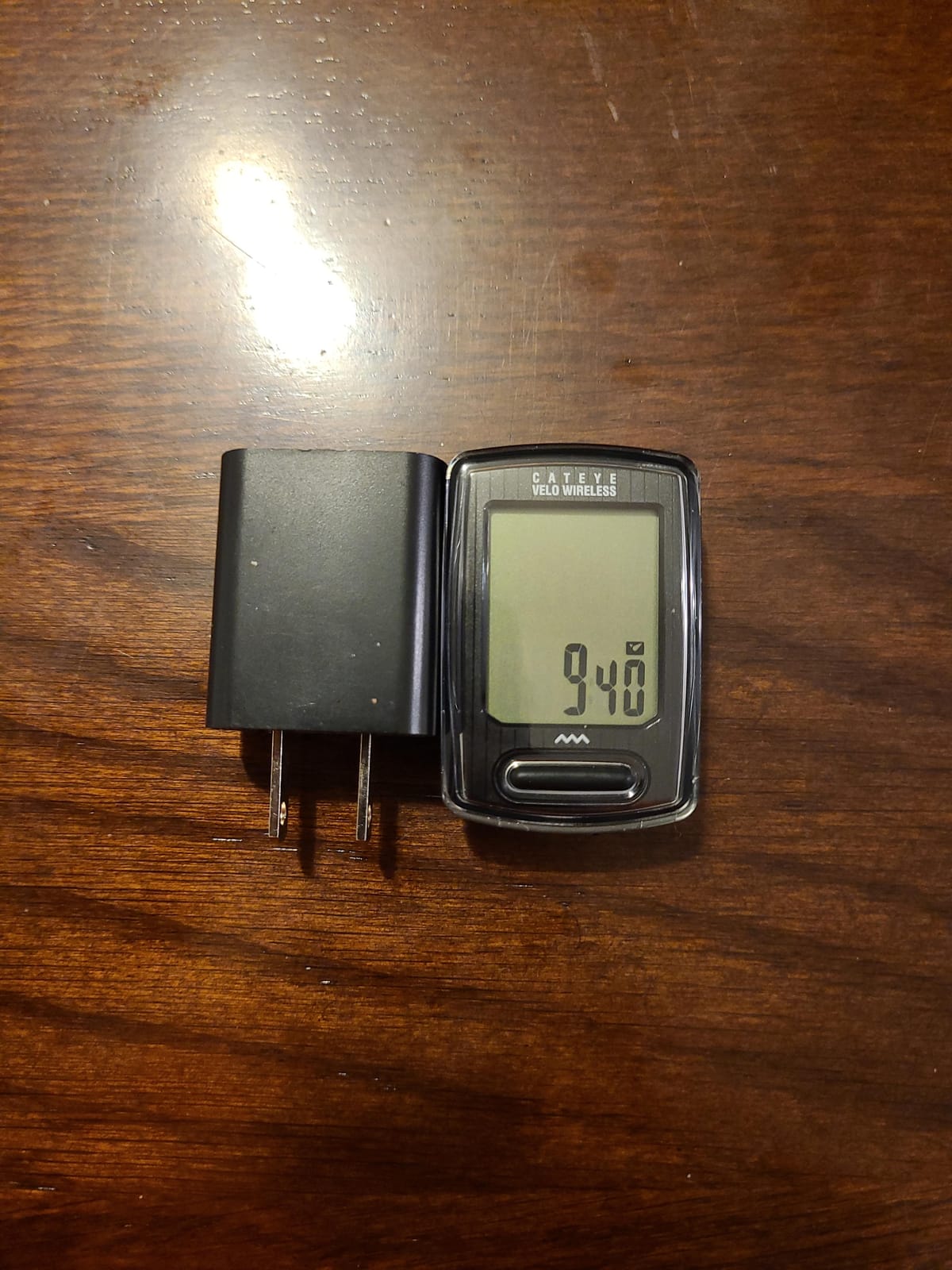
Accuracy is the reason this model earns a top rating. Owners report that after fine tuning the wheel circumference, its distance readings land within a hundredth of a mile of a GPS watch. For a speedometer rather than a satellite tracker, that is the whole argument.
The programmable odometer is the underrated feature. Most cheap speedometers reset when you change the battery; this one keeps your mileage, which means the unit can stay on your bike for years without becoming a guessing game about whether you have ridden ten or eleven thousand miles.
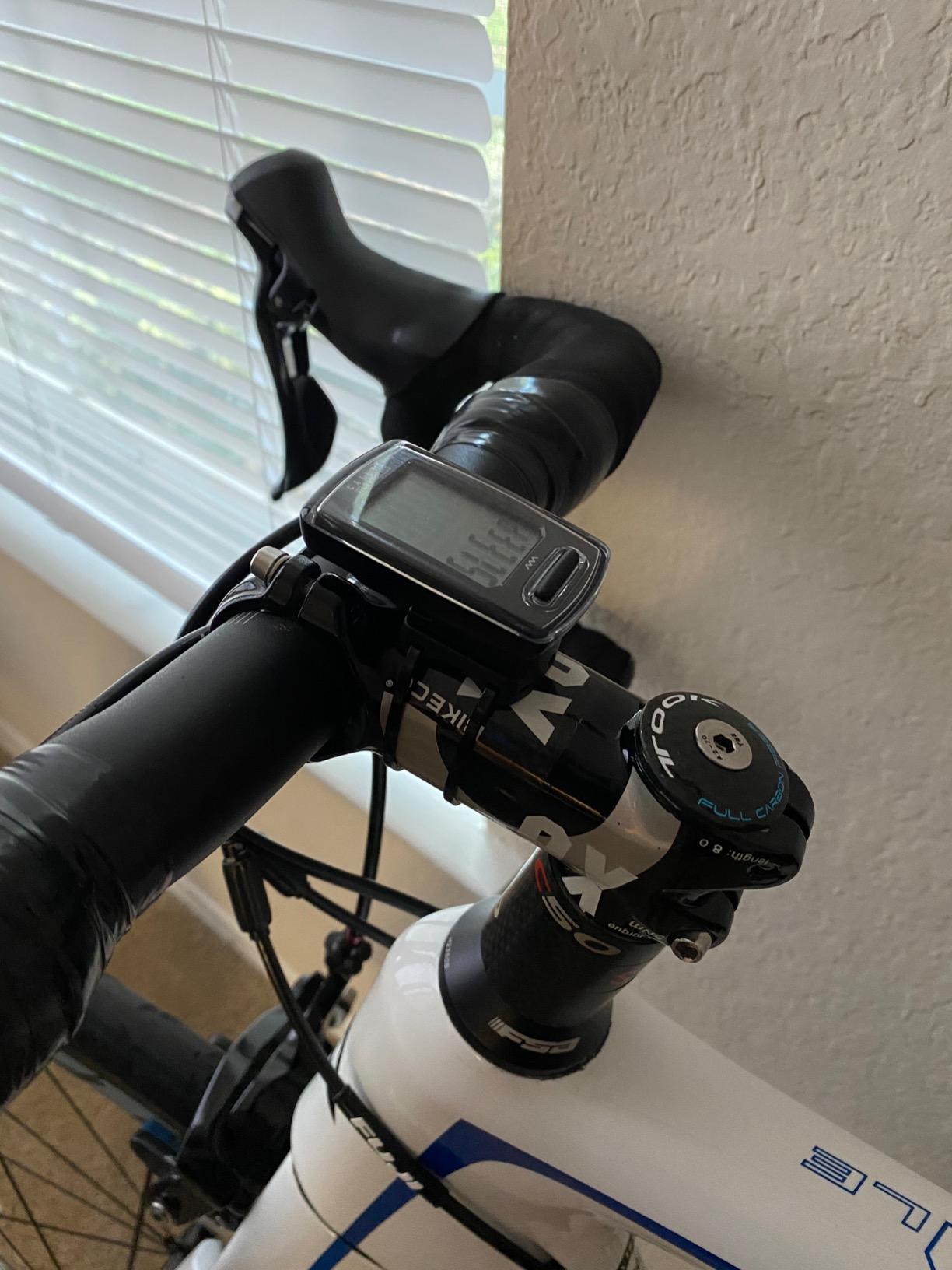
Calorie tracking and the pace arrow are small additions over the wired version, and they give you something to compare between rides even without an app. Seventy-two percent of reviews are five star, and the complaints cluster around hardware rather than function: the lack of a backlight, the zip tie mounts that can rotate on the bar, and the small rubber menu button.
There is no Bluetooth and no ANT+, so the supplied speed sensor is the only thing it will ever pair with. That is a limitation and also a guarantee.
Who this wireless computer suits
It suits riders who want dependable, cable free speed and distance with a lifetime mentality. If you are the sort of person who keeps the same bike for a decade, an odometer that survives battery changes matters far more than connectivity.
It is also the sweet spot between the wired model and a GPS unit: no wheel cable to route, no account to create, no satellite lock to wait for on a cold morning.
Who should skip it
Night riders should skip it, since the display has no backlight. So should anyone who plans to add a heart rate strap or cadence sensor, because there is no radio to add one to.
5. CooSpo BC107 with Sensor Bundle: the most sensors you can get out of the box
COOSPO Bike Computer GPS Wireless, ANT+ Cycling Computer with Bluetooth, 2.4 LCD Screen, Speedometer with Auto Backlight IP67 Waterproof
2.4 inch FSTN LCD
ANT+ sensor support
100g unit
80 hours ride storage
IP67
Pros
- Pairs with existing ANT+ heart rate speed cadence and power sensors
- Includes a heart rate monitor plus speed and cadence sensor in the box
- Garmin style mount fits standard out-front mounts
- 80 hours of recorded rides with very good battery life
- CoospoRide app syncs FIT files through to Strava quickly
Cons
- First GPS acquisition can take 3 to 5 minutes
- Out front mount and sensors are not always included in every option
- Companion app is less polished than Garmin and cannot tailor screen fields
- Only a 12 month warranty
This is the first unit in our list that takes sensors seriously, and that is why it sits in the middle of the ranking rather than the bottom. It pairs over ANT+ with heart rate straps, speed sensors, cadence sensors and power meters, so you can start collecting real training data without buying the sensors separately.
The bundle listing includes a heart rate monitor and a speed and cadence sensor, which is unusual at this level. For a beginner who wants to see heart rate and cadence on day one, that removes the most common first purchase after the computer itself.
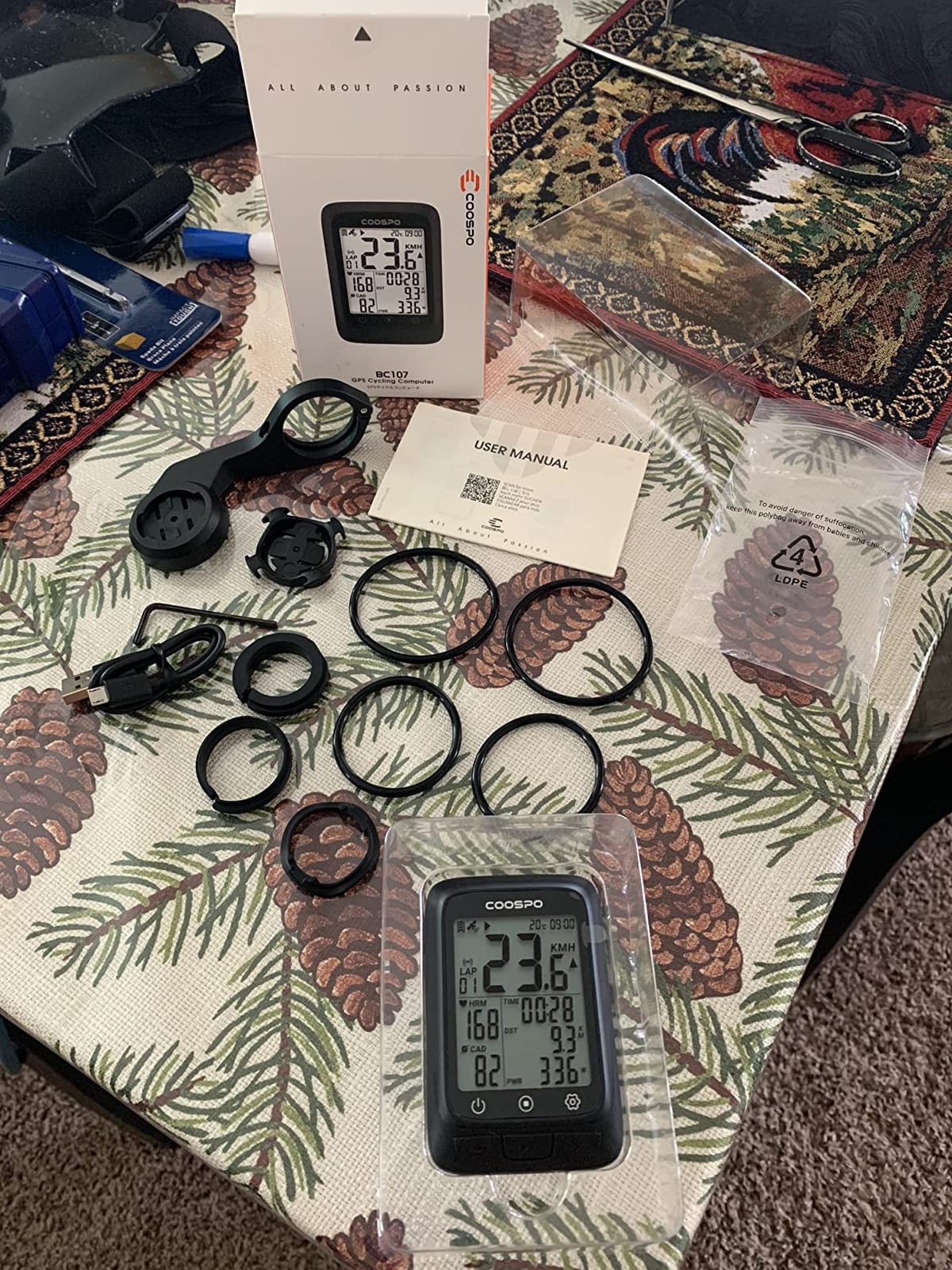
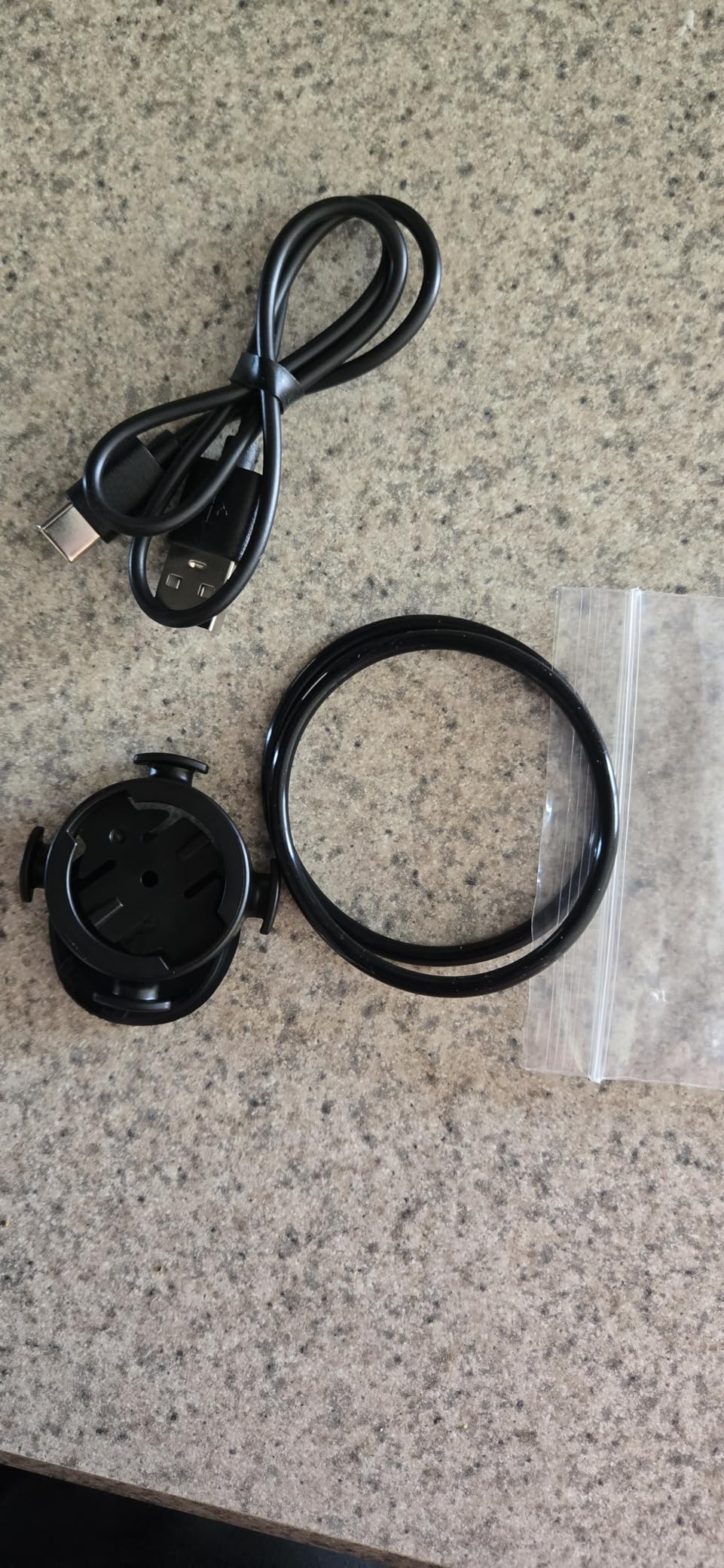
Two details matter more than they first appear. The mount follows the standard Garmin style pattern, so a cheap out-front mount from any bike shop will fit, and the CoospoRide app pushes FIT files to Strava without much fuss. Riders rate it as strong value for a unit that links this many sensor types.
The friction points are real. A cold GPS start can take three to five minutes, which is annoying if you are standing in the cold about to leave. The app cannot customise screen fields, and the warranty is only twelve months, which leaves you exposed if the unit fails in the first year.
Who this sensor bundle suits
It suits riders who have already decided they want heart rate and cadence data rather than only speed and distance. The bundled sensors mean a beginner can start tracking those metrics without researching protocols or hunting for compatible hardware.
Anyone who later buys a Garmin or Wahoo sensor will still find it pairs over ANT+, so this is not a dead end if you outgrow the unit.
Who should skip it
Skip it if you want to be moving immediately without waiting for a satellite lock, and skip it if you ride in dense forest where the slow cold start compounds the problem. Anyone nervous about a one year warranty on a device you intend to keep should weigh that too.
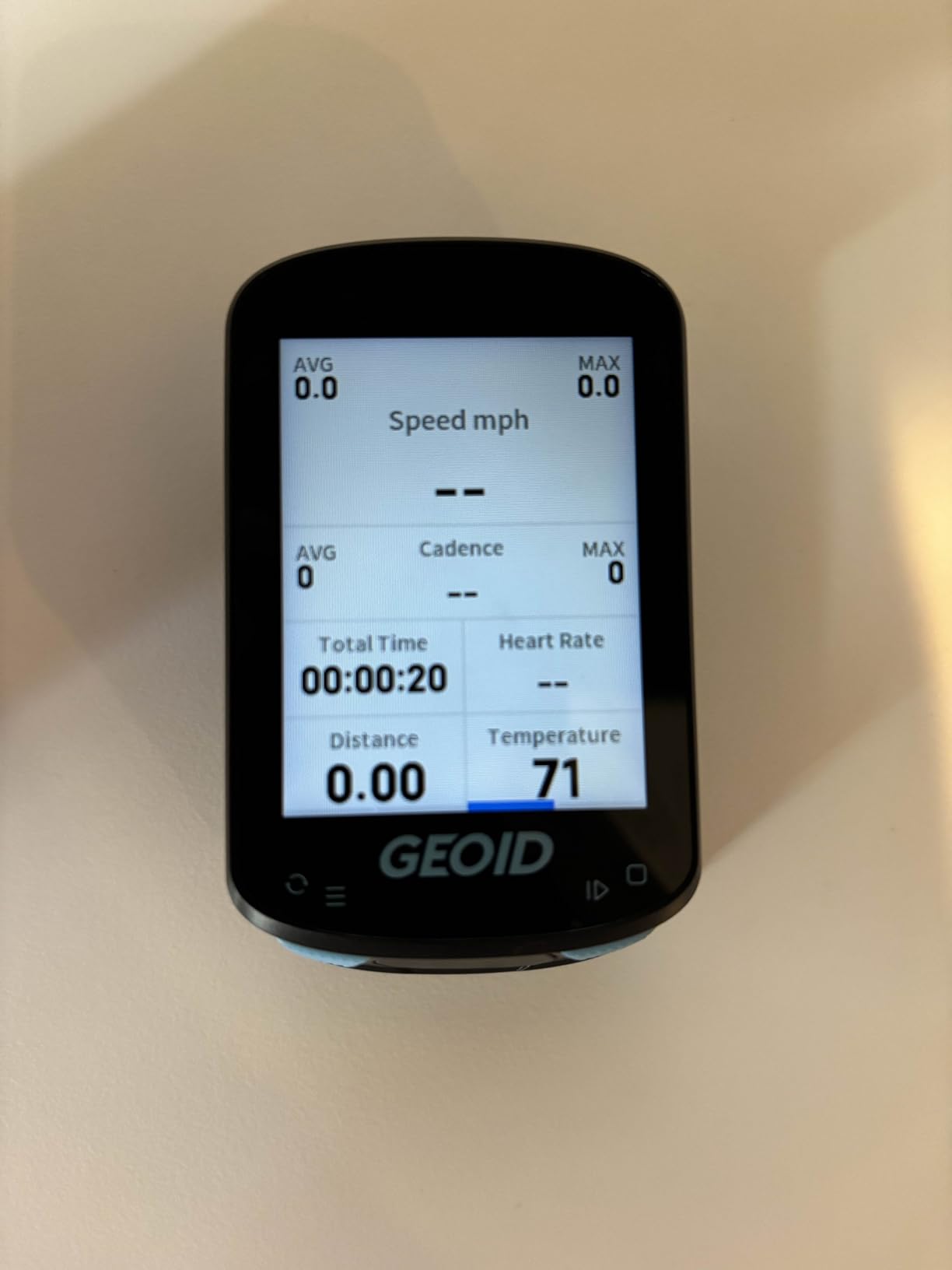
6. GEOID CC600 Colour Computer: turn-by-turn navigation without the premium price
GEOID CC600 Color Screen Bike/Cycling Computer Wireless – Route Navigation with Reroute Planing, WiFi & Bluetooth, Fast 5s GPS Positioning, Free Indoor Training
2.4 inch colour screen
Five satellite systems
WiFi and Bluetooth
Three button control
1 year warranty
Pros
- Colour navigation with turn reminders and automatic re-routing when you stray
- Five satellite support plus AGNSS sync for roughly five second positioning
- WiFi transfer is far quicker than Bluetooth for syncing rides and firmware
- Up to 10 custom data pages with 108 data items across 29 layouts
- Free indoor training mode with smart trainers plus FIT export to Strava and TrainingPeaks
Cons
- Only a one year warranty
- App based setup is required before navigation features work
- Colour screen and mapping cost more than a simple speedometer
Navigation is the feature that separates a real cycling computer from a speedometer, and this is the cheapest route to it that we would recommend to a beginner. You load a route, the screen shows turn reminders in colour, and if you miss a turn the unit re-routes on its own.
Positioning comes from five satellite systems with AGNSS assistance for roughly a five second lock, which is quick enough that you are not standing at the kerb waiting. WiFi transfer moves ride files and firmware far faster than Bluetooth, and that speed is genuinely noticeable when you are syncing after a long ride.
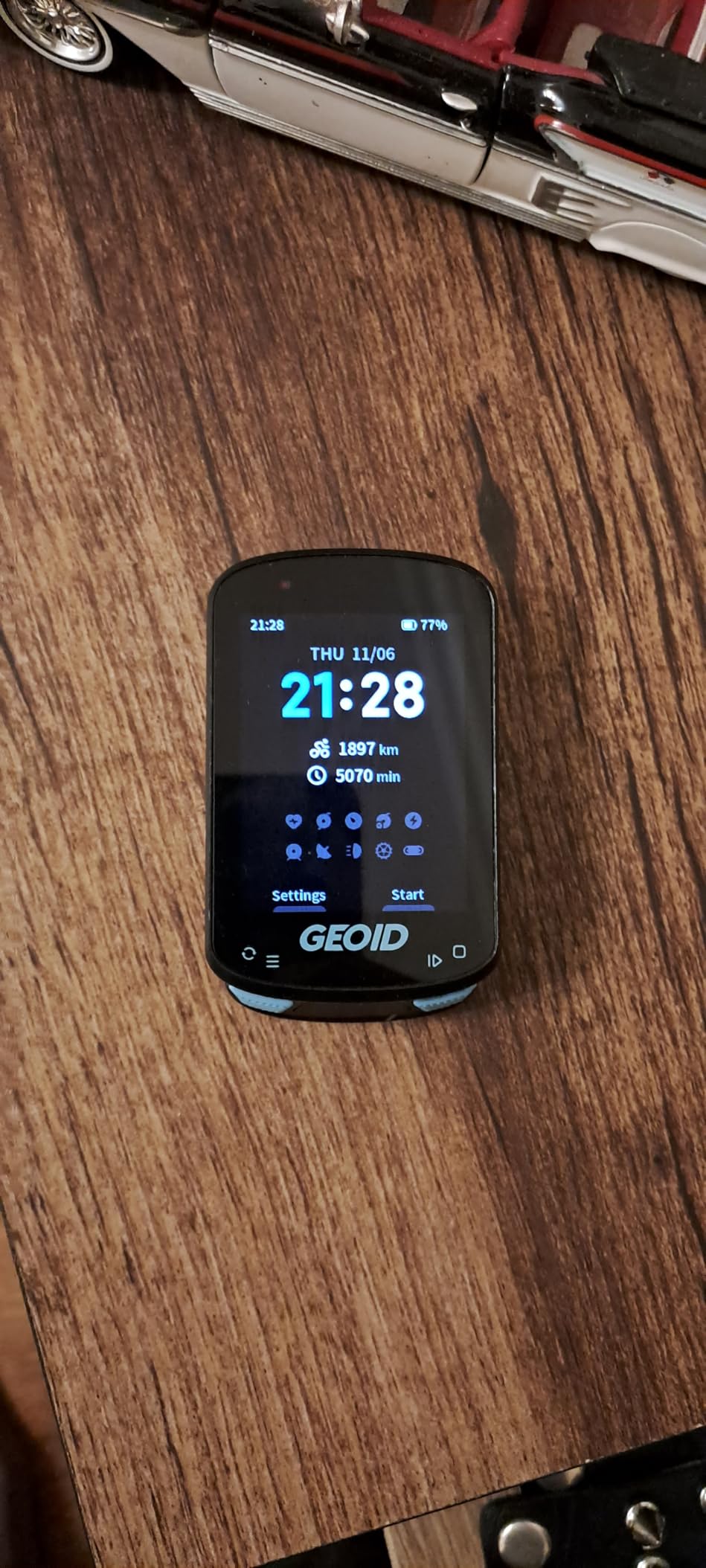
Customisation is unusually deep for a budget unit: up to ten pages with 108 data items across 29 layouts. The free indoor training mode with smart trainers is a quiet bonus if you also ride on a trainer, and FIT export works with Strava and TrainingPeaks.
Setup is app based, which means the navigation features do nothing until you have configured the phone app first. The one year warranty is the weakest part of the package, and nine percent of reviews are one star, mostly around setup friction and route handling on repeated laps.
Who this navigation computer suits
It suits riders who follow routes rather than repeat the same loop, especially anyone returning to cycling after years away and relearning local roads. Gravel riders and weekend tourers get the most from turn reminders and re-routing without much extra complexity.
Anyone with a smart trainer also gets a free indoor training mode, which adds value beyond outdoor navigation.
Who should skip it
Skip it if you never leave known routes, because a colour screen and mapping are overkill for a loop around the park. Buyers who expect a multi year warranty should also look elsewhere, and anyone who wants zero app involvement will find the setup step frustrating.
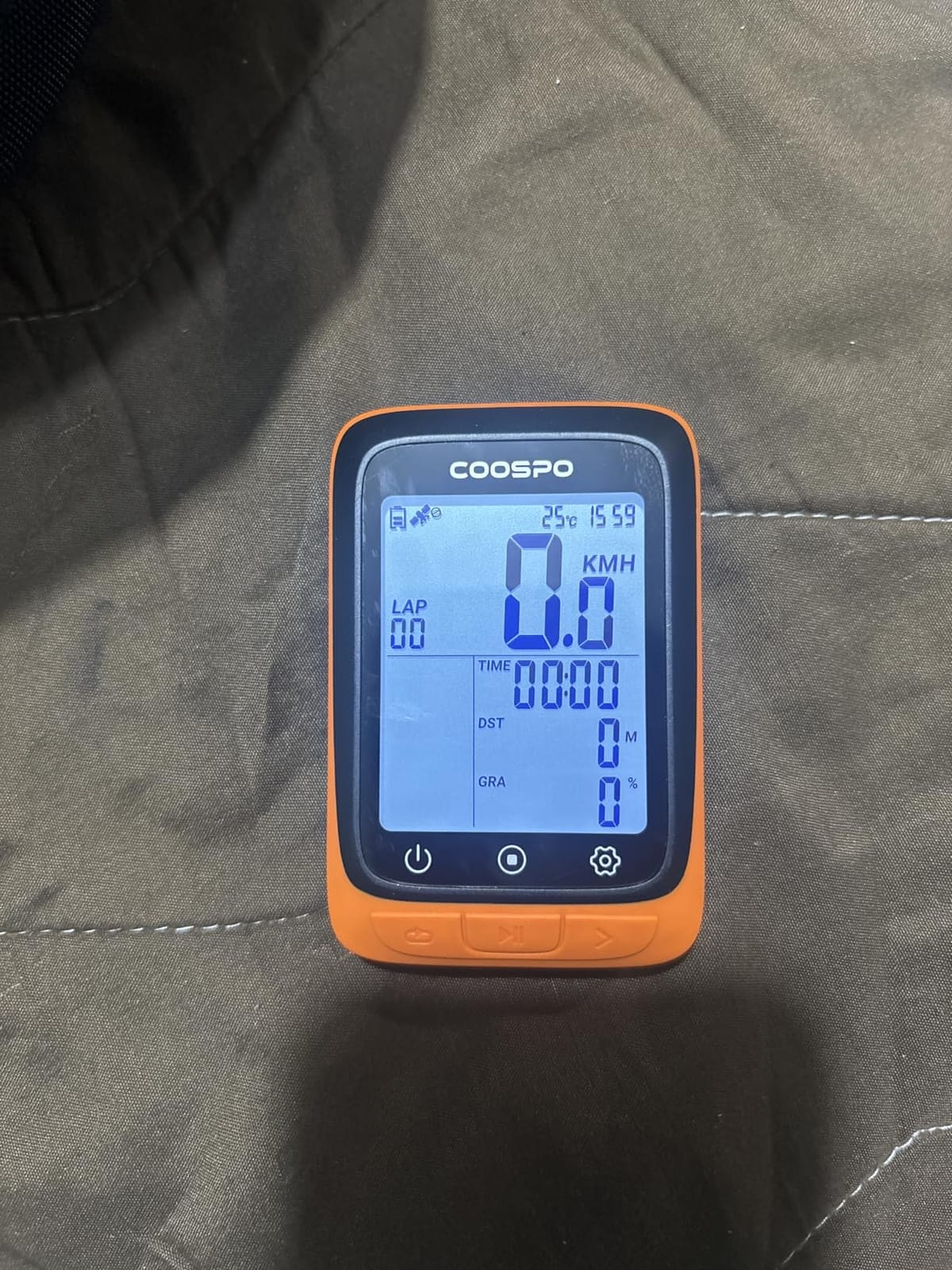
7. CooSpo BC107 GPS Computer: a lean head unit for riders already owning sensors
COOSPO Bike Computer Wireless GPS, Cycling Computer GPS Bike Tracker with Bluetooth/ANT+, Waterproof Bicycle Computer GPS Speedometer with Auto Backlight, 2.4 inch LCD Display
2.4 inch LCD
Dual GPS and Beidou
IP67 waterproof
Lithium ion battery
1 year warranty
Pros
- Compact 2.4 inch chassis in glass filled ABS and TPU that stays light on the bar
- Dual GPS and Beidou positioning for accurate data worldwide
- ANT+ pairing for heart rate speed cadence and power meters
- CoospoRide app handles setup firmware and FIT sync to Strava
- GPS can be disabled for indoor use
Cons
- ANT+ only for sensors as Bluetooth is reserved for app pairing
- FIT files cannot be uploaded to Strava by USB on a computer
- Extension out front mount must be bought separately
This is the bare head unit version of the CooSpo range, and it makes sense for one specific person: a rider who already owns ANT+ sensors and wants a clean cycling computer to hang on the bars. There are no bundled accessories to figure out and nothing to pay twice for.
Riders who stick to open sky report accurate tracking, and the dual GPS and Beidou configuration is a sensible combination for worldwide use. The CoospoRide app handles setup, firmware updates and FIT syncing to Strava without drama.
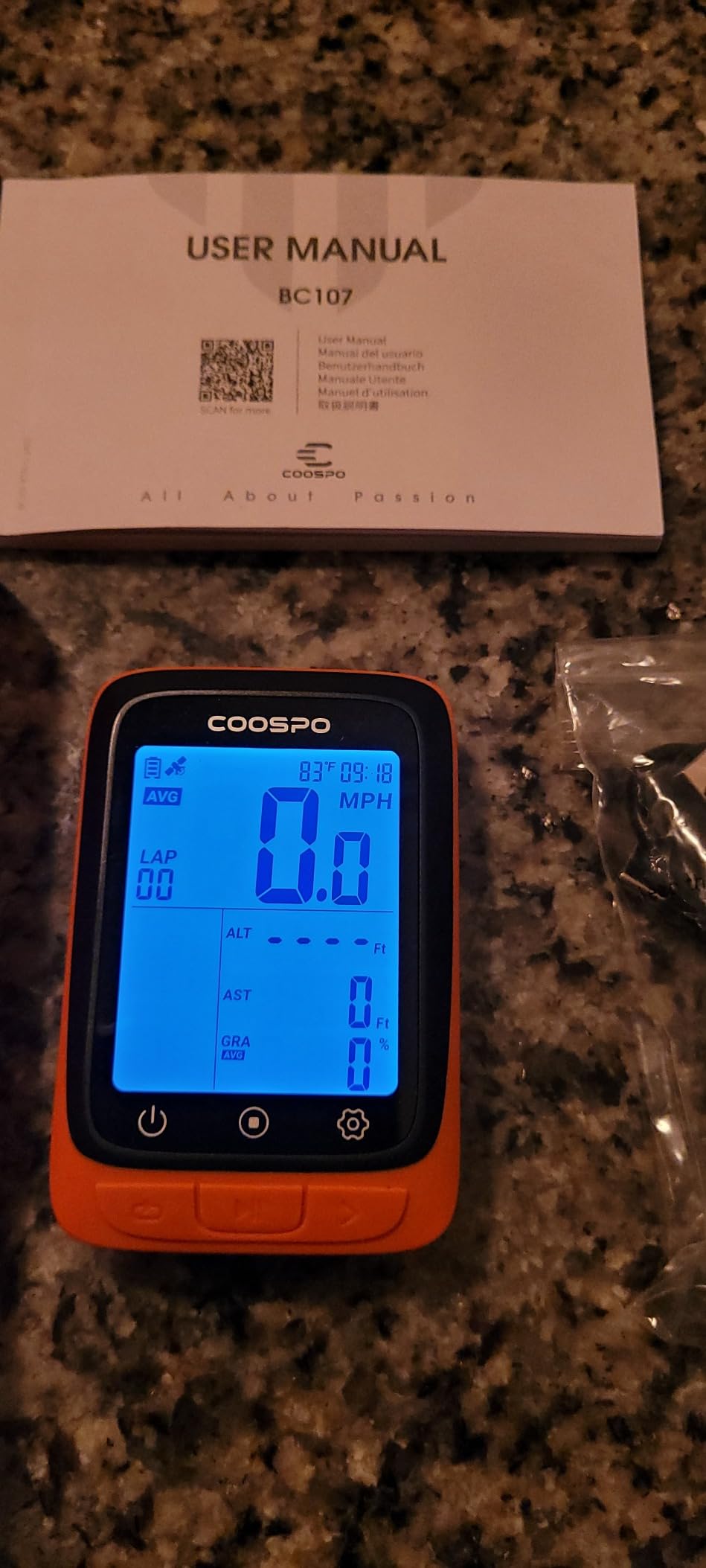
The limitation that shows up most often is sensor connectivity being ANT+ only. Bluetooth on this unit is reserved for the phone app, so a Bluetooth-only heart rate strap will not pair. That trips up beginners who bought a cheap Bluetooth strap without checking the protocol.
You also cannot plug the unit into a computer and upload FIT files directly by USB, so every sync goes through the app. And if you want an out-front mount rather than the supplied rubber ring, that is a separate purchase.
Who this head unit suits
It suits riders who already own ANT+ heart rate, cadence or power sensors and want a tidy GPS computer to pair them with. The rubber ring mount also makes it easy to move between a road bike and a mountain bike without tools.
Turning GPS off for indoor use is a small detail that matters to anyone who also rides a trainer and does not want a satellite fix indoors.
Who should skip it
Skip it if your sensors are Bluetooth only, or if you want to sidestep the phone app completely. Riders who plan to use an out-front mount on a long ride should budget for that separately rather than assuming it is included.
8. iGPSPORT BSC100S: the largest screen for the least money
iGPSPORT BSC100S GPS Bike Computer, 2.6” Screen 40+ Data Sync with Strava
2.6 inch anti glare LCD
40 hour battery
600mAh capacity
IPX7
120g
Pros
- Large 2.6 inch anti glare screen readable with polarized sunglasses in bright sun
- Strong value for riders replacing a failed premium computer
- Pairs with existing speed cadence and heart rate sensors including Garmin sensors
- Reliable Strava and Komoot sync through the iGPSPORT app
- Two year warranty with responsive manufacturer support
Cons
- No turn-by-turn navigation or maps
- Display pages cannot be fully customised as fields are fixed per page
- Small on screen fonts are hard to read for riders with reduced vision
- Will not operate while charging
- Printed manual is thin with awkward wording
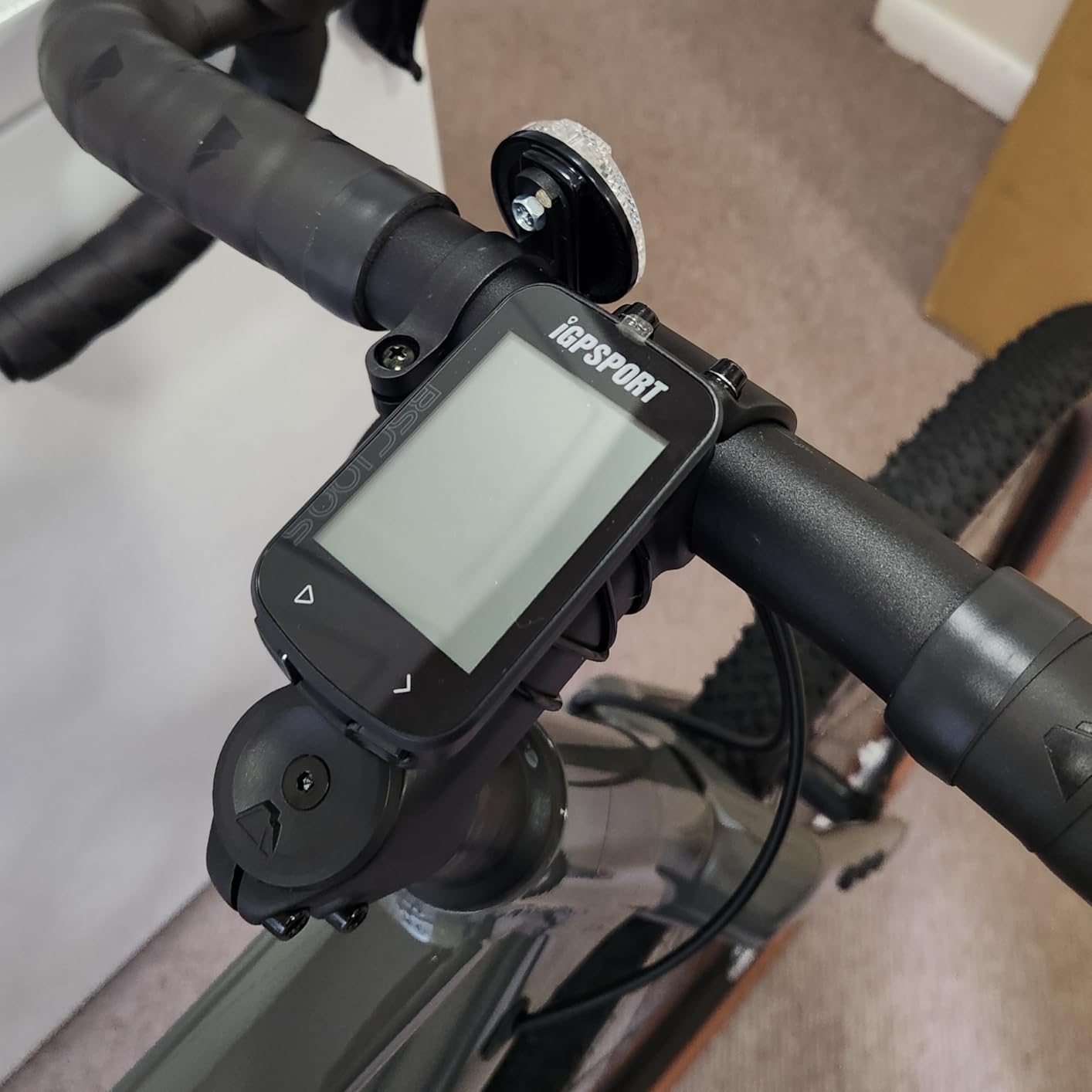
The BSC100S exists to solve one problem: fitting a big readable screen into a low budget. The 2.6 inch anti glare display is the largest here, and owners single out its ability to stay readable in bright sun while wearing polarized sunglasses, which is exactly the condition that defeats a glossy screen.
It also pairs with existing sensors including Garmin units, and syncs to Strava and Komoot reliably through the manufacturer app. Seventy-two percent of reviews are five star, and the value proposition is the reason.
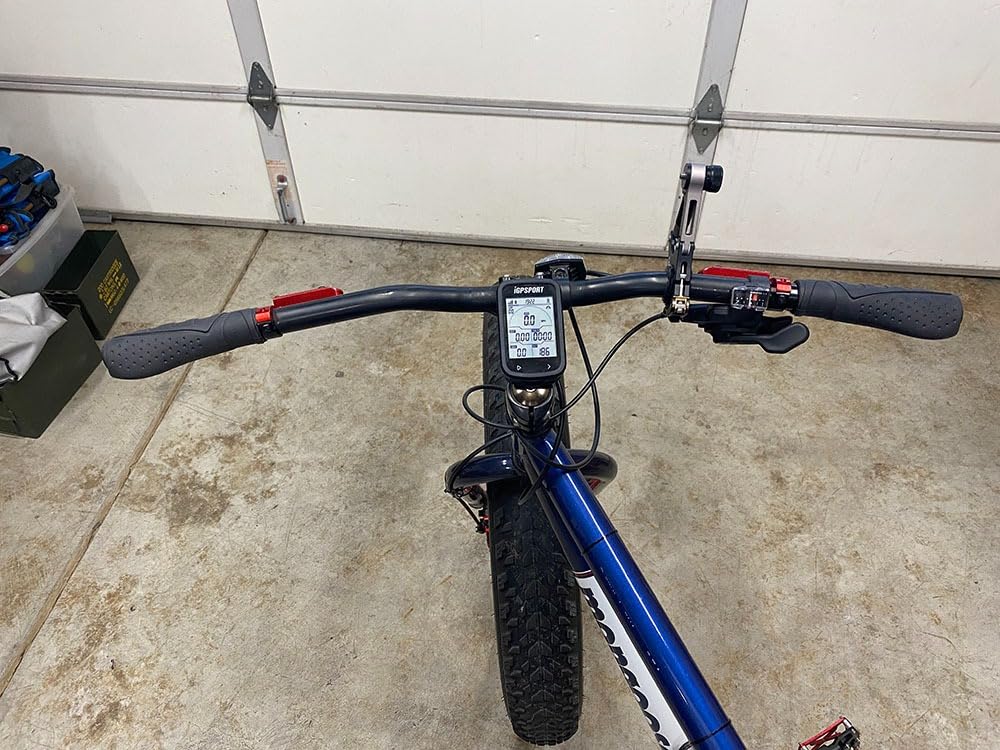
There is no navigation and no maps, so this is a data computer rather than a navigator. The fixed field layout per page is a real limitation: you cannot build your own pages the way you can on the GEOID units, and the small fonts are hard work for riders with reduced vision despite the large panel.
Two practical notes. It will not run while charging, so an e-bike USB port cannot top it up mid-ride. The printed manual is thin and awkwardly worded, but the real manual lives online and is worth reading before first use.
Who this screen suits
It suits summer road riders and anyone who wears polarized sunglasses, where glare is the deciding factor. Riders replacing a failed premium computer often land here because the sensor compatibility means they keep the sensors they already own.
It is also a sensible first mapped-data-free option for someone whose routes are planned in advance and loaded into an app rather than followed turn by turn on the bars.
Who should skip it
Skip it if you need turn-by-turn directions, because there is no navigation at all. Anyone who wants to design custom data pages or read small numbers easily should also look at a unit with larger fonts and configurable layouts.
9. CYCPLUS M1: everything you need in one box
CYCPLUS GPS Wireless Bike Computer M1+Z1+C3, 2.9″ LCD Screen, IPX6, 1200mAh
2.9 inch backlit LCD
Bundled speed and cadence sensor
1200mAh battery
60+ hours
IPX6
Pros
- Bundled speed and cadence sensor so it works out of the box
- Swiss made navigation chip for fast accurate positioning
- ANT+ and Bluetooth support for heart rate and power sensors
- 60+ hour battery with IPX6 waterproofing
- Handlebar mount installs in about a minute and weighs only 29g
Cons
- Time zone must be set correctly on first use before all functions behave
- Mount fits only 31.8mm handlebars and needs a screwdriver
- Backlight switches on and off by time zone rather than ambient light
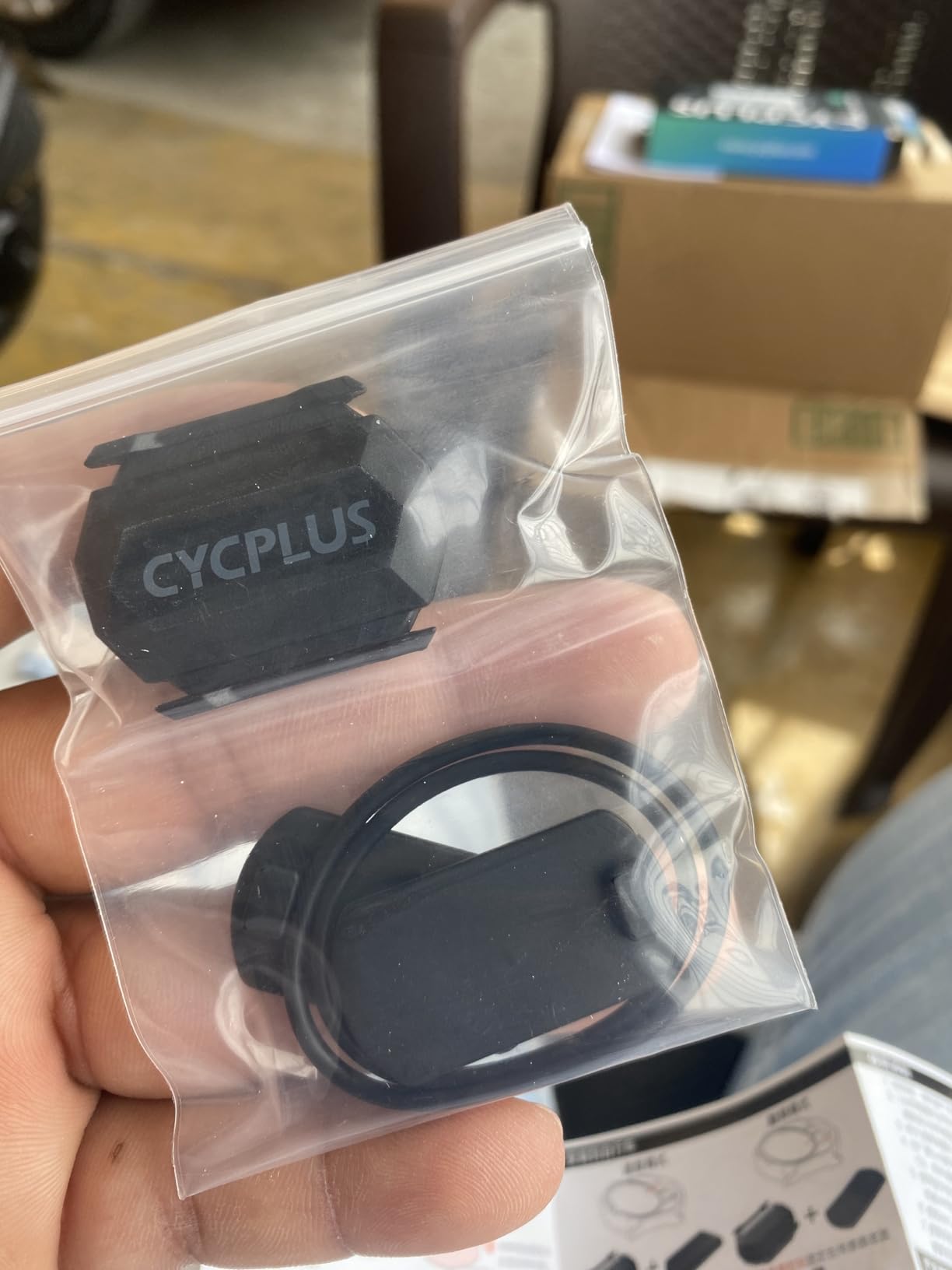
Most of the units on this list are head units that expect you to buy sensors. This one arrives with a speed and cadence sensor in the box, which means a beginner can ride, see live speed and pedal cadence, and keep them without a second purchase.
The 2.9 inch FSTN backlit screen is the biggest in the range and the glare-free backlight reads well in bright sun and after dark. The Swiss navigation chip gives fast, accurate positioning, and the 60+ hour battery means charging is roughly once a week at most for normal riding.
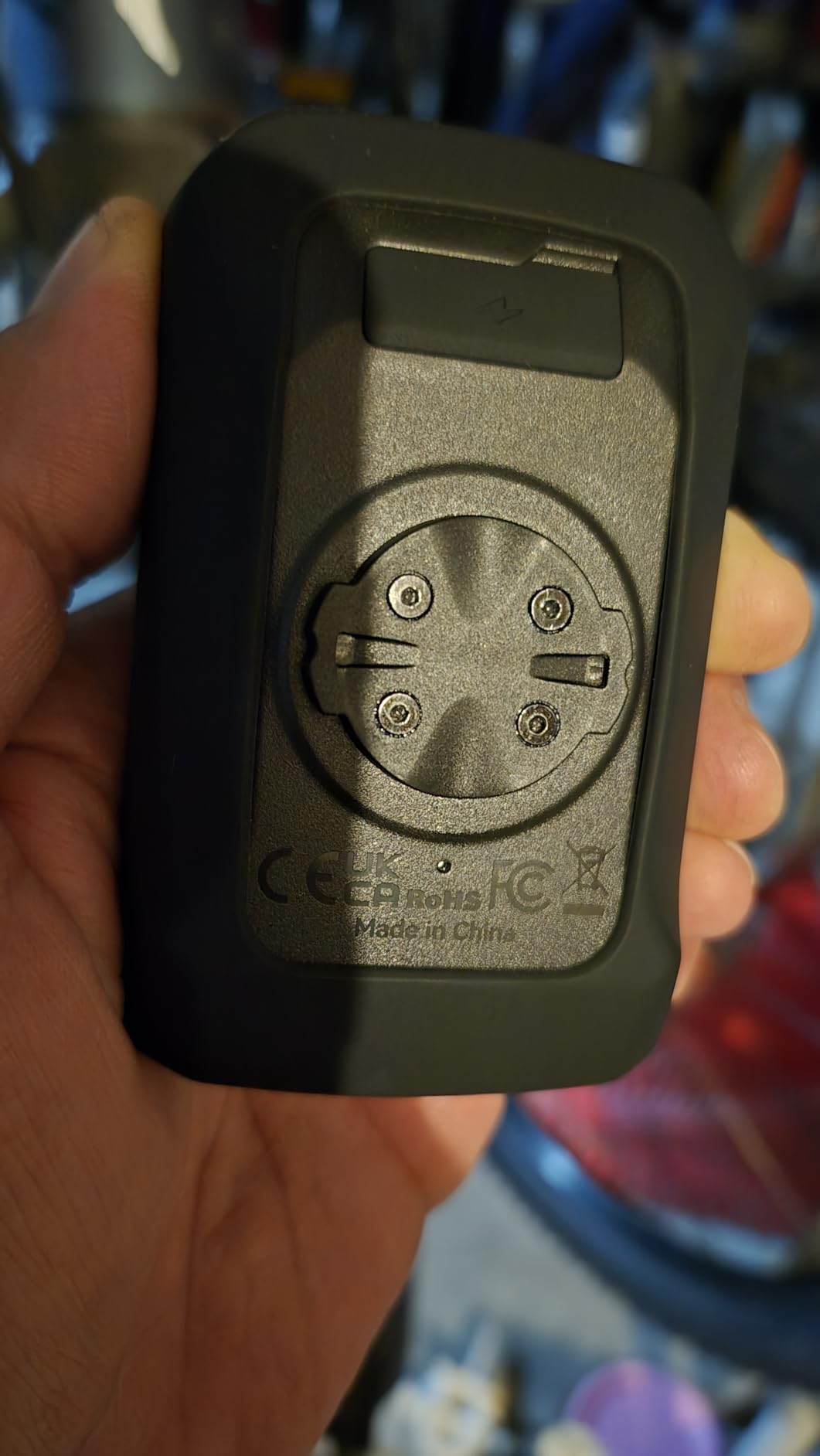
ANT+ and Bluetooth cover heart rate and power meters, and the CYCPLUSFit app handles Strava sync. The mount installs in about a minute, and at 29g it adds almost nothing to the front of the bike.
Three setup details catch people out. The time zone must be set correctly on first use or some functions behave oddly. The supplied mount only fits 31.8mm handlebars and needs a screwdriver. And the backlight switches according to time zone rather than actual ambient light, which is a strange default that a few minutes in the app can fix.
Who this bundle suits
It suits beginners who want speed plus cadence data immediately, because everything needed is in the box. Riders upgrading from a basic speedometer also get a backlit screen and sensor support for the first time.
The long battery makes it a good choice for riders who do long weekend rides and do not want to think about charging mid-route.
Who should skip it
Skip it if you ride oversized bars, because the included mount does not reach past 31.8mm and a different mount means another purchase. Anyone who wants turn-by-turn navigation should also note that this unit has none.
10. GEOID CC700: the larger take on colour navigation
GEOID CC700 2.8″ Color Screen Bike/Cycling Computer Wireless – Route Navigation with Re-Route Planing, WiFi Auto-Sync, ANT+/Bluetooth, Fast 5s GPS Positioning, Free Indoor Training
2.8 inch colour screen
Five satellite systems
WiFi auto sync
0.21kg
1 year warranty
Pros
- Larger 2.8 inch colour screen than the CC600 with durable Asahi glass
- Colour route navigation with turn reminders zoom and automatic re-routing
- Five satellite GNSS with AGNSS sync for about five second positioning
- WiFi transfers ride records and firmware much faster than Bluetooth
- Up to 10 custom pages with 108 data items across 29 layouts
Cons
- Heavier at 0.21kg than most competing head units
- Only a one year warranty with no published battery runtime
- Box includes only the bike computer so mount and cable may need buying
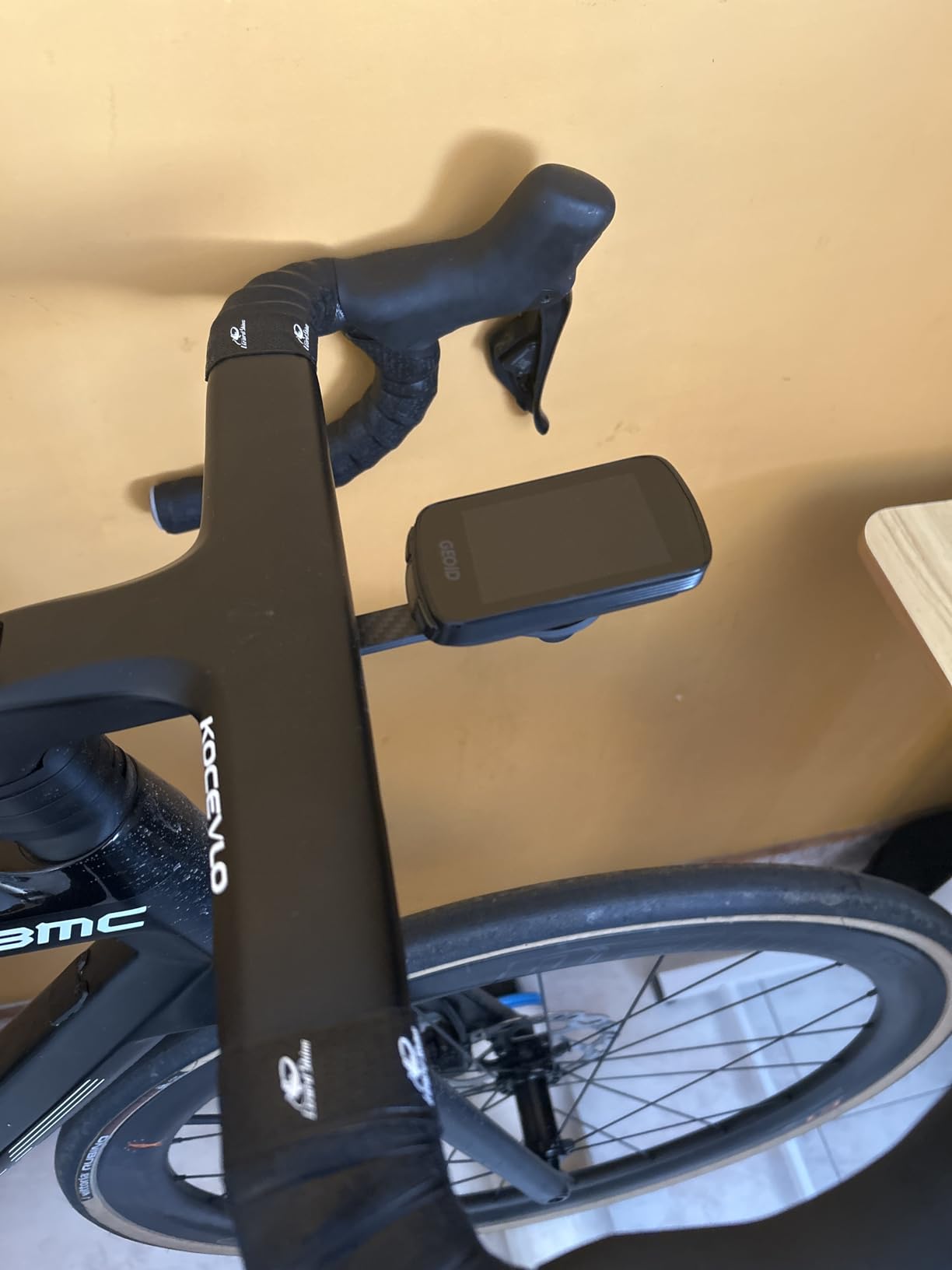
The CC700 is the current generation of the GEOID line and steps up where the CC600 left off, mainly in screen size. At 2.8 inches the colour panel is easier to read at speed, and the Asahi glass is the kind of detail you normally only find on premium units.
Navigation behaves the same way as the smaller model and does it well: turn reminders, zoom and automatic re-routing when you leave the route, backed by five satellite systems and AGNSS for a roughly five second lock. WiFi auto-sync moves records and firmware far faster than Bluetooth.
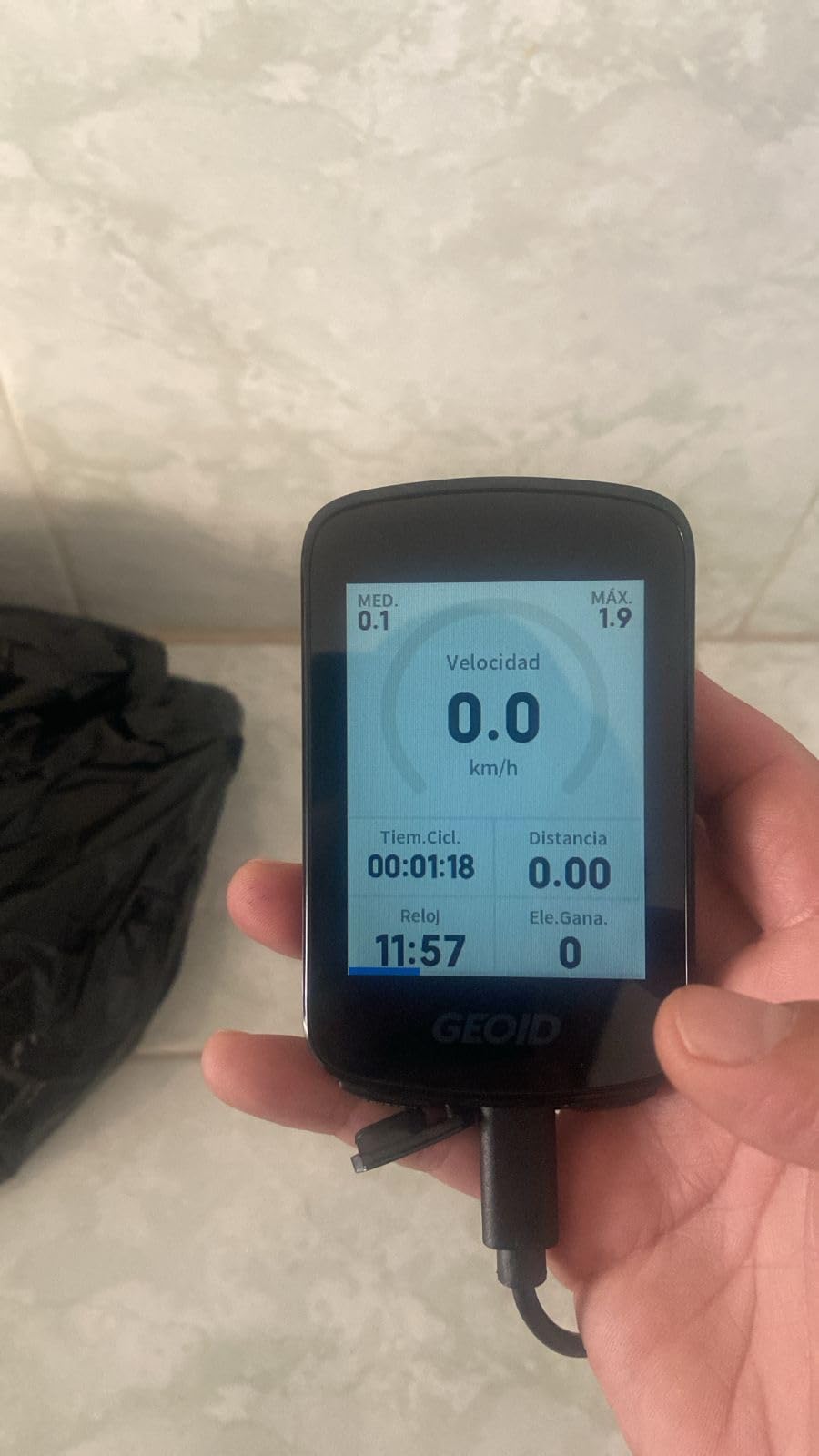
Customisation matches the CC600 at up to ten pages with 108 data items across 29 layouts, and free indoor trainer mode is included. Owners describe it as Garmin style navigation at a noticeably lower price, and only five percent of reviews are one star.
The trade-offs are weight, at 0.21kg which is heavier than most competing head units, and a one year warranty with no published battery runtime figure. The box may contain only the computer itself, so budget for a mount and charging cable if you do not have them.
Who this computer suits
It suits riders who found the CC600 screen too small but still want a navigation-first computer without moving into premium pricing. Gravel riders, weekend tourers and anyone returning to longer routes get the most from a larger colour panel.
Riders who will use it on a smart trainer also get free indoor training mode included.
Who should skip it
Skip it if you care about grams, because this is one of the heavier units here. Anyone hoping for a multi year warranty or a guaranteed battery runtime figure should factor that risk into the decision.
11. Navihood L4: a slim, light body with customisable pages
Navihood L4 Entry Level GPS Bike Computer Wireless, Laminated 2.3″ Screen, Ultra Thin and Lightweight Bike Speedometer, IPX7 Waterproof, Bluetooth ANT+ Cycling Computer
13.5mm thin body at 45g
2.3 inch laminated screen
22 hour battery
IPX7
9 custom pages
Pros
- Very thin 13.5mm body at just 45g
- Nine customisable display pages with 25 data types via the Navihood app
- Laminated anti glare 2.3 inch screen with automatic backlight
- IPX7 waterproofing and 22 hours of battery life
- ANT+ and Bluetooth 5.0 pairing with Strava sync and a 2s warm start
Cons
- O-ring rubber band mount can fatigue and no proper bracket is offered
- GPS status icon disappears after about a minute while the unit still works
- One reviewer found the workout clock drifted by three minutes on a 1.5 hour ride
- Altitude readings not fully consistent for the same location
- Only 80 reviews so long term reliability data is limited
Where the L4 differentiates is thickness. At 13.5mm and 45g it is one of the slimmest entry-level units, which matters if you ride narrow aero bars or simply prefer a computer that does not look like a brick on the front of your bike.
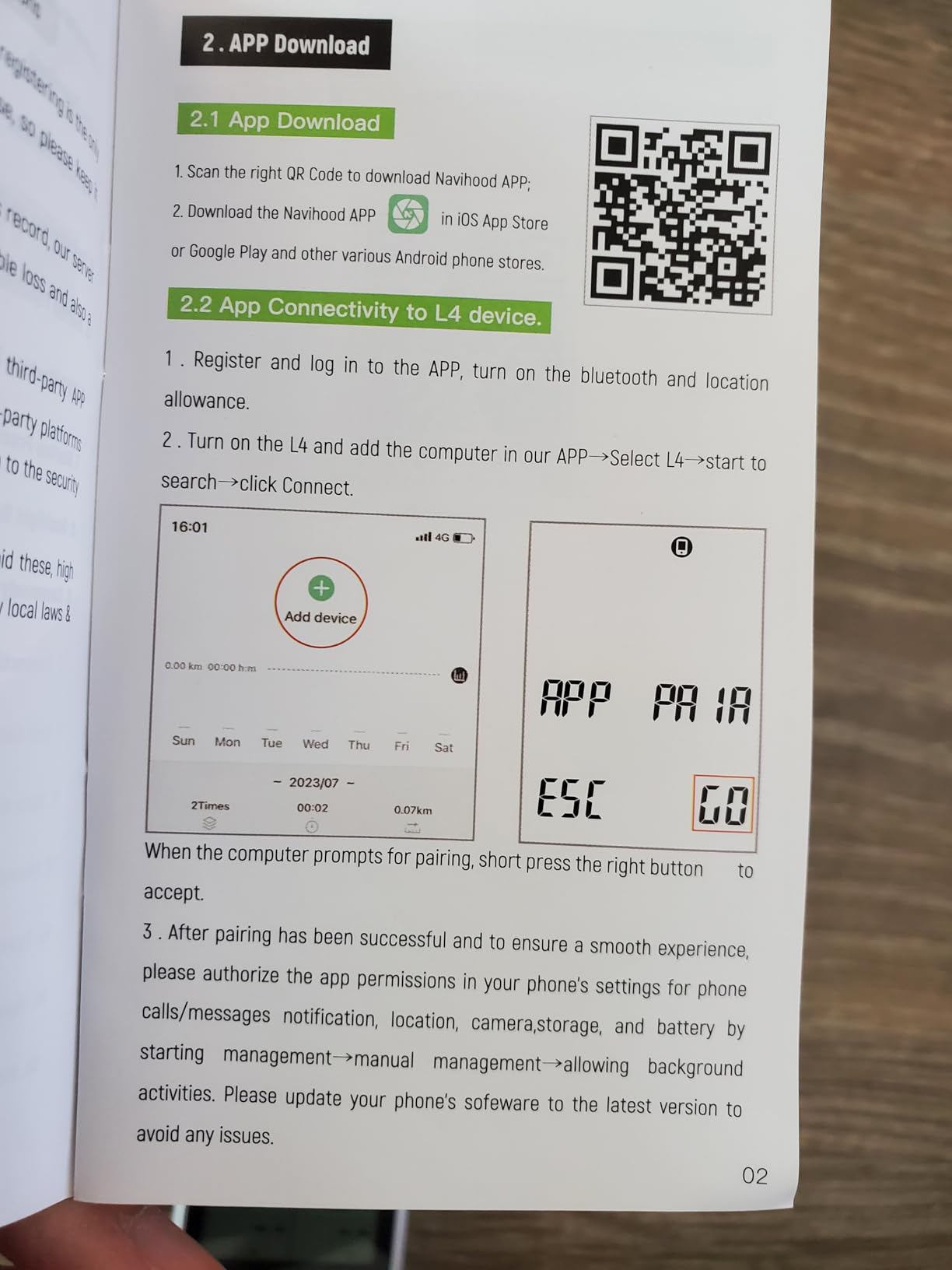
Despite that it is a full GPS head unit with laminated anti glare glass, an automatic backlight and IPX7 waterproofing. The Navihood app gives nine customisable pages with 25 data types, ANT+ and Bluetooth 5.0 sensor pairing, and Strava sync, with a 2 second warm start once it has found satellites.
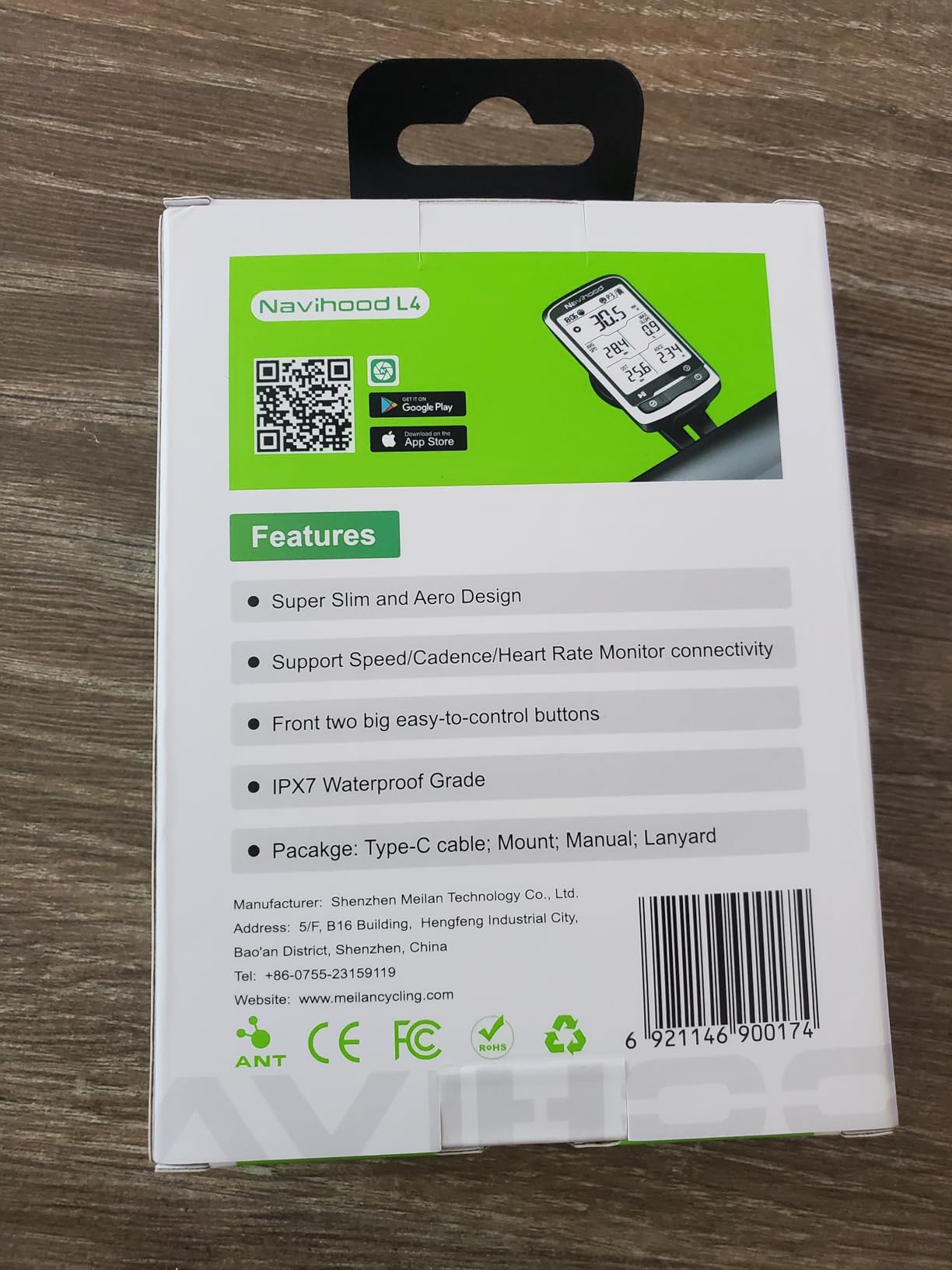
Owners rate it above more expensive rivals on value, customisation and customer service. The complaints are specific rather than general: the rubber band mount has no proper bracket, the workout clock drifted by three minutes on a 1.5 hour ride for one reviewer, and another could not pair Bontrager sensors. The GPS icon disappearing while the unit still works is also confusing at first.
With 80 reviews there is not much long term reliability data yet, which is the honest caveat on any product this new. Altitude readings also vary slightly for the same location.
Who this slim computer suits
It suits riders who care how the computer looks and feels on the bike, and anyone with bars where a chunky unit would be awkward. People who enjoy arranging their own data pages get more control here than on units with fixed field layouts.
The 22 hour battery covers a week of commuting comfortably, and the laminated screen handles glare well in bright conditions.
Who should skip it
Skip it if you want a proven track record, because the review base is small and there are isolated accuracy reports on the workout clock. Riders on aero bars may also find the rubber band mount insufficient without a proper bracket.
12. Bikevee GPS Speedometer: altitude data with no sensors at all
Bikevee GPS Bike Computer, 2.4″ Screen, Altitude, Gradient, IPX7, 28H
2.4 inch LCD with auto backlight
650mAh battery
28 hour runtime
50g
IPX7
Pros
- No wheel sensor or magnet needed since tracking is GPS only
- Altitude gradient and accumulated ascent track closely against dedicated GPS units
- Large readable display with automatic backlight for night riding
- 650mAh battery rated at 28 hours and holds up in cold weather
- IPX7 waterproof with simple timezone and units setup and no app required
Cons
- No ANT+ or Bluetooth so no heart rate speed or cadence sensors
- No FIT file export so rides must be entered manually into Strava
- Display pages are fixed with no customisation
- Built in thermometer gives nonsense readings below freezing
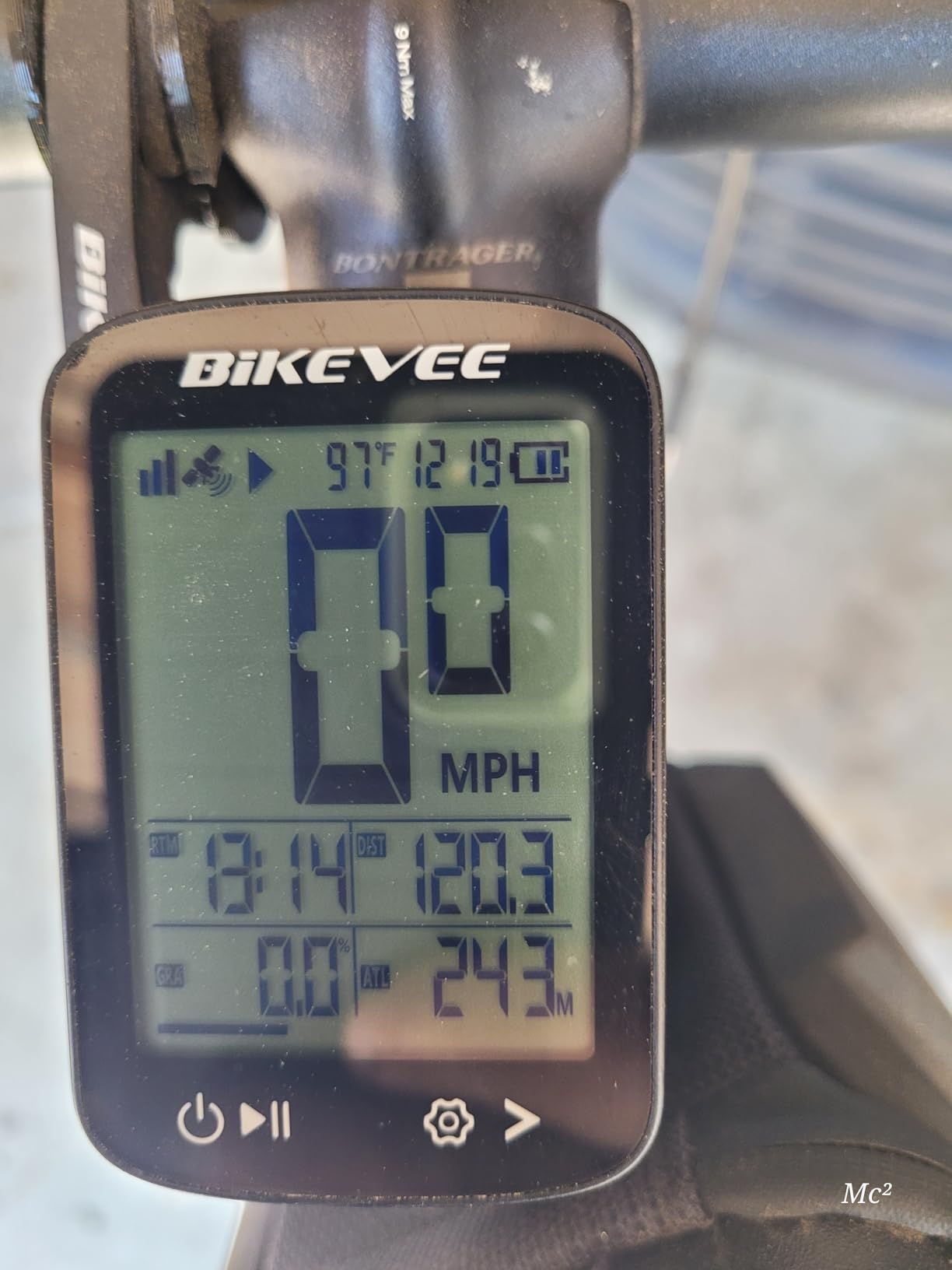
This is the simplest GPS unit here, and the appeal is that it does only three things well: speed, distance and elevation. There is no wheel sensor, no magnet, no app and no account. Switch it on outdoors and it works.
The elevation data surprised me. Reviewers compare its altitude, gradient and accumulated ascent against dedicated GPS units and find agreement within about a foot, which is genuinely useful information for a beginner deciding whether the next hill exists or is a barometric artefact.
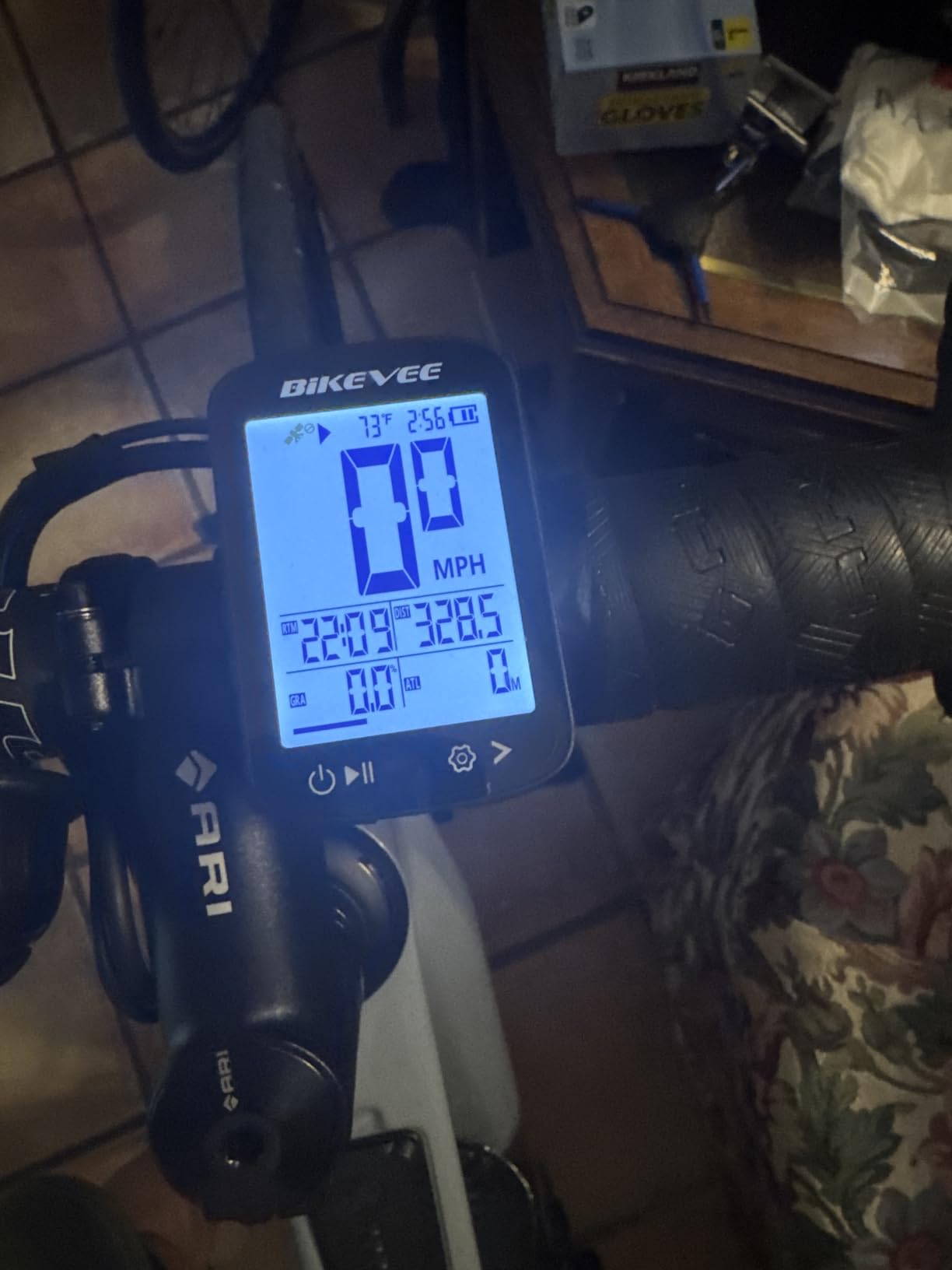
The automatic backlight solves the night riding problem that most basic computers share, the battery is rated at 28 hours and holds up in cold weather, and the rubber ring mount installs with no tools and stays firm at speed. Sixty-five percent of reviews are five star.
The limits are honest ones. There is no ANT+ or Bluetooth, so no sensors at all. There is no FIT export, so getting rides into Strava means manual entry. The three display presets are fixed, the speed readout tops out at roughly 61 mph, and the built-in thermometer reads nonsense below freezing.
Who this speedometer suits
It suits riders who want hills tracked accurately and nothing else, and who refuse to create accounts or manage apps. Hilly road riders get real value from the altitude and gradient data at a fraction of the complexity of a mapping computer.
Because there is no phone requirement at all, it is a good choice for riders who leave the phone at home on long rides.
Who should skip it
Skip it if you train with a heart rate strap or cadence sensor, because there is no wireless radio. Anyone who logs every ride to Strava automatically should also know that manual entry will quickly become a chore.
Do You Even Need a Cycling Computer?
A smartphone app gives you speed, distance, route and heart rate for free, and for many new riders that is genuinely enough. The case for a dedicated computer comes down to four things: battery life, screen readability in sunlight, durability, and the ability to work with no signal at all.
- Battery. A phone running a navigation app at full brightness rarely survives a long ride, and a dead phone mid-route is a real problem. Every unit here runs far longer between charges, and the wired models need no charge at all.
- Screen. Phone apps are designed for a screen you hold close. A handlebar computer is designed to be read at arm’s length in direct sun or in the rain.
- Ruggedness. A phone in a handlebar mount is one pothole away from becoming an expensive paperweight, and the mount itself is usually the first thing to break.
- Reliability. A computer with a wheel sensor or a GPS lock logs the same ride the same way every time. Phone apps drift, pause and sometimes fail to record a ride at all.
The counter-argument is cost and learning curve. If you ride twice a month on the same loop, your phone already does the job. The units in this guide make the most sense once riding becomes regular, which is exactly when beginners start wondering about them.
Wired, Wireless or GPS: Which Tier Do You Need?
There are three tiers, and they are easier to tell apart than the model names suggest.
- Tier one, wired speedometer. A cable runs from the computer to a sensor on the fork. Nothing to charge, nothing to configure, no accuracy loss in tunnels or heavy tree cover. This is the CATEYE wired unit.
- Tier two, wireless speedometer. Same data, no cable. The sensor broadcasts wheel rotation continuously and measures instantly with no pairing. The CATEYE Padrone and Velo Wireless sit here, and both add calorie or odometer extras.
- Tier three, GPS computer. No wheel hardware at all. The unit reads your position from satellites and logs route, elevation and ride files you can sync to an app. This is where ANT+ and Bluetooth sensor pairing, colour screens and navigation appear.
Most first-time buyers are better served by buying the simplest tier that matches their riding, and moving up once they know what they want from the data. Buying navigation you never use is the most common beginner regret, and buying a wired speedometer you grow out of in six months is the second.
How to Choose Your First Cycling Computer
Ask seven questions before you buy anything, and the right answer will point you at one or two units in this list rather than twelve.
- Do I need navigation, or just numbers? If you ride the same routes, speed, distance and time are enough. Navigation only earns its complexity if you follow unfamiliar roads, trails or planned routes.
- Do I want a backlight? This single feature decides whether evening and night commuting is comfortable. Units with automatic backlights are the CYCPLUS G1, both GEOID models, the Navihood L4, the Bikevee, the CooSpo BC107 and the CYCPLUS M1. The CATEYE units in this list have no backlight at all.
- Do I want sensors now or later? If you plan to add a heart rate strap or cadence sensor, the computer needs ANT+ and ideally Bluetooth. The CATEYE wired, Padrone and Velo Wireless models cannot, by design.
- How long is my ride? Battery figures here range from 22 hours on the Navihood L4 to over 60 hours on the CYCPLUS units. If you ride two hours on a weekend, almost anything works. If you tour, favour the longest runtimes listed.
- Buttons or touchscreen? Every unit in this roundup uses buttons. That is deliberate, because riders report touchscreens being unusable with gloves or in mud, and button controls are the preference on rough terrain. A beginner riding in gloves or rain will be glad of physical buttons.
- What does mount compatibility cost me? The CooSpo BC107 takes standard Garmin style out-front mounts, while several others supply only a rubber band. Check your handlebar diameter too, since the CYCPLUS M1 mount only fits 31.8mm bars.
- Can it work without my phone? The CATEYE wired, Padrone and Velo Wireless and the Bikevee need no phone ever. GPS units sync through an app, which means you cannot see your route history until you get home.
One more piece of advice we give often: spend your budget on the computer only after the bike is sorted. A better helmet and a decent set of lights protect you in ways a larger screen does not.
Mounting, Sensors and the Extras You Will Actually Use
Most first-time installation problems are mounting problems, and they take five minutes to avoid. Out-front mounts put the screen directly in your eyeline, which is safer than looking down at a stem mount, and they cost very little. The stem mount is cleaner for riding in the drops.
On sensors, the protocol matters more than the brand. ANT+ is the older standard and works across almost every brand. Bluetooth LE sensor support is newer and appears on the GEOID models and the Navihood L4, but on the CooSpo BC107 Bluetooth is reserved for the phone app, so sensors must be ANT+. Buying a Bluetooth-only strap for an ANT+-only unit is the most common pairing mistake new riders make.
For apps, Strava sync is the standard destination and every GPS unit in this list supports FIT export or app syncing to it, except the Bikevee, which requires manual entry. Komoot appears alongside Strava on the iGPSPORT unit. If you also ride indoors, the two GEOID computers include free indoor training modes with smart trainers, and if you are building a home setup our guide to indoor cycling bikes for home studios covers the trainer side of things.
Garmin or Wahoo for Your First Computer?
Neither brand appears in this roundup, and that is intentional. Every Garmin and Wahoo unit sits above the entry level we are covering, and the models most beginners see advertised are confusing because of how similar they look on paper.
The short version, drawn from what riders report in forums: Garmin is praised for built-in maps, features per unit of money and stronger value at the budget end of its own range, while Wahoo is praised for booting quickly, connecting without fuss and pairing quickly with a phone. If you already know you will ride far more than a handful of times a month and want maps that work without your phone, either brand is a safe choice.
If you are still deciding, buy from the list above first. Moving up is cheap and easy later, whereas buying a premium unit in month one often means paying for navigation and training features you will not touch for a year. If your interest has shifted toward mapping rather than data, our separate guide to bike computers for GPS navigation goes deeper on that tier.
A Short Glossary of Cycling Computer Jargon
- GNSS the satellite system your computer uses to fix your position. GPS is one part of it, alongside GLONASS, BeiDou, Galileo and QZSS.
- Barometric altimeter a pressure sensor that estimates altitude from the air, more consistent than GPS altitude but affected by weather.
- Breadcrumb trail a dotted line of your recorded positions that you can retrace, the simplest form of navigation.
- ANT+ the wireless standard used for heart rate straps, cadence sensors and power meters.
- IPX7 a waterproof rating meaning the unit survives immersion in one metre of water briefly. IPX6 is a slightly lower splash rating.
- FSTN or transflective screen a non-backlit-type display that stays readable in direct sunlight without turning the backlight on.
- AGNSS assisted GPS, where the phone or WiFi helps the unit find satellites faster, typically cutting a cold start to a few seconds.
- FIT file the standard ride recording format that apps like Strava, Komoot and TrainingPeaks all read.
Frequently Asked Questions
What is the best entry-level cycling computer?
For most beginners the CATEYE wired bike computer is the best entry-level choice, because installation takes ten minutes and nothing needs charging. If you want GPS-based data without wheel hardware, the CYCPLUS G1 is the better value step up. Riders who want accuracy and a programmable odometer tend to choose the CATEYE Velo Wireless.
Is it worth getting a cycling computer?
Yes, once riding becomes regular. A cycling computer gives you speed, distance and ride time without touching your phone, lasts far longer than a phone running navigation, survives rain and drops, and works with no phone signal. If you ride twice a month on the same loop, your phone is probably enough. If you ride most weeks, the data pays for itself quickly.
Is Wahoo or Garmin better?
Neither brand appears in this beginner roundup because both sit above the entry level. Riders report that Garmin is praised for built-in maps, more features per unit of money and value at the budget end of its range, while Wahoo is praised for fast boot-up, effortless pairing and quick phone connection. Pick Garmin if maps matter most, Wahoo if phone-based simplicity matters most.
Do I need a separate speed sensor if my computer has GPS?
No, not for basic data. A GPS computer calculates speed and distance from your position, so no wheel magnet is required. A separate speed sensor is still worth adding if you ride in dense tree cover or tunnels where satellite tracking drifts, or if you want sub-second accuracy, and it also gives you a fallback when the signal drops.
Can I use a cycling computer without a mobile phone?
Yes for wired and wireless speedometers, which never connect to anything. GPS units log rides on their own but need a phone or WiFi to sync ride files, unless you already own ANT+ or Bluetooth sensors that pair directly. Never mind the app and you still get every metric on the bars, you just do not get ride history back on your computer.
Touchscreen or buttons for a cycling computer?
Buttons, for a first computer. Every unit in this roundup uses physical buttons because riders report touchscreens being hard to operate with gloves on or in mud, and rough terrain makes precision tapping worse. Touchscreens only make sense once you want map interaction with a glove off. All twelve picks here are button-operated.
Conclusion
The best cycling computers for beginners are not the most capable ones, they are the ones you will actually use without resenting. Start with a wired speedometer if you ride short distances in daylight and want zero maintenance, move to a wireless model if the cable bothers you, and step up to a GPS unit the day you want ride history and elevation data.
From there, buy navigation only when you plan unfamiliar routes, buy sensors only when you want training metrics, and buy a backlight if you ride after dark. Whatever tier you choose, set it up on the drive side of the handlebar, pair it once, and leave the phone in your pocket. For riders comparing bikes and kit, we also cover spin bikes for indoor cycling and entry-level computer picks in other sports to keep the setup consistent across your hobbies.