
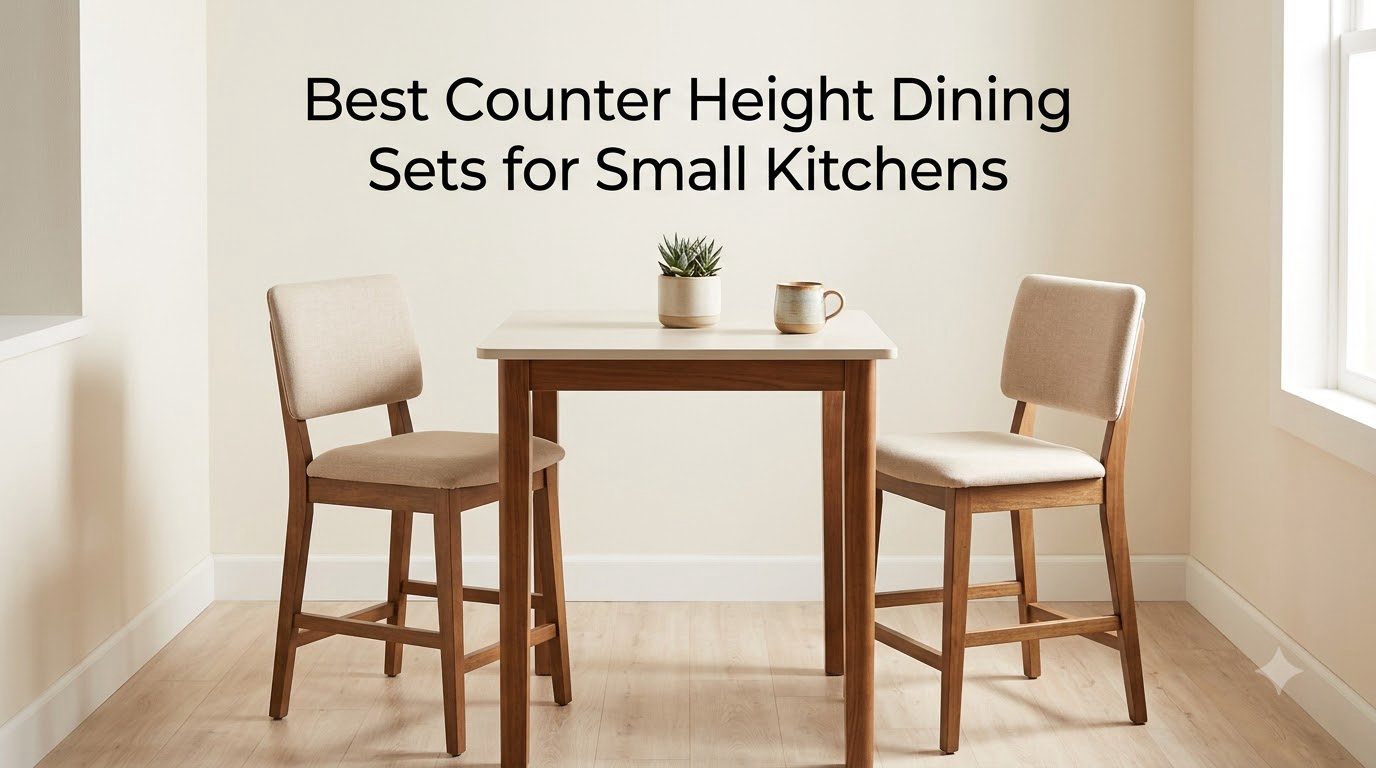
Counter height dining sets typically stand 34 to 36 inches tall, and they have become one of the smartest furniture investments you can make for a tight kitchen. Our team has spent months researching dimensions, materials, and real user feedback to put together this guide for 2026. Whether you are outfitting a studio apartment, a condo kitchen nook, or a tiny home, choosing the right counter height dining set for small kitchens comes down to understanding your space and your daily habits.
Standard dining tables sit around 30 inches high, which means counter height sets give you extra vertical space underneath for storage, stools that tuck away completely, and a more open visual feel. That visual openness matters more than most people realize. When you can see more floor, a small kitchen instantly feels larger.
In this guide, we cover everything you need to know before buying. We walk through sizing and measurement, material comparisons, style options, child safety considerations, accessibility for older adults, and maintenance. By the end, you will have a clear picture of what works for your specific kitchen.
Table of Contents
Why Counter Height Dining Sets Work for Small Kitchens
Counter height tables save floor space. Because the seats are taller, your legs drop straight down instead of extending outward, which means you can place the table closer to a wall without sacrificing comfort. A standard dining chair needs roughly 36 inches of pull-out clearance, while a counter stool often works fine with 24 to 28 inches.
Taller tables create a casual, bistro-like atmosphere that many people prefer for everyday meals. The height naturally encourages a more relaxed posture, and the setup doubles as a workspace for laptops or a casual bar area for guests. If you work from home, a counter height table can replace a dedicated desk without looking out of place in your kitchen.
The vertical orientation also draws the eye upward. Interior designers use this trick constantly in compact homes. A taller table makes ceilings appear higher and the room feel more spacious than it actually is. That perceptual shift is why so many apartment dwellers switch from standard dining sets to counter height options.
Many counter height sets include built-in storage features. You will find shelves beneath the table surface, wine racks integrated into the base, and stools with hidden storage compartments under the seat. Every cubic inch counts in a small kitchen, and these multi-functional designs help you maximize what you have.
How to Measure Your Kitchen for a Counter Height Set
Measuring correctly is the single most important step before you buy any dining set. Start by measuring the total floor area where you plan to place the table. Use a tape measure to mark the width and depth of the available space, and then subtract at least 24 inches from each side for stool clearance.
If your kitchen has a walkway next to the dining area, you need a minimum of 36 inches of walkway clearance. That means your table plus the pushed-out stools should not extend into that 36-inch corridor. In galley kitchens, this often limits you to a table no deeper than 30 to 36 inches.
Standard counter height table dimensions for two people typically run 36 inches wide by 24 inches deep. A set for four usually measures 48 to 54 inches long by 30 to 36 inches deep. Round tables work well in corners and tight spots, with 36-inch and 42-inch diameters being the most common sizes.
Check your ceiling height as well. You want at least 24 inches between the table surface and any overhead light fixture or cabinet. For a 36-inch table, that means your pendant light should hang no lower than 60 inches from the floor. This detail gets overlooked constantly and leads to head-bumping or obstructed views.
Doorways matter too. Measure the width of every doorway between your entry point and the kitchen. Most dining sets arrive in flat-pack boxes, but some table tops are wide enough to catch on narrow door frames. If your doorways are under 30 inches wide, look for sets with removable legs or two-piece table tops.
What to Look For in a Counter Height Dining Set
Several factors determine whether a particular set will work in your kitchen. We break down the most important ones below, based on what real buyers consistently flag in reviews and what our research surfaced across hundreds of product listings.
Material and Construction
Solid wood offers the best long-term durability but comes at a higher price and heavier weight. Common wood types include rubberwood, acacia, and pine. Rubberwood is particularly popular because it is dense, affordable, and sustainably harvested.
Engineered wood with veneer is the most common material in mid-range sets. It looks like real wood, weighs less, and costs significantly less. The trade-off is that engineered wood can chip or swell if exposed to moisture, so wipe spills quickly.
Metal frames provide excellent structural support and pair well with industrial and modern aesthetics. Look for powder-coated steel rather than painted finishes, since powder coating resists scratching and chipping far better. Metal legs also tend to be thinner than wooden legs, which saves visual space.
Seat Count and Configuration
Two-person sets are ideal for breakfast nooks and studio apartments. These typically include a small rectangular or round table with two stools. They occupy minimal floor space and tuck neatly into corners.
Three-piece sets with a round table and two stools are the most popular configuration for small kitchens. The round shape eliminates sharp corners, which is safer and more space-efficient. Many of these sets include stools that slide fully under the table when not in use.
Five-piece sets with a rectangular table and four stools work in slightly larger kitchens or open-plan spaces. Look for sets where two stools can slide under the table and two others can be repositioned or stored elsewhere. This flexibility keeps your kitchen from feeling overcrowded on a daily basis.
Weight Capacity
Check the weight rating on both the table and the stools. Quality counter stools typically support 250 to 300 pounds per seat. If you or your guests need higher ratings, look for stools rated at 350 pounds or more, which usually feature reinforced metal frames.
The table itself should support at least 100 pounds evenly distributed across the surface. Avoid sets that feel wobbly when you press down on a corner, since that indicates weak leg joints that will loosen over time.
Assembly Requirements
Most counter height dining sets arrive flat-packed and require assembly. Assembly time ranges from 30 minutes for simple two-person sets to three hours for complex five-piece configurations. Read reviews specifically about assembly clarity, since poorly written instructions are the number-one complaint across all brands.
Look for sets that include an Allen wrench and pre-drilled holes. Avoid sets that require you to supply your own power tools, since that signals a lower-quality manufacturing process. Cam-lock fasteners are a good sign, as they create strong joints without specialized hardware.
Counter Height vs Bar Height vs Standard Height
Understanding the difference between these three heights prevents one of the most common purchasing mistakes. Standard dining tables stand 28 to 30 inches tall and pair with chairs that have 18-inch seats. This is the traditional height most people grew up with.
Counter height tables measure 34 to 36 inches tall and pair with stools that have 24 to 26-inch seat heights. This height matches standard kitchen counters, which is where the name comes from. Counter height is the sweet spot for small kitchens because it balances comfort with space efficiency.
Bar height tables stand 40 to 42 inches tall and use stools with 28 to 30-inch seats. These are taller than most kitchen counters and can feel precarious in very tight spaces. Bar height works better in dedicated entertainment areas than in compact everyday kitchens.
If you are choosing between counter and bar height for a small kitchen, counter height is almost always the better option. It is easier to get on and off the stools, more comfortable for extended sitting, and safer for children and older adults. Bar height makes more sense in open floor plans where the table serves as a room divider.
Style Guide: Matching Your Kitchen Aesthetic
Your dining set should complement your existing decor rather than fight against it. Here is how the most popular styles translate into small kitchen settings.
Modern and Contemporary
Modern counter height sets feature clean lines, minimal ornamentation, and neutral color palettes. Look for white or grey finishes, chrome or brushed nickel hardware, and upholstered stools in leather or faux leather. These sets blend well with stainless steel appliances and quartz countertops.
Contemporary designs often incorporate mixed materials, like a wooden table top with metal legs. This combination adds visual interest without cluttering the space. Avoid ornate detailing or heavy carved legs, which look bulky in a small kitchen.
Farmhouse
Farmhouse style brings warmth and rustic charm. Look for sets in distressed white, natural oak, or sage green finishes. X-back stool designs are a hallmark of this style, as are apron-front details on the table base. Pair these sets with shaker cabinets and subway tile for a cohesive look.
Farmhouse sets tend to be slightly bulkier than modern ones, so pay extra attention to dimensions. Choose a round table over a rectangular one if space is tight, since the round shape softens the visual weight.
Industrial
Industrial style combines metal and wood for a raw, functional look. These sets typically feature dark metal frames, reclaimed or distressed wood tops, and backless metal stools. The aesthetic works particularly well in loft apartments and kitchens with exposed brick or concrete elements.
Industrial sets are often lighter in visual weight than they appear, because the metal frames are thinner than solid wooden legs. This makes them a surprisingly good choice for small spaces where you want character without bulk.
Mid-Century Modern
Mid-century modern counter height sets are less common but growing in popularity. Look for tapered legs, warm wood tones like walnut or teak, and organic curved shapes. These sets bring a retro sophistication that pairs beautifully with terrazzo floors and pastel color schemes.
Because mid-century designs emphasize form as much as function, they tend to be slightly less sturdy than industrial or farmhouse options. Check weight ratings carefully if this is your preferred style.
Space-Saving Features to Prioritize
Beyond the basic table-and-stools configuration, certain features dramatically improve functionality in a small kitchen. Here are the ones our research found most valuable.
Drop-leaf tables let you extend the surface when you need it and fold it down when you do not. A 36-inch round table with a drop-leaf side can become a 36-by-48-inch rectangular surface for four people, then fold back to save space. This flexibility is invaluable in kitchens under 100 square feet.
Expandable tables use a hidden butterfly leaf that stores beneath the surface. When extended, the table grows by 12 to 18 inches. This feature costs more upfront but eliminates the need for a separate larger table for guests.
Storage benches replace individual stools and provide hidden storage under a hinged seat. A storage bench tucked against the wall can hold table linens, extra cookware, or seasonal items. Some sets include a bench on one side and individual stools on the other for a hybrid approach.
Swivel stools allow easy entry and exit without dragging the stool across the floor. This is especially useful when the table is placed against a wall or in a corner. Look for memory-return swivels that auto-center the seat when you stand up.
Footrests are a small detail that makes a big comfort difference. Counter height sitting puts pressure on your thighs if your feet dangle. Every quality counter stool should have a footrest ring positioned about 7 to 9 inches below the seat.
Child Safety and Accessibility Considerations
Counter height furniture introduces safety considerations that standard dining sets do not. None of the top competing articles address these concerns, which is surprising given how many buyers are parents or caregivers.
Taller stools mean longer falls. If you have toddlers or small children, counter height seating may not be appropriate until they are old enough to climb safely. Some parents choose to use the table without stools for children and provide a separate step stool for climbing up. Others wait until children are at least five or six before introducing counter height seating.
Anti-tip features matter. Look for stools with wide, splayed bases rather than narrow vertical legs. Wider bases resist tipping when a child leans sideways. Avoid stools with casters or wheels in homes with young children, since rolling stools can slide out unexpectedly.
For older adults or anyone with mobility challenges, counter height seating can actually be easier than standard chairs. The taller seat height requires less knee bend to sit down and stand up, which is helpful for people with arthritis or joint issues. Look for stools with sturdy armrests if balance is a concern.
If accessibility is a priority, choose a set that allows at least one standard-height chair as an alternative. Some manufacturers sell individual seating pieces separately, so you can mix counter stools with a lower option for family members who need it.
Maintenance and Care Tips
Proper care extends the life of your dining set significantly. The maintenance routine depends primarily on the materials involved.
For solid wood tops, use coasters and placemats religiously. Wipe spills immediately with a dry or slightly damp cloth, and avoid leaving wet items on the surface. Reapply furniture wax or oil every six months to keep the wood conditioned and prevent cracking.
For engineered wood and veneer surfaces, avoid excess moisture entirely. These materials can swell and warp if water seeps into the edges. Use a dry microfiber cloth for daily cleaning and a damp cloth only for stubborn spots, drying immediately afterward.
Metal frames need occasional tightening. Check all bolts and screws every three to four months, especially if the set gets daily use. Loose joints accelerate wear and can lead to permanent damage if left unaddressed. Keep the original Allen wrench in a drawer near the set for quick touch-ups.
Upholstered stool seats collect crumbs and stains over time. Choose wipe-clean materials like PU leather or vinyl for everyday durability. If you prefer fabric upholstery, look for removable, washable covers. Treat any stains within 24 hours to prevent permanent discoloration.
Frequently Asked Questions
What is the ideal table height for a small kitchen?
The ideal table height for a small kitchen is counter height, which measures 34 to 36 inches from floor to tabletop. This height pairs with stools that have 24 to 26-inch seats and allows the stools to tuck fully under the table, saving floor space.
Are counter height tables good for small kitchens?
Yes, counter height tables are excellent for small kitchens. They save floor space because stools tuck underneath, draw the eye upward to make the room feel larger, and often include built-in storage features like shelves or wine racks.
What size dining table fits in a small kitchen?
A 36-inch round table or a 36-by-24-inch rectangular table fits most small kitchens. For four people, look for a table measuring 48 to 54 inches long. Always leave at least 24 inches of clearance on each side for pulling out stools.
What is the difference between counter height and bar height?
Counter height tables stand 34 to 36 inches tall, matching standard kitchen counters. Bar height tables stand 40 to 42 inches tall. Counter height is more comfortable for daily use and safer for children, while bar height works better for entertainment areas.
How many people can fit at a 36 inch counter height table?
A 36-inch round counter height table comfortably seats two to three people. A 36-by-36-inch square table can seat four. For four adults, a 48-inch or larger rectangular table provides adequate elbow room.
Can you fit a counter height dining set in an apartment?
Yes, counter height dining sets are ideal for apartments. Many three-piece sets occupy less than 10 square feet of floor space. Look for compact designs with stools that slide fully under the table to maximize your available area.
Choosing the Right Counter Height Dining Set for Your Kitchen
Finding the best counter height dining sets for small kitchens in 2026 comes down to matching your space, your style, and your daily routine. Start with accurate measurements, then narrow down by material, seat count, and the features that matter most to your household.
Counter height sets deliver measurable space savings compared to standard dining furniture. The stools tuck away, the vertical design creates visual openness, and the multi-functional storage options help you make the most of every square foot. For apartments, condos, and compact homes, that combination is hard to beat.
Prioritize sturdy construction with good weight ratings, look for wipe-clean surfaces if you have children, and do not overlook the footrest. Small details like anti-tip stool bases and pre-drilled assembly holes make a big difference in everyday satisfaction.
Take your time with the measurement process, use the style guide to match your existing decor, and revisit the FAQ section if you get stuck on specifics. The right set will serve you for years and transform how you use your kitchen space.